Today is the day, book 5 in The Eagle of Mercia Chronicles is released into the wild.
Here’s the blurb:
A deathbed oath leaves the lives of two infants hanging in the balance.
Tamworth AD833 After successfully rescuing her husband from the Island of Sheppey, Icel hears the deathbed confession of Lady Cynehild which leaves him questioning what he knows about his past, as well as his future.
In the unenviable position of being oath sworn to protect their two atheling sons when Lord Coenwulf is punished and banished for his treason against the Mercian ruler, King Wiglaf, Icel is once more torn between his oaths and the secret he knows.
When the two children are kidnapped, Icel, good to his word, and fearing for their safety, pursues their abductors into the dangerous Northern lands, fearing to discover who is behind the audacious attempt on their lives: the queen, the king’s son, or even Lady Ælflæd, a friend to him in the past, but now wed to the king’s son and aunt to the two abandoned children.
Alone in the Northern lands, Icel finds himself facing his worse fears. Can he rescue the children from their captor, or will he fail and lose his life in the process?
Read all about Protector of Mercia over on my publisher’s Facebook account.
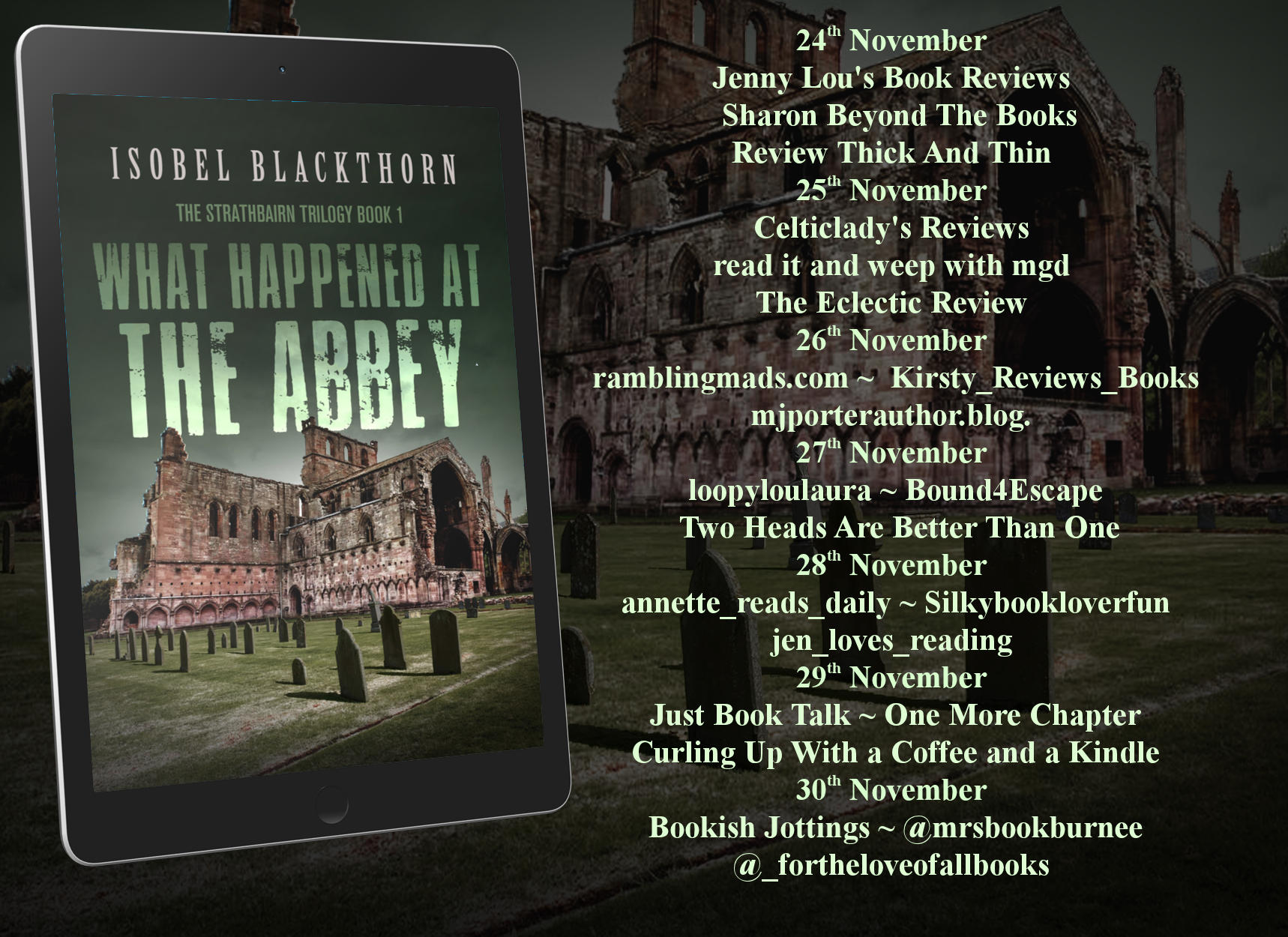
Protector of Mercia is on blog tour. My thanks to Rachel at Rachel’s Random Resources for organising and all the hosts for taking part. I will add the links each day.
Check out the reviews below. I’ll be updating as the blog tour progresses.
“As delicious as a Devon Cream Tea!” ~ author Elizabeth St John
“Every sentence pulls you back into the early 1970s… The Darling Buds of May, only not Kent, but Devon. The countryside itself is a character and Hollick imbues it with plenty of emotion” ~ author Alison Morton
***
Make hay while the sun shines? But what happens when a murder is discovered, and country life is disrupted?
Summer 1972. Young library assistant Jan Christopher and her fiancé, DS Lawrence Walker, are on holiday in North Devon. There are country walks and a day at the races to enjoy, along with Sunday lunch at the village pub, and the hay to help bring in for the neighbouring farmer.
But when a body is found the holiday plans are to change into an investigation of murder, hampered by a resting actor, a woman convinced she’s met a leprechaun and a scarecrow on walkabout…
Buy Links
This title is available to read on #KindleUnlimited.
First accepted for traditional publication in 1993, Helen became a USA Today Bestseller with her historical novel, THE FOREVER QUEEN (titled A HOLLOW CROWN in the UK) with the sequel, HAROLD THE KING (US: I AM THE CHOSEN KING) being novels that explore the events that led to the Battle of Hastings in 1066.
Her PENDRAGON’S BANNER TRILOGY is a fifth-century version of the Arthurian legend, and she writes a nautical adventure/fantasy series, THE SEA WITCH VOYAGES.
She has also branched out into the quick read novella, ‘Cosy Mystery’ genre with her JAN CHRISTOPHER MURDER MYSTERIES, set in the 1970s, with the first in the series, A MIRROR MURDER incorporating her, often hilarious, memories of working as a library assistant. The front cover of episode #4 A MEADOW MURDER is Helen’s actual hay meadow on her Devon farm.
Her non-fiction books are Pirates: Truth and Talesand Life of A Smuggler. She lives with her family in an eighteenth-century farmhouse in North Devon and occasionally gets time to write…
I’m delighted to welcome Catherine Kullmann to the blog with a post about her historical fiction research.
Writing Historical Fiction—The Research
Whether we talk about fictionalised history or fictional biography where the story of real-life characters is told, or genre fiction such as historical romance or historical mystery where fictional characters are placed in an historical setting, the onus is on the author to transport the reader to an unfamiliar society recreated partly from familiar facts and partly from a myriad of tiny, new details so that it seems as real as the world of today. The setting must ring true and the characters’ actions must be determined by the laws, mores and ethics of their time, not ours. Sometimes this may horrify us; at other times we find it liberating and long for more romantic, more adventurous, perhaps simpler bygone days.
Except where a real-life character such as one of the patronesses of Almack’s is introduced for authenticity, my Regency novels are pure fiction. I create the characters and the story arc but to make them and their world come to life, I must know the period inside out; not only the main facts and important dates but also the minor ones and the trivia of daily life. It is essential that I know the social structures, ethics, mores and beliefs of the period, constraints which add conflict and tension to the story and enable readers to step into the setting as easily as they step out of their front doors,
But where do I get this information? Primarily by reading. I have a large research library and a huge database of historical facts and trivia. Everything is grist to my mill—contemporary memoirs, diaries, letters, novels, plays, poetry, newspapers and magazines, etiquette and letter-writing manuals, cookery books, etc. etc. These all help me absorb peoples’ thoughts, attitudes, vocabulary and phrasing, as well as informing me first-hand about the way they lived.
Apart from the written legacy, the Regency has left us a rich legacy of images—paintings, portraits, engravings, cartoons, caricatures, fashion prints, book illustrations. I was amazed at the wealth of contemporary, hand-coloured engravings that can still be purchased at reasonable prices and that show rather than tell what Regency society was like. And finally, buildings, furniture and fittings, sculptures, gravestones and church and other monuments bear living witness to the past.
As an author, you must ask yourself constantly, if we do it this way today, how was it done in the past? You must read widely, covering every aspect of life at the time and take every opportunity to visit museums and period houses. Keep your eyes open everywhere you go to identify what was there then. I live in Dublin which is very much a Georgian city; I went to school in Georgian houses and later worked in many of them so you could say the city architecture of the time is in my bones. Remember too that then as now, older buildings will have co-existed with new one. Guidebooks from the period are very useful as they describe places as your characters will have seen them, and frequently have maps and other illustrations that will help you plan your character’s journeys.
Image of author’s desk and bookshelves. Private photo
All this is general research that feeds into your descriptive writing without your really being aware of it. Over and above this, there is the particular research that every new work calls for. The very first thing I do is create a public time-line for the years in which a new book is set. Here I enter every date and event I find including those of Easter, university, school and law terms, parliamentary sessions, the queen’s drawing-rooms, theatre and concert dates, publication dates of new works, and any notable public events, scandals or anything else newsworthy. These are the things that shape my characters’ lives, that they talk about. They help add verisimilitude and also frequently inspire plot twists.
I start this research on the internet. Frequently I get the information I want there and sometimes it points me in the right direction e.g. to little known diaries that help me flesh out my narrative. In Lady Loring’s Dilemma, I wanted to base my main characters in Paris and Nice in 1814/15 and was delighted to discover the Diary of the Times of George the Fourth, published in 1838 by an anonymous lady who had been in Paris and Nice at just those times. Lady Loring’s Dilemma opens in Harrogate, a well-known spa at the time, and I was thrilled to find a contemporary guide to taking the waters there which included a description of the sights in the surrounding area.
Don’t be afraid to ask the experts. For The Husband Criteria, I discovered that the Royal Academy provides a lot of information online about the years the Academy was based at Somerset House where its annual exhibition was a highlight of the Season. When I needed further information, I emailed the RA and received a prompt and helpful reply from the librarian. Similarly, when I need details of the laws of Cricket in 1814 for A Suggestion of Scandal, a query to the Marylebone Cricket Club was answered immediately and in detail by their Research Officer.
I trawl antique fairs, charity shops, second-hand book sales and flea markets for research material, whether it is books, newspapers, or old prints and engravings. As well as being a source of inspiration, I use antique prints and engravings from my collection for the covers of my books. This is generally cheaper than paying a licence fee for a stock image, it saves me hours of searching for just the right one and I have the freedom to use the image without restrictions.
All this sounds like a lot of work, but I love it. I started writing about the Regency because the period fascinates me and it still does. There is still so much to learn, I love the thrill of the hunt when I find just the right piece of trivia to spur me on.
Thank you so much for sharing. Good luck with your new book.
Here’s the blurb
London 1817
The primary aim of every young lady embarking on the Spring frenzy that is the Season must be to make a good match. Or must it? And what is a good match? For cousins Cynthia, Chloe and Ann, well aware that the society preux chevalier may prove to be a domestic tyrant, these are vital questions. How can they discover their suitors’ true character when all their encounters must be confined to the highly ritualised round of balls, parties and drives in the park?
As they define and refine their Husband Criteria, Cynthia finds herself unwillingly attracted to aloof Rafe Marfield, heir to an earldom, while Chloe is pleased to find that Thomas Musgrave, the vicar’s son from home, is also in London. And Ann must decide what is more important to her, music or marriage.
And what of the gentlemen who consider the marriage mart to be their hunting grounds? How will they react if they realise how rigorously they are being assessed?
A light-hearted, entertaining look behind the scenes of a Season that takes a different course with unexpected consequences for all concerned.
Catherine Kullmann was born and educated in Dublin. Following a three-year courtship conducted mostly by letter, she moved to Germany where she lived for twenty-five years before returning to Ireland. She has worked in the Irish and New Zealand public services and in the private sector. Widowed, she has three adult sons and two grandchildren.
Catherine has always been interested in the extended Regency period, a time when the foundations of our modern world were laid. She loves writing and is particularly interested in what happens after the first happy end—how life goes on for the protagonists and sometimes catches up with them. Her books are set against a background of the offstage, Napoleonic wars and consider in particular the situation of women trapped in a patriarchal society.
Catherine also blogs about historical facts and trivia related to this era. You can find out more about her books and read her blog (My Scrap Album) at her website. You can contact her via her Facebook page or on Twitter.
Former New York darling turned amateur sleuth Madeline Vaughn-Alwin is once again thrown into a colourful yet deadly web of secrets, lies and soirees to die for!
It’s the week of Fiesta in Santa Fe and Maddie is looking forward to enjoying the celebrations. But as ‘Old Man Gloom’ Zozobra goes up in flames, so too do Maddie’s hopes for a carefree life . . . Human remains are found in the dying embers of Zozobra, and then Maddie and her dashing beau Dr David Cole find a body washed up in the arroyo at the edge of town.
Soon identified as Ricardo Montoya, a wealthy businessman and head of one of the most affluent families in Santa Fe . . . the plot starts to thicken. While his beautiful wife Catalina and her complicated children seem less than heartbroken at his untimely demise, and with many disgruntled locals crawling out of the woodwork, Maddie is surrounded by suspects.
With the celebrations of Fiesta continuing around them, Maddie and her ‘Detection Posse’ get busy infiltrating the best parties and hobnobbing with old and new faces – but can they bring the murderer to justice before they strike again?
Death Comes to Santa Fe offers a detailed and descriptive view of life in Santa Fe in the 1920s, with its speakeasies, artists’ circle and of course, Fiesta. As the third book in a series, it took me a while to get into the novel and the characters, and it also took some time for our ‘body’ to appear. However, once the murder had actually occurred the flow of the novel improved, and the resolution of the mystery was well brought about, and it kept me guessing until the final ‘big reveal.’
Our main character, Maddie, is an interesting woman, if perhaps a bit too likely to wax lyrical about converting every view she sees into a painting. She divides her time between dancing, drinking, painting, and generally having a good time while slowly falling in love with Dr. David and determining to solve this new murder that’s rocked her town. The supporting cast is equally colourful and offers a lovely depth to the story.
A charming historical mystery stuffed with historical details.
Meet the author
Amanda wrote her first romance at the age of sixteen–a vast historical epic starring all her friends as the characters, written secretly during algebra class (and her parents wondered why math was not her strongest subject…)
She’s never since used algebra, but her books have been nominated for many awards, including the RITA Award, the Romantic Times BOOKReviews Reviewers’ Choice Award, the Booksellers Best, the National Readers Choice Award, and the Holt Medallion. She lives in Santa Fe with two rescue dogs, a wonderful husband, and far too many books and royal memorabilia collections.
When not writing or reading, she loves taking dance classes, collecting cheesy travel souvenirs, and watching the Food Network–even though she doesn’t cook.
It’s 1965, and 18 year old Jess escapes her stifling English home for a gap year in Ghana, West Africa. But it’s a time of political turbulence across the region. Fighting to keep her young love who waits back in England, she’s thrown into the physical and emotional dangers of civil war, tragedy and the conflict of a disturbing new relationship. And why do the drumbeats haunt her dreams?
This is a rite of passage story which takes the reader hand in hand with Jess on her journey towards the complexities and mysteries of a disconcerting adult world.
This is the first novel in the acclaimed Drumbeats trilogy: Drumbeats, Walking in the Rain, Finding Jess.
For fans of Dinah Jefferies, Kate Morton, Rachel Hore, Jenny Ashcroft
Jess happily marries the love of her life. She wants to feel safe, secure and loved. But gradually it becomes clear that her beloved husband is not the man she thought him to be.
She survived war and injury in Africa, but can she now survive the biggest challenge of her life?
On the brink of losing everything, and still haunted by her past and the Ghanaian drumbeats that haunt her life, Jess feels that she can no longer trust anyone but herself. Then she’s mysteriously sent a newspaper clipping of a temporary job in Ghana. Could this be her lifeline? Can she turn back time and find herself again? And what, exactly, will she find?
Finding Jess is a passionate study of love and betrayal – and one woman’s bid to reclaim her self-belief and trust. It’s a feel-good story of a woman’s strength and spirit rising above adversity.
Award-winning author Julia Ibbotson herself spent an exciting time in Ghana, West Africa, teaching and nursing (like Jess in her books), and always vowed to write about the country and its past. And so, the Drumbeats Trilogy was born. She’s also fascinated by history, especially by the medieval world, and concepts of time travel, and has written haunting time-slips of romance and mystery partly set in the Anglo-Saxon period. She studied English at Keele University, England, specialising in medieval language, literature and history, and has a PhD in linguistics. She wrote her first novel at age 10, but became a school teacher, then university lecturer and researcher. Her love of writing never left her and to date she’s written 9 books, with a 10th on the way. She’s a member of the Romantic Novelists Association, Society of Authors and the Historical Novel Society.
I’m delighted to welcome Stella Riley and her new book, The Shadow Earl to the blog. Read on for an excerpt.
An incident between Messrs Selwyn & Shelbourne at the Cocoa Tree Club
Daniel immediately noticed two things. Basil Selwyn and his idiotic friends sitting near the Hazard table … and a footman about to serve them a steaming bowl of punch. Opportunity and temptation coincided. One very slight movement was all it took. The footman tripped, lurched, fumbled with the bowl … and a couple of pints of rum punch cascaded over Mr Selwyn.
‘What the – ?’ Basil leapt from his seat in a sticky shower, whirled to deliver a blistering tirade … saw Daniel and froze.
‘You!’ he spat. ‘You did that, you bastard.’
Several gentlemen at the Hazard table stopped playing to watch.
‘What?’ asked Daniel. ‘Don’t be ridiculous. The poor fellow tripped, that’s all.’
‘Not without help,’ raged Basil, dripping and trying to drag off his ruined coat. ‘You tripped him. Deliberately.’
‘And risk the stuff being spilled over me? Hardly. Dare I mention that you have a slice of lemon in your hair?’
Basil hurled his coat aside, groped blindly for the lemon and glared at the footman. ‘You. Tell me the truth. He tripped you, didn’t he?’
The poor man hesitated, swallowed and stammered that it had been an accident.
‘Calm down, Selwyn,’ advised Daniel as the footman fled. ‘Your imagination is running away with you. It’s been doing that a lot recently, hasn’t it?’
More heads turned, somebody sniggered and play at the Hazard table ceased.
Ignoring this, Basil growled, ‘I know what you did!’
‘You don’t because I didn’t.’ Daniel smiled sympathetically, ‘You should try Mrs Baxter’s Elixir. My great-aunt swears by it when her nerves are – ’
‘There’s nothing wrong with my nerves, damn you! You tripped the footman. Admit it!’ And when Daniel shook his head, ‘Then you’re a bloody liar!’
The gasp of shock that rippled through his audience was lost on Basil, as was the voice advising, ‘Take that back while you still can, Selwyn.’
Here’s the blurb
At the end of his Grand Tour, somewhere between Athens and Constantinople, Christian Selwyn, the young Earl of Hazelmere, vanished – seemingly without a trace.
Time passes. In London, his uncle and cousin move into his home … while his unofficial fiancée, Sophia, is left desolate and in limbo. Finally, his friends – loyal and close as brothers – set out to search in person.
Christian’s startling re-appearance at a grand ball takes society by storm and fuels endless speculation. Where has he been during these three missing years? What happened to him?
And more importantly, how did it happen?
Only one thing is clear. The earl who left England five years ago, has returned a changed man. A man with secrets.
Winner of four gold medals for historical romance (Readers’ Favourite in 2019, Book Excellence Awards in 2020, Global Book Awards in 2022 and Book Excellence Award in 2023) and fifteen B.R.A.G. Medallions, Stella Riley lives in the beautiful medieval town of Sandwich in Kent.
She is fascinated by the English Civil Wars and has written six books set in that period. These, like the 7 book Rockliffe series (recommended in The Times newspaper!) and the Brandon Brothers trilogy, are all available in audio, narrated by Alex Wyndham.
Stella enjoys travel, reading, theatre, Baroque music and playing the harpsichord. She also has a fondness for men with long hair – hence her 17th and 18th century heroes.
Betrayed, maliciously accused, and transported. Will she ever be free?
Betrayed by her family and convicted of a crime she did not commit, Georgiana is sent halfway around the world to the penal colony of Sydney, New South Wales. Aboard the transport ship, the Lady Amelia, Lieutenant Francis Brooks, the ship’s agent, becomes her protector, taking her as his “sea-wife”. Not because he has any interest in her, but because he has been tasked with the duty.
Despite their mutual distrust, the attraction between them grows. But life has not played fair with Georgiana. She is bound by family secrets and lies. Will she ever be free again–free to be herself and free to love?
The Duchess of Sydney is a really fascinating story, revolving around Georgiana, who finds herself being sent on a penal ship to Australia for a crime she didn’t commit, which she freely admits, but we don’t learn about the nature of the crime until much further through the story.
There is very much a ‘will they, won’t they’ narrative to this tale, but it is much more than a historical romance. I found the portrayal of the voyage really interesting and I confess, I had to Google the route taken from Britain to Australia because it seemed so higgledy piggedly, but was, obviously, correct. Following the ship on its many stops along the way, I thoroughly enjoyed the narrative, and the peril our character finds herself in. And on arrival in Sydney, the story continues, and we finally also discover the truth of what happened in Britain.
I found the narration to be really good – and there are some fabulous accents.
This tale is sure to appeal to fans of historical mystery and historical romance. A really enjoyable and interesting story.
Meet the author
Dawn spent much of her childhood making up stories filled with romance, drama and excitement. She loved fairy tales, although if she cast herself as a character, she’d more likely have played the part of the Court Jester than the Princess. She didn’t recognise it at the time, but she was searching for the emotional depth in the stories she read. It wasn’t enough to be told the Prince loved the Princess, she wanted to know how he felt and to see him declare his love. She wanted to see the wedding. And so, she’d furnish her stories with those details.
Nowadays, she hopes to write books that will engage readers’ passions. From poignant stories set during the First World War, to the zany antics of the inhabitants of the fictitious town of Basilwade; and from historical romances, to the fantasy adventures of a group of anthropomorphic animals led by a chicken with delusions of grandeur, she explores the richness and depth of human emotion.
A book by Dawn will offer laughter or tears – or anything in between, but if she touches your soul, she’ll consider her job well done.
She has been a finalist in the Wishing Shelf Book Awards for 2017 and 2020, Readers’ Favorite Book Awards 2018 and Independent Author Network Book of the Year Award 2018.
Dawn has also written two plays about the First World War, which have been performed in England, Germany and France.
Abigail Langham is an Olivier Award-nominated actor, teacher, and audiobook narrator originally from the UK now living and working in the United States. Additionally, Abi is a voice, speech, accent, and dialect coach and a licensed Clinical Therapist with Masters’ degrees in Voice Studies, Teaching, and Learning in Higher Education and Clinical Mental Health Counselling. Abi has narrated numerous audiobook titles to date working for some well-known publishing houses. Abi’s body of work is carefully curated and she records material that she feels drawn to and passionate about. Abi brings a love of reading and a desire to bring stories to life with sensitivity, attention to detail, and passion. Abi particularly enjoys recording historical fiction and Regency romance novels and adores intelligent writing that encompasses expansive feelings.
Follow The Duchess of Sydney blog tour with Rachel’s Random Resources
When a deadly blizzard traps Fiona Figg and Kitty Lane in the Dolomite Mountains, it’s all downhill from here.Their hotel is snowed-in, and no one can get in or out. Then a man is found dead in his locked hotel room – and the killer is still on the premises. But with no murder weapon and too many suspects, their investigation is treading on thin ice.
The colder it gets outside, the hotter it gets inside as Fiona squares off with both her beloved Archie and her nemesis Fredricks. With her love-life on a slippery-slope, Fiona risks everything in one bold move…
As fast and twisty as a downhill slalom, this slick new cozy from Kelly Oliver will have you melting into a puddle of laughter.
Mayhem in the Mountains picks up where Covert in Cairo ends; only our intrepid file clerk-turned-spy has exchanged the heat of the desert for the cold of Italy in January. And it is very cold and quite miserable and were it not for tea, toast (and marmalade), and a few trusty Sherlock Holmes stories, Fiona would be quite bored.
But never fear, when Fredricks finally arrives (late, don’t you know) a chain of events starts, beginning with an avalanche that culminates in the need to investigate a perplexing murder case, and one that becomes increasingly perplexing as we learn more and more about probable events.
Interwoven with fictional portrayals of real people, including Mussolini, Mayhem in the Mountains is a fine mystery that only Fiona seems eager to solve. At the same time, other characters are more concerned with the war effort and a few shady shenanigans between MI5 and sister organisations.
There is a real vibrancy to these tales. Fiona might on occasion seem a little too focused on only one thing -proving to her boss that she deserves to escape from Room 40 at the War Office – but that doesn’t stop her from being determined to do the right thing, even if others don’t always agree with her. Her morality means she often stands slightly to the side of her supposed allies and fellow spies.
A vibrant, entertaining read, sure to appeal to fans of historical mysteries, and with just the right amount of historical detail.
Kelly Oliver is the award-winning, bestselling author of three mysteries series: The Jessica James Mysteries, The Pet Detective Mysteries, and the historical cozies The Fiona Figg Mysteries, set in WW1. She is also the Distinguished Professor of Philosophy at Vanderbilt University and lives in Nashville, Tennessee.
I’m delighted to welcome Cindy Burkart Maynard to the blog, with an excerpt from her book, Esperanza’s Way.
Over the following months, the young woman and the old Master worked side by side, trying every treatment they could find. They rifled through Master Cohen’s books, desperate to fend off the invader overtaking Johanna’s body. They dressed the lumps with damp cloths infused with black nightshade. Esperanza created a poultice of nettle, mustard seed and moldy bread and laid it against the invading tumors.
Among his books, Master Cohen found an ancient Egyptian remedy – an ointment that combined bull bile, fly droppings, and ochre. They prepared gallons of marjoram tea and forced her to choke it down. They spooned a powerful mixture of heartsease, marigold, and yarrow into her mouth. Nothing worked. By the time the courtyard flowers drooped in their pots, and cold winds stripped the trees of their leaves Johanna’s condition had worsened to a critical stage. She thrashed back and forth on her pallet, insensible to anything but the pain that enveloped her.
“Please, husband,” she rasped. “Please end this torment. You must have something to release me from this agony.” Looking toward Esperanza standing at her bedside she begged. “Esperanza, you once killed a woman with belladonna. If you love me at all, please, please do the same for me.”
Esperanza lifted her eyes to Master Cohen’s. He squeezed his eyes closed and nodded almost imperceptibly, giving her tacit permission to end Johanna’s suffering.
Esperanza’s blood turned to ice in her veins.
Here’s the blurb
Motivated by the memory of her mother dying in her arms, Esperanza resolves that she will one day walk the halls of the Scola Medica at Salerno and train to become a healer. Fate brought Amika, a talented herbalist, into her life and helped Esperanza take her first steps toward gaining the knowledge that would fulfill her dream. Unfortunately, a tragic accident forced Esperanza to flee Amika’s home. Her journey toward finding the path to success is littered with stumbling blocks, some more difficult to avoid than she expected.
Cindy Burkart Maynard is passionate about history, and the natural world, a passion that adds rich detail and context to her historical fiction novels. Her characters come to life on the page as they portray what it was like to live in another time and place. She weaves compelling, dramatic stories based on strong characters facing daunting challenges. She has co-authored two nonfiction works about the Colorado Plateau and the Desert Southwest and contributed articles to Images and Colorado Life Magazines. She has been a Volunteer Naturalist for Boulder County for more than twenty years, and served as a Docent at the Sonora Arizona Desert Museum in Tucson, AZ.
Awards: Colorado Authors League Award Winner for Western Literature
Women Writing the West Award Finalist WILLA Literary Award finalist for soft cover fiction.
Readers’ Favorite Five Star Author Winner of the Marie M. Irvine award for Literary Excellence
I’m delighted to welcome Mary Anna Evans to the blog with her new book, The Traitor Beside Her and a blog post about the book’s setting.
When You Need to Know A Whole Lot About Your Nation’s Capital, But What You Really Need to Know Is What it Was Like in 1944….
It’s no spoiler, based on my book’s cover, to say that The Traitor Beside Her is set in and around Washington, DC. Based on the woman’s clothing and the three possibly military-ish planes in the sky, and also based on the word “traitor,” it would be a safe bet for you to guess that it is set during World War II. And you’d be right!
Much of the action in The Traitor Beside Her takes place across the Potomac River from Washington, DC, in Arlington, Virginia, where a code breaking operation being done at a place called Arlington Hall paralleled the more widely known work being done across the Atlantic at Bletchley Park. However, my protagonist, Justine Byrne—she of the fetching hat and coat on the book cover—crosses the Potomac twice during the book, both times in the company of a man who is trying to woo her.
One of those dates is a traditional dinner date, during which Justine is wined and dined, all while packing heat in her white satin evening bag. But that is a story for another day. At the moment, I’m more focused on a more humble, everyday date, the kind of date you might go on during wartime when money was short and there was no sugar to go in the ice cream soda that a 1940s-era suitor might ordinarily have bought for a girl he was sweet on. For this humble date, Justine and the young man take an ordinary walk in an extraordinary setting.
Justine lives in a government-owned dormitory near where the Arlington Bridge crosses the Potomac, so she and her date take a short walk to the city, with the Lincoln Memorial as imposing sight in front of them. To write this scene, I had to first make sure that the Arlington Bridge was even there in 1944 (Spoiler Alert 1—it was), and that you could walk across it (Spoiler Alert 2—you could), and that it was lit if you needed to walk back after dark (Spoiler Alert 3—there were indeed lights).
The Lincoln Memorial was there, looking much like it does now, only a lot newer. The same could be said of the Lincoln Memorial Reflecting Pool, except there was a lot less pavement around it. These days, the pool is ringed with sidewalks, but not back then. There was just a narrow rim of pavement, presumably stone, at the edge of the pool. If Justine and her date want to walk around it, and they do, then they’ll be walking in the grass.
I thought this was all interesting information that was useful as the kind of background information that makes a historical novel feel real. But then I realized that it was also information that was important to my story. One of my characters uses a wheelchair. He can and absolutely does make his way through grass when he needs to do so. However, the lack of sidewalks making the Reflecting Pool easily accessible to him led me to another question. Was there a way to the pool in 1944 that didn’t involve a flight of stairs?
Well, the historical pictures that I could find didn’t tell me, and I still don’t know, but I acknowledged in the text that there were surely accessibility difficulties for that character in 1944, and I made sure that I did not put Jerry in a spot where he could not have been in that day and time. (Actually, I should say that I did not put him in a spot where he couldn’t easily have been in that day and time. Anybody who reads the climactic scene will see that Jerry always finds a way to do what needs doing.)
But if I told you what kind of trouble Jerry needed to get into in the climactic scene, I would need to give you Spoiler Alert 4, so I think I shall quit while I’m ahead.
Mary Anna
Thank you so much for sharing such a fabulous blog post.
Here’s the blurb
“Evans’s characters are vividly drawn, elevating this story and its revelations about women’s little-celebrated contributions to the war effort.”—Washington Post
“An exciting read with historical tidbits, a hint of danger, and a touch of romance.”—Kirkus Reviews
The Traitor Beside Heris an intricately plotted WWII espionage novel weaving together mystery, action, friendship, and a hint of romance perfect for fans ofThe Rose CodeandCode Name Helene.
Justine Byrne can’t trust the people working beside her. Arlington Hall, a former women’s college in Virginia has been taken over by the United States Army where hundreds of men and women work to decode countless pieces of communication coming from the Axis powers.
Justine works among them, handling the most sensitive secrets of World War II—but she isn’t there to decipher German codes—she’s there to find a traitor.
Justine keeps her guard up and her ears open, confiding only in her best friend, Georgette, a fluent speaker of Choctaw who is training to work as a code talker. Justine tries to befriend each suspect, believing that the key to finding the spy lies not in cryptography but in understanding how code breakers tick. When young women begin to go missing at Arlington Hall, her deadline for unraveling the web of secrets becomes urgent and one thing remains clear: a single secret in enemy hands could end thousands of lives.
“A fascinating and intelligent WWII home front story.” —Rhys Bowen,New York Timesbestselling author forThe Physicists’ Daughter
Mary Anna Evans is an award-winning author, a writing professor, and she holds degrees in physics and engineering, a background that, as it turns out, is ideal for writing her Justine Byrne series, which began withThe Physicists’ Daughter and continues with her new book, The Traitor Beside Her. She describes Justine as “a little bit Rosie-the-Riveter and a little bit Bletchley Park codebreaker.”
Mary Anna’s crime fiction has earned recognition that includes two Oklahoma Book Awards, the Will Rogers Medallion Awards Gold Medal, and the Benjamin Franklin Award, and she co-edited the Edgar-nominated Bloomsbury Handbook to Agatha Christie.