Michael L. Ross is talking about his book, The Founding, Book 3 in Across the Divide #historicalfiction #biographicalfiction #BlogTour #TheCoffeePotBookClub

I’m delighted to welcome Michael L. Ross to the blog, with a post about his new book, The Founding.

The Founding follows the earthquake changes that the railroad made to American business and society during the latter half of the nineteenth century. Through the eyes of my fictional characters, Julia and Hiram Johannsen, the railroad itself almost becomes another major character. Julia is the sister of the main character, Will Crump. In order to do an effective job with telling the story of the railroad, I had to research and plot the timeline of the many different railroads that pushed south and west across America during the period 1868-1909. 

The figure of robber baron Jason “Jay” Gould looms over the story, as he went from a tannery business to partner in the Erie Railroad to the major force behind the Union Pacific Railroad. The UP swallowed many other lines in its march to the Pacific Ocean. 

Julia was a businesswoman at a time when it was uncommon, and shepherded the Johannsen steamship line through the Civil War, while Hiram fought for the Federal army in book 1 of the series, The Clouds of War. As The Founding opens, Julia and Hiram’s business is in danger from the encroaching railroads, financed from New York and Europe. They must adapt or perish. 

The Atchison, Topeka, Santa Fe promised a new rail line that could save them. For my research, I delved into the railroad’s history, largely through Keith L. Bryant Jr.’s non-fiction account, History of the Atchison, Topeka, and Santa Fe Railway, and local records in the Newton, Kansas historical society. The ATSF and the Kansas Pacific railroads sought to go through Kansas from east to west, and south through Indian Territory (Oklahoma) to Santa Fe, and California. At every turn, Jay Gould bought up lines and pounced on the business, making it very tough indeed to compete. The Life and Legend of Jay Gould by Maury Klein follows Gould’s life in great detail, chronicling the schemes and deals that made Gould famous and feared. 

The railroad story is a complex one, and many managers came and went. The road to success was complicated by the financial panic of 1873, where many railroads went bankrupt in the aftermath of the Franco-Prussian war. European countries had invested heavily in American railroads via bonds, and the end of the war with German victory brought the collapse of the Jay Cook Company, whose bonds financed railroad expansion. 

Two historical tidbits turned up in research that was of great interest and impacted the book. First, the famous joining of the railroads at Promontory Point, Utah to form the transcontinental railroad wasn’t truly transcontinental at first. It was thought that no one could build a bridge across the Missouri River, and at the time the Golden Spike was driven, the Union Pacific stopped at the river, and picked up on the other side. For a period of time, the locomotives had to be ferried across. Then the Kansas Pacific helped to build the Hannibal Bridge, a unique design that swung a bridge section sideways to allow steamboat river traffic, then back into a contiguous bridge across the river. Without electricity, and using only gravity, gears, and river power, it was a major engineering feat, truly uniting the east and western portions of the United States by rail. 

Second, in Chicago, a man named George Hammond filed a patent for a refrigerated railroad car, in 1868. Within two years, Hammond was selling refrigerated meat to the tune of two million dollars annually. Railroad lines that had invested heavily in stockyards in Chicago and elsewhere were reluctant to adopt the new cars, but progress marched forward as demand for beef in the east increased. In The Founding, Hiram and Julia make use of both of these inventions to outsmart Gould, and in real life, Gould was slow to pick up on them. The refrigerated cars spawned a large meat packing business in Fort Worth, Texas, and with the expansion of the railroad, completely eliminated the need for the cattle drives of western movies. Within a decade, Hammond’s new plant in Omaha, Nebraska, was slaughtering over 100,000 cattle a year and moving a fleet of 800 refrigerator cars. Gustavus Swift improved the design of refrigerated cars.1 During the 1850s, when he was still a teenager, Gustavus F. Swift started to work in the beef business in Massachusetts. In 1875, Swift began buying cattle in Chicago to send to his family’s butcher operations back East. He quickly revolutionized the meat industry by using newly developed refrigerated railcars to ship fresh meat from Chicago to Eastern markets. The company soon set up a national network of branch offices, which allowed it to control the distribution of its meat across the country. By 1886, when the company slaughtered more than 400,000 cattle a year, Swift employed about 1,600 people. Between 1887 and 1892, new packing plants were opened in Kansas City, Omaha, and St. Louis. By the time the founder died in 1903, his company grossed $200 million in annual sales and employed about 23,000 people across the country.2[1]

These inventions allowed our fictional characters to gain capital to beat Gould, temporarily, at his own game. 

As railroads advanced, many new towns were founded. Whether the railroad’s route included a particular town could mean the difference between death and survival for the town. Often towns paid handsome sums to the railroads to influence the route. Dallas paid a large cash bounty to gain three railroad lines running through it, cementing it as a center of Texas commerce. In 1860, Dallas only had 261 people. By 1900, it had 82,726.3

Often the town was required to pay for a depot, as well as show that there would be sufficient freight and passenger traffic to warrant choosing a route through the town. In Nicodemus, the citizens raised $16,000 for a depot, with great hopes. There was lots of politics and influence peddling. 

Lubbock, Texas, the other town in this book, was initially unsuccessful in wooing the railroad. However, with persistence, growth, and the fact that it was racially white, the town fathers, including Will Crump, were successful in the end. 
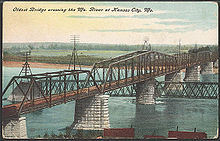
Image: Public Domain

[1] https://www.saddleandsirloinportraitfoundation.org/post/george-henry-hammond-inducted-in-1953-or-1954

2Encyclopedia of Chicago

3 Dallas population

Thank you so much for sharing such a fascinating post.

Here’s the blurb:

Two men, two dreams, two new towns on the plains, and a railroad that will determine whether the towns—one black, one white—live or die. 

Will Crump has survived the Civil War, Red Cloud’s War, and the loss of his love, but the search for peace and belonging still eludes him. From Colorado, famed Texas Ranger Charlie Goodnight lures Will to Texas, where he finds new love, but can a Civil War sharpshooter and a Quaker find a compromise to let their love survive? When Will has a chance to join in the founding of a new town, he risks everything—his savings, his family, and his life—but it will all be for nothing if the new railroad passes them by.

Luther has escaped slavery in Kentucky through Albinia, Will’s sister, only to find prejudice rearing its ugly head in Indiana. When the Black Codes are passed, he’s forced to leave and begin a new odyssey. Where can he and his family go to be truly free? Can they start a town owned by blacks, run by blacks, with no one to answer to? But their success will be dependent on the almighty railroad and overcoming bigotry to prove their town deserves the chance to thrive.

Will’s eldest sister, Julia, and her husband, Hiram, are watching the demise of their steamboat business and jump into railroads, but there’s a long black shadow in the form of Jay Gould, the robber baron who ruthlessly swallows any business he considers competition. Can Julia fight the rules against women in business, dodge Gould, and hold her marriage together?

The Founding tells the little-known story of the Exodusters and Nicodemus, the black town on the plains of Kansas, and the parallel story of Will’s founding of Lubbock, Texas, against the background of railroad expansion in America. A family reunited, new love discovered, the quest for freedom, the rise of two towns. In the end, can they reach Across the Great Divide? The Founding is the exciting conclusion to the series.

Praise for The Founding:

“Michael is an excellent storyteller and has done a wonderful job depicting Luther, and the other black characters in this book.  He has done his homework and depicts many historical facts about Nicodemus in a most enlightening and creative way.  It has been a pleasure working with someone who has made a concerted effort to get things right.  

~ Angela Bates

Nicodemus Descendant/Historian

Executive Director

The Nicodemus Historical Society and Museum
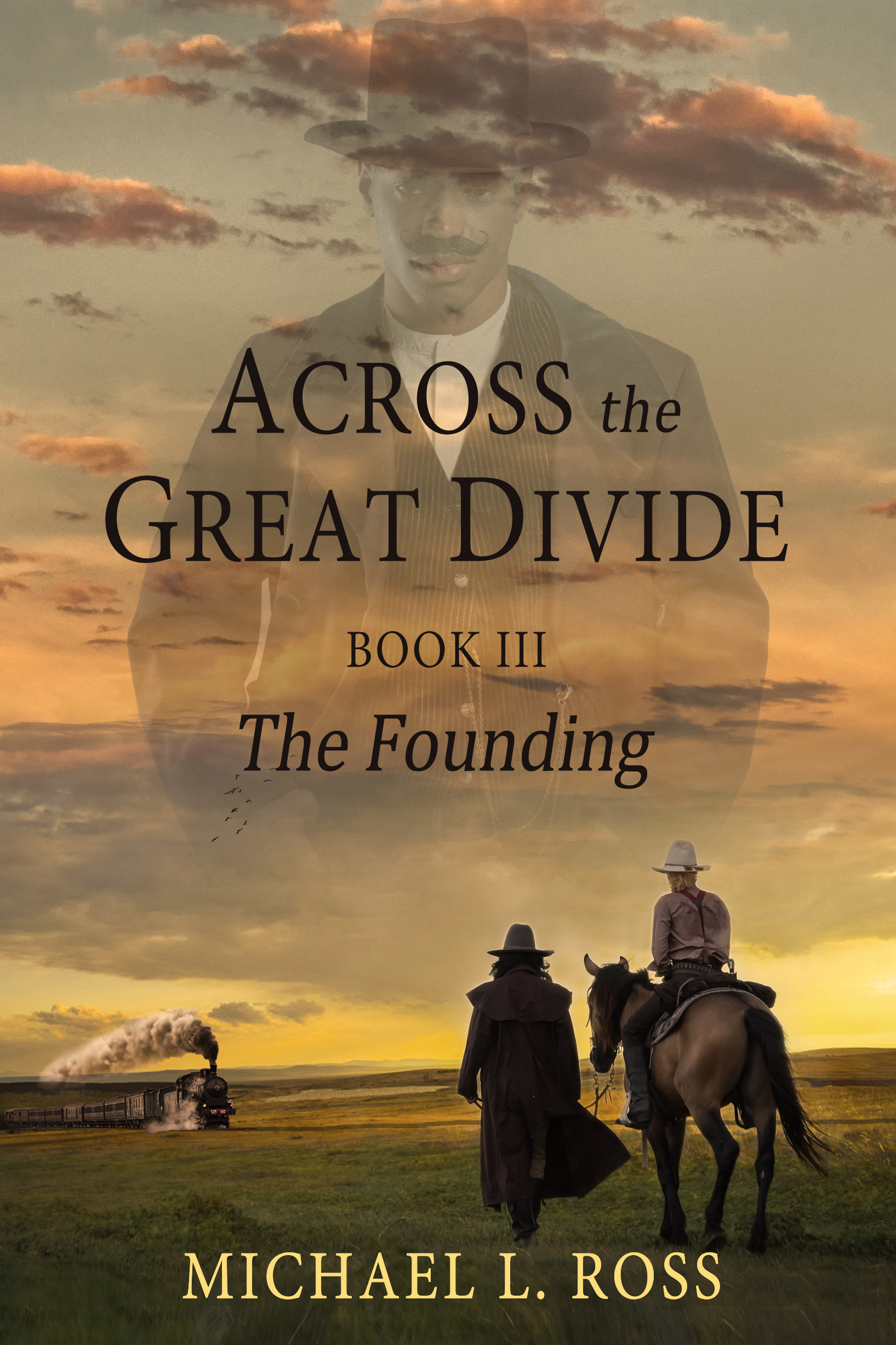
Watch the book trailer:

https://www.youtube.com/watch?v=NbVY8_AIpJQ

Buy Links:

Universal Link: 

Amazon UK: Amazon US:  Amazon CA:  Amazon AU: 

Meet the author

Michael Ross is a lover of history and great stories.

He’s a retired software engineer turned author, with three children, and five grandchildren, living in Newton, Kansas with his wife of 39 years. Michael graduated from Rice University and Portland State University with degrees in German and software engineering. He was part of an MBA program at Boston University. 

Michael was born in Lubbock, Texas, and still loves Texas. He’s written short stories and technical articles in the past, as well as articles for the Texas Historical Society. 

Across the Great Divide now has three novels in the series, “The Clouds of War”, and “The Search”, and the conclusion, “The Founding”.  “The Clouds of War” was an honorable mention for Coffee Pot Book of the Year in 2019, and an Amazon #1 best seller in three categories, along with making the Amazon top 100 paid, reviewed in Publisher’s Weekly. “The Search” won Coffee Pot Cover of the Year in 2020, and Coffee Pot Silver Medal for Book of the Year in 2020, as well as short listed for the Chanticleer International Book Laramie Award. 

Connect with Michael:

Website:  Twitter:  Facebook: 

LinkedIn:  Instagram:  

Book Bub: Amazon Author Page:  Goodreads: 
Follow the Across the Great Divide blog tour with The Coffee Pot Book Club

Book Review Victoria and Violet by Rachel Brimble #blogtour #historicalfiction #historicalromance #bookreview

Here’s the blurb:

It should be a dream come true to serve the Queen of England…

When Violet Parker is told she will be Queen Victoria’s personal housemaid, she cannot believe her good fortune. She finally has the chance to escape her overbearing mother, a servant to the Duchess of Kent. 

Violet hopes to explore who she is and what the world has to offer without her mother’s schemes overshadowing her every thought and action.

Then she meets James Greene, assistant to the queen’s chief political adviser, Lord Melbourne. From entirely different backgrounds and social class, Violet and James should have neither need nor desire to speak to one another, yet through their service, their paths cross and their lives merge—as do their feelings.

Only Victoria’s court is not always the place for romance, but rather secrets, scandals, and conspiracies…

Purchase Links 

UK – https://www.amazon.co.uk/Victoria-Violet-Royal-Maids-Book-ebook/dp/B0B6T47ZX5

US – https://www.amazon.com/Victoria-Violet-Royal-Maids-Book-ebook/dp/B0B6T47ZX5

My Review

Victoria and Violet is a beautifully evoked story of Queen Victoria and her court, in the days before and during her marriage to Prince Albert. I won’t be alone in having read other books and watched film adaptations about the young Victoria, and Victoria and Violet really does capture the feel and mood of the royal court.

Violet is that most typical of women of the era, her life revolving around the will of another, only on this occasion, her mother, and her mother’s employer, Victoria’s mother, the Duchess of Kent. And we all know that’s not going to end well. Only, while she might be sent to spy on Queen Victoria, Victoria quickly strikes up a friendship with her maid and together, the two seem to be able to conquer just about anything the Duchess of Kent puts in their way.

James Greene too is not able to do what he wants, an expectant father, who was also a brutal father, expecting him home to run a prosperous estate, whereas James is keen to continue his work with Melbourne, the Prime Minister, and then Prince Albert himself.

This is a story filled with twists and turns. Will James and Violet fall in love? Will they be able to live their lives together? Or will his father, and her mother, force them apart?

This really is a delightful tale, well researched and very well grounded in the era and period. I’m really pleased I decided to read it:)

Meet the author

Rachel lives in a small town near Bath, England. She is the author of 29 published novels including the Ladies of Carson Street trilogy, the Shop Girl series (Aria Fiction) and the Templeton Cove Stories (Harlequin). Her latest novel, Victoria & Violet is the first book in her new Royal Maids series with the Wild Rose Press.

Rachel is a member of the Romantic Novelists Association as well as the Historical Novel Society and has thousands of social media followers all over the world. 

Connect with Rachel

Website: https://bit.ly/3wH7HQs

Twitter: https://bit.ly/3AQvK0A

Facebook: https://bit.ly/3i49GZ3

Instagram: https://bit.ly/3lTQZbF

Follow the Victoria and Violet tour with Rachel’s Random Resources

Alison Morton is talking about Julia Prima #HistoricalFiction #BlogTour #CoffeePotBookClub #BlogPost

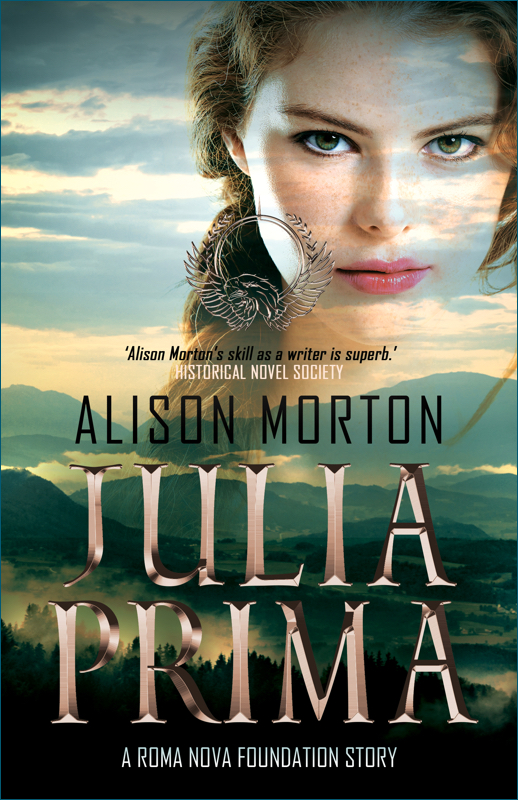
I’m delighted to feature JULIA PRIMA by Alison Morton, and she’s written a fabulous post about her book.

The dangers of travelling in the fourth century

Historical fiction at its best transports the reader into another time and place – the heat, fear and smell of battle, the celebration of a marriage where fire flickers nearby when the bride’s hair is arranged with a sharp spear point, or a voyage across a cold featureless sea where you feared might drop off the edge of the world into oblivion.

Style, tone and construction may be radically different, and the settings may be frightening or fascinating, but all good historical fiction conveys the impression of being an eyewitness to what is happening around them as well as how they are acting in that context.

One immediate way of anchoring a book in the past is thinking about how people travelled. We are so used to leaping into the car or catching a train or plane that we forget how completely different journeys were for pre-industrial people.

The concept of distance has changed radically over time. Over much of human history, it was measured in days or weeks taken rather than in land measurement such as miles. Depending on modes of transport available, whether imperial courier’s horse, an ox cart or simple trudging on foot, the perception of distance depended on the state of tracks, paths or roads. 

JULIA PRIMA features a journey on horseback through mountains, transfer on a coastal barge, a voyage on a trading ship, crossing the Apennines on horseback and finally walking through the city of Rome. Each method presents challenges. Horses must be rested and fed regularly. Roman imperial couriers carrying urgent dispatches would change horses at official way stations every 8-10 miles for this reason. Only in Hollywood films and Netflix series can they gallop on and on all day. Saddles at that time had four horns – two back and two front – which held the rider in securely; there were no stirrups. Then there was the question of whether horses were shod or not . . . 

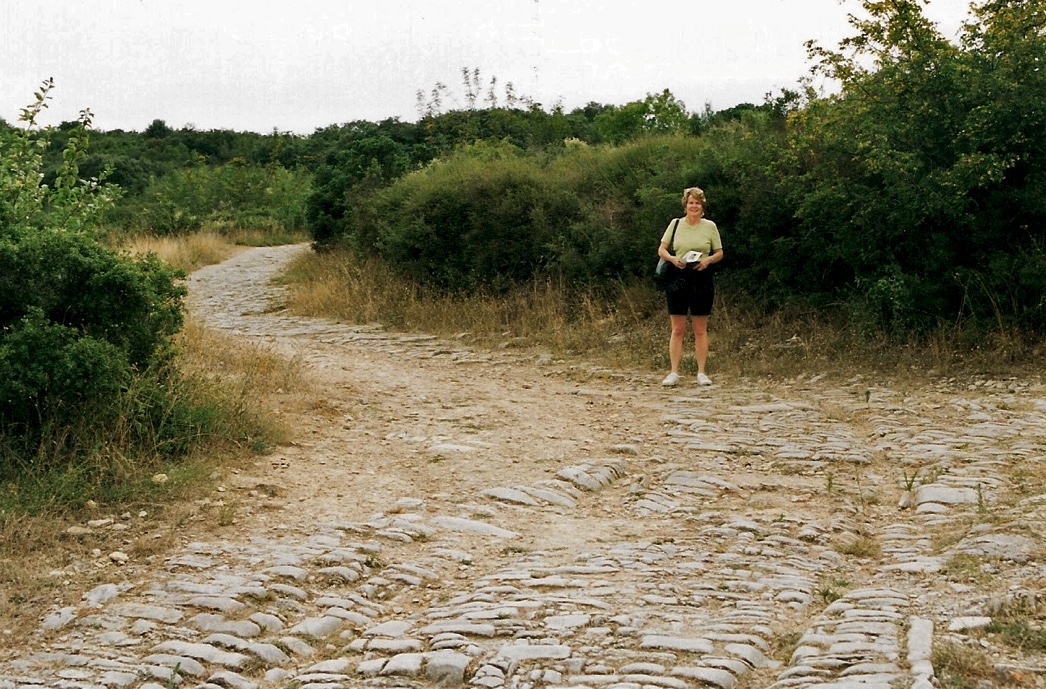
Not all Roman roads were hard metalled and impeccably paved and drained. Primarily, the roads had been built for military use as a quick and efficient means for overland movement of armies and officials. Altogether there were more than 400,000 kilometres (250,000 miles) of roads, of which over 80,500 km (50,000 miles) were stone paved. Many were gravelled, even in towns with some slabbed surfaces in the most important parts such as the forum. Added to these were private roads, rural roads, tracks and link roads. Much more detail here: https://www.alison-morton.com/2020/12/18/on-the-road-to-rome/

Taken together, they allowed the movement of people and goods, and connected isolated communities, helping them to absorb new ideas and influences, sell surplus goods, and buy what they could not produce locally. This trade resulted in an increase of wealth for everyone to a level not seen before and is suggested as a strong reason why many people strove to adopt the lifestyle of their conquerors. 

But towards the end of the fourth century, there were potholes, missing slabs and invasive vegetation as local authorities could not afford their upkeep. Bridges built earlier, especially in the time of Augustus nearly two hundred years earlier, were failing, with parapets missing, holes in the surface and even collapsing completely.

Sailings, even for short passages such as across the Adriatic from Trieste to Ancona, were subject to season, usually May to October, and in the late fourth century, the most fearful danger: pirates. The imperial navy was mostly based in Constantinople by the time of JULIA PRIMA in AD 370 and the few ships still based in Ravenna would not offer comprehensive protection. Storms could bring all sea transport to a grinding halt as could a complete lack of wind. Nevertheless, traders still crossed the water, usually in convoys, and if fortunate escorted by a naval ship which gave an appearance, if not the reality, of protection.

Ferries today such as the cross-Channel ones offer cushioned seating, restaurants, shops and even cabins with ensuite bathrooms. Julia and her companions travel on the hard deck of a merchant ship with whatever shelter and comfort, such as light mattresses, they brought with them. The galley could provide hot water, but you brought your own washing bowl, cups and eating dishes and your own food. Once it set sail, a ship was a self-contained and vulnerable world that was lost to all human contact until it docked again. No ship’s radio, GPS, satellite tracking and communication meant that it could disappear without trace and nobody would know its fate. And news of events, e.g. death of an emperor, would only be available once the ship docked. 

Many travellers stayed with friends, family or trade colleagues. In larger cities and ports, there was a range of possibilities from well-equipped rooms in top class inns to a bed in a shared dormitory, often also shared with travellers of the insect variety!

At the most simple were private houses offering a room in their property for a fee. They could include stabling for animals and supper for their riders. Perhaps an early form of B&B! Travellers would know these houses by a lamp lit over their entrance door. Often this was the only form of hospitality in rural or remote areas.

A mansio gave accommodation to official visitors and feeding, watering and stables for their animals. They had to produce a travel document/official chit to show their entitlement to gain access to these government-funded facilities or they were back on the road again. 

Non-official travellers had a choice, depending on the size of their purse and their inclination. Cauponae were often sited near the mansions and performed the same functions at a lower level of comfort. However, they suffered from a bad reputation as they were frequented by thieves and prostitutes. Tabernae provided hospitality for the more discerning traveller. In early days, they were mere houses along the road, but as Rome grew, so did its tabernae, becoming more luxurious. Of course, some did not, but they were generally above the level of the scruffy cauponae. Many cities of today grew up around a taberna complex, such as Rheinzabern in the Rhineland. 

A third system of way stations serviced vehicles and animals: the mutationes (changing stations). In these complexes, the driver could purchase the services of wheelwrights, cartwrights and equarii medici, or vets.  Some hostelries had elements of each type above, so historical fiction writers can often use generic descriptions such as inns or lodgings and vary the description of the accommodation as it suits their story. 

For travellers in the late imperial period, such as Julia in AD 370, the danger from bandits had increased markedly. Some were dispossessed agricultural workers, some escaped slaves, mercenaries for hire or just criminals. As systems dissolved, the military became less visible and finances to fund them ran out, thereby making travelling increasingly dangerous.

Here’s the blurb:

“You should have trusted me. You should have given me a choice.”

AD 370, Roman frontier province of Noricum. Neither wholly married nor wholly divorced, Julia Bacausa is trapped in the power struggle between the Christian church and her pagan ruler father. 

Tribune Lucius Apulius’s career is blighted by his determination to stay faithful to the Roman gods in a Christian empire. Stripped of his command in Britannia, he’s demoted to the backwater of Noricum – and encounters Julia.

Unwittingly, he takes her for a whore. When confronted by who she is, he is overcome with remorse and fear. Despite this disaster, Julia and Lucius are drawn to one another by an irresistible attraction.

But their intensifying bond is broken when Lucius is banished to Rome. Distraught, Julia gambles everything to join him. But a vengeful presence from the past overshadows her perilous journey. Following her heart’s desire brings danger she could never have envisaged…

Buy Links:

Universal Link: https://books2read.com/JULIAPRIMA

Amazon UK:   Amazon US:  Amazon CA:  Amazon AU: 

Barnes and Noble:  Waterstones:  Kobo:  Apple: 

Meet the author:

Alison Morton writes award-winning thrillers featuring tough but compassionate heroines. Her nine-book Roma Nova series is set in an imaginary European country where a remnant of the ancient Roman Empire has survived into the 21stcentury and is ruled by women who face conspiracy, revolution and heartache but with a sharp line in dialogue. 

She blends her fascination for Ancient Rome with six years’ military service and a life of reading crime, historical and thriller fiction. On the way, she collected a BA in modern languages and an MA in history.  

Alison now lives in Poitou in France, the home of Mélisende, the heroine of her latest two contemporary thrillers, Double Identity and Double Pursuit. Oh, and she’s writing the next Roma Nova story.

Connect with Alison

Alison Morton’s World of Thrillers site: 

Facebook author page:  Twitter: 

Alison’s writing blog:  Instagram:  Goodreads:  

BookBub:  Alison’s Amazon page:  Newsletter sign-up: 

Follow the JULIA PRIMA blog tour with The Coffee Pot Book Club

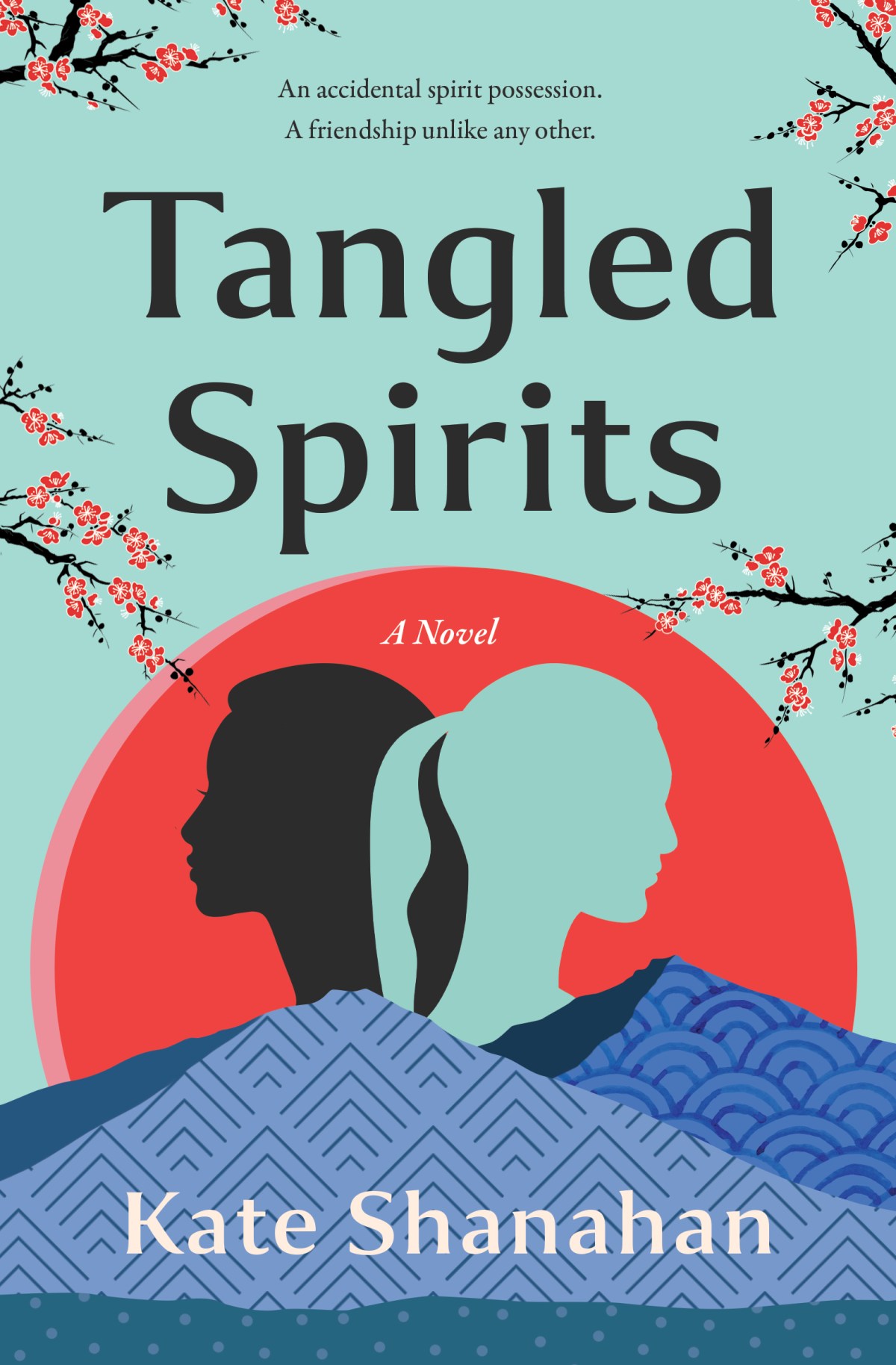
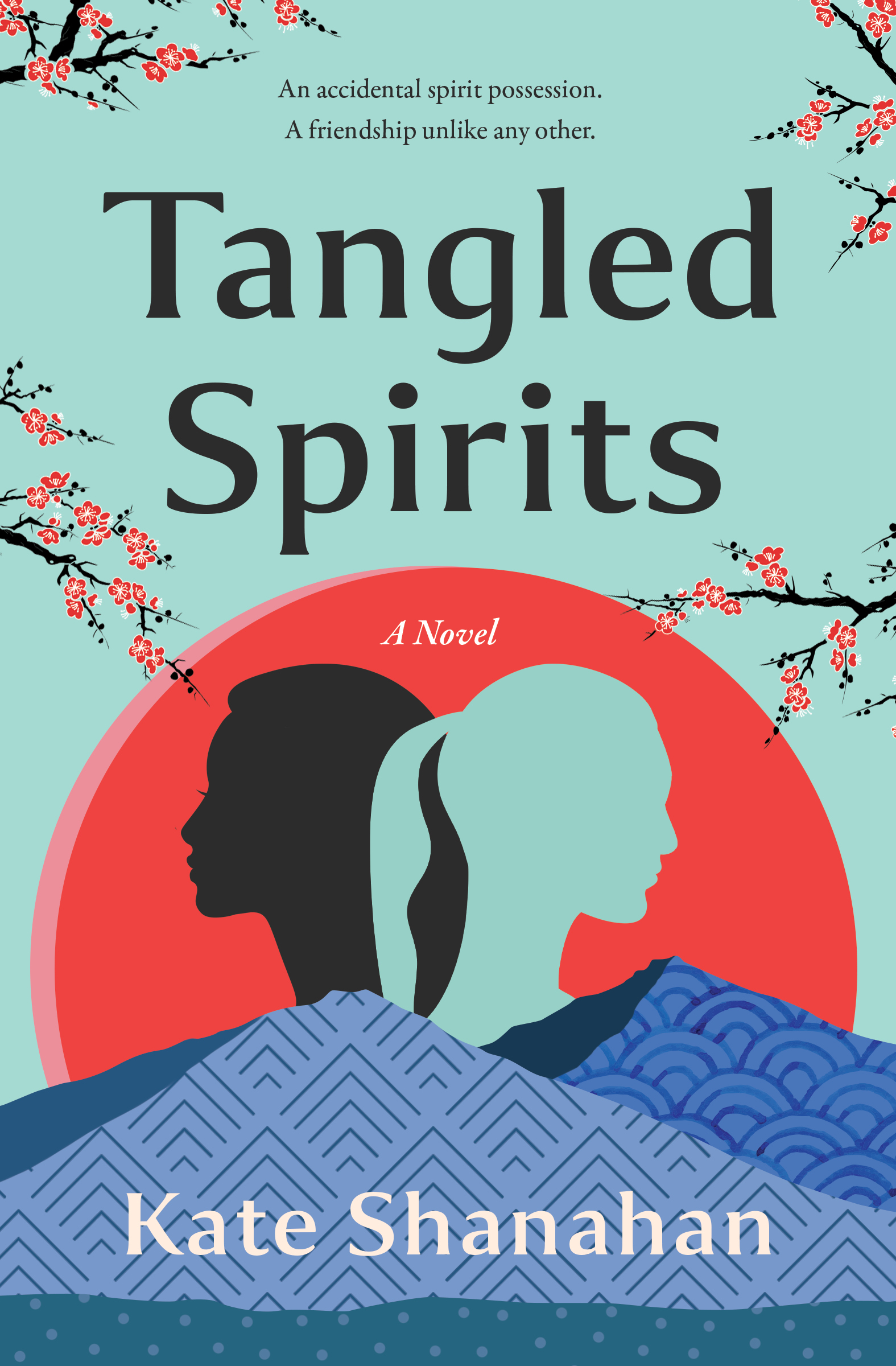
Today, I’m incredibly excited to share a guest post by Kate Shanahan about her time-slip historical fantasy book, Tangled Spirits, set in medieval Japan (It’s a fabulous book that I highly recommend).

Hi, I’m Kate Shanahan, author of Tangled Spirits, a time-slip historical fantasy set in medieval Japan before shogun, samurai, and sushi were a thing. I’m blogging today about the cultural environment in 10th-11th centuries Japan that fostered the highest level of female literacy in the world at this time (among the aristocratic elite, that is.)

The world’s first full-length novel is usually considered to be Tale of Genji, written by Murasaki Shikubu, a lady-in-waiting at the imperial court of Japan at the beginning of the 11th century. She wrote this long, complex novel in an era when nearly all women everywhere in the world (and most men too) could neither read nor write. And not only did she write it, but enough people enjoyed reading it to ensure it was copied, shared, sold, borrowed, studied, illustrated, filmed, and gamified over the next 1000+ years.

I read Tale of Genji when I taught English in Japan. That same year, I read The Pillow Book, a journal written by lady-in-waiting Sei Shonagon, a contemporary of Murasaki’s. Sei invented a new form of journal called zuihitsu or ‘miscellany.’ In today’s terms, it’s more like the world’s first blog. 

Both Sei and Murasaki were ladies-in-waiting in the court of Emperor Ichijo, and they both could read and write Chinese as well as Japanese, rare skills for women even in their erudite sphere. How is it that these two women in medieval Japan both managed to create new forms of literature that are still studied today?

In the course of my research, I learned that women held many positions of high rank and even power in Japan’s early history. In fact, eight of Japan’s emperors have been women, six of them before the year 770. The Heian Period (794 to 1185) is known as the ‘golden age of Japan’ for its flowering of the arts and literature, and much of this flowering came from girl-power. 

(Before I go further, let me be clear that I’m only referring to the tiny elite at the top of the food chain who led a life of luxury and leisure far, far removed from the hardships of the unranked.)

I’ve noticed that Westerners are often surprised at some of the rights and privileges women enjoyed in this era in Japan. In the Heian Period, married noblewomen often continued to live with their parents after marriage, with the husband stopping by from time to time to see her. The wife’s father or uncles influenced the education and development of her children. This is called a ‘uxorial’ form of marriage, and it not only gave a woman more control and influence over raising her children, it also meant that if she weren’t happy with her husband’s behavior, she could send him away without seeing him. Women also could initiate a divorce and remarry. Men often had several wives and consorts, and women just one (at a time), but love affairs were not frowned upon as long as discreetly managed. 

The most important element of the environment that eventually produced Tale of Genji and The Pillow Book was the Fujiwara Regency. The emperor’s role was a sacred one with a focus on the rituals and prayers needed to keep divinities happy, so the regent’s role was a political, secular one. There were 21 regents from the Fujiwara clan between 804 and 1238, and the most famous was Michinaga, who was regent during both Sei Shonagon and Murasaki Shikibu’s tenure at court. In the course of my research for Tangled Spirits, I learned this proverb: “if one must have a child, let it be a girl.”  Fujiwara clan members gained power and access to the emperor by marrying their daughters to him. Those daughters produced children who often became Crown Prince and Emperor, and because of the uxorial tradition, Fujiwara regents kept their power by their influence over their imperial grandchildren. And that made daughters more valuable to a Fujiwara regent (or regent wanna-be) than a son. 

And literacy comes into play because it was important for these Fujiwara daughters to be able to entice the emperor with their beautiful calligraphy, their skill with writing poetry, and with reading out loud to him. Beauty and elegance were of utmost importance at court in this era, and calligraphy could make or break a love affair. Thus a high priority was placed on the education of potential imperial consorts.

And then once a Fujiwara daughter was at court, whether as a concubine, an official consort, or a Royal Consort (Empress), it was important for that consort to have women around her with skills in calligraphy, poetry, witty repartee, and story-telling, both to make the salon attractive to the Emperor and to entertain the consort. Women in this elite class lived lives of comparative leisure, and they stayed indoors most of the time. Reading, writing, and story-telling flourished as entertainment. 

And that created a sort of domino effect. Parents might not be of a high-enough rank for their daughters to be selected for the Emperor, but they educated their daughters to make them attractive to the consort’s salon, and that is how both Sei Shonagon and Murasaki Shikibu came to court.

It’s clear from the diaries of Sei Shonagon and Murasaki Shikibu that they both could read Chinese writing as well as the native ‘onnade’ and that such learning was considered masculine. Murasaki wrote that Sei was a show-off for not hiding her knowledge of Chinese, while Sei wrote that male courtiers sent poems in Chinese as a sort of prank, hoping to force her to reveal her knowledge (but she was too clever for that.) However, recent research indicates that a nobleman might teach his daughter to read and write Chinese as well as Japanese to improve her chance to obtain a position as an official in the Imperial Handmaid’s Office. Murasaki Shikibu writes in her diary that she learned Chinese by eavesdropping on her brother’s lessons, but it’s possible that both Murasaki and Sei Shonagon were taught Chinese reading and writing for that reason, as neither family was in the top ranks of nobility. Some high-ranking men even sought to marry women who could read Chinese as a skill that could help their own careers in government bureaucracy.

If you’d like to read more blog posts about Heian Japan or find out more about Tangled Spirits, you can find mine at kvshanahan.com. 

If you’d like to read more about literacy in this era, here’s an interesting article that I found in jstor.org.

Heldt, G. (2005). Writing like a Man: Poetic Literacy, Textual Property, and Gender in the “Tosa Diary.” The Journal of Asian Studies, 64(1), 7–34. http://www.jstor.org/stable/25075675

Here’s the blurb for Tangled Spirits.

Journey to the imperial court of Japan as Kate Shanahan skillfully blends fictional and historical figures and events into a time-slip tale of intrigue, personal sacrifice, and a friendship that spans a thousand years. 

Two spirits. One body. It’s harder than it looks.

2019: Anxious and insecure, Mina Cooper wants to change her life, to change herself, but she gets more change than she bargains for when her spirit is pulled into the past and into someone else’ body – in 10th century Japan. And now she has a lot more to be anxious about. Like exorcism. And bandits. And chaotic magic by an inexperienced shaman. 

999: Desperately lonely after her mother and sister die in an epidemic, aspiring shaman Lady Masako attempts to call her mother back from the spirit world, but gets possessed by Mina instead.

After a struggle for control and a failed exorcism, the two spirits agree to cooperate long enough to get help from the Royal Astrologer, the only person powerful enough to send Mina home.

But his help comes at a cost, and Mina’s imperfect knowledge of history offers little to negotiate with. And the longer he waits to help her, the greater the risk her spirit will fuse with Masako’s, and she’ll never get home.

Meet the author

Kate grew up in Massachusetts, but spent 4th, 8th, and 11th grades living in England, and speaks both languages (British and American) fluently. After graduating from University of Michigan with a BA in Political Science (East Asia Concentration), Kate taught English in Sapporo, Japan for two years. She enjoyed the experience so much that she returned to U of M for an MA in Asian Studies (Japan Specialization), and while there, worked part-time for the Center for Japanese Studies. Fortunately for Kate, Honda was expanding operations in Ohio around the time she finished, and she spent an entire career at Honda in project, business, and people management, thrilled to be able to travel to Japan and speak Japanese for work. Then she retired to work on that book about Sei Shonagon that she always had in the back of her mind to write, and that book evolved into Tangled Spirits.
 
After all those years in northern latitudes, Kate and her husband recently moved to Florida’s Gulf Coast where the sunshine makes it difficult to focus on writing. But she’s determined to do it anyway. After a bike ride.

Kate Shanahan Website

Tangled Spirits on Amazon

Kate Shanahan Instagram

Tangled Spirits is on special offer until 19th July 2022, for 99p/99c on Amazon UK/US and is also included in a Kindle Unlimited Subscription

Good luck with the new book, Kate. Thank you so much for such an interesting post about Japan. I can see why you were drawn to the period.

Here’s my review

I was lucky enough to read an early version of Tangled Spirits, and I flew through it in two days. It’s a fantastic and really intriguing story.

I liked the whole story – the idea of a 21st-century woman’s mind in a 10th-century woman’s body, seeing everything through new eyes, putting both current interpretations on etiquette and prevailing thoughts, as well as the 10th-century justification for it all. It was just tongue in cheek, and court politics enough, to ensure the reader always wants to know what’s going to happen.

Masako and Mina are both intriguing characters. As the story is told through Mina we know more about her thoughts and more about Masako’s actions. I could understand both of their viewpoints well enough, even if like Masako, I found it a bit frustrating that Mina wouldn’t share more of her knowledge of the future. I enjoyed that as time went on, they acted more and more like one another.

A really enjoyable read and one I highly recommend.

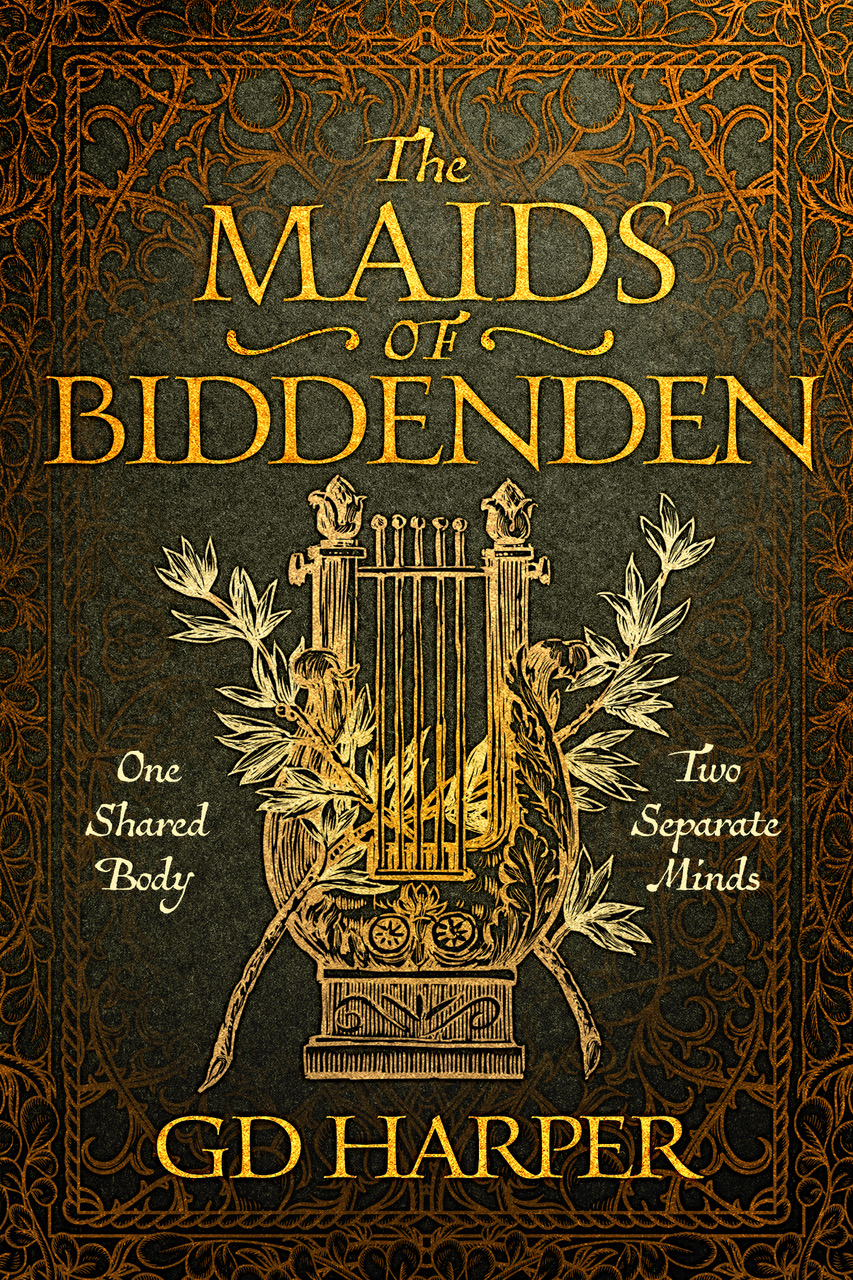
Today, I’m reviewing the rather fabulous The Maids of Biddenden by GD Harper as part of the #blogtour #histfic #12thCentury

Here’s the blurb:

‘There is no me; there is no you.

There is only us.’

The Maids of Biddenden is inspired by the real-life story of conjoined twins Mary and Eliza Chulkhurst, born in 1100 into a wealthy family from a small Kent village.

Joined at the hip, the sisters overcome fear and hostility to grow into gifted and much-loved women ­– one a talented musician and song-writer, the other a caring healer and grower of medicinal plants. Entangled in the struggles for power and influence of the great Kent nobles of the time, they achieve much in their lifetimes and leave behind a legacy in Biddenden that survives to this day.

This is the heart-warming and inspirational story of two remarkable women leading one joint life, challenging adversity to become the best they can be.

Review

The Maids of Biddenden is that rare beast which entirely absorbs the reader from page one. Helped by a flowing style of writing, and the immediate and impending danger that the twins find themselves in as six-year-olds, the reader is entirely absorbed in the story, and their fate, so much so that it’s difficult to put the book down. That said, it is not just the twins themselves that drive the story – the people they interact with, those with their best and worst interests at heart – are all believable and well written, and there are occasions when the reader will be left frustrated and angered that some seem to face little punishment for their actions. The story has a number of points of view, and I found that they all worked very well – offering a view of the twins as they think of themselves, and also as others perceived them.

The story is effectively split in two; the first 45% tells the story of the Maids as young children. This element of the story is filled with a deep sense of foreboding that drives the story onward and makes the reader fearful for the future of the Maids. The narrative then moves forward a few years, and we see them as young women, trying to make a name for themselves and use their talents for good. At this point, the immediate landscape that the Maids encounter broadens considerably, and we move away from the nunnery and the settlement of Biddenden, into the politics and events of the early twelfth century, that almost consume the lives of the Maids for the remainder of their years – they lived during the time of the tragedy of the White Ship.

The story doesn’t so much lose focus here, but because the impending danger has passed, the reader is instead absorbed in how the twins accomplish all that they do. There is a great deal of attention to detail here – both medical knowledge and music – and it’s fascinating to see how the Maids’ lives interact with known events from the period.

This is a delightful story. I was entirely engrossed and found myself snatching what time I could to carry on reading it – something that doesn’t happen all that often. I highly, highly recommend The Maids of Biddenden for fans of historical fiction, and also for those who don’t normally read the genre. The challenges that the twins face are well told, and the reaction their appearance sparks are conveyed well, although as the reader you will be offended by the prevailing belief that they are Godless and a monstrosity, and the fact that they were a ‘sight to see’ as opposed to always being appreciated for who they were and what they could accomplish. The historical notes at the back of the novel are also fascinating.

A truly heart-warming story.

Purchase Links

UK – https://www.amazon.co.uk/Maids-Biddenden-heart-warming-inspirational-12th-century-ebook/dp/B09ZBKX9S4/

US – https://www.amazon.com/Maids-Biddenden-heart-warming-inspirational-12th-century-ebook/dp/B09ZBKX9S4/

Meet the author

I became a full-time author in 2016, publishing three novels under the pen name GD Harper. I have been both a Wishing Shelf Book Award finalist and Red Ribbon winner, been shortlisted for the Lightship Prize, longlisted for the UK Novel Writing Award and longlisted for the Page Turner Writer Award. The Maids of Biddenden was a finalist in this year’s Page Turner Book Award for unpublished manuscripts, longlisted for the Exeter Book Prize and the Flash 500 Novel Award, and shortlisted for the Impress Prize. 

Connect with GD Harper

Facebook: @gdharperauthor

Twitter: @harper_author

Website: www.gdharper.com

https://www.instagram.com/gdharperauthor/

Follow The Maids of Biddenden blog tour with Rachel’s Random Resources

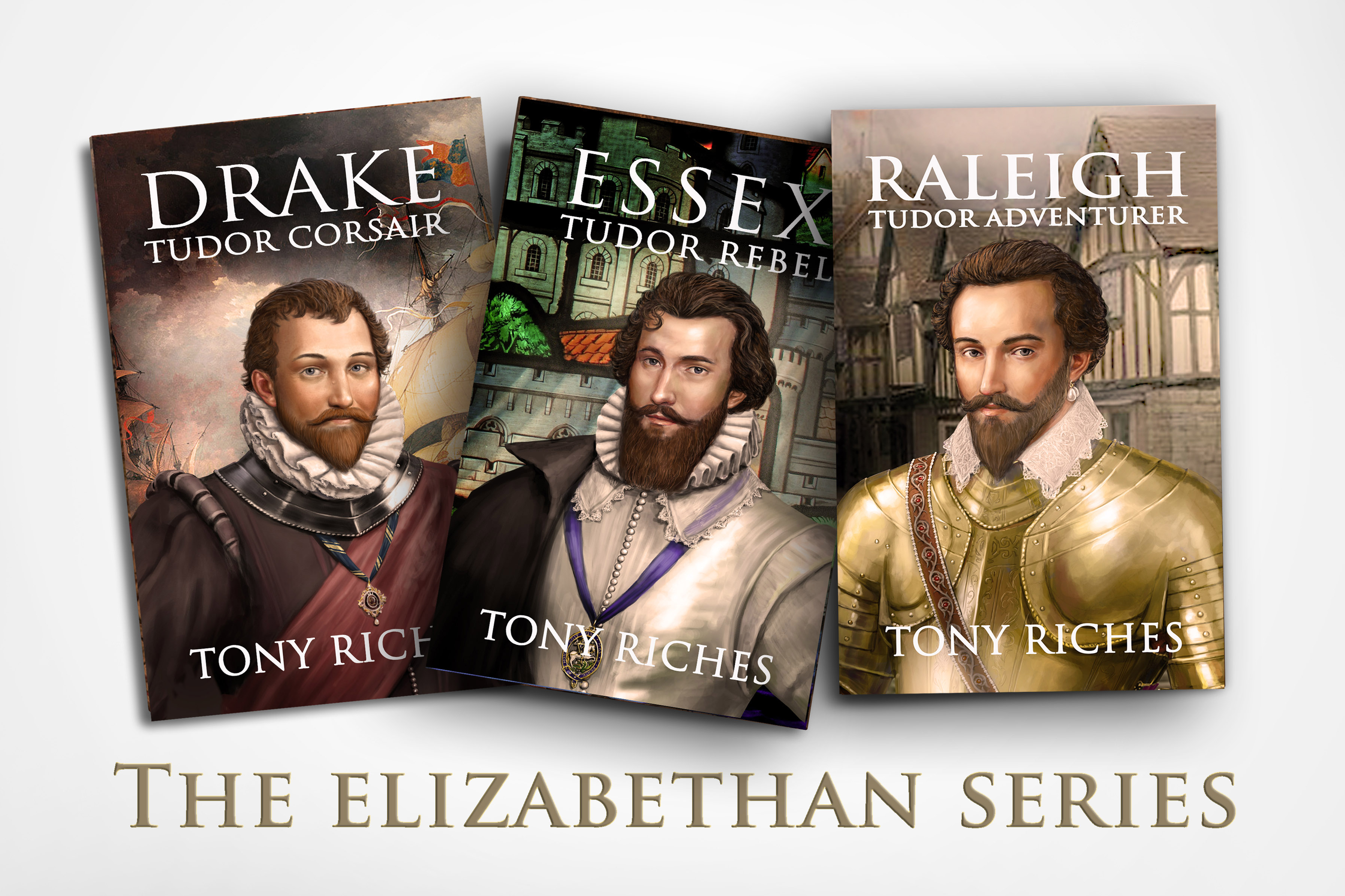
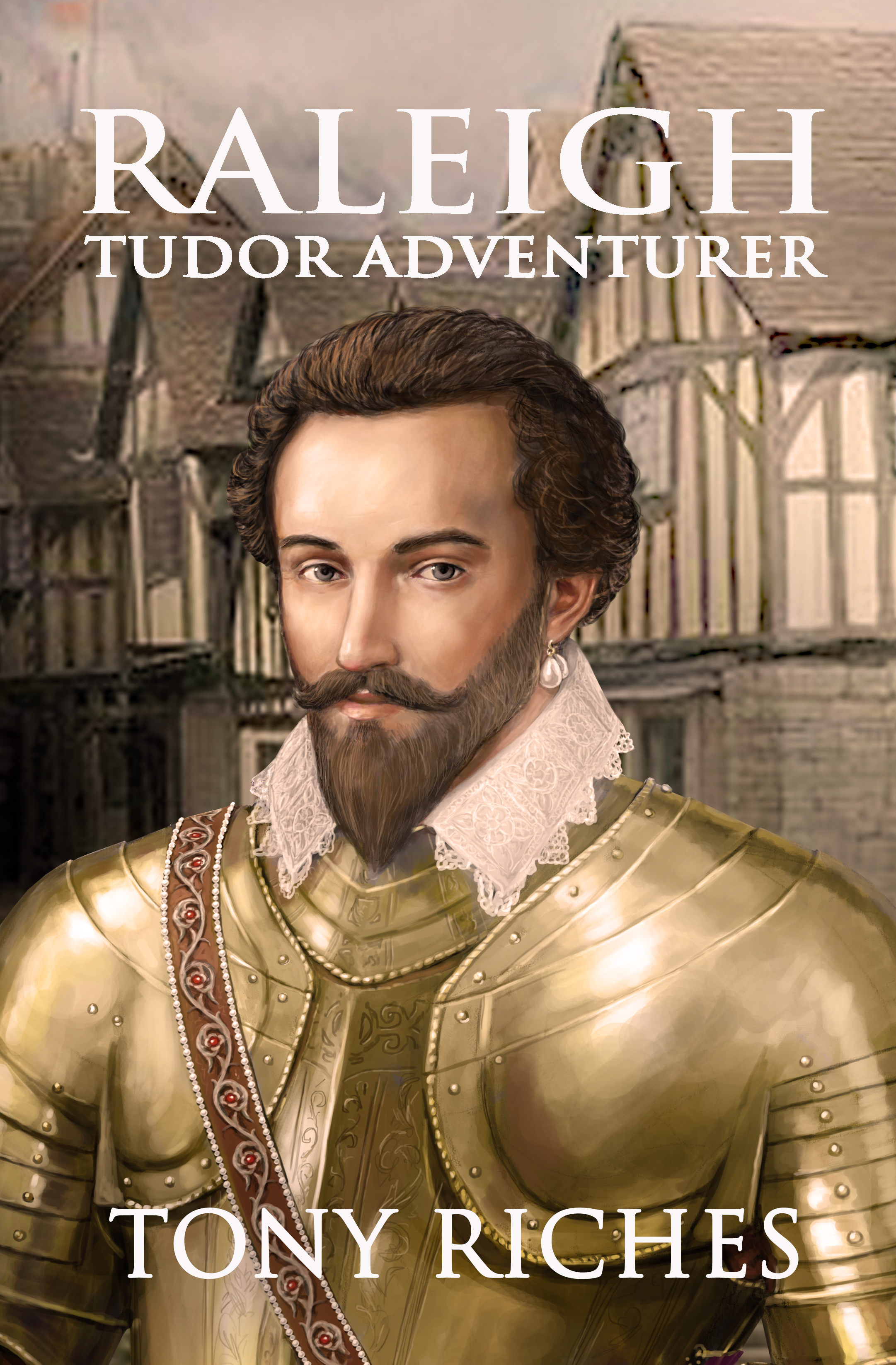
Today, I’m excited to share a fab post by Tony Riches about his new book, Raleigh – Tudor Adventurer #BlogTour

Inspiration to write Raleigh – Tudor Adventurer.

Tudor adventurer, courtier, explorer and poet, Sir Walter Raleigh has been called the last true Elizabethan.

This journey began when I was researching for an historical novel about Henry Tudor, who like me was born in the town of Pembroke, Wales. I eventually uncovered enough original material to write three books, with Henry being born in the first, coming of age in the second and becoming King of England in the third. 

The result was my best-selling Tudor Trilogy, and I decided to continue the stories of the Tudors in a continuous line. I also made a conscious decision to tell the stories through those surrounding King Henry VIII and Queen Elizabeth I, so we see different facets of these complex rulers through the eyes of others.

For my Elizabethan series I chose three very different favourites of the queen, who each saw different sides of her personality. Sir Francis Drake showered her with gold and jewels, stolen from the Spanish, in return for the status he longed for. The Earl of Essex was like the errant son she never had, but Raleigh became her protector, Captain of the Guard, and lived to see the last days of the Tudor dynasty.

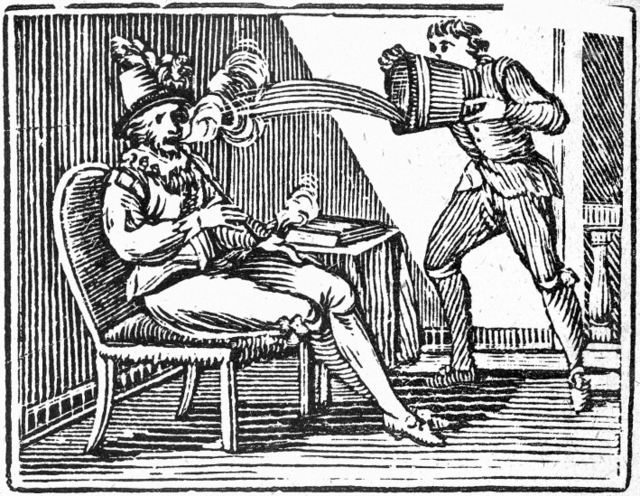
Many of the things I thought I knew about Walter Raleigh proved to be wrong. Raleigh is credited with introducing the potato and tobacco to Britain, but I’ve seen no evidence for either, or for the popular tale of a servant throwing water over him when he mistook the smoke from Raleigh’s pipe for a fire!

Sir_Walter_Raleigh_being_doused

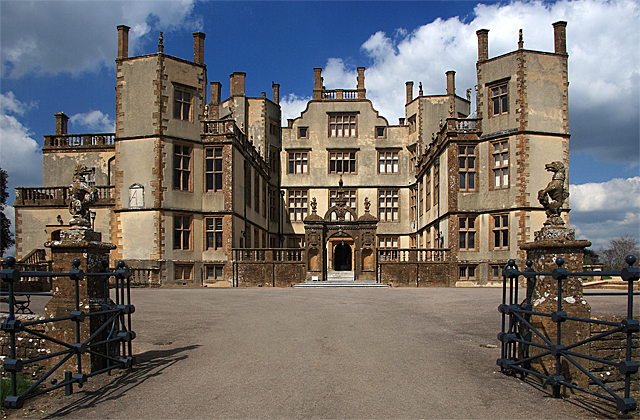
I followed Raleigh across the Irish Sea to the sleepy harbour at Youghal, where he had a house and became Mayor, as well as to the bustling city of Cork, where he served in the English Army of occupation. I also visited Raleigh’s house at Sherborne in Dorset, which still has many original features.

Sherborne Castle

My research uncovered a comprehensive collection of original letters and poetry written by Raleigh. As well as helping me understand his motivation, and the timeline of complex events, they also gave me a sense of his ‘voice’, and how he spoke to the queen and others of her court.

I relied on the comprehensive records of the Elizabethan Court, which set out events in fascinating detail.  I was also lucky to read ‘A Woman of Noble Wit’, a new novel by Rosemary Griggs, about Raleigh’s mother. This led me to explore Walter Raleigh’s relationship with his father, as well as his mother, an aspect of him largely ignored by historical biographers.

My hope is that Raleigh – Tudor Adventurer will help readers see beyond the myths and half-truths, and have a better understanding of the man who has been called the last true Elizabethan.

Thank you so much for sharing. Your research sounds fabulous, and I too am reading A Woman of Noble Wit. Good luck with the new release.

Here’s the blurb:

Tudor adventurer, courtier, explorer and poet, Sir Walter Raleigh has been called the last true Elizabethan.

He didn’t dance or joust, didn’t come from a noble family, or marry into one. So how did an impoverished law student become a favourite of the queen, and Captain of the Guard?

The story which began with the best-selling Tudor trilogy follows Walter Raleigh from his first days at the Elizabethan Court to the end of the Tudor dynasty.

Buy Links:

Available on #KindleUnlimited.

Universal Link: 

Amazon UK: 

Amazon US: 

Amazon CA: 

Amazon AU: 

Meet the author

Tony Riches is a full-time UK author of best-selling historical fiction. He lives in Pembrokeshire, West Wales and is a specialist in the lives of the Tudors. He also runs the popular ‘Stories of the Tudors’ podcast, and posts book reviews, author interviews and guest posts at his blog, The Writing Desk. For more information about Tony’s books please visit his website tonyriches.com and find him on Facebook and Twitter @tonyriches

Connect with Tony:

Blog:  Website:  Podcast:  Twitter: 

Facebook:  Instagram:  Amazon Author Page: 

Follow the blog tour for Raleigh: Tudor Adventurer by Tony Riches with The Coffee Pot Book Club

Today I’m really delighted to feature a guest post from Alistair Tosh about his new Roman era novel, Siege.

Maintaining order in Roman Britannia’s vast militarised zone

The original vision for my ‘Edge of Empire’ series of novels was to write stories that focussed on the lives and adventures of two protagonists from a single Roman auxiliary infantry unit. It was to be set in the north of the province of Britannia and in the wilder, unconquered lands beyond its boundaries. But as I buried myself in the research phase I was continually surprised by what I discovered. Ultimately I gained a greater understanding of the Roman way of doing things and quite fundamentally changed the approach to my stories.

For much of its first 300 years of use Hadrian’s Wall marked the north-west frontier of the Roman Empire. In movies such as The Eagle or Centurion we see Roman foot soldiers astride its battlements looking north, spear and shield in hand. But the Wall was not the-be-all-and-end-all of the north’s defence. What is less understood, at least to me, is that the Wall was really a focal point for a much larger militarised zone that stretched from Lancaster in the south to forts like Blatobulgium and Trimontium well into what is now modern day southern Scotland (I’m ignoring the period of the Antonine wall for simplicity).

It seems evident that the lands both north and south of Hadrian’s Wall were at times restive, if not in down right conflict, with the Roman administration. Whilst auxiliary infantry troops had an important role in keeping the peace, their deployment became increasingly localised in nature, especially in the later centuries of the empire. It was the mounted troops that had the pivotal role in commanding the north.

When researching for my historical adventure novel ‘Siege’, that focuses on the lives of the men of a Germanic cohort, a real life regiment with a mixture of infantry and cavalry. I was surprised by the amount of detail we now have on the everyday life of a Roman cavalryman. In the story I have worked hard to be faithful to that knowledge and attempted to bring it to life for the present day reader.

Most forts in the militarised zone included a cavalry force within their garrisons.

It has been calculated that sustaining a cavalryman with his kit and horse cost 5 times that of an infantryman. Why would the Romans invest so much if they were not an important and  valuable asset? The answer surely must, at least in part, lie in both its symbolic and strategic roles.

Cavalry could move at a rapid pace and cover great distances quickly. They were highly mobile, making them effective on patrols and as scouts both north and south of the Wall. They made speedy messengers, giving warning of sudden threats and incursions. They also ensured food security, protecting local farmland and guarding supply trains to the Wall’s outlying forts. But, probably as importantly, they projected the image of power and renown of Rome and its imperial might. If you have ever seen the Household Cavalry in London or mounted police outside of a football (soccer) stadium you will get an idea of what a Roman turma must have looked like to an Iron Age population.

Outlying forts, north of the Wall, such as at Birrens and Netherby housed specialist, double strength, mixed infantry and cavalry cohorts (milliaria equitata) as well as specialist scouts (exploratores) enabling them to command a significant geographic area and suppress any uprising of local tribes. The effect on the populace must have been as much psychological as physical.

But who were these cavalrymen? Well they certainly weren’t drawn from the Roman aristocracy as they often were in the time of the Republic. No, the names of their units give a clear indication that the Romans recruited from all over the empire from the homelands of its conquered peoples. Germanic and celtic Gaulish units were prevalent, such as the I Nervana Germanorum and the cohors II Tungrorum that garrisoned the fort of Birrens at different times. But regiments from as far away as Spain and modern day Bulgaria and Croatia have also been identified. But as the needs of the empire changed over time individual units would mainly have recruited from the local populations. With sons moving into the family business by joining the cohorts of their fathers and grandfathers.

So what was life like for the cavalryman? Well each troop, known as a turma (typically 30 men), were housed in a single barrack block. Trios of men lived at the back of the building with their horses stabled at the front. There were surely few nights that troopers fell asleep without the sound of the snorts of their mounts accompanied by the smell of hay and dung. Each room had a hearth set against the stable-side wall for warmth and cooking. The decurion, who commanded the turma, lived in rooms at the end of the block along with his family.Troopers ate, slept and kept their weapons and tack in these small rooms. It is also thought that grooms and slaves may have slept in the roof space above.

Training for cavalrymen and their mounts was extensive and intense. If you have seen horses being drilled for modern day dressage you will get the idea, with each trained initially on a long rein to teach the horse basic skills as well as special steps. It is likely that horses were broken and prepared by specialists before being assigned to its rider. They learned to overcome their instinct to flee when startled and to cope in the noise and fervour of combat. The early instruction of the cavalryman would have focussed on the basic skills of controlling and riding the horse whilst holding a sword or spear in the right hand and the shield and rein in the left. From there they would have progressed to training to fight as a turma, with unit drills enabling large numbers of men to manoeuvre in battle. 

The average cavalryman was well armed and armoured. He typically wore chainmail armour that allows greater movement whilst on horseback. Their weapons consisted of the long cavalry sword often referred to as the spatha. They also had a fighting lance and two shorter throwing javelins. Their shields were a variety of shapes including square and oval, but were usually flat with a steel rim and a rounded metal boss to enable it to be used as a weapon.

It is not hard to imagine the damage the charge of even a small unit of auxiliary cavalry could inflict on the largely unprotected bodies of the tribal warriors of the north of Britain. 

Buy Links:

 www.amazon.com/dp/B09SLWHP8T

 www.amazon.co.UK/dp/B09SLWHP8T

Meet Alistair

Alistair lived in the Dumfriesshire countryside for most of his childhood. A region of Scotland filled with ancient place names such as Torthorwald and Caerlaverock. But it was his history teacher’s telling of the tale of Burnswark and the Roman siege of the Iron Age hillfort that fired his love of Roman and Dark Ages history. From there the kernel of the stories for the Edge of Empire series took root.

On leaving school he began a 35-year communications career, firstly with the Royal Navy, that included covert riverine and seaborne operations during the height of ‘The Troubles’ in Northern Ireland, before moving into the corporate world. Military life is unique, and Alistair aims to reflect an authentic view of that experience and its language in his stories.  When not writing or spending time with family, Alistair, his wife Jenny and Hurley the cockerpoo love to walk in the hills of both the UK and Andalucia.


Thank you for such a fabulous guest post. Good luck with the new book.

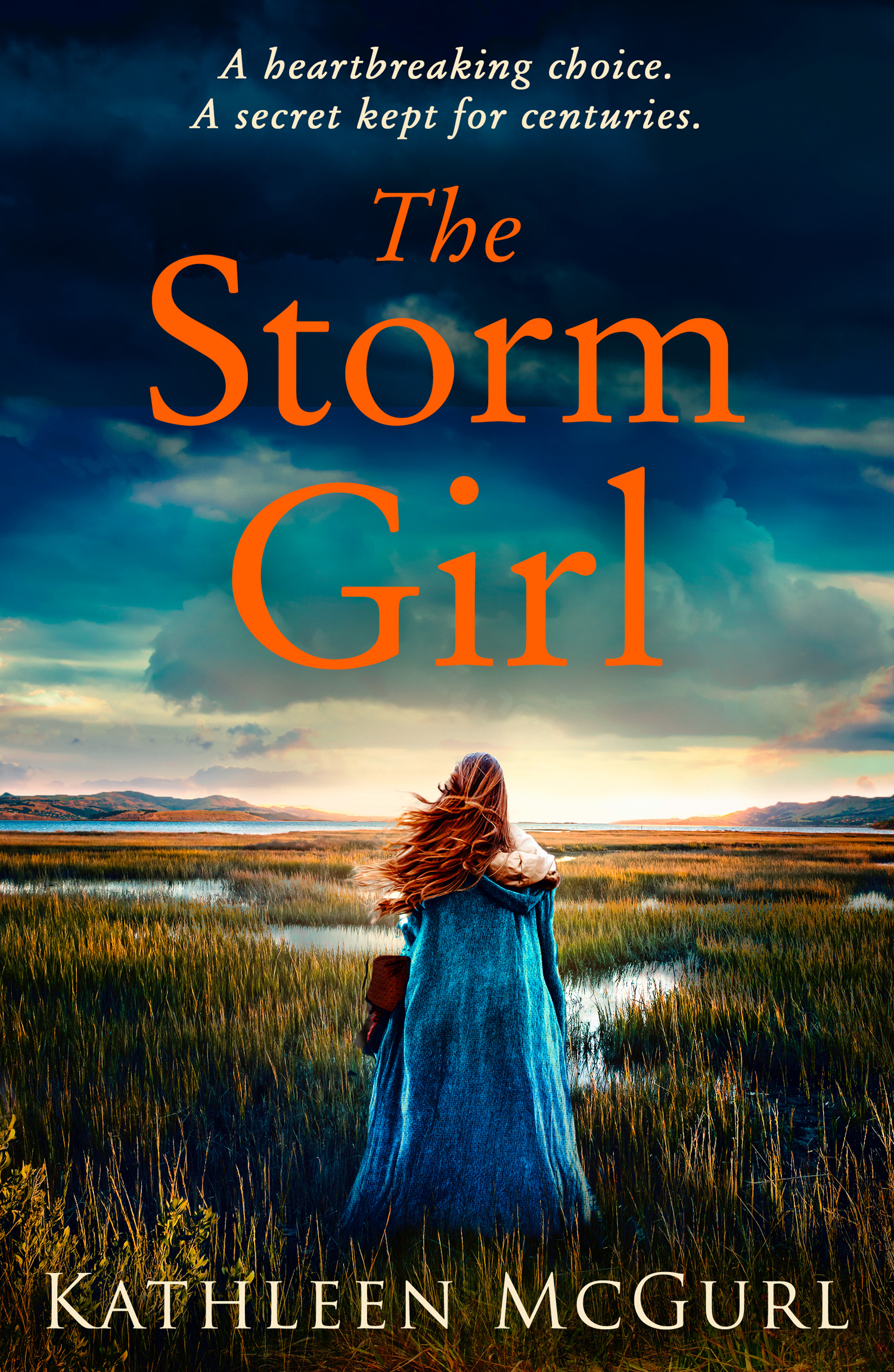
Book Review. The Storm Girl by Kathleen McGurl #blog tour #bookreview

Today, I’m taking part in The Storm Girl by Kathleen McGurl blog tour with Rachel’s Random Resources.

Here’s the blurb:

The gripping new historical novel from the USA Today bestselling author of The Girl from Bletchley Park and The Forgotten Secret.

A heartbreaking choice. A secret kept for centuries.

1784. When Esther Harris’s father hurts his back, she takes over his role helping smugglers hide contraband in the secret cellar in their pub. But when the free traders’ ships are trapped in the harbour, a battle between the smugglers and the revenue officers leads to murder and betrayal – and Esther is forced to choose between the love of her life and protecting her family…

Present day. Fresh from her divorce, Millie Galton moves into a former inn overlooking the harbour in Mudeford and plans to create her dream home. When a chance discovery behind an old fireplace reveals the house’s secret history as a haven for smugglers and the devastating story of its former residents, could the mystery of a disappearance from centuries ago finally be solved?

Sweeping historical fiction perfect for fans of Lucinda Riley, Kathryn Hughes and Tracy Rees.

My review

The Storm Girl is a dual timeline novel, and as a reader and writer of historical fiction, it was the historical storyline that captivated me far more than the modern-day tale of divorce and starting afresh.

Coming at this from a ‘newb’ point of view, I expected both storylines to have some connection, other than the most tenuous one, of them simply taking place in the same space although at different times. That wasn’t what happened, and I did encounter some problems, whereby the one storyline gave away events in the other – which was a little frustrating.

With all that said, I did enjoy this book. The historical storyline, while a little too wholesome for me, did capture my imagination and The Storm Girl is very much a competent and go-getting type of gal that a modern audience will thrill to discover.

Will I try a dual timeline novel again, that remains to be seen? I confess I would have been happy to have the story revolve only around the historical elements, and not worry about the modern-day setting at all, but I more than understand that a dual timeline narrative is extremely popular, and I’m sure fans of this genre will be captivated by this tale of a place in two different timelines, over two hundred years apart, and will, hopefully, consider learning more about their own local history as a result of reading the book.

A firm 4/5 from me – I did appreciate the historical notes at the back of the novel.

Purchase Links

UK – https://www.amazon.co.uk/Storm-Girl-Sweeping-historical-fiction-ebook/dp/B09VYLVP58/

US – https://www.amazon.com/Storm-Girl-Sweeping-historical-fiction-ebook/dp/B09VYLVP58/

Meet the Author

Kathleen McGurl lives near the coast in Christchurch, England. She writes dual timeline novels in which a historical mystery is uncovered and resolved in the present day. She is married to an Irishman and has two adult sons. She enjoys travelling, especially in her motorhome around Europe but home is Mudeford, where this novel is set.

Connect with Kathleen 

https://kathleenmcgurl.com/

https://www.facebook.com/KathleenMcGurl

https://twitter.com/KathMcGurl

Follow the tour for The Storm Girl with Rachel’s Random Resources

The historical setting of the Gods and Kings trilogy #histfic #SeventhCentury

The historical setting of the Gods and Kings trilogy

It’s often assumed that we know very little about the men and women of seventh century Britain, and that’s not wrong, however, what is known makes for a compelling narrative.

The Golden Age of Northumbria

The seventh century in Britain is more often than not, lauded as the Golden Age of Northumbria, the northernmost Saxon kingdom of England. Many will have heard of the magnificent fortress on Northumberland’s coast, Bamburgh, or as some will know it Bebbanburg (even though must of what stands to this day is a late nineteenth century addition). Many may have heard of the names Edwin, Oswald Whiteblade, and his brother, Oswiu. Many may know of their Celtic Christianity, of Bishop Aidan from Iona beginning his monastery on Lindisfarne and the explosion in art which seems to come to natural fruition with the works of Bede in the later eighth century. But there is much, much more than that.

The Anglo-Saxon Chronicle tells us of a series of great battles fought on the island of Britain during the seventh century, most, if not all of them, great victories for Northumbria’s royal family, or if not victories, then terrible tragedies. Edwin, the uncle of Oswald Whiteblade, slew his nephew’s father, and Oswald was forced to flee into exile, where he was introduced to Celtic Christianity. And yet, this was only a mirror of Edwin’s own life, when he too had been forced to flee into exile when Oswald’s father claimed the kingdom of Northumbria. And all of this is fascinating, but what of the other kingdoms, and their leaders?

Penda of Mercia

And here, we encounter, Penda of Mercia, a pagan king, at a time when the Saxon kingdoms were slowly becoming converted to Christianity, either from the north and Iona (Bishop Aidan), or from Rome, with Bishop Paulinus. These two religions were to set up their own conflict for supremacy but for the three battles I’ve written about, it’s Penda and his paganism that creates the conflict.

Penda and his brother, Eowa, were to claim Mercia as there’s to rule. They seem to have originated from a royal family with their power base in the kingdom of the Hwicce, a part of Mercia centred around Gloucester and they were not happy with events in Northumbria.

Not once, not twice, but three times, Penda took on the might of Northumbria, in battles taking place at Hædfeld, Maserfeld and Winwæd, spanning a twenty year period.

Hædfeld, Maserfeld and Winwæd

It’s these three battles I offer a retelling of in the Gods and Kings series, and not just because there are these two kingdoms at loggerheads, Mercia and Northumbria, but because these battles brought into play every kingdom within Britain at the time; from Dal Riata and the kingdom of the Picts to the North, to that of the West Saxons and Dumnonia to the south and south-west. These battles were monumental. Great swathes of warriors facing one another with everything to play for, much to lose and even more to gain.

Who could resist battlegrounds such as these?

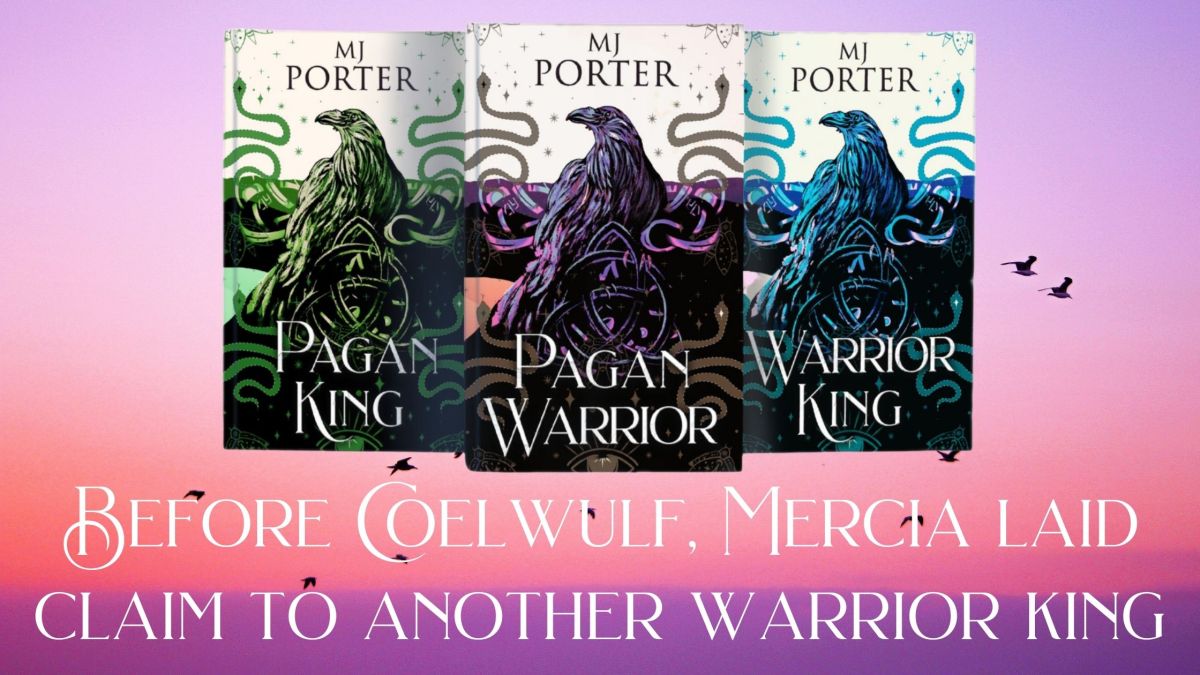
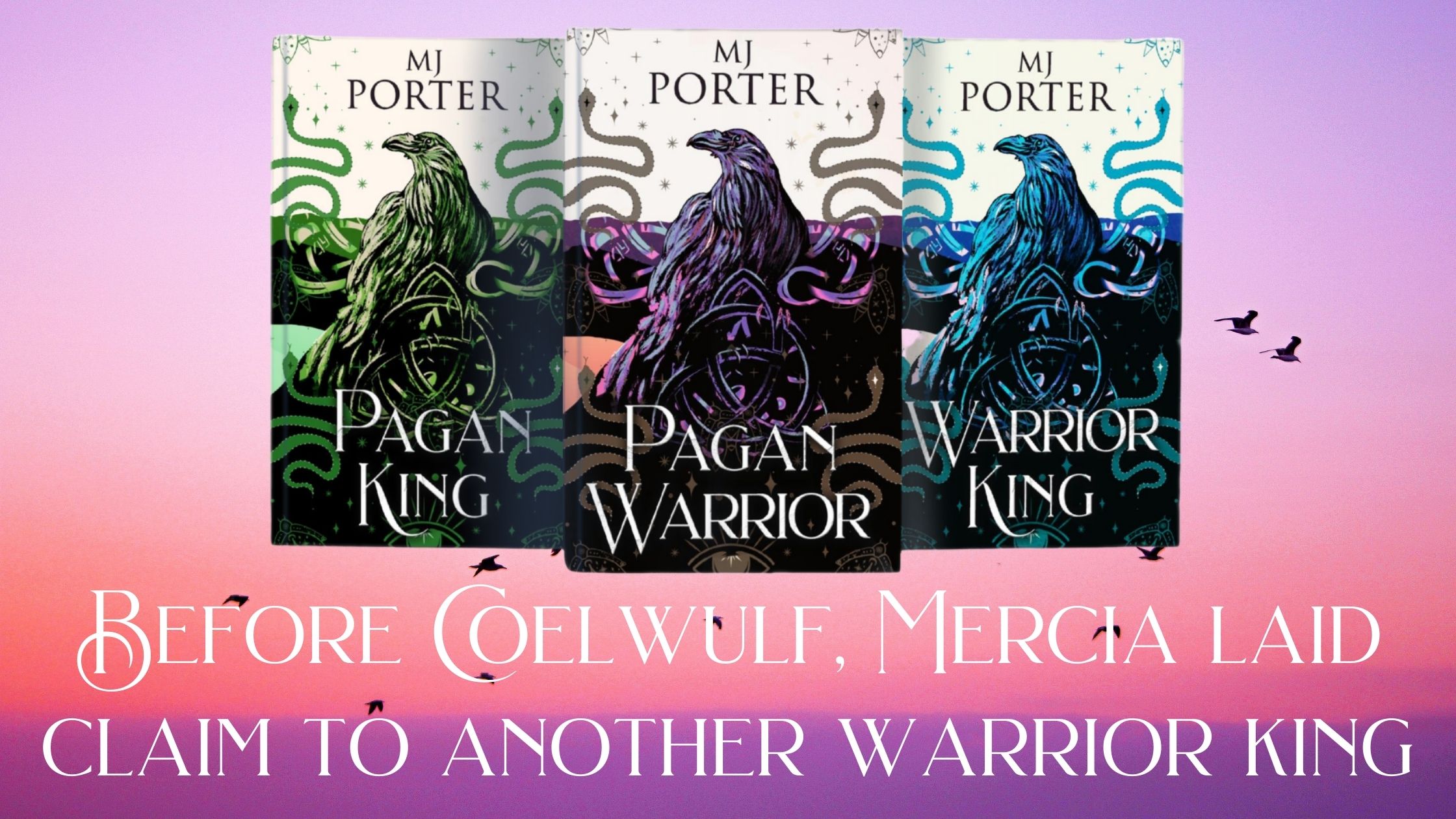
Pagan Warrior

Pagan King

Warrior King

(For anyone who is confused, these books were previously released under the titles of the battles, Hædfeld, Maserfeld and Winwæd.)

Check out the Gods and Kings page on the blog

The Winter Guest by W C Ryan. Book Review. Historical mystery. Highly recommended.

The drive leads past the gate house and through the trees towards the big house, visible through the winter-bared branches. Its windows stare down at Harkin and the sea beyond . . .

January 1921. Though the Great War is over, in Ireland a new, civil war is raging. The once-grand Kilcolgan House, a crumbling bastion shrouded in sea-mist, lies half empty and filled with ghosts – both real and imagined – the Prendevilles, the noble family within, co-existing only as the balance of their secrets is kept.

Then, when an IRA ambush goes terribly wrong, Maud Prendeville, eldest daughter of Lord Kilcolgan, is killed, leaving the family reeling. Yet the IRA column insist they left her alive, that someone else must have been responsible for her terrible fate. Captain Tom Harkin, an IRA intelligence officer and Maud’s former fiancé, is sent to investigate, becoming an unwelcome guest in this strange, gloomy household.

Working undercover, Harkin must delve into the house’s secrets – and discover where, in this fractured, embattled town, each family member’s allegiances truly lie. But Harkin too is haunted by the ghosts of the past and by his terrible experiences on the battlefields. Can he find out the truth about Maud’s death before the past – and his strange, unnerving surroundings – overwhelm him?

A haunting, atmospheric mystery set against the raw Irish landscape in a country divided, The Winter Guest is the perfect chilling read.

The Winter Guest is my first W C Ryan book, but it won’t be my last.

The Winter Guest is a little awkward to get into. The first chapter could perhaps be better placed elsewhere or left out altogether, but once past that point, and as the reader meets Harkin, we’re quickly drawn into his world. A man suffering from PTSD following the Great War and involving himself in the IRA, is a man on the edge, inhabiting a world filled with suspicion and shadows, where things that seem real, are simply not.

He is a sympathetic character and the reader feels. a great deal of empathy for him. 

The landscape he walks into is one bedevilled by atmospheric weather conditions – there is a great deal of attention spent on creating the image of a house on the cusp of ruin, a family in the midst of ruin and the weather conditions prevalent at the coastline. On occasion, it feels a little too much but the lack of electricity, the reliance on candles, ensures that the slightly other-worldly elements can never be forgotten. The flashback descriptions of life in the trenches of the Great War haunt the reader as well as Harkin,

You may have noticed that I thoroughly enjoyed this novel. I would put it on a par with last year’s The Glass Woman and The Quickening. A haunting story not to be missed. My thanks to Netgalley and the publisher for my review copy