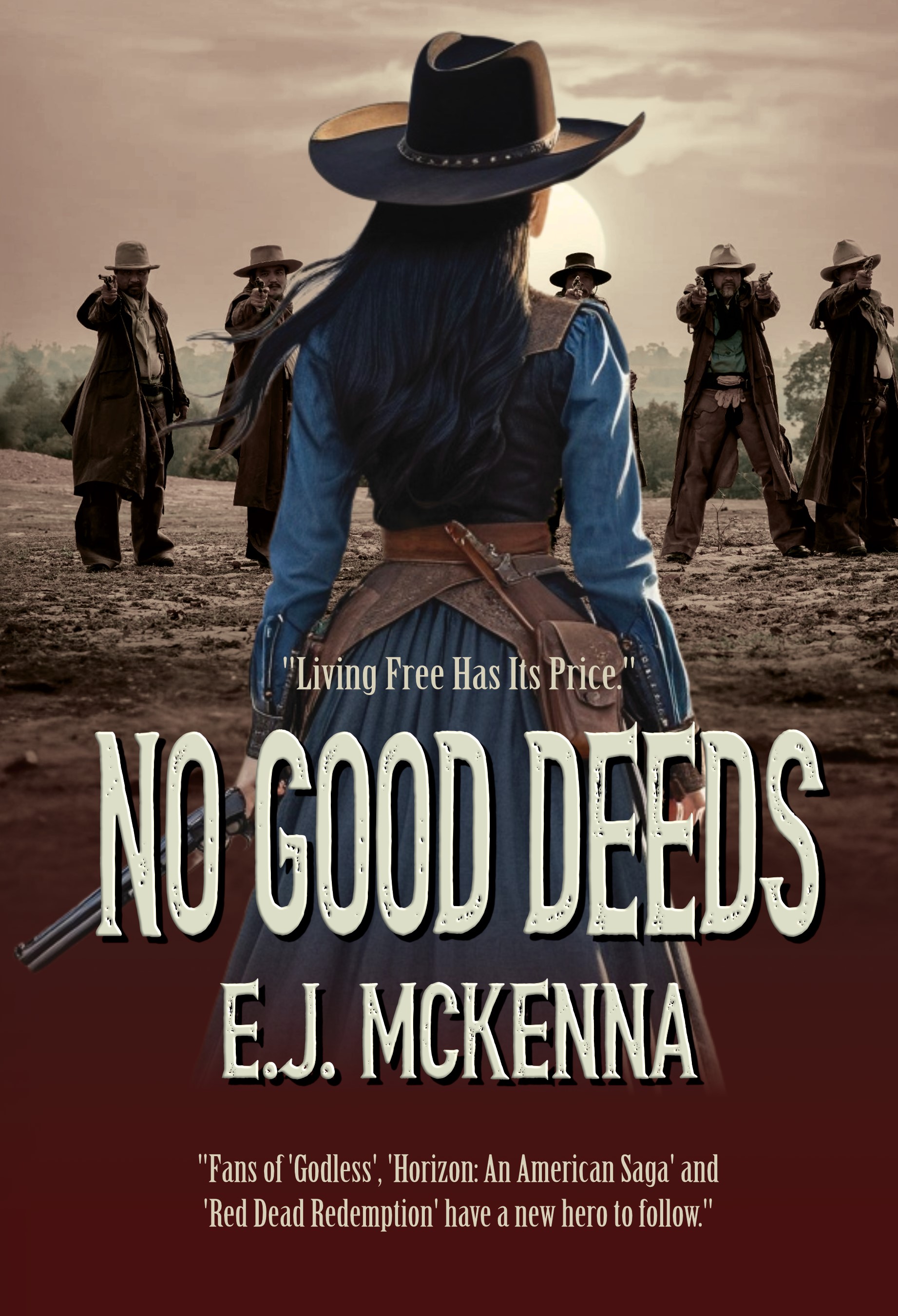
I’m delighted to welcome E.j. McKenna and her new book, No Good Deeds, to the blog with an excerpt.
Excerpt
“You know what I want beyond all else in this world? Four walls and a roof. All my own. Don’t even need another room.” She gave an embarrassed laugh. “I know it’s simple, but I ain’t never had that. It’d be out of town, but not too far out, maybe close to a river, I dunno. I’d be a Bounty Hunter or a Trapper or somethin’, to pay any costs I have. And I’d live off the land, all quiet like.”
Blurb
Annie Schaeffer is no stranger to violence. Born of an outlaw father, she was sold to a traveling show at the age of six, now finally escaping as an adult.
On the run and wounded, she finds an unlikely ally In Nathan Healey – a member of the Needham Boys gang.
As she earns her place among the outlaws, Annie’s survival hinges on her lethal skills and growing bond with Nathan.
Nate’s moral compass shifts with his circumstances, especially when those he loves are involved. Upon meeting Annie, he finds himself drawn to a woman determined to live differently to the expectations others place upon her; to live freely and fairly. The way he has always wanted.
Annie’s quest for independence takes a dark turn as the gang begins to collapse. Betrayal runs deep, and the cost of trust is high.
No Good Deeds is a gripping tale of resilience and retribution in the untamed West, where loyalty is fleeting and justice is won at the barrel of a gun. Annie Schaeffer’s story is one of fierce determination, as she battles her past and the outlaws who seek to control her fate.
E.J. McKennais a freelance writer in the UK with a great interest in American History, and a degree in English and American Literature with Creative Writing from the University of Kent.
At the end of 2023, she co-created a creative writing app for people of all ages to improve their writing skills in a fun, relaxed environment.
Born and raised in the UK, but a lover of traveling, she has a fascination with all social history across different countries and cultures. One of her favourite historical periods is the Victorian era, especially with United States history.
“The juxtaposition between the established countries of Europe, and the new world of America is fascinating to me. So many people trying to survive harsh frontier life, while trying to continue the uptight decorum of Victorian society.”
A huge advocate for feminism and human equity, her writing centres around determined female protagonists in traditionally male roles, tackling the perceptions of women in history. Her strong female protagonists go out of their way to change their society’s expectations for the fairer.
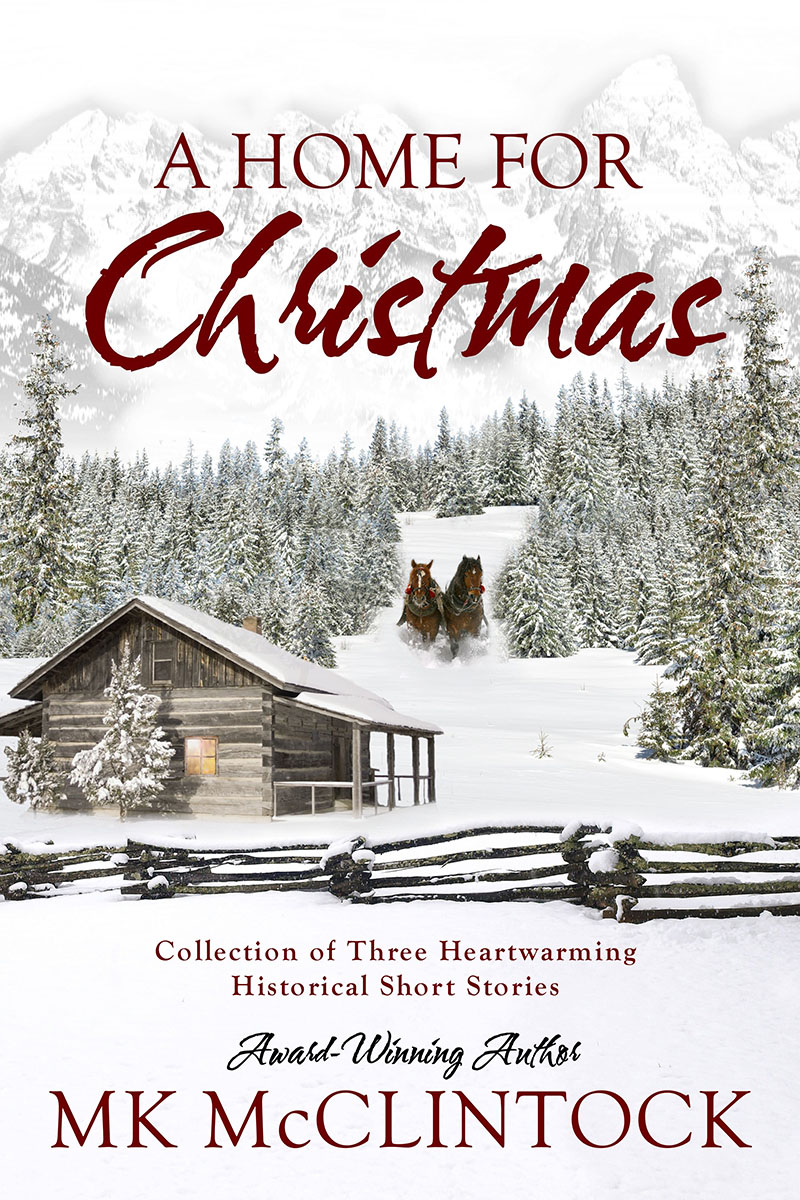
Will six strangers find hope, love, and family at Christmas? A collection of three historical western short stories to inspire love and warm the heart.
“Christmas Mountain”
In search of family she barely knows and adventure she’s always wanted, Katherine Donahue is saved from freezing on a winter night in the mountains of Montana by August Hollister. Neither of them expected that what one woman had in mind was a new beginning for them both.
“Teton Christmas”
Heartache and a thirst for adventure lead McKensie Stewart and her sister to Wyoming after the death of their parents. With the help of a widowed aunt and a charming horse breeder, McKensie discovers that hope is a cherished promise, and there is no greater gift than love.
“Lily’s Christmas Wish”
Lily Malone has never had a real family or a real Christmas. This holiday season, she might get both. From an orphanage in New York City to the rugged mountains of Colorado, Lily sends out only one wish. But when the time comes, can she give it up so someone else’s wish can come true?
If you love inspirational romance and heartfelt holidays, then you’ll enjoy this trio of stories as we remember the true meaning of love any time of the year.
Praise for A Home for Christmas:
“Ms. McClintock has a true genius when writing beauty to touch the heart. This holiday treat is a gift any time one needs to remember the true meaning of love!”
~ InD’tale Magazine on A Home for Christmas
“The cold nips at your face and delicious Christmas cake leaves you wanting more.”
~ M. Ann Roher, author of Mattie on A Home for Christmas
Buy Links
This title is available in e-book, paperback, large print, and audio, and on #KindleUnlimited.
MK McClintock is an award-winning author of historical romantic fiction about chivalrous men and strong women who appreciate chivalry. Her stories of romance, mystery, and adventure sweep across the American West to the Victorian British Isles with places and times between and beyond.
MK enjoys a quiet life in the northern Rocky Mountains. You can find her online at www.mkmcclintock.com.
Her works include the Montana Gallagher, Crooked Creek, British Agent, and Whitcomb Springs series. She has also written A Home for Christmas, a heartwarming collection set in 1800s Montana, Wyoming, and Colorado, and The Case of the Copper King, a romantic and adventurous western mystery set in 1899 Colorado.
I’m delighted to welcome back David Fitz-Gerald and his new book, Rolling Home from the Ghosts Along the Oregon Trail series, to the blog with a series trailer.
Ghosts Along the Oregon Trail Series Trailer
Ghosts Along the Oregon Trail Series Trailer
Here’s the blurb
Climb aboard! Don’t miss the heart-pounding climax of the Ghosts Along the Oregon Trail series. Rolling Home is the final installment.
In the heart of the rolling village, dissent brews as the stubbornest naysayer refuses to continue the journey. With an ominous early snowfall and memories of the ill-fated Donner Party haunting the pioneers, Dorcas Moon faces a new wave of challenges. Just when she believes things can’t get worse, a disastrous river crossing claims their wagon and submerges their belongings.
As the rolling village approaches the final leg of the journey, the looming threat of outlaws intensifies. The notorious bandit known as The Viper and his ruthless brothers are determined to rob the greenhorns, sell their stock, and kill every last one of them. The pioneers had heard tales of their brutality, but now, with Dorcas’ daughter kidnapped and Dorcas captured, everyone is in danger.
What will become of Dorcas Moon, her family, and their friends? Will anyone survive the perilous journey?
Rejoin the expedition and witness the thrilling end to a gripping saga.
This title is available to read on #KindleUnlimited
Meet the author
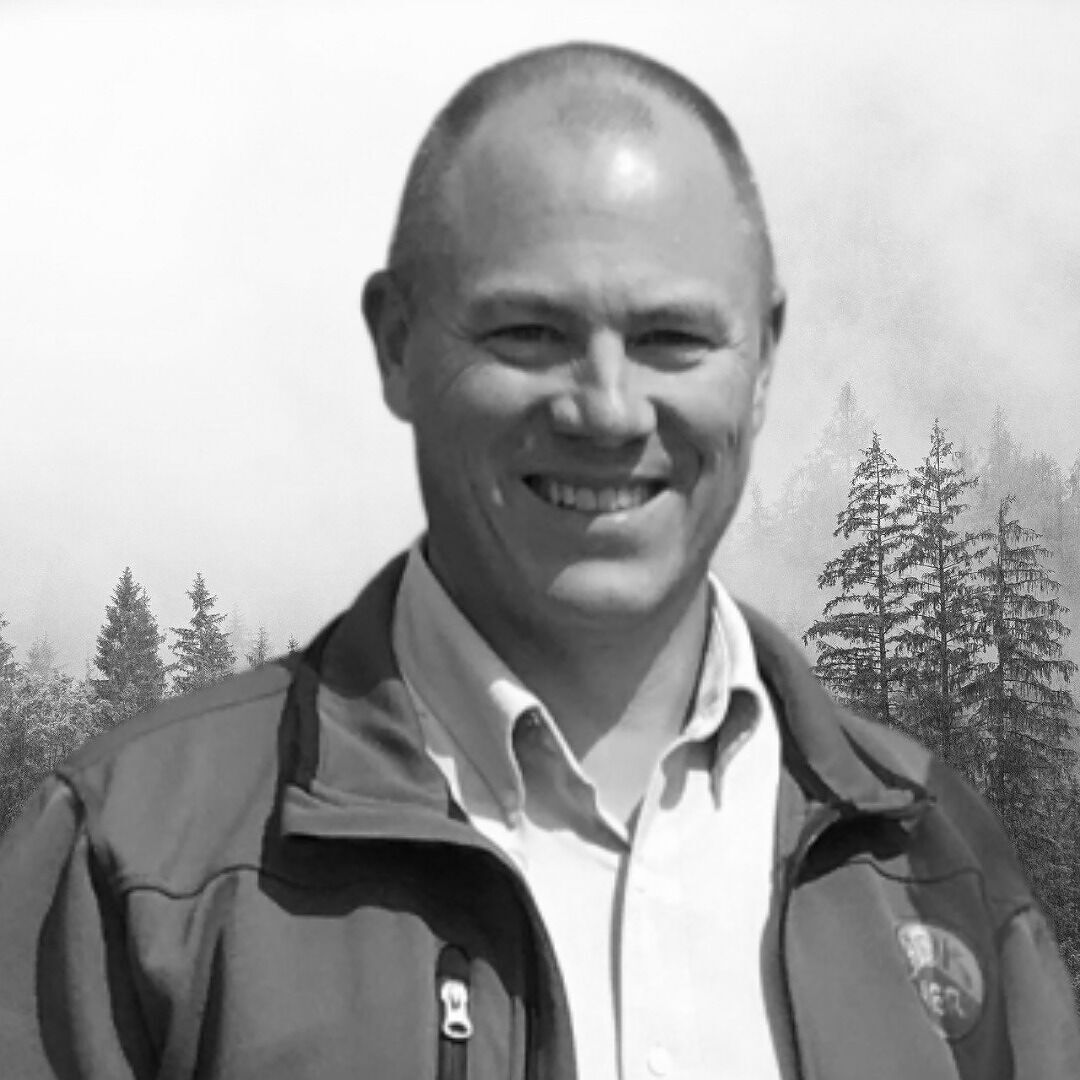
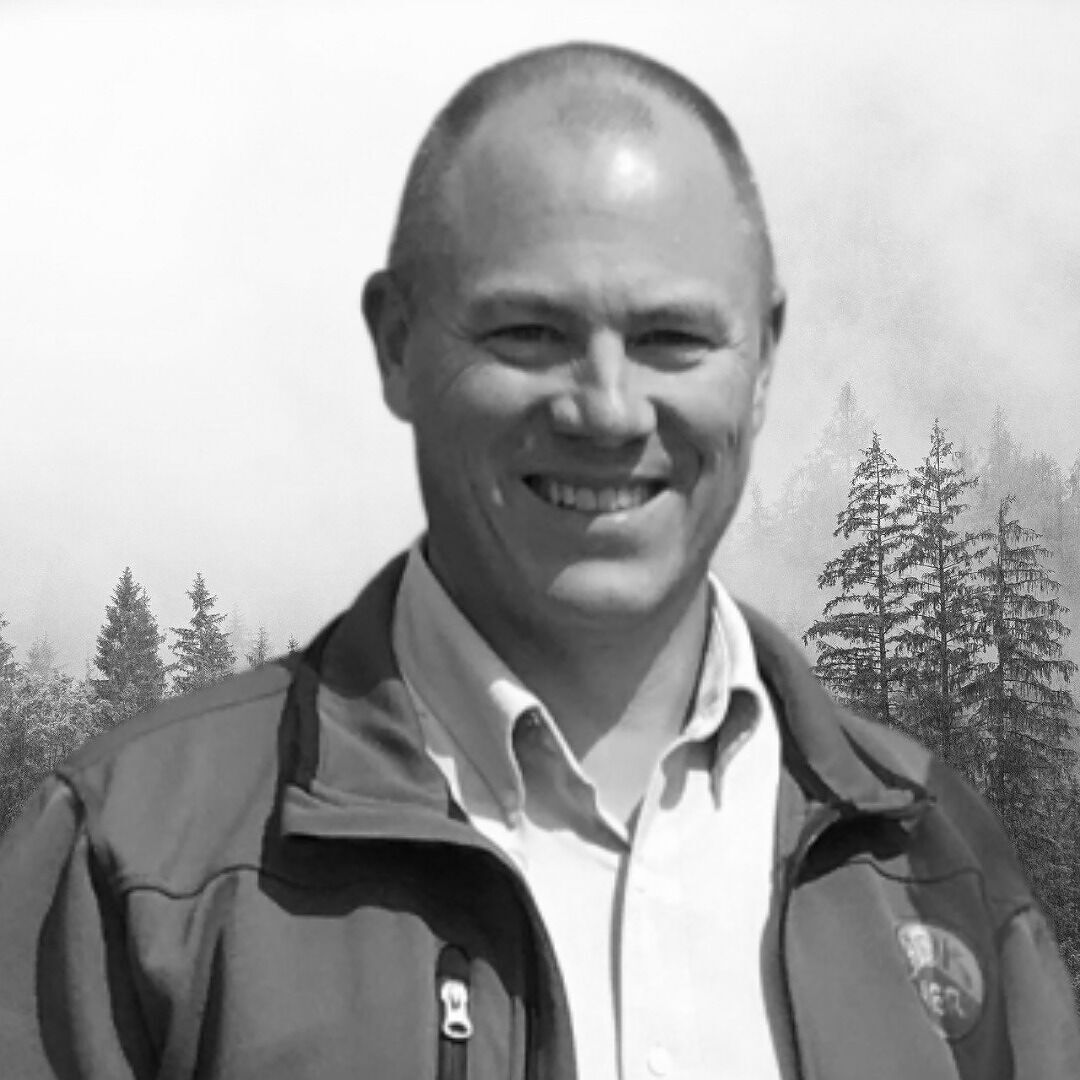
David Fitz-Gerald writes westerns and historical fiction. He is the author of twelve books, including the brand-new series, Ghosts Along the Oregon Trail set in 1850. Dave is a multiple Laramie Award, first place, best in category winner; a Blue Ribbon Chanticleerian; a member of Western Writers of America; and a member of the Historical Novel Society.
Alpine landscapes and flashy horses always catch Dave’s eye and turn his head. He is also an Adirondack 46-er, which means that he has hiked to the summit of the range’s highest peaks. As a mountaineer, he’s happiest at an elevation of over four thousand feet above sea level.
Dave is a lifelong fan of western fiction, landscapes, movies, and music. It should be no surprise that Dave delights in placing memorable characters on treacherous trails, mountain tops, and on the backs of wild horses.
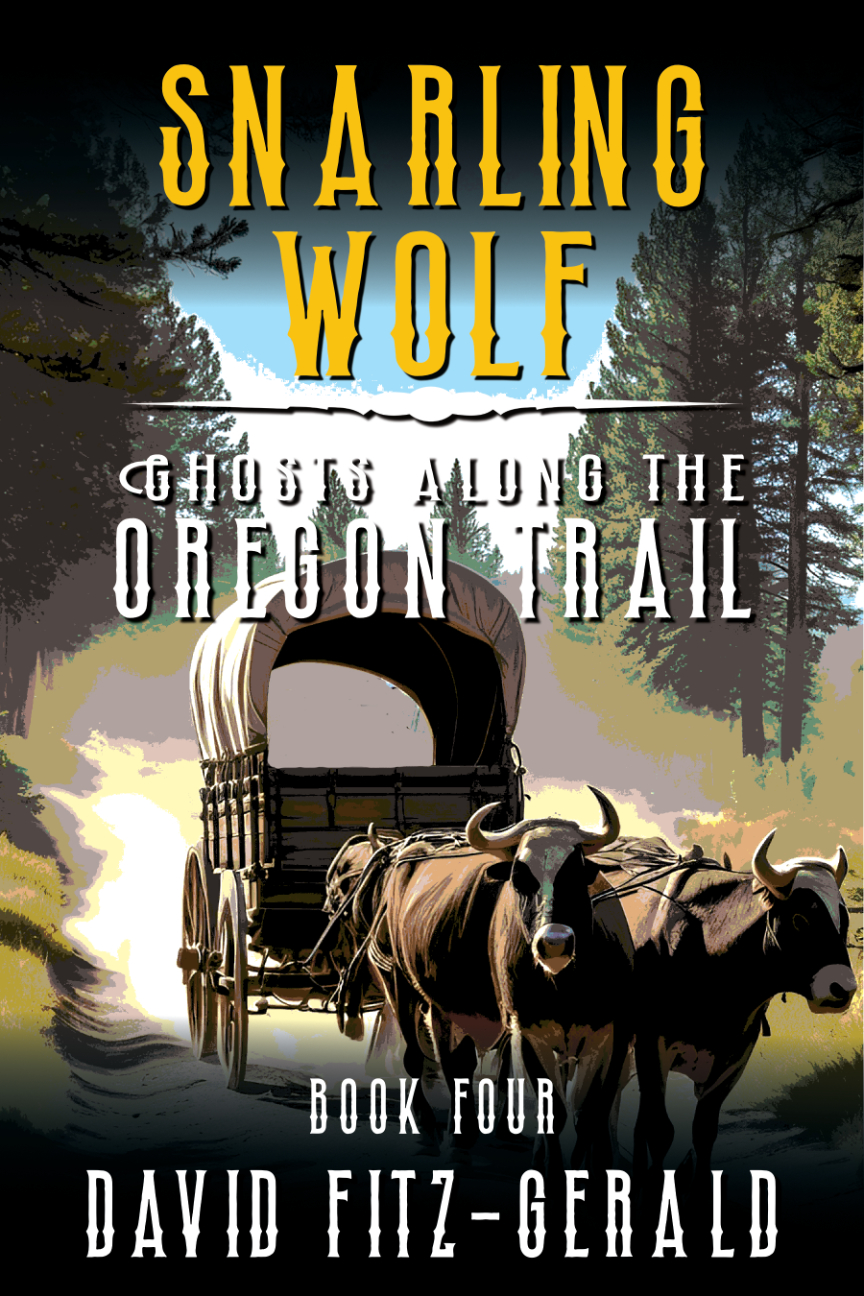
I’m delighted to welcome back David Fitz-Gerald and his new book, Snarling Wolf, book 4 in the Ghosts Along the Oregon Trail series, to the blog with a series trailer.
Series Trailer
Ghosts Along the Oregon Trail series trailer
Here’s the blurb
Dive back into the gripping, frontier chaos. Snarling Wolf is the fourth adventurous installment in the Ghosts Along the Oregon Trail series.
The famed Snake River marks the point the wagon master claims that all the greenhorns turn loco. After twelve hundred grueling miles and four relentless months on the trail, the expedition teeters on the brink. Frayed nerves, exhausted patience, and the specter of doom cast a dark cloud over the travelers.
At every turn, new dangers emerge. A young man who is like a brother to Dorcas Moon is ravaged in a mountain lion attack. A heat wave grips the dusty, barren plains and spreads sickness. The wolves that lurk in the shadows edge closer. Even the rattlesnakes seem emboldened.
Dorcas’ daughter, Rose’s descent into madness can no longer be ignored. What began as an eerie preoccupation with death takes a shocking turn when Rose reveals her truths. Dorcas is thrust into a realm of disbelief, and her worst fears about Rose’s mysterious suitor become a stark reality.
As weary emigrants yearn for respite, tales of murderous outlaws spread like wildfire across the prairie. Passing strangers share the latest terrifying news. It’s only a matter of when, not if, the notorious highwaymen will strike. Which bend of the mighty snake shelters the feared outlaws?
Grab your copy of Snarling Wolf now and unveil the next chapter in Dorcas Moon’s relentless saga. Sink your teeth into this tale of survival, madness, and the unyielding spirit of those who brave the treacherous migration.
This title is available to read on #KindleUnlimited
Meet the Author
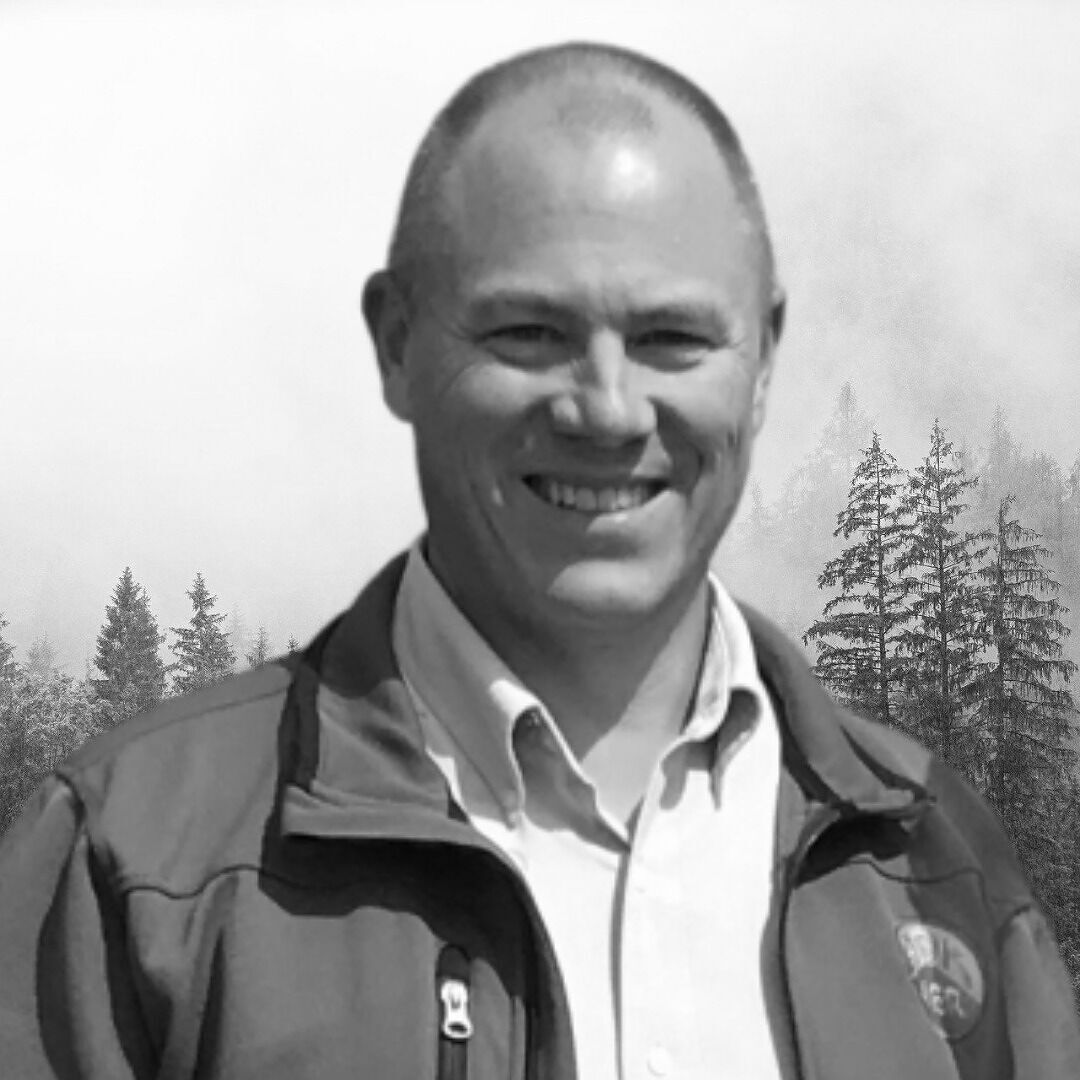
David Fitz-Gerald writes westerns and historical fiction. He is the author of twelve books, including the brand-new series, Ghosts Along the Oregon Trail set in 1850. Dave is a multiple Laramie Award, first place, best in category winner; a Blue Ribbon Chanticleerian; a member of Western Writers of America; and a member of the Historical Novel Society.
Alpine landscapes and flashy horses always catch Dave’s eye and turn his head. He is also an Adirondack 46-er, which means that he has hiked to the summit of the range’s highest peaks. As a mountaineer, he’s happiest at an elevation of over four thousand feet above sea level.
Dave is a lifelong fan of western fiction, landscapes, movies, and music. It should be no surprise that Dave delights in placing memorable characters on treacherous trails, mountain tops, and on the backs of wild horses.
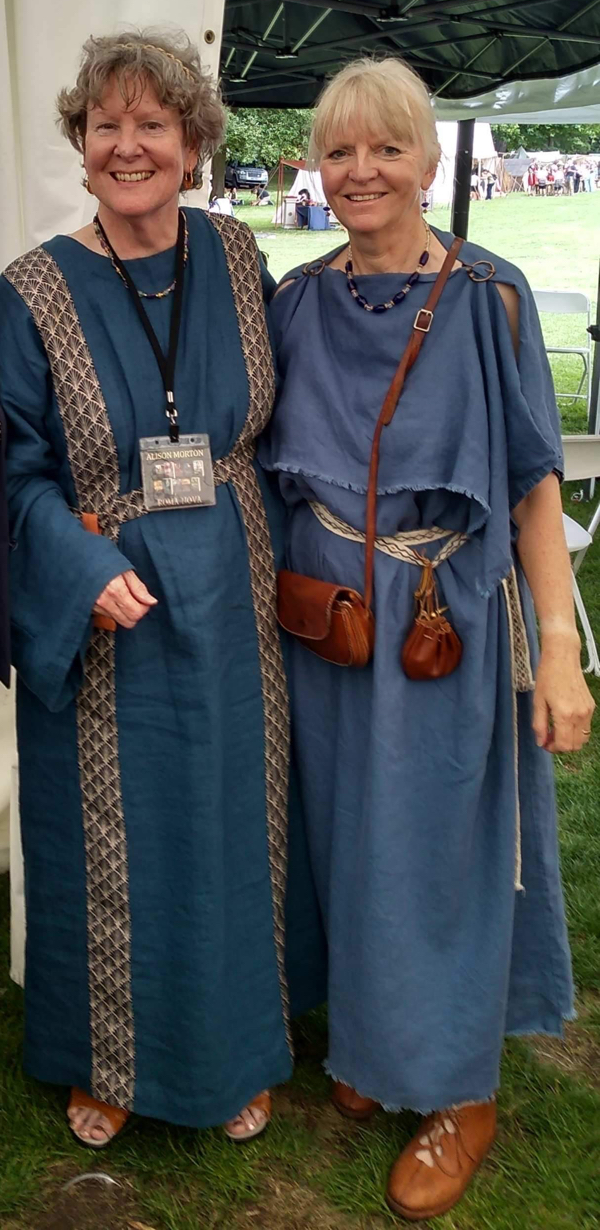
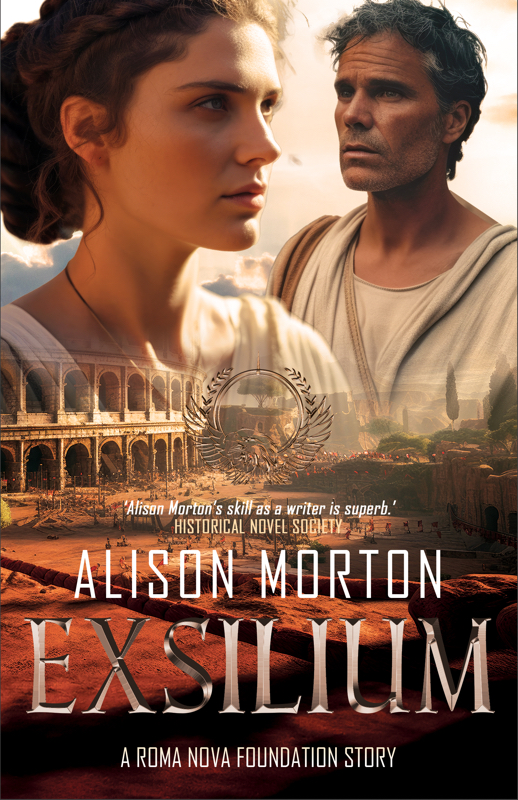
I’m delighted to welcome Alison Morton and her new book, EXSILIUM, part of the Roma Nova series, to the blog with a guest post.
Guest Post
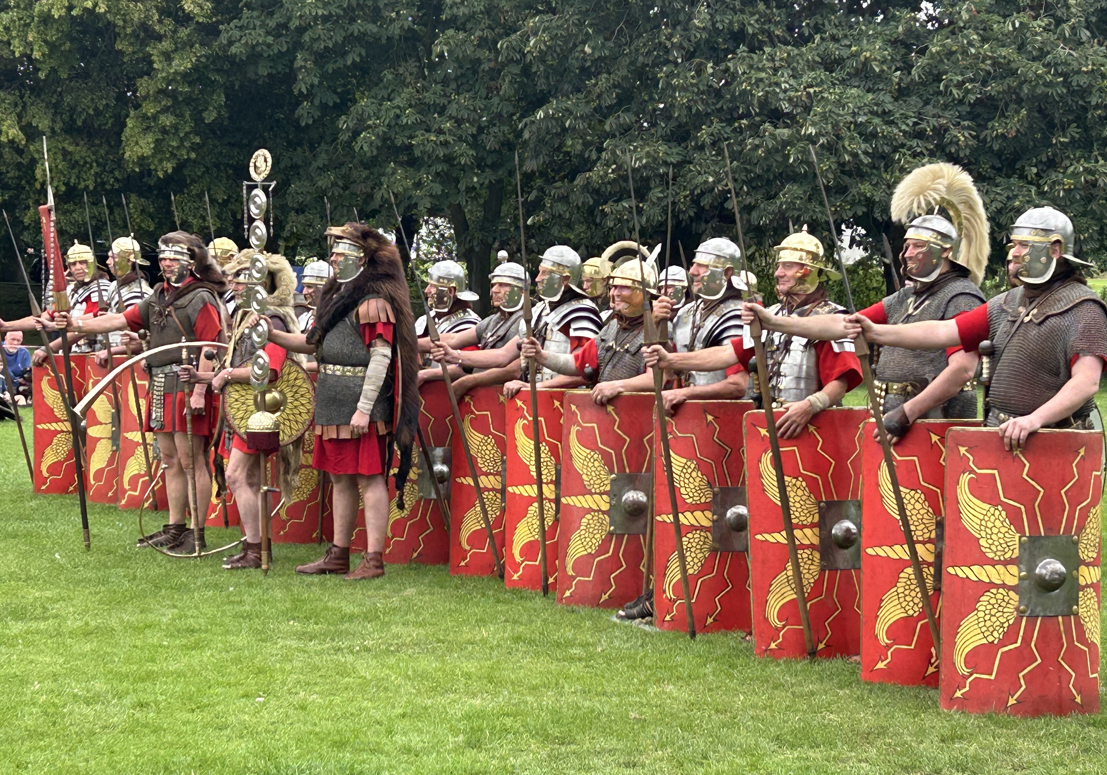
When we think of Romans, two images immediately spring to mind. The first is a fierce helmeted solder wearing iron bands of segmented armour across his torso over a red tunic that only just covers his knees and with hobnail marching boots on his feet. He carries a spear, gladius ad dagger as weapons and a large rectangular shield which he uses in clever formations with his comrades.
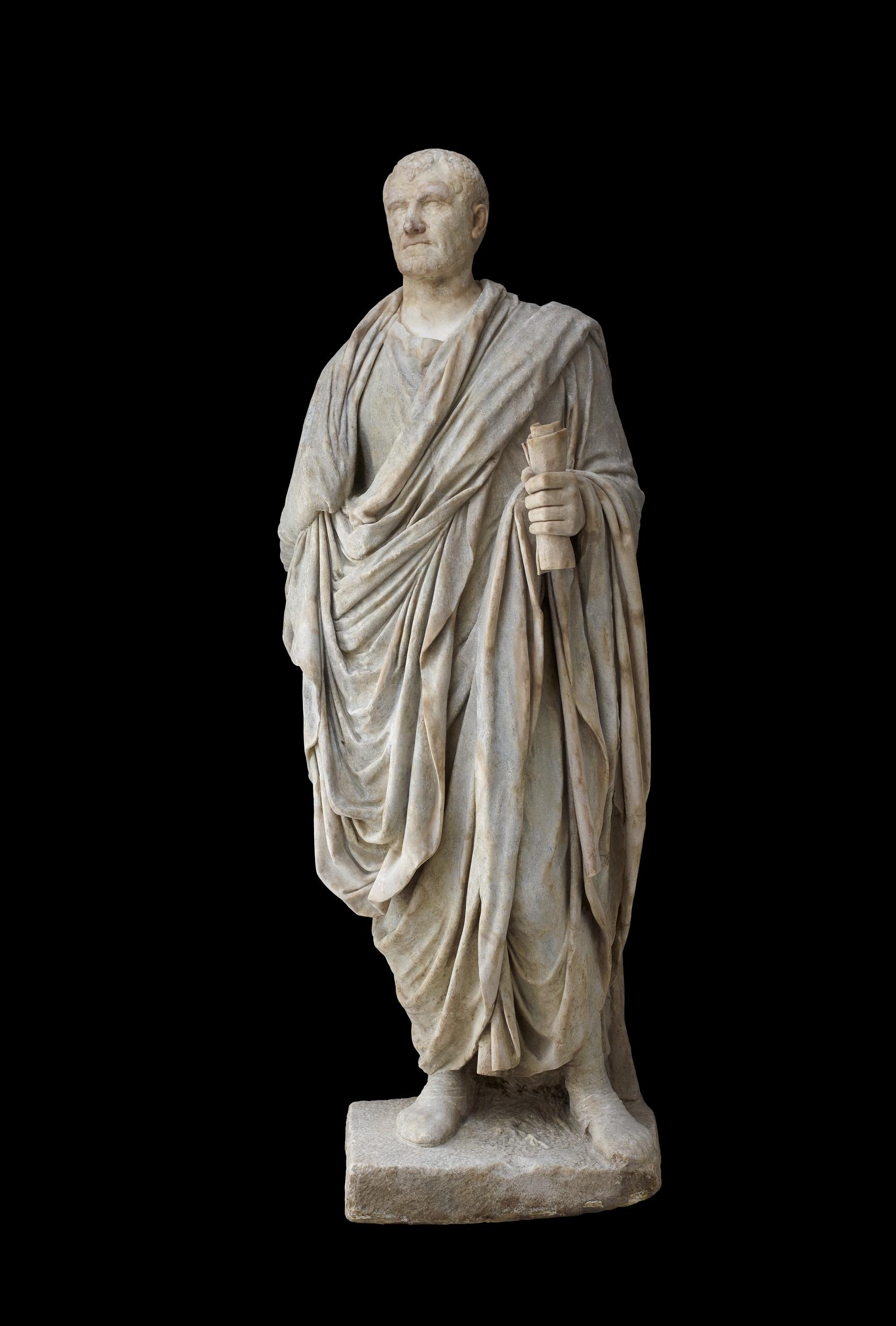
The second is a man draped in a splendid toga making a clever speech in the Senate. His ‘womenfolk’ would be demurely dressed in tunic and mantle, often accompanied by a slave in a simple tunic.
Well, yes and no.
Let’s look at the military
The earliest proven use of this segmented armour is in 9 BC with a suggestion of possibly as early as 53 BC; the latest in the last quarter of the third century AD. In some later depictions, such as on the Arch of Constantine (AD 315), segmented armour is seen, but scholars seem to think it was more for ceremonial show rather than reflecting what was used at the time by soldiers in the field.
Rome had become a republic in 509 BC after throwing out its kings who had – according to legend – reigned for two hundred and fifty years before that. So for the first seven centuries of its history, there was no ‘typically Roman’ segmented armour. The very early republican soldiers would probably have worn bronze helmets, breastplate and greaves and carried a round leather or large circular bronze-plated wooden shield, and fought with a spear, sword and dagger.
According to the ancient Greek historian Polybius, whose Histories written around the 140s BC are the earliest substantial account still existing of the Republic, Roman cavalry was originally unarmoured; the soldiers only wore a tunic and were armed with a light spear and ox-hide shield which were of low quality and quickly deteriorated in action.
In contrast to the lorica segmentata beloved by Hollywood, the more pedestrian and expensive chain mail (lorica hamata) was in use for over 600 years (3rd century BC to 4th century AD) and scale armour (lorica squamata) during the Roman Republic and in later periods. The latter was made from small metal scales sewn to a fabric backing and is typically seen on depictions of signiferes (standard bearers), centurions, cavalry troops, and auxiliary infantry, as well as ordinary legionaries. On occasion, even the emperor would be depicted wearing the lorica squamata. It’s not known exactly when the Romans adopted this type of armour, but it remained in use for about eight centuries.
Fast forward to the fourth century… In contrast to the earlier segmentata plate armour, which afforded no protection for the arms or below the hips, some pictorial and sculptural representations of Late Roman soldiers show mail or scale armour giving more extensive protection. These types of armour had full-length sleeves and were long enough to protect the thighs and other essential parts of the body(!).
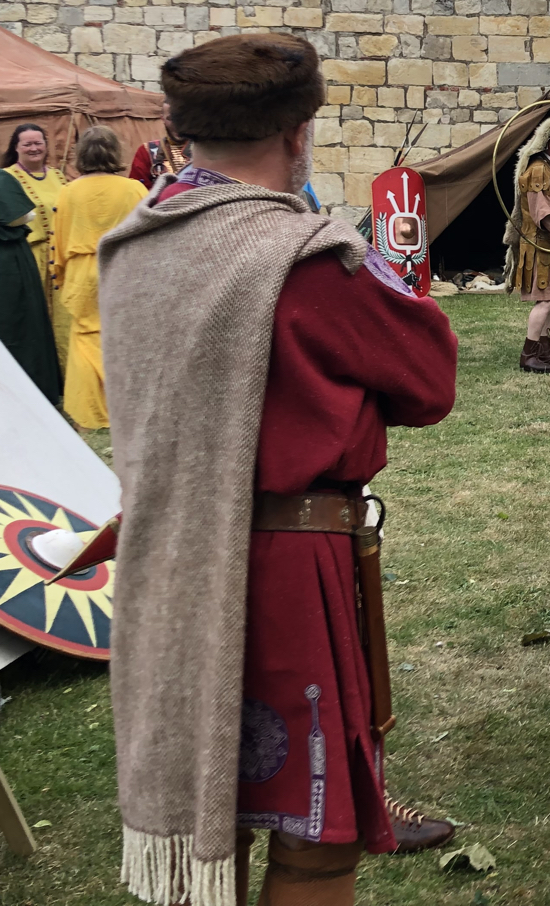
In northern Europe, long-sleeved tunics, trousers (bracae), socks (worn inside the caligae) and laced boots had been commonly worn in winter from the 1st century onwards. During the 3rd century, these became much more widespread, with the alternative of leggings, even in Mediterranean provinces also. By the late fourth century, both were standard wear. Apart from more colourful and decorated clothing generally, a distinctive part of a soldier’s fourth century costume was a type of round, brimless hat known as the pannonian cap (pileus pannonicus).
All change for civilian men
In the Republican and early imperial periods, Roman men typically wore short-sleeved or sleeveless, knee-length tunics. On formal occasions, adult male citizens could wear a woollen toga draped over their tunic. But from at least the late Republic onward, the upper classes favoured ever longer and larger togas, increasingly unsuited to manual work or physically active leisure. Togas were expensive, heavy, hot and sweaty, hard to keep clean, costly to launder and challenging to wear correctly. They were best suited to stately processions, oratory, sitting in the theatre or circus, and self-display among peers and inferiors. The vast majority of citizens had to work for a living, and avoided wearing the toga whenever possible. Several emperors tried to compel its use as the public dress of true Romanitas but none were particularly successful. The aristocracy clung to it as a mark of their prestige, but eventually abandoned it for the more comfortable and practical pallium.
By the end of the fourth century, clothing looked radically different and didn’t conform to our idea of ‘typically Roman’. In such a diverse empire, the adoption of provincial fashions perceived was viewed as attractively exotic, or simply more practical than traditional Italian Roman forms of dress. Clothing worn by soldiers and non-military government bureaucrats became highly decorated, with woven or embellished strips, clavi, and circular roundels, orbiculi, added to tunics and cloaks. These decorative elements usually comprised geometrical patterns and stylised plant motifs, but could include human or animal figures. The use of silk also increased steadily and most courtiers in late antiquity wore elaborate silk robes. Court officials as well as soldiers wore heavy military-style belts, revealing the increased militarisation of late Roman government. Trousers and leggings – considered barbarous garments worn by Germans and Persians – became more more common for civilian men in the latter days of the empire, although regarded by conservatives as a sign of cultural decay.
The toga, traditionally seen as the sign of a proper Roman, had never in reality been popular or practical. Most likely, its replacement in the East by the more comfortable pallium or paenula (a wool cloak) was a simple acknowledgement that the toga was generally no longer worn. However, it remained the official formal costume of the Roman senatorial elite. A law issued by co-emperors Gratian, Valentinian II and Theodosius I in 382 AD stated that while senators in the city of Rome may wear the paenula in daily life, they must wear the toga when attending their official duties. Failure to do so would result in the senator being stripped of rank and authority, and of the right to enter the Senate House. But it’s worth noting that in early medieval Europe, kings and aristocrats who dressed like the late Roman generals they sought to emulate, did not display themselves draped in togas.
And the women?
In early Republican Rome, both men and women wore togas but in mid-Republican times, the toga became a male-only garment. Only prostitutes wore a toga as a sign of their ‘infamy’. Typically, women and girls wore a longer, usually sleeved tunic for and married citizen women wore a mantle, usually wool, known as a palla, over a stola, a simple, long-sleeved, voluminous garment fastened at the shoulders that fell to cover the feet. In the early Roman Republic, the stola was reserved for patrician, i.e. aristocratic women as a sign of their status. Shortly before the Second Punic War (218-201 BC), the right to wear it was extended to plebeian matrons, and to freedwomen who had acquired the status of matron through marriage to a citizen.
But things had changed dramatically by the end of the fourth century. Women of that time wore belted long tunics decorated with full-length contrasting stripes – clavi – and braiding, with generous sleeves and, in cooler climates, narrow-sleeved underdresses. That Late Roman tunic, or dalmatica, was a generously cut T-shaped tunic with a slit neck, typically falling in (hopefully) graceful folds. Sleeves could be short, three-quarter or long and rectangular, which could be fairly narrow or quite wide. Wide sleeves were sometimes tied back, presumably for work, giving a butterfly’s wing effect.
The belt, worn under the bust, was often just a tied cord, or could be of plain or decoratively woven cloth and could have a central jewel, perhaps a brooch. As weather protection and ornament, ladies would, like their Republican predecessors, wear various sizes of mantle (palla or the smaller palliola), a rectangular piece of material cast elegantly over the shoulder like a scarf or draped around the body.
Some literature suggests both traditional pagan and Christian respectable ladies would cover their hair in the street but this was not universal.
Ladies would prefer mantles for travel rather than sagum style cloaks, but rural women and athletes were known to wear practical gear for weather protection and presumably camp followers might wear spare military cloaks. The expensive birrus britannicus, mentioned in Diocletian’s edict on maximum prices, was probably a heavy, long semi-circular hooded cape with front opening.
Clothing depended on the wearer’s wealth or poverty, their social status, on the ability to find or make fabric and on personal preference. Sometimes you took what was given when cast off by an older sibling. But over twelve centuries, while some things like tunics performed the same function, how Romans looked changed much more than we might imagine.
Here’s the Blurb
Exile – Living death to a Roman
AD 395. In a Christian Roman Empire, the penalty for holding true to the traditional gods is execution.
Maelia Mitela, her dead husband condemned as a pagan traitor, leaving her on the brink of ruin, grieves for her son lost to the Christians and is fearful of committing to another man.
Lucius Apulius, ex-military tribune, faithful to the old gods and fixed on his memories of his wife Julia’s homeland of Noricum, will risk everything to protect his children’s future.
Galla Apulia, loyal to her father and only too aware of not being the desired son, is desperate to escape Rome after the humiliation of betrayal by her feckless husband.
For all of them, the only way to survive is exile.
Alison Morton writes award-winning thrillers featuring tough but compassionate heroines. Her ten-book Roma Nova series is set in an imaginary European country where a remnant of the Roman Empire has survived into the 21st century and is ruled by women who face conspiracy, revolution and heartache but use a sharp line in dialogue. The latest, EXSILIUM, plunges us back to the late 4th century, to the very foundation of Roma Nova.
She blends her fascination for Ancient Rome with six years’ military service and a life of reading crime, historical and thriller fiction. On the way, she collected a BA in modern languages and an MA in history.
Alison now lives in Poitou in France, the home of Mélisende, the heroine of her two contemporary thrillers, Double Identity and Double Pursuit.
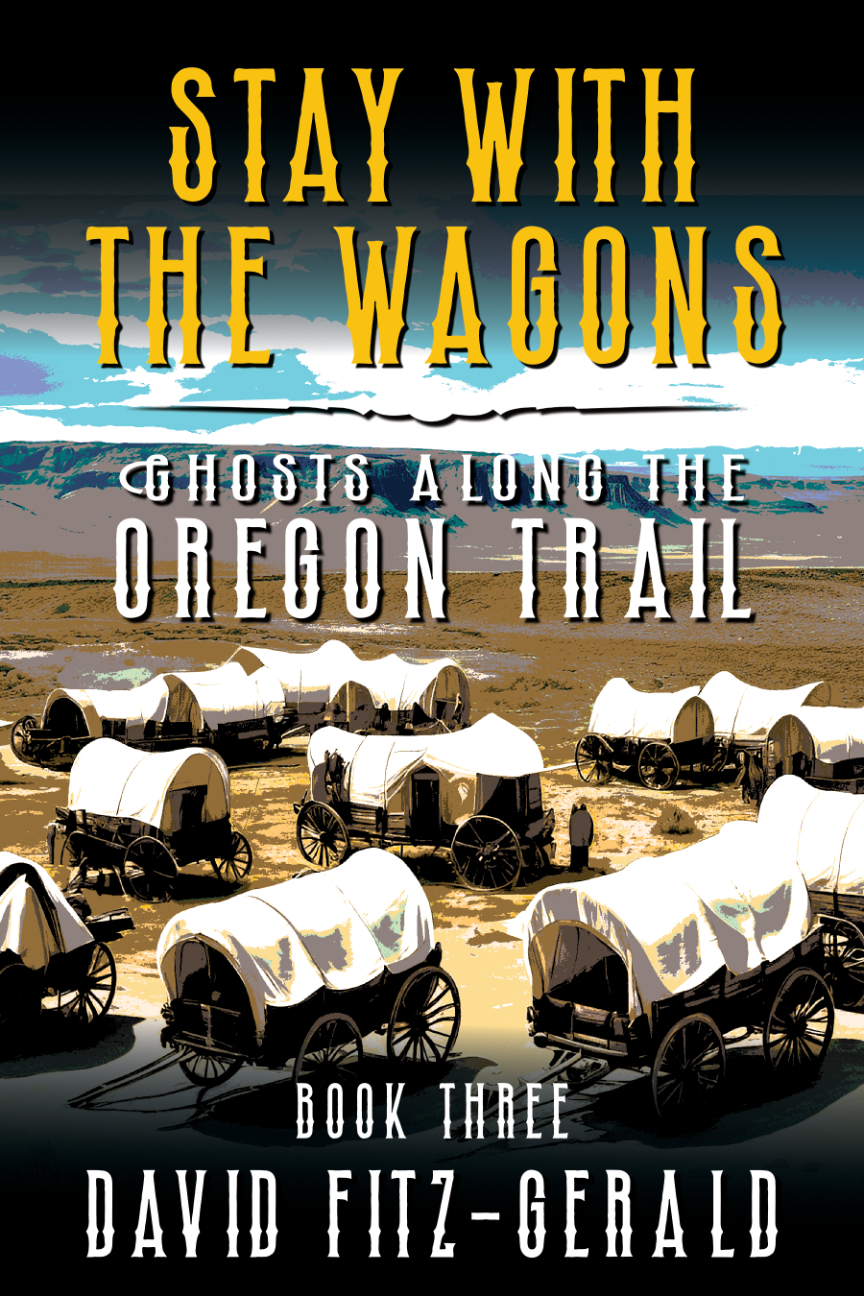
I’m delighted to welcome back David Fitz-Gerald and his new book, Stay with the Wagons: A Pioneer Western Adventure, Ghosts Along the Oregon Trail, to the blog with a series trailer.
Series Trailer
Ghosts Along the Oregon Trail Series Trailer
Here’s the blurb
Venture deep into the uncharted wilderness and crest the continental divide.
Stay with the Wagons is the enthralling third chapter in the Ghosts Along the Oregon Trail series. Dorcas Moon has discarded her mourning dress and yearns for freedom and independence amidst the vast frontier. But a perilous world and a commanding wagon master keep her tethered. Ultimately, it’s a brutal bout of fever and ague that confine her to camp.
Relentless disasters and beguiling challenges unfold in this installment. A young man is crushed beneath a wagon wheel. Dorcas’ son breaks an arm, a grizzly bear attacks the wagon train, and the looming threat of attacking outlaws whips the emigrants into a worried frenzy. How many must perish before they reach the end of the trail?
As chaos reigns, her troubled daughter, Rose, disappears once again, leading Dorcas on a perilous quest. Tracking Rose to a sacred site, they encounter a blind seer and a legendary leader, Chief Washakie. Rose’s enchantment with Native American adornments sparks Dorcas’ concern about an unexpected suitor and raises worries about Rose’s age.
Stay with the Wagons is bursting with action, adventure, and survival. It is a story of resilience and empowerment on the Oregon Trail. Claim your copy now and re-immerse yourself in a tale of high-stakes survival, unexpected alliances, and the indomitable spirit of Dorcas Moon.
This title/series is available to read on#KindleUnlimited
Meet the Author
David Fitz-Gerald writes westerns and historical fiction. He is the author of twelve books, including the brand-new series, Ghosts Along the Oregon Trail set in 1850. Dave is a multiple Laramie Award, first place, best in category winner; a Blue Ribbon Chanticleerian; a member of Western Writers of America; and a member of the Historical Novel Society.
Alpine landscapes and flashy horses always catch Dave’s eye and turn his head. He is also an Adirondack 46-er, which means that he has hiked to the summit of the range’s highest peaks. As a mountaineer, he’s happiest at an elevation of over four thousand feet above sea level.
Dave is a lifelong fan of western fiction, landscapes, movies, and music. It should be no surprise that Dave delights in placing memorable characters on treacherous trails, mountain tops, and on the backs of wild horses.
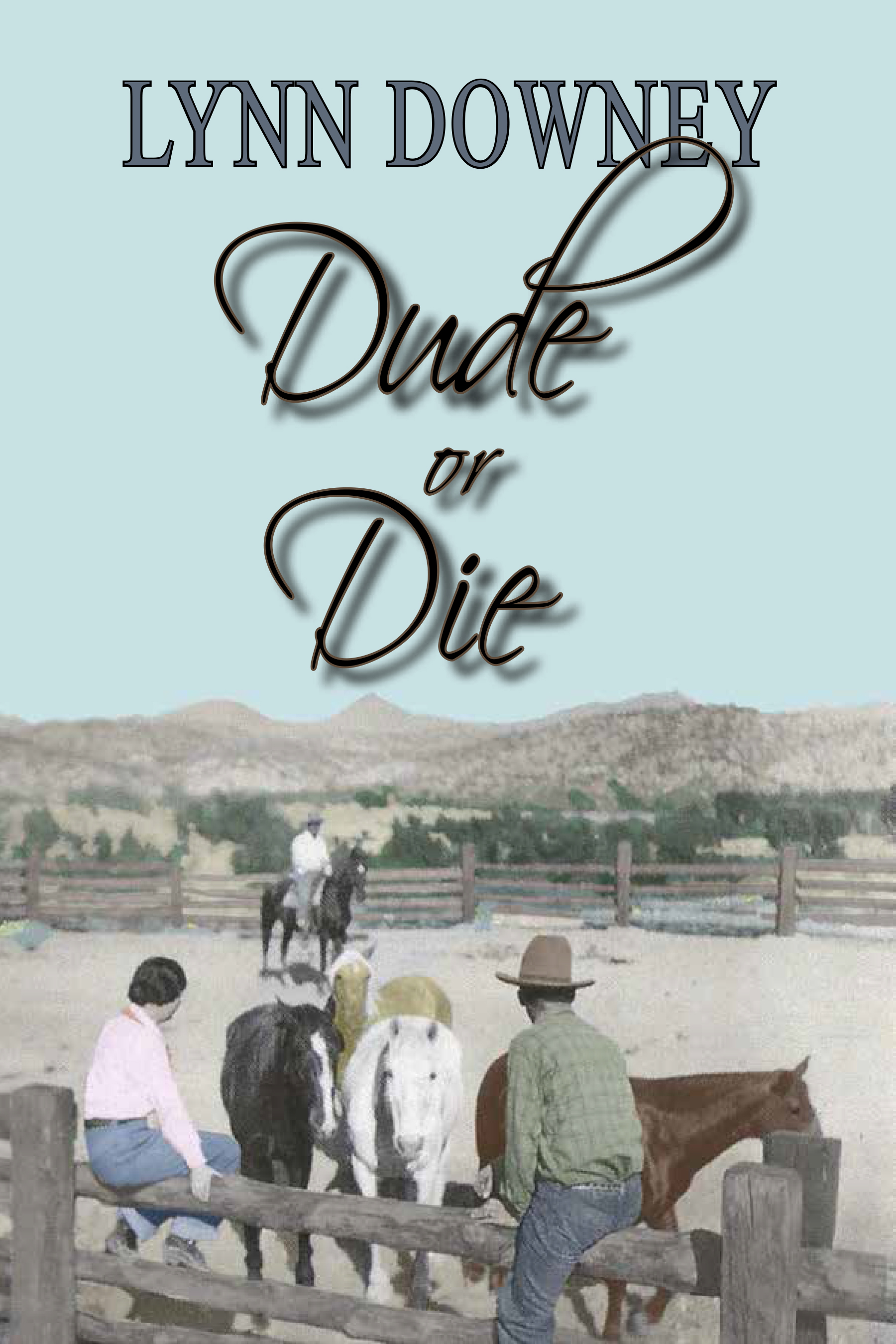
I’m delighted to welcome Lynn Downey and her new book, Dude or Die, to the blog with a guest post.
Lynn Downey
I’ve been writing about the American dude ranch for the last few years. My novels, Dudes Rush In and the new sequel, Dude or Die, are set on a fictional Arizona dude ranch in the 1950s. My last nonfiction book tackled the same theme, American Dude Ranch: A Touch of the Cowboy and the Thrill of the West.
Dude ranches began in the Rocky Mountain West in the 1880s. They were originally the kind of place where men from the eastern states could go to hunt or just live like cowboys for a few weeks. It didn’t take long for women and families to start visiting these places, which opened up throughout Montana and Wyoming, and then in California and the Southwest around the time of World War I. People had experiences at dude ranches they couldn’t get anywhere else, and ranching is thriving throughout the western states today.
I first got interested in dude ranches when I was working as the company historian for Levi Strauss & Co. in San Francisco. There was a catalog in the archives called Dude Ranch Duds, featuring clothing specifically to be worn on dude ranches. Not just the denim jeans and jackets, but western shirts, satin shirts with embroidery, gabardine riding pants, everything that real cowboys wouldn’t actually wear. But that was the point. The guests were dudes and dudines, they came from somewhere else to immerse themselves in the cowboy West.
Writing about dude ranching for so many years has yielded stories I never thought I would find, and they went beyond tales of cowboys and dudes. Doing research included perusing a lot of historical newspapers, which are available and searchable online. One day I found what is probably my favorite headline of all time. It was in a number of papers in July of 1935:
“Vampire to Retire to Dude Ranch”
It seems actor Bela Lugosi, most famous for playing Count Dracula in the 1931 film Dracula, had just finished making a new movie called Murder By Television (believe it or not). The Cameo Pictures Corporation was running publicity for the film, and told Lugosi to fill out a questionnaire for readers of various movie magazines. One of the questions asked what his “Present Ambition” was. His answer: “Dude Ranch.”
Of course, I had to read that article.
This just tickled newspaper reporters. One writer for the Brooklyn Times tracked down what he thought were a few more details about Lugosi’s interesting statement.
While the second leading fiend in the United States does not find his lot an unhappy one, he would rather be a cowboy…he has no intention of retiring to a haunted castle in the mountains of his native Hungary when his days of screen acting are over. His desires are for a home on the range, preferably a dude ranch, where all the midnight shrieks, if any, will be from guests whose digestive systems have disagreed with the ranch fodder.
Well, I didn’t believe that for a minute. So, I did what any good historian would do: I tracked down Bela Lugosi’s granddaughter.
She was lovely, and intrigued by the story, which she’d never heard before. She talked to her father, Bela Lugosi, Jr. and a few days later wrote me an email. “My grandfather was an interesting person and I believe he could have thought a dude ranch was a good idea. He really loved the outdoors and especially enjoyed hiking and taking walks.”
I think Lugosi also had a great sense of humor. Because I believe he told the PR people about his dude ranch ambition purely as a joke. Perhaps he was tired of talking to the publicity folks, and wanted to have a little fun.
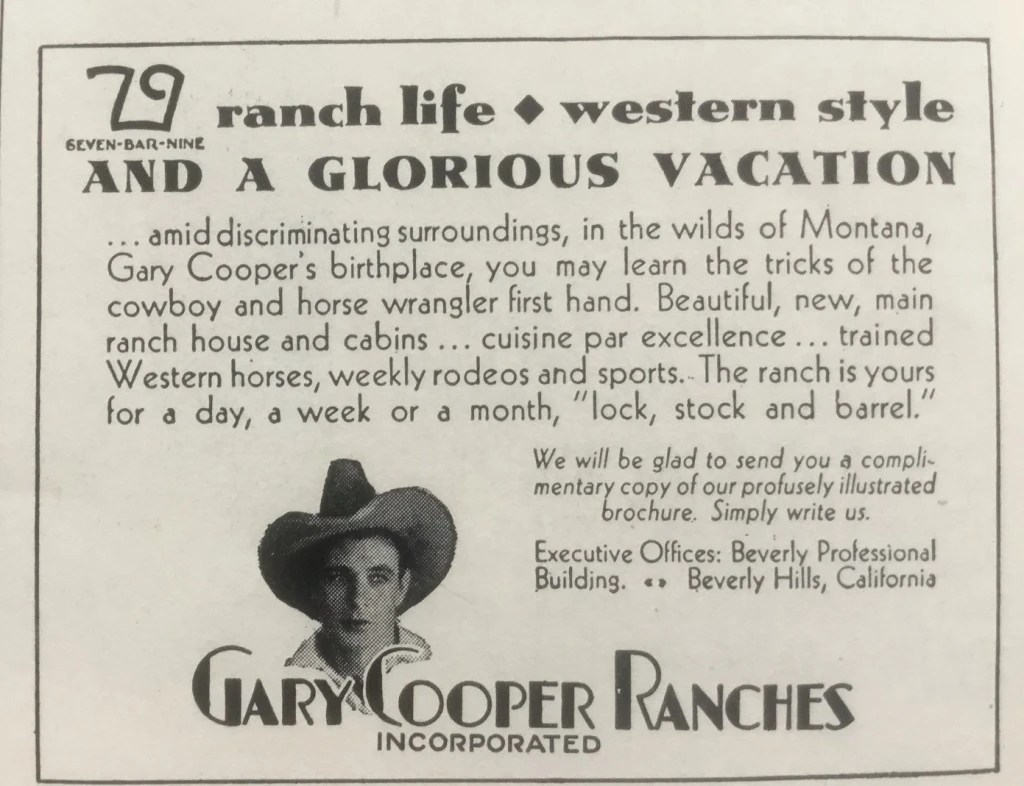
This reflects how popular dude ranches had become by the 1930s. Movie stars like Errol Flynn and Joel McCrea told reporters they planned to open ranches of their own, but they never did. Gary Cooper did have a dude ranch during this decade on the property where he grew up in Helena, Montana, but it didn’t last long. That was probably because people expected to see the movie star when they arrived, but he was rarely if ever there.
Bela Lugosi could have made up anything when the Cameo Pictures Corporation people asked him about his ambitions for the future. But he chose the dude ranch, which was deeply embedded in American culture. It was also the absolute opposite of his character, both on and off screen. And he knew it.
Here’s the blurb
It’s 1954, and San Francisco writer Phoebe Kelley is enjoying the success of her first novel, Lady in the Desert. When Phoebe’s sister-in-law asks her to return to Tribulation, Arizona to help run the H Double Bar Dude Ranch, she doesn’t hesitate. There’s competition from a new dude ranch this year, so the H Double Bar puts on a rodeo featuring a trick rider with a mysterious past. When accidents begin to happen around the ranch, Phoebe jumps in to figure out why, and confronts an unexpected foe. And a man from her own past forces her to confront feelings long buried. Dude or Die is the second book in the award-winning H Double Bar Dude Ranch series.
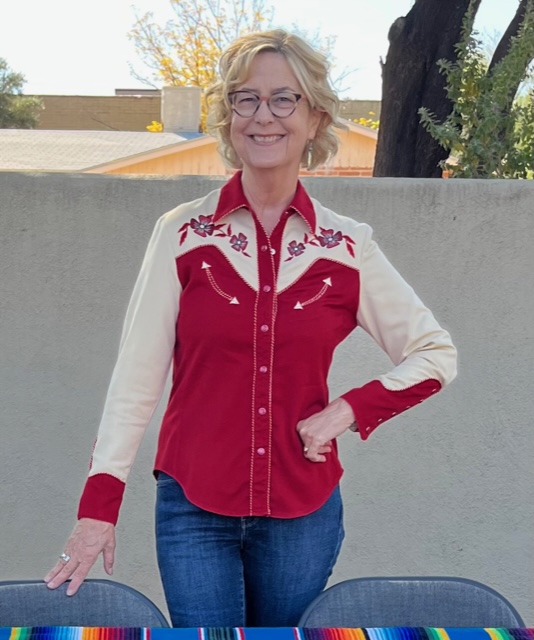
She was the Historian for Levi Strauss & Co. in San Francisco for 25 years. Her adventures as ambassador for company history took her around the world, where she spoke to television audiences, magazine editors, and university students, appeared in numerous documentaries, and on The Oprah Winfrey Show. She wrote many books and articles about the history of the company and the jeans, and her biography, Levi Strauss: The Man Who Gave Blue Jeans to the World, won the Foreword Reviews silver INDIE award.
Lynn got interested in dude ranches during her time at Levi’s. Her debut historical novel, Dudes Rush In, is set on an Arizona dude ranch in the 1950s; Arizona because she’s a desert rat at heart, and the 1950s because the clothes were fabulous.
Dudes Rush In won a Will Rogers Medallion Award, and placed first in Arizona Historical Fiction at the New Mexico-Arizona book awards. The next book in this series, Dude or Die, was released in 2023. And just for fun, Lynn wrote a screenplay based on Dudes Rush In, which is currently making the rounds of reviewers and competitions.
She pens short stories, as well. “The Wind and the Widow” took Honorable Mention in the History Through Fiction story contest, and “Incident at the Circle H” was a Finalist for the Longhorn Prize from Saddlebag Dispatches. The story “Goldie Hawn at the Good Karma Café,” won second place in The LAURA Short Fiction contest from Women Writing the West, and is based on her experiences in a San Francisco religious cult in the 1970s. (That will be another book one of these days.)
Lynn’s latest nonfiction book is American Dude Ranch: A Touch of the Cowboy and the Thrill of the West, a cultural history of the dude ranch. It was reviewed in The Wall Street Journal, True West, Cowgirl, and The Denver Post, and was a Finalist for the Next Generation INDIE Award in Nonfiction. Kirkus Reviews said the book is “…deeply engaging and balances accessible writing style with solid research.”
When she’s not writing, Lynn works as a consulting archivist and historian for museums, libraries, cultural institutions, and businesses. She is the past president of Women Writing the West, a member of the Western Writers of America, and is on numerous boards devoted to archives and historic preservation.
Lynn lives in Sonoma, California, where she sometimes makes wine from the Pinot Noir grapes in her back yard vineyard.
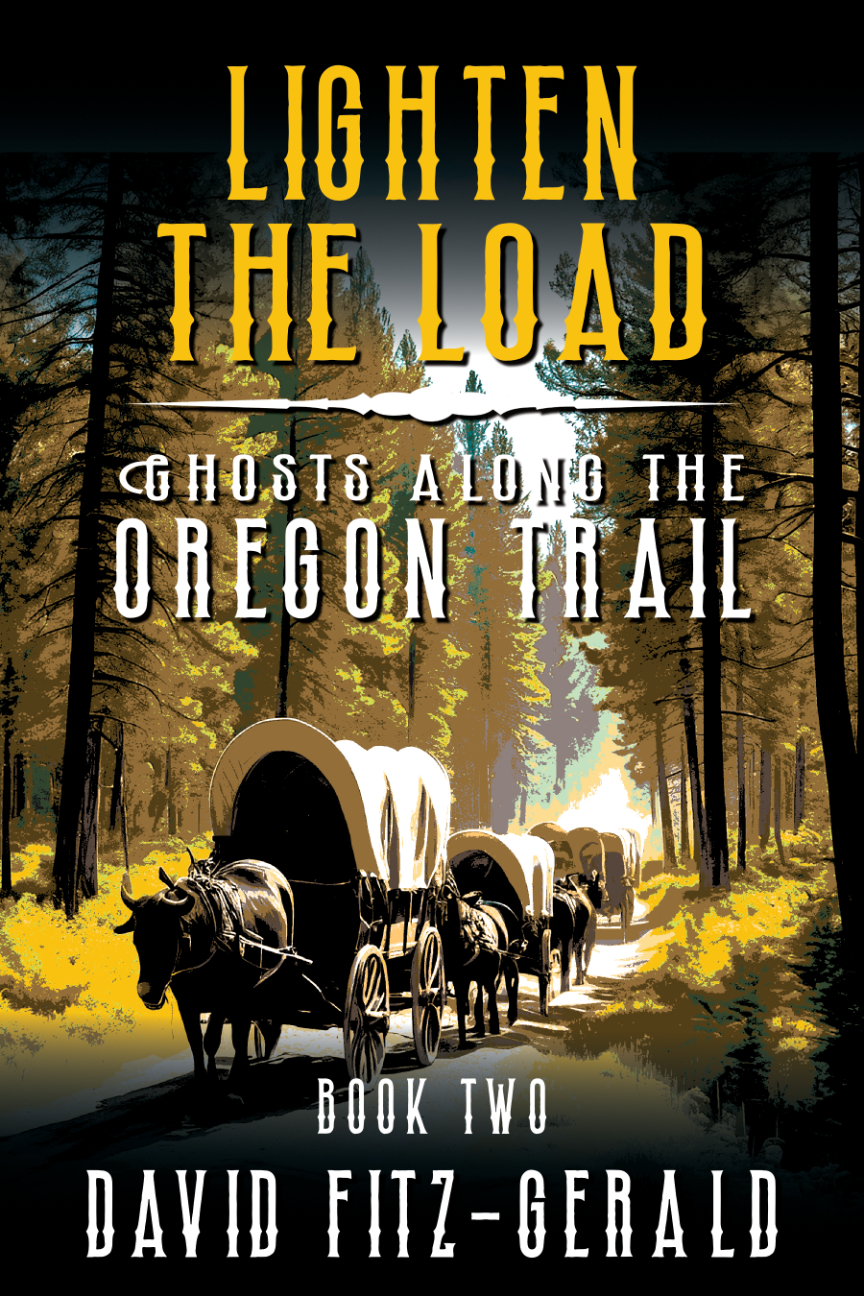
I’m delighted to welcome David Fitz-Gerald and his new book, Lighten the Load, Ghosts Along the Oregon Trail (book 2), to the blog, with a series trailer.
Lighten the Load, Ghosts Along the Oregon Trail Series Trailer
Here’s the blurb
After a devastating tragedy, Dorcas Moon faces brutal choices in the unforgiving wilderness.
An unsolved hometown murder casts a foreboding shadow over the journey. Mounting responsibilities weigh heavy on Dorcas’ shoulders while navigating the trail along the Platte River. Family, friends, and neighbors can’t seem to get along without her help.
The gruesome trail exacts a heavy toll. A sweeping grass fire blazes across the prairie. A doomed wagon careens down a treacherous hill. A fellow traveler is gored to death while hunting buffalo. Each disaster pushes the pioneers to the brink. Amidst the chaos, Dorcas grapples with the realization that she must dump her precious cook stove and her husband’s massive safe. The oxen can no longer haul the heavy weight of unnecessary cargo.
When her daughter mysteriously disappears while the wagons are at Fort Laramie, Dorcas Despairs. She is desperate to help her daughter when the troubled youth is found in the arms of a Brulé man in Spotted Tail’s village.
Secure your copy of Lighten the Load and delve into an unforgettable saga of empowerment, sacrifice, and the haunting echoes of the American frontier. Rejoin Dorcas Moon on the adventure of a lifetime as she confronts the challenges that shape her destiny.
This title is available to read on #KindleUnlimited
Meet the Author
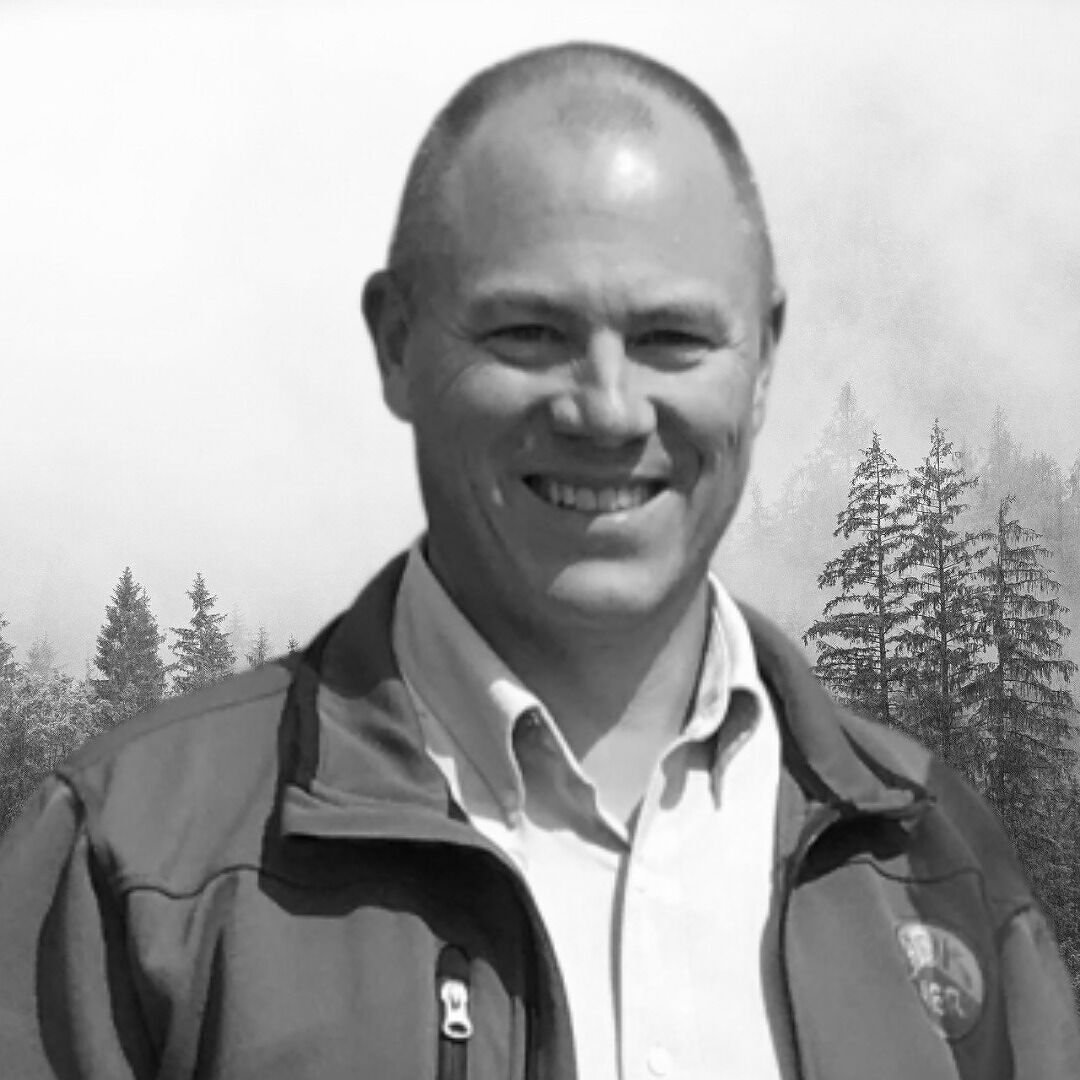
David Fitz-Gerald writes westerns and historical fiction. He is the author of twelve books, including the brand-new series, Ghosts Along the Oregon Trail set in 1850. Dave is a multiple Laramie Award, first place, best in category winner; a Blue Ribbon Chanticleerian; a member of Western Writers of America; and a member of the Historical Novel Society.
Alpine landscapes and flashy horses always catch Dave’s eye and turn his head. He is also an Adirondack 46-er, which means that he has hiked to the summit of the range’s highest peaks. As a mountaineer, he’s happiest at an elevation of over four thousand feet above sea level.
Dave is a lifelong fan of western fiction, landscapes, movies, and music. It should be no surprise that Dave delights in placing memorable characters on treacherous trails, mountain tops, and on the backs of wild horses.
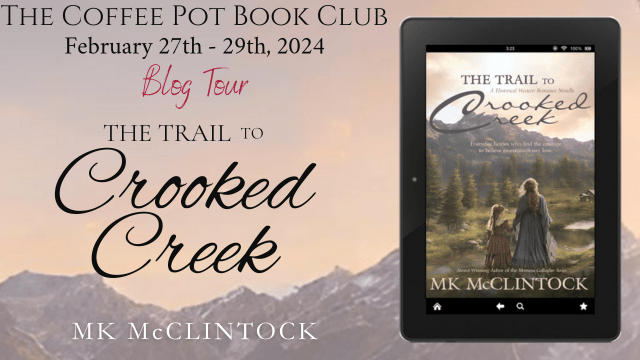
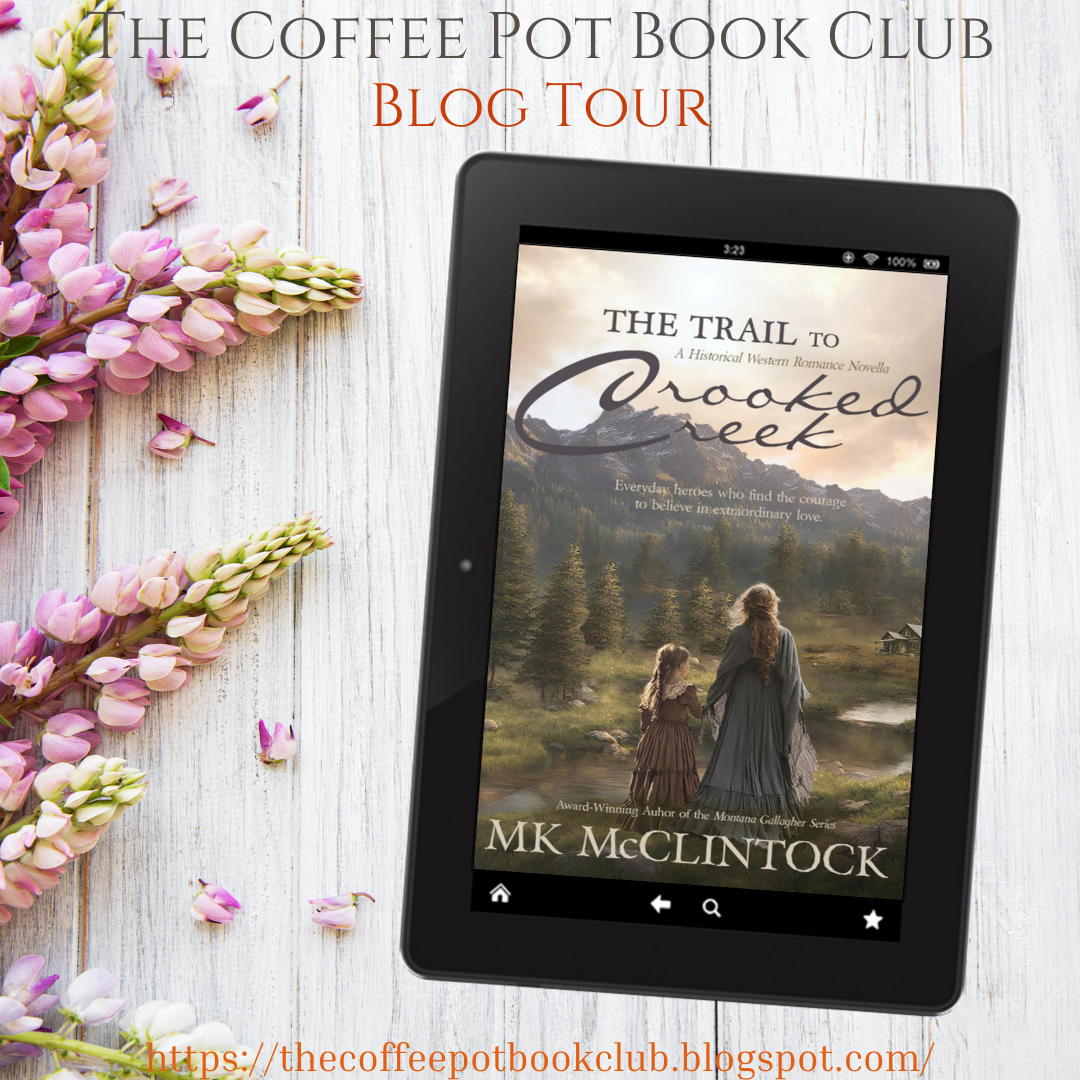
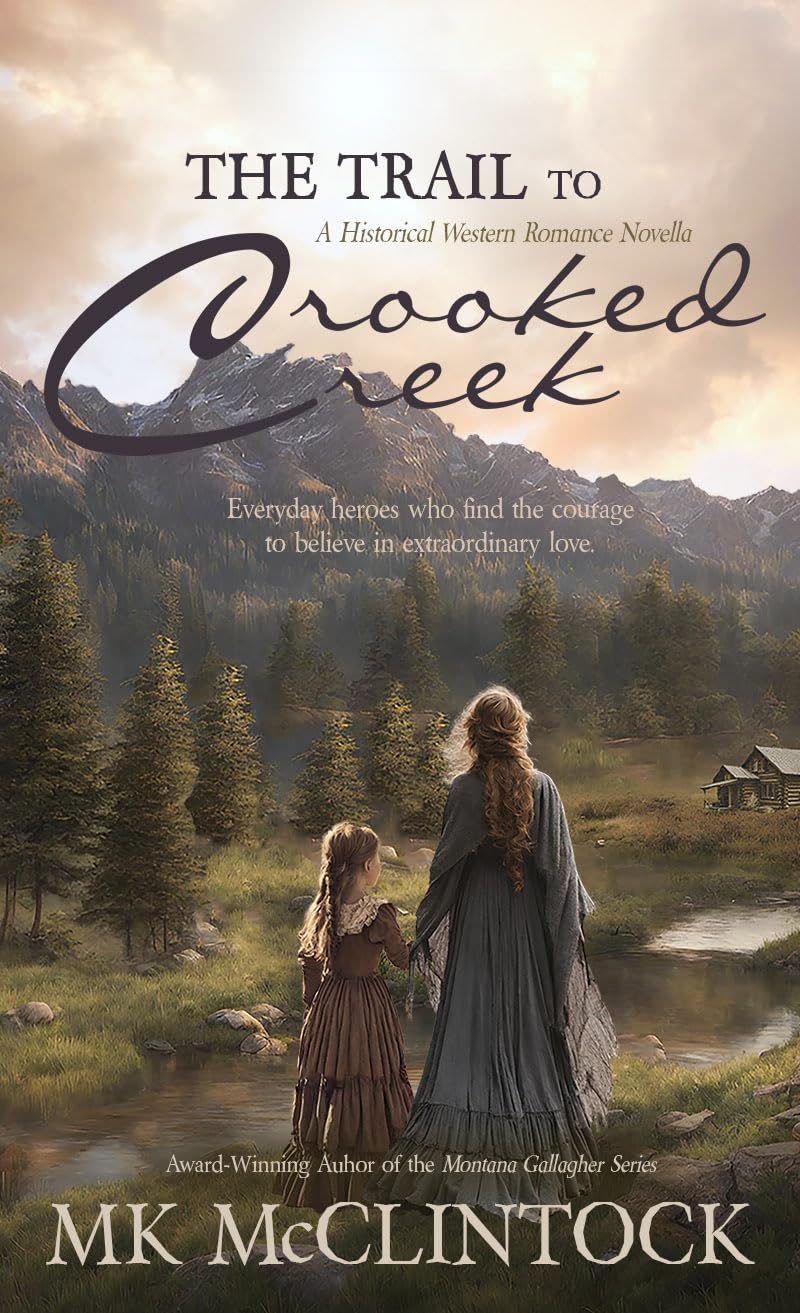
I’m delighted to welcome MK McClintock and her new book, The Trail to Crooked Creek, Crooked Creek series, book 3, to the blog with, About the Crooked Creek Series.
About the Crooked Creek Series
“MK McClintock knows what readers want.” ~ Readers’ Favorite
Set in post-Civil War Montana Territory, in the small town of Crooked Creek, it all started with Emma. Her story was written for a contest, but I soon realized there were more women whose tales needed to be written. The war is over between the North and the South, but the battles at home are just beginning. If you love stories of bravery and courage with unforgettable women and the men they love, you’ll enjoy the Crooked Creek series.
Also Available:
The Women of Crooked Creek
Christmas in Crooked Creek
Here’s the blurb
Everyday heroes who find the courage to believe in extraordinary love.
Two years after the devastations of war left their mark on a country torn apart, Wesley Davenport, a former soldier haunted by his experiences on the battlefield crosses paths with Leah Tennyson, a teacher who helps him heal his emotional wounds—and discovers unexpected love in the most unlikely place.
The Trail to Crooked Creek, a novella, is a tale of resilience, compassion, and the triumph of the human spirit set in the breathtaking and sometimes unforgiving landscape of post-Civil War Montana Territory.
Her works include the following series: Montana Gallaghers, Crooked Creek, British Agents, Whitcomb Springs, and the stand-alone collection, A Home for Christmas. She is also the co-author of the McKenzie Sisters Mysteries.
MK enjoys a quiet life in the northern Rocky Mountains. Visit her at www.mkmcclintock.com, where you can learn more about her books, explore extras, view her blog, and subscribe to receive news.
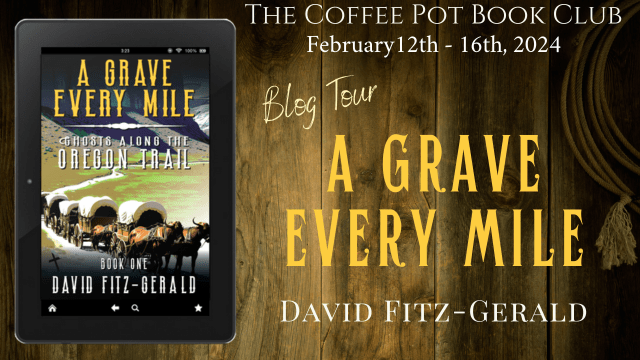
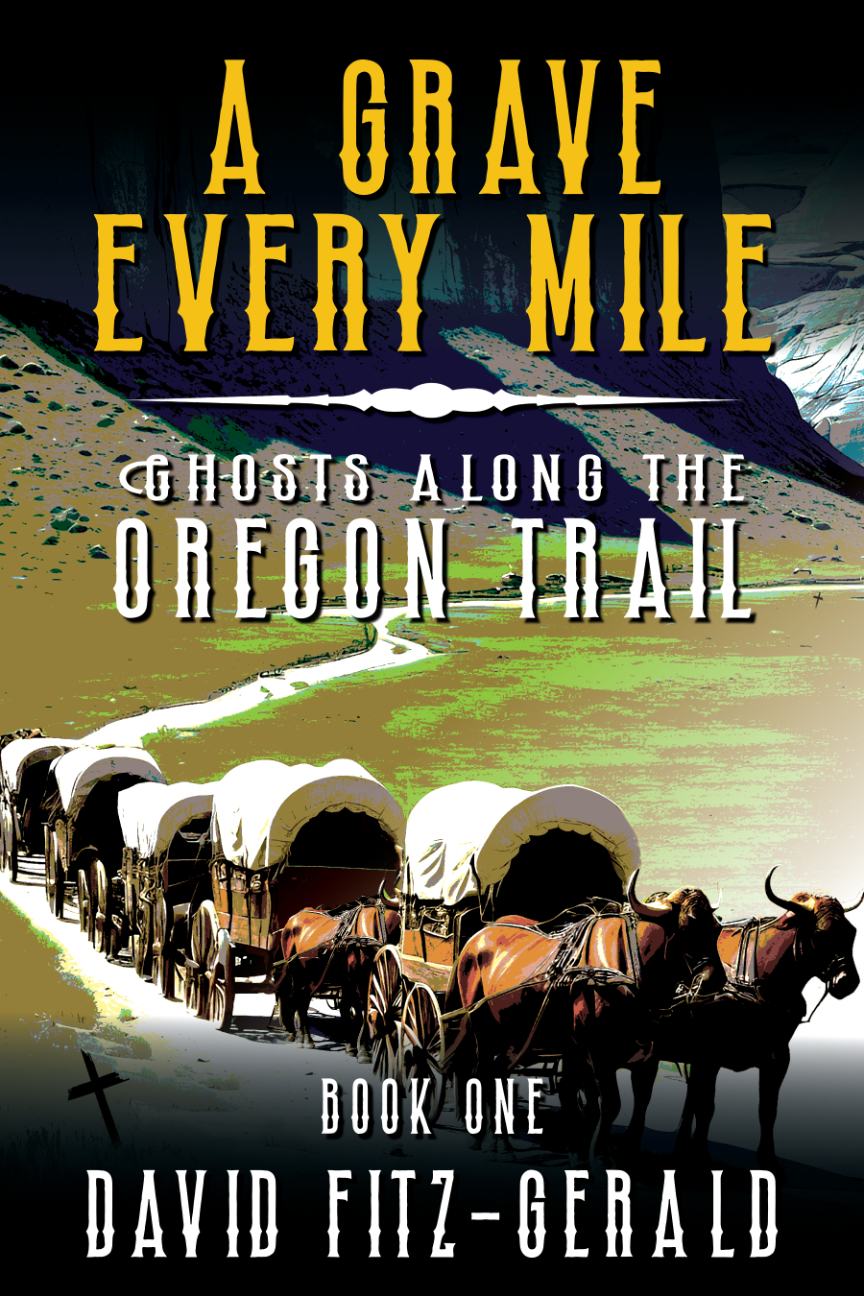
I’m delighted to welcome David Fitz-Gerald, and his new book, A Grave Every Mile, with an excerpt.
Excerpt from Chapter 3
First day on the trail, April 15, 1850
Our three teams of oxen, led by Hardtack and Scrapple, stand ready to do their job. It takes a while before it’s our turn to begin pulling, with fifteen wagons ahead of us. When the wheels of the wagon before us begin to turn, Larkin cracks the bullwhip and shouts, “Hi-yah!” He snaps the whip again, and the poor beasts lumber forward.
The broody hen squawks in her box. Straps hold the cage in place on a shelf on the wagon’s exterior. Ridge, the devil-eyed goat, blats in protest as the rope that ties her to the back left corner of the wagon drags her along. I can’t see Blizzard, tied to the other corner of the wagon. The children and I begin on foot, following closely behind Larkin.
I hate it when people are cruel to animals. I should hold my tongue, but I cannot. “Must you snap that whip so sharply? It’s barbaric. We should thank the oxen, not whip them.”
“Don’t be ridiculous, Dorcas. I’m not whipping them. I’m whipping the air above them. You know that. We can’t get to Oregon if the oxen don’t move. Don’t carry on like a child.”
Of course, he’s right. Somehow, dressing a deer doesn’t phase me. I can snap a chicken’s neck and pluck its feathers, but the idea of hurting beasts of burden saddens me. “Couldn’t you just tap them lightly on the rump rather than scare the poor creatures?”
“Look, see, we’re already falling behind. We need to drive the oxen faster if we want to get to Oregon before winter.”
“But…”
“That’s enough, Dorcas. Don’t pester me anymore.”
My molars tighten against each other. I know a woman shouldn’t bicker, argue, or nag. Usually, Larkin doesn’t complain about having a garrulous wife. Still, it rankles when he tells me not to pester him.
After walking alongside for half an hour, Dahlia Jane says she is tired. One mile down, one thousand, nine-hundred and ninety-nine miles to go. I lift the child into the wagon. Fortunately, she is content to play quietly by herself.
I walk for a while beside Blizzard. He always seems to listen and understand me when I share my troubles, worries, and complaints. His coat is sleek beneath the palm of my hand. I can never resist stroking his neck. “We’ll take a ride together soon. I promise.”
Dahlia Jane hasn’t moved from her nest in the back of the wagon, so I return to walk with the other children. I’m surprised to find Christopher where Larkin was. Larkin is missing. I glance about and don’t see him anywhere. Andrew smiles and says, “Nature calls.” Rose slaps her forehead and looks at her hand to see if she squashed a bug. Christopher seems to have mastered snapping the bullwhip above the oxen, and it makes me cringe even more than when Larkin does it.
After half an hour, Larkin tells Rose it’s her turn. She had been complaining about boredom and appears to have come alive as Larkin calls out her name. “Alright, Rose. Here is the whip. Hold it high and flick it hard with your wrist so that it snaps in the air above the kine.”
Rose asks, “What if I accidentally hit them with it?”
Larkin answers, “Don’t worry. It will not hurt them. They have thick skin and dull nerves.”
I can’t help but say, “Larkin, how do you know how they feel? Please don’t beat our animals.”
Larkin replies, “We’ll try, but the children must learn how to drive them. If you can’t bear to watch, may I suggest you visit our neighbors?”
“Very well, then.” It doesn’t make it any better knowing they whip the beasts while I’m gone, but I pluck Dahlia Jane from her burrow and wander back to the next wagon.
Here’s the blurb
Embark on a harrowing trek across the rugged American frontier in 1850. Your wagon awaits, and the untamed wilderness calls. This epic western adventure will test the mettle of even the bravest souls.
Dorcas Moon and her family set forth in search of opportunity and a brighter future. Yet, what awaits them is a relentless gauntlet of life-threatening challenges: miserable weather, ravenous insects, scorching sunburns, and unforgiving terrain. It’s not merely a battle for survival but a test of their unity and sanity.
Amidst the chaos, Dorcas faces ceaseless trials: her husband’s unending bickering, her daughter’s descent into madness, and the ever-present danger of lethal rattlesnakes, intensifying the peril with each step. The specter of death looms large, with diseases spreading and the eerie howls of rabid wolves piercing the night. Will the haunting image of wolves desecrating a grave push Dorcas over the edge?
With each mile, the migration poses a haunting question: Who will endure the relentless quest to cross the continent, and who will leave their bones to rest beside the trail? The pathway is bordered by graves, a chilling reminder of the steep cost of dreams.
A Grave Every Mile marks the commencement of an unforgettable saga. Start reading Ghosts Along the Oregon Trail now to immerse yourself in an expedition where every decision carries the weight of life, death, and the pursuit of a brighter future along the Oregon Trail.
David Fitz-Gerald writes westerns and historical fiction. He is the author of twelve books, including the brand-new series, Ghosts Along the Oregon Trail set in 1850. Dave is a multiple Laramie Award, first place, best in category winner; a Blue Ribbon Chanticleerian; a member of Western Writers of America; and a member of the Historical Novel Society.
Alpine landscapes and flashy horses always catch Dave’s eye and turn his head. He is also an Adirondack 46-er, which means that he has hiked to the summit of the range’s highest peaks. As a mountaineer, he’s happiest at an elevation of over four thousand feet above sea level.
Dave is a lifelong fan of western fiction, landscapes, movies, and music. It should be no surprise that Dave delights in placing memorable characters on treacherous trails, mountain tops, and on the backs of wild horses.






























 MJ Porter