
Welcome to today’s stop on the audio blog tour for Widdershins by Helen Steadman and narrated by Christine Mackie

Your audiobook, Widdershins, is deeply steeped in historical knowledge. As a historian first and foremost, and then a writer, I’m always interested in how people research their historical stories.

Thanks very much for having me along on your blog today, MJ, and I see we share a common interest in swords, as well as in writing and history! The research for Widdershins took several years, and I must say, if I’d realised at the outset how much research was involved, I probably wouldn’t have written a historical novel. That said, it was a fascinating process and I enjoyed it so much, I went on to do a PhD at the University of Aberdeen. 
Can you explain your research process to me, and give an idea of the resources that you rely on the most (other than your imagination, of course) to bring your historical landscape to life? 

First, I did an enormous amount of reading about witches, witchfinders and witch trials, and I’m reasonably certain that if I piled all the books I read on top of each other, they’d be taller than me (and I’m pretty tall). I also did a lot of online research and spent time vanishing down some very interesting rabbit holes. 

At the outset, when I thought I’d be writing something rather more magical, I joined a paranormal group and went on regular ghost-hunting expeditions. (Sadly, I never experienced any supernatural activity.) When I decided that my witches were going to be healers, I went to Dilston Physic Garden and trained in tree medicine. This helped me get under my characters’ skins and also equipped me with accurate knowledge about identifying, growing, harvesting and making herbal remedies. Back at home, I created a tea garden with a dozen or so plants that are handy to have at the kitchen door, and I still enjoy making my own herbal tea and elder linctus from garden herbs, or hedgerow pickings. 
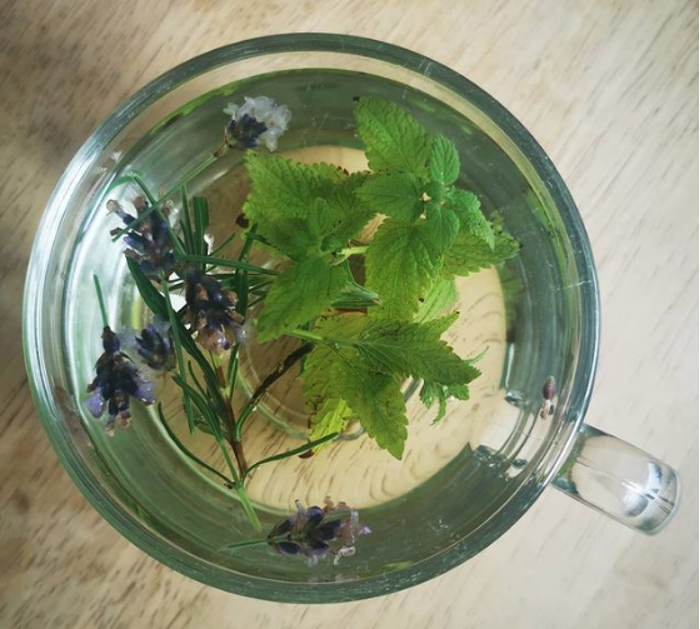
Image 1 insert lavender and lemon balm tea andCaption/ Warning (Please seek medical advice before using herbs if you’re pregnant, breastfeeding, on any medications or have any health conditions. Also, lemon balm can act as a euphoric if you overdo it – so, all things in moderation.)

As well as all the witch-related research, I needed to make sure the book was accurate in terms of language, politics, religion, social mores, war, crime, punishment, health, medicine, childbirth, midwifery, food, clothing, etc. And I needed to do this for both England and Scotland. Widdershins and its sequel, Sunwise are both threaded through with folklore, which also required a good deal of research. All this detective work was so fascinating and enjoyable, it was almost a shame when I had to stop researching and start writing. 

What was less enjoyable was my research into witchfinders and their techniques. I read lots of first-hand accounts from witchfinders (including the self-styled witchfinder general, Matthew Hopkins and his sidekick, John Stearne, as well as a range of Scottish witchfinders). It was appalling to read about the torture and injustice they inflicted on the flimsiest of grounds, such as women giving pets odd names. There was a troubling theme of witchfinders sexually humiliating women in public during some trials, which led me down some very unsettling research pathways to help me create my own witchfinder, John Sharpe. 

John Sharpe lived in my head from 2011 when I started researching until 2019 when Sunwise came out. It was quite a relief to be rid of him, but now, as I’m working with Christine Mackie on the audiobooks, he’s back in my head again. So hopefully, once Sunwise has been recorded, I can clear him from my mind once and for all. Christine has done a fantastic job of bringing this evil man to life. (If you’d like to hear a short excerpt of her narrating Widdershins, please visit Audible, where you can hear five minutes of a Scottish girl on trial, early on in the witchfinder’s career when he’s still a boy.)
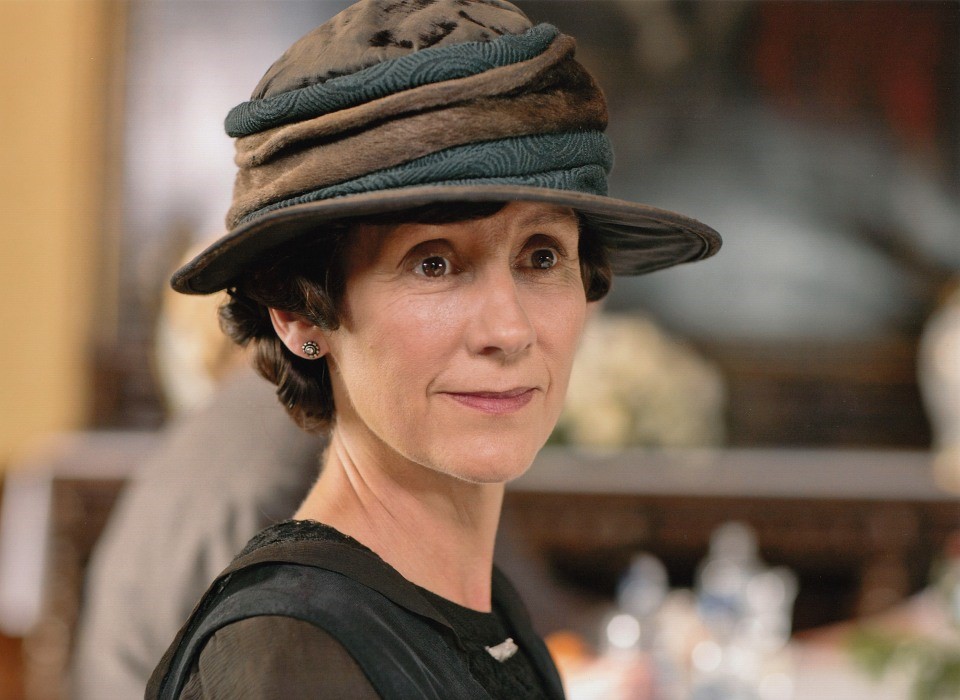
photo of Christine Mackie Caption: Christine Mackie (narrator of the Widdershins audiobook) in her role as Daphne Bryant in Downton Abbey

Do you have a ‘go’ to book/resource that you couldn’t write without having to hand, and if so, what is it (if you don’t mind sharing)?

I suppose the book that ultimately gave me the idea for my story was Ralph Gardiner’s England’s Grievance Discovered. This was published in 1655 and contains eyewitness accounts of the trials and executions. It also contains the well-known picture often used to illustrate articles about witch trials, showing the witchfinder receiving his pay. However, far from being all about witches, this book only contains a page or so on the witch trials and is mostly about the coal trade in North East England. 
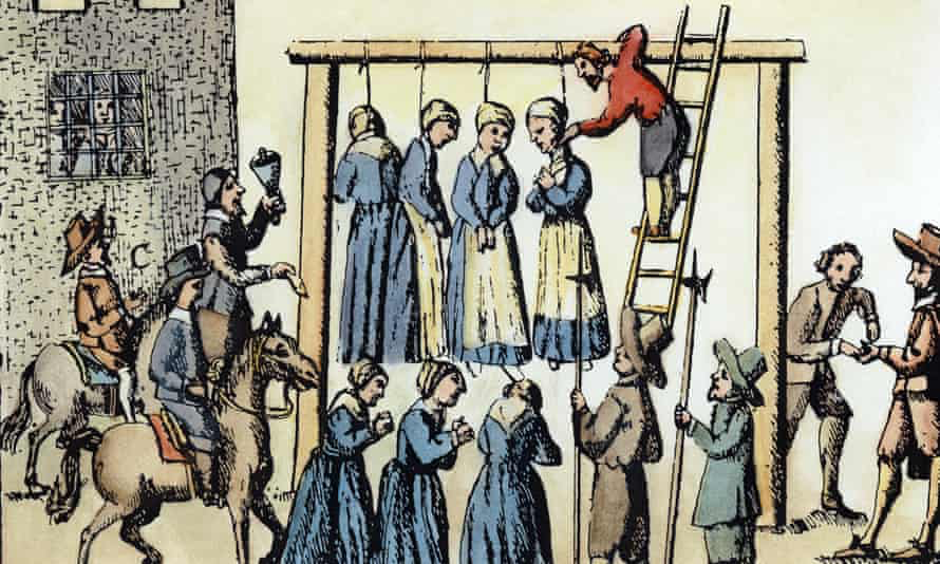
Picture from Ralph Gardiner’s, England’s Grievance Discovered, showing the witchfinder (right) receiving his pay, with the Castle Keep in Newcastle on the left.

Otherwise, I don’t think I could possibly pin down one book, but on my blog, there’s a short list of online sources and non-fiction books (as well as a few novels) that are a good place to start. Of particular interest on that list is the University of Edinburgh database of Scottish witches. This contains information about age, location and occupation. I’d also strongly recommend visiting archives – whether the National Archives at Kew Gardens or local ones – and also looking through parish burial records. 

It was really informative reading trial records. As well as the Newcastle witch trials on my doorstep, there was also a later set of trials nearby in the Derwent/Tyne Valley. The transcripts from the trials can be viewed online via my blog, and they include tall tales ranging from fortune telling to demonic goings on. Many of the confessions also pick up well-known folklore and fairy tale themes (such as the devil presiding over a table that continually replenishes with food). On the face of it, they seem almost amusing, but like other witch trial confessions, these would most likely have been obtained under duress, which is always sobering.

Thank you so much for sharing all your fascinating research. Good luck with the audiobook!
Here’s the blurb:

The new audio book of Widdershins is narrated brilliantly by talented actor, Christine Mackie, from Downton Abbey, Coronation Street, Wire in the Blood, and so on.  

The first part of a two-part series, Widdershins is inspired by the Newcastle witch trials, where 16 people were hanged. Despite being the largest mass execution of witches on a single day in England, these trials are not widely known about. In August 1650, 15 women and one man were hanged as witches after a Scottish witchfinder found them guilty of consorting with the devil. This notorious man was hired by the Puritan authorities in response to a petition from the Newcastle townsfolk who wanted to be rid of their witches. 

Widdershins is told through the eyes of Jane Chandler, a young woman accused of witchcraft, and John Sharpe, the witchfinder who condemns her to death. Jane Chandler is an apprentice healer. From childhood, she and her mother have used herbs to cure the sick. But Jane soon learns that her sheltered life in a small village is not safe from the troubles of the wider world. From his father’s beatings to his uncle’s raging sermons, John Sharpe is beset by bad fortune. Fighting through personal tragedy, he finds his purpose: to become a witchfinder and save innocents from the scourge of witchcraft. 

Praise for Widdershins:

The Historical Novel Society said of Widdershins: “Impeccably written, full of herbal lore and the clash of ignorance and prejudice against common sense, as well as the abounding beauty of nature, it made for a great read. There are plenty of books, both fact and fiction, available about the witch-trial era, but not only did I not know about such trials in Newcastle, I have not read a novel that so painstakingly and vividly evokes both the fear and joy of living at that time.”

Trigger Warnings:

Domestic abuse, rape, torture, execution, child abuse, animal abuse, miscarriage, death in childbirth.

Amazon UKAmazon USAmazon CA:  Amazon AU

Audible Link: 

Blackwells:  WaterstonesKoboiBooks

iTunesFoyles:  Book DepositoryUniversal eBook link:

Meet the author


Dr Helen Steadman is a historical novelist. Her first novel, Widdershins and its sequel, Sunwise were inspired by the Newcastle witch trials. Her third novel, The Running Wolf was inspired by a group of Lutheran swordmakers who defected from Germany to England in 1687.

Despite the Newcastle witch trials being the largest mass execution of witches on a single day in England, they are not widely known about. Helen is particularly interested in revealing hidden histories and she is a thorough researcher who goes to great lengths in pursuit of historical accuracy. To get under the skin of the cunning women in Widdershins and Sunwise, Helen trained in herbalism and learned how to identify, grow and harvest plants and then made herbal medicines from bark, seeds, flowers and berries.

The Running Wolf is the story of a group of master swordmakers who left Solingen, Germany and moved to Shotley Bridge, England in 1687. As well as carrying out in-depth archive research and visiting forges in Solingen to bring her story to life, Helen also undertook blacksmith training, which culminated in making her own sword. During her archive research, Helen uncovered a lot of new material and she published her findings in the Northern History journal.

Helen is now working on her fourth novel.

Connect with Helen

WebsiteTwitter:  FacebookInstagram

Amazon Author PageGoodreadsYouTube

Meet the narrator, Christine Mackie

Christine Mackie has worked extensively in TV over the last thirty years in well-known TV series such as Downton Abbey, Wire in the Blood, Coronation Street, French & Saunders and The Grand. Theatre work includes numerous productions in new writing as well as classics, such as A Midsummer Night’s Dream, Comedy of Errors, Richard III, An Inspector Calls, and the Railway Children. In a recent all women version of Whisky Galore, Christine played three men, three women and a Red Setter dog! 

Connect with the narrator

IMDB for Christine Mackie: https://www.imdb.com/name/nm0533499/

Video of Narrator talking about audiobook: https://www.youtube.com/watch?v=_8aAAwAqrLc
Don’t forget to check out the other stops on the Widdershins blog tour with The Coffee Pot Book Club

Welcome to today’s stop on the blog tour for Traitor’s Knot by Cryssa Bazos

Today, I’m delighted to share Traitor’s Knot by Cryssa Bazos with you. Read on for an excerpt.

Elizabeth Seton browsed the household stalls, strolling at her leisure. James walked towards her, his eyes fixed firmly on the prize. She hovered over a collection of linens, and her fingers brushed over the cloths, but she did not linger beyond a curious moment. James kept a discreet distance, ever narrowing the gap. One slim hand held her skirts, raising them slightly to avoid a muddy puddle before she continued on her way. 

He halted his progress when she became rooted at the bookseller’s. While fancy ribbons and laces had not attracted her interest, a stack of pamphlets and chapbooks made the difference. She struck up a conversation with the bookseller, laughing at something he said. James rubbed his chin, engrossed. An unusual maid, he thought and drew closer. 

Leaning over the small collection, her head tilted to peer at the titles. Hair secured in a sedate knot, a wayward tendril escaped its constraint. The wind lifted and teased the stray lock, contrasting to the paleness of her nape. James fought the urge to reach out and twist the strand in his fingers. 

He bent forward and addressed her in a low tone, “Are you looking to improve your mind or to seek instruction?” 

Elizabeth started in surprise. Her eyes widened, and for the first time, he realised how blue they were. Almost immediately they narrowed, as though she wasn’t sure how to respond to his boldness. He knew he was being forward, but he had never won a thing without pressing his advantage. 

“I am looking for a book on good manners, sir. I would not expect you to recommend one.” 

James grinned. Without looking away, he addressed the bookseller, who watched them. “Master Ward, would you be so kind as to introduce us?”

“I would,” the man said. “Only I haven’t made the maid’s acquaintance myself.”

Amusement flitted across her lips. “Elizabeth Seton,” she announced.

“Mistress Seton, may I present James Hart, ostler at the Chequer and Crowne,” the bookseller said, fulfilling his duty. 

James swept his hat from his head. “Pleased to make your acquaintance, Mistress Seton.” He rather liked saying her name.

“Master Hart.” Elizabeth canted her head and hesitated for a fraction. She looked at him openly and did not avert her eyes in modesty when he returned her gaze. 

“You’re new to Warwick,” he said.

“How would you know this?” 

“I know everyone here.” 

“Not so,” she said. One brow arched ever so slightly. “You did not know me until this moment.”  

James found her bewitching. “I stand corrected Mistress Seton. Still, you are new to Warwick.”

Elizabeth’s head dipped.

“If I were to guess, I’d say you were Mistress Stanborowe’s niece. I’ve heard that Ellendale has a new resident.”

“Indeed, your information is correct.”

“Pray, allow me the privilege of calling on you.” James leaned against the stall and nearly sent a stack of books tumbling.

“My aunt values courtesy, and you, sir, are quite forward. I can only assume she would object.” 

“I assure you, mistress, I am not an objectionable fellow,” he said. “Is that not right, Master Ward?”

“Quite true.” The man’s voice shook with laughter.

“There you have it,” James said. “If you can’t trust the word of a bookseller, all is lost.”

A small smile flitted at the corner of her mouth. James found the resulting dimple intriguing. “I must be leaving.” She picked up her purchase and prepared to depart. “God save you, sir, and good day.” She reached over to pay the bookseller, but Master Ward caught James’s warning frown and casually turned away.  

“Are women from the south always so aloof?” James blurted, then cringed. Lagging wit—you can do better. 

She halted in surprise. “How did you know I came from the south?”

“Far south, I would guess,” he said, grasping the first thing that came to mind. 

“How do you suppose?” Her eyes narrowed.

“Naturally, by your speech.”

“Indeed? I could be from London,” Elizabeth replied.

“You are as likely from London as I from Scotland.”  

Elizabeth gave up trying to attract the bookseller’s attention and laid her coin atop a pile of chapbooks. She clutched her purchase to her chest in preparation for her escape. 

“I will make you a wager,” he said. “If I can guess where you came from, you’ll allow me to call on you.”

“And if you’re wrong?”

“I’ll wish you good day and trouble you no more.” James offered his hand, but she ignored it. “Do we have an agreement?”

Elizabeth held his gaze for a moment. She pursed her lips, and a hint of a dimple lurked at the corners. “Agreed.”

James smiled. He hadn’t forgotten what she had told the highwayman. “Let’s see—I’ll need one word from you.” 

“Which one?” Elizabeth asked.

“Owl.”

“Owl?”

“Aye, the very one. Say it again.” He crossed his arms and waited. When she repeated it, he nodded. “’Tis perfectly clear. Your speech has a Dorset flavour.” For truth, she did have a lovely, soft way of speaking.

Elizabeth’s brow arched slightly. “Are you certain I am not from Hampshire?”

“Aye. Admit it, I’m correct.”

“Fine, then, but Dorset is quite large, and that does not prove your wit.”

“An exacting maid. No doubt you’ll want me to do better,” he said with a slow smile. “I’ll need another word from you, then. Two, if you please.”

“Truly? Which ones?” The breeze strengthened, and she brushed a tangled strand from her face. James caught the haunting scent of lavender.

“Welcome home.”

 With a smile, she repeated the words. The rosy bow of her mouth fascinated him.

“Unmistakable.” He grinned.

“The verdict?”

“I would lay my life upon it. ’Tis a Weymouth cast.”

“Truly impressive.” Elizabeth’s blue eyes narrowed. “Such a clever fellow to know this only by my speech. Would you not agree, Master Ward?”

This time the bookseller laughed out loud. “Quite so, Mistress Seton.”

“Thank you for your stimulating instruction, Master Hart. I find my time has grown short. Good day.” She nodded farewell to the bookseller and started to walk away. 

“What of our wager?” James called out to her.

Elizabeth stopped to face him. “I’ll honour our wager at the time of my choosing. You didn’t stipulate otherwise.”

Here’s the blurb:

England 1650: Civil War has given way to an uneasy peace . . . 

Royalist officer James Hart refuses to accept the tyranny of the new government after the execution of King Charles I, and to raise funds for the restoration of the king’s son, he takes to the road as a highwayman.

Elizabeth Seton has long been shunned for being a traitor’s daughter. In the midst of the new order, she risks her life by sheltering fugitives from Parliament in a garrison town. But her attempts to rebuild her life are threatened, first by her own sense of injustice, then by falling in love with an outlaw. 

The lovers’ loyalty is tested through war, defeat and separation. James must fight his way back to the woman he loves, while Elizabeth will do anything to save him, even if it means sacrificing herself.

Trigger Warnings:

Violence, animal injury/death.

Buy Links:

Universal Link

Amazon UKAmazon USAmazon CAAmazon AU

Barnes and Noble:  Kobo

Meet the author

Cryssa Bazos is an award-winning historical fiction author and a seventeenth century enthusiast. Her debut novel, Traitor’s Knot is the Medalist winner of the 2017 New Apple Award for Historical Fiction, a finalist for the 2018 EPIC eBook Awards for Historical Romance. Her second novel, Severed Knot, is a B.R.A.G Medallion Honoree and a finalist for the 2019 Chaucer Award. A forthcoming third book in the standalone series, Rebel’s Knot, will be released November 2021.

Connect with Cryssa

WebsiteTwitter:   Facebook

Instagram:  Book BubAmazon Author PageGoodreads

Don’t forget to check out the other stops on the Traitor’s Knot blog tour with The Coffee Pot Book Club

Welcome to today’s stop on the Beneath the Veil of Smoke and Ash by Tammy Pasterick blog tour

Today, I’m delighted to welcome Tammy Pasterick to the blog with a post about her new book, Veil of Smoke and Ash.

Researching Pittsburgh’s Golden Age of Steel

Writing a novel is never easy, but historical fiction presents its own set of challenges. While all authors strive to make their books entertaining and thought-provoking, historical novelists must also focus on accuracy. The worlds they create should be well-researched and detailed, and the characters should sound like people who actually live during medieval times, colonial times, or in 1910s Pittsburgh, as is the case in my novel, Beneath the Veil of Smoke and Ash. Transporting readers to the past is a daunting process, and I relied on a wide variety of resources to bring Pittsburgh’s golden age of steel to life. 

My book started out as a genealogy project, so my research began on Ancestry.com. In the spring of 2012, I couldn’t find my mom’s recipe for stuffed cabbages—a favorite dish in my Slovak family—so I turned to Google for some alternatives. I ended up on several Slovak and Hungarian cultural websites as well as a few genealogy sites. I then joined Ancestry.com on a whim and began a months-long search for information about my great-grandparents, who immigrated to America at the turn of the twentieth century. 

I found so many fascinating documents on Ancestry.com and quickly became addicted to the site. I located the ship manifesto for my Slovak great-grandparents who traveled to Ellis Island from Austria-Hungary in 1905 as well as a World War II draft registration card for my Lithuanian great-grandfather who was in his early fifties at the time he signed it. I was in awe of his bravery, as his advanced age exempted him from the draft. These discoveries led to a fascinating conversation with my ninety-year-old grandmother, who rarely spoke of her childhood. I asked her several questions about her family and her in-laws, and she responded in the most unexpected way. She presented me with a scrapbook and a shoebox of old family photos.

I’m not sure why Grandma Pearl had never shown me these treasures until the final months of her life, but I am grateful nonetheless. She opened up to me that day about her childhood and showed me pictures of her Lithuanian parents as well as her Slovak in-laws. She explained that they immigrated to America at the turn of the twentieth century to work in the steel mills of Pittsburgh. She shared as many details as she could about their immigrant experience, but I wanted to know more. My curiosity inspired me to turn my genealogy project into a novel. 

While the characters in my novel are fictional, the world they live in is not. My conversation with Grandma Pearl sparked my imagination and gave me a starting point, but I still had much to learn. I read several books about Pennsylvania’s steel and coal mining industries in the early twentieth century such as The Shadow of the Mills: Working-Class Families in Pittsburgh, 1870-1907 by S.J. Kleinberg and Growing Up in Coal Country by Susan Campbell Bartoletti. I also read The Steel Workers by John A. Fitch, which was part of The Pittsburgh Survey, a sociological study conducted from 1907-1908, which chronicled the living conditions of immigrant families. These books provided insight into the daily routines of immigrants as well as the risks they faced in the mills and mines. 

In order to better understand the hazardous work steelworkers and coal miners performed in the 1910s and 1920s, I watched silent films on YouTube. Still curious, I visited the Tour-Ed Mine and Museum in Tarentum, Pennsylvania with my father, who shared memories of his thirty years of coal mining with me. I’ll never forget what it was like to stumble through cool, dark tunnels 160 feet below ground and feel the jagged walls of exposed coal beneath my fingertips.   

 Lisa A. Alzo’s books, Slovak Pittsburgh and Pittsburgh’s Immigrants, contain so many incredible photographs and gave me a deeper understanding of Slovak culture and customs. They even helped me pick out authentic names for my Slovak and Polish characters. The Social Security Administration’s website was also a great source for character names, as it tracks the popularity of baby names as far back as the 1880s. 

As for the mental illness and mysterious medical condition featured in my book, I obtained most of my facts from various medical websites suggested by Google. I relied on information from webmd.com, mayoclinic.org, psychiatry.org, and several other sites focusing on women’s health. The Internet and Google make writing historical fiction so much easier than I imagine it was just a few decades ago. The answers to my questions are usually only a few keystrokes away, and the only challenge is determining the reliability of sources. Google is also particularly useful for tracking word usage over time. I learned very quickly that it would not be appropriate for my young character, Sofie, to go to the “movies” with her “boyfriend.” She would instead see a film at the “nickelodeon” with her “sweetheart.” 

Historical fiction is definitely challenging to write, but I enjoy the research just as much as the writing. I never know where an Internet rabbit hole will lead and whether it will spark an unexpected plot twist. My modest genealogy project was not supposed to take on a life of its own and become a novel, but I am happy that it did. My deep dive into Pittsburgh’s golden age of steel revealed many fascinating facts about my family’s history, but it also taught me about the labor movement, social inequality, anti-immigration sentiment, and mental illness at the turn of the twentieth century. I am a much smarter and more empathetic person as a result of writing this novel, and I can’t wait to find out what the next one will teach me. 

Thank you so much for sharing such a fascinating insight into your new book. Good luck with it.

Here’s the blurb

It’s Pittsburgh, 1910—the golden age of steel in the land of opportunity. Eastern European immigrants Janos and Karina Kovac should be prospering, but their American dream is fading faster than the colors on the sun-drenched flag of their adopted country. Janos is exhausted from a decade of twelve-hour shifts, seven days per week, at the local mill. Karina, meanwhile, thinks she has found an escape from their run-down ethnic neighborhood in the modern home of a mill manager—until she discovers she is expected to perform the duties of both housekeeper and mistress. Though she resents her employer’s advances, they are more tolerable than being groped by drunks at the town’s boarding house.

When Janos witnesses a gruesome accident at his furnace on the same day Karina learns she will lose her job, the Kovac family begins to unravel. Janos learns there are people at the mill who pose a greater risk to his life than the work itself, while Karina—panicked by the thought of returning to work at the boarding house—becomes unhinged and wreaks a path of destruction so wide that her children are swept up in the storm. In the aftermath, Janos must rebuild his shattered family—with the help of an unlikely ally.

Impeccably researched and deeply human, Beneath the Veil of Smoke and Ash delivers a timeless message about mental illness while paying tribute to the sacrifices America’s immigrant ancestors made.

Buy Links:

Amazon UKAmazon USAmazon CA:  Amazon AU

Barnes and Noble:  iBooksBookshop.orgBooks-A-Million

IndieBound.org

Meet the author

A native of Western Pennsylvania, Tammy Pasterick grew up in a family of steelworkers, coal miners, and Eastern European immigrants. She began her career as an investigator with the National Labor Relations Board and later worked as a paralegal and German teacher. She holds degrees in labor and industrial relations from Penn State University and German language and literature from the University of Delaware. She currently lives on Maryland’s Eastern Shore with her husband, two children, and chocolate Labrador retriever.

Connect with Tammy

WebsiteTwitterFacebook

InstagramBookBubAmazon Author Page:  Goodreads

Check out the other stops on the Beneath the Veil of Smoke and Ash blog tour with The Coffee Pot Book Club

Today, I’m delighted to host Liz Harris’ Darjeeling Inheritance Blog Tour

Today, I’m delighted to welcome Liz Harris to the blog with a fascinating post about her new book, Darjeeling Inheritance.

Your book, the Darjeeling Inheritance, which sounds fantastic, is set during the 1930s in India. As a historian first and foremost, and then a writer, I’m always interested in how people research their historical stories.

Can you explain your research process to me, and give an idea of the resources that you rely on the most (other than your imagination, of course) to bring the historical landscape to life?

I’ve always believed that if a novel is set in the past, and in a foreign location, the events in the past, and the nature of that location, should be organic in the novel. To ignore the history and nature of an area would result in the setting being no more than a mere backdrop to a story that could have been located anywhere and at any time.

So before I start writing, and before I’ve determined all of the characters who’ll be in my novel, I find out everything I can about my chosen area – its past and its present, every aspect of its geography, the lives of those who live there, their mores and how they’d view the world, and also any difficulties with which they’d have to contend.

My focus in Darjeeling Inheritance was on tea production, and on the plantation owners who lived in India during the British Raj, the period between 1858 and 1947, and also on the people who worked for them, and on those whose job it was to go out on the terraces between March and November and pluck two leaves and a terminal bud.

Books are always my first port of call – bookshops and libraries are an invaluable source of information and help – and as always, the local library was an excellent source of material when writing Darjeeling Inheritance. I’m very lucky in that I live in Oxfordshire, where the libraries are excellent, and also that I can get easily to the Bodleian Library in Oxford.

The resource to which I go after books is the internet. And I also try to make contact with people in the area, such as librarians or curators, if there’s anything I need to know but am struggling to find out. 

There’s no greater inspiration, or resource, than going to the location in which one is setting a novel, and if I can go there, I do. Just over two years ago, I booked to go to Darjeeling in October, after the monsoon. Unfortunately, that trip was to prove impossible. Two months before I was due to leave for Darjeeling, the Foreign Office advised against travelling there owing to trouble between the Nepali and Bengali. The issues are now resolved, but at that time, all the tea gardens and most of the hotels were closed.

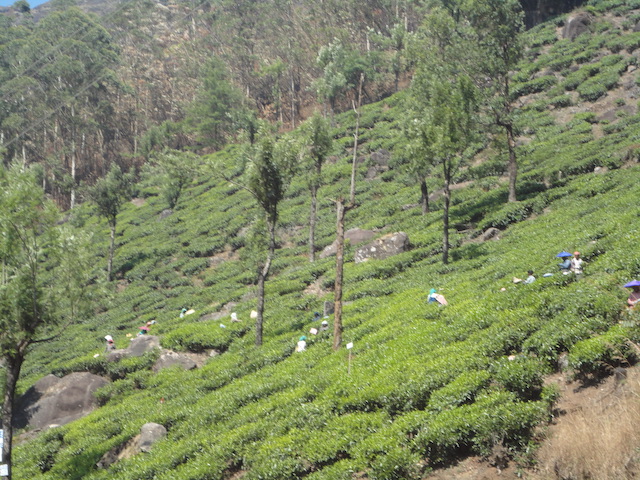
Forced to rethink my plans, I decided to go instead to the famous tea plantations in Munnar, Kerala, and to the tea factory there, and I booked a flight for the following February. October would have been a good month for a trip to Darjeeling, but it would have been too rainy a month for Kerala. My visit was wonderful, and it gave me the first-hand experience I wanted.   

A tea plantation near Munnar, India

Do you have a ‘go’ to book/resource that you couldn’t write without having to hand, and if so, what is it?

The following are my ‘go’ to books/resources. I’m making them plural as I have three staples without which I wouldn’t be comfortable writing, and I have these on the piano behind me, no matter the period or location of the work in progress.

Firstly, The Chambers Dictionary. I’m a keen Scrabble player and this is the Scrabble dictionary, so it’s the one I’ve used for years. I infinitely prefer looking up a word in a dictionary than seeking it on the internet.

The second is Roget’s Thesaurus. Repetition is the enemy of writers, and with Roget’s Thesaurus to hand, in which just about every word has a synonym for each of its meanings, an author always has a range of alternative words and phrases from which to choose. 

Finally, I have Cassell’s Dictionary of Slang, compiled by Jonathon Green. I’d hate my characters to speak in anachronistic terms, and I don’t want to jar my readers out of the text by using an idiom in my narrative that’s more appropriate for the twenty-first century than the nineteenth or twentieth. By checking the origin and first use of the vocabulary I choose, I do my best to avoid that happening. 

The three books upon which I rely

Those are my staples, but then there are the books for each specific novel. I was lucky with Darjeeling Inheritance in that much has been written by those who lived in India in the 1920s and 1930s, and especially by those who grew up there, and I was spoilt for choice. I drew on information from a very large number of books, including several novels by M.M. Kaye and her biography, and Women of the Raj, by Margaret MacMillan.

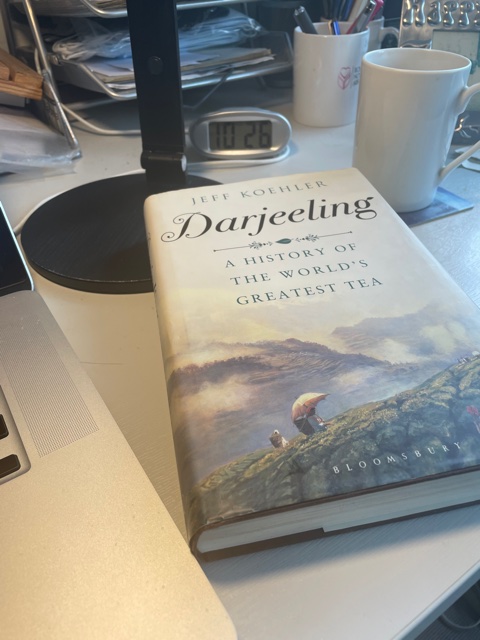
There is one other book that I must mention that’s specific to Darjeeling Inheritance. I owe a huge debt of gratitude to Darjeeling: A History of the World’s Greatest Tea, by Jeff Koehler. This was the first of the books that I bought, and it was at my side throughout my writing of the novel.

Finally, and it’s not exactly a resource, I don’t think I could write if I didn’t have a cup of coffee beside me. Yes, coffee, not tea! I’m saying this very quietly, but I don’t actually like tea!!

Jeff Koehler’s book, flanked by a cup of, dare I say it – coffee!

Many thanks, MJ, for inviting me to talk to you about my research process. I’ve very much enjoyed doing so.

Thank you for such a fascinating post. Good luck with the new book, and enjoy your cup of coffee!

Here’s the blurb:

Darjeeling, 1930

After eleven years in school in England, Charlotte Lawrence returns to Sundar, the tea plantation owned by her family, and finds an empty house. She learns that her beloved father died a couple of days earlier and that he left her his estate. She learns also that it was his wish that she marry Andrew McAllister, the good-looking younger son from a neighbouring plantation. 

Unwilling to commit to a wedding for which she doesn’t feel ready, Charlotte pleads with Dan Fitzgerald, the assistant manager of Sundar, to teach her how to run the plantation while she gets to know Andrew. Although reluctant as he knew that a woman would never be accepted as manager by the local merchants and workers, Dan agrees.

Charlotte’s chaperone on the journey from England, Ada Eastman, who during the long voyage, has become a friend, has journeyed to Darjeeling to marry Harry Banning, the owner of a neighbouring tea garden.

When Ada marries Harry, she’s determined to be a loyal and faithful wife. And to be a good friend to Charlotte. And nothing, but nothing, was going to stand in the way of that.

Buy Links:

Amazon UKAmazon USAmazon CAAmazon AU:

Meet the Author

Born in London, Liz Harris graduated from university with a Law degree, and then moved to California, where she led a varied life, from waitressing on Sunset Strip to working as secretary to the CEO of a large Japanese trading company.

Six years later, she returned to London and completed a degree in English, after which she taught secondary school pupils, first in Berkshire, and then in Cheshire.

In addition to the ten novels she’s had published, she’s had several short stories in anthologies and magazines. 

Liz now lives in Oxfordshire. An active member of the Romantic Novelists’ Association and the Historical Novel Society, her interests are travel, the theatre, reading and cryptic crosswords. To find out more about Liz, visit her website at: www.lizharrisauthor.com

Connect with Liz Harris.

WebsiteTwitterFacebook

LinkedInInstagramAmazon Author Page

Don’t forget to check out the other stops on the Darjeeling Inheritance blog tour with The Coffee Pot Book Club

Welcome to today’s stop on The Amber Crane by Malve Von Hassell blog tour

Today, I’m delighted to welcome Malve von Hassell to the blog with a post about her new book The Amber Crane.

I appreciate M J Porter’s question about the process that I use when researching and writing my historical fiction works. 

At risk of being laughed out of court, I admit that my process is a jumble – almost a scattershot approach with frequent journeys down endless tunnels in search of an answer for a particular detail and not by any means a cohesive, thorough, or systematic process. In all my books to date, my initial inspiration involved a particular image or a character that excited my interest, and I ended up building a story around that.  

For instance, in The Falconers Apprentice, my original hook for further research was De Arte Venandi cum Avibus, a remarkable compendium about falconry penned by Frederick II of Hohenstaufen, Holy Roman Emperor, in the 13thcentury. Alina: A Song for the Telling began to take shape in my mind thanks to an accidental discovery of a historical character, Stephen de Sancerre, whose life trajectory intrigued me.  The Amber Crane had its origins in my recollection of legends about amber that I had heard in my childhood.

I am not a historian. However, my background and work experiences have provided me with some tools that come in handy when writing historical fiction.  I have worked as a translator for many years, and I have also worked as an anthropologist. 

As a translator one learns to dissect words and to be appreciative of the cultural context of expressions and phrases where a mere literal translation utterly fails to convey the meaning. As a writer of historical fiction one needs to be wary of using terms that are not appropriate to the time one is writing about and has to take care not to inject too much of one’s own language usage and thought processes into a context where such would have been unlikely. Meanwhile, don’t get me wrong—it is one thing to know and understand this challenge and another entirely to work accordingly. I have failed repeatedly at sticking to this goal.

I have also studied anthropology and completed research projects in that field. The best anthropologists are by definition historians, willing to keep digging, to consider innumerable details, and to look at the entirety of a situation from as many angles as possible before writing up a description or study of a particular society or community. Anthropologists when doing fieldwork try to cover as much ground as possible and to talk to as many people as possible in order to get all sides of a story.

The processes of writing an anthropological study, a historical study, or a work of fiction involve a similar element. All three attempt to arrive at the portrayal of a truth as much as that is possible while telling a compelling story. In order to convey that truth as the author sees it, the author must select and perhaps also discard elements in order to assemble the work. That process of selection is, of course, subjective, and the final product is by definition only a partial truth. Therein lies the dilemma of authors and at the same time a tremendous wealth of opportunity in that there is always yet another story to be told or another way to tell a story and to get at a truth.

In writing historical fiction, I try to apply some of the same principles of research as I used as an anthropologist. That means paying attention to the context as a multilayered set of dynamics, reading as much as possible, ideally in the language of the place and the era, and drawing on original sources.

When I began to work on The Amber Crane, I had some of this covered in that German is my native language and my original sources included personal accounts by various relatives. 

Meanwhile, I have two main “go to” resources. 

One resource in my opinion classifies as a national treasure, that is, the spectacular public library system in the US. The research library in New York City is publically available, and one can find everything, and if one can’t find it, one can order it from another library somewhere in the United States. You can draw on this resource anywhere. I can go to my local library and obtain materials from thousands of miles away from home. This is a luxury I cannot emphasize enough, and it is all available without any sort of special admission or qualification or association with a university.

I am somewhat old-fashioned and averse to many advances in technology. Thus, it pains me to admit this, but I would not want to miss the Internet for any present or future writing project. Not only does it offer starting points when researching any given subject and excellent opportunities for armchair traveling and exploration, but more importantly it is a vehicle for connecting with other writers and researchers all over the world. Such contacts, interactions, feedback, and support are critical for writers.

Thank you so much for sharing such a fascinating post with me. Good luck with your new book.

Here’s the blurb:

Chafing at the rules of the amber guild, Peter, an apprentice during the waning years of the Thirty Years’ War, finds and keeps a forbidden piece of amber, despite the risk of severe penalties should his secret be discovered.

Little does he know that this amber has hidden powers, transporting him into a future far beyond anything he could imagine. In dreamlike encounters, Peter witnesses the ravages of the final months of World War II in and around his home. He becomes embroiled in the troubles faced by Lioba, a girl he meets who seeks to escape from the oncoming Russian army.

Peter struggles with the consequences of his actions, endangering his family, his amber master’s reputation, and his own future. How much is Peter prepared to sacrifice to right his wrongs?

Trigger Warnings:

References to rape, Holocaust, World War II, violence

Universal Link

Amazon UKAmazon USAmazon CAAmazon AU

Barnes and NobleNookIndieboundBookshop.org

Meet the Author

Malve von Hassell is a freelance writer, researcher, and translator. She holds a Ph.D. in anthropology from the New School for Social Research. Working as an independent scholar, she published The Struggle for Eden: Community Gardens in New York City (Bergin & Garvey 2002) and Homesteading in New York City 1978-1993: The Divided Heart of Loisaida (Bergin & Garvey 1996). She has also edited her grandfather Ulrich von Hassell’s memoirs written in prison in 1944, Der Kreis schließt sich – Aufzeichnungen aus der Haft 1944 (Propylaen Verlag 1994). She has taught at Queens College, Baruch College, Pace University, and Suffolk County Community College, while continuing her work as a translator and writer. She has self-published two children’s picture books, Letters from the Tooth Fairy (2012/2020) and Turtle Crossing (2021), and her translation and annotation of a German children’s classic by Tamara Ramsay, Rennefarre: Dott’s Wonderful Travels and Adventures (Two Harbors Press, 2012). The Falconer’s Apprentice (namelos, 2015) was her first historical fiction novel for young adults. She has published Alina: A Song for the Telling (BHC Press, 2020), set in Jerusalem in the time of the crusades, and The Amber Crane (Odyssey Books, 2021), set in Germany in 1645 and 1945. She has completed a biographical work about a woman coming of age in Nazi Germany and is working on a historical fiction trilogy featuring Adela of Normandy.

Connect with the author

WebsiteTwitterFacebook

LinkedInBook BubAmazon Author PageGoodreads: 

Don’t forget to check out the other stops on The Amber Crane blog tour with The Coffee Pot Book Club

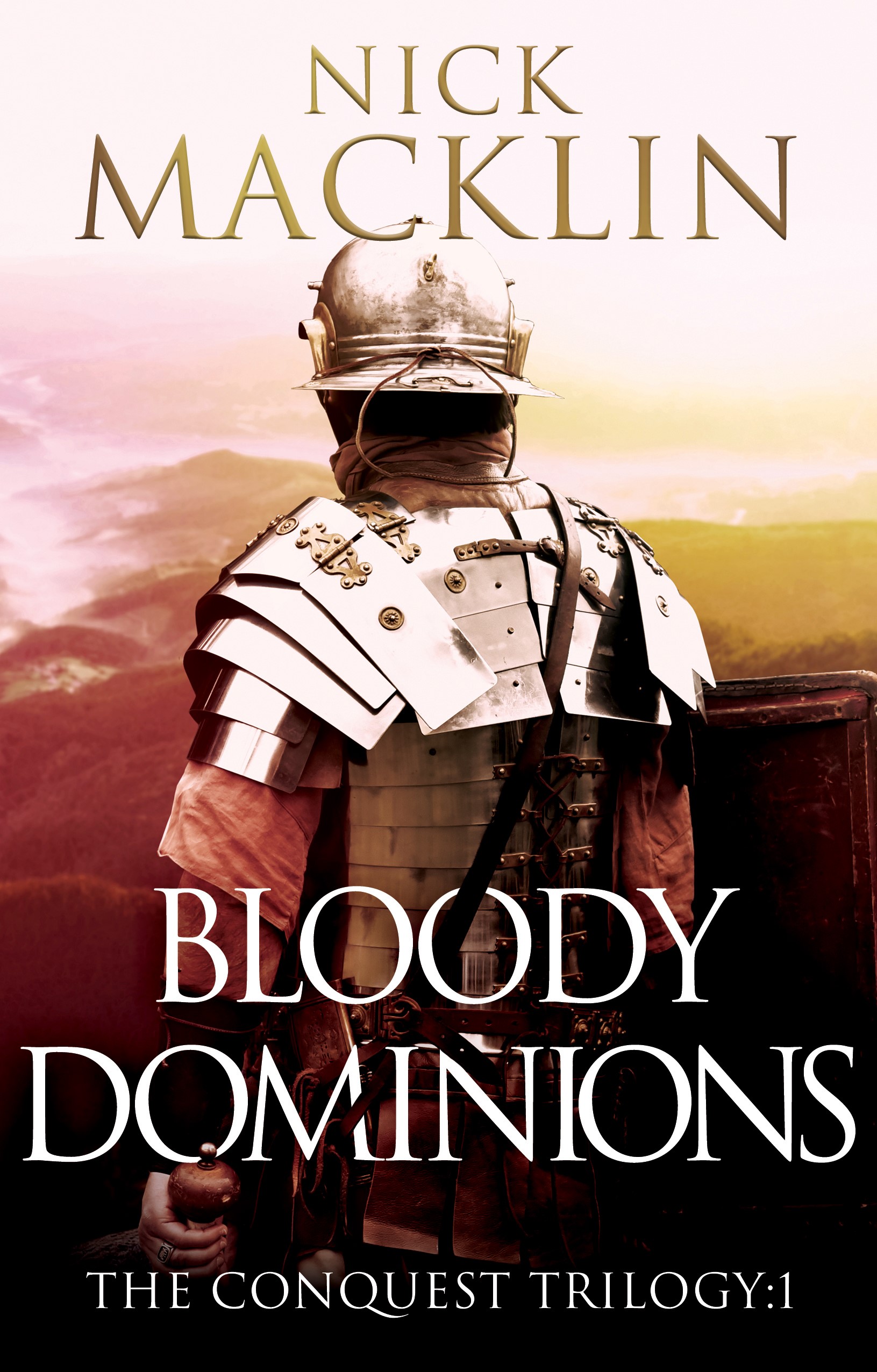
Nick Macklin is sharing some historical research from Bloody Dominions #histfic #historicalfiction #blogtour

Today, I’m delighted to welcome Nick Macklin to the blog to talk about the research he undertook to write his new book, Bloody Dominions.

Your book, Bloody Dominions sounds fascinating. I’ve recently been enjoying a great deal of Roman era historical fiction. As a historian first and foremost, and then a writer, I’m always interested in how people research their historical stories.

Can you explain your research process to me, and give an idea of the resources that you rely on the most (other than your imagination, of course) to bring your historical landscape to life? 

Do you have a ‘go’ to book/resource that you couldn’t write without having to hand, and if so, what is it (if you don’t mind sharing)?

I have always had an interest in the ancient world and especially the Roman empire. I studied history at college, which in addition to satisfying my thirst for knowledge of the past, helped stand me in good stead during the extensive research I conducted whilst writing Bloody Dominions.

I knew when I set out that I wanted to set the story against the backdrop of a significant period in Roman history. I spent some considerable time immersed in the central and university libraries in Exeter, looking to narrow that down to something offering the potential for meaningful character and plot development, that hadn’t already received exhaustive coverage. I eventually settled on Caesar’s tumultuous occupation of Gaul, in part because I was struck by just how heavily the Roman psyche was influenced during this period by the scare they’d received 50 years earlier, when Germanic tribes invaded their territories and defeated their legions. Seeing references to the veterans of that war watching their sons and grandsons enlist for a similar campaign, I started to think about developing that link on both sides of the conflict. The prolonged clash of cultures that spanned 8 years, offered ample opportunity for the kind of dual perspective from which I was hoping to tell the story. Whilst the violent conflict provided a wealth of material to explore the changing fortunes of war and its impact at a personal level. The switching of allegiances; nations fighting for and against Rome, also provided the potential for intriguing plot lines. And so, the idea for the Conquest Trilogy was born.

Fortunately, Caesar was an almost unique example of a great general who was also a prolific writer. His ‘Commentarii de Bello Gallico, ‘Commentary on the Gallic War’ is a first-hand account of his invasion. I was grateful for the many translated versions now available as I have yet to perfect my Latin. One of the things on my to do list. It was important to recognise that this autobiographical account had a political purpose, Caesar’s audience was the Senate and the people of Rome and he wanted to justify his actions, reinforce his reputation and portray himself as a commander of courage, flair and success. As a consequence, I took some of the estimates of enemy warrior and casualty numbers with a pinch of salt but at its heart the Commentary is a straightforward narrative of the campaign Caesar fought in Gaul. As such it was an invaluable resource, providing key details in respect of the order and timing of events, the legions involved, battle plans etc. as well as some of the incredibly useful but more mundane detail that helped me to gain a sense of just how far the legions marched during a campaign season!

Whilst my three protagonists are entirely fictitious, I wanted the framework against which their stories unfold to be entirely accurate from a historical perspective, to feature actual participants in Caesar’s campaign and draw on real events as they occurred. In that respect the Commentaries also offered some intriguing opportunities to weave fact and fiction. For example, Caesar describes an ultimately unsuccessful peace conference between himself and the Germanic King Ariovistus prior to the battle of Vosges in 58 BC. He outlines how Ariovistus insisted that each side should be accompanied by mounted troops. He probably made this a condition because he knew that Caesar’s cavalry was composed mainly of Aeduian horsemen, whose loyalty to Caesar was questionable. Indeed, Caesar may not have trusted them himself. As a ruse Caesar ordered a group of his Gallic auxiliaries to dismount and had legionnaires from the Xth Legion ride in their place and accompany him to the peace conference. The incident earned the Legion its nickname ‘Equestrius’. In Bloody Dominions I took the liberty of having Caesar call for experienced riders to join his guard, hence Atticus’s involvement, a pivotal moment in the novel as this is when he and Allerix meet for the first time. 

Thereafter, as I plotted the journeys of Atticus, Allerix and Epona I consulted a variety of additional book and web-based resources to supplement my knowledge and research particular points of interest. Old enough to remember researching before the web, I never cease to be amazed at the wealth of information available at our fingertips, although I still prefer to do the bulk of my research using physical resources and pen and paper! I did however find the excellent web based military history encyclopaedia, www.HistoryofWar.org particularly helpful when looking to visualise how the battles in which my characters feature played out.

Finally, one of the earliest pieces of research I did when Bloody Dominions was still very much in its infancy, was to complete a ‘field trip’ to Europe. I can’t pretend that this visit was entirely conducted for research purposes, I had always wanted to travel around Europe by train. A nod I suspect to the inter-railing visit I never made as a teenager! However, I did make a number of detours along the way to visit museums, monuments and battlefield sites (wherever possible) in Italy, France, Germany and Belgium. I never get over the sense of standing where so many have gone before, never more so than when standing on the Ponte Pietre Bridge in Verona, recognising that it had been ‘crossed by Caesar and all of the legions travelling to Gaul. Including of course those in the XIIth on their way into the pages of Bloody Dominions. 

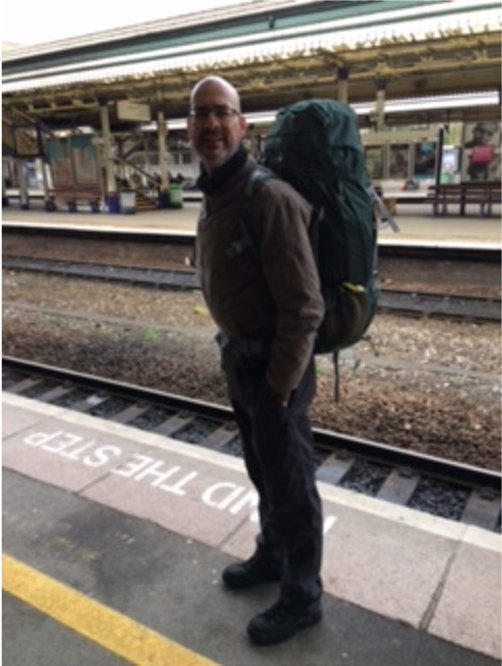
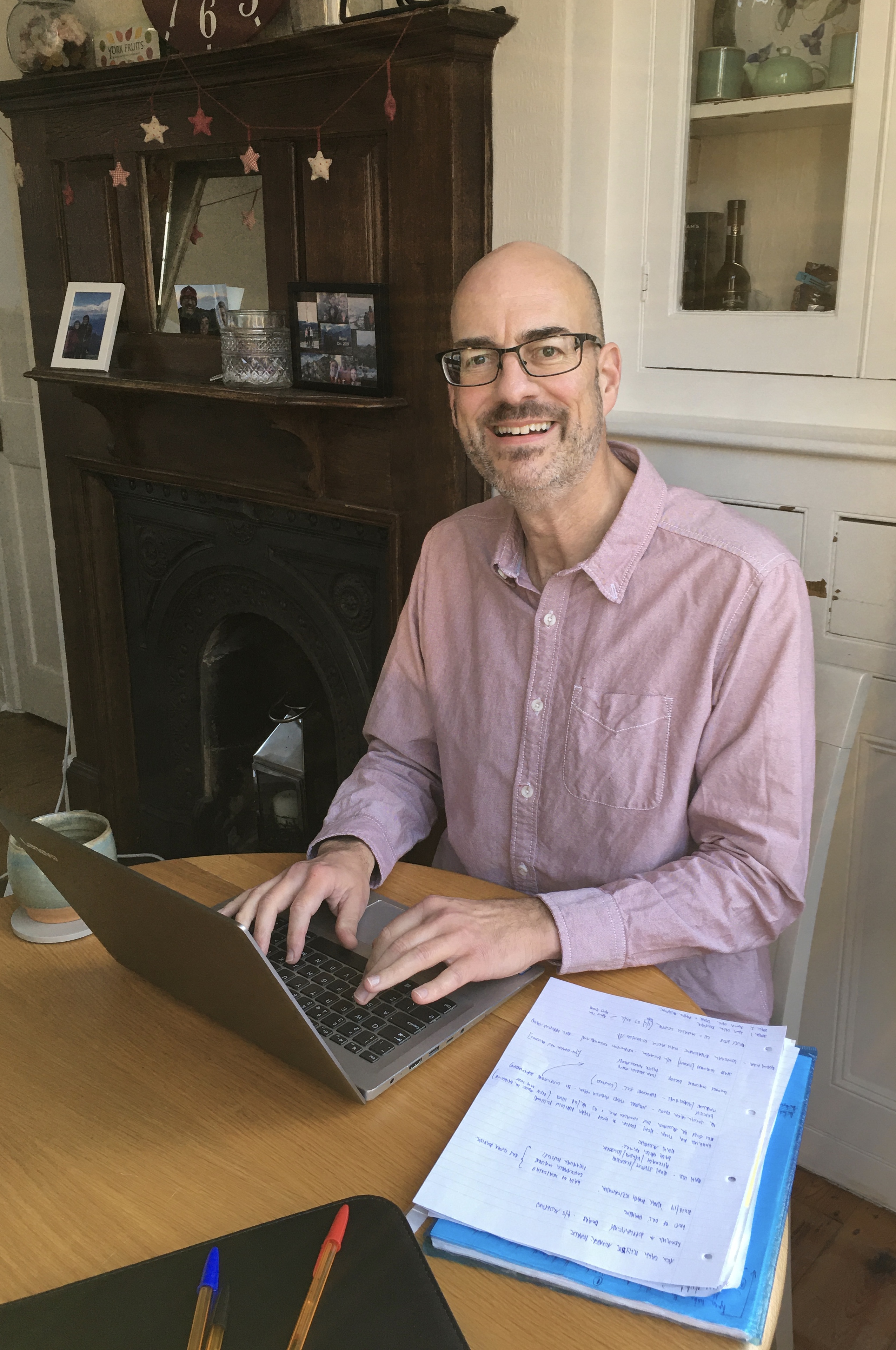
This is me, quite literally at the start of the Bloody Dominions Journey as I prepare to leave Exeter at the start of that European ‘research’ trip: 

Thank you so much for sharing your research journey with me. It sounds fascinating, and I wish you luck with your new book, and the rest of the books in the trilogy.

Intrigued?

Here’s the blurb:

Journey with those at the heart of the conflict as Caesar embarks on the tumultuous conquest of Gaul 58-51 BC. Book One 58-56 BC.

As Caesar’s campaign begins, tests of courage and belief will confront the three protagonists, shaping them as individuals and challenging their views of the world and each other:

Atticus – an impetuous but naturally gifted soldier, whose grandfather served with distinction in the legions;

Allerix – a Chieftain of the Aduatuci, who finds himself fighting both for and against Caesar; and

Epona – a fierce warrior and Allerixs’ adopted sister.

Experiencing the brutalities of conflict and the repercussions of both victory and defeat, Atticus, Allerix and Epona will cross paths repeatedly, their destinies bound together across time, the vast and hostile territories of Gaul and the barriers of fate that have defined them as enemies. In a twist of fate, Atticus and Allerix discover that they share a bond, a secret that nobody could ever foresee…

Trigger Warnings:

Violence, attempted rape.

Universal link

Amazon UKAmazon USAmazon CAAmazon AU

Barnes and NobleWaterstones:  KoboiBooks

Google Play:  WHSmith

Meet the Author

A history graduate, Nick enjoyed developing the skills that would stand him in good stead during the extensive research he conducted prior to writing his novel. Whilst the ancient world unfortunately didn’t feature to any extent in his history degree, (the result of failing miserably to secure the A level grades that would have permitted greater choice) he maintained a lifelong and profound interest in ancient history and especially the Roman Empire, continuing to read avidly as he embarked on a career in HR. Over the next 30 years or so Nick occupied a variety of Senior/Director roles, most recently in the NHS. Unsurprisingly, writing in these roles was largely confined to the prosaic demands of Board papers but Nick never lost the long-harboured belief, motivated by the works of writers such as Robert Fabbri, Robyn Young, Anthony Riches, Simon Scarrow, Matthew Harffy and Giles Kristian, that he too had a story to tell. When he was presented with a window of opportunity c3 years ago he took the decision to place his career on hold and see if he could convert that belief into reality. 

Nick always knew that he wanted to set the novel against the backdrop of a significant event/period in Roman history. Looking to narrow that down to something offering the potential for meaningful character and plot development, but that hadn’t already received exhaustive coverage, he settled on Caesars tumultuous occupation of Gaul. Spanning 8 years, the prolonged clash of cultures offered ample opportunity for the kind of dual perspective from which he was hoping to tell the story, whilst the violent conflict provided a wealth of exciting material to explore the changing fortunes of war and its impact at a personal level. The switching of allegiances, nations fighting for and against Rome also provided the potential for some intriguing plot lines. As his research unfolded, he was also struck by just how heavily the Roman psyche during this period was influenced by the scare they had received 50 years earlier when Germanic tribes invaded their territories and defeated their legions. Seeing references to the veterans of that war watching their sons and grandsons enlist for a similar campaign, he started to think about developing that link on both sides of the conflict. And so, the idea for the Conquest Trilogy was born.

In Bloody Dominions Nick has sought to produce a novel in which unfolding events are experienced and described from the perspective of protagonists on both sides of Caesar’s incursion into Gaul.  Conscious that the role of women in Roman fiction, Boudica aside, is largely confined to spouse, prostitute or slave, Nick wanted to ensure that one of his lead characters was female and a prominent member of the warrior clan of her tribe. The novel is driven by these characters but the framework against which their stories unfold is historically accurate, featuring actual participants in Caesar’s campaign and drawing on real events as they occurred. As such Nick is genuinely excited about his characters and the story they have to tell.

Nick lives in Exeter with his two daughters and is currently juggling work as an Independent HR Consultant with writing the second novel in the Conquest Trilogy, Battle Scars. 

Connect with Nick:

TwitterLinkedInGoodreadsBookBub

Don’t forget to check out the other stops on the Bloody Dominions Blog Tour with The Coffee pot Book Club

Check out the review for The Royal Game by Anne O’Brien #histfic #bookreview #Highlyrecommended.

Here’s the blurb

The inspirational story of the Pastons, a family who rose from obscurity to the very heart of Court politics and intrigue during the Wars of the Roses.

England, 1444. Three women challenge the course of history…

King Henry VI’s grip on the crown hangs by a thread as the Wars of the Roses starts to tear England apart. And from the ashes of war, the House of Paston begins its rise to power.

Led by three visionary women, the Pastons are a family from humble peasant beginnings who rely upon cunning, raw ambition, and good fortune in order to survive.

Their ability to plot and scheme sees them overcome imprisonment, violence and betrayal, to eventually secure for their family a castle and a place at the heart of the Yorkist Court. But success breeds jealousy and brings them dangerous enemies…

An inspirational story of courage and resilience, The Royal Game charts the rise of three remarkable women from obscurity to the very heart of Court politics and intrigue.

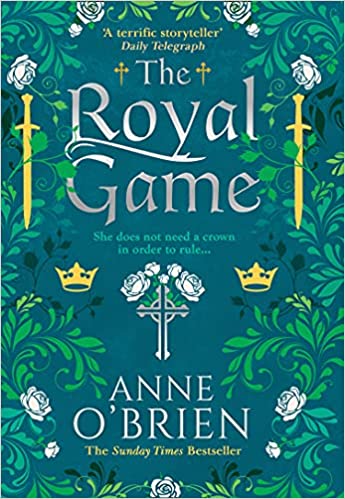
Book cover for The Royal Game by Anne O'Brien

My Review

Anne O’Brien is one of my favourite authors. Every year, I wait with high anticipation to read her newest book and to see which ‘new’ unknown woman of history she’s brought to life for her readers.

With The Royal Game, Anne O’Brien has chosen not a powerful royal/noblewoman but instead three women who hunger to be considered as such. The majority of the story is told from the viewpoint of Margaret Paston, wife to John Paston, as property disputes amongst their landed estates escalate and are resolved only to escalate once more. This might sound a bit boring, but believe me, it’s not. I was shocked, genuinely shocked, by the level of violence that could be brought to bear against rival claimants and the state of lawlessness in East Anglia at the time is flabbergasting. It acts as a perfect way of showing just what the uncertainty of the Wars of the Roses brought about for those lower ‘noble’ families with the ebb and flow of prestige and royal denouncement as in the background, great battles are won and lost, and rival kings fall and rise.

Margaret is a wonderfully independently minded woman, and yet constrained by her position in life, and her sex so she can only do so much when trouble strikes, but she will do it to her upmost.

Alongside Margaret, we meet her sister in law, Eliza, who struggles to find a husband and emerge from beneath her mother’s less than motherly love. She manages to do just that only to find herself facing a life as beset with lawsuits as her brother and sister by marriage.

Our third Paston woman is Anne Haute, a cousin to Elizabeth Woodville. Her voice is that of a noblewoman without the dowry needed to hook herself a wonderful marriage, but who can tout her family connections to gain one.

This book is a stunning read – and more, an easy read – despite the vast number of Johns in it (I’ll leave that for you to discover because wow – that’s a weird thing to have done). I had to force myself to slow down and stop reading because I didn’t want it to be over. Now I have to wait for next year to read the second part of the story.

I highly recommend this book. If you know about the Wars of the Roses, all the better, but if you don’t, it will not lessen your enjoyment of the story of the three Paston women and their troublesome and litigious family at a time of intense political unrest.

Connect with Anne via her website

M C Bunn is sharing some historical research from Where Your Treasure Is #blogtour #historicalresearch #histfic

Today, I’m delighted to welcome M C Bunn to the blog. She’s going to share the secrets of her research with us all.

I’m a story teller first and foremost, not a historian or a trained researcher. While I have a love for history, my college major and master’s degrees are in English. It was a great excuse to read the sorts of books I love. Recently I attended the Historical Novel Society’s North American conference. The conversation rooms on various historical eras and related topics were some of the event’s most exciting offerings because of the participants’ passion for their subjects and their wealth of knowledge. I’d love to contact some of them for more information, especially as I work on my next book, which is set at the end of the Edwardian period and during World War I. 

For advice about how to investigate a historical detail, I turn to knowledgeable friends for help, and librarians are goldmines for resource suggestions. I also do a lot of digging through bibliographies and end notes, and rely on contemporary texts. If they’re nonfiction, as opposed to literary, they’re mostly digital. Annotated books and older dictionaries are quite helpful. I try to avoid slang. It’s interesting how many expressions we use that Victorians didn’t, and vice versa.

My late father’s Clarkson N. Potter Annotated Sherlock Holmes and its notes never fail to lift my spirits when I think about the pitfalls awaiting writers. While Conan Doyle’s plots and dialogue are amazing, he made up London streets and includes all sorts of details in his stories that don’t hold up under the scholar’s close scrutiny. The Potter edition is full of references to research articles by other famous authors and fans that prove how some sort of chemical or cigar ash Holmes describes couldn’t have been used in such and such a way. But those intricacies aren’t the point of what Conan Doyle was doing. At least Dorothy L. Sayers won’t be looking over my shoulder. She minutely read Conan Doyle’s work! In the later drafts of Treasure, I tried to avoid glaring errors and anachronisms, but perhaps the ones that remain will amuse some reader or inspire another writer’s research. 

I didn’t set out to write Where Your Treasure Is. It wasn’t inspired by researching the late-Victorian era, though that’s a time period that has exerted its fascination over me since childhood. Writing the story felt—not exactly like automatic writing, but there was definitely an element of feeling propelled along. There was no outline or notes. It was only after I’d written the entire plot from beginning to end that I added more historical details and checked those that had emerged organically. 

I’d spent some time in London and Norfolk, and studied old and new maps of Treasure’s settings. What surprised me were details that, during the checking process, I thought I’d made up but hadn’t. I attribute some of that to the passage of time and forgetfulness. When you’ve read about a time period for as long as I have, you internalize a great deal. As for other details, I’ve no explanation. 

For instance, Mena House was a name that wouldn’t leave me alone when I wrote about the heroine’s uncle traveling to Egypt. I looked it up and was surprised to find the hotel is famous though it wasn’t mentioned in any of the reading I’d recently completed on Egypt. I ordered several 19th century travel guides to confirm a few more details about the hotel’s history and its golf course. Another eerie instance was the way I imagined the façade of the character George’s Norfolk home, Hereford Hall. In my early twenties I stayed with a family in Norfolk, but we fell out of touch. Several years after I wrote Treasure’s first draft, I learned that one of my host’s sisters had died. Her obituary includes a picture taken in front of a structure that looks almost identical to George’s house. I’d never seen that picture before or visited the place. Believe me or not, but that’s the truth. 

Thank you so much for sharing your research with me today. Good luck with your new book.

Here’s the blurb;

Feisty, independent heiress Winifred de la Coeur has never wanted to live according to someone else’s rules—but even she didn’t plan on falling in love with a bank robber.

Winifred is a wealthy, nontraditional beauty who bridles against the strict rules and conventions of Victorian London society. When she gets caught up in the chaos of a bungled bank robbery, she is thrust unwillingly into an encounter with Court Furor, a reluctant getaway driver and prizefighter.  In the bitter cold of a bleak London winter, sparks fly.

Winifred and Court are two misfits in their own circumscribed worlds—the fashionable beau monde with its rigorously upheld rules, and the gritty demimonde, where survival often means life-or-death choices.

Despite their conflicting backgrounds, they fall desperately in love while acknowledging the impossibility of remaining together. Returning to their own worlds, they try to make peace with their lives until a moment of unrestrained honesty and defiance threatens to topple the deceptions that they have carefully constructed to protect each other.

A story of the overlapping entanglements of Victorian London’s social classes, the strength of family bonds and true friendship, and the power of love to heal a broken spirit.

Buy Links:

Universal Buy Link

Amazon UKAmazon USAmazon CAAmazon AU

Barnes and NobleWaterstones:

KoboPage 158 BooksQuail Ridge BooksIndie Bound

Meet the author

M. C. Bunn grew up in a house full of books, history, and music. “Daddy was a master storyteller. The past was another world, but one that seemed familiar because of him. He read aloud at the table, classics or whatever historical subject interested him. His idea of bedtime stories were passages from Dickens, Twain, and Stevenson. Mama told me I could write whatever I wanted. She put a dictionary in my hands and let me use her typewriter, or watch I, Claudius and Shoulder to Shoulder when they first aired on Masterpiece Theatre. She was the realist. He was the romantic. They were a great team.”

Where Your Treasure Is, a novel set in late-Victorian London and Norfolk, came together after the sudden death of the author’s father. “I’d been teaching high school English for over a decade and had spent the summer cleaning my parents’ house and their offices. It was August, time for classes to begin. The characters emerged out of nowhere, sort of like they knew I needed them. They took over.” 

She had worked on a novella as part of her master’s degree in English years before but set it aside, along with many other stories. “I was also writing songs for the band I’m in and had done a libretto for a sacred piece. All of that was completely different from Where Your Treasure Is. Before her health declined, my mother heard Treasure’s first draft and encouraged me to return to prose. The novel is a nod to all the wonderful books my father read to us, the old movies we stayed up to watch, a thank you to my parents, especially Mama for reminding me that nothing is wasted. Dreams don’t have to die. Neither does love.”  

When M. C. Bunn is not writing, she’s researching or reading. Her idea of a well-appointed room includes multiple bookshelves, a full pot of coffee, and a place to lie down with a big, old book. To further feed her soul, she and her husband take long walks with their dog, Emeril in North Carolina’s woods, or she makes music with friends. 

“I try to remember to look up at the sky and take some time each day to be thankful.” 

Connect with M C Bunn

WebsiteTwitter

Facebook:  InstagramPinterest

BookBubAmazon Author PageGoodreads

Don’t forget to check out the other stops on the Where Your Treasure Is blog tour with The Coffee Pot Book Club

Check out my review for Cecily by Annie Garthwaite #histfic #bookreview #highlyrecommended

Here’s the blurb

Rebellion?’
The word is a spark. They can start a fire with it, or smother it in their fingertips.
She chooses to start a fire.

You are born high, but marry a traitor’s son. You bear him twelve children, carry his cause and bury his past.

You play the game, against enemies who wish you ashes. Slowly, you rise.

You are Cecily.

But when the king who governs you proves unfit, what then?

Loyalty or treason – death may follow both. The board is set. Time to make your first move.

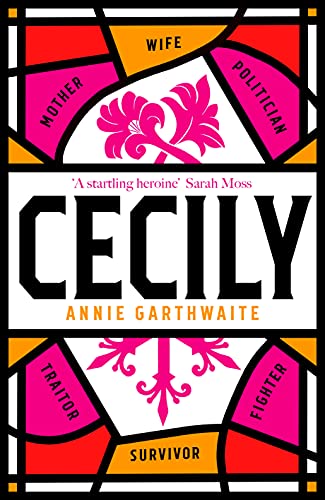
Cover for Cecily by author Annie Garthwaite

My Review

Cecily, the story of Cecily Neville up to and including 1461, is a wonderful retelling of her story.

Having read Anne O’Brien’s The Queen’s Rival last year, which offers Cecily’s story from the late 1450s onwards, I feel that this unknown woman has now been brought to life in wonderful detail. (If you have only read one of these two books then do please try the other one – you won’t be disappointed.)

Cecily is told from Cecily’s point of view, as such, there are some things that she can’t know or witness, and the author manages this incredibly skillfully. We know what Cecily does, and we know other events when she knows them. It’s a perfect way to ensure the reader, even if they know the history of the time period, doesn’t get ahead of themselves. 

Cecily is an engaging and headstrong woman. The author gives her a voice that we can understand, reflecting a quick intelligence and an ability to piece together events skillfully. Some scenes may feel rushed, and there is a refusal to dwell on the royal splendour of the court, but I think this added to the story. It is the interaction of the king, queen and the courtiers that’s important, not who was wearing what and eating what. This is absolutely my sort of historical fiction book.

I only wish I’d read it sooner.

Meredith Allard is sharing some historical research from Down Salem Way #blogtour #historicalresearch #histfic

Today, I’m delighted to welcome Meredith Allard to the blog with a post about the historical research she undertook to write her book Down Salem Way.

I’ve been reading, editing, and writing historical fiction for many years. As a matter of fact, I’ve even written a book about how to write historical fiction called Painting the Past: A Guide for Writing Historical Fiction. Thank you to M.J. for allowing me space on the blog today to share my thoughts on one of my favorite subjects.

The way I research historical fiction has changed a lot over the years. When I first started writing historical fiction, I would check as many books as I could carry out of the library, take meticulous notes, color code my notes with highlighters (blue for food, pink for fashion, etc.), return those books and check out another pile, and so on until I felt I had enough knowledge to begin drafting my story. Sometimes it was months worth of research before I started writing anything. Once I started writing I knew exactly where to look in my notebook for what I needed. If I was writing a dinner scene, I could find my notes about food. Notes I referred to often, such as important dates or events that I kept mentioning, were written on index cards, also color-coded, for easier access.

I no longer complete my research before I start writing. As a fellow writer friend said to me, feeling like you have to do all of your research before you start writing slows down your process to the point where your story doesn’t get written. These days I do some preliminary research by reading generally around my topic, perhaps taking a few notes, just enough to keep things clear in my head, and then I begin the prewriting process. Usually, through the process of brainstorming, prewriting, and drafting my story, I recognize what specific bits of historical information I’ll need and then I’ll search for those bits. That’s when my note taking begins in earnest. I create digital folders to organize my notes, citations, and annotations, and I still keep categories of information together (food, clothing, political climate, and so on).  

One trick I learned from a history class I took years ago is to think about the historical world I’m creating through the acronym GRAPES. 

Geography—How does the climate and landscape affect the people who live there?

Religion—How does the society’s belief system and traditions affect the people who live there? 

Achievements—What are the achievements of this society—good and bad? 

Politics—What is the power structure in this society?

Economics—How are goods and resources used in this society?

Social Structure—How does this society organize people into classes? Who ends up in which class and why?

I love to travel to the place I’m writing about as well. I always get a lot of good ideas for my story from my travels. As I work to weave the information I learned into my story, one thing I keep in mind is that I want to carry my readers into my world by touching their senses. What do readers see, hear, taste, touch, and smell? Often it’s the smaller details, what people wore, what they ate, the houses they lived in, that brings historical fiction alive since these are details we can relate to, even if what we eat and drink and where we live is different today. 

Some dependable online research sources I’ve used over the years are Project Gutenberg, the Library of Congress, the Victorian WebV&A, and JSTORThe History Quill has a list of 50+ research sites for writers of historical fiction. I also love to go to the library to see what books I can find, and I’ve found that librarians are more than happy to help if I can’t find what I’m looking for. 

I love learning about history, so researching historical fiction is actually fun for me.

Thank you so much for sharing your post with us. Research can indeed be a rabbit hole from which you can’t return:)

Here’s the blurb;

How would you deal with the madness of the Salem witch hunts?

In 1690, James Wentworth arrives in Salem in the Massachusetts Bay Colony with his father, John, hoping to continue the success of John’s mercantile business. While in Salem, James falls in love with Elizabeth Jones, a farmer’s daughter. Though they are virtually strangers when they marry, the love between James and Elizabeth grows quickly into a passion that will transcend time.

But something evil lurks down Salem way. Soon many in Salem, town and village, are accused of practicing witchcraft and sending their shapes to harm others. Despite the madness surrounding them, James and Elizabeth are determined to continue the peaceful, loving life they have created together. Will their love for one another carry them through the most difficult challenge of all?

Buy Links:

Down Salem Way:

Her Dear and Loving Husband

Her Loving Husband’s Curse

Her Loving Husband’s Return

Amazon UK: Amazon USAmazon CAAmazon AU

Barnes and NobleKoboiBooks

Meet the Author

Meredith Allard is the author of the bestselling paranormal historical Loving Husband Trilogy. Her sweet Victorian romance, When It Rained at Hembry Castle, was named a best historical novel by IndieReader. Her nonfiction book, Painting the Past: A Guide for Writing Historical Fiction, was named a #1 New Release in Authorship and Creativity Self-Help by Amazon. When she isn’t writing she’s teaching writing, and she has taught writing to students ages five to 75. She loves books, cats, and coffee, though not always in that order. She lives in Las Vegas, Nevada. Visit Meredith online at http://www.meredithallard.com.

Connect with the author

WebsiteFacebook

LinkedInPinterestBook BubAmazon Author Page

Don’t forget to stop by the other sites on the Down Salem Way blog tour with The Coffee Pot Book Club.