Author of Saxon historical fiction and non-fiction, 20th-century historical mysteries, and Norse-inspired historical romantasy. Book reviewer and blog host.
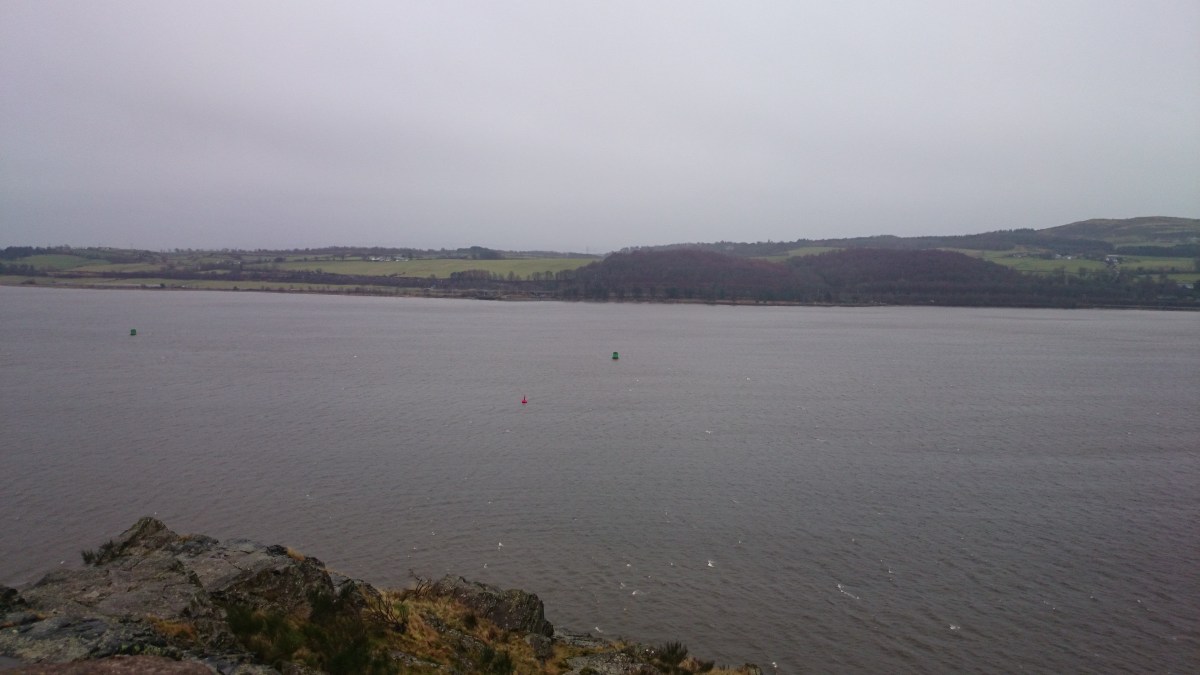
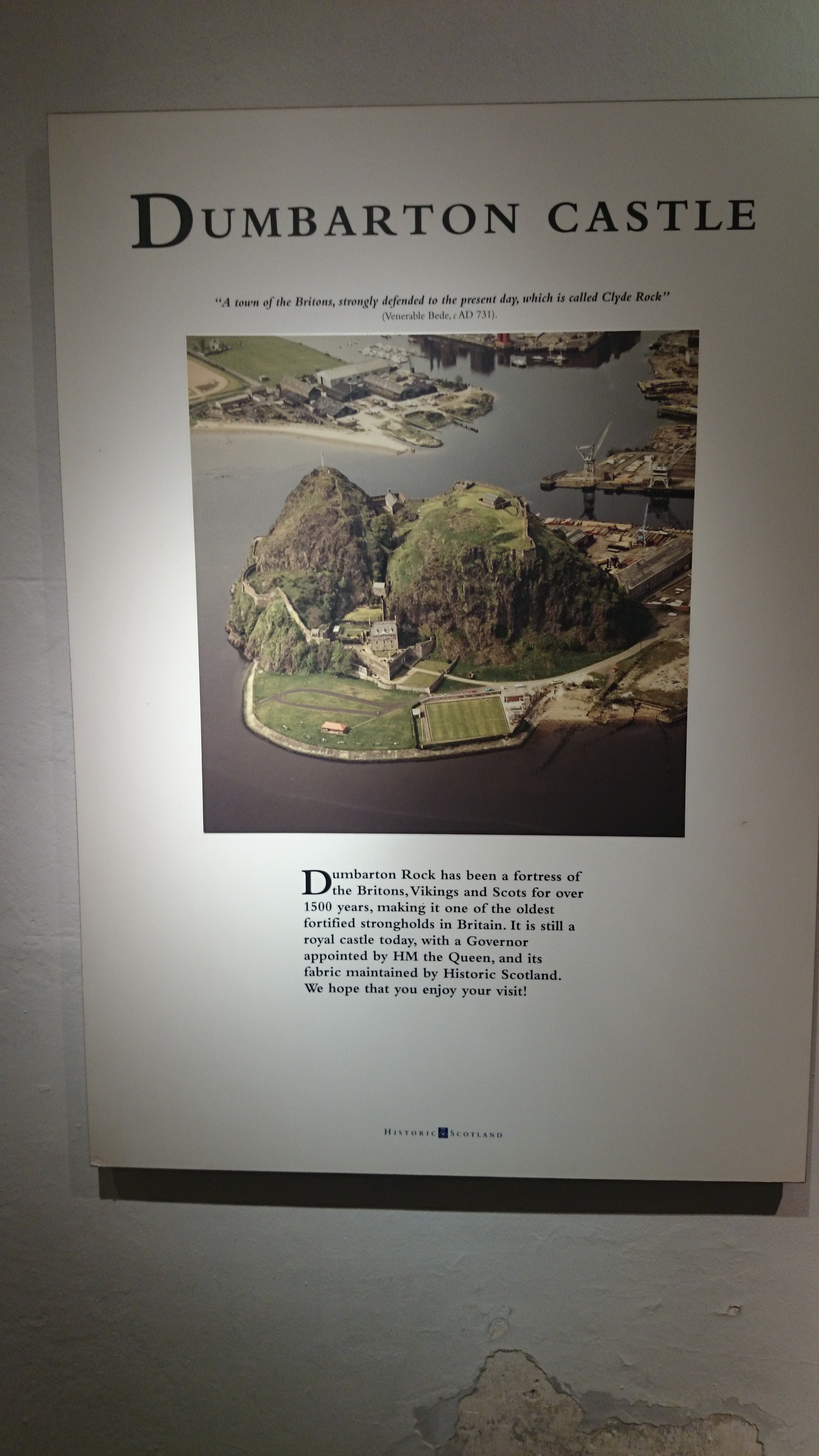
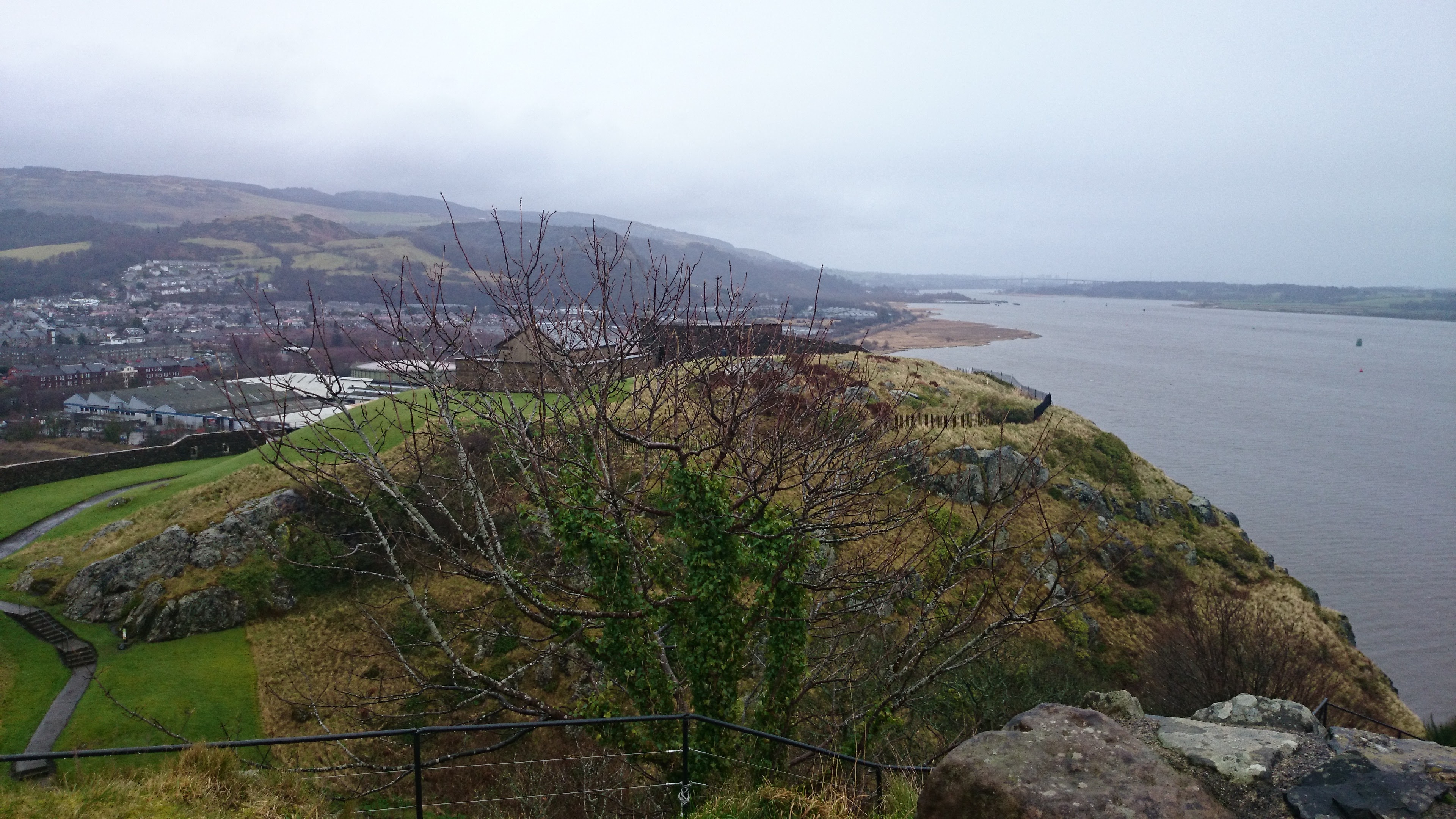
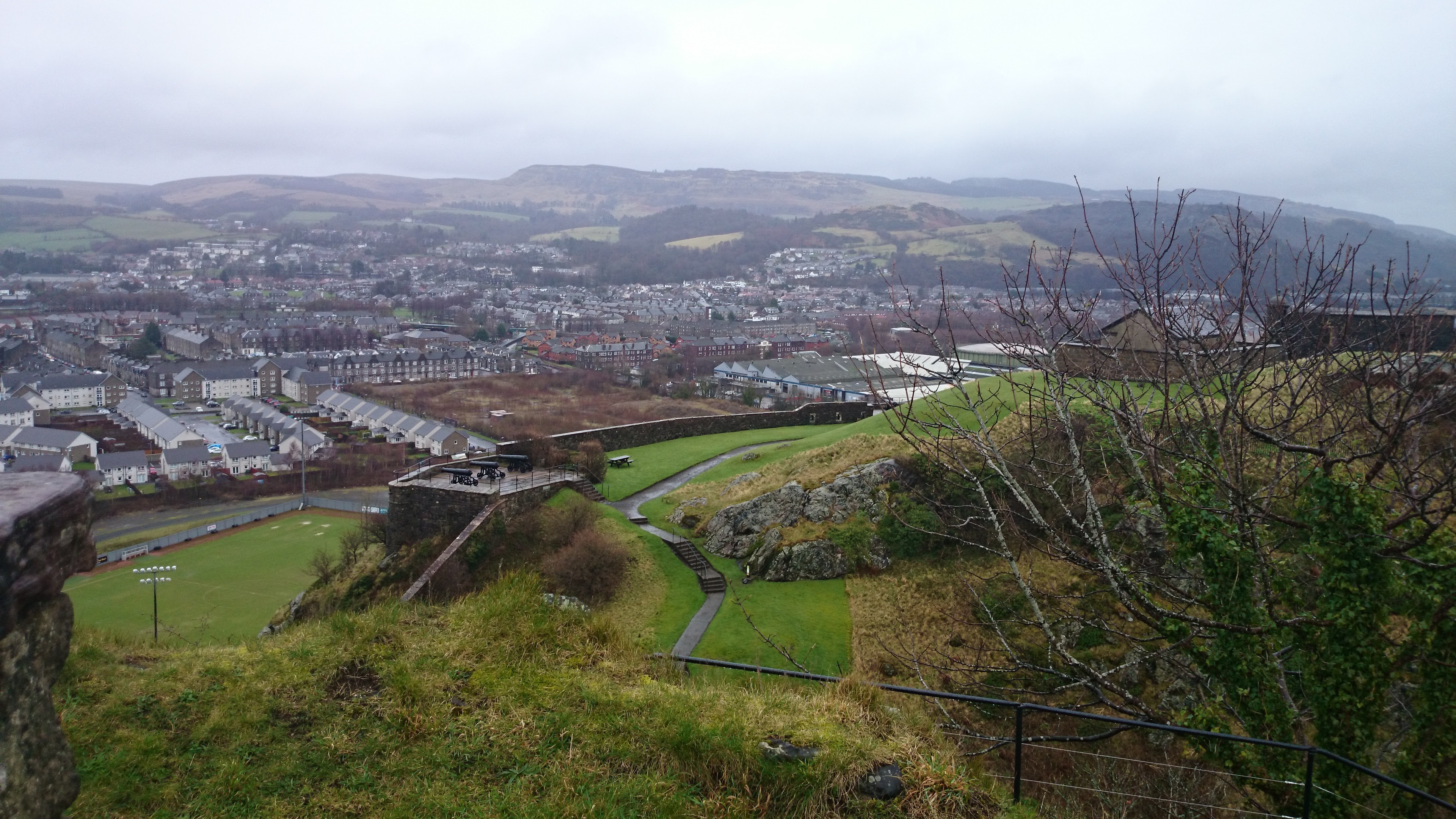
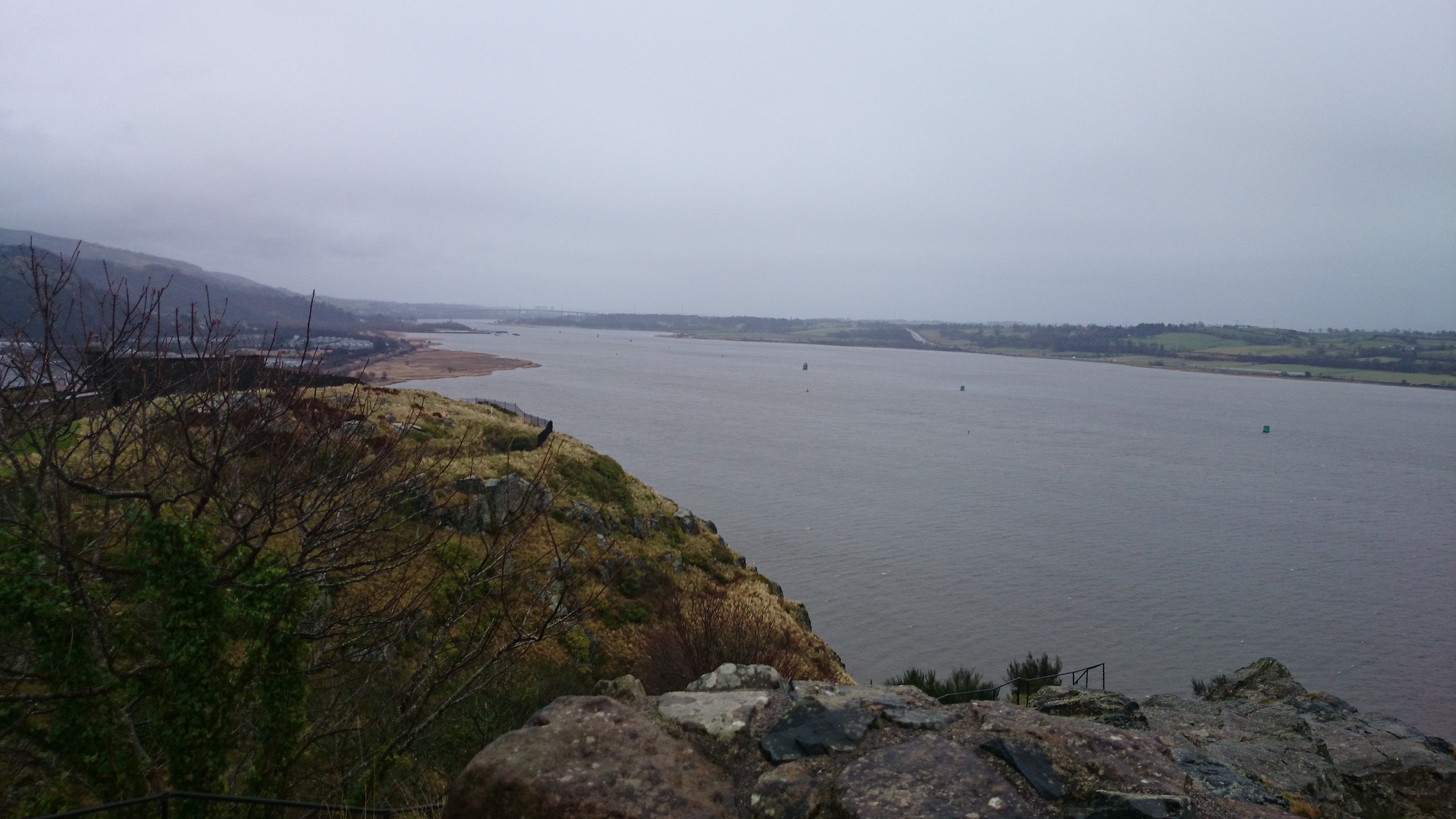
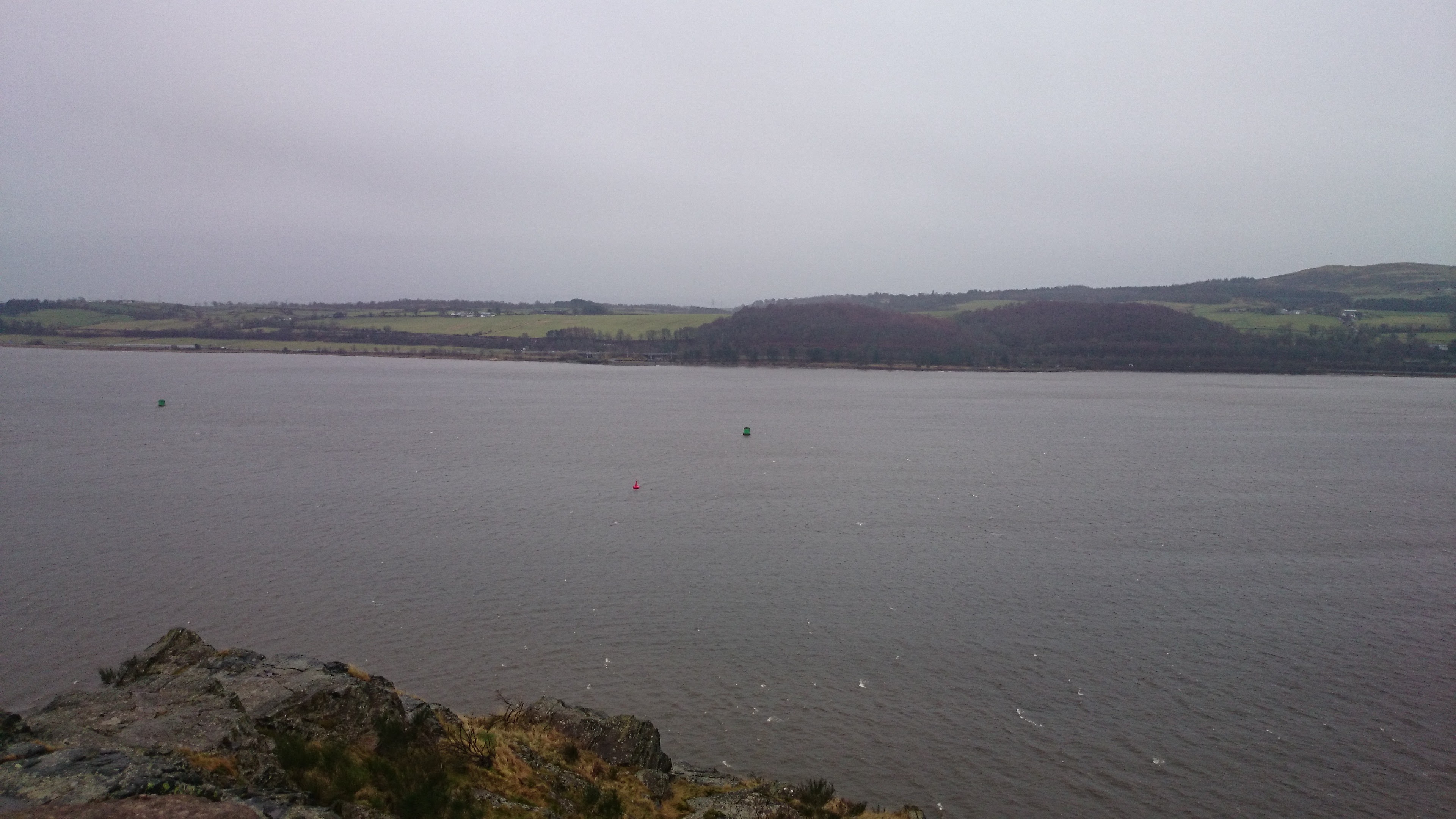
Looking at many of my photos of historical locations I’ve visited, it’s beginning to look as though I never have any luck with the weather. My visit to Dumbarton Castle occured on a very chilly February day a few years ago.
The view from the summit of Dumbarton Castle
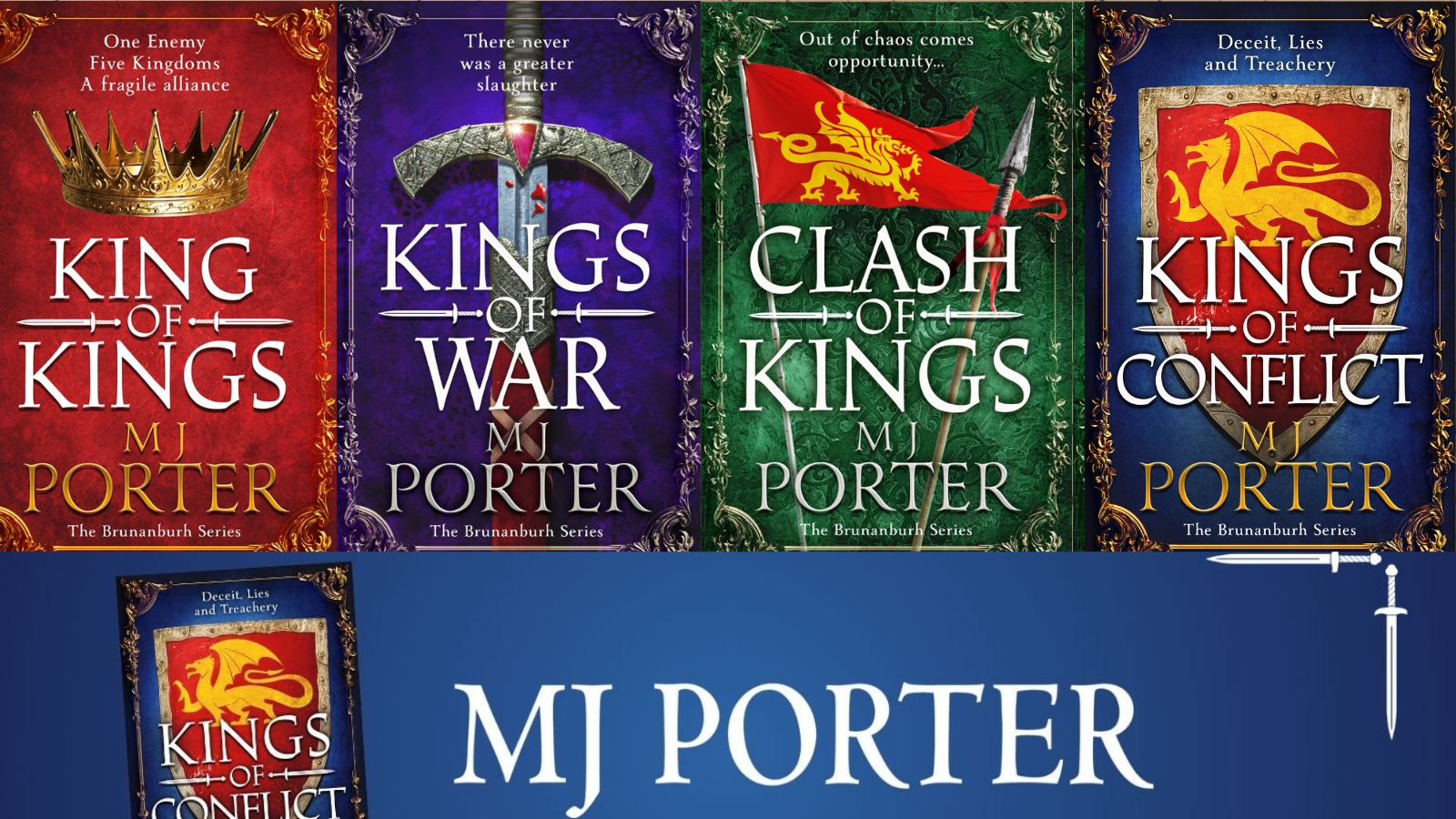
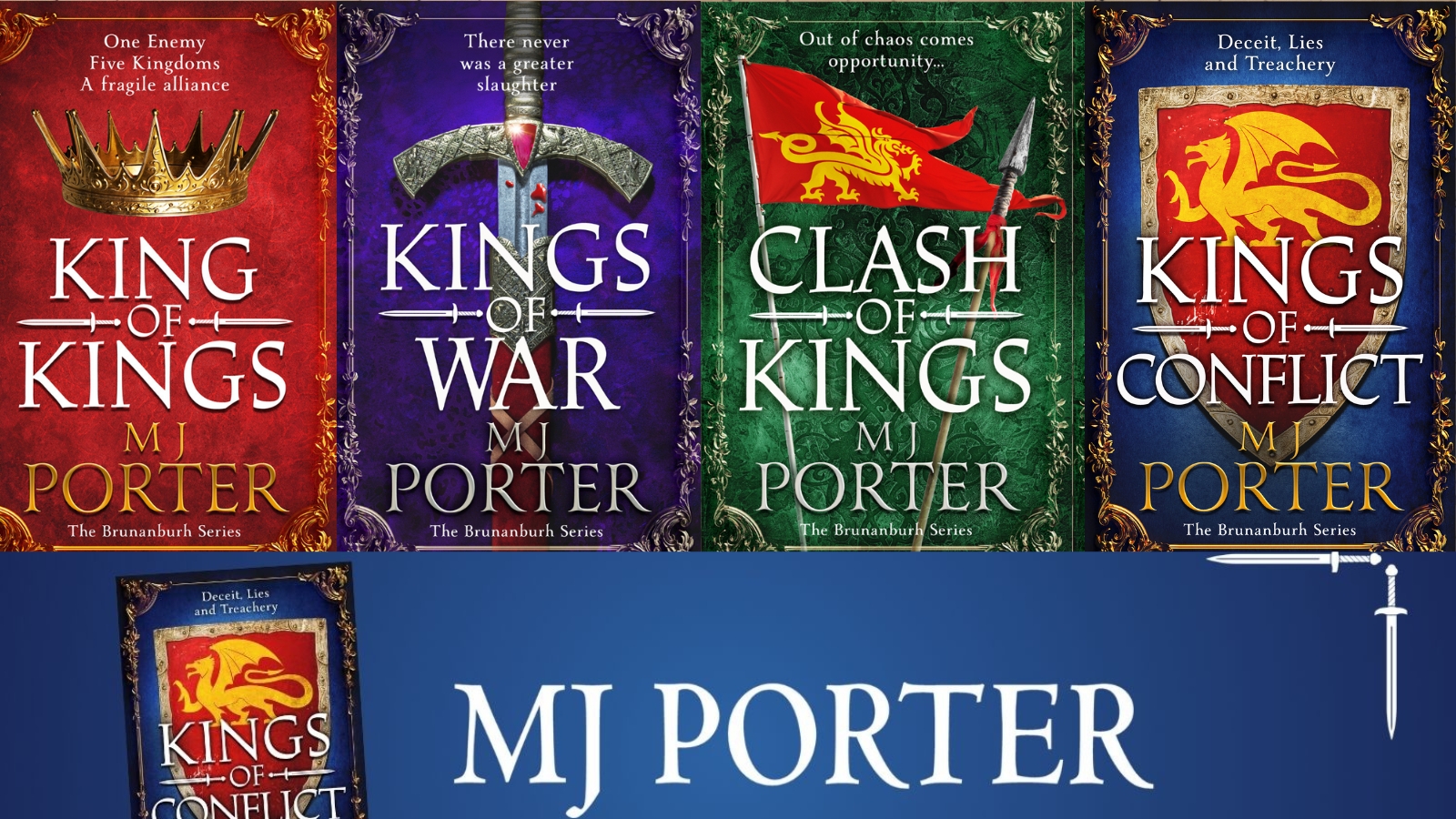
That said, the moody nature of these photos helped me to perfectly describe some of the events that take place at Dumbarton in the Brunanburh Series, the final book of which is now available. And no matter the weather, the view is stunning.
Where’s Uhtred of Bebbanburg in The Brunanburh Series?
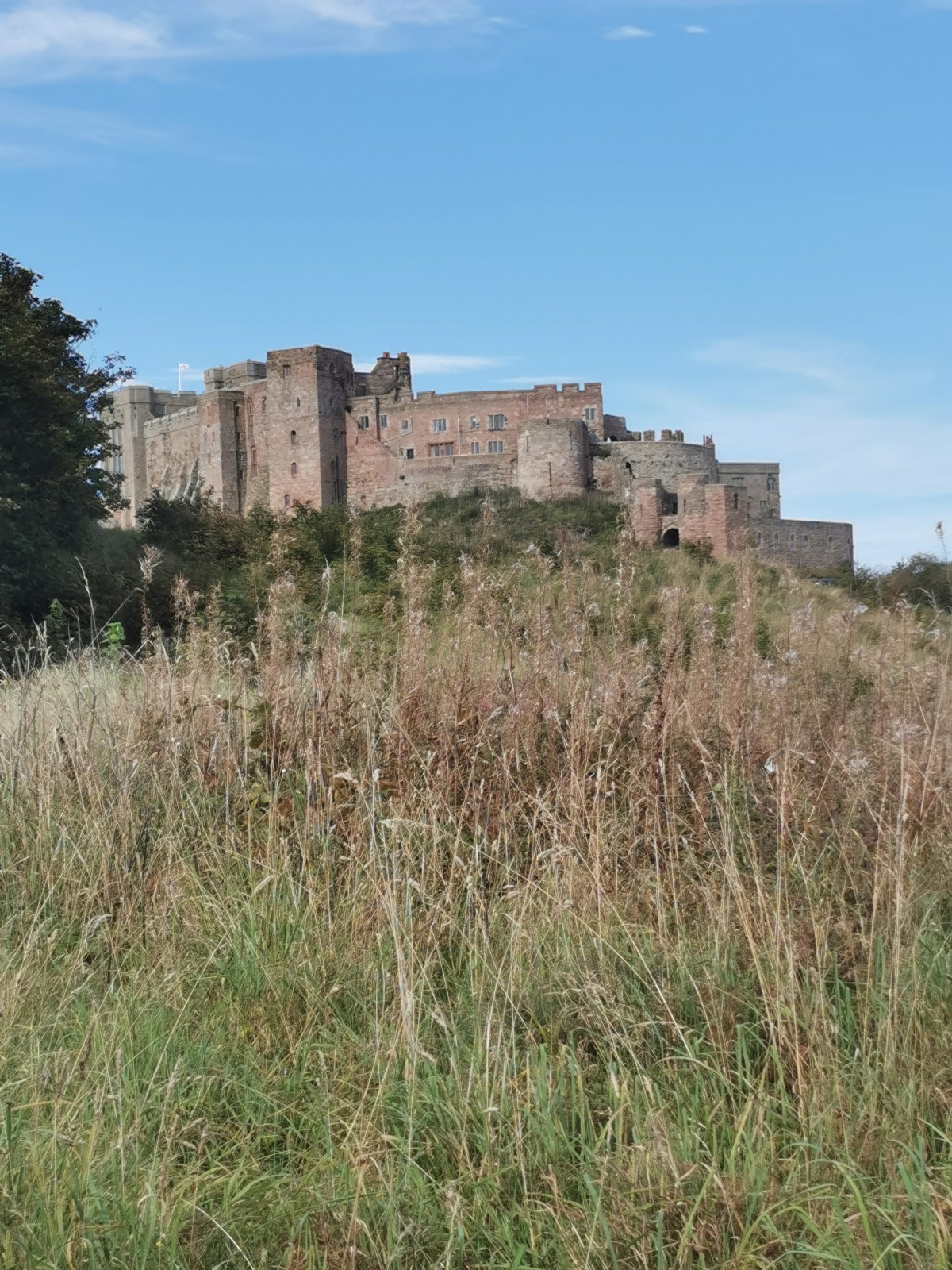
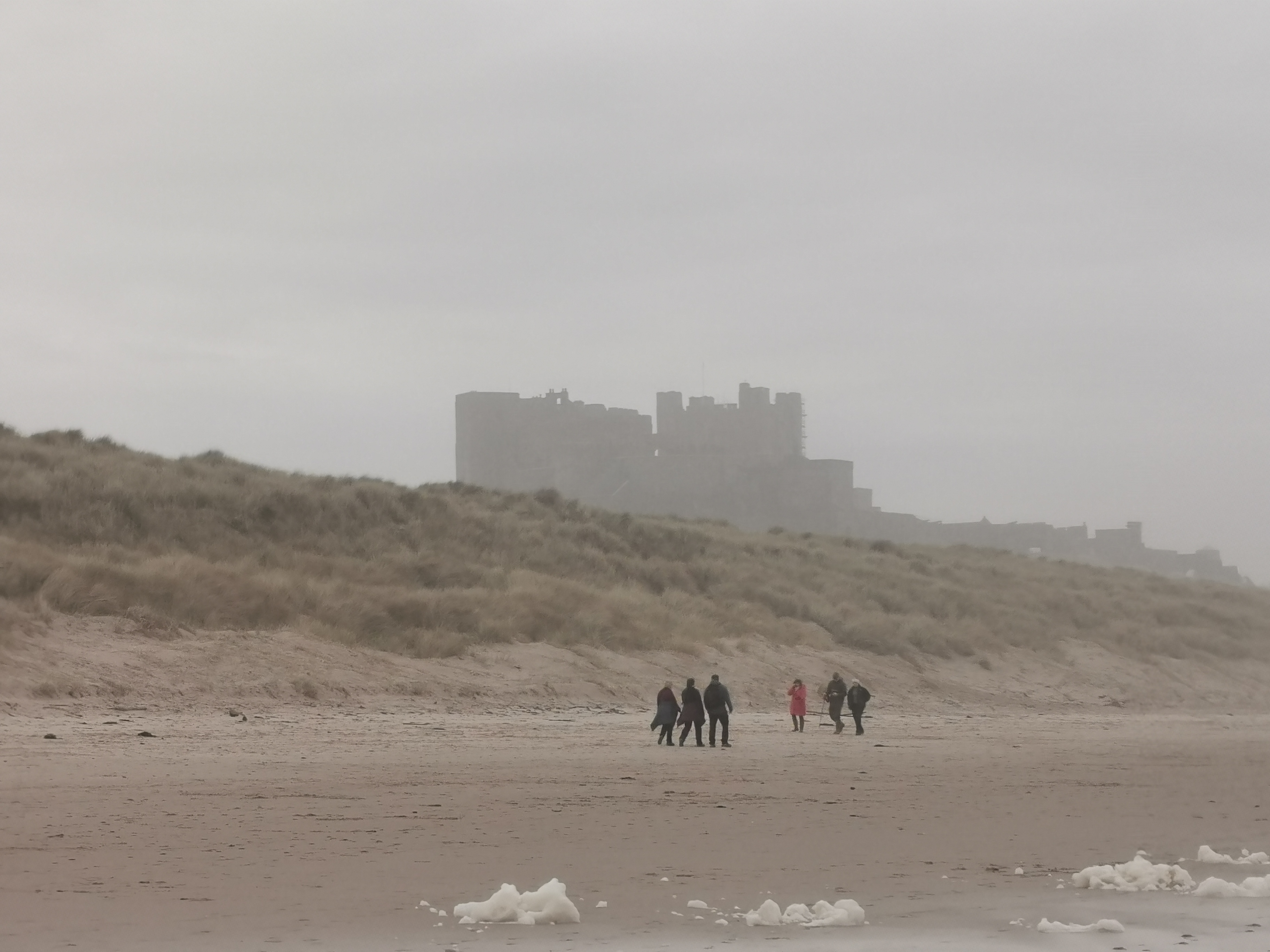
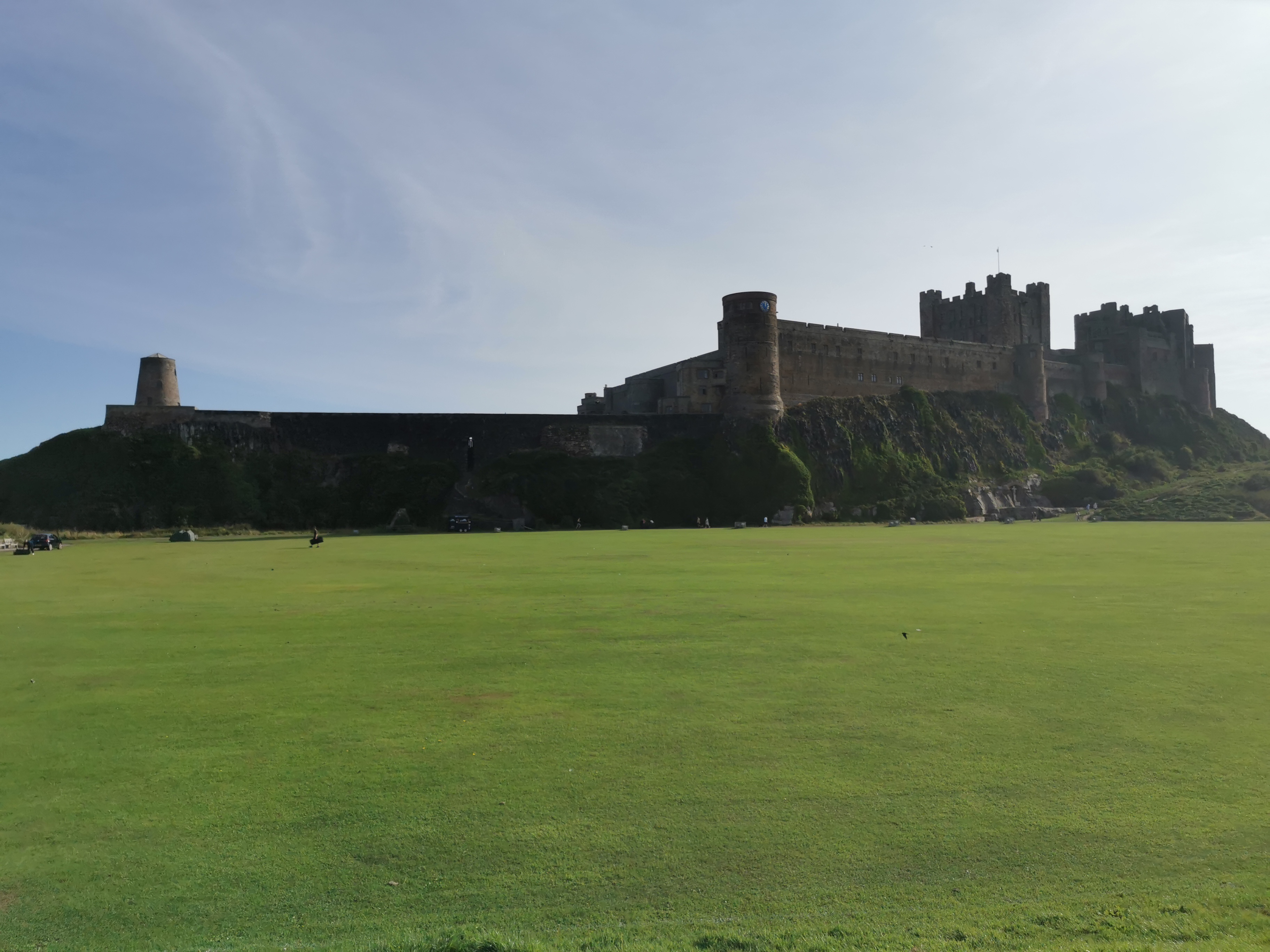
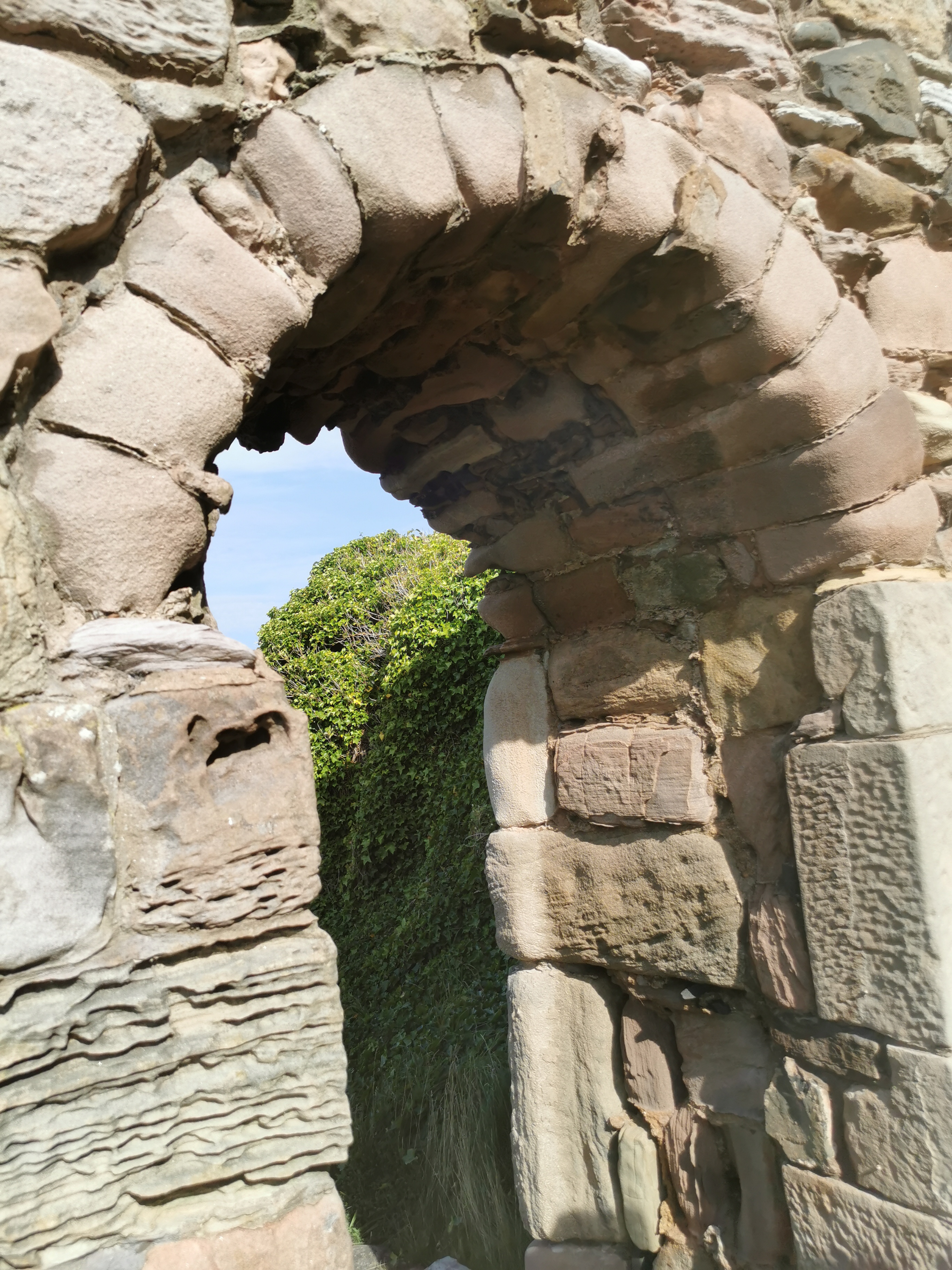
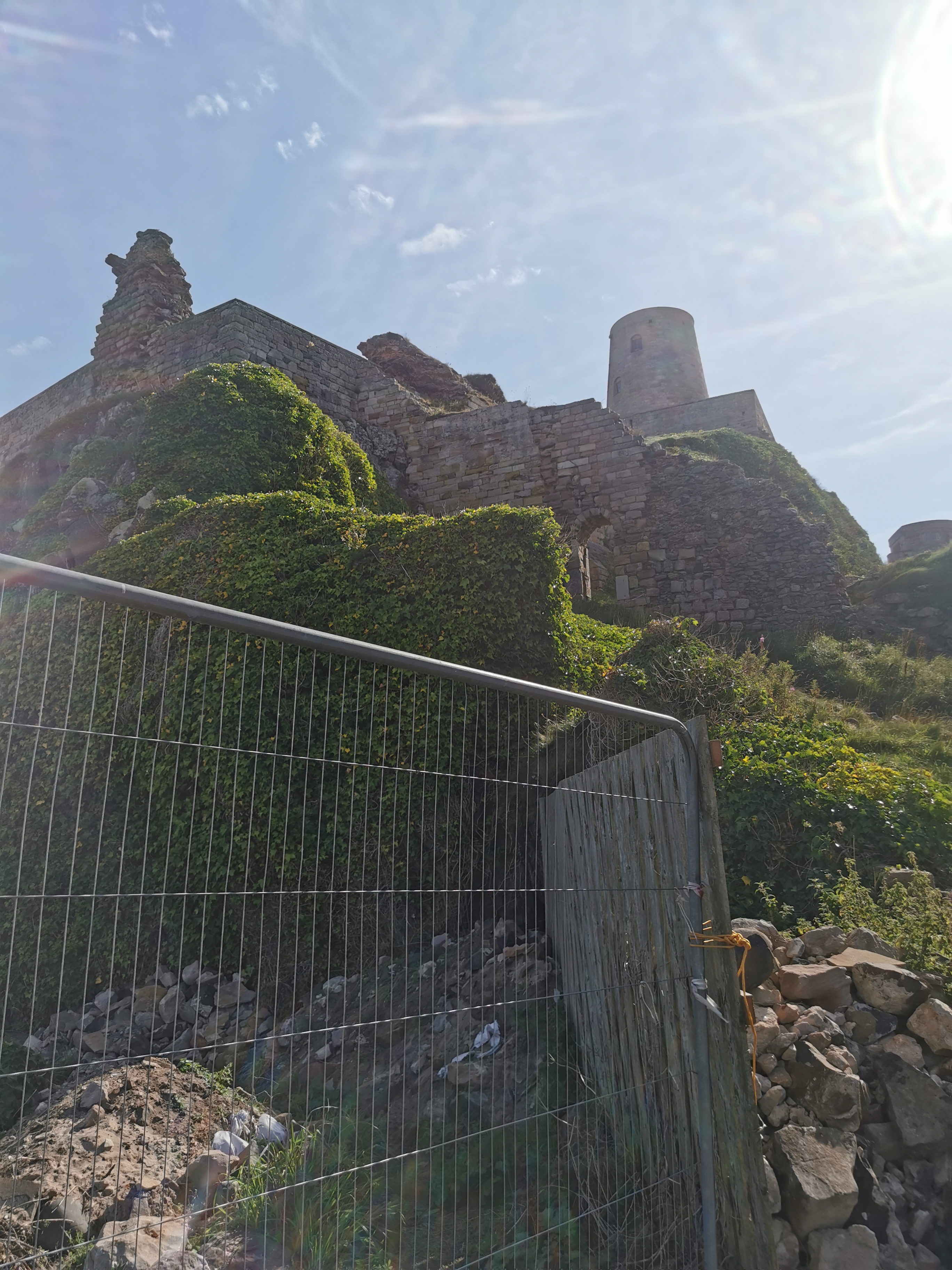
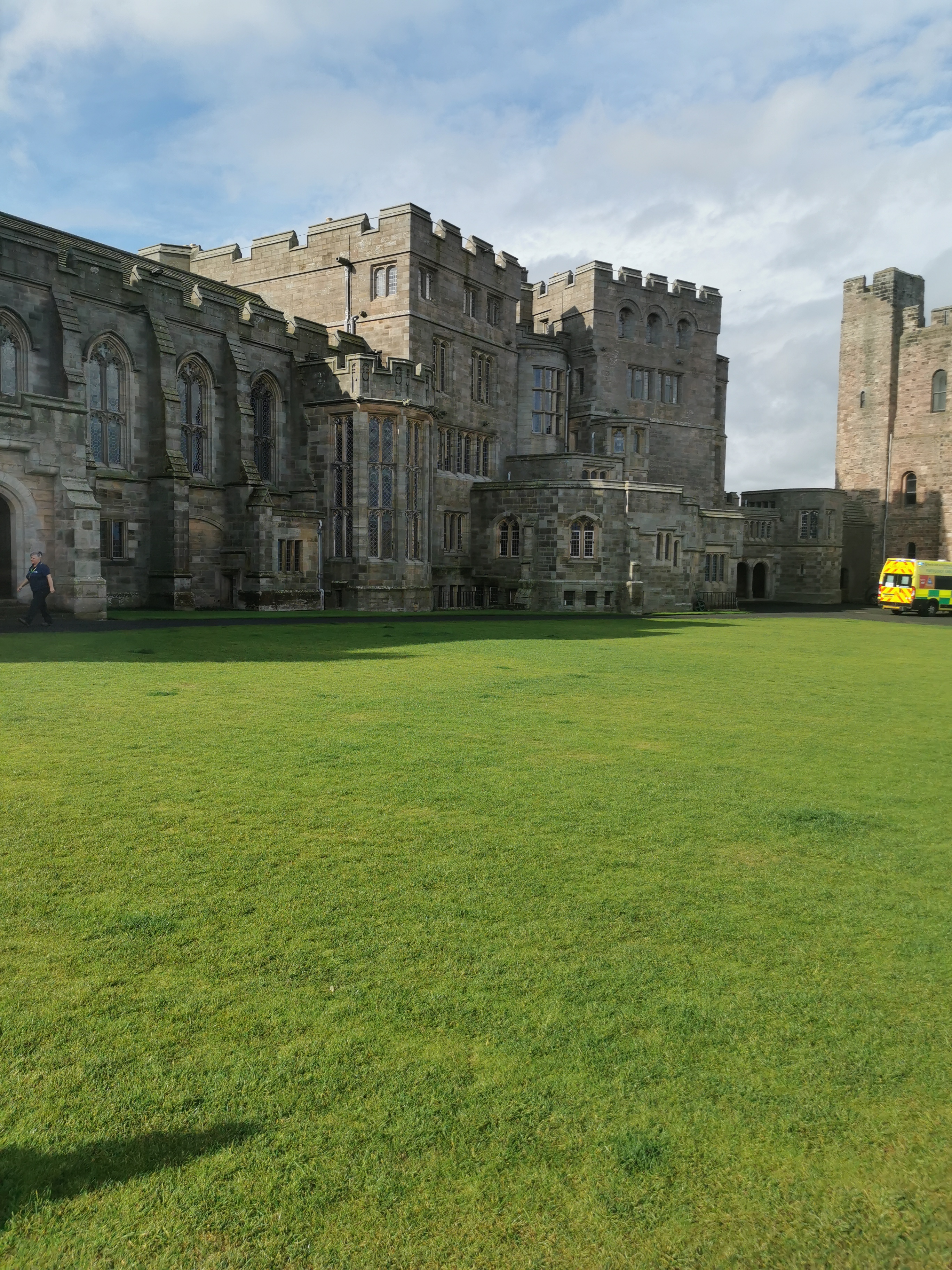
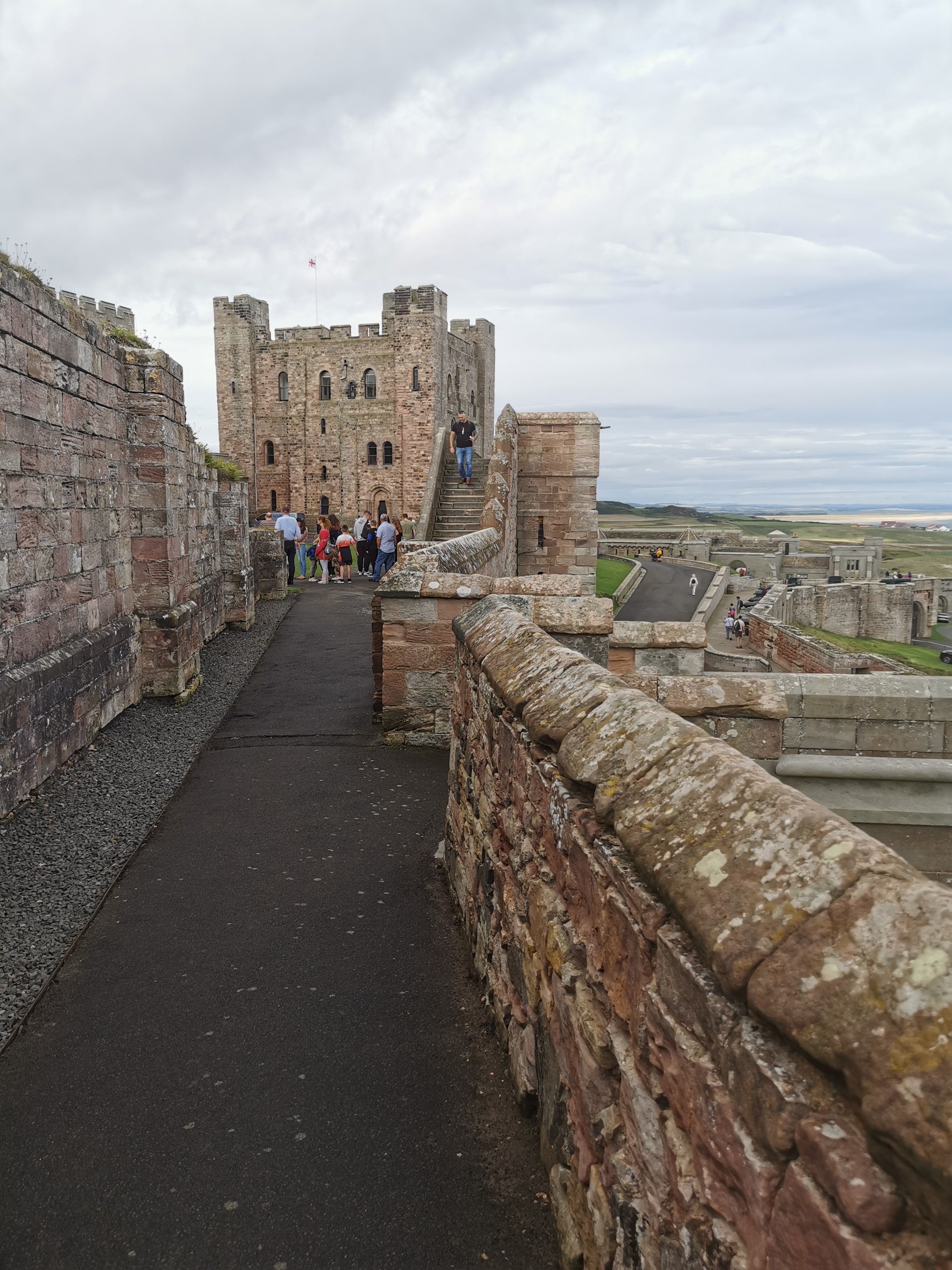
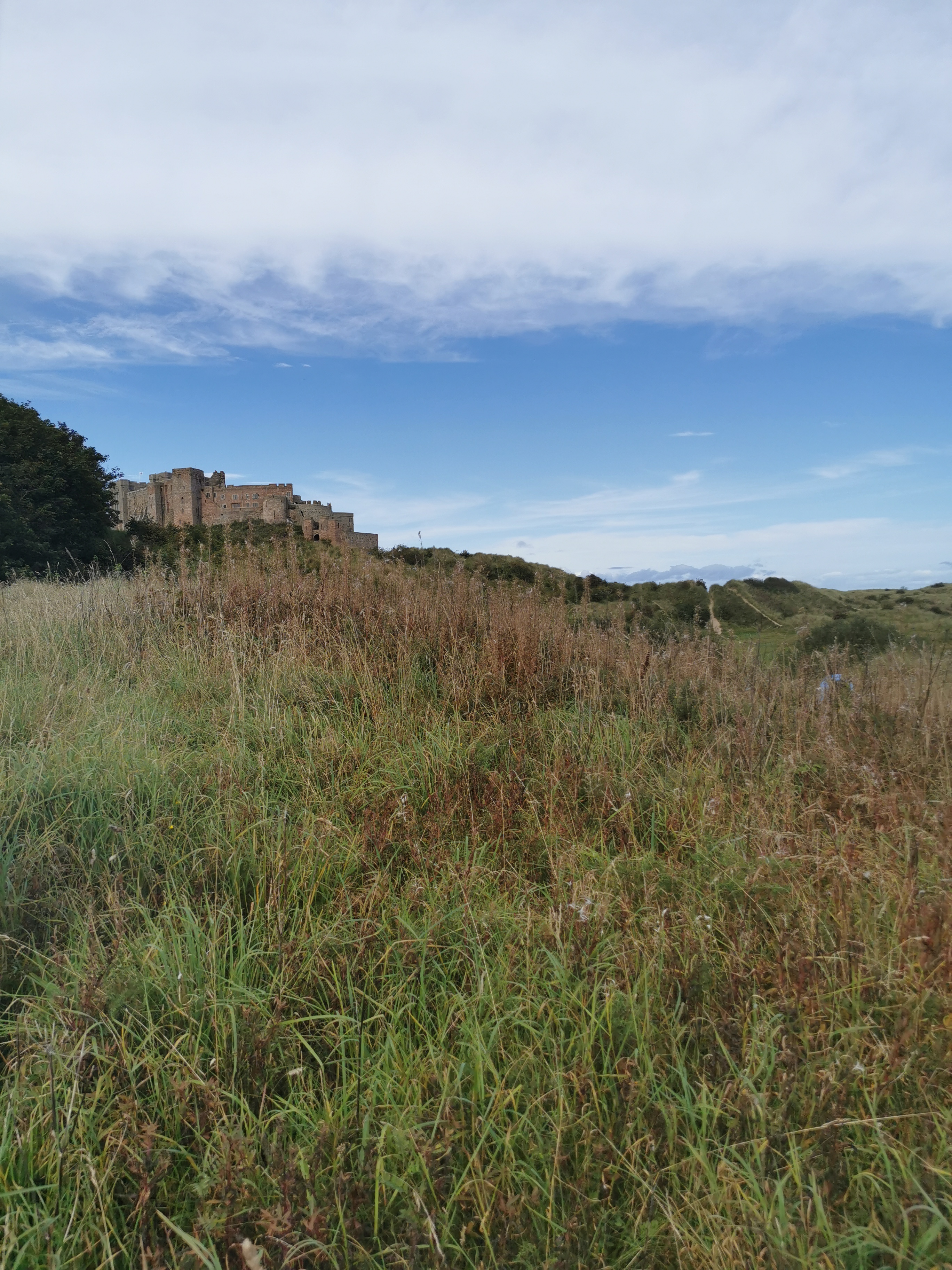
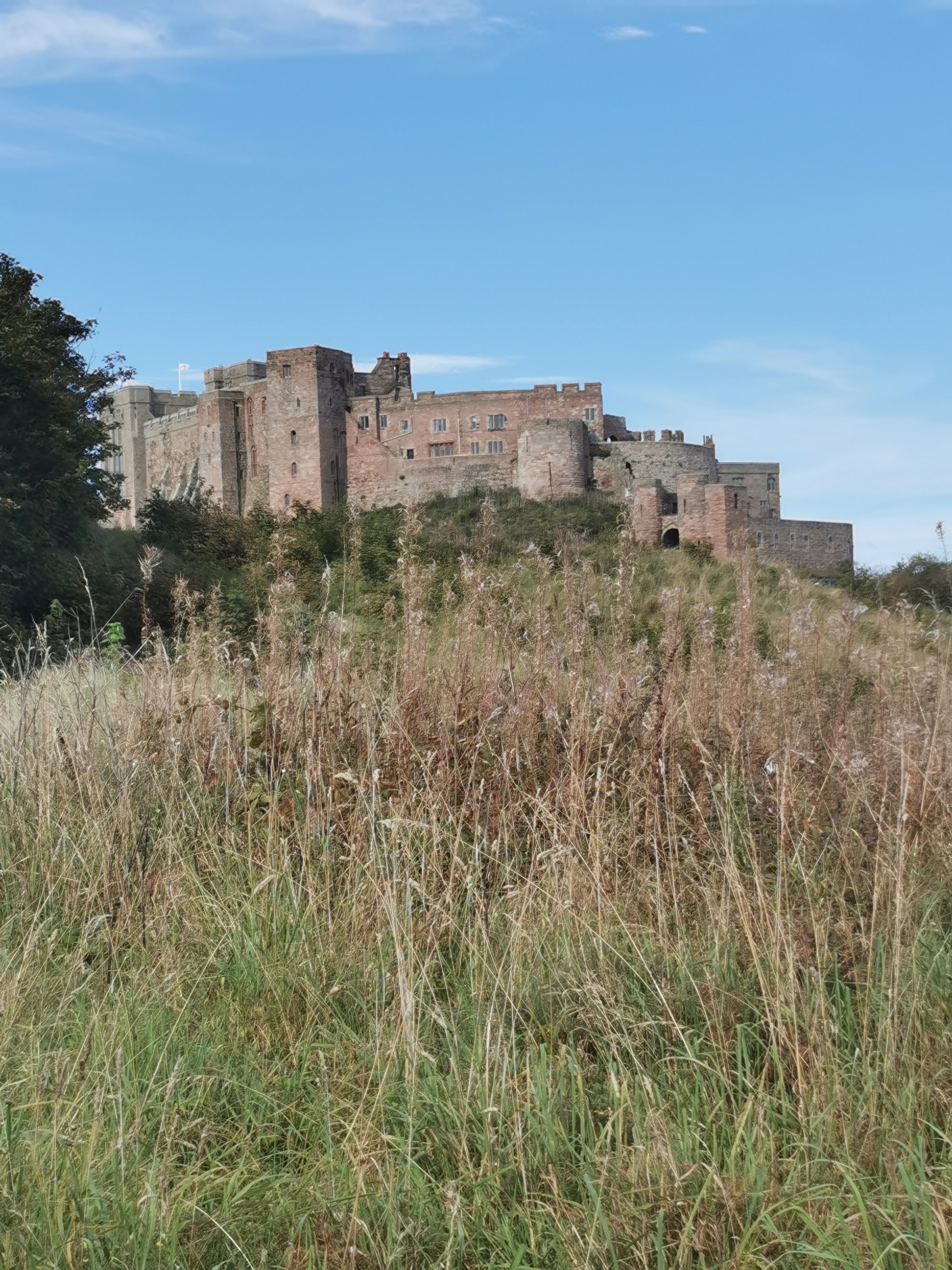
Uhtred of Bebbanburg is perhaps our most famous character from Saxon England, even if he is a fictional creation. Not only does he have his own TV series alongside the books, but his very strong association with Bebbanburg/Bamburgh (somewhere I’m lucky to live very close to hence the photo in January below, and have been visiting since I was a small child), means that he feels very ‘real’ to many readers and audiences, and indeed, encourages thousands of people to Northumberland every year to visit Bamburgh, of which even the earliest standing buildings date to just after the Norman Conquest of 1066. (Bamburgh has a very active group investigating the archaeology (The Bamburgh Research Project with whom I attended a post-excavation week in September 2023)). He has become somewhat like the Arthur of the Arthurian Legends – more real than many historical attested individuals.
Bamburgh Castle on a chilly January day in 2024
So, where is Uhtred of Bebbanburg in my Brunanburh Series?
This is a tough one because I can’t find ‘Uhtred of Bebbanburg’ in any of the sources I’ve consulted (not that there are many). Indeed, affairs at Bamburgh at this time are so little understood, that we don’t even definitely know the names of some of the individuals who may have ‘ruled’ there, and even what the extent of their powers might have been for Bamburgh was sandwiched between the might of a growing kingdom of the Scots, and the kingdom of Norse Jorvik or English York (depending on who claimed it).
Ealdorman Uhtred
There is an ealdorman of King Athelstan who’s named Uhtred (there’s actually two, but I’m focusing on the main one here, named as a ‘dux’ or ealdorman), appearing in the surviving charter evidence from 931 to 935 (he witnesses or attests 8 of King Athelstan’s surviving charters) including the charter when Athelstan gifts a great deal of land to Archbishop Wulfstan of York in 934 on his way to ‘invade’ the kingdom of the Scots, but aside from that, he doesn’t appear in the Anglo-Saxon Chronicle at this time, and indeed, doesn’t seem to be associated with Bamburgh at all.
Who was ruling Bamburgh then?
Indeed, at this time, we have two men who seem to have ‘ruled’ in Bamburgh, one Eadwulf/Ealdwulf is attested, in the Annals of Ulster naming him as ‘king of the Saxons of the north.’ He died in c.913. His son, Ealdred/Eadred (there is confusion with the correct name) joined an alliance with Edward the Elder, king of the Anglo-Saxons, in 920 (corrected from 924).
‘And then the king of Scots and all the nation of Scots chose him as father and lord; and [so also did] Reginald and Eadwulf’s son and all those who live in Northumbria, both English and Danish and Norwegians and others; and also the king of the Strathclyde Britons and all the Strathclyde Britons.’ (Swanton, M. trans and edit The Anglo-Saxon Chronicles, (Orion Publishing Group, 2000 p.104 (A text 924 for 920)
As well as the one with King Athelstan in 927,
‘King Athelstan succeeded to the the kingdom of Northumrbia; and he governed all the kings who were in this island; first Hywel, king of the West Welsh, and Constantine, king of Scots, and Owain, king of Gwent, and Ealdred, Ealdwulf’s offspring, from Bamburgh. And they confirmed peace with pledges and with oaths in a place which is named Rivers’ Meeting on 12th July;…’ (Swanton, M. trans and edit The Anglo-Saxon Chronicles, (Orion Publishing Group, 2000 p.107 (D text for 926 )
Ealdred seems to hold his position until 934 when his death may be recorded in the Annals of Clonmacnoise. His death could have precipitated Athelstan’s decision to invade the kingdom of the Scots if perhaps Constantin of the Scots was ‘meddling’ with the Saxon enclave, perhaps hoping to claim it himself, which ultimately led to the battle of Brunanburh in 937 between Constantin, Athelstan and Olaf Gothfrithson.
What happened in Bamburgh after the death of Ealdred is very hazy. I’ve made some leaps of faith, largely influenced by academic scholars of the period, in Kings of Conflict, and my imagination, but alas, it did not allow me to find our missing ‘Uhtred’ of Bebbanburg, and while in initial drafts, I did ‘allow’ Ealdorman Uhtred some interest in Bamburgh, I removed these because it just didn’t fit with the information I could find.
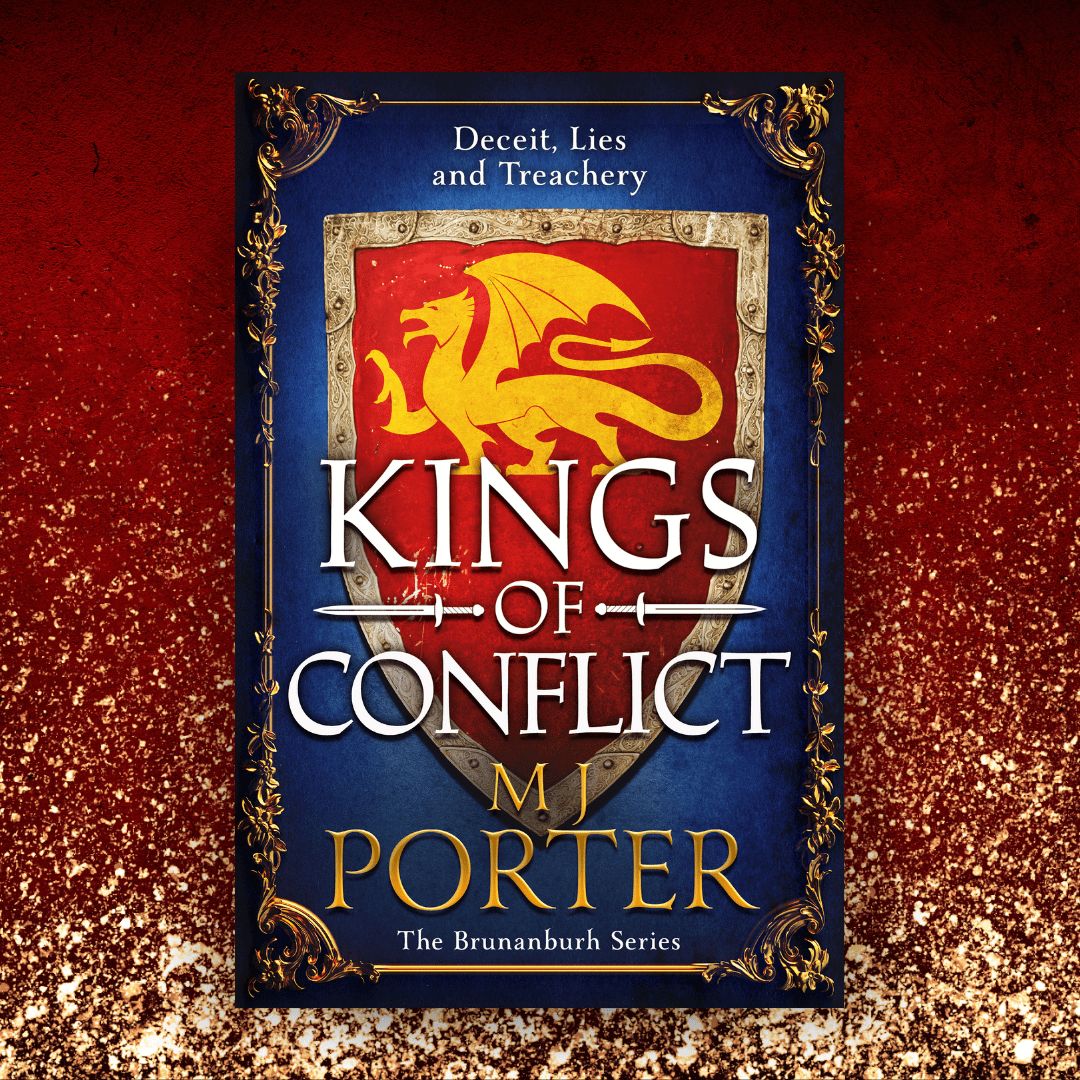
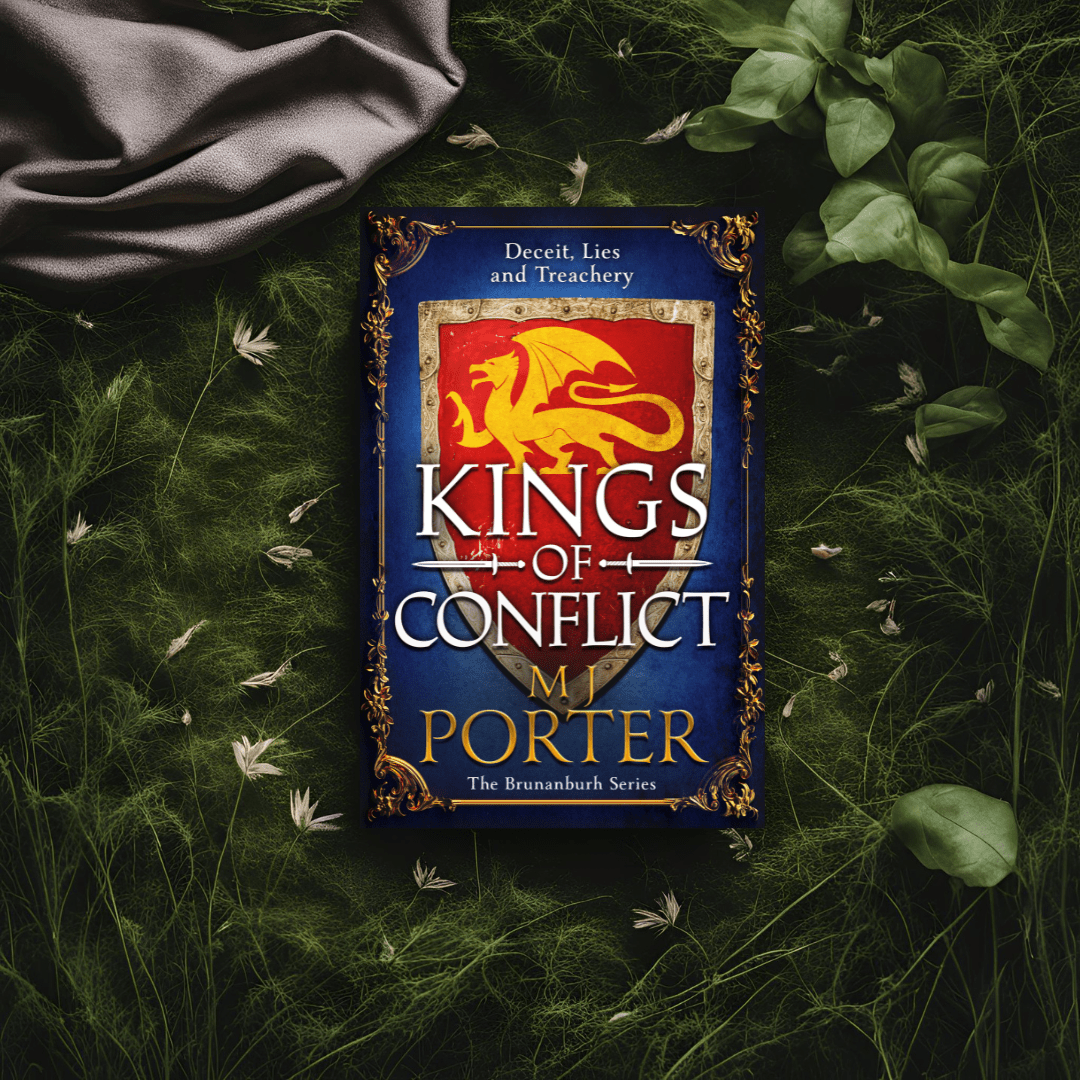
Kings of Conflict, the last part of the Brunanburh series, is available now.
In 2014, I had the ‘amazing’ idea to write a novel about the events that led to the famous battle of Brunanburh in 937 – the greatest battle on British soil that few people have ever heard about (Or certainly hadn’t heard about back then – who knew Uhtred of Bebbanburg would be taking part in it).
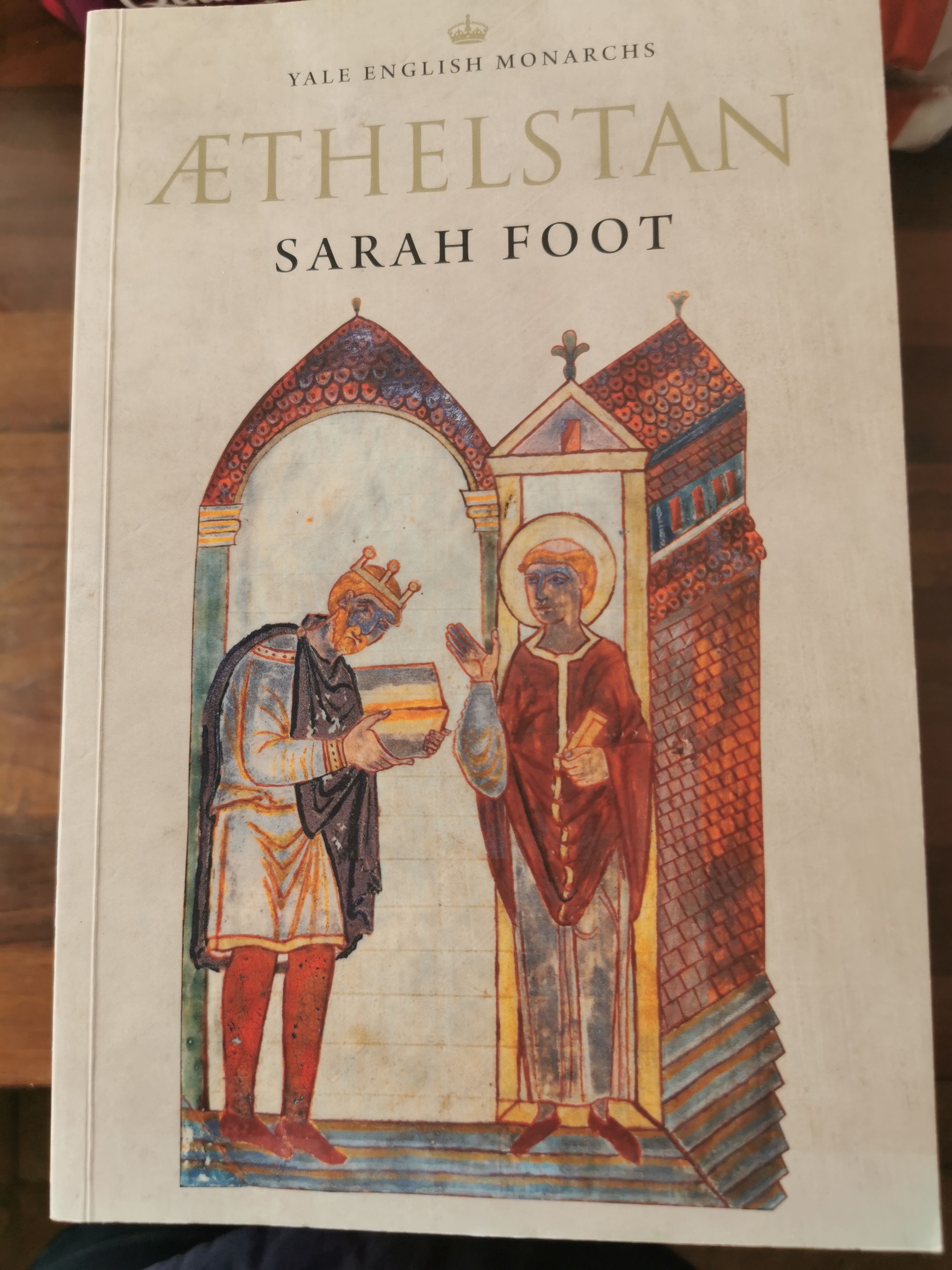
My reasons were two-fold. I’d just read Sarah Foot’s monograph on Athelstan, and the UK was in the grip of a vote for Scottish Independence. It made me consider the union of the kingdoms of Wales, Scotland, England and Northern Ireland and the history behind it. But, it also stemmed from my own frustration with the way we’re taught history in the UK. ‘United’ it might say but if you go to school in England, Scotland, Wales or Northern Ireland you will be taught the ‘history’ of those kingdoms (and only those kingdoms)- that was when I was a kid, and I think it’s still true – very little ‘joined up’ thinking, and this is something that continues to cause problems today, and not just in the UK, but everywhere. Country-specific agendas fall down when looking at periods before these kingdoms actually existed – and the desire to see the ‘march’ towards unity as simple also misses the naunces.
In the first book in what became the Brunanburh Series, I wanted to examine these kingdoms – to unpick the seeming ‘inevitability’ of it all – and it massively helped that despite what might come before, and after, and as little as it may seem – we do know a surprising amount about the kings who fought at Brunanburh. What we don’t know (although the Wirral is now almost ‘accepted’ as the correct location) is where Brunanburh took place, and what actually led to it. It was time for me to get writing.
1100th Anniversary of Athelstan becoming king of Mercia
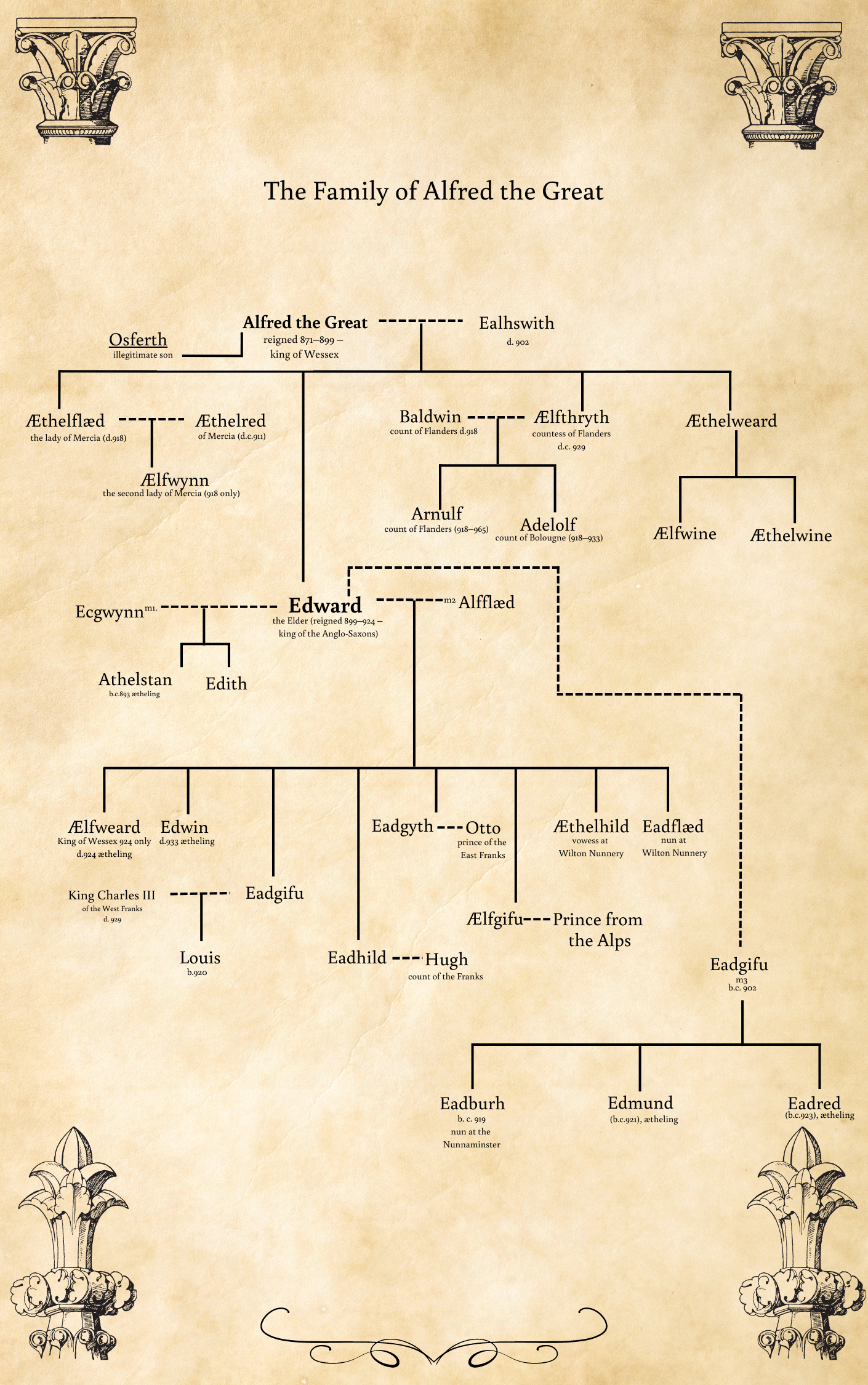
2024 marks the 1100th anniversary of King Athelstan becoming king of Mercia (although his coronation as king of the English took place in 925 – so a year later (read my post about this period here). While he has been often overlooked between the alleged ‘greatness’ of King Alfred (871-899), and the alleged ‘failure’ of King Æthelred II (978-1033/1013-1016), Alfred’s great great grandson, more and more historical investigation is being undertaken on Athelstan, and indeed, his half-brother, Edmund, who is one of the other characters in the series. (It might also have helped that Athelstan features in Bernard Cornwell’s The Last Kingdom series). A spotlight is being shone on all Athelstan accomplished, and the move is also encompassing Edmund, (as well as Eadred, and Eadwig – these three often overlooked).
Non-fiction books to read
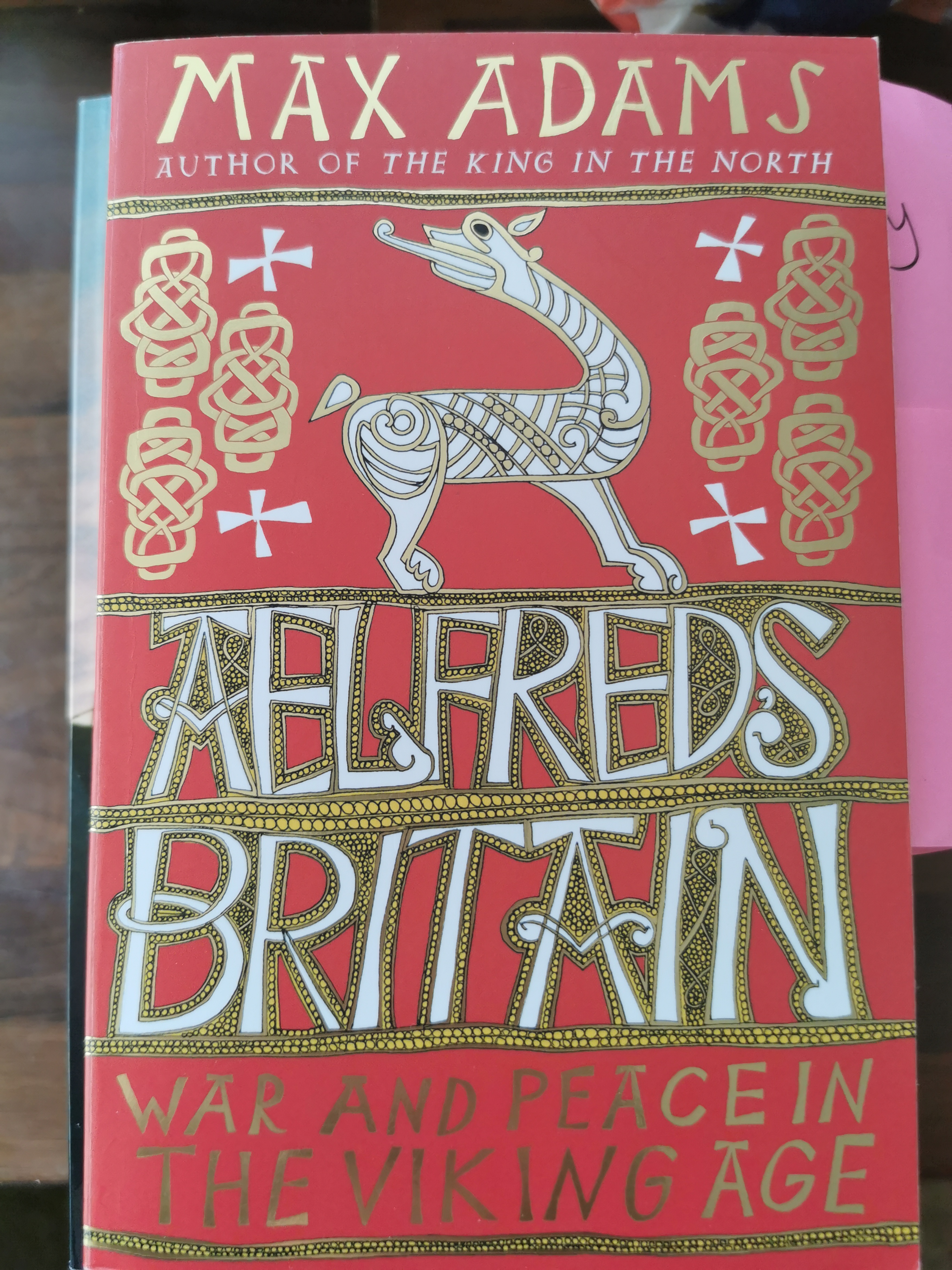
And this investigation is also looking at events in what would be Scotland, Ireland and Wales, as well as the Norse kings of Jorvik. The approach I’ve taken, is one that historians are examining – Alex Woolf’s From Pictland to Alba and Claire Downham’s Viking Kings of Britain and Ireland (they did it before me – but their books have helped me massively), as well as Max Adams’ Ælfred’s Britain which focused on much more than just Alfred.
My conclusions from writing about this period?
What then can I say after four books considering this period? Quite simply, nothing is as easy to explain or account for as might be hoped. The sources that have survived come with so many explanations about translation (they are not written in English – and indeed we have Old English, Latin, Old Irish, Old Welsh etc) bias, survival, manipulation, and corroboration (one source is often used to corroborate another) that sometimes it feels easier to hold my hands up and say ‘who knows?’
Attempts to draw together a cohesive narrative are constantly thwarted. One historian may argue for one thing, another for another. Every person who studies the period will have their own levels of ‘acceptable’ when looking at the sources. I am always wary of Saints Lives – they were not intended, and can not be, accepted as historical ‘fact’ but they do tell us a lot about reputation – another interesting facet to consider. The Icelandic Sagas must also come with a host of caveats. I also have to rely on translations and therefore remove myself from the original intention of the scribe once more.
The joy of this period is in the nuances that can be exploited – it is also where most people are likely to argue. And indeed, readers may fail to comprehend these nuances – hence the ‘it’s too predicatable’ complaint- I imagine all of ‘my’ kings would have welcomed the preditability of knowing the eventual outcome.
Trying to explain concepts such as ‘this is the first king of the English,’ ‘Hywel’s a king of all the Welsh’ falter because my audience expect these places to be united and under one king – but alas, were rarely that. The other England-specific failure to teach history before ‘1066’ also adds to these problems. The Saxon period is deemed as ‘weird,’ (the names, oh the names). There is so much going on, that even I have fallen down and made mistakes, and only with a sort of ‘doh’ moment made the connection between the name Brunanburh and the element of most interest ‘burh.’ (Thank you Bernard Cornwell for that moment of understanding – I still feel very, very stupid about it – not his fault).
Team Norse, Team England, Team Wales or Team Scots?
To tell a story such as this involves standing on the shoulders of giants. I am indebted to them – and sometimes, a bit narked that they won’t give me any definites either – what I will say is this – I understand a lot more now. I hope others do as well. And whether you’re Team England, Team Norse, Team land of the Scots, or Team what would be Wales, I hope you enjoyed meeting these long-dead men and women and realising that they were just as shifty, ambitious and perhaps, blood-thirsty, as people are today. I really can’t ask for more than that, other than you read the non-fiction for the period as well, and hopefully, enjoy it.
When I first wrote Kings of Conflict, I had very little idea what Jorvik at the time (the 930s/940s) might have looked like. I wrote an entire battle scene and then realised some of my assumptions were very, very wrong (I do this all the time. Don’t feel sorry for me. I should just do the research first instead of giving free rein to my imagination.) I got the fact the settlement was split in two by the River Ouse wrong (and who knew about the Foss). But, most tellingly, what I failed to understand was the true nature of York, from its Roman origins as Eboracum to the age of Jorvik, and most importantly by that I mean its Roman walls and what might, or might not have still been standing at this period.
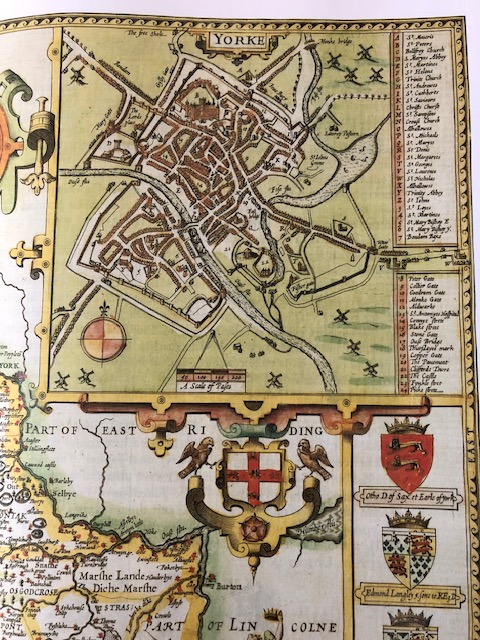
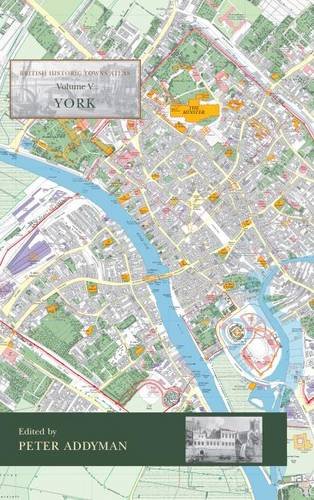
We don’t (yet) have time machines. We can’t visit York in the 940s, but if there is one thing York is famous for it’s the archaeology, and the Jorvik Viking Centre, which offers a recreation of what those streets on Coppergate might once have looked like, and also much else. And because Jorvik/York has benefitted from so much archaeological work, there are also a series of maps showing York at various times in its lifetime, alas out of print at this time, but which can be accessed via a good library (my thanks to the Great Northern Library at the Hancock museum in Newcastle – if you want to see it then let them know so they can have it ready for you, and make note of their opening hours) or the amalgamation of this work available in An Historical Map of York, available from all good book sellers. And if not, then my favourite ‘go-to’ for recreating this time period, the antiquarian maps by John Speed (which are also much prettier) can also offer some information.
York, from John Speed’s West Riding of Yorkshire map (own photo)
This is readily available and amalgamates the information from the actual Atlas.This is currently out of print – check out your local library or antiquarian library for a copy
Roman York
The British Historic Towns Atlas Volume V, York ed. Peter Addyman provides the following information about Eboracum-Roman York.
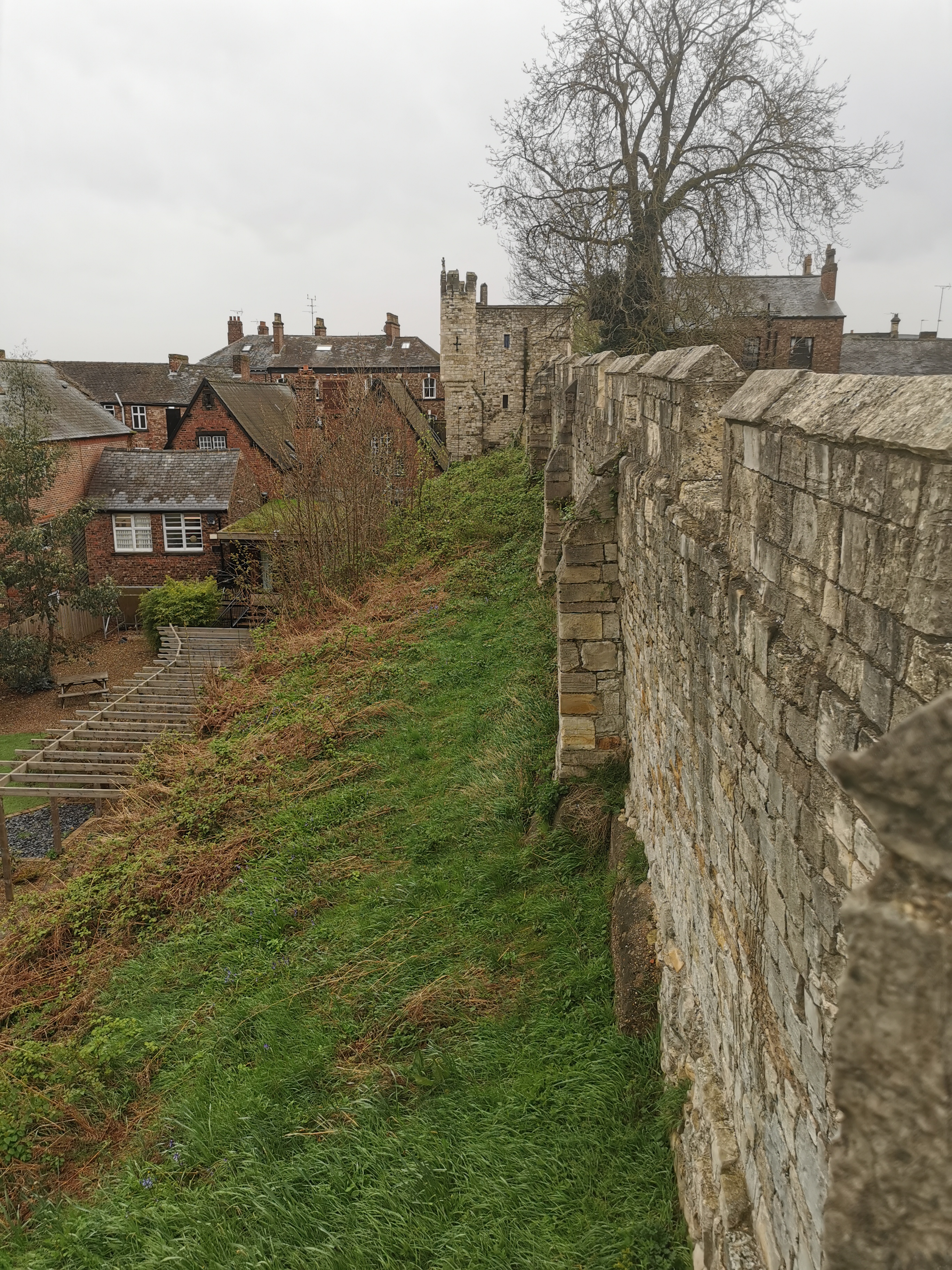
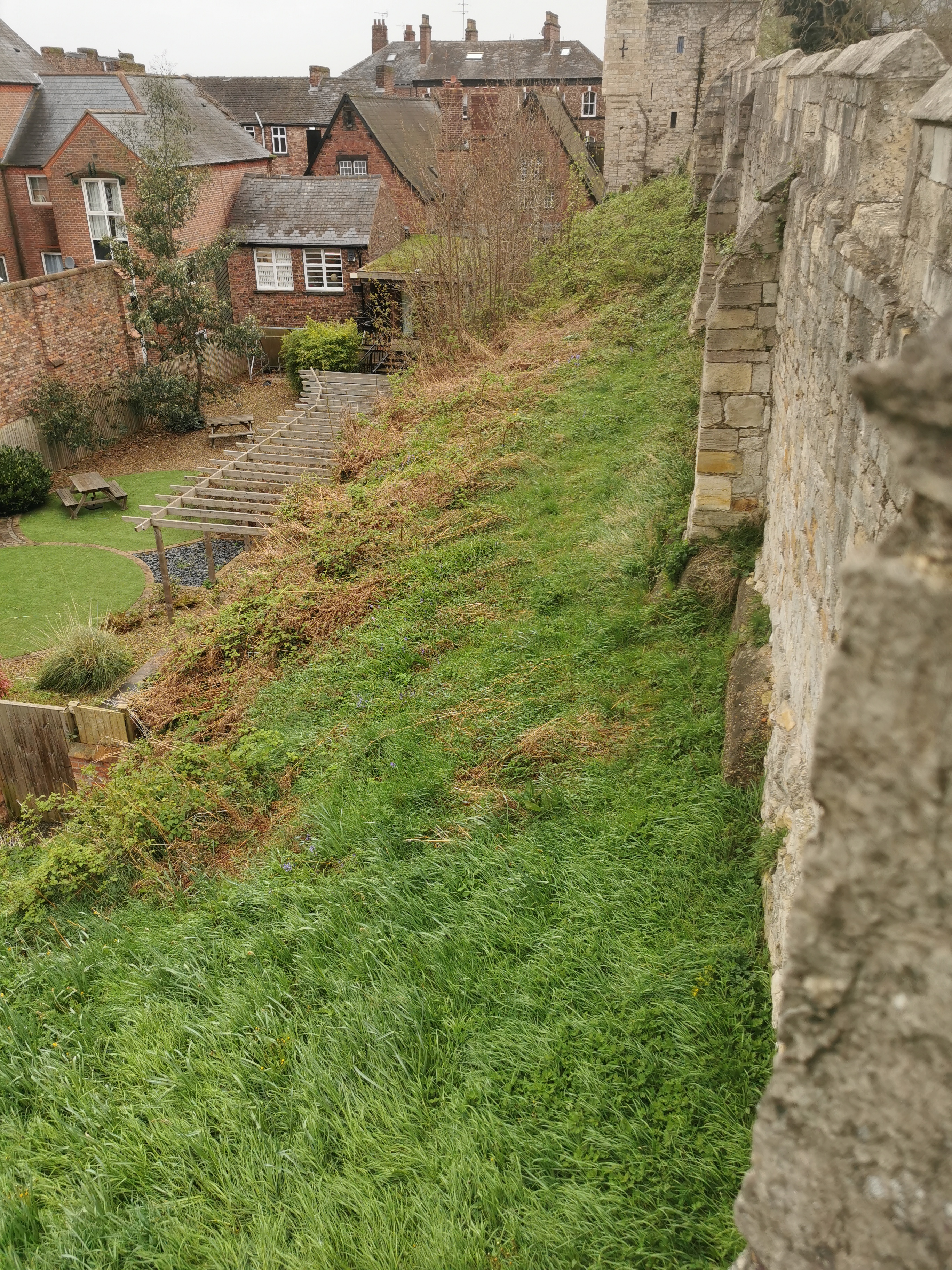
York’s surviving walls, not far from MicklegateI planned to take many more photos but my phone went flat and it was a suitably biblically wet day in York – which seems to happen every time I visit:)
It might have been occupied under Vettius Bolanus (69-71) but was truly founded under Emperor Vespasian (69-79). However, the ridge of the River Ouse was a routeway from the Neolithic onwards. This was in the territory of the Brigantes although the East Riding of Yorkshire was that of the Parisi. It is possible that Eboracum means ‘the place of the yew trees.’
The stone used in constructing the fortress was Magnesian Limestone from Tadcaster and Millstone Grit from Bramham Park (I love that they know this). To begin with the fortress had a ditch, rampart and timber structures and four gates, with the original towers up to 15 metres high. And here, there is the suggestion that to begin with, crossing the River Ouse (to get to the civilian settlement) was via ferry. The bridge can only be confirmed from the second century onwards. The Foss River was also tidal at this time and the banks sloped sharply. The rampart was widened from 20feet to about 42 feet during a second phase of occupation.
Some ‘old’ bits of Roman York (I think), from the museum in York Minster
The end of Roman York is impossible to pinpoint. Did it cease to exist? Certainly, the last documentary reference was in 314 when York’s bishop, Eborus, attended the Council of Arles, but as with so many of these Roman settlements in Britannia, what happened afterwards is more difficult to determine and we must turn to archaeology and not written records.
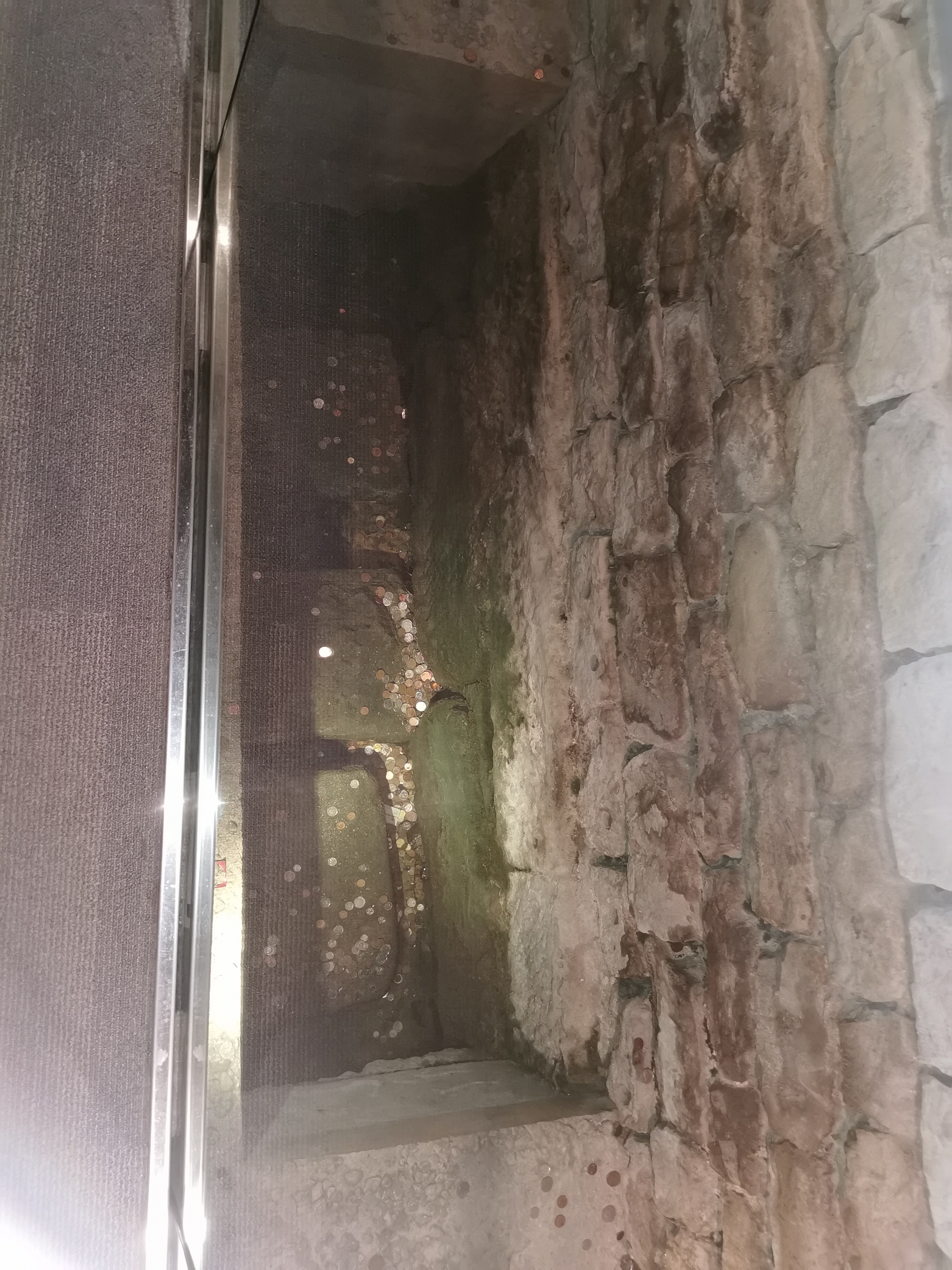
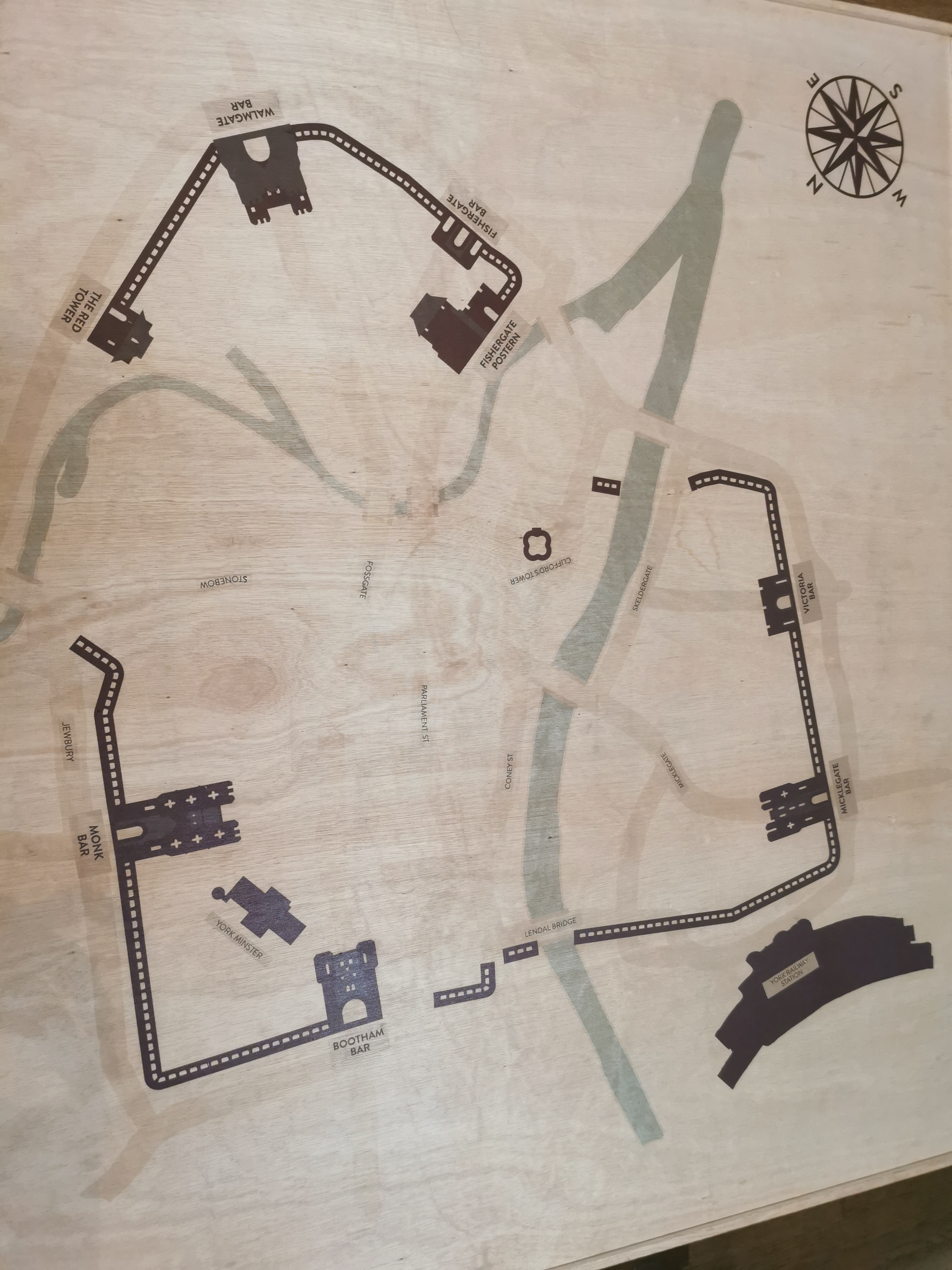
I think this is from the exhibition at Micklegate Bar but I could be wrong. It very clearly shows the two ‘halves’ of the walls.
I must admit, all of this information about Roman York makes me somewhat desperate to write a book about it:) (Don’t all groan).
Anglian York – Eoforwic
The creators of this series of maps make the point that this is the most speculative of the series. Put simply, they really don’t know what was happening.
What can be said is that the walls were renovated on the north west side of the fortress with a dry stone wall and cobbled sentry walk while the eastern ramparts were topped with a timble palisade wider than the Roman wall (if I’ve understood that correctly).
Eoforwic first enters the historical record as the place of baptism for Edwin in 627, the king of Northumbria (Deira and Bernicia combined).
‘…the king was baptised at Easter with all his chief men; that Easter was on 12 April. This was done in York, where earlier he had ordered a church to be built of wood.’ ASC E 626 p.25
The archbishopric began from 735, but Eoforwic was not densely settled at this period, although it does seem to have had many, many churches. This includes the Minster, St Michael-Le-Belfrey, Holy Trinity, St Peter the Little, St Martin, St Michael, and many more, all probably founded by 850.
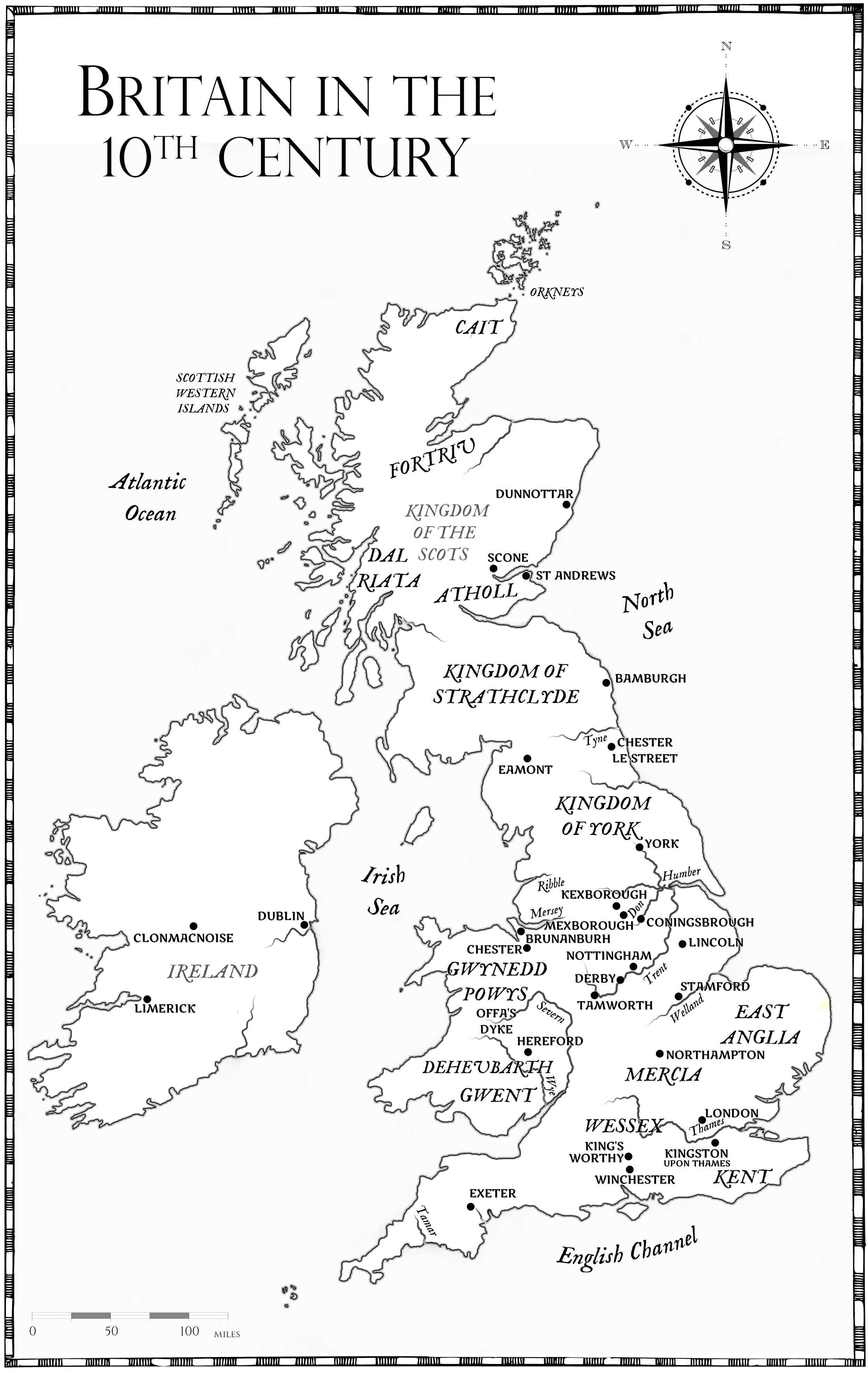
Map of Britain in the tenth century, showing York (map design by Flintlock Covers).
Viking York – Jorvik
It’s record that the first attack Viking attack on York occured on 1st November 866. The Northumbrians counter-attacked in 867 but this left York under Viking control.
‘Here the raiding-army went from East Anglia over the mouth of the Humber to York city in Northumbria;’ ASC A 867 corrected to 866 p.68 (from my preferred edition edited by Michael Swanton).
And here is where my notes become a little muddled between time periods. The British Historic Towns Atlas Volume V informs that the River Ouse at the time would have been tidal, and much wider than it is now and also with much steeper banks .
The late-eighth-century scholar Alcuin describes York as having high walls and lofty towers (he spent time in York). Asser (Alfred’s late-tenth-century biographer – although I’m curious as to how he’d know as I’m sure he was from one of the Welsh kingdoms and York was not under Alfred’s control) suggests that York’s walls were insecure and there is a suggestion that the Vikings restored the walls. Considering what we know about Asser and his ability to be less than honest, we might suspect this statement. Certainly, the remains of the walls were visible but whether they were defensible is unknown.
The walls survive to this day. To paraphrase from the Atlas, from the western corner of the Roman fortress to fifty metres along its south-west front, parallel to the river, the Roman wall is still visible above ground. Beyond this point, its six projecting interval towers and the Roman south/west gateway leading to the bridge over the Ouse have either been demolished to foundation level or been covered by organic-rich debris of post-Conquest date. The fortress’s south corner tower at Freasgate survives to fifteen foot. It is suggested that the south-west section of the civilian settlement might not have been included in the walled defences.
On the northern banks of the River Ouse, there were plots about 5.5m wide occupied by one or more structures (Coppergate/Ousegate/Pavement) with backyards running downslope towards the River Foss. Hungate also had similar plots. There might have been crossings over the rivers below St Mary Castlegate and Hungate. These rectangular structures of post and wattle had entrances front and back, with centrally arranged hearths and roofs made of turf, reeds or straw. Most settlement was below Coppergate, Ousegate, Pavement, Hungate and Walmgate areas.
Recreating Jorvik?
But what does all this mean when trying to recreate the time period? (Some will know that I’ve already ‘visited’ York earlier in the Brunanburh series, and without all this angst). It is frustrating that some aspects are so clearly defined and others aren’t. Where were the people living – especially the high status people? Where were the kings living? In King’s Square/Kuningesgard? And what’s this about the civilian defences never being completed to the south?
My overwhelming impression is that the remains of the actual Roman encampment (to the north of the Ouse) were in better condition than those to the south of the Ouse surrounding the civilian settlement (there are ‘proper’ terms for this – I’m not using them). But, these remains of the Roman wall at the fort seem to have largely been surrounding the religious centre under the control of the Archbishop of York, Wulfstan I. Were they any use to those in control of Jorvik? And what about the rivers? How navigable were they? Could they be easily blocked? How tidal is tidal? Did it raise and lower the water level by metres or centimetres?
Was there even a bridge over the River Ouse or did they need to use a boat to get across? Perhaps there was only one bridge over the Ouse, and only one over the River Foss.
Having this information to hand and making sense of it are two very different things. How would someone have gone about attacking York? Would they have taken ships, come on foot or tried to steal their way inside through the never completed walls? Who would have protected it? What would our erstwhile holy man, Archbishop Wulfstan have done? If the walls were standing, how many warriors would have needed to protect it?
You’ll have to read Conflict of Kings to see just what I did, and you can from 6th August 2024:)
On this day in history was fought the second of three famous battles between Penda of Mercia and the Northumbrians kings. This battle was different in two ways to Hædfeld and Winwæd; it took place in the summer, and it occured in Mercia. (Hædfeld was an October battle near the River Don. Winwæd was a November battle fought somewhere in the north of modern-day England, it’s believed).
Warrior helms during the early Saxon era (seventh century)
Thanks to some spectacular archaeological finds, we can visualise how a Saxon warrior king might have looked. The reconstructions of the Sutton Hoo helm, and that found with the Staffordshire Horde (as well as a few others), present us with elaborate helmets crested with dyed-horse (or boar) hair in a way very reminiscent of the Roman era. They glitter, and they seem to be festooned in gold and silver work, but whether these were actually worn in battle or not is debatable.
Firstly, they would have made the kings or noblemen very noticeable to their enemy. Secondly, they were so valuable it’s impossible to consider the loss of one of them should they fall and their goods be taken by their enemy. Bad enough for their king and leader to die in battle, but to also lose such precious wealth as well seems unlikely. That said, of course, the Sutton Hoo helm was buried, and the fragments of the Staffordshire Hoard helmet were buried and lost. But the scarcity of such archaeological finds surely points to them being unusual or there would be hundreds of them.
But there is another reason why these helmets might have existed, and that’s because they were for ceremonial purposes. Kings, before the reign of Athelstan (925-937) are not known to have undergone consecration with a crown but rather with a helmet. After all, they were warrior kings. Perhaps then, these survivals are more akin to that worn by a warrior-king when appearing before his people or for ceremonial reasons.
What weapons would a ‘normal’ warrior have?
What then might have been the more usual garb for a warrior of the Saxon era, which at nearly six hundred years is bound to offer some variations? Shield, spear, seax, sword and byrnie.
We get a feel for these items and how valuable they were from wills that survive from the later Saxon era, hundreds of years after the events of Pagan Warrior. Ealdormen had horses, both saddled and unsaddled, shields, spears, swords, helmets, byrnies, seax, scabbards and spears.
The will of Æthelmær, an ealdorman in the later tenth century, records that he’s granting his king, ‘four swords and eight horses, four with trappings and four without, and four helmets and four coats of mail and eight spears and eight shields,’[1] as part of his heriot, a contentious term for something that some argue was an eleventh-century development, and others argue, is merely reflecting earlier practice on the death of a man.
There would also have been thegns and king thegns, who had their own weapons, as well as the men of the fyrd, the free-men who could be called upon to perform military service each year, as and when required. It’s often assumed they would have been less well-armed, although this begs the question of whether kings and their warrior nobility were prepared to sacrifice those they relied on to provide them with food to gain more wealth. They might have found themselves with the money to pay for food but without the opportunity to do so.
There are very few representations of warriors, but the surviving strands of the Gododdin, a sixth-century lament to the fallen of Catraeth gives an idea of how these warrior men thought of one another. There is much talk of killing many enemies, drinking mead, and being mourned by those they leave behind.
Battle tactics
Battle tactics from the period are impossible to determine fully. Before writing my books which are blood-filled and violent, I read a fascinating account, by a military historian, on how he thought the Battle of Hastings might have been won or lost. The overwhelming sense I came away with was that local features, hillocks, streams, field boundaries even perhaps the path of a sheep track might well be the very thing that won or lost a battle for these opposing sides. The land that kings chose to go to war on was incredibly important. Perhaps then, it wasn’t all about the weapons but about where they decided to fight.
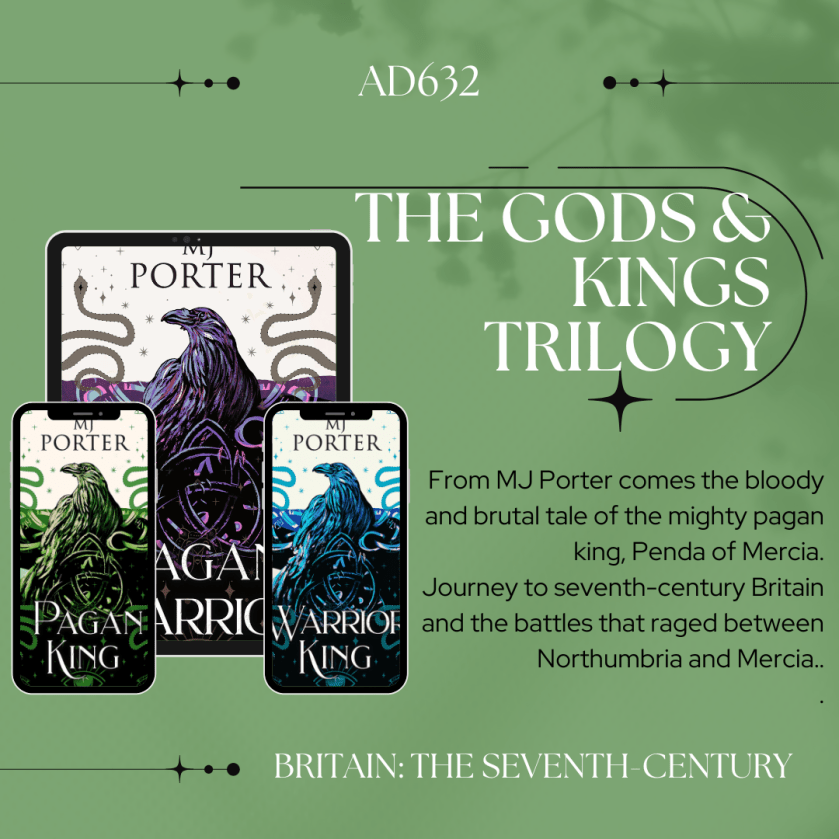
Pagan King, the story of the battle of Maserfeld
For Pagan King, the novel that tells the story of the battle of Maserfeld, I made use of some local landmarks I knew well, and for other aspects, well, that’s why I write historical fiction.
You can find out more information on the Gods and Kings page.