Author of Saxon historical fiction and non-fiction, 20th-century historical mysteries, and Norse-inspired historical romantasy. Book reviewer and blog host.
A marriage of convenience to a scoundrel? Not if Augusta can help it.
The impoverished daughter of a baronet, Augusta has no intention of being bartered away like a prize horse. Instead, she flees to London, determined to forge her own path as a modiste.
But fate has other plans. On her very first day in the city, she crosses paths with a brooding earl—one burdened with a clubfoot and a reputation nearly as scandalous as the proposal she ran from. His captivating sister, Mariana, is not only Augusta’s employer’s best client but harbors a secret ambition of her own: to marry the one man society deems wholly unsuitable.
Drawn into Mariana’s reckless schemes of masquerades, cross-dressing, and Whig intrigue, Augusta soon finds herself entangled in more than just scandal—she’s losing her heart to a man who embodies everything she swore to escape.
But the earl has secrets of his own. Is he truly the rogue society believes him to be?
And when Augusta’s past comes calling, will her newfound independence—and her heart—survive?
A charming, fast-paced Regency romance perfect for fans of Bridgerton and the sweetly adventurous love stories of Maggie Dallen and Jenny Hambly.
The Dressmaker’s Secret Earl is a Regency romance with a difference. Our main female character, Augusta, is strong-willed and determined to live a life free from the marriage union her aunt has arranged for her with an awful man who only wants her for her money. Our male main character, George, is doing his best to live by his rules, which aren’t necessarily what society expects from him, and he does his utmost to avert suspicion that he’s not the rake they believe him to be.
Add to this Mari, the earl’s sister, and someone who fast becomes Augusta’s only friend in London, and we’re set for an exciting journey through London society and some of its less salubrious locations, as all three endeavour to forge the lives for themselves that they desire.
The Dressmaker’s Secret Earl is a fast-paced tale of Regency London with main characters the reader quickly feels invested in. Fans of the genre will certainly enjoy it, as will those who are looking for something a little different, perhaps with more historical detail and a more varied stage for our main characters to occupy than might be expected.
Meet the author
Susanne Dunlap is the award-winning author of over a dozen historical novels, as well as an Author Accelerator Certified Book Coach in fiction, nonfiction, and memoir. Her love of history began in academia with a PhD in music history from Yale. Her novel THE PORTRAITIST won first prize in its category in the 2022 Eric Hoffer Book Awards, and was a finalist in the CIBA Goethe Awards and the Foreword Indies Awards. THE ADORED ONE: A NOVEL OF LILLIAN LORRAINE AND FLORENZ ZIEGFELD, won first place in its category in the 2023 CIBA Goethe Awards for Late Historical Fiction. Today, she lives, coaches, and writes in beautiful Biddeford, Maine.
I’m delighted to share two treats with readers today, a short post about the author’s research, and also an excerpt for the novel. Enjoy.
Research, by Brigitte Barnard.
My research has spanned some 20+ years of obsessive reading about the Tudor dynasty. I am a homebirth midwife, so I decided to write a book from the perspective of a midwife serving the Tudors. My research is a combination of my own experience as a midwife helping women in a home setting as well as concrete research on the 16 Century. I have also learned a lot from excellent podcasts on Renaissance and late middle ages English history.
Here’s an excerpt
We receive a summons from Queen Katherine at the end of August, and we head over to Richmond Palace.
Richmond was built by King Henry VII, the father of our current King Henry. It is entirely made of red brick and is a magnificent castle that appears elegant and menacing in equal measure.
After the long trip downriver, we disembark and walk to the servants’ entrance. From there, we are escorted to the queen in her receiving room. Emunah and I sink into curtsies before her. Maria de Salinas is here too, and by the look on her face, she is none too happy to see me again.
“How can I be of service, Your Majesty?”
The queen dismisses her ladies and says, “I find I am once again with child, Sarah.”
“That is good tidings indeed! I am so happy to hear it, Your Majesty!” I say. “When was the last day of your courses?”
The queen immediately replies, “The fifth of January.”
I quickly calculate, “So that would make you nearly eight weeks along.”
“Yes,” replies the queen, stroking the silken head of a softly snoring russet spaniel asleep on her lap. “I know it is early days yet, and I hesitated to summon you, but… well… you know what happened last time… Is there anything you can give me to make this child grow strong in my womb so that he will not be born too early?”
“I will leave you a bag of red raspberry leaves, and I will instruct your servant on how to best prepare them for you. You must drink a draught of them every morning and every evening.”
“Thank you. And that will keep the baby from being born too soon?” asks the queen anxiously. The little dog stirs on his mistress’s lap and yawns, looking up quizzically at the queen.
“I hope so, Your Majesty. I have had good luck with it in the past, but as you know, these things are up to God.”
“Yes, of course,” the queen agrees.
We decide that she will contact me if she has any concerns. Otherwise, I would see her in three more months.
—
As the wherryman rows us back to our village, I can’t help but remember the last time we saw the queen and the sad circumstances surrounding the previous pregnancy. I hope this time will be different for her.
Back in Deptford, Emunah and I make our rounds on the local fishermen’s wives, who are in various stages of pre- and post-birth. One woman in particular has me worried. Her name is Ann, and this is her sixth pregnancy in only five-and-a-half years. She has had two miscarriages, is pregnant, and nursing a six-month-old baby.
All this with a two-and-a-half-year-old toddler and a small girl of five years.
We enter her home, a small ramshackle dwelling with dirt floors, two pallets of straw for beds, a rickety old table, and a fireplace in the middle of the house. A small hole is cut in the roof to allow the smoke out. A couple of low stools complete the furnishings. Her six-month-old baby is sitting on the floor with the five-year-old nearby, playing with some pebbles on the hard-packed dirt floor. The house smells rank, and the children’s faces are filthy. Ann is bent over a pot that she is stirring over the fire. I wonder how she keeps her little ones from getting burned by the open fire.
I had grown up in Spain, and there, we had proper fireplaces, which Jacob and I had replicated in our little cottage in Deptford. I had never seen fireplaces in the middle of the room until we moved to England. It doesn’t seem like a safe or effective way to utilize fire.
Ann looks up as we enter her house and gives us a wan smile.
I examine her and determine her to be approximately six months along. Her face, I notice, is already lined and weary looking for so young a woman. I see too that her teeth are much the worse for wear after so many births in such a short time When a woman has too many children too close together her body cannot recover the nutrients it needs. Instead, it will steal the nutrients out of her own teeth and bones. We chat for a bit, and I ask her if she needs a cradle for the new baby. She replies that they have always kept their new babies in bed with them, and it seems to work out just fine. I nod and ask her if there is anything else I can help her get in anticipation of the new arrival.
She is proud and doesn’t want to accept charity, so Emunah and I finish our exam and make our departure.
When we are out of earshot, Emunah says to me, “How can she bear to live like that? Did you see how dirty her children were? The poor things!”
“Yes, I agree,” I say, “but fortunately, most of the other people of Deptford live in better conditions. Just be grateful that you can read and write and are learning healing skills so that you never have to depend on a man for your income—not that there’s anything wrong with that, but you have knowledge of healing and midwifery and can make your own way. Women like Ann haven’t got much choice in this life. She’s dependent on her husband for everything she needs, and he is but a poor fisherman.”
Here’s the blurb
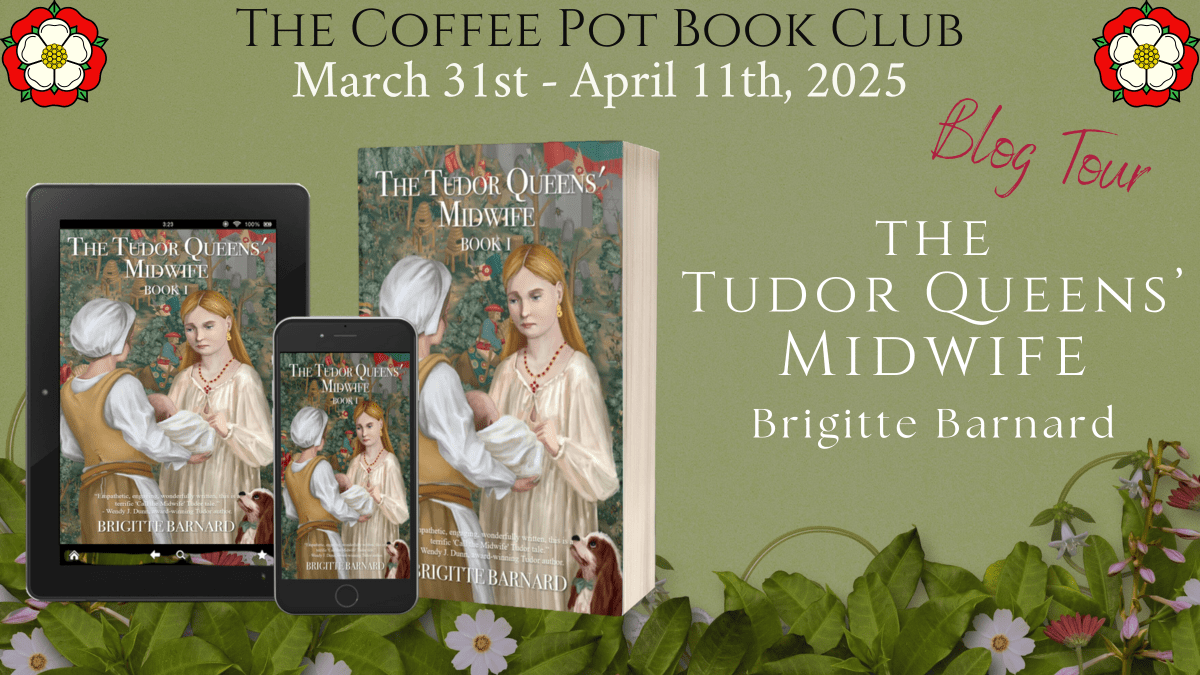
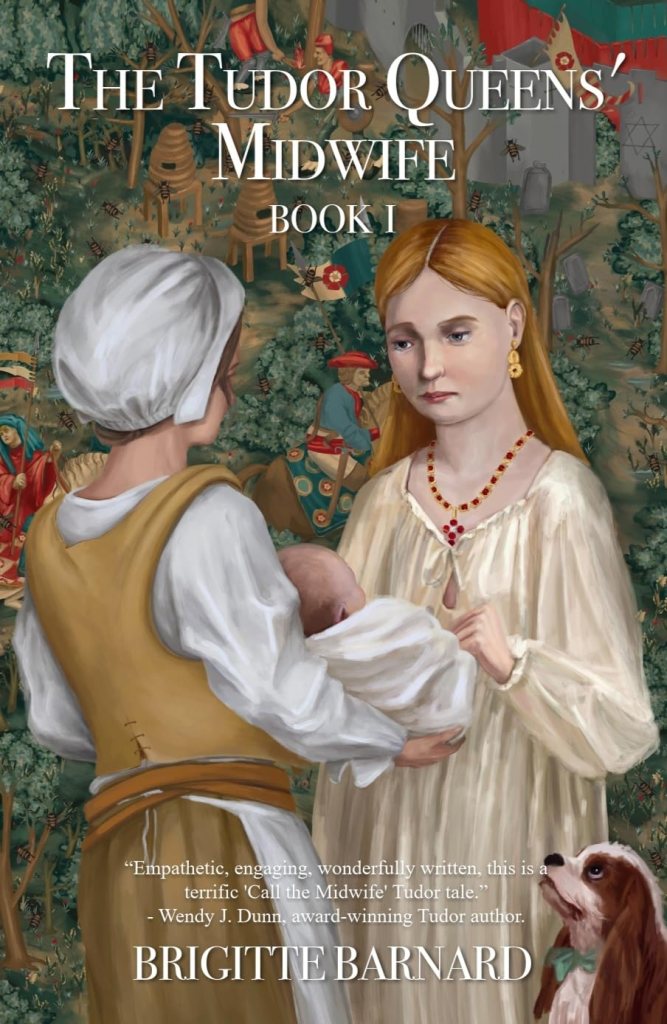
In the glamorous, glittering and dangerous court of king Henry VIII and his queen Katherine of Aragon, the desperate desire for a healthy male heir overshadows all. Plagued by a series of miscarriages the queen is left grappling with the weight of her singular duty to provide a son for the Crown. Amidst this turmoil the queen turns to Sarah Menendez, the most highly skilled midwife in England. Sarah, exiled from her homeland and concealing her true identity must serve the queen and battle her deepest fears. As Sarah strives to save the queen from the perils of childbirth, the specter of her own past threatens to unravel the carefully crafted identity Sarah has created for herself and her young daughter.
In a world where power, politics and religion collide, Sarah finds herself entangled in a web of intrigue and deadly danger. The fate of the queen’s unborn child, the survival of the midwife and her daughter, and the stability of the kingdom hang in the balance. Sarah Menendez must employ all of her skills, cunning and courage to protect those she holds dear as well as the life of the queen and her unborn child.
The Tudor Queens’ Midwife is a gripping tale of secrecy, sacrifice and religious turmoil amongst the most opulent court the world has ever seen.
Brigitte Barnard is an amateur historian of Renaissance English history and an author of the trilogy The Tudor Queens’ Midwife, of which the first book in the series is available. She is currently writing a non-fiction book about Tudor midwifery for Pen and Sword publishing house.
Brigitte is a former homebirth midwife, and she lives at home with her husband and four children. She also raises Cavalier King Charles spaniels.
He’s a carefree rake who wants a marriage of convenience.
She’s an awkward spinster who doesn’t want to marry at all.
Fate has other plans in store for them both.
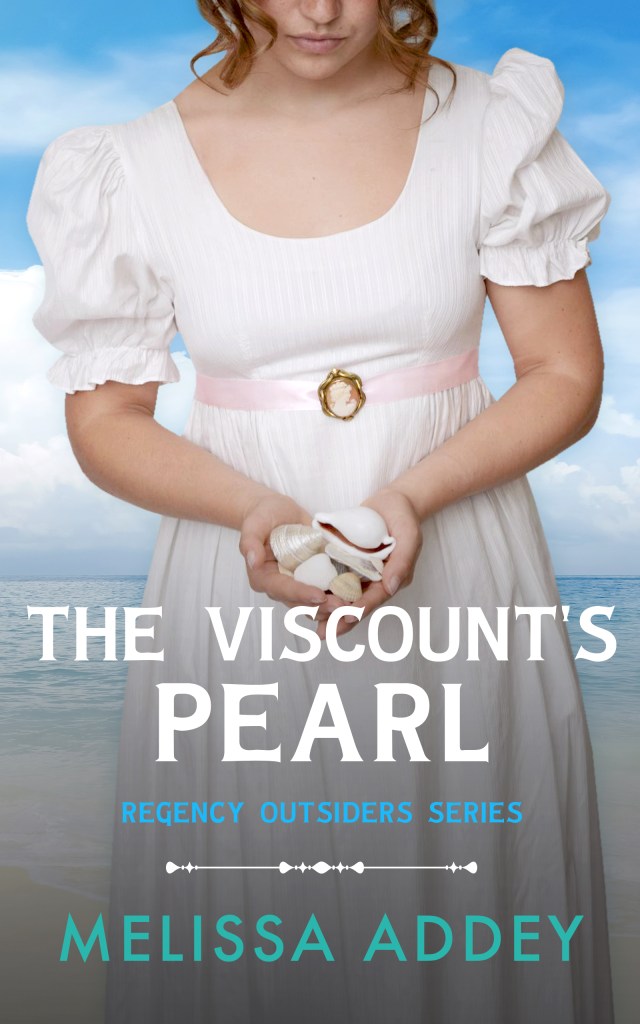
Laurence enjoys his dalliances with the married ladies of society, and thinks marriage is only a matter of convenience. He’s on the lookout for a practical woman accustomed to society. Frances is an odd and awkward young woman, more at home gathering shells on the beach than in the ballrooms of London, hoping to stay a spinster forever.
When the two meet in Margate, will their initial dislike of one another turn into something important?
While Laurence finds his life growing shallow, Frances wonders if love might be worth making a bold move for. Can she find her way into Laurence’s heart, and will he undertake to love her, just the way she is?
A warm-hearted Regency romance, full of historical detail and emotional discovery, as two opposites find they might just attract. The Season has begun, the ton is gathered… who knows what the tides will bring for Laurence and Frances.
The Viscount’s Pearl by Melissa Addey is a charming and thrilling Regency romance with a difference.
Our main character, Frances, is her mother and father’s despair, about to start her fourth scandalous season with no match. She’s outspoken, easily overwhelmed by society’s expectations and also entirely assured of her own mind. And it doesn’t involve marrying when she already has a fortune to her name. The only person who seems to understand her is her aging godfather, who happens to be Laurence’s uncle.
In contrast, Laurence is entirely at home amongst society’s expectations of him, until his uncle asks him to think again about his plans for the future, which he finds himself doing whether he wishes to or not.
Laurence and Frances are engaging main characters, but it is Frances who perhaps shines a little brighter. I adored that the author never worked to soften Frances’ awkwardness. Rather Laurence must work to accommodate her if they’re ever to be happy together.
This is both your usual regency romance and also not. But it is a joy to read and thoroughly enjoyable, and I admire the author for accurately portraying Frances as who she is and for maintaining consistency.
I grew up and was home educated on an Italian hill farm. I now live in London with my husband, two children and a black and white cat called Holly who enjoys the editing process as there is so much scrap paper involved.
I mainly write historical fiction, inspired by what I call ‘the footnotes of history’: forgotten stories or part-legends about interesting people and places. I have a PhD in Creative Writing, for which I wrote The Garden of Perfect Brightness and an academic thesis about balancing fact and fiction in historical fiction.
I like to move from one historical era to another, finding stories to share, like a travelling minstrel. So far I’ve been to Ancient Rome, medieval Morocco, 18th century China and Regency England. Join me on my travels: browse my books.
If you’d like to know more about me and my books, visit my website www.MelissaAddey.com where there are free novellas, book trailers, interviews, videos of research trips, info for book clubs and more.
Check out my review for From The Ashes, Melissa Addey’s Roman-era historical fiction set around the events of Vesuvius and the building of the Colosseum.
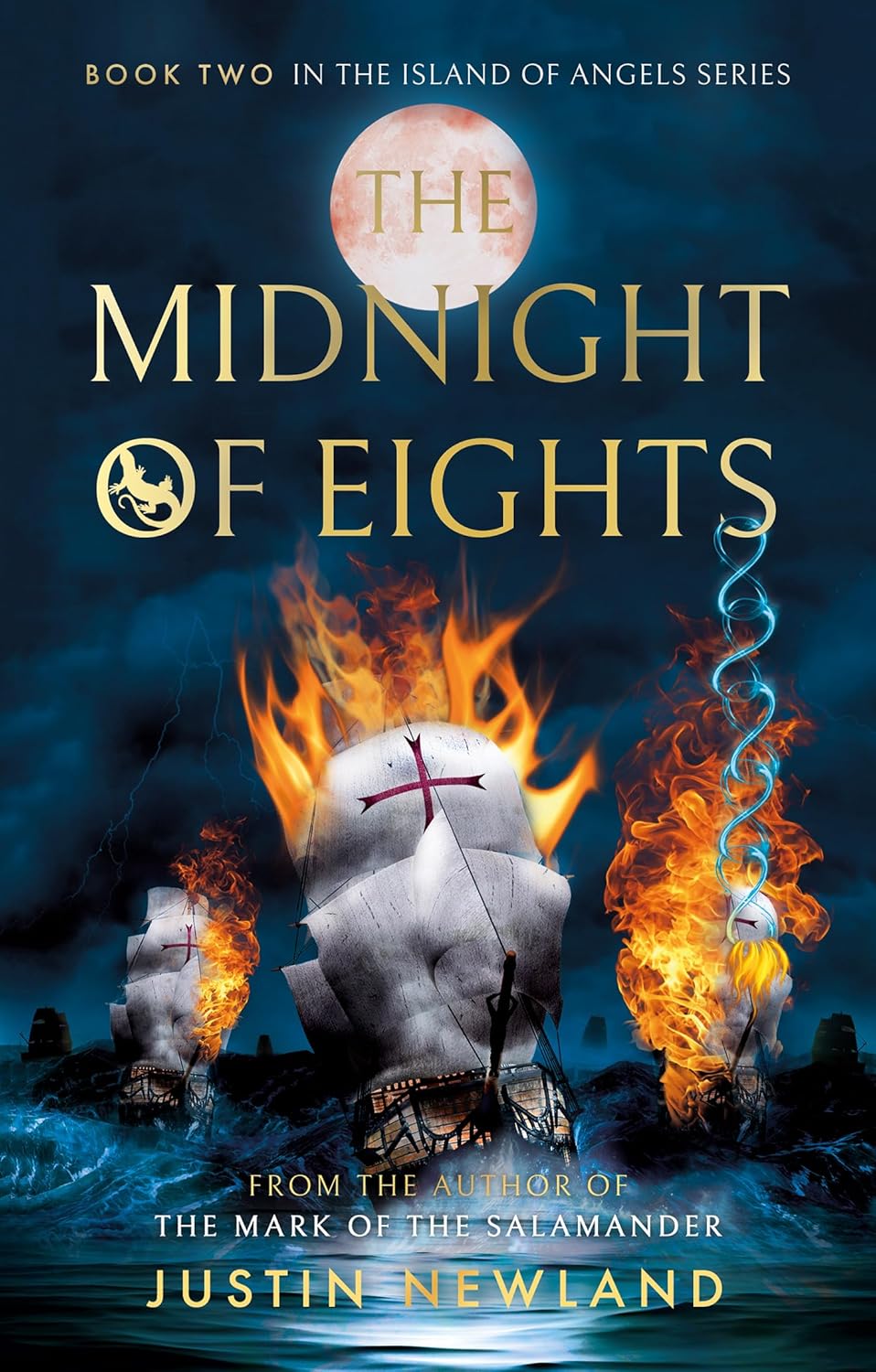
I’m delighted to welcome Justin Newland and his book, The Midnight of Eights, The Island of Angels series, to the blog with a guest post.
Guest Post
My novel, The Midnight of Eights, is set in Elizabethan times, and explores England’s coming of age in that period. This guest post muses on the state of religion in England in the Tudor era.
King Henry VIII ruled in England. He had not yet divorced himself from his first wife, Catherine of Aragon, nor from the Vatican in Rome. After Martin Luther posted his 95 theses or complaints about the Catholic Church, Henry wrote a tract condemning Luther. For his efforts, Pope Leo X in 1521 bestowed on him the title of FIDEI DEFENSOR or ‘Defender of the Faith’, which is abbreviated to F. D. It’s one of many ironies in history that, even today, the English monarch, who by law is forbidden to marry a Catholic, let alone become one and remain monarch, still bears the same title, inherited from Henry VIII. You can find it engraved on every coin of the realm. Look for yourself.
Soon after Henry VIII’s break with Rome in 1532, he ordered the Dissolution of the Monasteries. Between 1536 and 1539, the ruby heart was ripped out of England, because, despite their many failings at the time, the monasteries did succour to and aid the poor. The Dissolution helped break the Papacy’s strangle-hold on the English court – for better or for worse. And, with none of its officers, the monks and priests, to represent it, the Catholic religion was exiled from England’s shores. Henry’s other great reform at the time was the ‘Act of Treaty’ (1527-1536) which for the first time allowed ordinary people to own property.
The positive aspect of the break from Rome was that it brought a gradual deliverance from the dogmatism of the Catholic Church, releasing new and liberated ways of thinking. For example, this led to the beginnings of the great English scientific tradition (e.g. Francis Bacon, the father of empiricism, was born in 1561) and to the beginnings of secular theatre (all theatre up to this point had been religious in nature, the ‘Mysteries’ for example).
However, the break with Rome brought other difficulties to an English people increasingly edgy about religion. While Henry remained a Catholic (he had simply displaced the Pope as Head of the Church), his son Edward VI, on his accession in 1547, did change the country’s religion to Protestantism. Cranmer’s English prayer book was published in 1549 to uphold that fact. By 1552, it was illegal to hold any religious service other than a Protestant one. Then another switch – in 1553 Edward died and Mary succeeded. Mary was a staunch Catholic. To make matters worse, she went ahead and married the heir to the Spanish throne, Philip. Fired by the spirit of the Inquisition, she burned Cranmer and 270 Protestants at the stake. The English people never forgave her. She died childless in 1558. Elizabeth succeeded. England switched back to Protestantism.
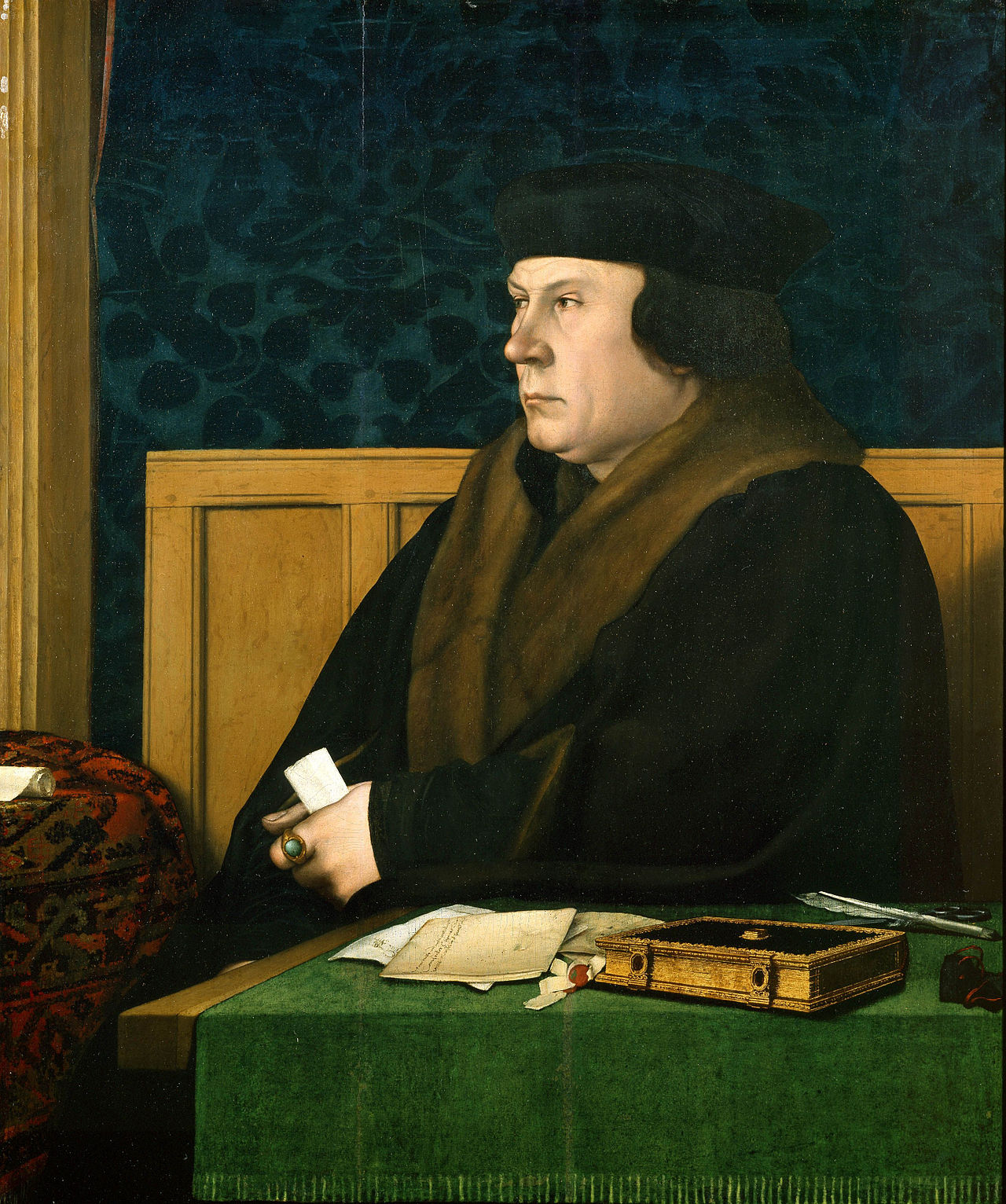
So in the space of 11 years, from 1547 to 1558, England’s religion had changed from Catholic to Protestant, not once – but twice. No wonder there was a paranoia in people around these times. Look at their portraits, say of Holbein’s portrait of Thomas Cromwell. They are austere, taut, puritan – full of fire and brimstone, and plenty of inner self-disciple. Both men and ladies wore odd-shaped hats that covered their ears. During this fraught eleven years, ordinary people could never be sure that their religious beliefs were not going to cost them or their friends and family their lives. There was little certainty.
Elizabeth ascended to the throne in 1558. What she managed to do, though, was to marry both contending parties of Catholicism and Protestantism, and in such a way that satisfied her subjects. She wisely refused to stand as Head of the newly formed Anglican Church, which she left vacant. Instead, she decided that it should be governed by a Synod of Bishops. She also created a High Church and a Low Church. The High adopted the Roman Catholic Rite, and to this day involves mass said in Latin and so on. The Low Church is Protestant. It involves simple worship in the vernacular with few sacraments.
Elizabeth was some lady, as we know. But consider this. Her father was a serial killer and had murdered her mother, Anne Boleyn. Yet she still did what she did over many years.
Gloriana, yes! That is some inner belief!
Justin Newland
Francis Bacon, courtesy of WikipediaThomas Cromwell, courtesy of Wikipedia
Here’s the Blurb
1580.
Nelan Michaels docks at Plymouth after sailing around the world aboard the Golden Hind. He seeks only to master his mystical powers – the mark of the salamander, that mysterious spirit of fire – and reunite with his beloved Eleanor.
After delivering a message to Francis Walsingham, he’s recruited into the service of the Queen’s spymaster, where his astral abilities help him to predict and thwart future plots against the realm.
But in 1588, the Spanish Armada threatens England’s shores.
So how could the fledgling navy of a small, misty isle on the edge of mainland Europe repulse the greatest fleet in the world?
Was the Queen right when she claimed it was divine intervention, saying, ‘He blew with His winds, and they were scattered!’?
Or was it an entirely different intervention – the extraordinary conjunction of coincidences that Nelan’s astral powers brought to bear on that fateful Midnight of Eights?
Justin Newland’s novels represent an innovative blend of genres from historical adventure to supernatural thriller and magical realism.
Undeterred by the award of a Maths Doctorate, he conceived his debut novel, The Genes of Isis (ISBN 9781789014860, Matador, 2018), an epic fantasy set under Ancient Egyptian skies.
His second book, The Old Dragon’s Head (ISBN 9781789015829, Matador, 2018), and is set in Ming Dynasty China in the shadows of the Great Wall.
Set during the Great Enlightenment, The Coronation (ISBN 9781838591885, Matador, 2019)speculates on the genesis of the most important event in the modern world – the Industrial Revolution.
The Abdication (ISBN 9781800463950, Matador, 2021) is a mystery thriller in which a young woman confronts her faith in a higher purpose and what it means to abdicate that faith.
The Mark of the Salamander (ISBN 9781915853271, Book Guild, 2023), is the first in a two-book series, The Island of Angels. Set in the Elizabethan era, it tells the epic tale of England’s coming of age.
The latest is The Midnight of Eights (ISBN 9781835740 330, Book Guild, 2024), the second in The Island of Angels series, which charts the uncanny coincidences of time and tide that culminated in the repulse of the Spanish Armada.
His work in progress is The Spirit of the Times which explores the events of the 14th Century featuring an unlikely cast of the Silk Road, Genghis Khan, the Black Plague, and a nursery rhyme that begins ‘Ring a-ring a-roses’.
Author, speaker and broadcaster, Justin gives talks to historical associations and libraries, appears on LitFest panels, and enjoys giving radio interviews. He lives with his partner in plain sight of the Mendip Hills in Somerset, England.
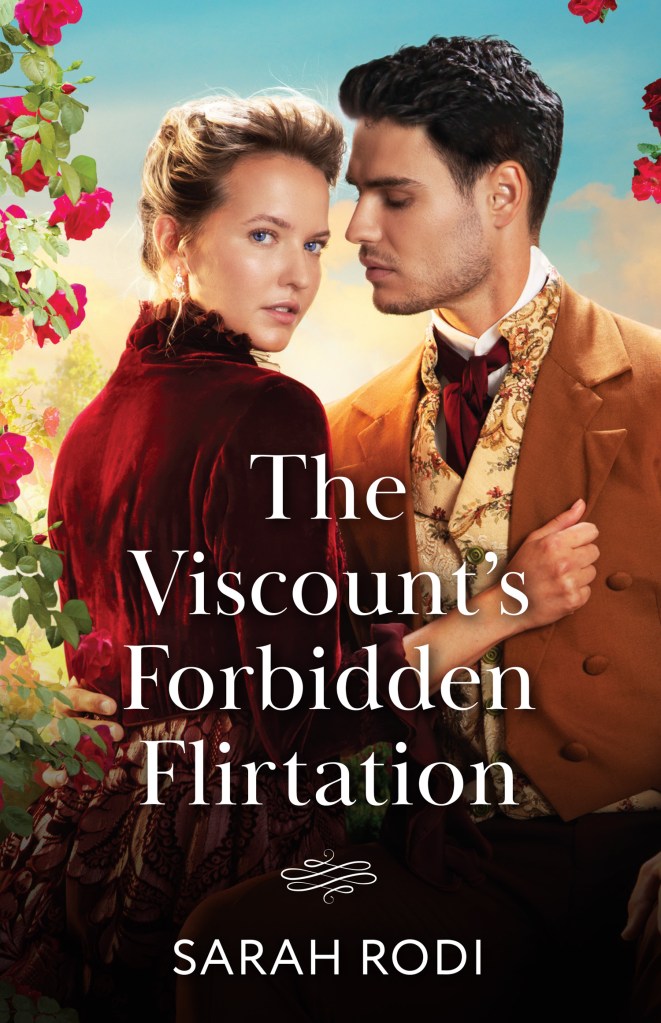
Lieutenant Colonel Ezra Hart finds himself in urgent need of a wife—inheriting the viscountcy relies on it! But while he’s dutifully spinning the Season’s jewels around Society’s ballrooms he finds himself desiring the one woman he shouldn’t covet…
French émigrée Seraphine Mounier is as beguiling as she is vivacious, but Ezra knows she has no interest in the marriage mart. What’s worse, she represents the very enemy he fought at Waterloo. As an undeniable connection sparks, resisting Seraphine seems one battle Ezra’s destined to lose!
Sarah Rodi has always been a hopeless romantic. She grew up watching old, romantic movies recommended by her grandad, or devouring love stories from the local library. Sarah lives in the village of Cookham in Berkshire, where she enjoys walking along the River Thames with her husband, her two daughters and their dog. She has been a magazine journalist for over 20 years, but it has been her lifelong dream to write romance for Mills & Boon. Sarah believes everyone deserves to find their happy ever after. You can contact her via @sarahrodiedits or sarahrodiedits@gmail.com or at sarahrodi.com