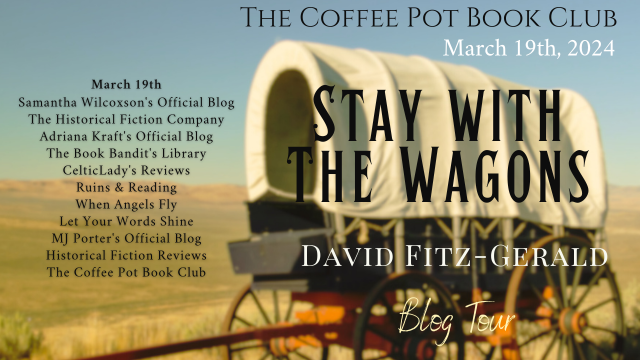
I’m delighted to welcome Tim Walker to the blog to share two extracts from his new short story collection, London Tales. #ShortStories #HistoricalFiction #London #BlogTour #TheCoffeePotBookClub

I’m delighted to welcome Tim Walker to the blog to share two extracts from his new short story collection, London Tales, which feature the River Thames.

Londinium Falling

This story is set in the year 60 CE, at the time of the Boudican Revolt, when the settlement was barely 15 years old. Historians speculate that a bridge across the Thames was constructed around the year 50 CE. This wooden structure was situated next to the modern London Bridge, where solid rock on both banks made it possible for Roman bridge builders to lay the foundations. It is thought that there was a drawbridge in the central span to allow tall-masted galleys to row upstream of the bridge to moor in a natural pool that became the port. It is thought that a settlement on the south bank that would in time become Southwark, sprang up once the bridge was complete.

The Romans adopted the name of the tribal river god, Father Tamesis, as the name for the river. Over time, ‘Tamesis’ became ‘Thames’. Father Tamesis was a feared, spiteful entity who dwelt in the depths of the river, feeding on the bodies of the drowned. Would the ancient Britons have made human sacrifice to appease this feared god?

In this extract, Roman soldiers Marcellus and Septimus join a flotilla of small boats fleeing Boudica’s murderous tribal warriors who killed everyone they found, cutting off many heads that were tossed into the Walbrook (to be discovered in recent times by archaeologists), and burning the settlement to the ground…

The battle was lost and the galley carrying the procurator, centurion and several hundred men had cast off. It was still upstream of the bridge, heading for the wider centre span where a drawbridge was being opened for the high central mast to pass through. Marcellus and his comrades watched the drama unfold as a desperate defence of the raised bridge was put up by a band of plucky legionaries as screaming warriors poured onto the shaking structure. The warriors overpowered and killed the few remaining guards and some terrified civilians and cut away the ropes that held up their leaf of the raised bridge, sending it crashing down, but too late to prevent the galley passing through. There was little they could do apart from shout abuse and hurl what few weapons and objects came to hand. The Romans shielded themselves and shouted abuse back, passing safely into the widening river estuary.

Septimus pointed to a boat ahead of them as the general melee started to fade behind them. “That’s your friend, Lupus, and the brute, Brutus.” The six oarsmen rowed them alongside the smaller boat and Septimus shouted a friendly, “Hail fellow legionaries of the Ninth!” The other boat returned the welcome and threw a rope so the two boats could join…

They followed in the wake of the galley, going with the brown-grey flow of the impassive river, occasionally looking back to see Londinium burning, all red and orange flames, grey smoke spiralling to the skies. It was a funeral pyre for their fallen comrades, a show of utter contempt for the Roman invaders, exposing their weaknesses. It was an indication of the worthlessness of the settlement and all things Roman to the bold Britons who would soon wipe off their paint and melt away into the dark, foreboding forests or salty marshes.

“Are their gods stronger than ours?” Marcellus groaned at the sight of a legionary slipping under the brown, choppy flow as two tribal warriors up to their knees in muddy slime pointed their spears and shouted curses.

“Their flesh-eating god, Tamesis, will grow fat feeding on our brothers,” Septimus sourly replied. “But our generals will return with a greater force to subdue this stubborn island for the lumps of lead and silver in their rocks.”

Marcellus grunted and pulled on an oar, joining a flotilla of boats that followed in the wake of the galley. “Then, I hope they rebuild their towns with high stone walls, as these painted devils have had the taste of victory.”

Burning Shadows

Fast forward to 1666 and the Great Fire of London. In the story Burning Shadows, fugitive and notorious regicide, William Say, enlists the help of a friend to escape the sheriff’s men…

Half an hour later, they were on the raised deck of an elongated skiff with six oarsmen on each side. A family begged for deliverance, but Rook shook his head and ordered his men to cast off.

“I am relieved to be on the river, my friend, as the sheriff’s men nearly had me at the meeting house,” Say explained whilst scanning the shore for sight of his pursuers. “I have also learned that you can find friends in the most unexpected of places.”

“Then it’s God’s will that you are saved, William. To hunt you still for your part in Cromwell’s obsession is unjust, in my view. The Indemnity and Oblivion Act was intended to bring reconciliation and put the past to bed, but the new king uses it only to pursue his vengeance. I warrant we’ll be safe at Richmond.”

“Aye. My thanks again, Sebastian. My old bones cannot take much more of this. But we must spend our time in prayer to the Lord of Hosts to ready our souls for a sterner judgement.” The sight before them was one never to be forgotten, for however many days that remained of the world of Men. The river was a bustle of boats, mainly ferries taking distressed families from the north bank to the south, whilst the sight of St Paul’s burning brightly beneath a sombre, darkened sky, framed a scene of utter devastation. Warehouses along the river burnt fiercely, as did the first three houses on London Bridge in the distance. A warehouse exploded, sending white and blue sparks mixed with yellow high over the river in an unnatural rage, causing a wherry to capsize and the two friends to shudder.

“This has the whiff of God’s judgement, alright,” Rook muttered, gripping the rail as the boat rocked in a gentle swell.

William’s feet were planted wide apart, as he had learned from his Channel crossings. He linked his plump fingers in the act of prayer. “May God our Father watch over my daughter and her family, until such a time as they meet our maker on Judgement Day, whether this be it, or it is yet to be.”

The birds had fled the skies and the only sound was that of oars splashing in the opaque, brown flow of the river as the skiff moved upstream. They rounded a bend so that all that could be seen on the horizon was a column of black smoke rising to the heavens.

“There is meaning in this, but what is the lesson?” Rook asked.

“Either a divine rebuke, the wicked tongue of Satan, or the opening act of Doomsday?” William’s thoughts turned to little Ruth and a tear welled.

“An eye for an eye, ‘til we’re all blinded,” he muttered, wiping his face with a kerchief.

“What’s that, William?” Rook enquired.

“If I gave myself up to the king’s justice, would his revenge be satisfied, and my family be saved from persecution?”

“The king would have your head on a spike, but his thirst for revenge will not be slaked until the last of you is dead,” Rook replied. “This is a man who had Cromwell’s body dug up to display his rotting head on a pole. He would soon find another cause for his vengeful spirit to feast on. Do not doubt the importance of removing his father, the tyrant Charles Stuart, William, and ending the age of absolute monarchy. We shall bide our time, whatever time there is, and if the world doesn’t end, then we shall be here to curb the excesses of this arrogant, restored king. Parliament will rise again.”

William nodded at his friend’s soothing words, but his eyes remained fixed on the foul, black spew issuing from Satan’s gaping maw. All was not well in the world of Men; on that, all could agree.

Here’s the blurb

This collection of eleven tales offers dramatic pinpricks in the rich tapestry of London’s timeline, a city with two thousand years of history. They are glimpses of imagined lives at key moments, starting with a prologue in verse from the point of view of a native Briton tribeswoman absorbing the shock of Roman invasion. The first story is a tense historical adventure set in Roman Londinium in 60 CE from the perspective of terrified legionaries and townsfolk facing the vengeful Iceni queen, Boudica, whose army burnt the fledgling city to the ground.

Further historical dramas take place in 1381 during the Peasant’s Revolt, the Great Fire of London in 1666 and the last ice fair on the frozen Thames in 1814. These are followed by a romance set during the Blitz in 1941, then the swinging Sixties and wide-flared seventies are remembered in the life story of fictional policeman, Brian Smith. Moving on, an East End family get a fright from copycat killings that are a throwback to the 1888 Jack the Ripper murders.

There’s a series of contemporary stories that reference recent events, including the London terrorist bombings of 2005, a literary pub crawl and a daring prison break, building to the imagined death throes of London in a chilling, dystopian vision. These stories are loosely inspired by the author’s personal experiences and reflections on his time living and working in London in the 1980’s and 90’s. Adaptability, resilience, conformity and resolve are recurring themes.

London Tales evokes the city’s rich history and the qualities that were needed by Londoners at various times to survive and prosper – from the base and brutal, devious and inspired, to the refined and civilized.

Available from Amazon in e-book, paperback, Kindle Unlimited and audiobook formats, London Tales is a companion volume to Thames Valley Tales.

Book cover designed by Sean McClean, shows elements from stories.

Buy Link: 

This title is available to read on #KindleUnlimited.

http://mybook.to/LondonTales

Meet the author

Tim Walker is an independent author living near Windsor in the UK. Although born in Hong Kong in the sixties, he grew up in Liverpool where he began his working life as a trainee reporter on a local newspaper. After attaining a degree in Communication Studies he moved to London where he worked in the newspaper publishing industry for ten years before relocating to Zambia where, following a period of voluntary work with VSO, he set up his own marketing and publishing business. He returned to the UK in 2009.

His creative writing journey began in earnest in 2013, as a therapeutic activity whilst recovering from cancer treatment. He began writing an historical fiction series, A Light in the Dark Ages, in 2014, inspired by a visit to the part-excavated site of former Roman town Calleva Atrebatum at Silchester in Hampshire. The series connects the end of Roman Britain to elements of the Arthurian legend and is inspired by historical source material, presenting an imagined historical fiction of Britain in the fifth and early sixth centuries.

The last book in the series, Arthur, Rex Brittonum, was published in June 2020. This is a re-imagining of the story of King Arthur and follows on from 2019’s Arthur Dux Bellorum. Both titles are Coffee Pot Book Club recommended reads. The series starts with Abandoned (second edition, 2018); followed by Ambrosius: Last of the Romans (2017); and book three, Uther’s Destiny (2018). Series book covers are designed by Canadian graphic artist, Cathy Walker.

Tim has also written two books of short stories, Thames Valley Tales (second edition 2023), London Tales (2023); a book of verse, Perverse (2020); a dystopian thriller, Devil Gate Dawn (2016); and three children’s books, co-authored with his daughter, Cathy – The Adventures of Charly Holmes (2017), Charly & the Superheroes (2018) and Charly in Space (2020).

Tim took early retirement on medical grounds and now divides his time between writing and helping out at a Berkshire-based charity, Men’s Matters.

Find out more about the author at his website: www.timwalker1666.wixsite.com/website

Connect with the author

Goodreads Author Page:    Amazon Author Page

Facebook Pages:         

https://facebook.com/LondonPostcards Twitter:    Instagram:

Follow the London Tales blog tour with The Coffee Pot Book Club

I’m welcoming The Middle Generation by M.B.Zucker to the blog, with an excerpt from the book #HistoricalFiction #MonroeDoctrine #JohnQuincyAdams #BlogTour #CoffeePotBookClub

Excerpt

“The Emperor authorized me to make the following proposal to your government,” the Baron de Tuyll, Russia’s minister, said, “though I request you inform me in advance of declination. In that case, it shall remain informal.” A dark figure, wearing black with a red collar and gold tassels on his shoulders, the medals won fighting Napoleon’s Grande Armée pinned to his uniform. His accent was a baritone deeper than any I’d ever heard, the croak of a man broken from lifelong service to his sire. Other voices modified via emotion—happiness, tenderness, hatred, vexation, and so on. 

Not the Baron’s. His was the voice of a man who hated the world and everyone in it, including his master. 

“What proposal? I asked. We spoke in English. 

“He wants the United States to ratify the Holy Alliance Treaty.” 

A moment. “He’s sincere?” 

“Yes. The Alliance is a league of peace. The United States would strengthen their ties to its members by joining.” 

“But the treaty is a collection of sovereigns’ autographs. It excludes republics.” 

“The Swiss cantons were invited and acceded.” 

“I thought the Alliance was hostile to the United States.” 

“The Alliance is hostile to anarchy.” 

“We’re not responsible for the French Revolution. The President and I interpret the Alliance as promoting the divine right of kings to rule over humanity. Our constitution is incompatible with such a view.” 

“Will you communicate his proposal to the President?” 

“Yes. Though two-thirds of the Senate must vote for our joining.” 

“I see,” he said. “Do you believe they will?” 

“No.”

“That is unfortunate. The Emperor wishes for your country and for Britain to join.” 

“He invited Britain?” I asked. He nodded. “The same problem, King George can’t sign it without Parliament. I don’t grasp why the Alliance invites our countries. Britain has a monarchy but elects her legislature. The Alliance recently crushed republican efforts in Naples and the Piedmont.  Why would we join such an entity?” 

“The Emperor is optimistic that Britain will join. It will be to the world’s benefit if London and Washington adhere to the Alliance’s influence. The treaty contains no specific points but sets an ideal for global peace.” 

“A peace built on despotism.” 

“You’ll communicate his proposal to the President?” 

“Yes. Is that all?” 

“No. We must discuss the South American war.” 

“Why? Last year’s armistice is stable and peace talks are ongoing. Royalist rebels harass the republics like gnats do elephants, but I expect the war to end by 1822.” 

“That cannot happen under current conditions. The continent’s revolution insults Europe’s monarchs and threatens her security. The guilty continent must return, through peaceful means or through arms, into the Alliance’s protection.” 

Lines so wide that Noah’s animals could walk through them with not just their mate but their whole menagerie. “The Alliance wants to conquer South America?” 

“The Alliance will restore Spain’s dominion. South America will receive greater autonomy than it did previously and will have open trade with all nations.” A pause. “American independence caused the French Revolution. South American independence cannot bring a similar catastrophe to Europe.” 

“So your invitation to join the Alliance is meant to nullify objection to aggression toward this hemisphere?” 

“To cooperate for the good of the world. The Emperor is anxious that a general peace be built. Embers burn in Europe that must not flame again.” 

“Embers of men and women who yearn for freedom. His route toward peace involves destroying an entire hemisphere. You must know we’ll never agree to this and neither will Britain. She’s invested enormous resources into supporting the South American rebels.” 

“We have ways of persuading her.” 

“Why alert us to your intent?” 

“To reduce your government’s anxiety so it will not attempt to stop what it cannot.” 

“What cannot be stopped is the inevitable doom of Europe’s masters,” I said. “Its people have been taught to inquire why certain men possess enjoyment at their expense. Civil wars shall rage in Europe until the total ruin of feudal constitutions has been achieved.” 

“The Emperor bears no hostility toward the United States or their institutions. You know this because you worked with him as a minister. I’m saddened to learn you do not reciprocate his respect. He views South American independence as a coming apocalypse that threatens man’s connection to Christ through divine rulers. Your country will lose much and gain nothing by resisting what is necessary for a lasting peace. I pray your government takes his proposal seriously.” 

“I’ll confer what we’ve discussed to the President.” 

“Thank you.” 

I escorted him from my office and Maury led him out of the building. Then I returned to my desk and analyzed his words. I’d feared the Holy Alliance’s intentions for six years and finally its intervention was upon us. America had no choice but to resist and we had no hope of defeating Europe’s combined might. 

Here’s the blurb

The classical era of American history began with the Revolution and ended with emancipation. Between these bookends lies the absorbing yet overshadowed epic of a new nation spearheading liberty’s cause in a world skeptical of freedom arriving at all, much less in slaver’s garb. M. B. Zucker takes readers back to that adolescent country in the care of an enigmatic guide, John Quincy Adams, heir to one president by blood and another, Washington, by ideology. Adams is the missing link between the founders and Abraham Lincoln, and is nigh unanimously regarded as America’s foremost Secretary of State. Through Adams’ eyes, readers will experience one of history’s greatest and most forgotten crises: his showdown with Europe over South American independence, the conflict which prefigured the Monroe Doctrine. 

With his signature dialogue and his close study of Adams’ 51 volume diary, M. B. Zucker’s The Middle Generation is a political thriller and character piece that surpasses his achievement in The Eisenhower Chronicles and ascends to the cinematic heights of the historical epics of David Lean and Steven Spielberg. It is an unforgettable portrait and a leap forward for one of our rising historical fiction novelists. 

Buy Links: 

Universal Link:

Amazon USAmazon UKAmazon CanAmazon Aus

Kobo: 

Barnes & Noble:

The title will be available in several Barnes and Noble stores in the DC / Northern Virginia area.

Meet the author


M. B. Zucker has been interested in storytelling for as long as he can remember. He devoted himself to historical fiction at fifteen and earned his B.A. at Occidental College and his J.D. at Case Western Reserve University School of Law. He lives in Virginia with his family. He is the author of three other novels. Among his honors is the Best Fictional Biography Award at the 2023 BookFest.

Connect with the author

WebsiteTwitter  Facebook
LinkedIn:   InstagramAmazon Author Page

Follow The Middle Generation blog tour with The Coffee Pot Book Club

Who were the religious daughters of Edward the Elder?

The King’s Daughters is available with Kindle Unlimited, and is a novel of the many daughters of Edward the Elder who married into the ruling families in East and West Frankia, or who became holy women, or lived within a nunnery.

So, who were these daughters?

Edward the Elder was married three times, to an unknown woman- who was the mother of the future King Athelstan, to Lady Ælfflæd – who was the mother of the future, and short-lived King Ælfweard, and finally to Lady Eadgifu – who was the mother of the future kings Edmund and Eadred. But, while each woman was mother to a future kings, this story focuses on the daughters. And there were a lot of them, and their lives were either spent in making prestigious marriages, or as veiled women – whether professed religious, or merely lay women living in a nunnery or an isolated estate.

The story of The King’s Daughters is very much about the daughters of Edward and his second wife, and the marriages they made in Continental Europe, into the powerful families in East and West Frankia. And I’ve written a lengthy post about them which you can find here. But there were other daughters/sisters, and while their lives might be almost lost to us, it is interesting to discover what little is known of them.


Edith/Eadgyth/Ecgwynn/unnamed daughter of Edward the Elder, and his unnamed first wife (Ecgwynn?) c.890s–937?

m. Sihtric, king of York in 925, repudiated by 927 when Sihtric died

Edith[i] is believed to be the biological sister of the future King Athelstan, and, therefore, the daughter of King Edward and his first wife, possibly named Ecgwynn. Edith is unnamed in the Anglo-Saxon Chronicle, but her marriage is mentioned in both the D and the C texts.

The C text records that in 924, ‘Athelstan was chosen as king by the Mercians, and consecrated at Kingston, and he gave his sister.’[ii] And here the text, rather enigmatically, comes to a halt until 954.

The D text, is rather more helpful, under 925 stating that, ‘Here Athelstan and Sihtric, king of Northumbria, assembled at Tamworth on 30th January, and Athelstan gave him his sister.’[iii]

This, therefore, refers to the union between Athelstan’s sister and Sihtric, a Norse king of Jorvik or York. The union is intriguing. It does seem to be the only occasion that a marriage union was enacted between the Viking raiders and the Wessex royal family.

There is the suggestion that Edith may have become a nun on her return to Mercia. She is associated with the nunnery at Polesworth by traditions recorded at Bury in the twelfth century. Following the death of her husband, she is said to have returned to Mercia and ‘founded a nunnery at Polesworth, near the Mercian royal centre at Tamworth. There she remained a virgin, practising fastings and vigils, offering prayers and alms to the end of her life, and dying on July 15.’[iv]

However, Thacker goes on to state that, ‘it must be admitted that it [the cult] was not a very successful one. Her feast day (15 July) occurs in only three relatively late (i.e. post-Conquest) calendars, and it is impossible to identify her in any of the surviving Anglo-Saxon litanies.’[v]


[i] Edith may be Anonymous (594) or Eadgyth (12) on PASE, in which case her death was c.937

[ii] Swanton, M. ed. and trans. The Anglo-Saxon Chronicles, (Orion Publishing Group, 2000), p.105

[iii] Ibid., p.105

[iv] ThackerA‘Dynastic Monasteries and Family Cults’in Edward the Elder, 899–924, ed. Higham & Hill (Routledge, 2001), p.257

[v] ThackerA‘Dynastic Monasteries and Family Cults’in Edward the Elder, 899–924, ed. Higham & Hill (Routledge, 2001), p.258

Æthelhild, daughter of Edward the Elder, and his second wife, Lady Ælfflæd

The birth order of Edward the Elder’s children is unknown. Therefore, we do not know why Æthelhild[i] became a lay sister at Wilton Abbey. Could it be because it was her choice, her father’s, or mother’s, or that of her half-brother, Athelstan?

Wilton Abbey was strongly associated with the Wessex royal family. Her sister Eadflæd became a nun, and the two sisters were joined, not only by their mother but also by their much younger half-sister, Eadburh. Nothing further is known of Æthelhild. She’s not mentioned in the Anglo-Saxon Chronicle, or in any of the surviving charter evidence. We don’t know her date of birth, or her date of death. 

William of Malmesbury’s Gesta Regum Anglorum tells us more.

He also had by the same wife six daughters; Eadflæd, Eadgifu, Æthelhild, Eadhild, Eadgyth, Ælfgifu. The first and third took a vow of virginity and spurned the pleasures of earthly marriage, Eadflæd took the veil and Æthelhild in lay attire; both lie at Wilton, buried next to their mother. Eadburh became a nun and lies at Winchester; Eadgifu was a famous beauty, and was given in marriage by her brother Æthelstan to Louis prince of Aquitaine.[i]


[i] Mynors, R.A.B. ed. and trans. completed by Thomson, R.M. and Winterbottom, M. Gesta Regvm AnglorvmThe History of the English Kings, William of Malmesbury, (Clarendon Press, 1998) p.199–201

Eadflæd, daughter of Edward the Elder, and his second wife, Lady Ælfflæd

Eadflæd[iii] became a nun at Wilton Abbey. And she is named in a charter issued by Athelstan (S438, surviving in one manuscript) granting land to St Mary’s, Wilton dated 937, the year of the battle of Brunanburh. Provided the dating is secure, and the charter is authentic, this points to Eadflæd still being alive at this date. The absence of her sister’s name, Æthelhild, may mean she had predeceased her sister. Note should be made here of the distinction between the two types of religious women. It is believed that there were lay sisters and also those who wore the veil. Both could have been attached to a nunnery, although, aside from the Nunnaminster, no religious establishment is specifically termed as a monastery for women.

Eadburh, c.919–952 daughter of Edward the Elder and his third wife, Eadgifu

William of Malmesbury in his Gesta Pontificum Anglorum tells the story of Edward the Elder’s youngest daughter, Eadburh,[v] being consigned to the Nunnaminster in infancy as she showed such signs of devotion:[vi]

There had been a convent on this spot before, in which Eadburg [Eadburh], daughter of king Edward the Elder, had lived and died, but by then it was almost in ruins. When she was barely three, Eadburg had given a remarkable proof of her future holiness. Her father had wanted to find out whether his little girl would turn towards God or the world. He set out in the dining room the adornments of the different ways of life, on this side a chalice and the Gospels, on the other bangles and necklaces. The little girl was brought in by the nurse and sat on her father’s knees. He told her to choose which she wanted. With a fierce look she spat out the things of the world, and immediately crawling on hands and knees towards the Gospels and chalice adored them in girlish innocence … Her father honoured his offspring with more restrained kisses and said, ‘Go where heaven calls you, follow the bridegroom you have chosen and a blessing be upon your going.’ … Countless miracles during her life and after her death bear witness to the devotion of her heart and the integrity of her body.[vii]

William later adds that ‘Some of the bones of Eadburg the happy are buried’,[viii] at Pershore.

Aside from the later William of Malmesbury, Eadburh is the recipient to land in one charter, that of S446, dated to 939 and surviving in one manuscript. ‘King Athelstan to Eadburh, his sister; grant of 17 hides (mansae) at Droxford, Hants.’[ix] Perhaps, Athelstan was ensuring his sister’s future with this charter. Maybe he knew he was dying. Perhaps this was a means of guaranteeing the survival of the religious establishment in which she lived.


[i] I can find no reference to Æthelhild on PASE

[ii] Mynors, R.A.B. ed. and trans. completed by Thomson, R.M. and Winterbottom, M. Gesta Regvm AnglorvmThe History of the English Kings, William of Malmesbury, (Clarendon Press, 1998), pp.199–201

[iii] PASE Eadflæd (4) 

[iv] Mynors, R.A.B. ed. and trans. completed by Thomson, R.M. and Winterbottom, M. Gesta Regvm AnglorvmThe History of the English Kings, William of Malmesbury, (Clarendon Press, 1998), pp.199–201

[v] Believed to be Eadburgh (8) on PASE

[vi] Foot, S. Athelstan (Yale University Press, 2011), p.45 Priest, D. trans. Gesta Pontificum Anglorum, The Deeds of the Bishops of England, (The Boydell Press, 2002)

[vii] Priest, D. trans. Gesta Pontificum Anglorum, The Deeds of the Bishops of England, (The Boydell Press, 2002), pp115–16

[viii] Ibid., p.202

[ix] Sawyer, P.H. (ed.), Anglo-Saxon charters: An annotated list and bibliography, rev. Kelly, S.E., Rushforth, R., (2022). http://www.esawyer.org.uk/ S446


https://amzn.to/4gyxeCn

You can read about the many daughters of Edward the Elder in The King’s Daughter.

My first non-fiction title, The Royal Women Who Made England, is also now available in ebook and hardback and features these women and what we know about them.

Posts

I’m delighted to share my review for To Kill A Consul by Robert M Kidd #blogtour #histfic #Roman #Hannibal

Here’s the blurb:

217 BC. The Gauls are restless. Where is the wealth, plunder and lands they were promised? Hannibal’s army has become little more than a burden to be fed and quartered … as welcome as a plague of locusts. Assassination plots abound as Hannibal is driven to take desperate measures to evade the assassin’s knife.

If Hannibal is to appease the Gauls he must act fast. The invasion of Italia must not be delayed – his very life depends on it – but as that winter of winters fades into memory he is faced with a stark choice. Should he strike east towards the plains of Umbria and face consul Gnaeus Servilius Geminus’ legions holed up inside the unassailable walls of Ariminum? Or strike westwards into the plunder-rich lands of Etruria?

Consul Gaius Flaminius’ legions guard the western approaches. If any man can fire the bellies of Gauls with loathing it’s Flaminius. But there is one other whose blood runs cold at the mention of the name. Flaminius ordered the brutal murder of Sphax’s parents and Sphax has sworn a sacred oath to seek revenge. Can Hannibal trust the leader of his Numidian cavalry, or will this blood feud cloud his judgement? Sooner or later Sphax will have to face his inner demons.  

Purchase Links

UK US

My Review

This is my second adventure with Robert M Kidd and Sphax. As with book 3, this outing is action-packed, from wading through boggy ground to fighting Roman legionaries. The narrative takes us through Etruria alongside Sphax and his loyal warriors, and there is a great deal of death as Hannibal takes a huge risk with his army, one that Sphax is not at all happy with. Forced to encourage from the rear, there is very little that Sphax does not see. His ingenuity saves his life and those of his warriors.

But this book isn’t just about this crazy march through swamp lands. No, this is the story of the lead-up to a mighty battle between the Romans and those under Hannibal’s command, which sees Sphax not only riding through much of Etruria but also forced on board a ship as well. And all the time, burbling away in the background, are the events that have brought him to this moment in time where he’s desperate to avenge the deaths of his parents.

I really like Sphax. I enjoy the fact that he’s an intelligent character, but not one who knows everything. He’s often distant from the main fighting force, although he’s trusted by his uncle to undertake difficult tasks. The depiction of Hannibal, enigmatic and stubborn, but also wise and clever means that Sphax can never know everything his uncle is thinking. Perhaps it’s better that he doesn’t.

The final battle scene is well evoked. It’s a blood bath, but the reader doesn’t see all of it as it takes place beside a mist-shrouded lake.

Not knowing this period at all well, I couldn’t be sure of what the ending would bring, other than in a very vague way. Will Sphax triumph? Will he gain his vengeance? Will he live to fight another battle? The map was a great help.

A thrilling read, and trek, through a time and a place that I don’t know at all well, but which I found really well depicted and thoroughly enjoyable. (On a side note, thank you for explaining what ‘running with the wind’ means on board the ship).

Check out my review for Book 3 in the series here.

Meet the author

I’ve always read widely and been fascinated by ancient cultures – especially those of Greece, Phoenicia and Carthage. But my reason for writing the first novel in The Histories of Sphax series may sound strange to readers: I really wanted to set the record straight, to write about Hannibal’s war with Rome from Carthage’s perspective.

When Cato the Censor demanded that ‘Carthage must be destroyed,’ Rome did just that. In 146 BC, after a three year siege, Carthage was raised to the ground, its surviving citizens sold into slavery and the fields where this once magnificent city had stood, ploughed by oxen. Carthage was erased from history.

That’s why I’m a novelist on a mission! I want to set the historical record straight. Our entire history of Hannibal’s wars with Rome is nothing short of propaganda, written by Greeks and Romans for their Roman clients. It intrigues me that Hannibal took two Greek scholars and historians with him on campaign, yet their histories of Rome’s deadliest war have never seen the light of day. 

My hero, Sphax the Numidian, tells a different story!

When I’m not waging war with my pen, I like to indulge my passion for travel and hill walking, and like my hero, I too love horses. I live in Pembrokeshire, West Wales.

https://robertmkidd.com/

https://twitter.com/RobertMKidd1

https://www.facebook.com/profile.php?id=100064169594911

Giveaway to Win the next book in The Histories of Sphax series to be dedicated to you (Open INT)

The next book in The Histories of Sphax series will be dedicated to the winner, and will be acknowledged on the inside page book title. 

*Terms and Conditions –Worldwide entries welcome.  Please enter using the Rafflecopter box below.  The winner will be selected at random via Rafflecopter from all valid entries and will be notified by Twitter and/or email. If no response is received within 7 days then Rachel’s Random Resources reserves the right to select an alternative winner. Open to all entrants aged 18 or over.  Any personal data given as part of the competition entry is used for this purpose only and will not be shared with third parties, with the exception of the winners’ information. This will passed to the giveaway organiser and used only for fulfilment of the prize, after which time Rachel’s Random Resources will delete the data.  I am not responsible for despatch or delivery of the prize.

http://www.rafflecopter.com/rafl/display/33c69494576/?

I’m really excited to share a fabulous post from Paul Bennett featuring his historical fiction series, The Mallory Saga, set in the eighteenth century

Paul Bennett is a fellow indie-author and a super-supportive one at that. I often find we’re reading the same books on Goodreads, and I love his reviews, so I’m delighted to feature him on the blog to tell us all about his series, The Mallory Saga, which has been steadily growing, and now stands at 7 books.

The inspiration to write was, in the beginning, merely to see if I could do it.  I had written short pieces over the years but to tackle a full-blown novel was a daunting prospect.  Once the seed was planted I came up with a rough idea of telling the story of three siblings living somewhere in colonial America.  Choosing that general locale was a natural fit for me as I’ve been a lifelong student of American history and I felt that if I was going to write a historical fiction novel, it might be prudent to choose a subject I knew a little about. I picked The French and Indian War as the starting point for what was now becoming a possible series of books that would follow the Mallory clan through the years.  That war intrigued me and I saw a chance to tell the story through the eyes of the Mallory family.  It also provided me with the opportunity to tell the plight of the Native Americans caught up in this conflict.  The French and Indian War paved the way for the colonies to push further west into the Ohio River area.  It also set the stage for the events of the 1770’s.  Britain incurred a huge debt winning that war and looked to the colonies for reimbursement in the form of new taxes and tariffs.  Well, we all know how those ungrateful colonists responded. 

As to the name Mallory – I have a photo hanging on my living room wall of my great-grandfather, Harry Mallory.  I got to know him when I was a young boy and was always glad when we visited him.  He lived a good portion of his life in western Pennsylvania which is where much of Clash of Empires takes place.  So, as a gesture to my forebears, Mallory became the name of the family. 

Clash of Empires

In 1756, Britain and France are on a collision course for control of the North American continent that will turn into what can be described as the 1st world war, known as The Seven Year’s War in Europe and The French and Indian War in the colonies.  The Mallory family uproots from eastern PA moves to the western frontier and finds themselves in the middle of the war. It is a tale of the three Mallory siblings, Daniel. Liza and Liam and their involvement in the conflict; the emotional trauma of lost loved ones, the bravery they exhibit in battle situations.  The story focuses on historical events, such as, the two expeditions to seize Fort Duquesne from the French and the fighting around Forts Carillon and William Henry and includes the historical characters George Washington, Generals Braddock, Forbes and Amherst.  The book also includes the event known as Pontiac’s Rebellion in which the protagonists play important roles.  Clash of Empires is an exciting look at the precursor to the events of July 1776; events that will be chronicled in the second book, Paths to Freedom, as I follow the exploits and fate of the Mallory clan. Clash is also available as an audiobook.

Paths to Freedom

In Paths to Freedom the children of the three Mallory siblings begin to make their presence known, especially Thomas, the oldest child of Liza and Henry Clarke (see right there, already another family line to follow), but Jack and Caleb, the twin sons of Liam and Rebecca along with Bowie, the son of Daniel and Deborah are beginning to get involved as well. The French and Indian War, the historical setting for book 1, was over, and the Mallory/Clarke clan is looking forward to settling and expanding their trading post village, Mallory Town, now that the frontier is at peace. And for a time they had peace, but the increasing discontent in the East, not so much toward the increasing rise in taxes, but the fact that Parliament was making these decisions without any input from the colonies, slowly made its way west to the frontier. Once again the Mallory/Clarke clan would be embroiled in another conflict.

Another facet of my saga is that the main characters are not always together in the same place or even the same event. In Paths my characters are spread out; some have gone East, some have gone West, some are sticking close to Mallory Town, so in effect there are three stories being told, and that means more plots, subplots, twists and surprises. 

One of the aspects of the lead up to The Revolutionary War was the attempt by the British to ensure cooperation with the Native Americans, especially the Iroquois Confederation. The British had proclaimed that they would keep the colonies from encroaching on tribal lands, a strong inducement indeed. However, some tribes, like The Oneida, had established a good relationship with the colonists. I knew right away when I started book 2 that the relationship between the Mallory’s and the tribes would be part of it. Among the historical Native Americans who take part in Paths are the Shawnee Chiefs; Catecahassa (Black Hoof), Hokoleskwa (Cornstalk), Pucksinwah (father of Tecumseh), and the Mingo leader Soyechtowa (Logan).

I also realized that I needed to get someone to Boston, and the Sons of Liberty. Thomas Clarke, the eighteen year old son of Liza and Henry, was the perfect choice for the assignment (mainly because he was the only child old enough at the time).  Through him we meet the luminaries of the Boston contingent of rebels, Paul Revere, Dr. Joseph Warren, John Hancock, and the firebrand of the bunch, Sam Adams. Plenty of history fodder to be had…British raid in Salem…Tea Party…the famous midnight rides…culminating with the Battle of Lexington and Concord. Oh yes, plenty of opportunities for Thomas.

An untenable situation arises in Mallory Town resulting in Liam and his two companions, Wahta and Mulhern, finding themselves on a journey to the shores of Lake Michigan and beyond. Driven by his restless buffalo spirit, Liam has his share of adventures; encountering a duplicitous British commander, meeting many new native tribes, some friendly, some not so much. A spiritual journey in a land not seen by many white men.

I ended Paths with the Battle of Lexington and Concord, the first shots of The Revolutionary War. The flint has been struck; the tinder has taken the spark. Soon the flames of war will engulf the land, and the Mallory clan will feel the heat in the third book, Crucible of Rebellion. 

Crucible of Rebellion

The timeline for Crucible is 1775 – 1778. I decided to split the Revolutionary War into two books, mainly because there is so much more action as opposed to The French & Indian War…and because as I was writing, my characters insisted on some scenes I hadn’t previously thought of. 

The three Mallory siblings, Daniel, Liza, and Liam play important parts in CoR, but it is their children who begin to make their marks on the saga. Their youngest son, Ethan, and their daughter Abigail, of Daniel and Deborah travel with their parents to Boonesborough, and reside there with Daniel Boone. The war reaches even this remote frontier, prompting Daniel and Deborah to move further west in search of peace. However, the banks of The Wabash River prove not to be immune to conflict.

Their eldest son, Bo accompanies Liam’s twins, Jack and Cal, first to Fort Ticonderoga, then to Boston with a load of cannon for General Washington’s siege of Boston (the Noble Train of Artillery with Colonel/General Henry Knox). In Boston they meet up with Liza and Henry’s son Thomas, who is no longer a prisoner (can’t say more than that) , Marguerite, and Samuel Webb. 

General Washington has plans for the Mallory boys…plans which see some of them in a few of the more important battles of the war… the escape from Long Island, the surprise attack at Trenton, the turning point battles at Saratoga NY, as well as taking part in numerous guerilla type skirmishes. 

A long ways away from the conflict Liam, with Wahta, are living with the Crow along the Bighorn River. Liza and Henry made the trip to Boonesborough with Daniel and Deborah, but do not go with them to The Wabash….they have their own adventures.

A Nation Is Born – book 4 of the saga covers 1779-1781 

As the Revolutionary War shifts south, and west, so too, the Mallory’s find themselves right in the thick of it. On the banks of the Congaree River in South Carolina, and on the Wabash in the Northwest Territory, war is not the only problem they face. Revenge stirs among the embers of war. At the battles of Cowpens and Guilford Court House in South Carolina, and the retaking of Fort Sackville on the Wabash River, the Mallory’s are tried and tested. Emotions run high in this tale of revolution and self-determination.

Although I write fiction tales, the historical aspect of the saga provides the backdrop. History is often overlooked, or is taught with a certain amount of nationalistic pride, whitewashing controversial events, much to the detriment of humankind. So I hope that what I write might help broaden the reader’s horizon a bit, that what they learned in school isn’t necessarily the whole story. Two main historical topics in the story of America that frequent The Mallory Saga are slavery, and the plight of the indigenous people who have lived here since before the founding of Rome; two historical topics that linger still in America’s story. Entertainment and elucidation; lofty goals for a humble scribe telling a tale.

A Turbulent Beginning

A Turbulent Beginning – book 5 – 1788-1795

The Revolution is over, and a new nation has emerged from the ashes of war. The new government, leery of a powerful central government, learns quite quickly the folly of state legislatures controlling military operations, abandoning The Articles of Confederation to write The Constitution.

More lessons are learned by this second attempt when they discover that the indigenous tribes along the Ohio were more than a match for militia troops. It is time for President Washington and his War Secretary Henry Knox to come up with a better plan to pacify the warring tribes.

The Mallory clan is spread out from the Congaree River in South Carolina to the Wabash River in the Northwest Territory. The desire to be together again is stronger than the fear of traveling through a war zone. They are once again in the middle of the storm…can they survive…can they make a difference?

The Jagged Mountains – Jack’s Tale

The Jagged Mountains – book 6 – 1783-1808

In The Jagged Mountains, I took a slightly different approach to this entry into The Mallory Saga. Not only is it partly in first-person it is also a tale with very little historical content. When I started thinking about how to present Jack’s quest, I decided to make it as personal as possible. Using a first-person narrative for Jack gave my Muse free rein to delve into how Jack responds to the challenges he faces; his thoughts, his fears, and his joys. As for the historical aspect, or lack thereof, that really excited my Muse. She loves to color outside the lines so to speak, so in this tale, she had a blank page to fill with her imaginative whims. Obviously, there was no Raven Army that rampaged through the plains and mountains, but the idea of a pan-Indian alliance is not a farfetched one. Indeed, as you’ll learn in book 7, one of the more formidable confederations of tribes arises under Tecumseh. Then of course in 1874 another tribal alliance destroys the 7th Cavalry. 

Weathering the Storm

The War of 1812 provides the backdrop to Weathering, but it also allowed me to further explore the relationship between Ethan Mallory and the Shawnee brothers Tecumseh, and Tenskwatawa…especially the almost lifelong link to Tecumseh. As the book progressed, it became a vehicle to tie up any loose ends; to bring to a close this series in the year 1839 alongside the shore of Lake Michigan. It was not an easy thing to do to say goodbye to the characters who have been a part of my life for 10 years now. So, the Saga is done, at least in full novel mode. There will be at least one anthology of short tales involving the main characters of The Mallory Saga…perhaps even a few that take place after 1839…so stay tuned my peeps and fellow travelers along the Mallory road, and thanks for being a part of the journey.

The Humble Scribe

I am a retired data center professional. Not that I started out thinking I would spend nearly 50 years working in mainframe computer environments. My major interests, scholastically, in high school, and college were history and anthropology. The Cuban missile crisis, Bay of Pigs, assassinations, Vietnam, Watergate, etc., were some of the events that shaped me, forming the basis for my cynical view of government. One of the results of this “hippie attitude” was that I quit school, and my job, taking a year and a half off to travel a bit and enjoy life. During that period I began composing the odd poem or song lyric, but I knew in my heart, and from experience writing school term papers, final exams, and the like, that I was a prose writer. My favorite fantasy for my future at the time was to become a forest ranger sitting in some fire watch tower writing the great American novel. Life intervened, however, and I put that dream aside to marry and raise a family, which meant I needed to be employed, thus decades of staring at computer screens ensued. As time went on, I began writing about the golf trips I took with my buddies. At first, they were humor-laced travelogues, but now they are fictional tales of my friends; the golf becoming a vehicle for creating a story. Then in 2013, I started writing book reviews and communicating with authors about the process of writing a novel. My dream to write the great American novel returned.

Well I hope I’ve piqued your interest in American historical fiction, and in particular The Mallory Saga. If so moved, the buy links are below. Follow the progress of The Mallory Saga here:

Facebook Page

Mallory Saga WordPress Blog

Amazon link

Thank you so much, Paul, for sharing the stories of your books.

I’m excited to welcome Penny Ingham and her novel, Twelve Nights, to the blog #HistoricalMystery #MurderMystery #BlogTour #TheCoffeePotBookClub

I’m excited to welcome Penny Ingham and her novel, Twelve Nights, to the blog. I adored this book. Check out the excerpt below, and you can find my review at the bottom of the post.

Excerpt

Magdalen was beginning to wish she had crept back to Silver Street. Her world had turned upside down and she had no idea how to set it right again. She put her head in her hands, and her obvious distress cast an even greater pall over the gathering. At length, William Kempe’s bulbous eyes slid to the landlord.

‘Perhaps Francis murdered John? He’s best placed to slip something in his beer.’ 

They all turned to look at Francis Johnson. He was dunking dirty cups into a bucket of equally dirty water before slamming them back onto the board. 

‘It’s possible,’ Burbage replied. ‘But I’ve never taken Johnson for a murderer. And what motive could he have?’

‘None that I can think of,’ Kempe admitted.

Magdalen remembered Richard Cowley’s rapier piercing John’s doublet. Could it have nicked John’s skin? If the tip was poisoned, could it have been enough to kill him? She looked up, into Richard’s eyes. 

‘Poison is a woman’s weapon,’ he repeated, seeming to have read her mind. ‘A coward’s game. There’s no honour in it.’

‘When is there ever honour in murder?’ she shot back but Richard had already turned away, gesturing to a serving girl for more Mad Dog.

The shadows lengthened. The landlord lit the fire, the serving girls laid out soggy saffron cakes, and the players’ spirits began to lift, warmed by the crackling fire, and by wine and cakes and ale. And with every cup of Rhenish she drank, Magdalen’s spirits lifted a little too. The tavern was starting to fill up. Word spread fast through Shoreditch, and now all the poets and playwrights who had ever felt envious of Burbage’s lauded band of brothers were crawling out of the woodwork to gloat over their misfortune.

Christopher Marlowe arrived, and the tavern lit up as if the stars had fallen through the thatch. He greeted them all in turn, embracing some, kissing others on the lips. But he offered no kiss to Will. Instead, they simply shook hands like two fencers before a bout. It seemed fitting, for they were presently engaged in an increasingly spectacular play-writing dual, lobbing masterpieces at each other across the Thames. When Marlowe attacked with the gore-fest Tamburlaine, Will struck back with blood-soaked Titus Andronicus. Marlowe lunged with his study of a weak king, Edward the Second, so Will parried with Richard the Second. All of London was waiting to see how Will would respond to Marlowe’s The Jew of Malta.

‘William.’ Marlowe released Will’s hand, and moved on.

‘Christopher,’ Will replied and turned back to his beer.

Magdalen found their relationship hard to fathom, but hidden beneath the jealousy and rivalry, she often suspected a lurking mutual respect. 

Stepping over Robert Greene, who had fallen asleep on the floor, Marlowe sat down beside her. ‘How now, Magdalen?’

She nodded absently. She had drunk a great deal of Rhenish, but she would never admit her inebriation, not even to Marlowe because it was not seemly. But he must have noticed her glazed expression because that familiar, half-smile was playing on his lips, as if he was enjoying his own private joke at the world’s expense. Although he was fast approaching thirty years of age, there was still a boyish charm to his features; the soft doe-eyes, the beard-less cheeks, the wisps of a moustache above full, generous lips.

‘I think you’ve had enough of this.’ He picked up her cup of Rhenish, and proceeded to drain it.

‘Hey!’ she exclaimed but it was a half-hearted protest, for her head was pounding like cannon fire.

‘You will have heard about the constable?’ she said quietly. 

‘Edmund Stow is highly fed and lowly taught. Pay no heed to him,’ Marlowe replied airily.

‘But what if the Puritans bribe the coroner to convict me? We all know they are looking for an excuse to close us down.’ 

He shook his head. ‘I won’t let that happen.’ 

She wished she could believe him, but Marlowe was the most unreliable man on earth. He had recently fought in a brawl which had resulted in an inn-keeper’s death. Although it was his friend, Thomas Watson, who had struck the fatal blow, they were both hauled off to Newgate prison to await trial. Marlowe had been released a month later, miraculously without charge. Perhaps he really did believe he was invincible now. In the history books in Will’s room the ancient Greeks had called it hubris, and no good had ever come of it.

‘You look like Christmas, Magdalen.’ 

‘Christmas?’ she repeated, bemused. 

‘Yes, your green kirtle, your red jacket.’ Marlowe broke into song, ‘the holly and the ivy, when they are both full grown.’ He had a beautiful baritone voice.

‘And you look -’ she eyed his tawny-orange doublet slashed to reveal yellow satin beneath; the wafer-soft, wide collar falling across his shoulders; the row of shiny buttons marching down his chest and belly. He had come into money recently, of that there was no doubt. ‘You look like a pageant, as always, Marlowe.’

‘Tawny is the colour of mourning, is it not?’ he asked with feigned innocence. 

Magdalen laughed, but it made her head hurt.

‘You remind me of my sister,’ he said, suddenly serious.

‘I didn’t know you had a sister,’ she said, taken aback.

‘Her laugh sounded just like yours. There was something so joyous about it.’ 

Magdalen noticed he was using the past tense. ‘Is she -’ she began cautiously, but Marlowe spoke over her.

‘She was married at twelve years old, and she died in childbirth at the age of thirteen.’ 

Magdalen’s heart lurched with pity. ‘Oh! I am so sorry…’ 

He was staring into the distance now, his eyes full of bitterness and remembered grief. Marlowe was a man of bluster and bravado; his every word designed to shock or offend. She had known him for ten years and in all that time, she had never seen his defences down. But now, the window to his soul was open wide and the view was so unexpected and so intimate, she felt obliged to hastily avert her eyes.

When Marlowe spoke again, he no longer sounded sad but angry. ‘Answer me this. How can you have faith in God when he allowed my sister to die in agony?’

Here’s the blurb

1592. The Theatre, London.

When a player is murdered, suspicion falls on the wardrobe mistress, Magdalen Bisset, because everyone knows poison is a woman’s weapon. The coroner is convinced of her guilt. The scandal-pamphlets demonize her.

Magdalen is innocent, although few are willing to help her prove it. Only handsome Matthew Hilliard offers his assistance, but dare she trust him when nothing about him rings true?

With just two weeks until the inquest, Magdalen ignores anonymous threats to ‘leave it be’, and delves into the dangerous underworld of a city seething with religious and racial tension. As time runs out, she must risk everything in her search for the true killer – for all other roads lead to the gallows.

Buy Links:

This title is available to read on #KindleUnlimited.

Universal Link: https://books2read.com/u/bpYRlk

Meet the author

Penny has a degree in Classics, and a passion for archaeology – during the summer months, you will often find her on her a ‘dig’ with a trowel in her hand. She has had a variety of jobs over the years, including ice-cream seller, theatre PR, BBC local radio, and TV critic for a British Forces newspaper. 

She has written four novels – ‘The King’s Daughter’ is the story of Aethelflaed, Lady of the Mercians. ‘The Saxon Wolves’ and ‘The Saxon Plague’ are set in the turbulent aftermath of Roman Britain. Her inspiration for Twelve Nights grew from her love of the theatre in general, and Shakespeare in particular. 

Penny has two grown up children and lives with her husband in Hampshire.

Connect with the author
Penny Ingham (wordpress.com)

Penny Ingham (@pennyingham) / Twitter

Penny Ingham Author Page | Facebook

Penny Ingham (@penny.ingham) • Instagram photos and videos

Amazon.co.uk: Penny Ingham: Books, Biography, Blogs, Audiobooks, Kindle

Penny Ingham (Author of The Saxon Wolves) | Goodreads

Follow the Twelve Nights Blog Tour with The Coffee Pot Book Club

I read Twelve Nights last year and it was one of my Books of 2022, check out the review here.

On this day in history, the Battle of Winwæd in 655 between the Mercians and the Northumbrians

The Battle of Winwæd, fought on 15th November 655, is the backdrop for the final book in the Gods and Kings trilogy, which follows three very famous battles, Hædfeld in 632/3, Maserfield in 642 and Winwæd in 655, only one of the battles being fought in the summer – which always surprises me. These three pitched battles saw Mercia and Northumbria vying for supremacy over the Saxon kingdoms of Britain, a narrative that has been interpreted as leading to Northumbria’s triumph, and indeed, its Golden Age.

But much of what happened from Hæ∂feld to Winwæd was a matter of family politics, muddled by the many marriages these kings may have made, and the horde of children they fathered who had opinions and aspirations of their own. Just as the War of the Roses many centuries later, this was a time when family loyalty meant little or nothing to some people, and everything to others.

The Mercian king, Penda, most famously known for being a pagan when the Saxon kingdoms were being converted to Christianity, achieved a great deal throughout his lifetime, regardless of the debate about how long he reigned for and when he can officially be known as King of Mercia, and he is the constant throughout these three battles. The bias of Bede, our main source for this period (even though he wrote in the following century) and his famous list of bretwaldas (wide-rulers) ignores Penda. In doing so people cast their eyes only on events in Northumbria, seeing Penda in the same light as Bede would have us do, as a pagan who continually thwarted the advances of the Christian doctrine either from the north (Celtic Christianity) or the south (Roman Christianity). In fact, Penda could reasonably be said to have achieved far more than the Northumbrian kings, Edwin, Oswald or Oswiu ever did – the men he battled against at Hædfeld, Maserfeld and Winwæd. It’s a great pity that he met his death in the way he did, allowing Bede to skewer his narrative even further, to make Oswiu, the Christian, the victor over Penda the pagan.

History can be cruel.

Yet recent historians cast Penda in a more complimentary light. D.P. Kirby calls him ‘without question the most powerful Mercian ruler so far to have emerged in the Midlands.’ Frank Stenton has gone further, ‘the most formidable king in England.’ Whilst N J Higham accords him ‘a pre-eminent reputation as a god-protected, warrior king.’ These aren’t hastily given words from men who’ve studied Saxon England to a much greater degree than I have.

The wording of Bede is vague when detailing this third and final battle of Penda’s against the Northumbrians. Bede could speak directly when he wanted to, or so it seems, but for some events, he applied a little haze of Northumbrian drizzle to obscure the facts, but on the fact that more men died in the flood waters than on the battlefield, he is clear.

Bede’s Ecclesiastical History of the English People

http://legacy.fordham.edu/halsall/basis/bede-book2.asp

CHAPTER XXIV
KING PENDA BEING SLAIN, THE MERCIANS RECEIVED THE FAITH OF CHRIST, AND OSWY GAVE POSSESSIONS AND TERRITORIES TO GOD, FOR BUILDING MONASTERIES, IN ACKNOWLEDGMENT FOR THE VICTORY OBTAINED. [A.D. 655.] 
AT this time, King Oswy was exposed to the fierce and intolerable irruptions of Penda, king of the Mercians, whom we have so often mentioned, and who had slain his brother; …….After this he gave battle with a very small army against superior forces: indeed, it is reported that the pagans had three times the number of men; for they had thirty legions, led on by most noted commanders. King Oswy and his son Aifrid met them with a very small army, as has been said, but confiding in the conduct of Christ; his other son, Egfrid, was then kept an hostage at the court of Queen Cynwise, in the province of the Mercians. King Oswald’s son Etheiwald, who ought to have assisted them, was on the enemy’s side, and led them on to fight against his country and uncle; though, during the battle, he withdrew, and awaited the event in a place of safety. The engagement beginning, the pagans were defeated, the thirty commanders, and those who had come to his assistance were put to flight, and almost all of them slain; among whom was Ethelbere, brother and successor to Anna, king of the East Angles, who had been the occasion of the war, and who was now killed, with all his soldiers. The battle was fought near the river Vinwed, which then, with the great rains, had not only filled its channel, hut overflowed its banks, so that many more were drowned in the flight than destroyed by the sword. 

This narrative is largely copied in the other surviving sources, all much later than the events they describe.

Historia Brittonum

 http://legacy.fordham.edu/halsall/basis/nennius-full.asp

Penda, son of Pybba, reigned ten years; he first separated the kingdom of Mercia from that of the North-men, and slew by treachery Anna, king of the East Anglians, and St. Oswald, king of the North-men. He fought the battle of Cocboy, in which fell Eawa, son of Pybba, his brother, king of the Mercians, and Oswald, king of the North-men, and he gained the victory by diabolical agency. He was not baptized, and never believed in God.

The Anglo-Saxon Chronicle (first written from the late 890s).

A.D. 655.  This year Penda was slain at Wingfield, and thirty royal personages with him, some of whom were kings.  One of them was Ethelhere, brother of Anna, king of the East-Angles.  The Mercians after this became Christians.  From the beginning of the world had now elapsed five thousand eight hundred and fifty winters, when Paeda, the son of Penda, assumed the government of the Mercians.  

You can read ‘my’ interpretation of the Battle of Winwæd in Warrior King, and you can also allow the fabulous Matt Coles to narrate it for you. Check out The Gods and Kings Trilogy page for more information.

Posts

I thought I’d share some of my frustrations with writing about the lives of the ‘lost women’ of the tenth century.

I thought I’d share some of my frustrations with writing about the lives of the ‘lost women’ of the tenth century.

The Tenth Century in Saxon England is often seen as heralding the triumph of Wessex to form England and to drive the Viking raiders far from England’s shores. That is both right and wrong, but it does mean that the names of the kings of the House of Wessex are well-known (comparatively speaking). The same can’t be said for the women who were wives, daughters and mothers of these kings. We can debate why this is but it doesn’t solve the problem of who these women were. For some of them, we don’t even know their names. We don’t know the name of King Athelstan’s mother, which astounds me. Equally, some of his half-sisters are quickly ‘lost’ in Continental Europe. Much of this is because they didn’t create huge dynasties to revere them after their death (apart from perhaps Eadgyth, who married Otto of the East Franks and whose sudden death deeply affected her husband). Of course, this problem is also compounded by the few surviving contemporary records.

Even those sources which do survive are not easy to access. Language barriers are a huge problem. The Anglo-Saxon Chronicles have been studied and translated into easily accessible volumes, but alas, only Ealhswith, wife of King Alfred, Æthelflæd of Mercia, her daughter Ælfwynn, and two unnamed sisters of Athelstan are actually mentioned in the ASC. We can find more names in Æthelweard’s Latin translation of the ASC known as the Chronicon but it is still not an exhaustive list of his own relatives. Æthelweard claimed descent from King Alfred’s brother, Æthelred I.

This situation doesn’t just apply to the tenth-century. The online resource, The Prosopography of Anglo-Saxon England (PASE), has a database of 33,981 male names listed for the entire period of Saxon England. Only 1460 female names are listed. As such, we know much more about the male members of Saxon England, than we do the females.

And, these women have received very little study. While there are academic books about the much better known eleventh-century queens, Emma of Normandy and Edith, the wife of Edward the Confessor, it’s not been possible to pick up a single title and learn about these lost women, aside from Elizabeth Norton’s monograph on Lady Elfrdia.

To begin with, I wished to fictionalise the life of Lady Elfrida, wife of King Edgar, thanks to the work by Elizabeth Norton. I then turned my mind to other women of the tenth century and, indeed, even to Lady Estrid, the sister of King Cnut. Time and again, I found that so little information had survived, the majority of it only a reference in relation to male members of the family, that much of their lives had to be reconstructed based on what is documented as happening at the time. There was certainly no tangible way to connect with these women, other than a possible surviving piece of embroidery which might have been stitched by King Edward the Elder’s second wife, and if not by her hand, then at her command, and which was found inside the tomb of St Cuthbert when it was opened in the early nineteenth century (1827).

I can’t help feeling this is how Æthelweard felt when he wrote his Chronicon. The passage of time has not made it any easier to uncover the names of the women, let alone their personalities.

https://amzn.to/421prHt

I have now written a non-fiction account of this period, and it is now available from Pen and Sword books – The Royal Women Who Made England. I hope, alongside the fictionalised accounts of their lives, that this will inspire more interest in them.

The Royal Women Who Made England cover image.

Posts

Today, I’m delighted to welcome NL Holmes and her new book, The Moon That Fell From Heaven to the blog #Hittites #WomenProtagonists #PoliticalIntrigue #HistoricalFiction #BlogTour #TheCoffeePotBookClub

Welcome to the blog. Can you tell me about your new novel.

Although much of it was done a long time ago, when I began teaching a course that involved a cultural and historical look at Ugarit, tackling a series of books set in an obscure city state in the Late Bronze Age did require some academic snooping. Times and places about which we know relatively little are a mixed blessing: one always wishes one had more clues to hang fiction upon, but in those gaps where we know nothing, plausible imagination is OK for the novelist. Still, I didn’t want to contradict anything we knew for sure to be true, so there was a lot to learn. I bought a lot of books.

To me, a person with a soft spot for words, one of the most interesting things I began to find out about was the literary tradition of Ugarit. Fortunately for us—and unfortunately for the inhabitants of the city in about 1190 BCE, when the city fell never to rise again—Ugarit was put to the torch, baking and preserving the clay tablets upon which information was recorded. A whole private library of texts was among the tablets discovered, opening to modern scholars a wonderful new world of mythological epic. 

The author of some of the most complete of these was a certain scribe named Ili-milku, born in the near-by kingdom of Shiyannu. He eventually held the post of chief scribe of Ugarit but evidently still had time to write. It’s likely that, rather than composing the Cycle from scratch, he compiled and wrote down a definitive edition of a slew of tales that had been recited orally for a long time, much like Homer. He is the third point-of-view character in The Moon That Fell from Heaven. More about him in a moment.

Since their discovery in the 1930s, we have been exposed to Ugaritic narratives about Kirta, a Job-like figure of patience in suffering. About Aqhat, the long-prayed-for son of a childless couple. About Ba’al, the storm god, and various lesser divine figures like the Gracious Gods or Horon. Biblical scholars immediately noticed not only themes similar to those of the Hebrew Bible, but also literary forms that occur in the Bible. This shouldn’t surprise us, as the entire world of the eastern Mediterranean, which we may generalize as Canaanite, shared a closely related culture and languages. The Ugaritic high god Ilu, for example, is the same as El and means simply “god.” Ba’al is “the lord,” the rider of the clouds. But the gods of Ugarit were not omnipotent, by any means. They were closely associated with the phenomena of nature, and like nature, they did a lot of dying and resurrecting. Other parallels—with the Greek world—are striking too. Anat the Maiden is a virgin warrior goddess like Athena, for example. The Bronze Age was a world of global interconnection!

When the fictional Ili-milku is held hostage, he finds himself forced to critique endless poems his captor has written. This activity is possible because scholars have worked out that all the mythological stories that have come down to us from Ugarit are actually in verse. Their idea of poetry—like that of the Biblical authors—didn’t require rhyme or even meter. It was free verse, you might say. But it used very definite patterns of language, repetitions, build-ups, parallels. In short, it was constructed pretty much the same way modern Near Eastern poetry is, an interesting continuity of more than 3000 years.

How were these poetic narratives used? Some seem as if they might have been liturgical drama, with choral parts. Others were perhaps sung or chanted in temples or even around the campfire. Unfortunately, there’s no way to know until someone finds some stage directions. But even so, they shed a lot of light on how the people of Ugarit viewed their world, what they valued, how their society was structured. I’m glad to have studied them, because they bring a whole population closer and make them more human. I hope I’ve accomplished a little of that myself by turning a bit of their human drama into fiction.

Thank you for for sharing. Good luck with the new book.

Here’s the blurb

Ehli-nikkalu, eldest daughter of the Hittite emperor, is married to a mere vassal of her father’s. But despite her status, her foreignness and inability to produce an heir drive a wedge between her and the court that surrounds her. When her secretary is mysteriously murdered while carrying the emperor a message that would indict the loyalty of his vassal, Ehli-nikkalu adopts the dead man’s orphaned children out of a guilty sense of responsibility.

A young cousin she has never met becomes a pretender to the throne and mobilizes roving armies of the poor and dispossessed, which causes the priority of her loyalties to become even more suspect. However, Ehli-nikkalu discovers a terrible secret that could destabilize the present regime if the pretender ever learns of it.

With the help of a kindly scribe, her brave young ward, and an embittered former soldier trapped in debt and self-doubt, Ehli-nikkalu sets out to save the kingdom and prove herself to her father. And along the way, she learns something about love.

Buy Links:

Universal Link:  

Amazon UKAmazon US:    Amazon CAAmazon AU

Barnes and NobleKobo

Meet the author

N.L. Holmes is the pen name of a professional archaeologist who received her doctorate from Bryn Mawr College. She has excavated in Greece and in Israel and taught ancient history and humanities at the university level for many years. She has always had a passion for books, and in childhood, she and her cousin used to write stories for fun.

These days she lives in France with her husband, two cats, geese, and chickens, where she gardens, weaves, dances, and plays the violin

Connect with N L Holmes

WebsiteTwitterFacebookLinkedInInstagram

PinterestBook BubAmazon Author PageGoodreads:

 Tumblr

Follow the The Moon That Fell From Heaven blog tour with The Coffee Pot Book Club

I’m delighted to welcome Anna Belfrage to the blog with a guest post about her new book, Times of Turmoil #AmericanColonialHistory #timetravel #historicalfiction #historicalromance

I’m delighted to welcome Anna Belfrage to the blog with a post about her main characters.

When loving came with severe restrictions – of anti-miscegenation laws in Colonial America

In 1967, the Supreme Court of the United States unanimously concluded that state laws forbidding interracial relations were in breach of the 14th amendment to the Constitution. Mildred and Richard Loving no longer needed to worry they’d be fined or incarcerated for loving each other. 1967. Not that long ago, is it?

Anti-miscegenation laws were adopted by several of the British American Colonies. First in Maryland, then in Virginia, and subsequently in several others. The laws were harsh and had as their purpose to ensure the races were kept “separate”—well, beyond the obvious intermingling that occurred when a white slave owner decided to sleep with his black slave. Not that much of a problem according to the legislators, as any child born to a slave was automatically defined as a slave. Initially, the laws forbade marriage between a white person and an enslaved or indentured person of colour – probably because this would cause confusion as to the legal status of the unfree person and encroach on the property rights of said unfree person’s “owner”. Over time, the laws were expanded to include any person of colour, free or not. In some states, the laws were extremely detailed, forbidding not only relations between white and black, white and coloured, but also between black and Native American.

Obviously, these laws reflect the biases of a slave-based economy. If, on the one hand, you were arguing that people of colour were less equal than a white person—so much less equal, in fact, that it was perfectly okay to enslave them—it would be difficult to, on the other hand, welcome a person of colour as your equal in the salons of society. Not even a free person of colour could/should be treated as an equal. Yes, they were no longer slaves, but they were definitely “lesser”. 

I had never fully immersed myself in researching this dark side of history until I ended up with a woman of colour as my protagonist. Initially, I didn’t even reflect on the fact that Erin Barnes was of mixed race. Yes, I’d given her a half Afghani, half British grandmother, and yes, said lady was very much in love with her black US Army  veteran, but I found that aspect of Erin relatively unimportant. I was far more interested in her pursuit of justice for her murdered grandmother and her determination to use all her investigative skills to achieve this, despite the obvious risks to herself. 

“You did not notice how beautiful she is?” Duncan asks, sounding shocked. “You didn’t see that her skin is like molten syrup, her hair a cloud of darkest gold?” 
Umm . . . No, I didn’t. Not really. And obviously, Duncan is biased—he has been since he first saw Erin. 

Frankly, it wasn’t until Duncan and Erin ended up in 1715 that it struck me just how difficult life would be for her in this new time. Duncan, of course, immediately realised this, and did what he could to protect her—namely marry her. Fortunately for him, at the time they were in London, where there were no legal prohibitions to wedding someone of a different colour. There were, however, societal reservations, but Duncan didn’t much care. 

After a sequence of adventures, my couple returned to Maryland—briefly. Soon enough, Duncan realised that even with the protection of his name and wealth—and that of his powerful friends—Annapolis would never tolerate this union between a white man and a woman of colour. So they moved north, to Pennsylvania.

What exactly was a white man risking by marrying a woman of colour? Well, if a white man had sexual relations with a free woman of colour (note that it was okay for a slave owner to have sexual relations with an enslaved woman of colour) and chose to live with her, they could both be indentured for decades. Should he be foolish enough to marry her, indentureship converted to enslavement—for both of them. And not necessarily together. 

Despite these frightening consequences, there are documented cases of people still choosing to marry the person they loved, no matter the colour of their skin. In one of the more well-known cases, an Irish girl named Nell Butler fell in love with and married a black slave, known only as Negro Charles. She thereby became the property of her hubby’s owner, as did all their future children. 

As made obvious already in the opening paragraph, anti-miscegenation laws were to remain in existence in many of the US states well into the twentieth century. And throughout all those years of prohibition, as regular as clockwork, cases would crop up where people loved so hard they were willing to face the consequences. It if wasn’t so very, very sad, it would almost be romantic. 

Moving Erin and Duncan to Pennsylvania only bought them a few years of grace: in 1725 the colony of Pennsylvania pushed through their own anti-miscegenation laws. My imaginary couple must now find a new home, but sadly I suspect that wherever they go in the early 18th century they will be met by gasps and avid curiosity. A woman of colour—no matter how beautiful—did not belong with a successful white man. Not, at least, as his wife. 

“Pah!” Duncan says, drawing Erin close enough to give her a resounding kiss. “What do I care what others think?”

It is not quite as easy for Erin to be dismissive of the opprobrium she so often faces. But she tries, putting on a brave face while swallowing whispered insults and insinuations. But now and then, the independent, modern Erin just can’t hold back—which at times leads to very, very difficult situations! 

Thank you for sharing such an interesting post. I imagine your characters have a few tough moments to survive.

Here’s the blurb:

It is 1718 and Duncan Melville and his time traveller wife, Erin, are concentrating on building a peaceful existence for themselves and their twin daughters. Difficult to do, when they are beleaguered by enemies.

Erin Melville is not about to stand to the side and watch as a child is abused—which is how she makes deadly enemies of Hyland Nelson and his family.

Then there’s that ghost from their past, Armand Joseph Chardon, a person they were certain was dead. Apparently not. Monsieur Chardon wants revenge and his sons are tasked with making Duncan—and his wife—pay. 

Things aren’t helped by the arrival of Duncan’s cousin, fleeing her abusive husband. Or the reappearance of Nicholas Farrell in their lives, as much of a warped bully now as he was when he almost beat Duncan to death years ago. Plus, their safety is constantly threatened as Erin is a woman of colour in a time and place where that could mean ostracism, enslavement or even death.

Will Duncan and Erin ever achieve their simple wish – to live and love free from fear of those who wish to destroy them?

Buy Links: 

This title is available on #KindleUnlimited.

Universal link: 

Amazon USAmazon UKAmazon CAAmazon AU: 

Meet the author

Had Anna been allowed to choose, she’d have become a time-traveller. As this was impossible, she became a financial professional with two absorbing interests: history and writing. Anna has authored the acclaimed time travelling series The Graham Saga, set in 17th century Scotland and Maryland, as well as the equally acclaimed medieval series The King’s Greatest Enemy which is set in 14th century England.  

Anna has also published The Wanderer, a fast-paced contemporary romantic suspense trilogy with paranormal and time-slip ingredients. 

More recently, Anna has been hard at work with her Castilian series. The first book, His Castilian Hawk, published in 2020, is set against the complications of Edward I’s invasion of Wales, His Castilian Hawk is a story of loyalty, integrity—and love. In the second instalment, The Castilian Pomegranate, we travel with the protagonists to the complex political world of medieval Spain, while the third, Her Castilian Heart, finds our protagonists back in England—not necessarily any safer than the wilds of Spain! The fourth book, Their Castilian Orphan, is scheduled for early 2024.

Anna has recently released Times of Turmoil, the sequel to her 2021 release, The Whirlpools of Time. Here she returns to the world of time travel. Where The Whirlpools of Time had Duncan and the somewhat reluctant time-traveller Erin navigating the complexities of the first Jacobean rebellion in Scotland, in Times of Turmoil our protagonists are in Colonial Pennsylvania, hoping for a peaceful existence. Not about to happen—not in one of Anna’s books!  

All of Anna’s books have been awarded the IndieBRAG Medallion, she has several Historical Novel Society Editor’s Choices, and one of her books won the HNS Indie Award in 2015. She is also the proud recipient of various Reader’s Favorite medals as well as having won various Gold, Silver and Bronze Coffee Pot Book Club awards.

Find out more about Anna, her books and enjoy her eclectic historical blog on her website, www.annabelfrage.com  

Connect with the author
WebsiteTwitterFacebook

InstagramBook Bub

Amazon Author Page:   or  http://amazon.com/author/anna_belfrage 
Goodreads

Follow the Times of Turmoil blog tour with The Coffee Pot Book Club