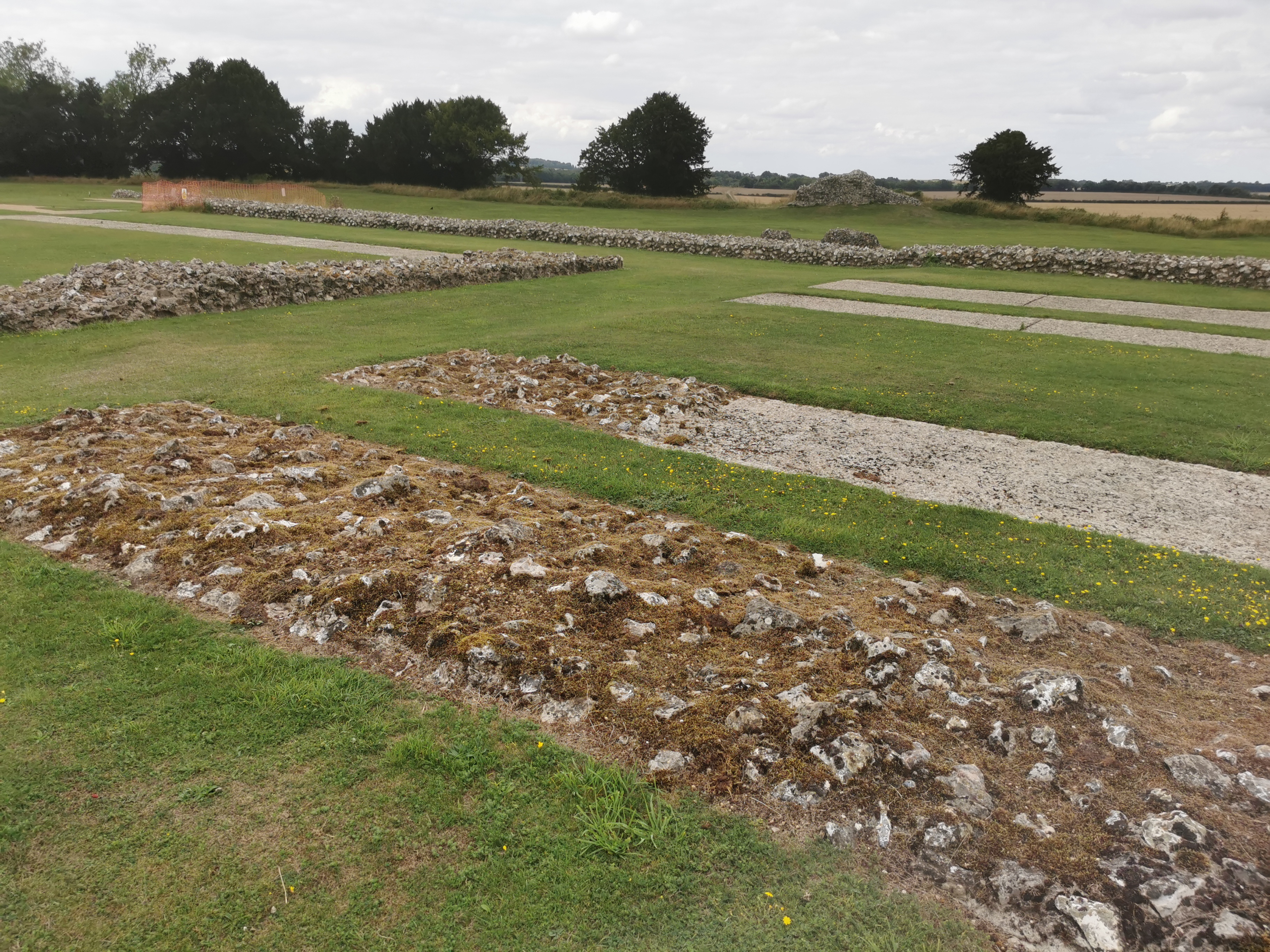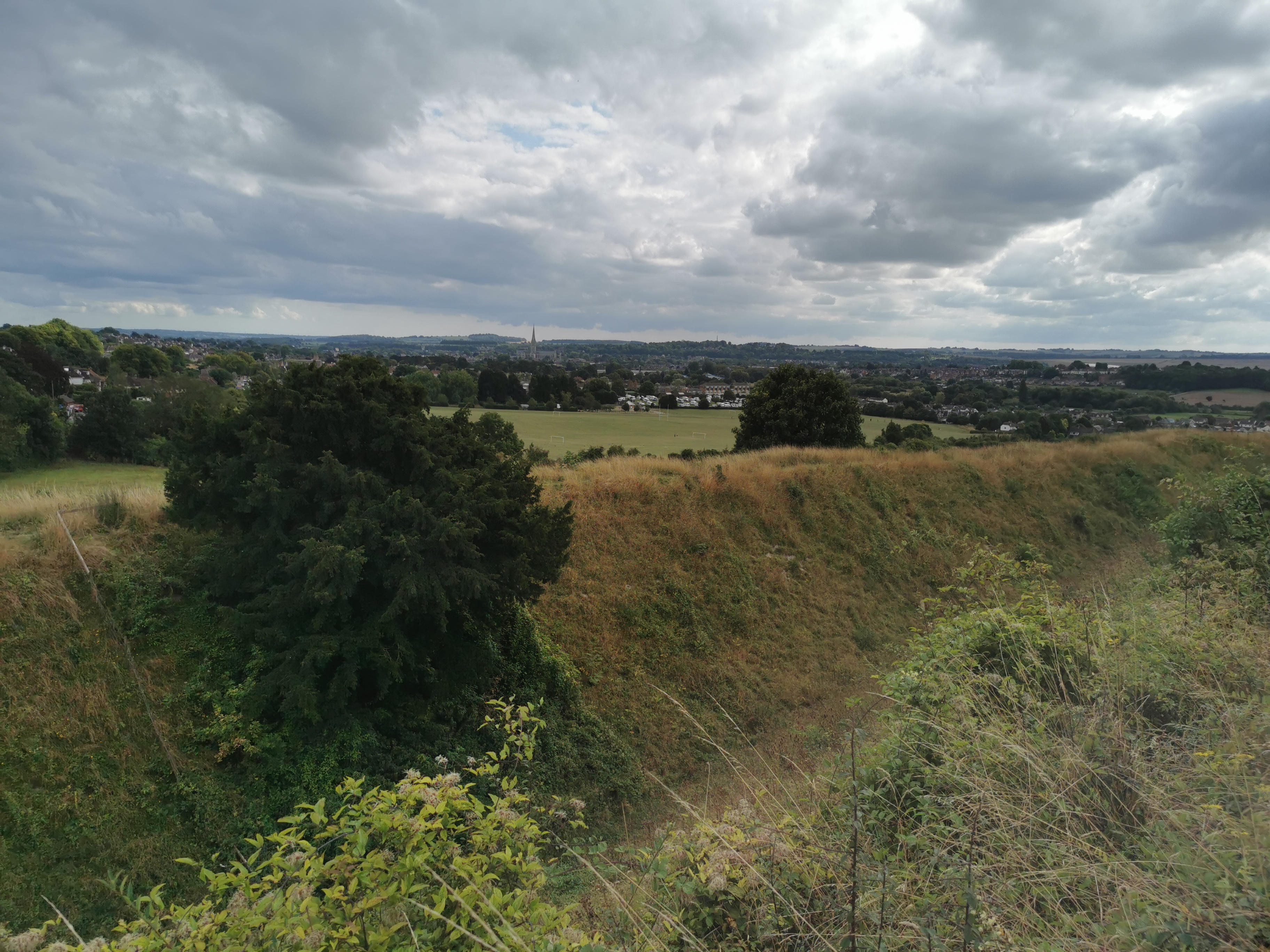
Jorvik/York at the time of the Brunanburh Series, (and before)

Eboracum/Eoforwic/Jorvik

When I first wrote Kings of Conflict, I had very little idea what Jorvik at the time (the 930s/940s) might have looked like. I wrote an entire battle scene and then realised some of my assumptions were very, very wrong (I do this all the time. Don’t feel sorry for me. I should just do the research first instead of giving free rein to my imagination.) I got the fact the settlement was split in two by the River Ouse wrong (and who knew about the Foss). But, most tellingly, what I failed to understand was the true nature of York, from its Roman origins as Eboracum to the age of Jorvik, and most importantly by that I mean its Roman walls and what might, or might not have still been standing at this period.

We don’t (yet) have time machines. We can’t visit York in the 940s, but if there is one thing York is famous for it’s the archaeology, and the Jorvik Viking Centre, which offers a recreation of what those streets on Coppergate might once have looked like, and also much else. And because Jorvik/York has benefitted from so much archaeological work, there are also a series of maps showing York at various times in its lifetime, alas out of print at this time, but which can be accessed via a good library (my thanks to the Great Northern Library at the Hancock museum in Newcastle – if you want to see it then let them know so they can have it ready for you, and make note of their opening hours) or the amalgamation of this work available in An Historical Map of York, available from all good book sellers. And if not, then my favourite ‘go-to’ for recreating this time period, the antiquarian maps by John Speed (which are also much prettier) can also offer some information.

York from the John Speed map opf the West Riding of Yorkshire
York, from John Speed’s West Riding of Yorkshire map (own photo)

Roman York

The British Historic Towns Atlas Volume V, York ed. Peter Addyman provides the following information about Eboracum-Roman York.

It might have been occupied under Vettius Bolanus (69-71) but was truly founded under Emperor Vespasian (69-79). However, the ridge of the River Ouse was a routeway from the Neolithic onwards. This was in the territory of the Brigantes although the East Riding of Yorkshire was that of the Parisi. It is possible that Eboracum means ‘the place of the yew trees.’

The stone used in constructing the fortress was Magnesian Limestone from Tadcaster and Millstone Grit from Bramham Park (I love that they know this). To begin with the fortress had a ditch, rampart and timber structures and four gates, with the original towers up to 15 metres high. And here, there is the suggestion that to begin with, crossing the River Ouse (to get to the civilian settlement) was via ferry. The bridge can only be confirmed from the second century onwards. The Foss River was also tidal at this time and the banks sloped sharply. The rampart was widened from 20feet to about 42 feet during a second phase of occupation.

The end of Roman York is impossible to pinpoint. Did it cease to exist? Certainly, the last documentary reference was in 314 when York’s bishop, Eborus, attended the Council of Arles, but as with so many of these Roman settlements in Britannia, what happened afterwards is more difficult to determine and we must turn to archaeology and not written records.

I think this is from the exhibition at Micklegate Bar but I could be wrong. It very clearly shows the two ‘halves’ of the walls.
I must admit, all of this information about Roman York makes me somewhat desperate to write a book about it:) (Don’t all groan).

Anglian York – Eoforwic

The creators of this series of maps make the point that this is the most speculative of the series. Put simply, they really don’t know what was happening.

What can be said is that the walls were renovated on the north west side of the fortress with a dry stone wall and cobbled sentry walk while the eastern ramparts were topped with a timble palisade wider than the Roman wall (if I’ve understood that correctly).

Eoforwic first enters the historical record as the place of baptism for Edwin in 627, the king of Northumbria (Deira and Bernicia combined).

‘…the king was baptised at Easter with all his chief men; that Easter was on 12 April. This was done in York, where earlier he had ordered a church to be built of wood.’ ASC E 626 p.25

The archbishopric began from 735, but Eoforwic was not densely settled at this period, although it does seem to have had many, many churches. This includes the Minster, St Michael-Le-Belfrey, Holy Trinity, St Peter the Little, St Martin, St Michael, and many more, all probably founded by 850.

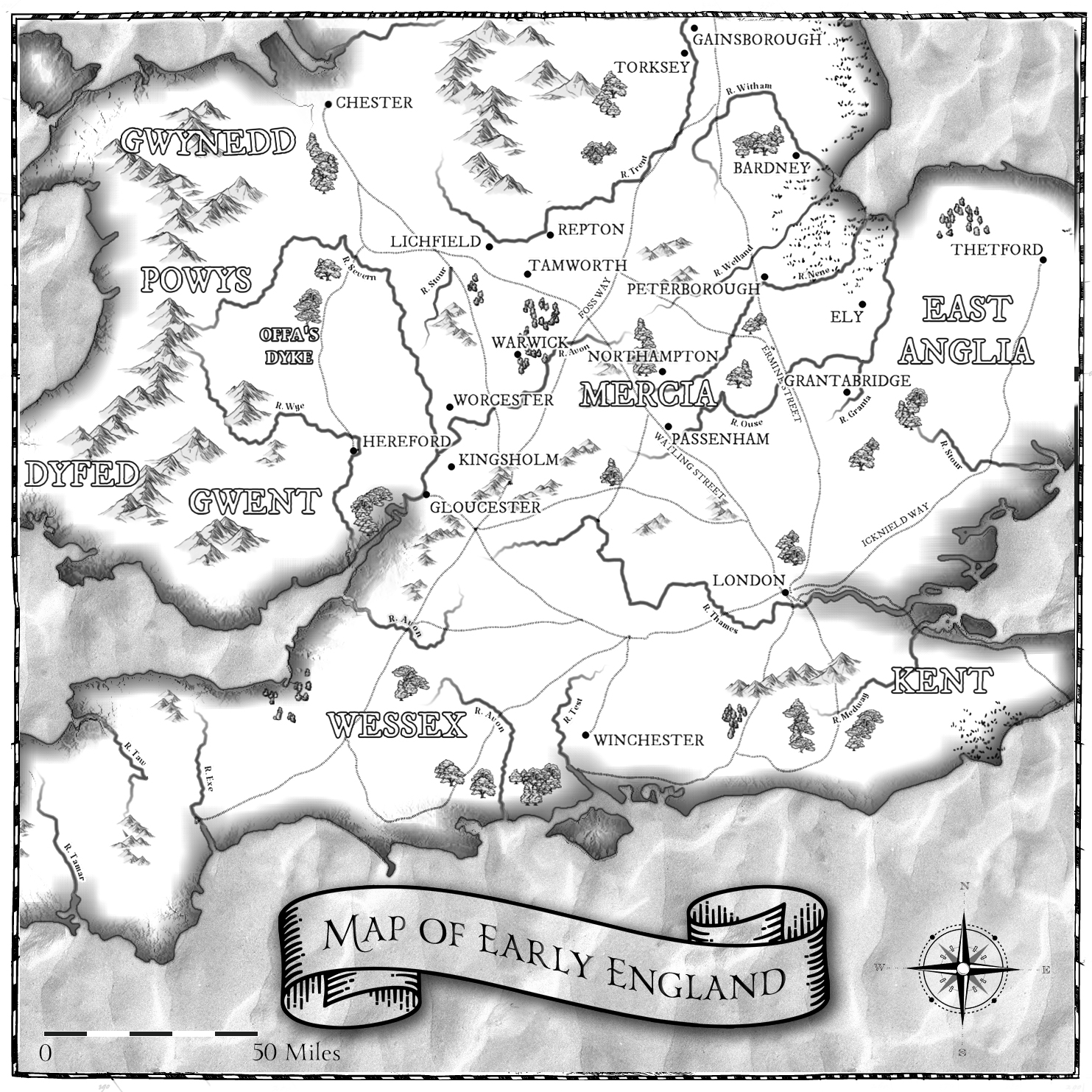
Map of Britain in the tenth century, showing York (map design by Flintlock Covers).

Viking York – Jorvik

It’s record that the first attack Viking attack on York occured on 1st November 866. The Northumbrians counter-attacked in 867 but this left York under Viking control.

‘Here the raiding-army went from East Anglia over the mouth of the Humber to York city in Northumbria;’ ASC A 867 corrected to 866 p.68 (from my preferred edition edited by Michael Swanton).

And here is where my notes become a little muddled between time periods. The British Historic Towns Atlas Volume V informs that the River Ouse at the time would have been tidal, and much wider than it is now and also with much steeper banks .

The late-eighth-century scholar Alcuin describes York as having high walls and lofty towers (he spent time in York). Asser (Alfred’s late-tenth-century biographer – although I’m curious as to how he’d know as I’m sure he was from one of the Welsh kingdoms and York was not under Alfred’s control) suggests that York’s walls were insecure and there is a suggestion that the Vikings restored the walls. Considering what we know about Asser and his ability to be less than honest, we might suspect this statement. Certainly, the remains of the walls were visible but whether they were defensible is unknown.

The walls survive to this day. To paraphrase from the Atlas, from the western corner of the Roman fortress to fifty metres along its south-west front, parallel to the river, the Roman wall is still visible above ground. Beyond this point, its six projecting interval towers and the Roman south/west gateway leading to the bridge over the Ouse have either been demolished to foundation level or been covered by organic-rich debris of post-Conquest date. The fortress’s south corner tower at Freasgate survives to fifteen foot. It is suggested that the south-west section of the civilian settlement might not have been included in the walled defences.

On the northern banks of the River Ouse, there were plots about 5.5m wide occupied by one or more structures (Coppergate/Ousegate/Pavement) with backyards running downslope towards the River Foss. Hungate also had similar plots. There might have been crossings over the rivers below St Mary Castlegate and Hungate. These rectangular structures of post and wattle had entrances front and back, with centrally arranged hearths and roofs made of turf, reeds or straw. Most settlement was below Coppergate, Ousegate, Pavement, Hungate and Walmgate areas.

Recreating Jorvik?

But what does all this mean when trying to recreate the time period? (Some will know that I’ve already ‘visited’ York earlier in the Brunanburh series, and without all this angst). It is frustrating that some aspects are so clearly defined and others aren’t. Where were the people living – especially the high status people? Where were the kings living? In King’s Square/Kuningesgard? And what’s this about the civilian defences never being completed to the south?

My overwhelming impression is that the remains of the actual Roman encampment (to the north of the Ouse) were in better condition than those to the south of the Ouse surrounding the civilian settlement (there are ‘proper’ terms for this – I’m not using them). But, these remains of the Roman wall at the fort seem to have largely been surrounding the religious centre under the control of the Archbishop of York, Wulfstan I. Were they any use to those in control of Jorvik? And what about the rivers? How navigable were they? Could they be easily blocked? How tidal is tidal? Did it raise and lower the water level by metres or centimetres?

Was there even a bridge over the River Ouse or did they need to use a boat to get across? Perhaps there was only one bridge over the Ouse, and only one over the River Foss.

Having this information to hand and making sense of it are two very different things. How would someone have gone about attacking York? Would they have taken ships, come on foot or tried to steal their way inside through the never completed walls? Who would have protected it? What would our erstwhile holy man, Archbishop Wulfstan have done? If the walls were standing, how many warriors would have needed to protect it?

You’ll have to read Conflict of Kings to see just what I did, and you can from 6th August 2024:)

books2read.com/KingsOfConflict10th

Check out the Brunanburh series page for more information.

Posts

On this day in history, the battle of Maserfield between Northumbria and Mercia, 5th August 641 or 642

On this day in history was fought the second of three famous battles between Penda of Mercia and the Northumbrians kings. This battle was different in two ways to Hædfeld and Winwæd; it took place in the summer, and it occured in Mercia. (Hædfeld was an October battle near the River Don. Winwæd was a November battle fought somewhere in the north of modern-day England, it’s believed).

Warrior helms during the early Saxon era (seventh century)

Thanks to some spectacular archaeological finds, we can visualise how a Saxon warrior king might have looked. The reconstructions of the Sutton Hoo helm, and that found with the Staffordshire Horde (as well as a few others), present us with elaborate helmets crested with dyed-horse (or boar) hair in a way very reminiscent of the Roman era. They glitter, and they seem to be festooned in gold and silver work, but whether these were actually worn in battle or not is debatable.

Firstly, they would have made the kings or noblemen very noticeable to their enemy. Secondly, they were so valuable it’s impossible to consider the loss of one of them should they fall and their goods be taken by their enemy. Bad enough for their king and leader to die in battle, but to also lose such precious wealth as well seems unlikely. That said, of course, the Sutton Hoo helm was buried, and the fragments of the Staffordshire Hoard helmet were buried and lost. But the scarcity of such archaeological finds surely points to them being unusual or there would be hundreds of them.

(An image of the Staffordshire Helmet can be found here: https://www.stokemuseums.org.uk/pmag/collections/archaeology/the-staffordshire-hoard/ The monograph on the Staffordshire Hoard is also available for free download from https://library.oapen.org/handle/20.500.12657/39941)

Were these helmets worn in battle?

But there is another reason why these helmets might have existed, and that’s because they were for ceremonial purposes. Kings, before the reign of Athelstan (925-937) are not known to have undergone consecration with a crown but rather with a helmet. After all, they were warrior kings. Perhaps then, these survivals are more akin to that worn by a warrior-king when appearing before his people or for ceremonial reasons.

What weapons would a ‘normal’ warrior have?

What then might have been the more usual garb for a warrior of the Saxon era, which at nearly six hundred years is bound to offer some variations? Shield, spear, seax, sword and byrnie.

We get a feel for these items and how valuable they were from wills that survive from the later Saxon era, hundreds of years after the events of Pagan Warrior. Ealdormen had horses, both saddled and unsaddled, shields, spears, swords, helmets, byrnies, seax, scabbards and spears.

The will of Æthelmær, an ealdorman in the later tenth century, records that he’s granting his king, ‘four swords and eight horses, four with trappings and four without, and four helmets and four coats of mail and eight spears and eight shields,’[1] as part of his heriot, a contentious term for something that some argue was an eleventh-century development, and others argue, is merely reflecting earlier practice on the death of a man.

There would also have been thegns and king thegns, who had their own weapons, as well as the men of the fyrd, the free-men who could be called upon to perform military service each year, as and when required. It’s often assumed they would have been less well-armed, although this begs the question of whether kings and their warrior nobility were prepared to sacrifice those they relied on to provide them with food to gain more wealth. They might have found themselves with the money to pay for food but without the opportunity to do so.

There are very few representations of warriors, but the surviving strands of the Gododdin, a sixth-century lament to the fallen of Catraeth gives an idea of how these warrior men thought of one another. There is much talk of killing many enemies, drinking mead, and being mourned by those they leave behind.

Battle tactics

Battle tactics from the period are impossible to determine fully. Before writing my books which are blood-filled and violent, I read a fascinating account, by a military historian, on how he thought the Battle of Hastings might have been won or lost. The overwhelming sense I came away with was that local features, hillocks, streams, field boundaries even perhaps the path of a sheep track might well be the very thing that won or lost a battle for these opposing sides. The land that kings chose to go to war on was incredibly important. Perhaps then, it wasn’t all about the weapons but about where they decided to fight.

Pagan King, the story of the battle of Maserfeld

For Pagan King, the novel that tells the story of the battle of Maserfeld, I made use of some local landmarks I knew well, and for other aspects, well, that’s why I write historical fiction.

You can find out more information on the Gods and Kings page.

Gods and Kings Trilogy

[1] Dorothy Whitelock, Anglo-Saxon Wills 1930, reprinted edition. Cambridge University Press. p27

Posts

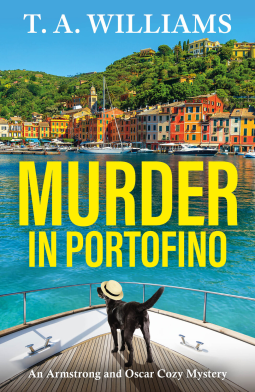
I’m reviewing the new book in the Armstrong and Oscar Cozy Italian Mysteries, Murder in Portofino by TA Williams

Here’s the blurb

A much-needed holiday…

Dan Armstrong hasn’t done much retiring since moving to Tuscany, and with his new career as a successful private investigator taking off, it seems murder seems to follow him. He’s hoping a much-needed trip to beautiful Portofino will give him the break he needs and quality time with girlfriend Anna.

A gathering of celebrities…

Portofino is a celebrity paradise, and holidaying on a nearby superyacht is a group of British media stars, all famous for being infamous. Dan isn’t impressed by their status or wealth, but when he overhears an argument between two of the group, he suspects something fishy could be going on…

A cold-blooded killer?

And then a body is washed up on shore and Dan’s hopes for a holiday go overboard. Could this simply be a tragic accident or is there a killer amidst the assembled celebrity cast? Dan and Oscar have their work cut out before the tide turns…

It’s another gripping case for Dan and Oscar – it’s murder in paradise!

My Review

It’s hard to believe that we’re on book 8 in the Armstrong and Oscar Cozy mysteries, but we are:)

Murder in Portofino perhaps takes a while longer than others to ‘get going.’ Instead, we’re treated to Dan, and Oscar enjoys some ‘downtime’ with Anna, who is close to Portofino. But, of course, our duo seems to attract mystery to them, and so we are soon embroiled in a luxury yacht and its inhabitants, with not one but two crimes to solve.

I thoroughly enjoyed this new addition to the series. I always appreciate the fact that the mysteries are consistently more complex than anticipated, and like Dan, we have to follow the lines of investigation to determine the truth.

A fine new addition to the series. Always a reliable and engaging read. I’m already looking forwards to book 9:)

On the 1100th anniversary of the death of King Ælfweard of Wessex

The death of King Ælfweard of Wessex, 2nd August 924

Today sees the 1100th anniversary of the death of King Ælfweard of Wessex, a king most people have never heard of as his reign was just sixteen days in summer 924, and we know almost nothing about him. (According to one source, the Textus Roffensis he is credited with a reign of 4 weeks, which would have made him king before his father’s death. You can see a digital copy of this source here). There are surely many ‘might have beens’ about his reign, and as much as I admire Athelstan, his older halfbrother, I felt it only right to shed what light there is on Ælfweard.

Quote from ASC from 17th July 924 recounting Edward the Elder's death

Who was Ælfweard?

He was the son of Edward the Elder (who had died 16 days earlier) and his second wife, Ælfflæd. He was, presumably, the oldest born son with Edward’s second wife, and from a very young age, he can be seen attesting to his father’s charters. We don’t know his exact date of birth because we don’t know when Edward remarried, and whether it was before or after his father’s death in 899.

A family tree showing the family of Alfred the Great

What do we know about Ælfweard?

Ælfweard begins to attest charters in 901 as filius regis, alongside his famous older halfbrother, Athelstan, although Ælfweard is given precedence and named before him. This precedence for the oldest son from a second marriage would also be mirrored in later years by King Edgar, who presented his oldest son with his third wife, Elfrida, as the legitimate ætheling while acknowledging his oldest son with his first wife.

Ælfweard attests eight of his father’s charters (S365, S375, S376, S377, S378, S381, S382 and S383). The number is small and may not be representative. There’s a lack of surviving charter evidence from the reign of Edward the Elder and none from Ælfweard’s short reign. Indeed, his full brother, Edwin, doesn’t attest any of his father’s charters, although he is named in one of Athelstan’s charters (S1417). This is something that needs explaining and examining in more depth.

Ælfweard’s death ‘allowed’ Athelstan to become king of Wessex

Despite the survival of his full brother, Edwin, Athelstan was, eventually, proclaimed king of Wessex as well as Mercia on the death of Ælfweard, although his coronation was delayed until September 925 (Read about Athelstan here). We must consider what led to Ælfweard’s death at Oxford. Had he been with his father at Farndon in Mercia putting down a revolt or fighting the Norse enemy? Was there some sort of illness? Was he murdered by those loyal to Athelstan to allow him to become king of Wessex as well as Mercia? We do not know. The situation is presented as a fait accompli in the sources.

Edwin, Ælfweard’s younger full brother, would die far from England’s shores, if the information we do have about his death, is correct. It is possible he did rise in rebellion against Athelstan, but alas, we do not know any details.

Slide showing a quotation about Edwin's death.

For more suggestions, and my fictional recreation of how Athelstan became king of Mercia, Wessex and the English, do check out my books, Kingmaker (the story of Lady Eadgifu, Edward the Elder’s third wife), and King of Kings (which begins with the coronation of King Athelstan in September 925). I’ve also written a post about Athelstan becoming king of Mercia which can be accessed here.

And for more information about the tenth century as a whole, do check out my nonfiction title about the Royal Women of the Tenth Century, which also includes information about the royal men.

Anglo-Saxon Chronicle quotations from M Swanton, The Anglo-Saxon Chronicles.

Image showing the four covers for The Brunanburh series.

I’m delighted to welcome Carolyn Hughes and her new book, Fortune’s Wheel, to the blog #HistoricalFiction #HistoricalRomance #MedievalEngland #BlogTour #TheCoffeePotBookClub

I’m delighted to welcome Carolyn Hughes and her new book, Fortune’s Wheel. The First Meonbridge Chronicle, to the blog with a trailer.

Soundcloud Link:

Blurb

How do you recover from the havoc wrought by history’s cruellest plague?

It’s June 1349. In Meonbridge, a Hampshire manor, many have lost their lives to the Black Death, among them Alice atte Wode’s beloved husband and Eleanor Titherige’s widowed father. Even the family of the manor’s lord and his wife, Margaret de Bohun, has not entirely escaped.

But, now the plague has passed, the people of Meonbridge must work together to rebuild their lives. However, tensions mount between the de Bohuns and their tenants, as the workers realise their new scarceness means they can demand higher wages and dictate their own lives.

When the tensions deepen into violence and disorder, and the men – lord and villagers alike – seem unable to find any resolution, the women – Alice, Eleanor and Margaret – must step forward to find a way out of the conflict that is tearing Meonbridge apart.

Buy Link

Universal Link:

This title/series is available to read on #KindleUnlimited

Audible Links

Meet the Author

Carolyn Hughes has lived much of her life in Hampshire. With a first degree in Classics and English, she started working life as a computer programmer, then a very new profession. But it was technical authoring that later proved her vocation, word-smithing for many different clients, including banks, an international hotel group and medical instruments manufacturers.

Although she wrote creatively on and off for most of her adult life, it was not until her children flew the nest that writing historical fiction took centre stage. But why historical fiction? Serendipity!

Seeking inspiration for what to write for her Creative Writing Masters, she discovered the handwritten draft, begun in her twenties, of a novel, set in 14th century rural England… Intrigued by the period and setting, she realised that, by writing a novel set in the period, she could learn more about the medieval past and interpret it, which seemed like a thrilling thing to do. A few days later, the first Meonbridge Chronicle, Fortune’s Wheel, was under way.

Six published books later (with more to come), Carolyn does now think of herself as an Historical Novelist. And she wouldn’t have it any other way…

Connect with the Author

Website: Bluesky: BookBub:

Follow Fortune’s Wheel blog tour with The Coffee Pot Book Club

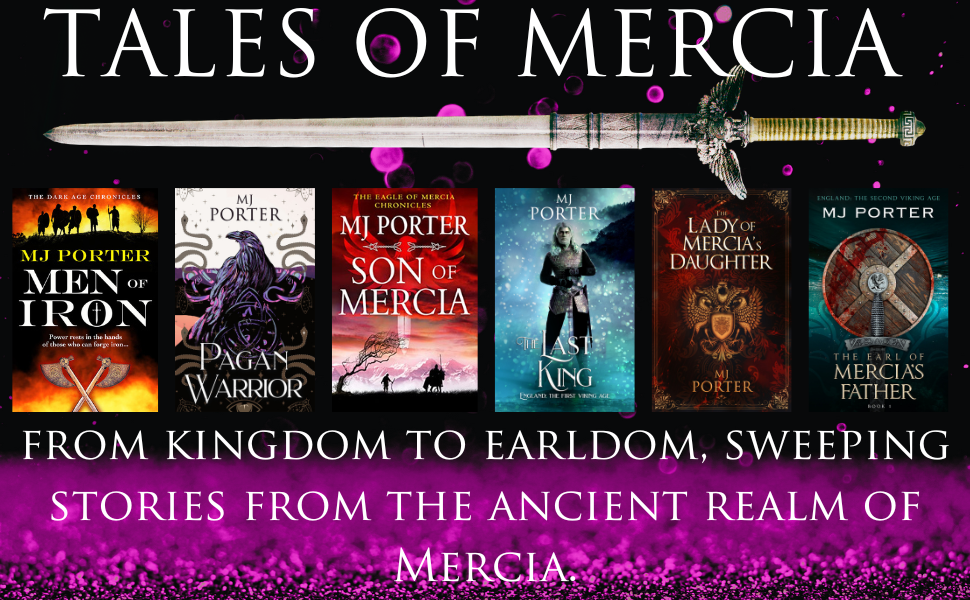
MJ Porter’s Saxon Stories Order and Series Pages | Infographic

Confused? You’re not alone

Trying to keep tabs of the chronology of my series set in Saxon England is difficult, even for me. It doesn’t help that I often work backwards, and sometimes have a tendency to skip backwards and forwards, and sometimes don’t finish things either. This might help.

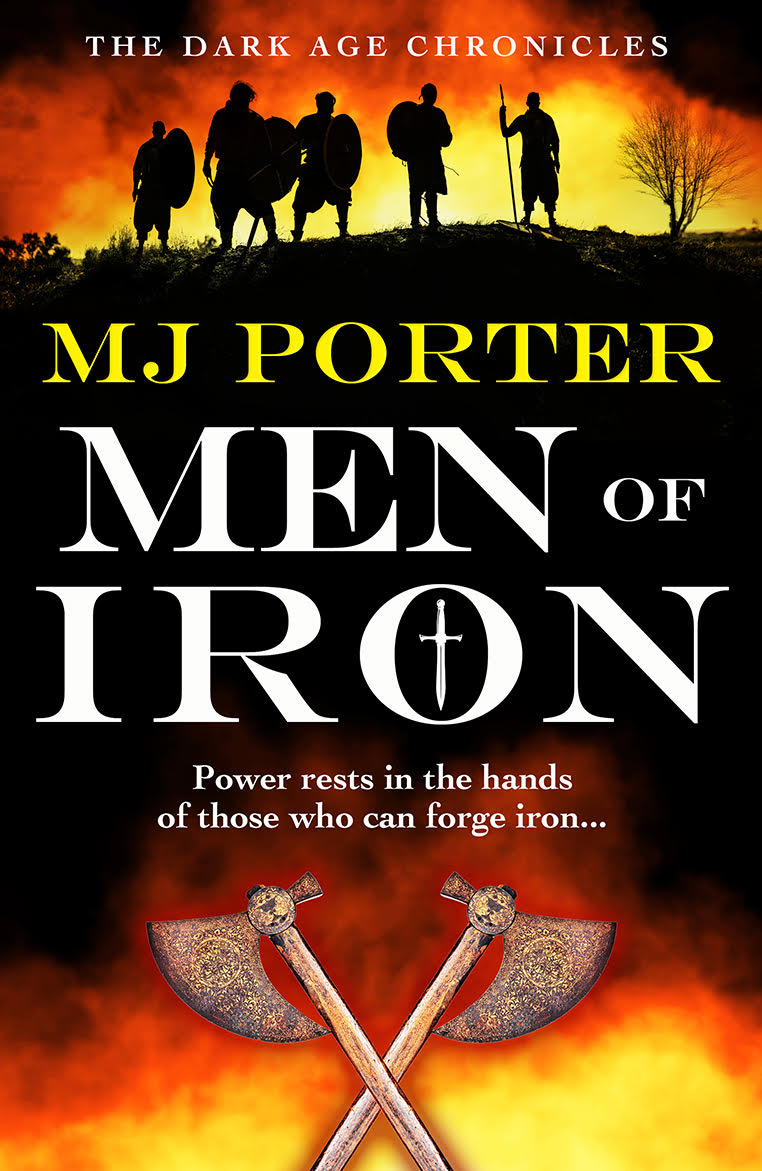
The Dark Age Chronicles

There are no character crossovers for this series because we’re right back at the very beginning. But, there will be some Easter Eggs moving forwards.

Gods and Kings

Character crossovers – no one specific but there is sometimes reference to these earlier battles in later books.

The House of Mercia

This is my current project and I have no more information to share just yet but keep checking back.

The Eagle of Mercia Chronicles

Character crossovers – Icel and Coelwulf (as a very young child) from The Mercian Ninth Century

The Mercian Ninth Century (AKA The Last King/Coelwulf books)

Character crossovers – Icel from The Eagle of Mercia Chronicles

The Tenth Century Royal Women (The Lady of Mercia’s Daughter and Kingmaker)

Character crossovers – Athelstan and Ealdorman Athelstan (before becoming an ealdorman) from The Brunanburh Series.

The Brunanburh Series

Character crossovers – Lady Ælfwynn (briefly) and Lady Eadgifu from Kingmaker (a central character to The Brunanburh Series).

The First Queen

Character crossovers – Ealdorman Leofwine from The Earls of Mercia series as a very young man. Lady Eadgifu from both The Tenth Century books, and The Brunanburh series in book 1.

The Earls of Mercia Series

Character crossover – Lady Elfrida from The First Queen of England.

Lady Estrid

Character crossover – Cnut, Ealdorman Leofwine, Leofric and others from The Earls of Mercia series – this book is a side-story to the main series but can be read as a standalone.

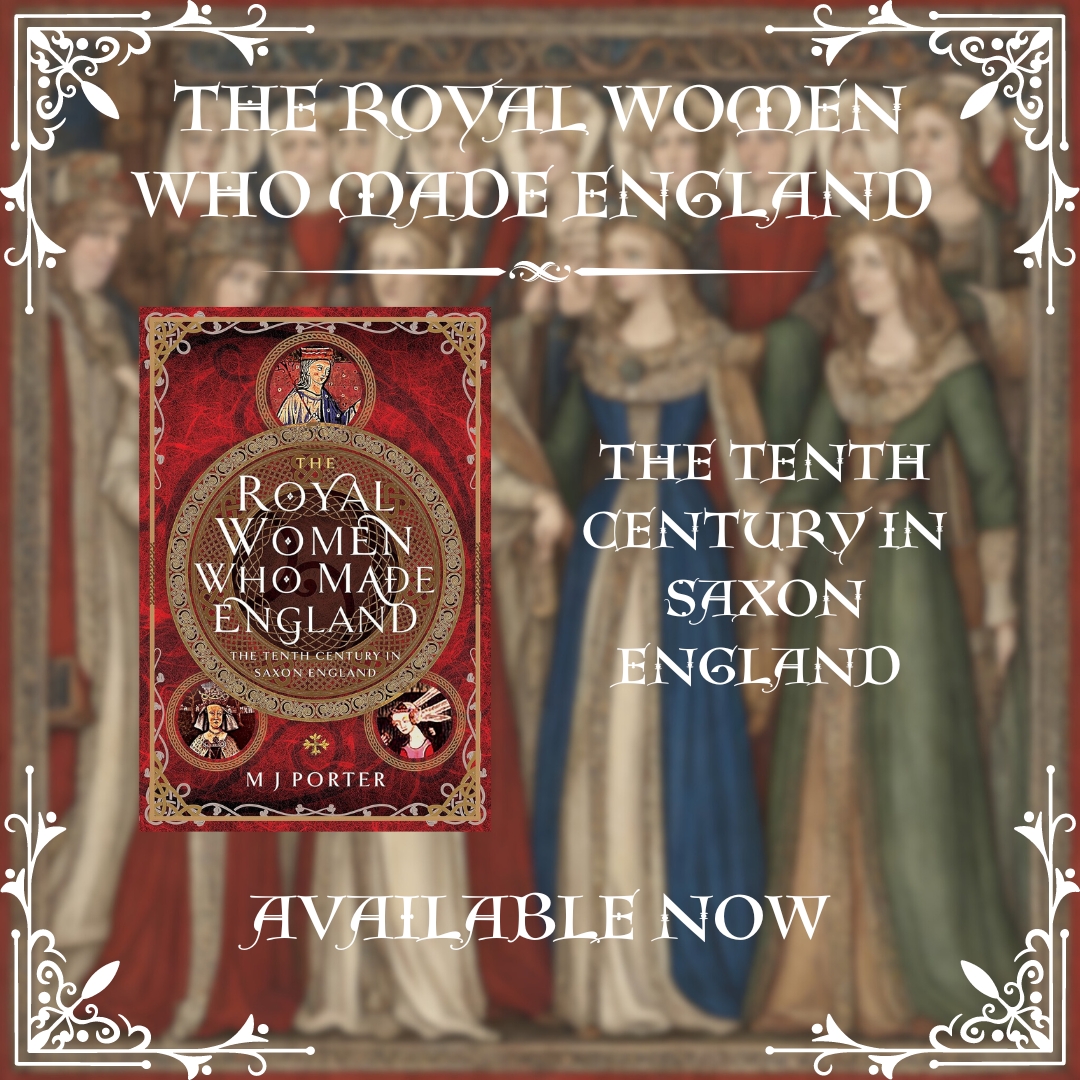
And don’t forget my non-fiction title, which is a perfect counterpart for The Tenth Century, and The Brunanburh Series, The Royal Women Who Made England

Posts

I’m delighted to welcome Debra Borchert and her new book, Her Own War, to the blog #HerOwnWar #DebraBorchert #ChateauDeVerzatSeries #BlogTour #TheCoffeePotBookClub

I’m delighted to welcome Debra Borhert and her new book, Her Own War, Book 3 in the Château de Verzat Series, to the blog with the historical aspect of the novel.

Historical Aspect of the Novel: Enslavement in Eighteenth-Century France by Debora Borchert

“I survived enslavement. I know where they look.” — Aurélia, Her Own War

In the first book in my Château de Verzat series, the brother-sister protagonists flee France aboard a slaver. As I further researched the slave trade, I knew I would not be able to adequately convey the horrors of their voyage. Consequently, that story lives only in my mind.

Yet, the male protagonist, Henri, falls in love with a formerly enslaved woman, Aurélia, who was forced onto the same ship. In America, they cannot marry, and people treat Aurélia as an enslaved woman. Eager for her freedom, Henri brings Aurélia to France, after the new government abolished enslavement. The August 1793 decree for the abolition of slavery ended all slave-trade activity across all French territories in 1794.

In the second book, Her Own Revolution, Henri, Aurélia, and their son, Charles, depart America and arrive in France in late 1796, where Henri believes Aurélia and their son will be safe.

Although slavery was illegal in France, people, like Thomas Jefferson, brought their “property” to France, and France respected his and others’ rights to own enslaved people.

The irony of these laws caused me to wonder about the formerly enslaved, and whether people of color had rights in France in 1796. They did not. In my work as a historical fiction writer, I attempt to focus light on historic injustices.

For research, I traveled to Nantes, which was the largest slave-trading port in France from 1707-1793. The city has created a Memorial to the Abolition of Slavery, dedicated to the thirteen million Africans who were deported during the transatlantic slave trade.

The Memorial’s underground gallery was created to enable visitors to imagine what it might feel like to exist in the hold of an 18th century ship. Sounds of flapping sails, splashing waves, creaking ropes and wood, clanking chains and shackles, human groans and cries, echo in the shadows.

At that moment I knew my character Aurélia would be mute, caused by the trauma she had endured. I also knew she would not be safe in France, for, although Henri did not know it, I knew she had no rights.

The third book, Her Own War, opens with a hailstorm that threatens the vineyard, and is followed by a declaration that all noble émigrés must leave France or face the guillotine. Henri, a noble émigré, must leave, and, as Aurélia is pregnant, she is unable to travel with him. He must leave her under the protection of the four hundred families who live on the estate. However, no one, not even Henri, could have protected her from history.

During the eighteenth century the recapture of freed, formerly enslaved people was terrifyingly common, and many were enslaved in the sex trade. France had a robust demimonde, a polite name for the business of prostitution, catering to tastes for the exotic. These facts threatened Aurélia’s safety. But, as Aurélia had survived enslavement, she proved to be a courageous character who risks her life to save the lives of her children.

As Napoleon Bonaparte gathers power at the end of Her Own War, I know the plot of the next book of in the series will be affected by his re-establishment of slavery in1802, which revived slave-trade activity for another fifteen years.

Having learned that even today human beings are enslaved, I chose to bring light to the historical facts of the 18th century, sadly reflected in the crimes against humanity in this century.

Blurb

As Napoleon Rises from the Ashes of The French Revolution, One Woman Dares to Spy Against Him

Sentenced to eight months in an insane asylum for the crime of impersonating a man, Geneviève LaGarde fears giving birth in a filthy cell will mean certain death for her and her unborn child. Desperate for her release, her husband, Louis, trades his freedom for hers and must join Bonaparte’s army in Egypt.

As Geneviève wages her own war against the tyrannical general, she not only risks her own life but also those of her children and the four hundred families who depend on the Château de Verzat estate. Knowing her desperate actions could cause the government to confiscate the entire vineyard, she sacrifices everything to save her husband and protect the people who become her family.

A captivating tale of the power of love, hope, and courage, and the strength of community.

Reviews

Fans of historical fiction will find this novel a most captivating read.” Kirkus Reviews

“For fans of Stephanie Dray’s The Women of Chateau Lafayette.” —Publishers Weekly BookLife Editor’s PickA compelling story of love, war, and fierce family loyalty. While the narrative stays true to the social mores of the French Revolutionary era, Borchert gives her readers powerful and active female characters who often cunningly use conventional gender expectations to conceal their real motives and actions. Fans of historical fiction will find this novel a most captivating read.” —Kirkus Reviews

Buy Link

Universal Link:

This title will be on #KindleUnlimited for the first 90 days

Meet the Author

Debra Borchert has had many careers: clothing designer, actress, TV show host, spokesperson for high-tech companies, marketing and public relations professional, and technical writer for Fortune 100 companies. Her work has appeared in The New York Times, San Francisco Chronicle, The Christian Science Monitor, and The Writer, among others. Her short stories have been published in anthologies and independently.

A graduate of the Fashion Institute of Technology, she weaves her knowledge of textiles and clothing design throughout her historical French fiction. She has been honored with a Historical Novel Society Editors’ Choice, Publishers Weekly BookLife Editor’s Pick, and many other five-star reviews.

Connect with the Author

Website: BookBub:

Follow the Her Own War blog tour with The Coffee Pot Book Club

On the 1100th anniversary of King Athelstan becoming King of Mercia, some snippets from my recent Zoom talk with readers

The death of King Edward (the Elder), 17th July 924

17th July saw the anniversary of the death of Edward the Elder, who was Athelstan’s father.

We don’t know why Edward was in Mercia at the time of his death, although this is only recorded in the C and D versions of the Anglo Saxon Chronicles, always deemed to be more Mercian in their outlook by scholars of the era than other surviving versions. I highly recommend Pauline Stafford’s book on the writing of the ASC, and you can read more about the ASC recensions here.

We don’t know why Edward died, although it was potentially quite sudden. Was he wounded in battle? Was he unwell – the fact his oldest son with his second wife dies only 16 days later (the 16 days is provided by the D version of the ASC) at Oxford might suggest a contagion. Admittedly, it might also suggest that Ælfweard was murdered by those loyal to Athelstan, to enable him to also claim Wessex but there is no mention of this in any surviving source material. Alternatively, it might point to a deadly war with ‘someone.’

Quote from ASC from 17th July 924 recounting Edward the Elder's death

Who was Edward the Elder (899-924)

So, who was Edward the Elder? He was the younger brother of Æthelflæd, famously known as the Lady of Mercia, as well as the son of King Alfred. He seems to have ‘stolen’ the kingdom of Mercia from his niece Ælfwynn, who was intended to rule there after her mother’s death in June 918. Perhaps Edward was an unwelcome presence in Mercia. It’s been suggested he might have been putting down either a Mercian rebellion, perhaps orchestrated by Athelstan, or that Edward was fighting the enemies of the Saxons – no doubt the Viking raiders – at the time of his death.

A family tree showing the family of Alfred the Great

King of the Mercians

We are then told by the D version of the ASC that Athelstan was chosen as king by the Mercians.

Quotes about Athelstan becoming king of Mercia while his brother was king of Wessex.

So, a few important things to highlight – he was chosen as king, but only by the Mercians even though his father was ruling Wessex and Mercia.

Despite very popular portrayals of England at this time, we are still very much looking at the kingdoms of Mercia, Wessex and Northumbria, (and of course Jorvik), so not ‘England’ at all. Edward the Elder did try to rule both Mercia and Wessex at the same time after his sister’s death. How successful he was at that is very much open to debate. Certainly, he has been very much relegated behind the achievements of his father and his son (and his sister). It’s not always that easy to study his reign in depth due to the lack of surviving charter evidence. There is also a debate about how ‘much’ ruling Æthelflæd and Æthelred did in Mercia? Was their kingship under a Wessex banner?

But to return to Athelstan. Was he immediately declared king of Mercia on 18th July 924 or did it take longer? We don’t know the answer to this.

A beguiling suggestion by historian Jayakumar is that Athelstan might have been marked to succeed by his grandfather King Alfred in Mercia, not in Wessex. This is intriguing – prior to this we see fathers and sons ‘sharing’ the kingship of Wessex and then Kent, when it was taken back from the Mercians in the 820s/830s. And indeed, while Mercian, Kent was often ruled by an offshoot member of the Mercian ruling family as well.

Who was Athelstan?

So, who was this Athelstan, who became king of Mercia in 924?

The oldest son of Edward the Elder, but who was his mother?

It’s been suggested his mother might have been Mercian, and this also made him acceptable for the Mercians to declare him as king- but it’s impossible to determine more about her. We don’t even know her name, although it’s suggested that it was Ecgwynn. She was soon replaced, either because of her death or because Edward, on becoming king of Wessex, needed to cement his position through marriage with a powerful ealdormanic family. Lady Ælfflæd was Edward’s second wife.

Later discussions abound about Athelstan’s suitability to become king of Wessex, with many casting doubt on the union, but it is evident that Alfred believed the union was a lawful one, and his grandson would one day become king, although of where, we don’t know.

Equally, we don’t actually know when Edward’s second marriage occurred, was it before or after his father’s death?

Powerpoint slide showing some quotes about Athelstan's early life.

Athelstan’s early life

Athelstan and his younger half-brother, Ælfweard, who we must assume was the oldest son born to Edward and his second wife, begin to attest charters in 901 both as filius regis although Ælfweard is named above Athelstan despite being younger. 

Athelstan attests eleven of his father’s charters (Sawyer, P.H. (ed.), Anglo-Saxon charters: An annotated list and bibliography, rev. Kelly, S.E., Rushforth, R., (2022). http://www.esawyer.org.uk/ S365, S366, S371, S375, S376, S377, S378, S379, S381, S382, S383), Ælfweard only eight, but again, the number is still small and so may not be representative – in 901, Athelstan witnesses 2 charters, but Ælfweard only one.

Only three of the eleven charters that Athelstan witnesses under his father are deemed to be authentic, and only one of those witnessed by Ælfweard and Athelstan together which is dated to 901, when they were both young children. This would have been very early in Edward’s reign, when his cousin, Æthelwold, was still alive and contesting the rulership of Wessex, something that wasn’t resolved until the decisive Battle of the Holme, in either 901 or 902. Edward may have wanted to labour the point that he was the father to two potential male heirs, or æthelings. (His brother, Æthelweard is also termed filius regis, and so Edward might have been highlighting that if something did befall him, he had a brother who could also succeed him, as opposed to two young children.)

However, there is a large gap in the charter evidence for Edward the Elder in the middle of his reign, and so it is difficult to track any developments. 

But with all that said, I don’t find Athelstan’s charter witnessing very helpful when trying to determine his place at the Wessex royal court at this time, his position as a young man or even how he got on with his father’s second wife (as well as his third wife) and her many, many children, who would bedevil him when he became king. 

Was Athelstan raised in Mercia by his aunt and uncle?

Quote from William of Malmesbury about Athelstan being raised in Mercia.

The fact Athelstan was declared king of Mercia does seem to corroborate a statement made by William of Malmesbury, in the later Gesta Regum Anglorum, or The History of the English Kings, that Athelstan was raised in Mercia by his aunt and uncle, alongside his full birth sister, who may have been called Edith.

Or, it could be that his mother was Mercian. It’s frustratingly difficult to find explanations when events are merely told us as supposed ‘fact,’ and William of Malmesbury’s assertion has been little questioned, other than by historian David Dumville, even though it dates to two centuries after the events. It seems to be the ‘easy’ explanation as to why Athelstan became king of Mercia after his father’s death.

What was happening in Wessex?

Ælfweard, his younger half-brother, was declared king, until his death, 16 days after his father.

How did Athelstan become king of Wessex?

Quote from the Gesta Abbatum S Bertii Sithiensium marking the death of Edwin.

So, once he was chosen as Mercia’s king, how did he then become king of Wessex on the death of Ælfweard so soon after that of Edward?

This period is as equally hazy as what happened to make Athelstan king of Mercia.

But, after Ælfweard’s death, there is another son of Edward’s second marriage who could have become king, Edwin. As could the sons of Edward’s third wife, Lady Eadgifu, who were very young at the time, perhaps no more than one and three years old. 

Why Athelstan was chosen is difficult to rationalise, especially if the Wessex witan were so uneasy with him. Some suggest he reached an agreement with Lady Eadgifu (his father’s third wife) that her sons would be his heirs. Others think there was a period of unease where Wessex was kingless. We have no explanation for Edwin being overlooked, and certainly, it seems he went on to cause his older half-brother problems. We have reports of Edwin’s death in 933 – apparently from drowning, but it seems likely, it was some sort of rebellion against his half brother, the king. The Gesta Abbatum S. Bertini Sithiensium, reports his burial by his cousin in Flanders. 

I find this period quite interesting as by now, another Eadgifu, a half sister of Athelstan, who had been married to King Charles III of the West Franks, might have been in Wessex. She had a young son, Louis, but Charles had been usurped and imprisoned and certainly Louis was at the Wessex court when his grandfather died. It’s possible Eadgifu was as well. Would she not have supported her full brother against Athelstan claiming the kingship? Equally, we don’t know if Edwin’s mother was still alive. It is all very perplexing.

What we do know is that Athelstan underwent his coronation in September 925, so over a year after his father’s and half-brother’s death. The coronation took place at Kingston upon Thames. This delay has been interpreted as showing he met resistance in Wessex to his rule, but it might not have been that unusual. His father’s coronation was not immediate, although, admittedly, his father was faced with the rebellion of Æthelwold, his cousin and the surviving son of Alfred’s older brother, Æthelred I. Alfred and his brother seem to have reached an accord about the succession before Æthelred I’s death, and Alfred then rode roughshod over it. 

A coronation with a crown?

There is some discussion about whether the surviving Coronation ordo (ceremony) was devised for Athelstan or not, but he was crowned with a crown and not a helmet, as earlier kings had been. We have a famous image of Athelstan, (we only have two contemporary/near-contemporary images of the tenth century kings) presenting a book to St Cuthbert, and in this image, he is shown wearing a crown. This was a departure from earlier ceremonies.


An image of King Athelstan presenting a book to St Cuthbert
Frontispiece of Bede’s Life of St Cuthbert, showing King Æthelstan (924–39) presenting a copy of the book to the saint himself. Public domain, via Wikimedia Commons

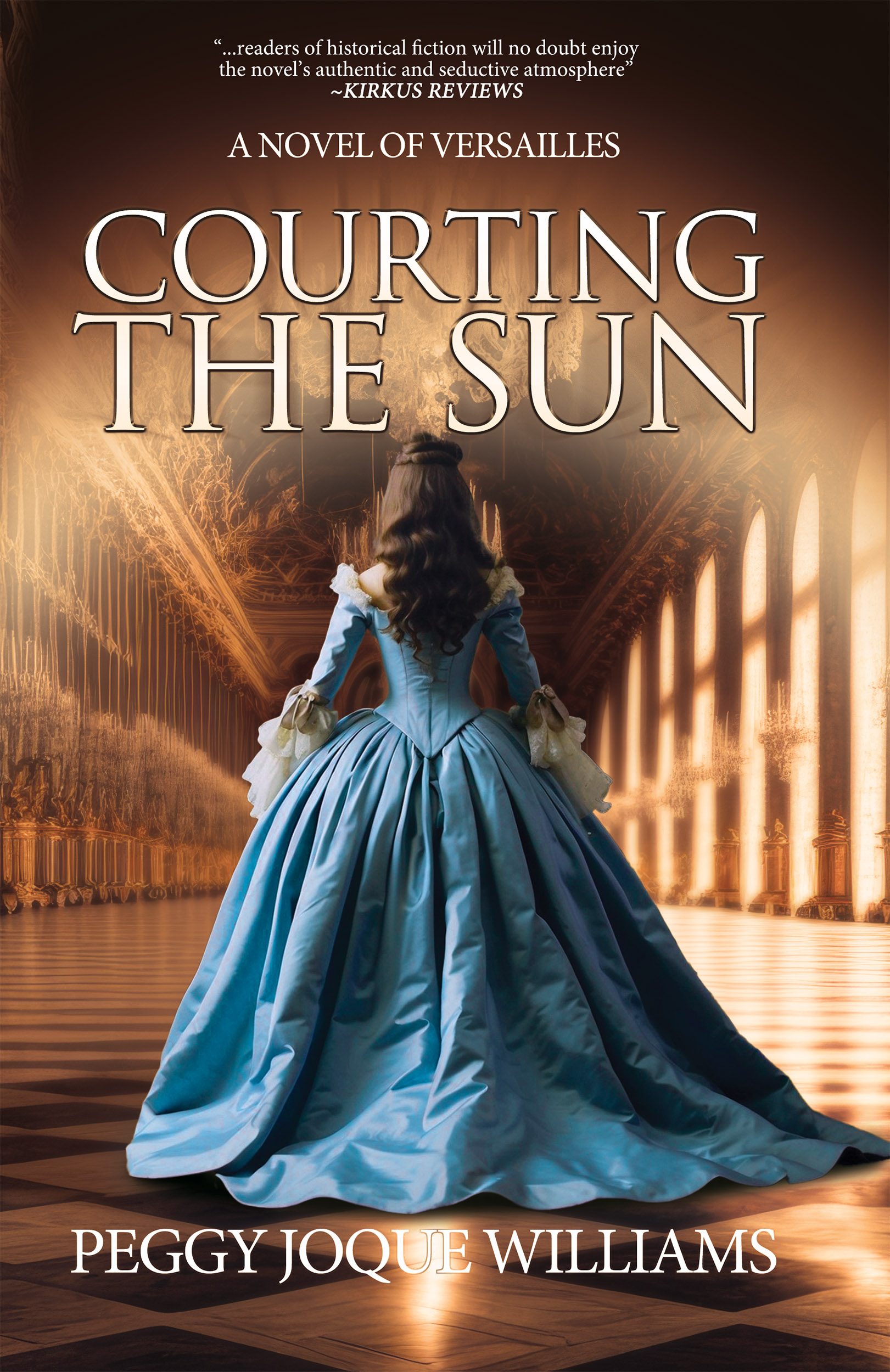
For more suggestions, and my fictional recreation of how Athelstan became king of Mercia, Wessex and the English, do check out my books, Kingmaker (the story of Lady Eadgifu), and King of Kings (which begins with the coronation of King Athelstan).

Anglo-Saxon Chronicle quotations from M Swanton, The Anglo-Saxon Chronicles.

I’m delighted to welcome Carol McGrath’s new historical fiction novel, The Lost Queen, to the blog #newrelease #histfic #blogtour

Here’s the blurb

1191 and the Third Crusade is underway . . .
It is 1191 and King Richard the Lionheart is on crusade to pitch battle against Saladin and liberate the city of Jerusalem and her lands. His mother, the formidable Eleanor of Aquitaine and his promised bride, Princess Berengaria of Navarre, make a perilous journey over the Alps in midwinter. They are to rendezvous with Richard in the Sicilian port of Messina.

There are hazards along the way – vicious assassins, marauding pirates, violent storms and a shipwreck. Berengaria is as feisty as her foes and, surviving it all, she and Richard marry in Cyprus. England needs an heir. But first, Richard and his Queen must return home . . .

The Lost Queen is a thrilling medieval story of high adventure, survival, friendship and the enduring love of a Queen for her King.


Acclaim for Carol McGrath’s ROSE trilogy:
‘Powerful, gripping and beautifully told’ KATE FURNIVALL on The Silken Rose
‘A tour de force of gripping writing, rich historical detail and complex, fascinating characters’ NICOLA CORNICK on The Stone Rose
‘A beautifully narrated novel’ K J MAITLAND on The Damask Rose

The cover for The Lost Queen book by Caol McGrath.

Purchase Link

 https://tinyurl.com/5n8ab2xv

My Review

The Lost Queen is partly the story of Richard the Lionheart’s wife before and during her marriage. However, it doesn’t take place in England, as Richard is so largely absent, and his focus is on the Third Crusade, so our heroine never visits England.

There are also two other main characters: a fictional woman seeking her husband and Blondel, a troubadour. The author uses different tenses for these characters, which I always struggle with, although I know others don’t. The narrative is also moved forward by a collection of letters written to England.

The story itself is rich with period detail, from food to clothes to journeys and all those they encounter on their journey. The historical political landscape is abundant with those who are loyal to or disloyal to King Richard.

Fans of the genre will enjoy meeting Berengaria and visiting the period so meticulously brought to life by the author.

Meet the author

Following a first degree in English and History, Carol McGrath completed an MA in Creative Writing from The Seamus Heaney Centre, Queens University Belfast, followed by an MPhil in English from University of London. The Handfasted Wife, first in a trilogy about the royal women of 1066 was shortlisted for the RoNAS in 2014. The Swan-Daughter and The Betrothed Sister complete this highly acclaimed trilogy. Mistress Cromwell, a best-selling historical novel about Elizabeth Cromwell, wife of Henry VIII’s statesman, Thomas Cromwell, was republished by Headline in 2020. The Silken Rose, first in a medieval She-Wolf Queens Trilogy, featuring Ailenor of Provence, saw publication in April 2020. This was followed by The Damask RoseThe Stone Rose was published April 2022. Carol is writing Historical non-fiction as well as fiction. Sex and Sexuality in Tudor England was published in February 2022. The Stolen Crown 2023 and The Lost Queen will be published 18th July 2024. Carol lives in Oxfordshire, England and in Greece. 

Find Carol on her website: www.carolcmcgrath.co.uk.

Follow her on amazon @CarolMcGrath

https://twitter.com/carolmcgrath

https://www.pinterest.co.uk/carol0275/the-handfasted-wife/

https://scribbling-inthemargins.blogspot.com/

https://www.linkedin.com/in/carol-mcgrath-906723a/

https://www.facebook.com/CarolMcGrathAuthor1/

I’m delighted to welcome Luv Lubker and her new book, Under A Cloud, to the blog #HistoricalFiction #VictorianFiction #VictorianEra #GermanHistory #UnderACloud #LuvLubker #BlogTour #TheCoffeePotBookClub

I’m delighted to welcome Luv Lubker and her new book, Under A Cloud, from The Rival Courts series, to the blog, with an excerpt.

Excerpt 1

On the 24th they had arrived in Palermo. Fritz had been emotionally excited to show them this place, where he had been the year before his and Vicky’s engagement. They had visited the place where he had stayed at the time, and also an old monastery, leaving with bits of beautiful mosaic in their pockets.

Most of the buildings here were of very Eastern architecture. The orange groves, aloes, cactuses, fig trees, heliotropes, date palms, all the vegetation was such as Vicky had never seen before outside of a hot house. They often stopped to breathe in the sweet, almost overpowering scent of the brightly colored flowers, and to watch the swarms of butterflies and bees. The gaudily painted donkey and mule carts, embellished with red dyed feathers and harnesses covered with glittering, jingling bells were also very striking. In the towns, they often met these carts, driven by boys or young men who were dressed for the heat – or rather so nearly undressed Vicky felt shy of looking at them.

She had begun to take sketches of the views which were most striking to her eye.

“You are sure you do not need more time?” Fritz had asked her. She had only been sitting a few minutes when she put her sketchbook away.

“Oh, no, that is plenty. I can finish them later,” she had assured him. “You remember my pictures from Balmoral. Most of those were done this way.”

“How do you remember the details? Every color is perfect, and the shadows, the drops of water. How do you do it?”

Vicky smiled up at him, meeting his gaze. He stood looking down at her, his eyes expressing his admiration, just as they had when she first showed him her artwork at Balmoral, a few days before he proposed. She shrugged and shook her head.

“It is so easy. I don’t know what the fuss is.” She laughed. “Bertie, I didn’t think you knew so much about art as you do. You knew every artist at the galleries we saw.”

Bertie shrugged, turning his face away. He had always professed ignorance and boredom when Papa and Mama had attempted to speak with him about such things. “I know. I – I don’t usually find it so interesting, though I do know it quite well. But you make it so interesting,” he said to Fritz.

“No, it is she who makes it interesting,” Fritz said, smiling at Vicky. “I know so little myself, my company could not possibly make it interesting.”

“No, that is not true,” Vicky and Bertie both said. Vicky took their hands, smiling up at them. “You have both learned so much about art, I am proud of you.”

Here’s the blurb

Vicky’s father, Albert, the Prince Consort, has just died, leaving her and her family under a heavy cloud of grief, without their dearest friend and advisor, at a most critical time: The political horizon grows dark with storm clouds at the entry of Bismarck to Germany’s political stage in 1862.

Will Fritz’s courage stand the test as he confronts the spider in its web? Is Prussia really fighting for the rights of the Schleswig people, or is so much blood being shed for the sake of Prussia’s aggrandizement?

Join Vicky and Fritz on their journeys under the blue cloudless skies of the Mediterranean to the peaceful heather-clad hills of the Highlands of Scotland; to the burning heat of the North African desert to the raging blizzards of a winter war in Denmark.

When Vicky’s closest friend disappears, will she be able to keep the secret? Will old enemies prove to be friends, and old friends prove to be enemies?

Buy Link

Universal Link:

Meet the Author

Luv Lubker has lived in the Victorian era half her life, making friends with the Brontë sisters and the extended family of Queen Victoria. Now she knows them quite as well as her own family.

Born in a cattle trough in the Appalachian mountains, Luv lives in Texas – when she comes to the modern world.

When she isn’t living in the Victorian era, she enjoys being with her family; making and eating delicious raw food, riding her bike (which she only learned to ride at 25, though she has ridden a unicycle since she was 7), and watching animals – the passion of her childhood.

Connect with the Author

Website:

Follow the Under A Cloud blog tour with The Coffee Pot Book Club