Author of Saxon historical fiction and non-fiction, 20th-century historical mysteries, and Norse-inspired historical romantasy. Book reviewer and blog host.
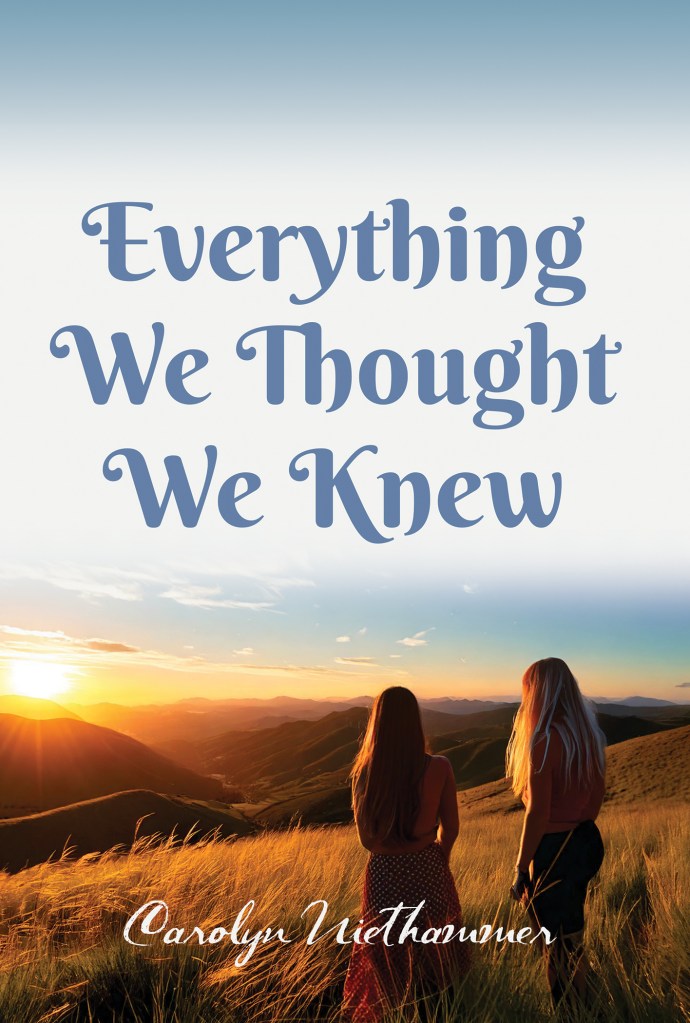
I’m delighted to welcome Carolyn Niethammer and her book, Everything We Thought We Knew, to the blog.
Here’s the Blurb
In 1970, Christie left behind the comforts of L.A. and joined a New Age commune in rural Arizona. With the Vietnam War raging and the counterculture movement in full swing, she hoped to find a community to create a better society. But building a new culture is no easy task, especially when free love, psychedelics, and a war protest gone horribly wrong are thrown into the mix. Important secrets follow them beyond the commune.
Put on your tie-dyed shirt and come to Bella Vida as the friends try to change the rules of modern society, then face the repercussions of when middle age sets in.
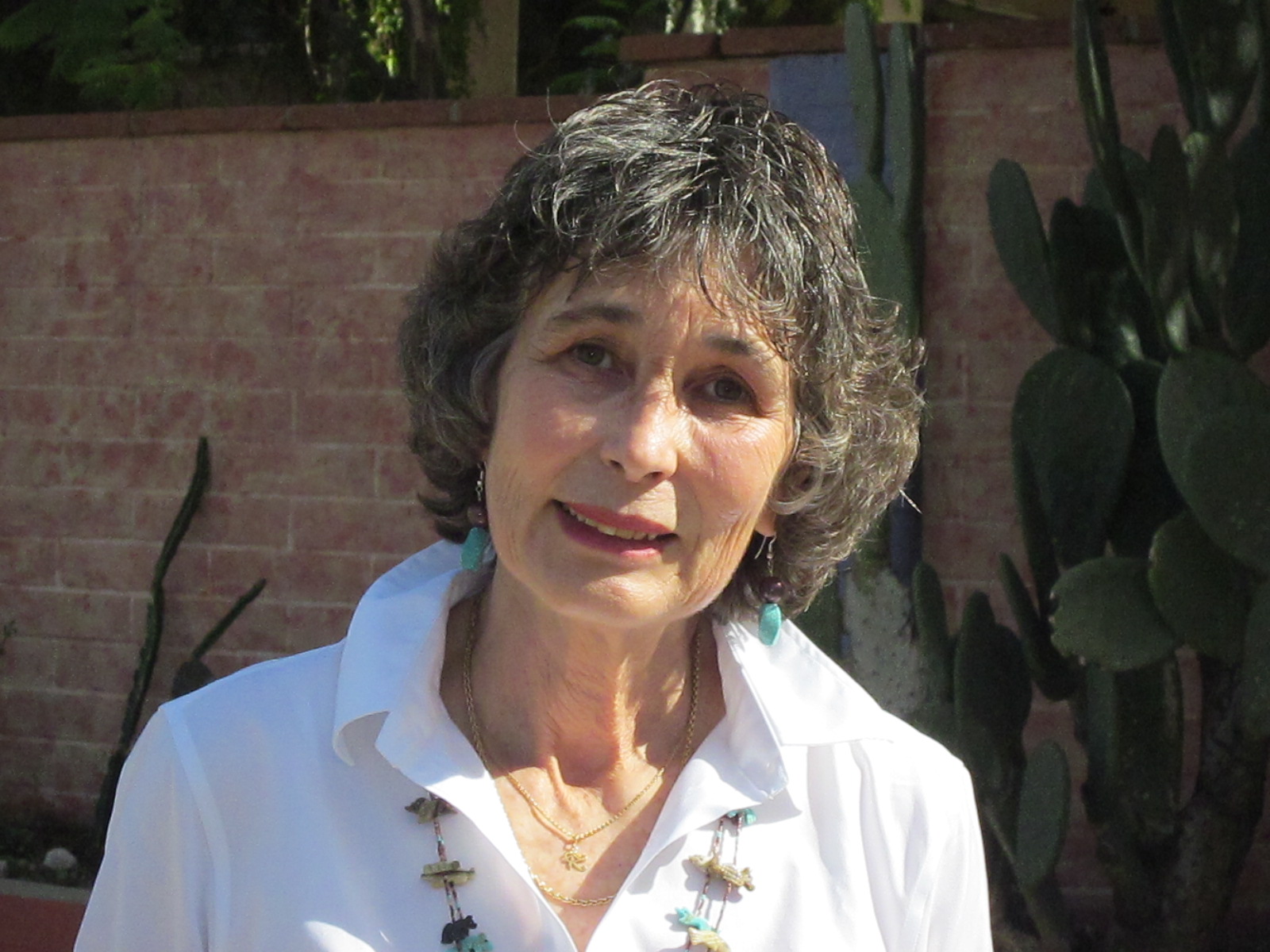
In the 1970s Carolyn Niethammer visited communes throughout the West and settled in an Arizona artists’ community for many years. Those years were important to who she became as she learned to gather wild foods and wrote several cookbooks centered on edible plants.
In “Everything We Thought We Knew” she hopes to shed light on an important part of American history where young people were advocating for peace in Vietnam War protests and fled to communes, seeking a lifestyle apart from the commercialism and isolation that had overtaken society.
On this day in history, the anniversary of the battle of Maserfeld in either 641 or 642. I thought I’d share some photos and book recommendations
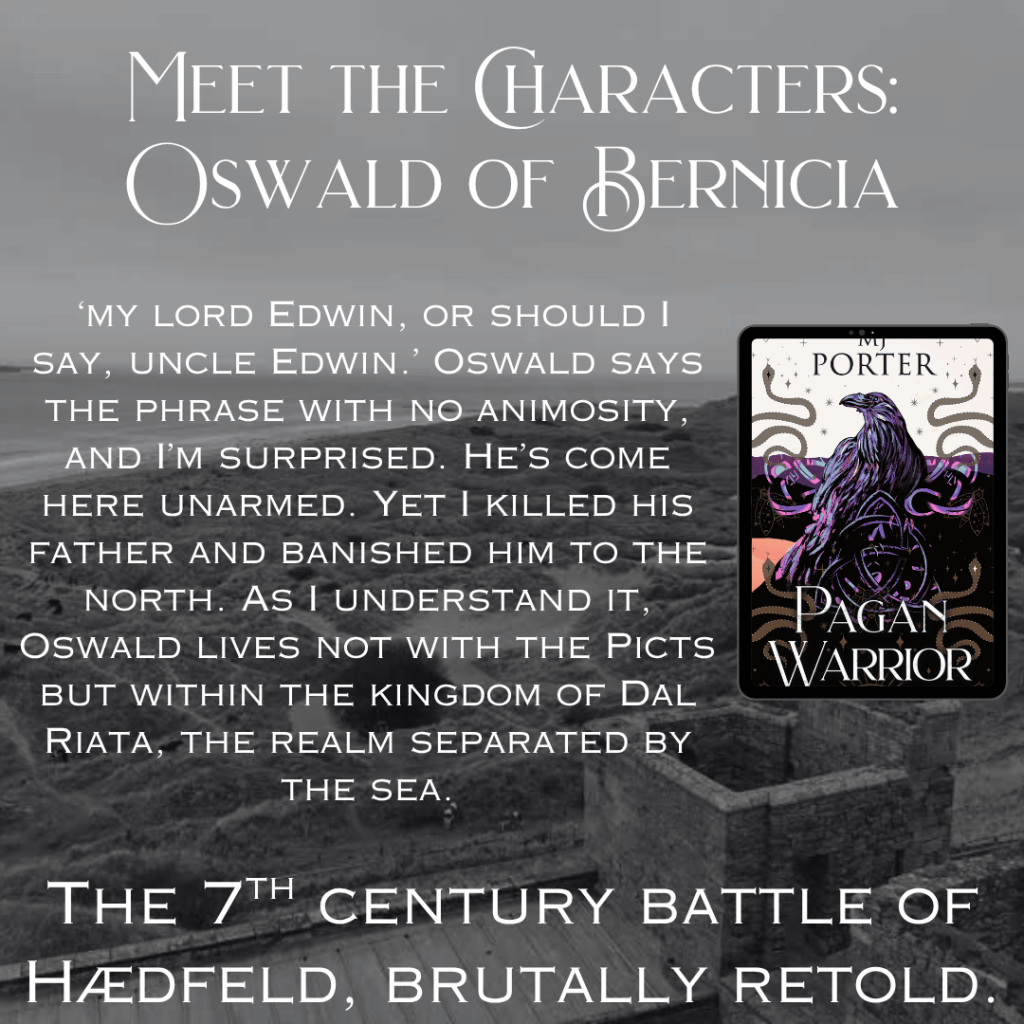
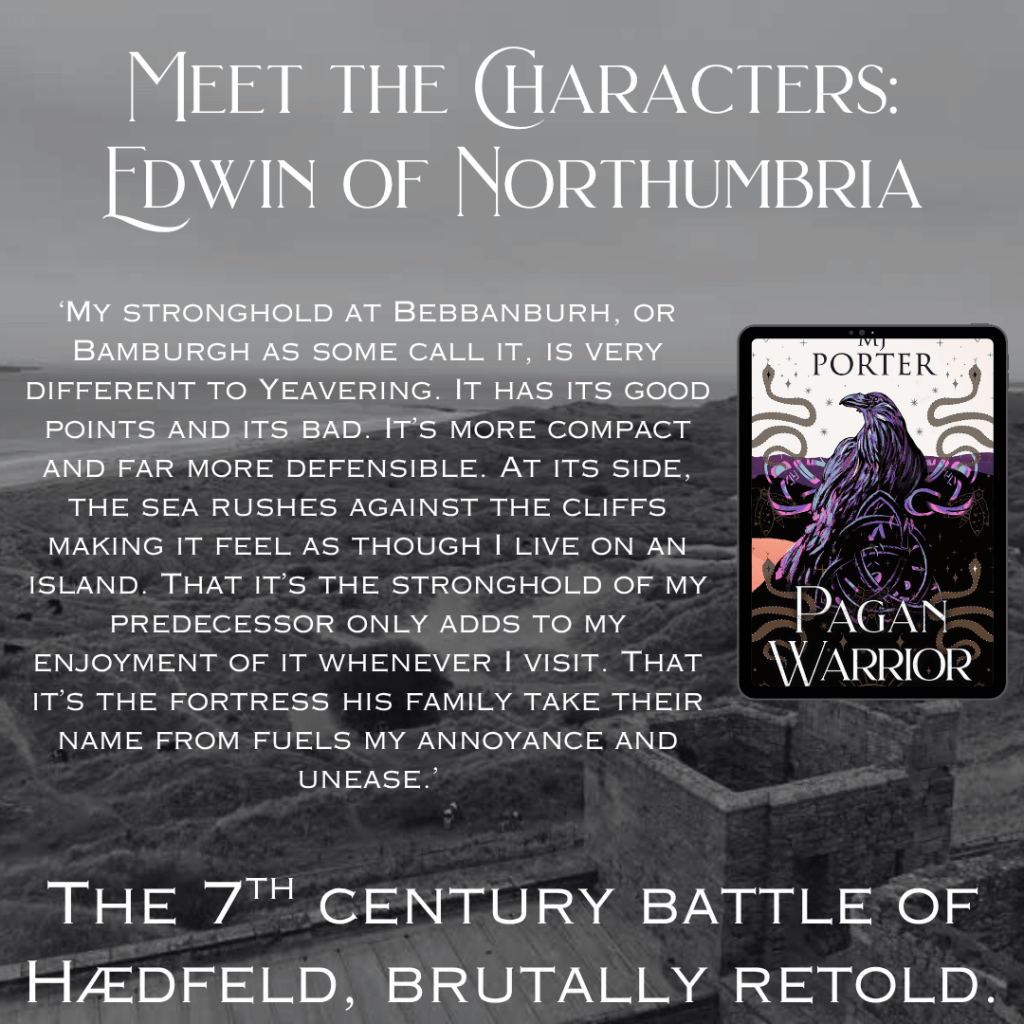
It’s the anniversary of the Battle of Maserfeld on August 5th (641 or 642), fought between Penda of Mercia (go Penda) and his allies, and Oswald of Northumbria and his allies, so I thought I’d reshare some photos I took while writing the Gods and Kings trilogy of Bamburgh Castle and Northumberland in general, which was the home of Oswald of Northumbria. Admittedly, the battle of Maserfeld is said to have taken place at Oswestry on the Welsh border with Mercia, but I didn’t go there, although I certainly visited as a child.
‘A.D. 641/642. This year Oswald, king of the Northumbrians, was slain by Penda, king of the Southumbrians, at Mirfield, on the fifth day of August; and his body was buried at Bardney. His holiness and miracles were afterwards displayed on manifold occasions throughout this island; and his hands remain still uncorrupted at Barnburgh. The same year in which Oswald was slain, Oswy his brother succeeded to the government of the Northumbrians, and reigned two less than thirty years.’
(Taken from the online version of the Anglo Saxon Chronicle, a ninth century creation so, not very contemporary).
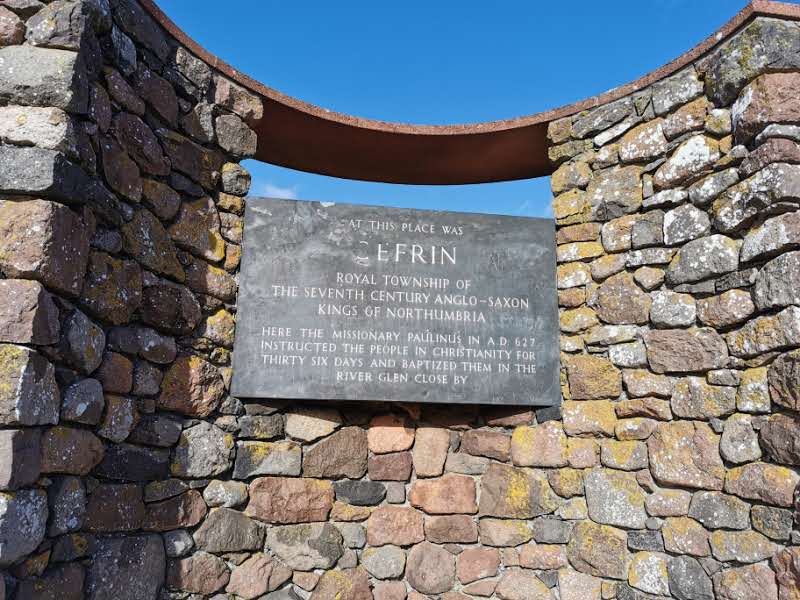
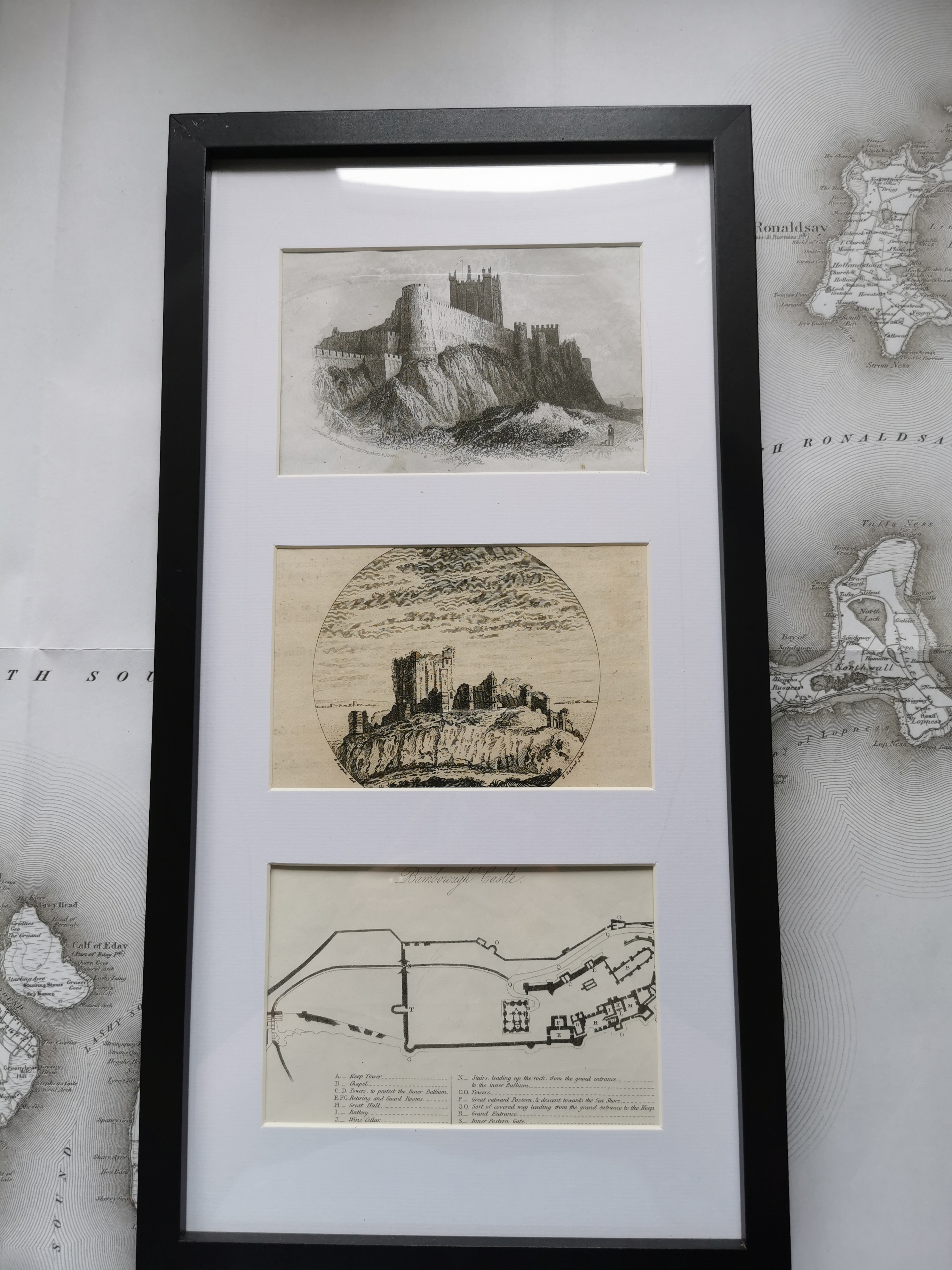
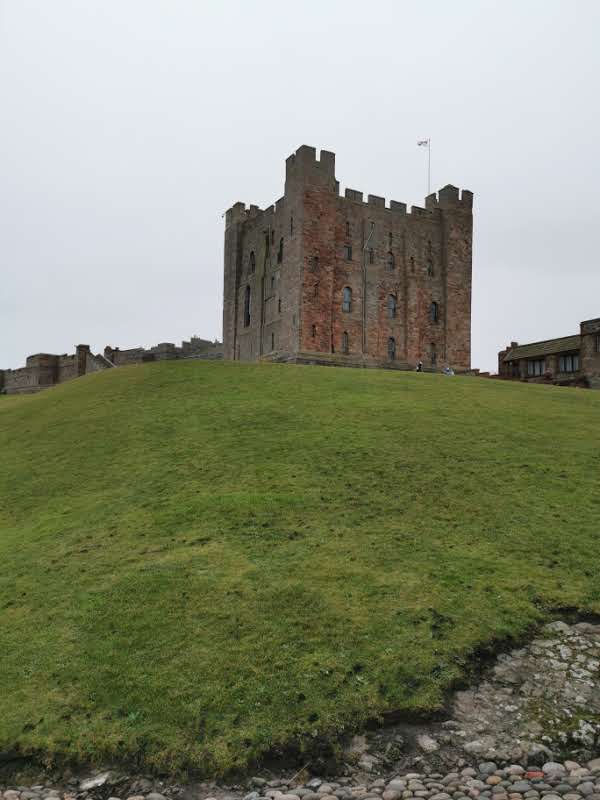
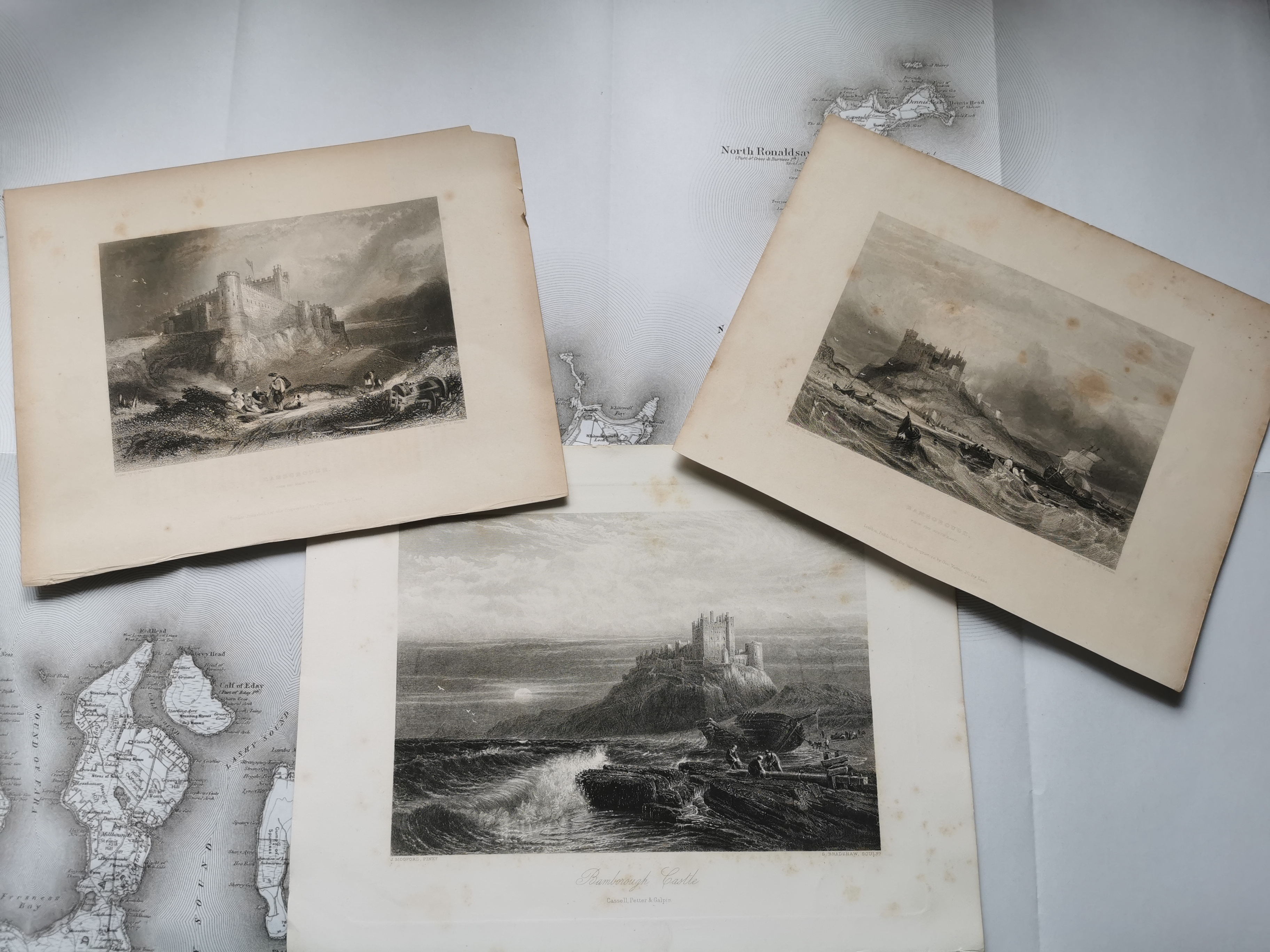
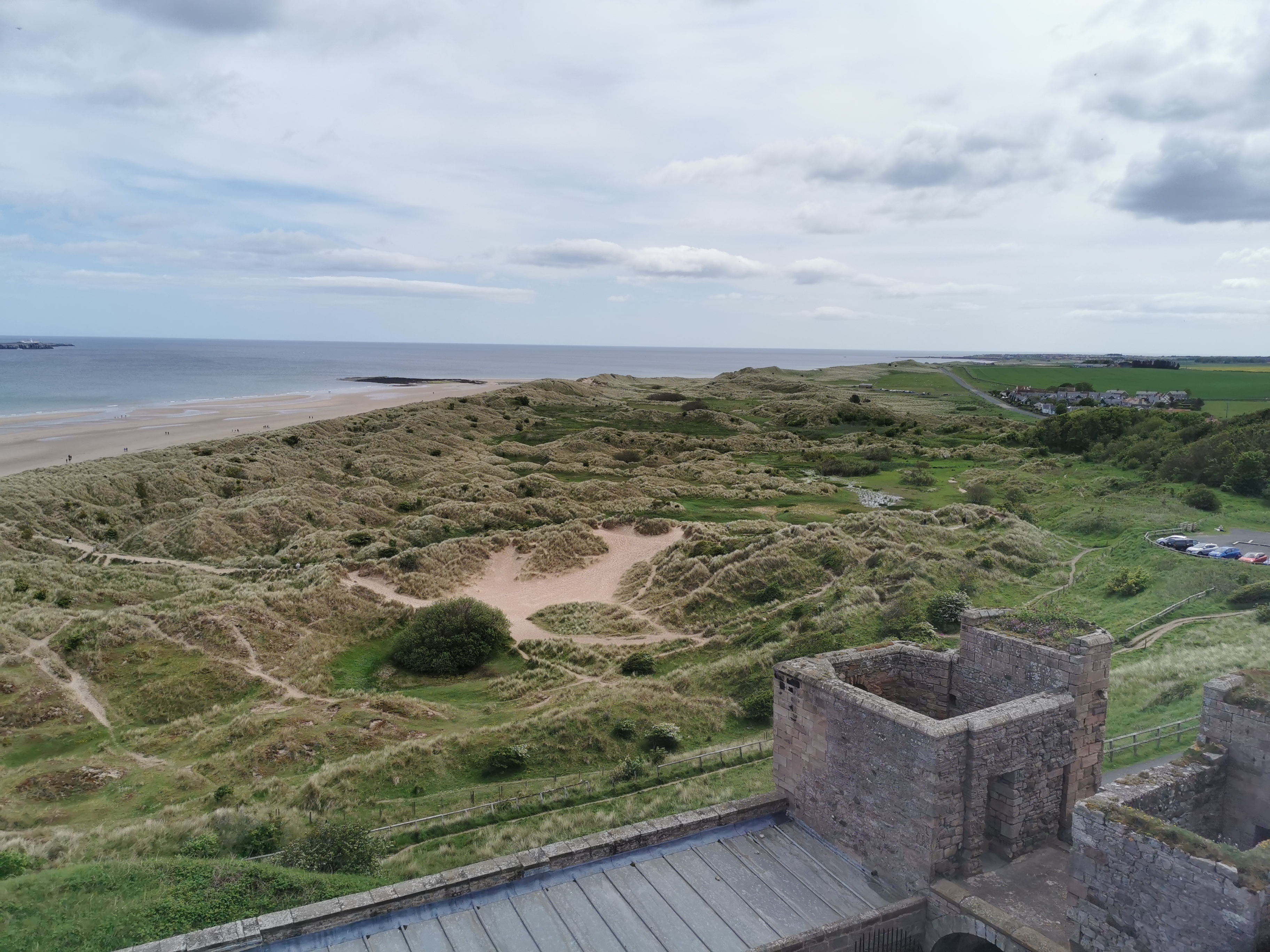
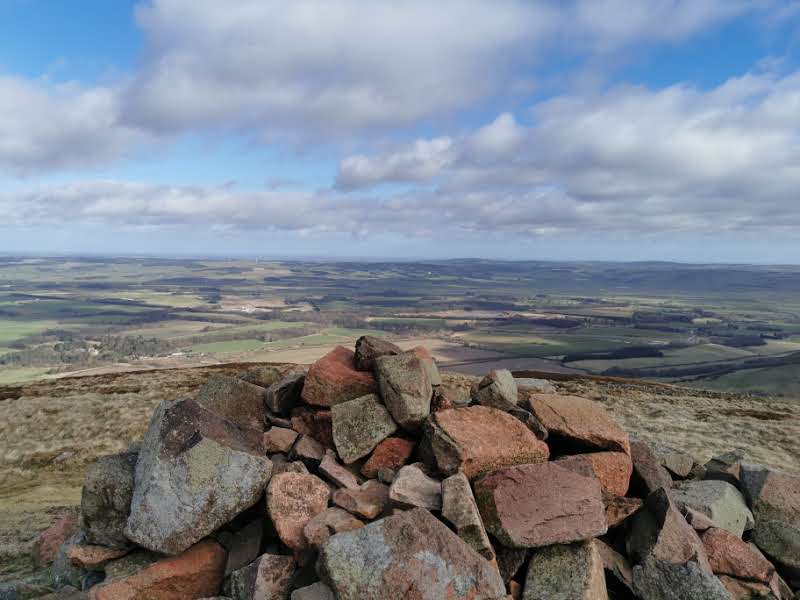
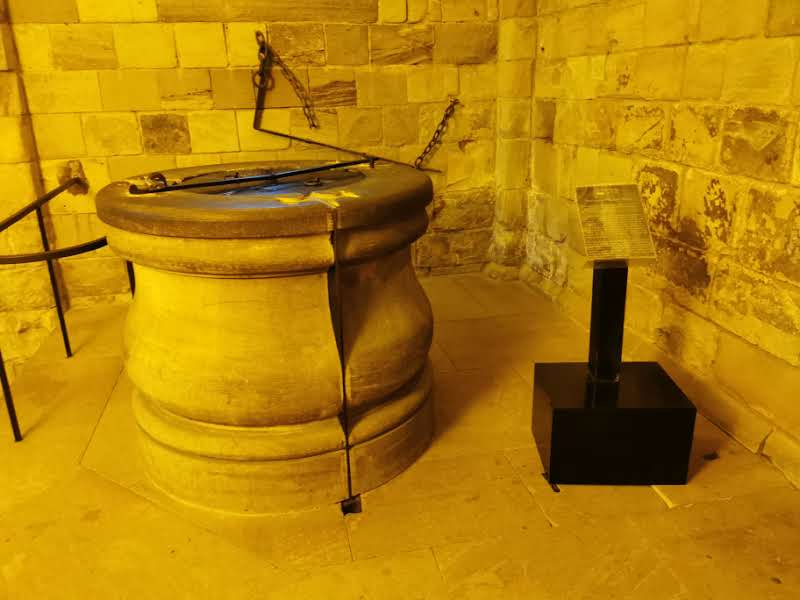
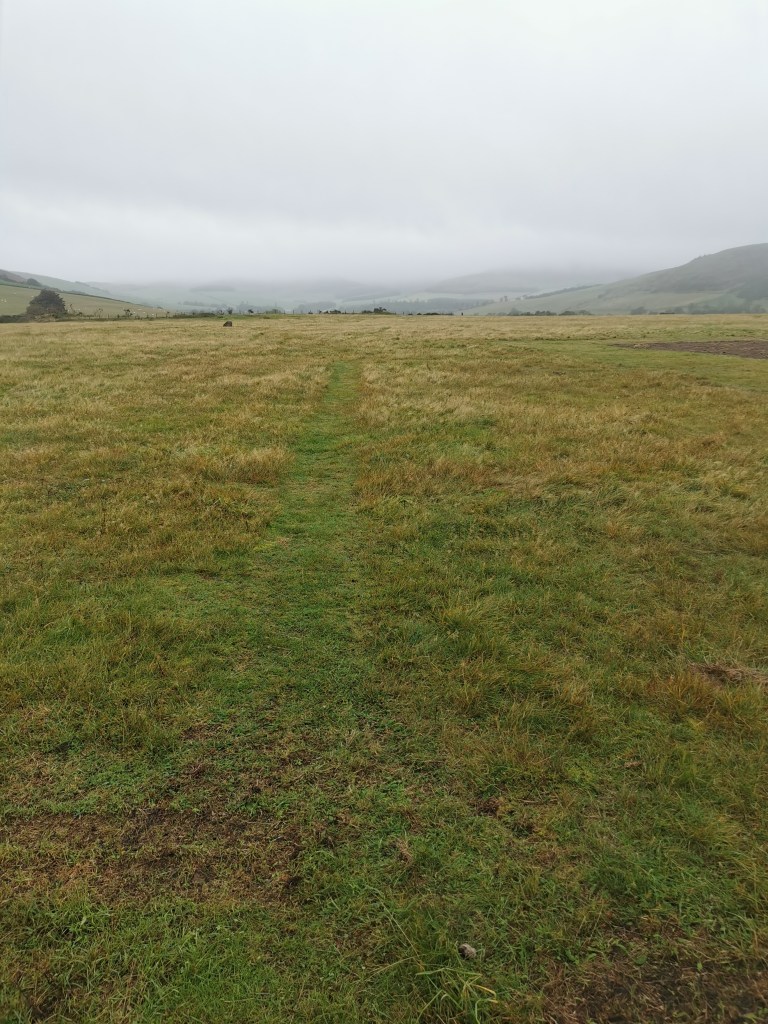
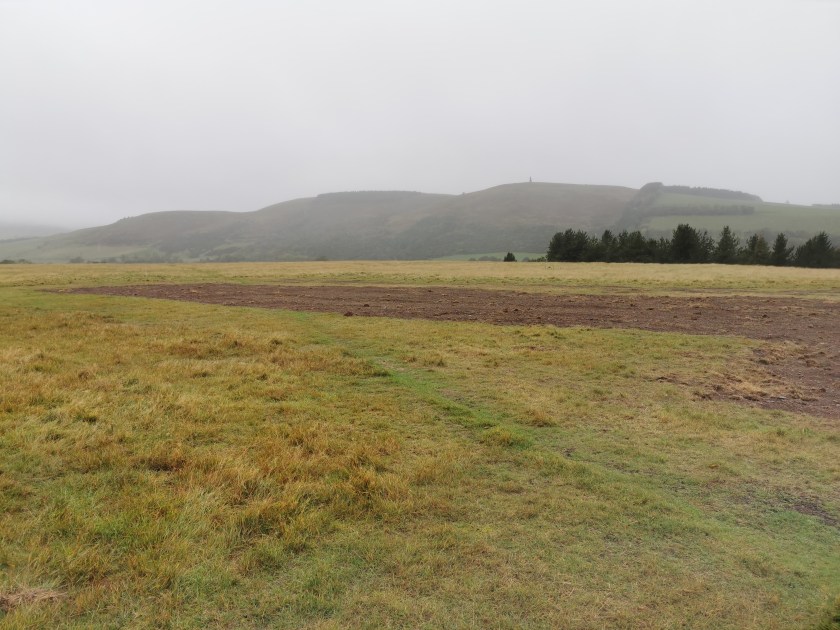
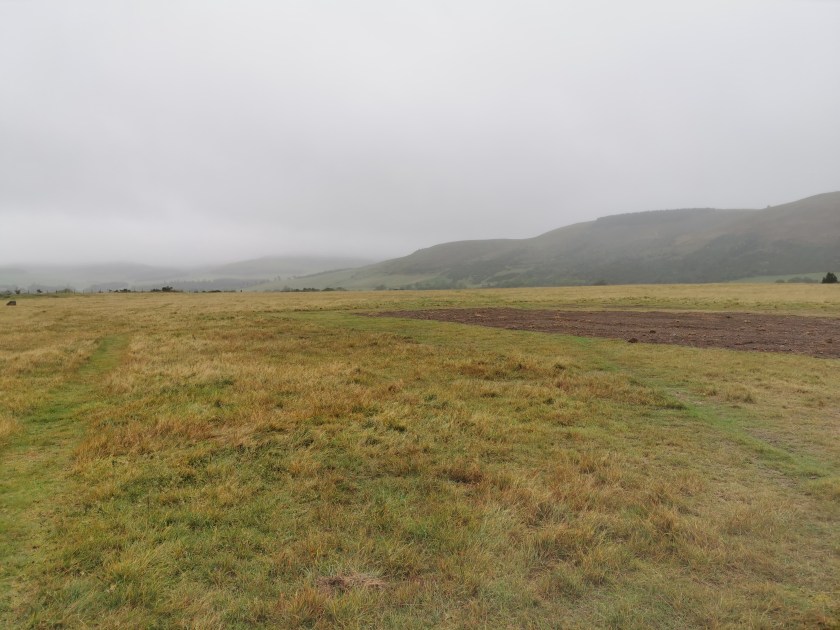
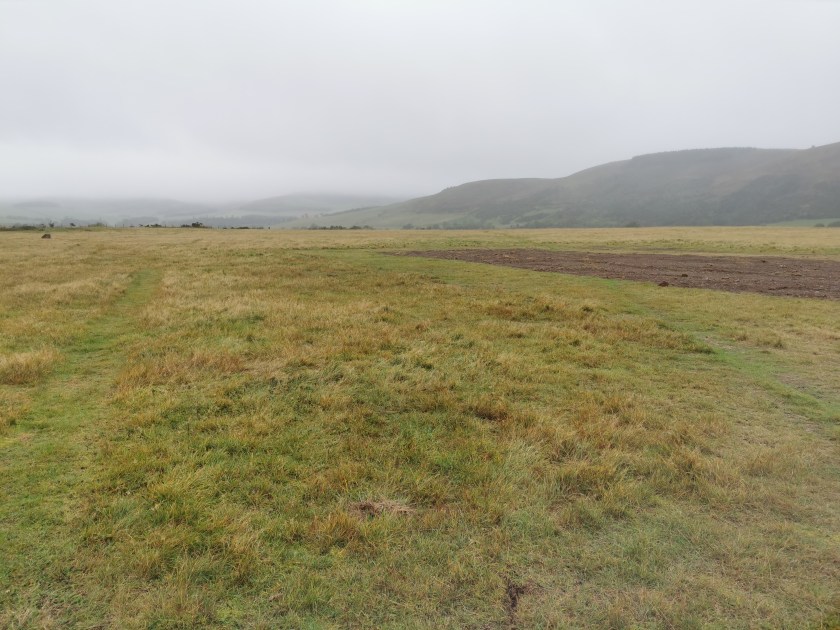
Ad Gefrin, a Northumbrian royal palace, although no longer visible above groundAntique images of Bamburgh CastleBamburgh Castle,or rather, the keep, in its depths is the oldest part of the castleMore antique prints of Bamburgh CastleThe view from Bamburgh CastleLooking towards the coast from Yeavering Bell, above Ad RefrainThe well and well cover at Bamburgh Castle in the keep – the oldest part of the castle
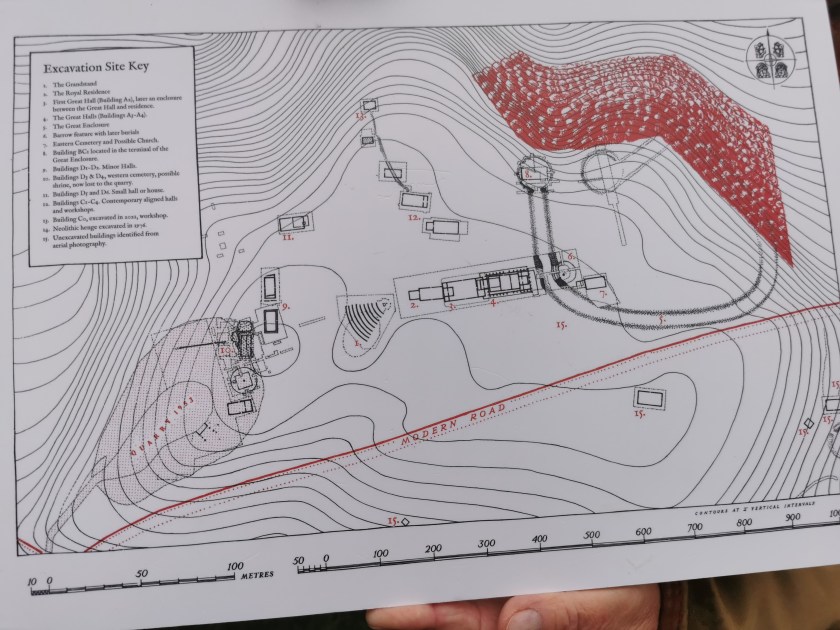
The original excavation map (I think)
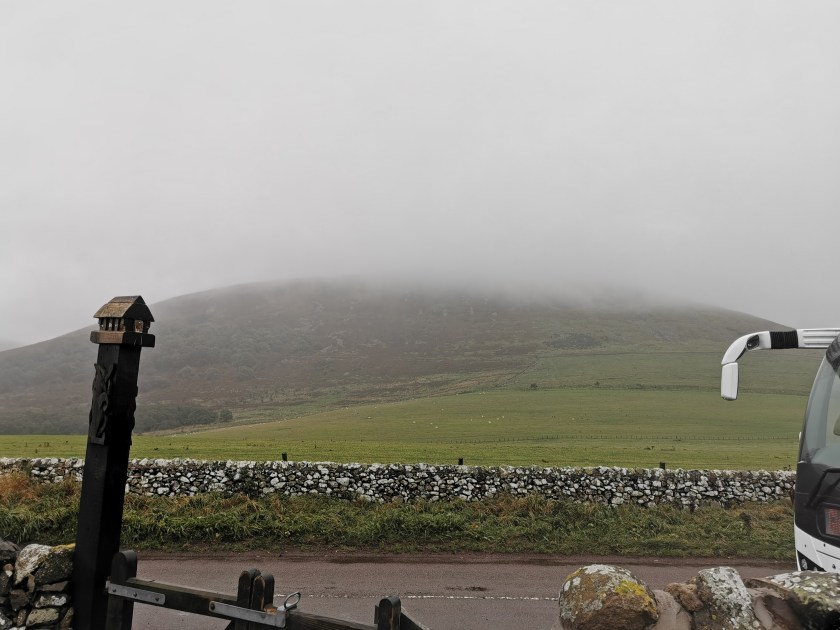
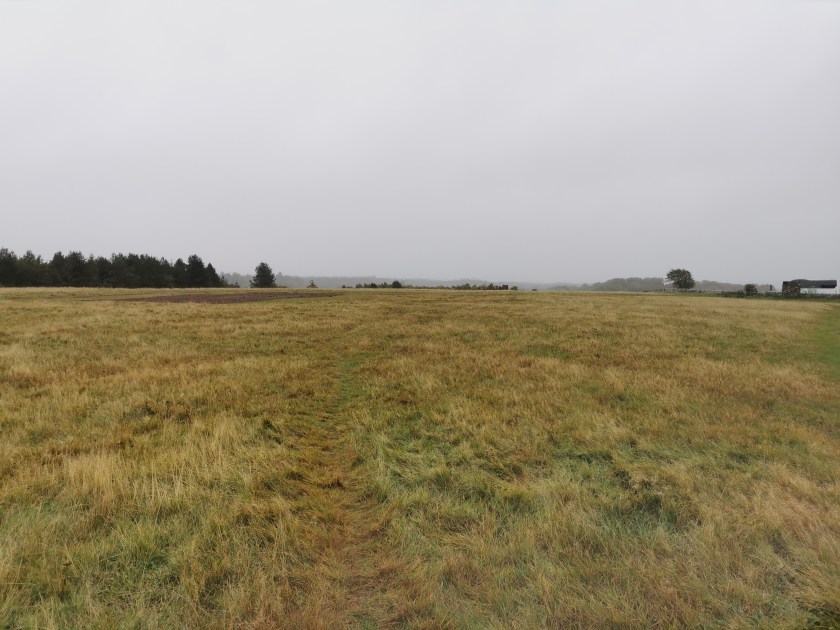
Looking towards Yeavering Bell (there’s a picture above of what the view looks like on a clear day)
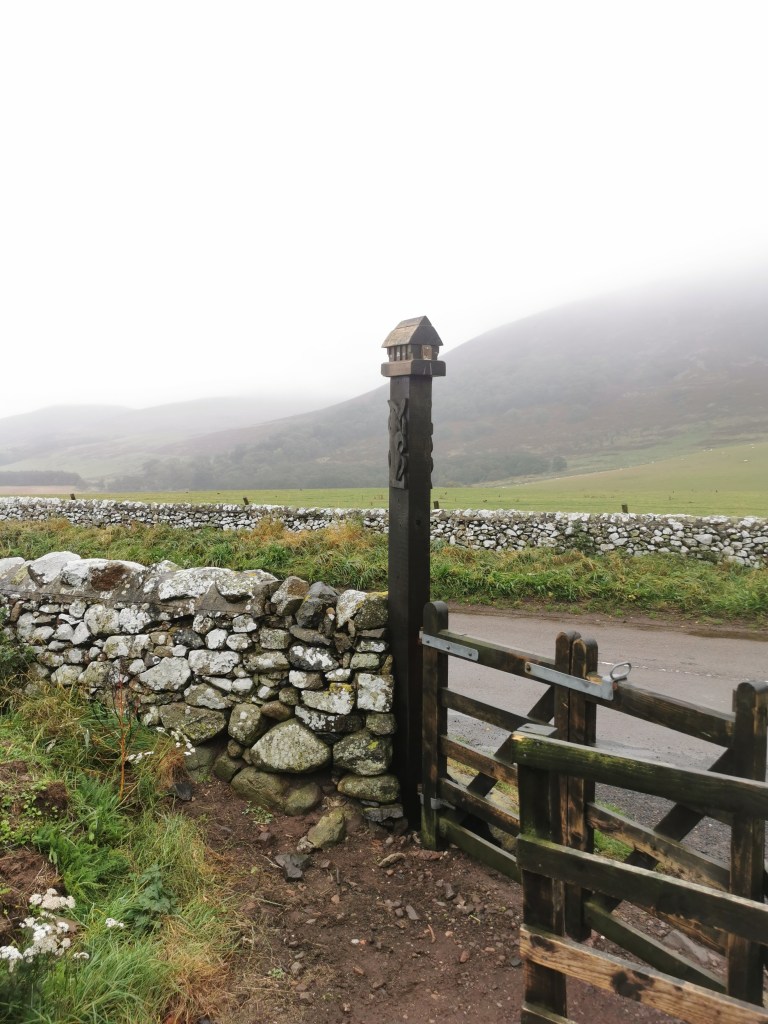
The entrance to Ad Gefrin
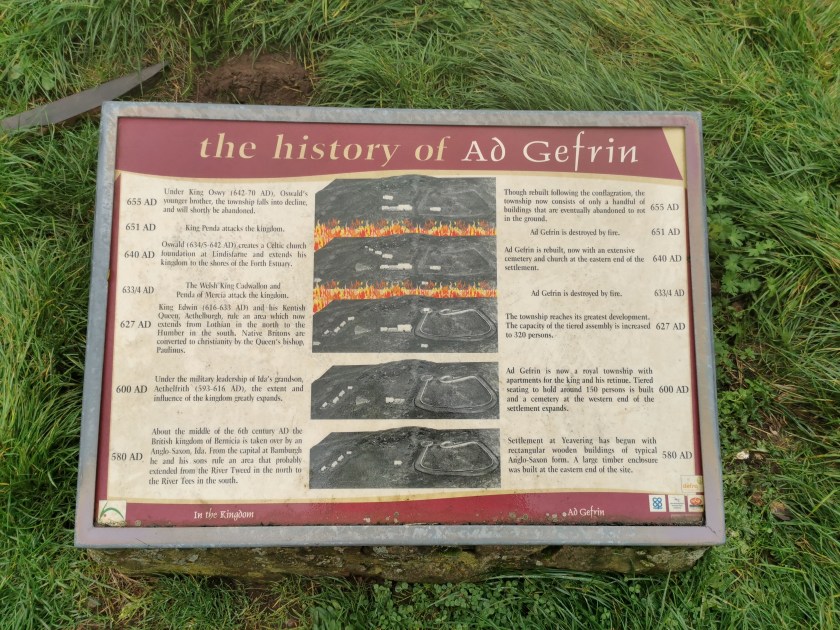
The history of Ad Gefrin board from the site
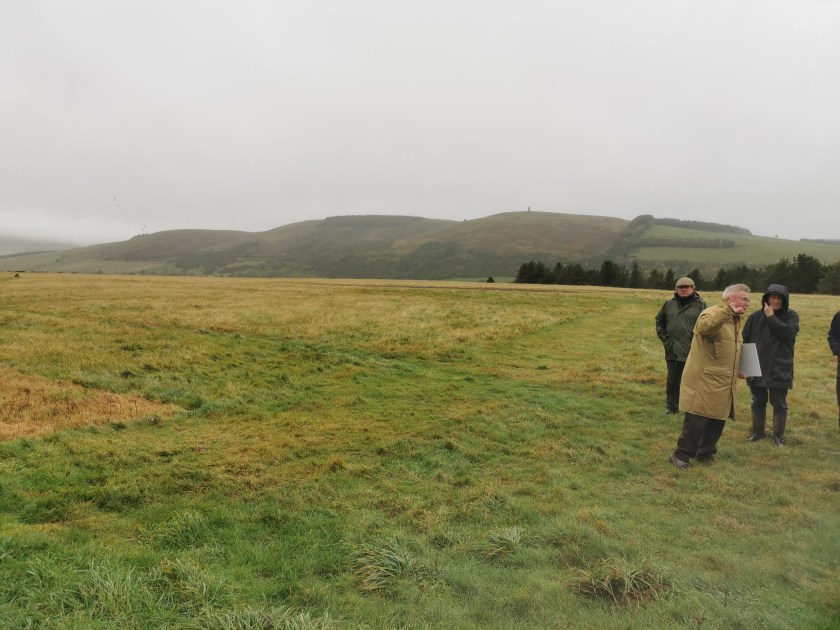
The remains of Ad Gefrin, explained to us by archaeologist Roger Miket
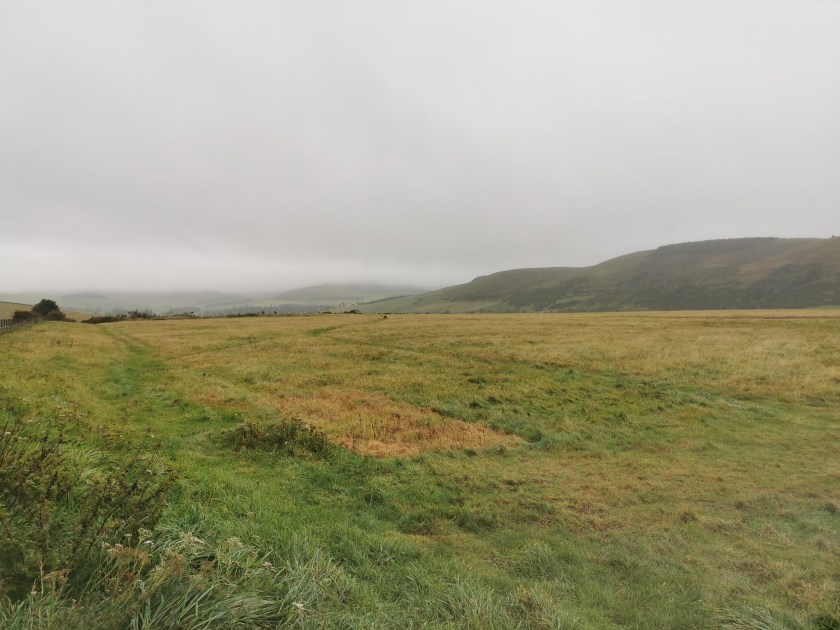
More damp Ad Gefrin
And more
And more
And more
And more
And more
The site of the 2023 excavation
And more
And more
And more
You can hear the archaeologist, Sarah Semple, talking about the recent excavations at Ad Gefrin in this Society of Antiquaries Lecture. https://www.youtube.com/watch?v=0A7eRTvajtA
You can also visit the Ad Gefrin trust website here.
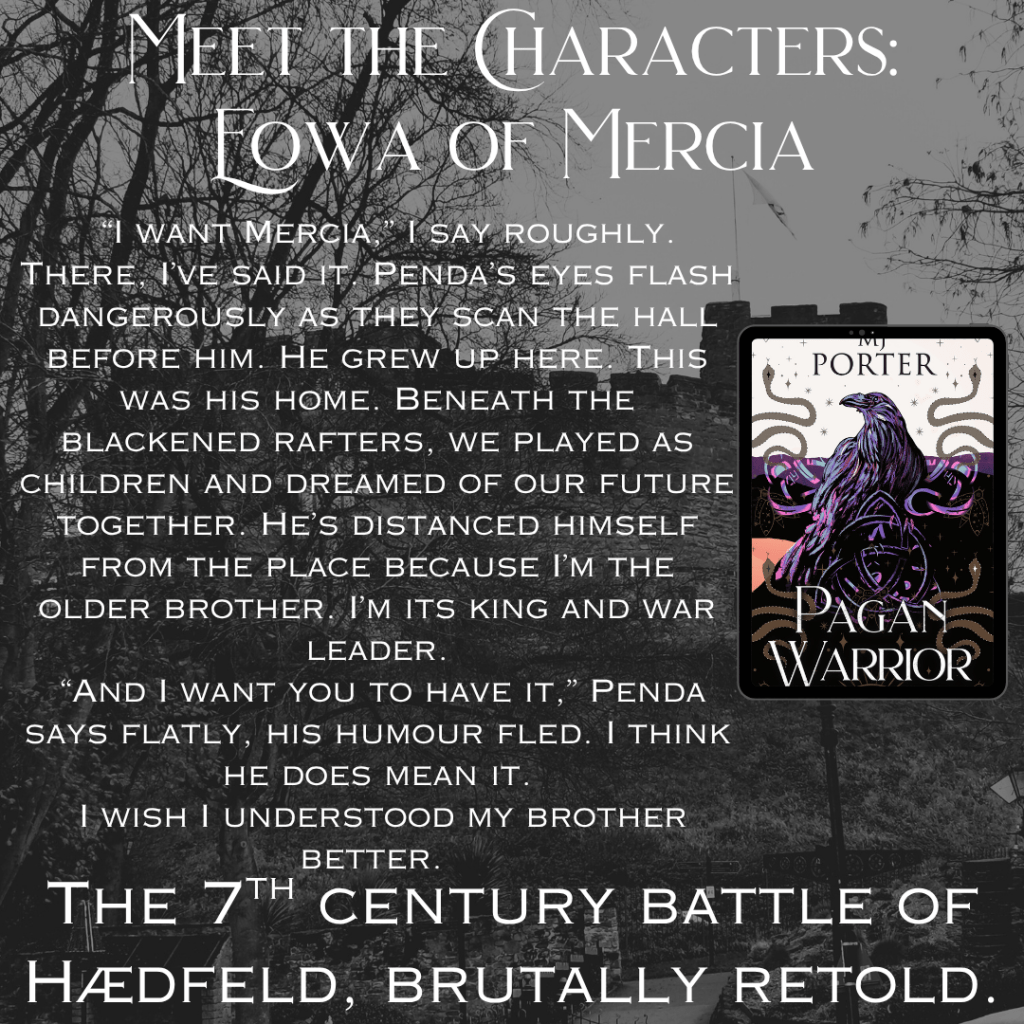
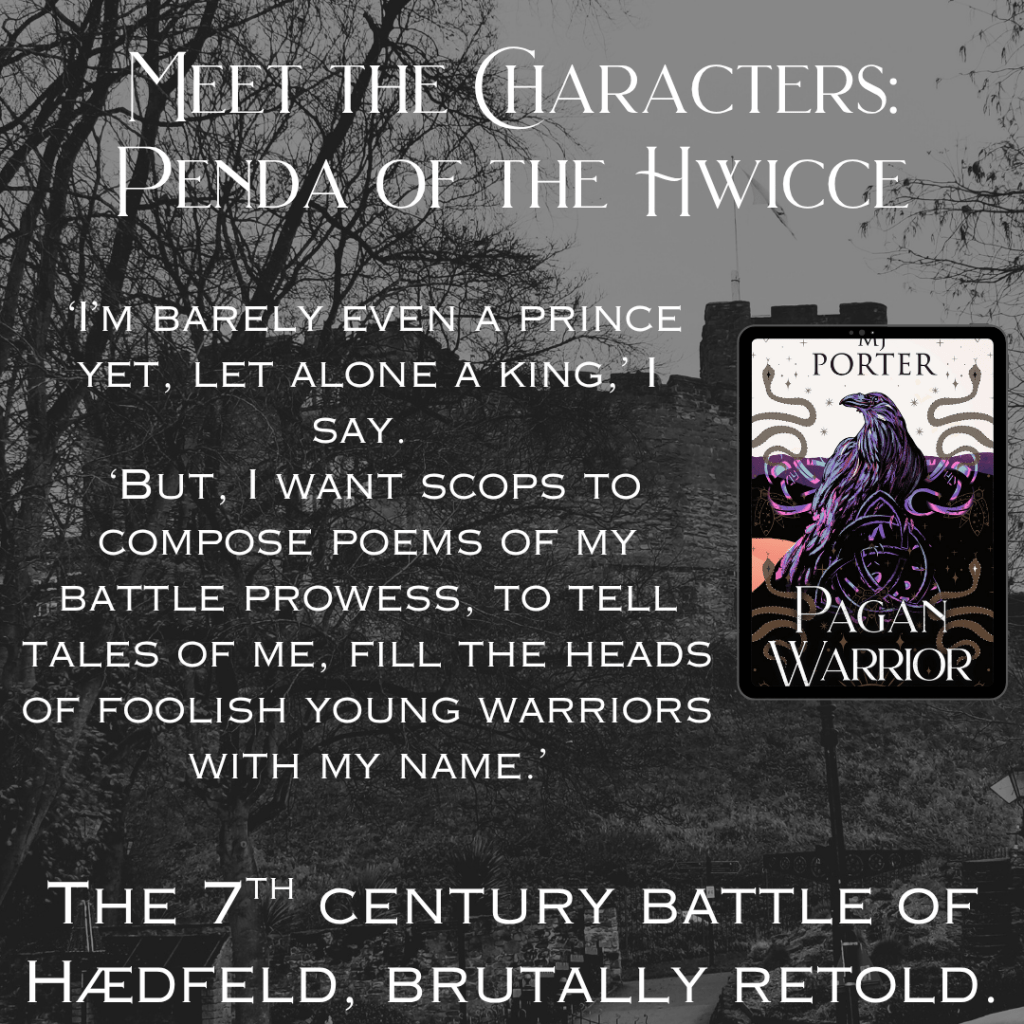
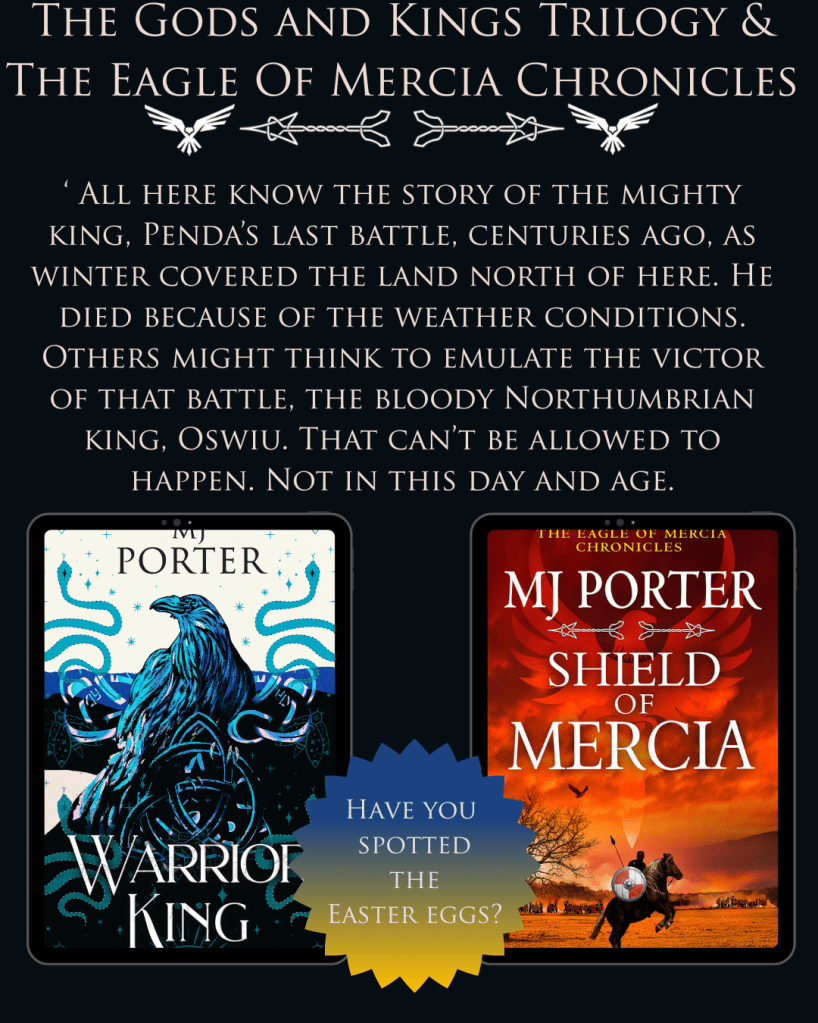
The battle of Maserfeld is the book Pagan King follows in my Gods and Kings Trilogy (the second book in the trilogy). I had a lot of fun writing it, making use of locations I visited as a child to make them come alive, and even setting one of the fictional battles in the lead up to the clash at Maserfeld, close to where I used to live.
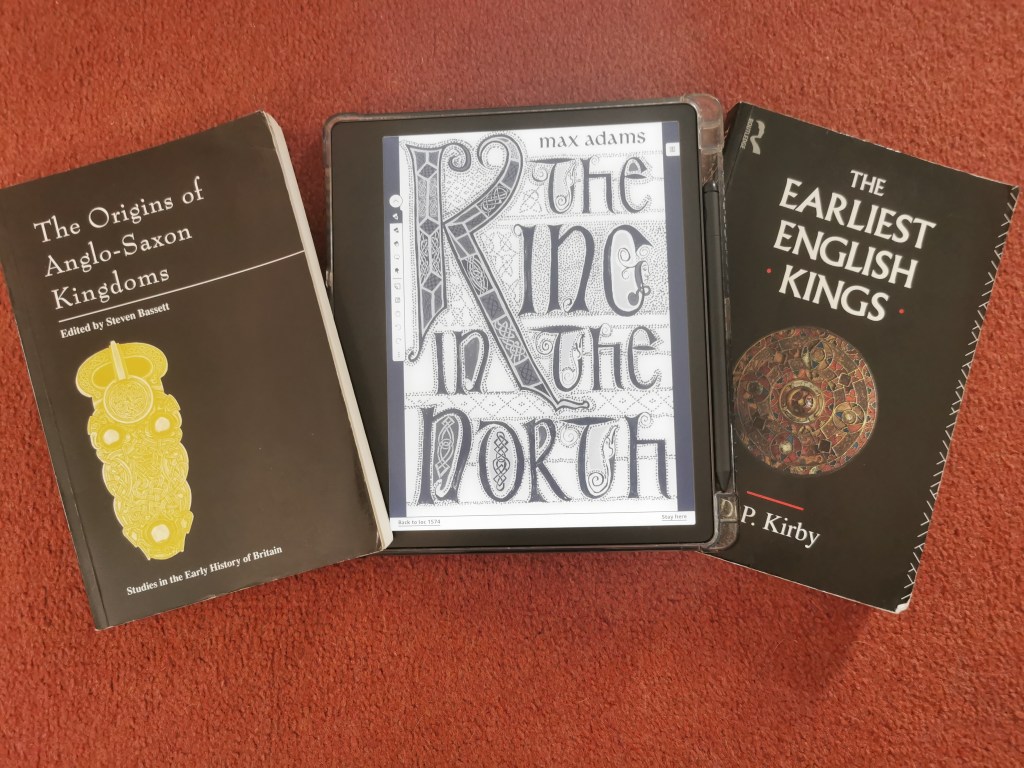
If you’re curious about the period, I highly recommend these non-fiction titles. Perhaps start with Max Adams’ The King in the North. It’s also the most modern of the three. The other two were texts I read while at university (so yes, decades ago:))
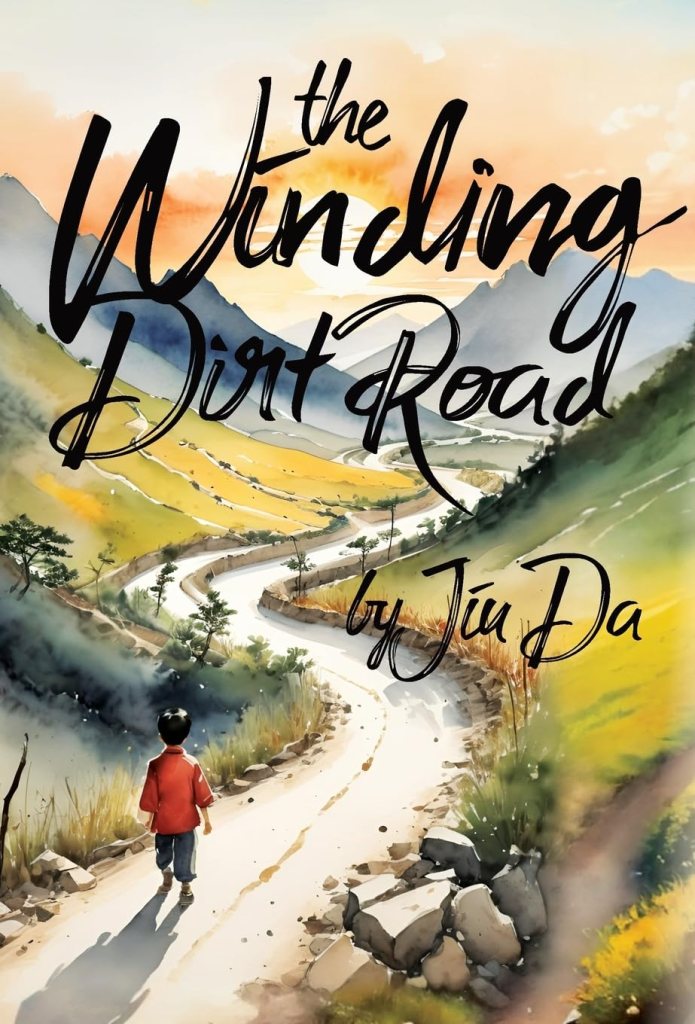
I’m delighted to welcome Jiu Da and his book, The Winding Dirt Road, to the blog #TheWindingDirtRoad #HistoricalChineseFiction #PoliticalFiction #HistoricalFiction #BlogTour #TheCoffeePotBookClub
I’m delighted to welcome Jiu Da and his book, The Winding Dirt Road, to the blog with an excerpt.
Excerpt
“Even though chance favored the prepared mind, discovering the plant was hardly a serendipity. In truth, it was a curse in disguise – a precipice gamble for a desperate cure, a lethal quest for a mortal end, poison for poison.”
~ The Mother Of All Antidotes
Here’s the Blurb
Written as an antithesis to all first-hand and second-hand propaganda written by both Chinese and foreign writers for China in the good part of the 20th century in a fictional form, this collection, through different times and lands, gives insights into how human docile nature and characteristics are manipulated and brought about cultural and social corrosion over the century. The outcome thus sees “a monumental loss breathtakingly massive than any period that preceded it.” Subsequently, it foreshadows a system that “would bring out not the best but the worst in people, against people, any people.” (Event Horizon)
The first story is written as an introduction in addition to the prologue. From there, the collection proceeds with interrelated subjects or topics, building up causes and factors. At every turn, it gathers momentum and convenes halfway through the book to form the major components of critical perspectives at a juncture.
Hoarded in the depth of memories of the past decades, this has been a work long overdue.
For years, Jiu Da has been intrigued by the question of whether the environment makes us who we are or whether we are the ones that shape our environment. For the good parts of early years, he stubbornly believed that motivation, talent, and effort could change the outcomes. It did not.
It was not until the virus hit while finding himself perching at home that he came to accept that the environment is indeed the hand that shapes human behavior.
It was during this time that he began his first work, drawing from his love in literature, history and a lifetime of seemingly useless yet fascinating knowledge hoarded in the depth of his mind.
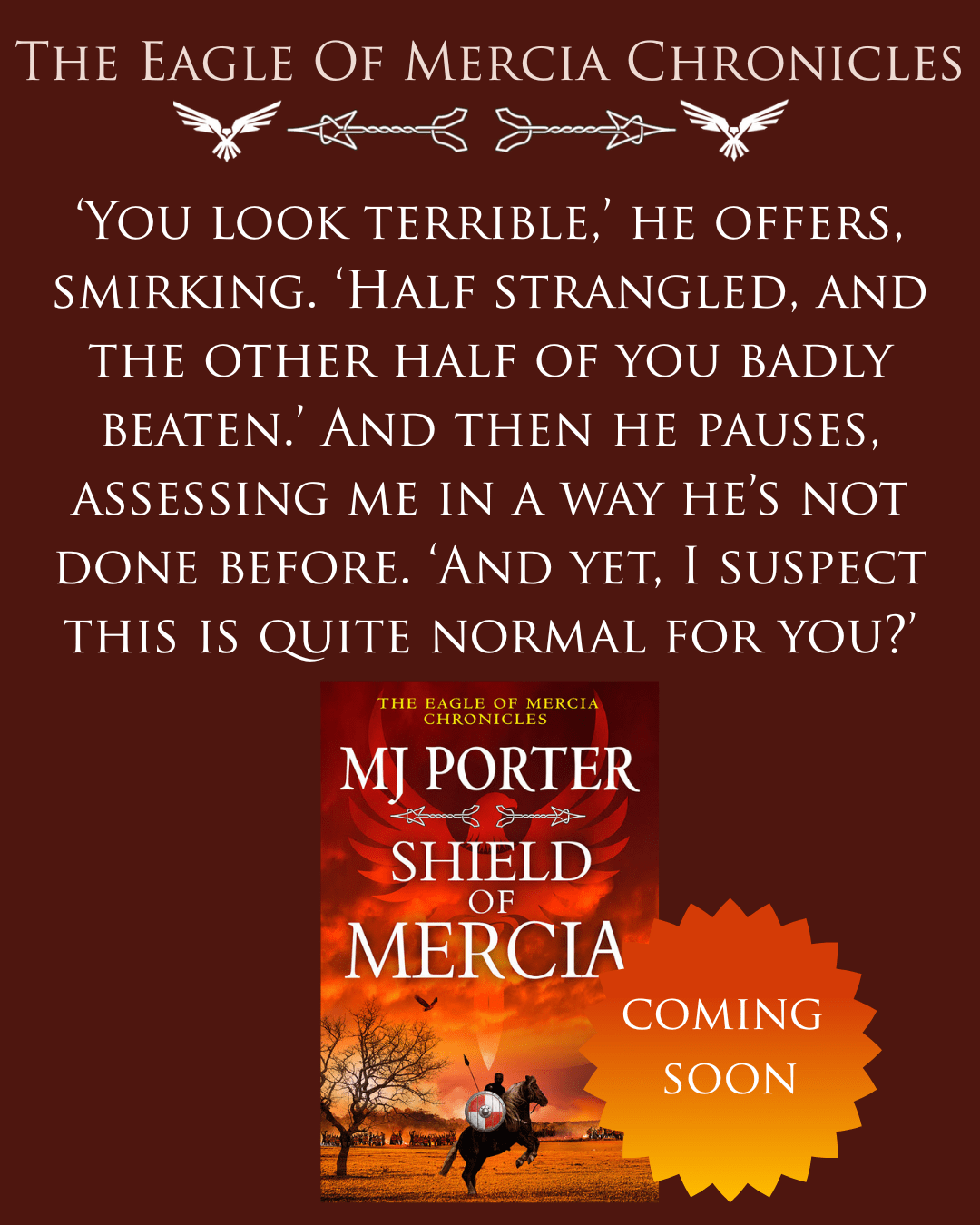
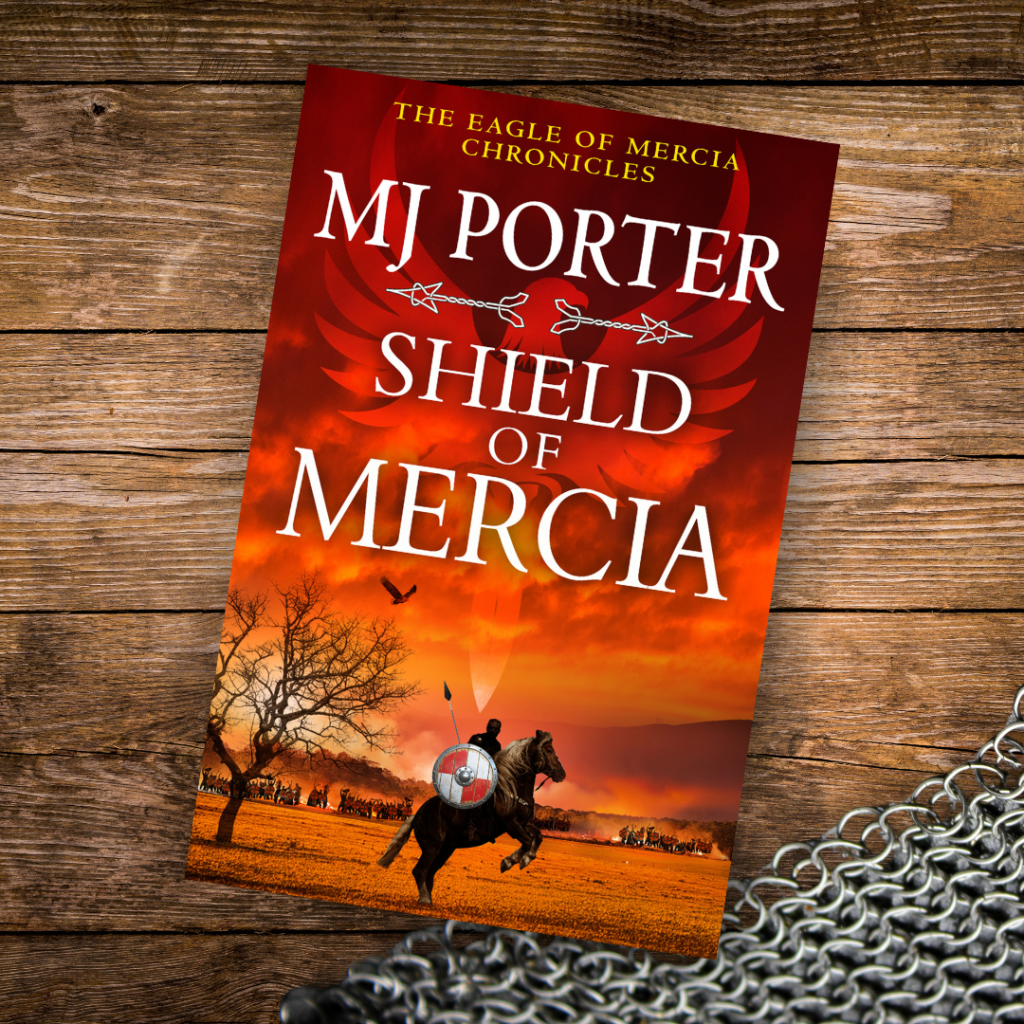
It’s cover reveal time for Shield of Mercia. Return to the world of young Icel. #covereveal #preorder #histfic #EasterEggs
Mercia is triumphant. Her king is safe. But Wessex was never Mercia’s only enemy.
Tamworth, AD836
Following a brutally cold winter, King Wiglaf of Mercia is in the ascendancy. Even Wessex’s Archbishop of Canterbury extraordinarily ventures to Mercia to broker a religious accord. But, can the hard-won peace prevail?
Viking raiders threaten Wessex. These blood-thirsty warriors are fast, skilful and have no reticence about killing those who stand in their way. Their aim isn’t to rule but to overwhelm, slaughter and take ill-gotten wealth.
King Wiglaf is no fool. As the Vikings push to overwhelm Wessex, Mercia’s lands look insecure. King Wiglaf needs the shields of Mercia’s warriors to prevent the overwhelming advancement of their deadliest enemy yet.
To save Mercia, Icel must first prevail over the two men who mean to end his life; King Ecgberht of Wessex and his son, Æthelwulf of Kent and only then the marauding Viking army for whom boundaries have no meaning.
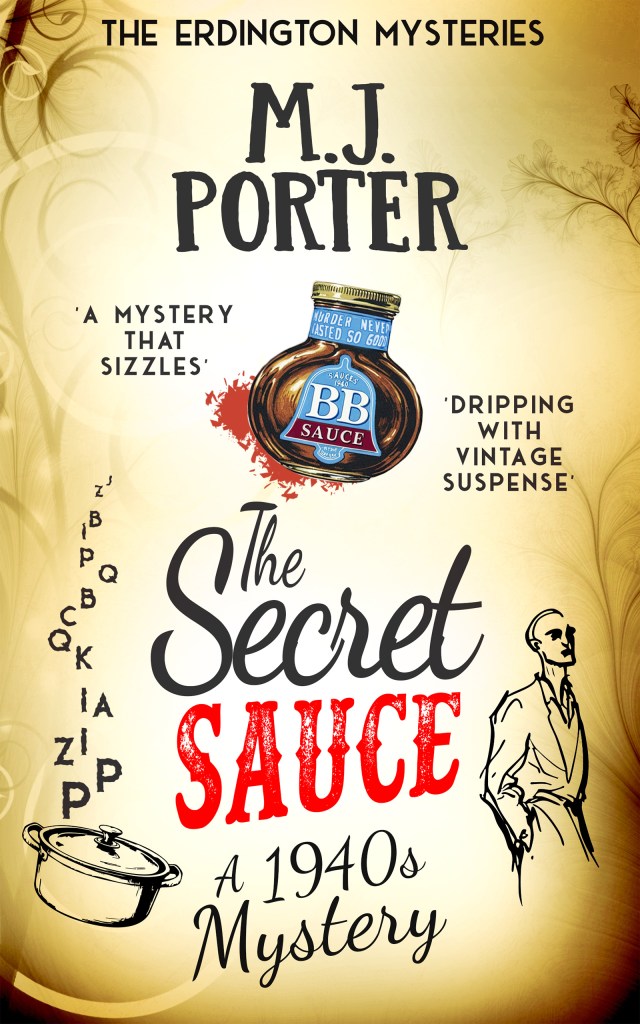
I’m super excited to share the cover for The Secret Sauce, the third book in The Erdington Mysteries #histfic #historicalmystery
Here’s the blurb
Birmingham, England, November 1944.
Chief Inspector Mason of Erdington Police Station is summoned to a suspicious death at the BB Sauce factory in Aston on a wet Monday morning in late November 1944.
Greeted by his enthusiastic sergeant, O’Rourke, Sam Mason finds himself plunged into a challenging investigation to discover how Harry Armstrong met his death in a vat containing BB Sauce – a scene that threatens to put him off BB Sauce on his bacon sandwiches for the rest of his life.
Together with Sergeant O’Rourke, Mason follows a trail of seemingly unrelated events until something becomes very clear. The death of Harry Armstrong was certainly murder, and might well be connected to the tragedy unfolding at nearby RAF Fauld. While the uncertainty of war continues, Mason and O’Rourke find themselves seeking answers from the War Office and the Admiralty, as they track down the person who murdered their victim in such an unlikely way.
Join Mason and O’Rourke for the third book in the quirky, historical mystery series, as they once more attempt to solve the impossible in 1940s Erdington.
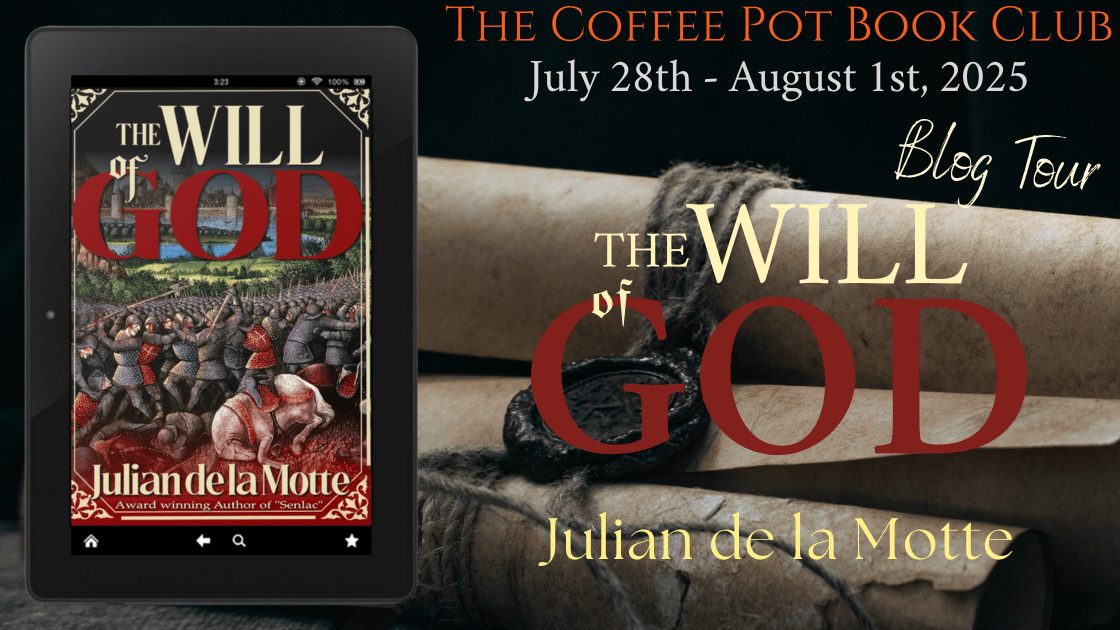
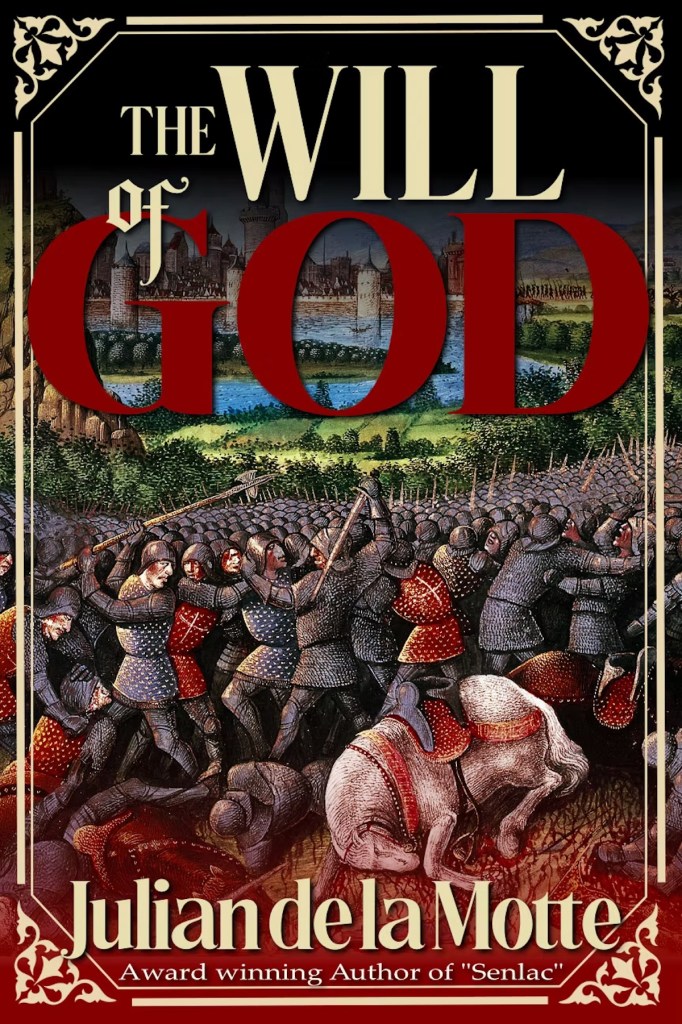
I’m delighted to welcome Julian de la Motte and his book, The Will of God, to the blog #TheWillOfGod #HistoricalFiction #Crusades #WilliamTheConqueror #BlogTour #TheCoffeePotBookClub
I’m delighted to welcome Julian de la Motte and his book, The Will of God, to the blog with an excerpt.
Excerpt
The courtyard of the Earl Warenne was the usual clutter and muddle of people and diverse objects scattered about. Men and women in the dun and green and grey of homespun cloth blended with the earth colours of the ground, the quagmire, the swamp of churned mud and excrement. They either strode purposefully through it all or else attempted to skirt delicately around the more obvious mounds of rubbish and ordure. The more colourfully attired, house servants and retainers for the most part, avoided the area when they could, preferring other entrances and exits to the Great Hall.
A cart with one wheel off for essential repairs was proving a major obstruction and people cursed as they edged around it and the blaspheming wheelwright and his apprentices with their heavy hammers working on a broken wheel. Across the way, over in the corner of the yard a large pig lay sprawled upon its back, slaughtered out of proper season. For some reason, it had survived the usual November cull. Scrubbed clean of bristles, a butcher was busily at work with his knife and axe, delving expertly for the liver and kidneys.
Despite the cold of the day and the earliness of the season there was a halo of flies circling the butcher and at his feet a coil of grey steaming intestines were attracting the interest of a trio of dogs. Wretched creatures, ribs showing like the staves of ruined boats, they sidled towards the pile of offal and retreated again from the slaughterer.
The butcher’s boy, no more than a child staggered away, burdened with a heavy bucket of blood that slopped over the sides as he moved. There would be blood pudding and sausages made of scraps of inferior meat stuffed within the intestines ready by the afternoon.
Here’s the Blurb
“Deus Lo Vult!”
Gilles is the natural son of the Earl Waltheof, executed by William the Conqueror for supposed treachery. Raised in Normandy by Queen Matilda of England, Gilles is a young servant of Robert, Duke of Normandy, when the first call for a Holy War against the infidel and for the liberation of Jerusalem is raised in Christendom. Along with thousands of others, inspired by a variety of motives, intense piety mixed with a sense of adventure and the prospects of richness, Gilles becomes a key and respected follower of the Duke of Normandy and travels through France and into Italy to the point of embarkation for Constantinople and the land of the Greeks.
In this epic first phase of a long and gruelling journey, Gilles begins to discover a sense of his own strengths and weaknesses, encounters for the first time the full might and strength of the Norman war machine and achieves his much coveted aim of knighthood, as well as a sense of responsibility to the men that he must now lead into battle.
The Will of God is the literal translation of the Latin phrase “Deus Lo Vult”; a ubiquitous war cry and a commonly offered explanation of all the horrors and iniquities unleashed by the First Crusade of 1096 to 1099, when thousands of Europeans made the dangerous and terrifying journey to the Holy Land and the liberation of Jerusalem. It is the first of two books on the subject.
Praise for The Will of God:
“De la Motte has superpowers as a writer of historical fiction; he’s a warhorse of a writer bred to stun and trample the literary senses. You won’t stop turning the pages of The Will of God.”
~ Charles McNair, Pulitzer Prize nominee and author of Land O’Goshen
Julian de la Motte is a Londoner. He graduated from the University of Wales with a degree in Medieval History. He was further awarded a Master of Arts qualification in Medieval English Art from the University of York.
He studied and taught in Italy for nearly four years before returning to the U.K. and a career as a teacher, teacher trainer and materials designer before taking up a new role as a Director of Foreign Languages and of English as a Foreign Language.
Married and with two grown up children, He is now extensively involved in review writing and historical research, primarily on medieval history.
”The Will of God” [the first of two books on the subject of the First Crusade] is his third novel.
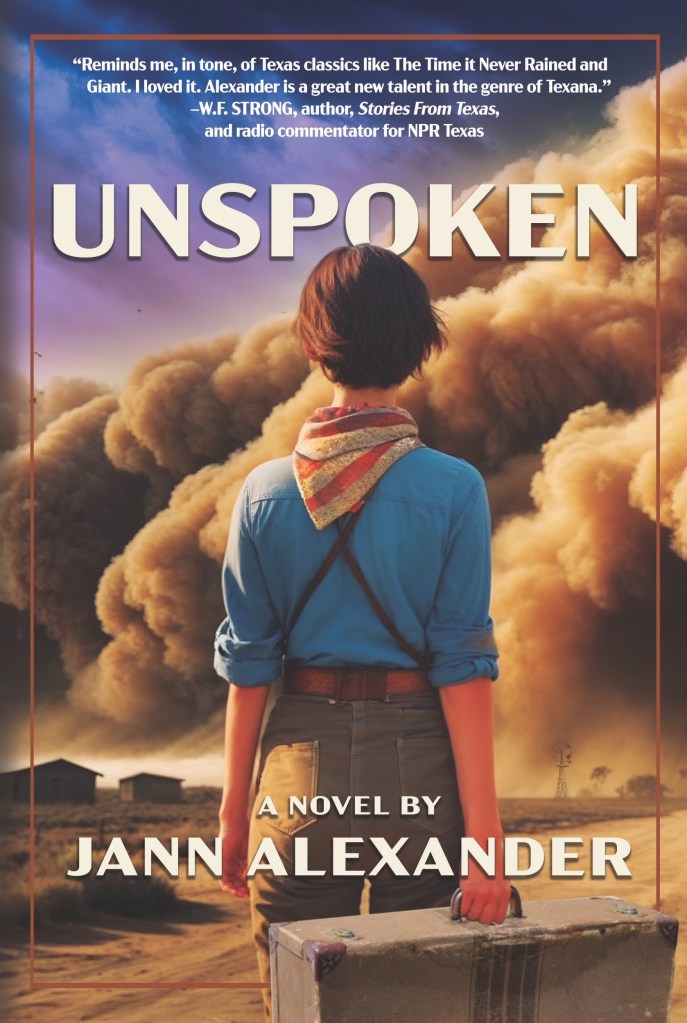
I’m delighted to welcome Jann Alexander and her new book, Unspoken, to the blog #Unspoken #HistoricalFiction #DustBowl #WomensFiction #BlogTour #TheCoffeePotBookClub
I’m delighted to welcome Jann Alexander and her new book, Unspoken, The Dust Series, to the blog with The History Behind Unspoken.
The History Behind Unspoken
When the Biggest, Baddest, Blackest Dust Storm of Them All Struck the Texas Panhandle on April 14, 1935, It Set the Stage for the Opening of Unspoken (A Dust Novel).
That Sunday, April 14, 1935, would forever be known as Black Sunday. But it began quite differently, as the main character, Ruby Lee Becker, recalls at the outset of Unspoken:
“That Sunday in April 1935 in the Panhandle was an uncommon bright day which didn’t reflect our family’s desperation. What little breeze there was blew gentle, unlike the stinging winds we were accustomed to. The spring air was so clean you could almost inhale it deep without coughing up dirt. The sun was golden and hopeful. Our families who’d been farming this desert during the five long years of the drouth were well acquainted with hope, though it was a currency our town’s shuttered bank no longer accepted.”
The black blizzard on Sunday, April 14, 1935 was the most notable of hundreds over the decade that had already prompted mass migration from the Plains states. It became known as Black Sunday — because it was a rolling mass of tumbling black soil, over 1000 feet high, that blackened the sun, suffocated entire towns, and struck elders and children alike with the “brown plague”— the deadly dust pneumonia.
The spot where Unspoken is set, a mythical town called Hartless in the Texas Panhandle, was then considered the epicenter of the Dust Bowl. The sudden drama of that bright clear day in 1935 inspired my story of scattered family, their lost mother, and the abandoned daughter who’ll stop at nothing to remake family and rebuild home.
We know those years now as The Dust Bowl era, caused by a land rush on overgrazed ranch land sold cheaply to unsuspecting farmers and speculators, abandoned when prices fell in the midst of drought. By 1935, the Southern Plains states had already experienced more than five years of drought and high winds.
The upshot? Over that decade known as the “Dirty Thirties,” over 2.5 million Americans migrated away from the Great Plains states, with more than half a million people left homeless. There were approximately 7,000 deaths from dust pneumonia and suffocation.
In 1935, that one Sunday in April was enough to show the rest of the country what the land made barren had cost its inhabitants. The Dust Bowl states deserved federal intervention. Within two weeks, Congress passed the Soil Conservation Act, which created a permanent agency to guide restoration in the hard-hit Plains states and maintain natural resources everywhere.
The agency familiarly known then to farmers and bankers as the Soil Conservation Service (SCS) has become the Natural Resources Conservation Service (NRCS) today. Its mission is the same: to work with land owners and users in all 50 states — to reduce soil erosion, improve forest and field land, improve farm yields with less-thirsty crops, and develop and protect natural resources.
But back in 1935, in Unspoken, Ruby Lee Becker can’t breathe. The Becker family has clung to its Texas Panhandle farm through years of drought, dying crops, and dust storms. The Black Sunday storm threatens ten-year-old Ruby with deadly dust pneumonia and requires a drastic choice—one her mother, Willa Mae, will forever regret.
“This brown plague was different,” Ruby thinks. “Nobody knew how you could fix air that wasn’t fit to breathe.”
To survive, Ruby’s must leave the only place she’s ever known. Far from home in Waco, and worried her mother’s abandoned her, she’s determined to get back. As she matures, wanting the one thing she cannot have—the family and home left behind—Ruby Lee becomes even more resolute.
Even after twelve years, Willa Mae still clings to memories of her daughter. Unable to reunite with Ruby, she’s broken by their separation and haunted by losses she couldn’t prevent.
Ruby Lee has lost everything—except pure grit. Through rollicking adventures and harrowing setbacks, the tenacious Ruby Lee embarks on her perilous quest for home—and faces her one unspoken fear.
Book Trailer
Here’s the Blurb
A farm devastated. A dream destroyed. A family scattered.
And one Texas girl determined to salvage the wreckage.
Ruby Lee Becker can’t breathe. It’s 1935 in the heart of the Dust Bowl, and the Becker family has clung to its Texas Panhandle farm through six years of drought, dying crops, and dust storms. On Black Sunday, the biggest blackest storm of them all threatens ten-year-old Ruby with deadly dust pneumonia and requires a drastic choice —one her mother, Willa Mae, will forever regret.
To survive, Ruby is forced to leave the only place she’s ever known. Far from home in Waco, and worried her mother has abandoned her, she’s determined to get back.
Even after twelve years, Willa Mae still clings to memories of her daughter. Unable to reunite with Ruby, she’s broken by their separation.
Through rollicking adventures and harrowing setbacks, the tenacious Ruby Lee embarks on her perilous quest for home —and faces her one unspoken fear.
Heart-wrenching and inspiring, the tale of Ruby Lee’s dogged perseverance and Willa Mae’s endless love for her daughter shines a light on women driven apart by disaster who bravely lean on one another, find comfort in remade families, and redefine what home means.
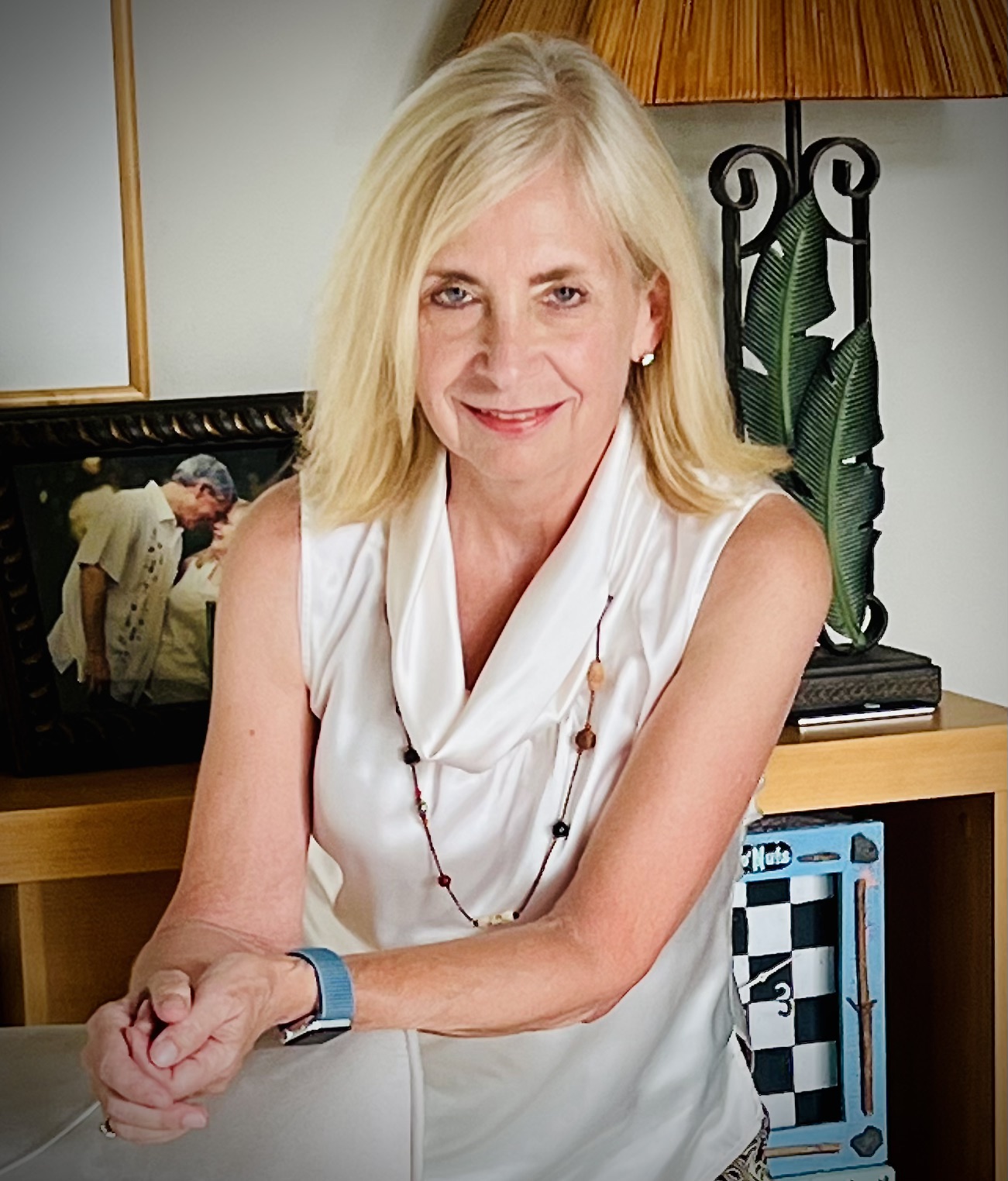
Jann Alexander writes characters who face down their fears. Her novels are as close-to-true as fiction can get.
Jann is the author of the historical novel, UNSPOKEN, set in the Texas Panhandle during the Dust Bowl and Great Depression eras, and her first book in The Dust Series.
Jann writes on all things creative in her weekly blog, Pairings. She’s a 20-year resident of central Texas and creator of the Vanishing Austin photography series. As a former art director for ad agencies and magazines in the D.C. area, and a painter, photographer, and art gallery owner, creativity is her practice and passion.
Jann’s lifelong storytelling habit and her more recent zeal for Texas history merged to become the historical Dust Series. When she is not reading, writing, or creating, she bikes, hikes, skis, and kayaks. She lives in central Texas with her own personal Texan (and biggest fan), Karl, and their Texas mutt, Ruby.
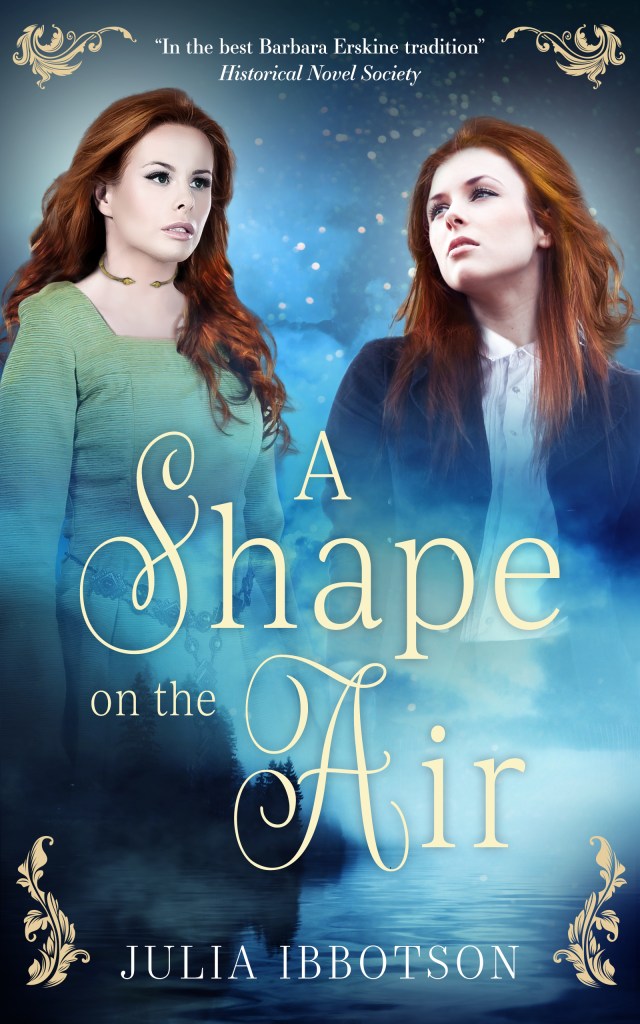
I’m delighted to welcome Julia Ibbotson and her new book, A Shape on the Air, to the blog #Medieval #HistoricalFiction #AngloSaxon #TimeTravel #TimeSlip #Mystery #Romance #BlogTour #TheCoffeePotBookClub
I’m delighted to welcome Julia Ibbotson and her new book, A Shape on the Air, Dr DuLac Series, Book 1, to the blog.
Here’s the Blurb
Can echoes of the past threaten the present? They are 1500 years apart, but can they reach out to each other across the centuries? One woman faces a traumatic truth in the present day. The other is forced to marry the man she hates as the ‘dark ages’ unfold.
How can Dr Viv DuLac, medievalist and academic, unlock the secrets of the past?
Traumatised by betrayal, she slips into 499 AD and into the body of Lady Vivianne, who is also battling treachery. Viv must uncover the mystery of the key that she unwittingly brings back with her to the present day, as echoes of the past resonate through time. But little does Viv realise just how much both their lives across the centuries will become so intertwined. And in the end, how can they help each other across the ages without changing the course of history?
For fans of Barbara Erskine, Pamela Hartshorne, Susanna Kearsley, Christina Courtenay.
This title is available to read on #KindleUnlimited
Meet the Author
Julia Ibbotson is fascinated by the medieval world and the concept of time. She is the author of historical mysteries with a frisson of romance. Her books are evocative of time and place, well-researched and uplifting page-turners. Her current series focuses on early medieval time-slip/dual-time mysteries.
Julia read English at Keele University, England, specialising in medieval language / literature / history, and has a PhD in socio-linguistics. After a turbulent time in Ghana, West Africa, she became a school teacher, then a university academic and researcher. Her break as an author came soon after she joined the RNA’s New Writers’ Scheme in 2015, with a three-book deal from Lume Books for a trilogy (Drumbeats) set in Ghana in the 1960s.
She has published five other books, including A Shape on the Air, an Anglo-Saxon timeslip mystery, and its two sequels The Dragon Tree and The Rune Stone. Her latest novel is the first of a new series of Anglo-Saxon dual-time mysteries, Daughter of Mercia, where echoes of the past resonate across the centuries.
Her books will appeal to fans of Barbara Erskine, Pamela Hartshorne, Susanna Kearsley, and Christina Courtenay. Her readers say: ‘Julia’s books captured my imagination’, ‘beautiful story-telling’, ‘evocative and well-paced storylines’, ‘brilliant and fascinating’ and ‘I just couldn’t put it down’.
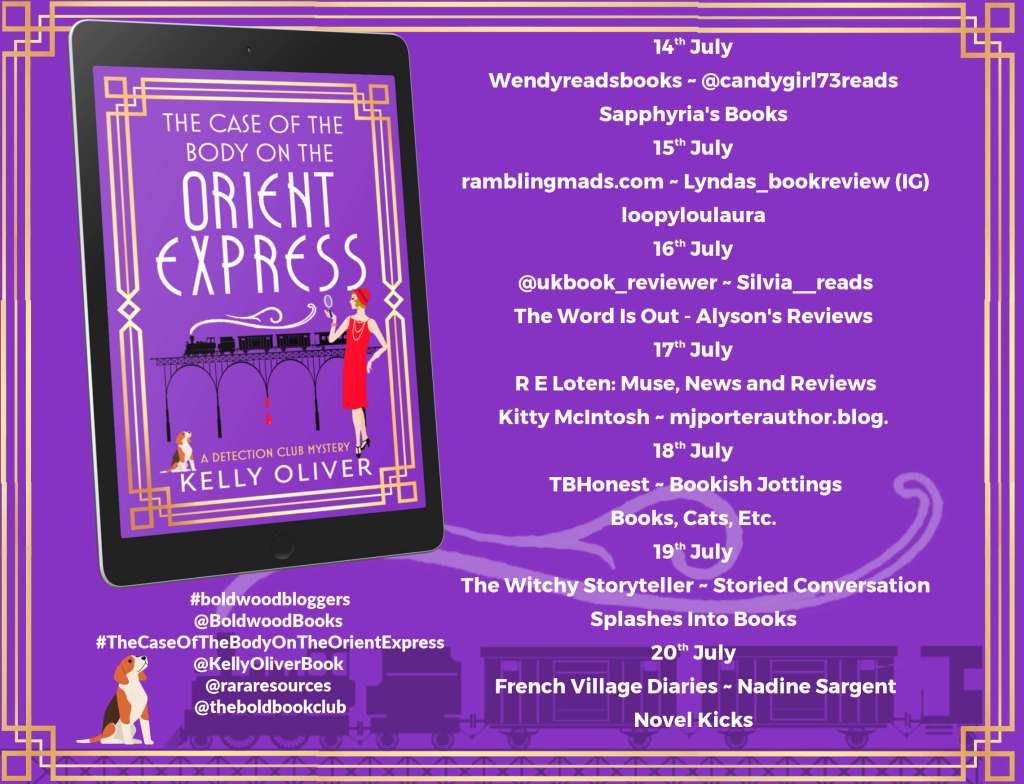
Paris, 1928: Agatha Christie and fellow writer Dorothy L Sayers board the Orient Express, bound for Constantinople. Christie in particular is looking forward to a break from recent dispiriting events in both her work and private life – the finalisation of her divorce from her philanderous husband Archie, and the miserly reception of her latest book.
But before the duo can settle in to enjoy the luxuries of their first-class journey, their journey is derailed when a fellow guest drops dead during the dinner service. And as the last person to speak to the victim, Dorothy finds herself a prime suspect in his murder.
As the train hurtles East, Sayers’ resourceful assistant Eliza and her friend Theo must navigate a maze of suspects. But with each passing mile, the stakes rise, and when another body is discovered, their search to find the killer before they reach their destination becomes increasingly complicated.
Can Eliza and Theo stay one step ahead, crack the mystery and clear Dorothy’s name? Or will this be one journey too far for the amateur sleuths?
The Case of the Body on the Orient Express is a fun murder mystery, reuniting us with outspoken and headstrong Eliza, and her fellow sleuth, Theo, who, in true ‘tormented writer’ guise, has spent the last two years in France, roughing it in an attempt to escape the object of his torment, Eliza. What could be better than throwing them together on the Orient Express, with a host of mystery writers on their way to a writers convention?
As their journey gets underway, Eliza is aware of undercurrents from Dorothy, her employer, and she’s alert to the other passengers as well. She’s not about to accept that Ivan died of a heart attack. And so begins her sleuthing, with the aid, sometimes unwillingly given, of Theo. And the case becomes curioser and curioser as the train finally reaches Istanbul/Constantinople.
Another fab addition to Kelly Oliver’s sleuthing mysteries. I do love the little connections between this series and the Fiona Figg books. But, of course, you don’t need to have read them. I also enjoy the addition of the real-life mystery writers. Fans of the genre will thoroughly enjoy Eliza and Theo’s new escapade.
Kelly Oliver is the award-winning, bestselling author of three mysteries series: The Jessica James Mysteries, The Pet Detective Mysteries, and the historical cozies The Fiona Figg Mysteries, set in WW1. She is also the Distinguished Professor of Philosophy at Vanderbilt University and lives in Nashville, Tennessee
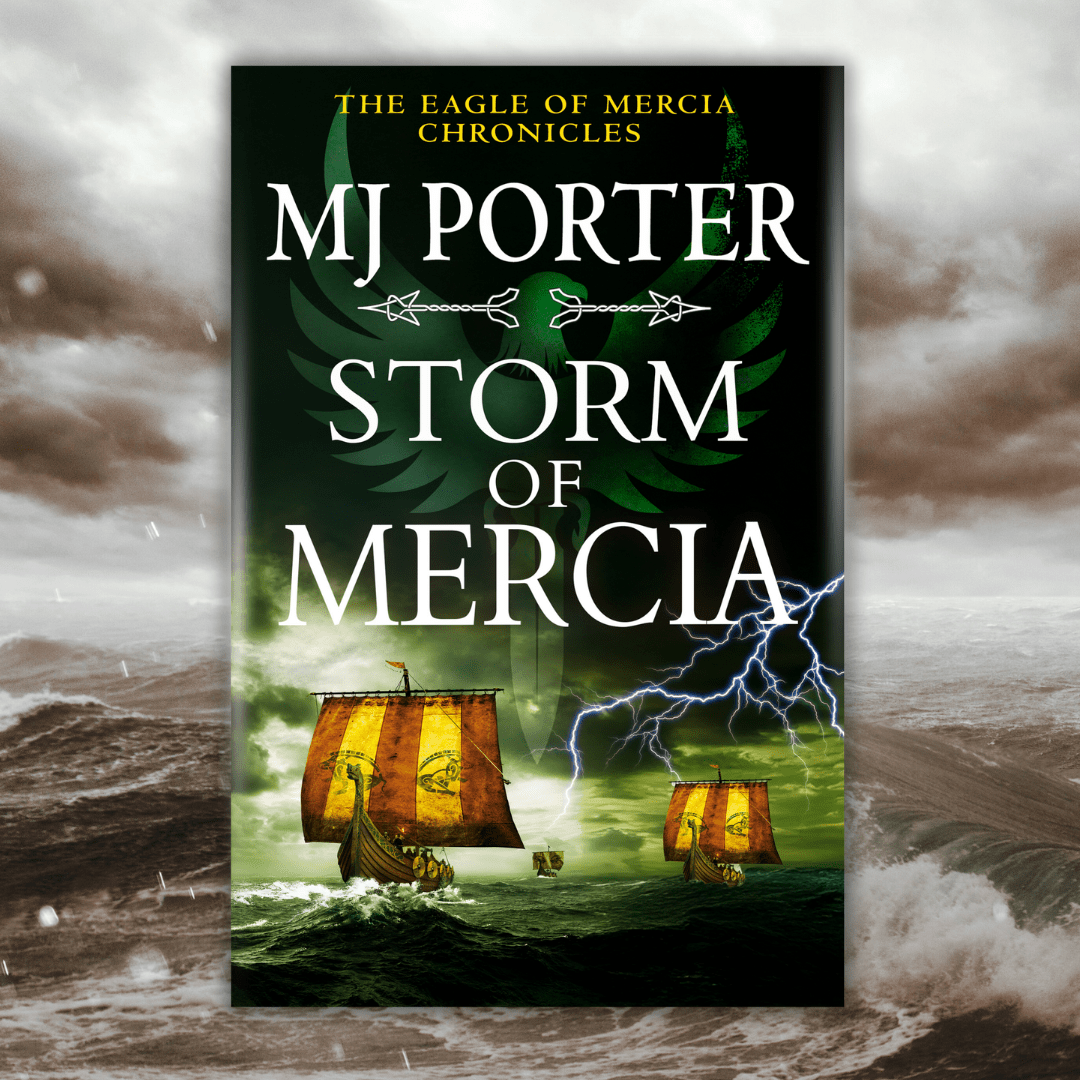
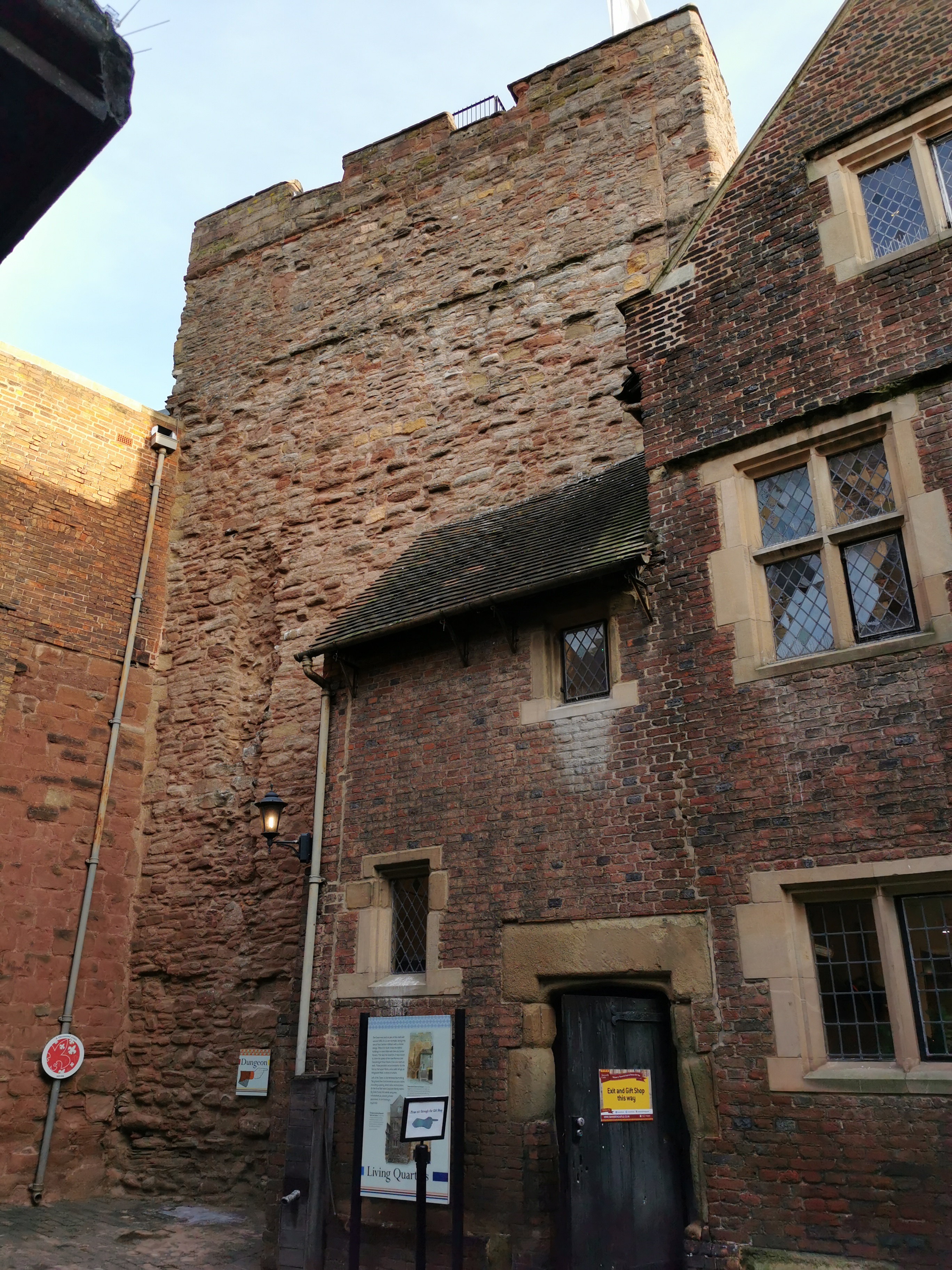
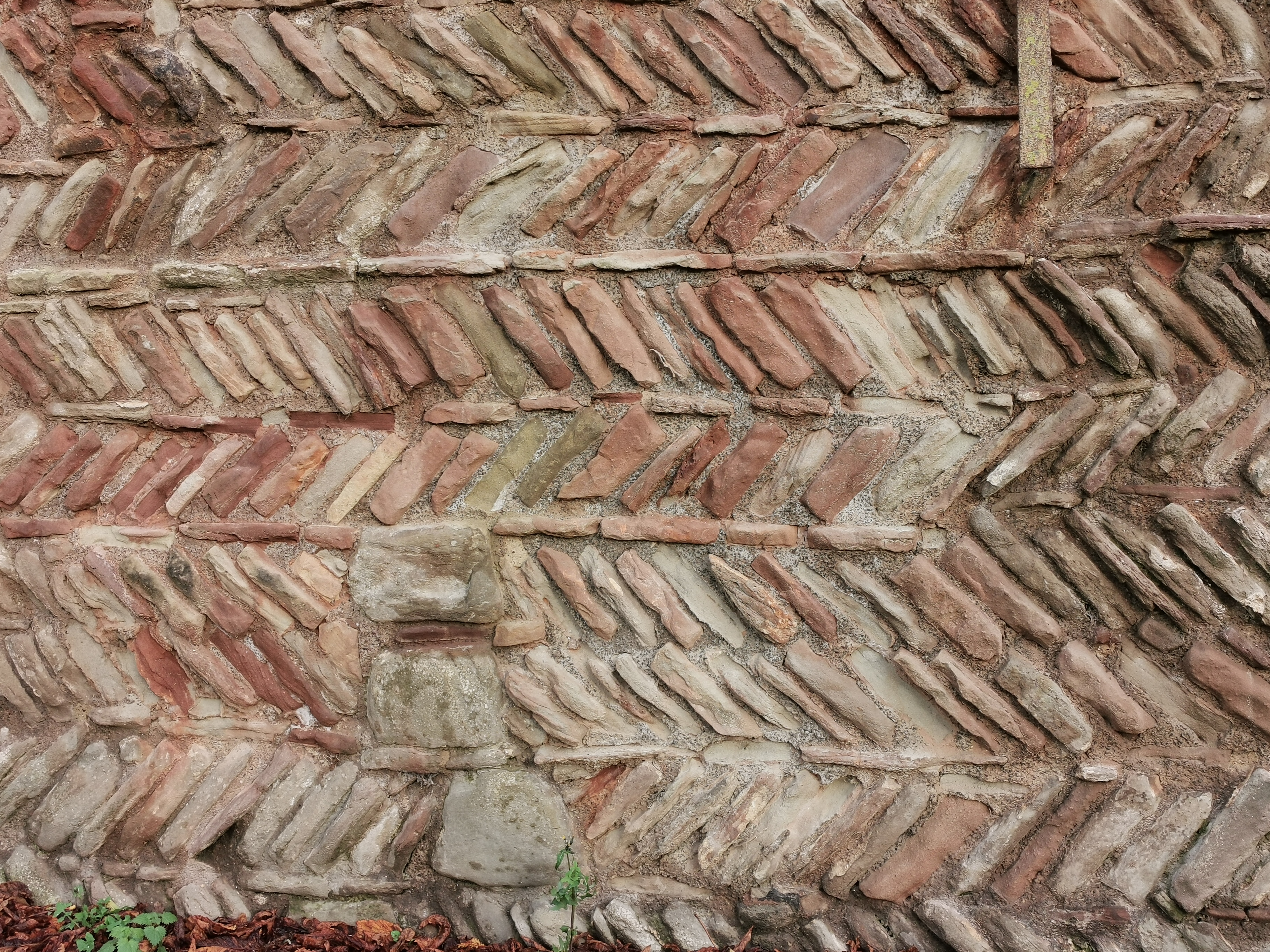
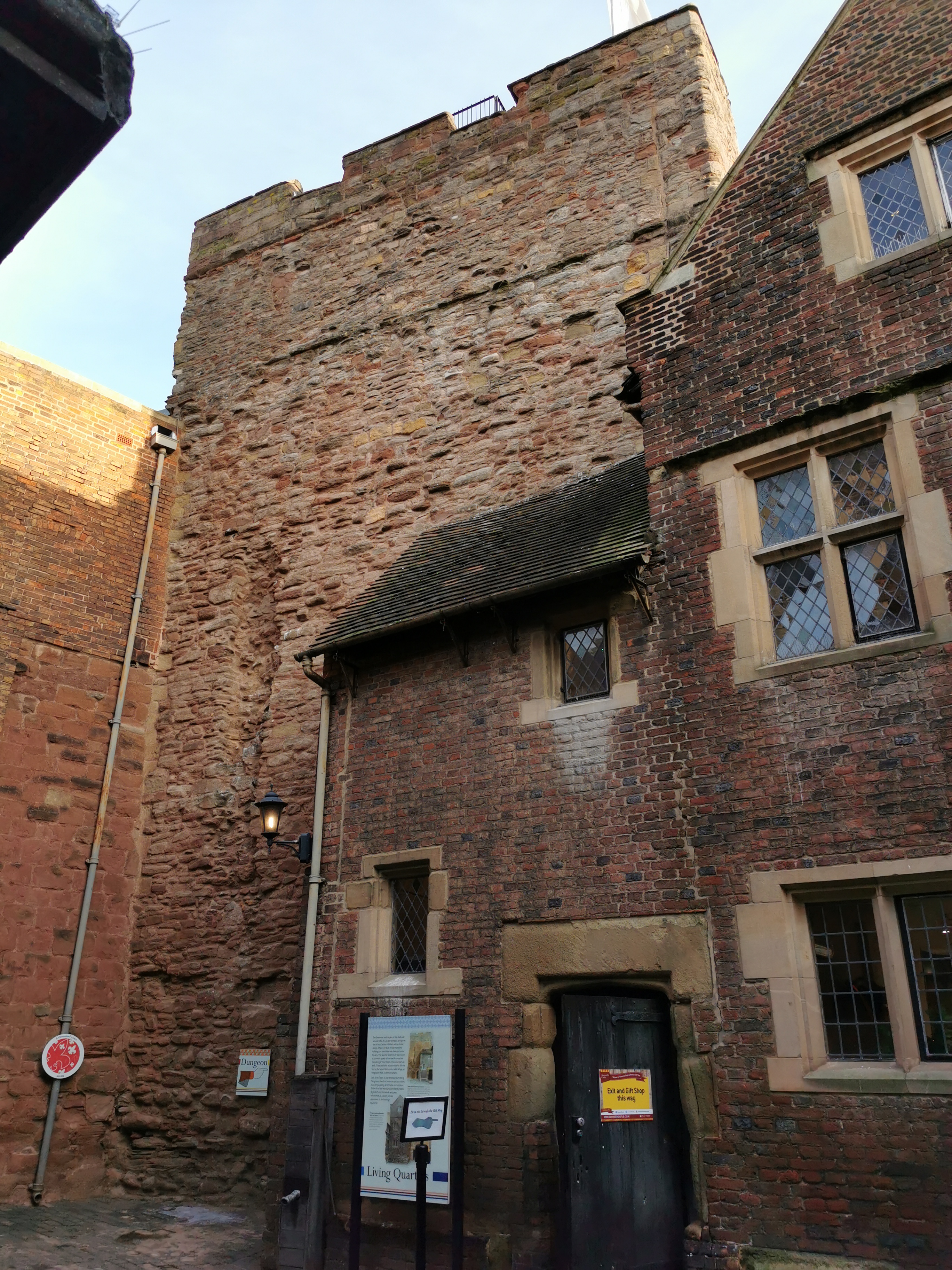
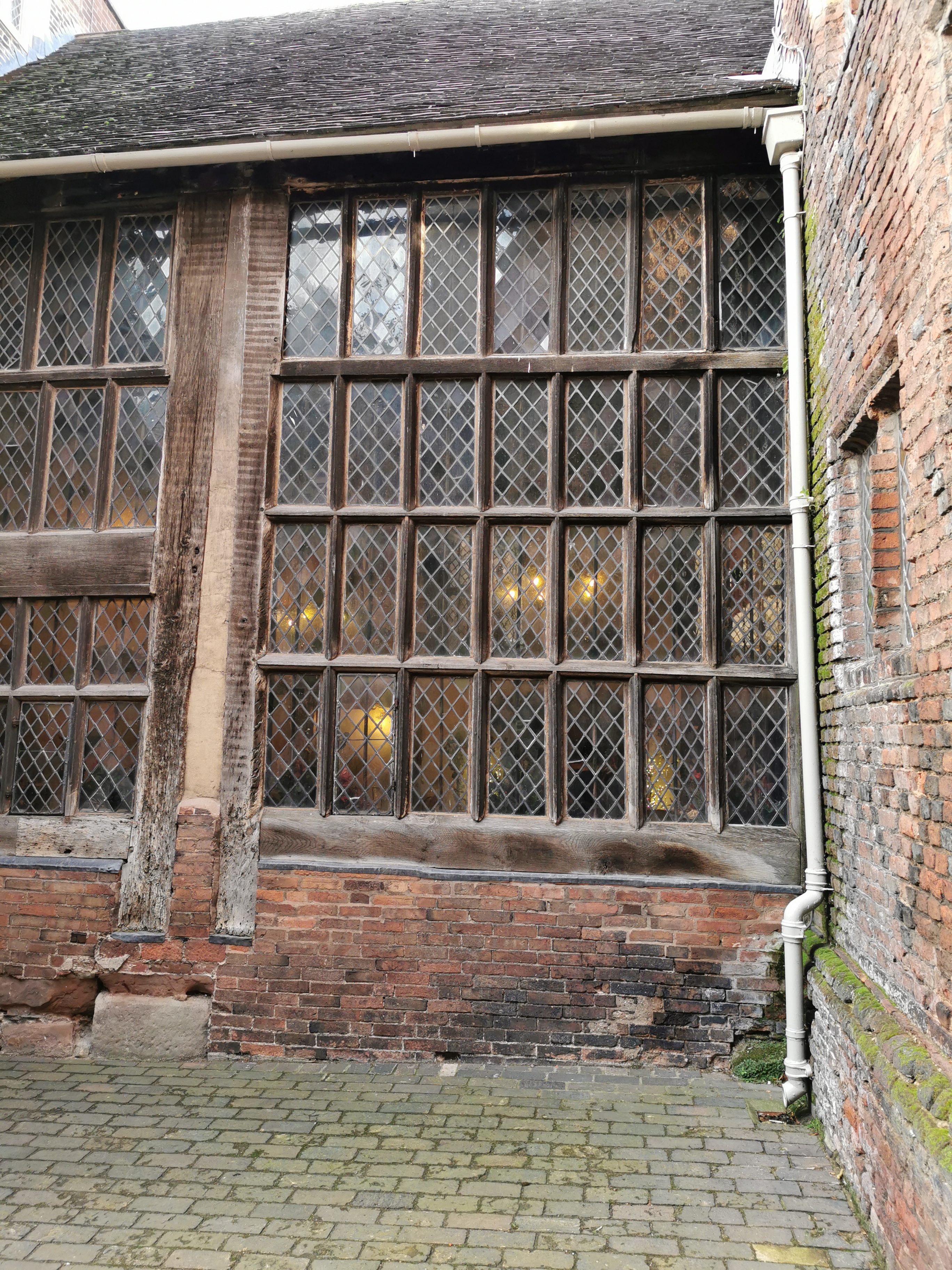
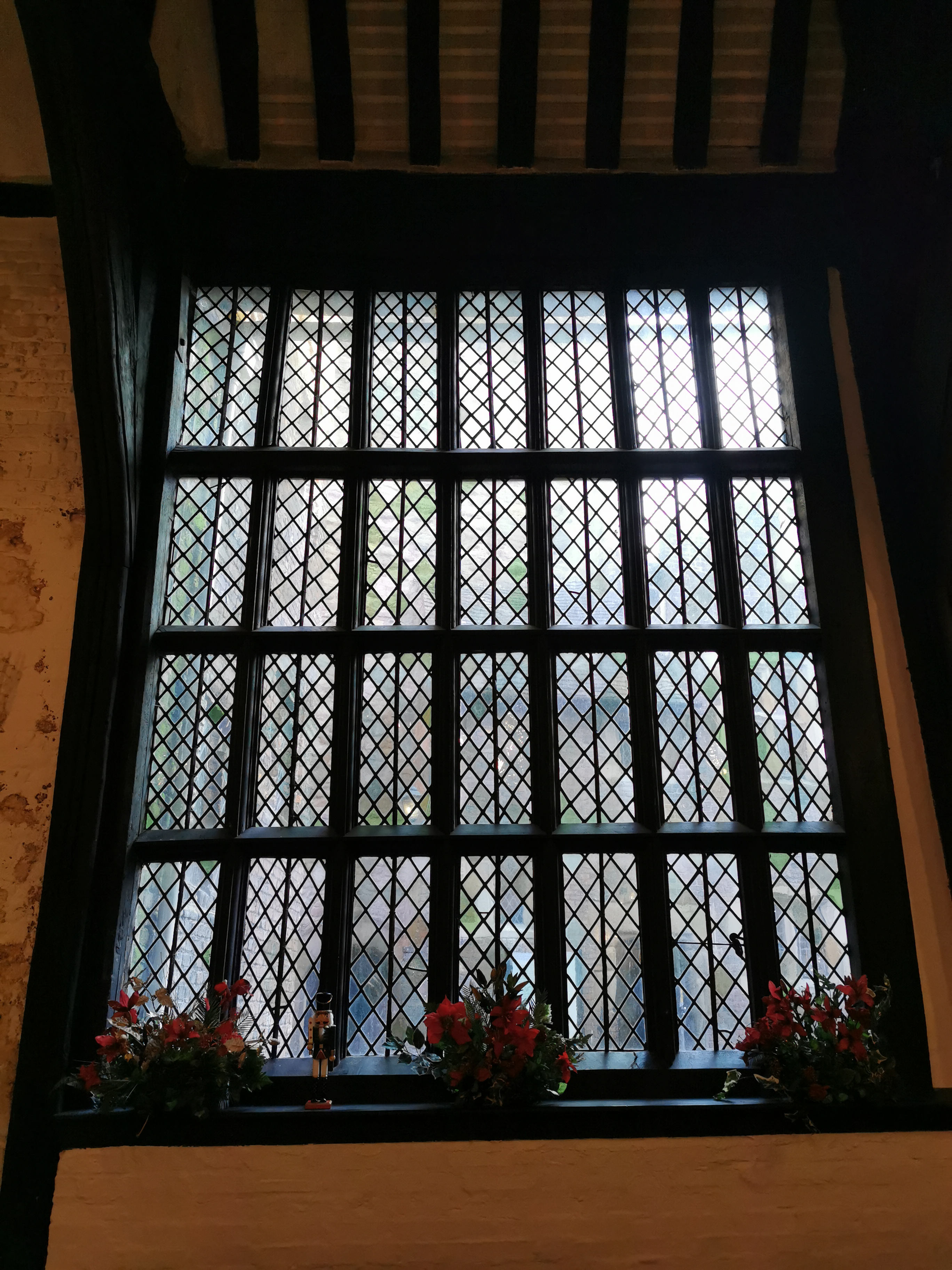
Like Lichfield and Repton, Tamworth has long been known to be a capital of the Saxon Mercian kingdom. Visitors today will find a more modern castle, which variously dates from the end of Saxon England up to the Victorian era, and one which is crammed with fascinating detail, from the herringbone wall beneath it to the beautiful Tudor windows of the great hall.
On a visit in 2021, I can also inform you that it currently had a third of the fabulous Staffordshire Hoard on display and an excellent museum filled with all things Saxon. (I believe it still holds some of the Staffordshire Hoard). Castles, if they were built in the late Saxon period, and some of them were, would have been constructed from wood. It was only later that they came to be built or rebuilt in stone, as we recognise them today.
A view of the oldest part of Tamworth Castle, dating to after the end of Saxon England
Today’s castle wouldn’t have existed in the 820s and 830s. Indeed, it’s proven to be very difficult for archaeologists to determine where the original settlement of Tamworth lay, no doubt, because much of it has been overbuilt, just as in most places where habitation has been almost continuous. A fire in 1345 might well have destroyed any remaining wooden dwellings, making the endeavour even more difficult.
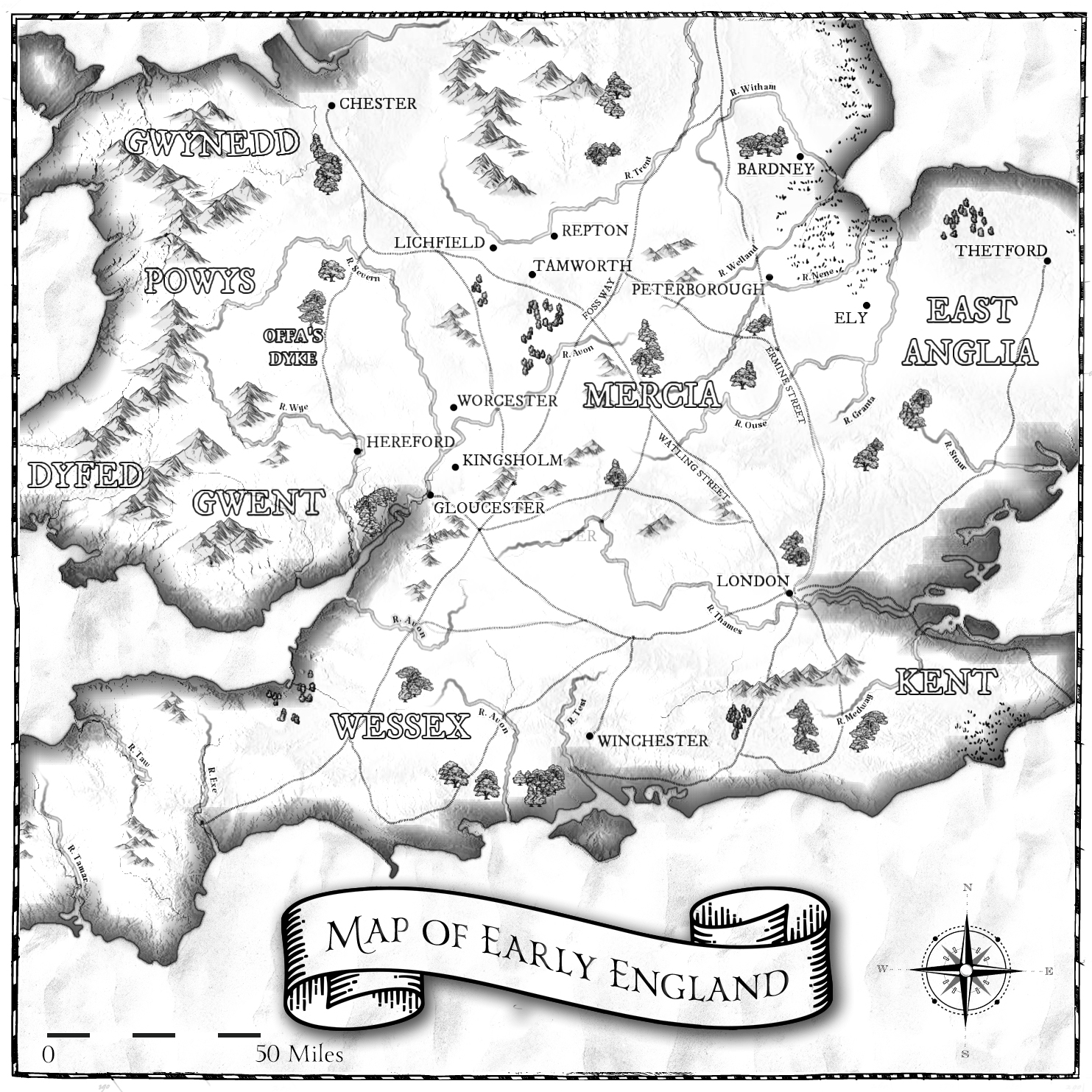
Map showing the location of Tamworth, at the heart of the Saxon kingdom of Mercia. It is close to Lichfield, another important location, and to Repton where, for a period, the ruling family were buried.
It has been possible to reconstruct Tamworth in the 900s, when it was designated a ‘burh,’ a defensive settlement in which the local population could seek shelter from the Viking raiders behind its walls. (I can’t find the image at the moment).
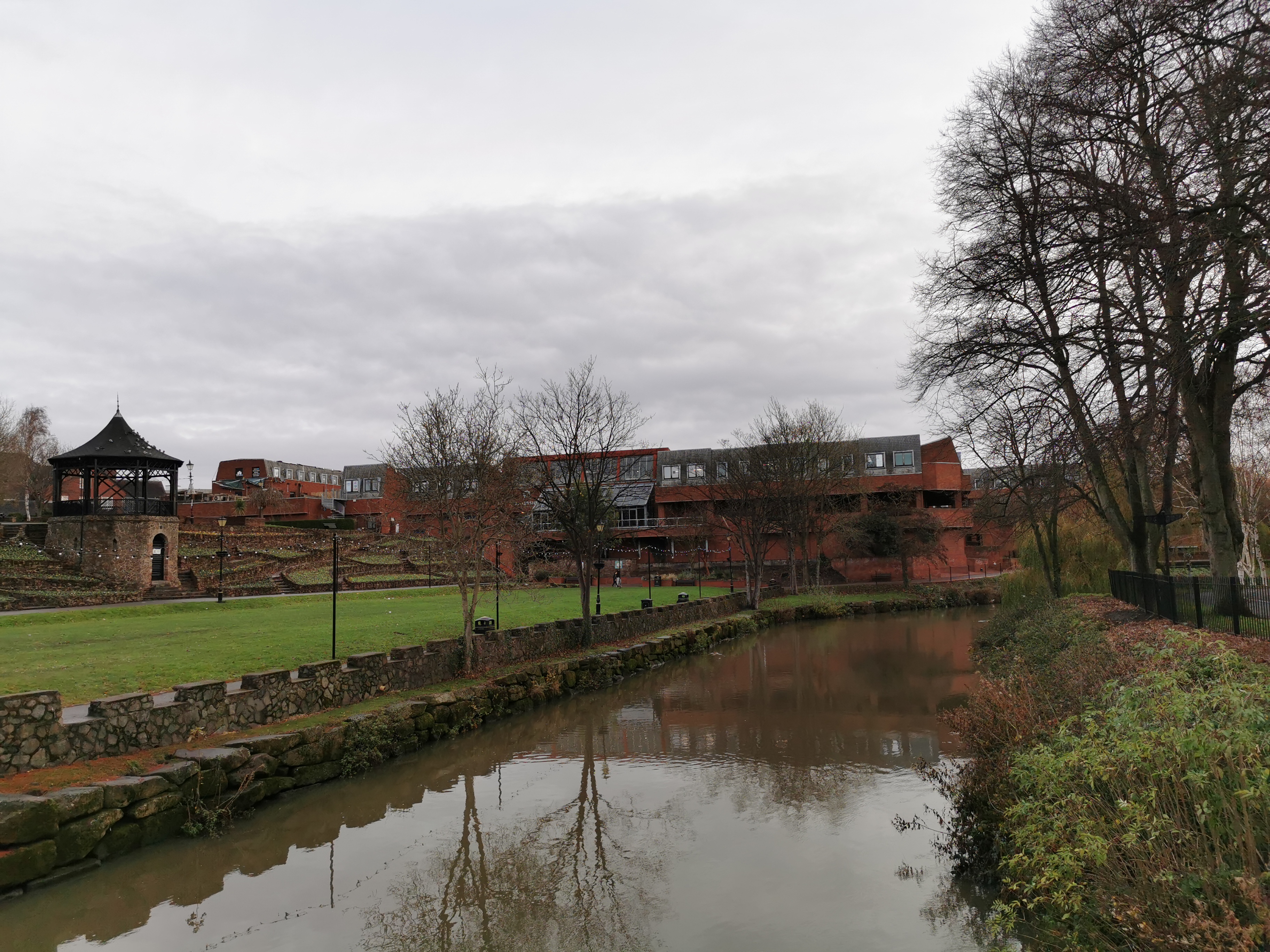
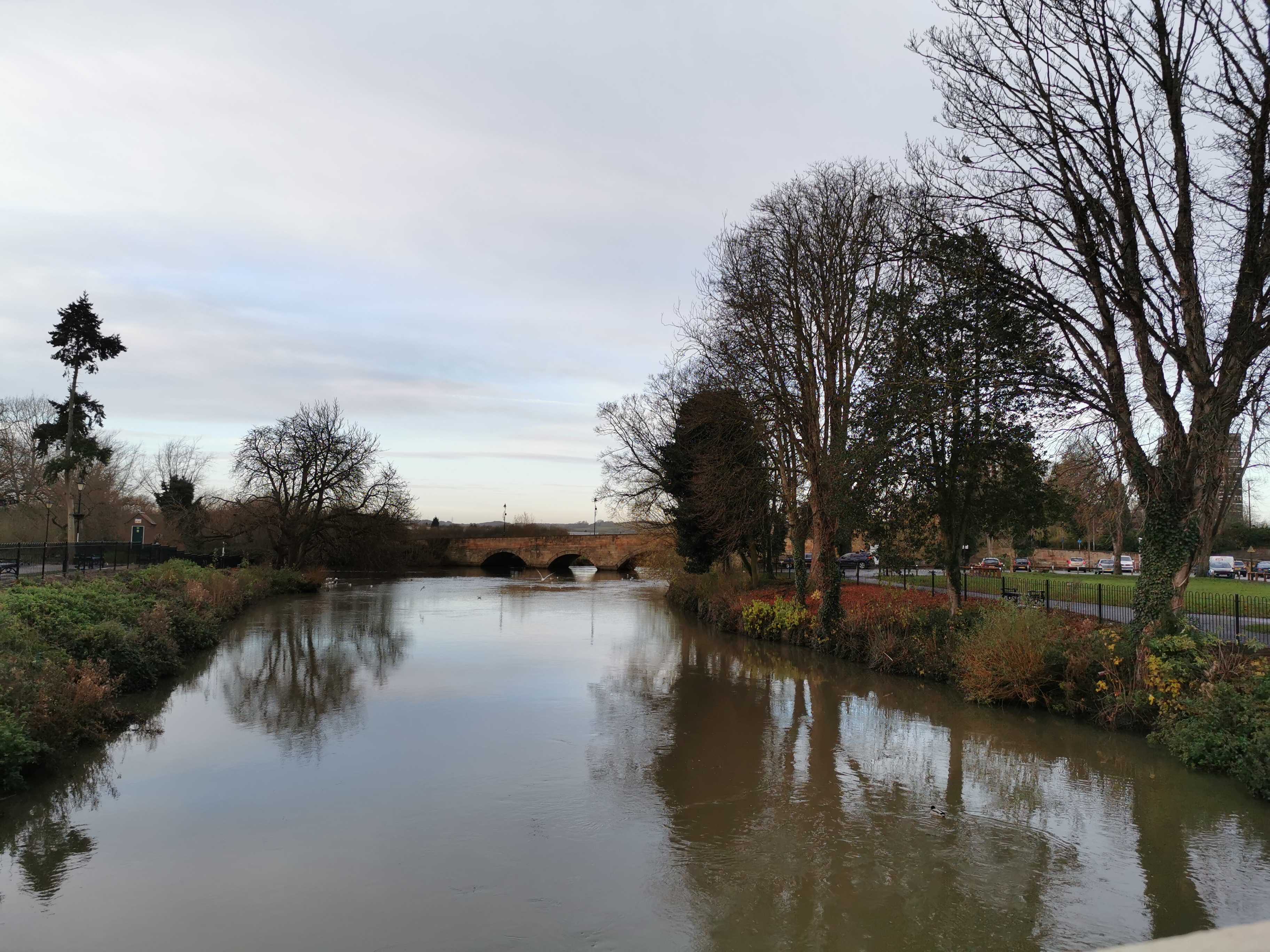
But it is possible to imagine how Saxon Tamworth might well have looked in the 800s, when the Eagle of Mercia Chronicles takes place. The rivers, The Tame and the Anker, run in front of the current castle, and there’s a slight rise, on which I used to spend many happy hours running up and down the steps, with flowers blooming in the flower beds. From there, it would have been possible to see a reasonable distance south. The river would have been put to good use, and the remains of a water mill have been found and dated to the later Saxon period. Houses would have been built from wood, wattle and daub with thatched roofs, and there would have been workshops as well as residential dwellings. At the centre of the settlement would have been a lord’s hall. While this hasn’t been found in Tamworth, it could have measured upwards of 24 metres long by 6 metres wide. It’s believed it was also surrounded by a defensive ditch. Somewhat sheltered, as the road to Lichfield is uphill, it would have been a pleasant, and I assure you, on the right day, very warm, location for Mercian kings to have lived within. It was close to Watling Street too, allowing easy access to the rest of Mercia.
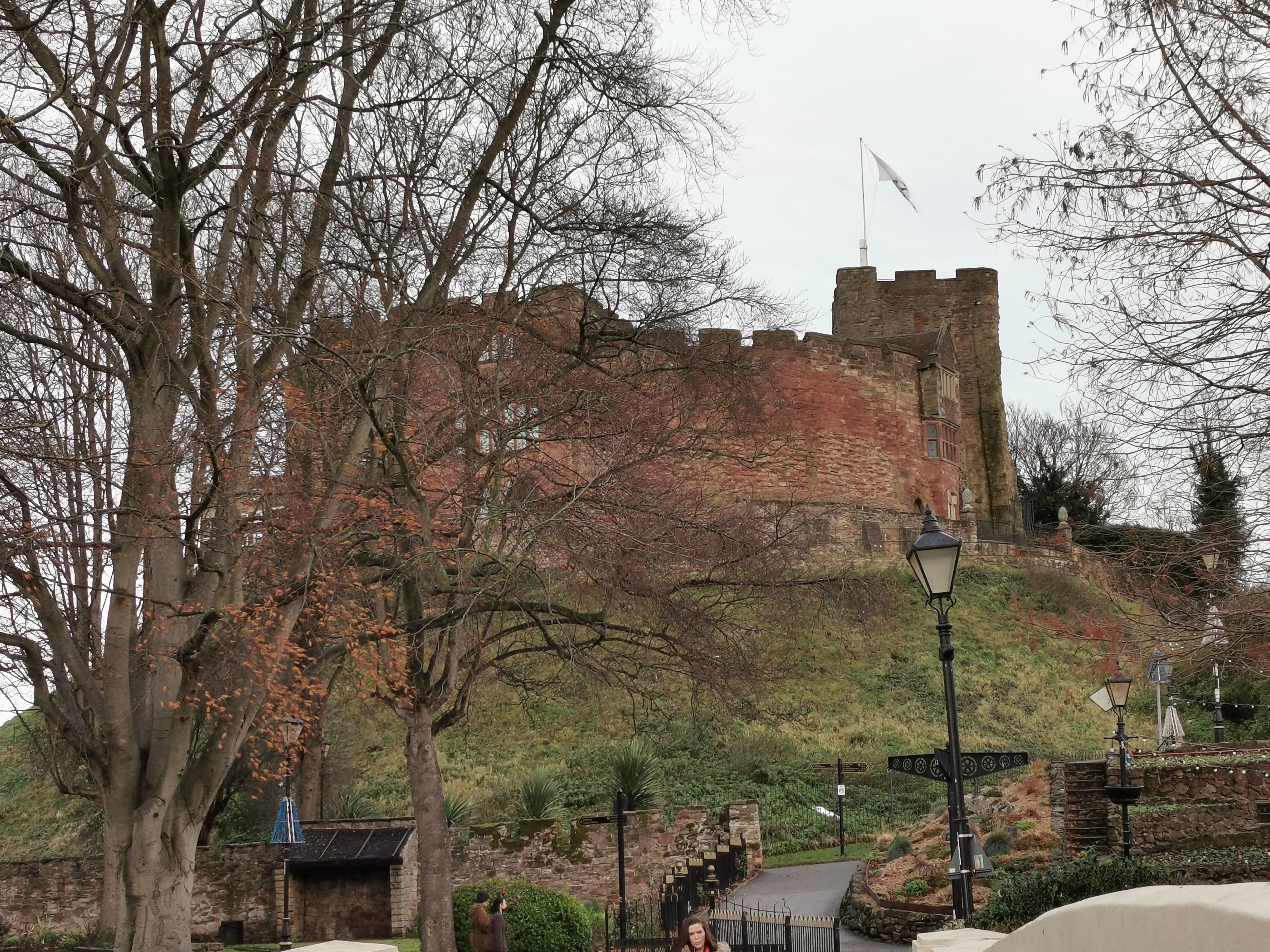
View of Tamworth castle from the bridgeThe famous Herringbone wall (I think it’s famous, anyway).The Tudor window from the outsideThe Tudor window from the insideThe wall walkwayView from the bridge crossing the riverAnother view from the bridge over the river