Author of Saxon historical fiction and non-fiction, 20th-century historical mysteries, and Norse-inspired historical romantasy. Book reviewer and blog host.
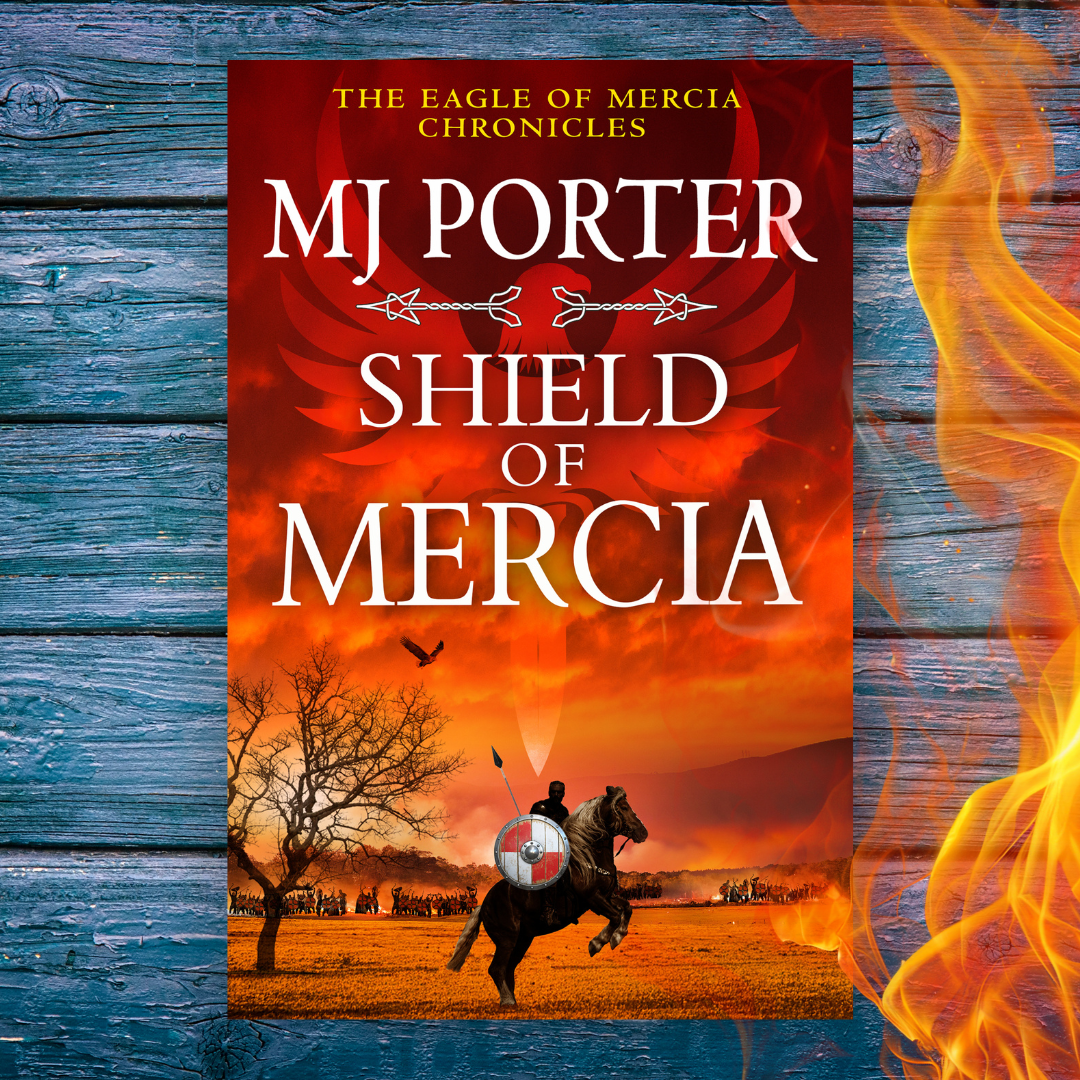
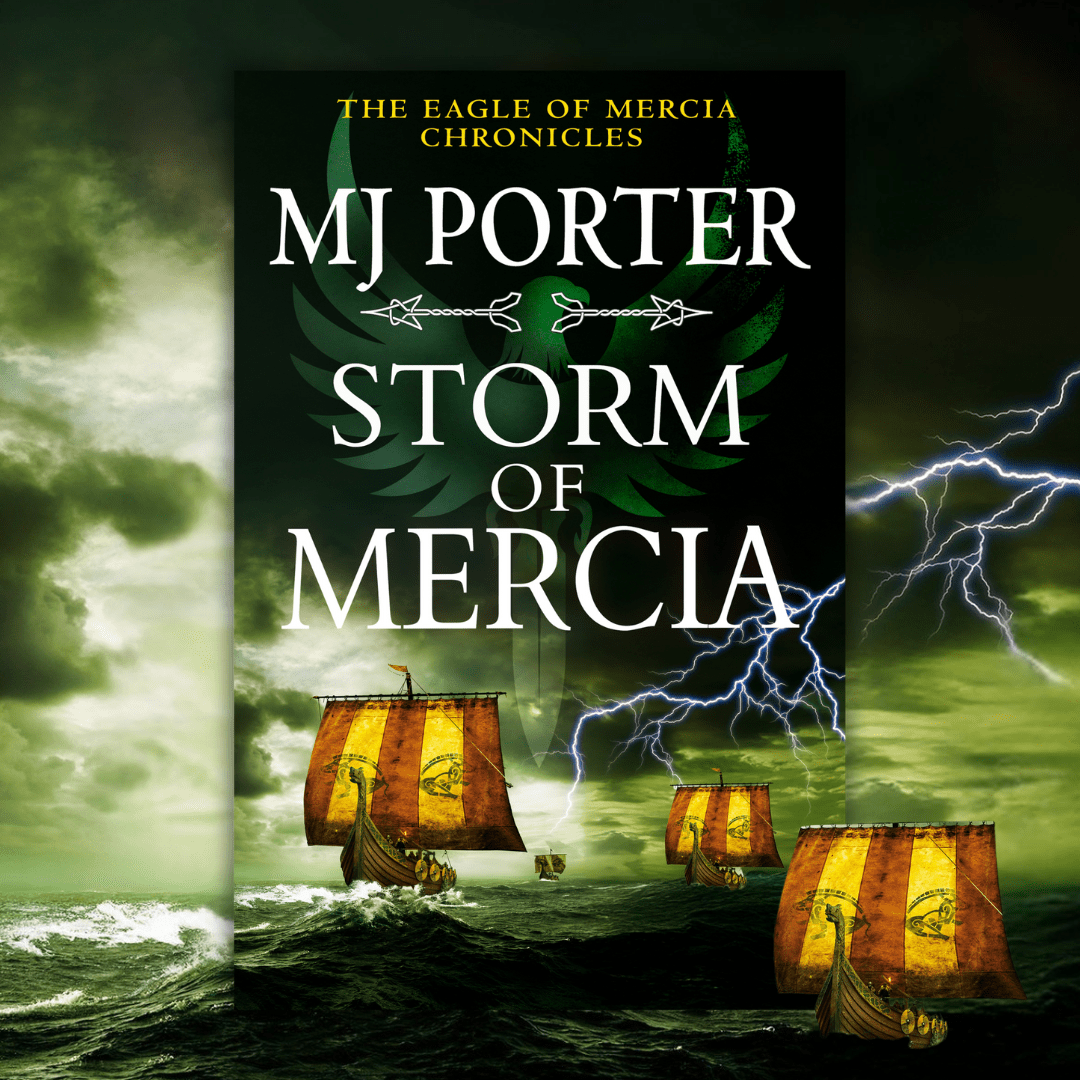
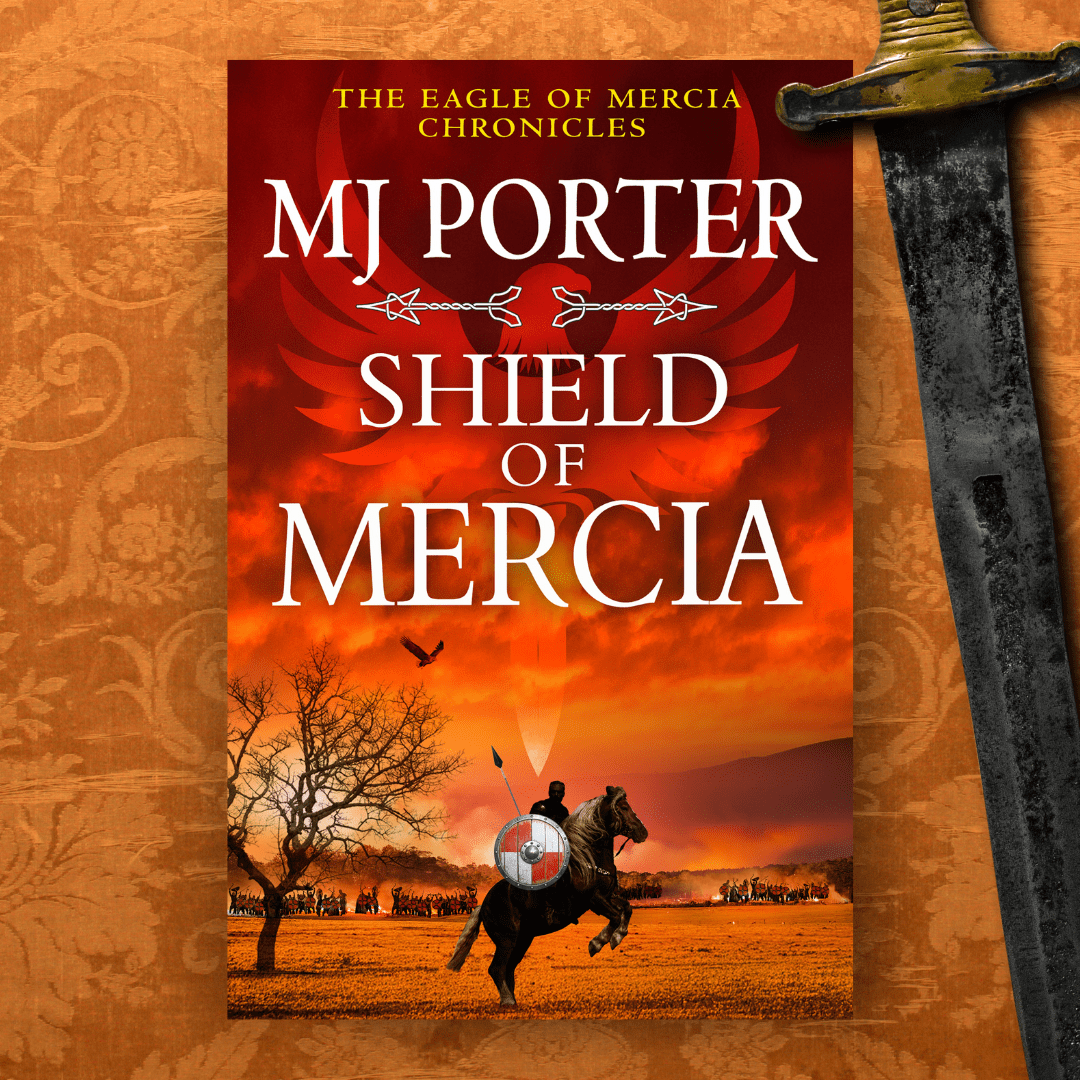
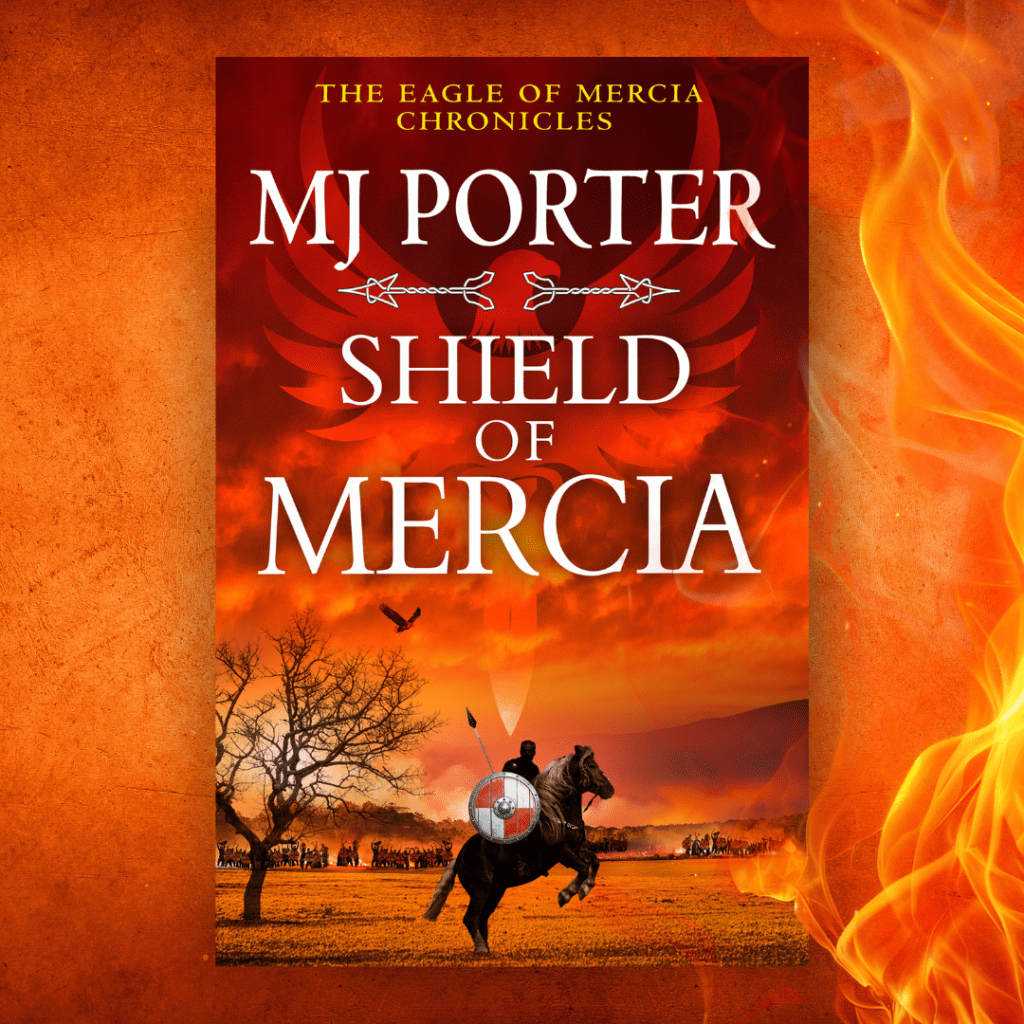
Shield of Mercia has been out for a week. Here’s what the blog tour hosts had to say about the latest book featuring young Icel #newrelease #histfic #TheEagleofMerciaChronicles #audio
A huge thank you to Rachel and the blog hosts.
Here are the links to the complete reviews.
Being a reviewer is a lot of fun, it’s also a lot of work and takes a great deal of planning. I’m always so grateful to those who take a chance on my books. It can sometimes be a step into the unknown.
Mercia is triumphant. Her king is safe. But Wessex was never Mercia’s only enemy.
Tamworth, AD836
Following a brutally cold winter, King Wiglaf of Mercia is in the ascendancy. Even Wessex’s Archbishop of Canterbury extraordinarily ventures to Mercia to broker a religious accord. But, can the hard-won peace prevail?
Viking raiders threaten Wessex. These blood-thirsty warriors are fast, skilful and have no reticence about killing those who stand in their way. Their aim isn’t to rule but to overwhelm, slaughter and take ill-gotten wealth.
King Wiglaf is no fool. As the Vikings push to overwhelm Wessex, Mercia’s lands look insecure. King Wiglaf needs the shields of Mercia’s warriors to prevent the overwhelming advancement of their deadliest enemy yet.
To save Mercia, Icel must first prevail over the two men who mean to end his life; King Ecgberht of Wessex and his son, Æthelwulf of Kent and only then the marauding Viking army for whom boundaries have no meaning.
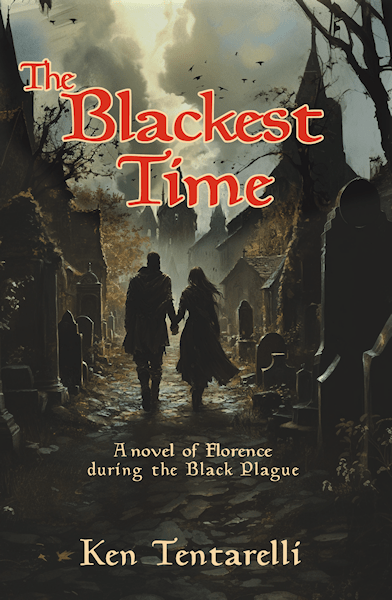
I’m delighted to welcome Ken Tentarelli and his new book, The Blackest Time, to the blog with an excerpt.
Excerpt
Parishioners rise up in anger when a priest declares the Black Plague a divine punishment fortheir sins
.Those attending the morning mass included families living in the parish, lumbermen who had been logging forests in the nearby hills, The lumbermen clustered together near the front of the church, close to the altar. They formed the single largest group. Everyone, Gino included, studied the people nearby, fearful someone close by might show symptoms of the sickness: flushed faces, lumps, or darkened areas on the neck or arms.
While waiting for mass to begin, Gino listened to snatches of conversation. Men raised their voices enough to speak with other men, probably neighbors with whom they had sat elbow-to-elbow in a crowded tavern months ago, and now wouldn’t get within an arm’s length of each other. Women felt it imprudent to speak above a whisper in church, so they merely smiled at each other across the void.
Gino heard some families were absent from mass because they were mourning the death of family members. In one family, it was said, both the mother and father had succumbed, leaving behind three youngsters. No one knew what had become of those children. Stories circulated of entire families having been claimed by the sickness. Most surprising were reports of families fleeing the city to escape the pestilence. For the past two years, people had streamed into Florence from the countryside to seek salvation from the famine. Did the departure of these families mark a turnaround, the beginning of an exodus?
Although the lumbermen were far from him, he sensed hostility in their guttural outbursts. Many had left wives and children in the city while they logged in the hills, so death rampaging unchecked though the city threatened their families and they reacted with anger. They wanted something more tangible than bad air—possibly someone—to blame for the misery.
A small bell sounded when the sacristy door opened, and a priest emerged, followed by two altarboys. When they reached the altar, the priest spread his upraised arms and delivered the opening blessing. Near the midpoint of the service, the priest stepped to the pulpit to deliver his sermon.“We are all God’s children,” he began. “God loves us … all of us. He wants us to love Him, to heed His word, and to obey Him. Our Lord would not cause His children to suffer without reason.” Shifting from a tempered tone, the priest boomed, “This pestilence has been inflicted upon us because we have offended Him. There can be no other explanation.”
Shaken by the indictment, people glanced furtively at those around them as if they were all co-conspirators in a plot against God. “What could we have done to deserve this punishment?” they asked themselves.
Pleased his words had stunned his flock as he had intended, he continued, “We have sinned against God, and only by ending our sinful ways can we expect Him to end this scourge. You may not be an adulterer or a fornicator, but ask yourself, are you committing the sins of envy and pride?”
One lumberman’s face reddened. He bellowed, “My wife was a good, holy, God-fearing woman. She committed no sin worthy of this damnation; yet she suffered a horrible death. She cannot beheld to account for this misery.”
The outcry froze everyone. The priest gripped the lectern so tightly his knuckles turned white; his fingernails dug into the wood. Another lumberman shouted, “My son was barely old enough to walk. He was an innocent child. What sin could he have committed? But he was struck down.”
Family groups moved farther away from the bellicose woodsmen, who began grumbling in support of their comrades. A third man called out, “I wear my best smock when I come to church.” He pointed to its threadbare sleeve and its soiled shoulder. “This is my best! Look at it !It’s frayed and spotted. How could anyone who dresses like this be accused of being prideful?
“Do you know who is prideful?” he asked and raised an arm angled toward the priest. “Thepriests! Look at them. They don’t wear frayed vestments. Before the new bishop came, the priests in this diocese wore plain linen vestments. But now, linen isn’t good enough for them. They all wear expensive silk.” The eyes of all the parishioners shifted to the priest.
The man continued, “The bishop refused to serve communion from a pewter chalice. Now all chalices in the diocese are silver … all except the one used by the bishop. His is gold.” He spread his arms wide. “My wife spends nights in the dark to preserve her lone candle, while this church and others are lit up like brothels.”
He swept his gaze around the church to make eye contact with everyone. “For two years, when rain destroyed the crops, we all struggled to find food for our families. Beggars starved in the streets. But do you know of any priest who went hungry? None of them went to sleep with pangs of hunger. They made sure their bellies were filled.”
“If this terrible disease has been unleashed upon us by the sin of pride, it is the bishop and his minions who brought it upon us.” He ended his tirade in a booming voice, saying, “We need to make the bishop stop his prideful ways and walk in the humble shoes of Saint Francis. I say we go to him now.” He strode the length of the nave and out the door, followed by the other lumbermen.
Here’s the Blurb
Set in the 1300s during the devastating black plague, The Blackest Time is a powerful tale of compassion, love, and the human spirit’s ability to endure immense adversity.
Gino, the central character, is a young man who leaves his family’s farm to find work in a pharmacy in Florence. His experiences show us how people coped in the most horrific time in history.
Shortly after Gino arrived in the city, two years of incessant rain destroyed crops in the countryside, leading to famine and despair in the city. Gino offers hope and help to the suffering— he secures shelter for a woman forced to leave her flooded farm, rescues a young girl orphaned by the plague, and aids others who have lost everything.
The rains had barely ended when the plague hit the city, exposing the true character of its people. While some blamed others for the devastation, the story focuses on the compassionate acts of neighbors helping each other overcome fear and suffering. Doctors bravely risk infection to care for their patients. A woman healer, wrongly accused of witchcraft and driven from the city, finds a new beginning in a village where her skills were appreciated.
Despite the hardships, love blossoms between Gino and a young woman he met at the apothecary. Together they survive, finding strength in each other and hope in a world teetering on the edge.
The Blackest Time is a testament to the strength of the human spirit in overcoming unimaginable tragedy.
Ken Tentarelli is a frequent visitor to Italy. In travels from the Alps to the southern coast of Sicily, he developed a love for its history and its people.
He has studied Italian culture and language in Rome and Perugia, background he used in his award-winning series of historical thrillers set in the Italian Renaissance. He has taught courses in Italian history spanning time from the Etruscans to the Renaissance, and he’s a strong advocate of libraries and has served as a trustee of his local library and officer of the library foundation.
When not traveling, Ken and his wife live in beautiful New Hampshire.
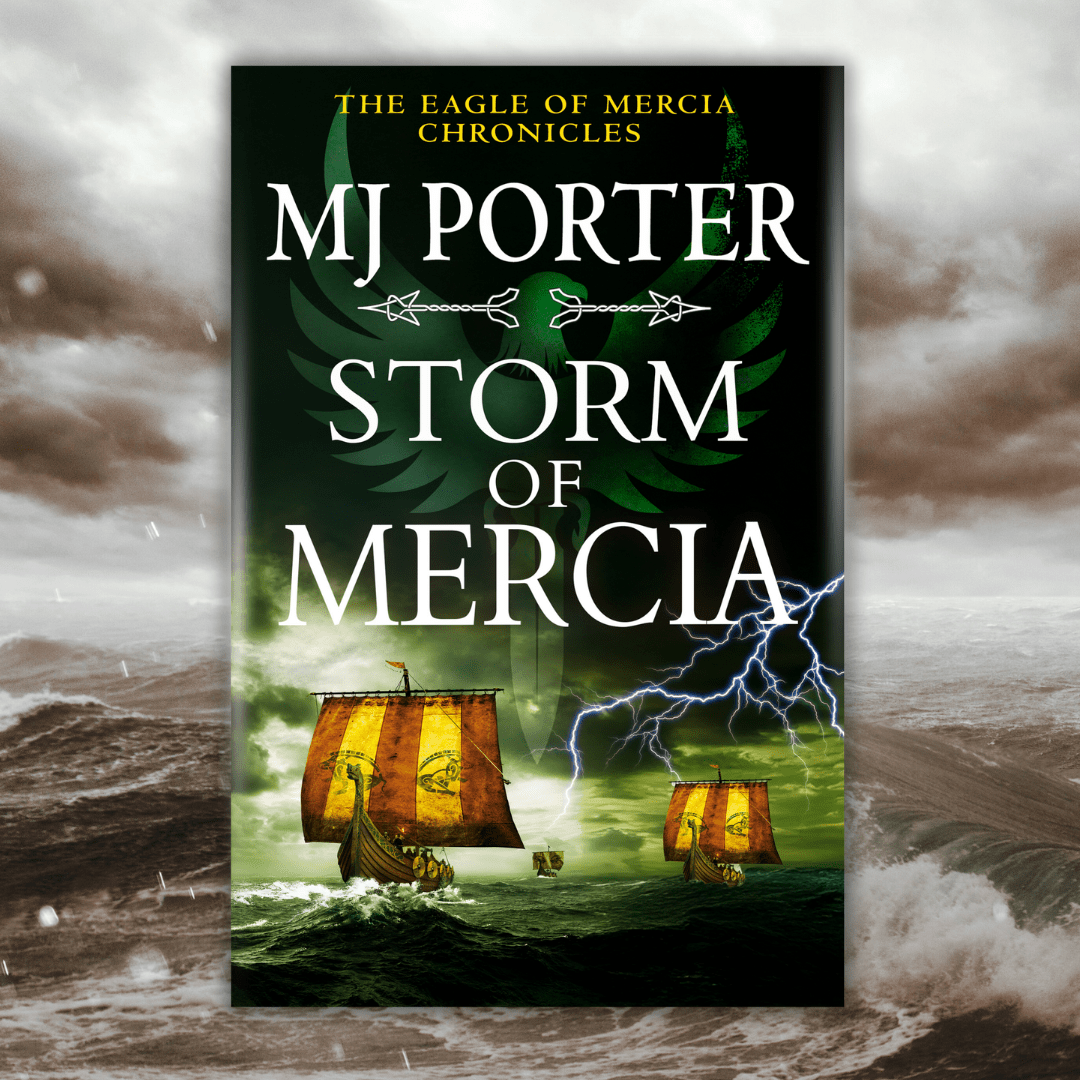
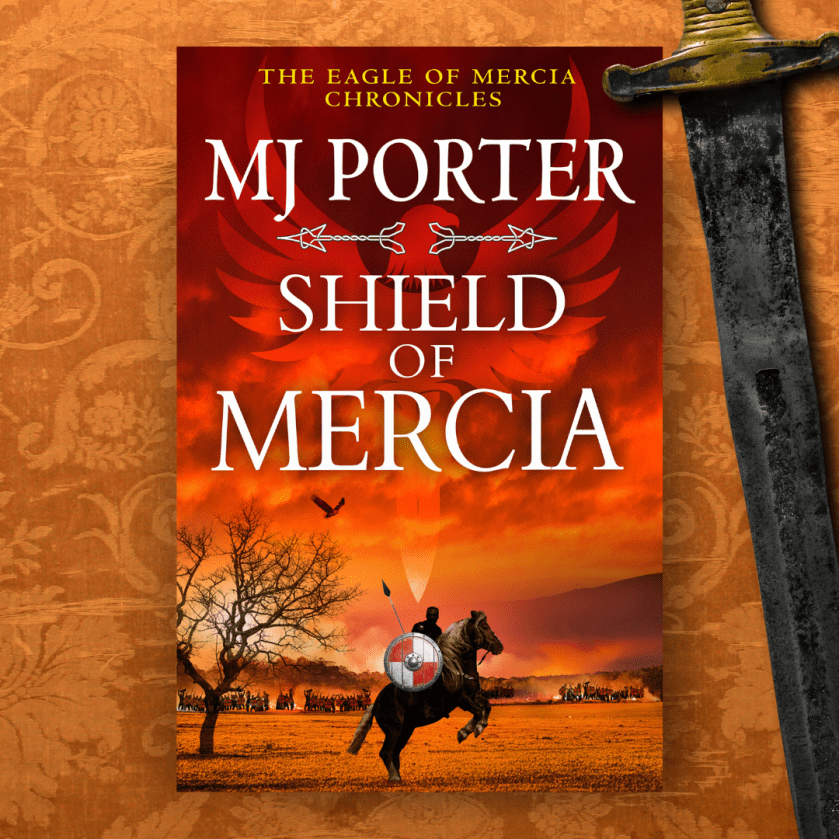
Shield of Mercia is now available. Return to the world of young Icel, and listen to me rabbiting on, again #newrelease #histfic #TheEagleofMerciaChronicles #audio
Me doing a bad job of introducing the new book
In my defence, I am frantically trying to finish another title!
I have mentioned elsewhere that my publisher are now publishing what are known as ‘trade paperbacks’ for their titles. This is the format most of my indie titles are published in, and you can find this ‘new’ size here.
Here’s the blurb
Mercia is triumphant. Her king is safe. But Wessex was never Mercia’s only enemy.
Tamworth, AD836
Following a brutally cold winter, King Wiglaf of Mercia is in the ascendancy. Even Wessex’s Archbishop of Canterbury extraordinarily ventures to Mercia to broker a religious accord. But, can the hard-won peace prevail?
Viking raiders threaten Wessex. These blood-thirsty warriors are fast, skilful and have no reticence about killing those who stand in their way. Their aim isn’t to rule but to overwhelm, slaughter and take ill-gotten wealth.
King Wiglaf is no fool. As the Vikings push to overwhelm Wessex, Mercia’s lands look insecure. King Wiglaf needs the shields of Mercia’s warriors to prevent the overwhelming advancement of their deadliest enemy yet.
To save Mercia, Icel must first prevail over the two men who mean to end his life; King Ecgberht of Wessex and his son, Æthelwulf of Kent and only then the marauding Viking army for whom boundaries have no meaning.
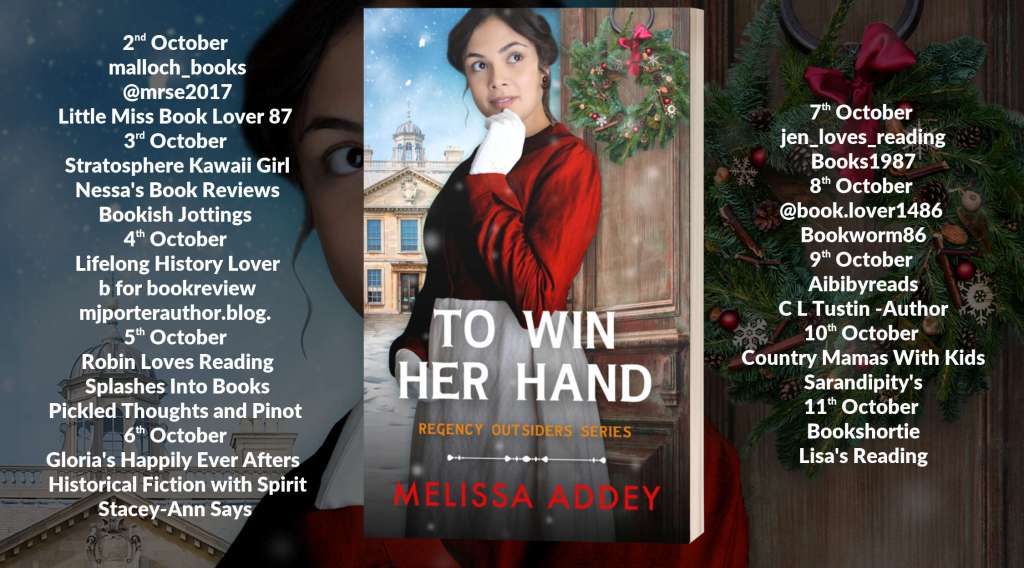
I’m sharing my review for To Win Her Hand by Melissa Addey #regencyromance #blogtour #bookreview #festiveread
Here’s the blurb
They’ve been engaged since they were children, so he sees no need to woo her. She wants a love match and is determined to find an alternative suitor. Perhaps a Christmas trapped together in snowy London will change both their minds.
Lord Comerford has returned from the navy to claim his title, but ton life appears shallow after active service and the woman he has been promised to since birth seems a frivolous child, only interested in parties and clothes.
Lady Celia is hoping her betrothed will make her heart skip a beat – but dour Lord Comerford hardly fits the bill, so she’s planning to call off the wedding just as soon as she can find a better suitor.
Trapped in snow-covered London, the two patch together Christmas celebrations and in so doing find that actions speak louder than words and that an arranged marriage may turn out to contain a spark of romance.
A seasonal Regency romance, full of historical detail and festive fun, as a couple find out that a dutiful promise might be joyful after all. The Season has begun, the ton is gathered… will Christmas work its magic for Alexander and Celia?
To Win Her Hand adopts the old Regency romance storyline of both main characters being unable to speak their minds to one another. Instead, we hear their thoughts as they both manage to completely misunderstand the other, leading to Lady Celia deciding she can’t possibly marry the man she’s been engaged to since she was a child. This is a nice set-up for what comes next (although, I do find myself gnashing my teeth at these people. Grrr. Why can’t they just speak their minds:))
But, all this is to change when Celia and Lord Comerford find themselves ‘thrown’ together and unable to escape one another over the Christmas season. What follows are a charming collection of scenes where both begin to realise they’ve been too hasty. But, of course, it wouldn’t be a Regency romance without more miscommunication between our pair.
To Win Her Hand is another charming Regency romance from Melissa Addey. In her Regency Outsiders series, she offers readers something a little different, with her main characters constrained by a society that misunderstands them. It is quite refreshing, and I’ve thoroughly enjoyed all of the books in the series (although they are standalone novels – you don’t need to read the previous books as each one has new characters – but you would be missing out).
Melissa Addey writes richly researched historical fiction inspired by what she calls “the footnotes of history” – forgotten stories and intriguing lives from the past. Her novels span Ancient Rome, medieval Morocco, 18th-century China, and Regency England. She has a PhD in Creative Writing, was Writer in Residence at the British Library, and lives in London with her family. Discover her books (and get a free novella) at www.melissaaddey.com
Check out my review for From The Ashes, Melissa Addey’s Roman-era historical fiction set around the events of Vesuvius and the building of the Colosseum.
It’s happy release day to Shield of Mercia. Return to the world of young Icel, and listen to the beginning of the audiobook #newrelease #histfic #TheEagleofMerciaChronicles #audio
The audiobook
The rather wonderful Sean Barrett has narrated all of young Icel’s adventures. Listen to the beginning of the audio now.
Here’s the blurb
Mercia is triumphant. Her king is safe. But Wessex was never Mercia’s only enemy.
Tamworth, AD836
Following a brutally cold winter, King Wiglaf of Mercia is in the ascendancy. Even Wessex’s Archbishop of Canterbury extraordinarily ventures to Mercia to broker a religious accord. But, can the hard-won peace prevail?
Viking raiders threaten Wessex. These blood-thirsty warriors are fast, skilful and have no reticence about killing those who stand in their way. Their aim isn’t to rule but to overwhelm, slaughter and take ill-gotten wealth.
King Wiglaf is no fool. As the Vikings push to overwhelm Wessex, Mercia’s lands look insecure. King Wiglaf needs the shields of Mercia’s warriors to prevent the overwhelming advancement of their deadliest enemy yet.
To save Mercia, Icel must first prevail over the two men who mean to end his life; King Ecgberht of Wessex and his son, Æthelwulf of Kent and only then the marauding Viking army for whom boundaries have no meaning.
It’s happy release day to Shield of Mercia. Return to the world of young Icel, and the book of healing #newrelease #histfic #TheEagleofMerciaChronicles
The book of healing
One of the side stories in The Eagle of Mercia Chronicles series, is the (fictional) endeavour of Ealdorman Tidwulf and the healers Gaya and Theodore to gather together all the remedies known by people within Mercia at the time, in the steady hands of Brother Matthew, James and Michael.
There are a number of books of medicine that survive from this period. Most people have heard of Bald’s Leechbook, which lists many remedies, and I find them fascinating. (It’s also available to read online) Some have been proven to be very effective, and while in recent decades the move away from herbal remedies has seen these older remedies somewhat derided, there’s genuine investigative work taking place now to understand them. As was highlighted to me when I attended a Herbal Roots training day last year at Dilston Physik Garden, our reliance on paracetamol and ibuprofen is not only very modern, it is perhaps the reasons these old remedies are not often kept in every household (well, at least the ones people believed worked).
I’ve attended a number of lectures concerning remedies and how these have survived, as well as whether they might prove to be effective (check out www.ancientbiotics.co.uk). One element, aside from all the others, that I find fascinating is the difficulty in transmitting perhaps the most pertinent of information – what quantities should all the component parts in the remedies be used in. (This is something highlighted at one of the many lectures I’ve attended, but I can’t find the reference despite trawling my notebooks, so sincere apologies to the academic involved).
In Shield of Mercia, Icel discusses the problem with Gaya and Theodore, sees the work in progress, and also listens to the monks discussing how they should categorise their work. In particular, they discuss one particular herb, Hundes heafod, also now as snapdragon, which highlights another problem. These herbs might have had multiple names. While there must have been much handed down and a great deal of ‘learned’ knowledge (I’ve also mentioned this in the Dark Age Chronicles where Meddi knows remedies taught to her by the previous seeress) I do think it would still have caused difficulties. If you read some of the remedies, they tell you what to use, but not how much to use.
This is only one of many problems with these ancient remedies; another is that many written herbal remedies were from far warmer climates than the UK. How then were they to find local fauna that had the same properties as those found elsewhere? I am no gardener, or herbalist, (and indeed, I struggle to identity any plants aside from daffodils and roses) but even I can see how frustrating the problems must have been. In including something that we would no doubt use the web to search for these days, in my Saxon stories, I hope to prompt readers to think about what it must have been like to live during the era without paracetamol and ibuprofen, and whatever it is the lovely dentist injects into my gums when I have to have remedial work done – I can only imagine how painful that must have been.
Mercia is triumphant. Her king is safe. But Wessex was never Mercia’s only enemy.
Tamworth, AD836
Following a brutally cold winter, King Wiglaf of Mercia is in the ascendancy. Even Wessex’s Archbishop of Canterbury extraordinarily ventures to Mercia to broker a religious accord. But, can the hard-won peace prevail?
Viking raiders threaten Wessex. These blood-thirsty warriors are fast, skilful and have no reticence about killing those who stand in their way. Their aim isn’t to rule but to overwhelm, slaughter and take ill-gotten wealth.
King Wiglaf is no fool. As the Vikings push to overwhelm Wessex, Mercia’s lands look insecure. King Wiglaf needs the shields of Mercia’s warriors to prevent the overwhelming advancement of their deadliest enemy yet.
To save Mercia, Icel must first prevail over the two men who mean to end his life; King Ecgberht of Wessex and his son, Æthelwulf of Kent and only then the marauding Viking army for whom boundaries have no meaning.
It’s happy release day to Shield of Mercia. Return to the world of young Icel. It’s going to get cold (and then rather hot). #newrelease #histfic #TheEagleofMerciaChornicles
This is my fourth attempt at the recording:) (Contains spoilers) (click on it to ‘pop’ it out)
Here’s the blurb
Mercia is triumphant. Her king is safe. But Wessex was never Mercia’s only enemy.
Tamworth, AD836
Following a brutally cold winter, King Wiglaf of Mercia is in the ascendancy. Even Wessex’s Archbishop of Canterbury extraordinarily ventures to Mercia to broker a religious accord. But, can the hard-won peace prevail?
Viking raiders threaten Wessex. These blood-thirsty warriors are fast, skilful and have no reticence about killing those who stand in their way. Their aim isn’t to rule but to overwhelm, slaughter and take ill-gotten wealth.
King Wiglaf is no fool. As the Vikings push to overwhelm Wessex, Mercia’s lands look insecure. King Wiglaf needs the shields of Mercia’s warriors to prevent the overwhelming advancement of their deadliest enemy yet.
To save Mercia, Icel must first prevail over the two men who mean to end his life; King Ecgberht of Wessex and his son, Æthelwulf of Kent and only then the marauding Viking army for whom boundaries have no meaning.
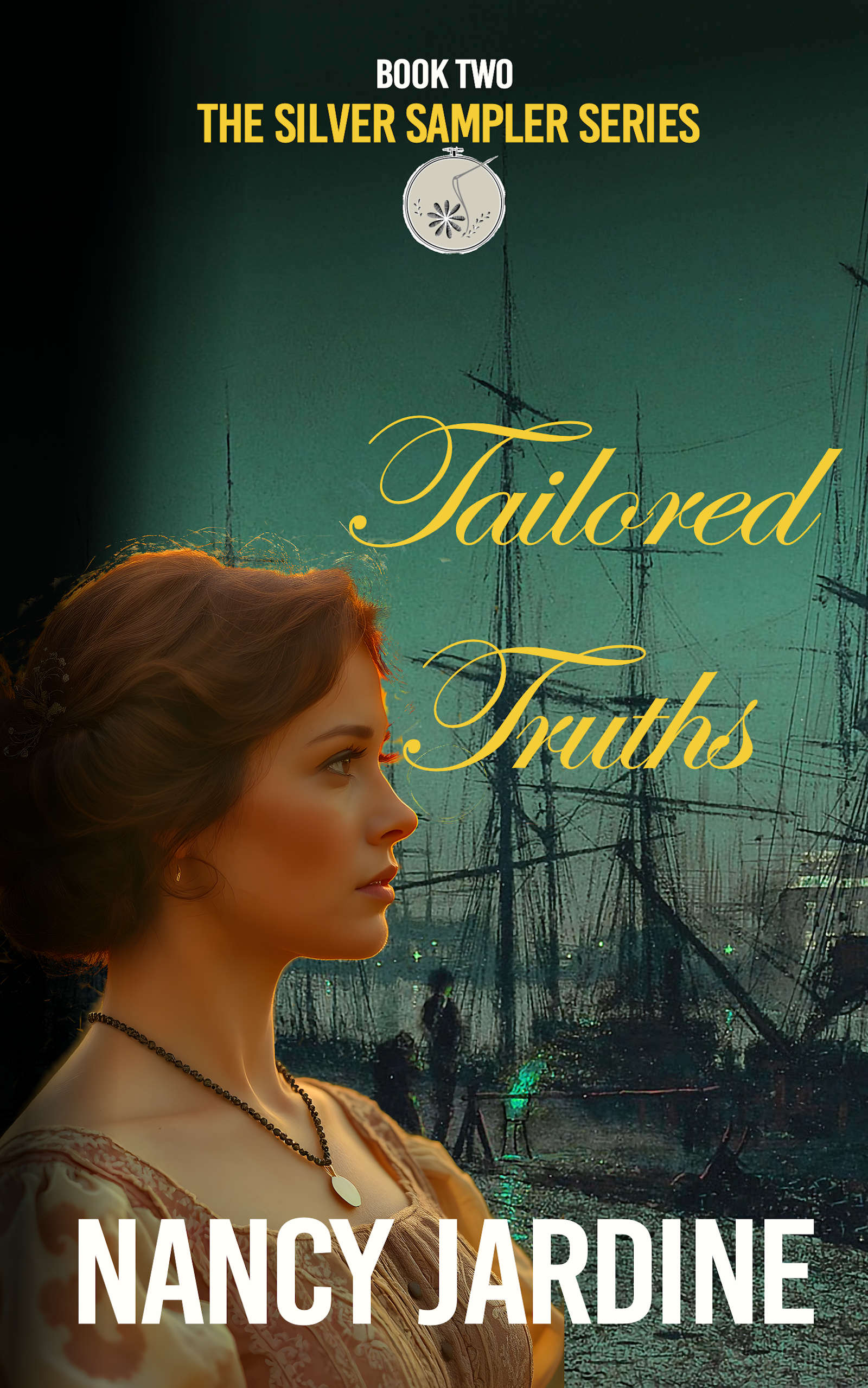
I’m delighted to welcome Nancy Jardine and her new book, Tailored Truths, Book 2 in the Silver Sampler Series, to the blog with a guest post.
Guest Post – Mill Owner Benevolence
My character, Margaret, has a variety of jobs in Tailored Truths. Two of them are in different areas of one of the larger mills in Dundee (Scotland). The time period covered in the book is between 1855 and 1868 when Dundee mills were, at times, highly profitable though the situation was also volatile, markets and sales being unpredictable. Workers were hired when high production was needed and they lost their jobs when things weren’t so rosy in the world markets. Margaret finds herself lucky to have a job when she desperately needs one, even if it pays a pittance!
During the earlier part of the 19th Century, linen was the prime mill product in the Dundee area. Coarse linen weave was highly sought after for sailcloth; for canvas sacks and bags for transporting goods; and a coarse linen weave named Osnaburg was produced for sending to the American plantations to be made into rough clothing for slaves. The main drawback, however, was that the flax (raw product) tended to come from Baltic states. When Britain became embroiled in the Crimean War, between 1853-1856, the flax supplies from the Russian Baltic states were deemed as potentially unreliable. The larger mill owners in Dundee tended to work on a ‘six months’ system where supplies were ordered well in advance, since shipping from the Baltic also relied on an annual short-window of weather good enough for sailing ships. Not having continuous raw supplies presented a huge problem since linen was highly sought after during the Crimean War. The war office bought lots of linen products, the British army and navy requiring constant supplies and replacements to sails; uniforms; sacks; tents etc. Market prices fluctuated but some of the Dundee mills profited very well during the Crimean War, though there were the much leaner years afterwards when the War Office requisitions dwindled.
To offset potential losses from a lack of flax, some of those larger mill owners in Dundee turned to producing jute weaves. Jute wasn’t a new product around Dundee, since some of the smaller weavers had already been producing jute products for decades, but the profit margin for them was low. Initially, the raw jute was grown in Bengal (India) and shipped to Dundee via local Indian dealers but when the larger mill owners saw jute as being profitable they organised the shipping themselves.
The tradition in Bengal had been for jute products to be hand-woven. There were no powered-looms nor any steam machinery in Bengal for spinning and weaving till later in the 1850s and 1860s, so there was no real competition when the big Dundee mills began jute mass production.
The raw jute needed to be softened first before carding and spinning could happen. Whale oil was already known to be a good product for that process and it was highly convenient that the quaysides at Dundee were regularly frequented by the huge whaling ships.
Some of the mill owners weathered the unpredictable markets very well and their bank accounts swelled enormously. Many of them chose to use their wealth to build new mansions for their families in the nearby coastal town of Broughty, or around the city of Dundee. In doing this, they provided much needed construction jobs, and then jobs for inside and outside staff. I used this situation in Tailored Truths, giving Margaret a taste of the high-life when she is taken on as a lady’s maid in one of the new mansions. The ‘family’ are naturally only on the periphery of high society, with Margaret experiencing it from the point of view as an elevated servant, but her situation means a glimpse into how the nouveaux riche of Dundee were living.
Some of the Dundee mill owners took opportunities to use some of their wealth for the benefit of the citizens of Dundee. Whether this was true altruism, or expected of them, could be debated at length but the facts are that some public buildings and facilities would not have been built so readily without hefty donations coming from the mill owners. Some of the still-existing public parks in Dundee came about from extensive donations, Baxter Park being a fine example. The land was acquired, planted up and turned into beautiful walkways for the working people of Dundee to enjoy when freed from their long hours of work. Baxter Park also has a very fine pavilion, currently used as a multi-purpose venue with a tiny daytime café. One of the marvellous aspects of the sandstone pavilion in Baxter Park, designed by Sir Joseph Paxton – a renowned architect and landscaper – is the grand rooftop balustrade. There is a fantastic view from there of the River Tay and the far bank of Fife. When the park was newly planted the view would have been much better than today. It’s still very good since the whole park site is ‘up-the-hill’ from the harbourside but today some of the original and very mature trees, and modern housing slightly obscure the views.
I couldn’t resist adding in a scene where Margaret meets some very handsome lads in my fictitious Baxton park. It didn’t feel authentic to give my Dundee mill family the genuine name of Baxter, but I chose something very close. My fictitious Mister Baxton is, in his own way, remotely instrumental in Margaret’s progress through her late teenage years and into her twenties. How?…Too many spoilers ruin the book (Shh.. I just made that up!)
Here’s the Blurb
An engrossing Victorian Scotland Saga (Silver Sampler Series Book 2)
Is self-supporting success enough for Margaret Law or will her future also include an adoring husband and children? She might secretly yearn for that though how can she avoid a repeat of relationship deceptions that disenchanted her so much during her teenage years?
Employment as a lady’s maid, and then as a private tutor in Liverpool in the 1860s bring thrilling opportunities Margaret could never have envisaged. Though when those posts end, her educational aspirations must be shelved again. Reliance on her sewing skills is paramount for survival when she returns to Dundee.
Meeting Sandy Watson means love, marriage and starting a family – though not necessarily in that order – are a striking development though it entails a move north to Peterhead. Yet, how can Margaret shed her fear of commitment and her independence and take the plunge?
Jessie, her sister-at-heart, is settled in Glasgow. Frequent letters are a life-line between them but when it all goes horribly wrong, the contents of Margaret’s correspondence don’t necessarily mirror her awful day-to-day realities.
This title is available to read on #KindleUnlimited
Meet the Author
Nancy Jardine writes historical adventure fiction, historical saga, time travel historical adventure and contemporary mysteries. Research, grandchildren, gardening fill up her day in the castle country of Aberdeenshire, Scotland, when not writing or promoting her writing. Interacting with readers is a joy at Book and Craft Fairs where she signs/sells paperback versions of her novels. She enjoys giving author presentations on her books and on Ancient Roman Scotland.
Memberships include: Historical Novel Society; Scottish Association of Writers, Federation of Writers Scotland, Romantic Novelists’ Association and the Alliance of Independent Authors. She’s self-published with Ocelot Press.
It’s happy release day to Shield of Mercia. Return to the world of young Icel. It’s going to get cold (and then rather hot). #newrelease #histfic #TheEagleofMerciaChornicles
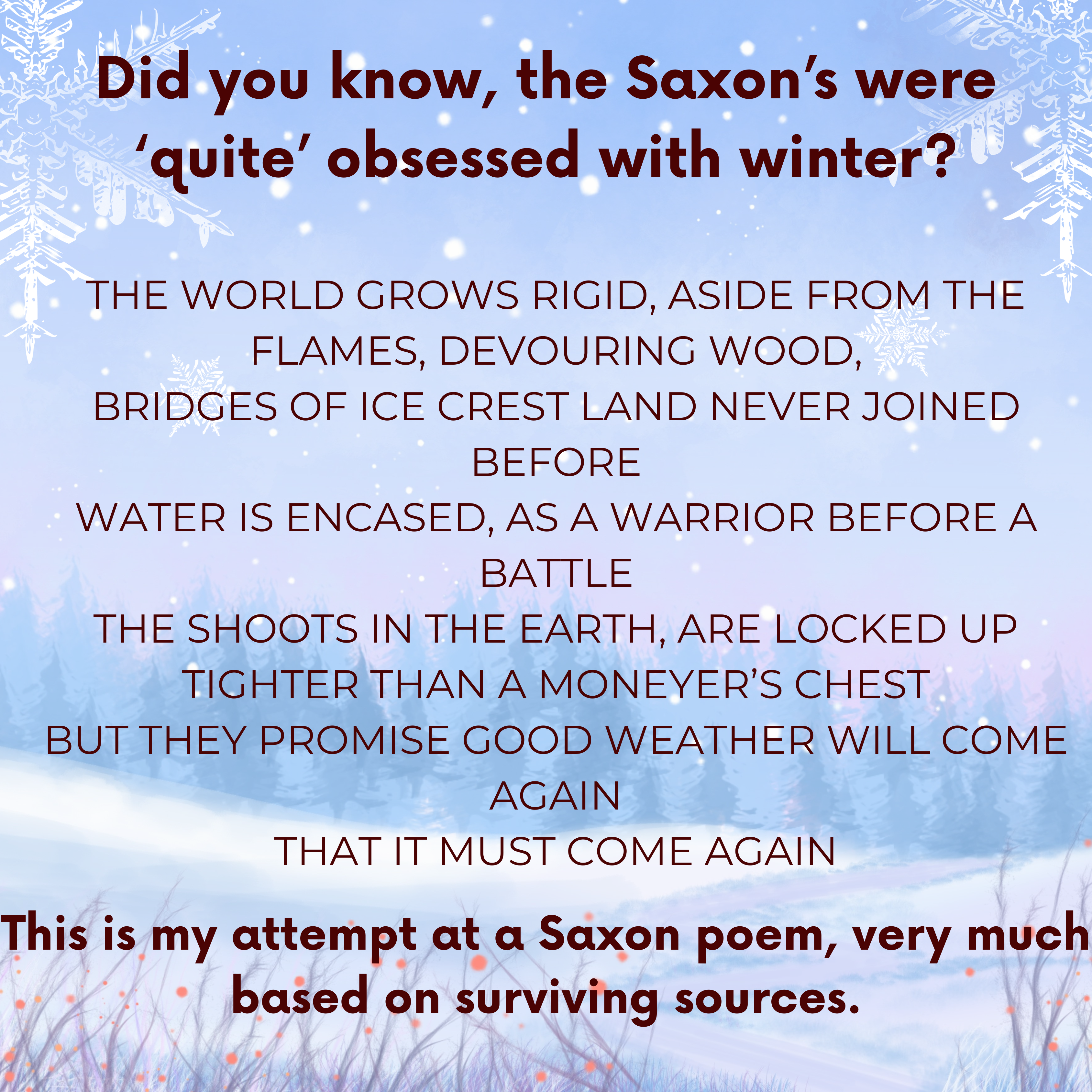
I ‘attempted’ to recreate a Saxon poem about winter in Shield of Mercia. What do you think?
Many famous poems from Saxon England reveal a fascination with winter, almost a horror of its ravages, which we might not appreciate with our central heating, fleeces and ability to eat well.
The Menologium, a calendar poem from the period, states that winter ran from the 7th of November to the 6th of February, and I really love the imagery in The Menologium, as translated by Eleanor Parker, in her fascinating Winters of the World (the title really does say it all).
‘After [All Saints’ Day] comes Winter’s Day, far and wide
Six nights later, and seizes sun-bright autumn
With its army of ice and snow,
Fettered with frost by the Lord’s command,
So that the green fields may no longer stay with us,
The ornaments of the earth.’
p41 from E Parker’s translation of The Menologium in Winters of the World.
Check out reader reviews
Here’s the blurb
Mercia is triumphant. Her king is safe. But Wessex was never Mercia’s only enemy.
Tamworth, AD836
Following a brutally cold winter, King Wiglaf of Mercia is in the ascendancy. Even Wessex’s Archbishop of Canterbury extraordinarily ventures to Mercia to broker a religious accord. But, can the hard-won peace prevail?
Viking raiders threaten Wessex. These blood-thirsty warriors are fast, skilful and have no reticence about killing those who stand in their way. Their aim isn’t to rule but to overwhelm, slaughter and take ill-gotten wealth.
King Wiglaf is no fool. As the Vikings push to overwhelm Wessex, Mercia’s lands look insecure. King Wiglaf needs the shields of Mercia’s warriors to prevent the overwhelming advancement of their deadliest enemy yet.
To save Mercia, Icel must first prevail over the two men who mean to end his life; King Ecgberht of Wessex and his son, Æthelwulf of Kent and only then the marauding Viking army for whom boundaries have no meaning.
Why did I write about Lady Elfrida? Saxon England’s first crowned queen? #nonfiction #authorinspiration
Why did I write about Lady Elfrida?
Lady Elfrida could have been Anne Boleyn, marrying for love, only she outlived her husband. She could have been Eleanor of Aquitaine, only she only had one son who lived to adulthood. She could have been Isabella, the She-Wolf of France. No woman before her had ever held so must power in England, and lost it, at the hands of her son.
The delight in Lady Elfrida’s story is playing with the ‘what ifs’ and the ‘possibilities.’ This is why she is a perfect character to explore through fiction, because her life is long and varied, and there’s a great deal to untangle from the historical record.
Elfrida was, officially, the first crowned Queen of Saxon England. Of Saxon England. Before her, there had been queens of Wessex (not as many as you think), Mercia (more), Northumbria, Kent, East Anglia, and even of the Anglo-Saxons, but never of the English.
‘Twice a Queen’ Emma, who married Elfrida’s son, Æthelred II, and the Cnut, would have walked in only recently relinquished footsteps when she married. Equally, Elfrida replaced Lady Eadgifu, a woman not known to have been acknowledged queen, but who just might have known Elfrida before her death, and who had certainly played her own part as a kingmaker following the death of her husband, her stepsons, her sons, and then older grandson.
I confess, the idea of a married king falling passionately in love with Lady Elfrida was almost more than enough to want to write about her, and I did include this in the first novel, much more a romantic historical novel than the subsequent books, but it was what came after that struck me.
A woman of considerable power and influence
But Lady Elfrida was a woman of considerable power, not just a love interest for the king – take a look at the charters issued throughout her second husband’s and second son’s life, and she’s there, named. Not always at the top of the list of attestations, but clearly in evidence, apart from when she and her son seem to have fallen out in about 985 until 993, when she reappears until her death. Lady Elfrida was a ‘mover and shaker’ at the Saxon English Court.
She was the ‘queen’ alongside her husband as king, she was mother to his third and fourth children – two sons.
As queen, she was involved in the Benedictine Reformation, then sweeping England – alongside such political heavyweights as Archbishop Dunstan and Oswald and Bishop Æthelwold, and her husband gave her command over the nunneries of England (which meant their wealth and assets as well as their spiritual needs).
Under her step-son, Edmund the Martyr, Lady Elfrida, was absent from Court, no doubt plotting her son’s return, or, just acknowledging that she had no part to play as her son had been excluded from the succession.
Lady Elfrida returned to Court with her son’s accession. A regency council was formed, and of course Elfrida was included, and this seems to be where Elfrida reached her peak of influence.
It’s worthwhile pausing to consider this outcome. Æthelred was no more than ten, possibly eleven, when he came to the throne. He was a minor. He was a child. And yet he became king of England, his coronation taking place in April 978 or 979, either with unseemly haste after his half-brother’s murder, or with a year of ‘arm twisting’ in between.
He was a minor. He was not a warrior.
A hundred years before Æthelred’s reign, the Alfred-Guthrum treaty had been signed, dividing England between the Danes and the ‘English’ (as they weren’t yet really known). ‘England’ (still not a distinct entity) had nearly been overrun by the Vikings. Fast-forward a hundred years, and ‘England’ has formed and there’s a minor on the throne. This, in any eyes, must be hailed as the greatest victory for Lady Elfrida.
Examining Lady Elfrida’s life with a rational approach and half an eye to the charter evidence for the period, and half an eye on what would happen after her death to smear her image, it‘s difficult not to say that she was not the first truly influential and powerful queen to ever stand close to England’s throne – a queen as well as a wife, the king’s mother, and, in time, the grandmother to a future generation – she deserves much more than her attribution (which formed quite quickly after her death and only grew after the Norman Conquest) of ‘whore’ and ‘murderer’.
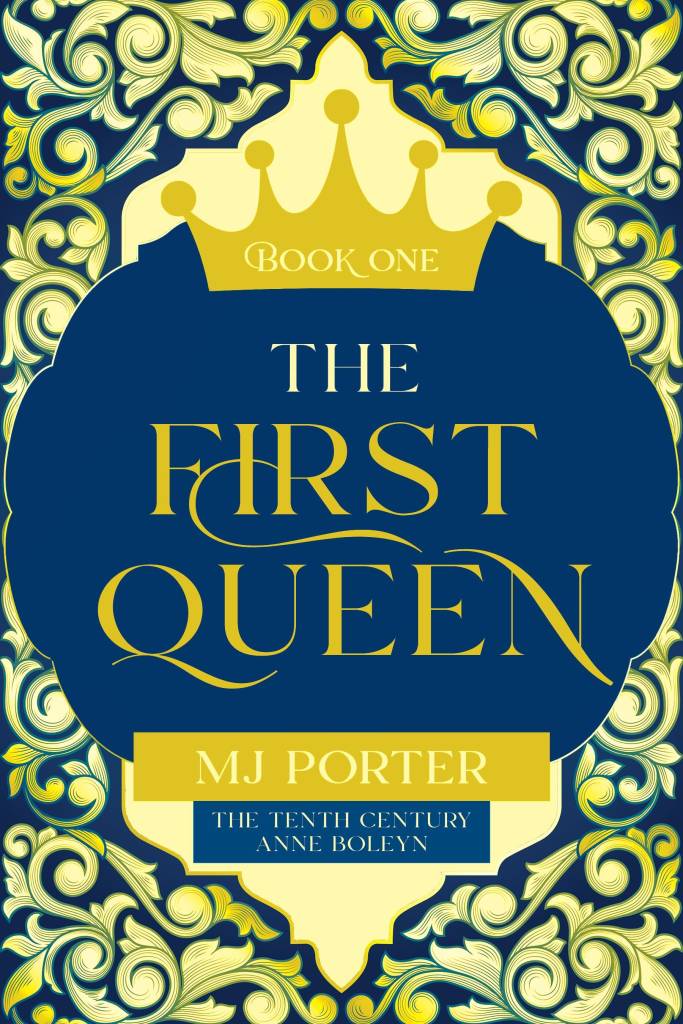
The First Queen Trilogy charts Lady Elfrida’s marriage.
The King’s Mother, the first in a second trilogy, charts Lady Elfrida’s role, as well, the King’s Mother. Her story can be read from here.
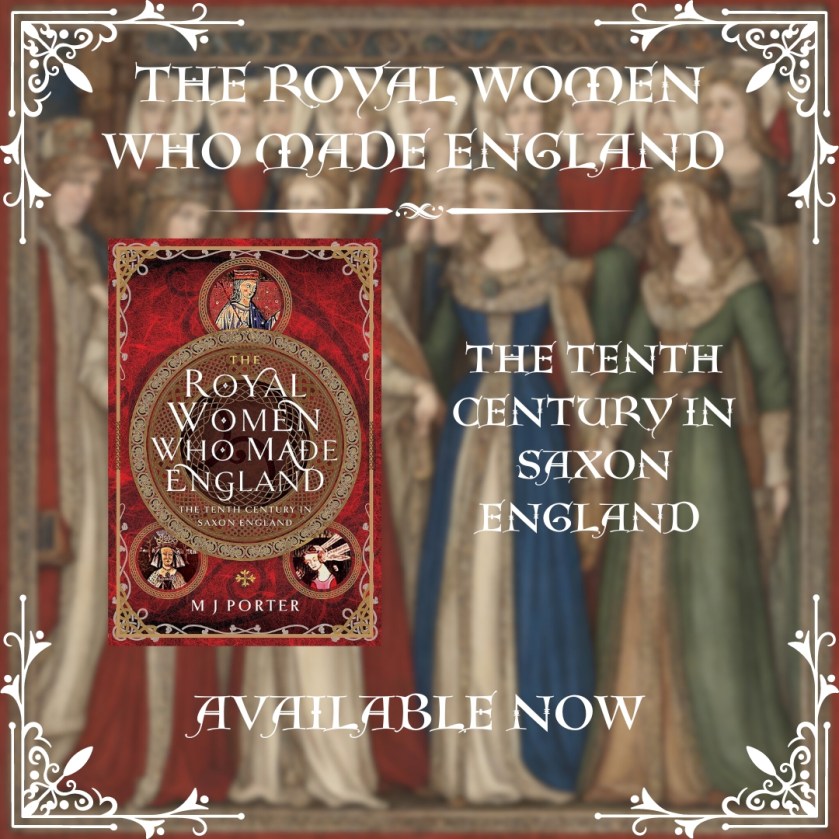
If you’d like to know more about the historical Elfrida, she features in my first non-fiction title, below (as does Lady Eadgifu).