I’m delighted to welcome Wendy J.Dunn and her new book, Falling Pomegranate Seeds: The Katherine of Aragon Story, to the blog #HistoricalFiction #TudorFiction #KatherineOfAragon #Duology #BlogTour #TheCoffeePotBookClub

I’m delighted to welcome Wendy J.Dunn and her new book, Falling Pomegranate Seeds: The Katherine of Aragon Story, to the blog with a snippet.

Snippet

Furious, Ahmed bounded up from the cushions and stood over her. “Why doesn’t she write and tell me that now? My father writes to me but my mother, never.”

Beatriz bent towards him. “My prince, your father always writes a message from your mother.”

Sitting again beside her, Ahmed’s lower lip trembled. “A few words – that the king, my father, includes for her.”

Gathering her thoughts, Beatriz gazed at the book on her lap before eyeing Ahmed again. “Your mother would write if she was able. Do not fall into the mistake of believing what you see at Queen Isabel’s court is the same elsewhere. Dear prince, not all women know how to write.”

From The Duty of Daughters

Here’s the Blurb

In the Falling Pomegranate Seeds Duology, readers are transported to the rich historical tapestry of 15th and 16th-century Europe, where the lives of remarkable women unfold against the backdrop of political upheaval and personal struggles.

In the first book, beginning in 1490 Castile, Doña Beatriz Galindo, a passionate and respected scholar, serves as an advisor to Queen Isabel of Castile. Beatriz yearns for a life beyond the constraints imposed on women, desiring to control her own destiny. As she witnesses the Holy War led by Queen Isabel and her husband, King Ferdinand of Aragon, Beatriz dedicates herself to guiding Queen Isabel’s youngest child, Catalina of Aragon, on her own path. Beatriz’s role as a tutor and advisor becomes instrumental in shaping Catalina’s future as she prepares to become England’s queen.

Fast forward to the winter of 1539 in the second book, where María de Salinas, a dear friend and cousin of Catalina (now known as Katherine of Aragon), pens a heartfelt letter to her daughter, the Duchess of Suffolk. Unable to make the journey from her London home due to illness, María shares her life story, intricately woven with her experiences alongside Catalina. Their friendship has endured through exile and tumultuous times. María seeks to shed light for her daughter on the choices she has made in a story exploring themes of friendship, betrayal, hatred, and forgiveness. Through María’s narrative, the eternal question Will love ultimately triumph?

Buy Link

Universal Link

Meet the Author

Wendy J. Dunn is an award-winning Australian writer fascinated by Tudor history – so much so she was not surprised to discover a family connection to the Tudors, not long after the publication of her first Anne Boleyn novel, which narrated the Anne Boleyn story through the eyes of Sir Thomas Wyatt, the elder.

Her family tree reveals the intriguing fact that one of her ancestral families – possibly over three generations – had purchased land from both the Boleyn and Wyatt families to build up their own holdings. It seems very likely Wendy’s ancestors knew the Wyatts and Boleyns personally.

Connect with the Author

Follow the Falling Pomegranate Seeds blog tour with The Coffee Pot Book Club

Posts

I’m delighted to welcome Jane Hunt and her new book, The Finding, to the blog #HistoricalFiction #WorldWarII #BlogTour #BookBlast #TheCoffeePotBookClub

I’m delighted to welcome Jane Hunt and her new book, The Finding, to the blog.

Here’s the Blurb

This poignant novella is a tale of forbidden love, resilience, and the human cost of war.

In the quiet fields of Wiltshire during World War II, Eveline, a sheltered young woman, stumbles upon a life-altering discovery: a German Luftwaffe pilot, Fritz, has crash-landed near her home. Against the backdrop of war and suspicion, her family takes the injured man in, nursing him back to health. Beneath his reserved demeanor and burned body, Eveline senses a mystery—and something stirs an unfamiliar longing within her.

As Eveline’s infatuation deepens, she faces a storm of challenges: her overbearing mother’s rigid rules, a zealous preacher’s warnings, and the scrutiny of the town’s gossips. Despite Fritz’s attempts to keep her at arm’s length Eveline’s heart defies reason, falling for the man branded as her enemy.

But Fritz harbors secrets that could shatter Eveline’s fragile world. When the truths of war and the weight of loyalty collide, Eveline must confront the reality of loving someone forbidden.

Will their bond endure the hostility of a nation at war? Or will the scars of betrayal and loss prove impossible to heal?

Buy Link

Universal Link:

Meet the Author

Born in Reading UK, Jane grew up with a love of reading. She remembers taking Enid Blyton books to bed and reading them under the covers when she should have been asleep! Her love of the written word extended into the classroom where the teachers commented on her vivid imagination and length of stories—probably accompanied with a few sights when they realized the amount of time the reading would take!

On leaving school Jane spent a brief spell at college before finding employment as a Dental Nurse where she spent many happy years meeting lots of wonderful people and mixing lots of fillings. After meeting her husband, she later went on to have three children and found work as a Teaching Assistant.

Alongside a busy life, she completed a comprehensive writing course, which saw her having non-fiction work published in newspapers and magazines. But the desire to do something ‘creative’ burned ever brightly. Having recently undertaken a lot of research into her family tree, a desire to find out what life was really like for her ancestors took hold, and she developed a fascination with World War II. Heeding the advice of her late parents to ‘put pen to paper’, she decided to get a story that had been buzzing in her head for quit some time written.

The result of her endeavour was a very ‘raw’ manuscript: The Finding. With some professional help—thank you, Dee, the story evolved into a book—something she still can’t quite believe!

Connect with the Author
Follow The Finding blog tour with The Coffee Pot Book Club

I’m delighted to welcome Katherine Mezzacappa and her book, The Ballad of Mary Kearney, to the blog #HistoricalFiction #IrishHistory #WomensFiction #BlogTour #TheCoffeePotBookClub

I’m delighted to welcome Katherine Mezzacappa and her book, The Ballad of Mary Kearney, to the blog with an excerpt.

Excerpt

The Revd. Samuels Regrets Much but Tells Only his Diary

20th June 1766

I have this day done myself much harm, more than at other times, and the good Lord knows that I do not use His gifts as I should, but in truth I am much tried.

If I survive what I have done today, I must take this as a lesson and mend my ways.

The little bog-trotter called today with a message from Viscount Kilkeel, which he delivered to Meg as I had said I did not wish to be disturbed. She knows well enough that my company is the decanter and not the preparation of next Sunday’s sermon but as a good wife and obedient to me in all things she says nothing. But this time she taps the study door, and waits so that I may go through the pretence of putting by the claret, opening my books and dipping my quill in the inkstand.

The note, which I hope has not been read by those of the servants who can (which means the Chittleboroughs and that Swiss valet), bids me to receive one of his housemaids and please to instruct her in what is necessary that she should read, write and know her numbers as a good Christian child. Would that I were not the third son I am, and my father a plain English squire in ever reducing circumstances, for he did sire many without the wherewithal to provide elegantly for them. Thus my scholarship was hard-won, long years a servitor waiting at the Tufts’ table. The only living being on this island to know the extent of my humiliations is my poor Meg. Often has she asked me in trembling accents to give her leave to run a little school. Other parsons’ wives do this profitably and wisely, she says. But I have never wished my wife to serve anyone for that to me is too near what I was obliged to do to pay my way. And then comes this missive dashed off by his Lordship that I should letter some hoyden that he drops his breeches for now that there is no Lady Mitchelstown to tail!

So after our meal comes this child, scrubbed to the point of decency, I must say, dropping eyes and curtseys and ‘if it please you, sir’ and all coy manners. “No!” I hurl at her, “it pleases me not, but I must do as I am bid.” Meg comes at the noise but I shoo her away, though I know she stood trembling behind the door throughout. But I did wrong. I visited on that child all my rage and frustration. She merely stood in my path though she did not choose to be there. Does he tup her? I know not. It is none of my business to know. If he does, I should pity her, for no man of her class will want her after, and she shall be consigned to the Magdalen or given up for worse. I do not know how much native wit she might have that would permit her to learn from me, for in truth I gave her no opportunity, railing at her as I did. Nor can she have missed the reek of the claret. If he have ruined her she is sure to tell him all of this. His Lordship may be laughing at my expense even now. And yet, perhaps I have no justification for thinking ill of her. There was none of that tawdry pride of the fallen, none of the base cunning of those who think they have the upper hand for a brief time and so must make much of it. Nay, she cowered before me and took the blows I gave with tears but no protestations. Could she know that as she felt the sting of that crop that it was myself I really wished to punish? If she dissembled she did it so well—no, I believe she did not.

Bless my Meg for coming in as she did. I took myself to the yard and put my head under the pump. The fresh air and sunlight worked on my rage and self loathing, and with the shock of that cold water I found I could no longer contain myself but spewed all I held within over the cobbles. I took the pail and washed it away, and by my exertion, the expulsion of what was poisoning me, and copious draughts of that spring water, I came more or less to myself again, and so am face to face with my foolishness. The realisation that I cannot even hold my drink is itself merely another confirmation of the fact that I am not a gentleman and should not pass for such. And my actions in drink today were those of a lunatic. To think that I was so proud to have obtained this living.

My hope lies now only in poor Meg and her good offices with this child. Later, I went into the parlour and asked her as gently as I was able how she had found her pupil. She needed some encouragement, but I got out of her that the girl was biddable, quick in her wits once her tears were dried, and most desirous of coming here again. And the poor lady’s eyes I saw fill with tears of happiness when I heard myself say to her: “If it pleases you to instruct this girl, then let us consider also your little school.” She deserves some joy after so many years of disappointment that no child of our own ever came to stand at her knee. It seems it may take so little, if today I have really learned to be less proud.

Image: Maghera Church
Maghera Church of Ireland church from the old cemetery
Image: Eric Jones. Wikimedia Commons

Here’s the Blurb

‘I am dead, my Mary; the man who loved you body and soul lies in some dishonorable grave.’ In County Down, Ireland, in 1767, a nobleman secretly marries his servant, in defiance of law, class, and religion. Can their love survive tumultuous times?

‘Honest and intriguing, this gripping saga will transport and inspire you, and it just might break your heart. Highly recommended.’ Historical Novel Society

‘Mezzacappa brings nuance and a great depth of historical knowledge to the cross-class romance between a servant and a nobleman.’ Publishers Weekly.

The Ballad of Mary Kearney is a compelling must-read for anyone interested in Irish history, told through the means of an enduring but ultimately tragic love.

Buy Link

Universal Link

Meet the Author

Katherine Mezzacappa is Irish but currently lives in Carrara, between the Apuan Alps and the Tyrrhenian Sea. She wrote The Ballad of Mary Kearney (Histria) and The Maiden of Florence (Fairlight) under her own name, as well as four historical novels (2020-2023) with Zaffre, writing as Katie Hutton. She also has three contemporary novels with Romaunce Books, under the pen name Kate Zarrelli.

Katherine’s short fiction has been published in journals worldwide. She has in addition published academically in the field of 19th century ephemeral illustrated fiction, and in management theory. She has been awarded competitive residencies by the Irish Writers Centre, the Danish Centre for Writers and Translators and (to come) the Latvian Writers House.

​​Katherine also works as a manuscript assessor and as a reader and judge for an international short story competition. She has in the past been a management consultant, translator, museum curator, library assistant, lecturer in History of Art, sewing machinist and geriatric care assistant. In her spare time she volunteers with a second-hand book charity of which she is a founder member. She is a member of the Society of Authors, the Historical Novel Society, the Irish Writers Centre, the Irish Writers Union, Irish PEN / PEN na hÉireann and the Romantic Novelists Association, and reviews for the Historical Novel Review. She has a first degree in History of Art from UEA, an M.Litt. in Eng. Lit. from Durham and a Masters in Creative Writing from Canterbury Christ Church. She is represented by Annette Green Authors’ Agency.

Connect with the Author
Follow The Ballad of Mary Kearney blog tour with The Coffee Pot Book Club

Check out my review for The Maiden of Florence

Posts

I’m delighted to welcome Andrea Matthews and her book, The Cross of Ciarán, to the blog #TimeslipRomance #HistoricalRomance #CelticRomance #BlogTour #TheCoffeePotBookClub

I’m delighted to welcome Andrea Matthews and her book, The Cross of Ciarán, to the blog.

Here’s the Blurb

When a fifth century pagan priest is unearthed in Ireland fifteen hundred years after being entombed, archaeologist Caitlin O’Connell is convinced it’s the find of the century. The body is in perfect condition, right down to the intricate tattoos adorning the Celt’s skin. In fact, if scientific data hadn’t proved otherwise, she would swear he hadn’t been interred more than a few hours.

Eager to discover more about the mysterious Celt, Caitlin accompanies the body back to the New York museum where she’s employed, but before she has time to study him, the priest disappears without a trace.

Rumors surrounding the event begin to circulate and result in the excavation’s benefactor pulling the plug on the entire expedition. The rumors are not far off the mark though.

After being buried alive for betraying his goddess and his priesthood in the dawning age of Christianity, Ciarán wakes to a strange new world. Alone and frightened in an unforgiving city, he stumbles upon the only thing familiar to him and seeks sanctuary within the church walls. With the help of the parish’s pastor, Father Mike, Ciarán slowly grows accustomed to his surroundings, though he’s plagued by dark dreams and the disturbing sensation that an evil from his past has followed him into the future.

But a more immediate danger lurks on his doorstep. Caitlin is determined to get to the bottom of the mystery concerning her missing Celt, and when she meets her Uncle Mike’s new handyman, Ciarán Donnelly, she’s convinced the handsome Irishman knows more about the theft than he’s letting on.

Yet, even she can’t deny the attraction between them, simmering below the surface and blurring the lines between her personal and professional life.

But will Ciarán’s secrets draw them together or shatter their future forever.

Buy Link

Universal Link:

This title is available to read on #KindleUnlimited

Amazon Series Buy Link:

Meet the Author

Andrea Matthews is the pseudonym for Inez Foster, a historian and librarian who loves to read and write and search around for her roots, genealogical speaking. She has a BA in History and an MLS in Library Science, and enjoys the research almost as much as she does writing the story. In fact, many of her ideas come to her while doing casual research or digging into her family history.

She is the author of the Thunder on the Moor series set on the 16th century Anglo-Scottish Border, and the Cross of Ciaran series, where a fifteen hundred year old Celt finds himself in the twentieth century.

Andrea also writes historical mysteries under the pen name I. M. Foster. Her series A South Shore Mystery is set in the early 1900s on Long Island. She is a member of the Long Island Romance Writers, and the Historical Novel Society.

Connect with the Author
Follow The Cross of Ciaran blog tour with The Coffee Pot Book Club

I’m delighted to welcome Susan Lanigan and her new book, White Feathers, to the blog #HistoricalFiction #IrishHistoricalFiction #saga #BlogTour #TheCoffeePotBookClub

I’m delighted to welcome Susan Lanigan and her new book, White Feathers, to the blog with guest post.

Guest Post

My Research Process

By Susan Lanigan

When I was constructing the narrative of White Feathers, I needed an outline, but I was not sure in advance of everything that would occur. The advantage of writing historical fiction is that you can use real events as the vines on the trees which my Tarzan plot could grasp onto and swing to the next tree. So, I looked up various battles of World War I – Loos, the Somme, Neuve-la-Chapelle – and threaded a narrative from them. Like many, I had been captivated by Vera Brittain’s memoir Testament of Youth, and while I think Brittain would probably have been a lot personally, my heart broke for what she endured, how her hope was destroyed and how she carried on regardless after hope was gone.

I owe Brittain a lot for the construction of Eva’s narrative, particularly when she was in Étaples working as a Voluntary Aid Detachment nurse. Brittain’s narrative of that time is captivating and contains so many details. I first learned of the stark tale of the sinking of HMHS Britannic in that book, and then did my own research on the subject. I also read the account of Mary Borden, who writes in a very modernist style. The section in White Feathers where the dying Canadian lieutenant begs for a drink is based on an account in her book The Forbidden Zone.

While my research on the battles was comprehensive, my true experience of researching was coming across random fascinating minutiae and feeling compelled to shoehorn them into the story. The pigeon van was one of these phenomena, discovered while wandering around the Musée de la Grande Guerre, built near Mons, with a monument to mark the battle there. It was the closest the Germans got to Paris. The white feather propaganda was fascinatingly horrifying, and I can only imagine what it was like to see those notices on every corner, how hard it must have been to maintain an ethical stance in the face of overwhelming institutional opposition to it. The priest who oversees the trial and confession of a particular character was a real person, as was the order to which he belonged.

The inevitable problem with research is that you must omit more than you include if you are to have a novel that approaches a publishable wordcount. I could have spent all day talking about the “Little Mother” letter quoted by Robert Graves in Goodbye to All That, or the internecine rivalry of the Pankhurst sisters. But in the end, it’s story that matters; it is the flowing dress with the pleasing detail and the research is the firm undergarment that keeps everything in shape beneath!

Here’s the Blurb

Anti-war and anti-patriarchy without ever saying so – a bravura performance of effortless elegance” – Irish Echo in Australia

SHORTLISTED FOR THE ROMANTIC NOVEL OF THE YEAR AWARD 2015

In 1913, Irish emigrée Eva Downey receives a bequest from an elderly suffragette to attend a finishing school. There she finds friendship and, eventually, love. But when war looms and he refuses to enlist, Eva is under family and social pressure to give the man she loves a white feather of cowardice. The decision she eventually makes will have lasting consequences for her and everyone around her.

Journey with Eva as she battles through a hostile social order and endeavours to resist it at every turn.

Buy Link

Universal Link:

Meet the Author

Susan Lanigan’s first novel White Feathers, a tale of passion, betrayal and war, was selected as one of the final ten in the Irish Writers Centre Novel Fair 2013, and published in 2014 by Brandon Books. The book won critical acclaim and was shortlisted for the UK Romantic Novel of the Year Award in 2015. This edition is a reissue with a new cover and foreword.

Her second novel, Lucia’s War, also concerning WWI as well as race, music and motherhood, was published in June 2020 and has been named as the Coffee Pot Book Club Honourable Mention in the Modern Historical Book of the Year Award.

Susan lives by the sea near Cork, Ireland, with her family.

Connect with the Author
Follow the White Feathers blog tour with The Coffee Pot Book Club

I’m welcoming Chris Bishop and his new book, Oscar’s Tale, to the blog HistoricalFiction #AngloSaxon #Vikings #BlogTour #TheCoffeePotBookClub 

Here’s the blurb

Oscar’s Tale is that of a Saxon boy who sets out to find and rescue his father who has been taken by Viking slavers. 

The story begins in 877, just prior to the Viking attack on Chippenham in which King Alfred was routed. Against this backdrop, Oscar is obliged to set out on his all but impossible quest and quickly becomes embroiled in all that’s going on in Wessex at this turbulent time, culminating in him playing a small but important part in the battle at Edington.

But this is not just a story about blood thirsty battles and fearsome warriors, it’s about a boy struggling to live up to his father’s reputation as a warrior and trying to find his place in a dangerous and uncertain world. For that, he is forced to confront many dangers and earn the respect of others who are far above his station. Along the way he also finds love – albeit at a cost far higher than most would have been willing to pay.

For is it not the wish of every man that his son will achieve more in life than he did?’

Buy Link 

https://books2read.com/u/bwQQ99

Meet the author

Chris was born in London in 1951. After a successful career as a Chartered Surveyor, he retired to concentrate on writing, combining this with his lifelong interest in Anglo Saxon history.

His first novel, Blood and Destiny, was published in 2017 and his second, The Warrior with the Pierced Heart, in 2018 followed by The Final Reckoning in 2019 and Bloodlines in 2020.  Together they form a series entitled The Shadow of the Raven, the fifth and final part of which – The Prodigal Son – was published in 2023.

Chris has published numerous blogs about various aspects of Anglo Saxon history and is a member of the Historical Writers’ Association.

Connect with the author


Follow the Oscar’s Tale by Chris Bishop blog tour with The Coffee Pot Book Club

Posts

I’m delighted to welcome back Helen Hollick with Kathy Hollick and their book, Ghost Encounters, to the blog #GhostEncounters #Ghosts #NorthDevon #FriendlyGhosts #BlogTour #TheCoffeePotBookClub

I’m delighted to welcome back Helen Hollick with Kathy Hollick and their book, Ghost Encounters: The Lingering Spirits of North Devon, to the blog with an excerpt.

Excerpt

Almost everyone assumes that ghosts are hostile and frightening. An assumption perpetuated by intentionally scary stories, religious taboo, movies and TV docu-drama ‘haunted house’ shows. Non-believers – in many cases, correctly – maintain that supernatural experiences are caused by hallucinations of various kinds, the brain visualising something odd into something explainable. But there does not seem to be any explanation for the same ‘ghosts’ being seen in the same place at different times by different people. And actually, the majority of souls that are encountered by genuine Mediums and Spiritualists are not nasty spooks out to scare us. It’s about time that the Hallowe’en image of fear and superstition was firmly set aside. Most ghosts are non-threatening, friendly and indifferent to our presence – or even as unaware of us as most of us are of them.

Kathy was nine when she first mentioned ‘something odd’. We were at a re-enactment of the Battle of Hastings at the English Heritage site of Battle Abbey in Sussex where I was researching the history of 1066 for my novel. (Harold the King UK title / I Am The Chosen King US title.) She asked why one of the men was not getting up like the other re-enactors, and when would they remove the dead horse? I made some non-committal answer, but began to wonder when she made the same comments, pointing to the same spots at events in successive years, one of which had no horses in the organised display. As an adult Kathy saw the same ‘bodies’ on our last visit in 2012. She knows exactly where King Harold II fell. (English Heritage have got it wrong.)

Find out more – and meet a few ghosts – in Ghost Encounters: The Lingering Spirits of North Devon

Here’s the Blurb

Everyone assumes that ghosts are hostile. Actually, most of them are not.

You either believe in ghosts or you don’t. It depends on whether you’ve encountered something supernatural or not. But when you share a home with several companionable spirits, or discover benign ghosts in public places who appear as real as any living person, scepticism is abandoned and the myth that ghosts are to be feared is realised as nonsense.

It is a matter for individual consideration whether you believe in ghosts or not, but for those who have the gift to see, hear or be aware of people from the past, meeting with them in today’s environment can generate a connection to years gone by. Kathy and Helen Hollick have come across several such departed souls in and around North Devon and at their 18th-century home, which they share with several ‘past residents’.

In GHOST ENCOUNTERS: The Lingering Spirits Of North Devon, mother and daughter share their personal experiences, dispelling the belief that spirits are to be feared.

Ghost Encounters will fascinate all who enjoy this beautiful region of rural South-West England, as well as interest those who wish to discover more about its history… and a few of its ghosts.

(Includes a bonus of two short stories and photographs connected to North Devon)

cover design: Avalon Graphics
cover artwork: Chris Collingwood

Buy Link

Universal Link

This title is available to read on #KindleUnlimited

Meet the Authors

ABOUT HELEN HOLLICK

Known for her captivating storytelling and rich attention to historical detail, Helen might not see ghosts herself, but her nautical adventure series, and some of her short stories, skilfully blend the past with the supernatural, inviting readers to step into worlds where the boundaries between the living and the dead blur.

In addition to her historical fiction, Helen has written several short stories, further exploring themes of historical adventure or the supernatural with her signature style. Whether dealing with the echoes of the past or the weight of lost souls, her stories are as compelling as they are convincing. Through her work, she invites readers into a world where the past never truly lets us go.

Helen started writing as a teenager, but after discovering a passion for history, was published in the UK with her Arthurian Pendragon’s Banner Trilogy and two Anglo-Saxon novels about the events that led to the 1066 Battle of Hastings, one of which, The Forever Queen (USA title – A Hollow Crown in the UK) became a USA Today best-seller. Her Sea Witch Voyages are nautical-based adventures inspired by the Golden Age of Piracy. She also writes the Jan Christopher cosy mystery series set during the 1970s, and based around her, sometimes hilarious, years of working as a North London library assistant.

Helen, husband Ron and daughter Kathy moved from London to Devon in January 2013 after a Lottery win on the opening night of the London Olympics, 2012. She spends her time glowering at the overgrown garden and orchard, fending off the geese, helping with the horses and, when she gets a moment, writing the next book…

ABOUT KATHY HOLLICK

Diagnosed as severely dyslexic when she was ten, Helen pulled Kathy out of school at fifteen to concentrate on everything equine.

When not encountering friendly ghosts, Kathy’s passion is horses and mental well-being. She started riding at the age of three, had her own Welsh pony at thirteen, and discovered showjumping soon after. Kathy now runs her own Taw River Equine Events, and coaches riders of any age or experience, specialising in positive mindset and overcoming confidence issues via her Centre10 accreditation and Emotional Freedom Technique training. EFT, or ‘tapping’, uses the body’s pressure points to aid calm relaxation and to promote gentle healing around emotional, mental or physical issues.

Kathy lives with her farmer partner, Andrew, in their flat adjoining the main farmhouse. She regularly competes at affiliated British Showjumping, and rides side-saddle (‘aside’) when she has the opportunity. She produces her own horses, several from home-bred foals.

She also has a fun diploma in Dragons and Dragon Energy, which was something amusing to study during the Covid lockdown.

Connect with Helen

Connect with Kathy

Follow the Ghost Encounters blog tour with The Coffee Pot Book Club

Posts

I’m delighted to welcome Justin Newland and his book, The Midnight of Eights, to the blog #HistoricalFiction #ElizabethanFiction #AgeOfDiscovery #BlogTour #TheCoffeePotBookClub

I’m delighted to welcome Justin Newland and his book, The Midnight of Eights, The Island of Angels series, to the blog with a guest post.

Guest Post

My novel, The Midnight of Eights, is set in Elizabethan times, and explores England’s coming of age in that period. This guest post muses on the state of religion in England in the Tudor era.

King Henry VIII ruled in England. He had not yet divorced himself from his first wife, Catherine of Aragon, nor from the Vatican in Rome. After Martin Luther posted his 95 theses or complaints about the Catholic Church, Henry wrote a tract condemning Luther. For his efforts, Pope Leo X in 1521 bestowed on him the title of FIDEI DEFENSOR or ‘Defender of the Faith’, which is abbreviated to F. D.  It’s one of many ironies in history that, even today, the English monarch, who by law is forbidden to marry a Catholic, let alone become one and remain monarch, still bears the same title, inherited from Henry VIII. You can find it engraved on every coin of the realm. Look for yourself.

Soon after Henry VIII’s break with Rome in 1532, he ordered the Dissolution of the Monasteries. Between 1536 and 1539, the ruby heart was ripped out of England, because, despite their many failings at the time, the monasteries did succour to and aid the poor. The Dissolution helped break the Papacy’s strangle-hold on the English court – for better or for worse. And, with none of its officers, the monks and priests, to represent it, the Catholic religion was exiled from England’s shores. Henry’s other great reform at the time was the ‘Act of Treaty’ (1527-1536) which for the first time allowed ordinary people to own property.

The positive aspect of the break from Rome was that it brought a gradual deliverance from the dogmatism of the Catholic Church, releasing new and liberated ways of thinking. For example, this led to the beginnings of the great English scientific tradition (e.g. Francis Bacon, the father of empiricism, was born in 1561) and to the beginnings of secular theatre (all theatre up to this point had been religious in nature, the ‘Mysteries’ for example).

However, the break with Rome brought other difficulties to an English people increasingly edgy about religion. While Henry remained a Catholic (he had simply displaced the Pope as Head of the Church), his son Edward VI, on his accession in 1547, did change the country’s religion to Protestantism. Cranmer’s English prayer book was published in 1549 to uphold that fact. By 1552, it was illegal to hold any religious service other than a Protestant one. Then another switch – in 1553 Edward died and Mary succeeded. Mary was a staunch Catholic. To make matters worse, she went ahead and married the heir to the Spanish throne, Philip. Fired by the spirit of the Inquisition, she burned Cranmer and 270 Protestants at the stake. The English people never forgave her. She died childless in 1558. Elizabeth succeeded. England switched back to Protestantism.

So in the space of 11 years, from 1547 to 1558, England’s religion had changed from Catholic to Protestant, not once – but twice. No wonder there was a paranoia in people around these times. Look at their portraits, say of Holbein’s portrait of Thomas Cromwell. They are austere, taut, puritan – full of fire and brimstone, and plenty of inner self-disciple. Both men and ladies wore odd-shaped hats that covered their ears. During this fraught eleven years, ordinary people could never be sure that their religious beliefs were not going to cost them or their friends and family their lives. There was little certainty.

Elizabeth ascended to the throne in 1558. What she managed to do, though, was to marry both contending parties of Catholicism and Protestantism, and in such a way that satisfied her subjects. She wisely refused to stand as Head of the newly formed Anglican Church, which she left vacant. Instead, she decided that it should be governed by a Synod of Bishops. She also created a High Church and a Low Church. The High adopted the Roman Catholic Rite, and to this day involves mass said in Latin and so on. The Low Church is Protestant. It involves simple worship in the vernacular with few sacraments.

Elizabeth was some lady, as we know. But consider this. Her father was a serial killer and had murdered her mother, Anne Boleyn. Yet she still did what she did over many years.

Gloriana, yes! That is some inner belief! 

Justin Newland

Here’s the Blurb

1580.

Nelan Michaels docks at Plymouth after sailing around the world aboard the Golden Hind. He seeks only to master his mystical powers – the mark of the salamander, that mysterious spirit of fire – and reunite with his beloved Eleanor.

After delivering a message to Francis Walsingham, he’s recruited into the service of the Queen’s spymaster, where his astral abilities help him to predict and thwart future plots against the realm.

But in 1588, the Spanish Armada threatens England’s shores.

So how could the fledgling navy of a small, misty isle on the edge of mainland Europe repulse the greatest fleet in the world?

Was the Queen right when she claimed it was divine intervention, saying, ‘He blew with His winds, and they were scattered!’?

Or was it an entirely different intervention – the extraordinary conjunction of coincidences that Nelan’s astral powers brought to bear on that fateful Midnight of Eights?

Buy Link

Universal Link:

This title is available on #KindleUnlimited

Meet the Author

Justin Newland’s novels represent an innovative blend of genres from historical adventure to supernatural thriller and magical realism.

Undeterred by the award of a Maths Doctorate, he conceived his debut novel, The Genes of Isis (ISBN 9781789014860, Matador, 2018), an epic fantasy set under Ancient Egyptian skies.

His second book, The Old Dragon’s Head (ISBN 9781789015829, Matador, 2018), and is set in Ming Dynasty China in the shadows of the Great Wall.

Set during the Great Enlightenment, The Coronation (ISBN 9781838591885, Matador, 2019)speculates on the genesis of the most important event in the modern world – the Industrial Revolution.

The Abdication (ISBN 9781800463950, Matador, 2021) is a mystery thriller in which a young woman confronts her faith in a higher purpose and what it means to abdicate that faith.

The Mark of the Salamander (ISBN 9781915853271, Book Guild, 2023), is the first in a two-book series, The Island of Angels. Set in the Elizabethan era, it tells the epic tale of England’s coming of age.

The latest is The Midnight of Eights (ISBN 9781835740 330, Book Guild, 2024), the second in The Island of Angels series, which charts the uncanny coincidences of time and tide that culminated in the repulse of the Spanish Armada.

His work in progress is The Spirit of the Times which explores the events of the 14th Century featuring an unlikely cast of the Silk Road, Genghis Khan, the Black Plague, and a nursery rhyme that begins ‘Ring a-ring a-roses’.

Author, speaker and broadcaster, Justin gives talks to historical associations and libraries, appears on LitFest panels, and enjoys giving radio interviews. He lives with his partner in plain sight of the Mendip Hills in Somerset, England.

Connect with the Author
Follow The Midnight of Eights blog tour with The Coffee Pot Book Club

I’m delighted to welcome Howard Jay Smith and his book, Viva Violetta & Verdi, to the blog #HistoricalFiction #BiographicalHistoricalFiction #Verdi #ClassicalMusic #BlogTour #TheCoffeePotBook Club

I’m delighted to welcome Howard Jay Smith and his new book, Viva Violetta & Verdi, to the blog with a prologue.

Prologue

Oh, My Country, So Beautiful And Lost

Milan, February 27, 1901

On the morning of Verdi’s funeral, I awoke well before dawn. After a double shot of espresso and a cornetto, one freshly baked and served up by my daughter-in-law, Luisa, I dressed in my black mourning suit. At my age, this was an exercise I engaged in with an all too familiar regularity.

Then with the necessary assistance of my silver-handled cane, I left my bedroom suite and headed down the marble stairs to the entryway foyer of our home, Casa di Trevi, on the Via Vittorio Veneto. Tap, step, step. Tap, step, step – a rhythm and beat that had been my companion for over three decades. Tap, step, step.

There, waiting by the coat rack was Luisa, whom I had known since she was thirteen. A pugnacious and steely eyed woman, she greeted me with a warmth that never flagged, “Buongiorno papà.”

I nodded and thanked her for the coffee. “And Tre?” I asked referring to my son, whom we all called by his nickname.

“He left an hour ago,” she replied as she helped me into my black overcoat and then handed

me my top hat.

As I settled the hat onto my head, Luisa stepped back and gave me that “look,” that glare, the one which every man who has ever been married, knows only too well.

“What?” I asked as I glanced in the hallway mirror. Save for a few flecks of grey in my otherwise neatly trimmed beard, the reflected image of my hair came back to me as black as the night I was about to step out into. Despite my age, I was fortunate that my hair, save for a few grey streaks, still retained its natural color.

“Just this,” she said. From a pocket buried in the many folds of her housedress, Luisa pulled a patch to which she had already added a tri-colored ribbon of red, white and green. She pinned it to the band of my top hat and then kissed me on both cheeks. “Now you are ready, papà. Viva Verdi.”

Viva la rivoluzione,” I replied as I looked in the mirror and nodded my approval.

Viva la rivoluzione,” repeated Luisa as she opened the front door.

I stepped out into the chill of that February morning. The streets of Milan were still deserted at this hour. Later, though, news reports would hold that some four-hundred thousand mourners would gather along the funeral route to view the carriage carrying Verdi’s coffin along with that of his wife, who had preceded him in death by some three years. The procession would travel the two miles from the Cimitero Monumentale to the Piazza Michelangelo Buonarroti and their final resting place at the Casa di Riposo per Musicisti.

One reporter from Corriere della Sera would even remark that the crowd for Verdi’s funeral procession was the largest gathering of humans in a single place since Napoleon invaded Russia in 1812. That event some 89 years ago occurred a year before Verdi and I were born just days apart in Busseto, a small village in the Duchy of Parma some 65 miles southeast of here. And although today Verdi is considered not only the quintessential Italian composer but the quintessential Italian, our birth records in the Busseto town hall archives are written in French, for they ruled our home territory.

Yes, liberami, save me. There is no one else alive today who has known Giuseppe Verdi longer than I. Today it is time to put my friend to rest in the soil of an Italian nation that did not exist when we were born and to remember all the sacrifices our beloveds made in blood to achieve those victories.

Here’s the Blurb

A Love Affair Inspiring the World’s Most Unforgettable Operas:

Experience the intense, lifelong love affair between Giuseppe Verdi and Giuseppina Strepponi, the brilliant and seductive soprano who shaped his legacy. As his muse, lover, and wife, Strepponi was the inspiration behind Verdi’s most iconic works, including La Traviata and Aida. Her influence was pivotal, as she became the architect of his creative triumphs and the heart of his operatic genius.

Set against the backdrop of Italy’s Risorgimento, this sweeping novel intertwines their turbulent relationship with the nation’s fierce struggle for independence. Through the heartbreak of three brutal wars, Verdi and Strepponi’s passion, betrayal, and artistic ambition come alive, mirroring the era’s fiery spirit.

Rich with themes of love, power, food, wine, and unrelenting passion, Viva Violetta & Verdi is an unforgettable exploration of art, resilience, and the enduring bond that transformed both an artist and a nation.

Praise for Violetta & Verdi:

A stunning, significant book…that is rich, lush and drenched in knowledge. It is nothing less than a gift.” – Sheila Weller

Smith’s historic drama embraces universal themes of class and religious persecution, and weaves gorgeous language with an intimate knowledge of Italian food, music, and political hypocrisy that contemporary readers will find irresistible.” – ​Jessica Keener

Viva Violetta & Verdi is a well-researched love letter to Verdi; fans are sure to love.” – Leslie Zemeckis

Perfection. You are right there, inhaling and breathing in the words, the smell, and each piece of music. Bravo. It is both a love song and a love letter to the irrefutable power of Verdi’s muse, Violetta.” – Amy Ferris

Buy Link

Universal Link:

Meet the Author

Howard Jay Smith is an award-winning writer from Santa Barbara, California.

VIVA VIOLETTA & VERDI, is his third novel in his series on great composers, including BEETHOVEN IN LOVE; OPUS 139 and MEETING MOZART: FROM THE SECRET DIARIES OF LORENZO DA PONTE.

His other books include OPENING THE DOORS TO HOLLYWOOD (Random House) and JOHN GARDNER: AN INTERVIEW (New London Press). He was recently awarded a Profant Foundation for the Arts Fellowship for Excellence in Writing.

Smith is a former two-time Bread Loaf Scholar and three-time Washington, D.C. Commission for the Arts Fellow, who taught for many years in the UCLA Extension Writer’s Program and has lectured nationally. His articles have appeared in the Washington Post, American Heritage Magazine, the Beethoven Journal, Horizon Magazine, Fig Tree Press, the Journal of the Writers Guild of America, the Ojai Quarterly, and numerous trade publications. While an executive at the ABC Television, Embassy TV, and Academy Home Entertainment he worked on numerous film, television, radio and commercial projects.

He serves on the board of directors of the Santa Barbara Symphony and is a member of the American Beethoven Society.

Connect with the Author
Follow Viva Violetta & Verdi blog tour with The Coffee Pot Book Club

I’m delighted to welcome Julia Ibbotson and her book, The Rune Stone, to the blog #medieval #TimeTravel #Romance #Mystery #BlogTour #TheCoffeePotBookClub

I’m delighted to welcome Julia Ibbotson and her book, The Rune Stone, book 3 in the Dr DuLac series (but can be read as a standalone), to the blog.

Blurb

A haunting time-slip mystery of runes and romance

When Dr Viv DuLac, medievalist and academic, finds a mysterious runic inscription on a Rune Stone in the graveyard of her husband’s village church, she unwittingly sets off a chain of circumstances that disturb their quiet lives in ways she never expected.

She, once again, feels the echoes of the past resonate through time and into the present. Can she unlock the secrets of the runes in the life of the 6th century Lady Vivianne and in Viv’s own life?

Again, lives of the past and present intertwine alarmingly as Viv desperately tries to save them both, without changing the course of history.

For fans of Barbara Erskine, Pamela Hartshorne, Susanna Kearsley, Christina Courtenay.


Praise for Julia Ibbotson:

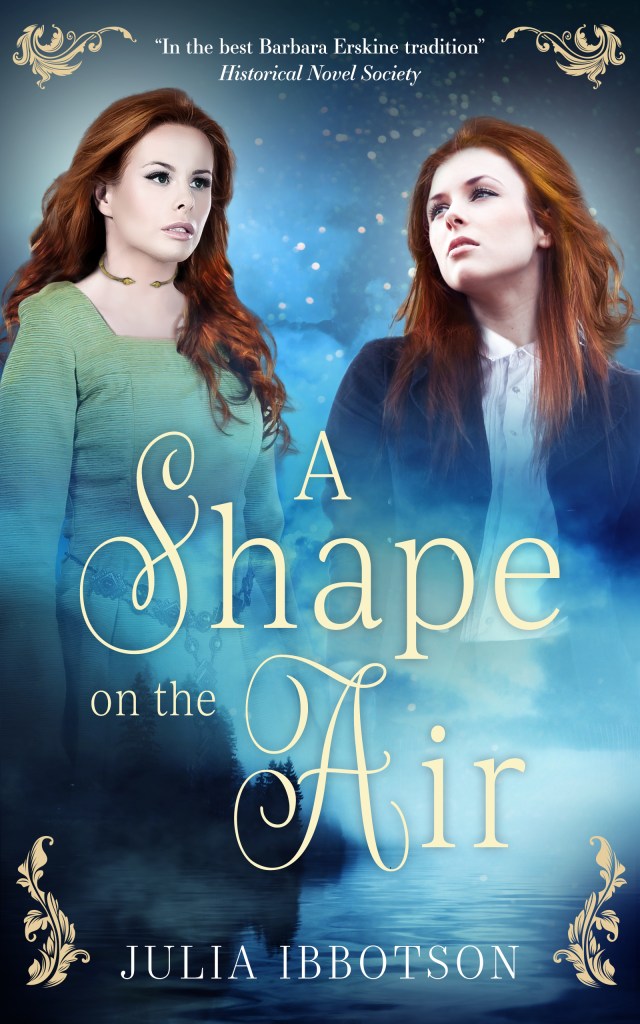
(for A Shape on the Air) “In the best Barbara Erskine tradition …I would highly recommend this novel” –Historical Novel Society

(for the series) “Julia does an incredible job of setting up the idea of time-shift so that it’s believable and makes sense” – book tour reviewer

(for The Rune Stone) “beautifully written”, “absorbing and captivating”, “fully immersive”, “wonderfully written characters”, “a skilled story teller” – Amazon reviewers

“Dr Ibbotson has created living, breathing characters that will remain in the reader’s mind long after the book is read … The characters are brought to life beautifully with perfect economy of description … fabulous!” – Melissa Morgan

“A rich and evocative time-slip novel that beautifully and satisfyingly concludes this superb trilogy. The story is woven seamlessly and skilfully between the past and the present and the reader is drawn deeply into both worlds.  Her portrayal of the 6th century and its way of life are authoritative, vivid and memorable.” – Kate Sullivan

Buy Link

Universal Link

This title is available to read on #KindleUnlimited

Meet the Author

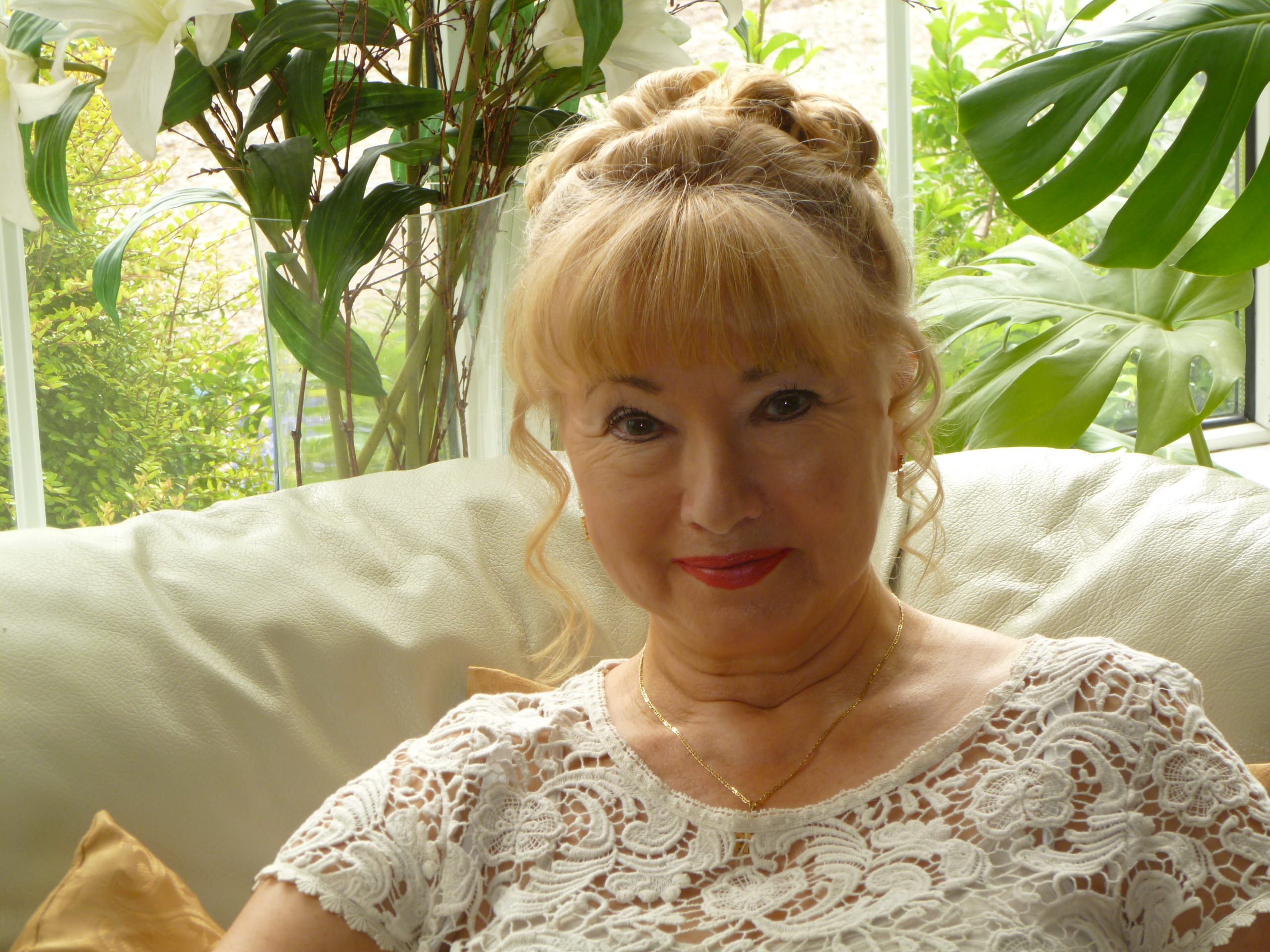
Julia Ibbotson is fascinated by the medieval world and the concept of time. She is the author of historical mysteries with a frisson of romance. Her books are evocative of time and place, well-researched and uplifting page-turners. Her current series focuses on early medieval time-slip/dual-time mysteries. Julia read English at Keele University, England, specialising in medieval language / literature / history, and has a PhD in socio-linguistics.

After a turbulent time in Ghana, West Africa, she became a school teacher, then a university academic and researcher. Her break as an author came soon after she joined the RNA’s New Writers’ Scheme in 2015, with a three-book deal from Lume Books for a trilogy (Drumbeats) set in Ghana in the 1960s. She has published five other books, including A Shape on the Air, an Anglo-Saxon timeslip mystery, and its two sequels The Dragon Tree and The Rune Stone.

Her work in progress is a new series of Anglo-Saxon mystery romances, beginning with Daughter of Mercia, where echoes of the past resonate across the centuries. Her books will appeal to fans of Barbara Erskine, Pamela Hartshorne, Susanna Kearsley, and Christina Courtenay. Her readers say: ‘Julia’s books captured my imagination’, ‘beautiful storytelling’, ‘evocative and well-paced storylines’, ‘brilliant and fascinating’ and ‘I just couldn’t put it down’.

Connect with the Author
Website BookBub

Follow The Rune Stone blog tour with The Coffee Pot Book Club

Check out the details for The Dragon Tree.
Posts