I’m delighted to welcome Anna Chant and her book, Courage of the Conquered, from the Quest for New England series, to the blog.
Blurb
All the wonders of the Mediterranean have not prepared the English for the splendours of Constantinople. As Siward of Gloucester settles into the city, he is grateful to have finally found what he was looking for: A fine, god-fearing lord he is proud to serve and a safe place where he and Oswyth can await the birth of their child.
But as the months pass, doubts creep in. Emperor Michael proves to be a weak ruler, continually threatened with rebellion. Determined to keep the English army close, his promises of reward grow increasingly vague.
With tension in the city rising, Siward and his friends are caught up in the power struggle. While Bridwin maintains his loyalty to the emperor and Siward continues to trust in the friendship of the cunning Alexios Komnenos, Frebern grows close to John Bryennios, a man whose ambitions may include the imperial throne itself. With the friends drawn in different directions, Siward fears they could find themselves fighting on opposing sides.
Desperate to escape, he renews his efforts to find the home the English have so long craved. But the beauty of Constantinople conceals dangers that go far beyond Siward’s fears as sordid secrets and ruthless betrayal stalk the lives of those he holds dear.
As the English prepare for battle yet again, will Siward’s quest for New England end in heart-breaking tragedy?
This title is available to read on #KindleUnlimited
Meet the Author

Anna Chant grew up in Essex, with her first home a tiny medieval cottage. Aged 18 she moved to Yorkshire to study history at the University of Sheffield. In 2015, inspired by her love of medieval history and her Scottish ancestry, Anna started writing her first book with Kenneth’s Queen, the tale of the unknown wife of Kenneth Mac Alpin, published the following year. Taking inspiration from both history and legend, she particularly enjoys bringing to life the lesser known people, events and folklore of the past. When not writing, Anna enjoys walking the coast and countryside of Devon where she lives with her husband, three sons (if they’re home) and a rather cheeky bearded dragon.
I’m delighted to welcome Helen Hollick and her series, The Sea Witch Voyages, to the blog.
Authors’ endorsements
“Helen Hollick has it all! She tells a great story, gets her history right and writes consistently readable books!” ~ Bernard Cornwell
“A wonderful swashbuckler of a novel. Fans of Pirates of the Caribbean will love this to pieces of eight.” ~ Elizabeth Chadwick
“In the sexiest pirate competition Cpt. Jesamiah Acorne gives Johnny Depp’s Jack Sparrow a run for his money.” ~ Sharon K. Penman
Here’s the blurb
Trouble follows Captain Jesamiah Acorne like a ship’s wake…
The early 1700s: from the sun of the Caribbean to the eerie mists of England’s Exmoor in Devon, the Sea Witch Voyages follow the adventures (misadventures?) of Captain Jesamiah Acorne. Orphaned at almost fifteen Jesamiah escaped his home in Virginia and the bullying of his half-brother to join with his father’s old friend, Captain Malachias Taylor – a kindly man, but also a rogue of a pirate.
Jesamiah eventually captains his own ship, but at Cape Town, South Africa, he is to meet the girl who becomes the love of his life – Tiola Oldstagh, a midwife, healer… and a White Witch with the gift of Craft.
Accepting amnesty from Governor Woodes Rogers of Nassau, Jesamiah turns to a legal, married, life, except various governors, ex-lovers, bad-tempered pirates, lingering ghosts and other non-human entities seem to have different ideas.
Jesamiah Acorne: a swashbuckling amalgamation of Hornblower, Jack Aubrey and Jack Sparrow mixed with Indiana Jones, James Bond and Bernard Cornwell’s Richard Sharpe.
Voyage with Jesamiah aboard Sea Witch and sail into the ocean realm of fast-paced, exciting nautical adventures…
“WOW! I was mesmerised from the very first words in the very first chapter. I felt I was actually there with Jesamiah and his fellow pirates; such was the reality of the story. I could almost smell the sea, feel the wind blowing and hear the sounds of the creaking ship.”
“I was very impressed with the attention to historical detail and the alluring descriptions of the sea and its sailing ships. The author confesses that she has taken a few liberties with history to make her story neat and tidy, but I think these are entirely justified for the sake of such a compelling tale.”
“I thoroughly enjoyed this well-told tale. Helen Hollick has created a terrific, likable rogue in Jesamiah Acorne; a young man with a dark past and very bright future – if he survives to enjoy it. Details about the age of sail, life on board and ashore, and the sense that sea has a special, sinister life of its own added to the pleasure of reading. I shall be following this series from now on. Great stuff!”
“Helen Hollick’s forte is her ebullient imagination. Everything is original, from her writing, which is vivid and yet as economical as conversational French, where unnecessary words (‘the’, ‘and’) are dropped for fluency. Notable is the lavish use of the color blue, so expensive and cherished at the time, that the cheeky blue of Jesamiah’s ribbons is almost eclipsed by the sheer arrogance of painting his ship — Sea Witch — the same blue that was the prerogative of monarchs and prelates! And there are wonderful jokes, snitched from real history, such as the raid of a merchant ship by a crew of pirates who merely needed a haul of hats. This book is strongly recommended for young adults who want a rousing story, and also for those who are older who want a thought-provoking new approach to the traditional pirate yarn.”
Titles on #KindleUnlimited: When the Mermaid Sings and Gallows Wake
Meet the Author
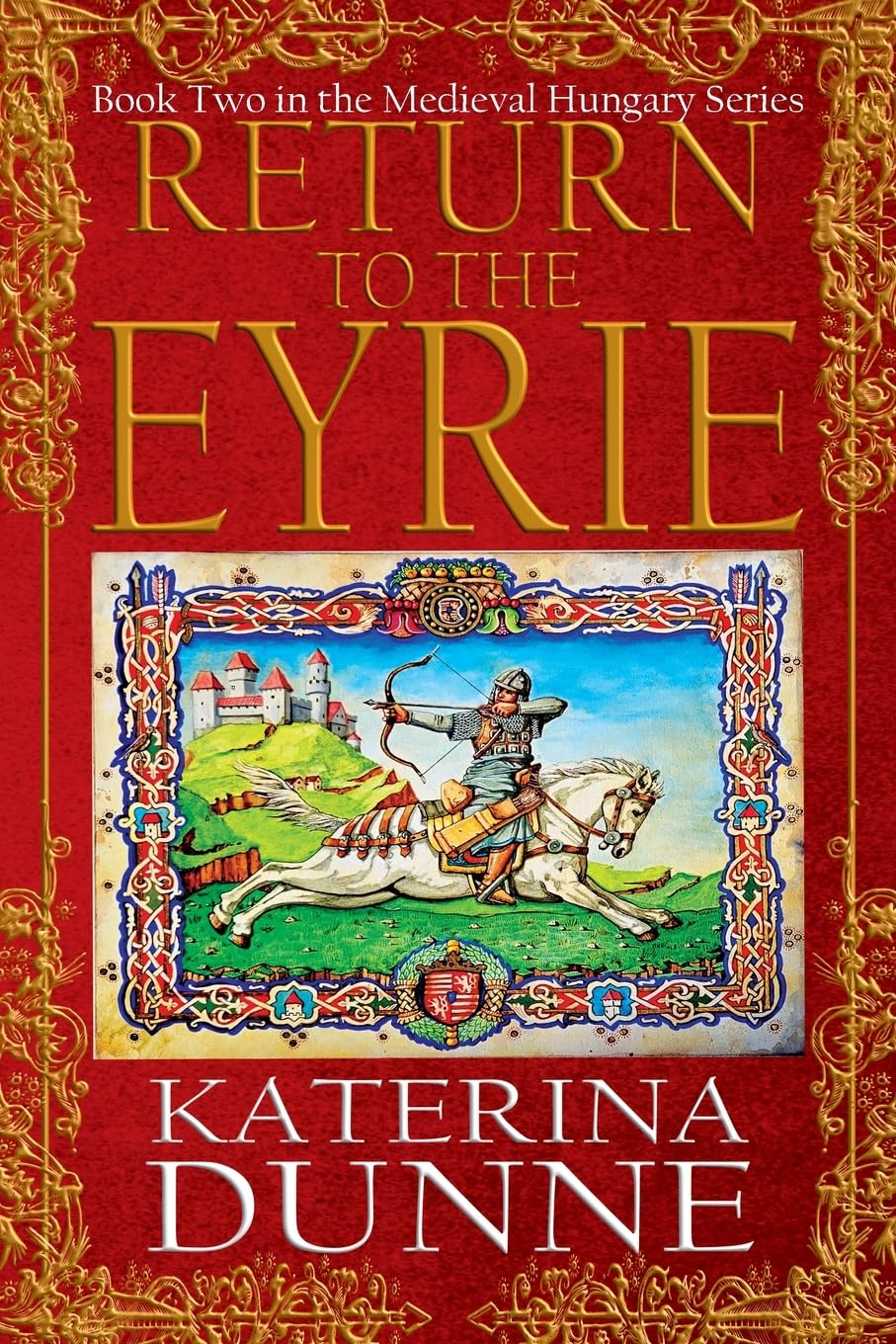
First accepted for traditional publication in 1993, Helen became a USA Today Bestseller with her historical novel, The Forever Queen (titled A Hollow Crown in the UK) with the sequel, Harold the King (US: I Am The Chosen King) being novels that explore the events that led to the Battle of Hastings in 1066. Her Pendragon’s Banner Trilogy is a fifth-century version of the Arthurian legend, and she writes a nautical adventure/supernatural series, The Sea Witch Voyages. She has also branched out into the quick read novella, ‘Cosy Mystery’ genre with her Jan Christopher Mysteries, set in the 1970s, with the first in the series, A Mirror Murder incorporating her, often hilarious, memories of working as a library assistant. The fifth in the series, A Memory Of Murder, was published in May 2024.
Her non-fiction books are Pirates: Truth and Talesand Life of A Smuggler. She is currently writing about the ghosts of North Devon for Amberley Publications, and Jamaica Gold for her Sea Witch Voyages.
Recognised by her stylish hats, Helen attends conferences and book-related events when she can as a chance to meet her readers and social-media followers, although her ‘wonky eyesight’ as she describes her condition of Glaucoma, and severe arthritis is becoming a little prohibitive for travel.
She lives with her family in an eighteenth-century farmhouse in North Devon with their dogs and cats, while on the farm there are showjumper horses, fat Exmoor ponies, an elderly Welsh pony, geese, ducks and hens. And several resident ghosts.
I’m delighted to welcome Gina Buonaguro and her book, The Virgins of Venice, to the blog.
Blurb
In sixteenth-century Venice, one young noblewoman dares to resist the choices made for her
Venice in 1509 is on the brink of war. The displeasure of Pope Julius II is a continuing threat to the republic, as is the barely contained fighting in the countryside. Amid this turmoil, noblewoman Justina Soranzo, just sixteen, hopes to make a rare love marriage with her sweetheart, Luca Cicogna. Her hopes are dashed when her father decides her younger sister, Rosa, will marry in a strategic alliance and Justina will be sent to the San Zaccaria convent, in the tradition of aristocratic daughters. Lord Soranzo is not acting only to protect his family. It’s well known that he is in debt to both his trading partners and the most infamous courtesan in the city, La Diamante, and the pressure is closing in.
After arriving at the convent, Justina takes solace in her aunt Livia, one of the nuns, and in the growing knowledge that all is not strictly devout at San Zaccaria. Justina is shocked to discover how the women of the convent find their own freedom in what seems to her like a prison. But secrets and scandals breach the convent walls, and Justina learns there may be even worse fates for her than the veil, if La Diamante makes good on her threats.
Desperate to protect herself and the ones she loves, Justina turns to Luca for help. She finds she must trust her own heart to make the impossible decisions that may save or ruin them all.
Gina Buonaguro is the co-author of The Wolves of St. Peters, Ciao Bella and The SidewalkArtist, as well as several romance titles under the name Meadow Taylor. The Virginsof Venice is her first solo novel.
She has a BA in English from Villanova University in Pennsylvania and earned an MA in English from the University of British Columbia while on a Fulbright Scholarship. Born in New Jersey, Gina Buonaguro lives in Toronto.
I’m delighted to welcome Mercedes Rochelle and her new book, The Agnicourt King, from The Plantagenet Legacy series, to the blog with, France In Chaos.
France In Chaos
When Henry V landed on the shore of Normandy in 1415, he was relatively sure the French were in no position to offer him much resistance. Already in his father’s reign, both factions of a budding civil war had already approached the English for assistance against the other. Henry IV had responded with an invasion force in support of the Armagnacs against the Burgundians. The Armagnacs—the party of Charles, Duke of Orléans—had made a better offer. However, Prince Henry was in favour of John the Fearless, Duke of Burgundy, and this antagonism against his father’s policy placed him on the wrong side of the political fence. Henry IV’s death a year later put an end to that!
So what was this all about? Since 1392, poor France was afflicted by a schizophrenic king, Charles VI, who slipped in and out of madness with unpredictable frequency. He was sane often enough to negate removing him from the throne permanently, though the older he got, the less he was able to rule rationally even when cognizant. His illness created a political firestorm, as his nobles fought to control his presence; whoever possessed the king ran the country. In the early years of the king’s “absences” (as his schizophrenic episodes were called), the government was ruled by his brother, Louis, Duke of Orléans along with the queen. Orléans was bitterly opposed by John the Fearless, the king’s cousin, who was the popular favorite. In 1407, John had Louis murdered one night in the streets of Paris, but he was such a manipulator that he got away with it. Of course, Louis’s son Charles did all he could to condemn the Duke of Burgundy, but he was too young and inexperienced to pull it off. He eventually formed an opposing faction led by his father in-law, the brutal and effective Count of Armagnac, who carried on after Charles was captured at the Battle of Agincourt.
In 1412, when Henry IV sent an invasion force to France under his second son the Duke of Clarence, King Charles managed to patch up a peace between his warring factions. Clarence was bought off and returned home, but the temporary truce soon failed, and matters came to a head just after Henry IV died. Paris had become a proverbial powder keg, and simmering grievances broke into rioting, directed by agents of Burgundy but led by the powerful butcher’s guild. Under their ringleader, Simon Caboche, the Cabochiens sported white hoods, laid siege to the Bastille—sound familiar?—then turned their attentions to the Hôtel Saint-Pol where the Dauphin was staying. The insurgents seized and imprisoned many of the Dauphin’s supporters and detained the teenaged heir, confining him in the palace with his incapacitated father and helpless mother. Thus began a reign of terror where any suspected Armagnacs were arrested, imprisoned, and murdered. This went on for four months.
The Cabochien revolt, from Les Vigiles de Charles VII,BnF, Manuscrit Français 5054 – Wikipedia
But insurrections are bad for business, and eventually the Parisians had had enough. When the time was ripe, the Armagnacs gathered their forces and converged on the city, inspiring the anti-Cabochiens to rise up against their oppressors. It all happened very quickly. Caboche and hundreds of his followers slipped out of Paris, taking refuge with the Duke of Burgundy who was one of the first to leave. The Armagnacs moved in, arrested anyone suspected of misconduct, and launched their own reign of terror. They kept a strangle-hold on Paris for the next five years, though Burgundy periodically laid siege to neighboring towns and the city itself in an attempt to push them out.
Duke John was not one to take matters sitting down, so to speak. There was always King Henry of England, ready to discuss terms. Just like his father back in 1412, Henry negotiated with both sides while he prepared to invade. He hoped that John would offer to swear fealty to him, but Burgundy was not willing to go against his own king. So the best Henry could manage was something resembling a non-interference agreement; no one knew for sure what they came up with. But by all indications, Burgundy cooperated. He concentrated his efforts against the Armagnacs, throwing the government into such a panic that they dared not commit troops to the English invasion while Paris was threatened.
John the Fearless, Duke of Burgundy, Portrait after Rogier van der Weyden – Wikipedia
Harfleur was the first to experience the might of the English army. Henry laid siege to the city, blockading it both by land and sea. Repeated calls for help generated nothing but excuses: the king was working on it. They hadn’t gathered enough troops yet to confront the English. King Charles and the Dauphin both made their way toward Harfleur, but didn’t travel any further than Vernon, about eighty miles upriver, while the army slowly gathered at Rouen, thirty miles closer. Before he left Paris, the Dauphin sent messages in the king’s name to both the Duke of Burgundy and the Duke of Orléans, requesting them to send five hundred men each—but not to come themselves. This gave John the excuse he needed to pretend that he had been insulted, and he ordered all his lords in Picardy to stay put until he ordered otherwise. Neither he nor his men—with few exceptions—showed up at Agincourt. Too bad for the French; Burgundy’s leadership skills were sorely needed. Orléans belatedly decided to go. But he was an inexperienced twenty-one year old, and when he took command of the army—as was his right—he fatally ignored the advice of both the Constable and Marshal of France. He survived the battle, only to spend the next twenty-five years an English prisoner.
Because Burgundy stayed away, a disproportionate number of Armagnacs met their deaths on the battlefield of Agincourt. Once again, John the Fearless attempted to take advantage of the situation by laying siege to Paris. But once again, he was foiled. His day would come, but not for another three years, and when a new insurrection broke out in 1418, it made the Cabochien revolt look like a dress rehearsal. I’ll explore the Paris massacres in my next book, HENRY, SCOURGE OF NORMANDY.
Blurb
From the day he was crowned, Henry V was determined to prove the legitimacy of his house. His father’s usurpation weighed heavily on his mind. Only a grand gesture would capture the respect of his own countrymen and the rest of Europe. He would follow in his great-grandfather Edward III’s footsteps, and recover lost territory in France.
Better yet, why not go for the crown? Poor, deranged Charles VI couldn’t manage his own barons. The civil war between the Burgundians and Armagnacs was more of a threat to his country than the English, even after Henry laid siege to Harfleur. But once Harfleur had fallen, the French came to their senses and determined to block his path to Calais and destroy him.
By the time the English reached Agincourt, they were starving, exhausted, and easy pickings. Or so the French thought. Little did they reckon on Henry’s leadership and the stout-hearted English archers who proved, once again, that numbers didn’t matter when God was on their side.
This title is available to read on #KindleUnlimited
Meet the Author
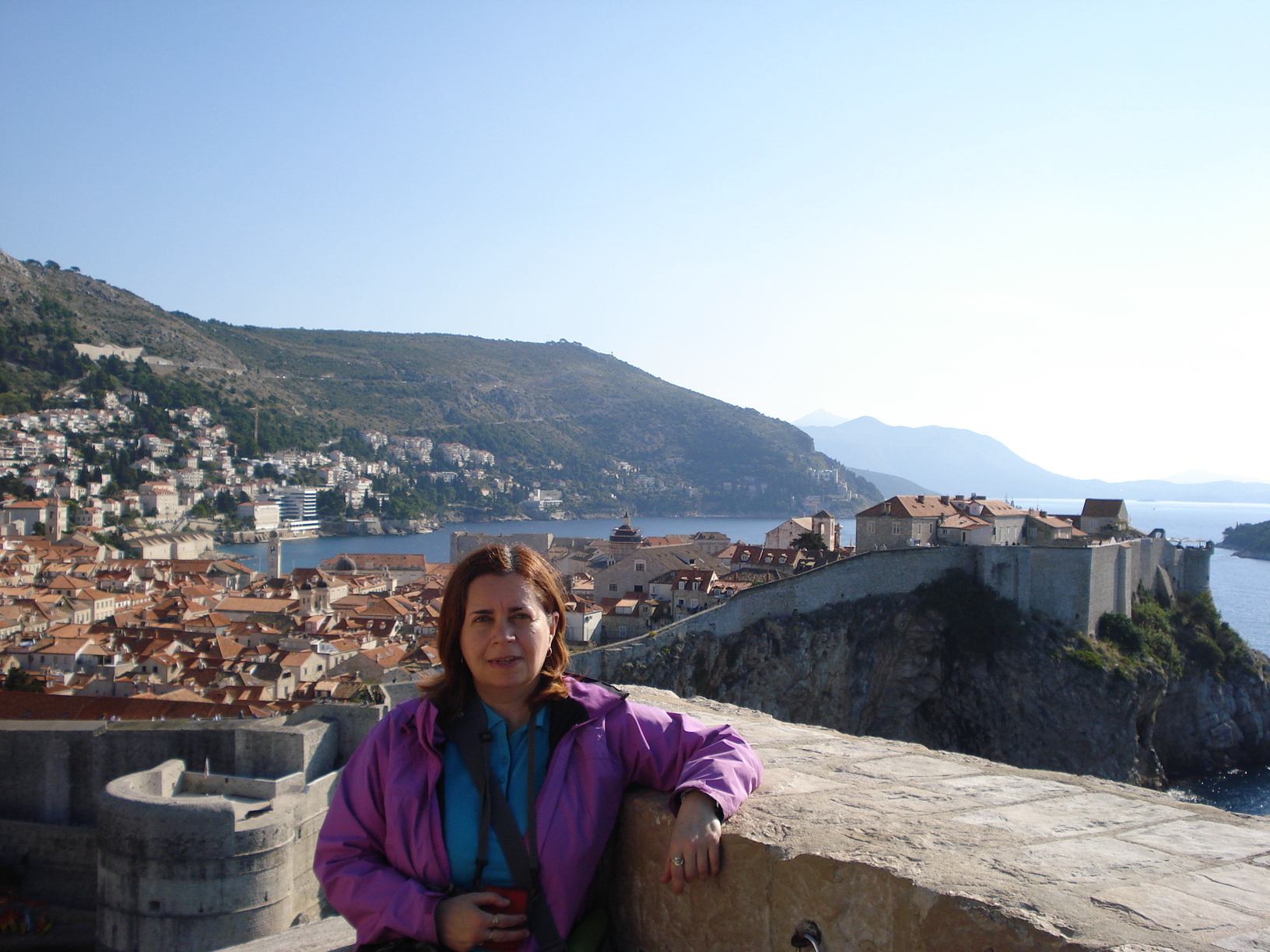
Mercedes Rochelle is an ardent lover of medieval history, and has channeled this interest into fiction writing. Her first four books cover eleventh-century Britain and events surrounding the Norman Conquest of England. The next series is called “The Plantagenet Legacy” and begins with the reign of Richard II.
She also writes a blog: www.HistoricalBritainBlog.com to explore the history behind the story. Born in St. Louis, MO, she received by BA in Literature at the Univ. of Missouri St.Louis in 1979 then moved to New York in 1982 while in her mid-20s to “see the world”. The search hasn’t ended!
Today she lives in Sergeantsville, NJ with her husband in a log home they had built themselves.
I’m delighted to welcome Roberta Tracy and her new series, Zig Zag Woman, to the blog, with an excerpt.
Excerpt One
The Morehouses’ world turned upside down on a warm September day when Captain Hiram Clarke of the Los Angeles Police Department welcomed Margaret to the force with a book of rules and first aid kit. Had he included a crystal ball, she might have been able to predict the way murder and deception would riddle her life for the next twenty years.
On her first official day of work, Margaret tried to take advantage of a long-standing police department privilege, free trolley rides to Central Police Station on First Street. The pot-bellied conductor, who always tipped his hat to policemen and waved them aboard, eyed her up and down with suspicion. “Anyone not wearing a badge must pay!” he declared.
Assuming he had not had a chance to read the morning paper, she handed him the fare.
If she’d left home a few minutes later, Margaret would have ridden to work alongside Alice Stebbins Wells, Los Angeles’s first female policewoman with arrest powers, who never, ever paid to board a trolley.
Blurb
The last thing LAPD Detectives McManus and Tyson expect to find behind Pantages Theatre is a body rolled up in a blanket. The last thing Margaret Morehouse, one of the city’s first policewoman with arrest powers, expects to do is join the investigation. When a deadly explosion at the L. A. Times derails their efforts, Margaret finds herself at a crossroads and strikes out on her own, a path leading to delusion and self-discovery on a vaudeville stage. Her husband’s nephew Leland further complicates the situation by sharing a ransom note and confiding his failure to report his wife’s disappearance at the Dominguez Air Meet.
A brief stint as a magician’s assistant takes Margaret to Chicago, where she almost signs on as a zig zag girl, the term used for ladies performing in the “cutting-a-woman-in-two”
illusion. Instead, Margaret returns to the tumultuous world of early twentieth century Los
Angeles. Reunited with McManus and Tyson, she confronts prejudices and societal norms in efforts to identify a body, clear Leland’s name, and topple the stranglehold one powerful, amoral person has over many lives. Their efforts lead to dead ends and misconceptions before truth comes to light. Love is rekindled and danger uncovered in unlikely places. Margaret goes from Zig Zag Girl to Zig Zag Woman, no longer cut in two but headed on a clearer path.
Early experience as a staff greeting card writer introduced Roberta Tracy to witty people who shared the writer’s dream. Marriage, motherhood, and career intervened, but she maintained that creative desire.
A degree in nonprofit management led her to work situations where newsletters, grant proposals, and business correspondence took precedence. Still, she wrote poetry, some of which won prizes and publication, and children’s books set in worldwide locations. Recently, she co-authored Come Dream With Me, a part travelogue, part hippie nostalgia work of creative nonfiction, detailing the adventures of colleague Inese Civkulis.
No matter what writing projects unfold in the future, she’ll never find enough words to thank family and friends for their inspiration and encouragement.
I’m delighted to welcome back R.W. Meek and his new book, The Dream Collector “Sabrine and Vincent van Gogh”, to the blog with an excerpt.
The Dream Collector Excerpt 3
“The Mermaid Palace”
MAP IN HAND, I followed Theo’s route to the brothel district. At Place Victor Hugo, I stopped and thought this square might be where Vincent confronted Gauguin with a straight razor. According to Gauguin, his stare alone stopped Vincent in his tracks, causing him to run back to the Yellow House and use the razor on himself. The suspicion I brought to Arles was that the two artists, who held each other in high regard, would not reach such a violent juncture, unless there was a woman involved. Would the prostitute Rachel talk with me?
I reached Place du Calvaire, a three-quarter circle of tall, dreary houses except for the three Maisons de Tolerance,each brazenly painted a different primary colour. I kept a safe distance from House #1, Vincent’s brothel of choice, where his favorite Rachel worked. I lingered and wondered if Sundays were a busy day for brothels?
House of Tolerance #1 was painted a lurid purple-blue which I thought could have only been attractive to the coarsest eye. Gauguin mentioned that the brothel was ruled by a Madame Virginie. I knocked, but no one answered, every window shuttered, and the front door latch locked.
I noticed narrow alleyways separated the houses around the circle. The gated alleyway
next to the brothel was unlocked. Creaking open, I ventured into a dark, dank, and urine smelling passageway, coming to separate wooden gates.’ I pushed open the one leading to the back of the brothel. The scene before me defied immediate comprehension.
Here’s the blurb
Sabrine, hospitalized for five years at the infamous Salpêtrière Asylum for Women, gains her release due to intervention of her sister Julie Forette and a young Sigmund Freud. The reunited sisters are introduced to the dazzling art milieu of 1886 Paris, and soon become close friends to the leading Impressionists. Sabrine attracts a cult following as a poetess, the enigmatic “Haiku Princess.” Seemingly cured by Freud of her Grand Hysteria, Sabrine soon enters into a tumultuous relationship with Vincent van Gogh.
Julie and Sigmund Freud, alarmed by the eerie parallels between the emotionally volatile couple and their self-destructive impulses, begin an urgent search to discover the root causes for Sabrine and Vincent’s growing psychoses. Julie, ‘The Dream Collector’ seeks their most unforgettable dream for Freud’s interpretation and revelations occur.
The Dream Collectoris an exploration of the psychological consequences of betrayal, abandonment–and the redemptive power of art.
R.w. Meek has a Master’s degree in Art History from the American University in Washington, D.C., his areas of expertise are Impressionism and Post-Impressionism, with a particular interest in Vincent van Gogh.
His first novel The Dream Collector “Sabrine & Sigmund Freud” was voted runner-up by the Historical Fiction Company for best novel of 2022.
Born in Baltimore, he currently resides with his wife Pamela in Santa Clarita, California. He’s passionate about art, cinema, literature and jazz. His two dogs, Reve and Banjo, were awarded angelic status in heaven.
I’m delighted to welcome Nicolette Croft and her new book, The Curse of Maiden Scars, from the Maiden, Mother, Crone series, to the blog with an excerpt.
Excerpt
The Curse of Maiden Scars—Excerpt 1:
My story must have begun before life as a stray waif, but I didn’t know the tale. The cotton house takes in children as little as three—the unwanted offspring of criminals, crazies, and the contagious. By sixteen, we were expected to make room for younger sprogs and pursue meaningful work. It was weeks until my sixteenth birthday, and I didn’t have a plan. Choices for a girl like me were limited, so Camilla told me. I had some learning and hoped I might find a maid’s position. Whatever I was to become, I didn’t want it to include lurking about the seedy, dank Yorkshire streets like a wet cur.
A cackle of laughter echoed from inside the Inn that stood open behind me. A woman’s mound of blond hair tied in red, pink, blue, and black ribbons appeared in the window’s waving candlelight. She tossed her head back and let out a bright, spirited laugh as a burly man with a beard kissed her neck. I envied their intimacy. I longed to know such love and care.
Deep shivers tightened my sodden dress over my back, and a cough rattled through me. I was prone to illness. My lungs had never been strong. And the wetness only made things worse. I stuffed my head between my knees and swooned in lightheadedness. I closed my eyes and wished myself someplace warm and safe, dreaming of a small bed in a quiet room free of mold, surrounded by soft blankets, the amber light of candles, and a stack of leather-bound books with stories waiting for me to discover. Such a wish was only a fantasy to me—nothing in my real life resembled it.
Boot heels sounded beside me, ripping me out of my daydream. I lifted my head too quickly, and my vision faded darkly. Panic grew from the depths of my belly. Had I missed the opportunity to signal the workhouse strumpets, giving them time to sell their comfort for a copper?
A passerby kicked me and shot, “street rat.” He poured ale over my head and rolled with laughter. There was always laughter. I’d have kicked his feet out from under him if I hadn’t felt weakened from illness. I was accustomed to this sort of abuse, having scouted for culls since the age of eight, and wasn’t afraid to fight back if needed.
Here’s the blurb
Sixteen-year-old Renna Covert toils away in the shadows of a Yorkshire workhouse, her days filled with the mundane task of shelling cotton and the dangerous duty of scouting for punters. One fateful night, she crosses paths with two sailors and finds herself thrust into the heart of a chilling encounter at the local asylum.
These harrowing experiences catalyze Renna’s journey, promising newfound opportunities and revealing long-buried family secrets. Yet, at every turn, powerful forces conspire to thwart her quest for truth, forcing her to abandon her scullery work and embark on a daring escape to Venice alongside her steadfast companions.
In the labyrinthine alleys of Venice, Renna’s fate takes yet another twist. She is ensnared by a cunning Madam who trains her as a Venetian courtesan. But beneath the veneer of luxury lies a world fraught with danger, where Renna must rely on her withs and resilience to navigate the treacherous waters of deceit and betrayal.
Set against the backdrop of Venice’s tumultuous Napoleonic invasion of 1797, this is a tale of a girl’s struggle for survival. It is a story of resilience, defiance in the face of adversity, and, ultimately, one young woman’s determination to reclaim her identity.
Nicolette Croft can’t remember a time when she was not creating imaginary worlds inspired by her Hungarian and American ancestors. As a neuro-divergent learner, however, putting those stories to paper proved more challenging than imagining them. Because her determination would not allow her to settle, she pursued an English B.A. to improve her writing.
Young motherhood also brought unexpected challenges, which motivated her to pursue graduate work in twice-exceptional learners and education. She would later add an M.A. degree in Clinical Mental Health Counseling, specializing in neurodivergent people, trauma, and grief. Nicolette uses her natural gift of storytelling as an exploratory method for her clients.
The Curse of Maiden Scars is also an outgrowth of her personal journey and marks her first publication as a novelist, having previously published short fiction. When not at her counseling practice or researching historical facts for her latest story, Nicolette shares treasured time with family, friends, and her husband. Whether writing, cooking, traveling, or learning, the act of creation is always at the center of her colorful life.
I’m delighted to welcome Heidi Eljarbo and her new book, Trouble in Assisi, to the blog.
Here’s the blurb
Assisi, 1973.
On art historian Fabiola Bennett’s first day in Assisi, a local gentleman takes her aside to ask for advice about a painting that has wondrously appeared in the basilica’s bell tower.
So much for enjoying relaxing days filled with dining on pasta and gelato.
Soon, Fabiola and her besties, Pippa and Cary, are thrown into a shrouded mystery and caught up in a whirlwind of intrigue, theft, lies, and attempted murder, all of which overshadows the postcard-like charm of the small, historic town.
Rome, 1511.
Life is going well for Teodoro Nicoletti. Since he was a young man in Florence, he has worked and learned alongside the most-favored artist Raphael.
When Pope Julius II commissions Raphael to paint several frescos in the reception rooms of the Vatican Palace, Teodoro follows his master to Rome and discovers firsthand the admiration and rivalry between Raphael and two other reigning artists: Michelangelo and Leonardo da Vinci.
But the prickliest thorn in Teodoro’s side is his beloved Elisabetta’s father. The old man is determined to keep his youngest daughter from becoming Teodoro’s wife.
Heidi Eljarbo grew up in a home full of books, artwork, and happy creativity. She is the author of historical novels filled with courage, hope, mystery, adventure, and sweet romance during challenging times. She’s been named a master of dual timelines and often writes about strong-willed women of past centuries.
After living in Canada, six US states, Japan, Switzerland, and Austria, Heidi now calls Norway home. She lives with her husband on a charming island and enjoys walking in any kind of weather, hugging her grandchildren, and has a passion for art and history.
Her family’s chosen retreat is a mountain cabin, where they hike in the summer and ski the vast white terrain during winter.
Heidi’s favorites are her family, God’s beautiful nature, and the word whimsical.
I’m delighted to welcome Deborah Swift and her new book, The Fortune Keeper, to the blog with some backstory behind The Fortune Keeper.
The Fortune Keeper
I’ve always been fascinated by Renaissance art and science and its effect on cultural life. In these novels I explore the artist Bernini and the legacy of Galileo Galilei as well as the influence of major cities such as Rome and Venice and their unique religious and architectural heritage. For a fiction writer you are looking for a period that can immerse people quickly into a recognisable setting, but one that is also different from today, and the Renaissance has a visual appeal that is both familiar, in that people do already have some visual ideas about it, but also with much left to uncover to tempt and enthral the reader. The grandeur of the Vatican or the shimmering canals of Venice offer opportunities for writing scenes that few locations can match. In the end though, it was the people and the characters that drew me, and one person in particular – Giulia Tofana.
I knew very little, except what was available in books and online. Despite this, her name had lived on and she was credited with the poisoning of more than six hundred men. That seemed to be an extreme number, and led to my interest in uncovering more about her and in particular to explore her motives through fiction. Why did she do it, and why was she never caught?
It soon became apparent why. I learnt from researching her that we were in fact talking about three women rather than one. The three women were Giulia’s mother Theofania, Giulia herself and her daughter Girolama (later discovered to be a step-daughter). This idea helped to make sense of the conflicting evidence from the different sources. Or so I thought. Later, as I was researching the third book, lost documents emerged from an Italian archive that threw all the existing knowledge about her into question. The daughter Girolama is the main character in The Fortune Keeper, and I enjoyed exploring how she came to live with Giulia, and how it shaped her life.
In fact there are some excellent books which chronicle women’s lives in the Renaissance. I was particularly grateful to the book ‘Women in Italy 1550 – 1650’ by Mary Rogers and Paola Tinagli, here is ‘how to bring up a daughter’, a passage from that book written in 1547,
‘as soon as the girl reaches the right age to learn to read and writer; I want the father to have two aims for her; one is religion, the other the management of the household.’
This seems to have been a common view, with the priority for girls being to remain ‘chaste’ for the marriage market, and also to have good practical skills in running a household or ordering servants. In Italy marriage then was a contract, with young women as young as twelve married off to older men whose previous partners had died in childbirth or from disease. Of course every society has the rebels who refuse to conform, and the more oppressive the society, the more underground the rebellion has to be. In a patriarchal society where women’s rights are few, the drastic action of poisoning an abusive partner was often the last recourse of a woman at the end of her tether.
xr:d:DAEbig1CmJo:257,j:33693903820,t:22082511
For me the story comes first. I’m in the business of entertaining through fiction. Of course this doesn’t mean to throw out the history, but to use it intelligently, to choose eras where the story would naturally fit, and use the history to support the story, or particular version of events you are trying to tell. A novelist always makes choices about how to use the known facts at their disposal. I could have made Giulia a monster and turned it into a horror story, but instead I chose to focus on the ambiguity of women’s role as both prostitute and saint, how the Catholic religion both supported and undermined women, and to make the narrative a bigger exploration of the way women fight back when they have few options left to them.
A book I thoroughly enjoyed reading was The Ceremonial City by Iain Fenlon, which gives a sense of the myths and rituals that drive life in Venice. Not only is it lavishly illustrated (always a bonus for a fiction writer) but I appreciated the way he explored the way religious and secular life intertwined Monica Chojnacka’s book ‘Working Women of Early Modern Venice’ was a wonderful book that made me consider life outside the grand palazzi that readers often associate with Venice, and which gave an good insight into the working class.
I really enjoy the early modern period, and have set novels in the period not only in Italy, but here in England, and also in Spain. I think what appeals to me about the period is that it was a period of massive expansion in trade. And by trade, I mean not only commodities and goods, but also trade in ideas. It was a time when the world was incredibly outward-looking and open to encountering ‘the new.’ I hope to immerse people in this world through my trilogy of books set in Italy at that time.
Here’s the blurb
Count your nights by stars, not shadows ~ Italian Proverb
Winter in Renaissance Venice
Mia Caiozzi is determined to discover her destiny by studying the science of astronomy. But her stepmother Giulia forbids her to engage in this occupation, fearing it will lead her into danger. The ideas of Galileo are banned by the Inquisition, so Mia must study in secret.
Giulia’s real name is Giulia Tofana, renowned for her poison Aqua Tofana, and she is in hiding from the Duke de Verdi’s family who are intent on revenge for the death of their brother. Giulia insists Mia should live quietly out of public view. If not, it could threaten them all. But Mia doesn’t understand this, and rebels against Giulia, determined to go her own way.
When the two secret lives collide, it has far-reaching and fatal consequences that will change Mia’s life forever.
Set amongst opulent palazzos and shimmering canals, The Fortune Keeper is the third novel of adventure and romance based on the life and legend of Giulia Tofana, the famous poisoner.
‘Her characters are so real they linger in the mind long after the book is back on the shelf’
~ Historical Novel Society
NB This is the third in a series but can stand alone as it features a new protagonist. Other two books are available if reviewers want them.
Deborah Swift is a USA TODAY bestselling author who is passionate about the past. Deborah used to be a costume designer for the BBC, before becoming a writer. Now she lives in an old English school house in a village full of 17th Century houses, near the glorious Lake District. Deborah has an award-winning historical fiction blog at her website http://www.deborahswift.com.
Deborah loves to write about how extraordinary events in history have transformed the lives of ordinary people, and how the events of the past can live on in her books and still resonate today.
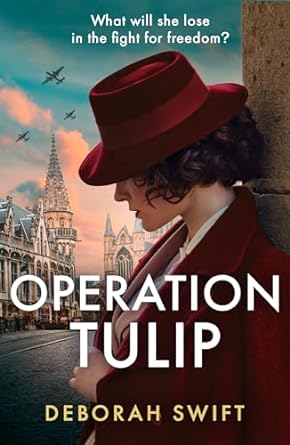
The first in her series about the Renaissance poisoner Giulia Tofana, The Poison Keeper, was a winner of the Wishing Shelf Book of the Decade, and a Coffee Pot Book Club Gold Medal, and the latest in her WW2 Secret Agent series, Operation Tulip, is coming soon.
I’m delighted to welcome I.M. Foster and her new book, Murder on West Main, to the blog with a snippet.
Snippet
A knot tightened in his stomach, for it wasn’t like her to seek him out in this manner.
Here’s the blurb
When Colin Brissedon arrives at work one summer morning to find his new boss murdered, all eyes turn to him. After all, the man had threatened to fire him just a few days before, and his colleagues are more than happy to tell the tale. Kathleen admits her brother is no angel, but she can’t believe he would sink this low. Fortunately for them, neither does Daniel O’Halleran, the village’s new coroner’s assistant. Of course, he needs more than his gut feeling to prove it.
But that’s not going to be an easy task, considering the victim does not appear to have been held in high regard. In fact, Daniel is hard-pressed to find anyone who did like him, though there are more than a few who had reason to wish the man dead. To make matters worse, Kathleen is intent on conducting her own investigation despite his wishes, and he fears the consequences could be deadly.
And yet, with the pieces of the puzzle laid before him, he can’t shake the feeling that something is missing, an integral clue that will tie everything else together. Will Daniel be able to find the elusive detail and discover the reason behind the gruesome murder of the prominent attorney? Or will the guilty party live to kill again?
I. M. Foster is the pen name author Inez Foster uses to write her South Shore Mystery series, set on Edwardian Long Island. Inez also writes historical romances under the pseudonym Andrea Matthews, and has so far published two series in that genre: the Thunder on the Moor series, a time-travel romance set on the 16th century Anglo-Scottish Borders, and the Cross of Ciaran series, which follows the adventures of a fifth century Celt who finds himself in love with a twentieth century archaeologist.

Inez is a historian and librarian, who love to read and write and search around for her roots, genealogically speaking. She has a BA in History and an MLS in Library Science and enjoys the research almost as much as she does writing the story. In fact, many of her ideas come to her while doing casual research or digging into her family history. Inez is a member of the Long Island Romance Writers, and the Historical Novel Society.