
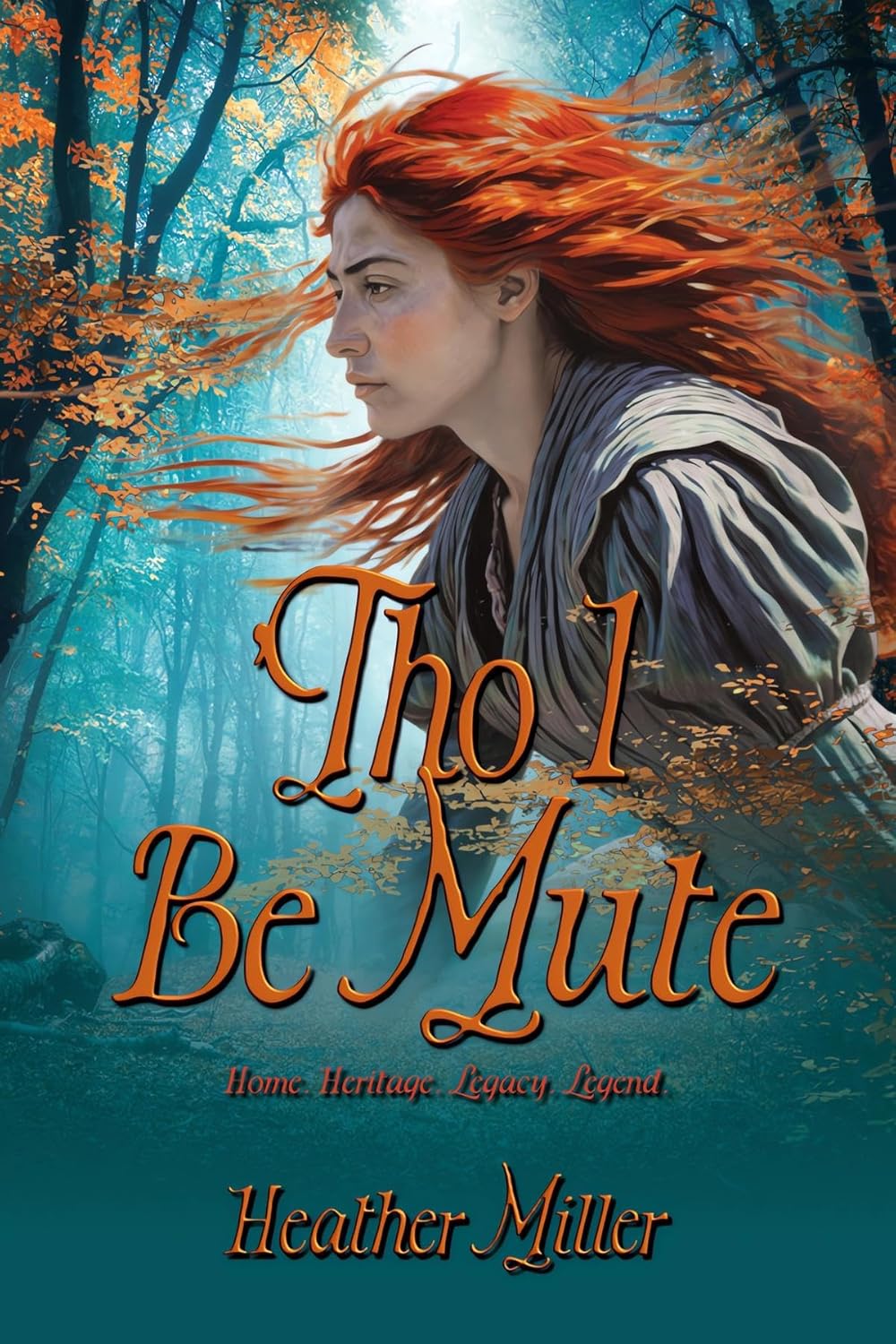
I’m delighted to welcome Heather Miller and her new book ,’Tho I Be Mute, to the blog #HistoricalFiction #HistoricalRomance #CherokeeHistory #AmericanHistory #BlogTour #TheCoffeePotBookClub

I’m delighted to welcome Heather Miller and her new book, ‘Tho I Be Mute, a prequel to Yellow Bird’s Song, to the blog with an excerpt.

Excerpt

Chapter 26, “The Cave,” Sarah Northrup Ridge

The Man in the Hat belched and laughed, passing the bottle back and forth to Whitmore and the Pan Man. If the squatters kept drinking at this pace, they might not notice if I was missing from the end of the rope. I smeared dripping blood from one wrist onto the other, wriggling my still-bound hand free. With a spontaneous decision, I released the rope and dashed to slide, feet first, then wiggling into the hole to follow the roots underground.

The drop was further than I expected, and I toppled to my knees, propelled forward when my feet splashed in yesterday’s rain. I had not thought about the drop. I had not thought about the fall. I had not thought about the dark. My bleeding hands stopped my fall. I soaked them in the pool of water at my knees and pulled the bloody handkerchief from my pocket to bind the torn skin of one wrist. My knees bled from scrapes and my stockings were bloody to my shins. Inside, the air was like frozen frost. The numb tips of my fingers could still reach the cave’s opening, but the last day’s light was insufficient to light my path any further than a few steps. My hand grazed the rock behind my back. I sat among the puddles, mute, expecting the dreaded eyes and otherworldly voice of Man with the Hat. Silent tears spilled down my cheeks. But for now, I was hidden beyond his reach. Not only cold but wet, I might freeze to death before anyone found me.

The longer the upper hole was quiet, the more I relaxed. I cupped the cold water from the puddle and patted it on my face, down my neck to counter the fever I felt. The longer I remained invisible to my captors, the faster my witness rejoined me. I became whole again. I listened outside this pit of earth. A whippoorwill called the sundown. An owl hooted with melancholy and offered his tender empathies. Their sounds echoed off the rock walls. I warmed from their companionship.

But while I became invisible to the Man in the Hat, I was also invisible to Arch who would be at least a day’s travel behind me. That was the best I could hope for. The worst I could imagine was snowfall, to leave me starving and freezing alone. No. There was a worse outcome—raped, abandoned, found dead. My hands and feet tingled. My breath was too loud. I prayed, Jesus, please light my way for this innocent baby. In that moment of faith, the child inside me spread a hand to mirror mine resting atop my belly. I kept my eyes closed and asked forgiveness for burying us alive in this cave. But I had no choice.

Leaves fell through the opening and feet darted above me. I wriggled, pushing my back against the cavern wall, pulling my feet close to my chest. The Man with the Hat never asked my name, and I never offered it. He had nothing to call, nothing to yell. Recognizing his oversight, he kicked leaves around the cave opening where I hid. I preferred starvation, frozen into a block of ice, than answering his call.

He shouted. “Red . . . You’ll show when you get hungry enough. We’ll camp right here. I ain’t going no further.”

His volume varied, as if he walked in circles, sending his snide voice in differing directions. As he spoke, the tone and bustle above me continued. Men’s voices and horse whinnies became more distinct while they searched for me. I smelled salt pork slung on an iron pan, the same one that clanked in front of me. I salivated while listening to their exchange.

“She ain’t gone far. She just hiding,” The Man in the Hat said.

“I can’t find her. Can you?” Whitmore gave his sarcastic reply as the Pan Man laughed.

“I will.” The Man in the Hat spoke, then he swore after. Leaves crunched under his boots near the bluff’s opening. His legs blocked their firelight. Then, his hand came through the void. I covered my mouth to block the sound of my rapid breathing.

“We still got the extra horse,” Whitmore said, “even if she’s up and climbed a tree.”

The Man in the Hat walked away and said, “She’s pregnant. She couldn’t fit in that hole, and she ain’t up no tree, you drunk bastard.” The Man in the Hat cursed me, knowing that my absence guaranteed the trio’s empty bottles and empty pockets.

Blurb

Clarinda faces a moment of profound reality—a rattlesnake bite, a harbinger of her imminent mortality—and undertakes an introspective journey. In her final days, she immortalizes not only her own story but that of her parents—a narrative steeped in her family’s insights into Cherokee heritage during the tumultuous years preceding the forced removal of Native communities.

In 1818, Clarinda’s father, Cherokee John Ridge, embarks on a quest for a young man’s education at the Foreign Mission School in Cornwall, Connecticut. Amidst sickness, he finds solace and love with Sarah, the steward’s quiet daughter. Despite enduring two years of separation, defamatory editorials, and societal upheaval due to their interracial love affair, the resilient couple weds in 1824. This marks the inception of a journey for Sarah as she delves into a world both cherished and feared—Cherokee Territory. As John Ridge advocates for the preservation of his people’s land and that of his Muskogee Creek neighbors against encroaching Georgia settlers and unscrupulous governmental officials, the stakes are high. His success or failure hinges on his ability to balance his proud Cherokee convictions with an intricate understanding of American law. Justice remains uncertain.

Grounded in a true story, ‘Tho I Be Mute resonates with a compelling historical narrative, giving an intimate voice to those heard, those ignored, those speechless, urging readers to not only hear but to truly listen.
 

Buy Link

Universal Link:

Meet the Author

History is better than fiction.
We all leave a legacy.

As an English educator, Heather Miller has spent twenty-four years teaching her students the author’s craft. Now, she’s writing it herself, hearing voices from the past. Heather earned her MFA in creative writing in 2022 and is teaching high school as well as college composition courses.

Miller’s foundation began in the theatre, through performance storytelling. She can tap dance, stage-slap someone, and sing every note from Les Miserables. But by far, her favorite role has been as a fireman’s wife and mom to three: a trumpet player, a future civil engineer, and a RN. Alas, there’s only one English major in her house.

Heather continues writing the Ridge Family Saga. Her current work-in-progress, Stands, concludes the Ridge Family Saga.

Connect with the Author

Website:

Follow the ‘Tho I Be Mute blog tour with The Coffee Pot Book Club

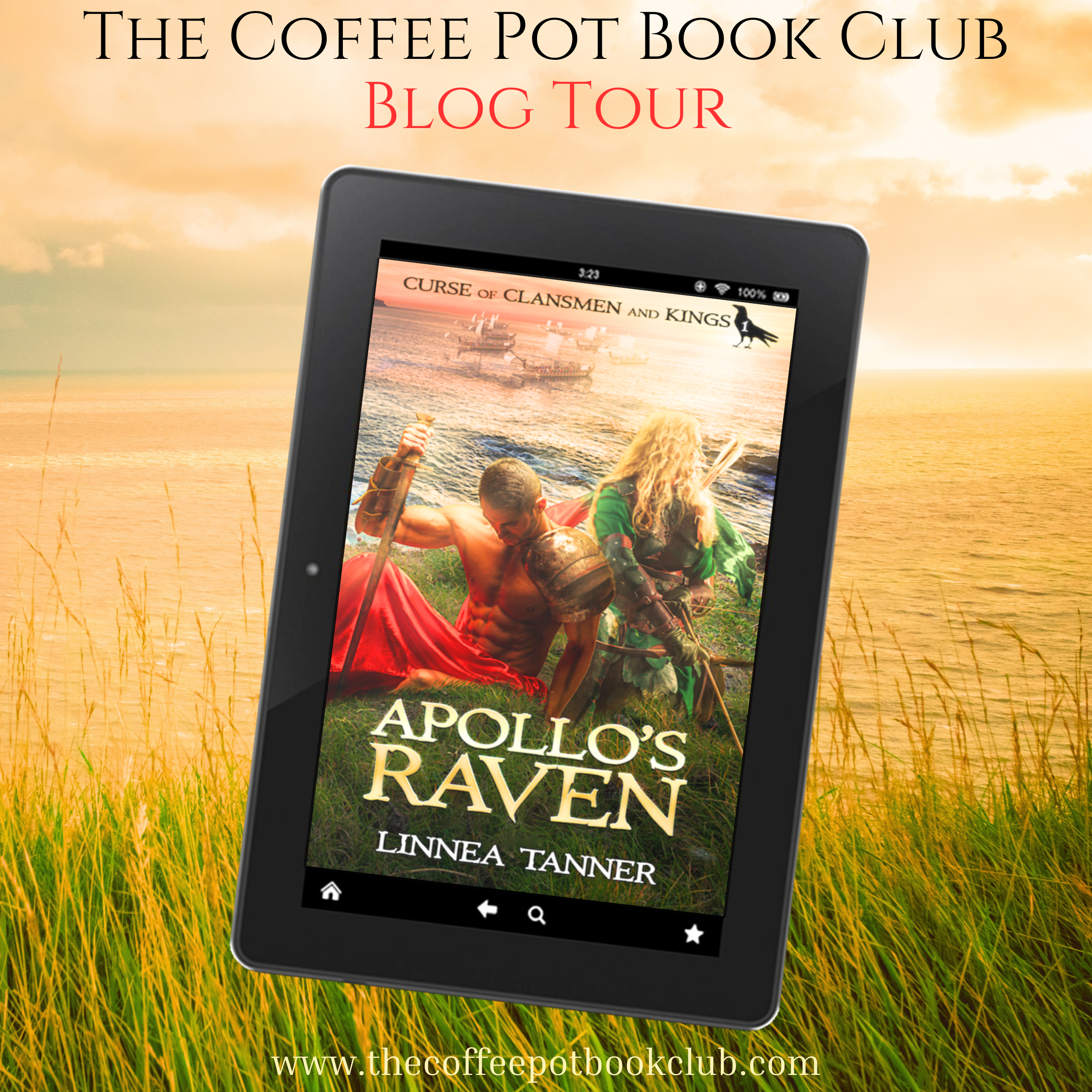
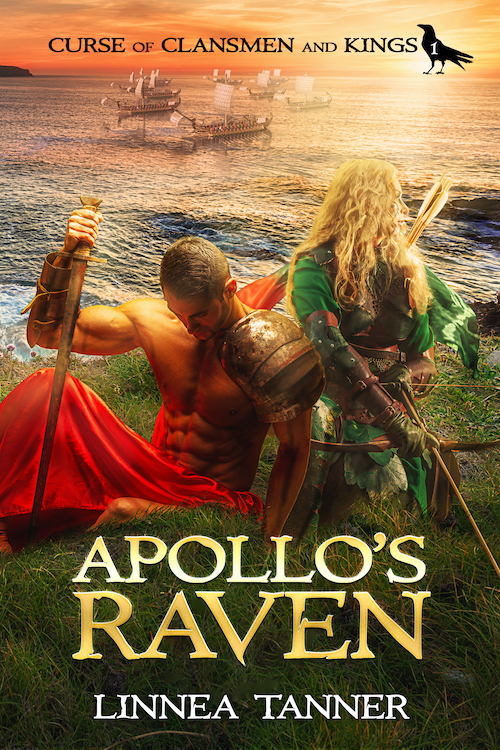
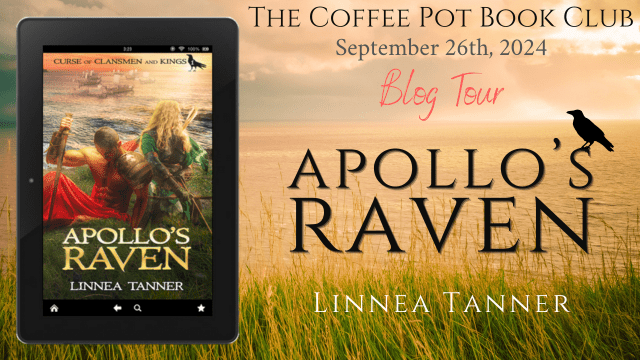
I’m delighted to welcome Linnea Tanner and her new book, Apollo’s Raven, to the blog #HistoricalFantasy #HistoricalFiction #AncientRome #Britannia #CelticMyth #BlogTour #TheCoffeePotBookClub

I’m delighted to welcome Linnea Tanner and her new book, Apollo’s Raven, Book 1 in the Curse of Clansmen and Kings series, to the blog with a trailer.

Trailer

Blurb

A Celtic warrior princess is torn between her forbidden love for the enemy and duty to her people.

AWARD-WINNING APOLLO’S RAVEN sweeps you into an epic Celtic tale of forbidden love, mythological adventure, and political intrigue in Ancient Rome and Britannia. In 24 AD British kings hand-picked by Rome to rule are fighting each other for power. King Amren’s former queen, a powerful Druid, has cast a curse that Blood Wolf and the Raven will rise and destroy him. The king’s daughter, Catrin, learns to her dismay that she is the Raven and her banished half-brother is Blood Wolf. Trained as a warrior, Catrin must find a way to break the curse, but she is torn between her forbidden love for her father’s enemy, Marcellus, and loyalty to her people. She must summon the magic of the Ancient Druids to alter the dark prophecy that threatens the fates of everyone in her kingdom.

Will Catrin overcome and eradicate the ancient curse? Will she be able to embrace her forbidden love for Marcellus? Will she cease the war between Blood Wolf and King Amren and save her kingdom?

What Amazon reviewers say about Apollo’s Raven

“If you mingled the history and romance of Philippa Gregory with the magical fantasy of George R.R. Martin, the result just might be the fascinating Apollo’s Raven (Curse of Clansmen and Kings Book 1) by Linnea Tanner. Get ready for a journey filled with the desires of star-crossed lovers, the horror of a son polishing his own mother’s skull and the fantasy of humans becoming creatures as a tool to save their very humanity.”

“Sorcery? Mythology? Forbidden love? An ancient curse? Yes, please! I fully enjoyed this epic tale of intrigue, deception, and love. The characters are developed well, while the plot leaves the reader wanting more.”

“What a story! I am a huge fan of “Game of Thrones,” and this book grabbed me in much the same way. The author took me inside the world of ancient Romans and Celts. The imagery was compelling. I could see the characters, the weapons, the countryside, the lairs, and the castle. She stayed true to the times.”

“A love story full of intrigue, power struggles, choosing one’s fate and a doomed love, this story reminds me somewhat of an old book called “The Silver Land” by Nancy Harding or even “The Forest House” by Marion Zimmer Bradley. The undercurrents are the same as they are set in similar times, but the finer details are different enough that it only feels the same while still being uniquely its own.”

Buy Link

Universal Link:

Apollo’s Raven will be free on Kindle on September 26th – 30th 2024

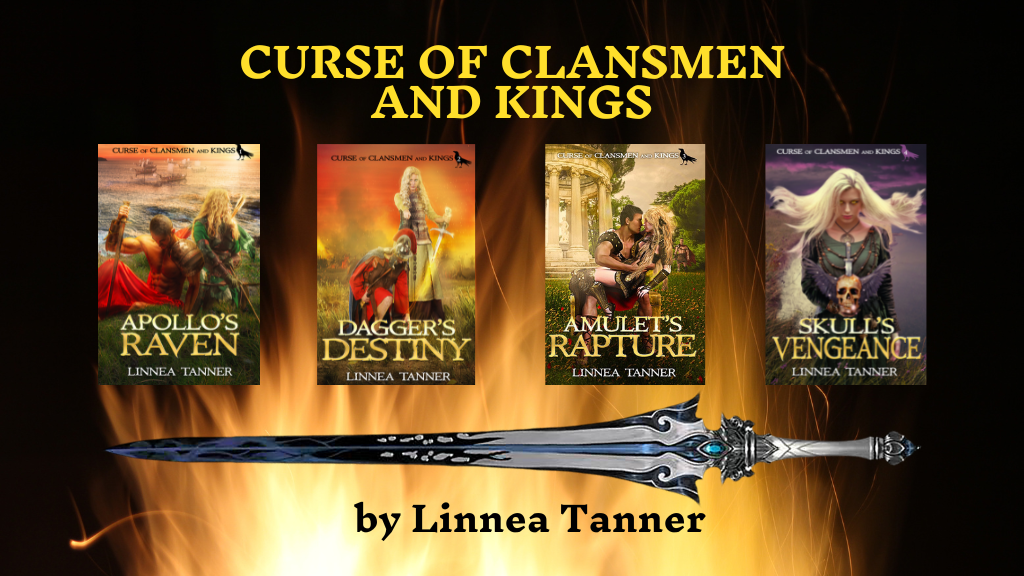
All 4 books in the Curse of Clansmen and Kings series are available on #KindleUnlimited

Universal Buy Links for all Individual Books in Curse of Clansmen and Kings series:

Meet the Author

Award-winning author, Linnea Tanner, weaves Celtic tales of love, magical adventure, and political intrigue in Ancient Rome and Britannia. Since childhood, she has passionately read about ancient civilizations and mythology. She is particularly interested in the enigmatic Celts, who were reputed as fierce warriors and mystical Druids.

Linnea has extensively researched ancient and medieval history, mythology, and archaeology and has traveled to sites described within each of her books in the Curse of Clansmen and Kings series. Books released in her series include Apollo’s Raven (Book 1), Dagger’s Destiny (Book 2), Amulet’s Rapture (Book 3), and Skull’s Vengeance (Book 4). She has also released the historical fiction short story Two Faces of Janus.

A Colorado native, Linnea attended the University of Colorado and earned both her bachelor’s and master’s degrees in chemistry. She lives in Fort Collins with her husband and has two children and six grandchildren.

Connect with the Author

Website: BookBub:

Follow Apollo’s Raven blog tour with The Coffee Pot Book Club

I’m delighted to welcome Laura Rahme and her new book, The Signare of Gorée, to the blog #HistoricalMystery #HistoricalFiction #BlogTour #TheCoffeePotBookClub

I’m delighted to welcome Laura Rahme and her new book, The Signare of Gorée, to the blog with The Last Waalo Queen: Ndaté Yalla Mbodj.

The Last Waalo Queen: Ndaté Yalla Mbodj

One of the historical figures that I feature in my novel, The Signare of Gorée, is Senegal’s last warrior queen, Ndaté Yalla Mbodj. Her origins are generally accepted to be a blend of Serer and Lebou, two of the main cultural groups in Senegal. She held the title of lingeer of the Waalo kingdom of Senegal. She appears only briefly in my book and does not play a direct part in the mystery, yet her presence looms large and hints at key events that would change Senegal’s destiny in the upcoming decade.

During the 1840s, Senegal consisted of independent kingdoms. The Waalo kingdom which extended along the northwest of Senegal, sharing a border with Mauritania, comprised the island of Saint-Louis, settled by the French since 1659. South of Waalo lay the kingdom of Cayor which engulfed today’s capital, Dakar, then a Lebou village. Only a short pirogue trip away was the island of Gorée, ceded to Europeans, and a center for commercial and slave trade for centuries.

The Signare of Gorée is set in a period when concessions by Waalo rulers allowed the French to trade in Senegal, but during which French figures were not sovereign. Europeans had to pay custom taxes to continue to trade freely in the Waalo. Over the years and leading into 1854, the French encountered increasing opposition, and what they saw as nuisances, arising from Waalo or Cayor rulers, but also from the Trarza Moors who dwelled across the Mauritanian border. Frustrated in their desire for economic gain, French entrepreneurs aspired to conquest as the means to secure the flow of resources and merchandise. As such, Ndaté Yalla Mbodj was not only the sole female ruler of Senegal, but she was to be the last queen of non-colonized Senegal. Her fight would be bitter and determined.

She ascended the throne in the palace of Nder on 1 October 1846 upon the death of her sister, Njembot Mbodj. While still young, both women had witnessed their mother’s tragic self-immolation during a battle with the Trarza moors. The Waalo army consisted of fiercely animist male warriors called tieddos, but the Waalo women were also trained in combat. Since then, and despite French military intervention to thwart it, a marital alliance between Njembot Mbodj and the Trarza ruler had smoothed discords between the Waalo kingdom and the Trarza emirate. But during her rule, Ndaté Yalla was forced to fight both the French and the Trarzas.

From the time she stepped on the throne, Ndaté Yalla made it clear that the French were to obey tithe and land boundary agreements. She wrote them letters and signed them – the only female ruler to do so – and defied them, asserting her rulership over the Waalo. In short, she bothered them.

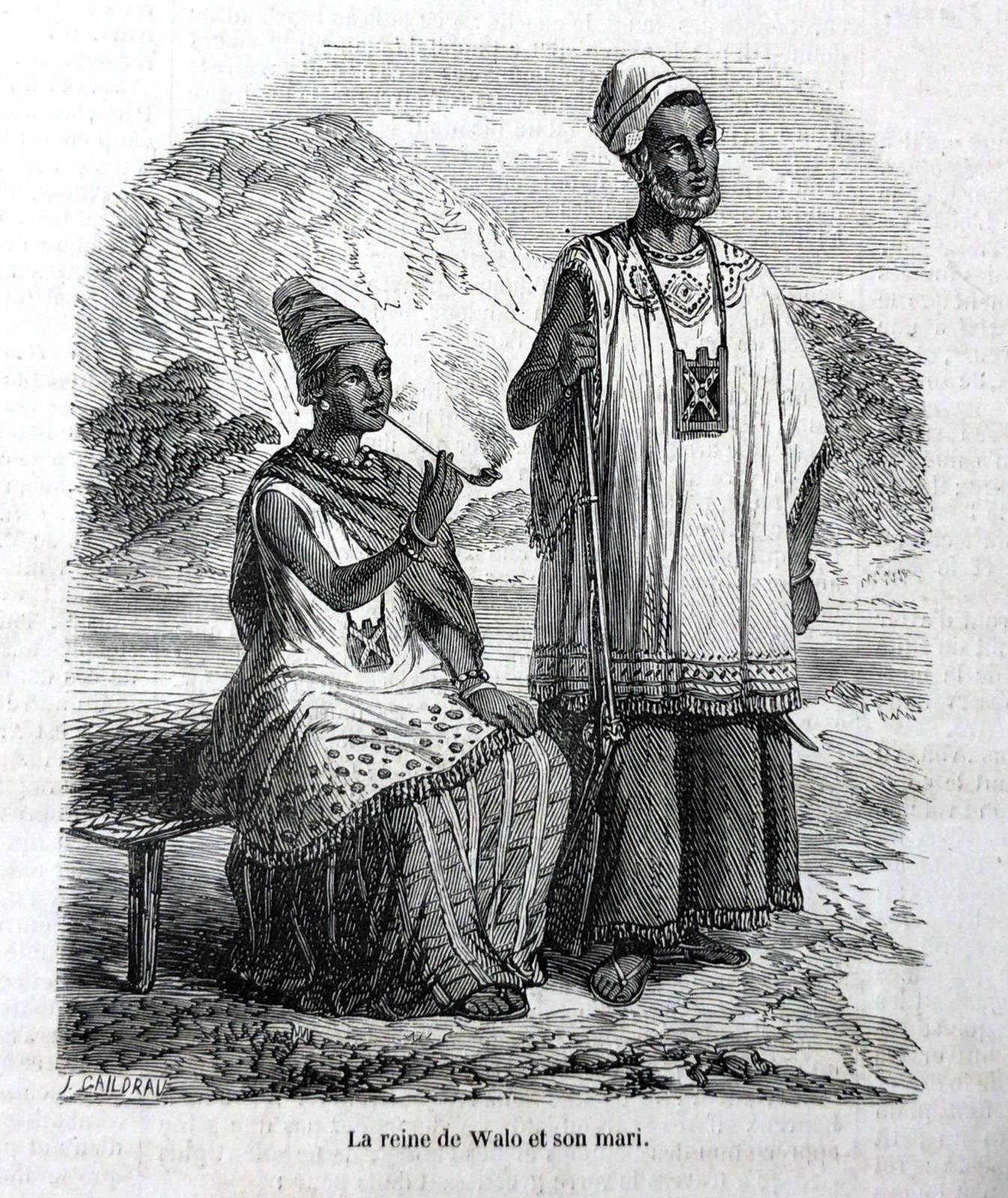
Ndaté Yalla Mbodj et her husband Marosso Tassé Diop
An engraving by Jules Gaildrau (1816-1898)
Public domain image

Together with her husband, Marosso Tassé Diop, who was prince of Cayor, Lord of Koki, and commander of the Waalo’s tieddo army, Ndaté Yalla fought regularly with the French and Moors.

But the French would have the last word. They called upon Louis Faidherbe, a poly-engineer and French general, to quell both the Trarzas and the Waalo kingdom. In 1854, the Bordeaux entrepreneur, Hilaire Maurel, who appears in The Signare of Gorée, would end up playing a decisive role, along with his nephew, Marc Maurel, in General Faidherbe’s mind-blowing ascension as governor of Senegal. They worked behind the scenes to ensure that the like-minded Faidherbe and his military strategies would clear the path for their already thriving enterprises and future economic ambitions.

Rallying an army that included coerced local troops, Faidherbe defeated Ndaté Yalla Mbodj in 1855, spelling the collapse of the kingdoms of Waalo and Cayor. The fall of the lingeer was powerfully symbolic. The other male-led kingdoms of Senegal would fall soon after, marking the start of France’s colonization of Senegal. During his 1855-1864 campaign, General Faidherbe employed a scorched-earth policy, burning through fertile plains and razing villages. He not only burned Ndaté Yalla Mbodj’s palace in Nder but took away her son, Sidya Diop. The afflicted lingeer would die in 1860, in Dagana, where her commemorative statue stands today.

I was born in Dakar fifteen years after Senegal regained its independence from France. Colonial education must have lingered a while as I never learned about Ndaté Yalla Mbodj at school. I also suspect the Senegalese values of soutoura (discretion) and muñ (to tolerate) encouraged a long silence on the sufferings and injustices of the past. But in the last twenty years, in the name of historical accuracy, and as more African voices are given due weight, Ndaté Yalla Mbodj’s name has resurged. Publications that tell of her important story now exist in multiple languages. I am not the first to mention her, but it was important for me to feature her in The Signare of Gorée.

Blurb

1846. In the heat of West Africa, the French navy uncovers the corpses of two French soldiers. Inspector Maurice Leroux arrives at the island of Gorée. It seems death has come to this small colonial outpost off the Senegal coast, home to the prosperous mixed-blood women known as the signares.

The navy suspects that the Bambara people, emboldened by approaching emancipation, may be out for blood. While confronted by the locals’ strange magical beliefs, Maurice remains skeptical. Does malevolence play a part, or are these deaths accidental, brought upon by the brutality of nature in an island known as the white man’s grave?

But when murder strikes, it becomes clear that a killer is stalking Gorée.

Swept by a mystery unlike any he has known, Maurice meets Signare Angélique Aussenac. The proud métis, deserted by her wealthy Bordeaux lover, casts her spell upon Maurice.

But beyond the throbbing sounds of the tam-tams and the glittering signare soirées, danger lurks. Someone is watching. And the deaths go on.

Could the killer be one of the rich Bordeaux merchants? Or are they hiding among the powerful signares?

A historical mystery spanning France and Senegal, THE SIGNARE OF GORÉE explores a world of magic, murder, and passion.

Buy Link

Universal Link:

This title is available to read on #KindleUnlimited

Meet the Author

Laura Rahme is the author of seven historical novels. Born in Dakar, Senegal where she spent her early childhood, she moved to Australia at the age of ten. A graduate of two Honors degrees in Aerospace Engineering and Psychology, she has worked over two decades as an IT professional. Her greatest joy comes from travel, researching history, and penning historical mysteries. She now lives in France with her screenwriting husband.

Connect with the Author

Website:

Follow the Signare of Goree blog tour with The Coffee Pot Book Club

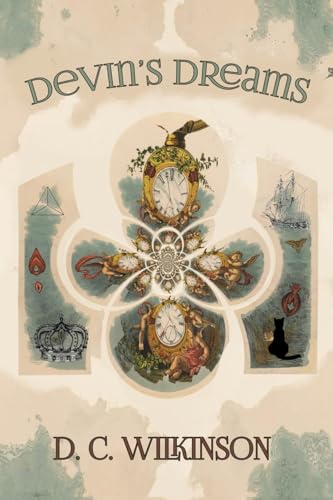
I’m delighted to welcome D.C. Wilkinson and his new book, Devin’s Dreams, to the blog #HistoricalFiction #ComingOfAge #BlogTour #BookBlast #TheCoffeePotBookClub

I’m delighted to welcome D.C.Wilkinson and his new book, Devin’s Dreams, to the blog.

Blurb

Devin Sharp, a gentle-natured boy, has trouble sleeping. Recurring visions of strangers moving among shadows in his bedroom keep waking him at night. He swears that what he sees and hears is real. To no avail. No one believes him. An older sibling taunts him. “Silly dreams,” she says. But are they?

Coming of age as a gay teen in the seventies, Devin’s sleep issues are just one more secret safely locked up in his closet. But not for long. Freshman year in college brings a measure of freedom and a chance to explore well beyond the boundaries of stifling social molds.

Experimenting with a powerful drug, Devin’s quirky visions resurface. This time, however, something is different. A rabbit hole materializes out of nowhere. Thrust into it by a mysterious force, Devin is hurled into another world centuries before his own. There, awaiting, a host of strangers appear to know him…

Buy Link

Universal Link:

Meet the Author

D. C. Wilkinson’s passion for historical fiction, portal fantasies and cappuccinos inspired him to write “Devin’s Dreams,” his debut novel. A lifelong voyager of inner and outer realms, he began his career in the Midwest as a student of Language Arts and the Humanities before relocating to the East Coast in his early twenties. A graduate of Columbia University and former New York City public school teacher, he now calls Connecticut his home, where he resides with his spouse and their beloved beagle.

Connect with the Author
Follow the Devin’s Dreams blog tour with The Coffee Pot Book Club

I’m welcoming Deborah Swift to the blog with a post about Operation Tulip WW2 #HistoricalFiction #Holland #Romance #BlogTour #TheCoffeePotBookClub 

Operation Tulip – The Hunger Winter in Holland During WW2

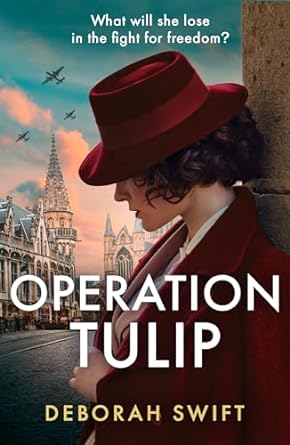
Cover images for Deborah Swift's three novel, The Silk Code, The Shadow Network and Operation Tulip


My novel, Operation Tulip, takes place in The Hague in the final year of the Second World War, during the Hunger Winter, called the Hongerwinter in Dutch. This was the brutal famine of 1944-1945 during the final year of the Nazi occupation. The Netherlands was invaded in May 1940, and for the first few years, the occupation was relatively mild compared to other parts of Europe. However, as the war dragged on, conditions for civilians worsened. By 1944, the Allied forces had landed in Normandy and were making their way through Europe, leading to a renewed sense of hope among the Dutch people.
In September 1944, the Allies made an ambitious plan to capture key bridges in the Netherlands and pave the way for an invasion of Germany and an end to the war. This plan was called Operation Market Garden, and was made famous by the film, ‘A Bridge Too Far.’ Unfortunately, the operation ultimately failed, leaving the northern and western parts of the Netherlands cut off from the rest of Europe and still under German control.

British POWs at Arnem


Famine bites
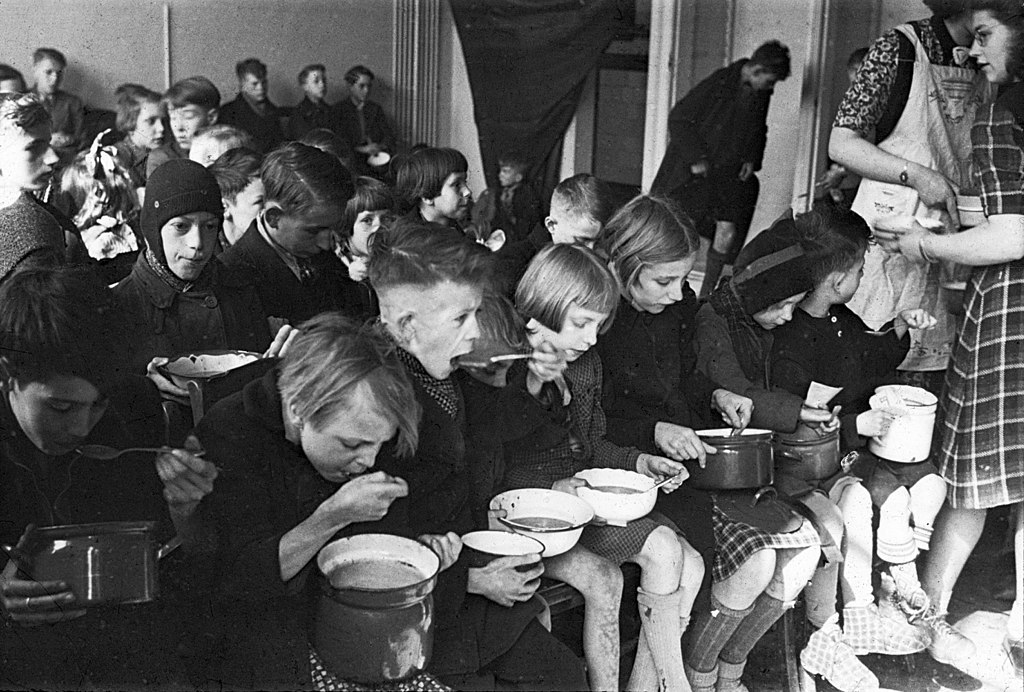
Dutch railway workers organised strikes to prevent Jews from being deported, and in retaliation the Germans blocked food and fuel shipments to the western provinces. The blockade, combined with already depleted food supplies, led to a catastrophic famine. Added to this, the winter that year was one of the harshest in memory, with freezing temperatures and little fuel available. The black market became the only means for many to obtain food but prices were high and few could afford to buy anything. The daily calorie intake for many Dutch citizens plummeted to as low as 400-800 calories, way below the minimum needed for survival. People scavenged for anything edible, from tulip bulbs to sugar beets. Audrey Hepburn, who was living in Holland with her Dutch mother, survived the last months of the war with a diet that included eating nettles and tulip bulbs.

Dutch Children being fed soup


The impact of the famine on health was devastating. Malnutrition and starvation led to a significant increase in mortality rates. The most vulnerable, including the elderly, the sick, and young children, were particularly affected. Hospitals were overwhelmed with cases of starvation, and diseases such as tuberculosis, typhus, and pneumonia spread rapidly among the weakened population.
If it all sounds very depressing, it was also a period where people were courageous and took enormous risks to help other survive. The penalties for hoarding or selling food outside official channels were severe. Nevertheless, many residents of The Hague made perilous journeys by bicycle to rural areas in search of food, and I use these journeys in Operation Tulip.
The Role of Women in the Resistance

Dutch Women transporting food


Amid the suffering, the Dutch Resistance, including people like Nancy in my novel, continued their efforts to undermine the German occupation, bring hope to the starving, and assist those in need. Resistance groups, especially the women, organized clandestine food distribution networks, forged ration cards, and provided aid to those most affected by the famine, despite the constant threat of arrest, torture, and execution.
Estimates suggest that approximately 20,000 people died as a direct result of the Hunger Winter, although the indirect toll was likely much higher. The most vulnerable, including the elderly, the sick, and young children, were particularly affected. Hospitals were overwhelmed with cases of starvation, and diseases such as tuberculosis, typhus, and pneumonia spread rapidly among the weakened population.
Many who survived were left with long-term health problems due to prolonged malnutrition. Children born during or shortly after the Hunger Winter were found to have worse health outcomes throughout their lives, a phenomenon later studied extensively by researchers.
As things became desperate at the end of the war, British and American airmen in conjunction with the Dutch Resistance, arranged airdrops of food, an event that still lingers in the memories of the Dutch people.

Operation Manna airdropping food

Here’s the blurb

Holland, 1944: Undercover British agent Nancy Callaghan has been given her toughest case yet. A key member of the Dutch resistance has been captured, and Nancy must play the role of a wealthy Nazi to win over a notorious SS officer, Detlef Keller, and gain crucial information.

England: Coding expert Tom Lockwood is devastated that the Allies have failed to push back the Nazis, leaving Northern Holland completely cut off from the rest of Europe, and him from his beloved Nancy. Desperate to rescue the love of his life, Tom devises Operation Tulip, a plan to bring Nancy home.

But as Nancy infiltrates the Dutch SS, she finds herself catching the eye of an even more senior member of the Party. Is Nancy in too deep, or can Tom reach her before she gets caught?

Inspired by the true events of occupied Holland during WW2, don’t miss this utterly gripping story of love, bravery and sacrifice.

Triggers: mild violence associated with the era.

Praise for Deborah Swift:

A well crafted tale… this book did not disappoint’ NetGalley reviewer, ⭐⭐⭐⭐⭐

‘There is action, mystery and romantic entanglements stirred into the story for a fantastically entertaining read’ NetGalley reviewer, ⭐⭐⭐⭐⭐

‘Deborah Swift never disappoints’ NetGalley reviewer, ⭐⭐⭐⭐⭐

A joy to read‘ NetGalley reviewer, ⭐⭐⭐⭐⭐

Cover image for Operation Tulip by Deborah Swift

Buy Links

http://mybook.to/Tulip

Buy Link for bookstores

Meet the author

Deborah Swift is a USA TODAY bestselling author of twenty books who is passionate about the past. Deborah used to be a costume designer for the BBC, before becoming a writer. Now she lives in an old English school house in a village full of 17th Century houses, near the glorious Lake District. After taking a Masters Degree in Creative Writing, she enjoys mentoring aspiring novelists and has an award-winning historical fiction blog at her website www.deborahswift.com.

Deborah loves to write about how extraordinary events in history have transformed the lives of ordinary people, and how the events of the past can live on in her books and still resonate today. 

Recent books include The Poison Keeper, about the Renaissance poisoner Giulia Tofana, which was a winner of the Wishing Shelf Book of the Decade Award, and a Coffee Pot Book Club Gold Medal. Her most recent books are The Silk Code and The Shadow Network both set in the Second World War.

Connect with the author

Website  Bookbub

Blog banner for Operation Tulip by Deborah Swift
Follow the Operation Tulip blog tour with The Coffee Pot Book Club


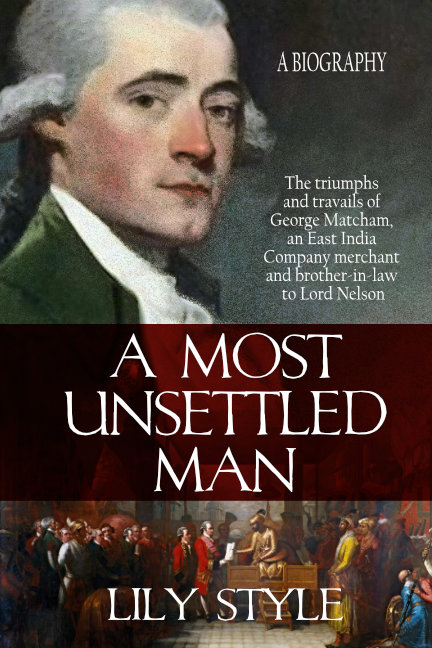
I’m delighted to welcome Lily Style and her new book, A Most Unsettled Man, to the blog #BiographicalNon-Fiction #Biography #HistoricalBiography #BlogTour #TheCoffeePotBookClub

I’m delighted to welcome Lily Style and her new book, A Most Unsettled Man, to the blog with an excerpt.

Excerpt

On the 6th of November 1805, the ring of church bells, near and far, grew and grew like a storm that must soon break. Then did.

George’s copy of the Gazette Extraordinaire bore news that rocked his whole family to the core. Britain’s navy had annihilated the French and Spanish fleets at Cape Trafalgar, off the southern tip of Spain, but Horace’s resounding victory had cost him his life.

Kitty collapsed and, after this, George junior noted that the news of Horace’s death had made his mama very ill.

Details of Horace’s last moments flew around England with great gusto. Brave Lord Nelson had ignored the tradition by which naval officers saved their skins by leading from behind. He’d instead insisted on wearing his full Royal Navy admiral’s uniform on HMS Victory’s open deck, complete with his array of medals and sun-catching gewgaws. Bold and bright, leading from the front, Horace’s uniform had made him an easy mark for a sniper perched on a French tall ship’s mast.

George later reflected that, from Horace’s physical frailty and proneness to melancholy, “it might have been imagined that he was ill-fitted for war & hardship. But … He went a willing victim to his country’s safety and renown”.

George, Kitty and Susanna Bolton, distraught themselves, sped to Merton to support the heart-broken Emma.

Blurb

George Matcham, dubbed the most unsettled man alive, was born in East India Company controlled Bombay and undertook three epic overland treks between Asia and England before marrying the favourite sister of the not yet famous Horatio Nelson. Intimate details about George’s life have been preserved because of his close relationship with Nelson and his famous paramour Emma Hamilton, whose rises and falls he observed first-hand.

Packed with period press clippings and eyewitness accounts, A Most Unsettled Man provides an unprecedented glimpse into the private life of a modest 18th century English gentleman, as well retelling the enduring love story of Nelson and Emma from an entirely new perspective.

Buy Link

Universal Link:

Amazon US (paperback):

Amazon UK (paperback):

Meet the Author

Lily Style is the direct descendant of famed lovers Admiral Lord Nelson and Emma Hamilton and also Nelson’s sister, Kitty Matcham (because their grandchildren married).

Lily is the founder of Emma Hamilton Society and writes regularly for Nelson-related publications. She is also a keen genealogist with an interest in piecing together real human stories lying behind dry facts.

One of these stories is of her 4th great-grandfather, George Matcham, whose story she’s traced from his mid eighteenth-century birth in East India Company controlled Bombay through to his intimate involvement with Nelson and Emma’s rise and fall.

Connect with the Author

Website:

Follow A Most Unsettled Man blog tour with The Coffee Pot Book Club

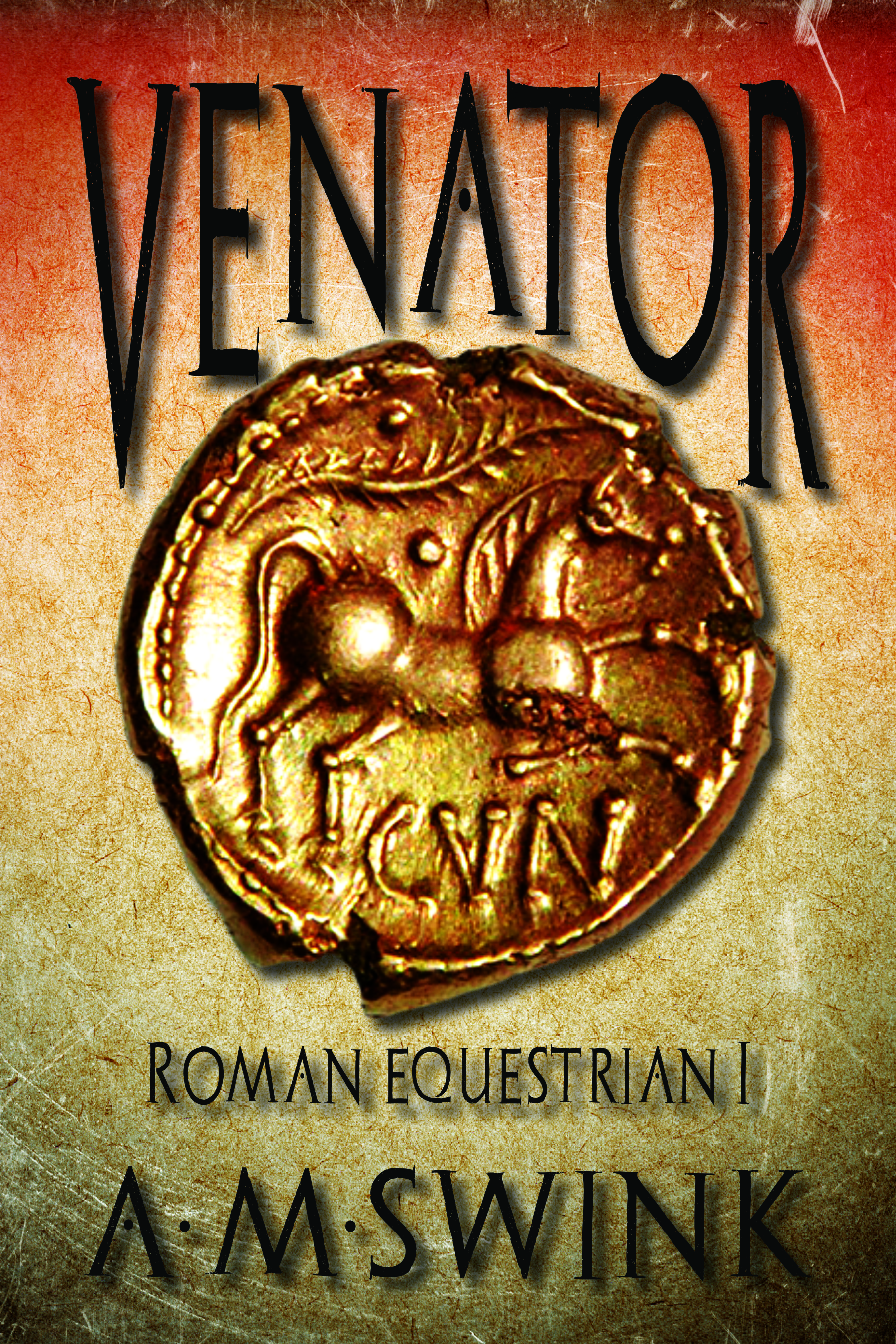
I’m delighted to welcome A.M.Swink and her new book, Venator, to the blog #HistoricalFiction #AncientRome #AncientBritain #RomanFiction #BlogTour #TheCoffeePotBookClub

I’m delighted to welcome A.M.Swink and her new book, Venator from the Roman Equestrian Series, to the blog with an excerpt.

Excerpt

Excerpt 5:

‘There we are.’ Julianus Titianus pushed Livius away as soon as he’d poured the wine. He lifted his glass at Decimus. ‘Your health, Centurion.’

Decimus begrudgingly sipped his drink. With a grunt, he leant forward and slammed his beaker back on the tribune’s marble table. ‘What do you want, Titianus?’

‘My, my! So very direct!’ The tribune chuckled, narrowing his beady eyes at the centurion over the rim of his glass. ‘Not even a word of thanks for your gracious host?’

‘I’m not fond of lies. They tend to stick in my throat.’ Decimus scowled.

He glanced around uncomfortably at his surroundings. Though as primus pilus he’d spent long hours in the war room discussing campaign strategies with the legate, Decimus had never felt entirely at ease within the ornate praetorium. The high, vaulted ceilings, painted walls, and mosaic floors seemed far too excessive for his tastes. Did all men of such high rank have to make their homes in opulent palaces?

He shuddered. Perhaps he wasn’t cut out for belonging to the equestrian class.

Across the table, Titianus sat before a mural depicting Pluto leading Proserpina into Hades; the mouth of the cave to the underworld loomed directly behind the tribune’s head. ‘Words were never your strong suit, were they, Maximus?’ Titianus smirked. ‘You’ve always been a man of action.

‘Get to your point!’ Decimus barked, sitting on the edge of his chair.

‘So impatient!’ Titianus reclined against the back of his seat and tutted softly. ‘I do hope you aren’t considering the mercantile trade when you leave the army, old boy. You’re a pretty poor negotiator.’

‘Luckily enough, Tribune, I have no plans of the sort.’

‘Oh, really?’ Titianus coolly pulled out a tool to begin picking at imagined flecks of dirt beneath his spotless fingernails. ‘I thought I’d been reliably informed you plan to spend your retirement in the capital.’

Decimus shifted in his seat uncomfortably. ‘And why is it any of your concern?’

‘Just wondering if our paths shall cross again.’ Titianus smirked. ‘I’ll be heading back to pursue a quaestorship come spring. And my promotion is assured. I don’t have to bother telling you who my connections are. Let’s just say that I would be quite the valuable ally or quite the powerful enemy.’

‘Your connections are too rich for my blood; I think I’ll remain neutral.’

‘I hardly think you can value neutrality when it comes to me, Centurion.’

Decimus impatiently drummed his fingers on the table. ‘You know nothing about the business that interests me,’ he said at last.

‘Hmm…’ Titianus pretended to mull over Decimus’s words. ‘I don’t know about that. I do know that if you want to breed nags for the imperial army, you’re going to need a contract. One taken out with the palace.’

Decimus abruptly stopped drumming his fingers. He eyed the tribune suspiciously. ‘And?’

‘Well, I’m hardly one to brag, but…I do have friends in high places.’ Titianus shrugged. ‘Ones that have the ability to push for or against the success of such a petition.’

Decimus felt a cool chill from the smile Titianus gave him. He forced himself to bark out a laugh. ‘You’re bluffing.’

Titianus picked up his beaker and idly swirled its contents. ‘Find out at your peril, Centurion.’

‘I value my time, Tribune. And you are wasting it.’ Decimus pushed his chair back and stood.

‘Hold on!’ A note of alarm entered Titianus’s voice. He lifted a hand in protest. ‘Aren’t you curious as to what I’ve got to say?’

‘No.’ Decimus picked his helmet off the table and turned to leave. ‘I’ve played in this little farce for long enough!’

‘It concerns the princess.’

Decimus froze. His tongue darted out to wet his dry lips. ‘What about her?’

Titianus gestured to the vacant seat. He smiled as the centurion reluctantly sat back down. ‘Good, good. Now, let’s discuss this properly.’ He linked his fingers together on the tabletop, twiddling his soft, doughy thumbs. ‘I understand from our quartermaster that you purchased the princess from the legion two months ago for the sum of five hundred denarii. Is that correct?’

Decimus curtly nodded.

Titianus met the centurion’s gaze. He paused for a long moment, leaning over the table. ‘I’ll give you a thousand denarii for her.’

‘I’m sorry, Tribune.’ Decimus quickly stood again. ‘My slave is not for sale.’

‘Twelve hundred denarii!’

‘Not for that price. Not for any price.’ He clapped his helmet back on his head and began making his way towards the door.

Titianus stood and followed him down the hall. ‘Fifteen hundred denarii!’

‘At any price, Tribune!’ Decimus called warningly, refusing to break stride.

‘All right, all right!’ Titianus grabbed at the centurion’s shoulder. Decimus halted and whirled around to face him with a snarl. The tribune backed away, holding his hands up defensively. ‘Eighteen hundred denarii for one night. Just one night with her. Otherwise, she’s yours. Eighteen hundred denarii. One night. My final offer.’

Decimus’s face darkened. He loomed over the cowering tribune and grabbed hold of his neckerchief. ‘Do I look like a pimp to you?’

‘I…I just…’ Titianus choked.

‘Do I look like a pimp to you?!’ Decimus shook Titianus, lifting him onto his toes. With a contemptuous grunt, he tossed him onto the tiled floor. The man skidded roughly against the tesserae before slowing to a halt before his gilded lararium.

‘Stay away from my property, Tribune. Consider this your final warning.’ Decimus turned and stalked out the door.

Livius materialised in the hall and hastened to his master’s side.

‘Get off!’ Titianus kicked at Livius when the slave stooped to help him up. He panted, lifting his head to watch the centurion march away towards the barracks. Hate glistened in his beady dark eyes.

Blurb

Britannia, AD 59. Decimus is a long-serving senior centurion who dreams of retirement in Rome. Luciana is a Cornovii princess devoted to the freedom and survival of her tribe. Connected only by a passion for horsemanship, the pair could not be more ill-matched. After a deadly conflict thrusts these enemies together, each is determined to fight their desires and triumph over the other. Who will ultimately control the other’s heart?

But Decimus and Luciana are not the only ones on the hunt for supremacy; a desperate struggle over the province is beginning to simmer to a boil. There are whispers of mysterious Druids fomenting unrest among the western British tribes, whose inter-tribal divisions threaten to subsume them. The future of the Roman legions in the province is suddenly thrown into doubt as casualties begin to mount. Decimus and Luciana find themselves entangled within a web of characters, Briton and Roman, playing with Britannia’s destiny to serve their own ends.

The hunt for power is on, where only one side can emerge triumphant. But just who among these hunters will end up hunted?

Buy Link

Universal Link:

Meet the Author

A native of Dayton, Ohio, A.M. Swink grew up obsessed with two things: books and horses. After a childhood of reading, writing, showing, and riding, she moved to Lexington, Kentucky to complete a degree in equine science and management and a degree in English literary studies. She now works in Lexington as a college professor of reading and writing. In her spare time, she has travelled extensively around the UK and Ireland, exploring ancient sites and artefacts, as well as tracing her own ancestry. She is proud to be descended from County Cork’s Callaghan clan.

When not writing, she can be found collecting and showing model horses or enjoying her favourite British comedy programmes.

Connect with the Author

Website: Bluesky: BookBub:

Follow the Venator blog tour with The Coffee Pot Book Club

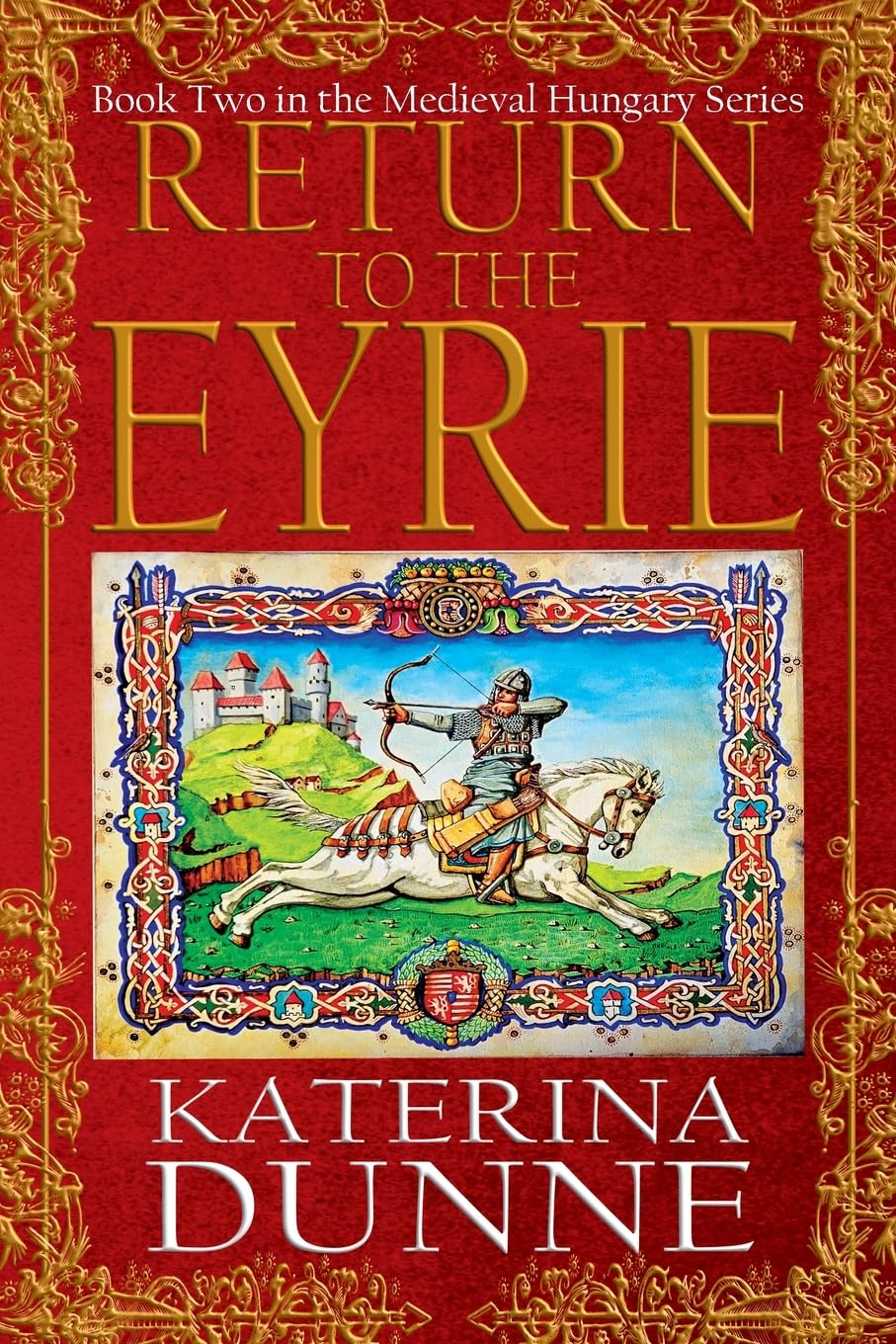
I’m delighted to welcome Katerina Dunne and her new book, Return to the Eyrie, to the blog #HistoricalFiction #MedievalFiction #MedievalHungary #BlogTour #TheCoffeePotBookClub

I’m delighted to welcome Katerina Dunne and her new book, Return to the Eyrie from the Medieval Hungary series to the blog with The Siege of Szabács (1476).

The Siege of Szabács (1476)

During his long reign (1458-1490), King Mátyás of Hungary faced the Ottoman army many times. Although the King kept a rather defensive stance against Sultan Mehmed’s advances towards Central Europe, he did his best to ensure the border raids perpetrated by the Ottomans remained localised. Mátyás focused on expanding his kingdom to the west and north; but when circumstances demanded it, he fought the Ottomans successfully.

Several chapters of Return to the Eyrie are dedicated to the siege of Szabács (Jan-Feb 1476) It is where the young heroine, Margit, receives her baptism of fire as a soldier. Dressed in a man’s clothes, she puts her archery and fighting skills to the test.

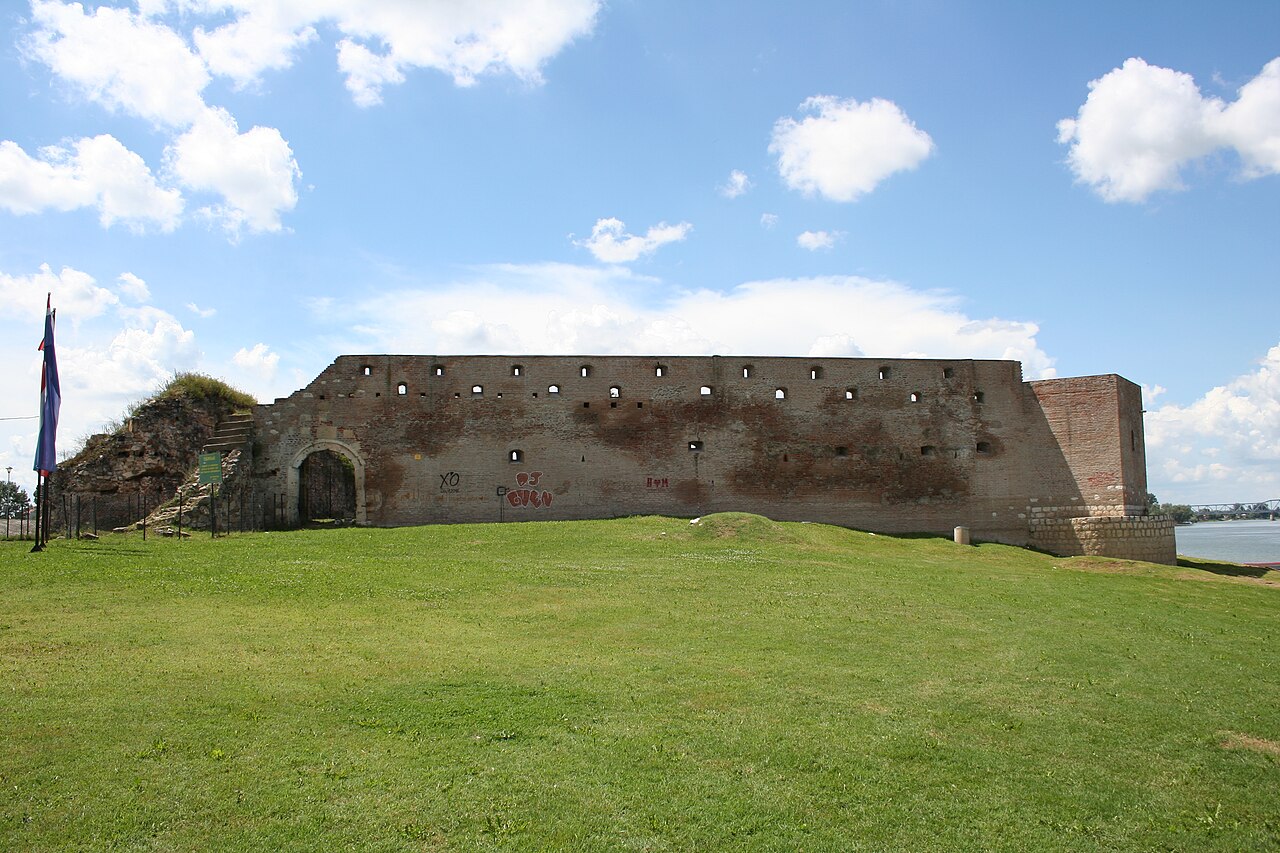
The fortress of Szabács (Šabac in Serbian) was a stronghold on the southern bank of the river Sava. It was built in 1470 by the Ottomans, who had occupied the area since 1459 and used the fortress as a base to launch raids into the territories of the Kingdom of Hungary (mainly Croatia, Slavonia and the Hungarian-occupied area around Belgrade)

According to sources of the time, the fortress was constructed of wood and rammed earth and was surrounded by marshes as well as man-made ditches. This whole arrangement was quite effective against bombardment.

The remains of the Šabac / Szabács fortress photo by Ванилица from Wikipedia

After fighting against his Christian neighbours for many years, King Mátyás wished to pacify public opinion in Hungary and abroad and present himself as a “defender of the faith”. During 1475, he had already established a huge army of Hungarian, Transylvanian, Wallachian and mercenary forces, including artillery and siege equipment as well as river galleys and gunboats.

It is not exactly certain whether his plan at the time was to go to the aid of the Moldavian and Wallachian princes, whose territories were threatened by an Ottoman invasion, or capture the main Ottoman fortresses in Serbia in order to stop the enemy attacks against his own kingdom. In any case, he ended up besieging Szabács in January and February 1476 from land and river with a force that severely outnumbered the Ottoman defenders and discouraged any relief army to approach the fortress.

The earthen walls of Szabács withstood the long-range bombardment during the first part of the siege while the Ottoman arrows and firearms prevented any assault from the land. But when the waters in the ditches rose in the first days of February, the war galleys were able to approach from the river and intensify the damage to the walls. This, together with bombardment and assaults from the land, broke the Ottoman resistance, and the defenders surrendered on 15 February 1476.

In his chronicle, Antonio Bonfini wrote that Mátyás took the fortress by employing a ruse: he feigned retreat while a part of his army hid in a neaby forest. When the Ottomans thought the danger had passed and relaxed their guard, the hidden soldiers climbed the walls and took Szabács. Although this story has great dramatic effect (which I partly use in my novel), it was probably only a myth.

Another primary source of the time, the anonymous poem Szabács Viadala (The Fight for Szabács), presents a more plausible version of how the fortress was taken. In the poem, an Ottoman soldier, who still remembered his Hungarian origin, fled and revealed the weak points of the fortifications to Mátyás. The bombardment then concentrated on these areas until the fotress fell.

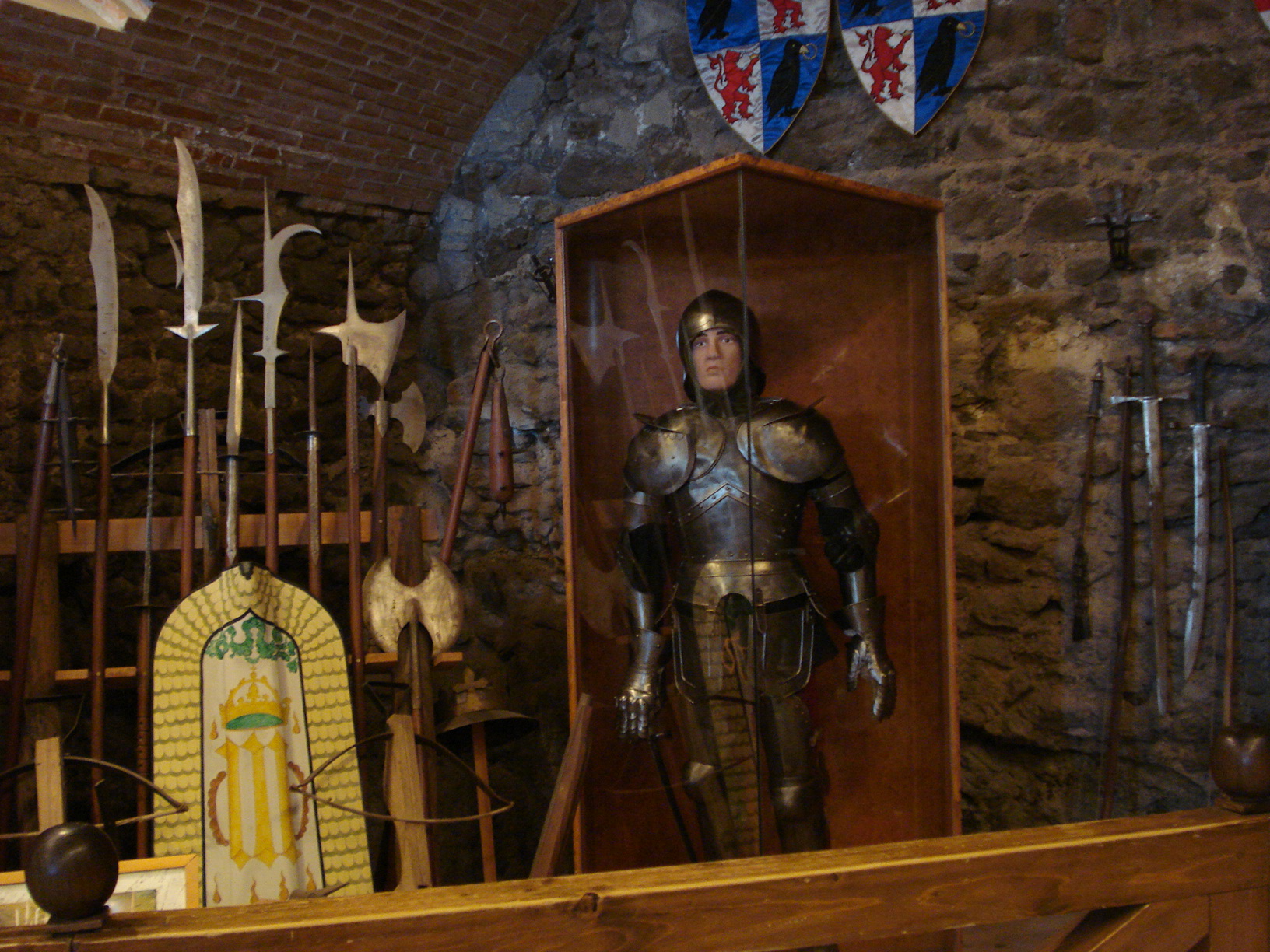
Armour and weapons of King Mátyás’ soldiers at the Visegrád citadel museum (my photo)

Whatever the real reason for the capture of Szabács was, historian Tamás Pálosfalvi suggests that its significance rests on the King’s original intentions at the time. If Mátyás had intended to assist Moldavia and Wallachia but was forced to change his plans due to the adverse weather or the failure of the Ottomans to attack Wallachia at the time, then the victory at Szabács can be considered a success. If, however, Szabács was his main aim, then the whole operation only served to convince public opinion in Hungary and abroad of the King’s commitment to defending Christendom against the Ottoman danger.

Works Consulted:

Antonio Bonfini: A Magyar Történelem Tizedei (Rerum Hungaricarum Decades), Hungarian trans. P. Kulcsár (Budapest, 1995)

Szabács Viadala (The Fight for Szabács)—a poem commemorating the siege and capture of Szabács (author anonymous; date unknown but possibly around the time of the siege in 1476)

https://magyar-irodalom.elte.hu/gepesk/kkor/049.htm

Pálosfalvi, T., From Nicopolis to Mohács: A History of Ottoman-Hungarian Warfare, 1389–1526 (Leiden, 2018)

Sources

The remains of the Šabac / Szabács fortress photo by Ванилица from Wikipedia : https://en.wikipedia.org/wiki/%C5%A0abac_Fortress#/media/File:%C5%A0abac,_%C5%A0aba%C4%8Dka_tvr%C4%91ava_013.jpg

Armour and weapons of King Mátyás’ soldiers at the Visegrád citadel museum (my photo)

Blurb

Honour, revenge, and the quest for justice.

Belgrade, Kingdom of Hungary, 1470:

Raised in exile, adolescent noblewoman Margit Szilágyi dreams of returning to her homeland of Transylvania to avenge her father’s murder and reclaim her stolen legacy. To achieve this, she must break the constraints of her gender and social status and secretly train in combat.

When the king offers her a chance at justice, she seizes it—even if it means disguising herself as a man to infiltrate the vultures’ nest that now occupies her ancestral ‘eyrie’.

Plagued by childhood trauma and torn between two passionate loves, Margit faces brutal battles, her murderous kin’s traps and inner demons on her quest for vengeance. Only by confronting the past can she reclaim her honour—if she can survive long enough to see it through.

Return to the Eyrie is an epic coming-of-age tale of a young woman’s unwavering pursuit of justice and destiny in 15th century Hungary.

Buy Link

Universal Link:

Meet the Author

Katerina Dunne is the pen-name of Katerina Vavoulidou. Originally from Athens, Greece, Katerina has been living in Ireland since 1999. She has a degree in English Language and Literature from the University of Athens, an MA in Film Studies from University College Dublin and an MPhil in Medieval History from Trinity College Dublin.

Katerina is passionate about history, especially medieval history, and her main area of interest is 13th to 15th century Hungary. Although the main characters of her stories are fictional, Katerina uses real events and personalities as part of her narrative in order to bring to life the fascinating history of the medieval Kingdom of Hungary, a location and time period not so well-known to English-speaking readers.

Return to the Eyrie (published April 2024) is the second book in the Medieval Hungary series, a sequel to Lord of the Eyrie (published in February 2022).

Connect with the Author
Website:

Follow the Return To The Eyrie blog tour with The Coffee Pot Book Club

I’m delighted to welcome Jennifer Ivy Walker and her new book, The Witch of the Brenton Woods, to the blog #HistoricalFiction #HistoricalRomance #FrenchResistance #Brittany #BlogTour #TheCoffeePotBookClub

I’m delighted to welcome Jennifer Ivy Walker and her new book, The Witch of the Brenton Woods, to the blog with the historical aspect of The Witch of the Brenton Woods.

Historical Aspect of The Witch of the Brenton Woods

I wanted the hero of my story to be an American paratrooper dropped into Normandy for the D-Day landings on June 6, 1944, so I researched many of the different divisions of American servicemen during World War II.  I selected the 507th PIR (Parachute Infantry Regiment), which was part of the 82nd Airborne Division, whose D-Day objective known as Mission Boston was to secure the Merderet River crossing in Normandy.

As I developed the historical fiction aspects of The Witch of the Breton Woods, I decided to have my fictional character, First Lieutenant Richard Zachford, be forced to make an emergency jump when his plane was shot down by German 88mm flak antiaircraft artillery guns. It was rewarding and challenging to weave together fictious characters who were part of the real 507th PI and weave them into the Battle of Saint-Malo, the culminating point of my novel.

I did extensive research about the Battle of Saint-Malo, a city in Bretagne (Brittany) that I had visited twice before as a high school French teacher taking my students on trips to France. When I discovered that a major focus of World War II had been The Battle of Brittany, I wove my fictional characters into the historical events which actually took place in the Battle of Saint-Malo, one of the crucial seaports that the Nazis controlled, which was deemed essential for the Allies to recapture.

Saint-Malo was one of the French towns designated as a fortress under Hitler’s Atlantic Wall program, and the Allies intended to capture the town so that its port could be used to land supplies and naval reinforcement. However, the Germans had covered the medieval castle into an underground fortress that was nearly impenetrable. When the Allies did successfully retake Saint-Malo, it had been so heavily damaged that it had been rendered unusable, and the courageous Malouins (the French name for the local inhabitants of Saint-Malo) slowly rebuilt their beloved city.

In writing The Witch of the Breton Woods, I wove together the events leading up to the surrender of the German Colonel Von Aulock (known as the Mad Colonel) on the 17th of August, 1944 and the surrender of the nearby German garrison of Cézembre on September 2nd. It was very challenging to entwine the plot development of my novel with the actual events which occurred between the D-Day landing of June 6th and the surrender of the Germans at Saint-Malo on September 2nd, 1944. I am very proud to have interwoven compelling historical fiction and thrilling romantic suspense in The Witch of the Breton Woods.

Blurb

Traumatized by horrors witnessed during the Nazi invasion of France, a young woman retreats to the dense Breton woods where she becomes a member of the clandestine French Resistance. When she finds a critically injured American paratrooper whose plane was shot down, she shelters the wounded soldier in her secluded cottage, determined to heal him despite the enormous risk.


Ostracized by villagers who have labeled her a witch, she is betrayed by an informant who reports to the Butcher—the monstrous leader of the local paramilitary organization that collaborates with the Germans. As the enemy closes in, she must elude the Gestapo while helping the Resistance reunite the American with his regiment and join the Allied Forces in the Battle of Brittany.

Can true love triumph against all odds under the oppressive Third Reich?

Buy Link

Universal Link:

Meet the Author

Jennifer Ivy Walker has an MA in French literature and is a former high school teacher and professor of French at a state college in Florida.  Her novels encompass a love for French language, literature, history, and culture, incorporating her lifelong study, summers abroad, and many trips to France.

The Witch of the Breton Woods is heart-pounding suspense set during WWII in Nazi-occupied France, where a young woman in the French Resistance shelters and heals a wounded American soldier, hiding him from the Gestapo and the monstrous Butcher who are relentlessly hunting him.

Connect with the Author

Website: BookBub:

Follow The Witch of the Brenton Woods blog tour with The Coffee Pot Book Club

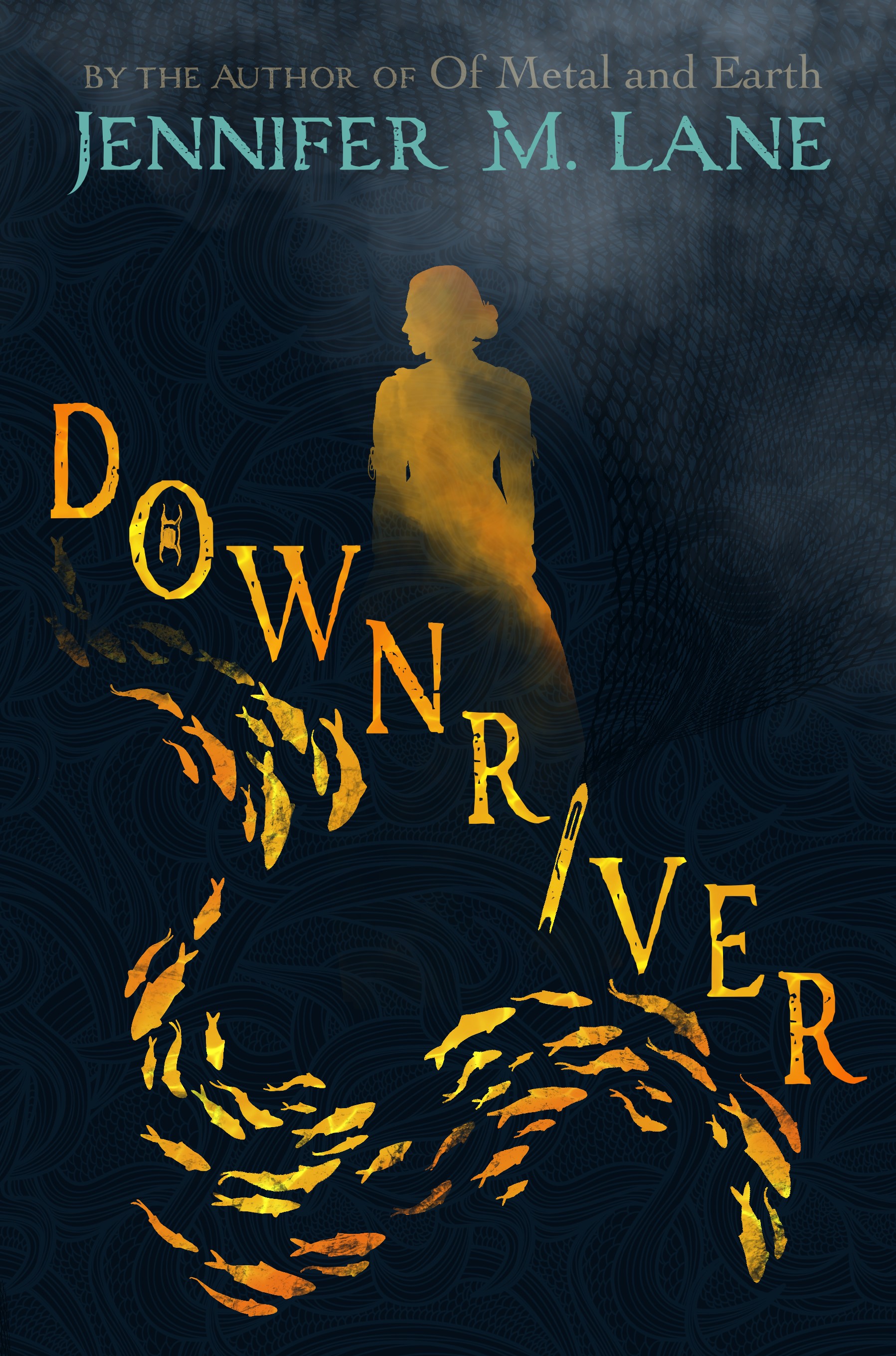
I’m delighted to welcome Jennifer M. Lane and her new book, Downriver, to the blog #HistoricalFiction #Revenge #BlogTour #TheCoffeePotBookClub

I’m delighted to welcome Jennifer M. Lane and her new book, Downriver from The Poison River Series, to the blog with a guest post.

Guest Post

On the surface, Downriver, the first book in the Poison River series, is an extension of my lifelong interest in coming-of-age tales, where men and women unlock a part of themselves that allows them to move into a new phase of life. Though I believe we can “come of age” at many points, Charlotte and her friends are teenagers at the start of the series, fighting a battle much more formidable than their years.

The story is fictional, but the places are real, and the foundation on which the plot sits is based in the history of Pennsylvania’s anthracite coal country.

The world Charlotte and her brother, Emmett, come from is tainted by the conflict between coal bosses and mine workers. It’s a history of rich versus poor, of immigrants with fewer protections being abused by a coordinated system of oppression.

Mine workers in this region in the nineteenth century were largely Irish immigrants, many of whom fled the potato famine and the corporatization of their food supply. As they fought back in Ireland and England, emigrees formed a group known as the Molly Maguires, coordinating increasingly violent uprisings against farmers who locked them out of land they once farmed and merchants who raised the rates on foods.

The Strike in The Coal Mines. Credit: Public Domain (prior to 1929)

In the United States, as Irish workers settled in anthracite country and took on mine work, they soon found themselves financially shackled to their new employer. Housing was taken from their pay along with fees for the town doctor. Their remaining income was paid in scrips—company coin that could only be spent in the overpriced company store. Their income rarely exceeded their bills. And the more they pushed for better conditions, the more the coal bosses fought back. Eventually, things turned violent.

No paper trail links the 1860s and 1870s violence and murders of coal bosses to a coordinated Molly Maguires group, but once slung, the moniker stuck. As the chasm between the miners and coal bosses widened, Frank Gowen convinced the State of Pennsylvania to allow the coal patch towns to hire their own private police force to combat the Mollies. The Coal and Iron Police was formed, then returned the miner’s fire.

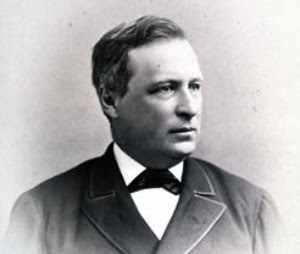
Frank Gowen. Credit: Public Domain (prior to 1929)

This is the world of my fictional Frank Morris, Charlotte and Emmett’s father. The fictional man was a more public figure than the man who inspired him. Frank Morris wrote speeches that sparked an uprising before losing his life to poisoning. The real Jack Kehoe was hanged, accused of working quietly, leading a group of men who used violence and murder to punish coal bosses and intimidate their opposition.

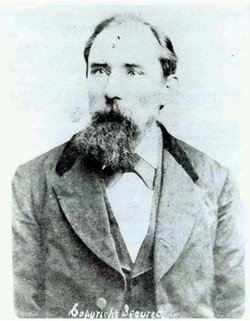
Jack Kehoe. Credit: Public Domain (prior to 1929)

In retaliation, Frank Gowen hired a Philadelphia detective (Allan Pinkerton) to plant a spy within his worker’s ranks. That spy found himself regretfully entangled in violence he was accused of instigating before testifying against the miners in a case that was prosecuted by Gowen himself. The gross miscarriage of justice is considered one of the bleakest eras of the American justice system.

Readers will encounter more of this rich history in subsequent books in the series. Set a mere quarter century after twenty men were sentenced to hang for their role as Molly Maguires, Downriver draws largely on these political and worker tensions as background. The battle Charlotte and her friends wage is against a pollution that poisons the air and the water, sickening people in her hometown of Stoke and poisoning the fish in the Maryland foster village on the Chesapeake Bay.

Eckley Miner’s Village. Credit: CC BY-SA

As she battles her father’s coal boss from afar, Charlotte teams up with suffragists, her high school literary society, and a handsome young man who lost family to the poison, too.

Though the era of the American Revolution is my favorite, writing Downriver has given me a chance to merge the historical settings of my Chesapeake Bay hometown and my partner’s in the Poconos outside Eckley Miner’s Village. Visitors to their museum can enjoy the history and structures such as houses and the coal breaker that was constructed for the 1970s film The Molly Maguires.

Blurb

A sulfur sky poisoned her family and her heart. Now revenge tastes sweeter than justice.

It’s 1900. In a Pennsylvania coal town tainted by corruption and pollution, Charlotte’s world collapses when her parents meet a tragic end. Sent to a foster family in a Maryland fishing village, she’s fueled by grief and embarks on a relentless quest for justice against the ruthless coal boss, Nels Pritchard.

But Charlotte is no ordinary girl. She shares the fiery spirit of her father, whose powerful speeches inspired worker riots. With a burning desire for vengeance, she sets out to uncover the truth behind Pritchard’s crimes, unearthing a shocking connection between the town’s toxic air and the lifeless fish washing up on the shore of her Chesapeake Bay foster town.

To expose the truth, Charlotte builds a network of unexpected allies. There are gutsy suffragists, a literary society of teenage girls willing to print the truth… and Weylan. The captivating young man lost his own family to Pritchard’s poison. He offers support, but Charlotte questions his true motives when he lures her to break the law. Could she be falling into a dangerous trap, leading her to a fate worse than poison?

With her unwavering spirit and determination, Charlotte must forge alliances and navigate a web of treachery before Pritchard seeks his own ruthless revenge.

The newest book by award-winning author Jennifer M. Lane is perfect for fans of Jeannette Walls’ Hang the Moon and the fiery protagonist in The Hunger Games. Join Charlotte in this small town, coming-of-age dystopian historical saga as she finds resilience, courage, and triumph in her search for identity, independence, and her true home.

Buy Links

Universal Link:

Universal Series Link:

This title is available to read on #KindleUnlimited

Meet the Author

A Maryland native and Pennsylvanian at heart, Jennifer M. Lane holds a bachelor’s degree in philosophy from Barton College and a master’s in liberal arts with a focus on museum studies from the University of Delaware, where she wrote her thesis on the material culture of roadside memorials.

Jennifer is a member of the Authors Guild and the Historical Novel Society. Her first book, Of Metal and Earth, won the 2019 Next Generation Indie Book Award for First Novel and was a Finalist in the 2018 IAN Book of the Year Awards in the category of Literary / General Fiction. She is also the author of Stick Figures from Rockport, and the six book series, The Collected Stories of Ramsbolt.

Connect with the Author

Website: BookBub:

Follow the Downriver blog tour with The Coffee Pot Book Club