“Hello there, Nattie, honey,” called Mimi in her honey-sweet voice as she popped out of the door behind the curtains.
Mimi wasn’t much older than the chorus line girls. She was like a big sister, looking out for them, scolding and nagging, doing her part to make the performances alluring. Mimi liked to say “alluring,” and then she would do a mouth pucker and put one hand on her hip and the other in the air with her wrist cocked like she was holding a bunch of potatoes. Nattie only made the mistake of mocking her once.
Mimi had been a model when she was very young, or so she said. That was hard to imagine. She walked like a penguin on stubby short legs. And she wore glasses, big round frames that made her look like an owl. If Antonio was around, she took them off, an interesting fact to ponder. Just like the come-and-go French accent. Mimi lack conviction.
The game’s exhausting, isn’t it, Mimi? You have to breathe it, Mimi. Be it. Look at me. I bleed turquoise. Piss magenta. Fart like a flounder.
Today, Mimi was carrying a stack of costumes over her arm, all neatly repaired, booze stains laundered, ready to be delivered backstage. Nattie could see long white gloves with buttons and black lace and see-through fabrics with tassels and snaps for flinging off and dropping on the stage.
Ba-da-boom. Hey, baby.
Sometimes the girls ripped too hard. Or the men.
Ba-da-boom. Take it off, baby.
Snaps had to be reattached, tears stitched up or patched. Mimi, the penguin seamstress, made the inconvenient flaws go away so they could come back again. And again. Maybe she needed stronger thread, maybe wires reinforced with defiance. Or electricity. Wouldn’t that be a hot, sizzling hoot?
“Nattie, have you brushed that hair of yours this week?” asked Mimi, hand on hip, her mouth all puckered. “My God. And to think I have a new crown for you to wear. A gift. Real jewels. And I have to bobby pin it to that rat’s nest?” The woman shook her head. No accent needed for that.
Here’s the blurb
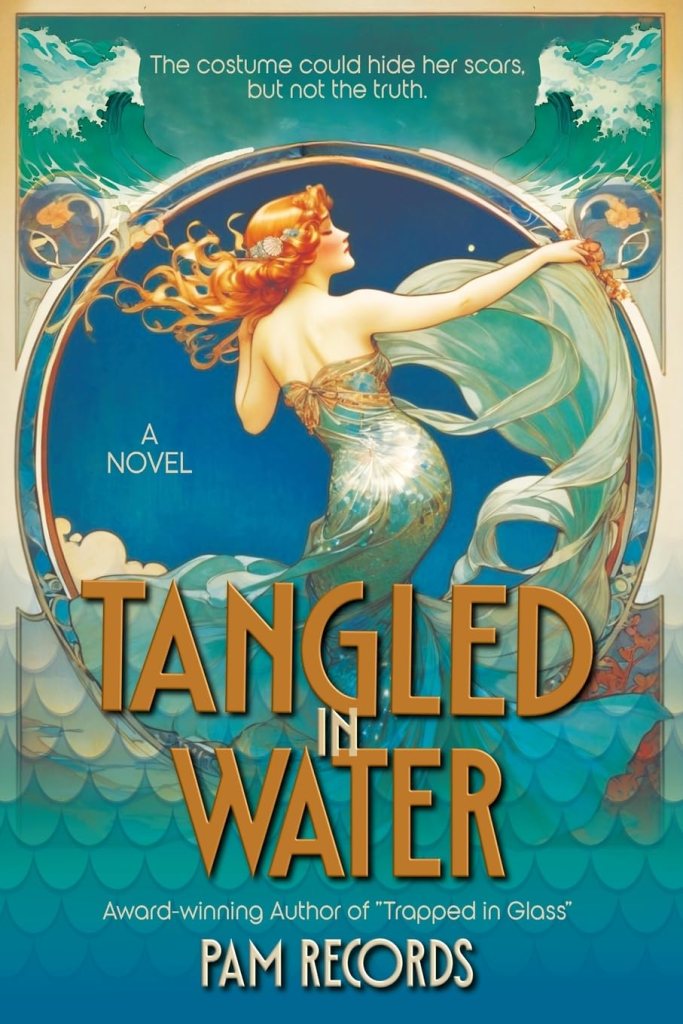
1932. Natalia is 16 and a bootlegger’s daughter, playing the mermaid mascot on a rundown paddlewheel used to entertain brewers and distributors.
A sequined costume hides her scarred and misshaped legs, but it can’t cover up the painful memories and suspicions that haunt her. An eccentric healer who treats patients with Old Country tonics, tries to patch wounds, but only adds to the heartache. A fierce storm threatens to destroy everything, including a stash of stolen jewels.
1941. Prohibition is over, but the same henchmen still run the show. Nattie’s new mermaid act is more revealing, with more at risk. When the dry-docked paddlewheel is bought by the US Navy for training exercises, the pressure escalates further.
Can Nattie entice a cocky US Navy officer to help her gain access to the ship for one last chance to confront her past, settle scores, and retrieve the hidden loot? Is there a new course ahead?
Pam and her husband, Mark, recently uprooted from the Midwest to move to Savannah, Georgia, the perfect place for enjoying the beach, historic architecture and Spanish moss.
She’s recently retired from writing content for software companies and now focuses on writing fiction, camping, and exploring historic cities.
I’m delighted to welcome T.F. Troy and his new book, The Absolution of Mars, to the blog, with an excerpt.
Excerpt
Lafayette Baker steps behind Stanton at his desk, between him and the cipher room. Stanton looks up at Baker, his visage now blurred and out of focus over the top of his glasses.
“You keep that boy of yours off my ass this time,” Baker says, almost as if giving an order. But he knows that he has the Secretary over a barrel, especially if he wants his help. “I heard he was
already out to the 10th VRC talking with Cobb. That boy is a natural born hound dog.
“Come to think of it, I just may need him,” Baker adds. “Do I have authorization?”
“Sure, but he’ll be off on Tuesday chasing Captain Boyd from Gautier’s up to Canada,” Stanton says. “I sent the newly commissioned Lieutenant Henry with him to keep him in line. That should keep them both busy, and it might even give us more information on what’s going on up in Canada.”
“They are way too smart,” Baker says. “Besides, these two may both wind up dead. Especially, if they run into Burley.”
“He’s incarcerated,” Stanton says.
“Where?!” Lafayette asks disbelieving, as he steps from behind the desk.
Stanton looks down and picks through some papers, before he reads from the proper document, just to be sure he has the city right.
“Civilian Jail in Port Clinton, Ohio,” Stanton says, looking up and talking off his spectacles. “Ashley the master from the passenger ferry swore out a complaint, and Canada threw him back to us.”
“What?” Baker says again in disbelief, trying not to laugh out loud. “Sent him back for a petty robbery?”
“I know, I know,” the Secretary says chuckling along with him. He starts cleaning his glasses, which were perpetually dirty, even when immaculate.
“Do they even know who they have?!”
“I doubt it,” Stanton says.
“He’ll be escaping soon,” Baker says.
“And when he does, I’ll instruct Jemm and the good Lt. Henry to follow him back to Montreal, keeping their distance…”
“And what if they find out too…”
“Relax Lafayette, I’ll simply instruct them to track a fugitive.” Baker smiles. He likes the sublime nature of the plan.
“So who will you want?” Stanton askes, finally.
“I want my cousin Luther and his team to be a part of the party, with maybe Lt. Dougherty in charge of the actual military detail,” says Lafayette.
“And I want Sergeant Corbett to be a part of the detail as well,” says Stanton.
“But he espouses bizarre ideologies…his poor bedeviled mind is poisoned and lacks critical thinking skills,” says the Colonel. “He scares me because he’s unbalanced, a religious fanatic.”
“But do you doubt his devotion?”
“No…no I don’t. Who can?” Baker asks rhetorically. “But I want to be able to call Jemm back here—his work with the coloreds and the Secret Line could be very helpful if we run into a jam.”
“You know they’ll be headed for Cox, and then…
“Yeah, but they’ll need a good guide through the swamps down there, and Jemm has contacts that know them roads and paths better than anybody.”
“Call him back only if you have to then.”
Here’s the Blurb
Politics, Friendship, or Greed? Which of these was the true author of the Confederate conspiracy to decapitate the Union?
The Absolution of Mars by T.F. Troy is a masterful blend of historical fiction, human drama and moral exploration. Set against the backdrop of a racially fraught period in American history, the story does not back away from the harsh realities or racial biases of the day.
The narrative introduces Jemm Pender, a former slave with a superior intellect, who rises to become a key agent in the National Detective Police Force. Jemm is tasked to trace the movements of J. W. Boyd, a Confederate spy working out of Canada.
From its intriguing opening scene, where playful dialogue among children hints at deeper mysteries, the story captivates with a blend of vivid detail and emotional depth. Jemm’s quest intertwines with his wife Marnie and Aunt Cordelia, both blessed with remarkable capabilities that are being lost to the scientific thought of the day.
Troy tackles difficult topics with honesty and precision, creating moments that are as painful as they are profound. The prose is rich and evocative, with dialogue that breathes life into the characters and their struggles. The Absolution of Mars is a poignant, thought-provoking exploration of history, identity, and humanity, recommended for readers seeking depth and nuance.
A student of the American Civil War, T.F. Troy has an award-winning journalism career spanning more than 40 years. He currently serves as Executive Editor of Cleveland Magazine’s Community Leader as well as the Editor of Ohio Business Magazine. He also writes features for Northern Kentucky Magazine and Dayton Magazine, among other regional publications. His work with those publications has won him numerous awards, taking first, second and third place in Ohio for Magazine Feature Writing. Troy’s work has appeared in major metropolitan daily newspapers including the Cleveland Plain Dealer and Pittsburgh Post-Gazette.
In addition to the previously mentioned publications, Troy also held positions as a Senior Editor for both ABC/Capital Cities and ICD Publications in New York. His work has appeared in numerous national consumer and trade periodicals throughout his career. In his first book Cleveland Classics: Great Tales from the North Coast, Troy interviewed local and national Cleveland celebrities such as: Jim Brown, Bob Feller, Patricia Heaton and Arsenio Hall among others. The Absolution of Mars, set just after the Civil War, is his first novel, but third book.
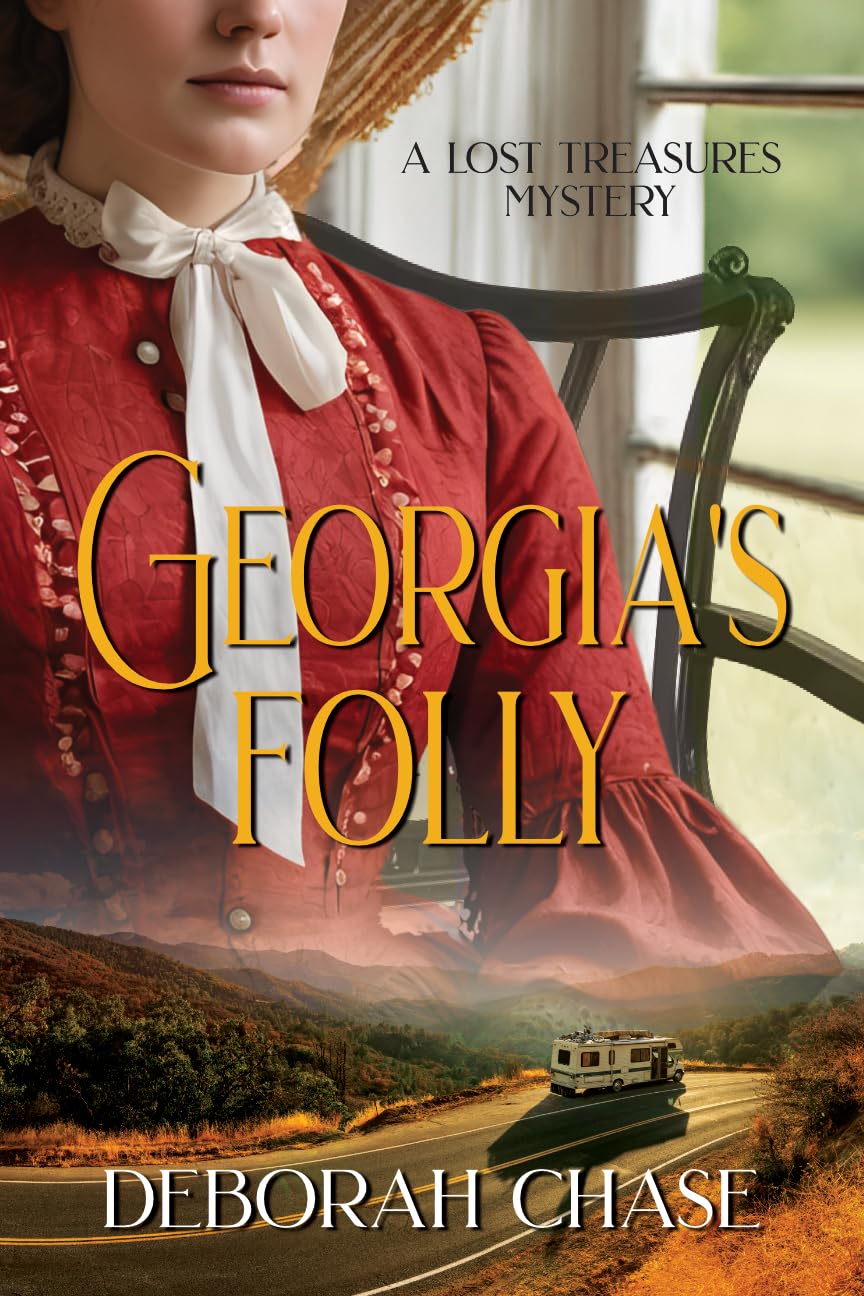
I’m delighted to welcome Deborah Chase and her new book, Georgia’s Folly, to the blog.
Here’s the Blurb
For fans of “Antiques Roadshow” and “American Pickers” – this is the one for you!
Beginning at a cluttered flea market and ending at a glittering art auction, Georgia’s Folly tells the compelling story that blends past and present and the search for a valuable and elusive antique. Chloe Bishop grew up in foster care. She loves shopping at flea markets, picking up family heirlooms like old pottery or vintage furniture to fill in for the family and home she never had.
As Chloe walks through the Brooklyn Flea Market, she stumbles upon the diary of Miss Georgia Potter, a young woman who had lived in Gettysburg, Pennsylvania during the Civil War. The yellowed pages reveal the impact of the war on daily life and spotlights the role of women including Harriet Tubman, Clara Barton and Louisa May Alcott.
Like Chloe, Georgia Potter was a passionate collector and her diary lists her collection of valuable antiques—including the Holy Grail of 18th century furniture—a Chippendale settee. Well versed in antiques, Chloe is aware that there are only five known examples and a sixth settee would be worth more than $4 million.
Chloe immediately contacts Ben Thompson, the man who sold her the diary. Ben is a picker who drives his RV across America, searching for collectibles to sell to dealers. He is estranged from his wealthy, prominent family who cringe at his chosen career. Ben agrees to take her along to search for the valuable and iconic settee. As Ben and Chloe head to Gettysburg, they are unaware that Gregor Petrov, a shady antiques dealer and Harrison Kent, a respected but unscrupulous art expert are trailing them.
The search for the settee takes Chloe and Ben on fast paced journey from the Gettysburg battlefields to the 18th century street of artisans in Philadelphia to a historic mansion on the banks of the Hudson River. Traveling together in the small RV, Ben and Chloe draw closer. In the confines of the RV, embroiled in an unimaginable quest, Chloe confides that she is also in search for the father she never knew while Ben struggles to explain his complicated family to a woman who never had one.
In a thrilling ending, the rare Chippendale settee is not Chloe’s only valuable discovery.
Deborah Chase grew up in a family filled with art and antiques. On the high end, her uncle, William Lincer, lead violist at the New York Philharmonic, was an art lover whose collection was sold at Sotheby’s. On the low end, her father, writer Allen Chase took her to flea markets and estate sales. He sparked a lifelong fascination with tales of lost treasures that ranged from plundered Egyptian tombs to trainloads of art stolen by the Nazis. It was this love of history and antiques that inspired her first novel, Georgia’s Folly
She was a founding editor of the Berkeley Wellness Newsletter and the author of 12 books including TheMedically Based No-Nonsense Beauty Book (Alfred Knopf), Extend Your Life Diet (Pocket Books), FruitAcids for Fabulous Skin (St Martin’s Press), Every Bride is Beautiful (Morrow), and with her husband Dr Neil Schachter co-author of Life and Breath (Doubleday) and The Good Doctor’s Guide to Colds andFlu (Harper). The books have been a selection of the Book of the Month Club and her articles have appeared in Ladies Home Journal, Self, Glamour, Redbook, Family Circle,Parents and Good Housekeeping.
She is a graduate of Bronx High School of Science and a winner of the Westinghouse Science Talent Search. A graduate of New York University she earned a degree with a duel major in journalism and history.
A native New Yorker, Deborah like to spend her weekends at an upstate home where a big kitchen and an endless supply of estate sales indulge her duel passions for cooking and collecting.
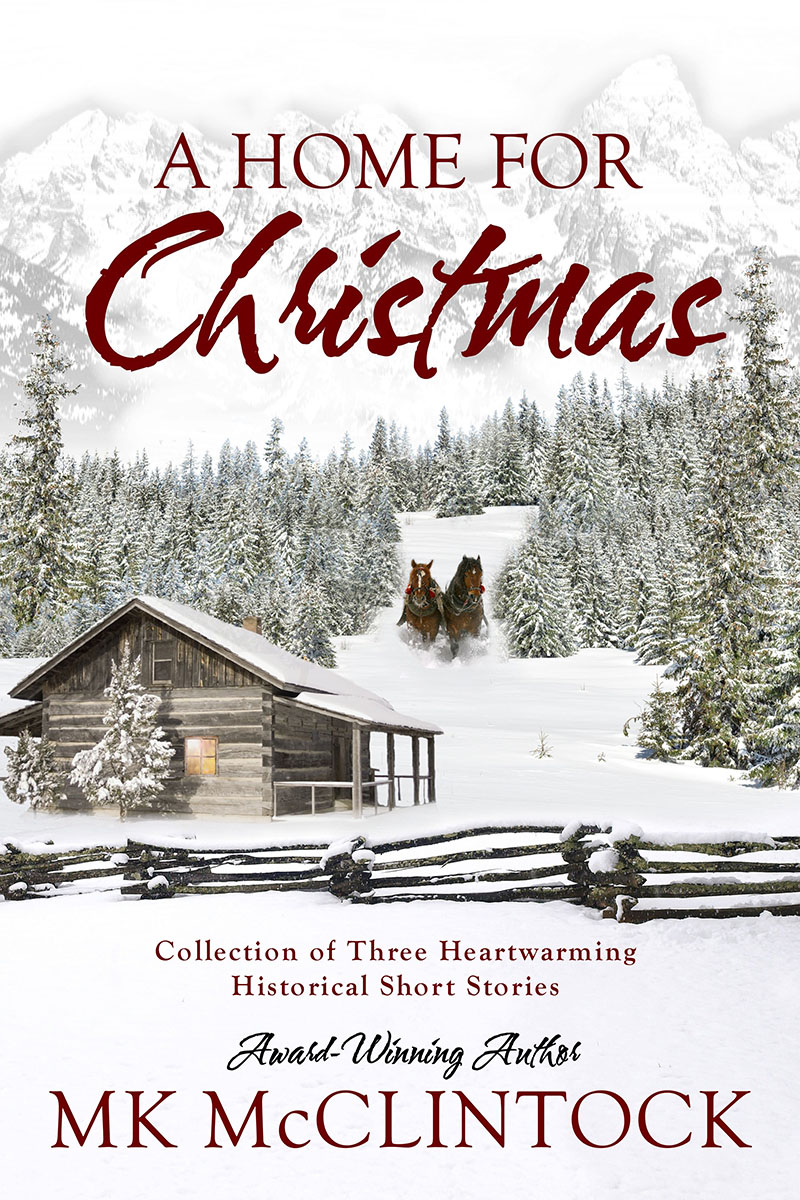
Will six strangers find hope, love, and family at Christmas? A collection of three historical western short stories to inspire love and warm the heart.
“Christmas Mountain”
In search of family she barely knows and adventure she’s always wanted, Katherine Donahue is saved from freezing on a winter night in the mountains of Montana by August Hollister. Neither of them expected that what one woman had in mind was a new beginning for them both.
“Teton Christmas”
Heartache and a thirst for adventure lead McKensie Stewart and her sister to Wyoming after the death of their parents. With the help of a widowed aunt and a charming horse breeder, McKensie discovers that hope is a cherished promise, and there is no greater gift than love.
“Lily’s Christmas Wish”
Lily Malone has never had a real family or a real Christmas. This holiday season, she might get both. From an orphanage in New York City to the rugged mountains of Colorado, Lily sends out only one wish. But when the time comes, can she give it up so someone else’s wish can come true?
If you love inspirational romance and heartfelt holidays, then you’ll enjoy this trio of stories as we remember the true meaning of love any time of the year.
Praise for A Home for Christmas:
“Ms. McClintock has a true genius when writing beauty to touch the heart. This holiday treat is a gift any time one needs to remember the true meaning of love!”
~ InD’tale Magazine on A Home for Christmas
“The cold nips at your face and delicious Christmas cake leaves you wanting more.”
~ M. Ann Roher, author of Mattie on A Home for Christmas
Buy Links
This title is available in e-book, paperback, large print, and audio, and on #KindleUnlimited.
MK McClintock is an award-winning author of historical romantic fiction about chivalrous men and strong women who appreciate chivalry. Her stories of romance, mystery, and adventure sweep across the American West to the Victorian British Isles with places and times between and beyond.
MK enjoys a quiet life in the northern Rocky Mountains. You can find her online at www.mkmcclintock.com.
Her works include the Montana Gallagher, Crooked Creek, British Agent, and Whitcomb Springs series. She has also written A Home for Christmas, a heartwarming collection set in 1800s Montana, Wyoming, and Colorado, and The Case of the Copper King, a romantic and adventurous western mystery set in 1899 Colorado.
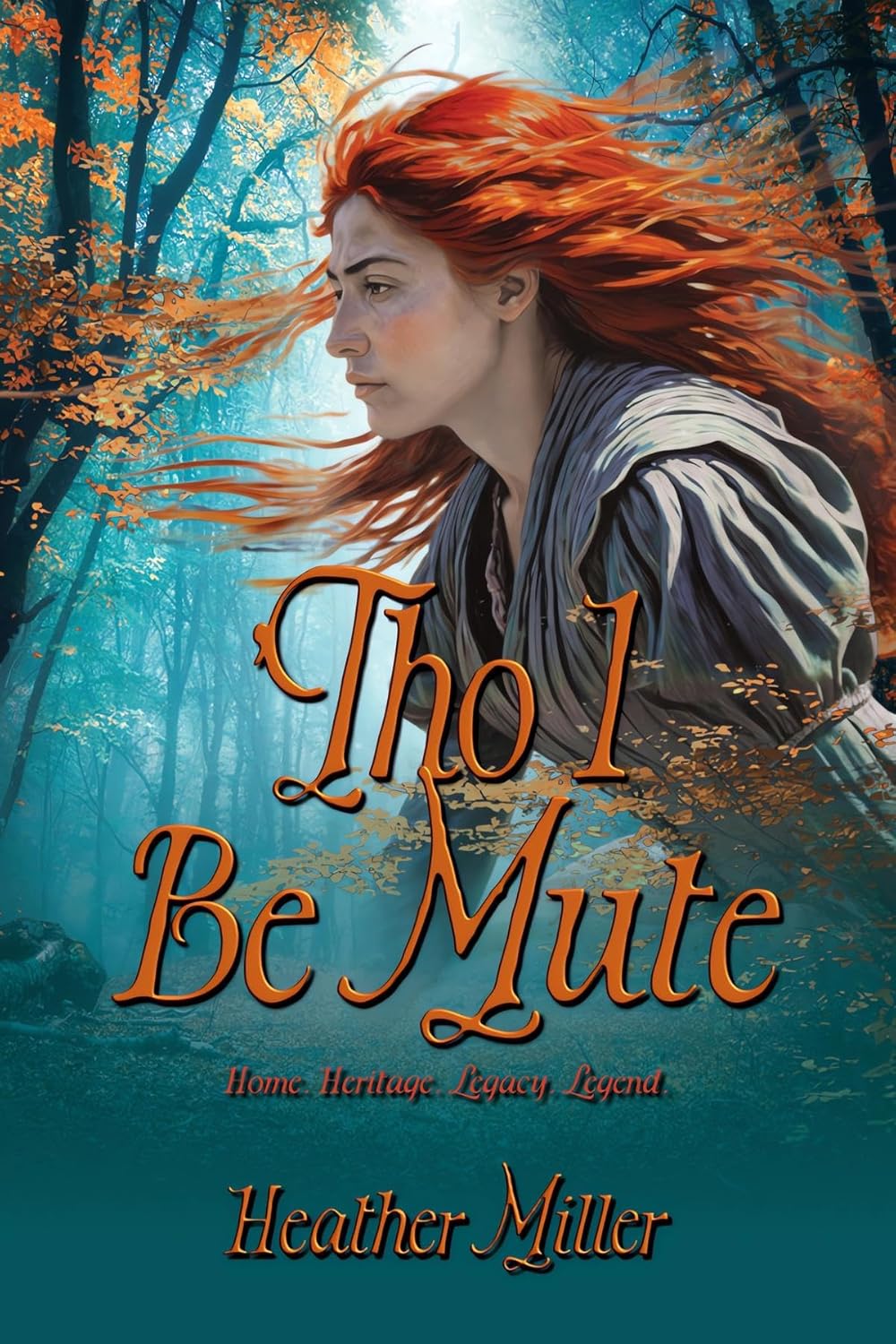
I’m delighted to welcome Heather Miller and her new book, ‘Tho I Be Mute, a prequel to Yellow Bird’s Song, to the blog with an excerpt.
Excerpt
Chapter 26, “The Cave,” Sarah Northrup Ridge
The Man in the Hat belched and laughed, passing the bottle back and forth to Whitmore and the Pan Man. If the squatters kept drinking at this pace, they might not notice if I was missing from the end of the rope. I smeared dripping blood from one wrist onto the other, wriggling my still-bound hand free. With a spontaneous decision, I released the rope and dashed to slide, feet first, then wiggling into the hole to follow the roots underground.
The drop was further than I expected, and I toppled to my knees, propelled forward when my feet splashed in yesterday’s rain. I had not thought about the drop. I had not thought about the fall. I had not thought about the dark. My bleeding hands stopped my fall. I soaked them in the pool of water at my knees and pulled the bloody handkerchief from my pocket to bind the torn skin of one wrist. My knees bled from scrapes and my stockings were bloody to my shins. Inside, the air was like frozen frost. The numb tips of my fingers could still reach the cave’s opening, but the last day’s light was insufficient to light my path any further than a few steps. My hand grazed the rock behind my back. I sat among the puddles, mute, expecting the dreaded eyes and otherworldly voice of Man with the Hat. Silent tears spilled down my cheeks. But for now, I was hidden beyond his reach. Not only cold but wet, I might freeze to death before anyone found me.
The longer the upper hole was quiet, the more I relaxed. I cupped the cold water from the puddle and patted it on my face, down my neck to counter the fever I felt. The longer I remained invisible to my captors, the faster my witness rejoined me. I became whole again. I listened outside this pit of earth. A whippoorwill called the sundown. An owl hooted with melancholy and offered his tender empathies. Their sounds echoed off the rock walls. I warmed from their companionship.
But while I became invisible to the Man in the Hat, I was also invisible to Arch who would be at least a day’s travel behind me. That was the best I could hope for. The worst I could imagine was snowfall, to leave me starving and freezing alone. No. There was a worse outcome—raped, abandoned, found dead. My hands and feet tingled. My breath was too loud. I prayed, Jesus, please light my way for this innocent baby. In that moment of faith, the child inside me spread a hand to mirror mine resting atop my belly. I kept my eyes closed and asked forgiveness for burying us alive in this cave. But I had no choice.
Leaves fell through the opening and feet darted above me. I wriggled, pushing my back against the cavern wall, pulling my feet close to my chest. The Man with the Hat never asked my name, and I never offered it. He had nothing to call, nothing to yell. Recognizing his oversight, he kicked leaves around the cave opening where I hid. I preferred starvation, frozen into a block of ice, than answering his call.
He shouted. “Red . . . You’ll show when you get hungry enough. We’ll camp right here. I ain’t going no further.”
His volume varied, as if he walked in circles, sending his snide voice in differing directions. As he spoke, the tone and bustle above me continued. Men’s voices and horse whinnies became more distinct while they searched for me. I smelled salt pork slung on an iron pan, the same one that clanked in front of me. I salivated while listening to their exchange.
“She ain’t gone far. She just hiding,” The Man in the Hat said.
“I can’t find her. Can you?” Whitmore gave his sarcastic reply as the Pan Man laughed.
“I will.” The Man in the Hat spoke, then he swore after. Leaves crunched under his boots near the bluff’s opening. His legs blocked their firelight. Then, his hand came through the void. I covered my mouth to block the sound of my rapid breathing.
“We still got the extra horse,” Whitmore said, “even if she’s up and climbed a tree.”
The Man in the Hat walked away and said, “She’s pregnant. She couldn’t fit in that hole, and she ain’t up no tree, you drunk bastard.” The Man in the Hat cursed me, knowing that my absence guaranteed the trio’s empty bottles and empty pockets.
Blurb
Clarinda faces a moment of profound reality—a rattlesnake bite, a harbinger of her imminent mortality—and undertakes an introspective journey. In her final days, she immortalizes not only her own story but that of her parents—a narrative steeped in her family’s insights into Cherokee heritage during the tumultuous years preceding the forced removal of Native communities.
In 1818, Clarinda’s father, Cherokee John Ridge, embarks on a quest for a young man’s education at the Foreign Mission School in Cornwall, Connecticut. Amidst sickness, he finds solace and love with Sarah, the steward’s quiet daughter. Despite enduring two years of separation, defamatory editorials, and societal upheaval due to their interracial love affair, the resilient couple weds in 1824. This marks the inception of a journey for Sarah as she delves into a world both cherished and feared—Cherokee Territory. As John Ridge advocates for the preservation of his people’s land and that of his Muskogee Creek neighbors against encroaching Georgia settlers and unscrupulous governmental officials, the stakes are high. His success or failure hinges on his ability to balance his proud Cherokee convictions with an intricate understanding of American law. Justice remains uncertain.
Grounded in a true story, ‘Tho I Be Mute resonates with a compelling historical narrative, giving an intimate voice to those heard, those ignored, those speechless, urging readers to not only hear but to truly listen.
History is better than fiction. We all leave a legacy.
As an English educator, Heather Miller has spent twenty-four years teaching her students the author’s craft. Now, she’s writing it herself, hearing voices from the past. Heather earned her MFA in creative writing in 2022 and is teaching high school as well as college composition courses.
Miller’s foundation began in the theatre, through performance storytelling. She can tap dance, stage-slap someone, and sing every note from Les Miserables. But by far, her favorite role has been as a fireman’s wife and mom to three: a trumpet player, a future civil engineer, and a RN. Alas, there’s only one English major in her house.
Heather continues writing the Ridge Family Saga. Her current work-in-progress, Stands, concludes the Ridge Family Saga.
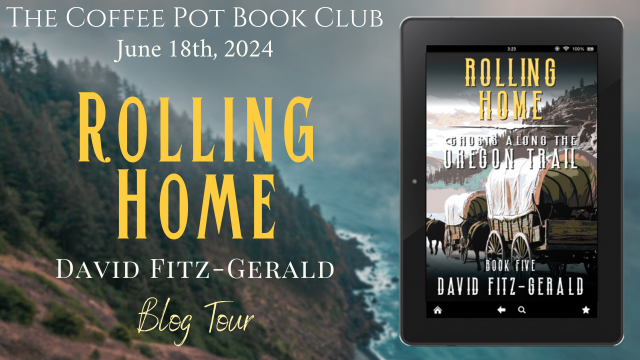
I’m delighted to welcome back David Fitz-Gerald and his new book, Rolling Home from the Ghosts Along the Oregon Trail series, to the blog with a series trailer.
Ghosts Along the Oregon Trail Series Trailer
Ghosts Along the Oregon Trail Series Trailer
Here’s the blurb
Climb aboard! Don’t miss the heart-pounding climax of the Ghosts Along the Oregon Trail series. Rolling Home is the final installment.
In the heart of the rolling village, dissent brews as the stubbornest naysayer refuses to continue the journey. With an ominous early snowfall and memories of the ill-fated Donner Party haunting the pioneers, Dorcas Moon faces a new wave of challenges. Just when she believes things can’t get worse, a disastrous river crossing claims their wagon and submerges their belongings.
As the rolling village approaches the final leg of the journey, the looming threat of outlaws intensifies. The notorious bandit known as The Viper and his ruthless brothers are determined to rob the greenhorns, sell their stock, and kill every last one of them. The pioneers had heard tales of their brutality, but now, with Dorcas’ daughter kidnapped and Dorcas captured, everyone is in danger.
What will become of Dorcas Moon, her family, and their friends? Will anyone survive the perilous journey?
Rejoin the expedition and witness the thrilling end to a gripping saga.
This title is available to read on #KindleUnlimited
Meet the author
David Fitz-Gerald writes westerns and historical fiction. He is the author of twelve books, including the brand-new series, Ghosts Along the Oregon Trail set in 1850. Dave is a multiple Laramie Award, first place, best in category winner; a Blue Ribbon Chanticleerian; a member of Western Writers of America; and a member of the Historical Novel Society.
Alpine landscapes and flashy horses always catch Dave’s eye and turn his head. He is also an Adirondack 46-er, which means that he has hiked to the summit of the range’s highest peaks. As a mountaineer, he’s happiest at an elevation of over four thousand feet above sea level.
Dave is a lifelong fan of western fiction, landscapes, movies, and music. It should be no surprise that Dave delights in placing memorable characters on treacherous trails, mountain tops, and on the backs of wild horses.
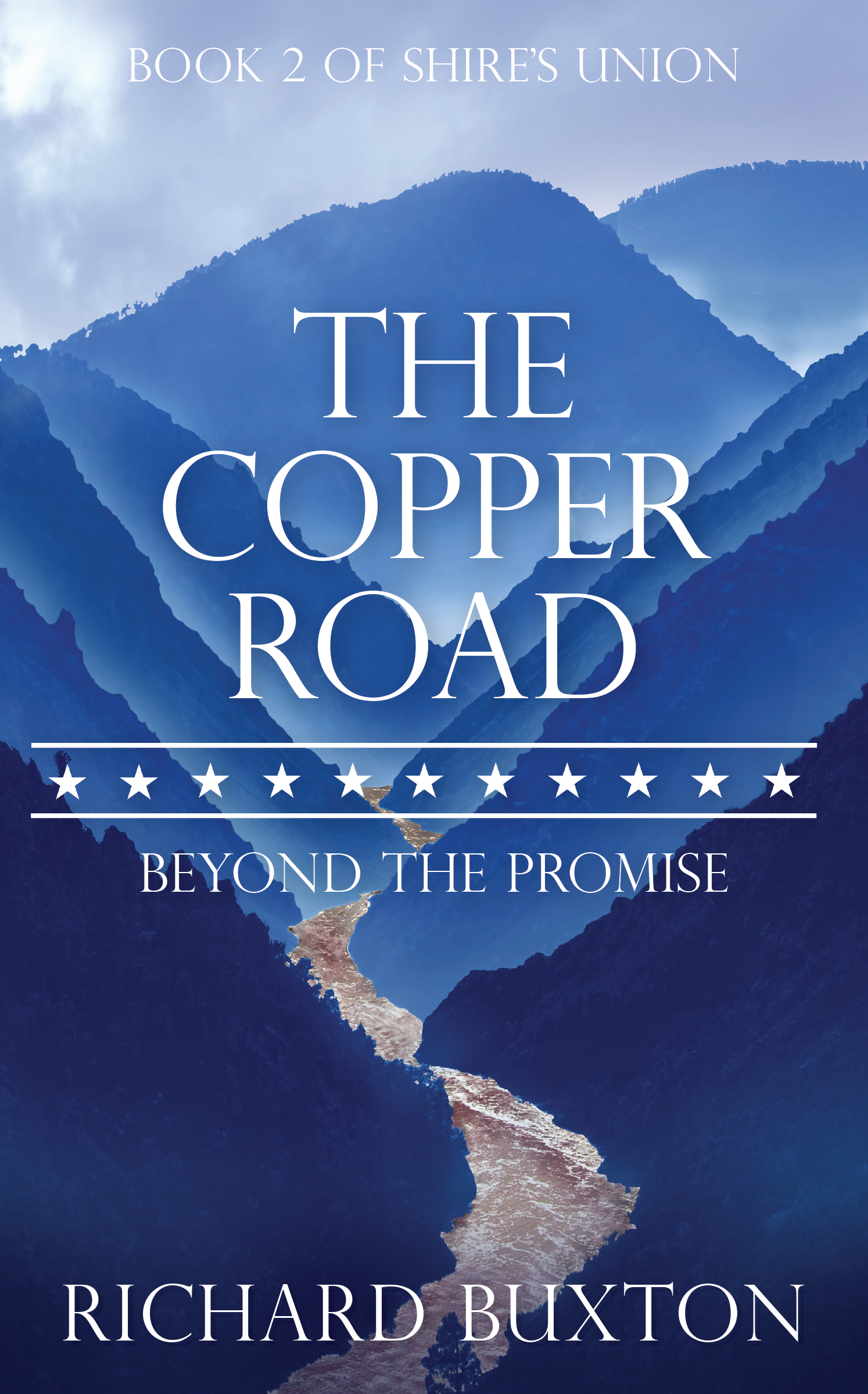
I’m delighted to welcome Richard Buxton and his trilogy, the Shire’s Union Trilogy, to the blog with a series trailer.
Shire’s Union Trilogy Series Trailer
Shire’s Union Trilogy Series Trailer
Tigers in Blue – Excerpt
Giles County, Tennessee – November 1864
Their train stopped again. The three of them disembarked and walked beyond the engine. It had pulled up a handful of crossties before a fire-blackened and wounded trestle bridge that spanned a deep and wide ravine. There must have been three hundred men or more working on the repairs. They swarmed over the bridge, a busy blue infestation, some out along the incomplete top span, others either end of a crane carried on a flatbed railcar, many more perilously among the posts and cross-struts. Men struggled to shout instructions over a chorus of hammer and saw. Way down in the ravine and across a swift creek stood a clump of engineer officers. One held a sheet of paper so big he looked in danger of being lifted into the air. Others pointed and gestured up at the bridge. As Shire watched, a steam winch puffed into action on the crane-car and a thick trestle rose and swayed up from below like a miracle, before being claimed by many hands and dragged into the great puzzle of wood. Despite their industry, the nearer half of the bridge was missing the top forty feet.
The engine driver came and stood beside them, wiping sooty hands on a dirty rag. Rice, greasy hair pushed back off his forehead, asked, ‘If you knew the bridge was broke, why did you set out? We’ll be stuck for days.’
The driver took his time surveying the works. ‘Well,’ he said, ‘you’re welcome to climb down and up the other side, but any trains that happen along from Nashville will only queue up to go south. Watch a while.’ He turned to walk back to his engine. ‘These people will have us over before nightfall.’
With nothing to do but wait, Shire and Tuck left Rice at the engine and worked their way along the top of the ravine to a spot where they could watch the repair. The ground fell steeply away before them. Predictably, Tuck dropped his pack, took up his fiddle and sat. He hadn’t said a word today. A stiff breeze struck up under a gray sky. At least they had the car to retreat to if it came on to rain. Shire got out his dog-eared map of Tennessee and Kentucky and unfolded it carefully so as not to bring on further dishevelment. He found Pulaski and traced the rail line to Nashville via Columbia. Short of Franklin he found Spring Hill. They would pass right by. Clara had been full of dubious enthusiasm for her move when he’d left her. What would have changed since? He wouldn’t need the train to stop again to be certain how he felt. That question had always been for her, though he wondered if she’d answered it quietly to herself a long time ago.
He folded his map away and got busy with a fire. In the army it paid to eat when the opportunity presented itself. ‘I’ll cook your pork. We ate mine yesterday,’ he said. They often shared rations. That way if one of them got a runt portion the hardship was shared too.
There was no response from Tuck. Sometimes it was like living with an elderly relative whose mind had been misplaced. In his own time, Tuck bowed into a slow waltz, utterly at odds with the exertions of the bridge builders. Evidently, it carried on the wind into the ravine and on to those high on the bridge, as not a few faces turned their way. There was a moment’s lull in the hammering before it stuttered up again. Two men on the flatbed end of the crane-car moved elegantly into closed hold and took a turn or two before their corporal beat them apart with his hat. Shire smiled but saw Tuck was too far inside his tune to take it in.
Once he had the fire going, he dug in Tuck’s pack for the salt belly-pork they’d been doled out back in Athens. It was a mess in there. An apple long past saving, percussion caps loose that should have been in a box, a lone dollar bill left to its own devices. The string hadn’t been tied properly on the pork paper. The exposed meat had picked up a covering of cotton threads and other miniature detritus. Shire reasoned it would cook off in his small skillet. Tuck’s ration was more than ample, so he cut off two-thirds and put it to cook slowly, not too close to the heat so that the fat would stay aboard. He wrapped the remains with care and was finding a safe corner back in Tuck’s pack when he happened on something round and hard. He drew out an enamel doorknob.
He recognized it. Tuck kept it as a grim reminder of his parents who were burned alive in their farmhouse, Tuck’s home. The enamel was scorched on one side, a smooth, mute witness to their murders. He’d been about to look for some wild onion or anything that might flavor the meat, but instead he took the doorknob and went to sit next to Tuck.
He didn’t expect to be acknowledged, but the lack irked Shire all the same. The waltz looped around and around. Shire could have sworn some of the hammering was striking out one, two, three… one, two, three. ‘I think you’re slowing down their industry,’ he said. Tuck played on. Shire felt a bubble of anger pop inside.
Blurb
Shire leaves his home and his life in Victorian England for the sake of a childhood promise, a promise that pulls him into the bleeding heart of the American Civil War. Lost in the bloody battlefields of the West, he discovers a second home for his loyalty.
Clara believes she has escaped from a predictable future of obligation and privilege, but her new life in the Appalachian Hills of Tennessee is decaying around her. In the mansion of Comrie, long hidden secrets are being slowly exhumed by a war that creeps ever closer.
The Shire’s Union trilogy is at once an outsider’s odyssey through the battle for Tennessee, a touching story of impossible love, and a portrait of America at war with itself. Self-interest and conflict, betrayal and passion, all fuse into a fateful climax.
Written by award winning author Richard Buxton, the Shire’s Union trilogy begins with Whirligig, is continued in The Copper Road, and concludes with Tigers in Blue.
Richard lives with his family in the South Downs, Sussex, England. He completed an MA in Creative Writing at Chichester University in 2014. He has an abiding relationship with America, having studied at Syracuse University, New York State, in the late eighties. He travels extensively for research, especially in Tennessee, Georgia and Ohio, and is rarely happier than when setting off from a motel to spend the day wandering a battlefield or imagining the past close beside the churning wheel of a paddle steamer.
Richard’s short stories have won the Exeter Story Prize, the Bedford International Writing Competition and the Nivalis Short Story Award. His first novel, Whirligig (2017) was shortlisted for the Rubery International Book Award. It was followed by The Copper Road (2020) and the Shire’s Union trilogy was completed by Tigers in Blue (2023). To learn more about Richard’s writing visit www.richardbuxton.net.
In the opening pages of The Lost Women of Mill Street, sisters Clara and Kitty Douglas each work a pair of power looms in a Roswell, Georgia, cotton mill. The Civil War has been raging for more than three years and will soon find its way to their village.
Like (fictional) Clara and Kitty, most mill workers in the antebellum South came from small, struggling farms, and their income was needed to make ends meet. Mill owners often recruited families who could provide several workers, as is the case with Clara and Kitty, whose mother, now deceased, had come with them to the mill years earlier.
At the Roswell mills and others throughout the South, employees went to work at sunrise and labored for ten to twelve hours, six days a week. Working conditions were poor: the noise was deafening, the ever-present dust and lint caused health problems, and the heat and humidity could be overwhelming. Working the rapidly moving spinning frames and power looms was dangerous: fingers, long hair, or clothing could become entangled in the machinery, causing severe injury or even death.
Some antebellum mill owners were slaveowners, and a small number of them put enslaved men to work in the mills doing the heaviest work: moving large bales of cotton, loading wagons with finished goods, and working in the pickers room, where raw cotton was cleaned of dirt and seeds. Black women were generally excluded from mill work.
While a small number of white men were employed by the mills, working as loom fixers or supervisors, the labor of poor white women and children was the cheapest. Women held jobs in the spinning and weaving rooms. Children worked entry-level jobs such as spinner or doffer. The spinner’s job was to move quickly up and down a row of machines, repairing breaks and snags. A doffer removed bobbins holding spun fiber from a spinning frame and replaced them with empty ones.
The mills featured in my novel are owned by the Roswell Manufacturing Company. Founded in 1839, the company became one of the largest textile mill operations in Georgia. Though the mills thrived, the mill workers did not. They were paid in scrip, which they spent at the company store for goods and supplies, after rent for factory housing was deducted from their pay. If they became sick or injured from the hazardous working conditions, there was no employer-provided health care or sick pay.
A source that was invaluable to my research on textile mills of the era, Neither Lady nor Slave: Working Women of the Old South, states that despite the Roswell mills’ success, the owners showed little concern for their employees’ welfare: “When new state legislation required operatives’ working hours be limited to from sunup to sundown, the board members voted that all Roswell employees, the majority of whom were women and children, could either work under the new laws but suffer reduced wages or work the old, longer hours for the same pay.”
During the Civil War, the Roswell mills produced gray woolen cloth for Confederate uniforms, as well as military supplies such as tent cloth, candlewick, and rope. When Federal troops arrived in Roswell during General Sherman’s 1864 advance through Georgia, it wasn’t surprising that they destroyed the mills. What was surprising was that the mill workers, mostly women and children, were arrested and sent hundreds of miles north.
In The Lost Women of Mill Street, Clara and Kitty’s experiences are based on actual events, and their troubles at the mill are just the beginning.
Here’s the blurb
1864: As Sherman’s army marches toward Atlanta, a cotton mill commandeered by the Confederacy lies in its path. Inside the mill, Clara Douglas weaves cloth and watches over her sister Kitty, waiting for the day her fiancé returns from the West.
When Sherman’s troops destroy the mill, Clara’s plans to start a new life in Nebraska are threatened. Branded as traitors by the Federals, Clara, Kitty, and countless others are exiled to a desolate refugee prison hundreds of miles from home.
Cut off from all they’ve ever known, Clara clings to hope while grappling with doubts about her fiancé’s ambitions and the unsettling truths surrounding his absence. As the days pass, the sisters find themselves thrust onto the foreign streets of Cincinnati, a city teeming with uncertainty and hostility. She must summon reserves of courage, ingenuity, and strength she didn’t know she had if they are to survive in an unfamiliar, unwelcoming land.
Inspired by true events of the Civil War, The Lost Women of Mill Street is a vividly drawn novel about the bonds of sisterhood, the strength of women, and the repercussions of war on individual lives.
Kinley Bryan’s debut novel, Sisters of the Sweetwater Fury, inspired by the Great Lakes Storm of 1913 and her own family history, won the 2022 Publishers Weekly Selfies Award for adult fiction. An Ohio native, she lives in South Carolina with her husband and three children. The Lost Women of Mill Street is her second novel.
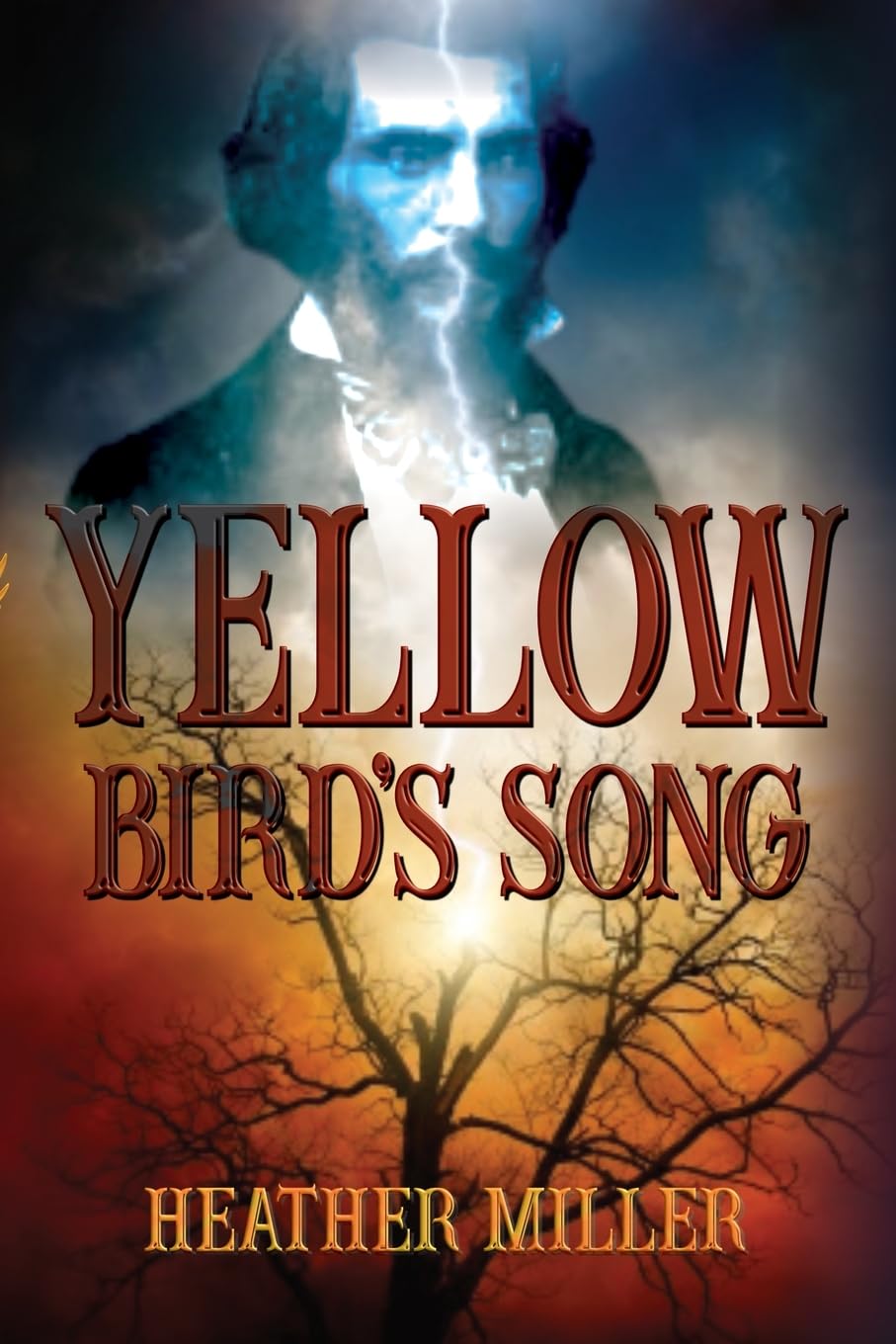
I’m delighted to welcome Heather Miller and her new book, Yellow Bird’s Song, to the blog with an excerpt.
Excerpt 1
John Rollin Ridge, Cherokee Nation West, 1850
The evening’s red sky horizon stretched its wide arms behind Judge Kell’s dogtrot, extending into the dust. A dead tree stood as an ineffectual sentry between his corn crib and smokehouse, visible through the open-framed breezeway. I salivated, smelling pork fat lingering in the air. No longer able to afford to slaughter hogs, my family could only recall bacon’s salty taste.
Inside the paddock, my appy lay on his side. Castration’s fresh blood tainted his coat of bronze and cream. Blood gathered under his hind quarters. If Kell had cut his femoral, he’d die from blood loss. That horse was Dick’s grandson, the pony I begged Papa to bring west from Running Waters.
The porch door squeaked, then slammed behind him. Kell expected me. He rolled tobacco in paper, sealing it closed with his tongue. His eyes squinted from the western prairie’s sunlight sliding low behind me.
He struck a phosphorus match against the porch post, lit the end of the rolled tobacco, held it in his lips, tilted his head to the side, and inhaled. Through smoke, he said, “Look at you, Rollin, standing on my land like some Mexican bandit. I believe your post is south of here.” Kell’s sarcasm snarled like poisoned saliva foaming from the jaw of a rabid dog.
“I’m in the right place,” I said, more confidently than I felt, flying on vindication’s wind alone.
“That is where you and I agree. Not much else, but that singular point.”
He sauntered, with spotless leather boots, to the edge of the steps extending into the western dirt, just dust over the granite under Indian land.
I nodded left toward his painted paddock fence. “Kell, you take my Appaloosa stallion? His markings are unmistakable.”
Kell gestured with his smoking hand, pointing the two fingers toward my injured animal. “You mean that gelding?”
“Who made him so?”3
“I did and am willing to stand by my deeds with my life.4Found him in pastureland. Horse bucked and rammed me. Without balls, he’ll settle right down.”
“As a judge, you should know Cherokee don’t own open tribal land. No reason he should be here.”
Judge Kell gripped his porch rail but remained atop its planks on the high ground. Then, his unoccupied, dominant hand recognized his bowie knife’s handle, sheathed, and slung low on his hip. He said, “Can testify to nothing.”
His lies didn’t dampen my resolve. I saw through him. We both knew the real reason I was there. I shouted, “My sister can.”
He leaned against his porch post with carefree nonchalance. “The deaf and dumb sister? I don’t know what that feeble-minded woman could mean.”
I touched the leather strap of Clarinda’s whistle around my neck. “She doesn’t need to speak to witness. She is a medicine woman.” Then I separated my boots, furthering my stance against the inevitable explosion of powder and ball from the iron under my palm.
Kell scoffed. “Thenremind me to stay well. That woman’s a witch.”
Wouldn’t be illness that killed him. I couldn’t allow Kell’s wit to move me to fire first, no matter what insults he hurled at my sister. To make justice legal, Kell must first try to take my life, although that didn’t mean I couldn’t provoke the inevitable.
I matched his sarcasm. “Now isn’t the time to insult my family. Come down off that porch. Clarinda and Skili followed you, saw what you did. You’ve cost me far more than future foals. That blade in your grip took my father’s life.”
I spoke the Cherokee words fast, having memorized their phrases from a thousand daydreams. Still, this time, the words echoed in the abandoned cave of my chest with heavier resonance—measuring the phrase’s increased weight by speech.
He spoke his smug reply through smoke. “Your father’s signature on that treaty stole nearly four thousand Cherokee souls. So, I believe, son, both that horse and your father,” he smiled before finishing his thought, “got what they deserved.”
“According to whom? Your justice? Chief Ross’? It’s his bloody hands you’re hiding.”
Kell pulled a rogue piece of tobacco off his tongue with his thumb and pointer finger. “See now, truth rests in each man’s perception. Your father knew that, at least.”
“Papa understood Cherokee sovereignty could not exist in the East. My family stood in the way of Chief Ross’ greed; Ross sent you to kill him for it.”
Kell’s searing sarcasm furthered his attempt at intimidation. He shook his head, clicking his tongue. “By accusing Chief Ross of such crimes, you make a steep accusation for a raven so young.” But then, his snide tone became more cynical. “Your family received lawful Cherokee blood vengeance. So’s I heard.”
It wasn’t only his voice; every crack of bare earth mocked me. But what he didn’t know, what the ground couldn’t predict, was that this time, his blood would run. Cherokee Nation’s rocky soil would soak in it, dilute him in its groundwater, and spit his remnants through every winding river and well.
Kell offered an aside, turning his face from me. “You’re still breathing.” He looked back, continuing his threat with closed-tooth menace. “When this knife reaches you, that’ll end. How ironic—” He stopped short, mid-thought, and exhaled a chuckle before inhaling again from his lit tobacco. His eyes looked at me from my worn boots to my mother’s pale eyes.
I finished the sentiment on his behalf, “That the same knife would assassinate a father and murder his son? Admit your part. You were there in ‘39; the same knife hangs at your side.”
Kell unsheathed and admired the blade in his hand as if he hadn’t seen his distorted reflection in it for years. “She’s a beautiful weapon, don’t you think? Buckhorn handle. Metal inside the bone. Streamlined and strong. Son, this weapon ended many a man’s life with its peaceful vengeance.”
I barked, “Vengeance is a fickle whore. She strains her rulings through a sieve she calls morality, leaving behind rocks and politics. Justice’s bullet is fair and fast. Even blindfolded, her shooter doesn’t have to stand close to hit where he’s aiming.”
Years ago, the image of Kell’s bowie knife forged in my mind. Its craftsman burned the bone handle with the image of an arrowhead—no shaft, no flight feathers—only a killing point. Kell’s knife required wind and aim, powered by his quick reach, and forged will. My twelve-year-old eyes remembered his blade. At twenty-two, my memory dripped in images of Papa’s blood.
Impatient and blinded by the reddening dusk, Kell spoke with vigorous staccato, hefting his significant weight down the stairs. “Take your thumb off that trigger, boy, before you start a war.” Then, with sight restored, he dirtied his spotless boots, kicking a wandering rat snake slithering between us, seaming a dividing line in prairie dust.
I shook my head in disgust. “War began ten years ago. Your whiskey breath is as rancid as your soul. I can smell it stronger now.” I studied his smirk, offering my own in exchange. “Stinks so bad,I thought someone died.”
Kell and I stood in paradox: I, in the shadow of a tree, him in the dying sunlight. His age to my youth, wealth to my poverty, appointment to my banishment, and vengeful intent opposing my righteous confidence.
He cocked his head and smirked, glanced over to my horse, and crushed the remnants of his smoke into the dust. “You think this will end with you? Cousin Stand leading your teenage brothers and Boudinot’s boy against my grown sons and Chief Ross’ men in some unsanctioned feud? The few against the many?”
“No, justice ends with me. If you approach, you will lose your life.”5I wouldn’t retreat from his taunts, knowing them for what they were. If Cousin Stand and I took down Chief Ross, it wouldn’t be a feud; it would escalate an already brewing Cherokee civil war.
Here’s the blurb
Rollin Ridge, a mercurial figure in this tribal tale, makes a fateful decision in 1850, leaving his family behind to escape the gallows after avenging his father and grandfather’s brutal assassinations. With sin and grief packed in his saddlebags, he and his brothers head west in pursuit of California gold, embarking on a journey marked by hardship and revelation. Through letters sent home, Rollin uncovers the unrelenting legacy of his father’s sins, an emotional odyssey that delves deep into his Cherokee history.
The narrative’s frame transports readers to the years 1827-1835, where Rollin’s parents, Cherokee John Ridge and his white wife, Sarah, stumble upon a web of illicit slave running, horse theft, and whiskey dealings across Cherokee territory. Driven by a desire to end these inhumane crimes and defy the powerful pressures of Georgia and President Andrew Jackson, John Ridge takes a bold step by running for the position of Principal Chief, challenging the incumbent, Chief John Ross. The Ridges face a heart-wrenching decision: to stand against discrimination, resist the forces of land greed, and remain on their people’s ancestral land, or to sign a treaty that would uproot an entire nation, along with their family.
As a veteran English teacher and college professor, Heather has spent nearly thirty years teaching her students the author’s craft. Now, with empty nest time on her hands, she’s writing herself, transcribing lost voices in American’s history.











































 MJ Porter