

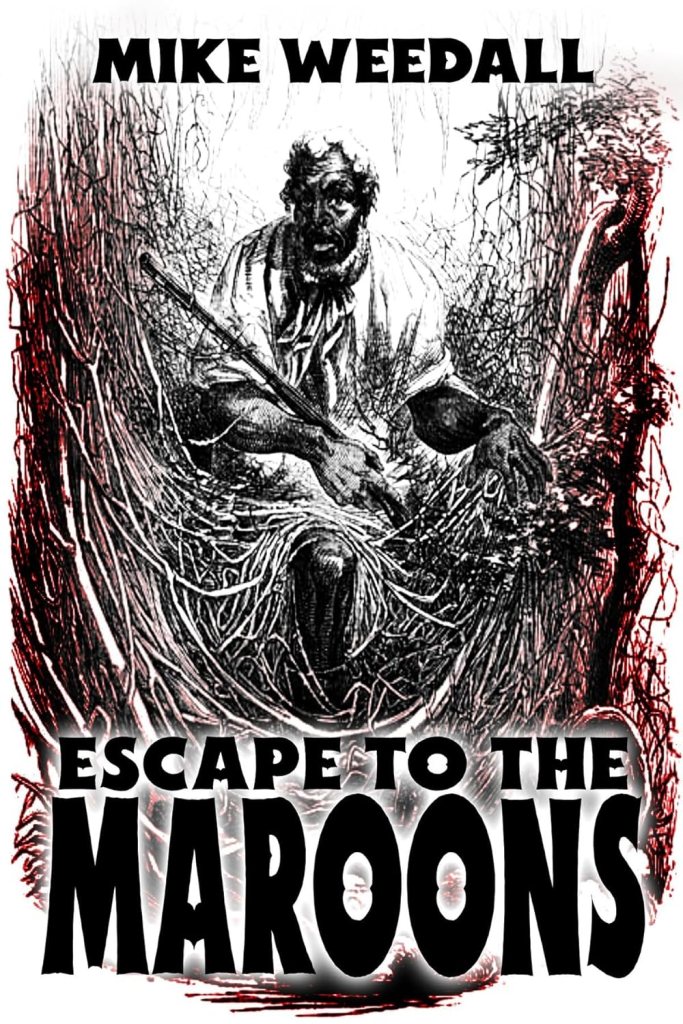
I’m delighted to welcome Mike Weedall and his new book, Escape to the Maroons, to the blog #HistoricalFiction #AmericanHistoricalFiction #AfricanAmericanHistory #BlogTour #TheCoffeePotBookClub

I’m delighted to welcome Mike Weedall and his new book, Escape to the Maroons, to the blog with an excerpt.

Excerpt

Nathanial On Arriving At Maroons Camp

Besides the people waiting here, more are coming. I’m the center of attention. People whisper and point at me. I don’t like what’s going on. No one looks friendly. They must think I’m a white man. Should I say something? Better leave that to Lincoln.

This place looks sizable. The ground is dry. Trees and thick brush are on all sides. We crossed smaller islands like this getting here. Moses called them hummocks. This appears to be much bigger. There must be different ways in and out of here. I’m exhausted and need to sit. Better stand until Lincoln says that’s okay.

How did this day lead me here? This morning, I planned to stand up in court and explain why they should grant me freedom. My stepfather said I’d be a fool to do that and better run if I got the chance. I wasn’t expecting that advice from a minister who preached we should always obey the law. When that lazy deputy got distracted, I took off. What choice did I have other than to flee? I pray they don’t punish my family for raising me as a freeman.

What’s next? Lincoln is waving for me to follow him.

Here’s the Blurb

In 1792, an escaped slave, raised and living as white, is discovered and forced to flee into the Great Dismal Swamp.

Barely escaping a bounty hunter, a Maroons community of fugitive slaves rescues him. Over time, Nathanial comes to accept his true identity while fighting to overcome the suspicions of his new community. Because of his pale skin, he becomes a conductor on the underground railroad, slipping runners onto ships going north. On one of his missions, fate intervenes and places Nathanial’s community at risk.

This little-known chapter in American history tells how escaped enslaved people gave their all to live free while creating a community and economy in one of the world’s most unforgiving environments.
Buy Link

Meet the Author

As the author of three books, Mike’s passion is finding the little-known stories of history and bringing them to life. History in school is too often events and dates. Mike seeks to discover the people who lived those events and reveal why those individuals made the decisions they did. Ultimately, there are stories to be mined, and who doesn’t love a good story?

In his historical novel “Escape To The Maroons,” Mike tells the little-known story of 1791 self-liberated slaves who chose to struggle for survival in The Great Dismal Swamp in their determination to live free. The term Maroons delineates areas where escaped slaves fled and could not be recaptured. It’s estimated that over 2,000 survived deep in the swamp around the turn of that century.

His first book “Iva: The True Story of Tokyo Rose” describes the tragic life of Iva Toguri. Trapped in Japan during World War II, this Japanese American woman was forced to work for Radio Tokyo. Although she never participated in propaganda, the racial animus of post-war America led to her being falsely labelled as Tokyo Rose and prosecuted for treason. Through her incarceration and the ongoing discrimination heaped upon her, Iva never lost her courage and determination.

“War Angel: Korea 1950” was his second book that followed a reservist nurse thrust into the carnage of The Korean War. Serving as an operating room nurse in a Mobile Army Surgical Hospital, the real MASH and strength of a woman is revealed. 

Mike resides with his family in the Pacific Northwest where they enjoy experiencing the outdoors.

Connect with the Author


Follow the Escape to the Maroons blog tour with The Coffee Pot Book Club

Posts

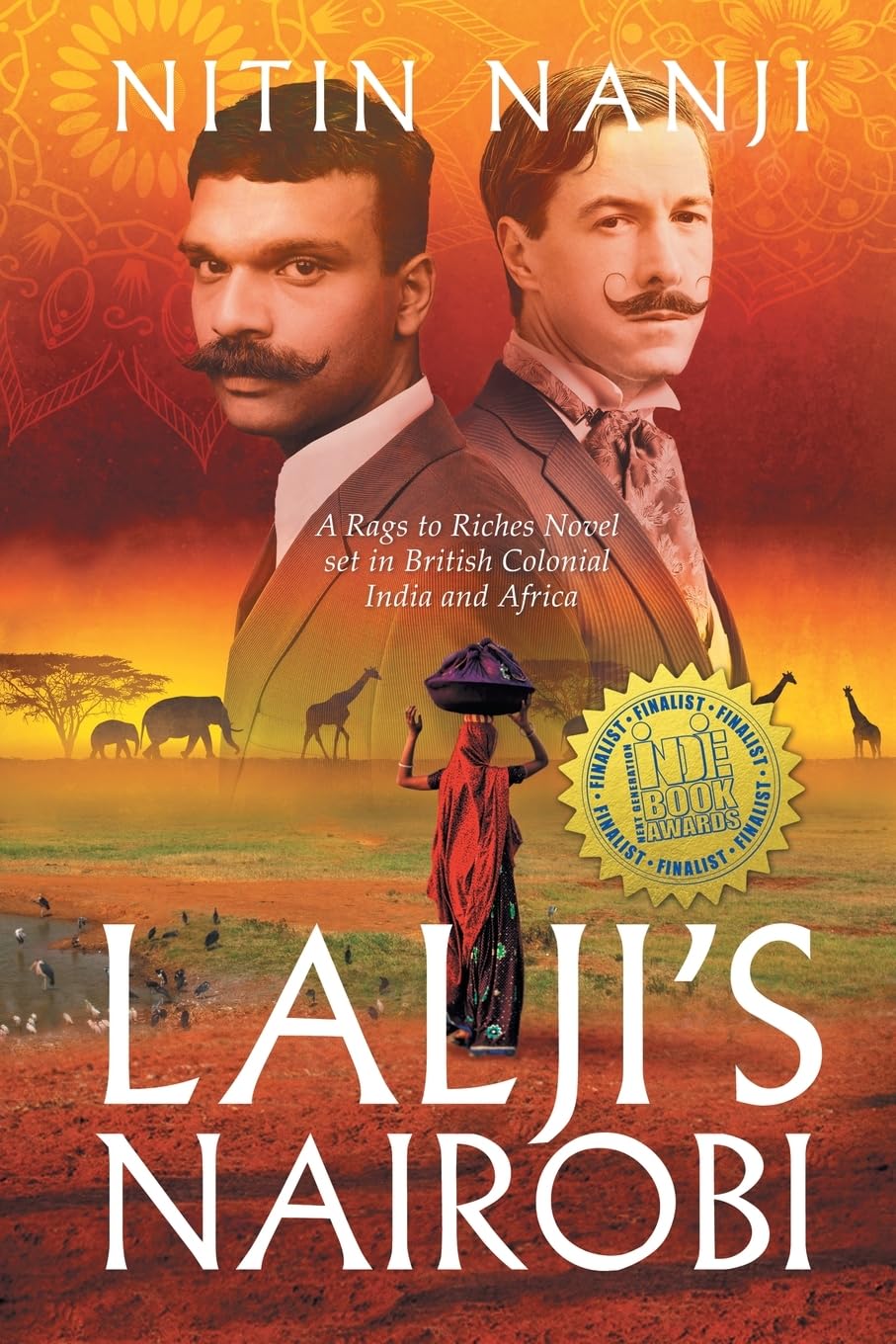
I’m delighted to welcome Nitin Nanji and his book, Lalji’s Nairobi, to the blog #HistoricalFiction #AfricanHistoricalFiction #BlogTour #TheCoffeePotBookClub

I’m delighted to welcome Nitin Nanji and his book, Lalji’s Nairobi, to the blog with an excerpt.

Excerpt 1

The next morning brought an early visitor to their door in the shape of the village Sarpanch, Thakorbhai. The Sarpanch was the elected head of the village and led the Panchayat. His role was to officiate over disputes, collect fines and enforce the law with the help of the police.

Thakorbhai was a large man with short legs and a bull neck. He sported a moustache that was long and curled upwards at the ends, like two cobras poised to strike. When he sat on a chair, he folded his legs under him and they disappeared under his enormous belly. The children of the village were thrown into fits of giggles at this sight as he looked like an overgrown hen sprawled over her eggs. For that reason, he was also known unkindly as ‘Murgiben’ (mother hen).

He invited himself into the yard and sat down on Parshottam’s charpoy. He had come about the story going around that Parshottam’s son was to head out to Africa. He knew Parshottam had been making inquiries about the next meeting of the Panchayat and thought the two matters may well be connected.

“You are right, I was hoping to have the matter considered at the Panchayat,” said Parshottam before calling out for Lalji to join them. Rambai appeared with a tumbler of salted buttermilk for the Sarpanch and joined in the chorus calling for Lalji.

“What does the boy say?” inquired Thakorbhai.

“He hasn’t made up his mind. See, I was thinking with the lack of prospects here after the famines and with the tax situation….”

“You leave the tax situation to me, Parshottam,” bellowed Thakorbhai. “We need to know if the boy is willing to go and take his chances!”

At that instance, both Lalji and Naran appeared. They paid their respects to the Sarpanch by bowing to him and gesturing to touch his feet hidden under his belly.

“So, what’s your decision young man?” he inquired of Lalji. “Are you ready to cross the big ocean and arrive at the opposite shore to start a new life, away from your family?”

Lalji seated himself down in a squatting position and looked straight at the Sarpanch. Without hesitation announced, “Yes, I willl be taking the vaan and see what destiny has in store for me. It is my role as the eldest son.”

Shabhash (well said), my boy! That’s the right answer.” The cobras parted to reveal pink gums.

“The son of Dhiraj will be accompanying him, so as he is not alone,” interjected Parshottam.

Thakorbhai waved the idea away as being of no consequence. He told Parshottam his son was in a different league from many and he was supportive of the idea. He mentioned others had considered it before but no son of the village had made the journey.

“The reasons are many but the fact is no one has had the strength of character to take the step. If I was twenty years younger, I would have given the same answer as Lalji here,” he said.

Turning to Lalji he asked, “Would you lead a group of three others from here to go with you?”

Lalji was taken aback by the question, having never considered himself as taking on such responsibility. He didn’t feel unable to lead, but he wanted to know whom the Sarpanch had in his mind.

“It would be you as their leader with Nizar the hardware merchant’s son, and Ramji the eldest son of Karsan the builder. Then there’s that idle son of Dhiraj your father has been talking about.”

“But I hardly know them. Will they follow my wishes?” inquired Lalji.

“Leave that to me. I have spoken to Karsan and Noormohammed about that and they have both pledged their sons will do as you say. They have been waiting for such an opportunity for a long time to get their sons to Africa. They are good boys and want to succeed for their families. They need sound advice and guidance from someone who is mature and responsible. None of them are capable of it on their own. They all need to be led by someone sensible and smart.”

“But I am eighteen and I think they are older,” responded Lalji. The words seem to stop the Sarpanch in his tracks momentarily. He retorted dismissively, “Arre! When I was your age, I ran both the shop and farmed the land. And I did the accounts for my elder brothers. Ability trumps age!”

Having gulped the buttermilk in one long action with his head tossed back. Then he got up briskly to leave, adding, “I hear you have an Arab sea master in mind, Parshottam. For my part, I will speak to my contacts in Porbander to find out who they should contact in Africa. I suggest you start putting together enough food and grains for the journey for him.” The two cobras were drowned in buttermilk.

Book Trailer

Here’s the blurb

British Gujarat, 1905.

Despairing of the social injustices and crippling taxes under the British Raj, Lalji, 19, flees to British East Africa hoping to build a better life using his natural business skills and acumen. But he soon finds unexpected dangers in his new home- turbulent politics and war with German East Africa- as well as some surprising opportunities. A combination of luck, coincidence, and his flair for commerce lead to early success.

Then, just as he is at his most vulnerable, a new threat emerges from where he least expects: from within his own family.

Can Lalji beat overwhelming odds to fulfill his hopes and ambitions?

A story about survival, faith, ability, humanity, and a deep desire to succeed.

Buy Link

Universal Link:

The ebook will be free to download on Kindle from February 4th – 8th

This title is available to read on #KindleUnlimited

Meet the Author

Historical novelist of Indian parentage, born and raised in Kenya, educated in England, writing about India and East Africa under the British Empire.

Nitin has come to writing his debut novel after retiring as a doctor. Born in Kenya before its independence he came to England at the age of fifteen. His parentage is Indian, his grandfather having moved during the British Raj from Gujarat in India to Colonial East Africa as an economic migrant.

‘Lalji’s Nairobi’ is set in the early part of the last century, inspired by the stories of Indian migrants who settled in East Africa. A ‘rags to riches’ story of the experiences of Lalji as a determined young businessman who grapples with the challenges of living in the new colony.

Within the backdrop of a racist administration, Nitin immerses the reader into the times and norms of colonial society and shows how Lalji achieves rapid success despite difficult odds, leading a team of four compatriots from his village.

The novel is well-researched and retains the undertones of the era. Nitin’s intimate knowledge of the three cultures of the colony (British, Indian, and African) succeeds in making this an enjoyable and authentic read.

‘Lalji’s Nairobi’ is now an award-winning novel that recently won acclaim from the prestigious New Generation Indie Book Awards as a ‘Finalist’. It also earned Five Stars and the ‘Highly Recommended’ award of excellence from The Historical Fiction Company, which has recently also awarded the book with a silver medal in the Blixen Africa Category.

Connect with the Author

Follow the Lalji’s Nairobi blog tour with The Coffee Pot Book Club