Blog Posts from MJ Porter, author and reviewer

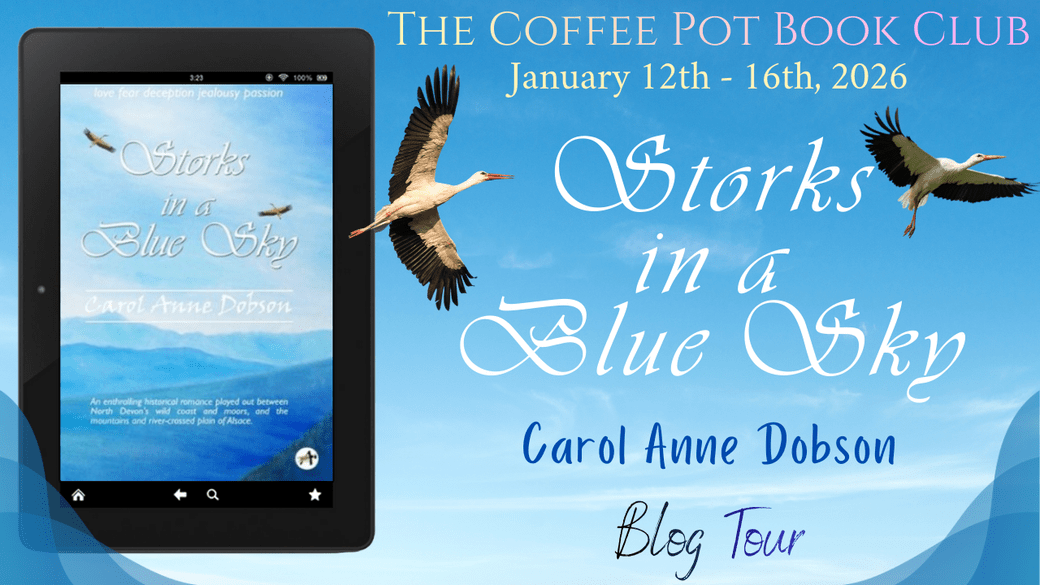
I’m delighted to welcome Wendy J Dunn to the blog with her new book Shades of Yellow, and a guest post about the history behind the novel #ShadesOfYellow #Forgiveness #AmyRobsard #WomensFiction #DualTimeline #Romance #BlogTour #TheCoffeePotBookClub

I’m delighted to welcome Wendy J Dunn to the blog with her new book Shades of Yellow ShadesOfYellow #Forgiveness #AmyRobsard #WomensFiction #DualTimeline #Romance #BlogTour #TheCoffeePotBookClub

What is the history behind Shades of Yellow? 

There is a lot of history behind my novel — some of it expected and some of it more surprising. I always knew my character would be writing a novel about Amy Robsart. I love the Tudor period, so it made sense that my character would also share that love. It also made sense Lucy, as a breast cancer survivor, would also be drawn to the story of Amy Robsart. Some historians believe Amy Robsart had breast cancer, which led to the theory that her fall down a short flight of stairs resulted in a spontaneous spinal fracture because of bone metastasis. So, that meant I (and my character) had to research the life and times of Amy Robsart.
 Amy was the first wife of Robert Dudley, the man who came closest to marrying Elizabeth Tudor. Amy was born in 1532, and met Robert when he accompanied his father, John Dudley, then the Earl of Warwick to deal with the Kett rebellion in 1549. Amy came from a wealthy family with good bloodlines. More importantly, she was her father’s heir. She was also pretty, pretty enough to catch Robert Dudley’s eye. They were also almost the same age. Robert’s father probably wanted a better match for his son, but he also had other sons. Robert was also not his heir, so when Robert and Amy fell in love (and it appears they fell in love), their parents agreed to their marriage in 1550 when they were around eighteen. 

Amy married Robert while his father was solidifying his position as the actual power behind Edward VI’s throne. The first years of Robert and Amy’s marriage saw a fairly settled period for the Tudors. But then Edward VI died, and John Dudley failed to place Lady Jane Grey onto the throne. Mary Tudor claimed the crown, and Dudley soon lost his head at the Tower of London, and Mary imprisoned all his sons in the Tower. The following year, Lady Jane Grey and her husband Guildford were executed after another failed rebellion. For close to two years, Robert and his remaining brothers stayed in the Tower. His older brother died just days after their release. Another brother died while fighting in a war for Mary’s husband, Philip of Spain. By the time Elizabeth becomes Queen, Robert and Amy were living mostly separate lives. Robert and Elizabeth acted like lovers in the early years of Elizabeth’s reign – and caused a lot of scandal. The day after Elizabeth celebrated her twenty-seventh birthday, Amy was found dead at the bottom of a flight of stairs at Cumnor House, her neck broken. No one has ever solved the mystery of Amy Dudley’s death, and her husband Robert never escaped the suspicion that he organised her murder. 

 But most of my story takes place in 2010. While writing Shades of Yellow, I realised how long ago that now is. It was a different world in 2010. I ended up doing as much research about 2010 as I was doing about Amy’s life in Tudor times. I realised that Lucy’s life would have shaped her differently if she had been born around 1980 compared to 1996. She also would have had a few more life-changing options regarding her medical treatment if I had set the story in 2025.  

By the time I finished Shades of Yellow, I had realised, with surprise, that history informed the entirety of my novel.

Here’s the blurb

During her battle with illness, Lucy Ellis found solace in writing a novel about the mysterious death of Amy Robsart, the first wife of Robert Dudley, the man who came close to marrying Elizabeth I. As Lucy delves into Amy’s story, she also navigates the aftermath of her own experience that brought her close to death and the collapse of her marriage. 

After taking leave from her teaching job to complete her novel, Lucy falls ill again. Fearing she will die before she finishes her book, she flees to England to solve the mystery of Amy Robsart’s death. 

Can she find the strength to confront her past, forgive the man who broke her heart, and take control of her own destiny?

Who better to write about a betrayed woman than a woman betrayed?

Buy Link

https://books2read.com/u/mqPGgd

This title is available to read on #KindleUnlimited.

Meet the author

WENDY J. DUNN is a multi-award-winning Australian writer fascinated by Tudor history – so much so she was not surprised to discover a family connection to the Tudors, not long after the publication of Dear Heart, How Like You This, her first Anne Boleyn novel, which narrated the Anne Boleyn story through the eyes of Sir Thomas Wyatt, the elder. 

Her family tree reveals the intriguing fact that one of her ancestral families – possibly over three generations – had purchased land from both the Boleyn and Wyatt families to build up their holdings. It seems very likely Wendy’s ancestors knew the Wyatts and Boleyns personally.

Wendy gained her PhD in 2014 and tutors in writing at Swinburne University of Technology, Australia. She loves walking in the footsteps of the historical people she gives voice to in her books. 

Author image for Wendy J Dunn

Connect with the Author

Follow the Shades of Yellow Blog Tour with The Coffee Pot Book Club

Posts

The physical and political setting for Lady Estrid, a novel of eleventh century Denmark #histfic #lostwomenofhistory

The physical and political setting for Lady Estrid, a novel of eleventh century Denmark #histfic #lostwomenofhistory

Lady Estrid is set in Denmark, as well as in wider Scandinavia and England, during the eleventh century. But it’s events in Denmark, Norway and Sweden that inspired me to write about Lady Estrid, although, of course, I couldn’t do it without including England.

Denmark, at this time, is really starting to cohere into what we might think of as a coherent kingdom. I’m not an expert on what comes before, but The House of Gorm, into which Lady Estrid is born, has ruled Denmark for a couple of decades (through her grandfather, Gorm, and father, Swein Forkbeard), but a lasting peace hasn’t necessarily been achieved. The family are portrayed as conquerors, coming into what would become Denmark, and imposing themselves over an unruly elite. The number of intermarriages between families in (what we call today) Norway, Sweden and Denmark offers a landscape that is riddled with double-crossing and the potential for mischief and war against a backdrop of uncertainty in Denmark.  You can find family trees for Lady Estrid here.

And what a cast of characters I had to play with – King Swein of Denmark, his two sons, his daughters, and the men they marry, and the sons and daughters they birth, and of course, his wife as well. It seems that not only was she married to Swein, she was also the wife of the king of Sweden before his death, and might even have been pursued by Olaf Tryggvason. (There are arguments about her actual identity, but not about her marital history.) 

And into all this steps Lady Estrid, who, like similar royal women, has the advantage of living a much longer life than many of her male family members. She is someone who would have lived through turbulent times, and I always find that overriding viewpoint, just too good to ignore, because it gives an author so much scope to play with. Yes, I might know what ultimately happens, but when you weave the story of Lady Estrid, and what is, and isn’t known about her, around bigger events, in Denmark, Norway, Sweden and England, it makes for both a complex and a simple story. The people she met along the way are perhaps better known than she is herself, but that’s just a means of adding context to a much longer narrative than can often be explored when writing about Swein, or Cnut, or Harald or Harthacnut or Svein (yes, another one) or Beorn.

Posts

I’m sharing my review for Death At the School of Translators,  A Rebecca DeToledo Medieval Mystery by Esther Knight #bookreview #historicalmystery #histfic #blogtour

I’m sharing my review for Death At the School of Translators,  A Rebecca DeToledo Medieval Mystery by Esther Knight #bookreview #historicalmystery #histfic #blogtour

Here’s the blurb

Ivanhoe meets Phryne Fisher in this medieval adventure of a woman sleuth.

Toledo, 1193: A city of scholars, secrets, and simmering tensions. When Queen Eleanor of Aquitaine’s Jewish spy is found dead, whispers of treachery reach all the way to England.

Rebecca DeToledo, a gifted healer and wealthy Jewish heiress, arrives under royal orders to investigate at the School of Translators. Her mission quickly turns perilous as she faces threats to her life and a sudden battle over her inheritance.

Assigned to guard her is Sir John of Hampstead, a disillusioned crusader burdened with knowledge that could threaten King Richard’s release from captivity. Forced into this partnership, he must protect Rebecca while grappling with his own prejudices.

As they navigate Toledo’s complex alliances, where Christians, Jews, and Muslims coexist in fragile peace, they uncover a web of secrets reaching deep into the cathedral. Can Rebecca and John unearth the truth before they become the next targets?

For fans of historical sleuths, slow-burn tension, and secret missions cloaked in royal intrigue.

Purchase Link

https://www.amazon.co.uk/Death-School-Translators-DeToledo-Medieval-ebook/dp/B0FBWW9XSR

https://www.amazon.com/dp/B0FBWW9XSR

My Review

Death at the School of Translators is a medieval mystery told from two points of view: Rebecca, our Jewish heiress, and John, our disillusioned knight. They are thrust together in England by Queen Eleanor of Aquitaine, in somewhat confusing circumstances, and quickly embark on their journey to Toledo, where the real investigation quickly gets underway.

The author endeavours to bring together the many cultures within Toledo and the many interested parties at play. There is no end to the intrigue, as the appearance of Rebecca and John stirs up problems for those living in Toledo, while others have things they wish to keep hidden.

There are a few moments where the story falters slightly, but as it approaches the conclusion, it really excels, and I think the author finds her footing with these two characters, who will undoubtedly reveal more mysteries in the future. There are also one or two modernisms that detract from the depth of research the author must have undertaken to write the mystery, but they are only slight.

Overall, I found Death at the School of Translators to be a fine first story in this new mystery series, and I look forward to reading more of Rebecca and John’s mysteries.

Meet the author

Esther Knight writes historical mysteries featuring a bold heroine who challenges the norms of her time.

Giveaway to Win a $15 Amazon Gift Card (Open INT)

*Terms and Conditions –Worldwide entries welcome.  Please enter using the Gleam box below.  The winner will be selected at random via Gleam from all valid entries and will be notified by Twitter and/or email. If no response is received within 7 days then Rachel’s Random Resources reserves the right to select an alternative winner. Open to all entrants aged 18 or over.  Any personal data given as part of the competition entry is used for this purpose only and will not be shared with third parties, with the exception of the winners’ information. This will passed to the giveaway organiser and used only for fulfilment of the prize, after which time Rachel’s Random Resources will delete the data.  I am not responsible for despatch or delivery of the prize.

https://gleam.io/rnFDL/win-a-15-amazon-gift-card-open-int

Posts

I’m delighted to share my review for Adam Lofthouse’s Eagle and the Flame #historicalfiction #blogtour #Roman #bookreview

I’m delighted to share my review for Adam Lofthouse’s Eagle and the Flame #historicalfiction #blogtour #Roman #bookreview

I’m reviewing Eagle and the Flame by Adam Lofthouse

Here’s the blurb

Rebellion is in the air at the far reaches of empire.

Wall of Hadrian, Britannia, AD 367. Tribune Sixtus Victorinus is scouting north of the Wall when he first sees the smoke. Riding south he finds a province in chaos, the local populace in flight, the soldiers absent.

Britannia is ablaze, overrun with barbarians and Valentia is the word on everyone’s lips. But no one seems to have the first clue what it means…

Victorinus may have let his life run to ruin and drunk his youth away, but now he must forge himself into the soldier he always wanted to be, the hero his children think he is.

Because his family are among the missing, and traitors lurk much closer than he could ever believe.

To save his family, he must first save an empire.

EAGLE AND THE FLAME will sweep you through the tumultuous years of the late Roman Empire.

Purchase Link

https://mybook.to/EagleandtheFlame

My Review

The Eagle and the Flame by Adam Lofthouse is a fascinating reimagining of Britannia during the late 360s. This then is Roman Britain, complete with Roman soldiers and senators, Roman weapons and, of course, Hadrian’s Wall. But, this is also a world of Germanic warriors, Saxon invaders, the tribes from beyond the Wall, and even some pirates. 

Historically, the end of Roman Britain might be a few years in the future, but this is a world on the brink, the reach of the Romans starting to fade, and the events in Eagle and the Flame tell of a people as yet unaware of the coming calamities, and, Adam describes it very well. We have abandoned Roman forts, discontented Roman soldiers who aren’t getting paid on time, and the tribes from across Hadrian’s Wall are more aware of what might be happening than the Romans. And the emperor is very far away in Rome.

Our two main characters, Tribune Sixtus Victorinus, and Felicius are opposites of the same coin; one jaded and drunk, the other, still a career Roman soldier. Between them, they must disentangle the unexplained events on the borderlands, and then they must rouse support from all that they can to defeat the coming rebellion.

Eagle and the Flame starts fantastically well, immediately sucking the reader into the world of the 360s. It’s really quite hard to put the book down as the tension ramps up. Tribune Sixtus is a sympathetic character; for all, he is perhaps to blame for many of his problems. The small group of warriors who make up his area of command are well-sketched, and there is tragedy in the offing. Felicius’ life is more regimented, and it is Felicius who gives us a glimpse of what it was to be a Roman in the waning years of the Empire.

I really enjoyed Eagle and the Flame. The book starts with a bang and builds nicely to its conclusion, introducing a great cast of characters along the way. If you’re a fan of stories set in Saxon England, then you’ll love this earlier glimpse of Britannia.

Check out my review for Ravensworn.

Meet the author

Adam has for many years held a passion for the ancient world. As a teenager he picked up Gates of Rome by Conn Iggulden, and has been obsessed with all things Rome ever since. After ten years of immersing himself in stories of the Roman world, he decided to have a go at writing one for himself. He lives in Kent, UK.

Author image of Adam Lofthouse

Connect with Adam

Posts

I’m resharing an interview I gave when I’d finished writing Lady Estrid, a novel of eleventh century Denmark #histfic #writingadvice #authorinterview

I’m resharing an interview I gave when I’d finished writing Lady Estrid, a novel of eleventh century Denmark #histfic #writingadvice #authorinterview

Why did you decide to write about Lady Estrid?

Lady Estrid has been a character that’s long fascinated me. She crops up as a ‘bit part’ character in another series I write, but as time has gone on, I’ve realised that she offers a lot more than I’ve been allowing her so far. And so, I hope at a suitable point in the other series, I decided to explore Lady Estrid for herself. It involves stepping away from my comfort zone of pre-Conquest England in the eleventh century, and allows me to write about Scandinavia at this time period, which has always been a huge area of interest for me.

I’ve written a few long story arcs before, but only two other books which cover such a huge amount of time (about four decades). Such a project allows me to focus on the bigger picture and to put historical characters into a much wider story-arc than writing just about them would allow.

By necessity, Lady Estrid must be a strong woman, able to manipulate the politics taking place around her. I think that there’s a huge and growing interest in such women, and of course, Denmark (and Scandinavia as a whole) at this time, isn’t something that I believe has been tackled before, potentially because of the lack of English Language books about the era. 

What drew you towards the Early Medieval era in which you set your book?

I’m fascinated by everything pre-1066 in England, but also wider afield. It’s impossible to tell the story of just one of these later countries, inhabited by Northmen or Norsemen, without looking to what’s happening elsewhere. These characters didn’t abide by our current national boundaries.

What were the challenges you faced in researching this period of history and were there any unexpected surprises?

The biggest problem with writing about this time period is the sources. I’m not as familiar with the Saga material and the works of Adam of Bremen and Saxon Gramaticus, as I’d like to be. As such, I rely much more on secondary sources than I might when writing about the Early English period. And of course, it’s a period where written sources are quite scarce anyway. Not only is it difficult to ‘find’ Lady Estrid, but, as you might have noticed, many of the character share the same names – there are no ends of Swein/Svein/Sven’s and equally, just as many Gytha’s and Gunnhild’s.

I was surprised by just how little the women of the Danish royal family are mentioned in any secondary sources. I’ve recently been on a book buying spree, and even in a new monograph on Cnut, Lady Estrith is only cited in the index seven times, and in a 798-page book, she has about 3 words! 

What do you think is the most challenging aspect of writing Historical Fiction?

I think this depends on how much history you want to put in your book. I’ve just written three books in The Ninth Century Series, and while they’re historical in nature, much of the day-to-day activity is actually fighting and swearing. Lady Estrid has a much weightier content. It has a cast of many more people; they all have to be placed in the right time period and at the right events, and there is not as much information about any of them as I’d like there to be. Obviously, The Ninth Century Series was easier to write once the time period was set. Lady Estrid was an altogether different project. It took much longer, and was more frustrating because I was trying to ensure it didn’t conflict with previous stories I’ve written, which have a very ‘Early English’ basis.

What advice do you have for aspiring Historical Fiction authors?

Know the time period you’re writing about, and not just what happens during it, but also what happens both before, and after, and in neighbouring countries as well. And, be aware of what ‘might have happened’ if certain events – normally births, deaths or wars – hadn’t happened. Remember, your characters don’t have the benefit of hindsight that you have as a writer. Everything to them would have been immediate, imminent and happening to them. Don’t fall into the trap of presenting everything as a fait accompli.

And, be prepared to be frustrated. There’s always some niggly little fact that is just not mentioned anywhere. The decision then has to be made as to whether to ‘make it up’ or write around it, and readers will somehow always know if you make it up.

And on a final note, be prepared to do something a little bit ‘different,’ be bold, be creative, do whatever has to be done to engage an audience with the time period. 

Posts

I’m delighted to welcome Julia Ibbotson and her book, Daughter of Mercia, to the blog #DaughterOfMercia #JuliaIbbotson #medieval #anglosaxon #dualtime #timeslip #timetravel #mystery #romance #BlogTour #TheCoffeePotBookClub

I’m delighted to welcome Julia Ibbotson and her book, Daughter of Mercia, to the blog with a guest post.

Lady Mildryth of Mercia

It might surprise us to know that women in the Anglo-Saxon period, even early in their history, were regarded as equal in importance to their male counterparts. Women could hold their own wealth, land, possessions; they could inherit from their fathers or mothers on their own account and they could bequeath it to their children. They were not regarded as the property of their husbands or fathers. Their rights were protected in law and it seems that this applied across the social spectrum, from high-status families presumably to ealdormen to thegns to freedmen ceorls and grant-bearer geburs.

High-status women could be leaders of settlements / regions in the years following the immigration and settling of even the early tribes of Anglo-Saxons. They could be strategists and negotiators. Later, for example, Lady Ǣthelflaed of Mercia, the 10th century daughter of King Alfred, strategized battles to take Derby, Leicester, York, and of whom it is said that she was a “man in valour, a woman in name”. The Anglo-Saxon word cūning (king)applies to either male or female leaders, while the word queen (cwene) applies only to the wife of a king. The historical significance of strong female leaders goes right back to Boudicca of the Iceni in the first century AD. Post-Roman Britain was composed of many small kingdoms, and kingdoms fought to take over other kingdoms and thus wield greater power over a larger region. But our theories of this time of great change are beginning to recognise the way that stable everyday life and the quest for peace were also significant.

Lady Mildryth is a fictional character but is bred of such strong female leaders as these. I have based her on other Anglo-Saxon women who have a place in the history of Britain and I wanted her to represent an idea of the powerful yet peace-loving early settlers who wanted to create stable, secure communities, from the chaos and blood-shed of previous generations. Clearly, I have taken liberties with historical characters and events for the sake of my novel and it is not intended to be an accurate academic analysis of the time, but since archaeological excavation is only just gaining a clearer picture of the early Anglo-Saxon period and its domestic and cultural signigifance, maybe my imagination is not so far out!

Recent archaeological excavation and research has demonstrated that even back to the 5th century, high status ladies were buried with signifiers of their wealth in their grave goods: rich jewellery, gold artefacts, precious glass, beautiful fabrics.

Lady Mildryth, as the leader of a region, would have worn fabrics that were richly dyed and decorated: a chemise or shift, a long-sleeved kirtle (under-gown) often of expensive linen or wool, an over-gown trimmed with fur or braid, and an embroidered mantle(cloak). As a high-status woman, she would have eaten well, with home-grown meat, fish, dairy, vegetables, fruit (hedgerow berries but also imported dates, figs, almonds), and she would have drunk honeyed mead and imported wine, during her mead hall feastings.

Although her antecedents are pagan, and she accepts the duality of her people, she finds herself on the cusp of Christianity, yet still drifting to some of the pagan beliefs of her upbringing. Her late mother was from the Cornovii tribe from the people of Pengwern / Powys, Celtic-Brythonic pagans. She was hand-fasted to Mildryth’s father and died when Mildryth was young. Lady M’s character takes after her mother’s strength of will and determination to be on a par with her brothers (Crydda and Cynewald) – although she knows that she must earn this.

Her antecedents are historical (well, possibly legendary!) characters. Her grandfather is Icel, son of Eomer, of the Icinglas (or Iclingas), an Angle from across the seas in Jutland. He is said to have led his people across the North Sea in around 515 AD to the region we now call East Anglia, and is said to have moved westwards across the country, founding the kingdom of Mercia in the 520s AD. His son, Lady Mildryth’s father, is Cnebba who ruled after Icel from possibly around 535 AD.

We speak of the archetypes ‘Peace-weavers’ and ‘Shield-maidens’ in Anglo Saxon society and I see Lady Mildryth as a Peace-weaver. She is a strategist and commander of men, like Lady Æthelflæd of Mercia generations later. But she is also a negotiator and does not wish to conquer other lands or fight to subdue other tribes. She is dedicated to her settlement, her community, and my novel is more about domestic history than that of battles and high kings.

Lady Mildryth strives to make her settlement run smoothly and to encourage the cultural enrichment of her people: a culture taken from her Angeln ancestors as shown in her use of the scōp, the poet story-teller who regales the thegns of the mead-hall with tales of tradition, of warriors, family and legendary heroism. Peace-weavers were often encouraged, or chose, to make expedient marriages with other kingdoms to avert potential strife. There is evidence to suggest that there were battles for lands, yes, but also deals and negotiations so that tribes could coexist. In Daughter of Mercia, Lady Mildryth is certainly aware of this.

If you’d like to read more of life in Anglo-Saxon times, you may like to look at my blog on my website and the 7-part series ‘Living with the Anglo-Saxons’ at https://juliaibbotsonauthor.com where there are also some reference texts.

Here’s the Blurb

Echoes of the past resonate across the centuries as Dr Anna Petersen, a medievalist and runologist, is struggling with past trauma and allowing herself to trust again. When archaeologist (and Anna’s old adversary) Professor Matt Beacham unearths a 6th century seax with a mysterious runic inscription, and reluctantly approaches Anna for help, a chain of events brings the past firmly back into her present. And why does the burial site also contain two sets of bones, one 6th century and the other modern?

As the past and present intermingle alarmingly, Anna and Matt need to work together to solve the mystery of the seax runes and the seemingly impossible burial, and to discover the truth about the past. Tensions rise and sparks fly between Anna and Matt. But how is 6th century Lady Mildryth of Mercia connected to Anna? Can they both be the Daughter of Mercia?

For fans of Barbara Erskine, Elena Collins, Pamela Hartshorne, Susanna Kearsley and Christina Courtenay.

Buy Link

Universal Link

This title is available to read on #KindleUnlimited

Meet the Author

Julia Ibbotson is fascinated by the medieval world and the concept of time. She is the author of historical mysteries with a frisson of romance. Her books are evocative of time and place, well-researched and uplifting page-turners. Her current series focuses on early medieval time-slip/dual-time mysteries.

Julia read English at Keele University, England, specialising in medieval language / literature / history, and has a PhD in socio-linguistics. After a turbulent time in Ghana, West Africa, she became a school teacher, then a university academic and researcher. Her break as an author came soon after she joined the RNA’s New Writers’ Scheme in 2015, with a three-book deal from Lume Books for a trilogy (Drumbeats) set in Ghana in the 1960s.

She has published five other books, including A Shape on the Air, an Anglo-Saxon timeslip mystery, and its two sequels The Dragon Tree and The Rune Stone. Her latest novel is the first of a new series of Anglo-Saxon dual-time mysteries, Daughter of Mercia, where echoes of the past resonate across the centuries.

Her books will appeal to fans of Barbara Erskine, Pamela Hartshorne, Susanna Kearsley, and Christina Courtenay. Her readers say: ‘Julia’s books captured my imagination’, ‘beautiful story-telling’, ‘evocative and well-paced storylines’, ‘brilliant and fascinating’ and ‘I just couldn’t put it down’.

Connect with the Author

Follow the Daughter of Mercia blog tour with The Coffee Pot Book Club

Posts

Meet the author, MJ Porter. Five Things You Don’t Know About Me.

Meet the author, MJ Porter. Five Things You Don’t Know About Me.

  1. I once had thirty-seven rabbits and forty-three gerbils. (I now have no pets at all. Not even a fish). My daughters do have five dogs between the two of them, however.
  2. I dislike my middle name, even though two of my friends use it as their first name. I was given it in case I didn’t like my first name, but I do. Also, my Mum got in a lot of trouble for not naming me after members of the family.
  3. When I was a teenager, I worked in a local music shop, and as a result, I have a unique and detailed knowledge of the music scene during the early 1990s, as revealed to me when I recently watched an episode of Top of the Pops 2 for 1990. I knew the words to almost every song. (The music shop was called Tudor Tunes. Even when I was a teenager, I couldn’t get away from history.) I’ve just googled the shop, and discovered it shut a long time ago. Ah, I’m traumatised. 
  4. When I was much younger, I had my picture taken for the local paper wearing a NASA astronaut’s helmet. They had to put a bit of paper in the catch so it didn’t seal me in.
  5. I almost didn’t study history at GCSE, A Level or as a degree. I changed my mind every time, causing many people a lot of problems. I’m not sure I’d get away with it any more. I decided to study history at GCSE rather than Drama after visiting my great-grandfather’s grave, who fought in the First World War. While one of the lucky ones who came home to his family, he died in 1924 from injuries sustained during the war. It made me really angry to think my lovely Grandad grew up without his Dad (he would have been 4 when his Dad died) because of the war, and I wanted to find out why! Admittedly, I’m not a huge fan of 20th-century history, because it’s so complicated. There are too many names to keep track of.

Posts

I’m reviewing A Very Merry Murder by Kate Wells, a fabulous contemporary mystery set in the Malvern Hills #mystery #newrelease #blogtour #bookreview

I’m reviewing A Very Murder Murder by Kate Wells, a fabulous contemporary mystery set in the Malvern Hills #mystery #newrelease #blogtour #bookreview

I’m reviewing a Very Merry Murder by Kate Wells

Here’s the blurb

Mistletoe, mince pies… and murder

When Jude Gray inherited Malvern Farm, she never thought she’d become so used to farm life, let alone be good at it! But now a beloved national TV show is coming to film their Christmas special on her land, celebrating the charm of rural living and all Jude’s achieved so far.

At least, that’s the plan… until one of the crew is found dead in suspicious circumstances.

At first, it looks like a tragic accident, but when alibis start to crack, it seems like anything but. With a growing list of suspects and enough behind-the-scenes drama to rival anything the cameras are capturing, Jude must dig deep to uncover the truth.

Because someone on her farm is hiding a deadly secret – and this year, the season of goodwill may come with a killer twist…

Purchase Link

https://mybook.to/VeryMerryMurder

My Review

A Very Merry Murder by Kate Wells is the sixth book in the Malvern Farm Mystery series and I’ve read five of them (see my reviews below). The series is very dependable, and each book is very well written with a good mystery for Jude to unravel. It’s a favourite series of mine.

A Very Merry Murder sees Jude playing host to a film crew on the farm, while also preparing for her sister’s wedding. It’s a busy time for her, and a real strength of these books is that the author rarely forgets Jude is a farmer first and only a sleuth second. We get a good idea of the relentless nature of farming, even though Jude loves it.

The film crew, of course, quickly start causing problems, from the slimy director to the acerbic runner to the two hosts. Are they happily married or not? When the first body is found, Jude immediately senses not all is as it seems, and she works with a recovering Binni to unravel the tangled threads of lies and misdirection from the suspects. And all while preparing for Christmas.

A Very Merry Murder is a festive treat, complete with some snow, and while I’ll be honest and say I did work out the twist in this one, it was still very enjoyable. I highly recommend this series to those who like a contemporary mystery without too much gore.

Check out my reviews for Murder on the Farm, Death in the Hills and Killer at The Country Show, three earlier titles in the fab series.

Meet the author

Kate Wells is the author of a number of well-reviewed books for children, and is now writing a new cosy crime series set in the Malvern hills, inspired by the farm where she grew up. 

Connect with Kate

Newsletter Sign Up 

BookBub

Posts

I’m sharing my review for The Atlantis Covenant by Rob Jones #actionandadventure #blogtour #bookreview

I’m sharing my review for The Atlantis Covenant by Rob Jones #actionandadventure #blogtour #bookreview

Here’s the blurb

The greatest mystery of all time is about to be revealed.

When world-famous archaeologist and ex-soldier Max Hunter finds a mysterious artifact in a tomb beneath the Gates of Nineveh, his lifelong dream of finding Atlantis comes one step closer.

But he’s not the only one looking for it…

His discovery unleashes a high-speed hunt for the lost civilization between a mysterious Swiss foundation, the FBI, and the world’s most secretive society.

From the dangers of the Iraqi desert to Cuba and the jungles of El Salvador to the enigmatic Valley of the Kings in Egypt, Hunter faces a race against time and murderous enemies who will stop at nothing to claim the greatest prize in history. As he fights for his life, it soon becomes apparent that his enemies are searching for something altogether more sinister than the lost city…

Hunter must use his unique ingenuity and knowledge to decipher the clues and find Atlantis – and its lethal treasures – before they fall into enemy hands.

Purchase Link

https://mybook.to/AtlantisCovenantbook

My Review

The Atlantis Covenant is a rollercoaster of a ride, through the ruins of many of the worlds ancient civilsations, bringing us, hopefully, to the discovery of the mythical Atlantis, via a lot of guns, helicopters, ‘bad guys and gals,’ and the involvement of a number of government agencies.

While this is one of The Hunter Files, there are many more characters than just Max, and we get to hear from most of them with a little bit of head-hopping (alas, not my favourite literary device), discovering their back stories and working out how they all came to be hunting for mythical items in a modern-day adventure story.

It’s a lot of fun, if a little silly in places, filled with mostly irreverent characters who are very devil-may-care, but with some of those good old National Treasure vibes, which do certainly appeal to me. I love a good old-fashioned treasure hunt, and if it involves the Illuminati and some ancient Egyptian treasures, then all the better.

Meet the Author

Rob Jones has published over forty books in the genres of action-adventure, action-thriller and crime. Many of his chart-topping titles have enjoyed number-one rankings and his Joe Hawke and Jed Mason series have been international bestsellers. Originally from England, today he lives in Australia with his wife and children.

Author Rob Jones

Connect with the author

Posts

Who was Lady Estrid, and why did I write about her life? #histfic #TheEleventhCentury #England #Denmark #non-fiction

Who was Lady Estrid, and why did I write about her life? #histfic #TheEleventhCentury #England #Denmark #non-fiction

Lady Estrid, or Edith or even Margaret, daughter of King Swein Forkbeard of Denmark (and briefly England) is one of those beguiling characters who lived through momentous change. 

I’ve long been drawn to her, and used her as a ‘bit’ part character in my The Earls of Mercia series, but I wanted to dedicate both more time to Lady Estrid, and also to Denmark. Even when I’ve written about Cnut, who was king of England and Denmark, much of the action has taken place in England. There’s simply not enough ‘space’ to fit everything in.

Lady Estrid, like similar royal women (Queen Eadgifu of England and Lady Elfrida in the tenth century), had the advantage of living a much longer life than many of her male family members (check out the family trees here). She was the ‘glue’ that held together the narrative of what was happening in Denmark. And because of her vast family, it also allowed me to weave the story of not just Denmark, but also Norway, Sweden, England, and Normandy, into the narrative.

She was the daughter of a king, the sister of three kings, the aunt of four kings, the mother of one king, and in time, the grandmother of three further kings. 

Having written about Queen Eadgifu, Lady Elfrida, and King Edward the Elder’s daughters (in tenth century England), I wanted a new ‘woman’ to bring to life. I could have chosen Queen Emma, or even Queen Edith of England, but their stories are more well-known. I’ve long been fascinated by the Scandinavian countries during the Viking Age, and Lady Estrid was just too good a character to leave in her ‘bit’ part without adding anything further.

For all Lady Estrid’s claims as mother, aunt, sister and daughter, there’s very little that can be said about her, not even the order of her three marriages, if they occurred, can be confirmed. It’s only possible to say that her marriage to Jarl Úlfr took place because of the survival of her children. It’s the lack of ‘hard facts’ about her, and the potential to weave a story that includes so many of the other well-known women and men of the period, that made Lady Estrid so irresistible. When stories focus on Earl Godwine, or King Cnut, or even on King Harald Hardrada, it’s possible to lose sight of the bigger picture, and Lady Estrid certainly provides the potential to show the overarching events that occurred from AD1013-1050 within Denmark and England.

An image of Lady Estrid from Wikipedia

Check out the Lady Estrid page for more information about my novelisation of her life, and the historical details available for her.

Posts

MJ Porter

Author of Saxon historical fiction, 20th-century historical mysteries, and Saxon historical non-fiction. Book reviewer and blog host.

Skip to content ↓