Author of Saxon historical fiction and non-fiction, 20th-century historical mysteries, and Norse-inspired historical romantasy. Book reviewer and blog host.
Author: MJ Porter, author
I'm an author of historical fiction (Early England/Viking and the British Isles as a whole before 1066, as well as five 20th-century mysteries), a non-fiction title about the royal women of tenth-century England, and historical fantasy.
‘Genuinely hilarious, charmingly intelligent’ – The Irish Times
‘Assured, astute and wickedly funny’ – Woman’s Way
‘Witty and charming and very, very funny’ – The Irish Examiner
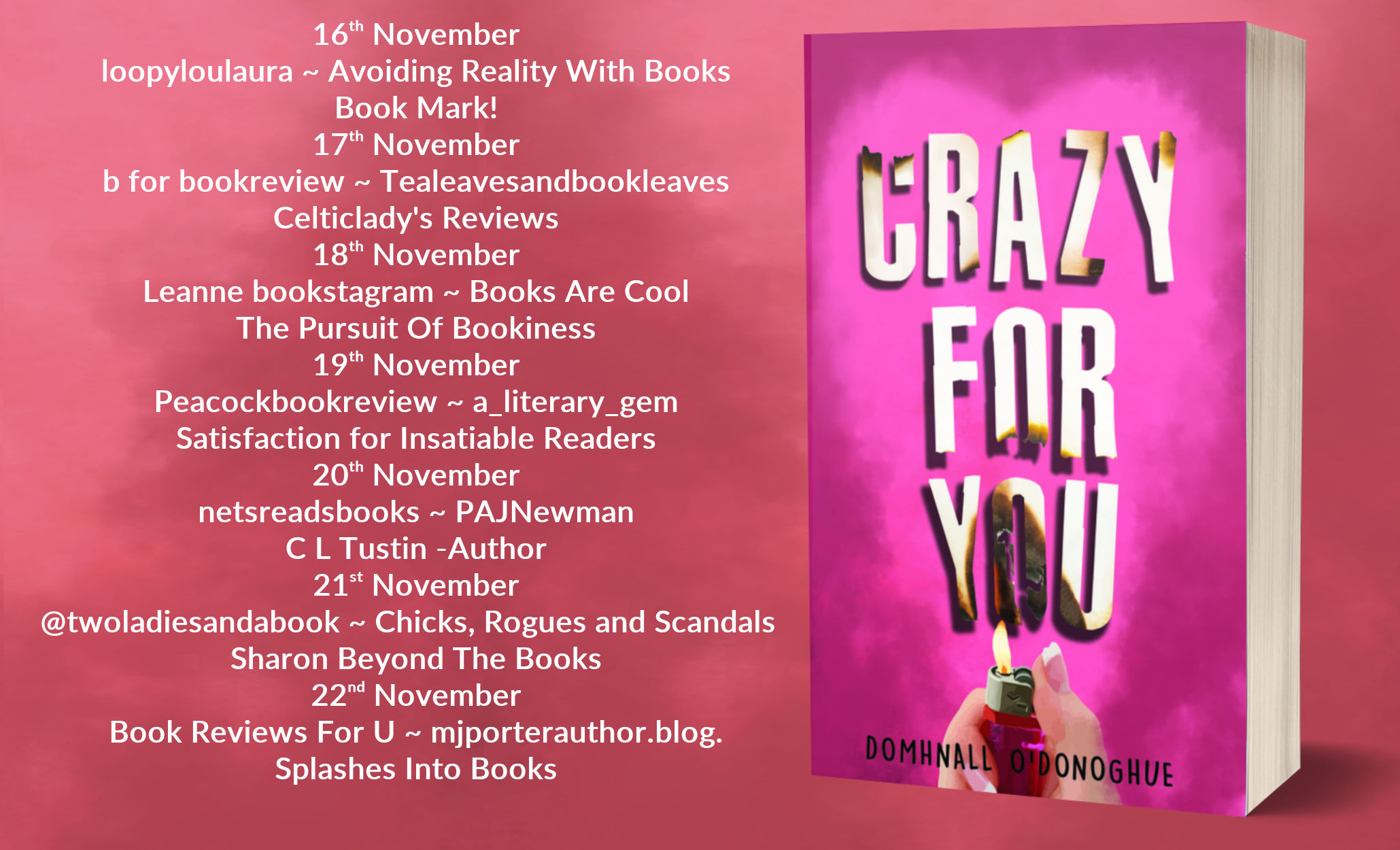
When Clooney Coyle promises Vonnie Gallagher they’ll be friends for life, he has no idea what he’s letting himself in for. The lonely and eccentric Vonnie quickly becomes obsessed with the kind-hearted but insecure actor, and her misguided crush soon develops into something much more sinister, which leaves Clooney’s career in tatters.
But when fate takes a strange turn and elevates the pair into an overnight celebrity couple, Clooney must decide whether to embrace the fame he has longed for since childhood or end the ridiculous charade before Vonnie’s jealous – and murderous – inclinations spiral out of control.
Crazy for You is a deliciously funny story by author Domhnall O’Donoghue. (Do check out my review for Sister Agatha here). Told with a delightful sharp wit and not sparing either of his main characters from their less appealing characteristics, Crazy for You is not at all a love story.
I’m drawn to the fast-pace and wit of Domhnall’s story and their firm grounding in his Irish heritage. The places and people come alive from the page, and the humour is told with just the right amount of detail. The two stories of his that I’ve read have made me chuckle out loud. There is a rich vein of detail in Crazy for You, but never laboured, and the attendant cast are used well and to advance the story.
I really enjoyed Crazy for You (as I did Sister Agatha), and I really hope you’ll try this uproariously funny tale with its unexpected ending.
Meet the Author
Hailing from Navan, Co. Meath, Domhnall is a graduate of the Bachelor in Acting Studies Programme, Trinity College Dublin, later completing a Master’s in Screenwriting at Dún Laoghaire IADT. He now works as a journalist, author and actor.
In 2016, Tirgearr Publishing released Domhnall’s first novel, Sister Agatha: The World’s Oldest Serial Killer (‘We loved it’ – Woman’s Way). Pink Spear, an American, Emmy-winning production company, holds the TV and film rights.
Mercier Press, Ireland’s oldest publishing house, released Domhnall’s second and third novels, Colin and the Concubine (‘Hilarious’ – RTE.ie) and Crazy for You (‘Genuinely hilarious, charmingly intelligent’ – The Irish Times).
For four years, Domhnall enjoyed the responsibility of being Assistant Editor at Irish Tatler Man. Thanks to this role, he interviewed high-profile names such as Tommy Hilfiger, Kevin Spacey and Chris Pine. He writes a monthly column for Woman’s Way and is a features writer for Ireland of the Welcomes, the world’s largest Irish-interest magazine.
As an actor, Domhnall appeared as Pádraig in TG4’s award-winning series Ros na Rún for nine seasons.
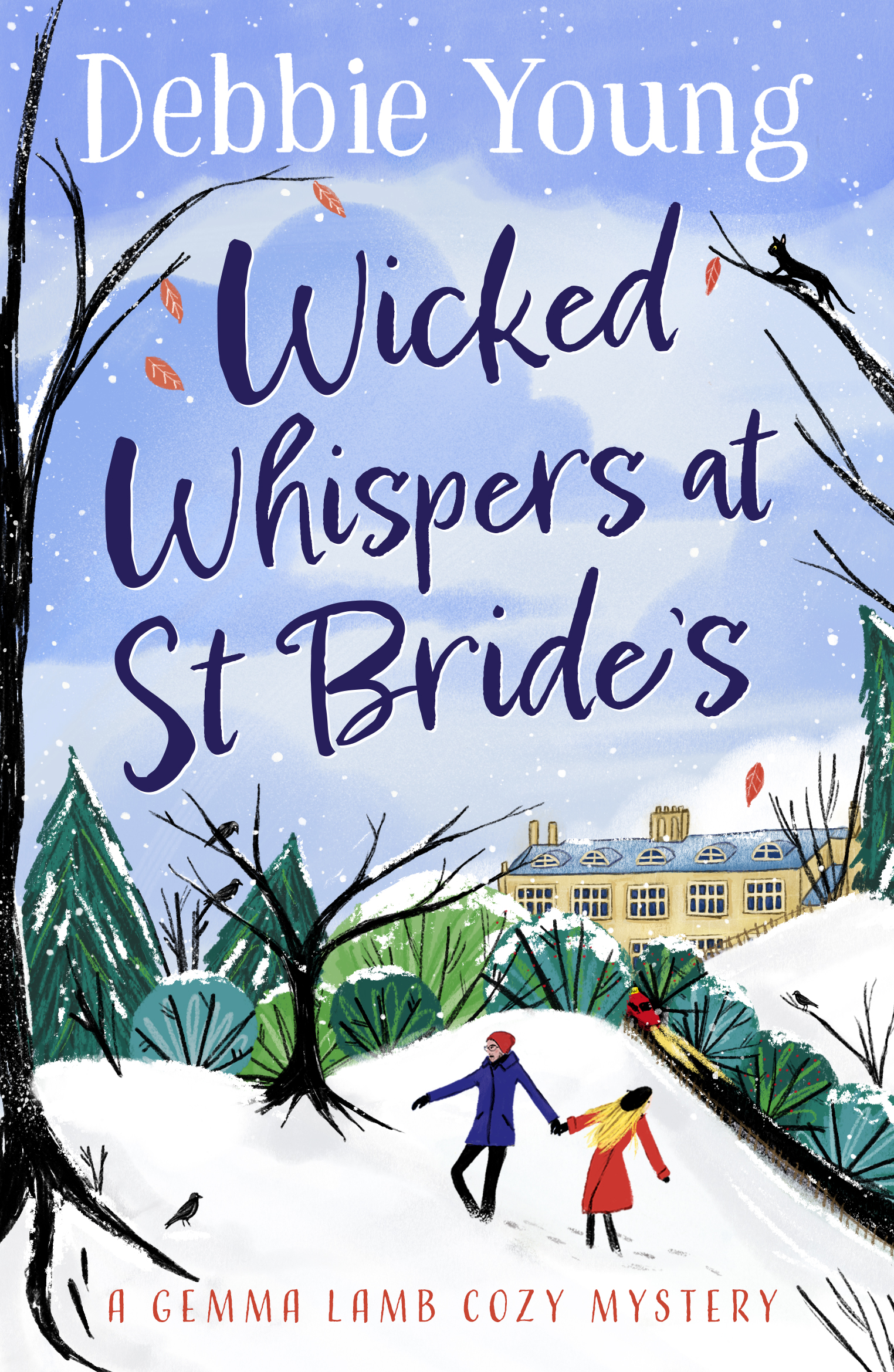
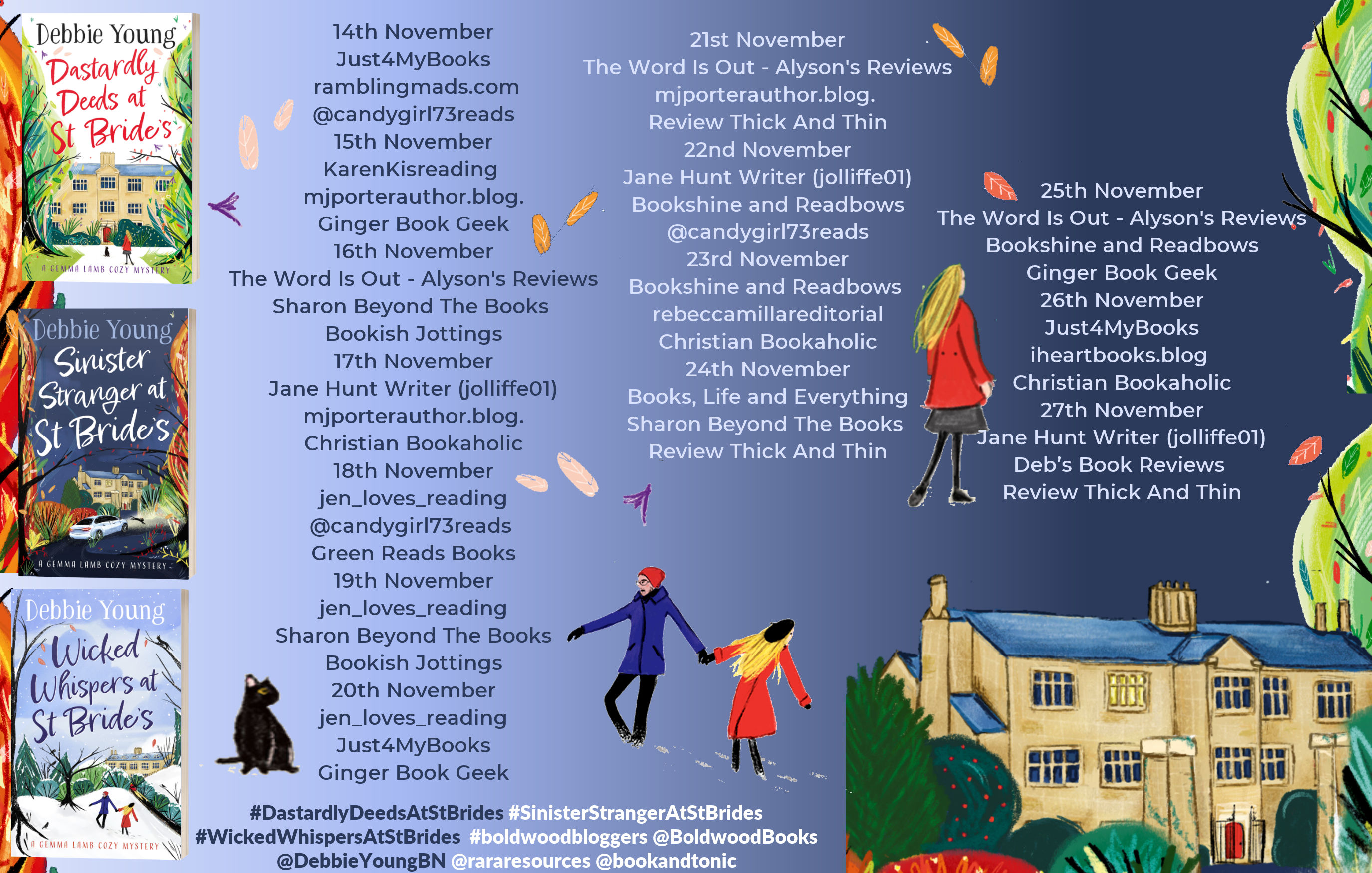
Gemma Lamb is ready for an uneventful term at St Bride’s, she’s had enough of dastardly deeds and sinister strangers.
However, she’s barely back at school before:
Unlucky in love Oriana is sneaking around at odd hours
Handsome Joe is keeping secrets
Militant Mavis feels a scandal is brewing
It’s all a bit much, but when a stranger appears Gemma thinks she’s had enough. But this stranger isn’t so sinister, instead he looks rather too familiar. If Gemma can’t get him away from the school the whispers and scandal his presence could unleash may just close St Bride’s doors for good.
The St Bride’s books are rapidly becoming one of my favourite series.
Wicked Whispers at St Bride’s takes place during the half term after the Christmas holidays. While the girls are all learning how to play games with the teachers, Cluedo, Chess, and a touch of poker, Gemma finds herself wondering what’s going on between Joe and Oriana, which leads her to make a rather impromptu decision when a stranger appears at the doors of St Bride’s.
What follows is a series of misunderstandings, a somewhat unexpected fire alarm, and not one, not two, not three, but four trips out for afternoon tea, during which two more mysteries are solved.
I really do enjoy this series featuring the staff and students of St Bride’s. They’re just the right sort of cosy to fill a couple of hours with feel-good reading. I’m hoping there’ll be a book 4 soon.
Meet the Author
Debbie Young is the much-loved author of the Sophie Sayers and St Brides cosy crime mysteries. She lives in a Cotswold village where she runs the local literary festival, and has worked at Westonbirt School, both of which provide inspiration for her writing. She is bringing both her series to Boldwood in a 13-book contract. They will be publishing several new titles in each series and republishing the backlist, starting in September 2022.
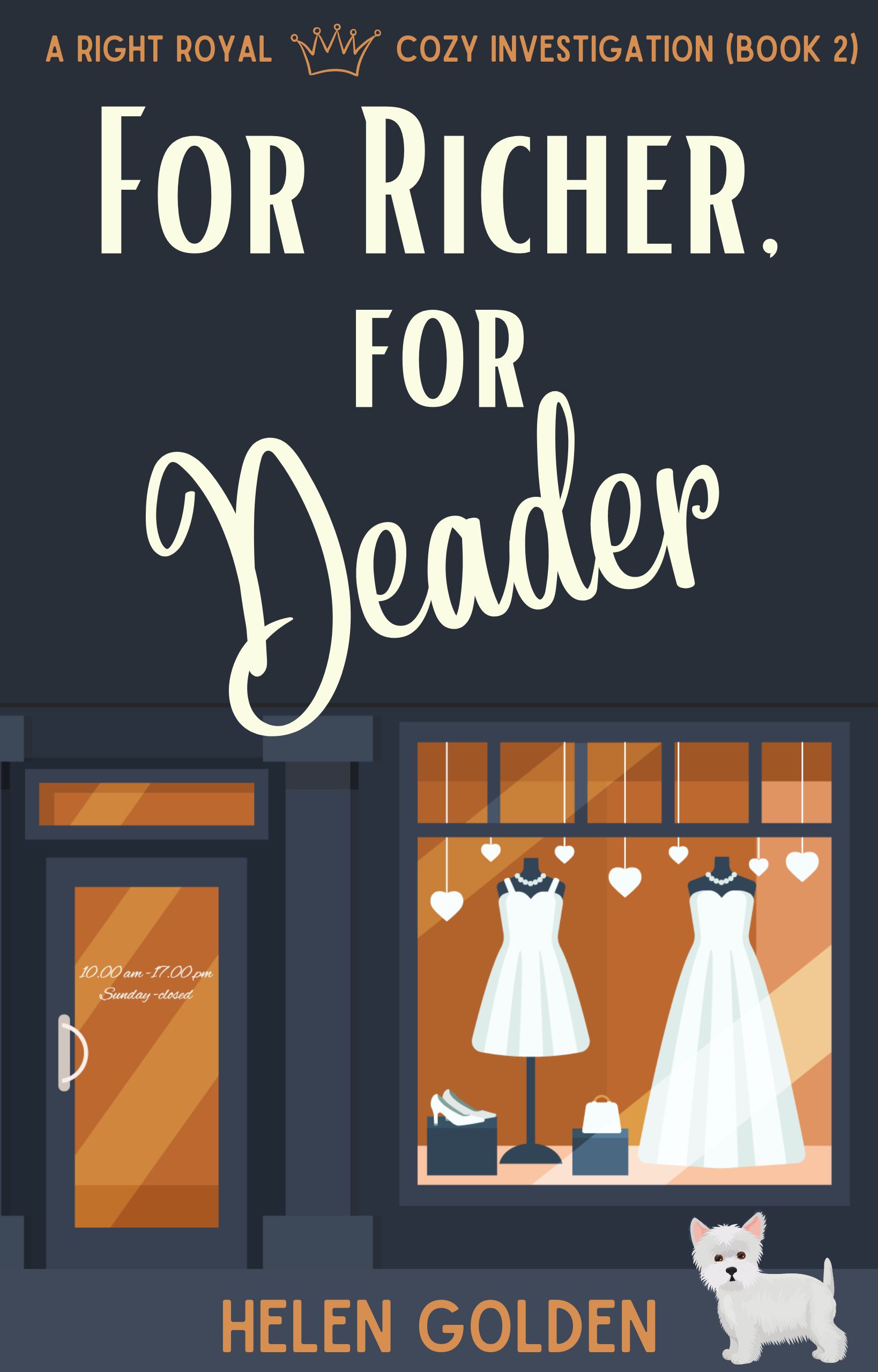
Is the Wedding Between Sir Hewitt Willoughby-Franklin’s Step-Daughter and Billionaire’s Son Off?
Rumours are that the recent death of Kelley Lindsell (29), the personal chef of tycoon Rudy (68) and Sheri Trotman (65) at Sir Hewitt’s Fawstead Manor country estate in Fenshire, has spooked Sybil Bransgrove (36) so badly she’s considering cancelling her nuptials.
Meanwhile the bride and her mother, Lady Grace (61), are being supported by family friend Lady Beatrice (36), the Countess of Rossex, who, alongside her business partner Perry Juke, is currently managing the project to refurbish the Manor House and Lodge on the estate.
Not again! Now that Lady Grace has asked Lady Beatrice to liaise with the police during the investigation into Kelley’s death, she’ll have to cooperate with boorish Detective Chief Inspector Richard Fitzwilliam whether she likes it or not. Her only relief will be solving the murder with the help of her friends Perry and Simon and her dog Daisy to get rid of him faster. But with so many wedding party guests staying on-site, any one of them could be the killer. Can they find out who it is before Sybil calls off the wedding…
For Richer, For Deader is the second in the Right Royal Cozy investigations series, and the series is a bit of a delight.
Lady Beatrice, once more engaged on one of her interior design projects, finds herself at the centre of another strange mystery, with threatening notes, an over-anxious bride, and an even more over-anxious mother-of-the-bride, and that’s before the murder even takes place.
The same cast are here, Perry, Simon, and Daisy the dog, as well as Detective Chief Inspector Richard Fitzwilliam, and that pesky online rag, the Society Page Online stirring up problems.
The mystery is well put together, and again, I didn’t decipher the true culprit thanks to the liberal dosing of red-herrings. And it was a really enjoyable cozy mystery. I’m looking forward to book 3, Not Mushroom for Murder.
Hello. I’m Helen Golden. I write British contemporary cozy whodunnits with a hint of humour. I live in small village in Lincolnshire in the UK with my husband, my step-daughter, her two cats, our two dogs, sometimes my step-son, and our tortoise.
I used to work in senior management, but after my recent job came to a natural end I had the opportunity to follow my dreams and start writing. It’s very early in my life as an author, but so far I’m loving it.
It’s crazy busy at our house, so when I’m writing I retreat to our caravan (an impulsive lockdown purchase) which is mostly parked on our drive. When I really need total peace and quiet, I take it to a lovely site about 15 minutes away and hide there until my family runs out of food or clean clothes
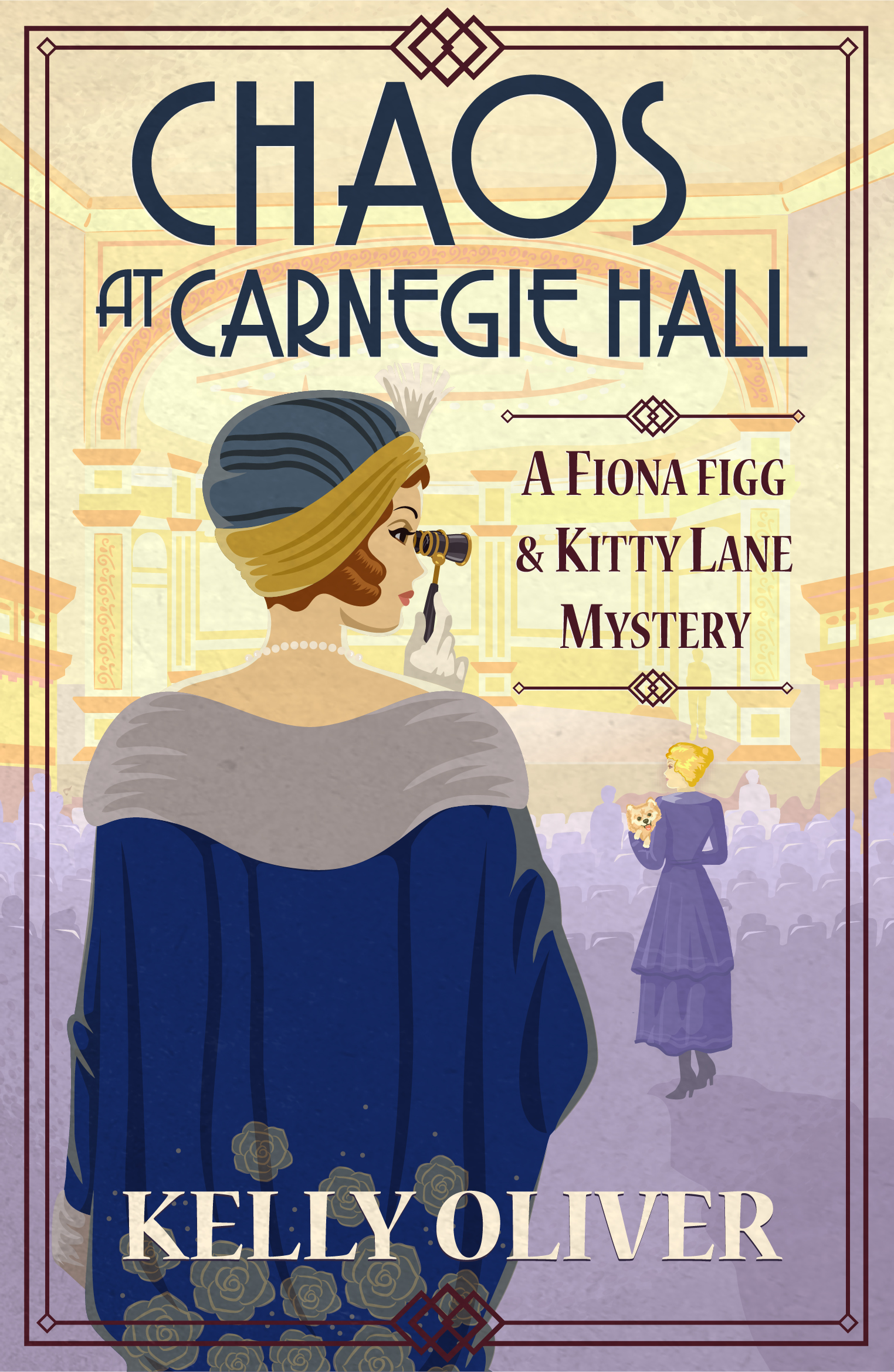
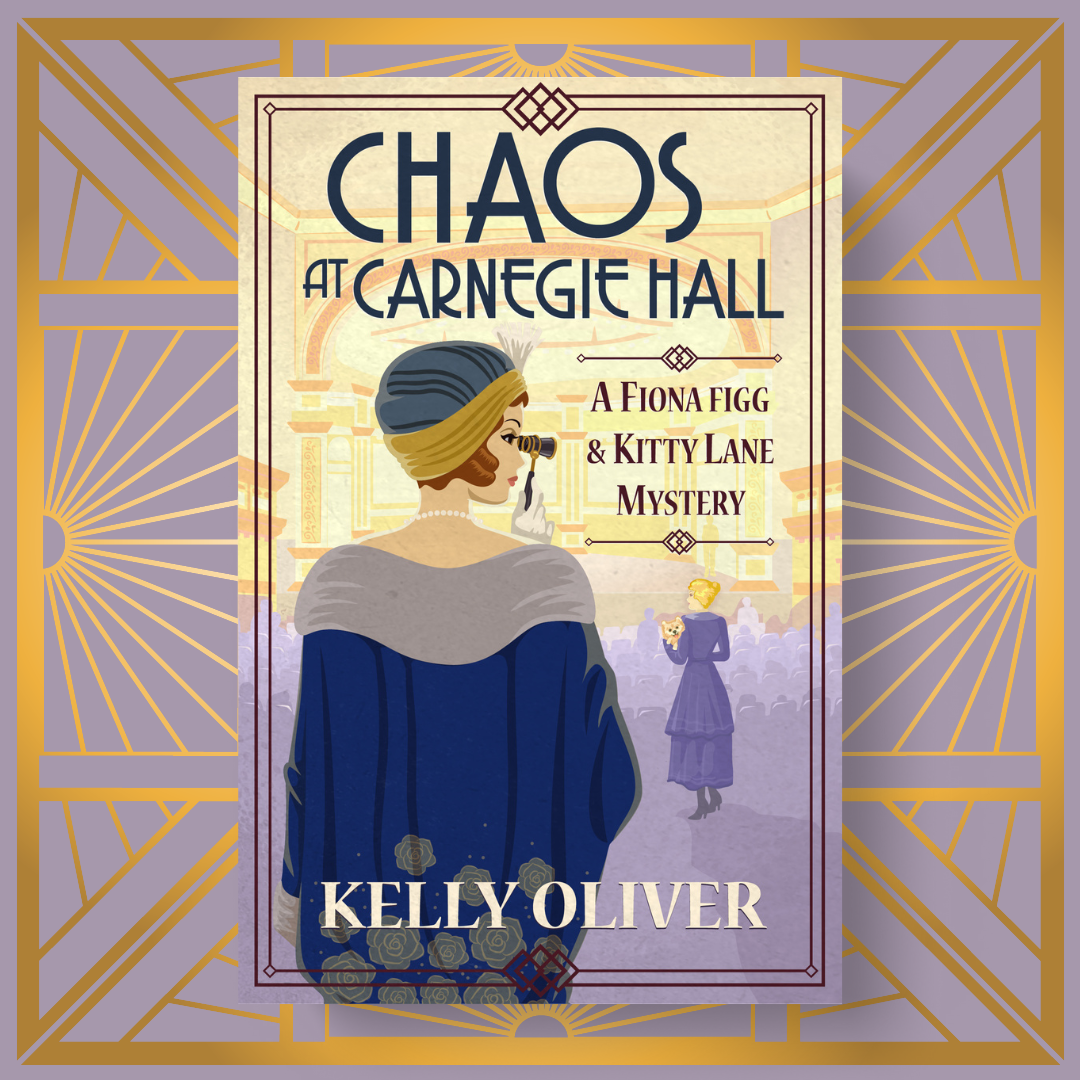
Agatha Christie meets Downton Abbey in the Fiona Figg and Kitty Lane Mystery series opener.
Can Fiona catch a killer and find a decent cup of tea before her mustache wax melts?
1917. New York.
Notorious spy, Fredrick Fredricks, has invited Fiona to Carnegie Hall to hear a famous soprano. It’s an opportunity the War Office can’t turn down. Fiona and Clifford are soon on their way, but not before Fiona is saddled with chaperon duties for Captain Hall’s niece. Is Fiona a spy or a glorified babysitter?
From the minute Fiona meets the soprano aboard the RMS Adriatic it’s treble on the high C’s. Fiona sees something—or someone—thrown overboard, and then she overhears a chemist plotting in German with one of her own countrymen!
And the trouble doesn’t stop when they disembark. Soon Fiona is doing time with a group of suffragettes and investigating America’s most impressive inventor Thomas Edison.
When her number one suspect turns up dead at the opera and Fredrick Fredricks is caught red-handed, it looks like it’s finally curtains for the notorious spy.
But all the evidence points to his innocence. Will Fiona change her tune and clear her nemesis’ name? Or will she do her duty? And just what is she going to do with the pesky Kitty Lane? Not to mention swoon-worthy Archie Somersby . . .
If Fiona’s going to come out on top, she’s going to have to make the most difficult decision of her life: the choice between her head and her heart.
Chaos at Carnegie Hall is a cosy historical mystery set in London, onboard a transatlantic ship during its crossing and also in New York in November 1917. We’re introduced to Fiona Figg, an enterprising young woman, a spy if you would, who is happy to don male costumes to get the answers she seeks.
I did find the beginning of the book a little confusing, but then I discovered why, for Fiona Figg isn’t a new literary creation, but this is her in a new series, complete with references to previous exploits. Once I realised this, I was flying. The backstory isn’t overly relevant, and it adds a wonderful layer of depth to the character. Fiona Figg is not new to this jig, and she knows what she’s about, despite all the men in her life trying to make it more difficult for her.
This story is bursting with historical details – the Suffragettes, events at Carnegie Hall, ‘real’ historical characters, and of course, yellow cabs – which our fine main character informs us makes it much easier to spot a cab in the snowy November conditions she’s enduring. I really enjoyed the way the story is woven around events that actually happened.
The mystery builds really well, and the attendant sidekicks of Clifford, Kitty and, of course, Poppy, the dog, really add to the ongoing mystery.
A thoroughly enjoyable historical mystery recommended for fans of the genre and with just a smidge more historical detail than some other cosy mysteries, which makes it all the more appealing to me.
Meet the Author
Kelly Oliver is the award-winning, bestselling author of three mysteries series: The Jessica James Mysteries, The Pet Detective Mysteries, and the historical cozies The Fiona Figg Mysteries, set in WW1. She is also the Distinguished Professor of Philosophy at Vanderbilt University and lives in Nashville, Tennessee. She is bringing new titles in the Fiona Figg series to Boldwood, the first of which, Chaos in Carnegie Hall, will be published in November 2022.
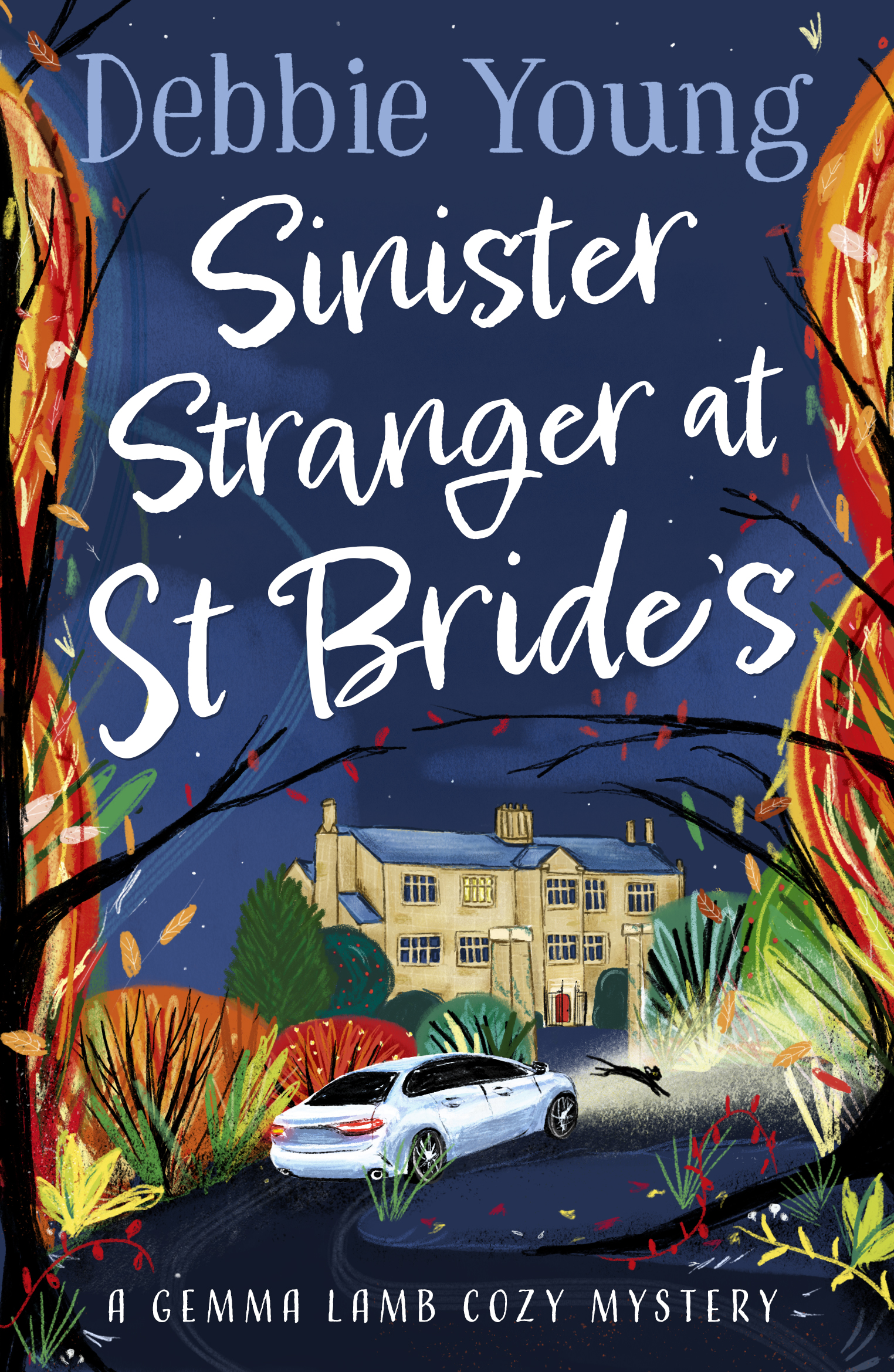
When an American stranger turns up claiming to be the rightful owner of the school’s magnificent country estate it could spell trouble for everyone at St Bride’s . . .
No one can believe it when the headmistress, Hairnet, instantly accepts the stranger’s claim, not:
the put-upon Bursar, ousted from his cosy estate cottage by the stranger
the enigmatic Max Security, raring to engage in a spot of espionage
the sensible Judith Gosling, who knows more about Lord Bunting than she’s letting on
the irrepressible Gemma Lamb, determined to keep the school open
Only fickle maths teacher Oriana Bliss isn’t suspicious of the stranger, after all she can just marry him and secure St Bride’s future forever. That’s if inventive pranks by the girls – and the school cat – don’t drive him away first.
Who will nab the stranger first? Oriana with the parson’s noose? Gemma with sinister secrets? Or could this be the end of St Bride’s?
Sinister Stranger at St Bride’s is a fabulous sequel to Dastardly Deeds, and the villain of the piece, Earl, is sure to almost rouse hatred on a scale of the evil Umbridge in the Harry Potter books.
I love the feel of this series. As someone who did indeed read all the boarding school books as a child, this is a welcome ‘grown-up’ tonic to those long ago days:)
The story for book 2 is, I feel, stronger than for the first book in the series. The answers aren’t quite so easy to fall into the lap of Gemma Lamb, and Max Security has a bigger starring role, as do some of the girls attending the school. But don’t fear, Joe and Oriana, as well as McPhee do still have important roles to play.
I’ll be sharing my review for book 3 on 21st November 2022.
Meet the author
Debbie Young is the much-loved author of the Sophie Sayers and St Brides cosy crime mysteries. She lives in a Cotswold village where she runs the local literary festival, and has worked at Westonbirt School, both of which provide inspiration for her writing. She is bringing both her series to Boldwood in a 13-book contract. They will be publishing several new titles in each series and republishing the backlist, starting in September 2022.
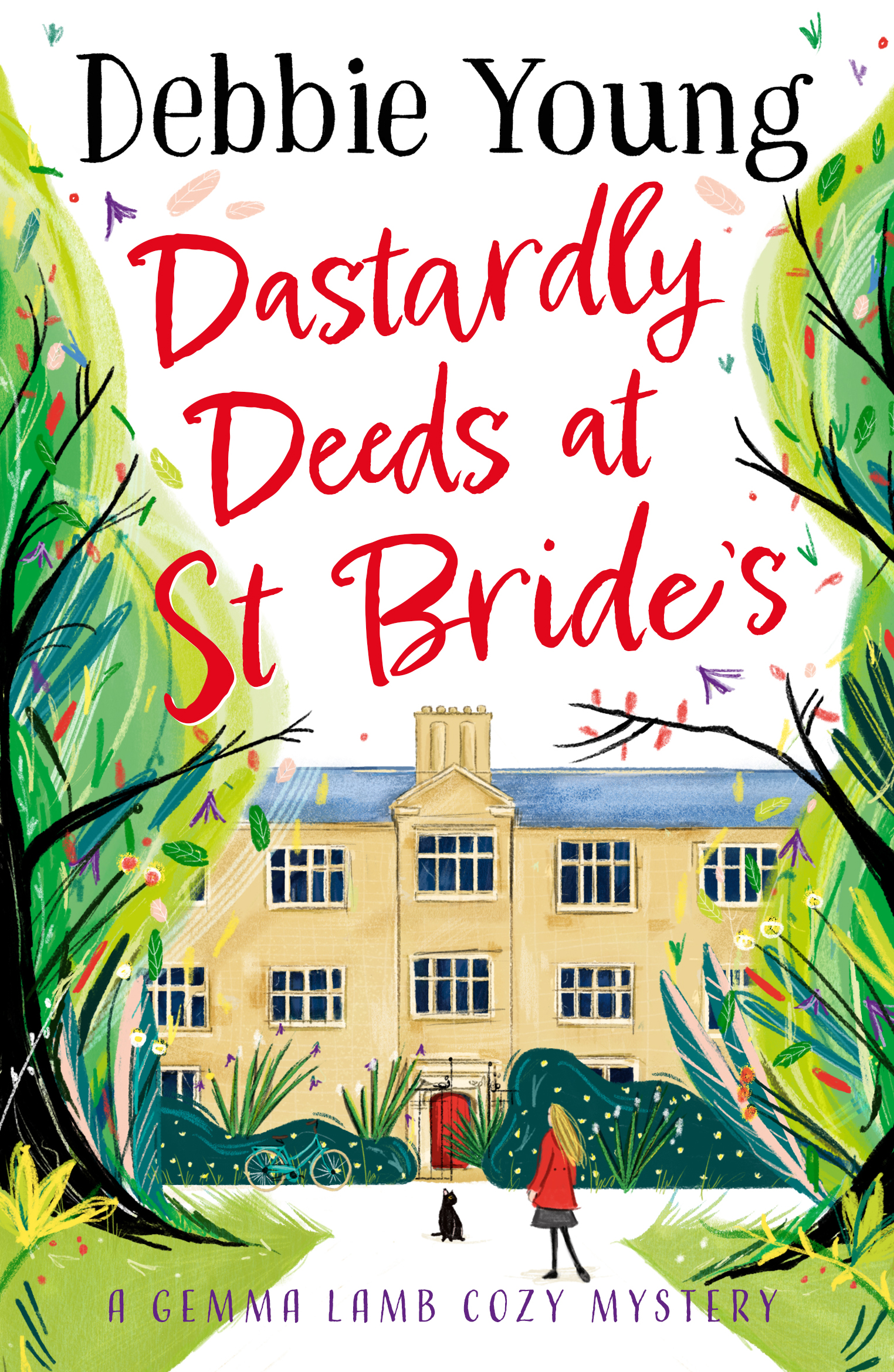
When Gemma Lamb takes a job at a quirky English girls’ boarding school, she believes she’s found the perfect escape route from her controlling boyfriend – until she discovers the rest of the staff are hiding sinister secrets:
Hairnet, the eccentric headmistress who doesn’t hold with academic qualifications
Oriana Bliss, Head of Maths and master of disguise
Joscelyn Spryke, the suspiciously rugged Head of PE
Geography teacher Mavis Brook, surreptitiously selling off the library books
creepy night watchman Max Security, with his network of hidden tunnels
Even McPhee, the school cat, is leading a double life.
Tucked away in the school’s beautiful private estate in the Cotswolds, can Gemma stay safe and build a new independent future, or will past secrets catch up with her and the rest of the staff?
With a little help from her new friends, including some wise pupils, she’s going to give it her best shot…
This one is short and sweet but shouldn’t detract from the fact that I thoroughly enjoyed this cosy mystery with a difference.
Dastardly Deeds at St Bride’s is definitely the book for all those who spent a childhood ensconced with a good boarding school book (The Chalet School, Malory Towers, St Claires etc). Sadly, there is no lacrosse, as the main characters here are all the teachers, but it is a charming story of our main character’s desire to start her life over again following an abusive relationship. There are a few mysteries to solve for her and a lovely cast of supporting characters, who all have their quirky sides, as does the boarding school itself.
I’ve been lucky enough to read book 2 and 3 already, and I will be sharing my reviews over the next few days, but I highly recommend checking out this new series if you love cosy mysteries (and tales of boarding schools).
Meet the Author
Debbie Young is the much-loved author of the Sophie Sayers and St Brides cosy crime mysteries. She lives in a Cotswold village where she runs the local literary festival, and has worked at Westonbirt School, both of which provide inspiration for her writing. She is bringing both her series to Boldwood in a 13-book contract. They will be publishing several new titles in each series and republishing the backlist, starting in September 2022.
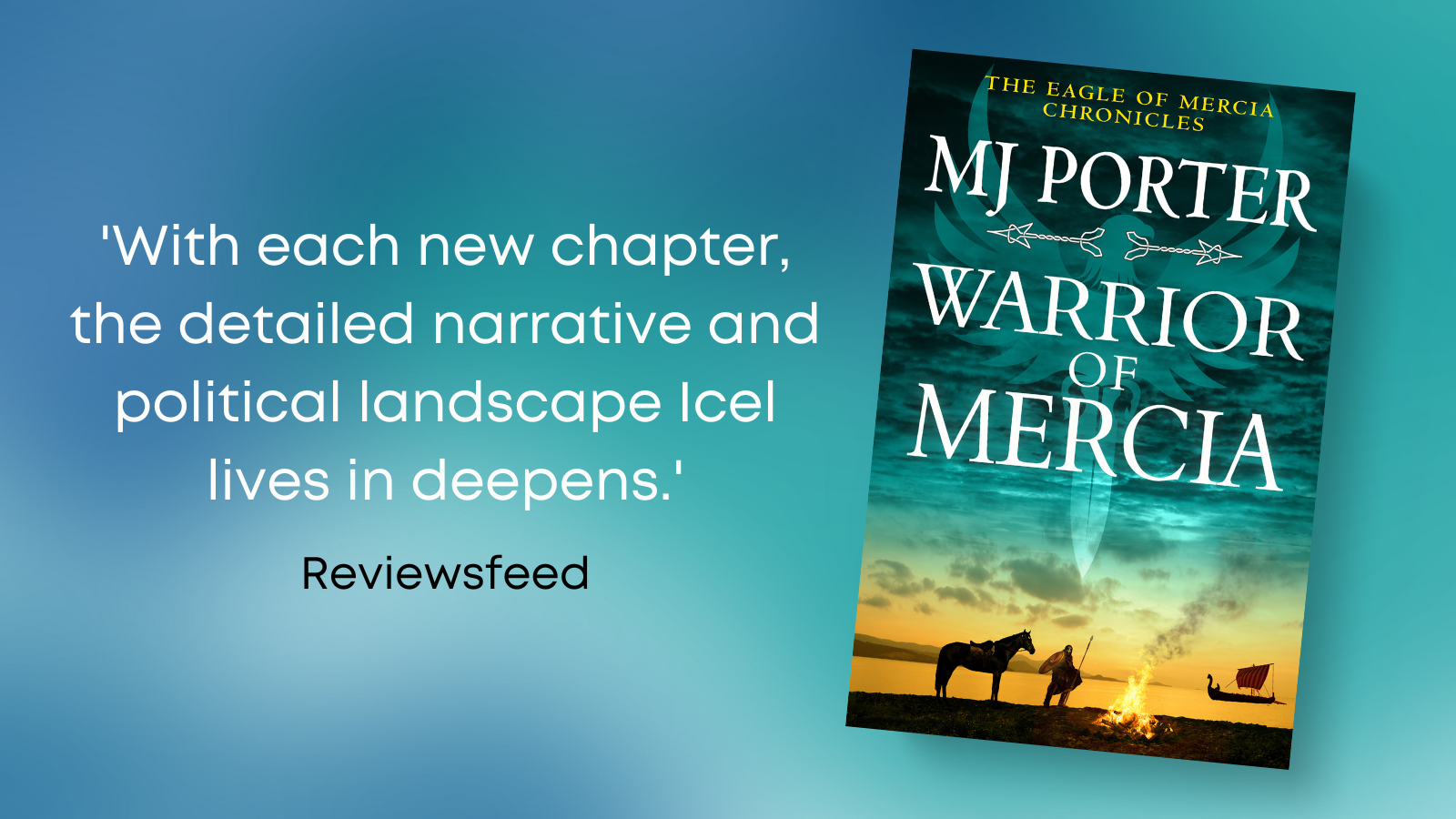
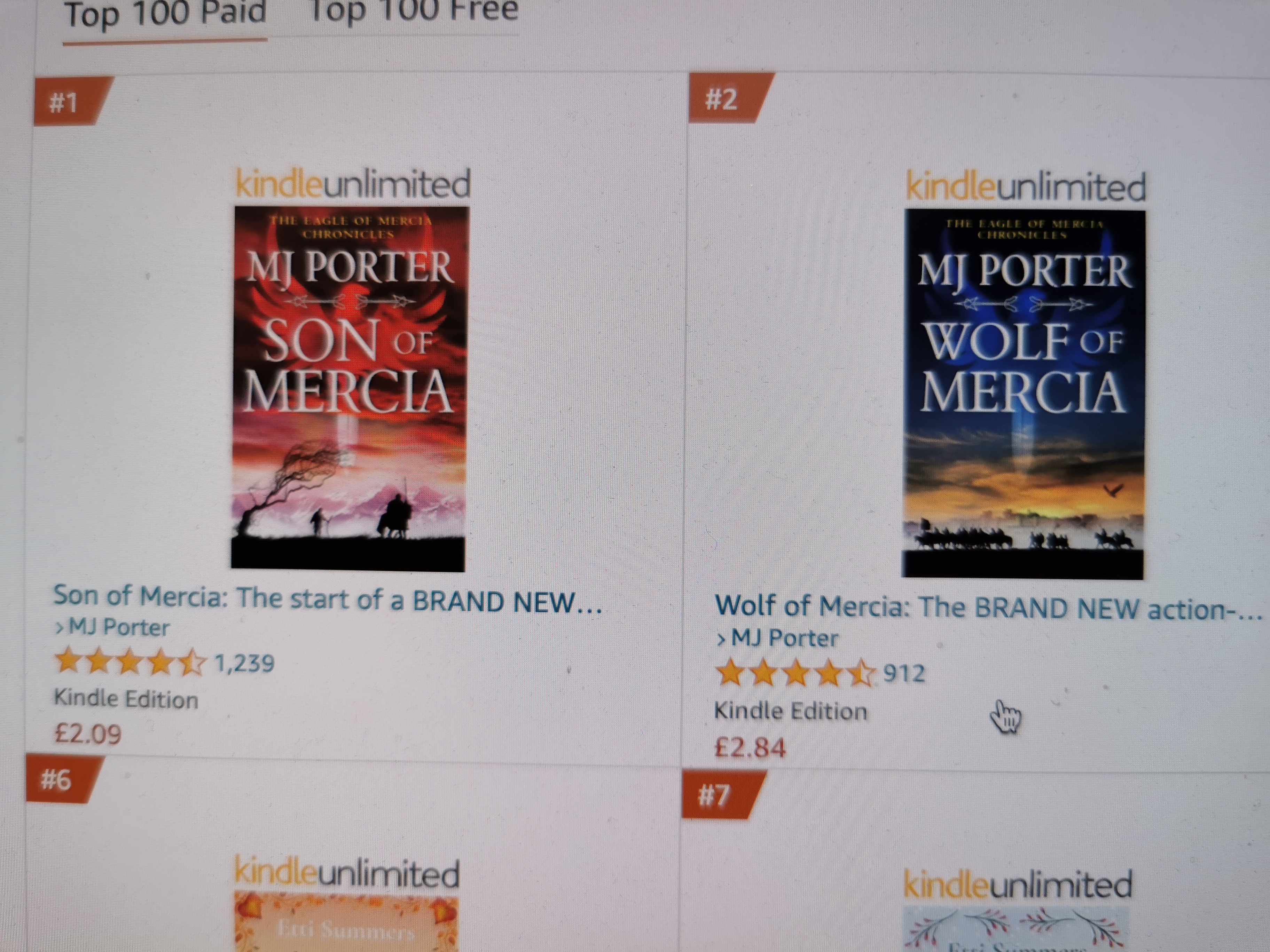
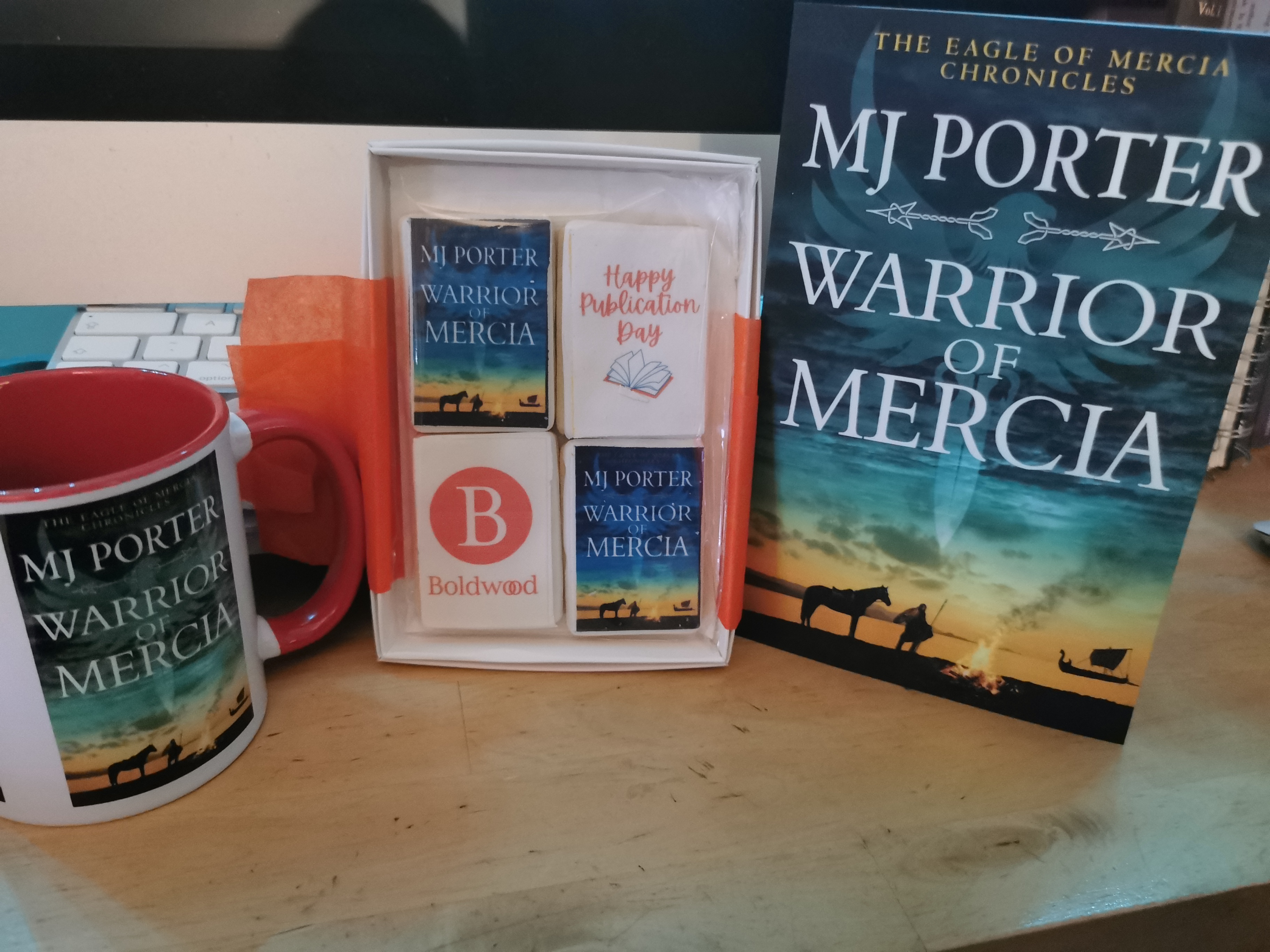
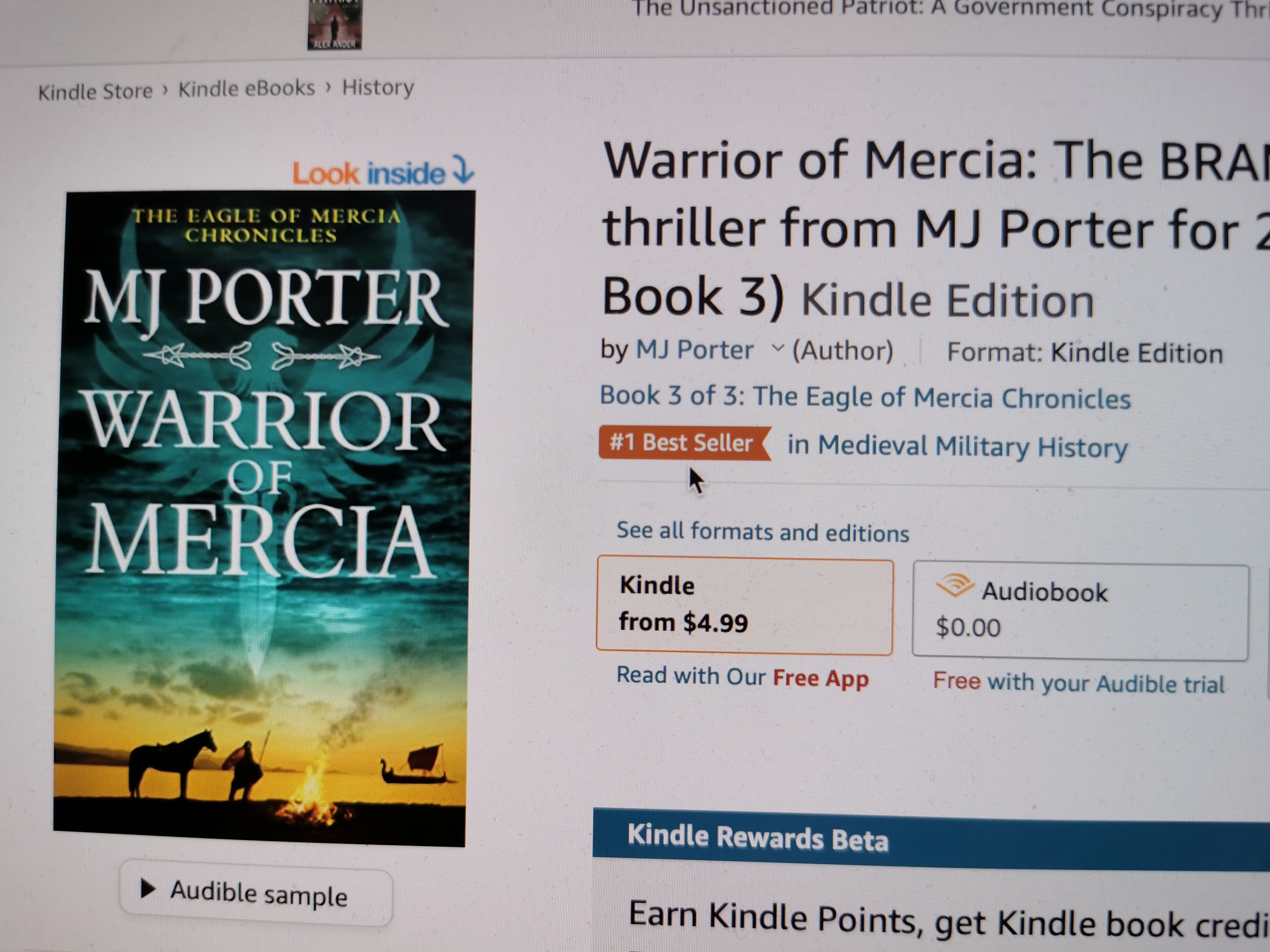
Today sees the release of book 3 in my series about young Icel, a much-loved character from my The Ninth Century series featuring King Coelwulf, the last king of Mercia. And so, now that Icel as a young man, and Icel as a crotchety older man are both firmly in reader’s minds, I thought I’d share more about the idea for the Eagle of Mercia Chronicles series.
My characters in the Ninth Century series feel like they very much arrived in my head fully formed. Coelwulf was obviously the first, but others quickly followed, and Icel, with his derisive comments about any of their accomplishments, was an early fan favourite, and one of my favourites as well. Surly, and outspoken, while offering little of his life before the period that my characters knew him, he really did speak to me when I was deciding on a new series to write for Boldwood Books. All those little comments he makes. I think the below is our first introduction to his character;
“In the reign of King Wiglaf I first became a man,” he’s fond of saying, although he never explains what act made him a man. Again, I’ve stopped questioning him. Edmund likes to when he’s either drunk too much, or is trying to distract himself from whatever attack we’re about to begin. And of course Rudolf hangs on Icel’s every word. They’re an excellent match for each other, the boy who never runs out of questions, and the man who never answers them.’ (The Last King)
All these hints at what he might really have been like when he was perhaps no older than Rudolf, another firm fan favourite, made me want to tell his story. It did help that Mercia, at the time he would have been a boy was in political turmoil. It also helped that the Viking Raiders were making an appearance in Saxon England as well throughout the 830s. But Icel is a fictional character, and while fictionalising my Saxon characters, the men and women I normally write about did actually exist, even if we only have their names. But Mercia, in the 820s and 830s suffered a series of successive kingships, many of which failed, and so while Icel is fictitious, he does allow me to give a more rounded view of the entirety of events. He will live through these tumultuous times, and that’s important when I wanted to write about these events as well as all the kings.
It also helped that, in my contrary nature as a writer of historical fiction, that I always want to offer something a little different to the oft-taken paths when authors write about Saxon England – the Vikings, the reign of Alfred, Ethelred the Unready and the Norman Conquest, as well as the Golden Age of Northumbria, are often chosen but there is just so much more in these six hundred years to write about. So, no one else was writing about Mercia as it begins to falter in the 820s and 830s, and so I thought, why not:)
I really, really hope you’ll enjoy book 3, Warrior of Mercia, which follows Icel to the kingdom of the East Angles. I can also assure you that Book 4 is well underway as well.
Icel is a lone wolf no more…
Oath sworn to Wiglaf, King of Mercia and acknowledged as a member of Ealdorman Ælfstan’s warrior band, Icel continues to forge his own destiny on the path to becoming the Warrior of Mercia.
With King Ecgberht of Wessex defeated and Londonium back under Mercian control, the Wessex invasion of Mercia is over.
But the Wessex king was never Mercia’s only enemy. An unknown danger lurks in the form of merciless Viking raiders, who set their sights on infiltrating the waterways of the traitorous breakaway kingdom of the East Angles, within touching distance of Mercia’s eastern borders.
Icel must journey to the kingdom of the East Angles and unite against a common enemy to ensure Mercia’s hard-won freedom prevails.
And you can follow the blog tour with Rachel’s Random Resources too. I’ll be updating with links to reviews, and I’d like to say a huge thank you to my blog tour hosts and usual reviewers for going out of their way to make release day so special.
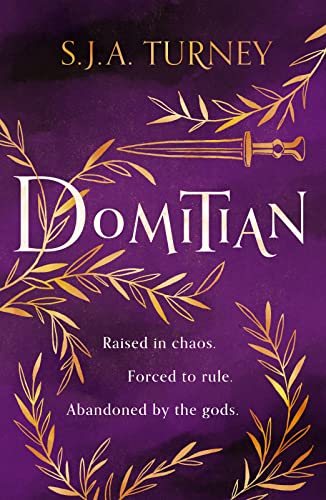
Rome, AD 52. The Julio-Claudian dynasty is in its death throes. Over the next twenty years, chaos descends as Claudius then Nero are killed. The whole empire bucks and heaves with conspiracy, rebellion and civil war.
Out of the ashes and discord, a new imperial family emerges: the Flavians. Vespasian is crowned emperor, with his sons, Titus and Domitian, next in line.
Domitian, still only a teenager, has known only fear, death and treachery for as long as he has been alive. Suspicious of the senate as a breeding ground for treachery, and fiercely protective of his surviving family members, he uses a network of spies to stay one step ahead of any would-be conspirators.
When Titus unexpectedly falls gravely ill, the throne beckons for Domitian, something he never wanted or prepared for. As in all his darkest moments, Domitian’s childhood guardian, Nerva, is the man he turns to with his fears, and his secrets…
My Review
Domitian by S J A Turney is an engrossing story of political shenanigans in first-century AD Rome.
I’m not hugely well-read on Roman history, but through reading Turney’s books, I’ve come to appreciate just what a rich tapestry there is to weave tales of corruption, war and politics. And cor, doesn’t Domitian have it all? The narrative starts during the reign of Nero, and takes us through the year of the four emperors, when Vespasian comes out on top, through the brief rule of his son, and then onto Domitian. It’s not quite as whistlestop as it sounds, but the viewpoint Turney adopts, through the eyes of Nerva, allows the reader to stand back and watch it all happen, perhaps, like me, with an increasingly open mouth of disbelief.
This isn’t a fast read, as perhaps others of Turney’s more martial Roman stories might be, but it is absorbing. There isn’t a cast of thousands, but there are still many men who rise and fall (not so many women, but they are still included in the story), and events that we all might know more about, such as the eruption of Vesuvius and the continuing invasion of Britannia under Agricola (I see what you did there Mr Turney:)).
This is a story of politics, spies and corruption; of men who don’t want to fall into the same traps as those who went before. It is a fabulous story, and I highly, highly recommend it.
I’m delighted to have the opportunity to grill Linnea Tanner about her new book, Skull’s Vengeance.
Thank you, MJ, for hosting my blog tour of Skull’s Vengeance (Curse of Clansmen and Kings, Book 4) and for giving me the opportunity to discuss some of the resources I used to research the history and mythology of Celts in Roman Britain.
Is there a book that first inspired your passion for the era of Roman Britain?
Although the setting of the book is toward the end of the era of Roman Britain, I was first inspired about the time period with Marion Zimmer Bradley’s novel, The Mists of Avalon. The novel explored pagan beliefs and rituals of the Celts which were being replaced by the Christian religion. This novel introduced me to the concept of a “sovereignty goddess” who confers sovereignty on a mortal king in a ritual union. The key element of their sacred marriage—his kingship—is the consummation between the king and the Goddess of the territory he is to rule over. There is a scene in The Mists of Avalon in which Arthur sleeps with his sister, Morgaine—a priestess of the Goddess—as part of the ritual to confer his kingship.
Do you have non-fiction book recommendations for people who might just be discovering this period in time?
Several books about ancient Celts have been written by Professor Barry Cunliffe that describe the rise and fall of the Celtic civilization spanning from Ireland, across northern Europe, and as far as Turkey. Two of his books that I keep on my bookshelf are: The Ancient Celts and Britain Begins.
Is there a resource that you wouldn’t be without when you’re writing your books?
I often refer to Joseph Campbell’s The Hero with a Thousand Faces for elements of the hero’s journey. Also, I keep reference books such as a thesaurus and dictionary handy. Other resources include The Chicago Guide to Grammar, Usage, and Punctuation and The Elements of Style by William Strunk, Jr. and E.B. White.
How did you go about researching the more fantastical elements of your stories?
I use a variety of resources including Greek, Roman, and medieval historical accounts; various books about Celtic mythology; and archaeological books. Some of my favourite books include: The Celtic Heroic Age edited by John T. Koch in collaboration with John Carey; The History of the Kingsof Britain by Geoffrey of Monmouth; The Religion of the Ancient Celts by J. A. MacCulloch; and The Druids by Peter Berresford Ellis.
Who are your favourite authors who write similar stories?
My favourite authors are Marion Zimmer Bradley and Diana L. Paxon for the Roman Britain time period. However, I’ve recently enjoyed reading novels set in the Saxon/Viking Middle Ages. One author I follow is Eric Schumacher and his character-driven, action-packed Viking series: Olaf’s Saga and Hakon’s Saga.
Do you have a favourite place to visit in Britain?
Oh…this is like trying to choose your favourite child. I’ve had the opportunity to explore London, Hadrian’s Wall, Bath, Stonehenge, Salisbury, Canterbury, and Wales. However, I keep returning to Dover and exploring the grounds around the historical castle in which there is a well-preserved Roman lighthouse.
Dover Castle Roman Lighthouse
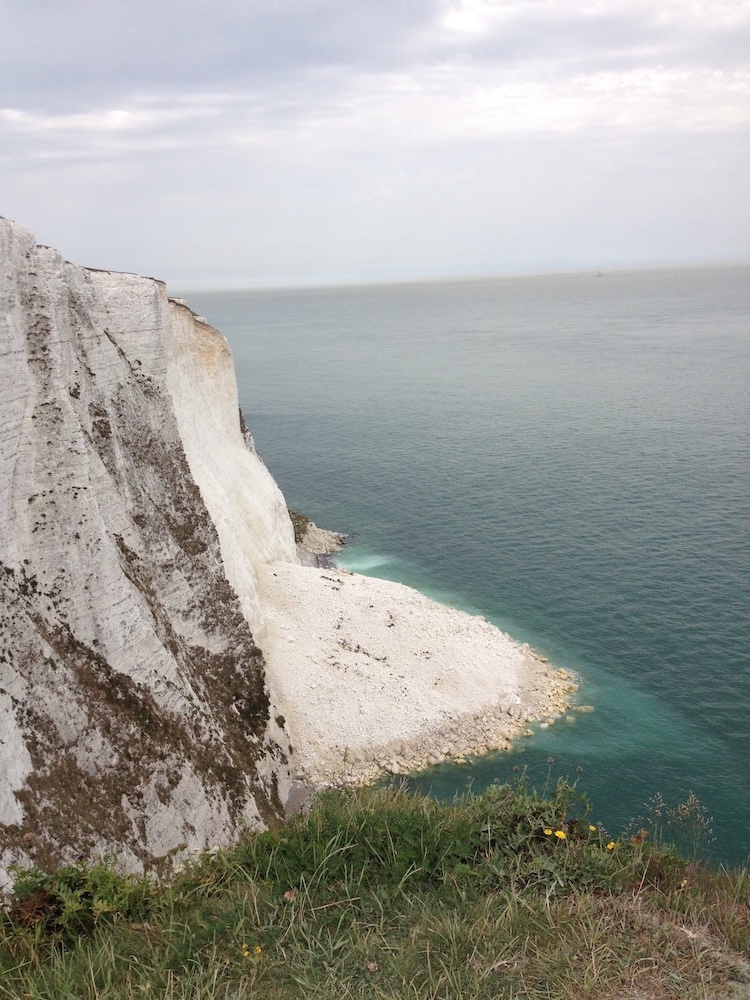
One of my biggest thrills was to hike eleven miles from Deal to Dover in 2012. Right before our hike, a large wall of the Dover Cliffs collapsed into the sea of which I took a photo.
Collapsed Wall White Cliffs
Five years after that, my husband and I brought our granddaughter with us to hike the trails around Dover. Some of the scenes in Skull’s Vengeance take place on the hilltop overlooking the city.
Hiking Dover Cliffs
Thank you so much for sharing such great answers. Marion Zimmer Bradley was definitely an influence for me as well, as was Patricia Kenneally Morrison:)
Here’s the blurb:
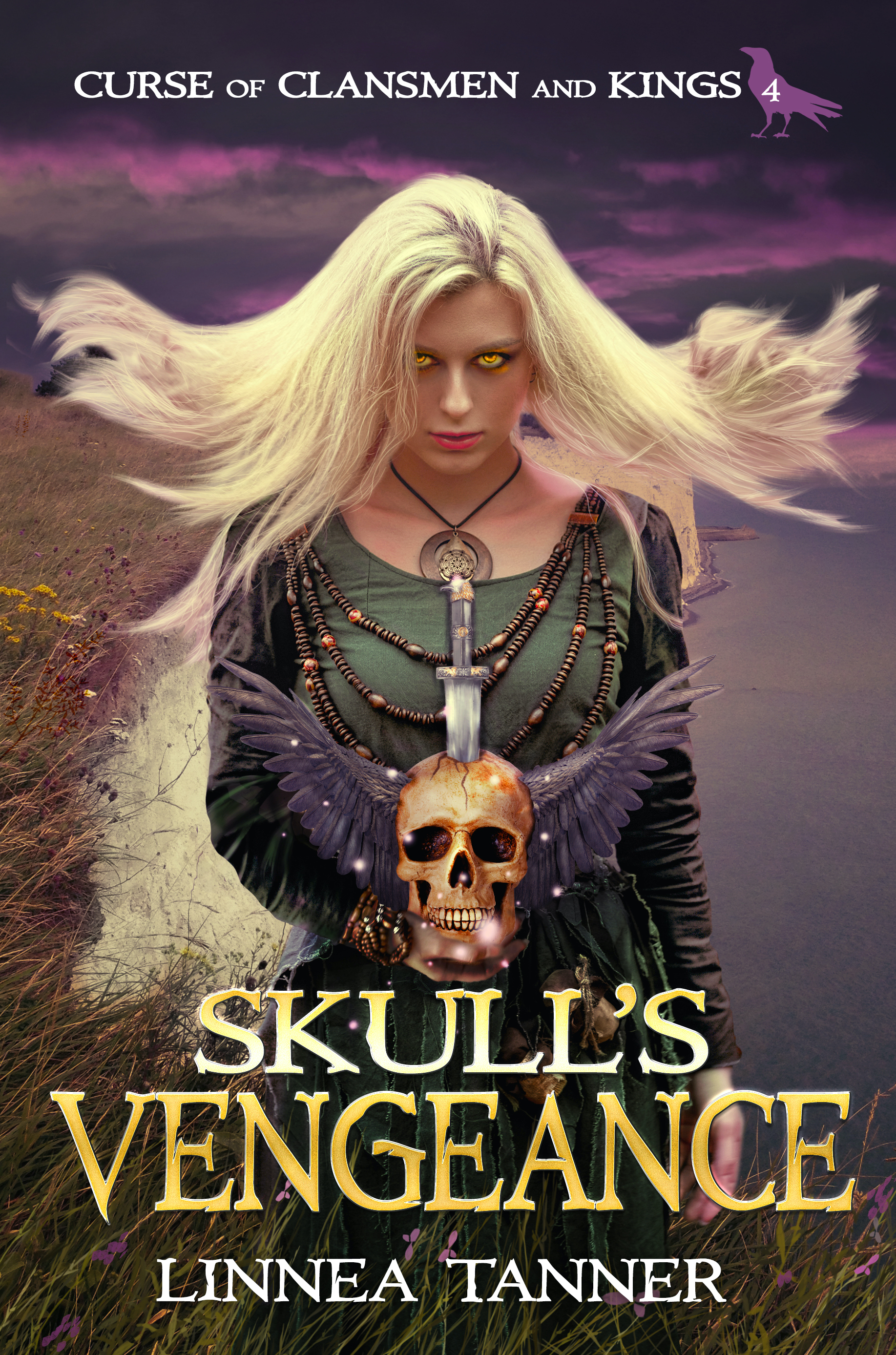
A Celtic warrior queen must do the impossible—defeat her sorcerer half-brother and claim the throne. But to do so, she must learn how to strike vengeance from her father’s skull.
AS FORETOLD BY HER FATHER in a vision, Catrin has become a battle-hardened warrior after her trials in the Roman legion and gladiatorial games. She must return to Britannia and pull the cursed dagger out of the serpent’s stone to fulfill her destiny. Only then can she unleash the vengeance from the ancient druids to destroy her evil half-brother, the powerful sorcerer, King Marrock. Always two steps ahead and seemingly unstoppable, Marrock can summon destructive natural forces to crush any rival trying to stop him and has charged his deadliest assassin to bring back Catrin’s head.
To have the slightest chance of beating Marrock, Catrin must forge alliances with former enemies, but she needs someone she can trust. Her only option is to seek military aid from Marcellus—her secret Roman husband. They rekindle their burning passion, but he is playing a deadly game in the political firestorm of the Julio-Claudian dynasty to support Catrin’s cause.
Ultimately, in order to defeat Marrock, Catrin must align herself with a dark druidess and learn how to summon forces from skulls to exact vengeance. But can she and Marcellus outmaneuver political enemies from Rome and Britannia in their quest to vanquish Marrock?
Trigger warnings:
Sex, Slave trafficking and abuse, Violence, Childbirth
Acclaim for other books in the Curse of Clansmen and Kings series:
“[An] epic tale of love, betrayal and political intrigue.” —InD’tale Magazine
“The requisite fantasy elements of magic and mystery abound…Tanner also does an admirable job weaving in the politics and mythology of a bygone people.” —Kirkus
“Part fantasy, part historical fiction, Linnea Tanner has woven together a wonderful tale of romance, intrigue, mystery, and legend to create an entertaining and complex story.” —The International Review of Books
“[A] captivating tale of triangles; love, lust and espionage; friend, foe, and spies; barbarians, civilized Rome and spiritual-supernatural beings.” —2019 Pencraft Book of the Year Award
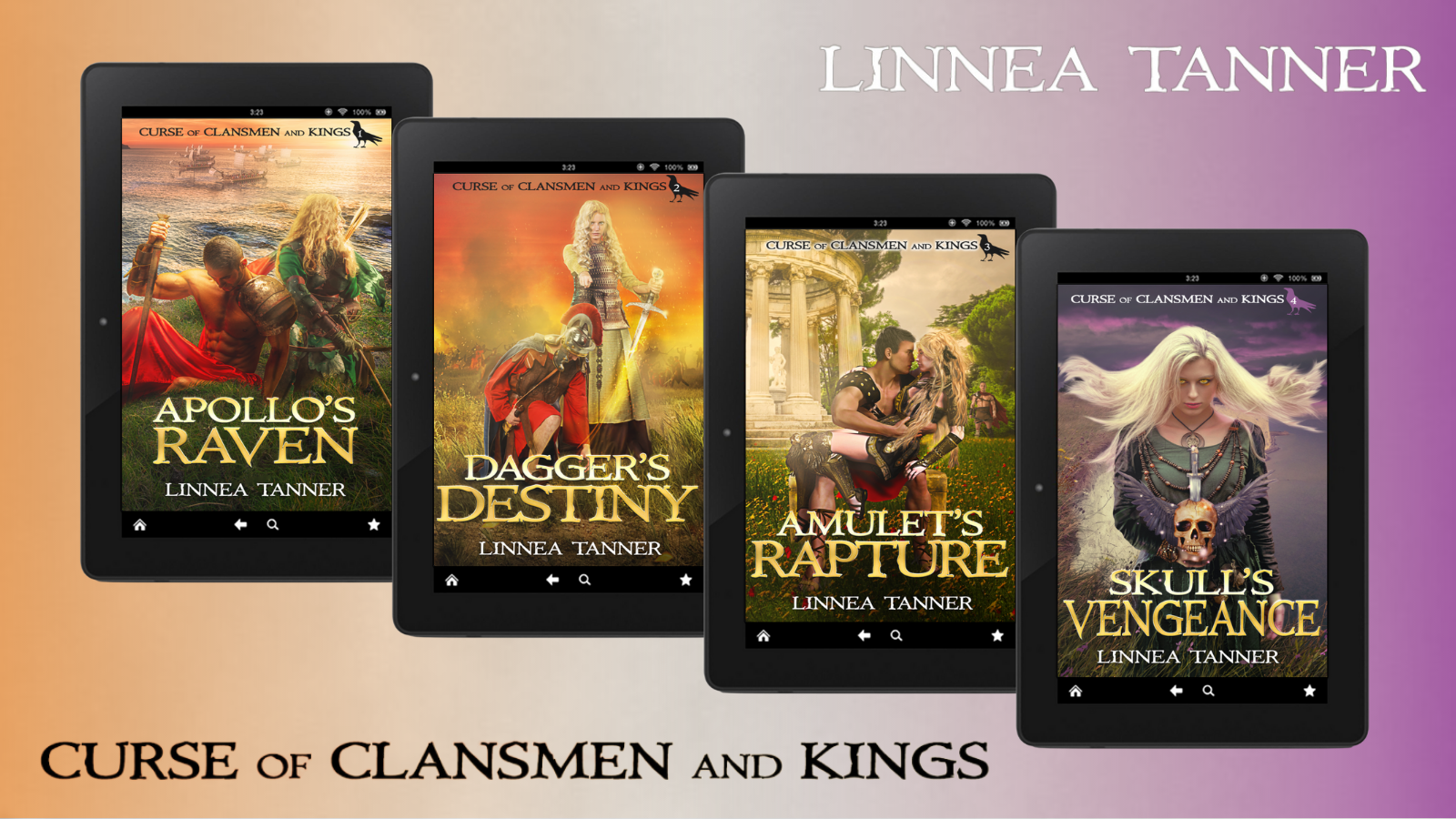
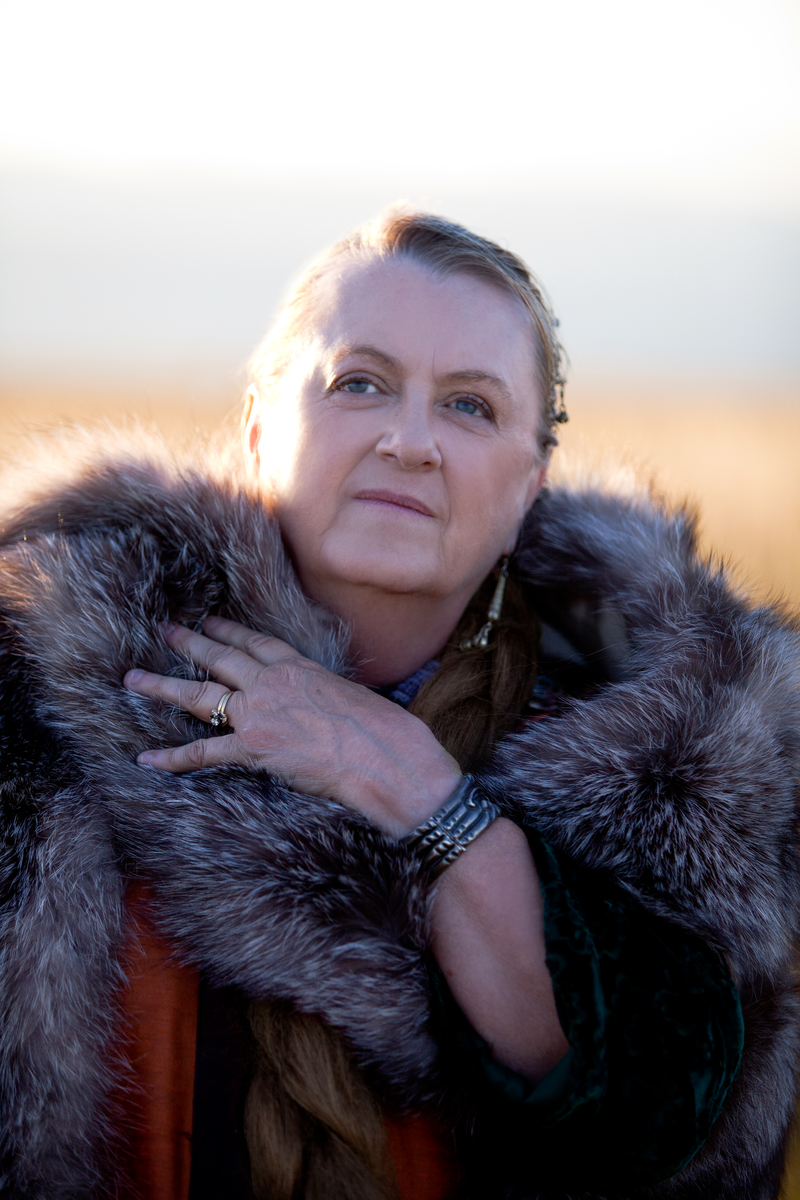
Award-winning author, Linnea Tanner, weaves Celtic tales of love, magical adventure, and political intrigue in Ancient Rome and Britannia. Since childhood, she has passionately read about ancient civilizations and mythology. Of particular interest are the enigmatic Celts, who were reputed as fierce warriors and mystical druids.
Linnea has extensively researched ancient and medieval history, mythology, and archaeology and has traveled to sites described within each of her books in the Curse of Clansmen and Kings series. Books released in her series includeApollo’s Raven (Book 1), Dagger’s Destiny (Book 2), Amulet’s Rapture (Book 3), and Skull’s Vengeance (Book 4).
A Colorado native, Linnea attended the University of Colorado and earned both her bachelor’s and master’s degrees in chemistry. She lives in Fort Collins with her husband and has two children and six grandchildren.
The start of a brand NEW series – an unputdownable fast paced adventure, filled with unforgettable characters.
989 AD.
Alfred the Great’s dream of a united England has been forged by his daughter Aethelfaed and grandson, King Aethelstan.
The Vikings have been expelled from York following the death of Erik Bloodaxe, and for two generations there has been peace between Saxon and Dane.
A new Viking warlord Olaf Tryggvason seeks revenge for Bloodaxe’s death and the slaughter that followed, and has set his sights on a fresh assault on England’s shores. With Skarde Wartooth they set sail for Saxon lands, hungry for glory, conquest and vengeance.
Beornoth, a brutal and battle-hardened Saxon Thegn, is called to arms to fight and protect the Saxon people from the savage Norse invaders. On a personal crusade, he joins the army of Byrthnoth, Lord of the east Saxons in a desperate fight against the bloodthirsty Vikings.
Beornoth must lay his own demons to bed, survive vicious attacks and find redemption for his tragic past.
If you like Bernard Cornwell, Simon Scarrow, Conn Iggulden, and David Gemmell you will love this epic Saxon adventure packed with battles, Vikings, and adventure.
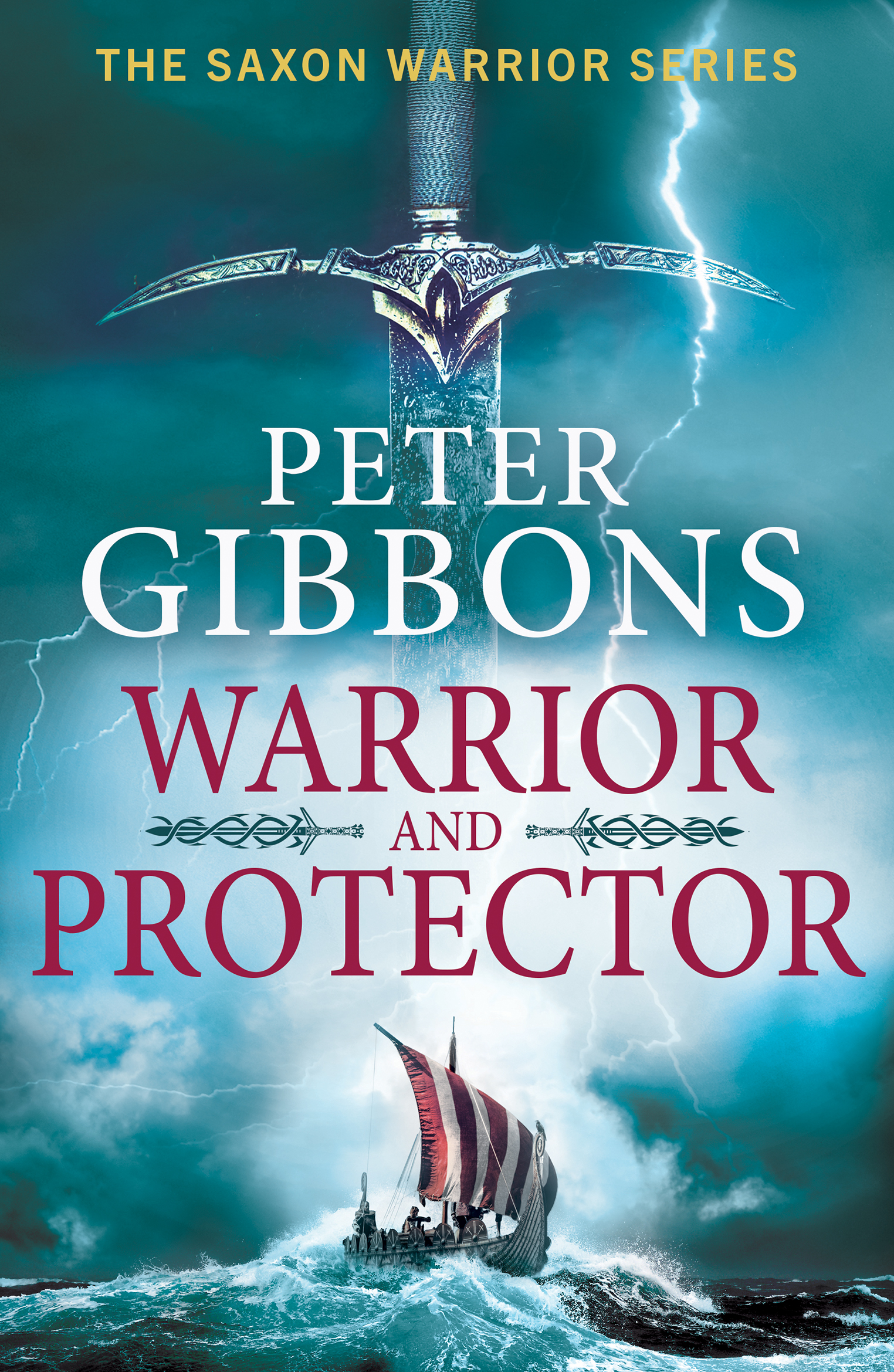
Warrior and Protector takes the reader to England in the late 980s.
While England may have been largely peaceful and free from attacks from the Viking raiders for the last thirty years, Beornoth, once a respected thegn, is tormented by his own failings as a husband, warrior and father. Only the return of his despised enemy can rouse him from his drunken stupor. And luckily for Beornoth, but not for the English, the Viking raiders are about to make an unwelcome return to the eastern shores of England. Beornoth is forced to face his enemy and his past and, in the process, make a few new enemies as well.
This tale of England in the 980s resounds with the fierceness of battle-hardened men, both the English and the Viking raiders, and the concluding battle is portrayed in fierce and bloody detail.
I’m looking forward to following this series that will take readers to one of the best-known battles in Saxon England.
Meet the Author
Peter Gibbons is a financial advisor and author of the highly acclaimed Viking Blood and Blade trilogy. He comes to Boldwood with his new Saxon Warrior series, set around the 900 AD Viking invasion during the reign of King Athelred the Unready. The first title of the new series, Warrior and Protector, will be published in October 2022. He originates from Liverpool and now lives with his family in County Kildare.