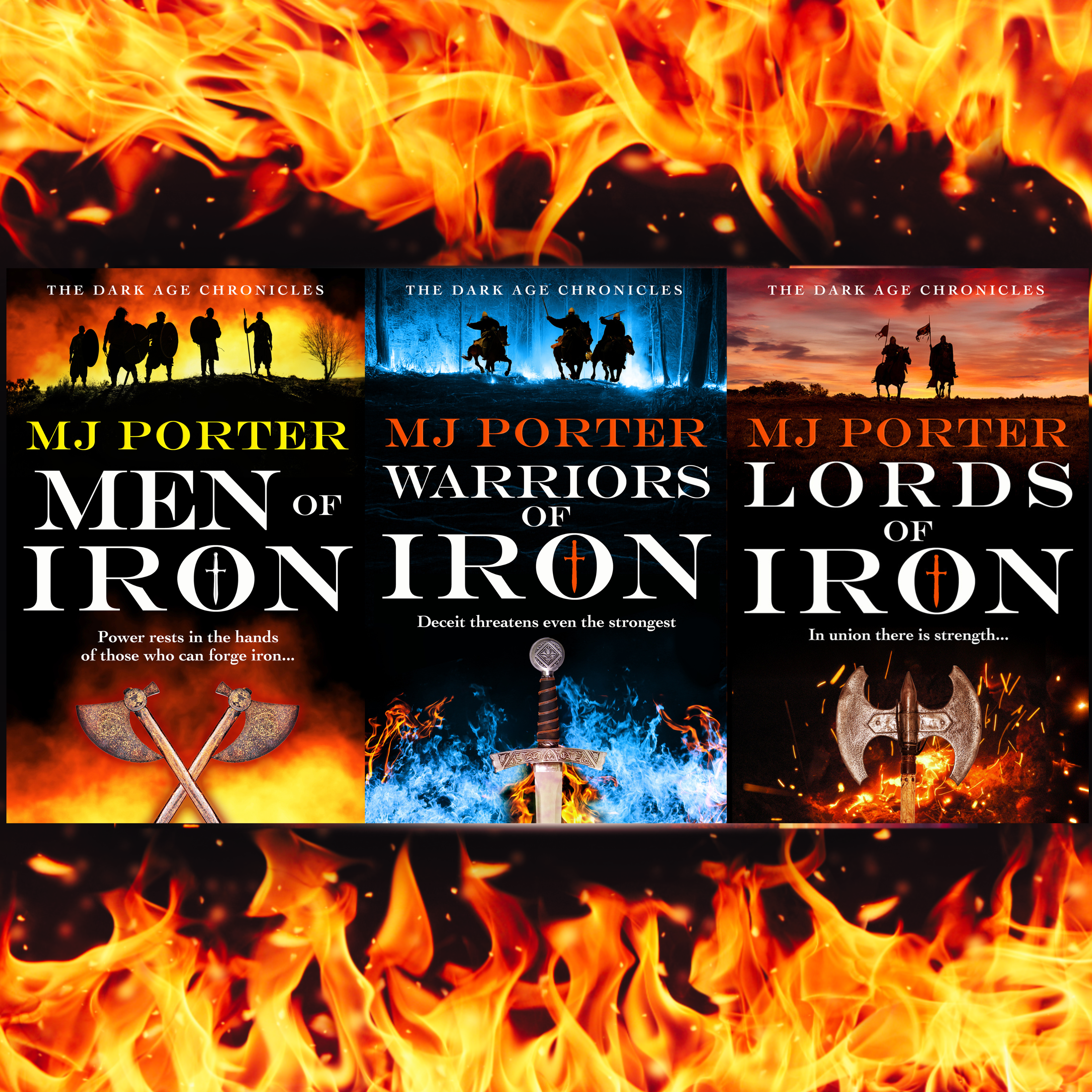
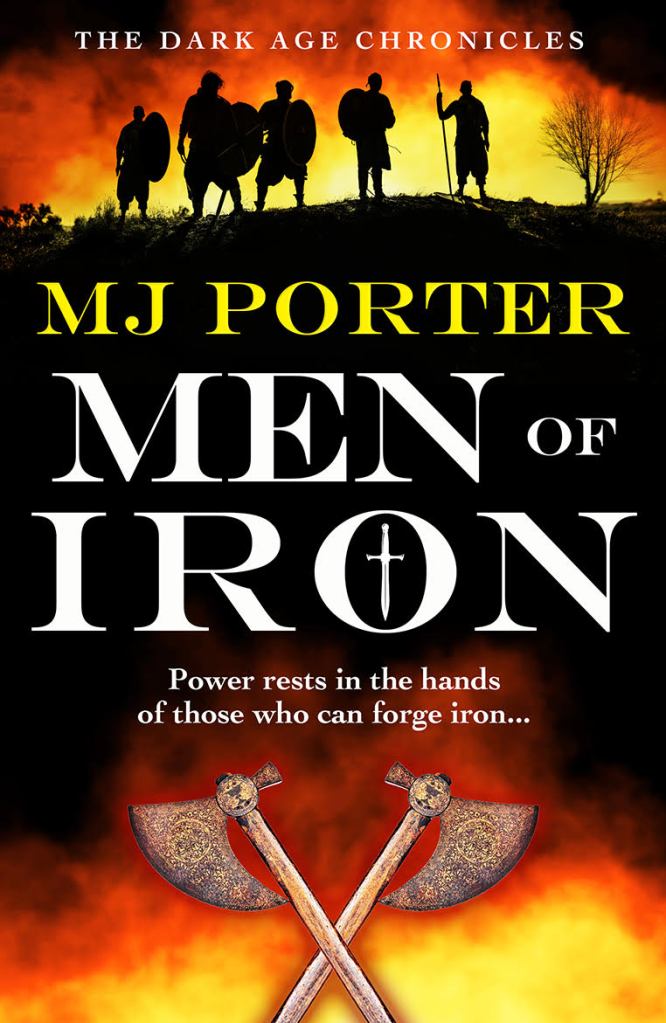
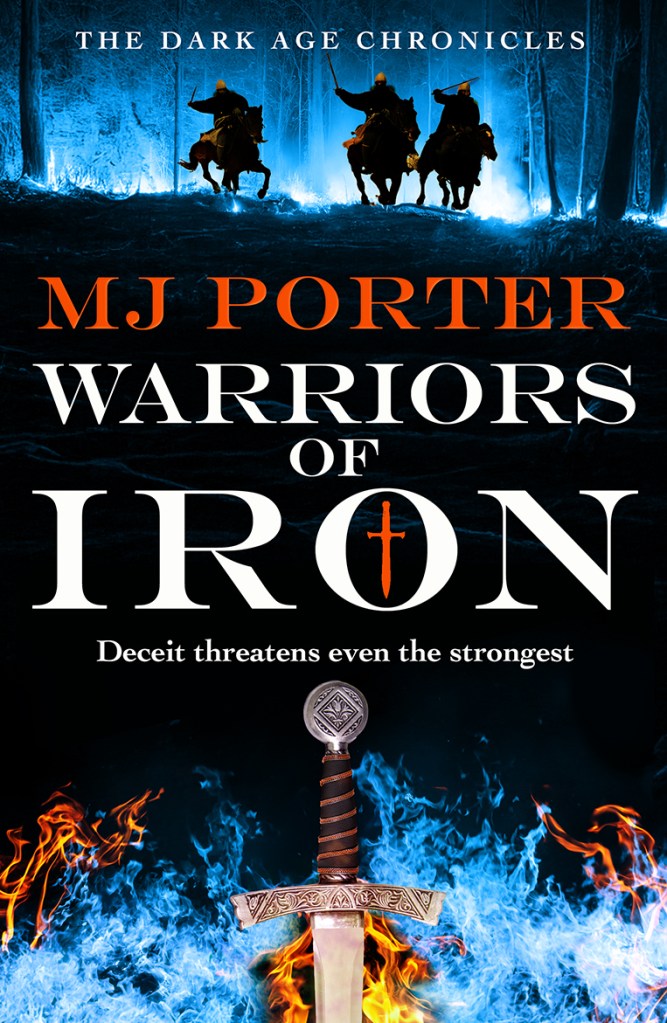
The Dark Age Chronicles might be complete, but I imagine my readers still have questions. Check out this blog post about what comes before (and what came after) #TheDarkAgeChronicles#MenOfIron #WarriorsOfIron #LordsofIron #histfic

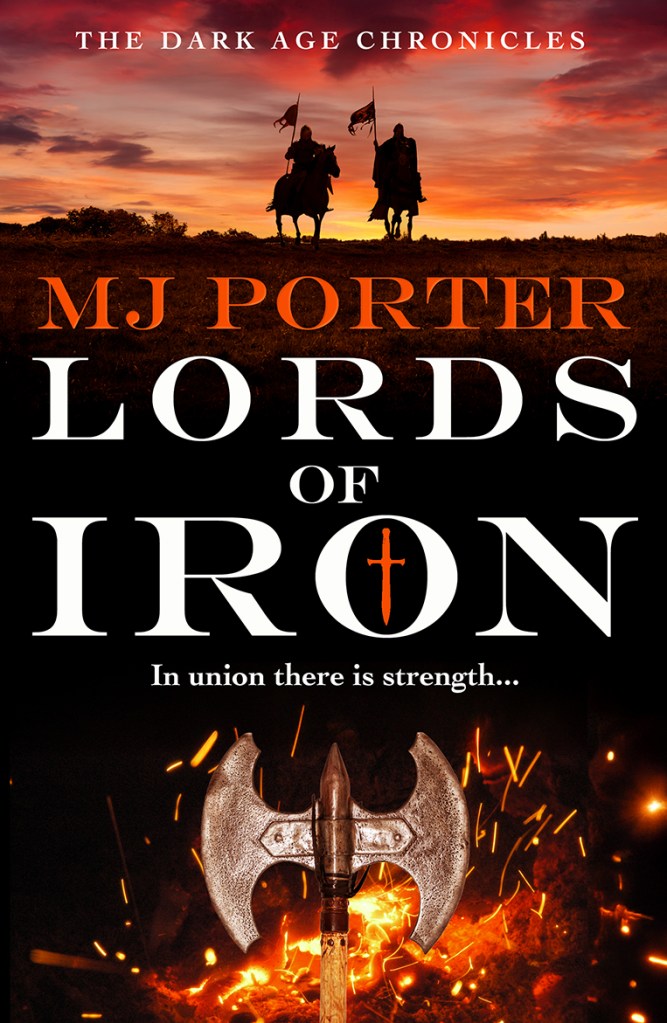
It’s happy release day to Lords of Iron, the third and concluding book in the Dark Age Chronicles Trilogy. Let’s talk about battle standards #newrelease #MenOfIron #WarriorsOfIron #LordsofIron #histfic

What comes after the events of the Dark Age Chronicles (as well as before)

In deciding on a date to set the Dark Age Chronicles, I was quite careful. I wanted it to be after the era of the legendary Arthur (the battle of Camlann is dated to 537 in the Annals Cambriae (the Welsh Annals)), but also before written sources start to make some references to what was happening in what would become Saxon England in the later 500s anywhere that wasn’t in the south/south-east. 

In the A version of the ASC there are 26 entries for the 500s. Eight are dated before AD540. These are mostly concerned with events in the south, Kent, the Isle of Wight, and Portsmouth, and their legendary Saxon founders. After 540, we’re treated to the genealogies for what would become Northumbria (547 and 560), Wessex  (552 and 597) as well as having references to the religions in Britain at the time, through accounts of Columba and the missionary activities in Kent from Pope Gregory. There are any number of battles between those forging a foothold in their newly forming kingdoms and the native Britons.
Our first real reference for anything happening in what would become the kingdom of Mercia is under the year 577 when we’re told Gloucester, Cirencester and Bath were taken from the ‘Britons’ by Cuthwine and Ceawlin (of Wessex). Gloucester would certainly be within the later kingdom of Mercia. Cirencester and Bath weren’t.

While I’ll repeat that the Anglo-Saxon Chronicle wasn’t begun until the 890s (so over 300 years later) and Bede, which much of the ASC is based on at this time, was writing in the 730s (so nearly two hundred years later), I still wanted almost a clean slate for my characters to inhabit. There was also the matter of plague to try and avoid, as well as a series of bad harvests, that are referenced but don’t form more than a background detail in the books.

I felt that to truly gain a ‘feel’ and an ‘understanding’ for what might have been happening at this time, it was necessary to step aside from any historical account and to rely on the archaeological record. The years 540 and 541 felt as though they provided a good opportunity to do just that. However, it’s always important to have an eye to what was going to happen, as well as what had happened before. And, as I wrote, a number of elements seemed to become very clear to me. While there are reports of battles amongst the Saxon invaders and the native populations (six of them in those eight entries before 540, although some of them are quite small), and while they feel quite overwhelming when simply listed because they form so much of the narrative, there aren’t a lot of them mentioned before AD540. The impetus certainly seems to gather pace after that date (of the remaining 18 entries, eight reference what seem to be quite large battles). Why this might have been, began to make sense as I explored the idea of no new iron production after the end of Roman Britain, until the skill was ‘rediscovered.’ Without the ability to easily overwhelm an enemy through new blades that weren’t made from recycled metals, would people who’d endured famine and plague, really want to risk it all when there was no chance of success? It felt unlikely. Would you? The need to fight isn’t always taken when you know you’ll succeed, sometimes it’s also desperation, but if these settlements were doing reasonably well, why take the chance? Surely, they needed to rebuild and form alliances to survive.

And so, as I’ve written the trilogy, what would come after – the increasing battles, the desire of the invaders to establish ‘kingships’ in Wessex, Kent, Northumbria, Mercia and the kingdom of the East Angles, began to make a lot more sense – with the rediscovery of how to forge sharpened blades (or indeed, to import them when the ‘invaders’ arrived (whether to intermarry or to make war), because unlike in Britannia, the ability to forge blades didn’t become lost in the homelands of the Saxon invaders) there were suddenly people who could start to dominate, and who would want to dominate. 
And yet, the archaeology couldn’t be forgotten either. There aren’t many battle sites known from this era. What can be said with more surety, is that there was a co-mingling – all sorts of crossovers are found in the burial record – and indeed, the burial rites of many changed during this undocumented sixth century. There was undoubtedly discord between peoples, but there was also accord. Until there wasn’t. So, something had to change to bring about the formation of the Saxon kingdoms. I’m not saying my ideas are correct, but they are intriguing, especially when played out in a fictional environment where I can endeavour to explain what might have been happening – both in terms of war, and peace. (And, some would argue not all iron production was lost – it certainly wasn’t – but it becomes much more difficult to ‘find’ – i.e. no nails to secure coffins in the burial record in the heartland of England – what was happening in Wales/Devon and Cornwall is very different). 

After the Dark Age Chronicles, we move into a period where identifiable kingships and kingdoms are forming – we’re moving into what would become Saxon England, and towards the events of the seventh century, which would be dominated by discord between Mercia and Northumbria, Wessex and the other kingdoms, and the reigns of the alleged ‘bretwaldas’ (wide rulers.) We’re moving towards what’s more immediately understood and known, but the sixth century is where these developments have their routes, as twisted, tangled, unexplainable and often, as baffling as they are. (And we don’t really need a legendary figure to explain what’s happening, do we, although the prevalence of Excalibur does perhaps answer to these questions as well?). We’re moving towards The Gods and Kings Trilogy.
Purchase Link
https://amzn.to/4qaRuy3

Check out the Dark Age Chronicles page for more information about the trilogy

Blog links
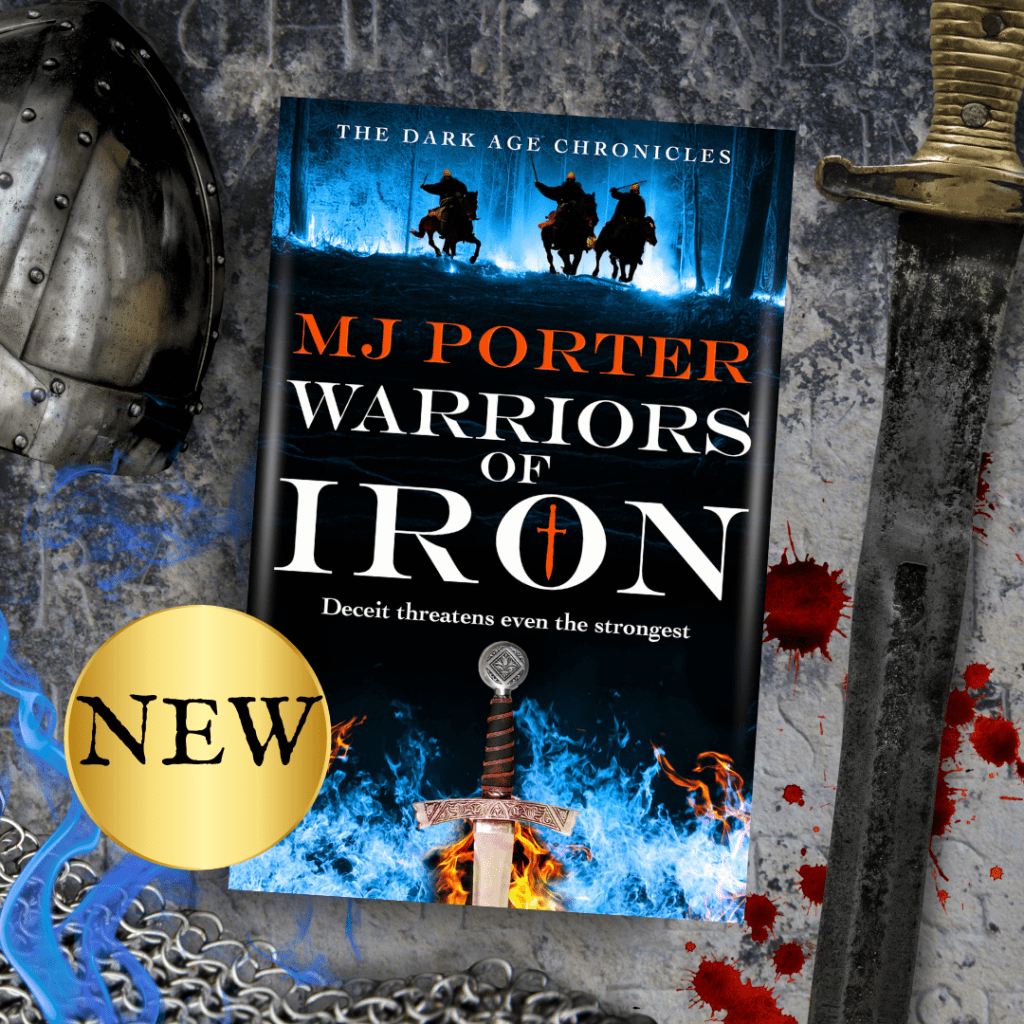
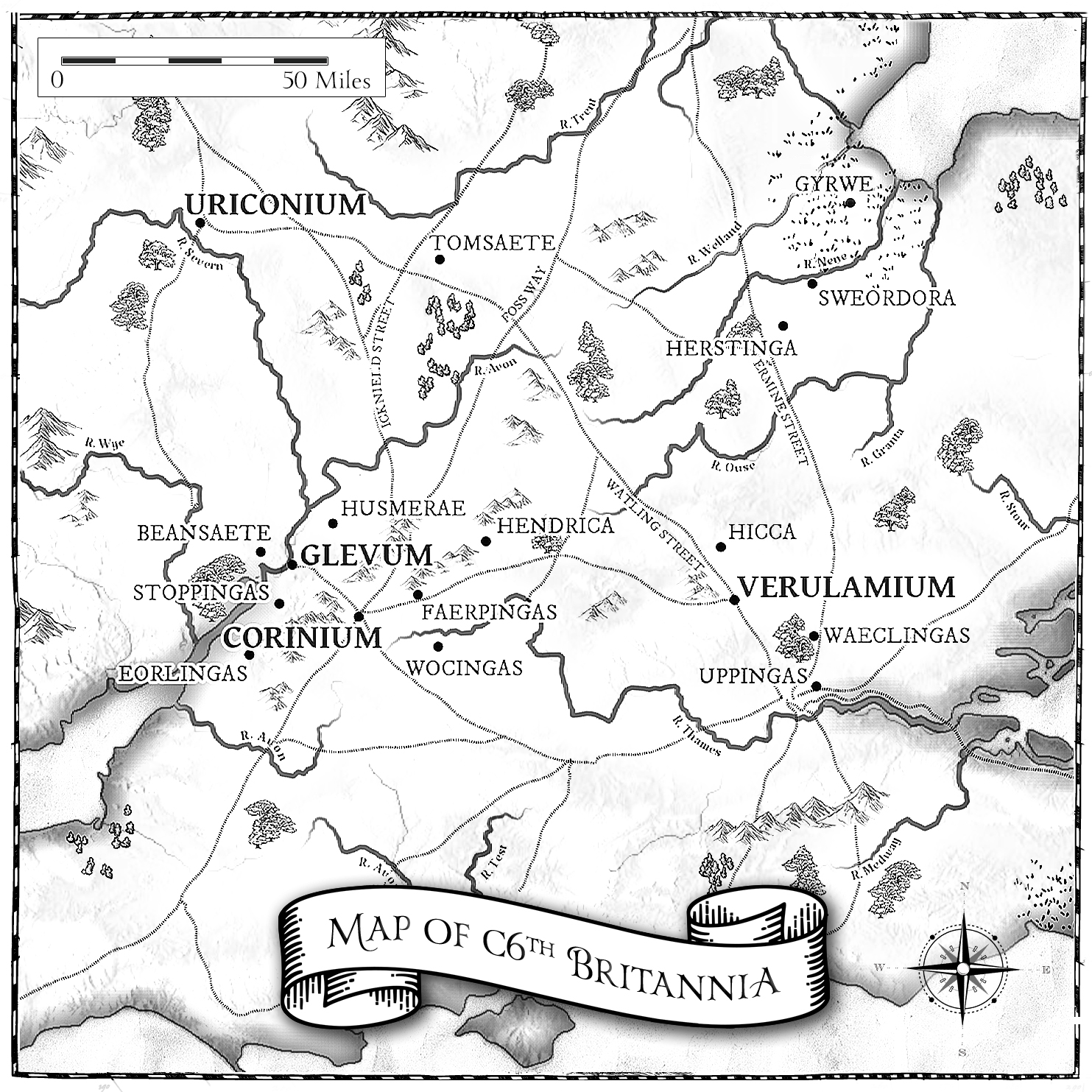
Image shows a map of Early England showing the places mentioned in the text of the book
The Dark Age Chronicles Map

Introducing 757, the first book in the brand new series, The House of Mercia #fiction #nonfiction #Mercia

Introducing 757, the first book in the brand new series, The House of Mercia #fiction #nonfiction #Mercia #MJPorter #HistoricalFiction #SaxonEngland #VikingAge #AngloSaxonHistory #BernardCornwell #LastKingdom #HistFic #ReadingCommunity #BookTok #Vikings

Here’s the blurb for 757

This is Mercia. The year is 757. 
A king will fall. A king will rise. 
But first, civil war will rage.

King Æthelbald’s forty-year vice-like rule over Mercia has been rigid. But he lacks a legitimate heir despite his insatiable bedchamber antics.

Offa must stand hostage to his family’s good behaviour, when his father missteps in removing his mother from Æthelbald’s bed. Shockingly, his younger sister now replaces her.

But the king isn’t finished with his denigration of Offa’s noble House. When his parents are traitorously killed, Offa’s resentment grows, compounded by the ridicule heaped on him by King Æthelbald’s oathsworn warriors.

With the king’s health deteriorating, the matter of the succession becomes paramount. There are plenty who share a claim to the kingship.

Discord threatens to fracture the mighty realm, and those with sword and shield, seax and spear are prepared to risk it all to be the future king of Mercia.

books2read.com/757

The background to the House of Mercia – AKA what happens after the Gods and Kings trilogy

If you’ve been with me for a while, you’ll know I’ve written about Mercia in many of the centuries of its existence. Until now, I haven’t ventured into the eighth century and many of you might not have read the Gods and Kings Trilogy (there is still time to get it read before House of Mercia hits the shelves), and even if you have, there’s a century between the final events of Warrior King (655) and the beginning of 757, the first book in The House of Mercia series. So, I thought it was time to add some flavour to this century.

The Gods and Kings trilogy follows a collection of mighty warrior kings in Saxon England from the 620s to the 650s, as the ‘larger’ Saxon kingdoms were forming – (Northumbria from Bernicia and Deira) (Mercia from the heartland of Mercia centred around the area of the Tomsæte (yep, they get a mention in the Dark Age Chronicles) to include the kingdoms of the Hwicce, the Magonsæte, Lindsey and Elmet). Of these, it’s the brother kings Eowa and Penda that most concern us, as they were both kings of Mercia, claiming descent through Pybba (and it’s this genealogy that leads us back to Wærmund (from the Dark Age Chronicles), and even mentions an Icel (do you see what I did there?)

Whatever the exact relationship between the two brothers (as explored in the Gods and Kings trilogy), they ruled one after another, Eowa falling at the battle of Maserfeld in 642, against the Northumbrians and Penda outliving him to rule until his death in 655. (There’s also another shadowy brother, possibly sharing a father but not a mother, Cuthwalh, who is important. He was never a king of Mercia, but his existence (if he existed) is very relevant to events in the eighth and indeed, ninth century.)

Eowa had children when he died. Penda also had children. As the brother who ruled second, the kingdom of Mercia was bequeathed to Penda’s children, first Pæda (his son, who didn’t rule for very long), then Wulfhere (Penda’s son 658-675), Æthelred (Penda’s son, who abdicated in 704 and died in 716), Ceonred (Wulfhere’s son, who ruled from 704-709 and abdicated to travel to Rome), Ceolred (Æthelred’s son, from 709-716) and then Coelwald, who briefly succeeds and is assumed to be another son of Æthelred, until the line passes to that descended from Eowa, through his son or daughter (I think in the Gods and Kings trilogy I’ve made Alweo a daughter), Alweo, in the figure of Æthelbald, while Offa’s line descended through the other brother, Osmod. (Looking at this, I can’t help thinking that a little less religious fervour might have been to the advantage of the ruling line of Mercia – but of course, this was the time of conversion – Wulfhere is said to have been the first Christian king of Mercia (although Pæda also converted, but sadly, met a sticky end). The relationship between Mercia and Northumbria at the time was, I think ‘messy.’ 

So, that all seems quite complicated. At this time, Mercia was very often in conflict with the kingdom of Northumbria, and indeed, a number of assassinations occur. Pæda is killed by his wife (a Northumbrian). A daughter of Penda also marries one of Oswiu’s sons, Alhfrith. The Northumbrian king, Oswiu (the cheek of it), then briefly rules Mercia, until he’s driven from Mercia by Wulfhere (Penda’s son), who then becomes king. Wulfhere endeavoured to defeat the Northumbrians, then being ruled by Ecgfrith (half-brother of Alhfrith), the son of Oswiu, but failed, whereas Wulfhere’s brother, Æthelred, was later successful. These two battles fascinate me, and if you’ve read my short story, A Father’s Son, which you can download here and join my mailing list) it’s the very beginning of a project where I hoped to tell the story of these two battles, the one where Northumbria is triumphant, the other where Mercia sets the record straight, but I’ve never quite found the time. 

This succinct account then brings us to Æthelbald, an old man by the time The House of Mercia takes place, but one who evidently ruled well throughout his 41 years – quite an astonishing feat at the time. It’s believed he lived for some time in exile before becoming king, perhaps in the kingdom of the East Angles, when her king, Ælfwald, ruled. It seems evident, therefore, that there was some discord in Mercia at the time between the potential ruling houses. While Eowa’s son hadn’t endeavoured to claim the kingship of Mercia (I think he died, but maybe that was what I had happen in the Gods and Kings trilogy), his descendants were more ambitious. So, this brings us to the events of 757, the first book in the House of Mercia series. What comes next will form the narrative.

Join my Boldwood newsletter to receive a free prequel short story, written exclusively for the the release of The House of Mercia series. https://BookHip.com/MKSKVRX

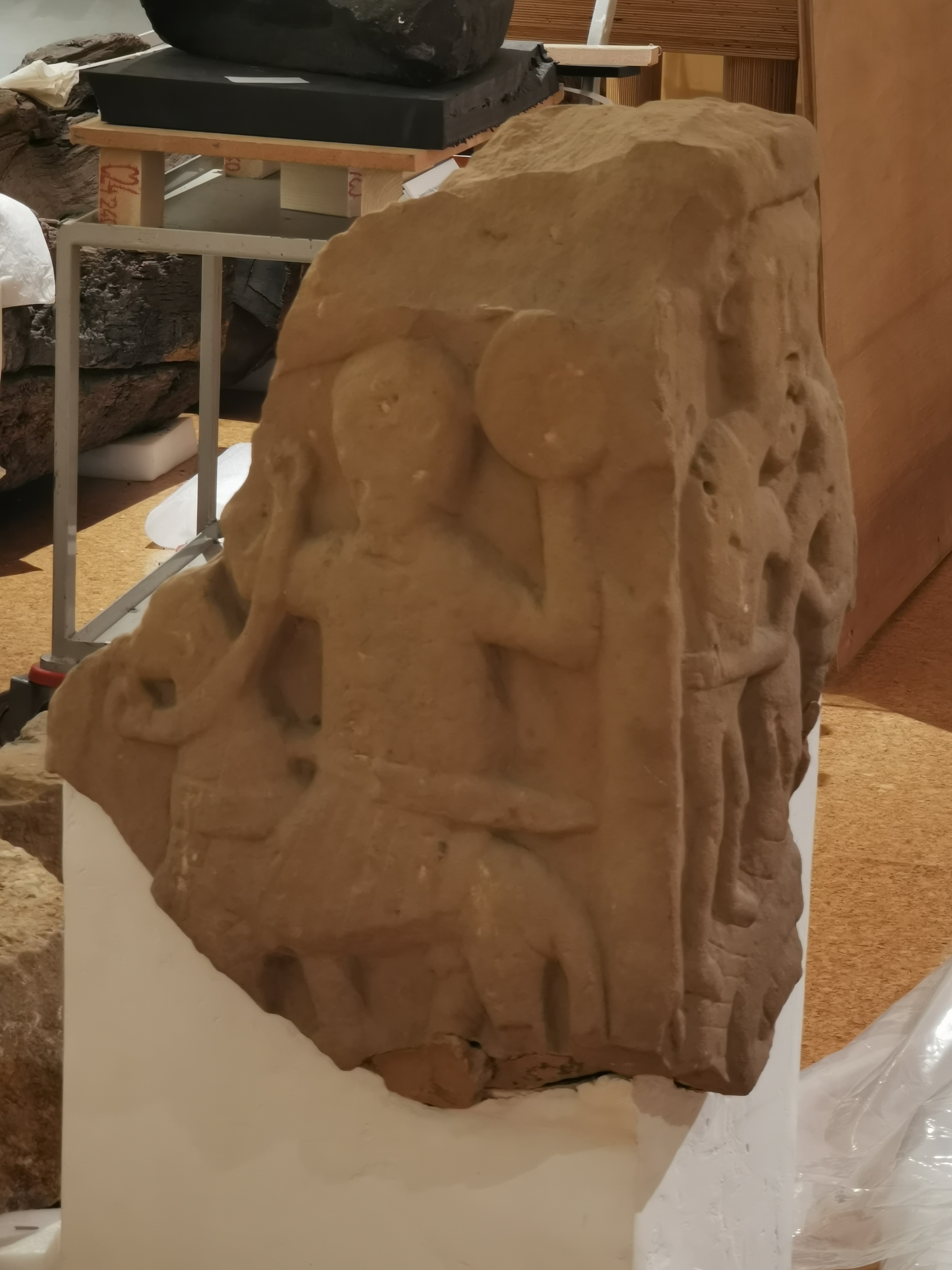
The Repton Stone displayed at Derby Museum. The image shows a carbed image of a mounted warrior, believed to be King Æthelbald of Mercia.
The Repton Stone at Derby Museum, believed to be a depiction of King Æthelbald riding a horse (please note, the museum was being renovated when I visited. It’s not usually displayed like this).

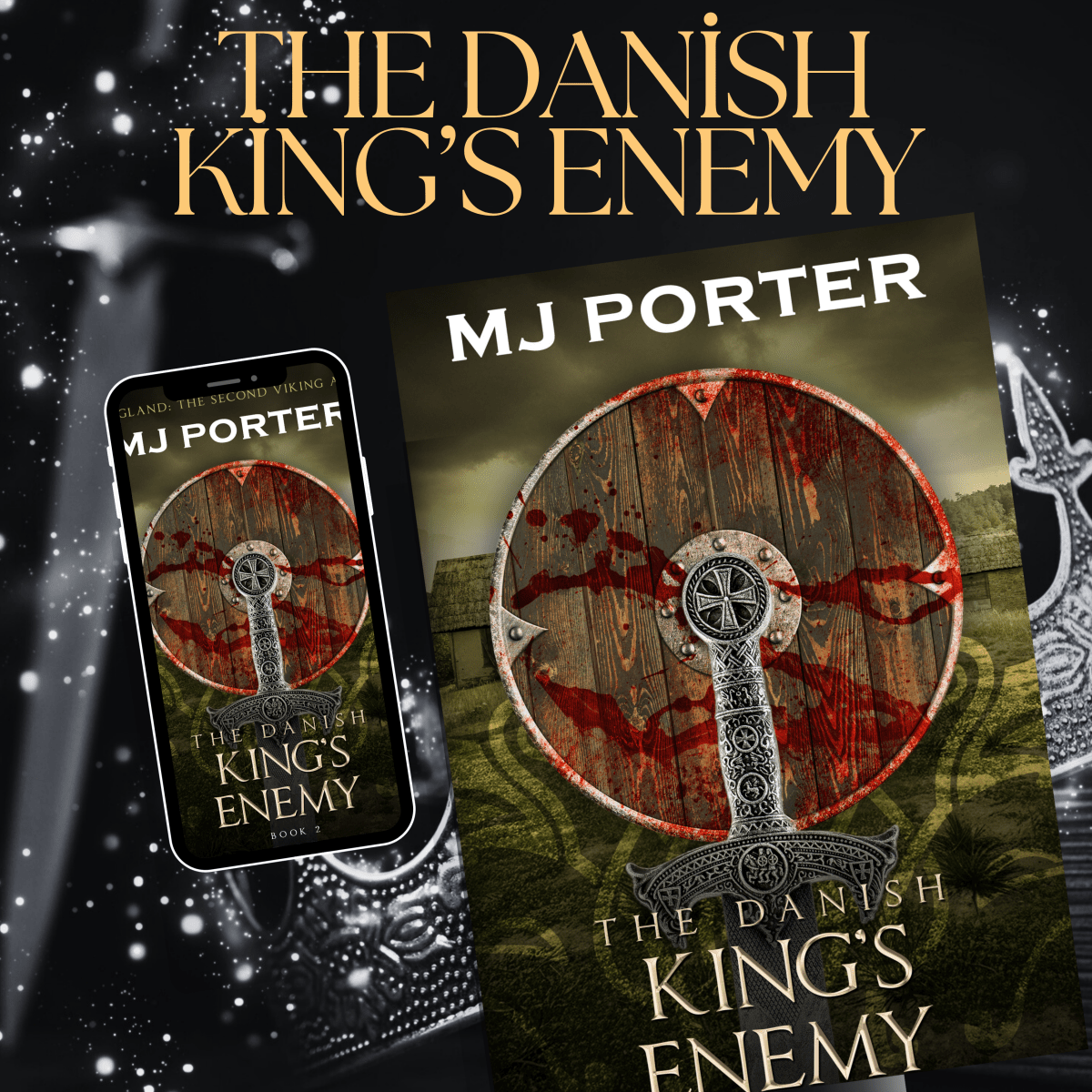
The Danish King’s Enemy has a fab, new cover

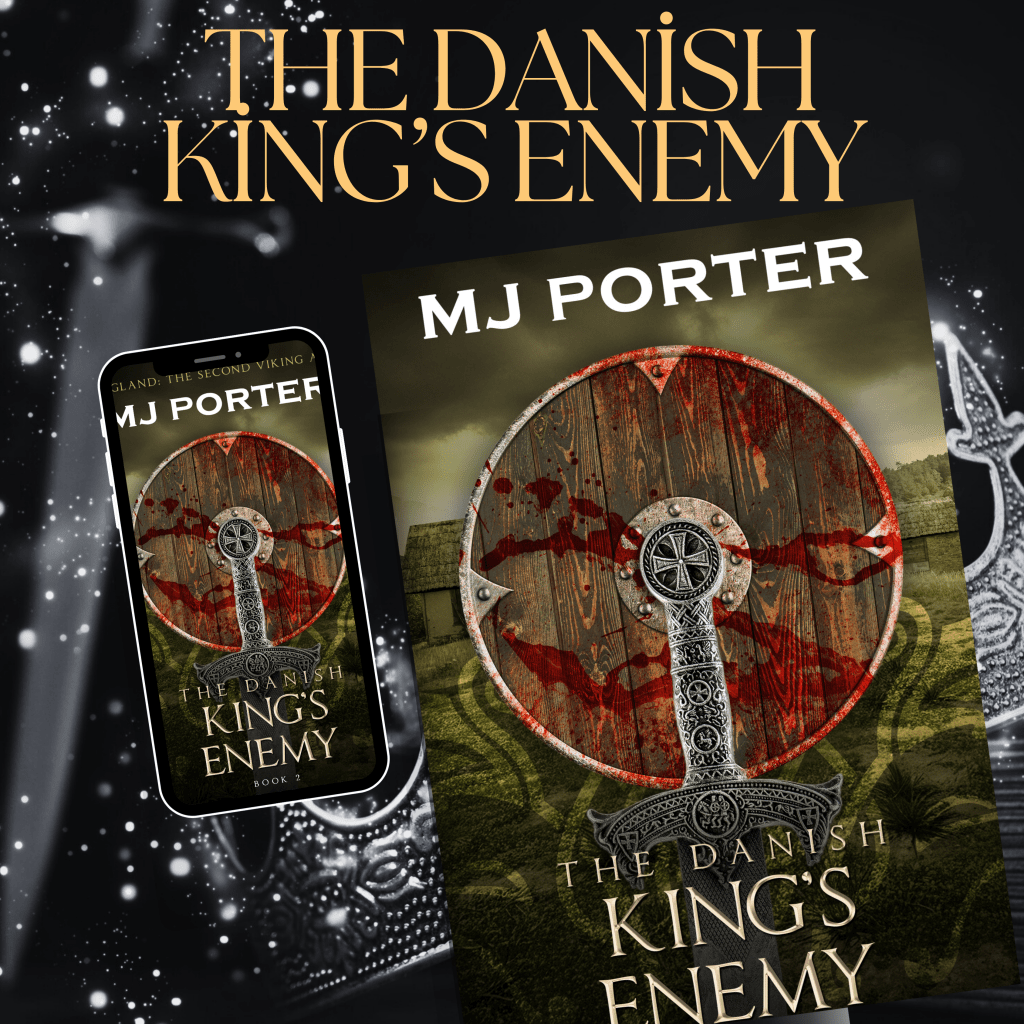
The Danish King’s Enemy has a fab, new cover

Image showing the new cover design for The Danish King's Enemy which shows a shield with a sword in front of it on a green background.

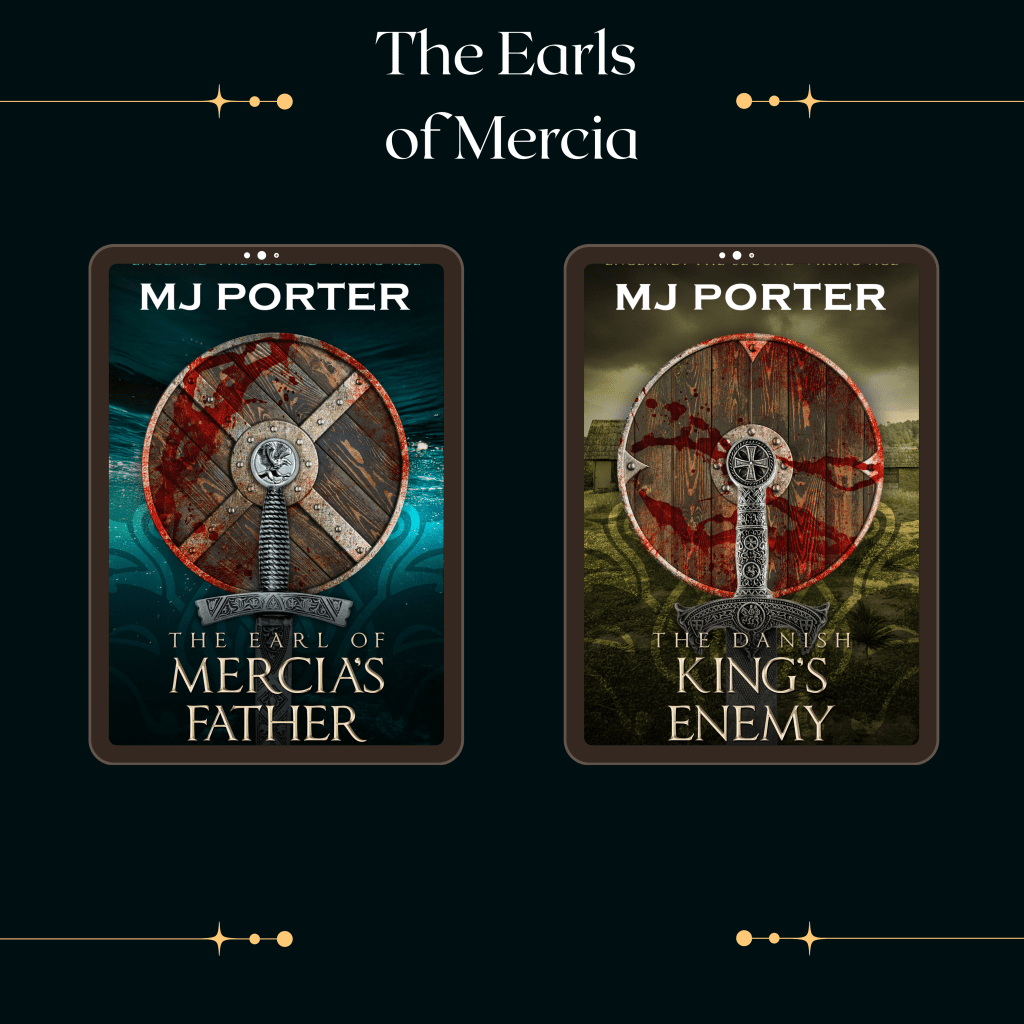
It might well be the second historical fiction novel I ever wrote, but I thought it could do with a little update to match The Earl of Mercia’s Father. Huge thanks to my cover designer at 100 Covers.

The new cover also means I’ve expanded the available formats. The book is now available in ebook, trade paperback (6×9), large print/hardcover combined, and the smaller, more usual-sized UK paperback (5.06 x 7.81), available via IngramSpark (use the link below). This version should also be distributed to a wider range of print retailers. And, of course, you can order a signed copy from me, too, via my online store.

The Danish King's Enemy: England: The Second Vikin ….
Porter, MJ
Image shows the new covers for The Earl of Mercia's Father and The Danish King's Enemy - the first two books in the Earls of Mercia series by MJ Porter

Visit the Earls of Mercia Series page

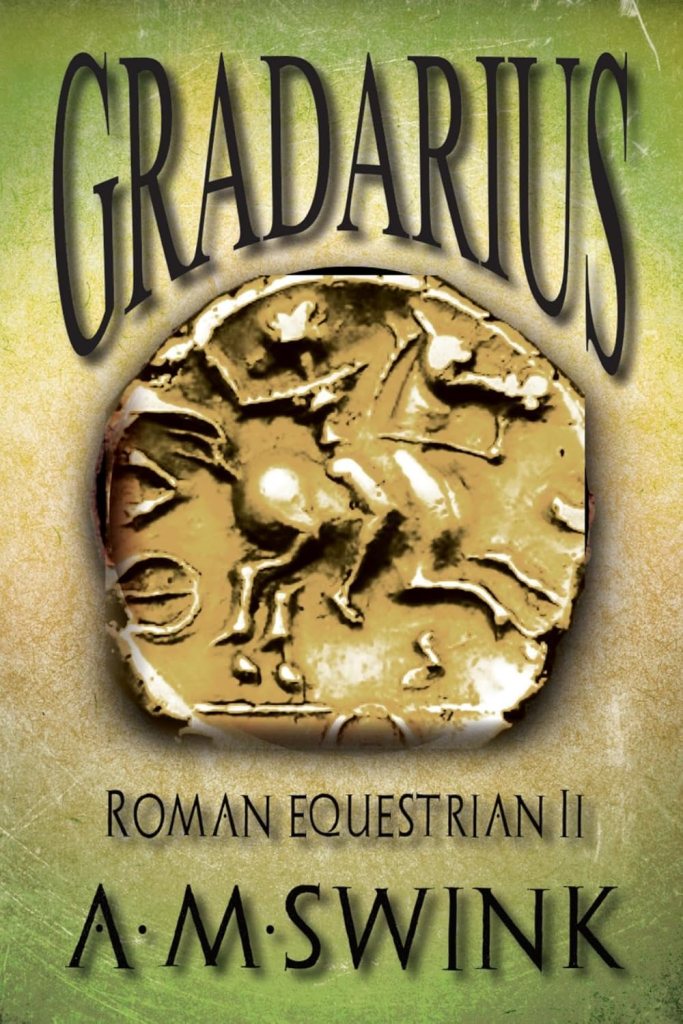
I’m delighted to welcome A.M.Swink and her new book, Gradarius, to the blog with a fab excerpt #romanequestrian #romanequestrianseries #gradarius #ancienthistoricalfiction #romanfiction #equestrianfiction #boudicca

I’m delighted to welcome A.M.Swink and her new book, Gradarius, to the blog with a fab excerpt #romanequestrian #romanequestrianseries #gradarius #ancienthistoricalfiction #romanfiction #equestrianfiction #boudicca

I’m delighted to welcome A.M.Swink and her new book, Gradarius, to the blog with a fab excerpt

Excerpt from Gradarius

The fresh air did little to improve Decimus’s brooding humour. He stalked down the dim street, forcing Luciana to hasten to keep pace. She skirted around a timber drain dividing the roughly cobbled path and followed the centurion’s hulking shadow towards the quay. He turned to avoid the singing and laughter emanating from one of the nearby warehouses and made his way to the bridge spanning the Tamesis. Luciana, catching her breath, halted alongside him. 

She gazed at him curiously. Decimus’s flinty blue-green eyes took in the collection of homes and businesses built up on the islands dotting the river’s far side. She touched his arm and felt him stiffen. She lowered her eyes to the bridge and took in the dark waves lapping beneath them.

‘Strange place to build a town,’ he murmured, shaking his head. ‘It’s nothing but a swamp.’

‘The waters here are sacred. Their boundary between the living and the dead is thin.’ Luciana folded her arms, shuddering within the folds of her wolfskin cloak. ‘It is too powerful for any one tribe to claim. But of course, you Romans have the hubris to believe you can.’

Decimus ruefully shook his head. ‘It was just a ford and an earthen fort when I visited last.’

She cocked her head at him. ‘I didn’t know you’d visited Londinium before.’

His expression hardened. ‘During the invasion.’

She heard finality in his tone and let the matter drop. She picked up one of his broad palms in both her own, twining her fingers through his. ‘Has the air cleared your head?’

He didn’t answer, eyes still locked upon the far side of the bridge. His grasp tightened as he squeezed her hands. 

She felt the cool breeze whipping up from the quay and rested her head on his shoulder. A few pins fell free of her tresses, dropping into the inky waters below. 

‘I’m sure you’d celebrate…if we were to withdraw from Britannia and leave you be,’ he finally said.

She clung tighter to his side and sighed. ‘I wouldn’t be unhappy, if that’s what you mean. Though I wouldn’t have any freedom to enjoy.’ She glanced up at him. ‘I’m your property, remember? I go where you bid me.’

He wound his free arm about her, drawing her into his chest. ‘You know I want nothing more than to go back to Rome.’ A lump rose in his throat. ‘But I can’t go yet. The legions can’t go yet. Not after everything…everything that’s been done.’

She gazed up at him. ‘You realise that everything that’s been done is precisely why we want you to leave?’

He lowered his head, brushing his whiskers against her brow. ‘Do you?’

‘Oh, Decimus.’ She closed her eyes. ‘I don’t know what I want anymore.’

She tore herself away and shuffled along the pier, tightly clasping her cloak to her. The thought of her mother and the Cornovii women huddled in their prison cell sprang to her mind and she shuddered. I have failed them. I’ve already turned traitor…and for what?

The wheel of Taranis burned against her skin. She squeezed her eyes shut. This is Gaius Nerfinius all over again. You’ve learned nothing, Luciana. Nothing. Do you think he loves you? Do you really love him so much that you would throw your freedom away? He is a Roman, after all…

The wind whipped about her, freeing the rest of her locks. They tumbled across her shoulders in a golden cascade, ends pulled like a flag by the gust.

‘Luciana.’

She turned to see Decimus still rooted to his spot, gazing after her. The moon peeked from behind the heavy clouds darkening the sky, illuminating all the emotion in his eyes that his stern face belied. Her pulse quickened, renewing the bond that drew her irresistibly to him. She tucked a fluttering strand behind her ear and smiled. I suppose many have turned traitor for worse.

She took a step towards him, though he stayed her with a hand. ‘Let me watch you a moment longer.’

Luciana straightened, tossing her head. She gazed at the water, letting the wind buffet her about. Decimus slowly walked to her. She glowed under the admiration shining from his eyes.

He tentatively reached out and brushed her cheek. ‘How can you be real?’

She warmed at his touch and stepped into his embrace. She took his grizzled cheeks in her hands and kissed him. Her thumb brushed the angry scar curving out of his beard, ignoring the way he winced and shifted away from her touch. Luciana recaptured his lips, savouring his hot breath and the aroma of spiced stew that clung to him. Decimus responded warmly, pressing her to him and cradling her slim form as it melded into his.

When they finally broke off to catch their breath, Luciana met his eyes. ‘It matters not what policy your emperor decides. For as long as I am yours, I go wherever you go.’

Here’s the blurb

WAR IS ON THE HORIZON

Sworn enemies turned lovers, Decimus and Luciana face new challenges that put their love to the test. Decimus, haunted by his past, struggles with his feelings in the present. Luciana, when confronted with her old friend Boudicca’s struggles, questions which of her loyalties is more important: her loyalty to Decimus, or her loyalty to her people? When sent to investigate a Roman traitor in Decimus’s legion, both will have to decide which side of the coming battle they’ll be on. 

Rome and Britannia are hurtling toward a reckoning. Will Decimus and Luciana find a way forward together before war tears them apart?

Purchase Link

Universal Link

Meet the Author

A.M. Swink, the author of the award-winning Roman Equestrian series, grew up in Dayton, Ohio, obsessed with two things: books and horses. After a childhood of reading, writing, showing, and riding, she moved to Lexington, Kentucky to complete three degrees and work as a college professor of reading and writing. 

She’s travelled extensively around Europe, exploring ancient sites and artefacts relating to the Iron Age and Roman era. She is fascinated by our connection to the past and the ancestral tether that draws us back into the mists of time.

Connect with the Author

Website Bluesky

Follow the Gradarius blog tour with The Coffee Pot Book Club

Check out the first book in AM Swink’s series

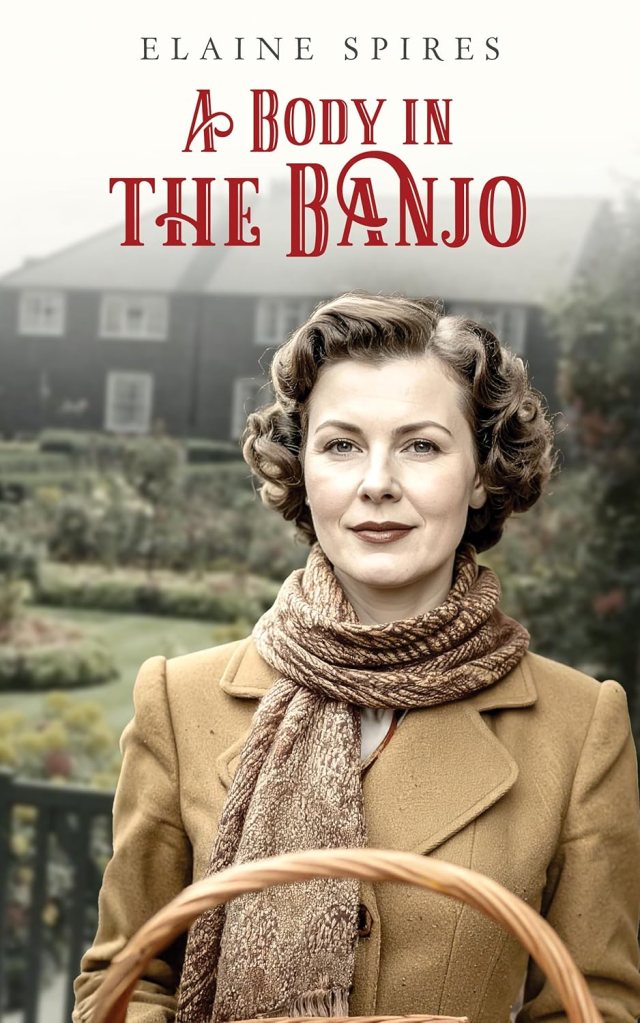
I’m sharing my review for A Body in the Banjo by Elaine Spires, a historical mystery set in Dagenham #blogtour #bookreview

I’m sharing my review for A Body in the Banjo by Elaine Spires, a historical mystery set in Dagenham #blogtour #bookreview

I’m sharing my review for A Body in the Banjo by Elaine Spires, a historical mystery set in Dagenham

Here’s the blurb

It’s November 1958 and Dagenham is excitedly awaiting Bonfire Night. Cissie Partridge isn’t too keen on fireworks but she generously donates to the local children doing Penny for the guy. Cissie is content with her lot. She loves her husband Harold. She shops, she cooks, she reads at every opportunity and she volunteers at the Dockland Settlement. Observant and sharp, she gets on with all her neighbours. Then, one morning, she finds a body…

Purchase Links

https://www.amazon.co.uk/Body-Banjo-Cissie-Partridge-Mystery-ebook/dp/B0G1KZ52TK

https://www.amazon.com/Body-Banjo-Cissie-Partridge-Mystery-ebook/dp/B0G1KZ52TK

My Review

A Body in the Banjo is an historical mystery set in 1958, just before Bonfire Night.

It is a story of a small community and one woman in particualar, Cissie, who doesn’t so much laud anything over her neighbours, but is, perhaps, a little bit of a busy body, although not so much as one who spends all her time watching her neighbours. No, instead Cissie listens to their comings and goings through the open bedroom window each night.

This is a story very much following the minutae of Cissie’s day to day existence as a 1950s housewife, and while some of it feels a little repetitive, the finale does build to a fine mystery which makes absolute sense of all the noise’s Cissie hears on the fateful night.

A really solid mystery, with a normal woman as the main character, although there are also others who take the narrative from time to time. I’m sure fans of historical mysteries will enjoy the story.

Meet the author

Elaine Spires is a novelist, playwright and actress. Extensive travelling and a background in education and tourism perfected Elaine’s keen eye for the quirky characteristics of people, captivating the humorous observations she now affectionately shares with the readers of her novels.  Elaine also writes plays and her short film Only the Lonely was made by Dan Films and won the Groucho Club Best Short Film Award 2019 and two Silver Awards at WOFFF 2019.

Author Elaine Spires