
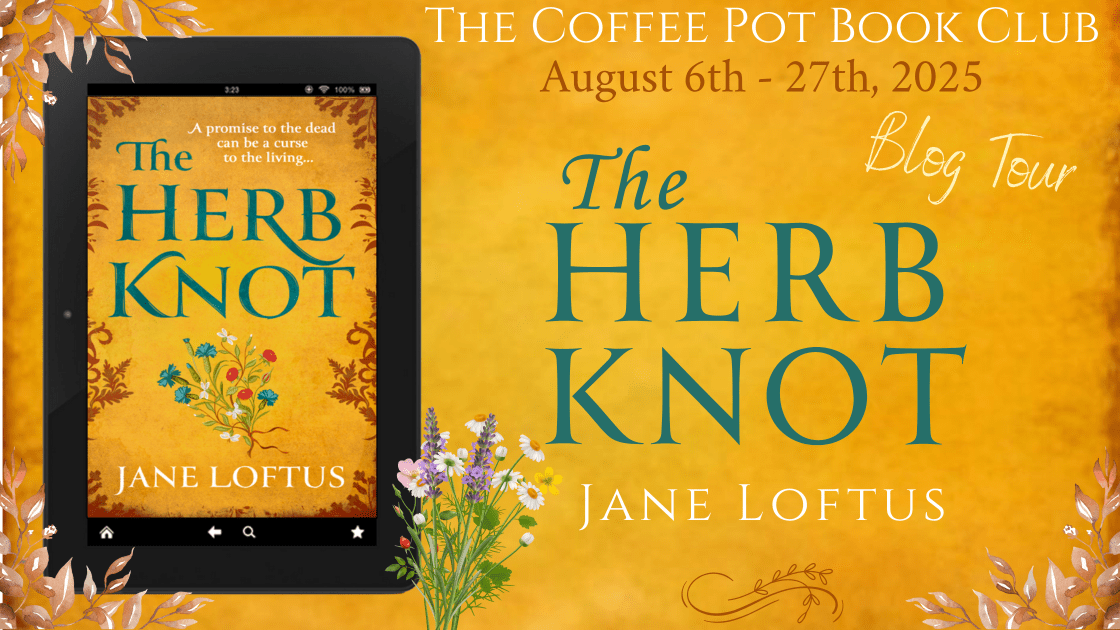
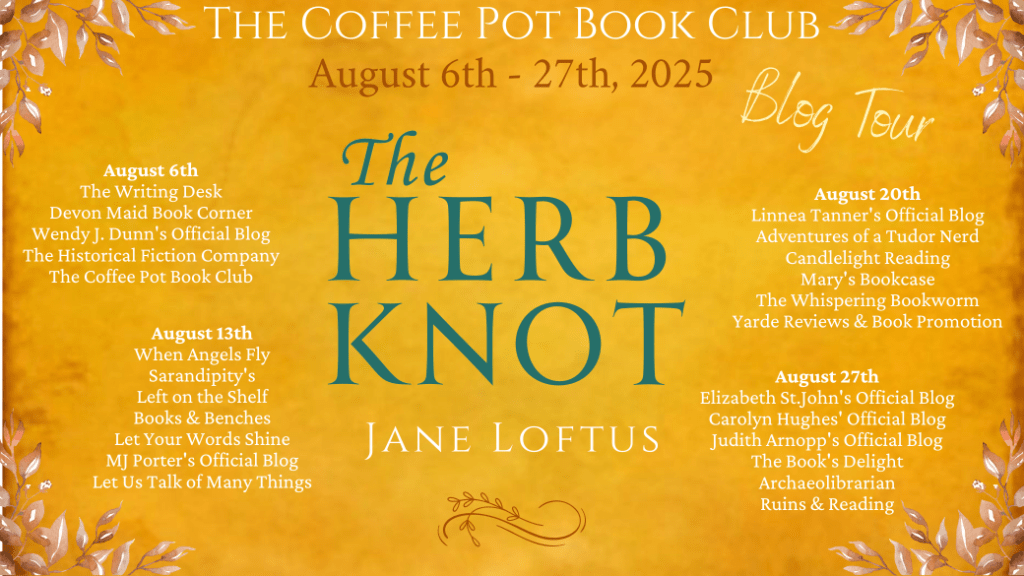
I’m delighted to welcome Jane Loftus and her book, The Herb Knot, to the blog with some historical research behind The Herb Knot.
The Herb Knot Historical Research
This story was a dream to research because Winchester Library held the Holy Grail of information, otherwise known as The Survey of Medieval Winchester by Derek Keene.
The detail contained in the study is beyond meticulous and was based on innumerable deeds and rolls held in the British Library and Winchester archives. Not only is every single house documented – both inside the city and also covering the suburbs – but each tenant within each document is recorded, right down to the amount of rent they paid and to whom.
And the maps – oh, the maps! Having established who lives where and what they did, the author reconstructed the streets where they lived too. If you live in Winchester and suddenly see streets you know described and drawn as they would have been in the Middle Ages, it does send a shiver down the spine. I can walk past various shops on the High Street now knowing there used to be an Inn there, or a silversmith there and oh, the chandler was here.
Want to know what made up the bulk of industry in the city? This survey will tell you. Which industries were in decline, that too.
It didn’t even stop there. After gorging on this amazing detail, the final part of the survey is full of biographical information of many of the citizens. This was where the novel really started to take shape. Family trees, wealthy merchants marrying into other wealthy merchant families, their names and dates. Also interesting to see, even at a time when English was overtaking French as the language of the court, how many citizens (usually wealthy ones it has to be said) who still had a ‘le’ or ‘de’ in their names, like Hugh le Cran. His wife did not, and that’s only just struck me now as I write this.
The survey very kindly gave me Serlo, a butcher, and Thurstin, a clerk. I feel like a cheat in many ways for borrowing so many lovely names and professions, but I hope I did them justice.
Speaking of names, I came across many, many women called Petronilla, I’d had no idea how popular it was in 1350. I would have picked on that had it not been the name of the main character in The Miniaturist.
The other part of the research involved actually going into town and paying more attention. How long would it take for Edith to walk from Tanner Street to Knights Meadow? Getting into St John’s church and looking at the frieze over the door – properly looking at it, not just noting that it was there and was remarkable, but really paying attention.
There was also the local museum, of course, with the beautiful little misericorde which I promptly gave to Rafi. The records office also holds many treasures – including a deep dive into deeds and letters concerning Le Cran and his properties, and also money he owed or loaned to people, hence the £200 to the Earl of Arundel which I used as a plot point. The crowning moment came when the records office emailed me a photocopy of the seal of Hugh Le Cran. I remember opening it and literally gasping out loud. It is exactly as described, three rather chunky birds in triangle formation with a tree behind them. Rafi was quite right – they don’t look like cranes, they look like ducks, and thus his confusion over what they might be was born.
After that there were the endless videos about how to use egg white to bind paint, and making ink out of oak gall in your own kitchen, neither of which I tried.
Can’t say I wasn’t tempted, though. Plenty of meringue opportunities with the leftovers.
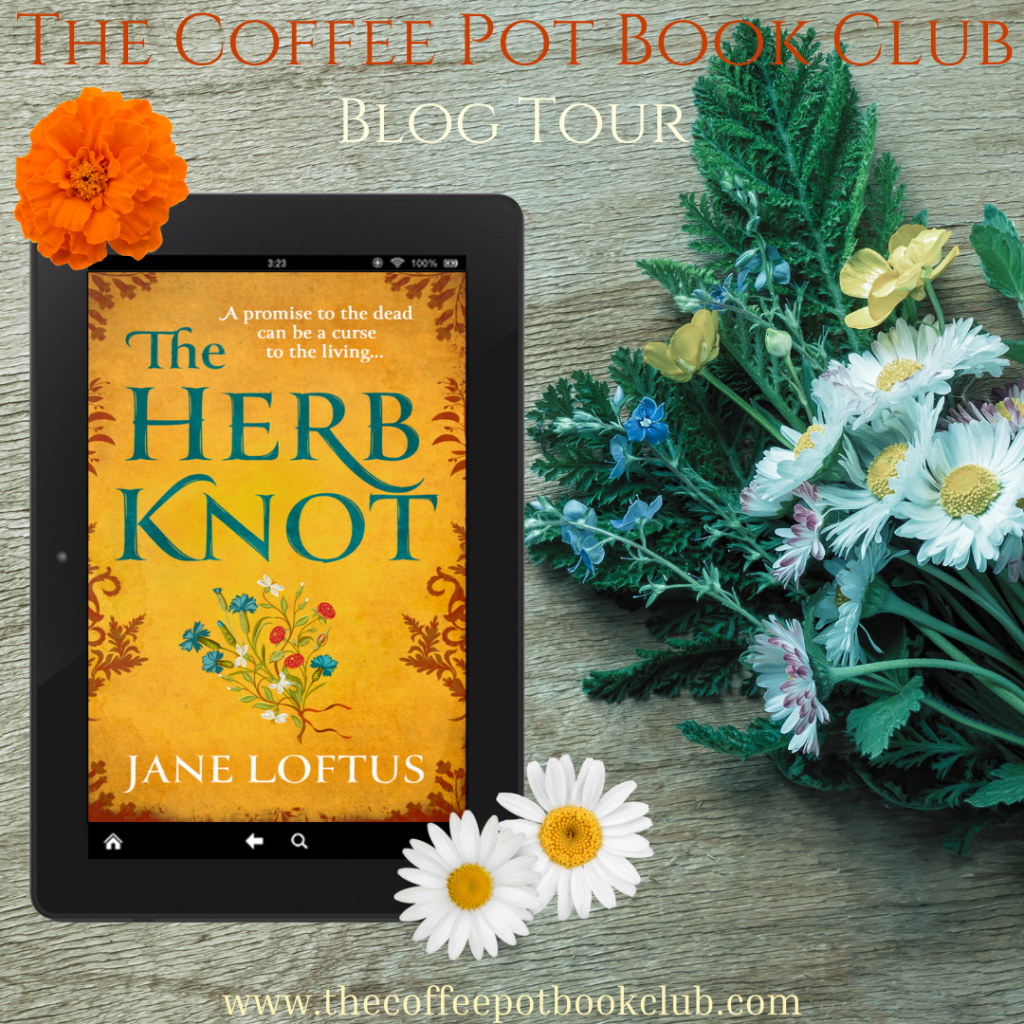
Here’s the Blurb
The Hundred Years’ War comes to life in this spellbinding tale of love, betrayal and conspiracy …
A quest born on the battlefield will change a young boy’s destiny…
Rafi Dubois is five years old when his mother is murdered after the Battle of Crecy in 1346. Alone and lost, Rafi is given a token by the dying Englishman who tried to save his mother’s life: a half-broken family seal which he urges Rafi to return one day to Winchester.
Years later, when Rafi saves a wealthy merchant’s wife from a brutal robbery, he is rewarded with the chance to travel to England, taking the seal with him.
But when he reaches Winchester, Rafi finds himself in a turbulent world full of long-held allegiances, secrets and treachery. His path is fraught with danger and with powerful enemies working against him, Rafi falls in love with Edith, a market apothecary. But in doing so, Rafi unleashes a deadly chain of events which threatens to overwhelm them both…
The Herb Knot is a sweeping and passionate novel set in one of the most tumultuous times in English history, from a powerful new voice.
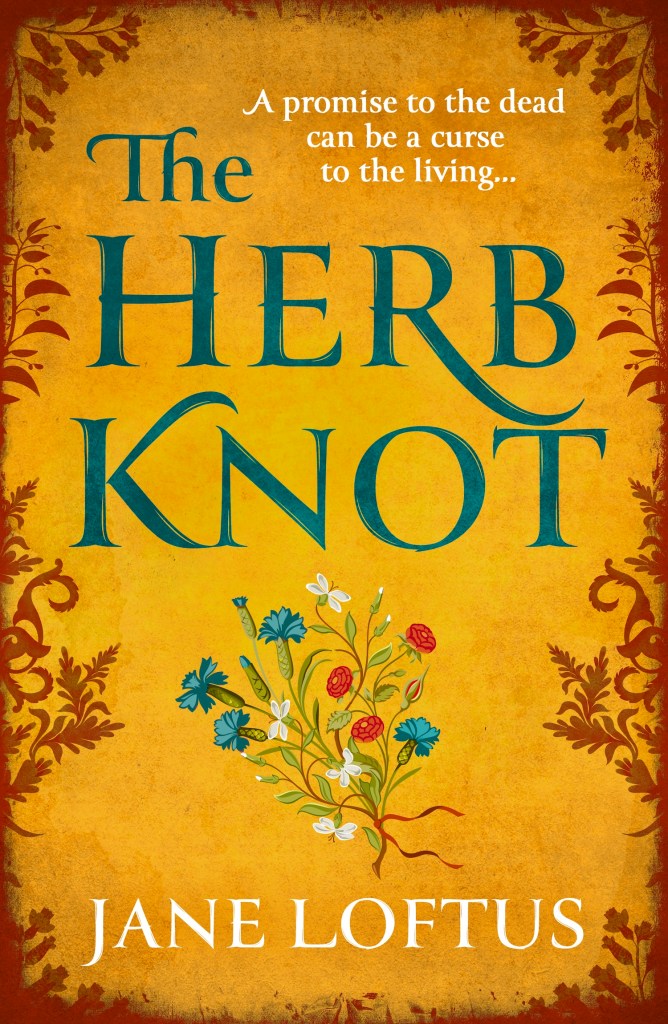
Buy Link
Meet the Author
Jane Loftus gained a degree in 16th Century European and British history from Surrey before taking a postgraduate degree in modern political history. As a lone parent, she worked in Winchester Waterstones before returning to IT once her son was older.
Hugely passionate about the Middle Ages, she drew inspiration for this novel from the medieval layout of Winchester which has been painstakingly documented.
Jane is originally from London but has lived in Winchester for over twenty years. When not writing, she is usually out walking or watching costume dramas on Netflix – the more medieval the better. She also plays far too many rpgs.

Connect with the Author
Posts





Discover more from MJ Porter
Subscribe to get the latest posts sent to your email.

 MJ Porter
Thanks so much for hosting Jane Loftus today, with such an interesting guest post linked to her intriguing novel, The Herb Knot.
Take care,
Cathie xx
The Coffee Pot Book Club
LikeLiked by 1 person