

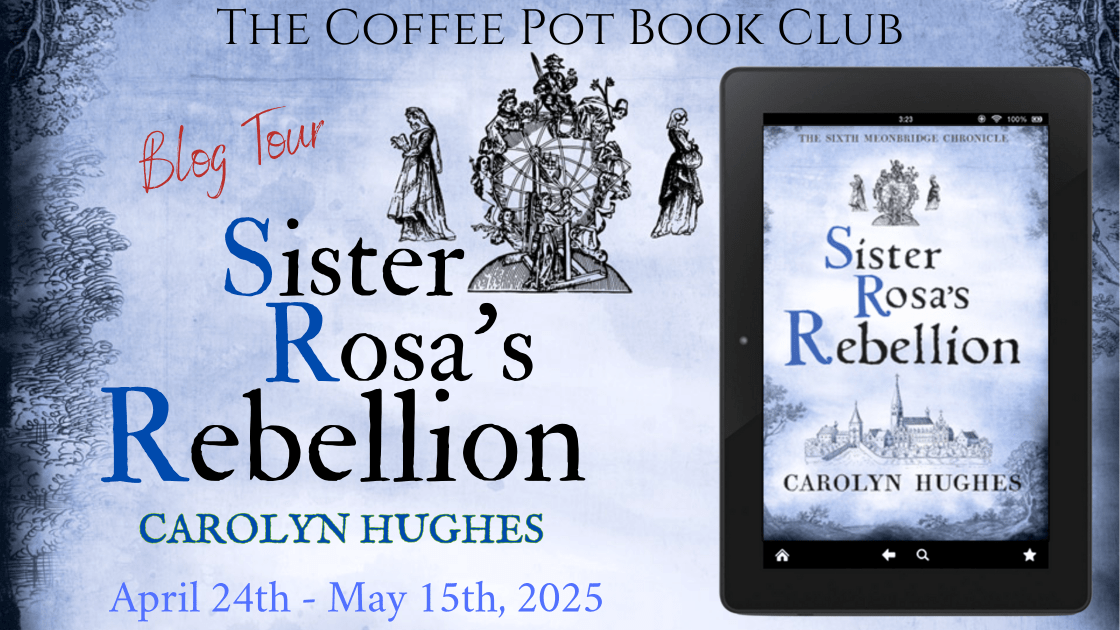
The working lives of medieval nuns
In this post, I’m going to share something of what I’ve learned about the life of medieval nuns, and the other people who lived and/or worked in or for the priory. To paint a picture of how life might have been for Sister Rosa and her sister nuns, I’ve drawn heavily upon a book written in the 1920s by a medieval historian, Eileen Power: Medieval English Nunneries.
A nunnery – even a relatively small one like my fictional Northwick Priory – was a community, including not only avowed nuns, but also novices (children or adults) and servants. Depending upon the size of the priory, there could be a large domestic staff, easily outnumbering the nuns themselves. There would be household maids, and some of the senior nuns (especially in a wealthy nunnery) might have personal maids, although in Northwick, only the prioress has such a maid. Other staff could include both men and women: for example, the cook(s) and kitchen servants, workers for the brewery, bakery and dairy (milking cows, making butter and cheese), the laundry and in the kitchen garden (potager).
I imagine most of the servants probably lived in the nearby village. Outside the priory itself, there would be an estate – the manor(s) owned by the priory – with a home farm. To run the estate and farm required a number of secular officials (typically all men).
The steward was often an honorary position, held by a local gentleman – or even a nobleman if the nunnery was high status. He’d oversee and make decisions about the nunnery’s properties, including the lands, buildings and livestock, although he’d have other officials working under him, such as the bailiff and the reeve. He’d also liaise with those nuns whose roles involved some form of property management, such as the sacrist and the cellaress, and of course the treasuress, and the prioress herself.
The bailiff was to some extent the farm manager, but might also help the nuns acquire supplies, if they had to be purchased some distance away. As on secular manors, there would be other farm officials, like the reeve, and all the usual workers: ploughmen, cowherds, swineherds and shepherds, carters, and general labourers. Also, of course, craftsmen such as carpenters and masons would be needed when the buildings required repairs or new work was planned, and, if the priory kept its own horses and vehicles, a blacksmith or wheelwright too. All such workers would probably be employed from the nearest village.
The priory itself, of course, even if it was comparatively small, had to be managed, just like any business or institution, and the nuns themselves undertook most of this administrative work.
One important aspect of their daily lives that nuns couldn’t undertake themselves was that part of their religious practice that demanded the services of an ordained priest. Nuns could conduct services but could neither hear confession nor administer the sacraments, and so had to have at least one chaplain, who might have his lodgings within the priory’s grounds (but outside the nuns’ quarters).
At the top of the administrative hierarchy was the prioress, essentially the CEO or chairman, supervising the work of senior nuns, and chairing daily meetings in the chapter house, where all nuns gathered to discuss day-to-day concerns and make joint decisions. The prioress was also, in principle, the person who liaised with important people outside the priory, including the bishop.
There might also be a subprioress, but reporting to the prioress were “obedientiaries”, senior nuns who held particular positions of responsibility. In a relatively small priory like Northwick, nearly every nun would have such a position, to enable all the work to be done.
After the prioress, I imagine the treasuress was the next most important person in the priory. Larger priories might have more than one treasuress. Her job was to receive and record all income and manage all expenditure. It must surely have been a demanding job, especially when one considers that she was managing the finances not just of the priory itself but also the home farm and estate.
I also feel that the job of the cellaress must have been quite onerous, being responsible for providing food for the nuns and the domestic servants, and usually overseeing the management of the home farm. The cellaress had to ensure that the nunnery had constant and adequate stores of food and drink, no simple task in the days before refrigeration. Some supplies came from the home farm, the rest bought in. I think the cellaress would manage the priory’s gardens, where vegetables and fruit and herbs would be grown, presumably employing a number of gardeners to do the work.
Two obedientiaries reported to the cellaress: the kitcheness and the fratress.
The kitcheness supervised the work of the kitchen, managing the kitchen staff, who were mostly lay people, not nuns, and could be both men and women. The cellaress made sure food was supplied but ensuring meals were prepared fell to the kitcheness, although she was unlikely to do much, if any, of the cooking herself. The fratress, unsurprisingly, was in charge of the frater, the dining hall. She ensured the tables and benches or stools were kept in good repair, looked after table linen and dishes, and supervised the servants who served the meals.
The sacrist took care of the church building, arranging for any repairs or works, and looked after the valuable church plate, vestments and altar cloths. She also had to provide lighting for both the church and the priory itself, buying the wax, tallow and wicks and arranging for candles to be made, often by a local candle-maker. At Northwick, I have the sacrist also caring for the priory buildings, as well as the church. If repairs were needed, she would have worked closely with lay people from outside the priory, such as the steward. Finally, it was the sacrist’s job to ensure that the bell was rung for chapel services and meals.
The chambress was in charge of everything to do with the nuns’ clothes and bedding, buying cloth, employing seamstresses to make up garments, sheets, and blankets, and ensuring it was all kept clean and in good repair.
There were two “care-giving” roles: the infirmaress and the almoness. The nun in charge of the sick in the infirmary was the infirmaress. She would care directly for the patients, presumably with the help of servants. She provided food, drink and medicine, and treated wounds, sometimes at the behest of a physician, but perhaps preparing some medicines herself. The infirmary was generally a separate building from the priory, to avoid the spread of infection. The almonesswas responsible for giving help to the poor and sick who lived in the community around the priory. The giving of alms – typically food, clothing or money – was a most important part of a nunnery’s function.
The chantress or precentrix ensured the chapel services and offices ran smoothly and reverentially. She trained the novices in singing and led the sisters in the psalms and hymns during services. The mistress of the novices acted as schoolmistress to the novices, teaching them all they needed to know in order to become nuns, and supervising their general behaviour. If the nunnery had a school for local children – which Northwick doesn’t – the mistress of the novices would usually be in charge of that as well.
It’s clear that many of the nuns who held these, sometimes onerous, positions were women of great skill and competence. The tasks of the treasuress and the cellaress, for example, were surely quite demanding, and required at the very least an ability to read and write and manage accounts, for which one presumes they received no training but rather learned “on the job”. I feel they should be much admired!
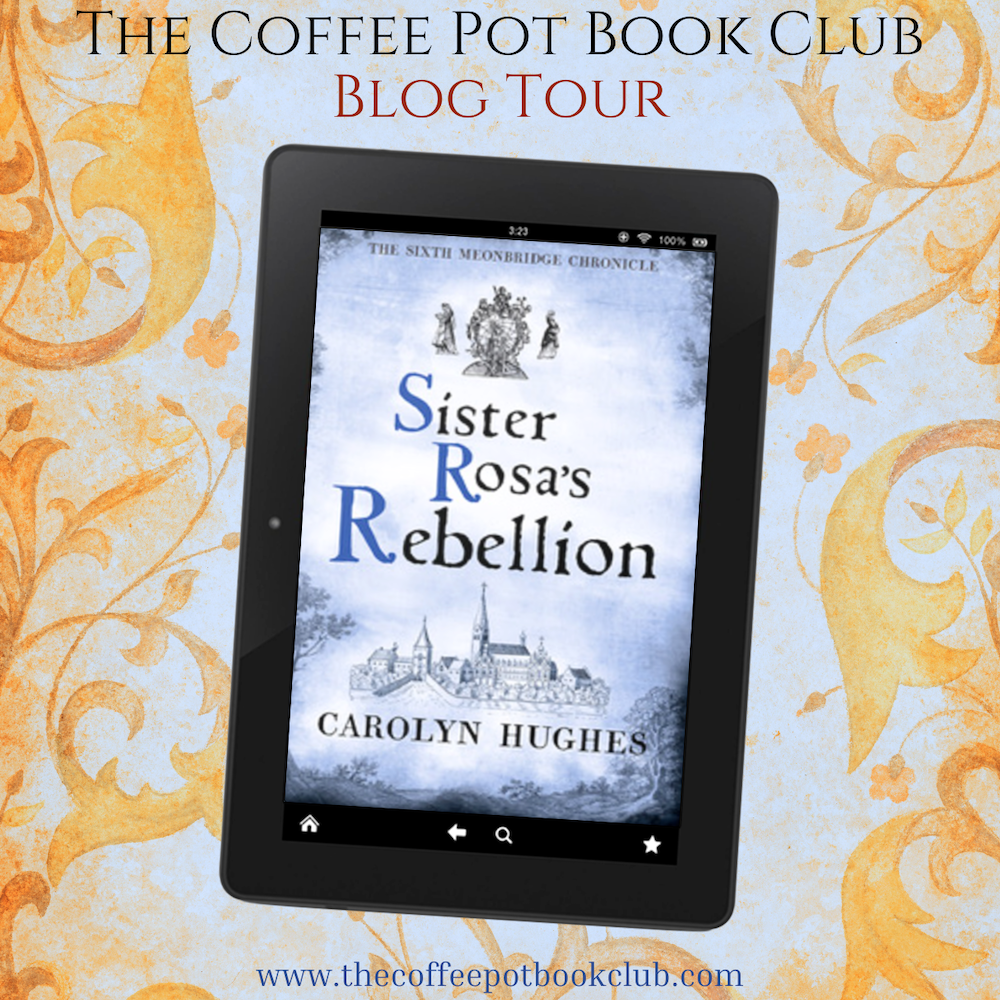
Here’s the blurb
How can you rescue what you hold most dear, when to do so you must break your vows?
1363. When Mother Angelica, the old prioress at Northwick Priory, dies, many of the nuns presume Sister Rosa – formerly Johanna de Bohun, of Meonbridge – will take her place. But Sister Evangelina, Angelica’s niece, believes the position is hers by right, and one way or another she will ensure it is.
Rosa stands aside to avoid unseemly conflict, but is devastated when she sees how the new prioress is changing Northwick: from a place of humility and peace to one of indulgence and amusement, if only for the prioress and her favoured few. Rosa is terrified her beloved priory will be brought to ruin under Evangelina’s profligate and rapacious rule, but her vows of obedience make it impossible to rebel.
Meanwhile, in Meonbridge, John atte Wode, the bailiff, is also distraught by the happenings at Northwick. After years of advising the former prioress and Rosa on the management of their estates, Evangelina dismissed him, banning him from visiting Northwick again.
Yet, only months ago, he met Anabella, a young widow who fled to Northwick to escape her in-laws’ demands and threats, but is a reluctant novice nun. The attraction between John and Anabella was immediate and he hoped to encourage her to give up the priory and become his wife. But how can he possibly do that now?
Can John rescue his beloved Anabella from a future he is certain she no longer wants? And can Rosa overcome her scruples, rebel against Evangelina’s hateful regime, and return Northwick to the haven it once was?
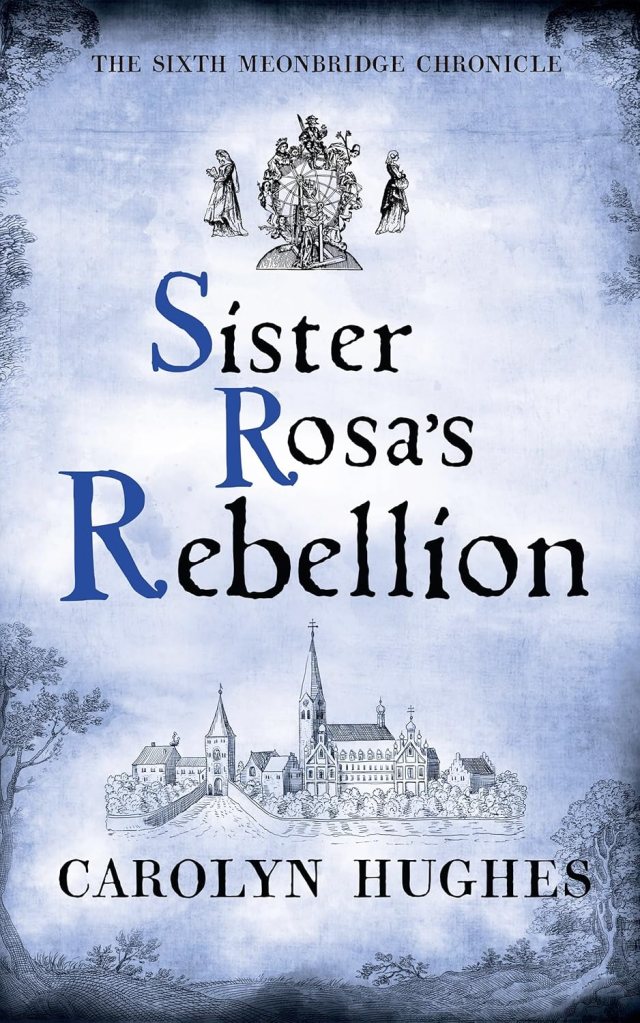
Purchase Link
https://books2read.com/u/bWaYM0
This title is available to read on #KindleUnlimited.
Meet the author
CAROLYN HUGHES has lived much of her life in Hampshire. With a first degree in Classics and English, she started working life as a computer programmer, then a very new profession. But it was technical authoring that later proved her vocation, word-smithing for many different clients, including banks, an international hotel group and medical instruments manufacturers.
Although she wrote creatively on and off for most of her adult life, it was not until her children flew the nest that writing historical fiction took centre stage. But why historical fiction? Serendipity!
Seeking inspiration for what to write for her Creative Writing Masters, she discovered the handwritten draft, begun in her twenties, of a novel, set in 14th century rural England… Intrigued by the period and setting, she realised that, by writing a novel set in the period, she could learn more about the medieval past and interpret it, which seemed like a thrilling thing to do. A few days later, the first Meonbridge Chronicle, Fortune’s Wheel, was under way.
Seven published books later (with more to come), Carolyn does now think of herself as an Historical Novelist. And she wouldn’t have it any other way…

Connect with the author

Posts















Discover more from MJ Porter
Subscribe to get the latest posts sent to your email.

 MJ Porter
Thank you so much for hosting Carolyn Hughes today, with such a fascinating post linked to her intriguing new novel, Sister Rosa’s Rebellion.
Take care,
Cathie xx
The Coffee Pot Book Club
LikeLike