

What did I need to research to write The Automobile Assassination?
When I decided to write another book featuring Detective Inspector Mason and his Sergeant, O’Rourke, I was determined to set the story very firmly in the period. That might sound a bit strange, but sometimes, a historical mystery might not feel that historical other than for the odd touches – clothing, hairstyles etc. To ensure I didn’t do this, I spent a great deal of time researching the history of The Automobile Association (a UK-based roadside recovery service with a history as long as automobiles) and how they might have operated in the early 1940s. Of course, with the war on and petrol rationing, it was very challenging for them to survive as they relied on subscriptions which dropped significantly during the war years.
The AA Sentry boxes
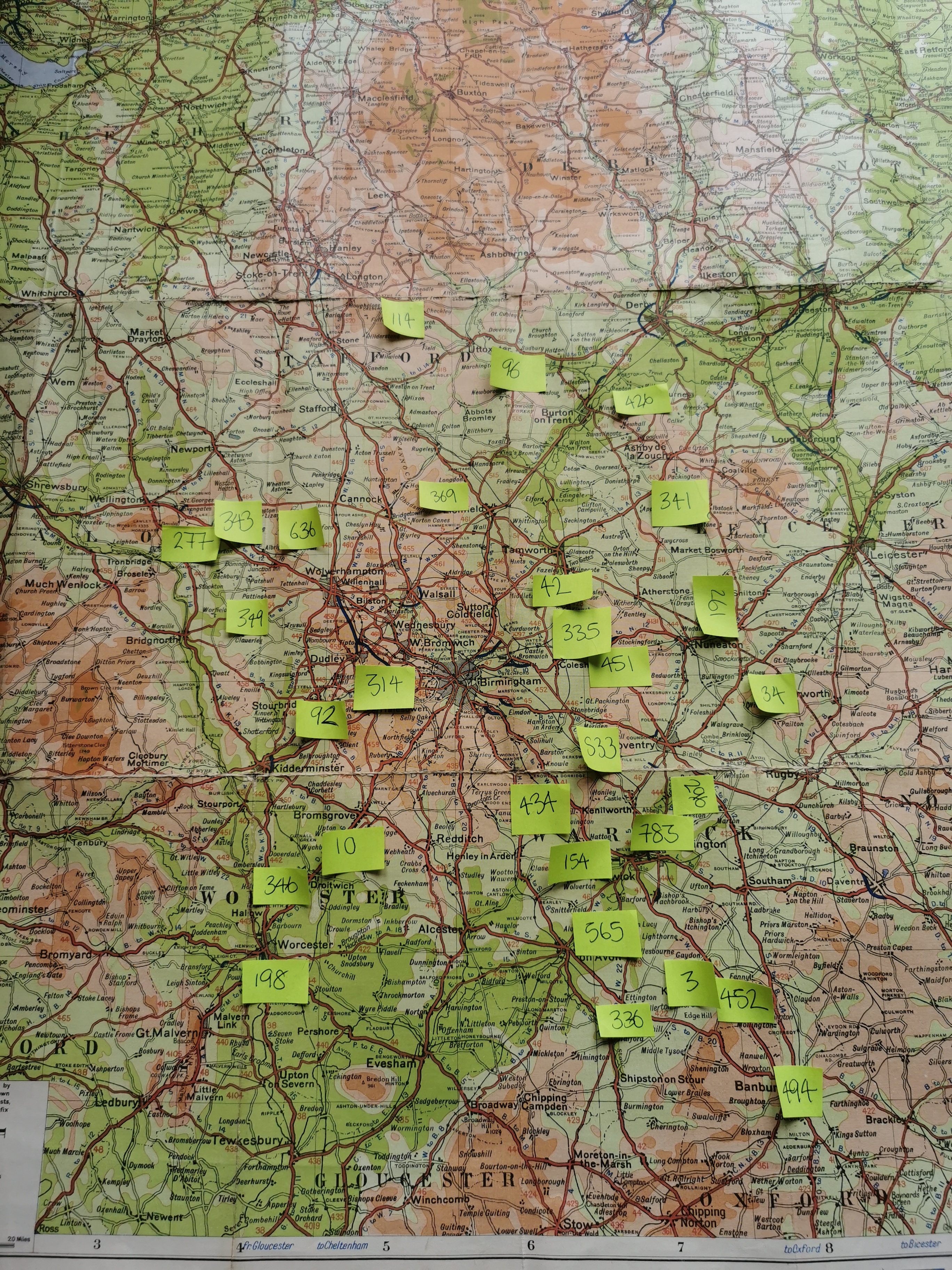
I spent a great deal of time trying to find the locations for the sentry boxes that are so important to my story and that the AA patrol staff would have passed on their assigned patrol routes, often on pedal bikes. Yes, they did have telephones in the boxes, but of course, the patrol men wouldn’t have had access to a telephone while they were out patrolling, and if I’ve read it correctly, all calls were sent to a central exchange which was in London. There’s a list of surviving sentry boxes from the 1960s, so twenty years after my story is set, and with the use of a map from the 1940s (thank you online marketplace), I found many of the sentry boxes close to Erdington. This was because some of today’s roads weren’t built (such as many of the A roads), and using a period map ensured I didn’t put something where it couldn’t have existed. I love using old maps for all of my books (20th-century and Saxon stories). They often highlight facts that might pass today’s reader by – such as roads that have changed route or weren’t even in existence at the time.
I was a bit disappointed because I couldn’t find a map that showed the patrol routes that the AA patrolmen (sorry, it was all men at this time) would have followed on their daily routes. This is potentially because such maps were either not produced or, because of the war effort, they weren’t widely distributed. Here’s a fabulous training video for those wanting to see what the early AA was all about. https://www.youtube.com/watch?v=kmyLKlx7YEA
I also needed clarification on how far a car might have travelled on one full petrol tank. Sometimes it’s the oddest queries that set authors tumbling down rabbit holes of research.
The history of fingerprinting is much longer than we might think
But the roads weren’t the only thing I needed to research. Much of the case in The Automobile Assassination hinges on fingerprints (how else to identify my nameless murder victim?), and I knew nothing about the technological advances that had made fingerprint identification as prevalent as it is today. I invested some time in researching and discovered some amazing facts, some that were quite disturbing during the advances in fingerprinting and the way the information they use is provided. I also, quite by chance, discovered when the first fax machine was invented, which was much earlier than we might think.
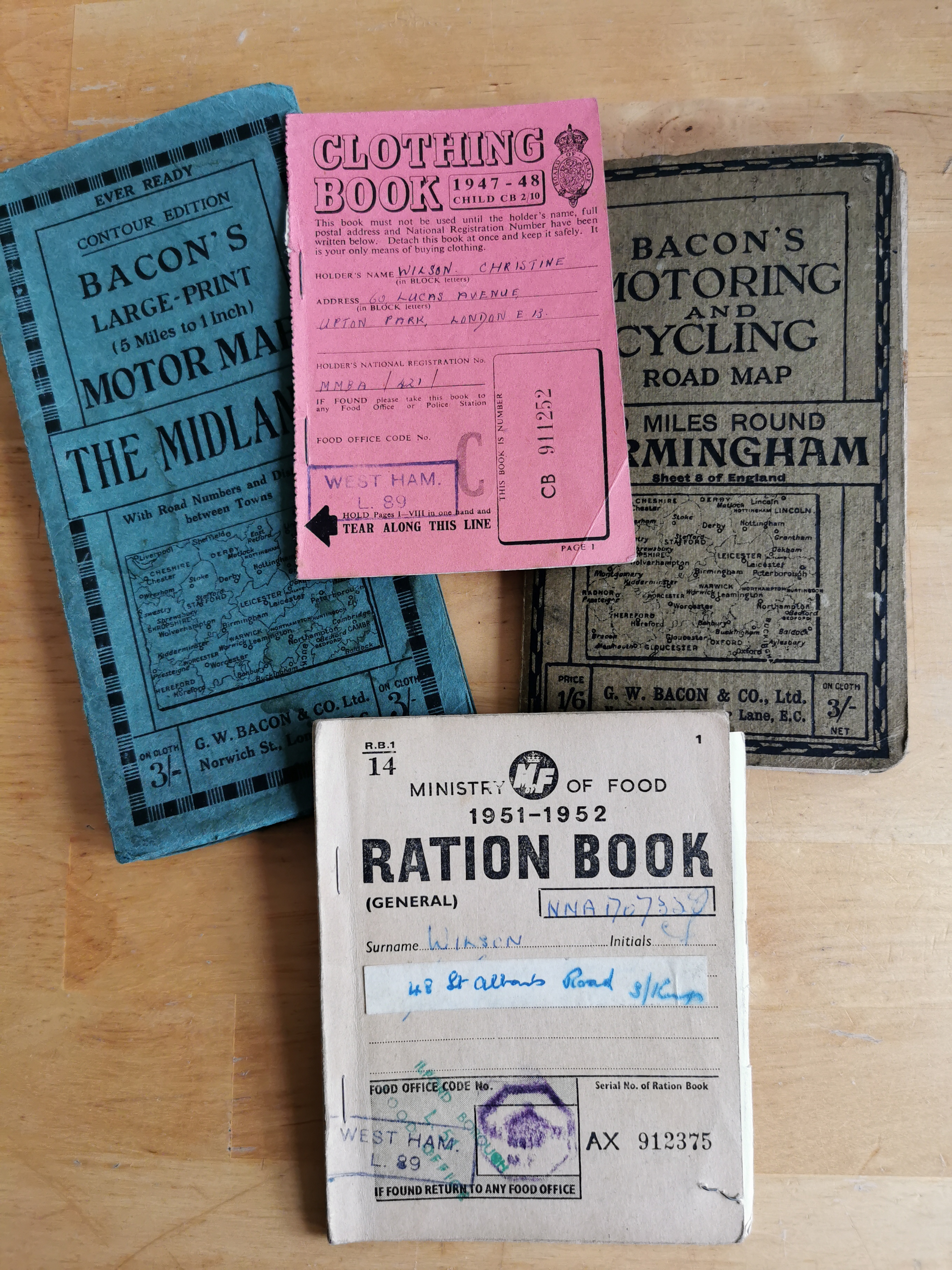
And that then took me to another element of the book that I needed to research, ration books. Again, the advantage of writing about the 1940s is that artefacts survive from the period. I was able to get hold of some ration books (thank you, online marketplace again) so that I could work out how they were distributed and used and how I could make what was happening seem ‘very real.’ What surprised me was that the coupons themselves didn’t have numbers (and certainly not bar codes), although each book had a serial number stamped on its front. I discovered the system would be particularly easy to ‘fudge’ if you inclined that way. And there were huge scandals regarding ration books during the 1940s. As with the AA sentry boxes, I was determined to weave these elements into the storyline.
Newspaper archives are a gold mine
The more I write stories set in the twentieth century, the more resources I find to help me. I made a great deal of use of the online newspaper archives – and hidden, often on the front or the back page, were all the times that the Blackout was in operation each night. This was an excellent little detail to weave into the narrative to make it seem more historically accurate.
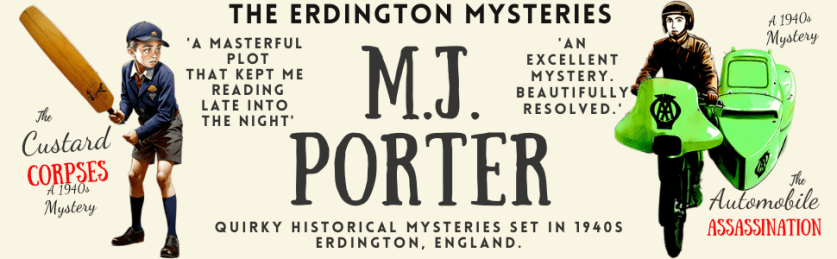
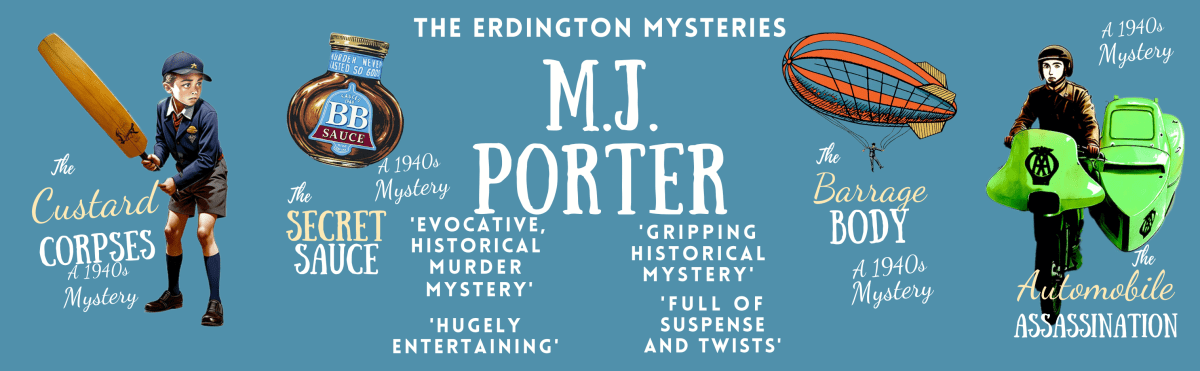
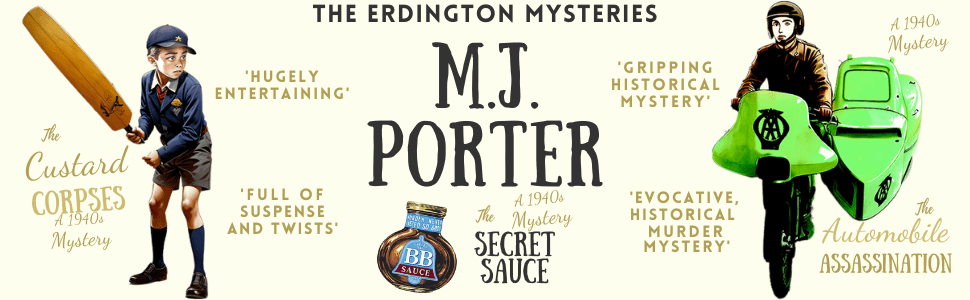
Check out The Erdington Mysteries series page for more details on The Custard Corpses, The Automobile Assassination and The Secret Sauce.
Posts












Discover more from MJ Porter
Subscribe to get the latest posts sent to your email.

 MJ Porter
4 thoughts on “The Automobile Assassination, research, research and happenstance #histfic #historicalmystery”