

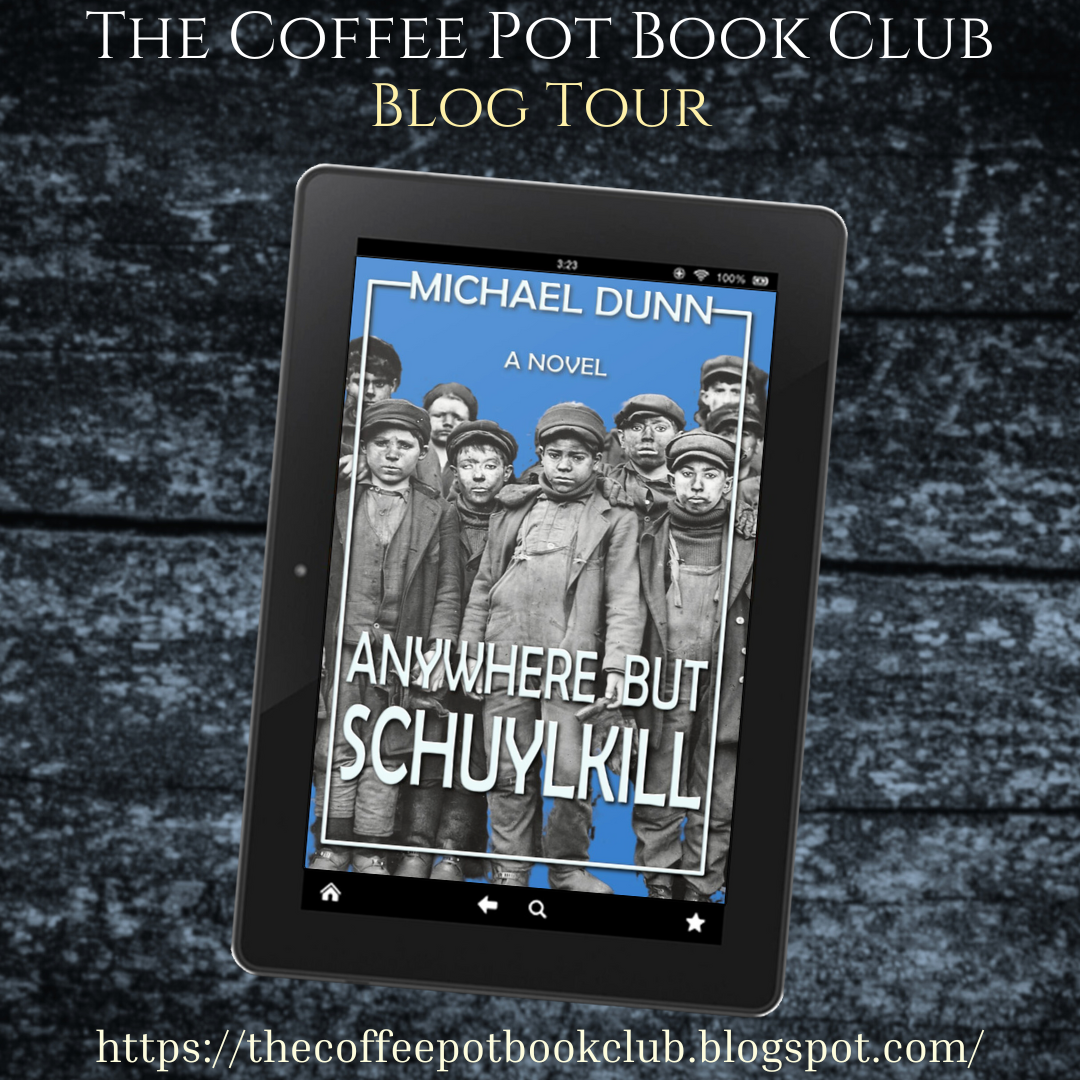
I’m delighted to welcome Michael Dunn, and his new book, Anywhere But Schuylkill to the blog, with What’s Love Got To Do With It?
What’s Love Got To Do With It?
As most readers know, a little romance always spices up a story, regardless of the genre. So, for my guest post today, I thought I’d write something about love and romance, in honor of Valentine’s Day.
In my recent historical novel, Anywhere But Schuylkill, my protagonist, Mike Doyle, is in love with a girl named Hannah, who happens to be his sister Tara’s best friend. This is troubling enough for him, since he cares deeply for his sister and doesn’t want to harm her friendship with Hannah. But Mike also works for Hannah’s father, who happens to be a gangster, and he has told Mike to keep his hands off his daughter. And to complicate matters further, Hannah’s mother is incredibly hot, and she likes to flirt with Mike when her husband isn’t around. At the same time, Tara is in love with Mike’s friend Johnny Morris, who their Uncle Sean thinks is a ne’er-do-well. And Uncle Sean is not someone you want to anger.
As a writer, I found these romantic minefields a lot of fun to create. But I also had to do a lot of research, because courtship rituals in the 1870s were so different than today. We’re talking about a small town, rural, and very traditional. There was, of course, a common trick I could exploit that transcends time period: Hannah could sneak away from her protective parents to be with Mike by pretending she was visiting her best friend, Tara. And Tara could sneak away from Uncle Sean, pretending to visit Hannah, but actually run off to meet with Johnny Morris.
This trick will only get you so far as a teen (the adults are usually sharp enough to catch on and will eventually tighten the reins). Likewise, it will only get me so far as a writer, since you modern readers are even sharper than a gilded-age parent. So, let’s talk about the research that helped me make these romances seem more authentic, and true to the era and setting.
One of the first things to consider is that none of these kids went to school. They were too poor and either had to stay home and help with the chores or go out and work for someone else to help support their families. Mike and Johnny Morris worked at the colliery. Tara and her mother worked for a neighborhood washer woman. And Hannah took care of her younger siblings, so her mother could help at the tavern. This left Sunday church as one of the only times and places where teens with strict parents could regularly meet, free of their usual burdens. While there wasn’t much courting that could occur in church, kids could chat before and after mass, and there were plenty of opportunities for lusty thoughts and teen imaginations to run wild.
There were also holidays, and community events, where teens might be able to sneak away from parents and chaperones long enough for a dance, or perhaps something a bit more illicit. Bonfire Night was one such holiday. Celebrated on the evening of June 23, Bonfire Night was historically connected to St. John’s Night, but, like many religious holidays, was likely an appropriation of an older pagan ritual. This would explain the date’s proximity to the summer solstice, and its May Day-like rituals, such as bonfires, which are lit at sunset, and kept going until long after midnight. Typically, there is food, alcohol, song and dance, creating a socially acceptable milieu for courtship. However, it is also a family-friendly event. The pious take embers home to ward off disease and evil spirits. Parents tell stories about the fairies, and kids get to stay up as late as they want because, if they fall asleep on Bonfire Night, the devil is sure to take them. Younger kids beat drums and blow tin whistles. They light sticks on fire and throw them into the air, while teens and young men challenge each other to leap across the fire. The flicker and spark of the flames tell whether they’ve been naughty, particularly in the romance department, and this can be a great source of amusement, or embarrassment.
Another popular holiday for young folks was Halloween. But an Irish-American Halloween in the 1870s was quite different than what most of us have experienced, particularly in terms of romance. The holiday often involved food, games and rituals to divine the future, particularly with regards to matrimony. For example, a traditional (and yummy) Halloween dish was colcannon, a casserole of mashed potatoes, milk, onion and kale, served with lots of butter, if one could afford it. The cook would hide prizes in the colcannon. The person who found a ring hidden in their serving was supposedly the next to get married. Alternatively, they might scoop the first and last spoonful of colcannon into a girl’s stocking, and hang that from a nail in the door, and her future husband would be the next person to enter through that door.
Another Halloween treat was barmbrack, a sweetbread filled with fruit, and sometimes hidden prizes. In this case, finding a hidden ring foretold of an impending romance, whereas a thimble meant you would never get married.
Supposedly, if a girl ate an apple while combing her hair in front of a mirror at midnight on All Hallows Eve, she would see her future husband gazing back at her. If she walked out into the night, blindfolded, and was led to a cabbage patch, she could predict the size and shape of her future husband by the size and shape of the first cabbage she picked. And if she peeled an apple and let the shavings fall to the ground, she might be able to discern her sweetheart’s initials.
Mumming, or guising, was another tradition that the Irish brought to the U.S., and that continues to be practiced in parts of Pennsylvania. Mumming involves dressing in costume and marching from door to door, performing rhyming plays, usually humorous, and often in exchange for food, treats, or even booze. It may have been the origin of the contemporary tradition of trick-or-treating. It was also common for mummers to dress in drag. One typical character was the darling Miss Funny, generally a man in drag, who demanded kisses or treats from audience members. And, instead of pumpkin Jack-o-lanterns, mummers carried hollowed out turnips, carved into grotesque faces, with lumps of burning coal inside to illuminate their way. For a fascinating history of Irish mumming, check out Henry Glassie’s, All Silver and No Brass (1975).
There are other kinds of love that are important in stories, too. For example, the desire to be loved, or the fear of being unlovable, can help explain a character’s motivations and actions. It can even help liven up a character that hasn’t been fully fleshed out yet, that feels too one-dimensional. This was initially the case with my villain, Uncle Sean, who felt like the epitome of a cruel, abusive parent. Indeed, Mike’s little brother, Bill, even says that the only two emotions Uncle Sean can feel are anger and rage. But when I added back story about Sean’s adoration of Aunt Mary, and his belief that she was the only one who could love him, “tetters and all,” he started to seem more like a real person, someone who felt pain and longing, and who struggled with his own insecurities.
This brings us back to my original premise, that a little love or romance helps spice up a story. Obviously, there is the salacious angle, like Hannah’s mom flirting with Mike. But much more important to the craft of writing is how love and romance can be exploited to enrich the side plots and add dimension to the characters. But what I find most interesting of all, is how both reading and writing about fictional love and romance can help us better understand our own real-life relationships with these emotions. What kinds of choices do we make in life to find love? To maintain love? To avoid being jilted or abandoned? And how do these choices affect our ongoing relationships with those we love, like friends and family members?
Here’s the blurb
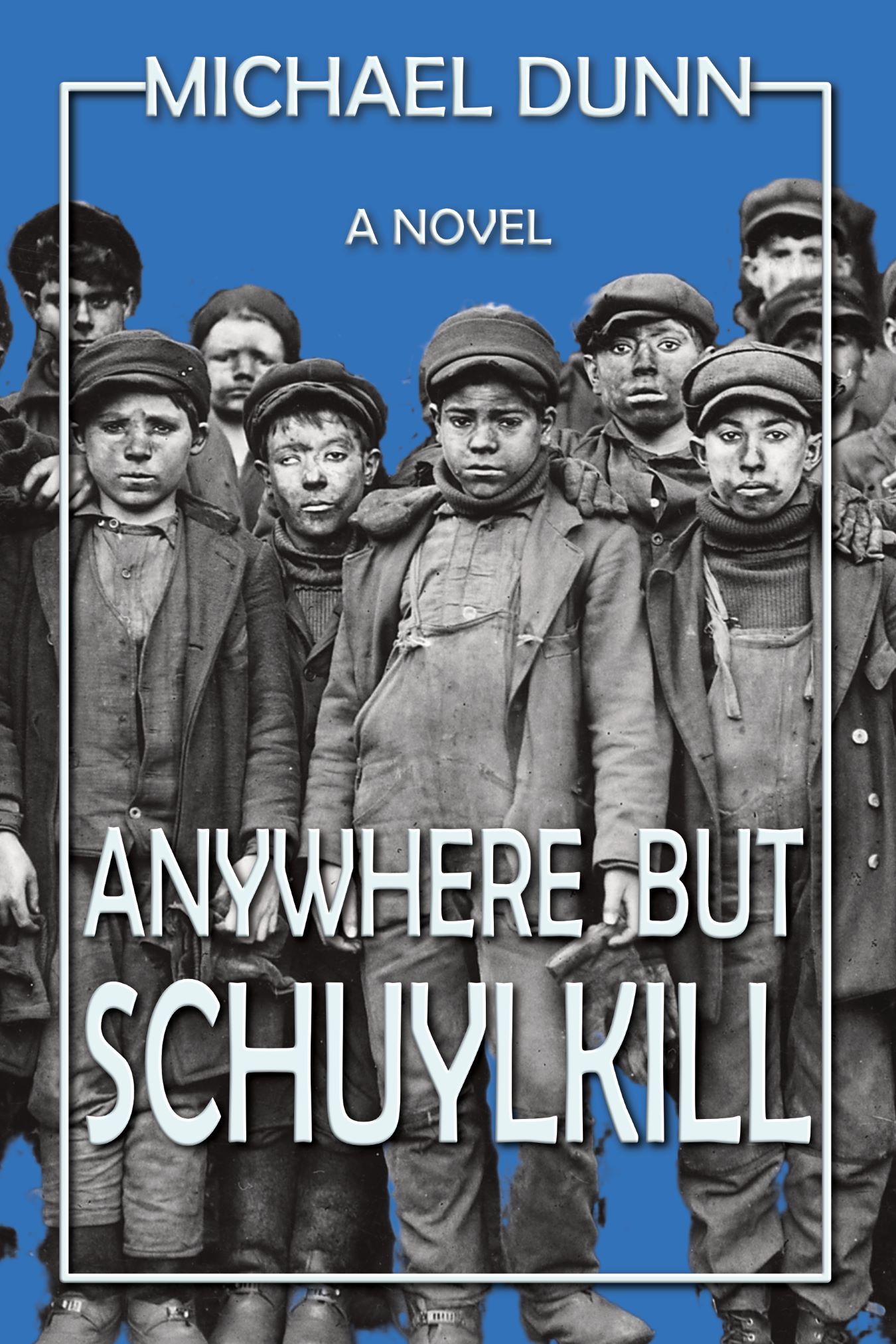
In 1877, twenty Irish coal miners hanged for a terrorist conspiracy that never occurred. Anywhere But Schuylkill is the story of one who escaped, Mike Doyle, a teenager trying to keep his family alive during the worst depression the nation has ever faced. Banks and railroads are going under. Children are dying of hunger. The Reading Railroad has slashed wages and hired Pinkerton spies to infiltrate the miners’ union. And there is a sectarian war between rival gangs. But none of this compares with the threat at home.
Buy Link
Meet the Author
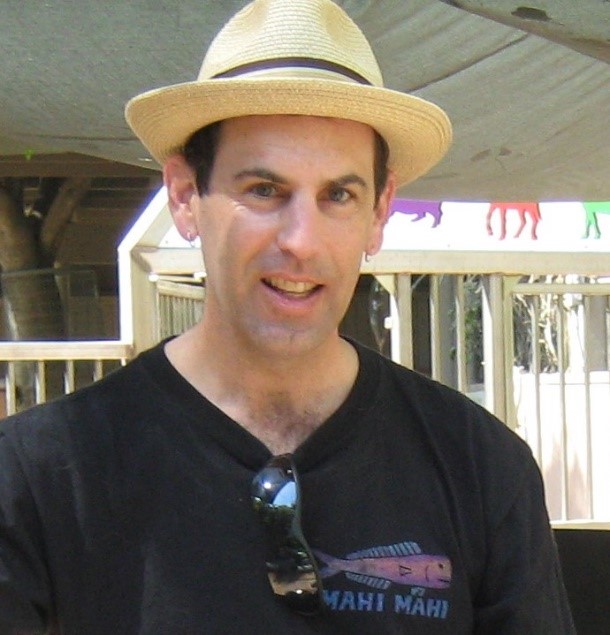
Michael Dunn writes Working-Class Fiction from the Not So Gilded Age. Anywhere But Schuylkill is the first in his Great Upheaval trilogy. A lifelong union activist, he has always been drawn to stories of the past, particularly those of regular working people, struggling to make a better life for themselves and their families.
Stories most people do not know, or have forgotten, because history is written by the victors, the robber barons and plutocrats, not the workers and immigrants. Yet their stories are among the most compelling in America. They resonate today because they are the stories of our own ancestors, because their passions and desires, struggles and tragedies, were so similar to our own.
When Michael Dunn is not writing historical fiction, he teaches high school, and writes about labor history and culture.
Meet the Author

Discover more from MJ Porter
Subscribe to get the latest posts sent to your email.

 MJ Porter
Thank you for hosting Michael Dunn with such a fascinating guest post.
Take care,
Cathie xx
The Coffee Pot Book Club
LikeLiked by 1 person
Yes, thank you so much. It was a lot of fun!
LikeLiked by 1 person