

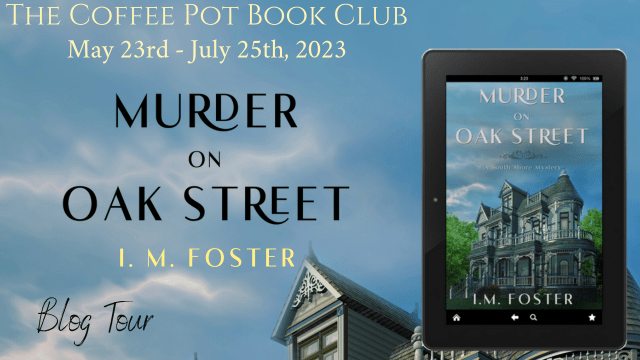
I’m delighted to welcome I.M. Foster to the blog, to share a fascinating post on Forensics at the Turn of the Century.
To start off with, I guess I should give a very basic definition of what exactly forensics is. Basically, it is the use of different scientific disciplines, such as biology, chemistry, physics, etc., to investigate crimes or examine evidence that can be used to present in court. That being the case, the techniques available at any given period in history would depend largely on the stage of scientific development that was available to the investigator at the time.
Today a multitude of investigative tools are available to detectives and medical examiners, from ballistics to DNA. Most large police departments even have their own forensics labs, as Suffolk County, New York now does. But forensic science in the day of Dr. Daniel O’Halleran was quite a bit different than it is today.
To begin with, there was no such thing as forensic science, per se, even though the use of science to determine the cause of death actually goes back to ancient Rome and Egypt. For example, it was a physician, Antisius, who determined that of the twenty-three blows Julius Caesar received it was the one below his left arm that actually killed him. Alas, after the fall of the Roman Empire, the use of science to detect the cause of death seemed to stagnate for the next thousand or so years.
Fast forward to the sixteenth century, and things began to pick up again. Interest in determining reasons for a person’s demise increased, the French and Italians studied the result of violent death on internal organs, and once again, science was being used to assist in determining the cause of death. During the nineteenth century, scientific advances produced a number of breakthroughs that aided in criminal investigations.
By the dawn of the twentieth century, poison could be detected in body tissue, handwriting analysis and the study of documents were being employed, and toxicology was being presented as evidence in jury trials. In addition, scientific tools, such as the polarized light microscope had been invented, enabling physicians to study fibers. And photography had made its appearance, making it easier to study the crime scene in detail.
Fingerprints were still relatively new on the scene however. Though a system of classifying fingerprints had been developed by the 1880s, don’t expect Daniel to be incorporating it into his investigative tool kit right away. The system used by most of Europe and North America didn’t come about until 1896 and wasn’t employed in the United States until 1903, when it was used by the New York State Prison system for criminal identification. The first use of the technique at a criminal case in the United States didn’t occur until 1910.
Before fingerprinting, something called anthropometry was used for identification, which was the measurement of body parts and their proportions to one another, not exactly foolproof. As for the twelve matching points of a fingerprint, that didn’t come along until 1918, so while Daniel might eventually play around with it, fingerprinting certainly not something he’s going to base his cases on.
The turn of the century did present some extremely helpful investigative tools however. Biologists were able to determine not only if a stain was blood, but whether it was human or animal. Ballistics was becoming more refined, though the tracing of a bullet to a specific gun wouldn’t come about until 1910. And geology was first used in 1904 by a German scientist when he identified a killer from the dirt on his pants and under his fingernails, as well as the coal soot found on a handkerchief he’d left at the crime scene. Now, that is something that Daniel might eventually employ.
Other advances were just on the horizon. The use of a microscope to compare strands of hair didn’t come along until 1910, and the study of botanicals such as plant fibers and pollen in relation to a crime scene wasn’t widely used until the 1920s, though I’m sure there were local residents who might be able to point out where a certain plant was more prevalent.
In spite of all the advances, however, using scientific principles in criminal investigations still wasn’t seen as its own discipline. But in 1904, Edmond Locard was to write a passage that one might point to as the beginning of modern forensic science. Every contact leaves a trace. Shortly after, in 1909, the first school was opened for the sole purpose of studying how to use science to determine the cause and method of death, and thus the seeds were planted for the modern study of forensic science.
Thank you for sharing such a fascinating post.

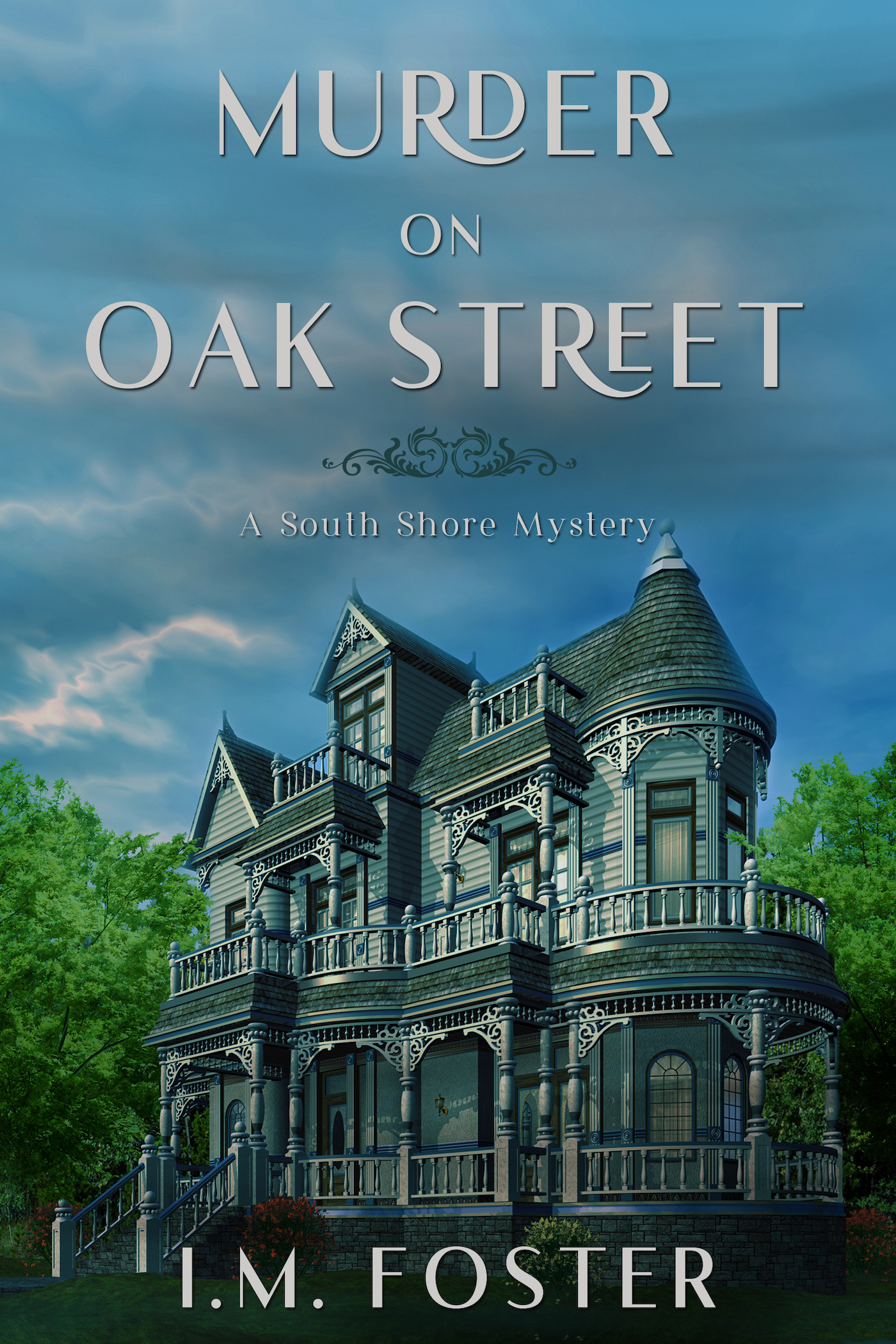
Here’s the blurb
New York, 1904. After two years as a coroner’s physician for the city of New York, Daniel O’Halleran is more frustrated than ever. What’s the point when the authorities consistently brush aside his findings for the sake of expediency? So when his fiancée leaves him standing at the altar on their wedding day, he takes it as a sign that it’s time to move on and eagerly accepts an offer to assist the local coroner in the small Long Island village of Patchogue.
Though the coroner advises him that life on Long Island is far more subdued than that of the city, Daniel hasn’t been there a month when the pretty librarian, Kathleen Brissedon, asks him to look into a two-year-old murder case that took place in the city. Oddly enough, the case she’s referring to was the first one he ever worked on, and the verdict never sat right with him.
Eager for the chance to investigate it anew, Daniel agrees to look into it in his spare time, but when a fresh murder occurs in his own backyard, he can’t shake his gut feeling that the two cases are connected. Can he discover the link before another life is taken, or will murder shake the peaceful South Shore village once again?
Buy Links
This title is available to read with #KindleUnlimited.
Amazon UK Amazon US Amazon CA Amazon AU
Meet the author
I. M. Foster is the pen name author Inez Foster uses to write her South Shore Mystery series, set on Edwardian Long Island. Inez also writes historical romances under the pseudonym Andrea Matthews, and has so far published two series in that genre: the Thunder on the Moor series, a time-travel romance set on the 16th century Anglo-Scottish Borders, and the Cross of Ciaran series, which follows the adventures of a fifth century Celt who finds himself in love with a twentieth century archaeologist.
Inez is a historian and librarian, who love to read and write and search around for her roots, genealogically speaking. She has a BA in History and an MLS in Library Science and enjoys the research almost as much as she does writing the story. In fact, many of her ideas come to her while doing casual research or digging into her family history. Inez is a member of the Long Island Romance Writers, the Historical Novel Society, and Sisters in Crime.

Connect with IM Foster
Book Bub Amazon Author Page Goodreads
Discover more from MJ Porter
Subscribe to get the latest posts sent to your email.

 MJ Porter
Thank you for hosting I. M. Foster today, with such a fascinating guest post. Very interesting.
Cathie xx
The Coffee Pot Book Club
LikeLiked by 1 person