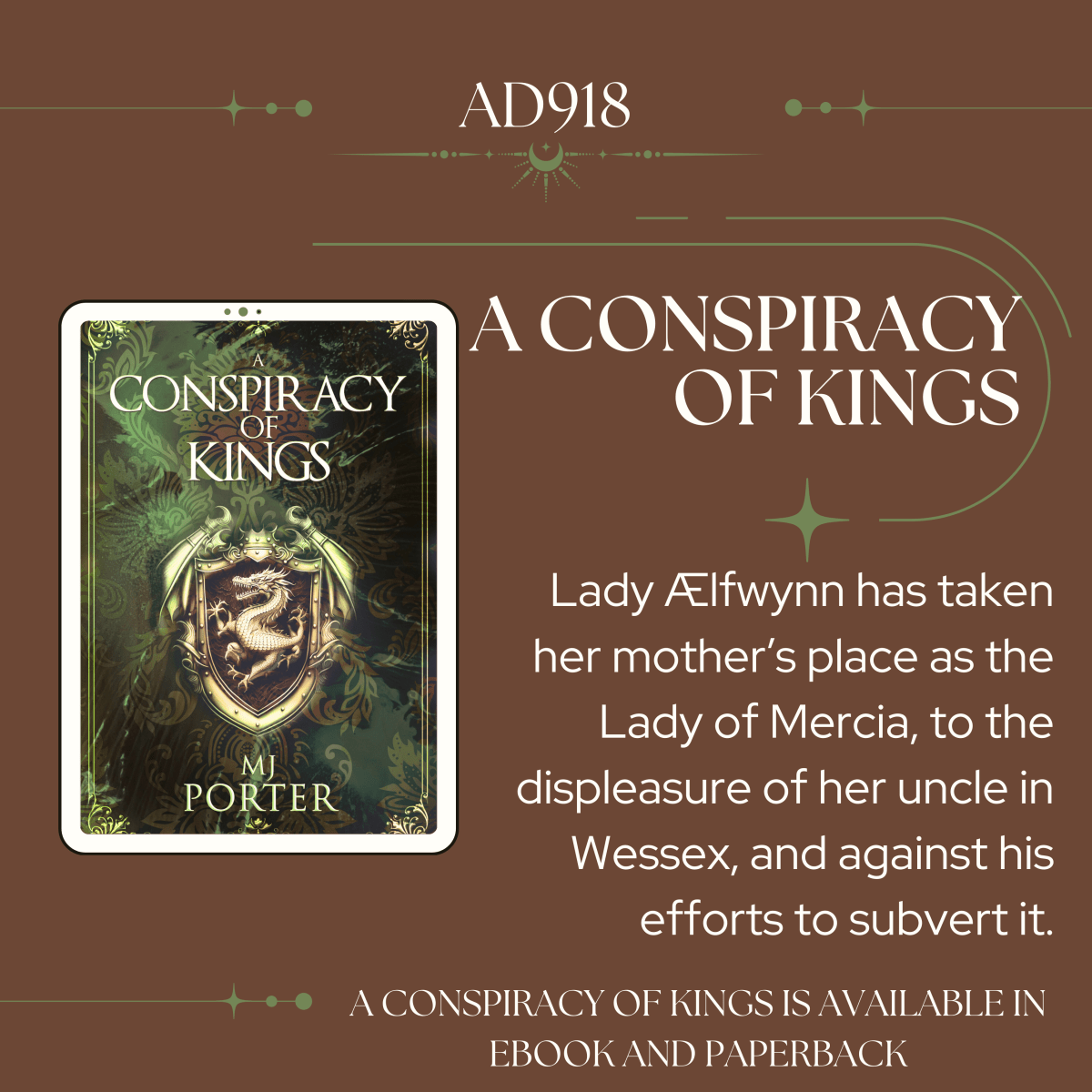
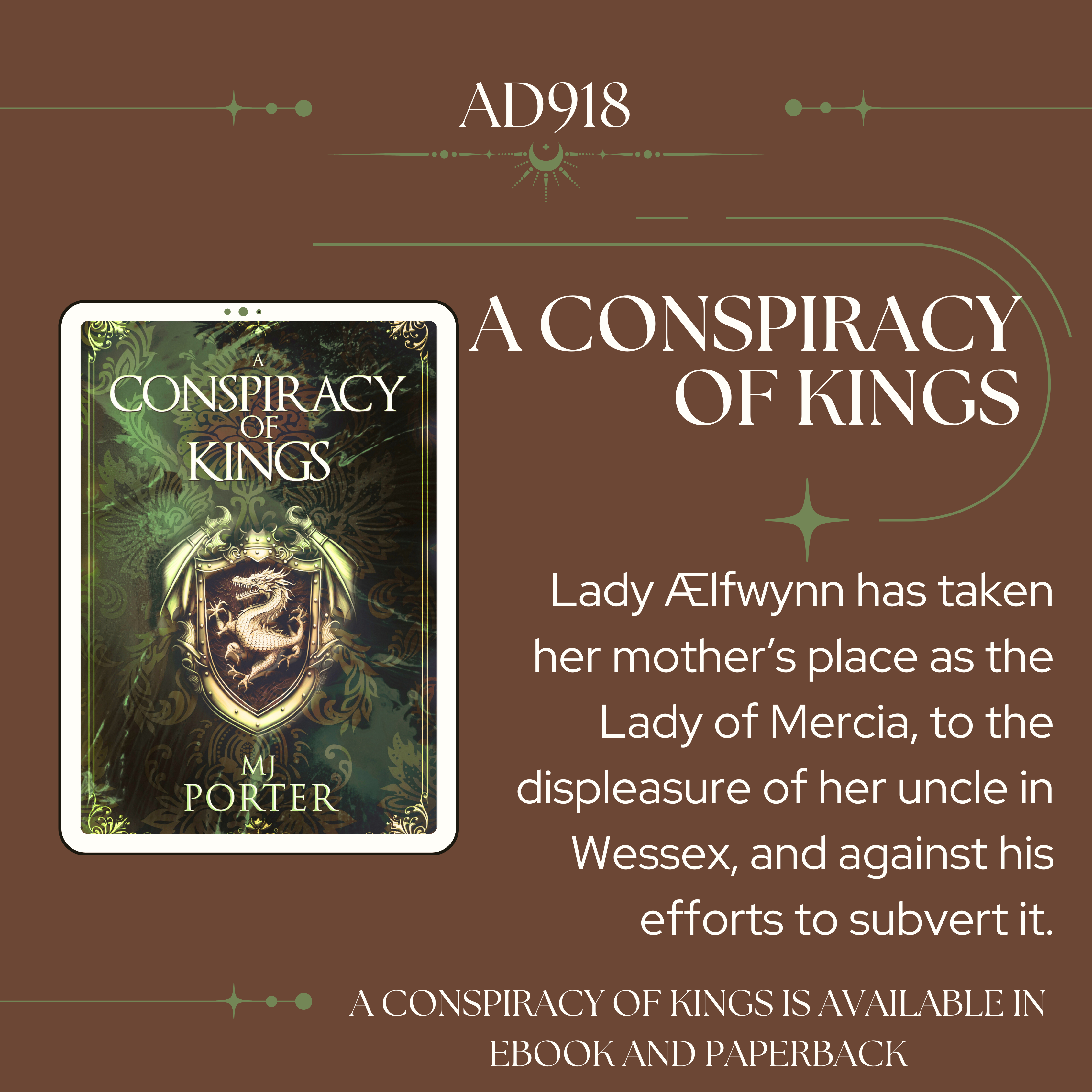
A Conspiracy of Kings – a little bit of history (may contain spoilers for my fictional recreation of Lady Ælfwynn
In the sequel to The Lady of Mercia’s Daughter, the story of Lady Ælfwynn continues. She is The Second Lady of Mercia, but everything isn’t as it seems. In the various recensions of The Anglo-Saxon Chronicles, an attempt can be made to piece together what befalls her.
The Anglo-Saxon Chronicle A version doesn’t mention Ælfwynn at all but instead has King Edward of Wessex/the Anglo-Saxons taking control of Tamworth as soon as his sister dies in June 918.
The Anglo-Saxon Chronicle E only mentions Lady Æthelflæd’s death in 918 and not what happens immediately after in Mercia. Lady Ælfwynn’s fate, however, is recorded in The Anglo-Saxon Chronicle C. We’re told that she was deprived of all power and ‘led into Wessex three weeks before Christmas.’ This entry is dated 919, although it’s normally taken to mean 918 due to a disparity between the dating in this part of The Anglo-Saxon Chronicle – known as the Mercian Register – where a new year starts in December as opposed to in the Winchester version of The Anglo-Saxon Chronicle where the new year starts in September.
These details are stark, offering nothing further. What then actually happened to Lady Ælfwynn? Was she deprived of her power? Was she deemed unsuitable to rule?
What adds to the confusion surrounding Lady Ælfwynn is that other than this reference in The Anglo-Saxon Chronicle, she doesn’t appear in any of the later sources. It’s as though she simply ceased to exist.
Two intriguing suggestions have been put forward to explain what happened to Lady Ælfwynn, both with some tenous corroboration.
Did she become a nun or, perhaps, a religious woman?
A later charter dated to 948 and promulgated by King Eadred is to an ‘Ælfwyn, a religious woman,’ and shows land being exchanged in Kent for two pounds of purest gold. (S535) There’s no indication that this Ælfwyn is related to our Ælfwynn or even to King Eadred. But, there remains the possibility that it might just have been the same woman, after all, Eadred would have been Ælfwynn’s cousin. Charter S535 survives in only one manuscript.
Alternatively, and based on a later source, Ramsey Abbey’s Book of Benefactors, we learn the following:
‘he [Athelstan Half-King] bestowed marriage upon a wife, one Ælfwynn by name, suitable for his marriage bed as much as by the nobility of her birth as by the grace of her unchurlish appearance. Afterwards she nursed and brought up with maternal devotion the glorious King Edgar, a tender boy as yet in the cradle. When Edgar afterwards attained the rule of all England, which was due to him by hereditary destiny, he was not ungrateful for the benefits he had received from his nurse. He bestowed on her, with regal munificence, the manor of Weston, which her son, the Ealdorman, afterwards granted to the church of Ramsey in perpetual alms for her soul, when his mother was taken from our midst in the natural course of events.’[i]
Which alternative is it?
There are only eight women named Ælfwynn listed in the Prosopography of Anglo-Saxon England (PASE), a fabulous online database. Of these, one is certainly Ælfwynn, the second lady of the Mercians, and one is undoubtedly the religious woman named in the charter from 948. (When the identification is not guaranteed, multiple entries are made in this invaluable online database). The other five women were alive much later than the known years Ælfwynn lived. One of the entries might possibly relate to her, but that’s all the information known about her.
And this is far from unusual for many of the women of the House of Wessex. Some women are ‘lost’ on the Continent. Some are ‘lost’ in England.
‘Were it not for the prologue to Æthelweard’s Latin translation of an Anglo-Saxon Chronicle, we would know of only six tenth-century royal daughters or sisters from early English sources and the names of only four of them. Three of these named ones are nuns or abbesses. Only Ælfwynn, the daughter of Æthelflæd and Æthelred of Mercia, and the two daughters of Edward/sisters of Athelstan who married Otto I and Sihtric of York, appear in the witness lists of charters, though Eadburh, daughter of Edward the Elder, is a grantee of a charter of her brother Athelstan.’[ii]
Reconstructing a ‘possible’ life for Lady Ælfwynn was the inspiration for both The Lady of Mercia’s Daughter and A Conspiracy of Kings, and the potential for family betrayal, politicking, and war with the Viking raiders was just too good an opportunity to miss.
[i] Edington, S and Others, Ramsey Abbey’s Book of Benefactors Part One: The Abbey’s Foundation, (Hakedes, 1998) pp.9-10
[ii] Stafford, P. Fathers and Daughters: The Case of Æthelred II in Writing, Kingship and Power in Anglo-Saxon England, (Cambridge University Press, 2018) p.142
I feel like these are coming thick and fast this year, but then I suppose I’ve written a lot of books.
To celebrate The Lady of Mercia’s Daughter turning 8, yes 8, today, I thought I’d share why I wrote about Lady Ælfwynn, and not her more famous mother, Lady Æthelflæd.
My first historical fiction story (that of Ealdorman Leofwine) was inspired by the fact that I realised he’d been almost written out of the history of the period. I’d read many, many books about the end of Saxon England, and few of them mentioned the Earls of Mercia at all, apart from his descendants, Edwin, Morcar and Eadgyth. This has often been the way. I find a character who’s been forgotten about (because most historical individuals have been forgotten about) and I reimagine their lives and endeavour to either rehabilitate them, or at least shine a light on them. The same can be said for Lady Ælfwynn, the Lady of Mercia’s Daughter, and the Second Lady of the Mercians in her own right.
Even though she attests a number of charters, and is named in the Anglo-Saxon Chronicle (which is very rare for the women of the tenth century) no one had heard of her. I was determined to put that right, largely helped by an academic paper I read about her which got my brain firing with ideas.
Piecing together the scant information available (and possibly known) about her, I created The Lady of Mercia’s Daughter, and subsequently, the sequel, A Conspiracy of Kings. In doing so I don’t suggest at all that this is a recreation of the life she led, but it certainly presents a possible life for her, and one that is a little more exciting than the often cited ‘she became a nun,’ argument to explain why she disappears from the historical record so quickly. It also allowed me to try my hand at family politics, which so often came into play during the era. And, for fans of King Coelwulf II and The Last King books, I can certainly ‘see’ a lot of his later creation in the pages of The Lady of Mercia’s Daughter.
Here’s the blurb
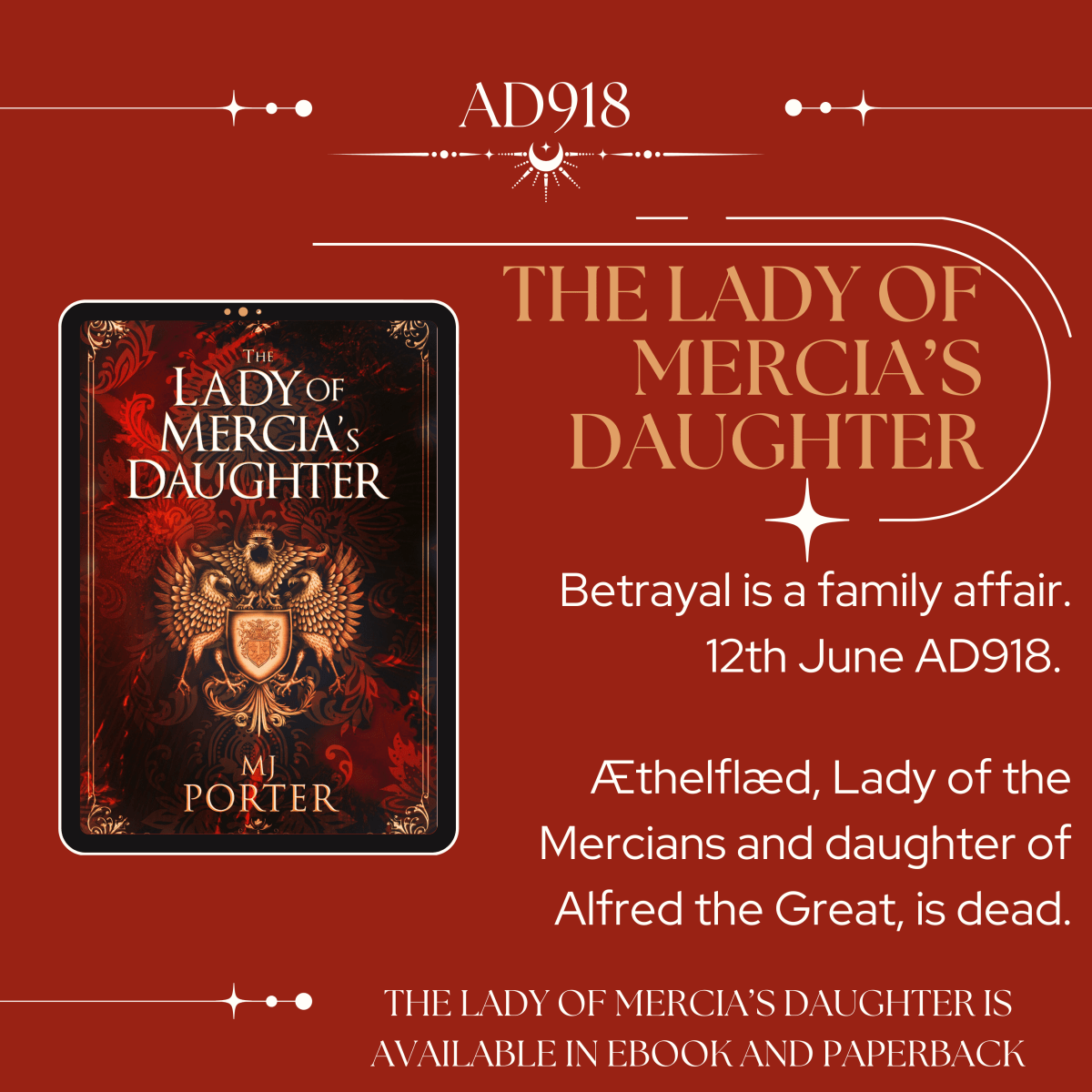
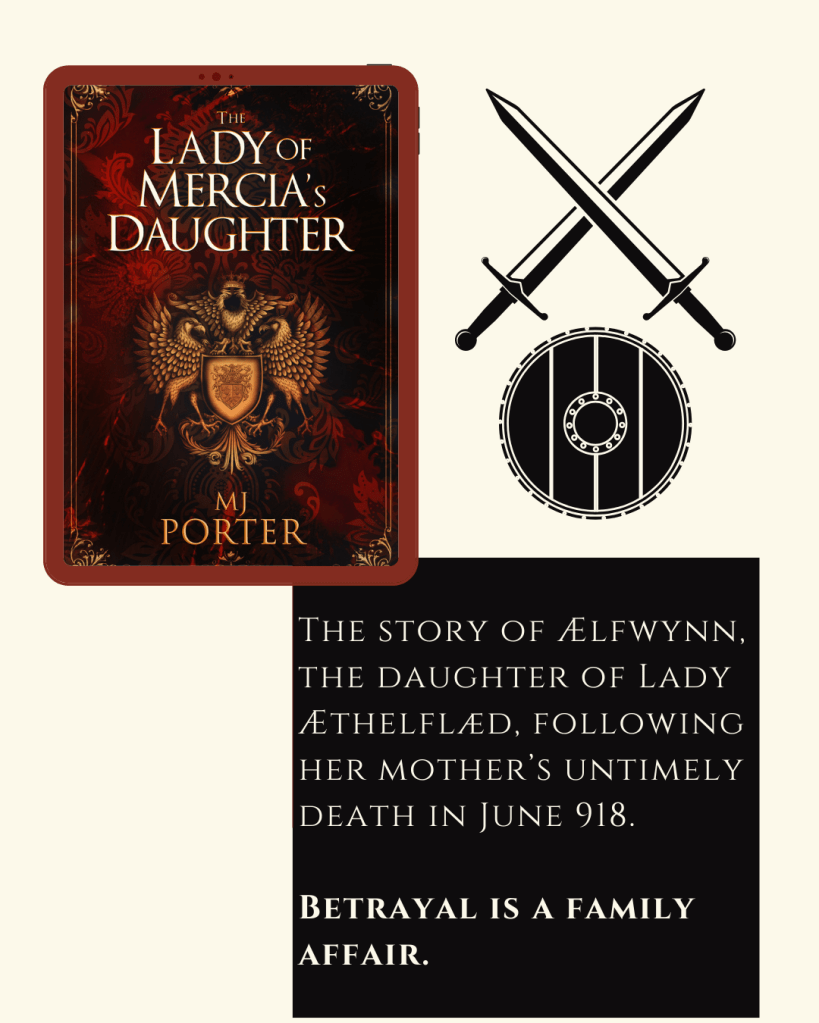
Betrayal is a family affair.
12th June AD918.
Æthelflæd, Lady of the Mercians and daughter of Alfred the Great, is dead.
Ælfwynn, the niece of Edward, King of Wessex, has been bequeathed her mother’s power and status by the men of the Mercian witan. But she knows Mercia is vulnerable to the north, exposed to the retreating world of the Viking raiders from her mother’s generation.
With her cousin Athelstan, Ealdorman Æthelfrith and his sons, Archbishop Plegmund and her band of trusted warriors, Ælfwynn must act decisively to subvert the threat from the Norse. Led by Lord Rognavaldr, the grandson of the infamous Viking raider, Ivarr of Dublin, they’ve turned their gaze toward the desolate lands of northern Saxon England and the jewel of York.
Inexplicably she’s also exposed to the south, where her detested cousin, Ælfweard, and uncle, King Edward, eye her position covetously, their ambitions clear to see.
This is the unknown story of Ælfwynn, the daughter of the Lady of the Mercians and the startling events of late 918 when family loyalty and betrayal marched hand in hand across lands only recently reclaimed by the Mercians. Kingdoms could be won or lost through treachery and fidelity, and there was little love and even less honesty. And the words of a sword were heard far more loudly than those of a king or churchman, noble lady’s daughter or Viking raider.
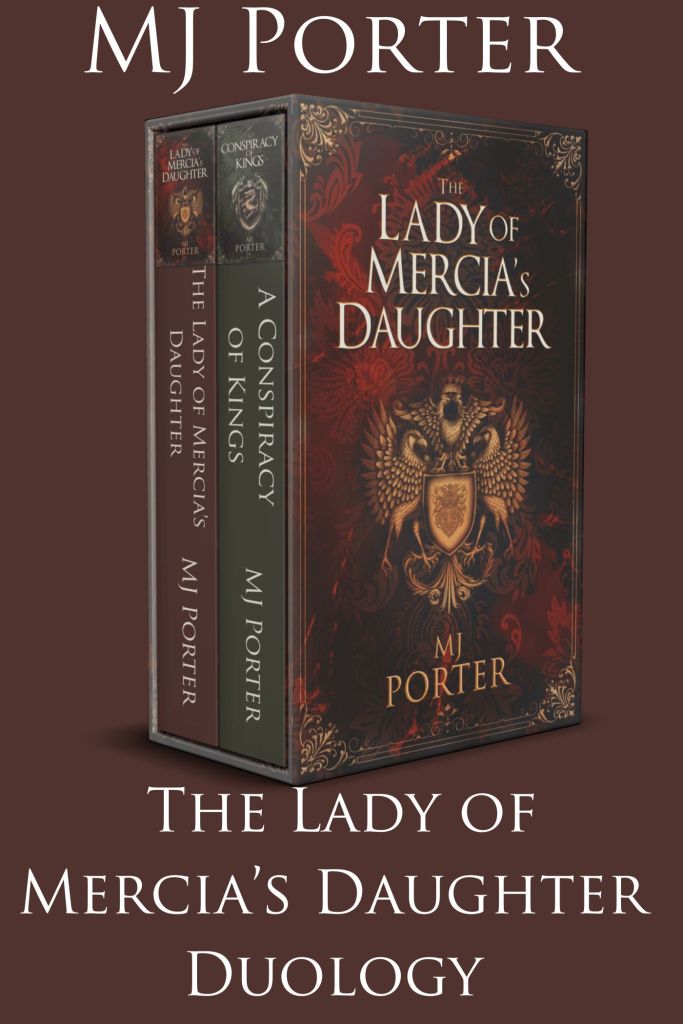
You can now grab The Lady of Mercia’s Daughter duology, containing both books featuring Lady Ælfwynn
Reviews are starting to come in, and I’d like to thank all the reviewers for taking the time to have a look at The Royal Women Who Made England. You can check out the reviews over on the Pen and Sword website.
In the meantime, don’t forget to enter the combined competition between my two publishers for signed copies of The Royal Women and King of Kings (UK only. Closing date 6th Feb 2024). You can find the details here.
And, I have another little video to share with you below about one of the later Anglo-Norman sources I made use of while researching the book.
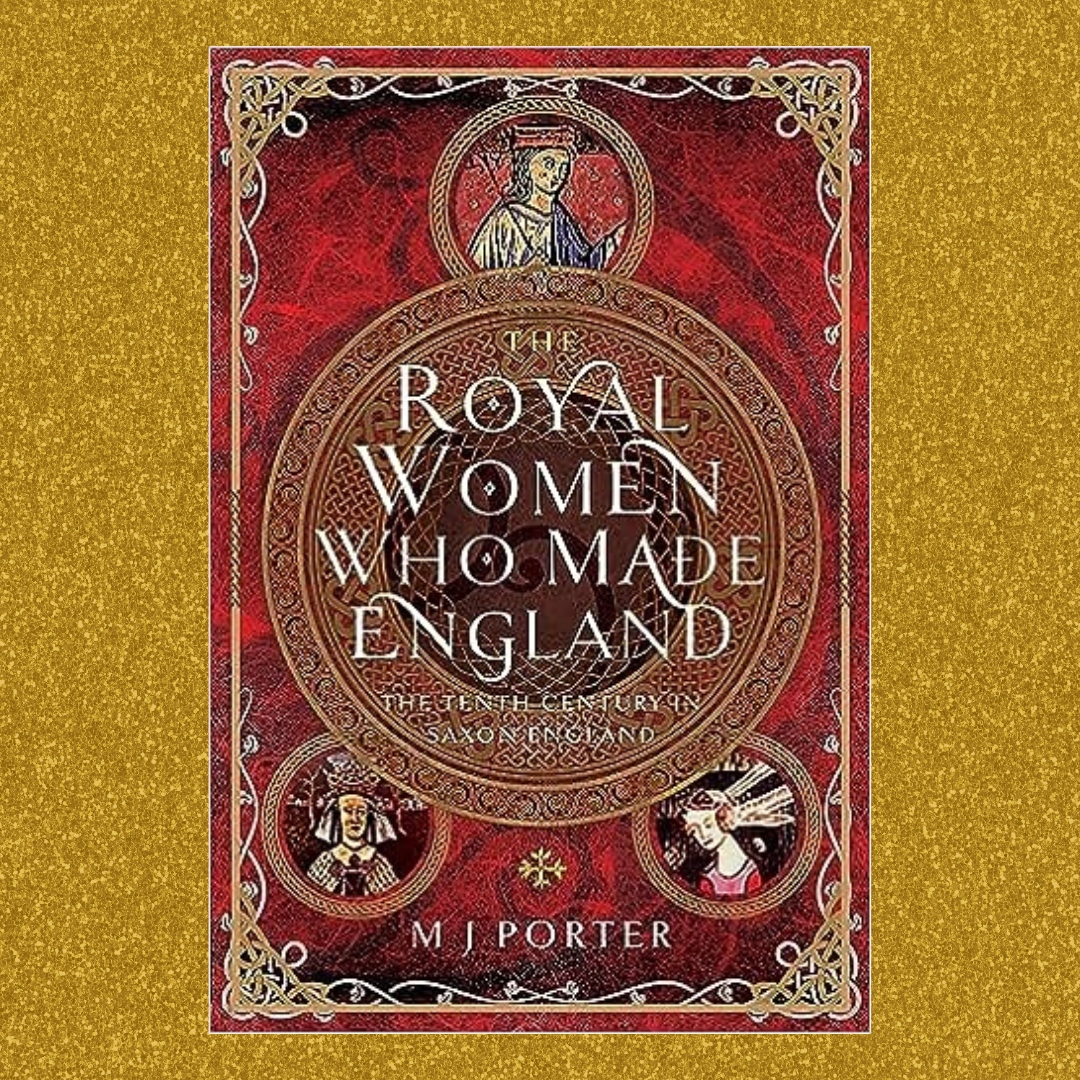
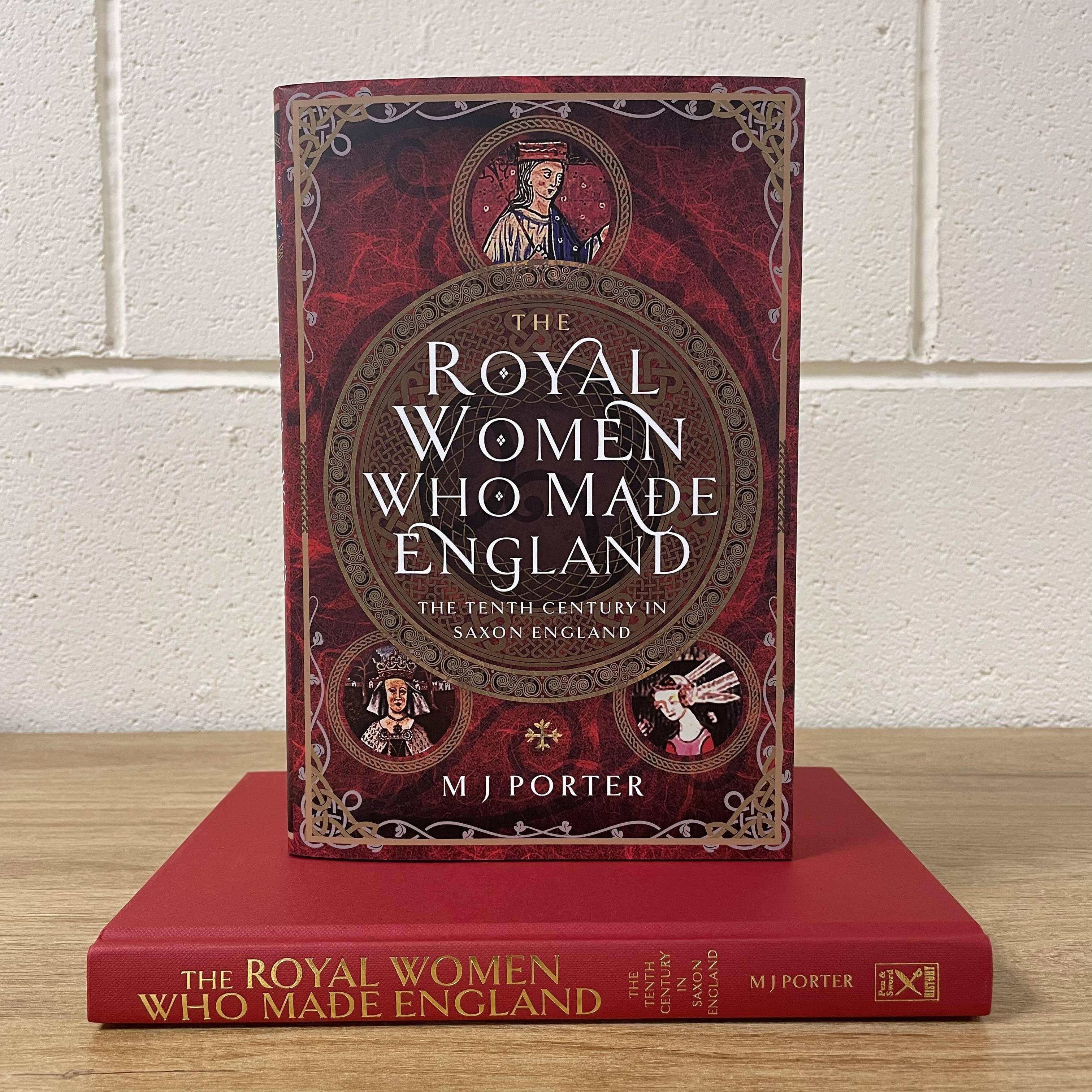
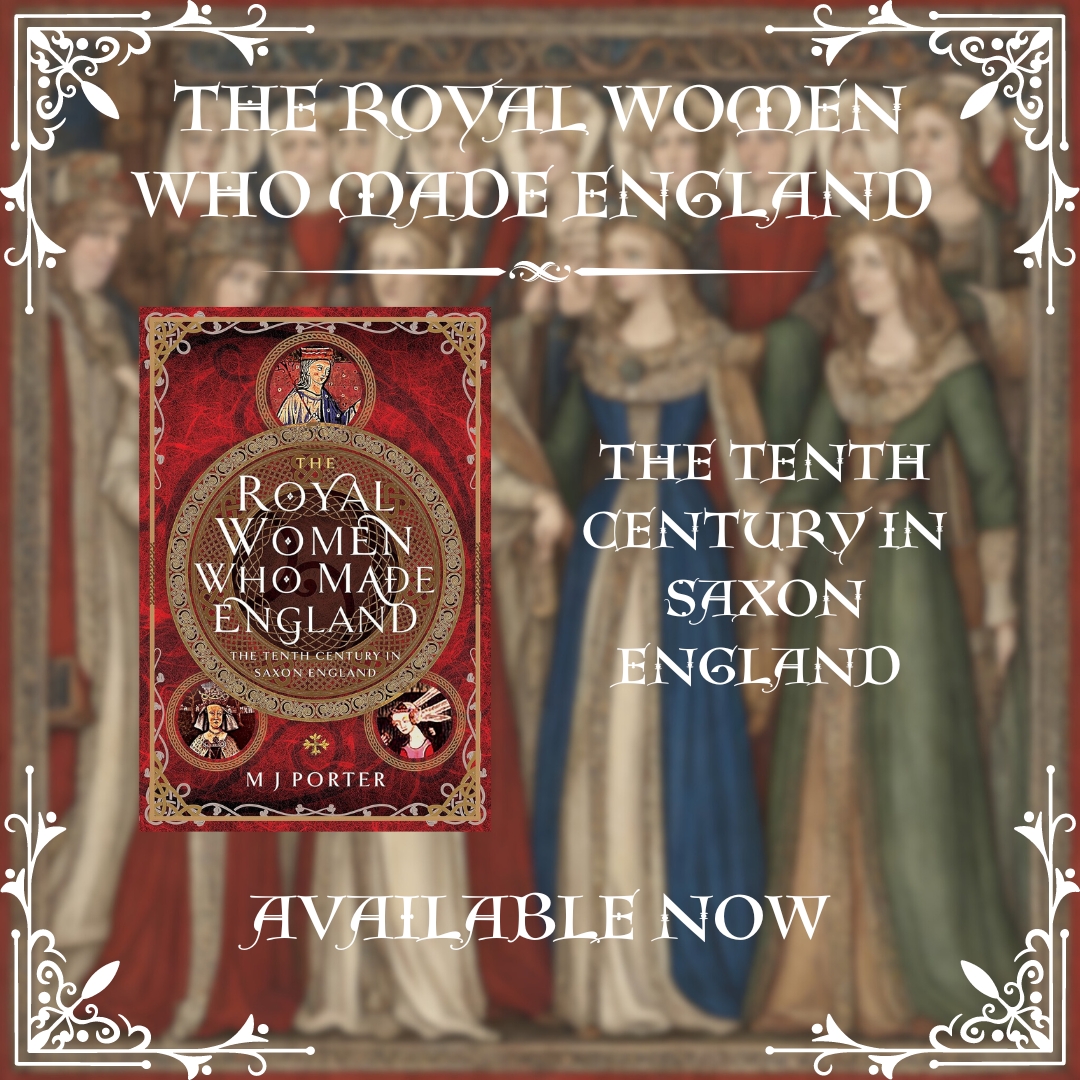
It feels like I’ve been talking about this book forever, but the day is finally upon us. The Royal Women Who Made England is available in hardback in the UK from today. It will be released in the US in March.
If you’ve been hiding from me for the last few months, you might be wondering what this is all about. So here goes.
Throughout the tenth century, England, as it would be recognised today, formed. No longer many Saxon kingdoms, but rather, just England. Yet, this development masks much in the century in which the Viking raiders were seemingly driven from England’s shores by Alfred, his children and grandchildren, only to return during the reign of his great, great-grandson, the much-maligned Æthelred II.
Not one but two kings would be murdered, others would die at a young age, and a child would be named king on four occasions. Two kings would never marry, and a third would be forcefully divorced from his wife. Yet, the development towards ‘England’ did not stop. At no point did it truly fracture back into its constituent parts. Who then ensured this stability? To whom did the witan turn when kings died, and children were raised to the kingship?
The royal woman of the House of Wessex came into prominence during the century, perhaps the most well-known being Æthelflæd, daughter of King Alfred. Perhaps the most maligned being Ælfthryth (Elfrida), accused of murdering her stepson to clear the path to the kingdom for her son, Æthelred II, but there were many more women, rich and powerful in their own right, where their names and landholdings can be traced in the scant historical record.
Using contemporary source material, The Royal Women Who Made England can be plucked from the obscurity that has seen their names and deeds lost, even within a generation of their own lives.
So, who were these royal women? While some of us will know Æthelflæd, the Lady of Mercia, either because I think she is one of THE most famous Saxon women, or because of The Last Kingdom TV series and books, but she is merely one of many.
I’ve fictionalised Elfrida and her contemporaries, Eadgifu, the third wife of Edward the Elder and also some of his daughters, as well as Ælfwynn, the daughter of Æthelflæd. My first non-fiction title is me sharing my research that these stories are based upon.
I’ve also ‘found’ many other women of the period who have left some sort of physical reminder, mostly in charters or because their wills have survived.
In total, I discuss over twenty women directly involved with the royal family, either by birth or marriage, and also a further forty, who appear in the sources. I also take a good look at what these sources are and how they perhaps aren’t always as reliable as we might hope. I make an attempt to ‘place’ these women in the known historical events of the period. And draw some conclusions, which surprised even me.
You can find some of my blog posts about these women below.
In the online resource, The Prosopography of Anglo-Saxon England (PASE), a database of every known name from the Saxon period, 33,981 male names are listed. There are only 1,460 female names for the 600-year period of Saxon England. Only 4 per cent of entries are women (there are also many anonymous ones which may mask more women). Twenty-one (possibly twenty-two) of these belong to the royal women of the tenth century. So, who were they?
Æthelgifu, Alfred and Ealhswith’s second daughter, the abbess of Shaftesbury.
Ælfthryth, the Countess of Flanders, their third daughter.
Ecgwynn (if that was her name), mother to King Athelstan, and his unnamed sister, given the name of Ecgwynn/Edith in later sources
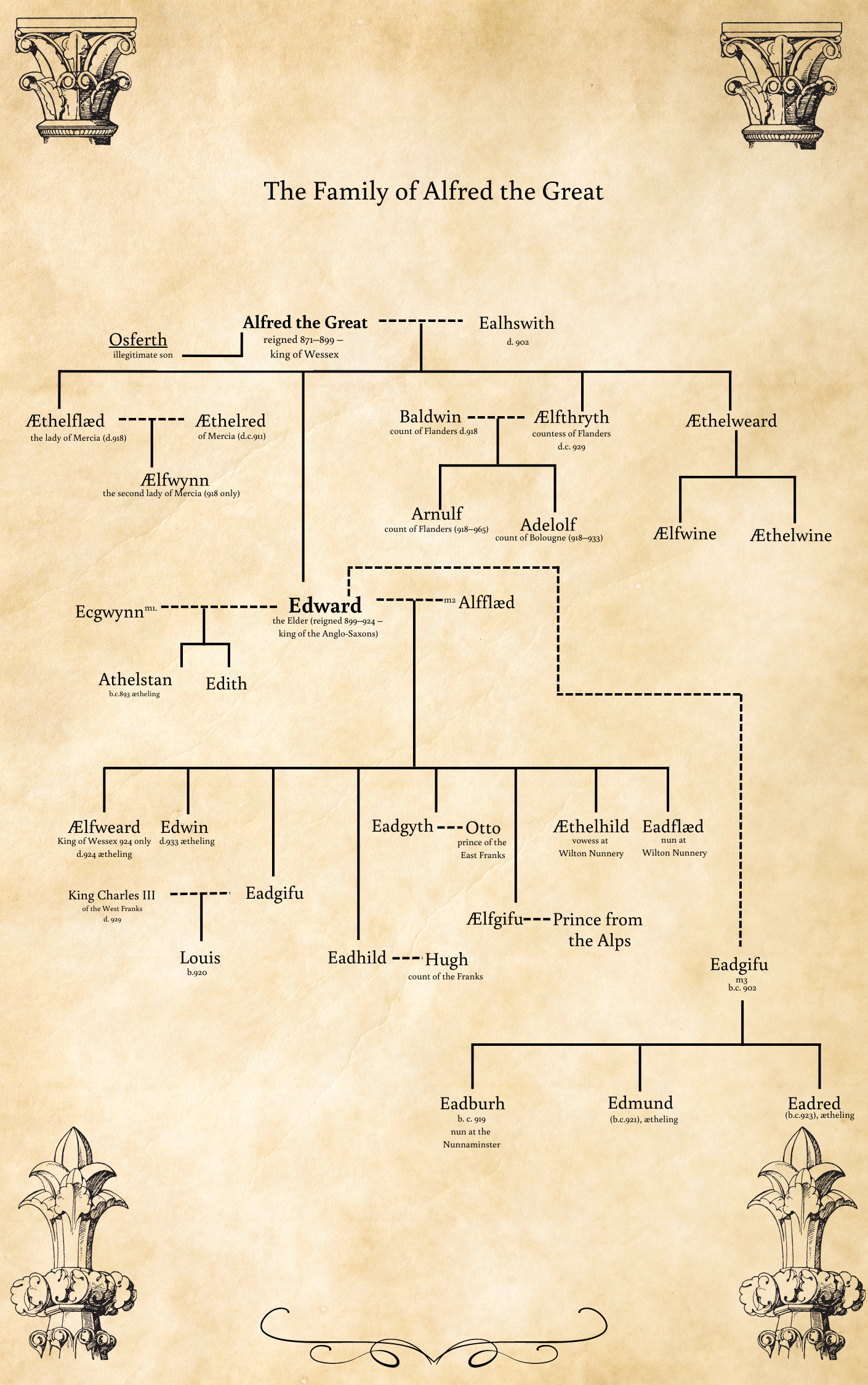
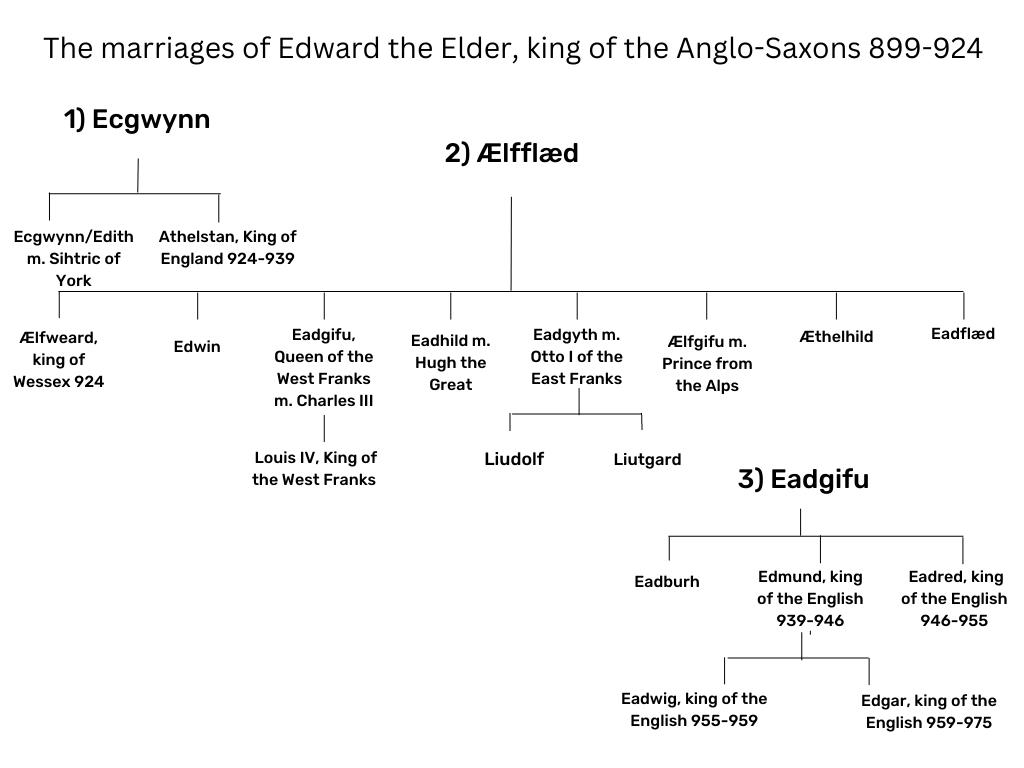
Lady Ælfflæd the second wife of Edward the Elder. They had many children. Six of them were daughters, Æthelhild, Eadgifu, Eadflæd, Eadhild, Eadgyth and Ælfgifu.
Edward’s third wife, Lady Eadgifu, certainly had one daughter, Eadburh. (There is the possibility that she had two.)
Ælfgifu of Shaftesbury, whose mother Wynflæd is named, was the first wife of Edmund. Æthelflæd of Damerham was Edmund’s second wife.
Edmund’s oldest son, Eadwig, married another Lady Ælfgifu.
Edmund’s youngest son, Edgar, would marry, or have children with no fewer than three women, Æthelflæd, Wulfthryth and Elfrida/Ælfthryth. From these three unions, one daughter was born, Edith/Eadgyth.
Another Ælfgifu was the first wife of Æthelred II. His second wife was Lady Emma of Normandy. At least four daughters were born to Ælfgifu, a daughter (also called Ælfgifu), Eadgyth, Wulfhild and Ælfthryth, while Lady Emma was the mother to Gode.
You can read all about these women in my non-fiction book, and there are also some links to blog posts I’ve written, which may be of interest.
Below you can hear me try and explain the importance of the marriages of some of these women into the West Frankish dynasty. I also forget the title of my non-fiction title, and generally make a bit of a mess of it. Enjoy:)
The Family of Charles III, the king of the West Franks (in my own words)
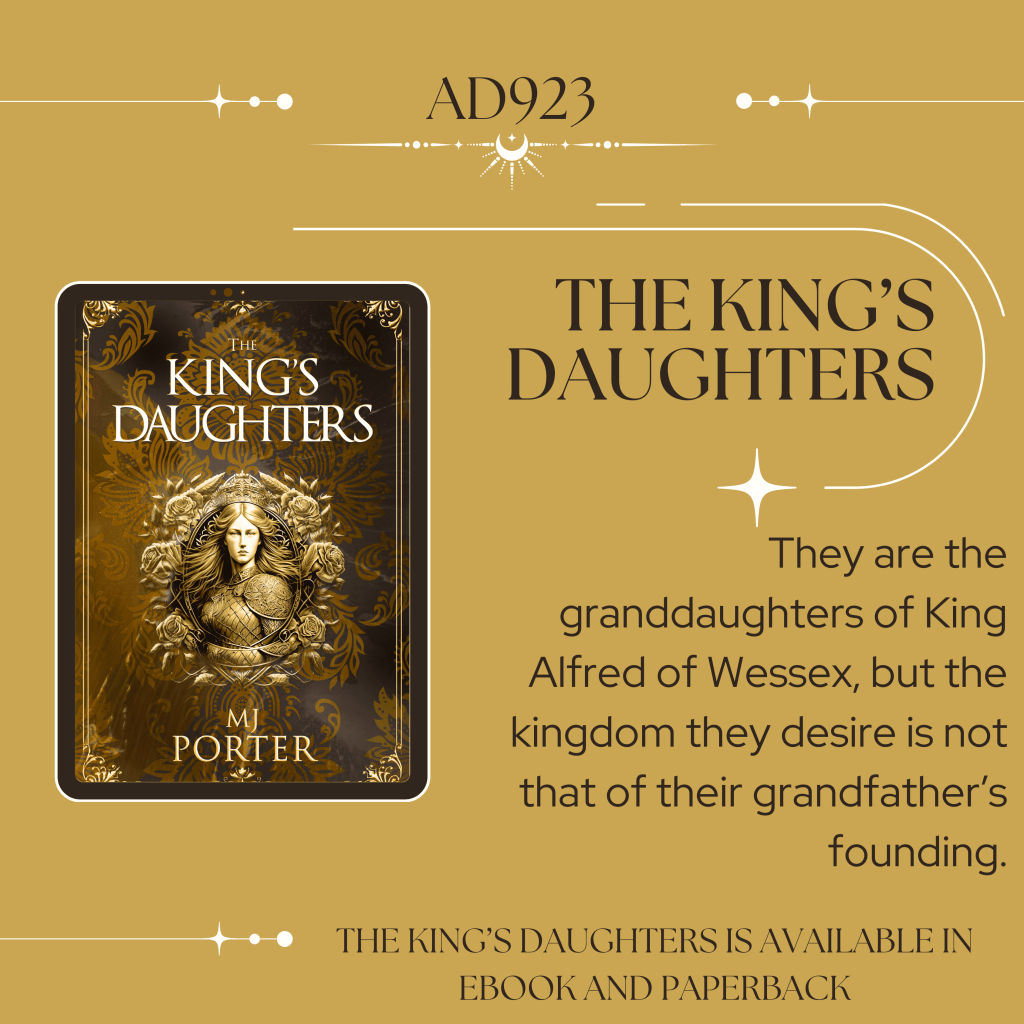
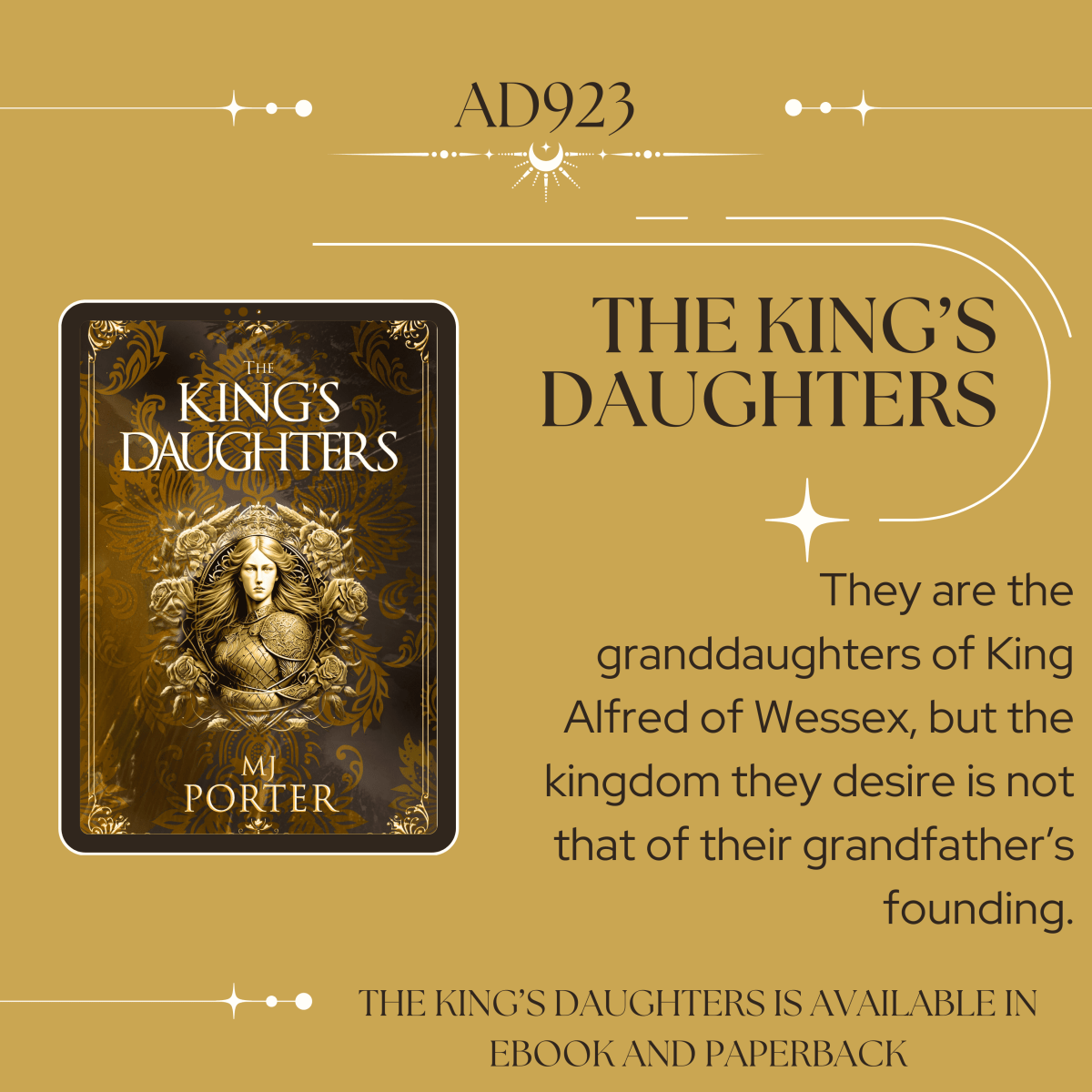
The King’s Daughters is available with Kindle Unlimited, and is a novel of the many daughters of Edward the Elder who married into the ruling families in East and West Frankia, or who became holy women, or lived within a nunnery.
So, who were these daughters?
Edward the Elder was married three times, to an unknown woman- who was the mother of the future King Athelstan, to Lady Ælfflæd – who was the mother of the future, and short-lived King Ælfweard, and finally to Lady Eadgifu – who was the mother of the future kings Edmund and Eadred. But, while each woman was mother to a future kings, this story focuses on the daughters. And there were a lot of them, and their lives were either spent in making prestigious marriages, or as veiled women – whether professed religious, or merely lay women living in a nunnery or an isolated estate.
The story of The King’s Daughters is very much about the daughters of Edward and his second wife, and the marriages they made in Continental Europe, into the powerful families in East and West Frankia. And I’ve written a lengthy post about them which you can find here. But there were other daughters/sisters, and while their lives might be almost lost to us, it is interesting to discover what little is known of them.
Edith/Eadgyth/Ecgwynn/unnamed daughter of Edward the Elder, and his unnamed first wife (Ecgwynn?) c.890s–937?
m. Sihtric, king of York in 925, repudiated by 927 when Sihtric died
Edith[i] is believed to be the biological sister of the future King Athelstan, and, therefore, the daughter of King Edward and his first wife, possibly named Ecgwynn. Edith is unnamed in the Anglo-Saxon Chronicle, but her marriage is mentioned in both the D and the C texts.
The C text records that in 924, ‘Athelstan was chosen as king by the Mercians, and consecrated at Kingston, and he gave his sister.’[ii] And here the text, rather enigmatically, comes to a halt until 954.
The D text, is rather more helpful, under 925 stating that, ‘Here Athelstan and Sihtric, king of Northumbria, assembled at Tamworth on 30th January, and Athelstan gave him his sister.’[iii]
This, therefore, refers to the union between Athelstan’s sister and Sihtric, a Norse king of Jorvik or York. The union is intriguing. It does seem to be the only occasion that a marriage union was enacted between the Viking raiders and the Wessex royal family.
There is the suggestion that Edith may have become a nun on her return to Mercia. She is associated with the nunnery at Polesworth by traditions recorded at Bury in the twelfth century. Following the death of her husband, she is said to have returned to Mercia and ‘founded a nunnery at Polesworth, near the Mercian royal centre at Tamworth. There she remained a virgin, practising fastings and vigils, offering prayers and alms to the end of her life, and dying on July 15.’[iv]
However, Thacker goes on to state that, ‘it must be admitted that it [the cult] was not a very successful one. Her feast day (15 July) occurs in only three relatively late (i.e. post-Conquest) calendars, and it is impossible to identify her in any of the surviving Anglo-Saxon litanies.’[v]
[i] Edith may be Anonymous (594) or Eadgyth (12) on PASE, in which case her death was c.937
[ii] Swanton, M. ed. and trans. The Anglo-Saxon Chronicles, (Orion Publishing Group, 2000), p.105
[iv] Thacker, A. ‘Dynastic Monasteries and Family Cults’, in Edward the Elder, 899–924, ed. Higham & Hill (Routledge, 2001), p.257
[v] Thacker, A. ‘Dynastic Monasteries and Family Cults’, in Edward the Elder, 899–924, ed. Higham & Hill (Routledge, 2001), p.258
Æthelhild, daughter of Edward the Elder, and his second wife, Lady Ælfflæd
The birth order of Edward the Elder’s children is unknown. Therefore, we do not know why Æthelhild[i] became a lay sister at Wilton Abbey. Could it be because it was her choice, her father’s, or mother’s, or that of her half-brother, Athelstan?
Wilton Abbey was strongly associated with the Wessex royal family. Her sister Eadflæd became a nun, and the two sisters were joined, not only by their mother but also by their much younger half-sister, Eadburh. Nothing further is known of Æthelhild. She’s not mentioned in the Anglo-Saxon Chronicle, or in any of the surviving charter evidence. We don’t know her date of birth, or her date of death.
William of Malmesbury’s Gesta Regum Anglorum tells us more.
He also had by the same wife six daughters; Eadflæd, Eadgifu, Æthelhild, Eadhild, Eadgyth, Ælfgifu. The first and third took a vow of virginity and spurned the pleasures of earthly marriage, Eadflæd took the veil and Æthelhild in lay attire; both lie at Wilton, buried next to their mother. Eadburh became a nun and lies at Winchester; Eadgifu was a famous beauty, and was given in marriage by her brother Æthelstan to Louis prince of Aquitaine.[i]
[i] Mynors, R.A.B. ed. and trans. completed by Thomson, R.M. and Winterbottom, M. Gesta Regvm Anglorvm, The History of the English Kings, William of Malmesbury, (Clarendon Press, 1998) p.199–201
Eadflæd, daughter of Edward the Elder, and his second wife, Lady Ælfflæd
Eadflæd[iii] became a nun at Wilton Abbey. And she is named in a charter issued by Athelstan (S438, surviving in one manuscript) granting land to St Mary’s, Wilton dated 937, the year of the battle of Brunanburh. Provided the dating is secure, and the charter is authentic, this points to Eadflæd still being alive at this date. The absence of her sister’s name, Æthelhild, may mean she had predeceased her sister. Note should be made here of the distinction between the two types of religious women. It is believed that there were lay sisters and also those who wore the veil. Both could have been attached to a nunnery, although, aside from the Nunnaminster, no religious establishment is specifically termed as a monastery for women.
Eadburh, c.919–952 daughter of Edward the Elder and his third wife, Eadgifu
William of Malmesbury in his Gesta Pontificum Anglorum tells the story of Edward the Elder’s youngest daughter, Eadburh,[v] being consigned to the Nunnaminster in infancy as she showed such signs of devotion:[vi]
There had been a convent on this spot before, in which Eadburg [Eadburh], daughter of king Edward the Elder, had lived and died, but by then it was almost in ruins. When she was barely three, Eadburg had given a remarkable proof of her future holiness. Her father had wanted to find out whether his little girl would turn towards God or the world. He set out in the dining room the adornments of the different ways of life, on this side a chalice and the Gospels, on the other bangles and necklaces. The little girl was brought in by the nurse and sat on her father’s knees. He told her to choose which she wanted. With a fierce look she spat out the things of the world, and immediately crawling on hands and knees towards the Gospels and chalice adored them in girlish innocence … Her father honoured his offspring with more restrained kisses and said, ‘Go where heaven calls you, follow the bridegroom you have chosen and a blessing be upon your going.’ … Countless miracles during her life and after her death bear witness to the devotion of her heart and the integrity of her body.[vii]
William later adds that ‘Some of the bones of Eadburg the happy are buried’,[viii] at Pershore.
Aside from the later William of Malmesbury, Eadburh is the recipient to land in one charter, that of S446, dated to 939 and surviving in one manuscript. ‘King Athelstan to Eadburh, his sister; grant of 17 hides (mansae) at Droxford, Hants.’[ix] Perhaps, Athelstan was ensuring his sister’s future with this charter. Maybe he knew he was dying. Perhaps this was a means of guaranteeing the survival of the religious establishment in which she lived.
[ii] Mynors, R.A.B. ed. and trans. completed by Thomson, R.M. and Winterbottom, M. Gesta Regvm Anglorvm, The History of the English Kings, William of Malmesbury, (Clarendon Press, 1998), pp.199–201
[iv] Mynors, R.A.B. ed. and trans. completed by Thomson, R.M. and Winterbottom, M. Gesta Regvm Anglorvm, The History of the English Kings, William of Malmesbury, (Clarendon Press, 1998), pp.199–201
[vi] Foot, S. Athelstan (Yale University Press, 2011), p.45 Priest, D. trans. Gesta Pontificum Anglorum, The Deeds of the Bishops of England, (The Boydell Press, 2002)
[vii] Priest, D. trans. Gesta Pontificum Anglorum, The Deeds of the Bishops of England, (The Boydell Press, 2002), pp115–16
[ix] Sawyer, P.H. (ed.), Anglo-Saxon charters: An annotated list and bibliography, rev. Kelly, S.E., Rushforth, R., (2022). http://www.esawyer.org.uk/ S446
You can read about the many daughters of Edward the Elder in The King’s Daughter.
My first non-fiction title, The Royal Women Who Made England, is also now available in ebook and hardback and features these women and what we know about them.
I thought I’d share some of my frustrations with writing about the lives of the ‘lost women’ of the tenth century.
The Tenth Century in Saxon England is often seen as heralding the triumph of Wessex to form England and to drive the Viking raiders far from England’s shores. That is both right and wrong, but it does mean that the names of the kings of the House of Wessex are well-known (comparatively speaking). The same can’t be said for the women who were wives, daughters and mothers of these kings. We can debate why this is but it doesn’t solve the problem of who these women were. For some of them, we don’t even know their names. We don’t know the name of King Athelstan’s mother, which astounds me. Equally, some of his half-sisters are quickly ‘lost’ in Continental Europe. Much of this is because they didn’t create huge dynasties to revere them after their death (apart from perhaps Eadgyth, who married Otto of the East Franks and whose sudden death deeply affected her husband). Of course, this problem is also compounded by the few surviving contemporary records.
Even those sources which do survive are not easy to access. Language barriers are a huge problem. The Anglo-Saxon Chronicles have been studied and translated into easily accessible volumes, but alas, only Ealhswith, wife of King Alfred, Æthelflæd of Mercia, her daughter Ælfwynn, and two unnamed sisters of Athelstan are actually mentioned in the ASC. We can find more names in Æthelweard’s Latin translation of the ASC known as the Chronicon but it is still not an exhaustive list of his own relatives. Æthelweard claimed descent from King Alfred’s brother, Æthelred I.
This situation doesn’t just apply to the tenth-century. The online resource, The Prosopography of Anglo-Saxon England (PASE), has a database of 33,981 male names listed for the entire period of Saxon England. Only 1460 female names are listed. As such, we know much more about the male members of Saxon England, than we do the females.
And, these women have received very little study. While there are academic books about the much better known eleventh-century queens, Emma of Normandy and Edith, the wife of Edward the Confessor, it’s not been possible to pick up a single title and learn about these lost women, aside from Elizabeth Norton’s monograph on Lady Elfrdia.
To begin with, I wished to fictionalise the life of Lady Elfrida, wife of King Edgar, thanks to the work by Elizabeth Norton. I then turned my mind to other women of the tenth century and, indeed, even to Lady Estrid, the sister of King Cnut. Time and again, I found that so little information had survived, the majority of it only a reference in relation to male members of the family, that much of their lives had to be reconstructed based on what is documented as happening at the time. There was certainly no tangible way to connect with these women, other than a possible surviving piece of embroidery which might have been stitched by King Edward the Elder’s second wife, and if not by her hand, then at her command, and which was found inside the tomb of St Cuthbert when it was opened in the early nineteenth century (1827).
I can’t help feeling this is how Æthelweard felt when he wrote his Chronicon. The passage of time has not made it any easier to uncover the names of the women, let alone their personalities.
I have now written a non-fiction account of this period, and it is now available from Pen and Sword books – The Royal Women Who Made England. I hope, alongside the fictionalised accounts of their lives, that this will inspire more interest in them.
I’m reading the beginning from A Conspiracy of Kings. Hopefully, you’ll enjoy listening below. Just click on the image. This does contain spoilers if you’ve not yet read book 1, The Lady of Mercia’s Daughter.
Who were the many daughters of Edward the Elder who married into the ruling families in East and West Frankia?
Edward the Elder was married three times, to an unknown woman- who was the mother of the future King Athelstan, to Lady Ælfflæd – who was the mother of the future, and short-lived King Ælfweard, and finally to Lady Eadgifu – who was the mother of the future kings Edmund and Eadred. But, while each woman was mother to a future kings, this story focuses on the daughters. And there were a lot of them, and their lives were either spent in making prestigious marriages, or as veiled women – whether professed religious, or merely lay women living in a nunnery or an isolated estate.
Eadgifu[i], was perhaps the oldest daughter of King Edward the Elder, and his second wife, Lady Ælfflæd. She was the first to marry, to Charles III, King of West Frankia (879-929), who ruled the kingdom from 898-922. This union is written about by the near-contemporary writer Æthelweard in the prologue to his Chronicon.
‘Eadgyfu [Eadgifu] was the name of the daughter of King Eadweard [Edward], the son of Ælfred…and she was your great-aunt and was sent into the country of Gaul to marry the younger Charles.’[ii]
This was a marriage of some prestige for the granddaughter of King Alfred and one which saw her become the Queen of the West Franks.
Charles was much her senior, and one with many illegitimate sons, born to Charles’ concubines,[iii] as well as six daughters with his first wife, Frederuna.[iv] But, on the death of his first wife in 917, Charles had no legitimate heir to rule after him.
Eadgifu isn’t mentioned in The Anglo-Saxon Chronicle, but she does feature in The Annals of Flodoard of Reims 919-966. historian Sarah Foot maintains that as Eadgifu’s marriage isn’t mentioned in the work of Flodoard, it must have occurred before he began writing and, therefore before 919.[v]
Yet, Charles III didn’t rule a quiet kingdom, far from it, in fact. Louis, Eadgifu and Charles’ son was born in 921-922, and his birth seems to have coincided with Charles losing control of his kingdom to an overpowerful nobleman, who ruled as Robert, King of the West Franks from 922-923 when Charles III was briefly reinstated before being deposed once more and imprisoned, where he wound remain until his death in 929.
It is known that Louis was sent to the Wessex royal court, to be fostered firstly by her father and then by her half-brother, Athelstan.[vii] It’s likely that Louis was a similar age to Edward the Elder’s younger children. If Eadgifu returned to Wessex in 923 as well, she would have been in Wessex when her father died, her full-brother became king, albeit briefly, only for Athelstan, her half-brother, to become king.
On Charles’ death, in 929, Eadgifu was certainly once more living in England with her son Louis. And she would do so until 936 when Louis regained his kingship, and Eadgifu returned to West Frankia as the king’s mother.
Louis’ reinstatement does seem to have had much to do with his uncle by marriage, Hugh of the Franks (c.895-956), married to his aunt Eadhild.
We’re told by Flodoard,
‘Louis’s uncle, King Athelstan, sent him to Frankia along with bishops and others of his fideles after oaths had been given by the legates of the Franks. Hugh and the rest of the nobles of the Franks set out to meet Louis when he left the ship, and they committed themselves to him on the beach at Boulogne-sur-Mer just as both sides had previously agreed. They then conducted Louis to Laon and he was consecrated king, anointed and crowned by Lord Archbishop Artoldus (of Rheims) in the presence of the leading men of the kingdom and more than twenty bishops.’[viii]
But all might not be quite as bland as Flodoard states. Hugh might have been married to Eadhild, Louis’ aunt, but he was also an extremely powerful nobleman, brother to the previous king, Ralph. As McKitterick states, ‘No doubt Hugh calculated that he would be able to exert effective power within the kingdom as the young monarch’s uncle, chief advisor and supporter.’[ix]
Young Louis would only have been about sixteen when he was proclaimed king of West Frankia. He was also a virtual stranger to those he now ruled, having been fostered at the Wessex/English court since 923.
Louis was consecrated on 19th June 936. What happened during the early years of his rule is explored in The King’s Daughters, through the eyes of his mother.
(Read on below the references to find out about the other daughters).
[ii] Campbell, A. ed The Chronicle of Æthelweard: Chronicon Æthelweardi, (Thomas Nelson and Sons Ltd, 1962), Prologue p.2
[iii] The matter of marriages, and concubinage is gathering increasing levels of interest. It is becoming apparent that the need for legitimate marriages was a matter laid down by the Church as a means to garner legitimacy. Before this, unions of concubinage may have held as firmly as church recognised marriages.
[iv] Details taken from McKitterick, R. The Frankish Kingdoms Under The Carolingians, 751-987, (Longman, 1983), p. 365 Genealogical table
[v] Foot, S Athelstan (Yale University Press, 2011), p.46
[vi] Bachrach, B.S. and Fanning, S ed and trans, The Annals of Flodoard of Reims, 916-966 (University of Toronto Press, 2004), 20A
[vii] William of Jumieges in his Gesta Normannorum Ducum III.4 (PASE)
[viii] Bachrach, B.S. and Fanning, S ed and trans, The Annals of Flodoard of Reims, 916-966 (University of Toronto Press, 2004), 18A (936). Foot, S Athelstan (Yale University Press, 2011), p.168
[ix] McKitterick, R. The Frankish Kingdoms Under The Carolingians, 751-987, (Longman, 1983), p.315
[x] Van Houts, E. M. C., trans. The Gesta Normannorum Ducum of William of Jumieges, Orderic Vitalic, and Robert of Torigni, (Clarenden Press, Oxford, 1992) pp82-83 Book III.4
[xi] Bachrach, B.S. and Fanning, S ed and trans, The Annals of Flodoard of Reims, 916-966 (University of Toronto Press, 2004), 33G
[xii] PASE Greater Domesday Book 353 (Lincolnshire 18:25)
Eadhild[i], perhaps the second daughter of Edward the Elder and his second wife, Lady Ælfflæd, marriage Hugh the Great, later known as dux Francorum, in another continental dynastic marriage similar to that of her sister. Under 926, Flodoard of Reims states, ‘Hugh, son of Robert, married a daughter of Edward the Elder, the king of the English, and the sister of the wife of Charles.’[ii] This wasn’t Hugh’s first marriage, but that union was childless.
There’s no record of the marriage in The Anglo-Saxon Chronicle. However, once more, it is mentioned in Æthelweard’s Chronicon, ‘Eadhild, furthermore, was sent to be the wife of Hugo, son of Robert.’[iii] And also in Flodoard’s Annals, as mentioned above.
There is a later, really quite detailed account in the twelfth-century source of William of Malmesbury’s Gesta Regum Anglorum. He describes Eadhild as ‘in whom the whole mass of beauty, which other women have only a share, had flowed into one by nature,’ was demanded in marriage from her brother by Hugh of the Franks.’[v]
Hugh was a very wealthy individual. His family, ‘commanded the region corresponding to ancient Neustria between the Loire and the Seine, except for the portions ceded to the Vikings between 911 and 933. Hugh also possessed land in the Touraine, Orleanais, Berry, Autunois, Maine and north of the Seine as far as Meaux, and held the countships of Tours, Anjou and Paris. Many powerful viscounts and counts were his vassals and deputies…a number of wealthy monasteries were also in Robertian [the family named after his father] hands. Hugh himself was lay abbot of St Martin of Tours, Marmoutier, St Germain of Auxerre (after 937), St Denis, Morienval, St Riquier, St Valéry and possibly St Aignan of Orleans, St Germain-des-Pres and St Maur des Fosses.’[viii]
Eadhild, sadly died in 937, childless, and in The King’s Daughters her death sets in motion some quite catastophic family feuding.
(Read on below the references to learn more about The King’s Daughters)
[ii] Foot, S Athelstan (Yale University Press, 2011), p.47. Bachrach, B.S. and Fanning, S ed and trans, The Annals of Flodoard of Reims, 916-966 (University of Toronto Press, 2004), 926
[iii] Campbell, A. ed The Chronicle of Æthelweard: Chronicon Æthelweardi, (Thomas Nelson and Sons Ltd, 1962), Prologue p.2
[iv] Bachrach, B.S. and Fanning, S ed and trans, The Annals of Flodoard of Reims, 916-966 (University of Toronto Press, 2004), 8E
[v] Foot, S Athelstan (Yale University Press, 2011), p.47. Mynors, R.A.B. ed and trans, completed by Thomson, R.M. and Winterbottom, M. Gesta Regvm Anglorvm, The History of the English Kings, William of Malmesbury, (Clarendon Press, 1998),ii,135,pp218-9
[vi] McKitterick, R. The Frankish Kingdoms Under The Carolingians, 751-987, (Longman, 1983), p.314
[vii] Foot, S Athelstan (Yale University Press, 2011), p.47
[viii] McKitterick, R. The Frankish Kingdoms Under The Carolingians, 751-987, (Longman, 1983), p.314
Eadgyth,[i] has her marriage mentioned in the entry for the D text of the Anglo-Saxon Chronicle under the year 924. Alongside Athelstan’s unnamed biological sister, she’s the only one of Edward’s daughters to be mentioned in The Anglo-Saxon Chronicle. ‘..and he gave his sister across the sea to the son of the King of the Old Saxons (Henry).’[ii]Sarah Foot notes that in the Mercian Register section of The Anglo-Saxon Chronicle, this sentence in 924 is unfinished. The D text chooses to complete this sentence differently, referencing the union of Eadgyth to Otto, as opposed to the union of Athelstan’s unnamed sister to Sihtric of York. This then explains why the reference occurs in the annal entry for 924, whereas the union took place in 929/30, following a Saxon military triumph over the Slavs in the late summer of 929.[iii]
Æthelweard’s Chronicon again adds to our knowledge by informing his readers that Athelstan sent two of his sisters for Otto to choose the one he found most agreeable to be his wife.
‘King Athelstan sent another two [of his sisters] to Otho, the plan being that he should choose as his wife the one who pleased him. He chose Eadgyth.’[v] This story is also told in Hrotsvitha’s Gesta Ottonis. ‘he bestowed great honour upon Otto, the loving son of the illustrious king, by sending two girls of eminent birth, that he might lawfully espouse whichever one of them he wished.’[vi]
Bishop Cenwald of Worcester accompanied both sisters to Saxony. The account of his visit can be witnessed in a confraternity book from St Galen, where he signed his name. Eadgyth was certainly the mother of a son and a daughter, Liudolf and Liudgar.
Read The King’s Daughters to discover more about her story.
[ii] Swanton, M. trans and edit The Anglo-Saxon Chronicles, (Orion Publishing Group, 2000), p105. And Foot, S Athelstan (Yale University Press, 2011), p.49 n69
[iii] Foot, S Athelstan (Yale University Press, 2011), p.48
[iv] Foot, S Athelstan (Yale University Press, 2011), p.48
[v] Campbell, A. ed The Chronicle of Æthelweard: Chronicon Æthelweardi, (Thomas Nelson and Sons Ltd, 1962), Prologue p.2
[vi] Foot, S Athelstan (Yale University Press, 2011), p.49, but Hrotsvitha, Gesta Ottonis, lines 79-82 and 95-8 ed. Berchin 278-9
[vii] Swanton, M. trans and edit The Anglo-Saxon Chronicles, (Orion Publishing Group, 2000), C p.124
King Athelstan is said to have sent two sisters to the court of Otto of Saxony, for him to determine which he would marry. This sister has vexed historians, even Æthelweard in his Chronion is unsure of her name,[i] and he wrote his text much earlier than other sources available, by c.978 at the latest. It would be hoped that a woman who left England only forty years earlier might have been remembered. Æthelweard believed she had married, ‘a certain king near the Alps, concerning whose family we have no information, because of both distance and the not inconsiderable lapse of time.’[ii] He held out hopes that Matilda, to whom he dedicated his work, might be able to tell him more.
‘Louis, brother of Rudolf of Burgundy, and his English wife were influential figures in that region when Rudolf died young, leaving only a child, Conrad, as heir.’[vi]
More than this, it is impossible to say. It is unsettling to realise that the daughter of one of the House of Wessex’s kings could so easily be ‘lost’ to our understanding today, and indeed, to that of her descendants only forty years later. This raises the awareness that if noble women could disappear from the written records, then so to could almost anyone.
[i] This sister may appear as Anonymous 921 on PASE
[ii] Campbell, A. ed The Chronicle of Æthelweard: Chronicon Æthelweardi, (Thomas Nelson and Sons Ltd, 1962), Prologue p.2
[iii] Mynors, R.A.B. ed and trans, completed by Thomson, R.M. and Winterbottom, M. Gesta Regvm Anglorvm, The History of the English Kings, William of Malmesbury, (Clarendon Press, 1998), pp.199-201
[iv] Foot, S Athelstan (Yale University Press, 2011) p.51
[v] Please see Foot, S Athelstan (Yale University Press, 2011), p.51 for this fascinating discussion in its entirety.
[vi] Foot, S ‘Dynastic Strategies: The West Saxon royal family in Europe,’ in England and the Continent in the Tenth Century: Studies in Honour of Wilhelm Levison (1876-1947) (Brepols, 2012), p.250
The King’s Daughter is the story of these women and their lives (mostly) in Continental Europe, and I hope you’ll enjoy it.
Here’s the beginning from A Conspiracy of Kings (there might be spoilers if you’ve not read The Lady of Mercia’s Daughter)
Chapter 1
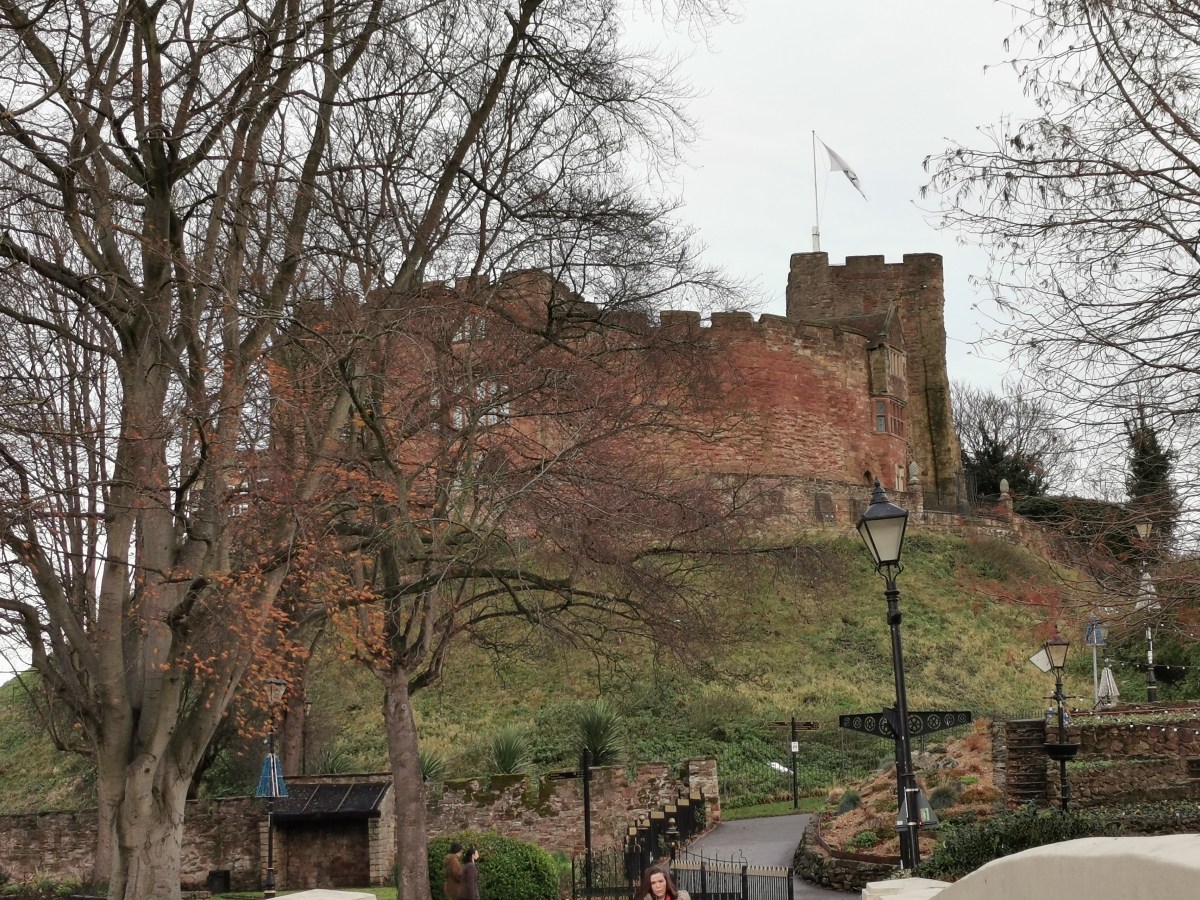
Tamworth, the kingdom of Mercia, 918
We feast that night. There are smiles and tears on everyone’s faces as Tamworth’s great hall is swept clear of the men and women from Wessex. My armed guard ensures no one hurts them as the Mercians pull tables and benches to fill the vast space left behind. My servants, taken only somewhat by surprise as they were expecting a feast one way or another after the witan, rush to ensure everyone has a drink, if not food.
Cousin Ecgwynn hurries to me as I watch the activity, questions on her lips and I throw my arms around her, unheeding her sumptuous gown while I wear the clothes of a warrior. Usually, she would protest. But not today.
‘Enough of that,’ Cousin Ecgwynn complains, batting my embrace away, and not delicately. She holds my arms away from her, glaring at me.
I can see the flicker of rage in her blue eyes and the tightness of her stance.
‘You let me believe you were dead! I’ve been mourning for you, as I would a sister, and coming so soon after the death of Lady Æthelflæd….’ Her normally serene face floods with tears as her words trail off. I thrust my arms around her again, holding her tighter, hoping to make her understand, using my strength gained on the training field to overpower hers. I absorb her scent, the familiarity of home, the reminder of all that my uncle and Archbishop Plegmund tried to take from me.
‘I’m sorry, dear Ecgwynn. It was.’ I pause, unsure what to say, speaking into her ear as I continue to hold her tight. ‘Well, in all honesty, it was all we could think of to ensure that Uncle Edward’s treachery was exposed.’
I don’t call King Edward of Wessex her father. That would be too cruel. I think that, like me, Lady Ecgwynn could happily forget that a man was even involved in her conception and birth. Certainly, he’s done little enough for her since he became the king of Wessex when she was no more than a child and banished her to Mercia alongside Cousin Athelstan.
But Cousin Ecgwynn’s not finished yet. Once more, she pulls her way clear of my embrace, determined to argue with me.
‘But my brother knew and still didn’t tell me. That’s too cruel,’ her angry voice is gaining force. I know there’s nothing to do but try and explain. I could make excuses all night long, but she’s almost my sister, and she deserves the truth.
‘He knew. But only because he came to me and saw that I still lived after the attack in the north. Admittedly, cousin Athelstan could have told you that I wasn’t dead, but then, how would you have greeted King Edward when he came to Mercia to stake his claim for it? He couldn’t know that I yet lived.’
‘I’m not a woman to have her head turned by the arrival of a man whose only call on her affection is to claim to be her father. I wouldn’t have put your scheme in peril!’ Her voice is shrill with outrage, all tears forgotten, as she chastises me, her words coming almost too fast to decipher.
To the side, cousin Athelstan hovers, and I know why. He’s not scared of facing any man on the battlefield, but his sister? Well, he’d sooner not see her angry, and certainly, he’s content for me to be the one to soothe her.
I realise then that we erred when we made our plans.
‘No, I know you’re not. Apologies, cousin Ecgwynn. It wasn’t done because of a lack of trust. It was just better if as few as possible knew the truth.’ I can see that being so brutally honest at least pleases her, even if her forehead remains lined with anger and her lips purse tightly.
I hold my arms out once more. This time she steps into them willingly, a faint wrinkle on her nose because I smell of horse and sweat. I feel her shoulders sag, and her body trembles as though she’s going to cry. But she steps away from my embrace mere moments later, a watery smile on her face.
‘If only everyone I ever loved who died could come back to life, as you have. It would make my heart ache less.’ I nod. Abruptly, my thoughts focus on my mother, and despite my warrior’s prowess, my grief is fresh. I’d gladly step into my mother’s arms and cry away all my sorrows and disappointments at my uncle’s actions.
‘What would your mother think?’ Lady Ecgwynn asks, her thoughts following mine as she loops her arm through mine to walk amongst the people toasting my good health and the future of Mercia. Their voices range from soft to the roar of a battle cry. I chuckle at the exuberance, aware that cousin Athelstan stays close. He and cousin Ecgwynn will need to make peace with each other at some point. But not yet.
‘I hardly know what my mother would think or do. She and Edward were never close; at least, I don’t think they were. But, I believe she understood his ambitions well, all the same.’
‘Your mother was an excellent judge of character,’ cousin Ecgwynn confirms. ‘Although she did trust Archbishop Plegmund, the poisonous snake.’
My voice ripples with laughter as I picture Plegmund’s face too easily as the head of a snake.




 MJ Porter