
The Ælfflæd ‘stole’ from St Cuthbert’s tomb – The Royal Women Who Made England

When I was writing The Royal Women Who Made England, I discovered that there is potentially one surviving item that could be associated with these royal women. While the identification is not certain, it seems highly likely that some religious items, discovered in the tomb of St Cuthbert in Durham, when it was opened in 1827, could have either been stitched by Ælfflæd herself, or commissioned at her request. The item has the following words stitched on it Ælfflæd Fiere Precepit (Ælfflæd had [this] made) – translation from E Coatsworth The Embroideries from the Tomb of St Cuthbert.

Ælfflæd was the second wife of Edward the Elder (899-924). It’s believed they probably married AFTER he became king of Wessex on the death of his father in 899. She was the mother to at least six daughters, and two sons, one of whom became king after his father’s death, for a brief 16 days. Her stepson, Athelstan, then became king of Wessex. Two of her daughters married into the ruling families of East and West Frankia. Another two daughters married into influential families in Europe. Two others spent their adult lives in a nunnery, one as a lay sister, and one as a nun.

The embroideries consist of a stole, a maniple and a possible girdle, and are believed to have been made for Bishop Frithestan – indeed, the other end of the embroidery reads Pio Episcopo Fri∂estano (for the pious bishop Frithestan). So, together it reads Ælfflæd had this made for the pious bishop Frithestan. Frithestan was the bishop of Winchester in the early tenth century. It’s likely he never received them, for why else would they have found their way to Durham and the tomb of St Cuthberht?

There are two possible reasons for this. Firstly, Ælfflæd may have either died, or no longer been married to the king when they were completed. Edward the Elder remarried Eadgifu, his third wife sometime between 917-919. We don’t know if this was because his second wife had died, or merely because he wished to take a new wife. Secondly, Bishop Frithestan fell out with the House of Wessex at about this time. Indeed, he played no part in King Athelstan’s coronation. The expensive commissions, with gold thread, therefore never came into the hands of Bishop Frithestan. Where they might have been for the intervening period, would be interesting to know.

When King Athelstan (924-939) made his famous trip to Chester Le Street in c.934, it’s written that he gifted the community of St Cuthbert with a stole, a maniple and a girdle. It’s believed that it’s these items, made by, or commissioned by his stepmother, that he gave. (The religious house from Chester Le Street moved to Durham in 1104). St Cuthbert was a north-east saint, who lived on Lindisfarne/Holy Island in the 600s, and while it’s believed the religious house fled from Lindisfarne in the wake of the Viking raider invasions and were essentially ‘on the move’ for over a hundred years, this interpretation is now being questioned by Dr David Petts and the excavations taking place on Lindisfarne. Whatever happened to the community in that period, they were extremely influential in the north of England, and did eventually settle at Chester Le Street.

The survival of these items is astounding. There are only, according to E Coatsworth, three such ‘large’ items from the Saxon era, the Bayeaux tapestry, the Durham embroideries and those of St Catherine in Maaseik, Belgium. If these items were truly made by Ælfflæd, then they are unique. I can think of no other item that survives from the era and which the royal women may themselves have touched. When I saw this image, I was astonished by the vibrancy of the gold thread. I imagine I’m not alone in that.
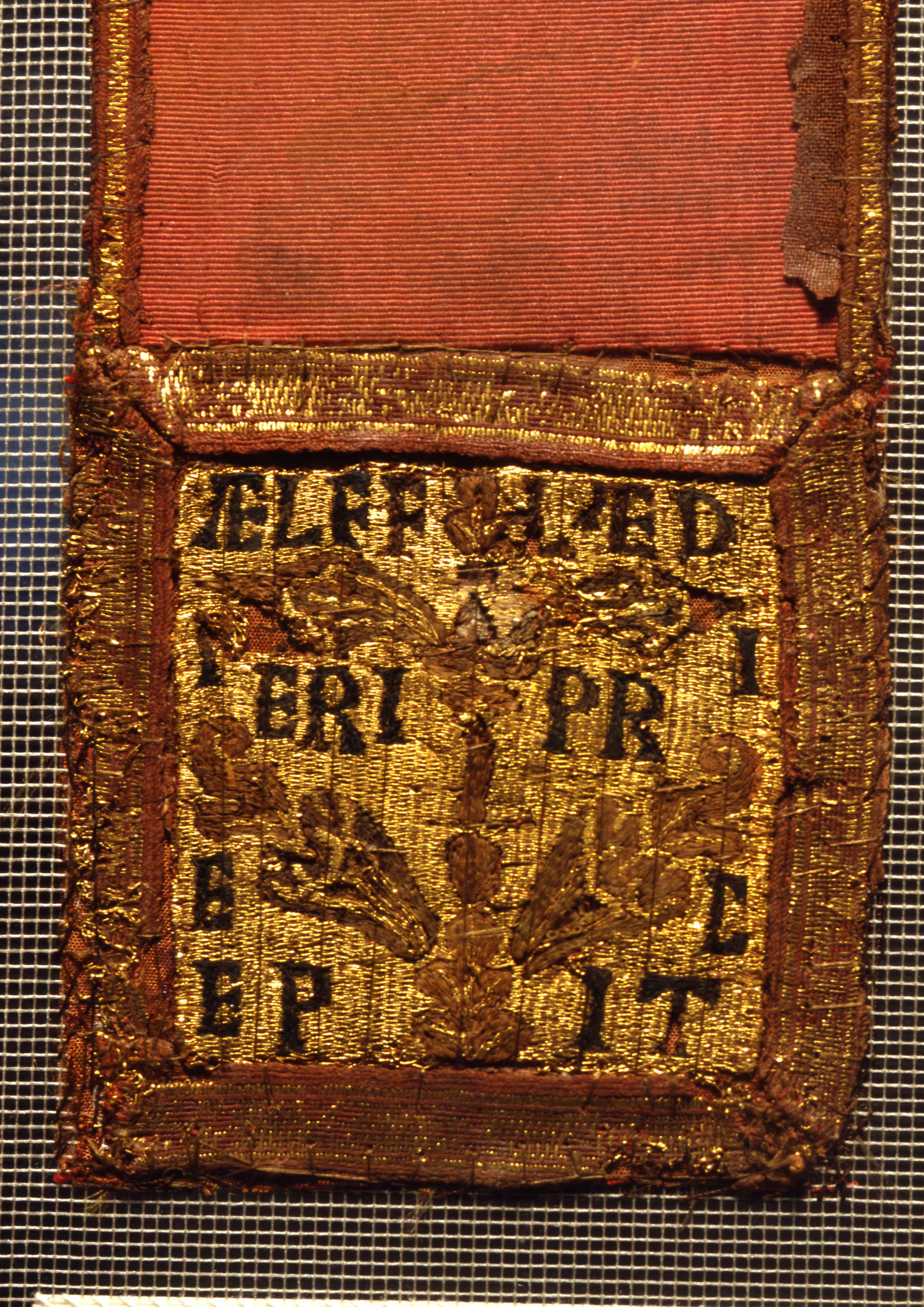
Reproduced by kind permission of the chapter of Durham Cathedral.

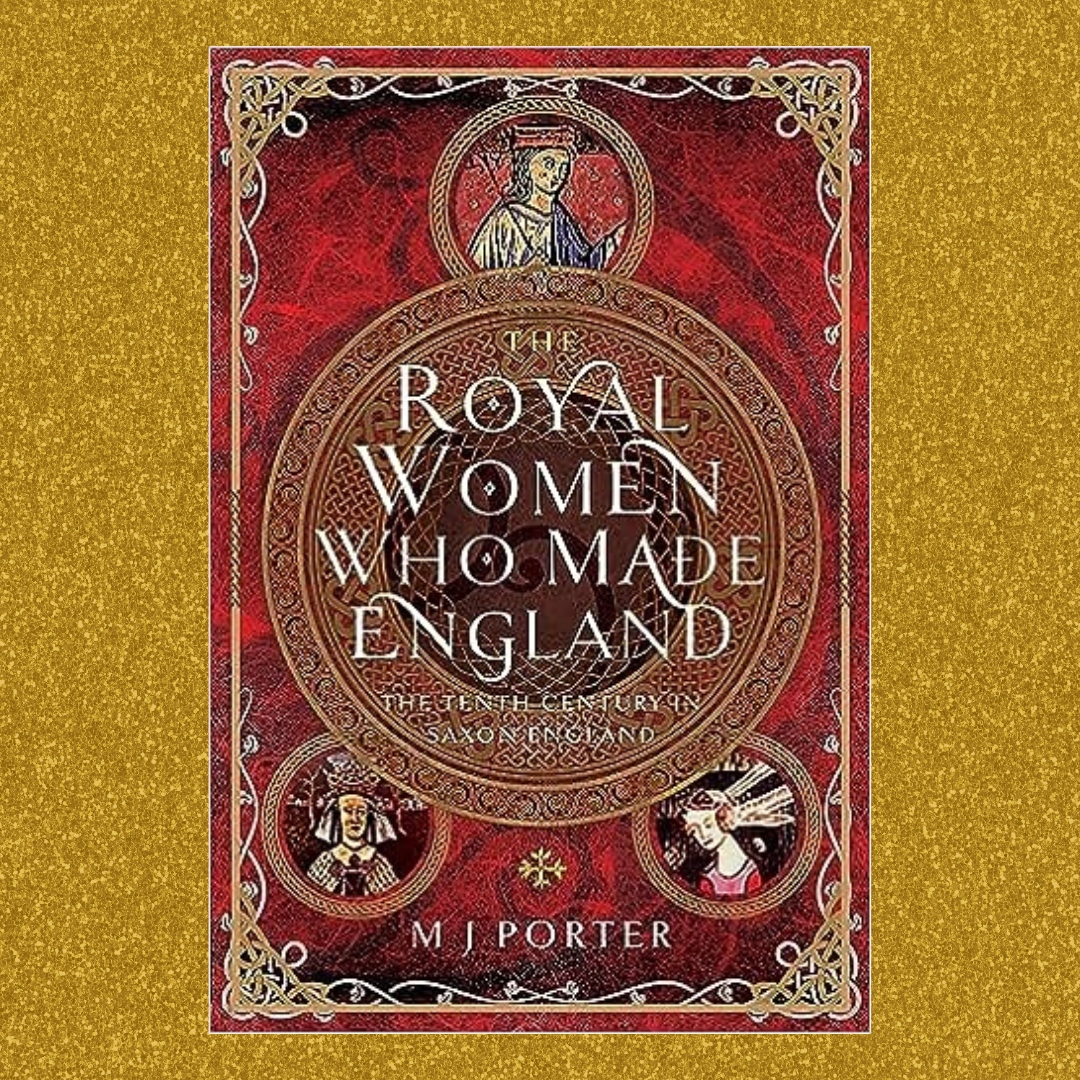
You can read The Royal Women Who Made England: The Tenth Century in Saxon England now if you’re in the UK, or from March if you’re in the US. It can also be purchased in epub version direct from Pen and Sword.

https://www.pen-and-sword.co.uk/The-Royal-Women-Who-Made-England-The-Tenth-Century-in-Saxon-England-Hardback/p/24395

https://books2read.com/TheRoyalWomenWhoMadeEngland
x

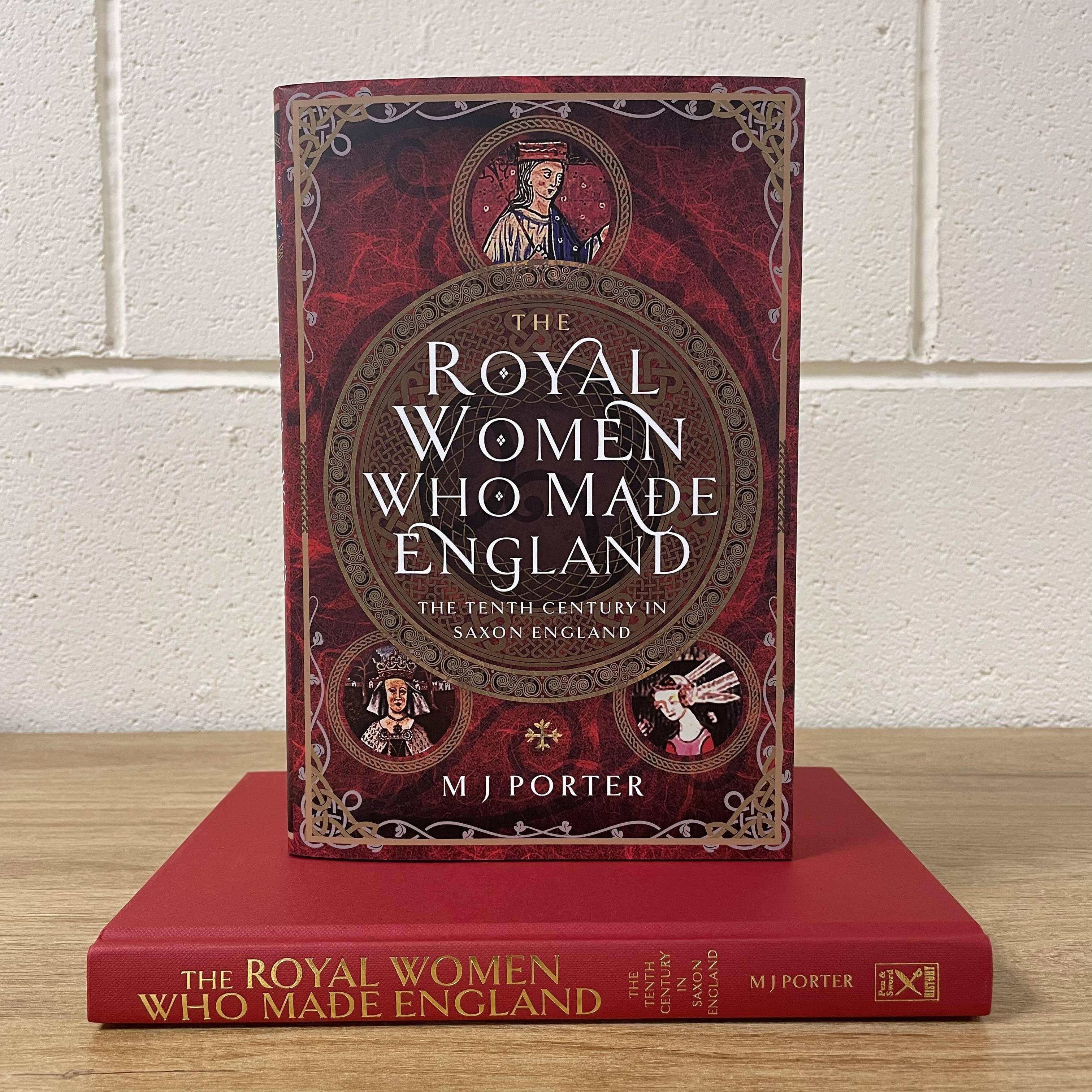
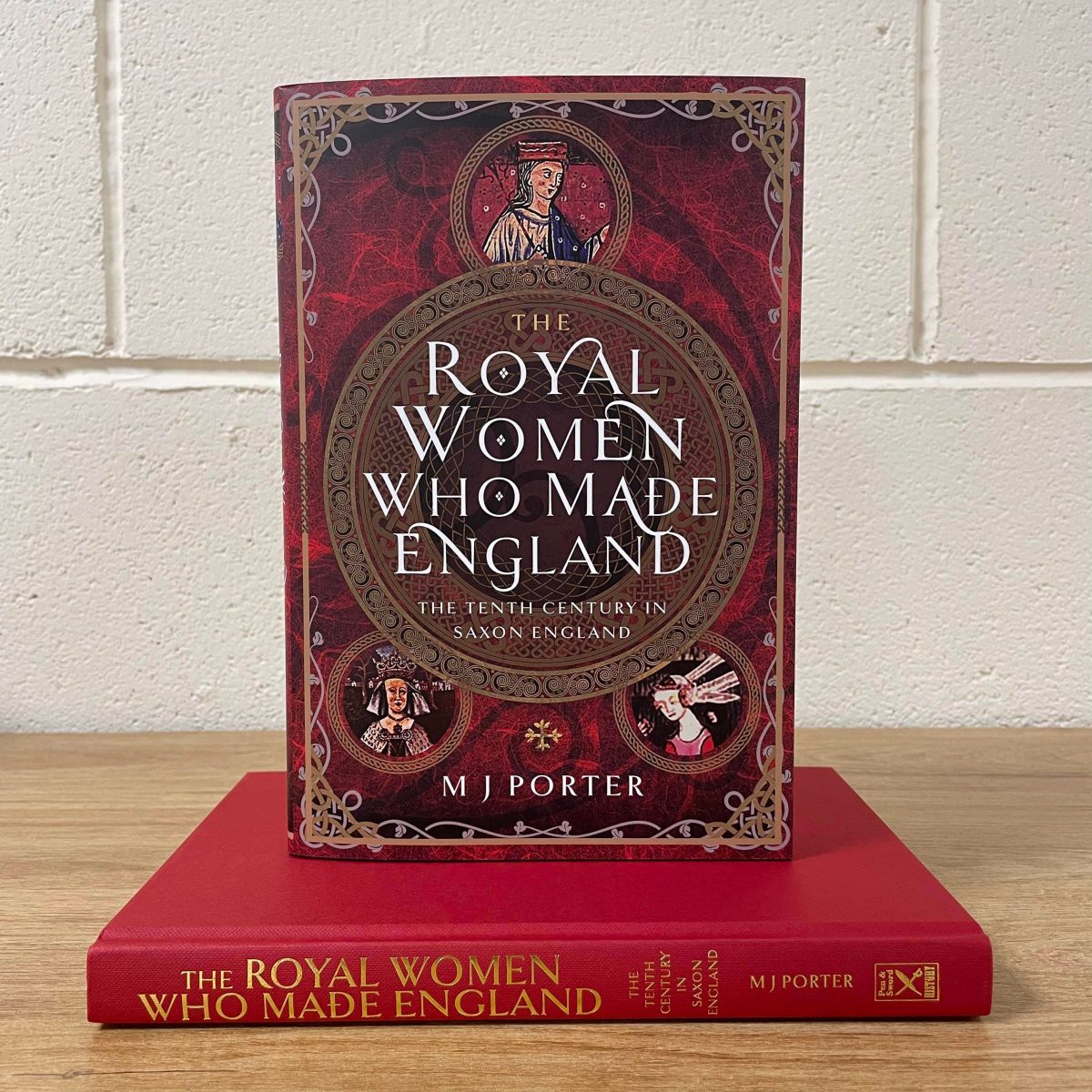
My first gold-lettered spine:) The Royal Women Who Made England

Here she is, and what a thing of beauty.

https://amzn.to/49iWurx

And the epub version is now saying it’s available direct from Pen and Sword using this link if you don’t want to wait for a hardback to be delivered.

https://www.pen-and-sword.co.uk/The-Royal-Women-Who-Made-England-ePub/p/50369

Reviews are starting to come in, and I’d like to thank all the reviewers for taking the time to have a look at The Royal Women Who Made England. You can check out the reviews over on the Pen and Sword website.

In the meantime, don’t forget to enter the combined competition between my two publishers for signed copies of The Royal Women and King of Kings (UK only. Closing date 6th Feb 2024). You can find the details here.

And, I have another little video to share with you below about one of the later Anglo-Norman sources I made use of while researching the book.

Competition time, and an update on the ebook version of The Royal Women Who Made England

My fabulous publishers are working together and offering a hardback edition of King of Kings and The Royal Women Who Made England (UK only). To enter you will need to access one of the original posts from Boldwood on Twitter, Facebook or Instagram. I will add links here. (Closing date 6th Feb 2024. T &Cs apply).

I can’t work out how to do the Facebook one:(

https://www.facebook.com/theboldbookclub You might have to hunt for it. Let me know if it’s a pain, or if you know how to do it!


I can also let you know that the ebook/kindle version is now available to preorder, and the US hardback release date is 30th March 2024.

https://books2read.com/TheRoyalWomenWhoMadeEngland
Or purchase directly from the publisher, Pen and Sword

https://www.pen-and-sword.co.uk/The-Royal-Women-Who-Made-England-Hardback/p/24395

Check out the Brunanburh Series page on my blog for my information about my fiction.


And, because I never tire of making a slight fool of myself, here’s me talking about some more of the research I undertook for the book and trying to explain the family tree of Otto I, King of the East Franks. Who knows how successful I’ve been.

Happy (UK) Release Day to The Royal Women Who Made England, my first non-fiction book #newrelease #non-fiction

It feels like I’ve been talking about this book forever, but the day is finally upon us. The Royal Women Who Made England is available in hardback in the UK from today. It will be released in the US in March.

If you’ve been hiding from me for the last few months, you might be wondering what this is all about. So here goes.

Throughout the tenth century, England, as it would be recognised today, formed. No longer many Saxon kingdoms, but rather, just England. Yet, this development masks much in the century in which the Viking raiders were seemingly driven from England’s shores by Alfred, his children and grandchildren, only to return during the reign of his great, great-grandson, the much-maligned Æthelred II.

Not one but two kings would be murdered, others would die at a young age, and a child would be named king on four occasions. Two kings would never marry, and a third would be forcefully divorced from his wife. Yet, the development towards ‘England’ did not stop. At no point did it truly fracture back into its constituent parts. Who then ensured this stability? To whom did the witan turn when kings died, and children were raised to the kingship?

The royal woman of the House of Wessex came into prominence during the century, perhaps the most well-known being Æthelflæd, daughter of King Alfred. Perhaps the most maligned being Ælfthryth (Elfrida), accused of murdering her stepson to clear the path to the kingdom for her son, Æthelred II, but there were many more women, rich and powerful in their own right, where their names and landholdings can be traced in the scant historical record.

Using contemporary source material, The Royal Women Who Made England can be plucked from the obscurity that has seen their names and deeds lost, even within a generation of their own lives.

https://amzn.to/3OlRydn

https://ww…ck/p/24395

So, who were these royal women? While some of us will know Æthelflæd, the Lady of Mercia, either because I think she is one of THE most famous Saxon women, or because of The Last Kingdom TV series and books, but she is merely one of many.

I’ve fictionalised Elfrida and her contemporaries, Eadgifu, the third wife of Edward the Elder and also some of his daughters, as well as Ælfwynn, the daughter of Æthelflæd. My first non-fiction title is me sharing my research that these stories are based upon.

I’ve also ‘found’ many other women of the period who have left some sort of physical reminder, mostly in charters or because their wills have survived.

In total, I discuss over twenty women directly involved with the royal family, either by birth or marriage, and also a further forty, who appear in the sources. I also take a good look at what these sources are and how they perhaps aren’t always as reliable as we might hope. I make an attempt to ‘place’ these women in the known historical events of the period. And draw some conclusions, which surprised even me.

You can find some of my blog posts about these women below.

Æthelflæd

Lady Eadgifu

Ælfwynn

The daughters of Edward the Elder.

The other daughters of Edward the Elder

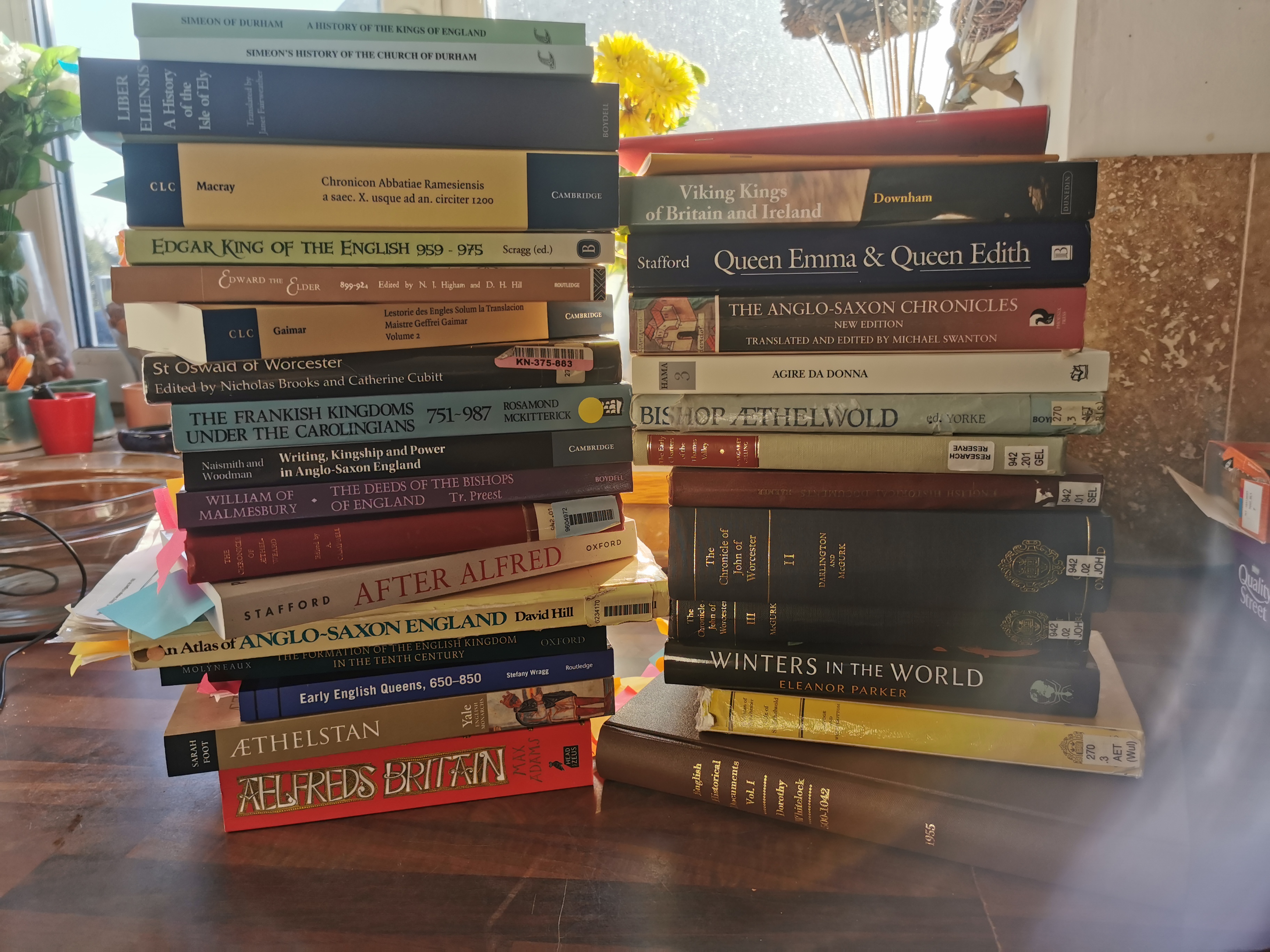
A collection of research books I used while writing The Royal Women Who Made England

Listen to me talk about the Chronicon of Æthelweard (about 6 minutes).