
Who was the historical Coelwulf who is the main character in The Last King/The Mercian Ninth Century series?

The ‘historical’ Coelwulf

The hero of the Mercian Ninth Century Series, King Coelwulf, has not been treated kindly by history.

He appears in the Anglo-Saxon Chronicle (the main narrative source for the period) as a ‘foolish king’s thegn’ (in the ASC E Version, although not in the older A version) and not actually a king at all.

´Here the raiding army went from Lindsey to Repton and took winter-quarters there, and [[874] drove the king Burhred across the sea 22 years after he had the kingdom; and conquered all that land…And the same year they granted the kingdom of Mercia to be held by a foolish king’s thegn, and he swore them oaths and granted hostages, that it should be ready for them whichever day they might want it, and he himself should be ready with all who would follow him, at the service of the raiding-army. (A) 874 [873]

´Here the raiding-army went from Lindsey to Repton, and there took winter quarters, and drove the king Burhred across the sea 22 years after he had the kingdom, and conquered all that land. And he went to Rome and settled there, and his body lies at St Mary’s church in the English Quarter. And the same year they granted the kingdom of Mercia to be held by Ceolwulf, a foolish king’s thegn.’ (E)874 [873] (Both quotes from M Swanton ed. and trans. The Anglo-Saxon Chronicles).

His ‘reign’ has been explained as being entirely dependent on Viking overlords who really ruled Mercia, from their ‘base’ at Repton. He was a ‘puppet king,’ a sop to assist the independent Mercians as they struggled to come to terms with their new warlords.

The survival of two charters, carrying Coelwulf’s name, and witnessed by the ealdormen and bishops of Mercia, have not been given the attention they deserve because they suggest a different interpretation to that of King Alfred (the Great) single-handedly defeating the Vikings, and making ‘England,’ as does the discovery of the Watlington Hoard of coins which suggests that Coelwulf and Alfred were ruling jointly.

So, if we put aside the problems of what Coelwulf did, or didn’t achieve, who might he actually be, and why might he have been named as king?

Coelwulf’s name leads historians of the period to suggest he was a member of a branch of the Mercian royal family whose last ruler was King Coelwulf I, who ruled in Mercia from AD821-823. He succeeded his brother, Coenwulf, who ruled from AD796-821. They were descended from the brother of the mighty seventh-century king, Penda, most famously known for being pagan, warlike and terrorising the Northumbrian kingdom during its ‘Golden Age.’ (Read about Penda and the Northumbrian kingdom in my Gods and Kings trilogy). He was therefore a member of a long-lived ruling dynasty that could trace its descendants all the way back to the early 600s.

This identification of Coelwulf helps to explain why he was accepted as king following King Burgred’s abdication. He was no foolish king’s thegn. He was a member of a ruling dynasty, who, for one reason or another, were no longer the ruling family in Mercia in the 870’s. (And what was happening in Mercia before the 870’s is just as fascinating as what came after it – you can read about that in The Eagle of Mercia Chronicles).
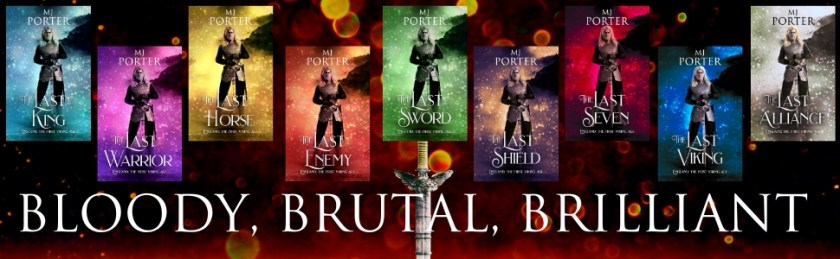
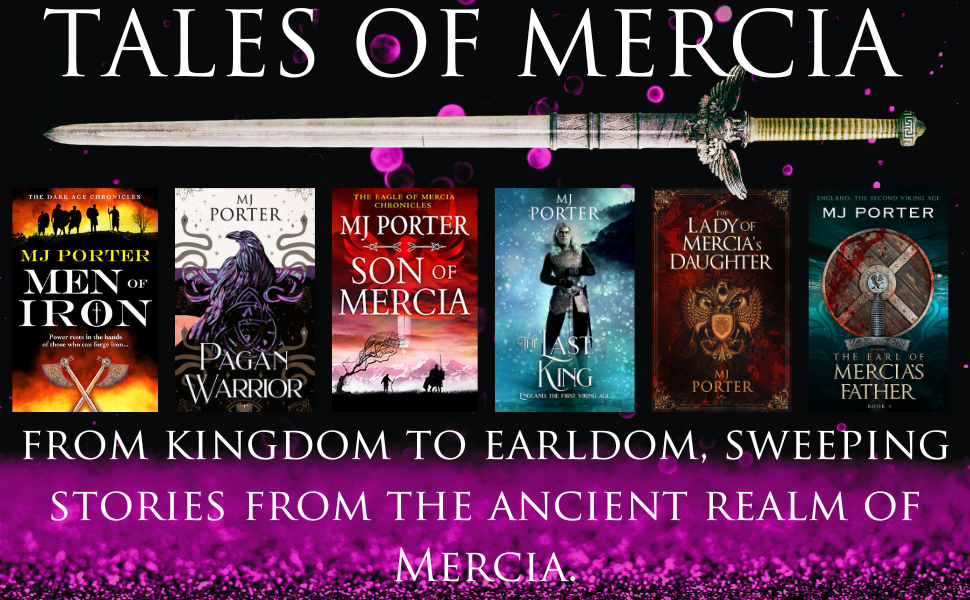
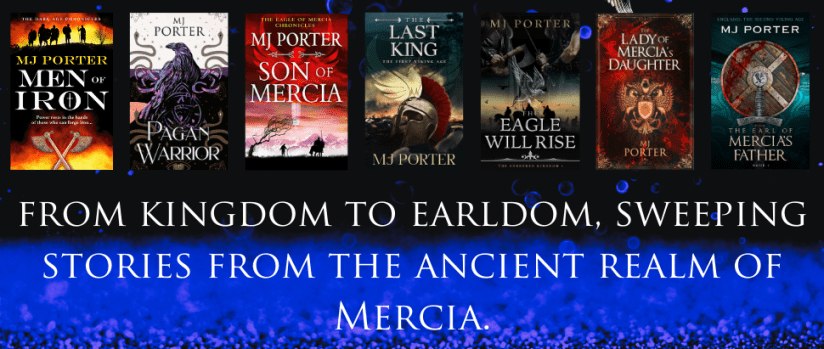
The Ninth Century Mercian series covers for all 9 books

Posts

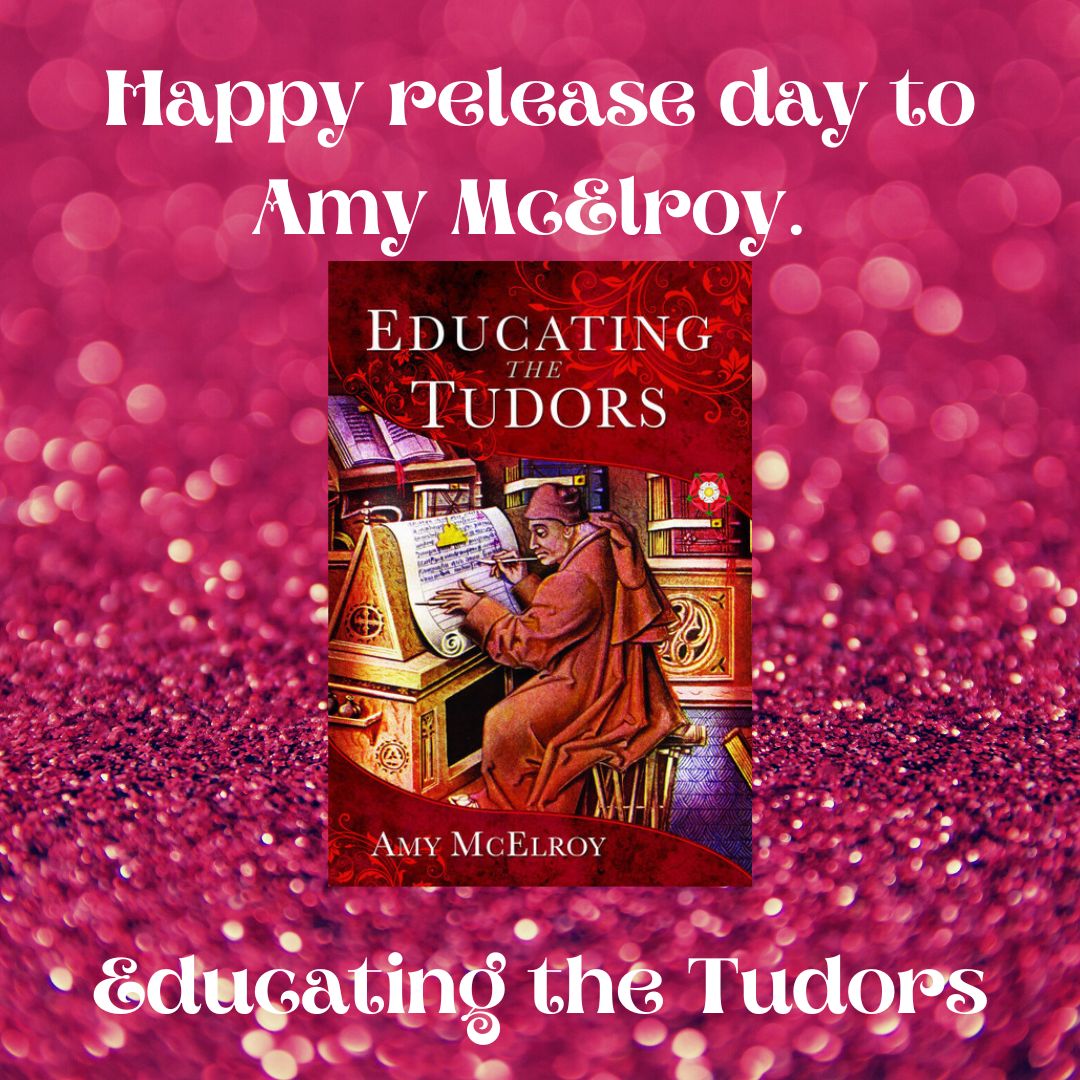
I’m so excited to share my review for Educating the Tudors by Amy McElroy #newrelease #non-fiction

Here’s the blurb

Education during the Tudor era was a privilege and took many forms including schools, colleges and apprenticeships. Those responsible for delivering education came from a variety of backgrounds from the humble parish priest to the most famed poet-laureates of the day. Curriculums varied according to wealth, gender and geography. The wealthy could afford the very best of tutors and could study as much or as little as they chose whilst the poorer members of society could only grasp at opportunities in the hopes of providing themselves with a better future. 

The Tudors were educated during a time when the Renaissance was sweeping across Europe and Henry VIII became known as a Renaissance Prince but what did his education consist of? Who were his tutors? How did his education differ to that of his elder brother, Prince Arthur and how did Henry’s education change upon the death of his brother? There is no doubt Henry was provided with an excellent education, particularly in comparison to his sisters, Margaret and Mary. Henry’s own education would go on to influence his decisions of tutors for his own children. Who had the privilege of teaching Henry’s children and did they dare to use corporal punishment? 

Educating the Tudors seeks to answer all of these questions, delving into the education of all classes, the subjects they studied, educational establishment and those who taught them.

Purchase Link

Pen and Sword Books

My Review

Educating the Tudors by Amy McElroy is a fascinating and thorough examination of the state of education for all during the Tudor era, following developments due to the Renaissance and the Reformation, as well as the introduction of the printing press. Not content with researching the tutors of the royal children from Arthur to Edward, Amy has also examined education for all levels of society as well as what would have been taught. With an eye for the difference between class, sex and wealth, Amy has examined what education was, and how it was undertaken, as well as the titans who were making use of their interest in learning to advance learning for all, making use of the printing press, even as they sought to catch the eye of the reigning monarch.

And this isn’t just book-learning, but also the paths of apprenticeships, as well as how people became lawyers, and just what effect the Reformation did have on an education system that was so heavily reliant on priests and had to be radically rethought when the monasteries, and later, chantries were closed.

I was fascinated by the subject matter, and learned so much from reading this book – indeed, even things I’ve read about before suddenly made a lot more sense.

An absorbing and well-researched book, which is sure to fascinate all those interested in the Tudors, as well as the development of education in England.

(I found the subject matter absolutely fascinating, especially as I’ve personally been researching the education of the children of King Alfred. I was struck by the similarities, despite the six hundred plus year distance between the two eras. I’m sure I won’t be alone in that – I hope:) And there’s a another link between the Tudors and the Saxons, as it was the renewed interest in learning that is responsible for many of the surviving Saxon text we now have, including the Anglo-Saxon Chronicle.)

My thanks to the author, the publisher and Netgalley for my review copy, but my hardback is in the post as well:)

Meet the Author

Amy my was born and bred in Liverpool before moving to the Midlands to study Criminal Justice eventually becoming a civil servant. She has long been interested in history, reading as much and as often as she could. Her writing journey began with her blog, sharing thoughts on books she had read, before developing to writing reviews for Aspects of History magazine and culminating in her own book.

Connect with Amy

Blog

Twitter

Book Review – The Tragic Daughters of Charles 1: Mary, Elizabeth and Henrietta Anne by Sarah-Beth Watkins – Historical Non-Fiction

Here’s the blurb;

“Mary, Elizabeth and Henrietta Anne, the daughters of King Charles I and his queen, Henrietta Maria, would be brought up against the background of the English Civil War. Mary would marry William, Prince of Orange, and be sent to live in the Netherlands. Elizabeth would remain in England under Parliamentary control. Henrietta Anne would escape to France and be the darling of the French Court. Yet none of the Stuart princesses would live to reach thirty. The Tragic Daughters of Charles I is their story.”

The Tragic Daughter of Charles is a well-named, and well-presented account of the daughters born to Charles I and his wife. The author, as ever, relies extensively on the letters her subjects wrote, and these are often presented in their entirety allowing the reader to understand the subjects well.
In some ways, it glosses over the Civil War and the Restoration of Charles II but this is because the focus is on the daughters/sisters and I believe the author manages to isolate them well from the greater backdrop of events, while also including the pertinent points.
A thoroughly enjoyable, short, read.

A firm 4/5 and my thanks to the publisher and Netgalley for the review copy.

The Tragic Daughters of Charles I is released on 26th April 2019 and can be purchased here, although other retailers are also available!

King Æthelred II, king of England, some thoughts about whether he deserves his title of ‘Unready.’ #histfic #non-fiction #history

Æthelred II, to put it mildly, gets a bad press, the writers of the Anglo-Saxon Chronicle have nothing good to say about him, blaming him for the ills that befall the country at the hands of the Scandinavian raiders, and there is an inevitability about the events that unfold from 1009 onwards that culminate in Swein of Denmark claiming the English throne, and following his untimely death, the actions of his younger son, Cnut, to achieve the same honour a few years later.


And, don’t get me wrong, the list of places attacked by the Viking raiders is long, their demands for payment appear huge and their willingness to kill even those who should have been protected, for instance, the Archbishop of Canterbury, callously presented.

What’s in a name?


Yet, his by-name, Unready, is a misinterpretation and also a play on words, his name meaning wise-counsel, and Unræd meaning no-counsel and being changed to ‘the Unready’, a word nothing like no-counsel.


So if we accept that his by-name should be no-counsel and not ‘the unready’ does that make it any more appropriate?
Most assuredly not. Æthelred had his fair share of ealdormen (later the title was changed to earls, from ‘jarls’ under the Scandinavian kings) and the detailed work done by historians has attempted to uncover who they were and what they did.

The Anglo Saxon Chronicle appears to have hidden much from today’s reader, so intent in its desire to paint Æthelred in as unflattering colours as possible, and mentions only some of the ealdormen. My particular favourite, Ealdorman Leofwine of the Hwicce, is mentioned once and yet charter evidence shows that he held his post for many years from 994-c.1023, quite a long time to be ignored by the main source for the period.


Other details show just how powerful the king was; he recalled his coinage about every seven years and reissued it with new images, he collected the gelds used to pay the Viking raiders, he built and provisioned a vast ship army, and he had laws proclaimed in his name. And all of this he must have done with the consent of the Witan, for England, although ruled by a king, was also ruled through the consensus of the greatest men in the land.

England, not long united, was just too big for one man to rule alone, and it was broken down almost into its constituent pre-united kingdoms, Mercia, Northumbria, the East Angles, Kent, Wessex, and the Western provinces sometimes each area having an ealdorman and at other times, ruled by the king’s High Reeve.

Æthelred was surely king over a well-organised and rich country, and no matter what the Anglo-Saxon Chronicle implies, the men of the land were prepared to fight for their king, and they didn’t attempt to dislodge him from his kingship although by about 1000 onwards he had a host of sons old enough and probably strong enough, to govern in his stead.


I think even his usual by-name of Unraed is unwarranted, and certainly, his unreadiness is unwarranted. History plays tricks on how our past kings are viewed, and more often than not, they’re too harsh, too conciliatory, or, in the case of many, they’re totally forgotten about. Perhaps being a king was not all it was cracked up to be!

(Please note this is a historic blog post, which I’ve left rather than deleting as it’s kind of interesting to see what I was thinking in 2014).

Posts