I’m delighted to share my review for Murder at the Wedding by Anita Davison #bookreview #blogtour #historicalmystery #newrelease
Here’s the blurb
Hannah Merrill is about to marry the love of her life…
The couple are determined their low-key celebration will go without a hitch, but there can’t be an ‘I do’ while the vicar is missing. And when he’s found dead – a victim of a poisoning – in the crypt behind the church, Hannah knows only she and Aunt Violet can find out who did it.
Hannah’s beloved thinks she shouldn’t interfere. But if he fails to remember that an independent woman in 1918 doesn’t do what she’s told to by a man, the dead vicar may be the least of his worries…
Then the vicar’s own fiancé appears on the scene, even though nobody knew he was engaged. And suddenly it becomes clear someone has a secret, one shocking enough to kill for.
Will the intrepid pair of amateur sleuths catch the murderer before they kill again? Or will it be til death parts them all?
Murder at the Wedding is a fabulous new mystery in the Miss Merill and Aunt Violet mystery series.
Hannah is finally married but no sooner has she said, ‘I do,’ than she finds a body. (What a horror on her wedding day). What they determine is a matter of suicide becomes something much worse as murder is soon suspected. Hannah and her aunt determine to find the solution because the new police inspector isn’t up to the task.
It’s good to see Hannah and Violet working together in this book. They’re a great team (I felt in the previous book that there wasn’t quite enough of Aunt Violet). The mystery is well structured, seemingly impossible to solve for much of the novel and I didn’t guess the resolution, which I always appreciate.
This is another enjoyable read in the on-going historical mystery series.
I’m reviewing Woden’s Storm by Donovan Cook #blogtour #newrelease #historicalfiction the second book in the First Kingdom series
Here’s the blurb
A storm is coming. A storm that will banish the old and deliver the new.
450AD Britain
Octa has the spear of Woden, but the redemption he sought is out of his grasp. With his banishment and the death of his father, he can no longer return to his Saxon homelands. His only salvation is to join forces with Hengist and Horsa, and their Jutish army that beaches itself on Brittania’s shores. But can he trust their motivation or are there greater plans afoot?
The Gods have their own plans, though, and Octa’s fate is not his own to control as Friga, the mother of the Saxon gods, battles to avoid a war with the gods of the Britons and Saxons using Octa as her weapon.
Prince Vortimer, the son of High King Vortigern, is angered by his father’s agreement with Hengist and Horsa as they remain unchecked and their numbers swell. He suspects treachery and encouraged by some well-placed words of a stranger, he rebels against his father and gathers his army to attack the unwelcome visitors.
War is coming to Britannia and as Octa struggles to understand his role and fate, he knows he has one question to answer. Will he run or will he stand and fight?
Woden’s Storm is the second book in The First Kingdom series by Donovan Cook. We’re once more in a recreated Britain of the middle fifth century, where everyone’s actions are guided by their Gods. And there are a lot of Gods who want to have a say in what’s happening, and not all of them, on the ‘same side’ as it were, hope to achieve the same ends. Octa, Vortimor, and the rest of the characters are constantly being tested by their deities, told half the story and left to work the rest out for themselves. Will they interpret their meetings with the Gods correctly, or will they make everything more chaotic by muddying these messages with their own intentions?
I do enjoy the element of the Gods walking amongst the characters and interfering in what’s happening. I mean, I doubt it would be peaceful without them, but with them, it certainly isn’t:) It adds a new dimension to this period and perhaps helps to account for some of the more eccentric decisions the characters make as they all endeavour to accomplish their goals. There is still much to play for and the series will continue.
An entertaining and intriguing series with a whole host of ‘named’ characters, people who love the era will recognise.
Donovan Cook is the author of the well-received Ormstunga Saga series which combines fast-paced narrative with meticulously researched history of the Viking world, and is inspired by his interest in Norse Mythology. He was born in South Africa and currently lives in Lancashire, UK.
I’m delighted to share my review for Adam Lofthouse’s War Lord: Scourge of Rome #historicalfiction #blogtour #Roman
Here’s the blurb
And so we have reached the end of my tale. But what are endings if not new beginnings?
Alaric has been home for a year. He went north and saved the Cimbri, just as he said he would. But the cost has been higher than he ever thought. A shadow of the War Lord he once was, he now trades in amber and dotes on his children.
A simple life. And with it, contentment. But he knew this couldn’t last forever; peace isn’t for someone like him, and sure enough trouble finds him once again. A routine journey south turns into a new and unknown wave of danger as red-cloaked legionaries attack, causing confusion and carnage.
Warriors dressed as Romans have been scouring the country, slaughtering innocent people, and leaving Roman footprints wherever they march. But things are not what they seem, and it falls to Alaric to don his armour once more, and march his Ravensworn in pursuit of a mysterious enemy that could destabilise his world beyond repair.
War Lord, as the blurb states, is the end of Alaric, or is it a beginning for him?
Once more, we’re thrust straight back into the action, and Alaric, while accepting he’s an old man these days, does indeed not seem to have ‘grown up’ at all, as he’s so fond of reminding himself. From one hairbrained scheme to another, Alaric realises that perhaps, after all, there is a great deal at stake, and he is, of course, the man to solve everyone else’s problems, for all he likes to pretend he doesn’t care about anyone but himself, his children and his wife.
Adam writes fabulous books. I do love Alaric. He’s a bad egg, and yet, we all can’t help liking him, as indeed, does everyone who comes into contact with him. There’s no end of action and adventure, no end of peril, and through it all, Alaric sails with his usual charm and determination. But, is this one quest too much for our epic second-century hero, living on the outskirts of the Roman empire, but admiring them all the same? Has he finally found an enemy he can’t hope to beat, even if he unites the tribes? Or will he have to prove as quick-thinking as ever?
While all this is happening, there is also an intriguing backstory, reliving a moment in Alaric’s life when everything changed for him. It adds a certain poignancy to our character, making his wild ways more understandable.
This is a cracking finale for Alaric’s story. Enjoy it. I know I did.
Adam Lofthouse is the author of action-packed historical thrillers. His brand new series for Boldwood, ‘Enemies of Rome’, will focus on the boundaries at the edge of the Roman Empire. The first book Raven, will be published in February 2025.
I’m delighted to welcome Catherine Mathis and her new book Inês to the blog, with a fascinating guest post #HistoricalFiction #MedievalFiction #BlogTour #TheCoffeePotBookClub @cathiedunn
@thecoffeepotbookclub @cmathisauthor
In Candide Voltaire describes the great earthquake of All Saints Day 1755 which hit during Sunday church services resulting in the destruction of most of Lisboa and surrounding villages for miles and miles. Then Lisboa burned and was hit by a tsunami. Records and documents not destroyed in 1755 were ravaged by Napoleon’s troops. Records for the early fourteenth century were never as plentiful for Portugal as they are for France or England, and these two seminal events did not help. The larger hurdle is I do not speak or read Portuguese or the earlier spellings of medieval Portuguese, nor Spanish for that matter.
Most histories of Portugal will mention the Pedro and Inês affair in passing, not depth. The prominent chronicle surviving to this day was written by Fernão Lopes in the early fifteenth century. The extant Lopes work starts with the reign of King Pedro. Lopes’s chronicles for earlier kings are lost. Lopes proclaims an intent for historical accuracy and does a good job of balancing characters and events despite writing for the Avis dynasty. These chronicles were not available in English until 2023, and I did not trip across them until mid-2024 when my novel was already with the publisher.
There are references to other documents long lost to time. There are some records in archives and other Portuguese and Spanish cities. Professor Rita Costa Gomes wrote The Making of Court Society, a scholarly Portuguese book translated into English, though it provides some information only in Portuguese. Other useful books include: de Oliveira Marques’s Daily Life in Portugal in the Late Middle Ages, A.R. Disney’s History of Portugal and the Portuguese Empire, and Oliver Sacks’s Hallucinations.
For good or ill, my primary source was Edward McMurdo’s The History of Portugal, Volume II published in 1889. McMurdo takes a bit of getting used to; his opinions are well stirred into the history presented. Likely Portuguese/Spanish documents of recent years have updated information.
I found this legend on a trip to Portugal. Then several years later I returned to Portugal, specifically to visit the locations central to the story along with visiting museums. There is little extant material in museums from this period. I walked the grounds of a convent now in ruins in Coimbra that is central to the story. While geography changes with time, walking narrow streets and the buildings that remain from the fourteenth century helped when creating scenes.
It is in the gaps of written documents that novels unfold. It does not mean that accuracy is not important. It absolutely is. Did Pedro marry Inês? Not in the legal sense of marriage arranged for an heir to the throne. Did Pedro believe he wed her? Did Inês believe she was married? I chose to answer yes to both questions. Inês – from what we believe we know – exhibited loyalty to her friend Constanza, Pedro’s wife, and cared deeply for all of Pedro’s children. Inês did not have a child until at least a year after the death of Pedro’s first wife. Then she bears Pedro children regularly. Others suppose the love affair began before Pedro was widowed. Pedro refused to marry suitable women his father proposed after his first wife’s death. He had clergy attest to the marriage with Inês. And he never marries again, though he has a consequential affair.
There are lots of technical practices in the lives of medieval royals that are not common in our world. Technically Pedro was married before he wed Constanza. It was a marriage never consummated before it was dissolved. Often marriage agreements are bargaining tools of a king in managing relationships with other countries or inside his own country. The key is what is important to the story being told, what is critical in the history of the time, yet not a turning point for the story being told. For example, the Battle of Salado was huge in Pedro’s lifetime as was the Great Pestilence. Neither of these events is a driving factor in the legend. They are included but not critical.
The other key issue is names. Men named Pedro or João or women named Maria litter the landscape. I made a decision to use a name per person and not confuse the reader by overly focusing on titles or full proper names. It is easier if there is one central Pedro not to be confused with Pedro’s in the nobility or neighboring countries. The point is the story. For the novel, this means a Pedro in a neighboring country becomes Peter or more plainly Castile’s king. All readers know Portugal existed in the medieval period. Their likely earliest recollection is of Prince Henry the Navigator, still a century away from Pedro. Those seeking a good story are less concerned with the rabbit holes and details of history some of us find fascinating. This is the writer’s balancing act.
Let’s close with a final thought on sources and information. For many dates there is not an agreement as different sources will offer different dates for the same event. And between then and now, the calendar changed. Many birth dates and thus ages were not recorded in sources, especially for women and also children who die young. Often this is not critical to the story, the legend.
The fun part of research is falling down the rabbit holes. As I chase a fact or information about a location I can get sidetracked into reading articles on the nature of queenship, the trade between Portugal and England or the Netherlands, life on board a ship, etc. Most of the research is never used, and always worth the time to study.
Here’s the blurb
An heir to the throne, a gorgeous blonde lady-in-waiting, the king’s trusted advisor. When a father and son don’t understand each other, the son pays an outrageous price.
Love, jealousy, loyalty, and revenge roil the court of 14th century Portugal.
In this engrossing launch to the Queens of Portugal trilogy, Catherine Mathis gives a fresh take on the tale of Pedro and Inês, Portugal’s real-life Romeo and Juliet. Pedro’s father would not have been king if not for his trusted advisor, Gonçalves. Once king, he wants no part in neighboring Castile’s royal convulsions though his son, Pedro, befriends powerful Castilians.
The all-consuming drive of the king is to ensure his line rules Portugal for centuries to come. He needs legitimate, strong heirs. The Infante Pedro loves a woman not deemed worthy to wear the crown as queen. Between father and son is Gonçalves, the king’s powerful, unquestioned counselor who is mentor to the son. Both Gonçalves and Pedro seek the attention of Inês.
There is a horrific cost to winning the love of Inês. She will not release her grip on Pedro until he keeps the two sworn oaths he made to her. Can Pedro do the impossible to satisfy Inês?
Inês is based on real people and events, exploring a cultural touchstone of Portuguese history.
Praise for Inês:
“Mathis masterfully weaves emotional depth into the narrative, creating a deeply engaging experience that leaves a lasting impression and invites readers on an unforgettable journey through the grandeur and intrigue of Portugal’s past.” ~ Mary Anne Yarde, The Coffee Pot Book Club 5* Review
“This exciting start to the Queens of Portugal trilogy describes the legendary love story of Pedro and Inês, and I was amazed at the excellent storytelling and how the author brings the courts to life. There is a lot of drama and intrigue, and the characters’ emotions are beautifully captured in this engrossing tale.” ~ Readers Favorite 5* Review
Catherine Mathis was born in Berlin, the daughter of an American spy. As she grew up in Washington, D.C., her spy father turned into a drug enforcement agent. His career change wrecked any chance at high school popularity. She graduated from Sewanee | The University of the South with a degree in history focused on the medieval period. After a career in finance, she returned to her first love of medieval history to ‘Share Iberian Tales.’ Outside of writing, spare time joys are family, friends, reading, collecting folk/outsider art, and travel.
I’m sharing my review The Wordsmith’s Guide to Planning the Perfect Plot by Elizabeth M Hurst #blogtour #nonfiction #writingadvice
The Wordsmith’s Guide to Planning the Perfect Plot
* DO YOU STRUGGLE TO FINISH WRITING A NOVEL? * DO YOU RUN OUT OF MOMENTUM BECAUSE YOU DON’T KNOW WHERE YOUR STORY IS GOING?
The Wordsmith’s Guide to Planning the Perfect Plot is your trusted companion for turning story ideas into structured, compelling narratives. In this fourth instalment of the Wordsmith’s Guides series, Elizabeth M. Hurst takes you through popular plotting methods—including the Snowflake Method, Save the Cat Beat Sheet, and The Inside Outline—helping you choose the right approach for your writing style. You’ll also find practical advice on troubleshooting common pitfalls, crafting satisfying endings, and keeping your plan adaptable as your story evolves.
Inside, you’ll discover:
Clear explanations of proven plotting methods
Guidance on choosing the right structure for your novel
Tips for overcoming plot issues and staying on track
Advice on writing satisfying, well-rounded endings
A practical appendix full of tools and templates to support your planning process
Whether you’re a planner, a pantser, or somewhere in between, Planning the Perfect Plot will help you shape your novel with clarity and confidence.
Planning isn’t something I really do as a writer. But I was certainly curious to see how others might go about writing their stories. Elizabeth M Hurst gathers together many different techniques for planning a novel, and it is interesting to discover how I could be writing a novel, if my mind worked in that way. Mine, alas, does not. It thrives on the chaos. But, I do think the book is an excellent resource for those who plan before writing, and perhaps worry too much about sticking to their plan and the plot they thought they’d be writing when it goes awry and things starts to misbehave. I found it intriguing to read how people use ‘beats’ to craft their story as well as arcs and other techniques. I’m in awe of anyone who can think that far ahead:) I’m not a planner because I ‘feel’ my way through a story – but the author certainly nails my writing style in her explanations.
The author readily acknowledges that most people will use a variety of these techniques, and I was pleased to see that through it all, the delightful chaos of characters and plot misbehaving was never far from her thoughts.
The idea behind writing the novel, was, the author says, to encourage writers to finish their drafts using whatever techniques work for them. This is a worthy endeavour. Many people start writing a story and falter when things start to feel ‘off.’ This should provide opportunities to get writers writing again by thinking of their plot in different ways. I suspect it could be used as an effective diagnostic tool to discover where a plot is faltering, and once that’s been done, writers will learn what works and doesn’t work for them and in future, potentially, avoid the traps waiting to choke off the creativity.
A concise and interesting summary of the way writers write, providing suggestions for breaking free from processes that might not be working. I’m sure all writers will find their ‘type’ in the explanations.
Meet the author
Elizabeth was born and bred in the picturesque harbour town of Whitehaven in the northwest of England, where the long, wet winters moulded her into a voracious reader of fiction to escape the dismal weather.
She graduated with a degree in Business Studies and a string of jobs followed, after which she finally settled in the automotive industry, where she spent twelve happy years.
Having already started writing around the age of 40, she had begun to dream of a more creative lifestyle and set about creating her freelance editing and proofreading business, EMH Editorial Services. In 2018, she quit the corporate world and concentrated her energy full-time towards her love of the written word.
Elizabeth now lives with her husband in the warm and sunny south of France, where the wine is cheaper than the water, and the cats spend their days hunting lizards and dreaming of the birds that roost on the roof.
I’m sharing my review for Desolation by Keith Moray, a brand new historical mystery #bookreview #blogtour #newrelease
Here’s the blurb
A BRAND NEW wickedly dark medieval mystery from Keith Moray. If you like your murder truely gruesome – this series is for you! 🩸☠️🗡️
The Black Rood of Scotland, stolen.
A coroner of York, murdered
An evil worse than plague itself, at large…
1361, York. As the country recovers from the war with France, and whispers that the pestilence has returned to England grow louder, fear is in the heart of every nobleman and commoner alike. Sir Ralph de Mandeville, ex-solider and newly appointed Justice of the Peace is sent to Langbarugh, just outside York, to investigate the murder of Coroner Sir Boderick de Whitby.
More deaths quickly follow, and while these are swiftly dealt with as plague victims, Sir Ralph and his two assistants Merek and Peter soon uncover something altogether more horrifying… A greater evil is at large in the northern wapentakes.
As panic escalates and the lines between plague and murder blur, Sir Ralph is thrust into a desperate race against time. Every shadow hides a potential killer, every cough could be a death knell. Can he unmask a murderer lurking in the terrifying shadow of the Black Death before they’re all consumed by a terror more sinister than any plague?
Desolation is the first book I’ve read by Keith Moray. I think the cover is fabulous and very evocative.
The story is intriguing, with a wide cast and it takes quite some time until we finally meet Ralph de Manville because there are so many other characters to meet first. I do hope that in later books in the series, Ralph will enter the narrative a little quicker.
It is quite a complex plot, because the narrative switches between characters so much. The reader does have to work to make sense of what’s happening. We are told certain things, but not others – so we know what’s happening but not necessarily who is doing it. The body count is HUGE!
When Ralph finally begins to make sense of what’s happening, the resolution comes quite quickly, and the ending is certainly satisfying.
I read a lot of mysteries. If I don’t work out ‘who did it’ I am always impressed, although with Desolation there are so many people implicated, it does feel as though there are a lot of people to guess. I worked out some elements, but not others, and I did very much enjoy the mystery element of the story.
Meet the author
Keith is a retired GP, medical journalist and novelist, writing in several genres. As Keith Moray he writes historical crime fiction in the medieval era and in ancient Egypt, The Inspector Torquil McKinnon crime novels set on the Outer Hebridean island of West Uist, and as Clay More he writes westerns. Curiously, his medical background finds its way into most of his fiction writing.
I’m delighted to welcome Luv Lubker and her new book, Under The Sword, to the blog #HistoricalFiction #VictorianEra #KaiserWilhelm #QueenVictoria #Anti-Trafficking #BlogTour #TheCoffeePotBookClub
I’m delighted to welcome Luv Lubker and her new book, Under The Sword, from The Rival Courts series, to the blog, with an excerpt.
Louischen sat on the broken branch of a tree which leaned over a little stream, gazing down into the water at the round face and big eyes of the little girl who seemed to look back up at her. Her face, too, was streaked with tears.
“Oh, Charlotta, I’m so glad I found you here,” she whispered. “You are Charlotta, but I must call you Charlotta the second, as Charlotta – the first – is gone forever. Papa – Papa killed her. I never thought he would do such a thing, but I saw her shatter into pieces with such a look of anguish! Oh, I can tell you everything, Charlotta.” She looked away and sighed. “Only, I can’t see you indoors. I can only see you here. Charlotta – the first – was with me so often. She was in the little glass over my bed. And – oh, Charlotta, I was so afraid. I couldn’t move, because there were bits of glass all over my bed, and I was afraid. But he can’t smash you. The wind can blow you away, into little bits, but you will still be there,” she whispered, as the wind blew and the face in the water rippled away for a moment.
Her little yellow voice seemed to float around Charlotta’s face, instead of hers. At first there had been waves of blue around the sides, but now, shimmering stars of deep, piney green fell over it. She sighed happily.
“I feel so peaceful here. But I wouldn’t dare to go to sleep here – the wind might blow me down and I wouldn’t want to sleep in your bed. No – I would rather sleep in the orchard, if I slept outside – in, or under, the cherry trees. It would be so nice to be buried in their petals, I think. But you will never know that, unless –” Louischen took a cherry pit out of her pocket, and looked at it. “Unless I planted one here, but the gardener says it would take years before it could rain down its pretty petals. But perhaps…” Louischen slipped carefully down from the branch, dug a little spot in the ground, next to the water, and covered it over. She bent down and kissed the spot. “Make a blanket for Charlotta, please,” she whispered.
She turned round and threw her arms around the pine tree, kissing it. “I have something for you, too,” she whispered. She took a bunch of pressed cherry blossoms from her pocket, and tucked it under the pine needles. “You belong together,” she whispered, turning her head on its side to look at the flowers peeking up, and smiled at them.
“Goodbye,” she whispered, and ran across the little island, carefully stepping across the fallen tree.
Here’s the blurb
From acclaimed Victorian historical author, Luv Lubker, the author of “Under His Spell” comes the continuing romance of the Princess Royal Victoria and Frederick III of Prussia.
Join Queen Victoria’s eldest daughter and her husband, future German Emperor Frederick III in this third installment of The Rival Courts family saga, as they climb the treacherous path to their dream of German unification in the Franco-Prussian war of 1870.
In the calm after the storm, Vicky and Fritz have it all: a devoted marriage, a growing family, and the promise of a bright future. But Fritz’s Uncle Karl lies in wait behind the scenes, hatching his newest plot. A shocking outcome of Vicky’s Royal duties will bring fresh doubts to Fritz’s heart, and his fatherhood.
As personal tragedy strikes and shakes them to their core, Fritz is forced to lead the largest battle history has ever seen. One which could change the face of Europe forever.
Vicky’s best friend struggles to shield her daughters from the sinister force that seeks to control them. The youngest shares her grandfather’s uncanny ability to know the truth behind others’ motives. But can she see the truth in him? In such a dangerous world, what heroic role will this small child play?
Can they escape the danger and betrayal that lurks in every corner as they travel to the icy expanse of Russia, the peaceful Mediterranean shores, and the vast Eastern deserts?
Will Vicky and Fritz’s love and marriage survive a mysterious illness, or will Uncle Karl’s conspiracies tear them apart for good?
Fans of Clare McHugh’s A Most English Princess, Mary Hart Perry’s The Shadow Princess, and Daisy Goodwin’s Victoria will be swept away by this gripping tale of love, war, and intrigue. With rich historical detail and deeply human struggles, Under the Sword, the third installment of The Rival Courts saga, brings to life the triumphs and tragedies in a fight against a nefarious trade which flourished in the shadows of the Royal court. A must-read for lovers of Victorian-era royal fiction.
Trigger Warnings: All non-graphic:
Sex trafficking/prostitution encouraged by villain (but anti-trafficking is a strong theme); Rape, drugged gang-rape (off-the-page); Implied (off-the-page) child abuse (physical, sexual); Childhood pregnancy; Trauma processing/PTSD in historical setting; Death of child, grief; Occasional racist remark (strongly DISapproved by main character); Coerced marriage; War/battle scenes; ED/sexual disfunction (Discreet/non-explicit discussion and frustration of spouse); Implied death of pet cat; Historical views expressed by characters about homosexuality
Luv Lubker began life in the Animal World, researching creatures great and small since before she can remember, and earning her degree in chicken psychology by age twelve. Not long after, she immigrated to the Victorian era, where she has lived half her life in close company with the Brontë sisters and made friends with Queen Victoria’s extended family, whom she now knows quite as well as her own kin.
Born in a cattle trough in the Appalachian Mountains, Luv currently resides in Texas’ Great Plains when visiting the modern world. When she isn’t writing or reading, she delights in preparing and savoring gourmet raw food with her family and exploring nature on long bike rides. Her special abilities include researching in seven languages and riding a unicycle since age seven.
Luv’s research delves into the unwritten stories that history left behind. Through unpublished letters, altered manuscripts, and deeply buried secrets, she reveals emotional truths concealed beneath the era’s refined exterior. Her novels give voice to the silenced, reveal what Victorians were taught to suppress and what their biographers chose to omit, tracing invisible scars that shaped lives, choices, and history itself.
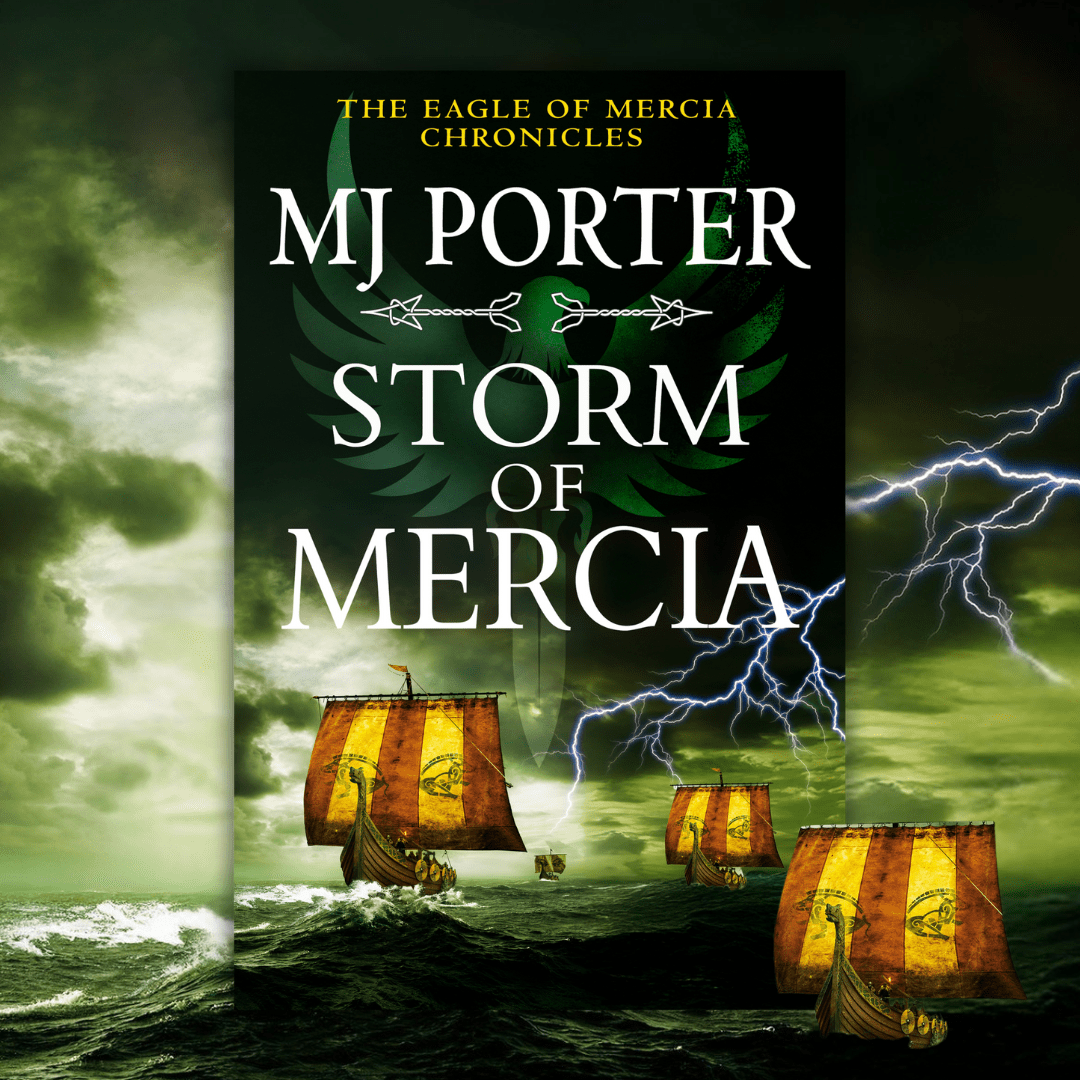
Shield of Mercia has been out for a week. Here’s what the blog tour hosts had to say about the latest book featuring young Icel #newrelease #histfic #TheEagleofMerciaChronicles #audio
A huge thank you to Rachel and the blog hosts.
Here are the links to the complete reviews.
Being a reviewer is a lot of fun, it’s also a lot of work and takes a great deal of planning. I’m always so grateful to those who take a chance on my books. It can sometimes be a step into the unknown.
Mercia is triumphant. Her king is safe. But Wessex was never Mercia’s only enemy.
Tamworth, AD836
Following a brutally cold winter, King Wiglaf of Mercia is in the ascendancy. Even Wessex’s Archbishop of Canterbury extraordinarily ventures to Mercia to broker a religious accord. But, can the hard-won peace prevail?
Viking raiders threaten Wessex. These blood-thirsty warriors are fast, skilful and have no reticence about killing those who stand in their way. Their aim isn’t to rule but to overwhelm, slaughter and take ill-gotten wealth.
King Wiglaf is no fool. As the Vikings push to overwhelm Wessex, Mercia’s lands look insecure. King Wiglaf needs the shields of Mercia’s warriors to prevent the overwhelming advancement of their deadliest enemy yet.
To save Mercia, Icel must first prevail over the two men who mean to end his life; King Ecgberht of Wessex and his son, Æthelwulf of Kent and only then the marauding Viking army for whom boundaries have no meaning.
I’m delighted to welcome Ken Tentarelli and his new book, The Blackest Time, to the blog with an excerpt.
Excerpt
Parishioners rise up in anger when a priest declares the Black Plague a divine punishment fortheir sins
.Those attending the morning mass included families living in the parish, lumbermen who had been logging forests in the nearby hills, The lumbermen clustered together near the front of the church, close to the altar. They formed the single largest group. Everyone, Gino included, studied the people nearby, fearful someone close by might show symptoms of the sickness: flushed faces, lumps, or darkened areas on the neck or arms.
While waiting for mass to begin, Gino listened to snatches of conversation. Men raised their voices enough to speak with other men, probably neighbors with whom they had sat elbow-to-elbow in a crowded tavern months ago, and now wouldn’t get within an arm’s length of each other. Women felt it imprudent to speak above a whisper in church, so they merely smiled at each other across the void.
Gino heard some families were absent from mass because they were mourning the death of family members. In one family, it was said, both the mother and father had succumbed, leaving behind three youngsters. No one knew what had become of those children. Stories circulated of entire families having been claimed by the sickness. Most surprising were reports of families fleeing the city to escape the pestilence. For the past two years, people had streamed into Florence from the countryside to seek salvation from the famine. Did the departure of these families mark a turnaround, the beginning of an exodus?
Although the lumbermen were far from him, he sensed hostility in their guttural outbursts. Many had left wives and children in the city while they logged in the hills, so death rampaging unchecked though the city threatened their families and they reacted with anger. They wanted something more tangible than bad air—possibly someone—to blame for the misery.
A small bell sounded when the sacristy door opened, and a priest emerged, followed by two altarboys. When they reached the altar, the priest spread his upraised arms and delivered the opening blessing. Near the midpoint of the service, the priest stepped to the pulpit to deliver his sermon.“We are all God’s children,” he began. “God loves us … all of us. He wants us to love Him, to heed His word, and to obey Him. Our Lord would not cause His children to suffer without reason.” Shifting from a tempered tone, the priest boomed, “This pestilence has been inflicted upon us because we have offended Him. There can be no other explanation.”
Shaken by the indictment, people glanced furtively at those around them as if they were all co-conspirators in a plot against God. “What could we have done to deserve this punishment?” they asked themselves.
Pleased his words had stunned his flock as he had intended, he continued, “We have sinned against God, and only by ending our sinful ways can we expect Him to end this scourge. You may not be an adulterer or a fornicator, but ask yourself, are you committing the sins of envy and pride?”
One lumberman’s face reddened. He bellowed, “My wife was a good, holy, God-fearing woman. She committed no sin worthy of this damnation; yet she suffered a horrible death. She cannot beheld to account for this misery.”
The outcry froze everyone. The priest gripped the lectern so tightly his knuckles turned white; his fingernails dug into the wood. Another lumberman shouted, “My son was barely old enough to walk. He was an innocent child. What sin could he have committed? But he was struck down.”
Family groups moved farther away from the bellicose woodsmen, who began grumbling in support of their comrades. A third man called out, “I wear my best smock when I come to church.” He pointed to its threadbare sleeve and its soiled shoulder. “This is my best! Look at it !It’s frayed and spotted. How could anyone who dresses like this be accused of being prideful?
“Do you know who is prideful?” he asked and raised an arm angled toward the priest. “Thepriests! Look at them. They don’t wear frayed vestments. Before the new bishop came, the priests in this diocese wore plain linen vestments. But now, linen isn’t good enough for them. They all wear expensive silk.” The eyes of all the parishioners shifted to the priest.
The man continued, “The bishop refused to serve communion from a pewter chalice. Now all chalices in the diocese are silver … all except the one used by the bishop. His is gold.” He spread his arms wide. “My wife spends nights in the dark to preserve her lone candle, while this church and others are lit up like brothels.”
He swept his gaze around the church to make eye contact with everyone. “For two years, when rain destroyed the crops, we all struggled to find food for our families. Beggars starved in the streets. But do you know of any priest who went hungry? None of them went to sleep with pangs of hunger. They made sure their bellies were filled.”
“If this terrible disease has been unleashed upon us by the sin of pride, it is the bishop and his minions who brought it upon us.” He ended his tirade in a booming voice, saying, “We need to make the bishop stop his prideful ways and walk in the humble shoes of Saint Francis. I say we go to him now.” He strode the length of the nave and out the door, followed by the other lumbermen.
Here’s the Blurb
Set in the 1300s during the devastating black plague, The Blackest Time is a powerful tale of compassion, love, and the human spirit’s ability to endure immense adversity.
Gino, the central character, is a young man who leaves his family’s farm to find work in a pharmacy in Florence. His experiences show us how people coped in the most horrific time in history.
Shortly after Gino arrived in the city, two years of incessant rain destroyed crops in the countryside, leading to famine and despair in the city. Gino offers hope and help to the suffering— he secures shelter for a woman forced to leave her flooded farm, rescues a young girl orphaned by the plague, and aids others who have lost everything.
The rains had barely ended when the plague hit the city, exposing the true character of its people. While some blamed others for the devastation, the story focuses on the compassionate acts of neighbors helping each other overcome fear and suffering. Doctors bravely risk infection to care for their patients. A woman healer, wrongly accused of witchcraft and driven from the city, finds a new beginning in a village where her skills were appreciated.
Despite the hardships, love blossoms between Gino and a young woman he met at the apothecary. Together they survive, finding strength in each other and hope in a world teetering on the edge.
The Blackest Time is a testament to the strength of the human spirit in overcoming unimaginable tragedy.
Ken Tentarelli is a frequent visitor to Italy. In travels from the Alps to the southern coast of Sicily, he developed a love for its history and its people.
He has studied Italian culture and language in Rome and Perugia, background he used in his award-winning series of historical thrillers set in the Italian Renaissance. He has taught courses in Italian history spanning time from the Etruscans to the Renaissance, and he’s a strong advocate of libraries and has served as a trustee of his local library and officer of the library foundation.
When not traveling, Ken and his wife live in beautiful New Hampshire.
I’m sharing my review for The Little Black Book Killer by Fiona Walker, the third book in her The Village Detectives series #bookreview #cosycrime #newrelease
Here’s the blurb
Matchmaking has never been so murderous… 💔🔪
Juno is feeling ready – at last – to start dating again, after losing her husband some years ago. She is sure she can make time from being a Village Detective, indeed it might help distract her from her crush on hunky (but far-too-young!) pub landlord – Mil.
So she’s signed up to an exclusive new dating app and cannot wait. But when one of the founding investors in that same dating app drops dead in front of fellow Village Detective Phoebe in a nearby hotel – and then a second investor is found hanging in the local cricket pavilion just days later – Juno knows she’ll have to put her love life on hold.
Teaming up once more with Phoebe, Felix and Mil… the Village Detectives are back. And this time Juno – who’d thought she was getting under the covers with a new lover – is going undercover to catch a killer…
Wickedly funny cozy crime, from million-copy bestselling author Fiona Walker! Fans of The Thursday Murder Club and A Death on Location will love the Village Detectives!
The Little Black Book Killer is the third book in the Village Detective Series, and I definitely think it’s my favourite so far. I laughed so hard at one line in particular, and I think all readers will love it.
Freddy is out of her ‘funk’ (which has been a running theme). Juno is certainly ‘dialled down’ a few notches (yay), and their switching narratives ensure the reader almost always knows what’s happening. The characters involved in the actual mystery are a delightful mix of local villagers who all bring something to the table. The graveyard vandals and the missing underwear also add a delightful side story.
The mystery itself is quite complex, and there are a ton of red herrings (yay), so I didn’t work out all the elements of the resolution, which I always appreciate.
As I said, this is the third book in the series, and my favourite so far.
Check out my review for The Poison Pen Letters, the second book in the series. I have read book 1 too, but clearly not popped it on the blog.
Meet the author
Fiona Walker is the million copy bestselling author of joyously funny romantic comedies. Most recently published by Head of Zeus, she will be turning to cozy crime for Boldwood.