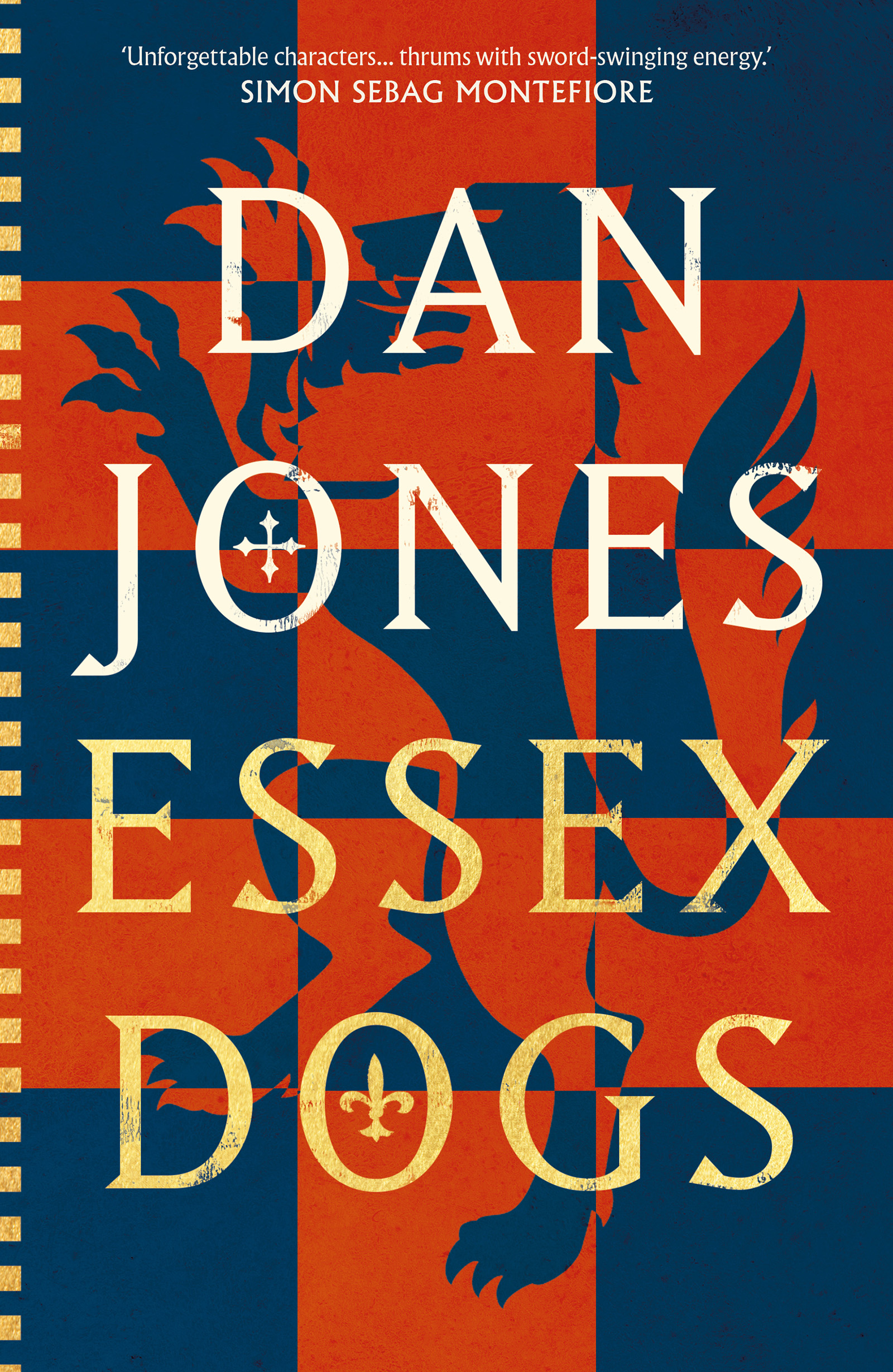
July 1346. The Hundred Years’ War has begun, and King Edward and his lords are on the march through France. But this war belongs to the men on the ground.
Swept up in the bloody chaos, a tight-knit company from Essex must stay alive long enough to see their home again. With sword, axe and longbow, the Essex Dogs will fight, from the landing beaches of Normandy to the bloodsoaked field of Crécy.
There’s Pismire, small enough to infiltrate enemy camps. Scotsman, strong enough to tear down a wall. Millstone, a stonemason who’ll do anything to protect his men. Father, a priest turned devilish by the horrors of war. Romford, a talented young archer on the run from his past. And Loveday FitzTalbot, their battle-scarred captain, who just wants to get his boys home safe.
Some men fight for glory. Others fight for coin. The Essex Dogs? They fight for each other.
My Review
Essex Dogs by Dan Jones, despite its girth, coming in at nearly 7500 lines on my Kindle and 450 pages in hardback, is a really easy-going read. It has a light writing style, and therefore, it’s not an onerous read for anyone worried that it might just be that little bit longer than they’re used to. (I never used to consider the length of a book, but now I do, when there are so many books to read and so little time).
The opening scene, the landing on the beach for the invasion of France, is very well told, and draws you into the world that the Essex Dogs live within. The action then slightly backs off, as we learn more about the men behind the invasion and the details of what’s planned. And there are many little details that slowly draw the reader into the scenario the Dogs face, as just one of many bands of warriors, commissioned for their 40 days of service, to fight on behalf of a lord, who’s in turn beholden to the king or the prince of Wales.
While the Hundred Years War is not ‘my’ time period, I’m not a stranger to it. If you’ve read other books set in the period, as I have, then this feels very close to those books. In no time at all, I was remembering some of the historical details, and I felt right at home with the ‘Dogs.’
This, as the blurb says, is the story of the Essex Dogs, and not the king and lords. The prince, Northampton and Warwick are the most notable members of the nobility to get a decent-sized portion of the story but only in relation to the way the Essex Dogs’ lives mingle, merge and separate with them. You can almost smell the dust and heat, the stink of the rivers, and not for the first time when I read books like this, I’m left considering why the English king was so determined to claim a province that was so hostile to him.
The story, not without tragedy, slowly builds to an intriguing finale, on the field of Crecy, where we follow the efforts of young Romford as he attempts to stay alive.
There is blood and gore in this book, but not tonnes of the stuff. There is some pretty strong language, but not tonnes of it (if you’ve read my The Last King series, it will feel a little tame). My overwhelming feeling on finishing it is that the games kings play affected the men who fought for them more than them, and I more than imagine that this is what Dan Jones is hoping to make us feel. And so, an engaging and well-told tale, not without moments of tragedy and comedy, and one certainly worthy of picking up and devouring.
About the author
Dan Jones is the Sunday Times and New York Times bestselling author of ten non-fiction books, including The Templars, The Colour of Time and Powers and Thrones. He is a renowned writer, broadcaster and journalist, and has for many years wanted to write authentic but action-packed historical fiction. His debut novel, Essex Dogs, is the first in a planned trilogy following the fortunes of ten ordinary soldiers in the early years of the Hundred Years’ War. He lives near London with his family.
Riddled with guilt and tormented by desire, Lucy Short keeps notes about newcomers to the village, but why? The misfit with the rescue dog has a mysterious past. She’s been biding her time, plotting and scheming, and now she’s determined to get what she deserves. It won’t be straight forward. Someone is sure to be watching her every move, and there seems to be something more sinister going on.
Mr. Lester Senior is dead. The family is in turmoil. The future of the famous village treasure hunt is in doubt, but for Lucy a new world beckons. She must stick to her task. The rewards could be huge, but will there also be a price to pay?
The Ultimate Village Game is a bit of a slow burner, but one that keeps you intrigued from the very beginning. The author does an excellent job of creating a mystery without really letting the reader in on what the mystery is.
The big reveal slowly starts to come into focus from about half way through the book, gaining pace as the end of the book comes into sight.
There is a lot of attention to detail here, a cast of characters that’s quite wide-ranging but interesting all the same. I was entirely drawn into the lives of the main characters and really enjoyed both the big reveal and the bits that came after it – no spoilers here.
This is, as the author says below, unconventional, and not at all your usual local murder mystery, but it is incredibly enjoyable and my only slight complaint would be that there was a lot of scope here for it not to be quite such a pleasant ending:) But, if you’re looking for an absorbing read, then this is certainly that.
Author Q & A
Hi Beth. Thanks for answering my questions about your new book.
Hi MJ, Thanks for having me.
I do love a cosy mystery. Can you tell me who and what influences your writing?
It was really just life in general that influenced The Ultimate Village Game, the quirks of our lives, the things that are hidden or left unsaid, words or deeds or memories that may be misinterpreted or distorted. I am sometimes taken with a conversation I overhear or a real life situation I come across. Of course, I may only have heard or come across a fragment of information, so I work on it, develop it. I’m a day dreamer too, so on occasion ideas come into my head that way.
Can you tell me about the fictional location where your novel is set?
The Ultimate Village Game is set deep in the heart of the English countryside. Steely Green is a small, picturesque village but with idiosyncrasies. It’s a contemporary setting, but the village is probably a little behind the times, and to an extent the characters reflect this. Even so, there’s plenty going on!
Can you name your favourite cosy crime novel or author?
Aunt Dimity’s Death – Nancy Atherton
Do you have a favourite cosy crime film or TV show?
Cozy crime is my absolute favorite genre on TV, and I can watch almost any of it. I’m happy to watch the same episodes over and over. In a way, it’s my wallpaper.
What did you find the hardest part of writing your cosy crime?
The Ultimate Village Game is not a conventional cosy mystery, and I had to concentrate on keeping the story moving at a pace I was happy with. I generally read my work back a lot along the way, and with this novel I found I had to do so even more. One of the hardest parts, though, was keeping track of all the characters. They seemed to want to go off and do their own thing on occasion.
No spoilers, but did you know who was going to be the murderer before you started writing your story or did it come to you as you wrote?
(Sorry, can’t answer this one!)
Thank you so much for answering my questions and good luck with your new release.
Meet the Author
Beth Merwood is a writer from the south of England. Her debut novel, The Five Things, was published in 2021.
Giveaway to Win 1 x Paperback and 1 x e-copy of The Ultimate Village Game (Open to UK Only)
1st Prize- Paperback copy of The Ultimate Village Game
2nd Prize – E-copy of The Ultimate Village Game
*Terms and Conditions –Worldwide entries welcome. Please enter using the Rafflecopter box below. The winner will be selected at random via Rafflecopter from all valid entries and will be notified by Twitter and/or email. If no response is received within 7 days then Rachel’s Random Resources reserves the right to select an alternative winner. Open to all entrants aged 18 or over. Any personal data given as part of the competition entry is used for this purpose only and will not be shared with third parties, with the exception of the winners’ information. This will passed to the giveaway organiser and used only for fulfilment of the prize, after which time Rachel’s Random Resources will delete the data. I am not responsible for despatch or delivery of the prize.
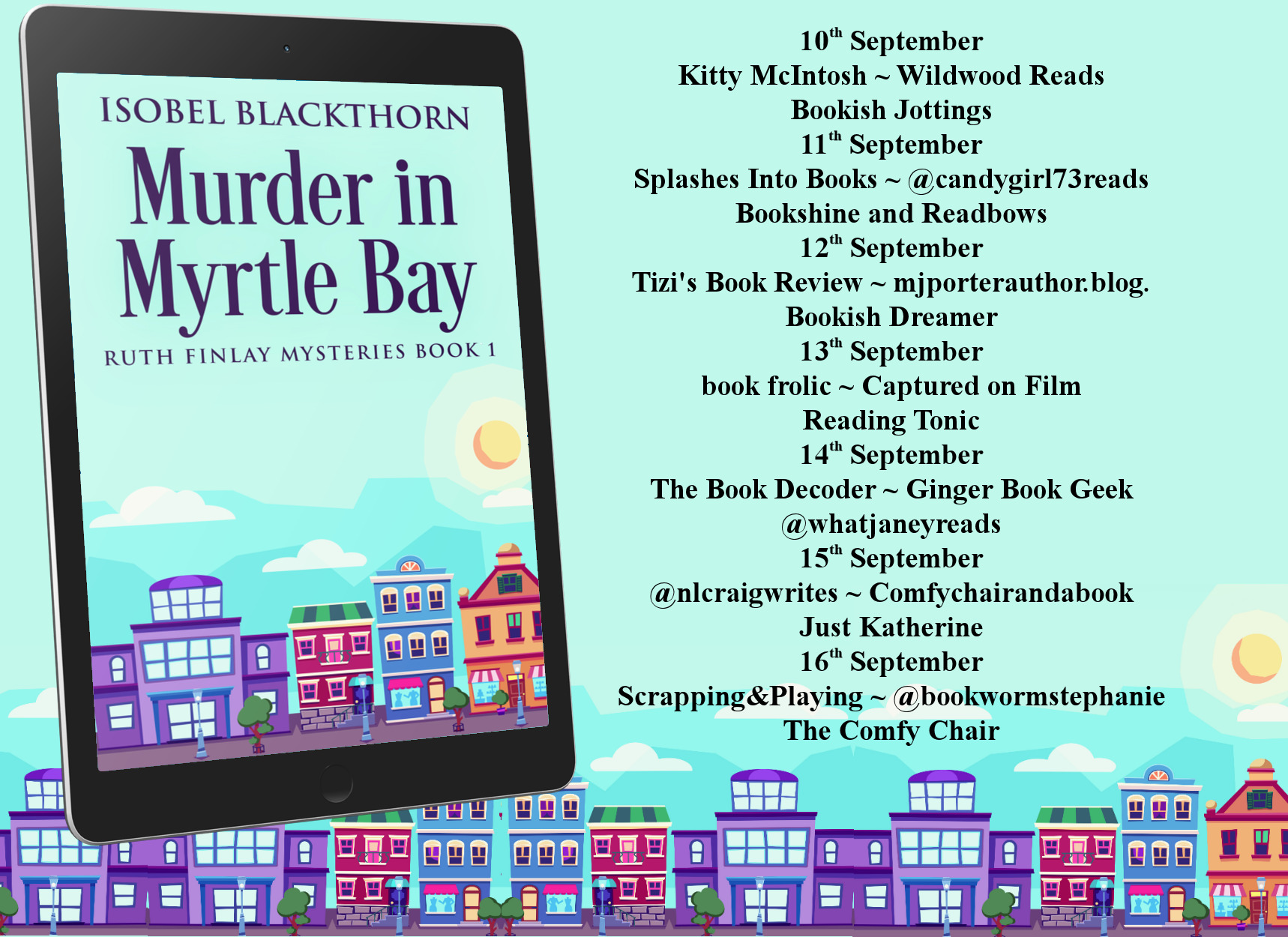
When feature writer Ruth Finlay and her elderly neighbor Doris Cleaver visit an antique and collectibles market in the small town of Myrtle Bay, they get a lot more than they bargained for.
After Ruth’s old tennis coach is found dead, they discover that there’s no lack of people who harbor a grudge against the victim, and a tangled web of family ties and lies begins to unravel. But can Ruth and Doris find the killer in time to avert a second murder?
A quirky feel-good mystery laced with intrigue, Murder in Myrtle Bay is the first book in Isobel Blackthorn’s ‘Ruth Finlay Mysteries’ series. Set in small town Australia, it is a sure pick for any fan of classic whodunits and cozy mysteries!
Murder in Myrtle Bay is an engaging, contemporary mystery set in Australia. While it took me a chapter to get into the storyline, as soon as I’d worked out who was who, I was hooked on the mystery of who had murdered the man in the antique centre.
There’s a lot of food in this book and a lot of drinking tea and coffee, amongst other things, but through it all is an intriguing mystery, making use of the joy of a small, and tight-knit community to add even more mystery to the storyline.
The ultimate resolution to the mystery, and the final few concluding scenes are well done. I hadn’t guessed who’d ‘done it,’ which is always the sign of a good mystery – and there was some engaging misdirection and false leads that added to the enjoyment.
A fun read for those who like a contemporary mystery.
Meet the author
Isobel Blackthorn is a prolific novelist of unique and engaging fiction. She writes across a range of genres, including gripping mysteries and dark psychological thrillers.
The Unlikely Occultist: A biographical novel of Alice A. Bailey received an Honorable Mention in the 2021 Reader’s Favorite book awards. A Prison in the Sun was shortlisted in the LGBTQ category of the 2021 International Book Awards and the 2020 Readers’ Favorite Book Awards. Her short story ‘Nothing to Declare’ was shortlisted for the Ada Cambridge Prose Prize 2019. Her dark thriller A Legacy of Old Gran Parks won a Raven Award in 2019. The Cabin Sessions was nominated for the Bram Stoker Award 2018 and the Ditmar Awards 2018.
Isobel holds a PhD in Western Esotericism from the University of Western Sydney for her ground-breaking study of the texts of Theosophist Alice A. Bailey. Her engagement with Alice Bailey’s life and works has culminated in the biographical novel The Unlikely Occultist and the full biography Alice A. Bailey: Life and Legacy.
Isobel carries a lifelong passion for the Canary Islands, Spain, her former home. Five of her novels are set on the islands of Lanzarote and Fuerteventura. These standalone mystery novels are setting rich and fall into the broad genre of travel fiction.
Isobel has led a rich and interesting life and her stories are as diverse as her experiences, the highs and lows, and the dramas. A life-long campaigner for social justice, Isobel has written, protested and leant her weight to a range of issues including asylum seekers and family violence. A Londoner originally, Isobel currently lives in rural Victoria, Australia.
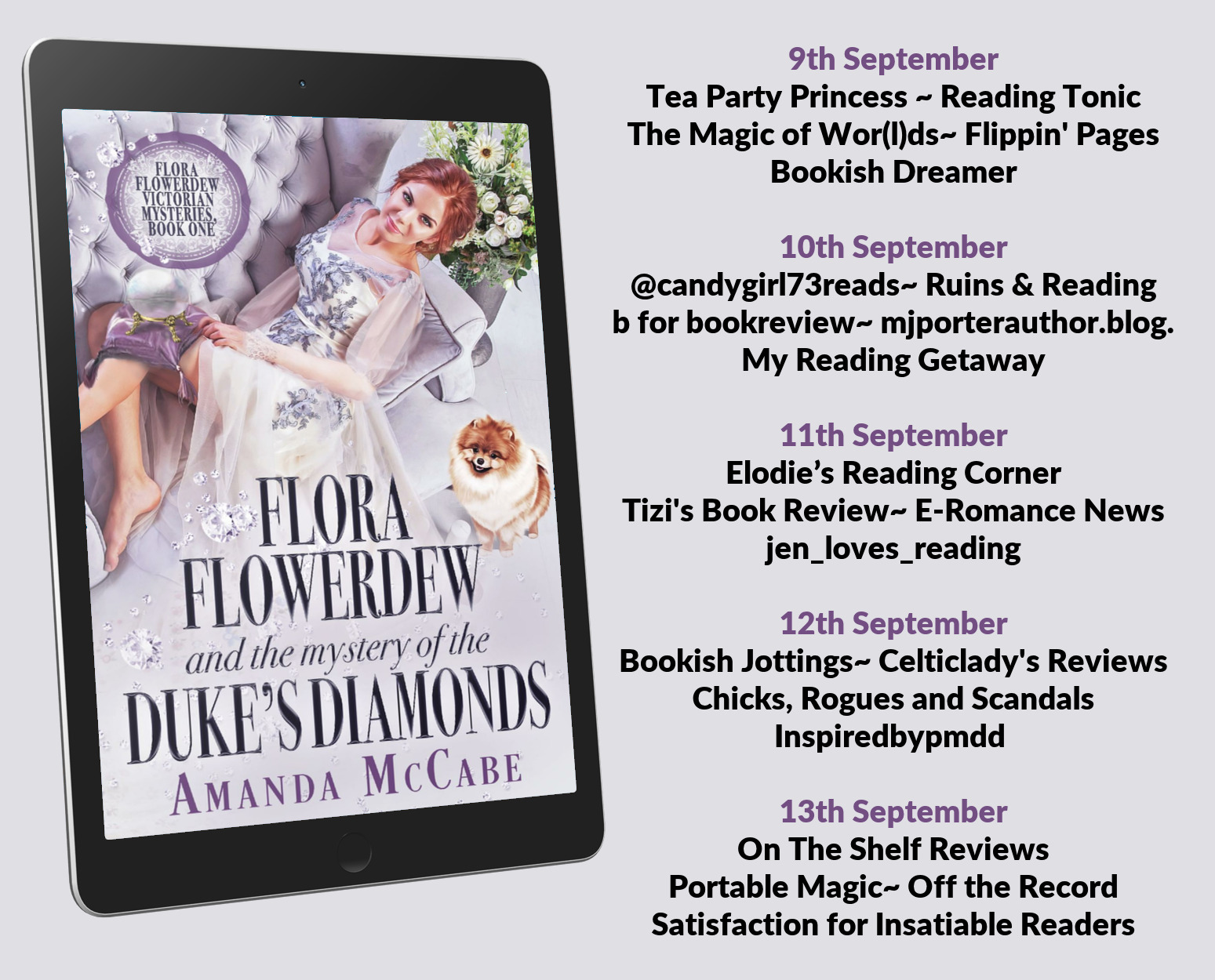
Flora Flowerdew has a secret. The former Florrie Gubbins, music hall dancer, is now Madame Flowerdew, one of London’s most renowned spirit mediums. But it’s actually her beloved Pomeranian dog, Chou-Chou, who can see the ghosts.
One of her most lucrative seances, for the wealthy Petrie family whose daughter is about to marry a handsome young duke, goes chaotically awry. The duke’s late, and very irate, grandfather demands Flora and his grandson Benedict find the long-missing family diamonds—even the search becomes littered with mayhem and murder! Can Flora discover the jewels before she loses her career, her sanity—and her heart?
Sparks fly as Flora, Benedict, and Chou-Chou pursue the truth of the diamonds’ disappearance in this lighthearted, cozy historical mystery set in foggy, gas-lit London
Flora Flowerdew and the Mystery of the Duke’s Diamonds is a delightful, light-hearted Victorian mystery. For all that, it is stuffed with all the elements we would expect to find in a novel of the period, including the always needed addition of the reticule, as well as hansom cabs, wonderful clothing and period detail.
Flora is a delightful character, a woman on the up as she makes her name, not as a chorus girl, but as a spirit medium, with her collection of allies, including a female news reporter for the local newspaper. And of course, there’s a hint of romance along the way; as well as stories of intrigue and mystery, an intrepid explorer, and strange goings-on.
The mystery is engaging, and I think we can all agree, that the inclusion of an irate ghost is particularly fitting for the time period.
An enjoyable, light-hearted read, perfect for those wanting to dip their toe into Victorian London.
Meet the author
Amanda McCabe wrote her first romance at the age of sixteen–a vast historical epic starring all her friends as the characters, written secretly during algebra class (and her parents wondered why math was not her strongest subject…)
She’s never since used algebra, but her books (set in a variety of time periods–Regency, Victorian, Tudor, Renaissance, and 1920s) have been nominated for many awards, including the RITA Award, the Romantic Times BOOKReviews Reviewers’ Choice Award, the Booksellers Best, the National Readers Choice Award, and the Holt Medallion. She lives in New Mexico with her lovely husband, along with far too many books and a spoiled rescue dog.
When not writing or reading, she loves yoga, collecting cheesy travel souvenirs, and watching the Food Network–even though she doesn’t cook. She also writes as Amanda Allen…
*Terms and Conditions –US entries welcome. Please enter using the Rafflecopter box below. The winner will be selected at random via Rafflecopter from all valid entries and will be notified by Twitter and/or email. If no response is received within 7 days then Rachel’s Random Resources reserves the right to select an alternative winner. Open to all entrants aged 18 or over. Any personal data given as part of the competition entry is used for this purpose only and will not be shared with third parties, with the exception of the winners’ information. This will passed to the giveaway organiser and used only for fulfilment of the prize, after which time Rachel’s Random Resources will delete the data. I am not responsible for despatch or delivery of the prize.
Follow the blog tour for Flora Flowerdew and the Mystery of the Duke’s Diamonds
This post is just a quick summary of where you can find a few articles I’ve written in the last few months, in case you’ve missed them (in no particular order).
I wrote a feature for Shepherd about the five books that led to my obsession with Saxon England.
And sticking with all things Saxon, I’ve written a piece all about Saxon England for this month’s interactive Historical Times magazine. (this link will take you to the sample – sign up to become a member – the magazines are always stuffed with fabulous content)
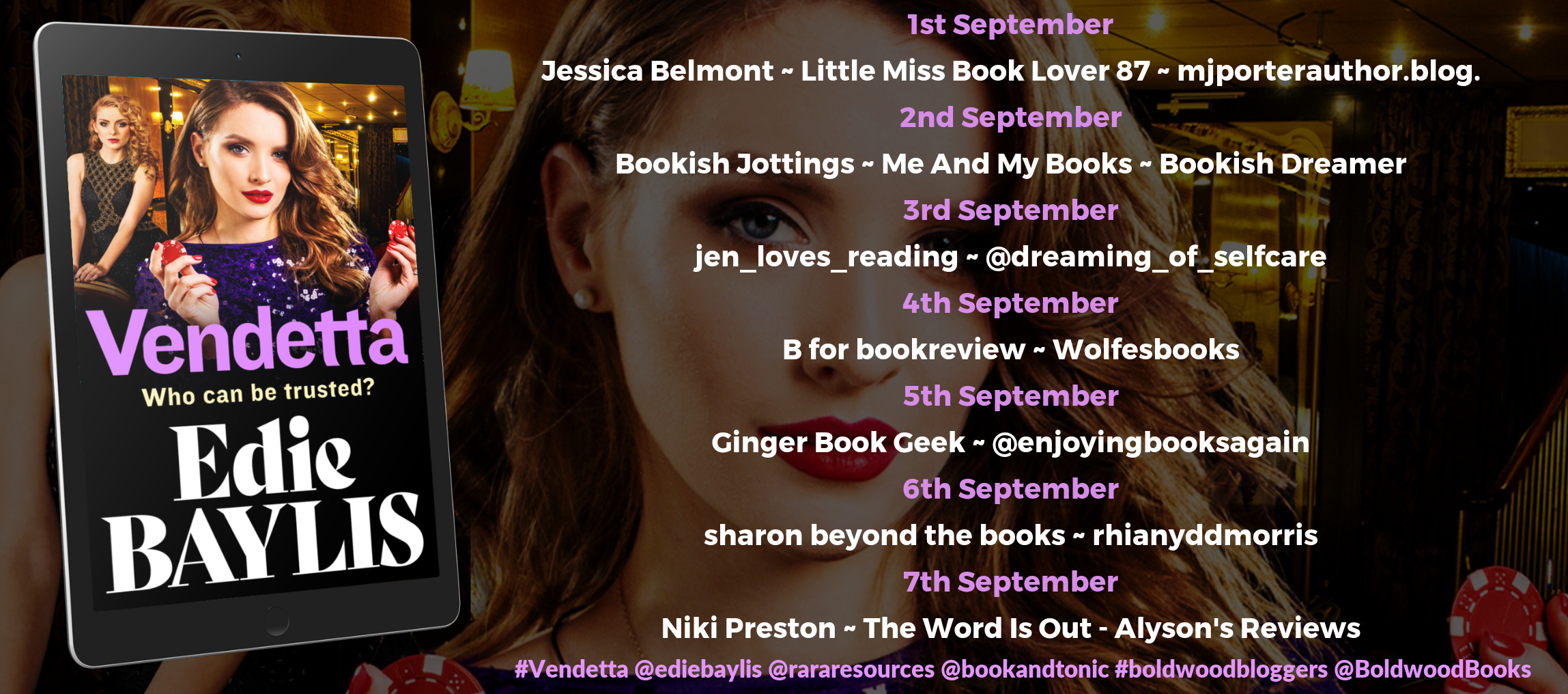
Once bitter enemies, Samantha Reynold and Seb Stoker’s powerful alliance enables their firms and casinos to go from strength to strength. With the families no longer in opposition, it seems that Sam and Seb are untouchable…
But not everyone is happy with the new power couple of the club world.
Unbeknownst to everyone, someone new wants to see Sam’s perfect life ruined. And they will stop at nothing to seek their revenge – even if it means destroying everything – and everyone – in their path.
With tensions high, Sam and Seb must put their trust in each other completely. But can they trust those closest to them? Or do they have a vendetta of their own?
Vendetta is the third book in the Allegiance series, and the second book that I’ve read by Edie Baylis.
I really enjoyed returning to the world of Samantha and Seb, and I found the build-up to the second half of the book, which is pretty non-stop, to be much easier going for me. I think, as with these things, not having read the first book made the second book a bit tough. But with this book, I already knew many of the characters, and it was far more enjoyable for that.
As ever, none of these characters really have any redeeming qualities, but I did find myself hoping some of the women would have a happy outcome. Whether they do or not, I won’t spoil it for other readers.
It’s always fascinating to read about places that you know. And these books, set in Birmingham in the 1990s resonate with me. I think I also enjoy knowing a little more about the landscape.
A fabulously entertaining read. Thank you to Netgalley and the publisher for my review copy. Vendetta is released today, 1st September 2022, and I wish the author a happy publication day:)
Meet the Author
Edie Baylis a successful self-published author of dark gritty thrillers with violent background settings. She lives in Worcestershire, has a history of owning daft cars and several motorbikes and is licensed to run a pub. She has signed a five-book deal with Boldwood and the first book in her new ganglit series, set in Birmingham, was published in January 2022.
Meet Tribune Sixtus Victorinus. Drunken soldier. Absent father. Unlikely hero.
Wall of Hadrian, Britannia, AD 367
It’s just another day, until it isn’t. Tribune Sixtus Victorinus is scouting north of the Wall when he first sees the smoke. Little does he know it’s about to change his life forever. Riding south he finds a province in chaos, the local populace in flight, the soldiers absent.
For rebellion is in the air at the far reaches of empire. The land is ablaze, overrun with barbarians, ‘Valentia’, is the word on everyone’s lips. And no one seems to have the first clue what to do about it.
And so Victorinus must act. He has let his life run to ruin, drunk his youth away. Now he must forge himself into the soldier he always wanted to be, the hero his children think he is.
Because his family are among the missing, and traitors lurk much closer than he could ever believe.
I’m not very good at remembering where the ideas for my stories come from. I can remember researching for my first, The Centurion’s Son, and trying to find a period in Roman history that hadn’t already been ‘done’ by the authors I loved reading (Ben Kane, Anthony Riches, Conn Iggulden, Simon Scarrow etc) I settled on the Marcomannic War, but as for the idea of Albinus and his strained relationship with his father, I literally couldn’t tell you how I came up with it.
For this one though, I sort of know. I was reading the excellent Imperial Brothers by William Hughes, which covers in great detail the reigns of Emperor Valentinian in the west and his brother Valens in the east. I’d researched the period before, and my first attempt at a novel was even set in the eastern empire during Valens’ reign, based around the battle of Adrianople (the book was bloody awful, but I learnt a few things whilst hacking away at my keyboard)
But researching the same period again, and having a few novels under my belt, I felt much more confident diving back into the time period. I discovered something known as the barbarico conspirito (barbarian conspiracy to you and me) which took place in the year 367AD. Britain in that year was effectively cut off from the western empire, as tribes from north of Hadrian’s wall, Ireland and Germania all swarmed on the isolated population at once.
It instantly caught my attention, my imagination running wild as I thought of the possibilities. I needed a hero, a man to base my story around. What I came up with was Sixtus Victorinus, an aging tribune of the miles areani (a scouting unit that roamed the wild lands north of Hadrian’s Wall, keeping tabs on the Picts). I’ve always been drawn to the sort of anti-hero, and some of the best books I’ve read are centred around them (read The Damned by Tarn Richardson; Inquisitor Poldek Tacit is a phenomenal creation). I started delving into his past, into his mind. The idea of an estranged wife and kids, of drinking to hide the shame of a wasted life, full of regret for the path that remained untrodden, sprang from me, and I knew I had my man.
The other thing that drew me to this event was the amount of real-life people I could throw in to the story. Magnus Maximus and Theodosius the Great both feature (before they elevated themselves to the purple and took those names, pointed their respective armies at each other and brought the Roman world into civil war – but that’s a tale for another book), so too do the magister militum Flavius Jovinus, and the Theodosius the Great’s father, the Count Theodosius. The more I researched the more found myself itching to get started, but I still needed an antagonist, someone who could have been powerful and ambitious enough to be the man behind the conspirito.
Enter stage and left, Lupus Valentinus. A senator recorded as being banished from the emperor’s court for a crime that has not survived the centuries, only avoiding execution thanks to a friend in Rome having a word in Valentinian’s ear. He was perfect, not in the least because of his name.
Valentia is a word that crops up when researching the later western empire, but no one can quite agree on what it was. Some say it was for a time the northernmost province in Britain, between Hadrian’s Wall and the Antonine Wall, others have it as being south of the Wall. Others say it was something else entirely. Again, this worked perfectly for me. I could have it as Valentinus’ own province, the beginning of a new world he was birthing on Britain’s northern soil. He hadn’t though, banked on our anti hero Victorinus to step up and fight him for the right.
So, I had my story, throw in some stunning artwork by the wonderful folk at More Visual (check them out at bookartwork.com) and I have a book. It was an utter joy to write, and I do hope you’ll enjoy reading it.
Thank you so much for sharing Adam. I wish you tonnes of luck for the new release, and below is my review of Valentia, a fantastic novel.
My Review
Valentia by Adam Lofthouse is a fascinating reimagining of Britannia during the late 360s. This then is Roman Britain, complete with Roman soldiers and senators, Roman weapons and, of course, Hadrian’s Wall. (It’s the 1900 anniversary of Hadrian’s Wall this year, so it’s all quite apt:)) But, this is also a world of Germanic warriors, Saxon invaders, the tribes from beyond the Wall, and even some pirates.
Historically, the end of Roman Britain might be a few years in the future, but this is a world on the brink, the reach of the Romans starting to fade, and the events in Valentia tell of a people as yet unaware of the coming calamities, and, Adam tells it very well. We have abandoned Roman forts, discontent Roman soldiers who aren’t getting paid on time, and the tribes from across Hadrian’s Wall more aware of what might be happening than the Romans. And the emperor is very far away in Rome.
Our two main characters, Tribune Sixtus Victorinus, and Felicius are opposites of the same coin; one jaded and a drunk, the other, still a career Roman soldier. Between them, they must disentangle the unexplained events on the borderlands, and then they must rouse support from all that they can to defeat the coming rebellion.
Valentia starts fantastically well, immediately sucking the reader into the world of the 360s. It’s really quite hard to put the book down as the tension ramps up. Tribune Sixtus is a sympathetic character, for all, he is perhaps to blame for many of his problems. The small group of warriors who make up his area of command are well-sketched, and there is tragedy in the offing. Felicius’ life is more regimented, and it is Felicius who gives us the glimpse of what it was to be a Roman in the waning years of the Empire.
I really enjoyed Valentia. The book starts with a bang and builds really well to its conclusion, meeting a great cast of characters on the way. If you’re a fan of stories set in Saxon England, then you’ll love this earlier glimpse of Britannia.
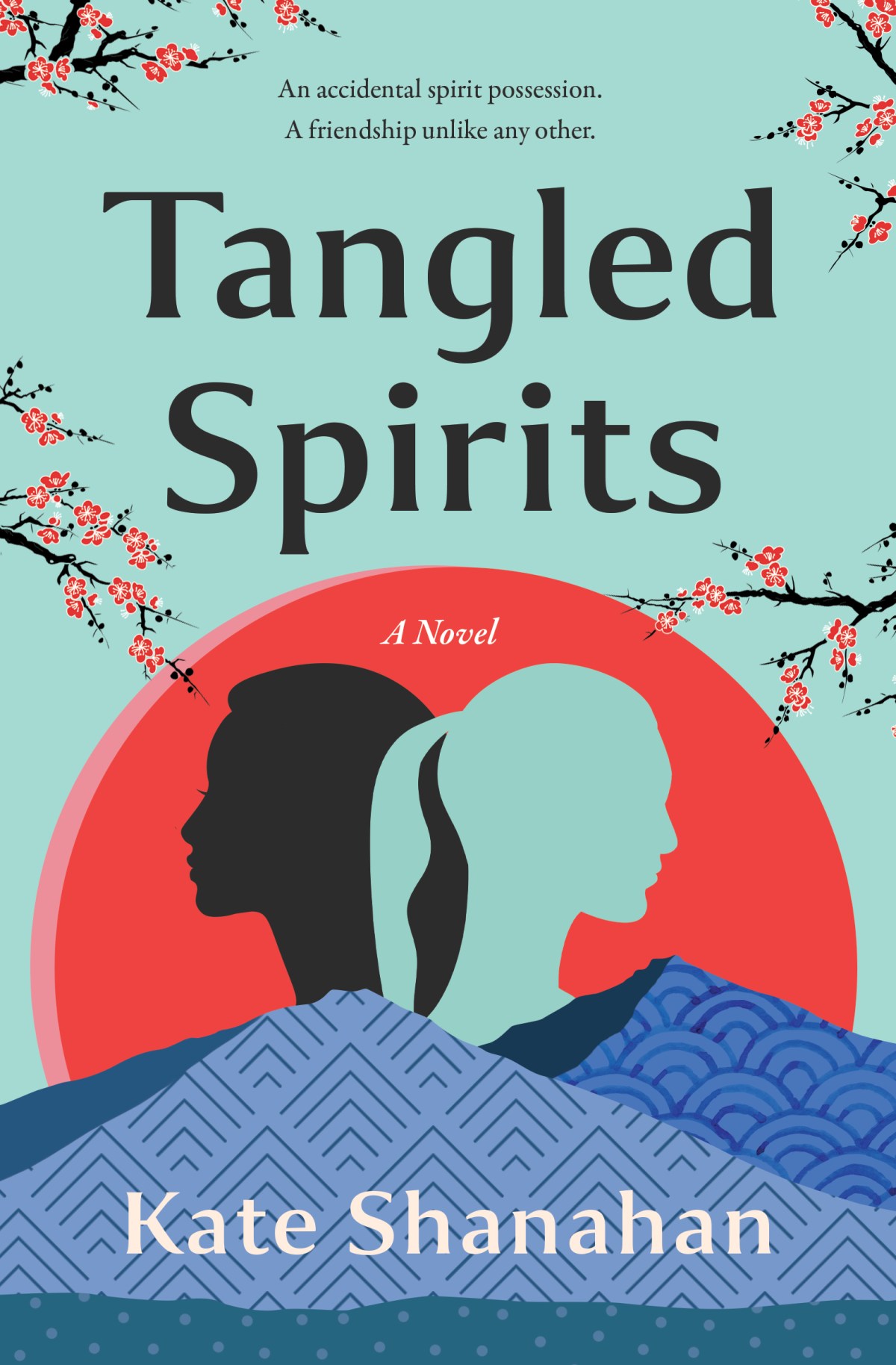
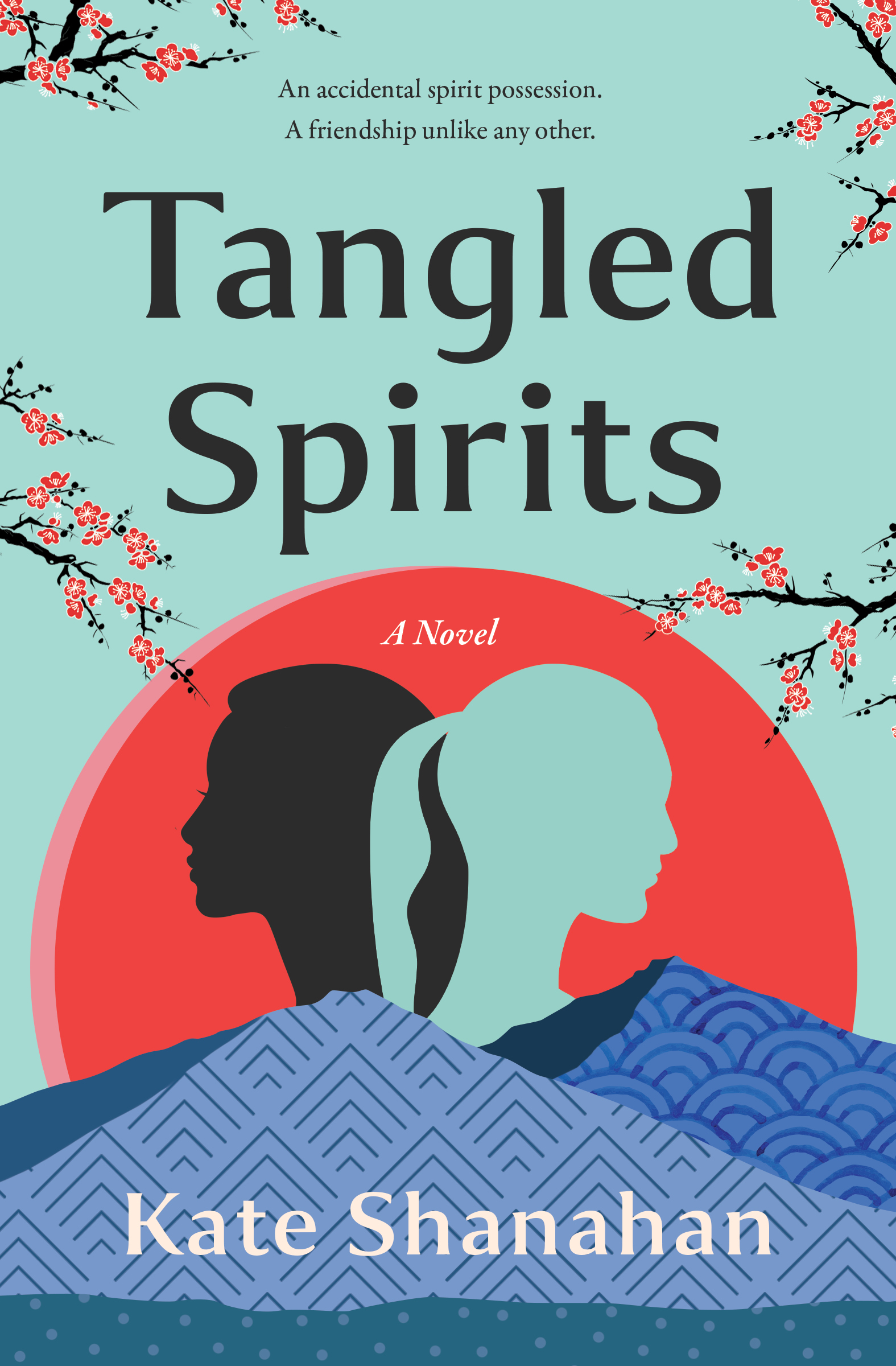
Hi, I’m Kate Shanahan, author of Tangled Spirits, a time-slip historical fantasy set in medieval Japan before shogun, samurai, and sushi were a thing. I’m blogging today about the cultural environment in 10th-11th centuries Japan that fostered the highest level of female literacy in the world at this time (among the aristocratic elite, that is.)
The world’s first full-length novel is usually considered to be Tale of Genji, written by Murasaki Shikubu, a lady-in-waiting at the imperial court of Japan at the beginning of the 11th century. She wrote this long, complex novel in an era when nearly all women everywhere in the world (and most men too) could neither read nor write. And not only did she write it, but enough people enjoyed reading it to ensure it was copied, shared, sold, borrowed, studied, illustrated, filmed, and gamified over the next 1000+ years.
I read Tale of Genji when I taught English in Japan. That same year, I read The Pillow Book, a journal written by lady-in-waiting Sei Shonagon, a contemporary of Murasaki’s. Sei invented a new form of journal called zuihitsu or ‘miscellany.’ In today’s terms, it’s more like the world’s first blog.
Both Sei and Murasaki were ladies-in-waiting in the court of Emperor Ichijo, and they both could read and write Chinese as well as Japanese, rare skills for women even in their erudite sphere. How is it that these two women in medieval Japan both managed to create new forms of literature that are still studied today?
In the course of my research, I learned that women held many positions of high rank and even power in Japan’s early history. In fact, eight of Japan’s emperors have been women, six of them before the year 770. The Heian Period (794 to 1185) is known as the ‘golden age of Japan’ for its flowering of the arts and literature, and much of this flowering came from girl-power.
(Before I go further, let me be clear that I’m only referring to the tiny elite at the top of the food chain who led a life of luxury and leisure far, far removed from the hardships of the unranked.)
I’ve noticed that Westerners are often surprised at some of the rights and privileges women enjoyed in this era in Japan. In the Heian Period, married noblewomen often continued to live with their parents after marriage, with the husband stopping by from time to time to see her. The wife’s father or uncles influenced the education and development of her children. This is called a ‘uxorial’ form of marriage, and it not only gave a woman more control and influence over raising her children, it also meant that if she weren’t happy with her husband’s behavior, she could send him away without seeing him. Women also could initiate a divorce and remarry. Men often had several wives and consorts, and women just one (at a time), but love affairs were not frowned upon as long as discreetly managed.
The most important element of the environment that eventually produced Tale of Genji and The Pillow Book was the Fujiwara Regency. The emperor’s role was a sacred one with a focus on the rituals and prayers needed to keep divinities happy, so the regent’s role was a political, secular one. There were 21 regents from the Fujiwara clan between 804 and 1238, and the most famous was Michinaga, who was regent during both Sei Shonagon and Murasaki Shikibu’s tenure at court. In the course of my research for Tangled Spirits, I learned this proverb: “if one must have a child, let it be a girl.” Fujiwara clan members gained power and access to the emperor by marrying their daughters to him. Those daughters produced children who often became Crown Prince and Emperor, and because of the uxorial tradition, Fujiwara regents kept their power by their influence over their imperial grandchildren. And that made daughters more valuable to a Fujiwara regent (or regent wanna-be) than a son.
And literacy comes into play because it was important for these Fujiwara daughters to be able to entice the emperor with their beautiful calligraphy, their skill with writing poetry, and with reading out loud to him. Beauty and elegance were of utmost importance at court in this era, and calligraphy could make or break a love affair. Thus a high priority was placed on the education of potential imperial consorts.
And then once a Fujiwara daughter was at court, whether as a concubine, an official consort, or a Royal Consort (Empress), it was important for that consort to have women around her with skills in calligraphy, poetry, witty repartee, and story-telling, both to make the salon attractive to the Emperor and to entertain the consort. Women in this elite class lived lives of comparative leisure, and they stayed indoors most of the time. Reading, writing, and story-telling flourished as entertainment.
And that created a sort of domino effect. Parents might not be of a high-enough rank for their daughters to be selected for the Emperor, but they educated their daughters to make them attractive to the consort’s salon, and that is how both Sei Shonagon and Murasaki Shikibu came to court.
It’s clear from the diaries of Sei Shonagon and Murasaki Shikibu that they both could read Chinese writing as well as the native ‘onnade’ and that such learning was considered masculine. Murasaki wrote that Sei was a show-off for not hiding her knowledge of Chinese, while Sei wrote that male courtiers sent poems in Chinese as a sort of prank, hoping to force her to reveal her knowledge (but she was too clever for that.) However, recent research indicates that a nobleman might teach his daughter to read and write Chinese as well as Japanese to improve her chance to obtain a position as an official in the Imperial Handmaid’s Office. Murasaki Shikibu writes in her diary that she learned Chinese by eavesdropping on her brother’s lessons, but it’s possible that both Murasaki and Sei Shonagon were taught Chinese reading and writing for that reason, as neither family was in the top ranks of nobility. Some high-ranking men even sought to marry women who could read Chinese as a skill that could help their own careers in government bureaucracy.
If you’d like to read more blog posts about Heian Japan or find out more about Tangled Spirits, you can find mine at kvshanahan.com.
If you’d like to read more about literacy in this era, here’s an interesting article that I found in jstor.org.
Heldt, G. (2005). Writing like a Man: Poetic Literacy, Textual Property, and Gender in the “Tosa Diary.” The Journal of Asian Studies, 64(1), 7–34. http://www.jstor.org/stable/25075675
Here’s the blurb for Tangled Spirits.
Journey to the imperial court of Japan as Kate Shanahan skillfully blends fictional and historical figures and events into a time-slip tale of intrigue, personal sacrifice, and a friendship that spans a thousand years.
Two spirits. One body. It’s harder than it looks.
2019: Anxious and insecure, Mina Cooper wants to change her life, to change herself, but she gets more change than she bargains for when her spirit is pulled into the past and into someone else’ body – in 10th century Japan. And now she has a lot more to be anxious about. Like exorcism. And bandits. And chaotic magic by an inexperienced shaman.
999: Desperately lonely after her mother and sister die in an epidemic, aspiring shaman Lady Masako attempts to call her mother back from the spirit world, but gets possessed by Mina instead.
After a struggle for control and a failed exorcism, the two spirits agree to cooperate long enough to get help from the Royal Astrologer, the only person powerful enough to send Mina home.
But his help comes at a cost, and Mina’s imperfect knowledge of history offers little to negotiate with. And the longer he waits to help her, the greater the risk her spirit will fuse with Masako’s, and she’ll never get home.
Meet the author
Kate grew up in Massachusetts, but spent 4th, 8th, and 11th grades living in England, and speaks both languages (British and American) fluently. After graduating from University of Michigan with a BA in Political Science (East Asia Concentration), Kate taught English in Sapporo, Japan for two years. She enjoyed the experience so much that she returned to U of M for an MA in Asian Studies (Japan Specialization), and while there, worked part-time for the Center for Japanese Studies. Fortunately for Kate, Honda was expanding operations in Ohio around the time she finished, and she spent an entire career at Honda in project, business, and people management, thrilled to be able to travel to Japan and speak Japanese for work. Then she retired to work on that book about Sei Shonagon that she always had in the back of her mind to write, and that book evolved into Tangled Spirits.
After all those years in northern latitudes, Kate and her husband recently moved to Florida’s Gulf Coast where the sunshine makes it difficult to focus on writing. But she’s determined to do it anyway. After a bike ride.
Tangled Spirits is on special offer until 19th July 2022, for 99p/99c on Amazon UK/US and is also included in a Kindle Unlimited Subscription
Good luck with the new book, Kate. Thank you so much for such an interesting post about Japan. I can see why you were drawn to the period.
Here’s my review
I was lucky enough to read an early version of Tangled Spirits, and I flew through it in two days. It’s a fantastic and really intriguing story.
I liked the whole story – the idea of a 21st-century woman’s mind in a 10th-century woman’s body, seeing everything through new eyes, putting both current interpretations on etiquette and prevailing thoughts, as well as the 10th-century justification for it all. It was just tongue in cheek, and court politics enough, to ensure the reader always wants to know what’s going to happen.
Masako and Mina are both intriguing characters. As the story is told through Mina we know more about her thoughts and more about Masako’s actions. I could understand both of their viewpoints well enough, even if like Masako, I found it a bit frustrating that Mina wouldn’t share more of her knowledge of the future. I enjoyed that as time went on, they acted more and more like one another.
A really enjoyable read and one I highly recommend.
I’m delighted to share with you an excerpt and my review for Penny Ingham’s new novel, Twelve Nights, set in the theatres of late Tudor London. Please read all the way to the end because there’s a lot going on in this blog post:)
Here’s the blurb:
The Theatre
London, 1592
When a player is murdered, suspicion falls on the wardrobe mistress, Magdalen Bisset, because everyone knows poison is a woman’s weapon. The scandal-pamphlets vilify her. The coroner is convinced of her guilt.
Magdalen is innocent, although few are willing to help her prove it. Her much-loved grandmother is too old and sick. Will Shakespeare is benignly detached, and her friend Christopher Marlowe is wholly unreliable. Only one man offers his assistance, but dare she trust him when nothing about him rings true?
With just two weeks until the inquest, Magdalen ignores anonymous threats to ‘leave it be’, and delves into the dangerous underworld of a city seething with religious and racial tension. As time runs out, she must risk everything in her search for the true killer – for all other roads lead to the gallows.
Thank you so much to MJ at mjporterauthor.blog for letting me share my latest novel.
Twelve Nights is set in 1592, at the imaginatively named The Theatre in Shoreditch, London. The players are the celebrities of their day, but one by one they begin to die in mysterious circumstances. Suspicion instantly falls on the wardrobe mistress, Magdalen Bisset, because everyone knows poison is a woman’s weapon.
Magdalen is innocent, although few are willing to help her prove it. With just two weeks until the inquest, she ignores anonymous threats to ‘leave it be’, and delves into the dangerous underworld of a city seething with religious and racial tension. As time runs out, she must risk everything in her search for the true killer – for all other roads lead to the gallows.
Here’s an excerpt from the book. To set the scene: The player John Wood has died a horrible death on stage during the first act of Twelve Nights. The constable, Edmund Stow, has told Magdalen he is convinced she is responsible for his murder, and is determined to prove her guilt. In shock, Magdalen and the players decamp to their favourite tavern to raise a cup to John’s memory.
The shadows lengthened. The landlord lit the fire, the serving girls laid out soggy saffron cakes, and the players’ spirits began to lift, warmed by the crackling fire, and by wine and cakes and ale. And with every cup of Rhenish she drank, Magdalen’s spirits lifted a little too. The tavern was starting to fill up. Word spread fast through Shoreditch, and now all the poets and playwrights who had ever felt envious of Burbage’s lauded band of brothers were crawling out of the woodwork to gloat over their misfortune. Robert Greene was first to arrive, his distinctive quiff of long, red hair waxed upright like a cockerel’s comb. He made straight for their table, and addressed Burbage.
‘I see you’re still paying that country-bumpkin to write speeches stuffed with far-fetched metaphors.’ Turning to Will Shakespeare, he announced mockingly, ‘If it isn’t the upstart crow, beautified by my feathers.’
Magdalen winced. Will had borrowed the plot of Greene’s Pandosto for The Winter’s Tale. In truth, the playwrights and poets all stole from each other, but Will took their ideas and made them a thousand times better, filling the Theatre and its coffers day after day, whilst Greene lived in back-street poverty.
‘The pot is calling the kettle black, or Greene, in your case,’ Will replied lightly, but Magdalen could see tension in his eyes.
Greene spat something brown and glistening onto the floor. Magdalen hoped it was tobacco. Sitting down on the bench beside her, he attempted to manhandle her onto his knee. ‘Weep not, darling, smile upon my knee, when thou art old, there’s grief enough for thee,’ he crooned.
Magdalen recognised the song. It was Greene’s own. Extricating herself from his arms, she shoved him hard. He fell off the bench and landed on his back, legs in the air like a deceased fly. Everyone cheered loudly and raised their glasses. Greene mumbled something. It sounded like ‘misshapen dick’.
Christopher Marlowe arrived next, and the tavern lit up as if the stars had fallen through the thatch. He greeted them all in turn, embracing some, kissing others on the lips. But he offered no kiss to Will. Instead, they simply shook hands like two fencers before a bout. It seemed fitting, for they were presently engaged in an increasingly spectacular play-writing dual, lobbing masterpieces at each other across the Thames. When Marlowe attacked with the gore-fest Tamburlaine, Will struck back with blood-soaked Titus Andronicus. Marlowe lunged with his study of a weak king, Edward the Second, so Will parried with Richard the Second. All of London was waiting to see how Will would respond to Marlowe’s The Jew of Malta.
‘William.’ Marlowe released Will’s hand, and moved on.
‘Christopher,’ Will replied and turned back to his beer.
Magdalen found their relationship hard to fathom, but hidden beneath the jealousy and rivalry, she often suspected a lurking mutual respect.
Stepping over Robert Greene, who had fallen asleep on the floor, Marlowe sat down beside her. ‘How now, Magdalen?’
She nodded absently. She had drunk a great deal of Rhenish, but she would never admit her inebriation, not even to Marlowe because it was not seemly. But he must have noticed her glazed expression because that familiar, half-smile was playing on his lips, as if he was enjoying his own private joke at the world’s expense. Although he was fast approaching thirty years of age, there was still a boyish charm to his features; the soft doe-eyes, the beard-less cheeks, the wisps of a moustache above full, generous lips.
‘I think you’ve had enough of this.’ He picked up her cup of Rhenish, and proceeded to drain it.
‘Hey!’ she exclaimed but it was a half-hearted protest, for her head was pounding like cannon fire.
‘You will have heard about the constable?’ she said quietly.
‘Edmund Stow is highly fed and lowly taught. Pay no heed to him,’ Marlowe replied airily.
‘But what if the Puritans bribe the coroner to convict me? We all know they are looking for an excuse to close us down.’
He shook his head. ‘I won’t let that happen.’
She wished she could believe him, but Marlowe was the most unreliable man on earth.
My Review
Wow! I love it when this happens. I was really keen to feature this book on my blog, but as I’ve severely over-committed myself of late, I wasn’t sure I’d have time to read the book first. But, I did, and just wow.
Sometimes a book is just an absolute delight to read, and this is one of those. Penny Ingham has written both a delightful murder mystery, but also an immersive story set in Tudor London. The smells, the sights, the political unrest, the politics, the religion, problems with the Scots, the theatre, Shakespeare, Marlowe and the underbelly of Tudor London. It is, somehow, all crammed into this novel, and none of it feels forced on the reader. This is total immersion into the London of late Tudor England, and given how I’ve grown weary of all the ‘Tudor’ stuff, this just reassures me that authors are still out there, conjuring up something new and fresh to delight the reader.
I can’t deny that my love of the BBC comedy, Upstart Crow, definitely played into the joy of reading the novel – a strong female lead being one of the most appealing features – but this isn’t a comedy, this is serious business, and it is such a well-told story with a motley cast of all levels of society, from the servants to the Tudor nobility, featuring all any of us could ever want to know about what it was truly like to live at such a time.
And the story doesn’t shy away from the harsh realities of the day, and our main character is sorely tested time and time again. I really don’t want to give any spoilers, but this novel nicely ties with all the bits of Tudor England that draws readers to it, the scandal and the dark underbelly, the glitz and glamour and the high echelon of society.
Twelve Nights is a veritable tour de force; a wonderful tale, deeply grounded in Tudor London, and quite frankly, absolutely brilliant!
Meet the author
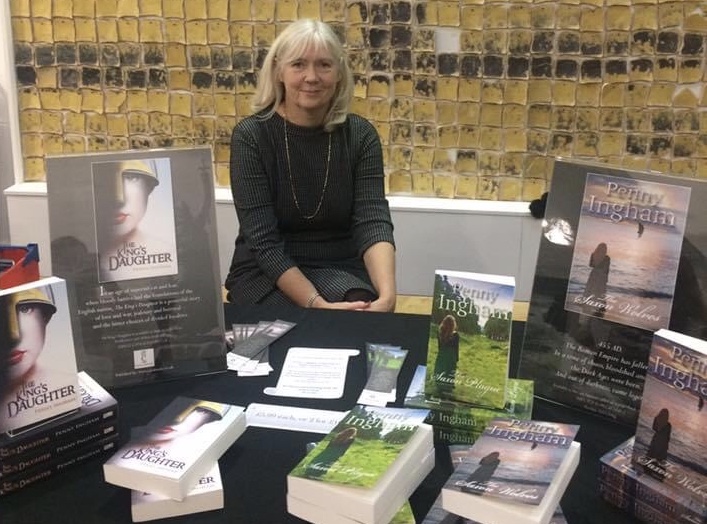
I was born and raised in Yorkshire where my father inspired my love of history from an early age. He is a born story teller and would take us to the top of Iron Age hillforts, often as dusk was falling, and regale us with stirring tales of battles lost and won. Not surprisingly, I went on to study Classics at university, and still love spending my summers on archaeological digs. For me, there is nothing more thrilling than finding an artefact that has not seen the light of day for thousands of years. I find so much inspiration for my novels from archaeology.
I have had a variety of jobs over the years, including working for the British Forces newspaper in Germany, and at the BBC. When our family was little, the only available space for me to write was a small walk-in wardrobe. The children used to say, ‘oh, mum’s in the cupboard again’.
I have written four historical novels: The King’s Daughter explores the story of Aethelflaed, the Lady of the Mercians. The Saxon Wolves and the Saxon Plague are both set in fifth century AD, a time of enormous upheaval and uncertainty in Britain as the Romans departed and the Saxon era began. My latest is something a bit different. Twelve Nights is a crime thriller set in sixteenth century London, and features William Shakespeare and Christopher Marlowe.
I now live with my husband in the Hampshire countryside. Like many others during the pandemic, we decided to try growing our own fruit and vegetables – with mixed results! We can only get better!
Giveaway to Win a PB copy of Twelve Nights (Open to UK Only)
*Terms and Conditions –Worldwide entries welcome. Please enter using the Rafflecopter box below. The winner will be selected at random via Rafflecopter from all valid entries and will be notified by Twitter and/or email. If no response is received within 7 days then Rachel’s Random Resources reserves the right to select an alternative winner. Open to all entrants aged 18 or over. Any personal data given as part of the competition entry is used for this purpose only and will not be shared with third parties, with the exception of the winners’ information. This will passed to the giveaway organiser and used only for fulfilment of the prize, after which time Rachel’s Random Resources will delete the data. I am not responsible for despatch or delivery of the prize.
Today, I’m delighted to welcome Rachel R. Heil to the blog.
Your book, Leningrad, sounds fascinating. Can you share with me the first idea that made you decide to write this story? It might be very different from how the story ended up being, but I am curious if you don’t mind sharing. And, if the story is very different, would you mind sharing the process by which you ended up with your current novel?
The idea for Leningrad: The People’s War came about several years ago after I read another novel that partially takes place during the Siege of Leningrad. The Bronze Horseman by Paullina Simons is one of my favorite books, and the first half of the story takes place during the Siege of Leningrad. While I loved the book, I recall being disappointed that the story switched locations halfway through because I wanted to see what happened to Leningrad and her people following the first winter under siege.
The Siege of Leningrad lasted 872 days, but as I read a few more books set during the blockade I found that most stories ended during the winter of 1941-42, despite the siege lasting to January 1944. While this was mainly because many citizens were evacuated during that winter due to authorities using the frozen Lake Lagoda to help create a passage out of Leningrad, there were still plenty of people left in Leningrad after the winter had ended. Another reason a lot of books only covered the siege through 1942 was that after the war, the Soviet authorities stopped anyone from speaking about the siege with threats of prison sentences. Despite the limited resources and information available I wanted to write a story that followed the whole ordeal from start to finish, and that’s where the first ideas for Leningrad came about.
IMAGE CREDIT IS FROM WIKIMEDIA COMMONS. PLEASE CAPITON PHOTO “The frozen Lake Lagoda. Known as The Road of Life it soon became the only way to escape encircled Leningrad.”
One thing that struck me about Leningrad and the survivors was how strong they were. Reading several interviews of survivors, I found almost all of them did not pity what they went through but saw it mainly as a challenge they had to get through to go on with their lives. The only regrets they had were that they had lost so many friends and family members and regretted not getting out of the city with those loved ones when they had the chance. To me, that was extraordinary, and I wanted to craft a story that would honor those who went through such an ordeal.
My initial idea for the story was to focus primarily on the Russian side of the war, told from the perspective of an ordinary Russian family attempting to survive. As I began my research this outline began to change a little bit. In the beginning, I didn’t want any of my characters to become involved in the armed forces or political sphere that governed Leningrad. But as I did more digging, I decided it would significantly add to the story for a character to see how the Soviet government handled the siege. I found that it helped explain a lot of the actions Leningraders did and why the city suffered like it did, mainly due to the poor decisions Soviet leaders made. As a result, I made my main protagonist join a volunteer unit where she finds herself being pulled into the inner circle of the people in charge of defending Leningrad.
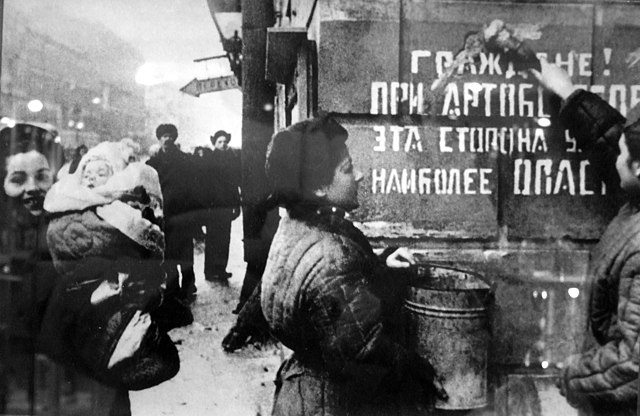
IMAGE CREDIT IS FROM WIKIMEDIA COMMONS. “With the end of the siege officials remove the blue signs that warned Leningraders of artillery barrages. In a rare victory for Leningrad survivors after the war the signs were put back up in 1957 to commemorate the siege and remain up in Saint Petersburg today as memorials to the victims. The signs read ‘Citizens! This part of the street is most dangerous during the artillery barrage.’”
The other big change I made was the perspective of the story. Even though one could argue that the story of Leningrad is a purely Russian story, I found the German side to be equally interesting. While there are few accounts from German soldiers who fought on the Leningrad Front, the few that did give their testimonies reveal a group of people who entered the war with the idea that they were liberating the Soviet people but quickly became disillusioned when they realized the human cost of waging such a battle and the persistence of the Soviet people not to give up their city. For many of them, the siege broke their belief in German superiority and that their leaders had made the right decision of waging war with the Soviet Union. With that knowledge I decided to split the narrative equally between the Russians and Germans.
Looking back, I’m glad I made the decisions I made and that I went away from what I originally outlined. I’m a planner but veering away from that outline turned out to be for the best. My hope is that I crafted a story that honors both the survivors and the victims.
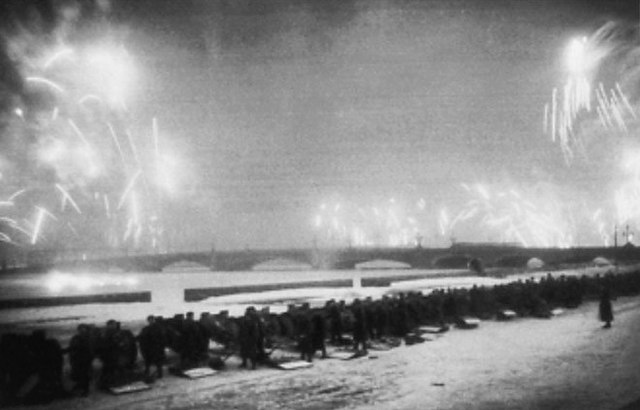
IMAGE CREDIT IS FROM SERGEY STRUNNIKOV VIA WIKIMEDIA COMMONS. PLEASE CAPITON PHOTO “Fireworks over Leningrad following the end of the siege, 27 January 1944.”
Thank you so much for sharing. It sounds like you went on a fascinating journey yourself while writing your book. Good luck with it.
Here’s the blurb:
Leningrad, 1941. As Europe crumbles under the German war machine, the people of the Soviet Union watch. There are whispers of war but not loud enough for the civilians of Leningrad to notice. Instead, they keep their heads down and try to avoid the ever-watching eyes of their own oppressive government.
University student Tatiana Ivankova tries to look ahead to the future after a family tragedy that characterizes life under the brutal regime. But, when the rumors that have been circulating the country become a terrifying reality, Tatiana realizes that the greatest fear may not be the enemy but what her fellow citizens are prepared to do to each other to survive.
As his men plow through the Russian countryside, Heinrich Nottebohm is told to follow orders and ask no questions, even if such commands go against his own principles. His superiors hold over him a past event that continues to destroy him with every day that passes. But, when given the opportunity to take an act of defiance, Heinrich will jump at the chance, ignoring what the end results could be.
Leningrad: The People’s War tells the harrowing beginning of a war that forever changed the landscape of a city, told through the eyes of both sides in a tale of courage, love, and sacrifice.
Rachel R. Heil is a historical fiction writer who always dreamed of being an author. After years of dreaming, she finally decided to turn this dream into a reality with her first novel, and series, Behind the Darkened Glass. Rachel is an avid history fan, primarily focused on twentieth century history and particularly World War Two-era events. In addition to her love for history, Rachel loves following the British Royal Family and traveling the world, which only opens the door to learning more about a country’s history. Rachel resides in Wisconsin.























 MJ Porter