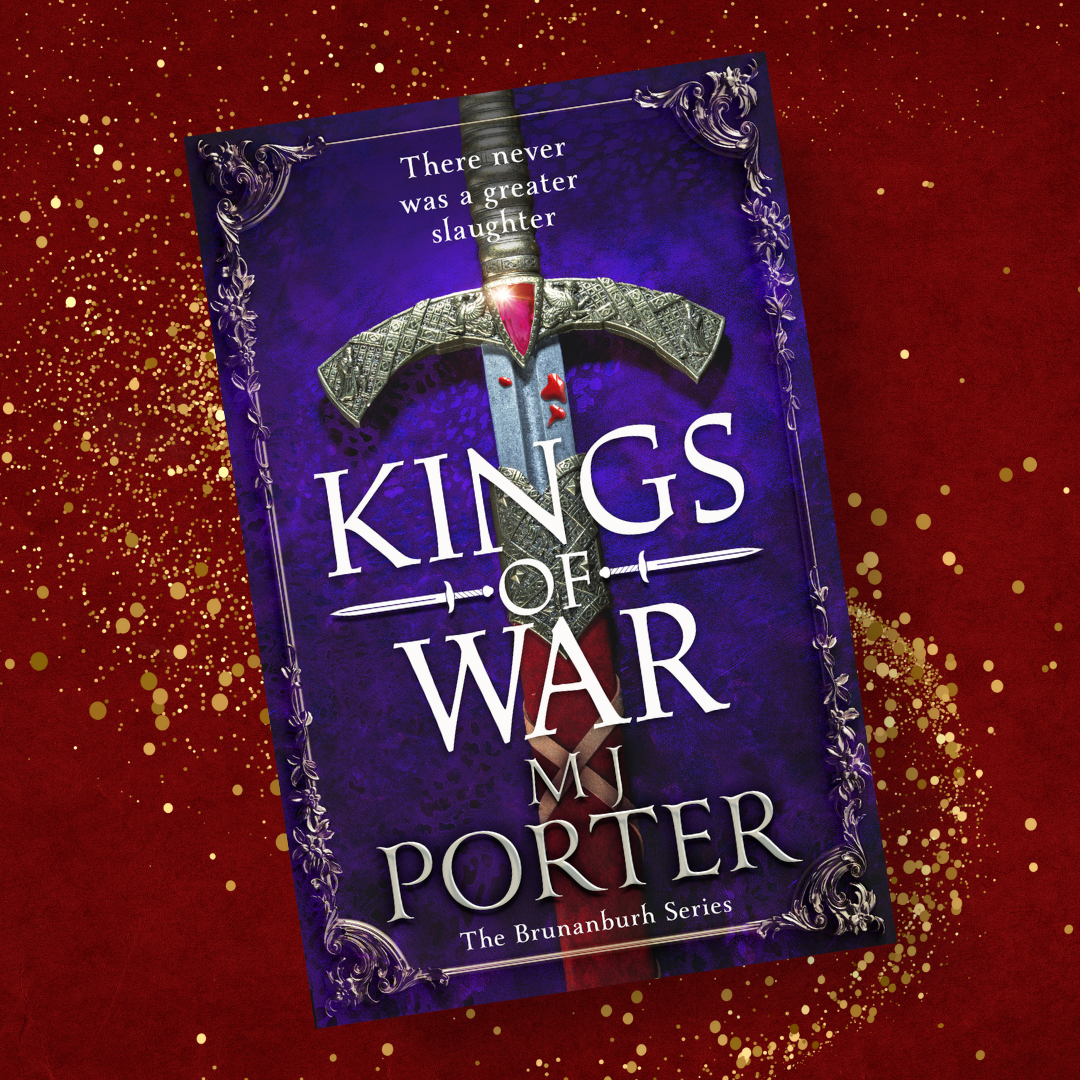
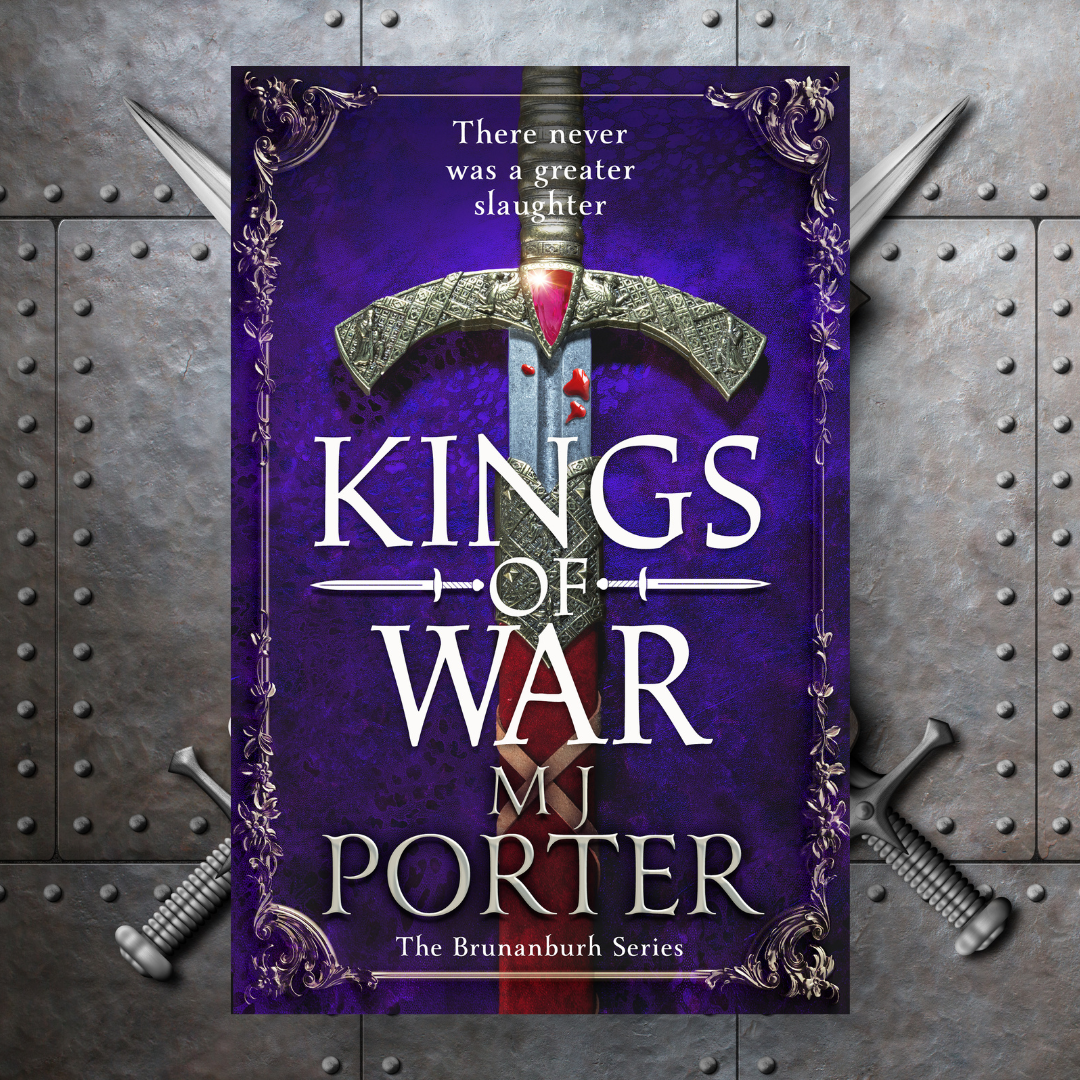
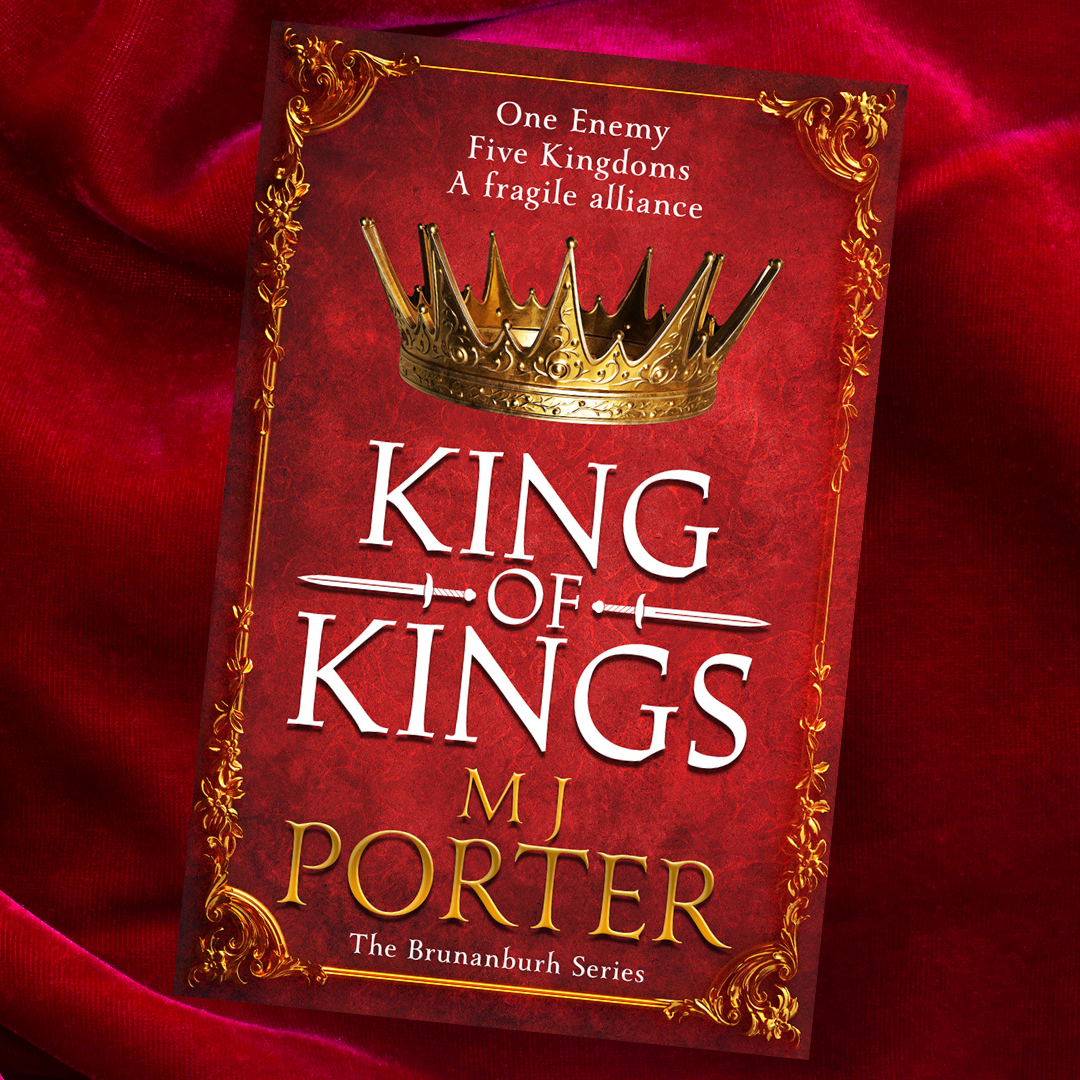
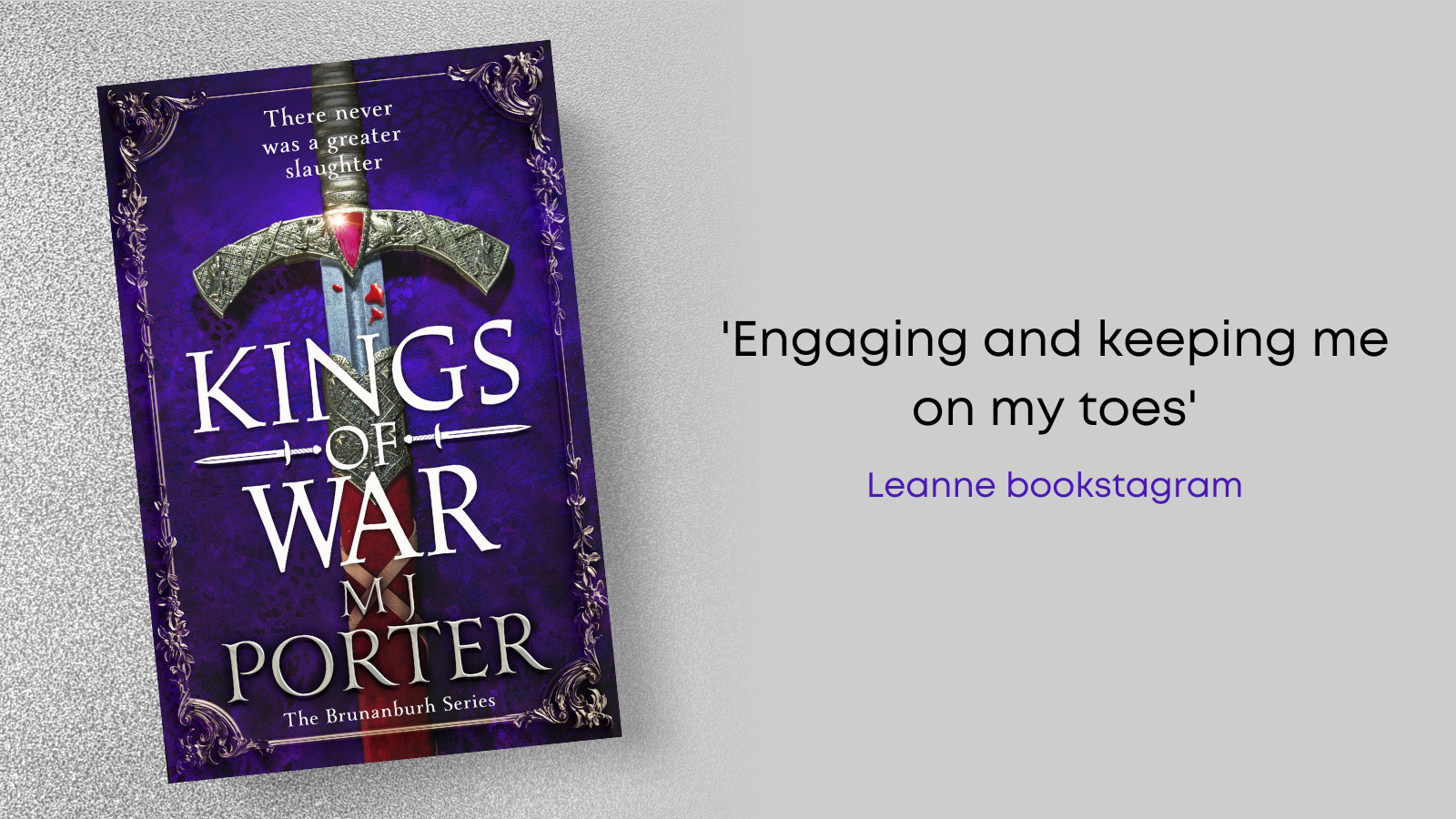
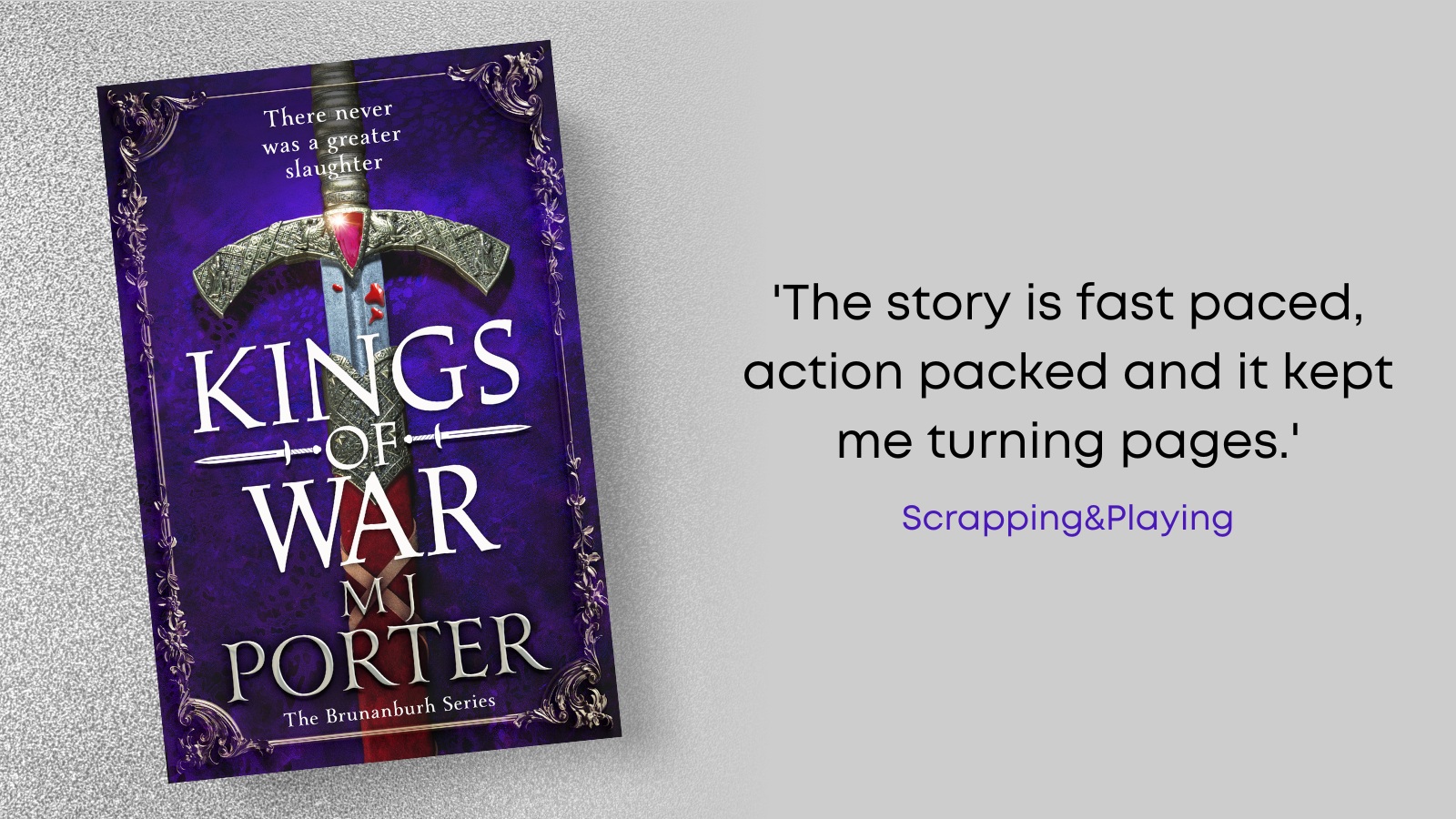
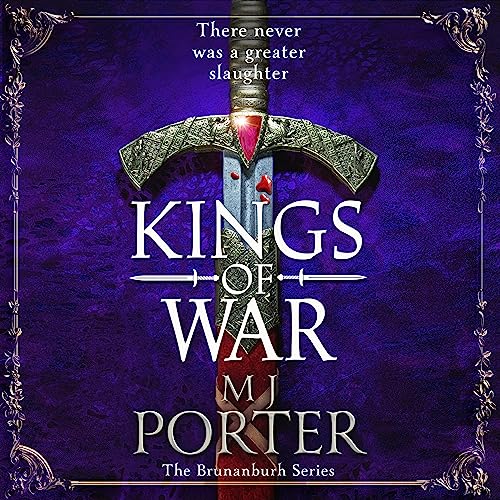
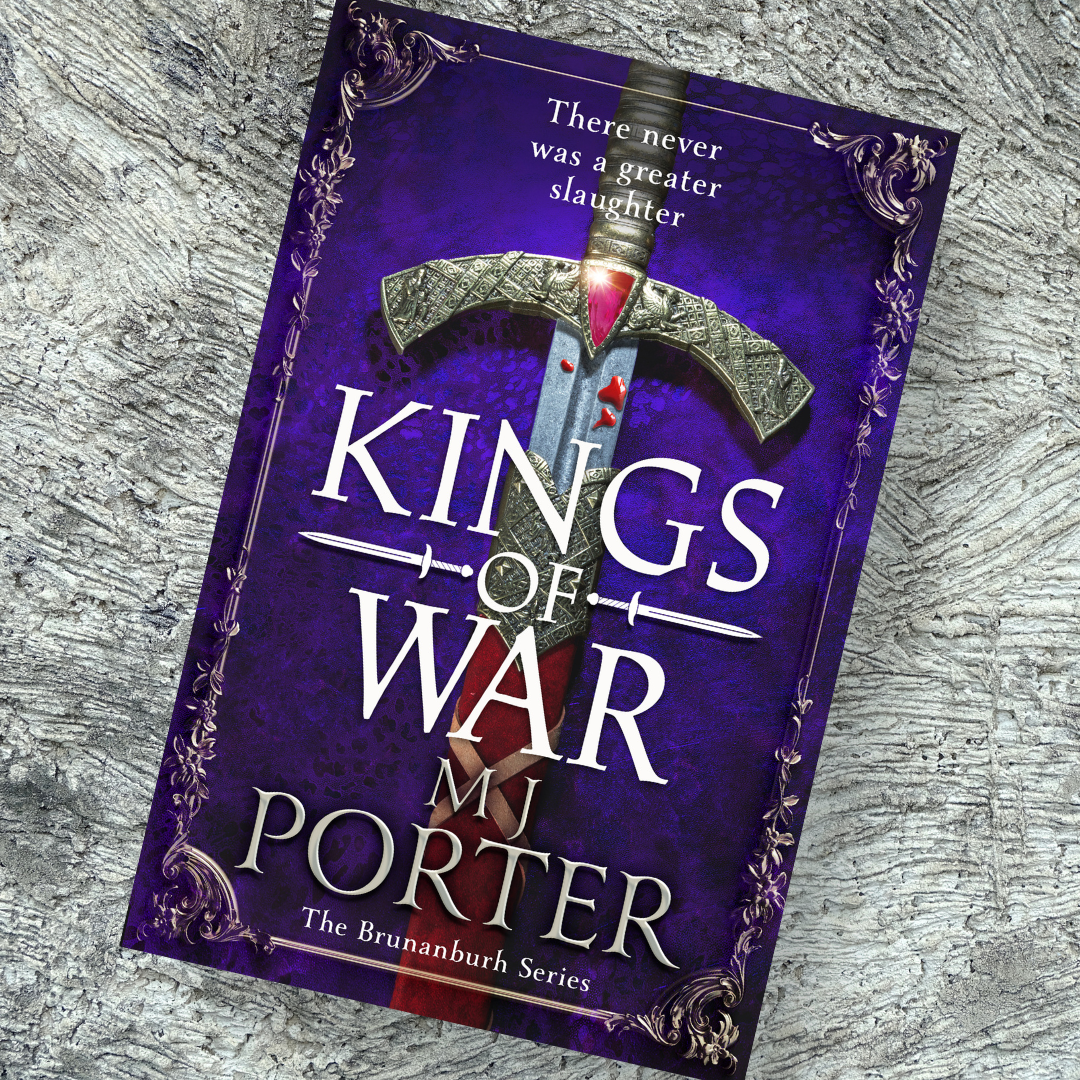
It’s been a month since the release of Kings of War, the sequel to King of Kings. This is the story of the battle of Brunanburh fought in 937. (Check out my post on where exactly Brunanburh was fought). It’s been a mad and busy month, so I thought I’d take a moment to reflect and say thank you my readers for the fab ratings/reviews and for taking a chance on my version of what led up to and happened at the battle of Brunanburh.
If you’ve not yet tried it, then King of Kings is still 99p on Amazon UK/Kobo and Kings of War is just £1.39 and both are available in ebook, audio, paperback and hardback.
Since Kings of War was released, I’ve also handed over book 3 in the series, and can reveal that the title is Clash of Kings, and it is available for preorder already.
Here’s the blurb:
Can the King of the Scots and the Dublin Norse triumph against a united England?
AD934
King Athelstan of the English has been successful in uniting the many kingdoms of Britain against one enemy, the Viking raiders.
But men who are kings don’t wish to be ruled.
Constantin, King of the Scots, rebelled against the Imperium and was forcibly brought to bend the knee to Athelstan and England at Cirencester.
His son Ildulb seeks bloody vengeance from Athelstan following the battle at Cait and the death of his son.
Olaf Gothfrithson, king of the Dublin Norse, having asserted his power following his father’s death has his sights set on reclaiming Jorvik.
Can the united might of the Scots and the violence of the Dublin Norse, descendants of the infamous Viking raiders, bring King Athelstan and his vision of the united Saxon English to her knees?
An epic story of kingsmanship that will result in the pivotal, bloody Battle of Brunanburh, where only one side can be victorious.
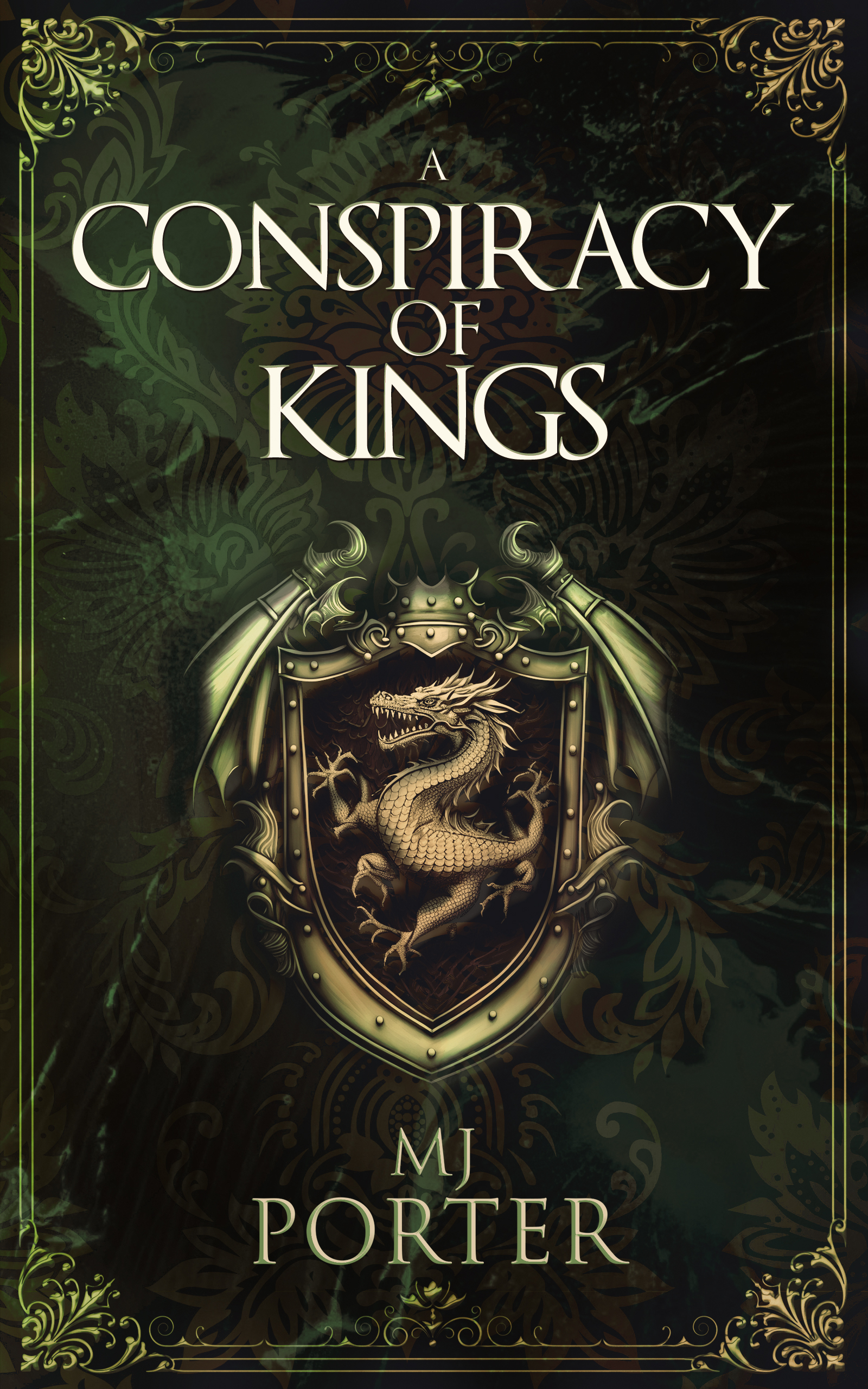
Here’s the beginning from A Conspiracy of Kings (there might be spoilers if you’ve not read The Lady of Mercia’s Daughter)
Chapter 1
Tamworth, the kingdom of Mercia, 918
We feast that night. There are smiles and tears on everyone’s faces as Tamworth’s great hall is swept clear of the men and women from Wessex. My armed guard ensures no one hurts them as the Mercians pull tables and benches to fill the vast space left behind. My servants, taken only somewhat by surprise as they were expecting a feast one way or another after the witan, rush to ensure everyone has a drink, if not food.
Cousin Ecgwynn hurries to me as I watch the activity, questions on her lips and I throw my arms around her, unheeding her sumptuous gown while I wear the clothes of a warrior. Usually, she would protest. But not today.
‘Enough of that,’ Cousin Ecgwynn complains, batting my embrace away, and not delicately. She holds my arms away from her, glaring at me.
I can see the flicker of rage in her blue eyes and the tightness of her stance.
‘You let me believe you were dead! I’ve been mourning for you, as I would a sister, and coming so soon after the death of Lady Æthelflæd….’ Her normally serene face floods with tears as her words trail off. I thrust my arms around her again, holding her tighter, hoping to make her understand, using my strength gained on the training field to overpower hers. I absorb her scent, the familiarity of home, the reminder of all that my uncle and Archbishop Plegmund tried to take from me.
‘I’m sorry, dear Ecgwynn. It was.’ I pause, unsure what to say, speaking into her ear as I continue to hold her tight. ‘Well, in all honesty, it was all we could think of to ensure that Uncle Edward’s treachery was exposed.’
I don’t call King Edward of Wessex her father. That would be too cruel. I think that, like me, Lady Ecgwynn could happily forget that a man was even involved in her conception and birth. Certainly, he’s done little enough for her since he became the king of Wessex when she was no more than a child and banished her to Mercia alongside Cousin Athelstan.
But Cousin Ecgwynn’s not finished yet. Once more, she pulls her way clear of my embrace, determined to argue with me.
‘But my brother knew and still didn’t tell me. That’s too cruel,’ her angry voice is gaining force. I know there’s nothing to do but try and explain. I could make excuses all night long, but she’s almost my sister, and she deserves the truth.
‘He knew. But only because he came to me and saw that I still lived after the attack in the north. Admittedly, cousin Athelstan could have told you that I wasn’t dead, but then, how would you have greeted King Edward when he came to Mercia to stake his claim for it? He couldn’t know that I yet lived.’
‘I’m not a woman to have her head turned by the arrival of a man whose only call on her affection is to claim to be her father. I wouldn’t have put your scheme in peril!’ Her voice is shrill with outrage, all tears forgotten, as she chastises me, her words coming almost too fast to decipher.
To the side, cousin Athelstan hovers, and I know why. He’s not scared of facing any man on the battlefield, but his sister? Well, he’d sooner not see her angry, and certainly, he’s content for me to be the one to soothe her.
I realise then that we erred when we made our plans.
‘No, I know you’re not. Apologies, cousin Ecgwynn. It wasn’t done because of a lack of trust. It was just better if as few as possible knew the truth.’ I can see that being so brutally honest at least pleases her, even if her forehead remains lined with anger and her lips purse tightly.
I hold my arms out once more. This time she steps into them willingly, a faint wrinkle on her nose because I smell of horse and sweat. I feel her shoulders sag, and her body trembles as though she’s going to cry. But she steps away from my embrace mere moments later, a watery smile on her face.
‘If only everyone I ever loved who died could come back to life, as you have. It would make my heart ache less.’ I nod. Abruptly, my thoughts focus on my mother, and despite my warrior’s prowess, my grief is fresh. I’d gladly step into my mother’s arms and cry away all my sorrows and disappointments at my uncle’s actions.
‘What would your mother think?’ Lady Ecgwynn asks, her thoughts following mine as she loops her arm through mine to walk amongst the people toasting my good health and the future of Mercia. Their voices range from soft to the roar of a battle cry. I chuckle at the exuberance, aware that cousin Athelstan stays close. He and cousin Ecgwynn will need to make peace with each other at some point. But not yet.
‘I hardly know what my mother would think or do. She and Edward were never close; at least, I don’t think they were. But, I believe she understood his ambitions well, all the same.’
‘Your mother was an excellent judge of character,’ cousin Ecgwynn confirms. ‘Although she did trust Archbishop Plegmund, the poisonous snake.’
My voice ripples with laughter as I picture Plegmund’s face too easily as the head of a snake.
Ælfwynn, the daughter of Æthelflæd of Mercia and her husband, Æthelred was born at some point in the late 880s or early 890s. It’s believed that she was an only child, although it does appear (in the later accounts of William of Malmesbury – an Anglo-Norman writer from centuries later) that her cousins, Athelstan, and his unnamed sister, were sent to Mercia to be raised by their aunt when Edward remarried on becoming king in 899. There is a suggestion that it might have been Alfred’s decision to do this and that Athelstan was being groomed to become king of Mercia, not Wessex.
Ælfwynn is mentioned in three charters. S367, surviving in one manuscript, dates to 903, where she witnesses without a title. S1280, survives in two manuscripts, dates to 904 and reads in translation.
‘Wærferth, bishop, and the community at Worcester, to Æthelred and Æthelflæd, their lords; lease, for their lives and that of Ælfwynn, their daughter, of a messuage (haga) in Worcester and land at Barbourne in North Claines, Worcs., with reversion to the bishop. Bounds of appurtentant meadow west of the [River] Severn.’[i]
[i] Sawyer, P. H. (Ed.), Anglo-Saxon charters: An annotated list and bibliography, rev. Kelly, S. E., Rushforth, R., (2022). http://www.esawyer.org.uk/ S1280. See above for the full details under Æthelflæd
Historians have reconstructed this haga in Worcester in ‘The city of Worcester in the tenth century’ by N Baker and R Holt.
In S225, surviving in one manuscript, dated to 915, Ælfwynn witnesses below her mother. Hers is the second name on the document. This could be significant, as she would certainly have been an adult by now, was she already being prepared as the heir to Mercia on her mother’s death?
Ælfwynn is named in the Anglo-Saxon Chronicle in the C text under 919. ‘Here also the daughter of Æthelred lord of the Mercians, was deprived of all control in Mercia, and was led into Wessex three weeks before Christmas; she was called Ælfwynn.’[i]
[i] Swanton, M. trans and edit The Anglo-Saxon Chronicles, (Orion Publishing Group, 2000), p.105
And from there, we hear nothing more of Lady Ælfwynn, the second lady of the Mercians. Even though this is the first record of a ruling woman being succeeded by her daughter.
There’s no further mention of Ælfwynn in The Anglo-Saxon Chronicle. It’s been assumed that she became a nun, and she might well be referenced in charter S535, surviving in one manuscript, and which Eadred granted at the request of his mother, dated to 948, reading,
‘King Eadred to Ælfwyn, a religious woman; grant of 6 hides (mansae), equated with 6 sulungs, at Wickhambreux, Kent, in return for 2 pounds of purest gold.’[i]
[i] Sawyer, P. H. (Ed.), Anglo-Saxon charters: An annotated list and bibliography, rev. Kelly, S. E., Rushforth, R., (2022). http://www.esawyer.org.uk/ S535
Bailey has suggested that, ‘In view of its close association with the women of the royal family, and of Eadgifu’s patronage of Ælfwynn (in S535), I would venture to suggest that it is possible she too may have ended her days at Wilton.’[i]
[i] Bailey. M, ‘Ælfwynn, Second Lady of the Mercians’, Edward the Elder, 899-924 Higham, N.J. and Hill, D. H. ed (Routledge, 2001), p.125
This would mean that rather than ruling as her mother would have wanted her to, Ælfwynn was overruled by her uncle, who essentially stole her right to rule Mercia as soon as he possibly could on her mother’s death. It must be said that he might have later paid for this with his life if he was indeed putting down a Mercian rebellion in Farndon when he died in 924.
Alternatively, there is another beguiling theory that Ælfwynn might not have become a nun but was, in fact, married to Athelstan, an ealdorman of East Anglia, known as the ‘Half-King,’ because of the vast control he had in East Anglia. It’s long been believed that this label might well have resulted from the fact that Athelstan was an extremely powerful and well-landed nobleman who was much beloved by the Wessex royal family and its kings. However, it might well be because he was indeed married to the king’s cousin (under Athelstan, Edmund and Eadred). If this is the case, and it’s impossible to prove, then Ælfwynn, as the wife of Ealdorman Athelstan, had four sons, Æthelwold, Æthelwine, Æthelsige and Ælfwold, and these sons would be friends and enemies of the kings of England in later years. She might also have been given the fostering of the orphaned, and future King Edgar, which would also have made these men the future king’s foster brothers.
‘he [Athelstan Half-King] bestowed marriage upon a wife, one Ælfwynn by name, suitable for his marriage bed as much as by the nobility of her birth as by the grace of her unchurlish appearance. Afterwards she nursed and brought up with maternal devotion the glorious King Edgar, a tender boy as yet in the cradle. When Edgar afterwards attained the rule of all England, which was due to him by hereditary destiny, he was not ungrateful for the benefits he had received from his nurse. He bestowed on her, with regal munificence, the manor of Weston, which her son, the Ealdorman, afterwards granted to the church of Ramsey in perpetual alms for her soul, when his mother was taken from our midst in the natural course of events.’
Edington, S and Others, Ramsey Abbey’s Book of Benefactors Part One: The Abbey’s Foundation, (Hakedes, 1998) pp.9-10
If this identification is correct, ‘This would explain why she was considered suitable to be a foster-mother to the ætheling Edgar. It may even explain why Edgar was considered in 957 suitable to rule Mercia.’[i]
[i] Jayakumar, S. ‘Eadwig and Edgar’, in Edgar, King of the English, 959-975, ed. D Scragg (Boydell Press, 2014), p.94
If Lady Ælfwynn did survive beyond the events of 919, it seems highly likely she would have continued her friendship with her cousin, Athelstan, when he became king of Mercia, and then Wessex and then England. It’s also highly likely that she might have rallied support for him in Mercia.
Certainly, the first known occurrence of a woman succeeding a woman in Saxon England ended in obscurity for Lady Ælfwynn.
So, who is my Lady Ælfwynn?
Well, she’s a warrior woman, reeling from the unexpected death of her mother. She is her mother’s daughter. She knows what’s expected of her, and she has no problem contending with the men of the witan, her uncle, Edward king of Wessex, or indeed, the Viking raiders. She and Rognvaldr Sigfrodrsson have a particularly intriguing relationship.
Here’s the beginning of The Lady of Mercia’s Daughter
‘The men of the witan stand before me in my hall at Tamworth, the ancient capital of the kingdom of Mercia. The aged oak beams bear the brunt of centuries of smoking fires. Some are hard men, glaring at me as though this predicament is of my making. They are the beleaguered Mercians, the men from the disputed borders to the north, the east, and the west, if not the south. They’re the men who know the cost of my mother’s unexpected death. And strangely, for all their hard stares and uncompromising attitudes, their crossed arms and tight shoulders, they’re the men I trust the most in this vast hall. It’s filled with people I know by name and reputation, if not by sight.
Those with sympathy etched onto their faces are my uncle’s allies. These men might once have understood the dangers that Mercia faces, but they’ve grown too comfortable hidden away in Wessex and Kent. Mercia has suffered the brunt of the continual encroachments while they’ve been safe from Viking attack for nearly twenty years. Some are too young to have been born when Wessex was almost extinguished under the onslaught of the northern warriors.
Even the clothes of the sympathetic are different from those with hard stares. Not for them, the warriors’ garb. There are no gaping spaces on warrior belts where seaxes and swords should hang, but don’t, as weapons must not be worn in my presence.
No, they wear the luxurious clothing of royalty, even if they’re not members of the House of Wessex. They have the time, and the wealth, to ensure their attire is as opulent as it can be. They don’t fear a middle-of-the-night call to arms. They don’t need to maintain vigilance or continuously be battle-ready. They don’t have to fight for their kingdom and their family at a moment’s notice or be ready to lose a loved one or face a fight to the death.’
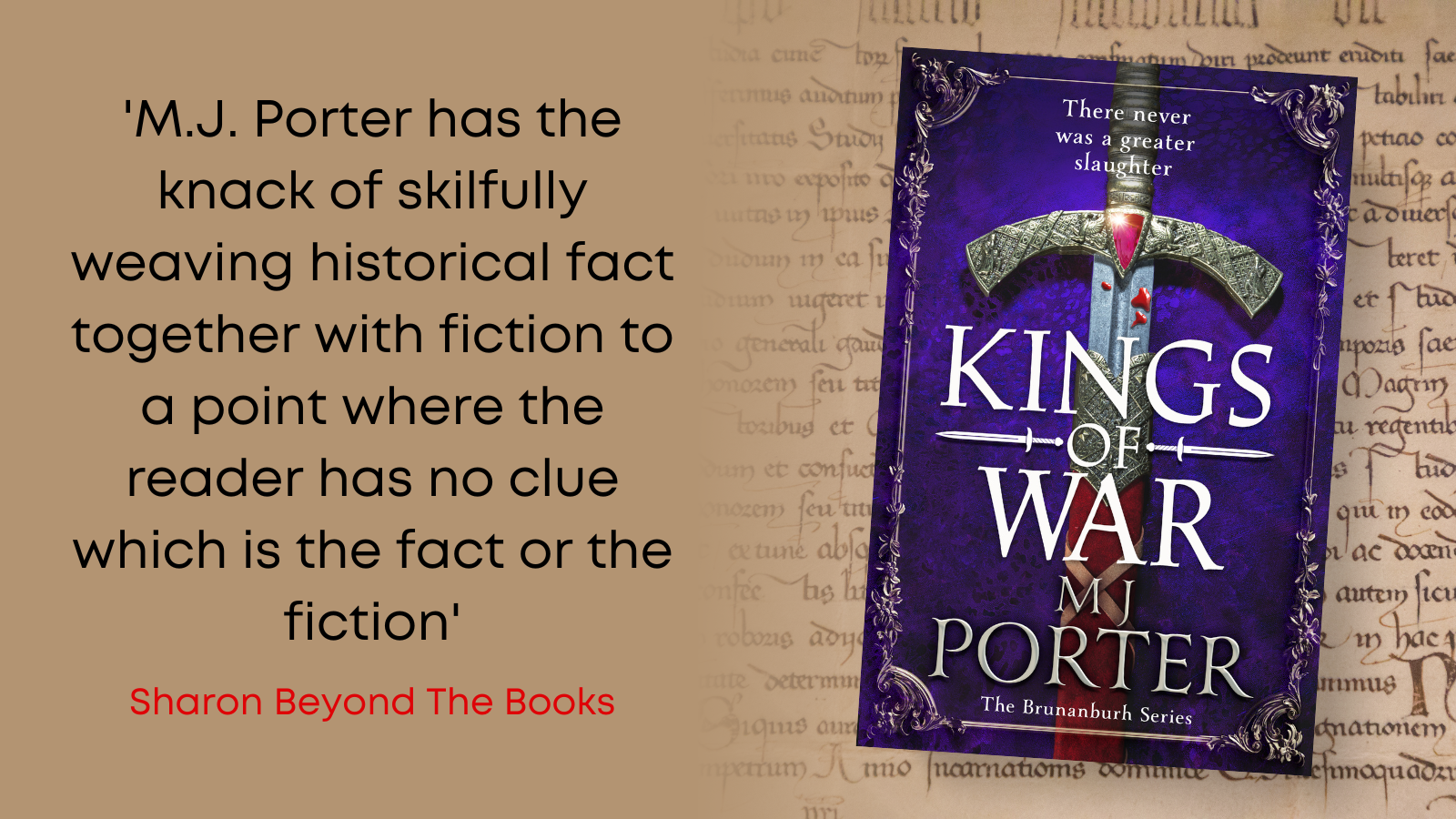
Kings of War, the sequel to King of Kings, is now available in audio, narrated by the fabulous Matt Coles. This is the story of the battle of Brunanburh fought in 937. (Check out my post on where exactly Brunanburh was fought).
Here’s the blurb:
Can the King of the Scots and the Dublin Norse triumph against a united England?
AD934
King Athelstan of the English has been successful in uniting the many kingdoms of Britain against one enemy, the Viking raiders.
But men who are kings don’t wish to be ruled.
Constantin, King of the Scots, rebelled against the Imperium and was forcibly brought to bend the knee to Athelstan and England at Cirencester.
His son Ildulb seeks bloody vengeance from Athelstan following the battle at Cait and the death of his son.
Olaf Gothfrithson, king of the Dublin Norse, having asserted his power following his father’s death has his sights set on reclaiming Jorvik.
Can the united might of the Scots and the violence of the Dublin Norse, descendants of the infamous Viking raiders, bring King Athelstan and his vision of the united Saxon English to her knees?
An epic story of kingsmanship that will result in the pivotal, bloody Battle of Brunanburh, where only one side can be victorious.
The scop song that is so important to events in both King of Kings and Kings of War existed, although I have manipulated it to my purposes and changed some of the more obscure references within it. That said, the poem, Armes Prydein (The Prophecy of Britain) is itself fascinating and is believed to have been a Welsh response to the imperium of King Athelstan of the English, and Hywel’s, of the South Welsh, close connection to the English and Athelstan. It has been dated to about 940, although it might be slightly earlier or later.
In King of Kings and Kings of War, my version reads,
‘And after peace, commotion everywhere,
Brave, mighty men, in battle tumult.
Swift to attack, stubborn in defence.
Warriors will scatter the interlopers as far as Cait
The Welsh and the men of Dublin, the Scots and the Norsemen,
Those of Cornwall and Strathclyde will reconcile as one.
Kings and nobles will subdue the interlopers, drive them into exile
Bring an end to the dominion, and make them food for the wild beasts.
There will be no return for the tribes of the Saxons.’
In its entirety, it foretells a uniting of the Welsh, with all the other kingdoms then in Britain, against the English, or Saxons, those people who had run roughshod over the island at some point between 400-600, when the Saxon kingdoms emerge with more clarity.
Somewhat similar to the legendary figures of Welsh literature, (although not Arthur at this stage) – Cynan and Cadwalladr ap Cadwallan are named – it was a call to arms to defeat the Saxons/English. (I’m going to share a post about Cynan as well).
It’s been nearly a decade since I first conceived of this storyline, but reading it all over again, and adding a whole host of new details, I confess, I feel pretty proud of myself for weaving the poem into my story of Britain in the 920s and 930s, and appreciate that the suggestion the poem dates from this period does indeed make perfect sense, even if there are also other suggestions about its origins.
King of Kings and Kings of War are now available, telling the story of the greatest battle on British soil that many have never heard from (or at least hadn’t before Seven Kings Must Die was filmed), Brunanburh.
First things first, no one actually knows where the battle of Brunanburh took place. No one. There are a number of different sites that historians have suggested from the one I’ve chosen in Kings of War, indeed, upwards of forty of them, although Bromborough in Cheshire, Brinsworth in South Yorkshire and Burnswark in Dumfries and Galloway are the most well-known. It’s worth noting that these different locations range all over Britain, from Devon to Scotland from the east coast to the west.
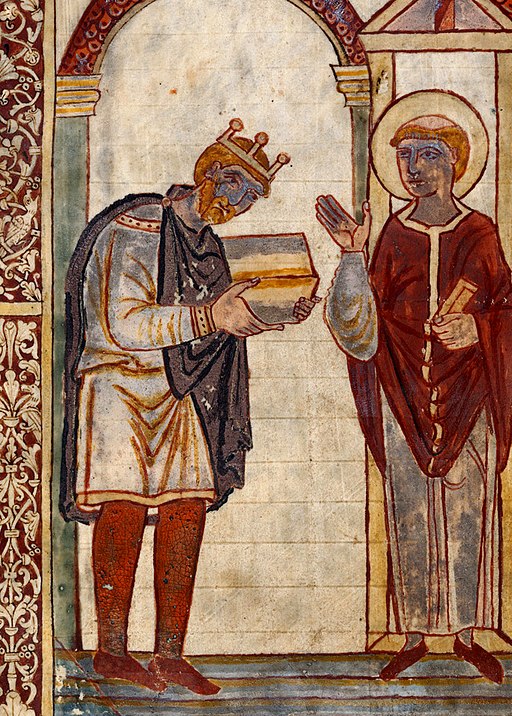
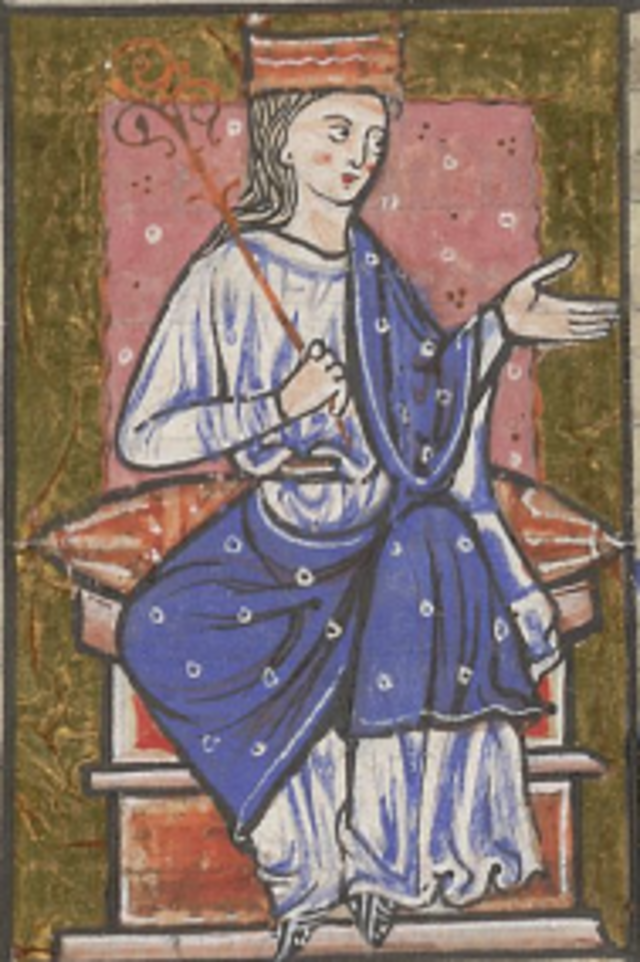
Frontispiece of Bede’s Life of St Cuthbert, showing King Æthelstan (924–39) presenting a copy of the book to the saint himself. 29.2 x 20cm (11 1/2 x 7 7/8″). Originally from MS 183, f.1v at Corpus Christi College, Cambridge. (Wikimedia Commons)
As one historian has commented, more discussion has taken place about where Brunanburh was located than about its actual historical significance, which is often seen as much less important in the grand scheme of later events. Much of these difficulties arise because of the variety of names given to the location of the battle. Brunandun, in Æthelweard’s Chronicon (a later tenth century Latin copy of the Anglo-Saxon Chronicle), Symeon of Durham suggested Weondune, although known by the name Brunnaneerc or Brunnanbyrig, while Geoffrey Gaimar (another post Conquest source) names it as Bruneswerce. To add to the confusion, are some of the descriptions given about the battle. John of Worcester ( a later source) asserts that Olaf and Constantin entered the mouth of the River Humber something that Symeon of Durham echoes. It’s been suggested that John of Worcester (an Anglo-Norman writing long after the events of 937 took place) took the knowledge that the River Humber was where Harald Hardrada landed in 1066 and Svein Forkbeard in 1069 and extrapolated from it.
As part of the discussion about where the battle took place, another problem needs to be addressed, that of the belief that the English rode down the Norse as they were fleeing from the battlefield to reach their ships. A word, eorodcistum, has been taken to be a reference to horses. Paul Cavill has shown that this word actually refers to gatherings of men and need not mean that horses were involved . This therefore does away with the argument that the Norse ships were far from where the battle took place.
As well as the various sources mentioned above, the battle is also referenced in Welsh, Scottish and Irish sources. It was deemed to be significant. The Chronicles of the Kings of Alba gives a very brief account: ‘And the battle of Dun Brunde in his xxxiii year in which was slain the son of Constantin.’ While the Annals of Ulster tell us: ‘AU 937.6. A great, lamentable and horrible battle was cruelly fought between the Saxons and the Northmen, in which several thousands of Northmen, who are uncounted, fell, but their king, Amlaib, escaped with a few followers. A large number of Saxons fell on the other side, but Æ∂elstan, king of the Saxons, enjoyed a great victory.’ (Alex Woolf, From Pictland to Alba, 789-1070, p.169) (Amlaib was an Irish version of the name Olaf). A later source, that of the Historia Regum Anglorum by Symeon of Durham, tells that ‘Onlaf’ came with 615 ships. There are also many later sources that tell of the battle of Brunanburh, the distance in time to them being written, tending to add more and more details which can’t be confirmed with any accuracy.
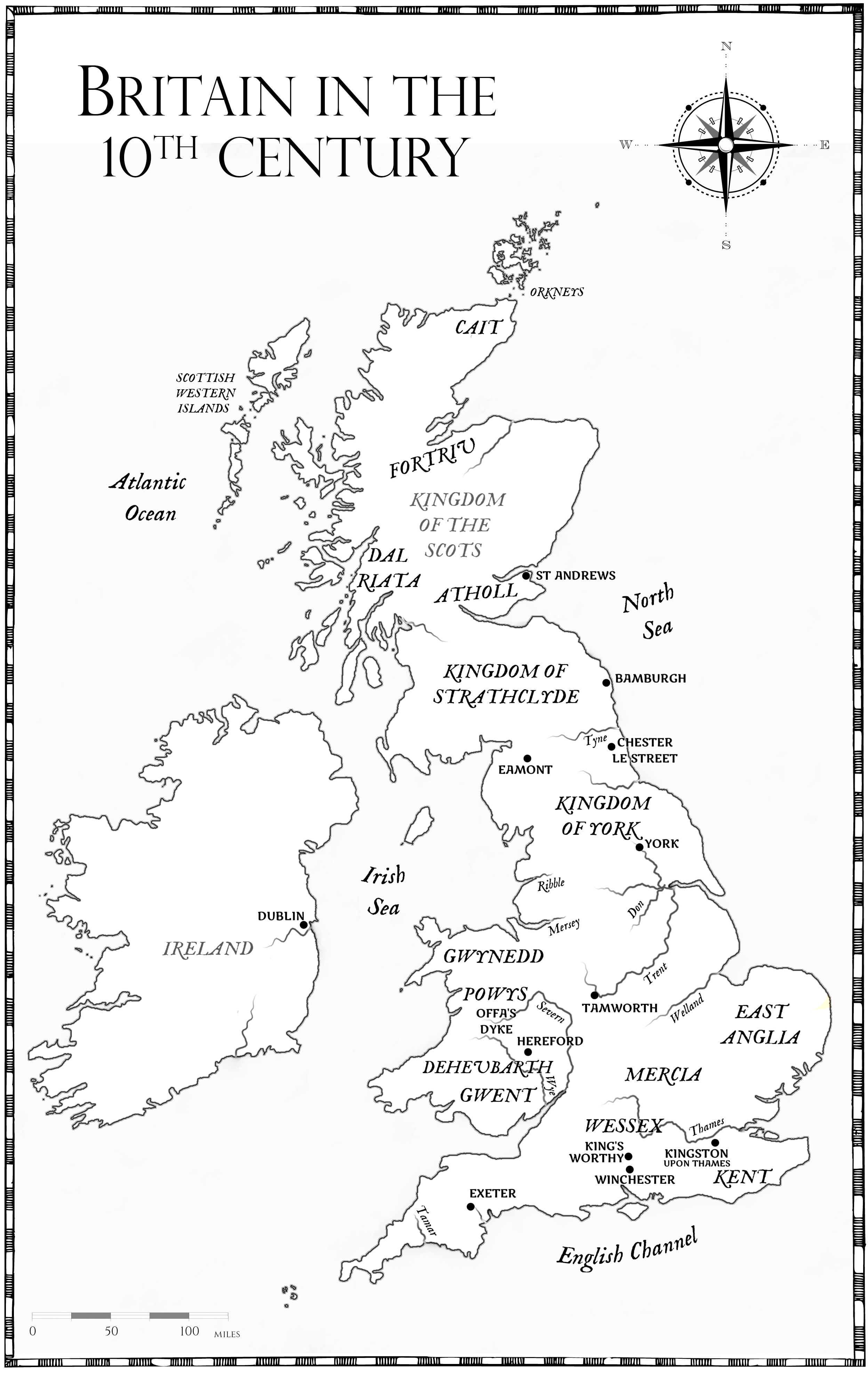
Map design by Flintlock Covers
Pauline Stafford, who has written an extensive account of the actual writing of what we know as The Anglo-Saxon Chronicle, After Alfred:Anglo-Saxon Chronicles and Chroniclers 900-1150, (which survives in nine recensions/or versions, all with slightly different details and emphasis) states that perhaps the most famous account of the battle, the Brunanburh poem, was a retrospective addition, probably written in the twenty years after Athelstan’s death, and certainly before the death of the last son of King Edward the Elder, Eadred, in 955. Some have suggested that Edmund may not actually have been present at the battle but that it was deemed expedient to assign him a part in it, perhaps after his death, to show the sons of King Edward the Elder working together for England.
And there is one final source, which I’ve made no use of, but which many may be aware of, that of the accounting of the battle, named as Vinhei∂r in Egil’s Saga, a thirteenth-century Icelandic saga, which of course, is a tale of Egil’s involvement in the battle and tells us very little about the battle itself.
In recent years, and indeed, before I wrote the initial drafts of this book and its predecessor, there has been a move to accept the Wirral as the possible location. Bernard Cornwell has been instrumental, as has an archaeology group based in Wirral, in trying to find corroborating evidence for this. The results of the work can be found in Never Greater Slaughter by Michael Livingstone. Even now, I find it amusing that it wasn’t until Bernard Cornwell made Brunanburh one of the burhs built by the House of Wessex that I quite realized the significance of that element of the name.
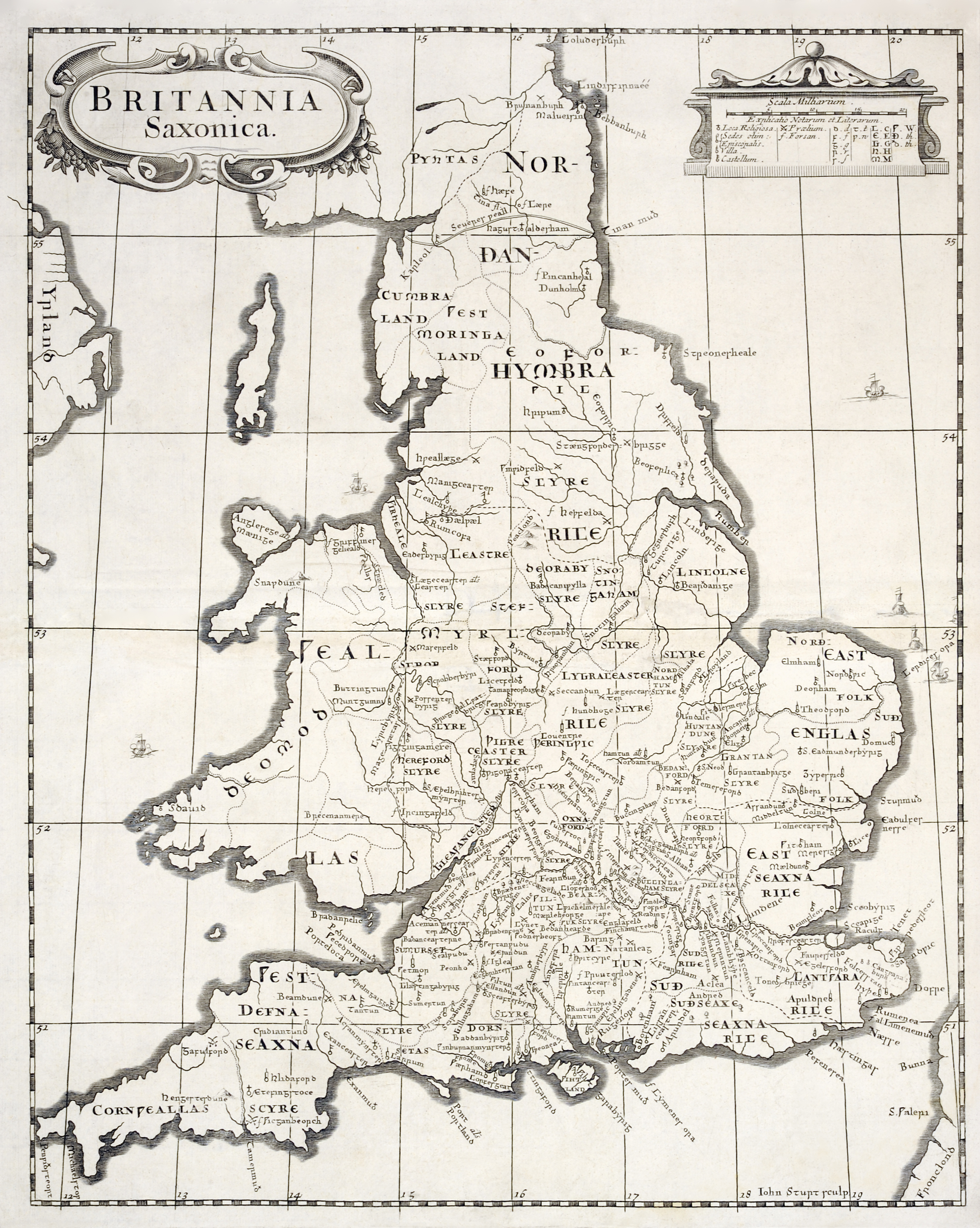
In my role as writer of historical fiction, I chose the site that I thought offered the best opportunity to develop the storyline and the one that intrigued me the most. After all, it does sort of make sense that any battle for York would have taken place close to York, but equally, why would the Dublin Norse have sailed all the way around the tip of Scotland to get to York from the East Coast? If they used one of the portage routes overland then again, we must ask why. And so, I opted for the position which would be the closest way of them stepping foot on English soil.
Britania Saxonica, 17th Century Map, showing Brunanburh north of Bamburgh
Kings of War is available now in ebook, paperback, audio and hardback.
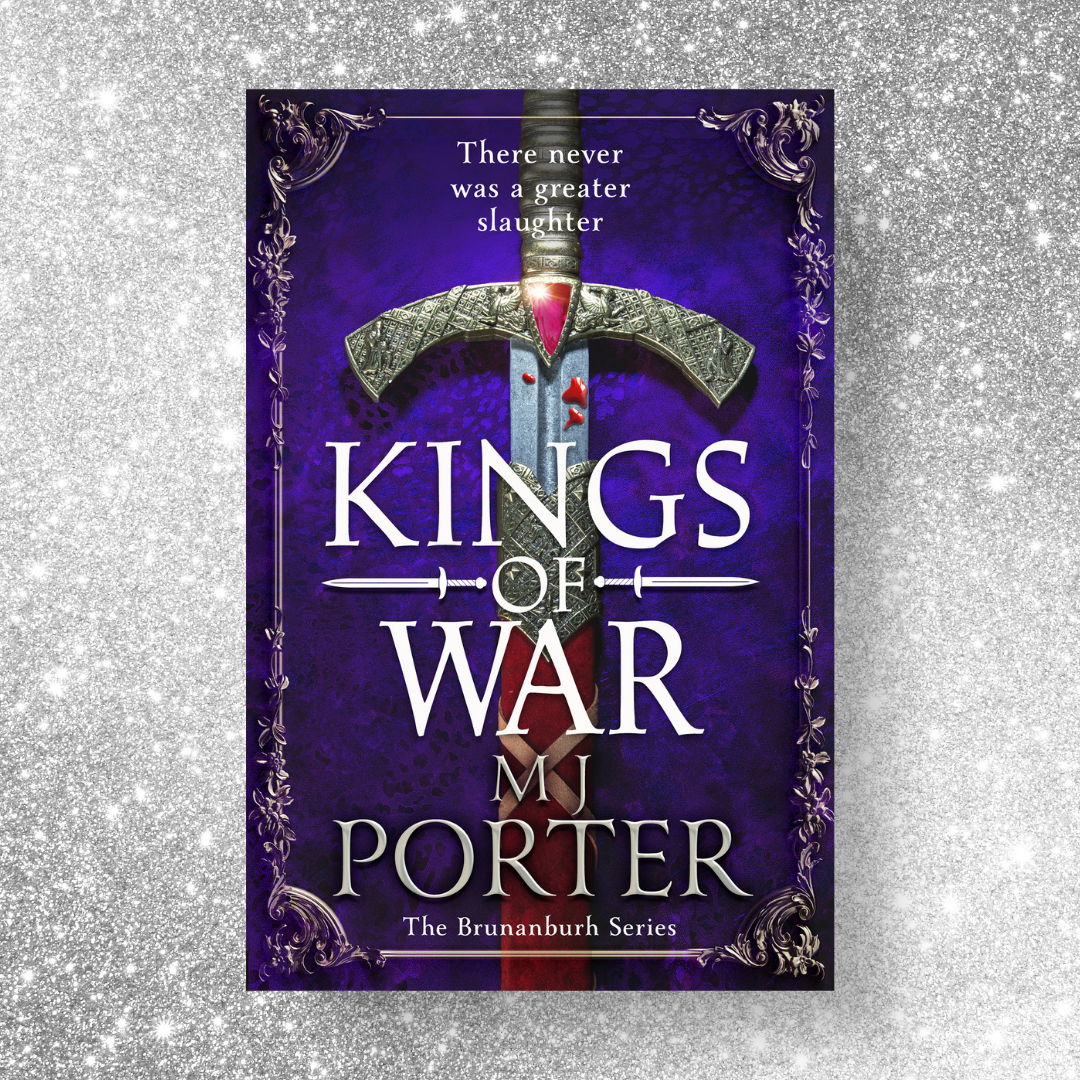
It’s release day for Kings of War, the sequel to King of Kings. This is the story of the battle of Brunanburh fought in 937. (Check out my post on where exactly Brunanburh was fought).
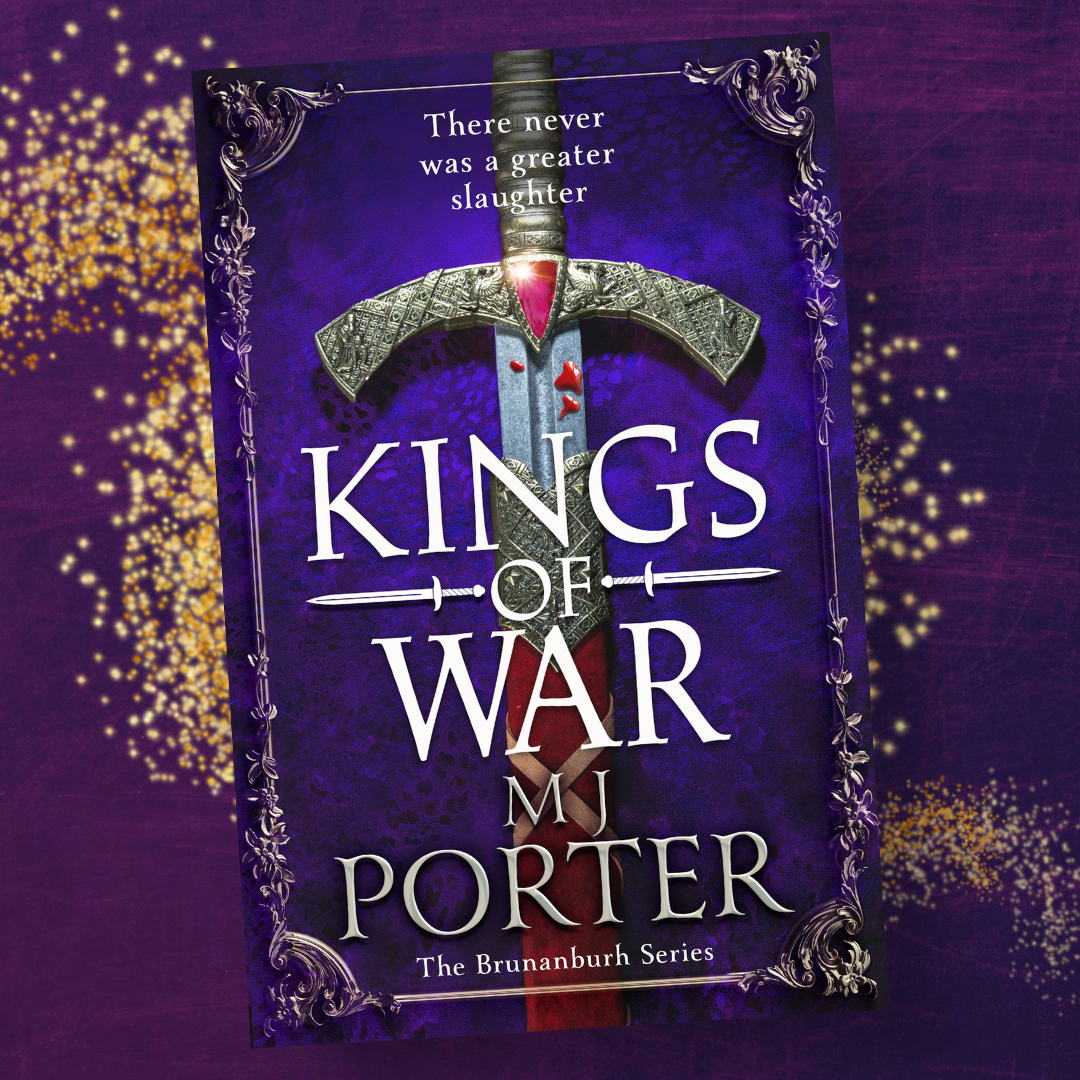
I’m so excited to share this story with my readers, and the cover is fantastic.
Here’s the blurb:
Can the King of the Scots and the Dublin Norse triumph against a united England?
AD934
King Athelstan of the English has been successful in uniting the many kingdoms of Britain against one enemy, the Viking raiders.
But men who are kings don’t wish to be ruled.
Constantin, King of the Scots, rebelled against the Imperium and was forcibly brought to bend the knee to Athelstan and England at Cirencester.
His son Ildulb seeks bloody vengeance from Athelstan following the battle at Cait and the death of his son.
Olaf Gothfrithson, king of the Dublin Norse, having asserted his power following his father’s death has his sights set on reclaiming Jorvik.
Can the united might of the Scots and the violence of the Dublin Norse, descendants of the infamous Viking raiders, bring King Athelstan and his vision of the united Saxon English to her knees?
An epic story of kingsmanship that will result in the pivotal, bloody Battle of Brunanburh, where only one side can be victorious.
Read the release day posts on Boldwood Books Facebook account
Kings of War is on blog tour with the fabulous hosts of Rachel’s Random Resources. I’ll be sharing their reviews throughout the next week. A huge thank you to Rachel, and the hosts.
My new book, Kings of War, is a multi-viewpoint novel telling the story of events in Britain from 925-934. I thought it would be good to share details of the historical people my character are based on.
My portrayal of Constantin, the king of the Scots, is of course fictional in King of Kings, but he is based on a historical individual, Constantin (e) II, so who exactly was he?
Constantin is a fascinating character. Again, and as with Athelstan, his exact date of birth is unknown, but it must have been, at the latest, by 877/8, when his short-reigned father died.
By 900, Constantin was the king of the Scots (we think – there is some confusion about this). This wasn’t yet quite Scotland, but it was getting there. The ancient kingdoms of Cait, Fortriu, Atholl and Dal Riata, were ruled by one king, Constantin. But, he hadn’t succeeded his father, Aed, but rather a man named Domnall II, his cousin. At this time there were two rival dynasties and they strictly alternated the kingship.
Affairs in the kingdom of the Scots often intermingled with those of the independent kingdom of Bamburgh, Strathclyde, and of course, the Norse, or Viking raiders, if you will. Indeed, the entry recording Constantin’s death in the Annals of Ulster, reads as though there was often strife.
‘Constantinus son of Ed held the kingdom for xl years in whose third year the Northmen plundered Dunkeld and all Albania. In the following year the Northmen were slain in Strath Erenn…And the battle of Tinemore happened in his xviii year between Constantin and Ragnall and the Scotti had the victory. And the battle of Dun Brunde in his xxxiiii year.’ (Alex Woolf, From Pictland to Scotland, 789-1070,p.126)
Constantin, ruling for decades, and I mean decades, seems to have brought much needed stability to the kingdom, as affairs there very much mirrored the emerging ‘England’ to the south.
‘Constantin’s reign has increasingly come to be see as one of the most significant in the history of Scotland. Not only was it very long, at least forty years, but it was also the period during which conflict and diplomatic relations between a kingdom recognisably ancestral to Scotland and one recognisably ancestral to England first occurred.’ (Alex Woolf, From Pictland to Scotland, 789-1070, p.128)
Constantin allied with the rulers of Bamburgh, and York, and also, on occasion, both Æthelflæd of Mercia and Edward the Elder, after her death. But, he seems to have been quite flexible in his thinking, and was prepared to pick and choice as he saw fit.
By the beginning of King of Kings, Constantin would have been in his mid-forties, and he was still to rule for many years to come, and he was certainly a more than adequate counterpart to Athelstan, king of the English, no doubt helped by his sons and grandsons, as his reign continued.
Athelstan is one of the main characters in my new book, Kings of War, a multiple point of view story, recounting affairs in Britain from 925-934. Here’s a post about Athelstan I wrote for the release of King of Kings.
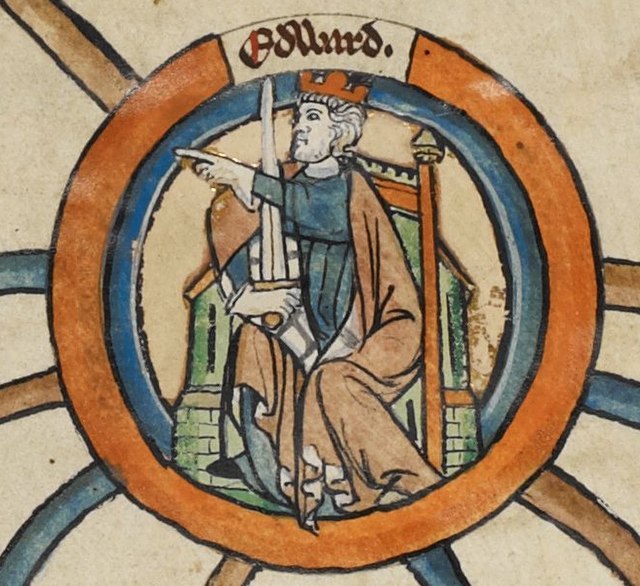
Based on a historical person, my portrayal of him, is of course, fictitious, but there are many details known about him. However, we don’t know for sure who his mother was, it’s believed she might have been called Ecgwynn, and we don’t know, for certain, the name of his sister, but it’s believed she might have been named Edith. What is known is that his father was Edward, the son of King Alfred, and known to us today as Edward the Elder. Athelstan is also rare in that he is one of only two Saxon kings for who a contemporary image is available. (The other is Edgar, who would have been his step-nephew)
It must be supposed that Athelstan was born sometime in the late 890s. And according to a later source, that written by William of Malmesbury in the 1100s (so over two hundred years later), Athelstan was raised at the court of his aunt, Æthelflæd of Mercia. David Dumville has questioned the truth of this, but to many, this has simply become accepted as fact.
‘he [Alfred] arranged for the boy’s education at the court of his daughter, Æthelflæd and Æthelred his son in law, where he was brought up with great care by his aunt and the eminent ealdorman for the throne that seemed to await him.’[i]
[i] Mynors, R.A.B. ed and trans, completed by Thomson, R.M. and Winterbottom, M. Gesta Regvm Anglorvm, The History of the English Kings, William of Malmesbury, (Clarendon Press, 1998), p.211 Book II.133
Why then might this have happened? Edward became king on the death of his father, Alfred, and either remarried at that time, or just before. Edward’s second wife (if indeed, he was actually married to Athelstan’s mother, which again, some doubt), Lady Ælfflæd is believed to have been the daughter of an ealdorman and produced a hefty number of children for Edward. Perhaps then, Athelstan and his unnamed sister, were an unwelcome reminder of the king’s first wife, or perhaps, as has been suggested, Alfred intended for Athelstan to succeed in Mercia after the death of Æthelflæd, and her husband, Æthelred, for that union produced one child, a daughter named Ælfwynn.
There is an acknowledged dearth of information surrounding King Edward the Elder’s rule of Wessex. He’s acknowledged as the king of the Anglo-Saxons. His father had been the king of Wessex. Historians normally use the surviving charters to unpick the political machinations of the Saxon kings, but for Edward, there’s a twenty year gap between the beginning and end of his reign, where almost no known genuine charters have survived. What isn’t known for sure, is how much control, if any, he had in Mercia. Was Mercia subservient to Wessex or was it ruled independently? It’s impossible to tell. And this makes it difficult to determine what Athelstan might have been doing, and also what his father’s intentions were towards him.
Frontispiece of Bede’s Life of St Cuthbert, showing King Æthelstan (924–39) presenting a copy of the book to the saint himself. 29.2 x 20cm (11 1/2 x 7 7/8″). Originally from MS 183, f.1v at Corpus Christi College, Cambridge. (Wikimedia Commons)
What is known is that following the death of King Edward in 924, Athelstan was acknowledged as the king of Mercia; his stepbrother, Ælfweard was proclaimed king in Wessex. As with all events at this time, it shouldn’t be assumed that just because this is what happened, this is what was always intended.
‘Here King Edward died at Farndon in Mercia; and very soon, 16 days after, his son Ælfweard died at Oxford; and their bodies lie at Winchester. And Athelstan was chosen as king by the Mercians and consecrated at Kingston.’[i]
[i] Swanton, M. trans and edit The Anglo-Saxon Chronicles, (Orion Publishing Group, 2000), D text p.105
But, if Athelstan was raised in Mercia, it’s highly likely he was a warrior from a young age, helping the Mercians defeat the Viking raiders who still had control of the Danish Five Boroughs of Lincoln, Nottingham, Derby, Nottingham and Leicester.
And the events of 924 are where King of Kings begins, and so I will leave him there. By now, he would have been perhaps thirty years old, give or take a few years. What sort of man was he? What sort of king might he be? Do please read King of Kings to find out. And, if this intrigues you, then do please have a look at Sarah Foot’s wonderful monograph on him, Athelstan, from Yale Publishing.
There are a few new characters in Kings of War, the sequel to King of Kings. Here I’ll explain who the historical individuals probably were, and what’s known about them, if anything. That said, Edmund did feature in King of Kings, but I’ve not shared his information before.
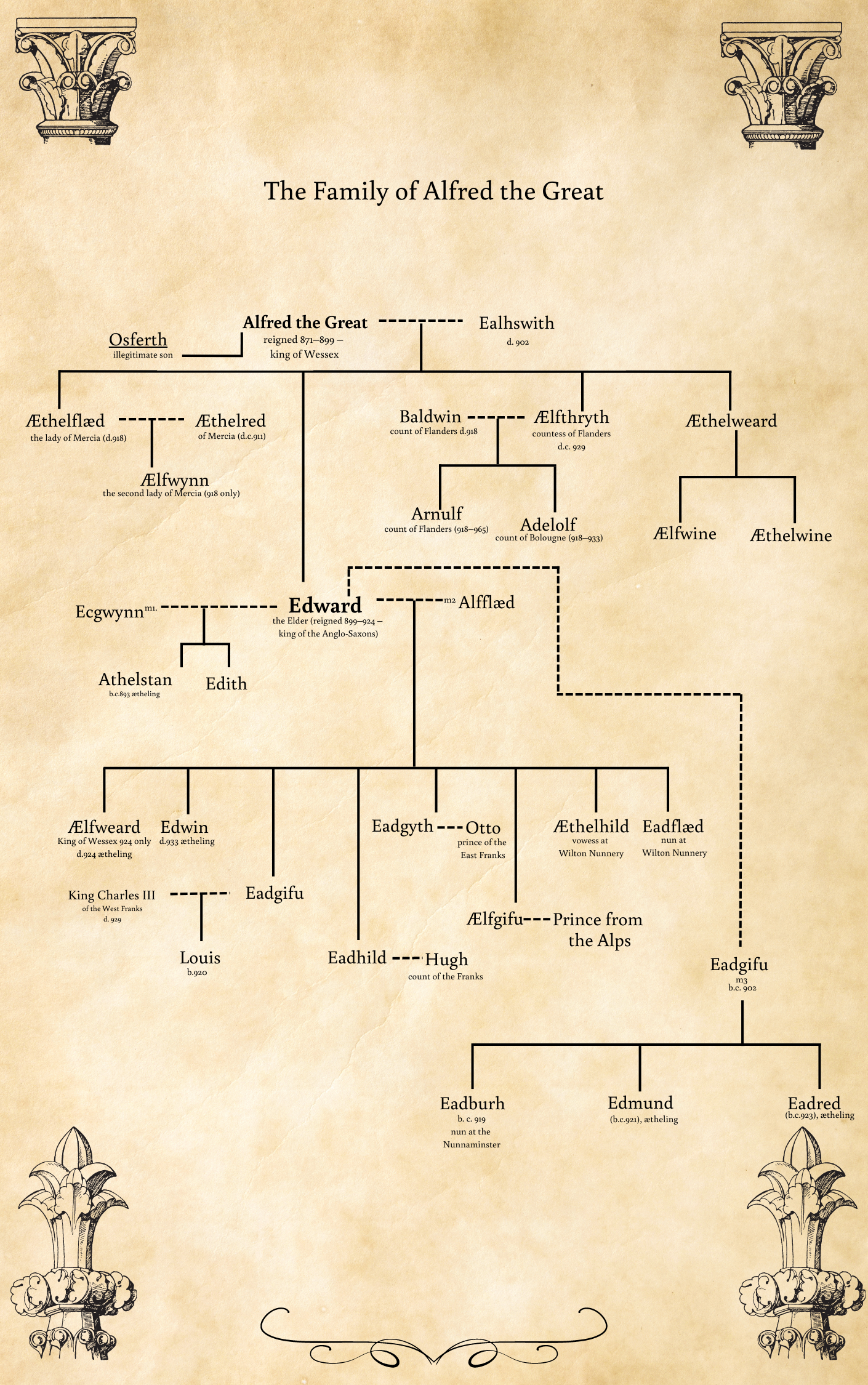
Edmund, of the House of Wessex, is the second-youngest halfbrother of the king, Athelstan. His date of birth is not known for sure, but it’s believed to have been in about 921, as he’s said to have been 18 when he became king on Athelstan’s death. His mother is Lady Eadgifu, the third wife of Edward the Elder. He has a full brother, Eadred, even younger than him.
Family tree by Boldwood Books
‘And the Ætheling succeeded to the kingdom; and he was then 18 years old.’ (ASC A)
Edmund would only have been very young when his father, Edward the Elder, died in 924. It’s doubtful whether he had any memory of him at all. It’s long been believed that his mother, Lady Eadgifu, was responsible for raising him and his younger brother. What precisely Edmund was doing during the reign of his older half-brother isn’t known for sure. He is said to have fought beside him at the Battle of Brunanburh, but some cast doubt on this.
What is known is that Edmund had a sister (possibly two) and his sister, Eadburh, c.919-952, became a nun and was regarded as a saint.
William of Malmesbury in his Gesta Pontificum Anglorum tells the story of Edmund’s sister, Eadburh,[i] being consigned to the Nunnaminster in infancy as she showed such signs of devotion.[ii]
‘There had been a convent on this spot before, in which Eadburg, daughter of king Edward the Elder, had lived and died, but by then it was almost in ruins. When she was barely three, Eadburg had given a remarkable proof of her future holiness. Her father had wanted to find out whether his little girl would turn towards God or the world. He set out in the dining room the adornments of the different ways of life, on this side a chalice and the Gospels, on the other bangles and necklaces. The little girl was brought in by the nurse and sat on her father’s knees. He told her to choose which she wanted. With a fierce look she spat out the things of the world, and immediately crawling on hands and knees towards the Gospels and chalice adored them in girlish innocence…Her father honoured his offspring with more restrained kisses and said, ‘Go where heaven calls you, follow the bridegroom you have chosen and a blessing be upon your going.’…Countless miracles during her life and after her death bear witness to the devotion of her heart and the integrity of her body.’[iii]
William later adds that, ‘Some of the bones of Eadburg the happy are buried,’[iv] at Pershore.
Aside from the later William of Malmesbury (who wrote long after the Norman Conquest of 1066), Eadburh is the recipient of land in one charter, that of S446, dated to 939 and surviving in one manuscript. ‘King Athelstan to Eadburh, his sister; grant of 17 hides (mansae) at Droxford, Hants.’[v] Other that, nothing is known of Eadburh with any certainty.
I won’t share more details of Edmund just yet as he has an important part to play in the Brunanburh Series.
You can read King of Kings for FREE for a very limited time on Amazon, Kobo and Apple Books in the UK, US, Australia and Canada. (3rd-10th July ’23)
[ii] Foot, S Athelstan (Yale University Press, 2011), p.45 Priest, D trans, Gesta Pontificum Anglorum, The Deeds of the Bishops of England, (The Boydell Press, 2002)
[iii] Priest, D trans, Gesta Pontificum Anglorum, The Deeds of the Bishops of England, (The Boydell Press, 2002), pp115-6
[iv] Priest, D trans, Gesta Pontificum Anglorum, The Deeds of the Bishops of England, (The Boydell Press, 2002), p.202
[v] Sawyer, P. H. (Ed.), Anglo-Saxon charters: An annotated list and bibliography, rev. Kelly, S. E., Rushforth, R., (2022). http://www.esawyer.org.uk/ S446



























 MJ Porter

