
On this day in history (nearly), the death of Athelstan, the King of the English.

On the 27th October 939, the death of Athelstan, the first king of the English, at Gloucester. The symmetry of the death of King Athelstan and King Alfred, his grandfather, is noted in the Anglo-Saxon Chronicle A text, ‘40 years all but a day after King Alfred passed away’.[i] 


[i] Swanton, M. ed. and trans. The Anglo-Saxon Chronicles, (Orion Publishing Group, 2000), p.110

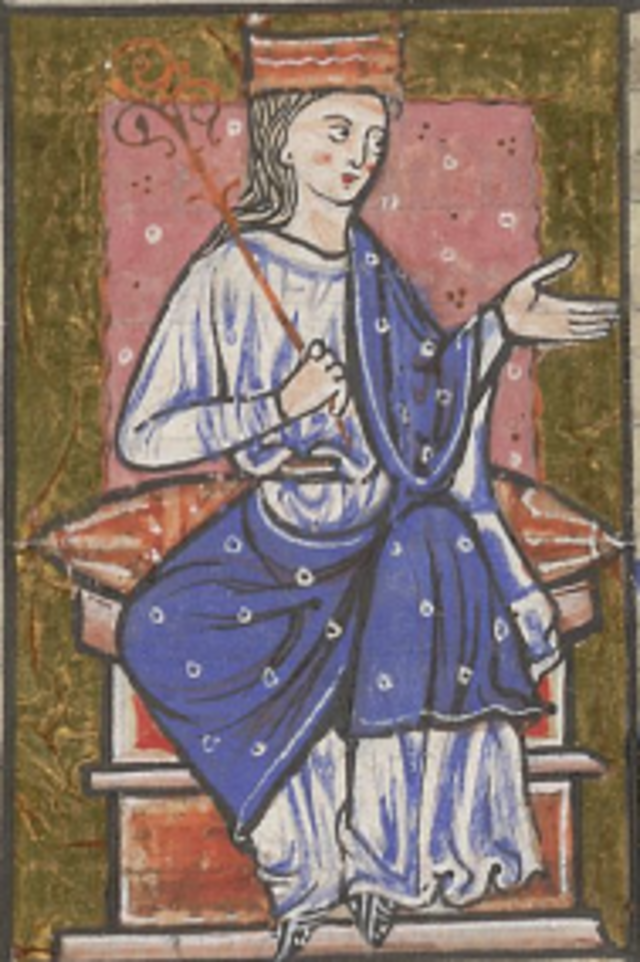
We don’t know for sure who Athelstan’s mother was, it’s believed she might have been called Ecgwynn. We don’t know, for certain, the name of his full sister, but it’s believed she might have been named Edith or Ecgwynn after her mother. What is known is that his father was Edward, the son of King Alfred, and known to us today as Edward the Elder. Athelstan is rare in that he is one of only two Saxon kings for whom a contemporary image is available. (The other is Edgar, who would have been his nephew)

It must be supposed that Athelstan was born sometime in the late 890s. And according to a later source written by William of Malmesbury in the 1100s (so over two hundred years later), was raised at the court of his aunt, Æthelflæd of Mercia. David Dumville has questioned the truth of this, but to many, this has simply become accepted as fact.

‘he [Alfred] arranged for the boy’s education at the court of his daughter, Æthelflæd and Æthelred his son in law, where he was brought up with great care by his aunt and the eminent ealdorman for the throne that seemed to await him.’[i]


[i] Mynors, R.A.B. ed and trans, completed by Thomson, R.M. and Winterbottom, M. Gesta Regvm AnglorvmThe History of the English Kings, William of Malmesbury, (Clarendon Press, 1998), p.211 Book II.133

Why then might this have happened? Edward became king on the death of his father, Alfred, and either remarried at that time, or just before. Edward’s second wife (if indeed, he was actually married to Athelstan’s mother, which again, some doubt), Lady Ælfflæd is believed to have been the daughter of an ealdorman and produced a hefty number of children for Edward. Perhaps then, Athelstan and his unnamed sister, were an unwelcome reminder of the king’s first wife, or perhaps, as has been suggested, Alfred intended for Athelstan to succeed in Mercia after the death of Æthelflæd, and her husband, Æthelred, for that union produced one child, a daughter named Ælfwynn.
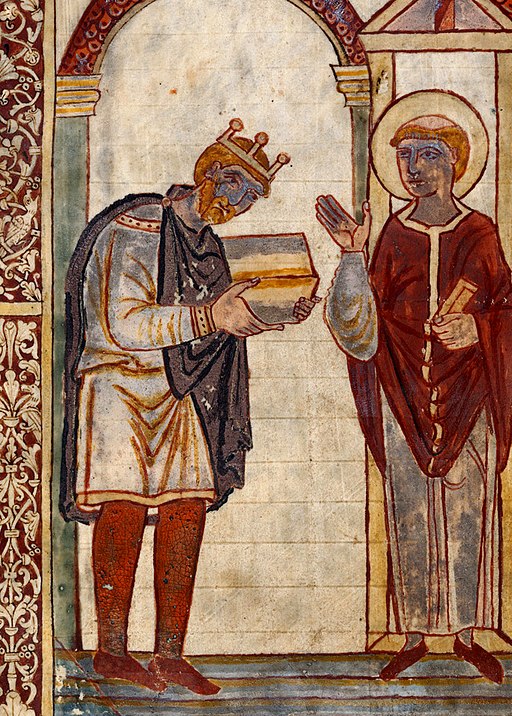
Frontispiece of Bede’s Life of St Cuthbert, showing King Æthelstan (924–39) presenting a copy of the book to the saint himself. 29.2 x 20cm (11 1/2 x 7 7/8″). Originally from MS 183, f.1v at Corpus Christi College, Cambridge. (Wikimedia Commons)

What is known is that following the death of King Edward in 924, Athelstan was acknowledged as the king of Mercia; his half-brother, Ælfweard was proclaimed king in Wessex for a very short period.

‘Here King Edward died at Farndon in Mercia; and very soon, 16 days after, his son Ælfweard died at Oxford; and their bodies lie at Winchester. And Athelstan was chosen as king by the Mercians and consecrated at Kingston.’[i]


[i] Swanton, M. trans and edit The Anglo-Saxon Chronicles, (Orion Publishing Group, 2000), D text p.105

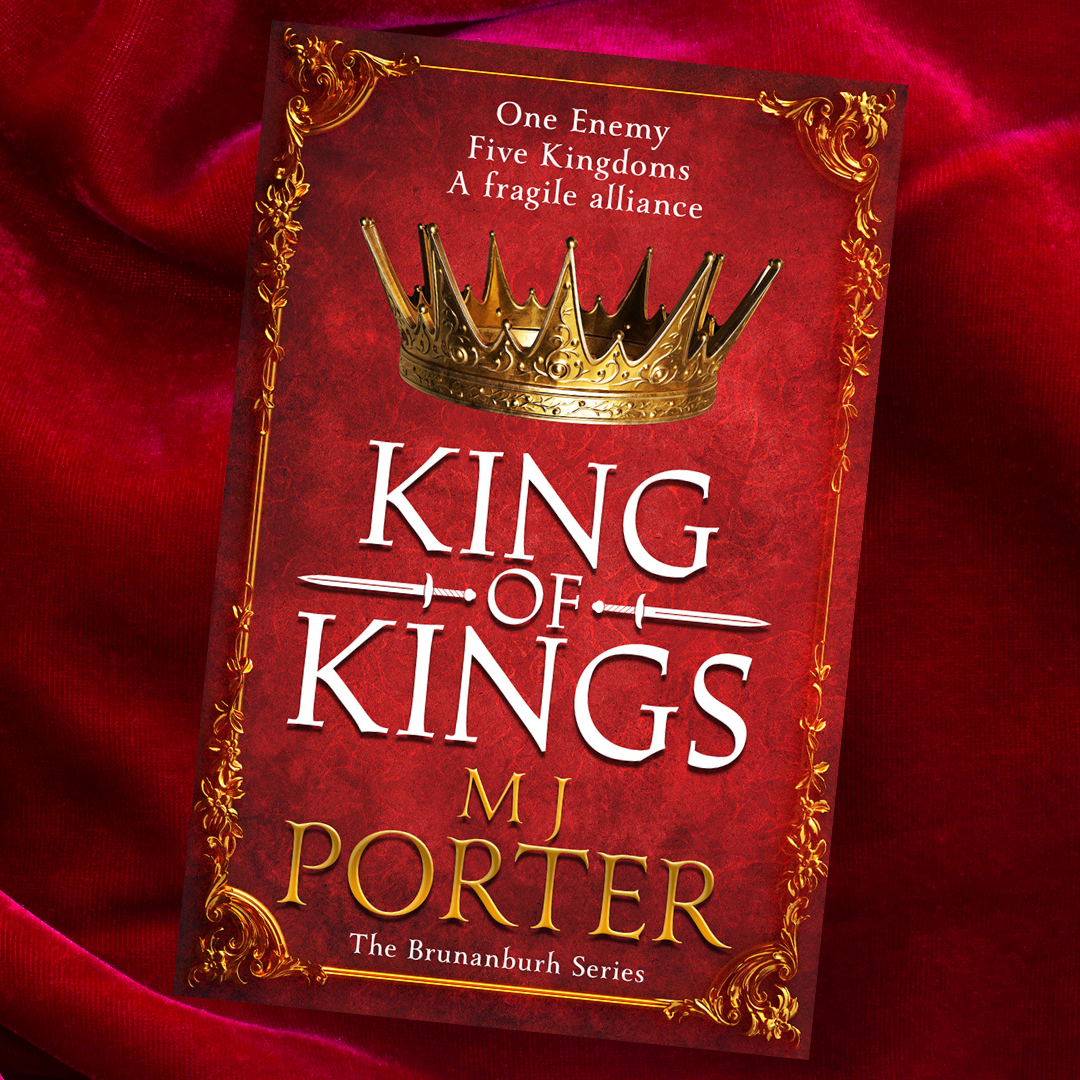
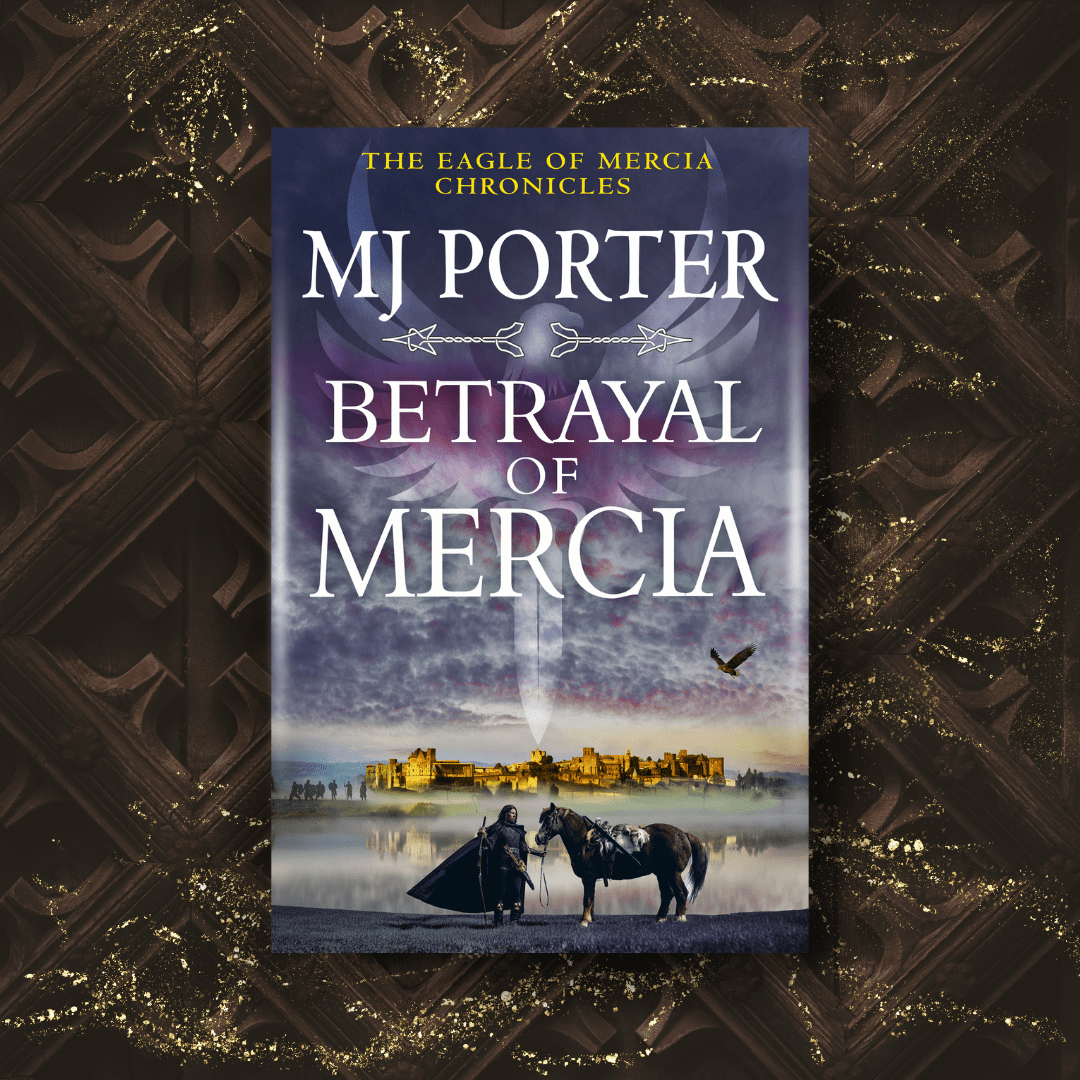
Design by Boldwood Books

But Ælfweard’s reign was short-lived and Athelstan was eventually proclaimed king of Wessex, as well as Mercia, and then, in time, as the king of the English, although his acceptance by the Wessex witan has been seen as very grudgingly given.

Whatever the exact details of the beginning of his kingship, Athelstan was consecrated in September 925, and the words of the ceremony are believed to survive (there is an argument as to whether the ceremony was written for his father or for him), and during the ceremony Athelstan was proclaimed as king not with the placement of a warrior helm on his head, but instead, with a crown, the first known occurrence of this in England.
Here’s my reimagining of the ceremony in King of Kings,

Athelstan, Kingston upon Thames, September AD925

‘This means that only a year after my father’s untimely death, the kingdoms of Mercia, those parts of the East Anglian kingdom that my father lately reclaimed, Wessex and Kent, are reunited again under one ruler. The Saxons, or rather, the English, have just one king. And this is my moment of divine glory, when, before the men and women of the Mercian and Wessex witan, I’ll be proclaimed as king over all.

A prayer is intoned by the archbishop of Canterbury, Athelm, appealing to God to endow me with the qualities of the Old Testament kings: Abraham, Moses, Joshua, David and Solomon. As such, I must be faithful, meek, and full of fortitude and humility while also possessing wisdom. I hope I’ll live up to these lofty expectations.

I’m anointed with the holy oil and then given a thick gold ring with a flashing ruby to prove that I accept my role as protector of the one true faith. A finely balanced sword is placed in my hands, the work of a master blacksmith, with which I’m to defend widows and orphans and through which I can restore things left desolated by my foes, and my foes are the Norse.

Further, I’m given a golden sceptre, fashioned from gold as mellow as the sunset, with which to protect the Holy Church, and a silver rod to help me understand how to soothe the righteous and terrify the reprobate, help any who stray from the Church’s teachings and welcome back any who have fallen outside the laws of the Church.

With each item added to my person, I feel the weight of kingship settle on me more fully. I may have been the king of Mercia for over a year now, the king of Wessex and Kent for slightly less time, but this is the confirmation of all I’ve done before and all I’ll be in the future.

It’s a responsibility I’m gratified to take, but a responsibility all the same. From this day forward, every decision I make, no matter how trivial, will impact someone I now rule over.

*******

And I? I’m the king, as my archbishop, Athelm of Canterbury, proclaims to rousing cheers from all within the heavily decorated church at Kingston upon Thames, a place just inside the boundaries of Wessex but not far from Mercia. It’s festooned with bright flowers and all the wealth this church owns. Gold and silver glitter from every recess, reflecting the glow of the hundreds of candles.

I’m more than my father, Edward, was and I’m more than my grandfather, Alfred, was. I’m the king of a people, not a petty kingdom, or two petty kingdoms, with Kent and the kingdom of the East Angles attached.

It’s done. I’m the anointed king of the English, the first to own such a title. I’ll protect my united kingdom, and with God’s wishes, I’ll extend its boundaries yet further, clawing back the land from the Five Boroughs and bringing the kingdom of the Northumbrians, and even the independent realm of Bamburgh, under my command.’


And Athelstan’s life is one of vast events. His reach extended far beyond the confines of England, or even the British Isles, his step-sisters making political unions in East and West Frankia, and his nephew becoming king of the West Franks. But he is perhaps best known for his victory at Brunanburh, over a coalition of the Scots and the Dublin Norse, and it is the tale of this great battle, and the events both before and afterwards, that I retell in the Brunanburh Series.

His death, on 27th October 939, can arguably be stated to have reset the gains made after Brunanburh, and set the creation of ‘England’ back, as his much younger step-brother battled to hold onto his brother’s gains, but for now, it is Athelstan and his triumphs which much be remembered, and not what happened after his untimely death.
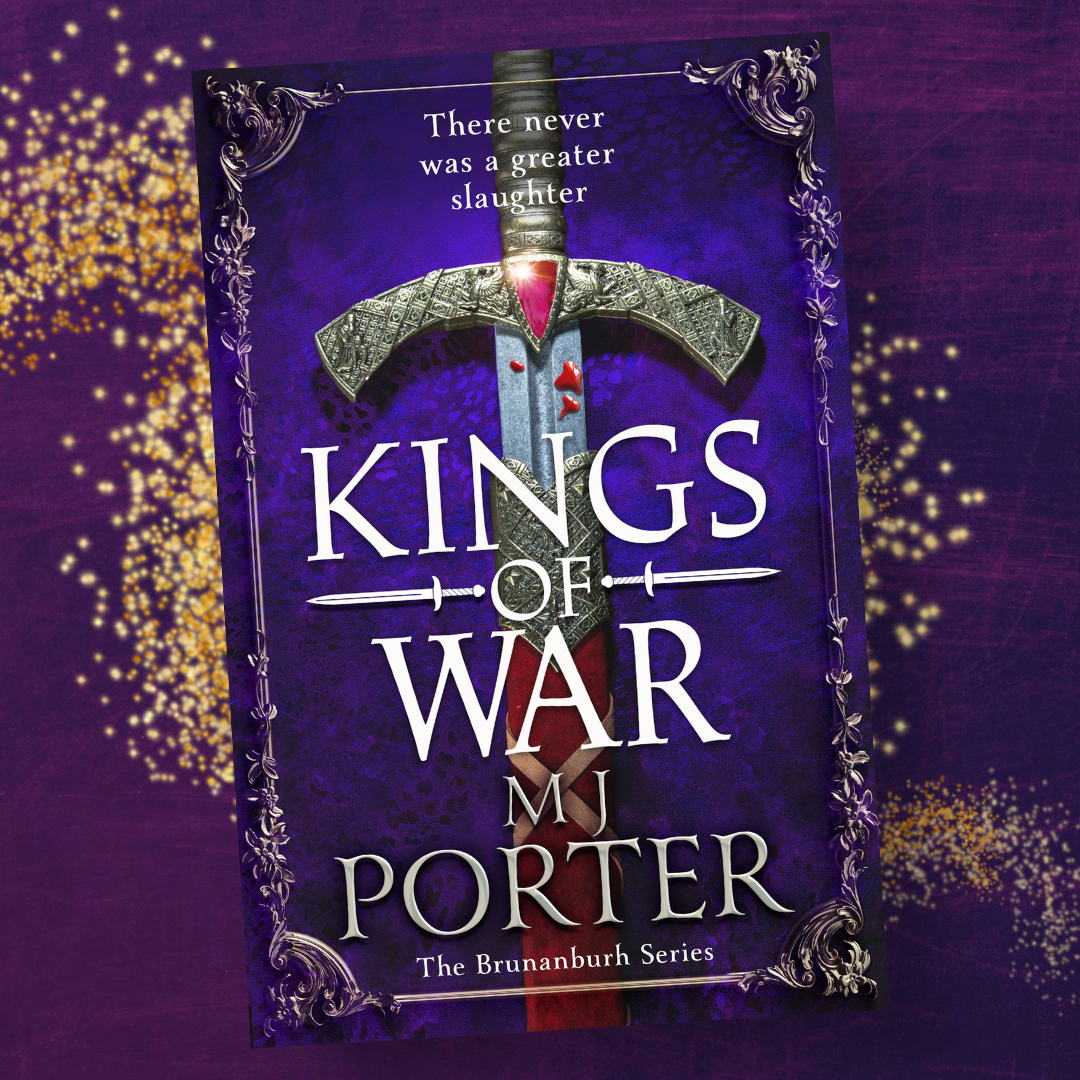
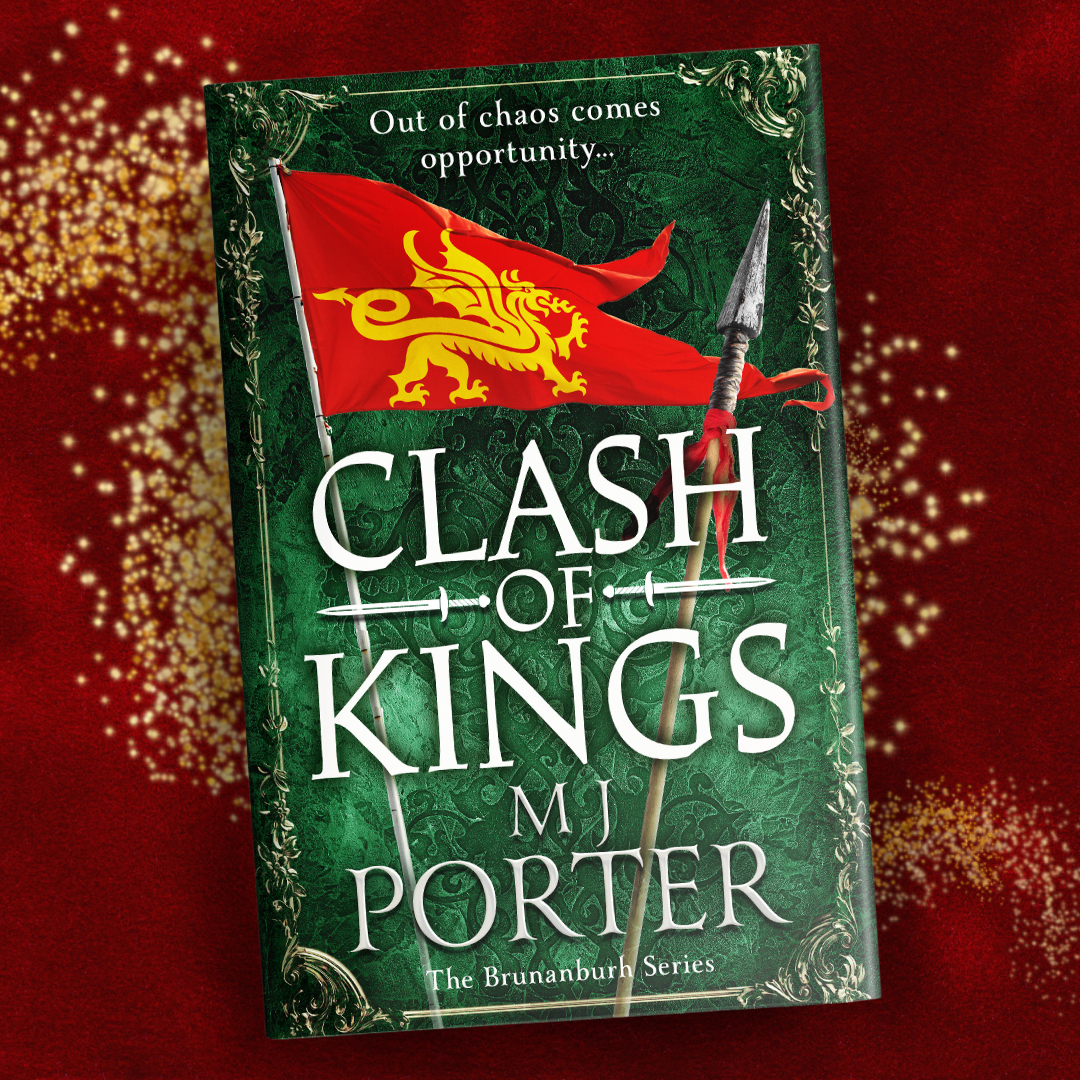
books2read.com/King-of-Kings

books2read.com/kingsofwar


Check out my Brunanburh series page for more information about Athelstan, and his fellow kings.
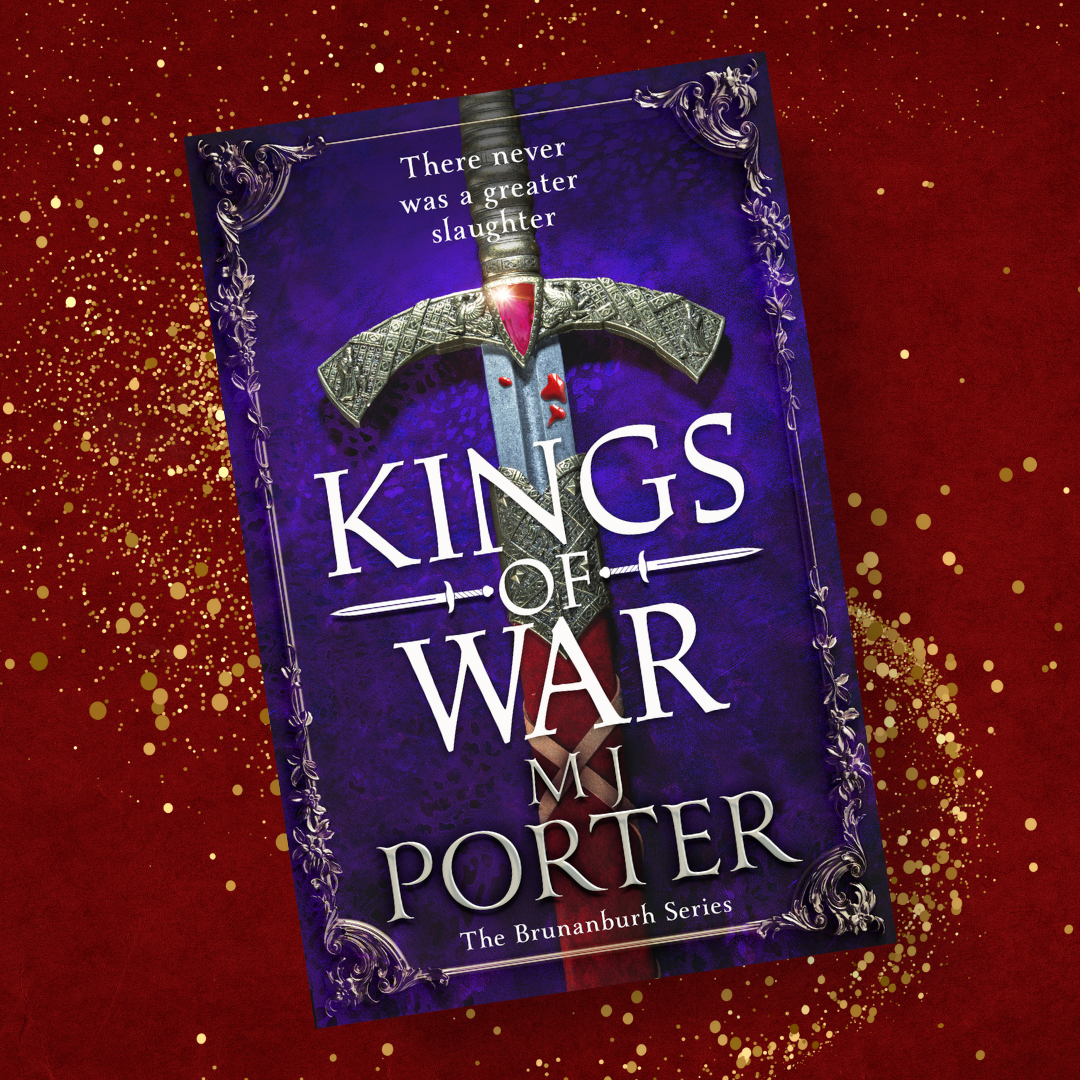
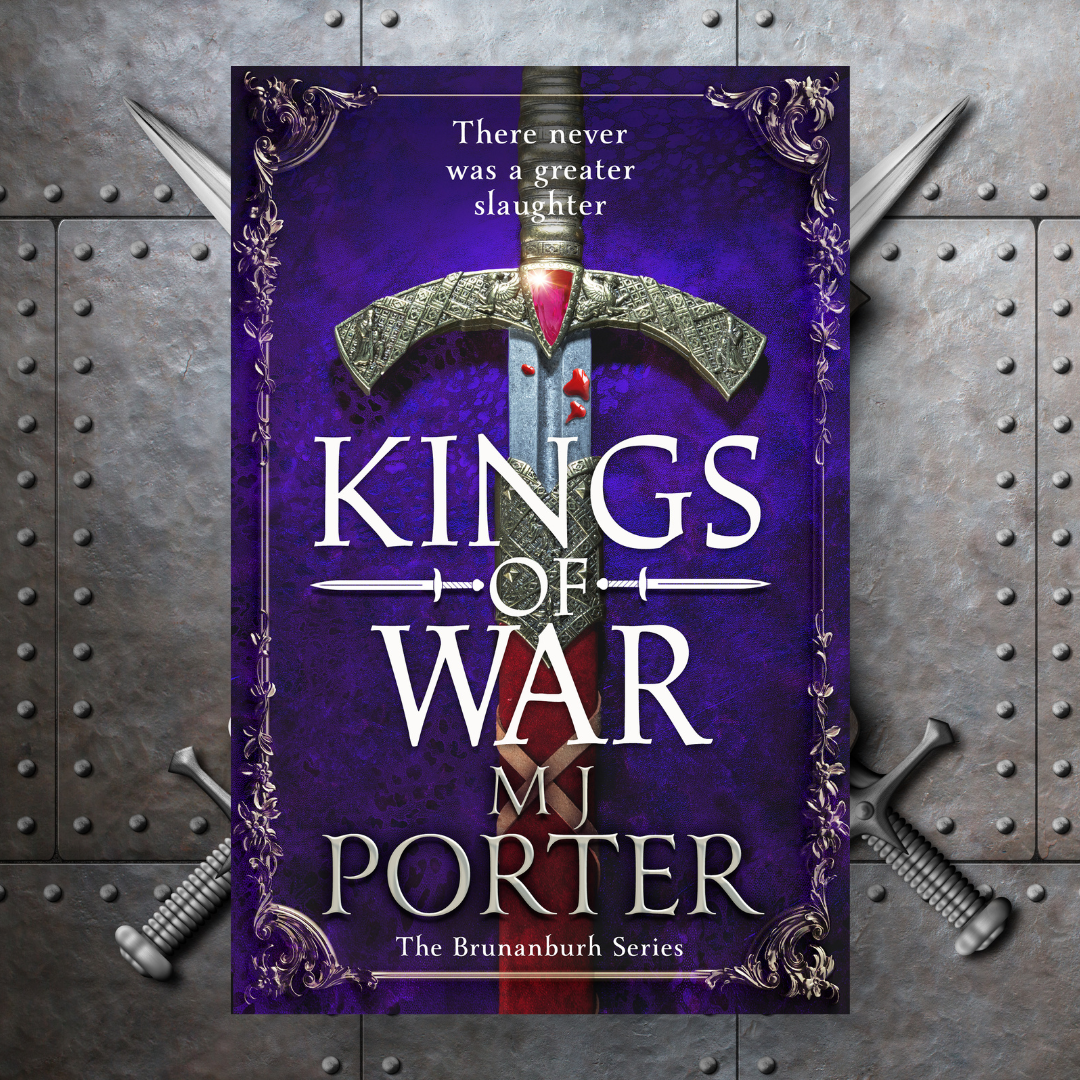
Kings of War is a month old today #histfic #history #Saxons #NewRelease

It’s been a month since the release of Kings of War, the sequel to King of Kings. This is the story of the battle of Brunanburh fought in 937. (Check out my post on where exactly Brunanburh was fought). It’s been a mad and busy month, so I thought I’d take a moment to reflect and say thank you my readers for the fab ratings/reviews and for taking a chance on my version of what led up to and happened at the battle of Brunanburh.

If you’ve not yet tried it, then King of Kings is still 99p on Amazon UK/Kobo and Kings of War is just £1.39 and both are available in ebook, audio, paperback and hardback.

Since Kings of War was released, I’ve also handed over book 3 in the series, and can reveal that the title is Clash of Kings, and it is available for preorder already.

Here’s the blurb:

Can the King of the Scots and the Dublin Norse triumph against a united England?

AD934

King Athelstan of the English has been successful in uniting the many kingdoms of Britain against one enemy, the Viking raiders.

But men who are kings don’t wish to be ruled. 

Constantin, King of the Scots, rebelled against the Imperium and was forcibly brought to bend the knee to Athelstan and England at Cirencester.

His son Ildulb seeks bloody vengeance from Athelstan following the battle at Cait and the death of his son.

Olaf Gothfrithson, king of the Dublin Norse, having asserted his power following his father’s death has his sights set on reclaiming Jorvik. 

Can the united might of the Scots and the violence of the Dublin Norse, descendants of the infamous Viking raiders, bring King Athelstan and his vision of the united Saxon English to her knees?

An epic story of kingsmanship that will result in the pivotal, bloody Battle of Brunanburh, where only one side can be victorious.

King of Kings

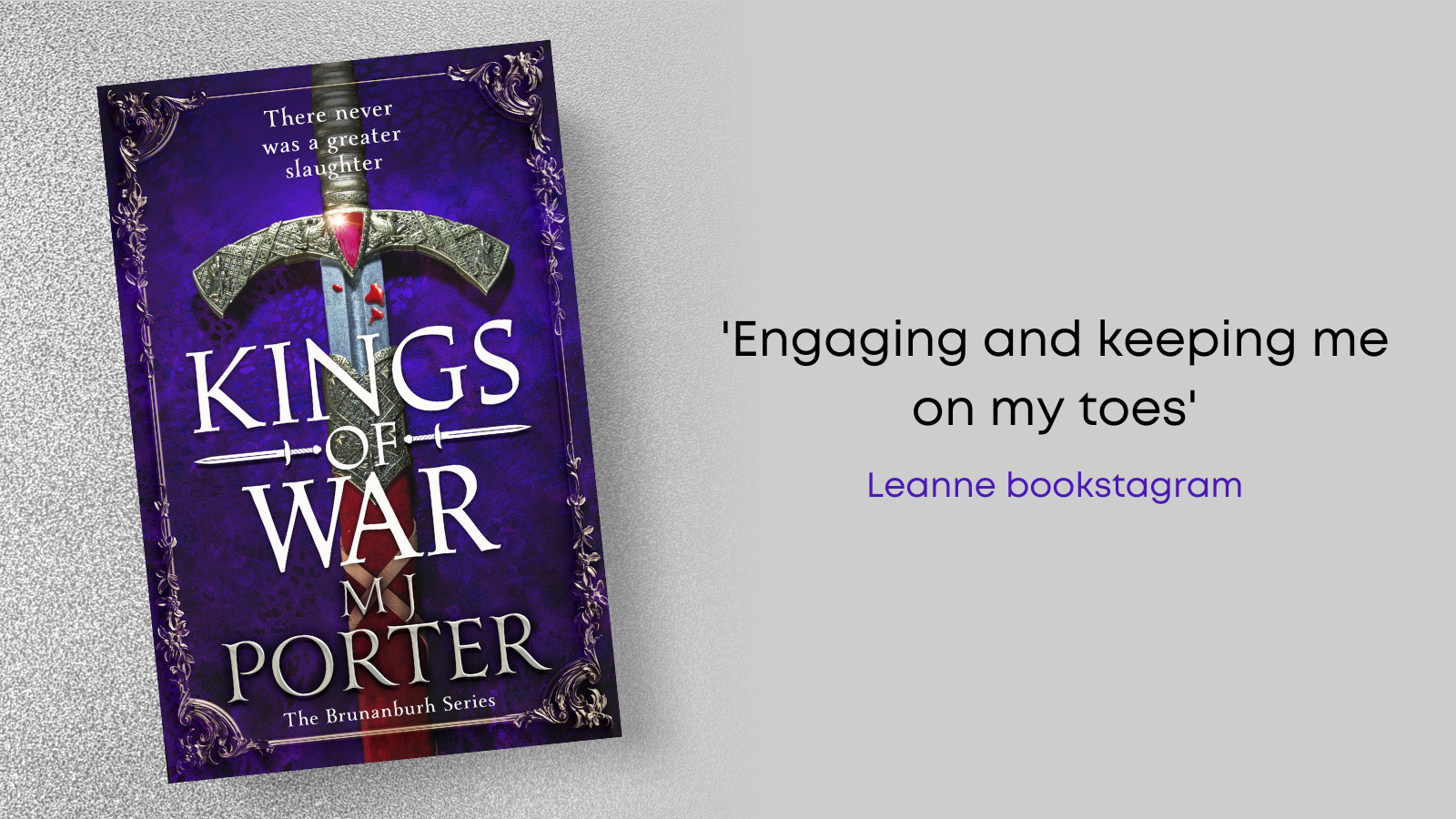
Kings of War

Thank you to the fabulous reviewers who shared their thoughts on Kings of War.

Leanne bookstagram

Sharon Beyond the Books

Seriesbooklover

David’s Book Blurg

Bookish Jottings

Ruins & Reading

Scrapping and Playing


And it’s not just the blog hosts sharing reviews either:) Thank you.

Amy McElroy

Terry Rudge

Who were the daughters of Edward the Elder who married into the ruling families of East and West Frankia? #histfic #non-fiction

Who were the many daughters of Edward the Elder who married into the ruling families in East and West Frankia?

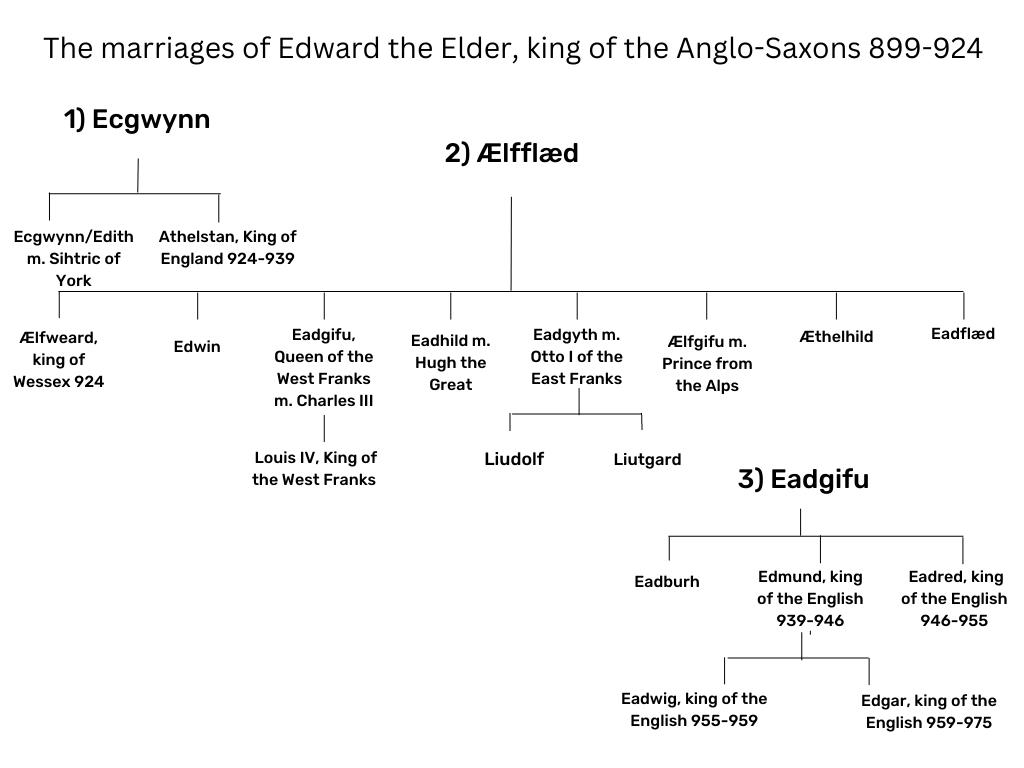
Edward the Elder was married three times, to an unknown woman- who was the mother of the future King Athelstan, to Lady Ælfflæd – who was the mother of the future, and short-lived King Ælfweard, and finally to Lady Eadgifu – who was the mother of the future kings Edmund and Eadred. But, while each woman was mother to a future kings, this story focuses on the daughters. And there were a lot of them, and their lives were either spent in making prestigious marriages, or as veiled women – whether professed religious, or merely lay women living in a nunnery or an isolated estate.


Eadgifu[i], was perhaps the oldest daughter of King Edward the Elder, and his second wife, Lady Ælfflæd. She was the first to marry, to Charles III, King of West Frankia (879-929), who ruled the kingdom from 898-922. This union is written about by the near-contemporary writer Æthelweard in the prologue to his Chronicon

‘Eadgyfu [Eadgifu] was the name of the daughter of King Eadweard [Edward], the son of Ælfred…and she was your great-aunt and was sent into the country of Gaul to marry the younger Charles.’[ii]

This was a marriage of some prestige for the granddaughter of King Alfred and one which saw her become the Queen of the West Franks.  

Charles was much her senior, and one with many illegitimate sons, born to Charles’ concubines,[iii] as well as six daughters with his first wife, Frederuna.[iv]  But, on the death of his first wife in 917, Charles had no legitimate heir to rule after him.

Eadgifu isn’t mentioned in The Anglo-Saxon Chronicle, but she does feature in The Annals of Flodoard of Reims 919-966. historian Sarah Foot maintains that as Eadgifu’s marriage isn’t mentioned in the work of Flodoard, it must have occurred before he began writing and, therefore before 919.[v] 

Yet, Charles III didn’t rule a quiet kingdom, far from it, in fact. Louis, Eadgifu and Charles’ son was born in 921-922, and his birth seems to have coincided with Charles losing control of his kingdom to an overpowerful nobleman, who ruled as Robert, King of the West Franks from 922-923 when Charles III was briefly reinstated before being deposed once more and imprisoned, where he wound remain until his death in 929. 

It is known that Louis was sent to the Wessex royal court, to be fostered firstly by her father and then by her half-brother, Athelstan.[vii] It’s likely that Louis was a similar age to Edward the Elder’s younger children. If Eadgifu returned to Wessex in 923 as well, she would have been in Wessex when her father died, her full-brother became king, albeit briefly, only for Athelstan, her half-brother, to become king.

On Charles’ death, in 929, Eadgifu was certainly once more living in England with her son Louis. And she would do so until 936 when Louis regained his kingship, and Eadgifu returned to West Frankia as the king’s mother. 

Louis’ reinstatement does seem to have had much to do with his uncle by marriage, Hugh of the Franks (c.895-956), married to his aunt Eadhild. 

We’re told by Flodoard,

‘Louis’s uncle, King Athelstan, sent him to Frankia along with bishops and others of his fideles after oaths had been given by the legates of the Franks. Hugh and the rest of the nobles of the Franks set out to meet Louis when he left the ship, and they committed themselves to him on the beach at Boulogne-sur-Mer just as both sides had previously agreed. They then conducted Louis to Laon and he was consecrated king, anointed and crowned by Lord Archbishop Artoldus (of Rheims) in the presence of the leading men of the kingdom and more than twenty bishops.’[viii]

But all might not be quite as bland as Flodoard states. Hugh might have been married to Eadhild, Louis’ aunt, but he was also an extremely powerful nobleman, brother to the previous king, Ralph. As McKitterick states, ‘No doubt Hugh calculated that he would be able to exert effective power within the kingdom as the young monarch’s uncle, chief advisor and supporter.’[ix]

 Young Louis would only have been about sixteen when he was proclaimed king of West Frankia. He was also a virtual stranger to those he now ruled, having been fostered at the Wessex/English court since 923.

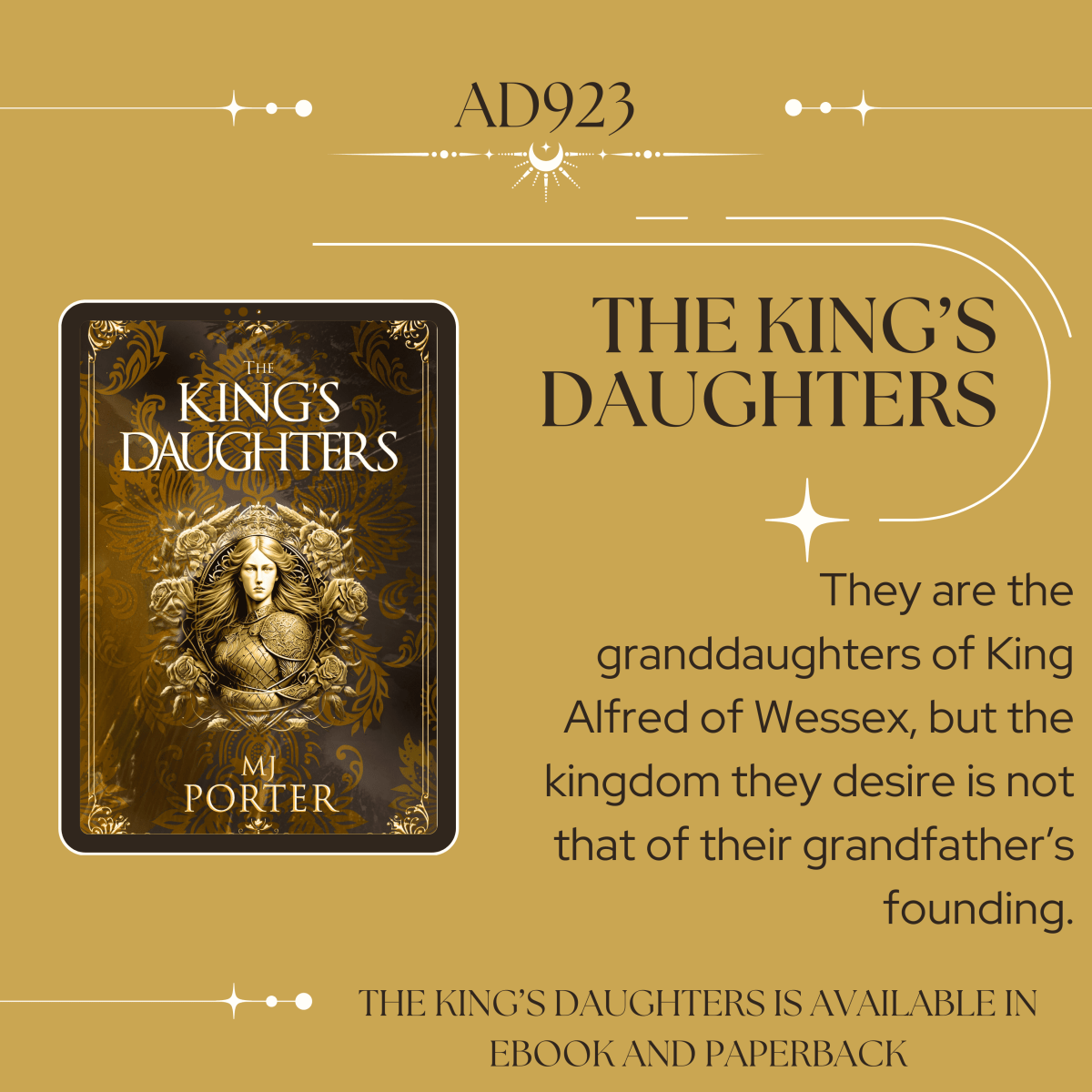
Louis was consecrated on 19th June 936. What happened during the early years of his rule is explored in The King’s Daughters, through the eyes of his mother.

(Read on below the references to find out about the other daughters).


[i] PASE Eadgifu (3) 

[ii] Campbell, A. ed The Chronicle of Æthelweard: Chronicon Æthelweardi, (Thomas Nelson and Sons Ltd, 1962), Prologue p.2

[iii] The matter of marriages, and concubinage is gathering increasing levels of interest. It is becoming apparent that the need for legitimate marriages was a matter laid down by the Church as a means to garner legitimacy. Before this, unions of concubinage may have held as firmly as church recognised marriages. 

[iv] Details taken from McKitterick, R. The Frankish Kingdoms Under The Carolingians, 751-987, (Longman, 1983), p. 365 Genealogical table

[v] Foot, S Athelstan (Yale University Press, 2011), p.46

[vi] Bachrach, B.S. and Fanning, S ed and trans, The Annals of Flodoard of Reims, 916-966 (University of Toronto Press, 2004), 20A

[vii] William of Jumieges in his Gesta Normannorum Ducum III.4 (PASE)

[viii] Bachrach, B.S. and Fanning, S ed and trans, The Annals of Flodoard of Reims, 916-966 (University of Toronto Press, 2004), 18A (936). Foot, S Athelstan (Yale University Press, 2011), p.168

[ix] McKitterick, R. The Frankish Kingdoms Under The Carolingians, 751-987, (Longman, 1983), p.315

[x] Van Houts, E. M. C., trans. The Gesta Normannorum Ducum of William of Jumieges, Orderic Vitalic, and Robert of Torigni, (Clarenden Press, Oxford, 1992) pp82-83 Book III.4

[xi] Bachrach, B.S. and Fanning, S ed and trans, The Annals of Flodoard of Reims, 916-966 (University of Toronto Press, 2004), 33G

[xii] PASE Greater Domesday Book 353 (Lincolnshire 18:25)


Eadhild[i], perhaps the second daughter of Edward the Elder and his second wife, Lady Ælfflæd, marriage Hugh the Great, later known as dux Francorum, in another continental dynastic marriage similar to that of her sister. Under 926, Flodoard of Reims states, ‘Hugh, son of Robert, married a daughter of Edward the Elder, the king of the English, and the sister of the wife of Charles.’[ii] This wasn’t Hugh’s first marriage, but that union was childless.

There’s no record of the marriage in The Anglo-Saxon Chronicle. However, once more, it is mentioned in Æthelweard’s Chronicon, ‘Eadhild, furthermore, was sent to be the wife of Hugo, son of Robert.’[iii] And also in Flodoard’s Annals, as mentioned above.

There is a later, really quite detailed account in the twelfth-century source of William of Malmesbury’s Gesta Regum Anglorum. He describes Eadhild as ‘in whom the whole mass of beauty, which other women have only a share, had flowed into one by nature,’ was demanded in marriage from her brother by Hugh of the Franks.’[v]

Hugh was a very wealthy individual. His family, ‘commanded the region corresponding to ancient Neustria between the Loire and the Seine, except for the portions ceded to the Vikings between 911 and 933. Hugh also possessed land in the Touraine, Orleanais, Berry, Autunois, Maine and north of the Seine as far as Meaux, and held the countships of Tours, Anjou and Paris. Many powerful viscounts and counts were his vassals and deputies…a number of wealthy monasteries were also in Robertian [the family named after his father] hands. Hugh himself was lay abbot of St Martin of Tours, Marmoutier, St Germain of Auxerre (after 937), St Denis, Morienval, St Riquier, St Valéry and possibly St Aignan of Orleans, St Germain-des-Pres and St Maur des Fosses.’[viii]

Eadhild, sadly died in 937, childless, and in The King’s Daughters her death sets in motion some quite catastophic family feuding.

(Read on below the references to learn more about The King’s Daughters)


[i] Eadhild (1) PASE

[ii] Foot, S Athelstan (Yale University Press, 2011), p.47.  Bachrach, B.S. and Fanning, S ed and trans, The Annals of Flodoard of Reims, 916-966 (University of Toronto Press, 2004), 926 

[iii] Campbell, A. ed The Chronicle of Æthelweard: Chronicon Æthelweardi, (Thomas Nelson and Sons Ltd, 1962), Prologue p.2

[iv] Bachrach, B.S. and Fanning, S ed and trans, The Annals of Flodoard of Reims, 916-966 (University of Toronto Press, 2004), 8E

[v] Foot, S Athelstan (Yale University Press, 2011), p.47. Mynors, R.A.B. ed and trans, completed by Thomson, R.M. and Winterbottom, M. Gesta Regvm AnglorvmThe History of the English Kings, William of Malmesbury, (Clarendon Press, 1998),ii,135,pp218-9

[vi] McKitterick, R. The Frankish Kingdoms Under The Carolingians, 751-987, (Longman, 1983), p.314

[vii] Foot, S Athelstan (Yale University Press, 2011), p.47

[viii] McKitterick, R. The Frankish Kingdoms Under The Carolingians, 751-987, (Longman, 1983), p.314


Eadgyth,[i]  has her marriage mentioned in the entry for the D text of the Anglo-Saxon Chronicle under the year 924. Alongside Athelstan’s unnamed biological sister, she’s the only one of Edward’s daughters to be mentioned in The Anglo-Saxon Chronicle. ‘..and he gave his sister across the sea to the son of the King of the Old Saxons (Henry).’[ii]Sarah Foot notes that in the Mercian Register section of The Anglo-Saxon Chronicle, this sentence in 924 is unfinished. The D text chooses to complete this sentence differently, referencing the union of Eadgyth to Otto, as opposed to the union of Athelstan’s unnamed sister to Sihtric of York. This then explains why the reference occurs in the annal entry for 924, whereas the union took place in 929/30, following a Saxon military triumph over the Slavs in the late summer of 929.[iii]

Æthelweard’s Chronicon again adds to our knowledge by informing his readers that Athelstan sent two of his sisters for Otto to choose the one he found most agreeable to be his wife. 

‘King Athelstan sent another two [of his sisters] to Otho, the plan being that he should choose as his wife the one who pleased him. He chose Eadgyth.’[v] This story is also told in Hrotsvitha’s Gesta Ottonis. ‘he bestowed great honour upon Otto, the loving son of the illustrious king, by sending two girls of eminent birth, that he might lawfully espouse whichever one of them he wished.’[vi]

Bishop Cenwald of Worcester accompanied both sisters to Saxony. The account of his visit can be witnessed in a confraternity book from St Galen, where he signed his name. Eadgyth was certainly the mother of a son and a daughter, Liudolf and Liudgar. 

Read The King’s Daughters to discover more about her story.


[i] PASE Eadgyth (2) 

[ii] Swanton, M. trans and edit The Anglo-Saxon Chronicles, (Orion Publishing Group, 2000), p105. And Foot, S Athelstan (Yale University Press, 2011), p.49 n69

[iii] Foot, S Athelstan (Yale University Press, 2011), p.48

[iv] Foot, S Athelstan (Yale University Press, 2011), p.48

[v] Campbell, A. ed The Chronicle of Æthelweard: Chronicon Æthelweardi, (Thomas Nelson and Sons Ltd, 1962), Prologue p.2

[vi] Foot, S Athelstan (Yale University Press, 2011), p.49, but Hrotsvitha, Gesta Ottonis, lines 79-82 and 95-8 ed. Berchin 278-9

[vii] Swanton, M. trans and edit The Anglo-Saxon Chronicles, (Orion Publishing Group, 2000), C p.124


King Athelstan is said to have sent two sisters to the court of Otto of Saxony, for him to determine which he would marry. This sister has vexed historians, even Æthelweard in his Chronion is unsure of her name,[i] and he wrote his text much earlier than other sources available, by c.978 at the latest. It would be hoped that a woman who left England only forty years earlier might have been remembered.  Æthelweard believed she had married, ‘a certain king near the Alps, concerning whose family we have no information, because of both distance and the not inconsiderable lapse of time.’[ii] He held out hopes that Matilda, to whom he dedicated his work, might be able to tell him more. 

‘Louis, brother of Rudolf of Burgundy, and his English wife were influential figures in that region when Rudolf died young, leaving only a child, Conrad, as heir.’[vi]

More than this, it is impossible to say. It is unsettling to realise that the daughter of one of the House of Wessex’s kings could so easily be ‘lost’ to our understanding today, and indeed, to that of her descendants only forty years later. This raises the awareness that if noble women could disappear from the written records, then so to could almost anyone. 


[i] This sister may appear as Anonymous 921 on PASE

[ii] Campbell, A. ed The Chronicle of Æthelweard: Chronicon Æthelweardi, (Thomas Nelson and Sons Ltd, 1962), Prologue p.2

[iii] Mynors, R.A.B. ed and trans, completed by Thomson, R.M. and Winterbottom, M. Gesta Regvm AnglorvmThe History of the English Kings, William of Malmesbury, (Clarendon Press, 1998), pp.199-201

[iv] Foot, S Athelstan (Yale University Press, 2011) p.51

[v] Please see Foot, S Athelstan (Yale University Press, 2011), p.51 for this fascinating discussion in its entirety. 

[vi] Foot, S ‘Dynastic Strategies: The West Saxon royal family in Europe,’ in England and the Continent in the Tenth Century: Studies in Honour of Wilhelm Levison (1876-1947) (Brepols, 2012), p.250


The King’s Daughter is the story of these women and their lives (mostly) in Continental Europe, and I hope you’ll enjoy it.

Check out The Tenth Century Royal Women page.

https://amzn.to/4ptykUl

Interested in the real women? Please check out my non-fiction title, The Royal Women Who Made England.

The Royal Women Who Made England cover

Posts

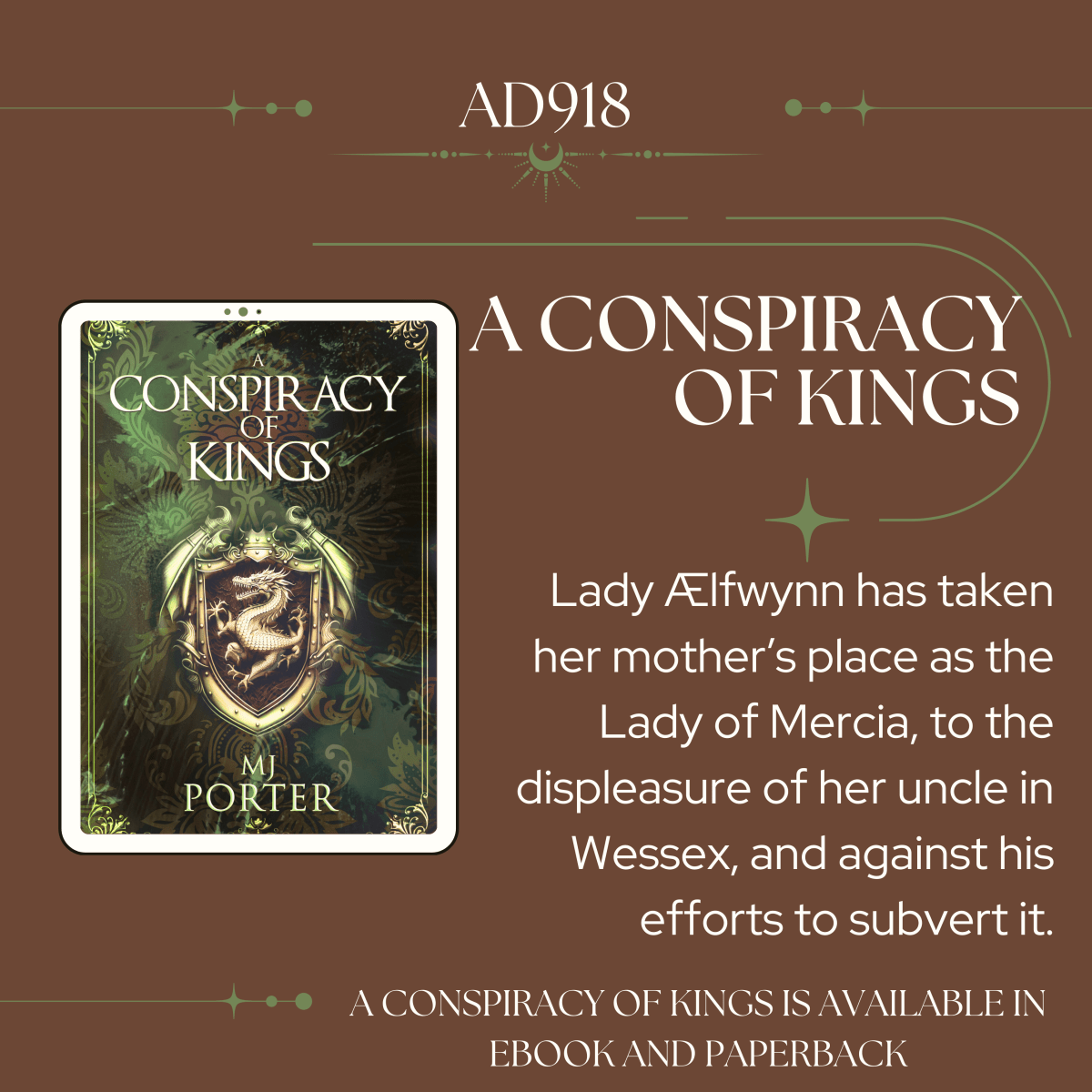
I’m sharing the first chapter from A Conspiracy of Kings #histfic #TheRoyalWomen

Here’s the beginning from A Conspiracy of Kings (there might be spoilers if you’ve not read The Lady of Mercia’s Daughter)

Chapter 1

Tamworth, the kingdom of Mercia, 918

We feast that night. There are smiles and tears on everyone’s faces as Tamworth’s great hall is swept clear of the men and women from Wessex. My armed guard ensures no one hurts them as the Mercians pull tables and benches to fill the vast space left behind. My servants, taken only somewhat by surprise as they were expecting a feast one way or another after the witan, rush to ensure everyone has a drink, if not food. 

Cousin Ecgwynn hurries to me as I watch the activity, questions on her lips and I throw my arms around her, unheeding her sumptuous gown while I wear the clothes of a warrior. Usually, she would protest. But not today.

‘Enough of that,’ Cousin Ecgwynn complains, batting my embrace away, and not delicately. She holds my arms away from her, glaring at me.

I can see the flicker of rage in her blue eyes and the tightness of her stance.

‘You let me believe you were dead! I’ve been mourning for you, as I would a sister, and coming so soon after the death of Lady Æthelflæd….’ Her normally serene face floods with tears as her words trail off. I thrust my arms around her again, holding her tighter, hoping to make her understand, using my strength gained on the training field to overpower hers. I absorb her scent, the familiarity of home, the reminder of all that my uncle and Archbishop Plegmund tried to take from me.

‘I’m sorry, dear Ecgwynn. It was.’ I pause, unsure what to say, speaking into her ear as I continue to hold her tight. ‘Well, in all honesty, it was all we could think of to ensure that Uncle Edward’s treachery was exposed.’

I don’t call King Edward of Wessex her father. That would be too cruel. I think that, like me, Lady Ecgwynn could happily forget that a man was even involved in her conception and birth. Certainly, he’s done little enough for her since he became the king of Wessex when she was no more than a child and banished her to Mercia alongside Cousin Athelstan.

But Cousin Ecgwynn’s not finished yet. Once more, she pulls her way clear of my embrace, determined to argue with me.

‘But my brother knew and still didn’t tell me. That’s too cruel,’ her angry voice is gaining force. I know there’s nothing to do but try and explain. I could make excuses all night long, but she’s almost my sister, and she deserves the truth.

‘He knew. But only because he came to me and saw that I still lived after the attack in the north. Admittedly, cousin Athelstan could have told you that I wasn’t dead, but then, how would you have greeted King Edward when he came to Mercia to stake his claim for it? He couldn’t know that I yet lived.’

‘I’m not a woman to have her head turned by the arrival of a man whose only call on her affection is to claim to be her father. I wouldn’t have put your scheme in peril!’ Her voice is shrill with outrage, all tears forgotten, as she chastises me, her words coming almost too fast to decipher.

To the side, cousin Athelstan hovers, and I know why. He’s not scared of facing any man on the battlefield, but his sister? Well, he’d sooner not see her angry, and certainly, he’s content for me to be the one to soothe her. 

I realise then that we erred when we made our plans.

‘No, I know you’re not. Apologies, cousin Ecgwynn. It wasn’t done because of a lack of trust. It was just better if as few as possible knew the truth.’ I can see that being so brutally honest at least pleases her, even if her forehead remains lined with anger and her lips purse tightly.

I hold my arms out once more. This time she steps into them willingly, a faint wrinkle on her nose because I smell of horse and sweat. I feel her shoulders sag, and her body trembles as though she’s going to cry. But she steps away from my embrace mere moments later, a watery smile on her face.

‘If only everyone I ever loved who died could come back to life, as you have. It would make my heart ache less.’ I nod. Abruptly, my thoughts focus on my mother, and despite my warrior’s prowess, my grief is fresh. I’d gladly step into my mother’s arms and cry away all my sorrows and disappointments at my uncle’s actions. 

‘What would your mother think?’ Lady Ecgwynn asks, her thoughts following mine as she loops her arm through mine to walk amongst the people toasting my good health and the future of Mercia. Their voices range from soft to the roar of a battle cry. I chuckle at the exuberance, aware that cousin Athelstan stays close. He and cousin Ecgwynn will need to make peace with each other at some point. But not yet.

‘I hardly know what my mother would think or do. She and Edward were never close; at least, I don’t think they were. But, I believe she understood his ambitions well, all the same.’

‘Your mother was an excellent judge of character,’ cousin Ecgwynn confirms. ‘Although she did trust Archbishop Plegmund, the poisonous snake.’ 

My voice ripples with laughter as I picture Plegmund’s face too easily as the head of a snake.

https://amzn.to/46DvlA6

The cover for A Conspiracy of Kings

Find out who the historical Ælfwynn was here.

Visit The Tenth Century Royal Women page here.

Posts

Who was the historical Ælfwynn, the main character in The Lady of Mercia’s Daughter duology?

Ælfwynn, the daughter of Æthelflæd of Mercia and her husband, Æthelred was born at some point in the late 880s or early 890s. It’s believed that she was an only child, although it does appear (in the later accounts of William of Malmesbury – an Anglo-Norman writer from centuries later) that her cousins, Athelstan, and his unnamed sister, were sent to Mercia to be raised by their aunt when Edward remarried on becoming king in 899. There is a suggestion that it might have been Alfred’s decision to do this and that Athelstan was being groomed to become king of Mercia, not Wessex.

The Family Tree of Alfred the Great, king of Wessex

Ælfwynn is mentioned in three charters. S367, surviving in one manuscript, dates to 903, where she witnesses without a title. S1280, survives in two manuscripts, dates to 904 and reads in translation.

‘Wærferth, bishop, and the community at Worcester, to Æthelred and Æthelflæd, their lords; lease, for their lives and that of Ælfwynn, their daughter, of a messuage (haga) in Worcester and land at Barbourne in North Claines, Worcs., with reversion to the bishop. Bounds of appurtentant meadow west of the [River] Severn.’[i]


[i] Sawyer, P. H. (Ed.), Anglo-Saxon charters: An annotated list and bibliography, rev. Kelly, S. E., Rushforth, R., (2022). http://www.esawyer.org.uk/ S1280. See above for the full details under Æthelflæd

Historians have reconstructed this haga in Worcester in ‘The city of Worcester in the tenth century’ by N Baker and R Holt.

In S225, surviving in one manuscript, dated to 915, Ælfwynn witnesses below her mother. Hers is the second name on the document. This could be significant, as she would certainly have been an adult by now, was she already being prepared as the heir to Mercia on her mother’s death? 

Ælfwynn is named in the Anglo-Saxon Chronicle in the C text under 919. ‘Here also the daughter of Æthelred lord of the Mercians, was deprived of all control in Mercia, and was led into Wessex three weeks before Christmas; she was called Ælfwynn.’[i]


[i] Swanton, M. trans and edit The Anglo-Saxon Chronicles, (Orion Publishing Group, 2000), p.105

And from there, we hear nothing more of Lady Ælfwynn, the second lady of the Mercians. Even though this is the first record of a ruling woman being succeeded by her daughter. 

There’s no further mention of Ælfwynn in The Anglo-Saxon Chronicle. It’s been assumed that she became a nun, and she might well be referenced in charter S535, surviving in one manuscript, and which Eadred granted at the request of his mother, dated to 948, reading,

‘King Eadred to Ælfwyn, a religious woman; grant of 6 hides (mansae), equated with 6 sulungs, at Wickhambreux, Kent, in return for 2 pounds of purest gold.’[i]


[i] Sawyer, P. H. (Ed.), Anglo-Saxon charters: An annotated list and bibliography, rev. Kelly, S. E., Rushforth, R., (2022). http://www.esawyer.org.uk/ S535

Bailey has suggested that, ‘In view of its close association with the women of the royal family, and of Eadgifu’s patronage of Ælfwynn (in S535), I would venture to suggest that it is possible she too may have ended her days at Wilton.’[i]


[i] Bailey. M, ‘Ælfwynn, Second Lady of the Mercians’, Edward the Elder, 899-924 Higham, N.J. and Hill, D. H. ed (Routledge, 2001), p.125

This would mean that rather than ruling as her mother would have wanted her to, Ælfwynn was overruled by her uncle, who essentially stole her right to rule Mercia as soon as he possibly could on her mother’s death. It must be said that he might have later paid for this with his life if he was indeed putting down a Mercian rebellion in Farndon when he died in 924.

Alternatively, there is another beguiling theory that Ælfwynn might not have become a nun but was, in fact, married to Athelstan, an ealdorman of East Anglia, known as the ‘Half-King,’ because of the vast control he had in East Anglia. It’s long been believed that this label might well have resulted from the fact that Athelstan was an extremely powerful and well-landed nobleman who was much beloved by the Wessex royal family and its kings. However, it might well be because he was indeed married to the king’s cousin (under Athelstan, Edmund and Eadred). If this is the case, and it’s impossible to prove, then Ælfwynn, as the wife of Ealdorman Athelstan, had four sons, Æthelwold, Æthelwine, Æthelsige and Ælfwold, and these sons would be friends and enemies of the kings of England in later years. She might also have been given the fostering of the orphaned, and future King Edgar, which would also have made these men the future king’s foster brothers.
‘he [Athelstan Half-King] bestowed marriage upon a wife, one Ælfwynn by name, suitable for his marriage bed as much as by the nobility of her birth as by the grace of her unchurlish appearance. Afterwards she nursed and brought up with maternal devotion the glorious King Edgar, a tender boy as yet in the cradle. When Edgar afterwards attained the rule of all England, which was due to him by hereditary destiny, he was not ungrateful for the benefits he had received from his nurse. He bestowed on her, with regal munificence, the manor of Weston, which her son, the Ealdorman, afterwards granted to the church of Ramsey in perpetual alms for her soul, when his mother was taken from our midst in the natural course of events.’

Edington, S and Others, Ramsey Abbey’s Book of Benefactors Part One: The Abbey’s Foundation, (Hakedes, 1998) pp.9-10


If this identification is correct, ‘This would explain why she was considered suitable to be a foster-mother to the ætheling Edgar. It may even explain why Edgar was considered in 957 suitable to rule Mercia.’[i]


[i] Jayakumar, S. ‘Eadwig and Edgar’, in Edgar, King of the English, 959-975, ed. D Scragg (Boydell Press, 2014), p.94 

If Lady Ælfwynn did survive beyond the events of 919, it seems highly likely she would have continued her friendship with her cousin, Athelstan, when he became king of Mercia, and then Wessex and then England. It’s also highly likely that she might have rallied support for him in Mercia. 

Certainly, the first known occurrence of a woman succeeding a woman in Saxon England ended in obscurity for Lady Ælfwynn.

So, who is my Lady Ælfwynn?

Well, she’s a warrior woman, reeling from the unexpected death of her mother. She is her mother’s daughter. She knows what’s expected of her, and she has no problem contending with the men of the witan, her uncle, Edward king of Wessex, or indeed, the Viking raiders. She and Rognvaldr Sigfrodrsson have a particularly intriguing relationship.

Here’s the beginning of The Lady of Mercia’s Daughter

‘The men of the witan stand before me in my hall at Tamworth, the ancient capital of the kingdom of Mercia. The aged oak beams bear the brunt of centuries of smoking fires. Some are hard men, glaring at me as though this predicament is of my making. They are the beleaguered Mercians, the men from the disputed borders to the north, the east, and the west, if not the south. They’re the men who know the cost of my mother’s unexpected death. And strangely, for all their hard stares and uncompromising attitudes, their crossed arms and tight shoulders, they’re the men I trust the most in this vast hall. It’s filled with people I know by name and reputation, if not by sight.

Those with sympathy etched onto their faces are my uncle’s allies. These men might once have understood the dangers that Mercia faces, but they’ve grown too comfortable hidden away in Wessex and Kent. Mercia has suffered the brunt of the continual encroachments while they’ve been safe from Viking attack for nearly twenty years. Some are too young to have been born when Wessex was almost extinguished under the onslaught of the northern warriors.

Even the clothes of the sympathetic are different from those with hard stares. Not for them, the warriors’ garb. There are no gaping spaces on warrior belts where seaxes and swords should hang, but don’t, as weapons must not be worn in my presence. 

No, they wear the luxurious clothing of royalty, even if they’re not members of the House of Wessex. They have the time, and the wealth, to ensure their attire is as opulent as it can be. They don’t fear a middle-of-the-night call to arms. They don’t need to maintain vigilance or continuously be battle-ready. They don’t have to fight for their kingdom and their family at a moment’s notice or be ready to lose a loved one or face a fight to the death.’

https://amzn.to/3JnZoDC

(available with Kindle Unlimited)

To read more about the women of the tenth century in Saxon England, check out The Royal Women Who Made England, now available.

The Royal Women Who Made England cover

Posts

The audiobook for #KingsofWar is available now #histfic #history #Saxons #NewRelease

Kings of War, the sequel to King of Kings, is now available in audio, narrated by the fabulous Matt Coles. This is the story of the battle of Brunanburh fought in 937. (Check out my post on where exactly Brunanburh was fought).

Here’s the blurb:

Can the King of the Scots and the Dublin Norse triumph against a united England?

AD934

King Athelstan of the English has been successful in uniting the many kingdoms of Britain against one enemy, the Viking raiders.

But men who are kings don’t wish to be ruled. 

Constantin, King of the Scots, rebelled against the Imperium and was forcibly brought to bend the knee to Athelstan and England at Cirencester.

His son Ildulb seeks bloody vengeance from Athelstan following the battle at Cait and the death of his son.

Olaf Gothfrithson, king of the Dublin Norse, having asserted his power following his father’s death has his sights set on reclaiming Jorvik. 

Can the united might of the Scots and the violence of the Dublin Norse, descendants of the infamous Viking raiders, bring King Athelstan and his vision of the united Saxon English to her knees?

An epic story of kingsmanship that will result in the pivotal, bloody Battle of Brunanburh, where only one side can be victorious.

Check out a snippet for the audiobook from all good audio retailers (I can’t add a media file here – sorry) and on Boldwood Books Facebook account.

Kings of War is also available in large print format from all good book sellers.

King of Kings

Kings of War

Check out the Brunanburh Series page for more information on the books and the historical characters involved.

Meet Olaf Gothfrithson, king of Dublin

Meet Edmund, ætheling of the English

Meet Ealdorman Athelstan

The scop song in King of Kings and Kings of War #histfic #history #Saxons #NewRelease

The scop song that is so important to events in both King of Kings and Kings of War existed, although I have manipulated it to my purposes and changed some of the more obscure references within it. That said, the poem, Armes Prydein (The Prophecy of Britain) is itself fascinating and is believed to have been a Welsh response to the imperium of King Athelstan of the English, and Hywel’s, of the South Welsh, close connection to the English and Athelstan. It has been dated to about 940, although it might be slightly earlier or later.

In King of Kings and Kings of War, my version reads,

‘And after peace, commotion everywhere,

Brave, mighty men, in battle tumult.

Swift to attack, stubborn in defence.

Warriors will scatter the interlopers as far as Cait

The Welsh and the men of Dublin, the Scots and the Norsemen,

Those of Cornwall and Strathclyde will reconcile as one.

Kings and nobles will subdue the interlopers, drive them into exile

Bring an end to the dominion, and make them food for the wild beasts.

There will be no return for the tribes of the Saxons.’

In its entirety, it foretells a uniting of the Welsh, with all the other kingdoms then in Britain, against the English, or Saxons, those people who had run roughshod over the island at some point between 400-600, when the Saxon kingdoms emerge with more clarity.

Somewhat similar to the legendary figures of Welsh literature, (although not Arthur at this stage) – Cynan and Cadwalladr ap Cadwallan are named – it was a call to arms to defeat the Saxons/English. (I’m going to share a post about Cynan as well).

The poem survives in the Book of Taliesin, a fourteenth-century manuscript, although it’s believed the contents have an origination in the tenth century. The manuscript can be viewed online here https://www.library.wales/discover-learn/digital-exhibitions/manuscripts/the-middle-ages/book-of-taliesin#?c=&m=&s=&cv=7&xywh=-852%2C-1%2C3896%2C3020

You can find the poem in its entirety, in Welsh, here https://web.archive.org/web/20180130062458/http://www.maryjones.us/ctexts/t06w.html

And here, in translation into English.

http://www.maryjones.us/ctexts/t06.html#1

It’s been nearly a decade since I first conceived of this storyline, but reading it all over again, and adding a whole host of new details, I confess, I feel pretty proud of myself for weaving the poem into my story of Britain in the 920s and 930s, and appreciate that the suggestion the poem dates from this period does indeed make perfect sense, even if there are also other suggestions about its origins.

King of Kings and Kings of War are now available, telling the story of the greatest battle on British soil that many have never heard from (or at least hadn’t before Seven Kings Must Die was filmed), Brunanburh.

King of Kings

Kings of War

Check out the Brunanburh Series page for more information on the books and the historical characters involved.

Happy Release day to Kings of War #histfic #history #Saxons #NewRelease

It’s release day for Kings of War, the sequel to King of Kings. This is the story of the battle of Brunanburh fought in 937. (Check out my post on where exactly Brunanburh was fought).
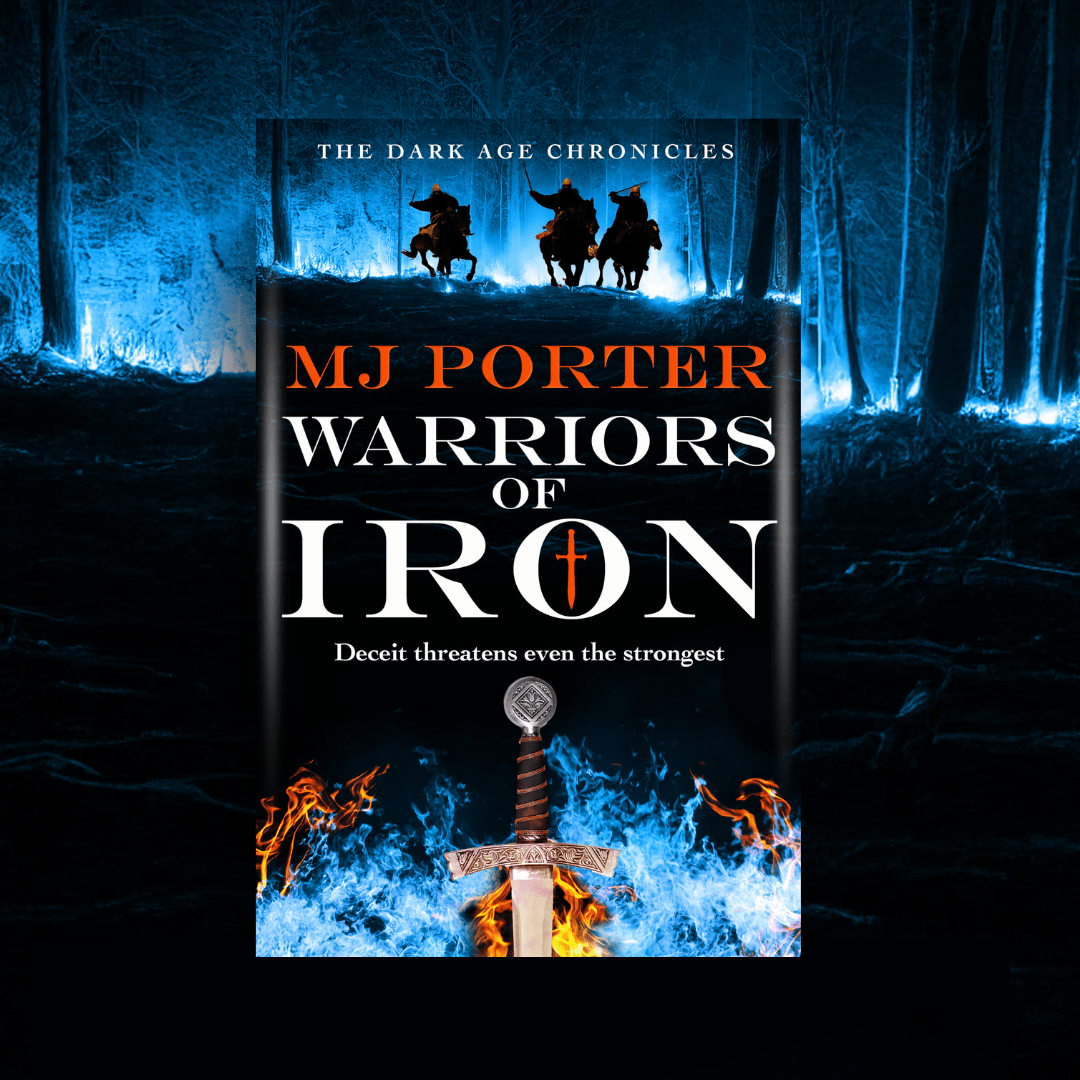
I’m so excited to share this story with my readers, and the cover is fantastic.

Here’s the blurb:

Can the King of the Scots and the Dublin Norse triumph against a united England?

AD934

King Athelstan of the English has been successful in uniting the many kingdoms of Britain against one enemy, the Viking raiders.

But men who are kings don’t wish to be ruled. 

Constantin, King of the Scots, rebelled against the Imperium and was forcibly brought to bend the knee to Athelstan and England at Cirencester.

His son Ildulb seeks bloody vengeance from Athelstan following the battle at Cait and the death of his son.

Olaf Gothfrithson, king of the Dublin Norse, having asserted his power following his father’s death has his sights set on reclaiming Jorvik. 

Can the united might of the Scots and the violence of the Dublin Norse, descendants of the infamous Viking raiders, bring King Athelstan and his vision of the united Saxon English to her knees?

An epic story of kingsmanship that will result in the pivotal, bloody Battle of Brunanburh, where only one side can be victorious.

King of Kings

Kings of War

Check out the Brunanburh Series page for more information on the books and the historical characters involved.

Meet Olaf Gothfrithson, king of Dublin

Meet Edmund, ætheling of the English

Meet Ealdorman Athelstan

Read the release day posts on Boldwood Books Facebook account

Kings of War is on blog tour with the fabulous hosts of Rachel’s Random Resources. I’ll be sharing their reviews throughout the next week. A huge thank you to Rachel, and the hosts.

Leanne bookstagram

Sharon Beyond the Books

Seriesbooklover

David’s Book Blurg

Bookish Jottings

Ruins & Reading

Scrapping and Playing


And it’s not just the blog hosts sharing reviews either:) Thank you.

Amy McElroy

Terry Rudge

My new book, Kings of War, has a number of main characters. Meet Constantin, the king of the Scots.

My new book, Kings of War, is a multi-viewpoint novel telling the story of events in Britain from 925-934. I thought it would be good to share details of the historical people my character are based on.

My portrayal of Constantin, the king of the Scots, is of course fictional in King of Kings, but he is based on a historical individual, Constantin (e) II, so who exactly was he?

Constantin is a fascinating character. Again, and as with Athelstan, his exact date of birth is unknown, but it must have been, at the latest, by 877/8, when his short-reigned father died.

By 900, Constantin was the king of the Scots (we think – there is some confusion about this). This wasn’t yet quite Scotland, but it was getting there. The ancient kingdoms of Cait, Fortriu, Atholl and Dal Riata, were ruled by one king, Constantin. But, he hadn’t succeeded his father, Aed, but rather a man named Domnall II, his cousin. At this time there were two rival dynasties and they strictly alternated the kingship.

Affairs in the kingdom of the Scots often intermingled with those of the independent kingdom of Bamburgh, Strathclyde, and of course, the Norse, or Viking raiders, if you will. Indeed, the entry recording Constantin’s death in the Annals of Ulster, reads as though there was often strife.

Constantinus son of Ed held the kingdom for xl years in whose third year the Northmen plundered Dunkeld and all Albania. In the following year the Northmen were slain in Strath Erenn…And the battle of Tinemore happened in his xviii year between Constantin and Ragnall and the Scotti had the victory. And the battle of Dun Brunde in his xxxiiii year.’ (Alex Woolf, From Pictland to Scotland, 789-1070,p.126)

Constantin, ruling for decades, and I mean decades, seems to have brought much needed stability to the kingdom, as affairs there very much mirrored the emerging ‘England’ to the south.

‘Constantin’s reign has increasingly come to be see as one of the most significant in the history of Scotland. Not only was it very long, at least forty years, but it was also the period during which conflict and diplomatic relations between a kingdom recognisably ancestral to Scotland and one recognisably ancestral to England first occurred.’ (Alex Woolf, From Pictland to Scotland, 789-1070, p.128)

Constantin allied with the rulers of Bamburgh, and York, and also, on occasion, both Æthelflæd of Mercia and Edward the Elder, after her death. But, he seems to have been quite flexible in his thinking, and was prepared to pick and choice as he saw fit.

By the beginning of King of Kings, Constantin would have been in his mid-forties, and he was still to rule for many years to come, and he was certainly a more than adequate counterpart to Athelstan, king of the English, no doubt helped by his sons and grandsons, as his reign continued.

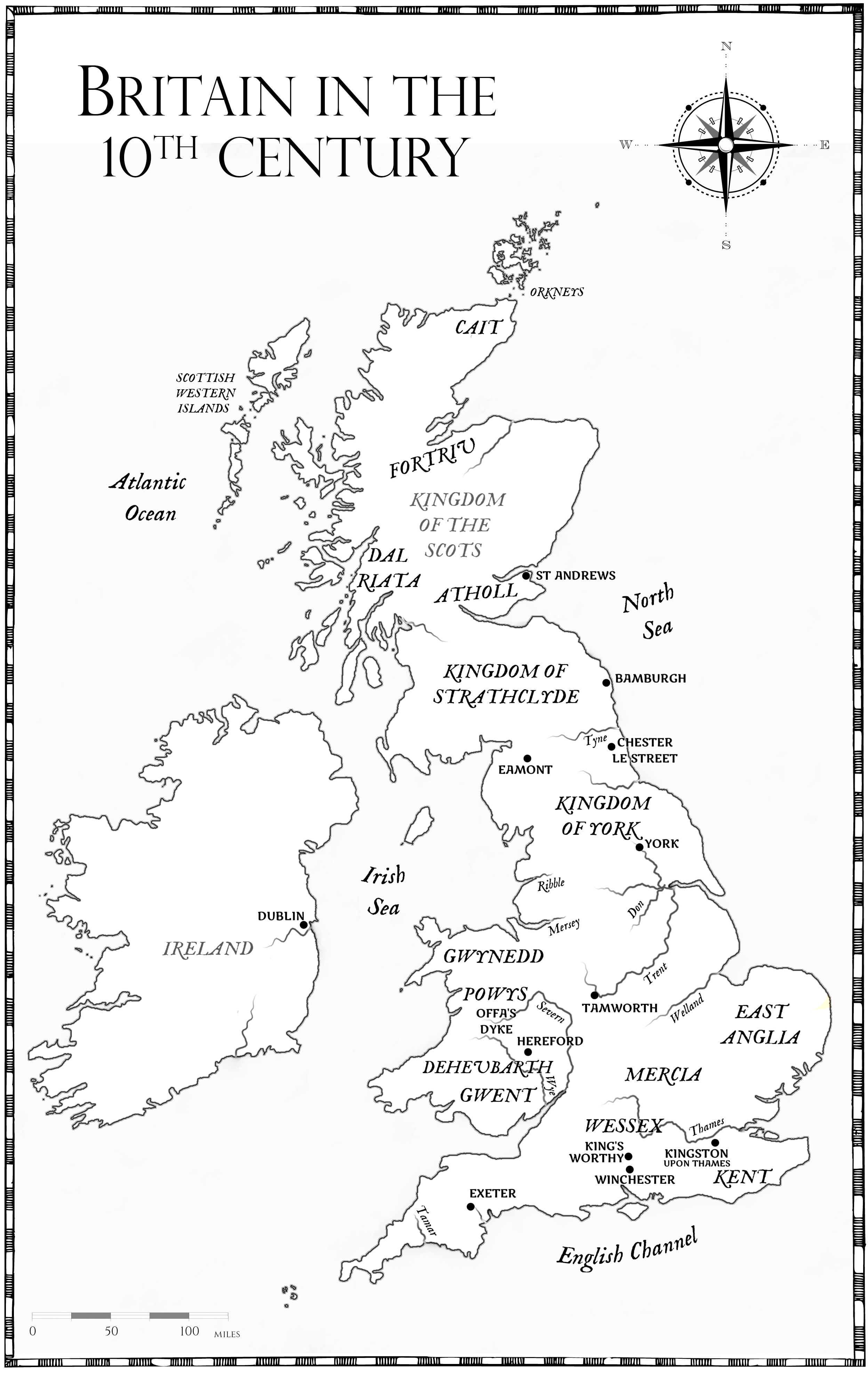
Map design by Shaun at Flintlock Covers

books2read.com/kingsofwar

Meet Athelstan, the king of the English

Meet Hywel, the king of the West Welsh

Meet Ealdred, the king of Bamburgh

Meet Lady Eadgifu, queen of the Anglo-Saxons

Meet Owain, the king of Strathclyde

My new book, Kings of War, has a number of main characters. Meet Athelstan, the King of the English.

Athelstan is one of the main characters in my new book, Kings of War, a multiple point of view story, recounting affairs in Britain from 925-934. Here’s a post about Athelstan I wrote for the release of King of Kings.
Based on a historical person, my portrayal of him, is of course, fictitious, but there are many details known about him. However, we don’t know for sure who his mother was, it’s believed she might have been called Ecgwynn, and we don’t know, for certain, the name of his sister, but it’s believed she might have been named Edith. What is known is that his father was Edward, the son of King Alfred, and known to us today as Edward the Elder. Athelstan is also rare in that he is one of only two Saxon kings for who a contemporary image is available. (The other is Edgar, who would have been his step-nephew)

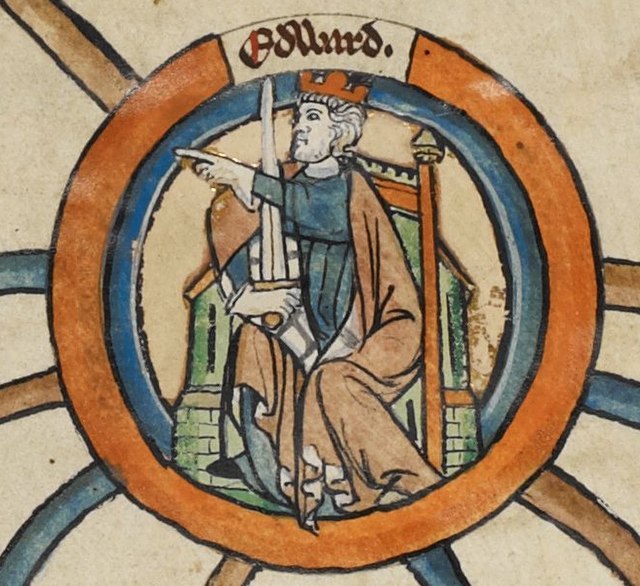
Edward the Elder
Edward the Elder – MS Royal 14 B VI.jpg
Miniature d’Édouard l’Ancien dans une généalogie royale du XIVe siècle. WikiCommons

It must be supposed that Athelstan was born sometime in the late 890s. And according to a later source, that written by William of Malmesbury in the 1100s (so over two hundred years later), Athelstan was raised at the court of his aunt, Æthelflæd of Mercia. David Dumville has questioned the truth of this, but to many, this has simply become accepted as fact.
‘he [Alfred] arranged for the boy’s education at the court of his daughter, Æthelflæd and Æthelred his son in law, where he was brought up with great care by his aunt and the eminent ealdorman for the throne that seemed to await him.’[i]


[i] Mynors, R.A.B. ed and trans, completed by Thomson, R.M. and Winterbottom, M. Gesta Regvm AnglorvmThe History of the English Kings, William of Malmesbury, (Clarendon Press, 1998), p.211 Book II.133

Æthelflæd image
Æthelflæd as depicted in the cartulary of Abingdon Abbey (British Library Cotton MS Claudius B VI, f.14).
https://commons.wikimedia.org/wiki/File:Æthelflæd_as_depicted_in_the_cartulary_of_Abingdon_Abbey.png
AnonymousUnknown author, Public domain, via Wikimedia Commons

Why then might this have happened? Edward became king on the death of his father, Alfred, and either remarried at that time, or just before. Edward’s second wife (if indeed, he was actually married to Athelstan’s mother, which again, some doubt), Lady Ælfflæd is believed to have been the daughter of an ealdorman and produced a hefty number of children for Edward. Perhaps then, Athelstan and his unnamed sister, were an unwelcome reminder of the king’s first wife, or perhaps, as has been suggested, Alfred intended for Athelstan to succeed in Mercia after the death of Æthelflæd, and her husband, Æthelred, for that union produced one child, a daughter named Ælfwynn.

There is an acknowledged dearth of information surrounding King Edward the Elder’s rule of Wessex. He’s acknowledged as the king of the Anglo-Saxons. His father had been the king of Wessex. Historians normally use the surviving charters to unpick the political machinations of the Saxon kings, but for Edward, there’s a twenty year gap between the beginning and end of his reign, where almost no known genuine charters have survived. What isn’t known for sure, is how much control, if any, he had in Mercia. Was Mercia subservient to Wessex or was it ruled independently? It’s impossible to tell. And this makes it difficult to determine what Athelstan might have been doing, and also what his father’s intentions were towards him.

Frontispiece of Bede’s Life of St Cuthbert, showing King Æthelstan (924–39) presenting a copy of the book to the saint himself. 29.2 x 20cm (11 1/2 x 7 7/8″). Originally from MS 183, f.1v at Corpus Christi College, Cambridge. (Wikimedia Commons)

What is known is that following the death of King Edward in 924, Athelstan was acknowledged as the king of Mercia; his stepbrother, Ælfweard was proclaimed king in Wessex. As with all events at this time, it shouldn’t be assumed that just because this is what happened, this is what was always intended.

‘Here King Edward died at Farndon in Mercia; and very soon, 16 days after, his son Ælfweard died at Oxford; and their bodies lie at Winchester. And Athelstan was chosen as king by the Mercians and consecrated at Kingston.’[i]


[i] Swanton, M. trans and edit The Anglo-Saxon Chronicles, (Orion Publishing Group, 2000), D text p.105

But, if Athelstan was raised in Mercia, it’s highly likely he was a warrior from a young age, helping the Mercians defeat the Viking raiders who still had control of the Danish Five Boroughs of Lincoln, Nottingham, Derby, Nottingham and Leicester.

And the events of 924 are where King of Kings begins, and so I will leave him there. By now, he would have been perhaps thirty years old, give or take a few years. What sort of man was he? What sort of king might he be? Do please read King of Kings to find out. And, if this intrigues you, then do please have a look at Sarah Foot’s wonderful monograph on him, Athelstan, from Yale Publishing.

Design by Boldwood Books

books2read.com/kingsofwar

Meet Hywel, king of the West Welsh

Meet Constantin, king of the Scots

Meet Lady Eadgifu, queen of the Anglo-Saxons

Meet Ealdred, king of Bamburgh

Meet Owain, king of Strathclyde

Meet Olaf Gothfrithson, king of Dublin