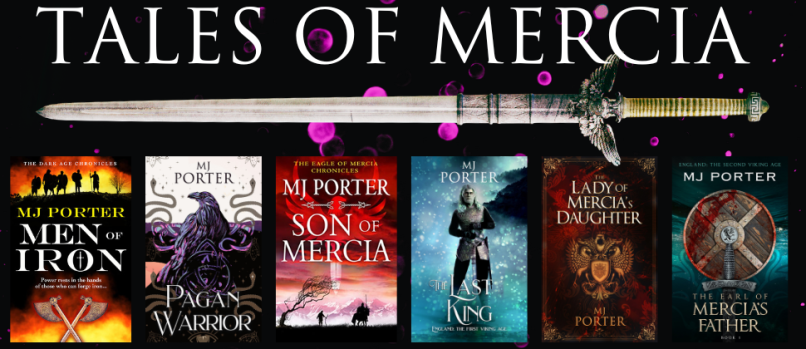
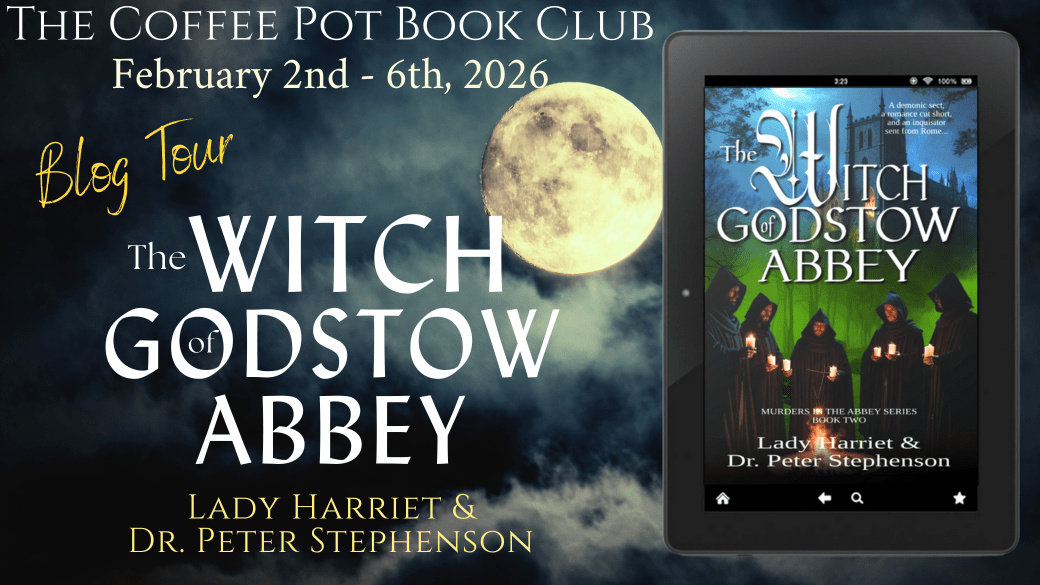
I’m really excited to share the details of the Pagan Warrior blog tour with The Coffee Pot Book Club.
Pagan Warrior is the story of the battle of Hædfeld, fought in the seventh century between the Northumbrians, and you got it, the Mercians – or rather, Cadwallon of Gwynedd but with Penda of Mercia as his firm ally. You can find more details here.
I might have written this book many years ago, but it’s had a refresh, and is now available in audio, narrated by the fabulous, Matt Coles, as is the second book, Pagan King. Warrior King will be coming later this year in audio.
And, if you read on Nook, I’ve created a special discount code just for Nook readers. Using code BNPPAGAN at checkout will get you 50% off all three titles, for a limited time.
You can follow the blog tour, and I’ll be sharing posts here as well. A quick shout out to thank all the blog hosts and Cathie at The Coffee Pot Book Club for organising.
And, the post that perhaps gave me the most fear to begin will but which was fun when I remembered all the little details, five fun facts about writing the trilogy.
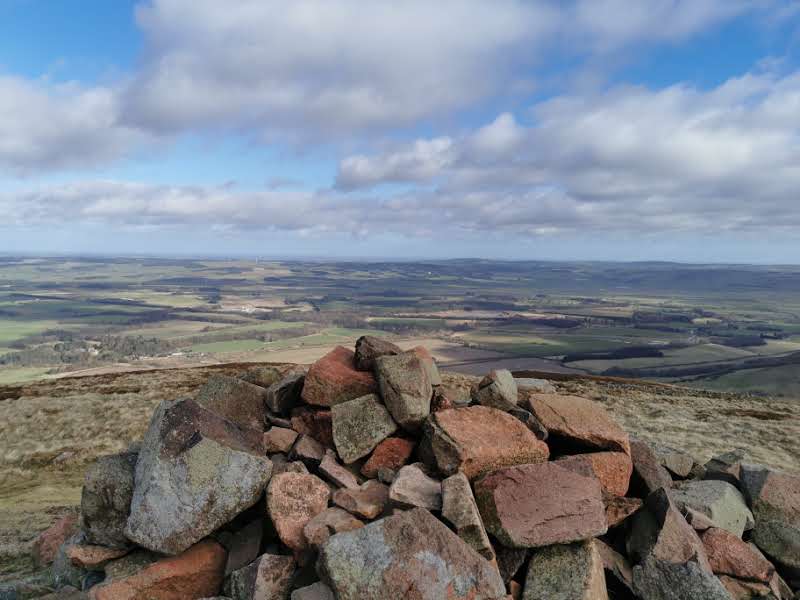
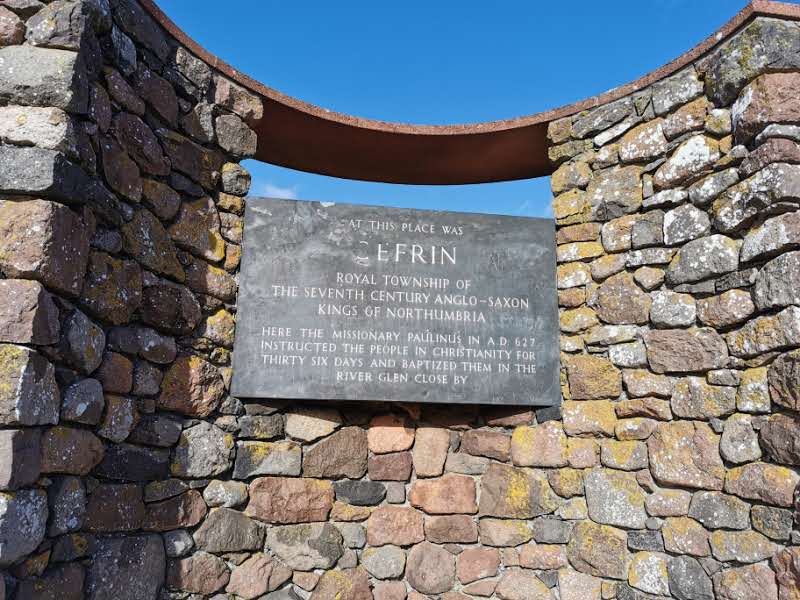
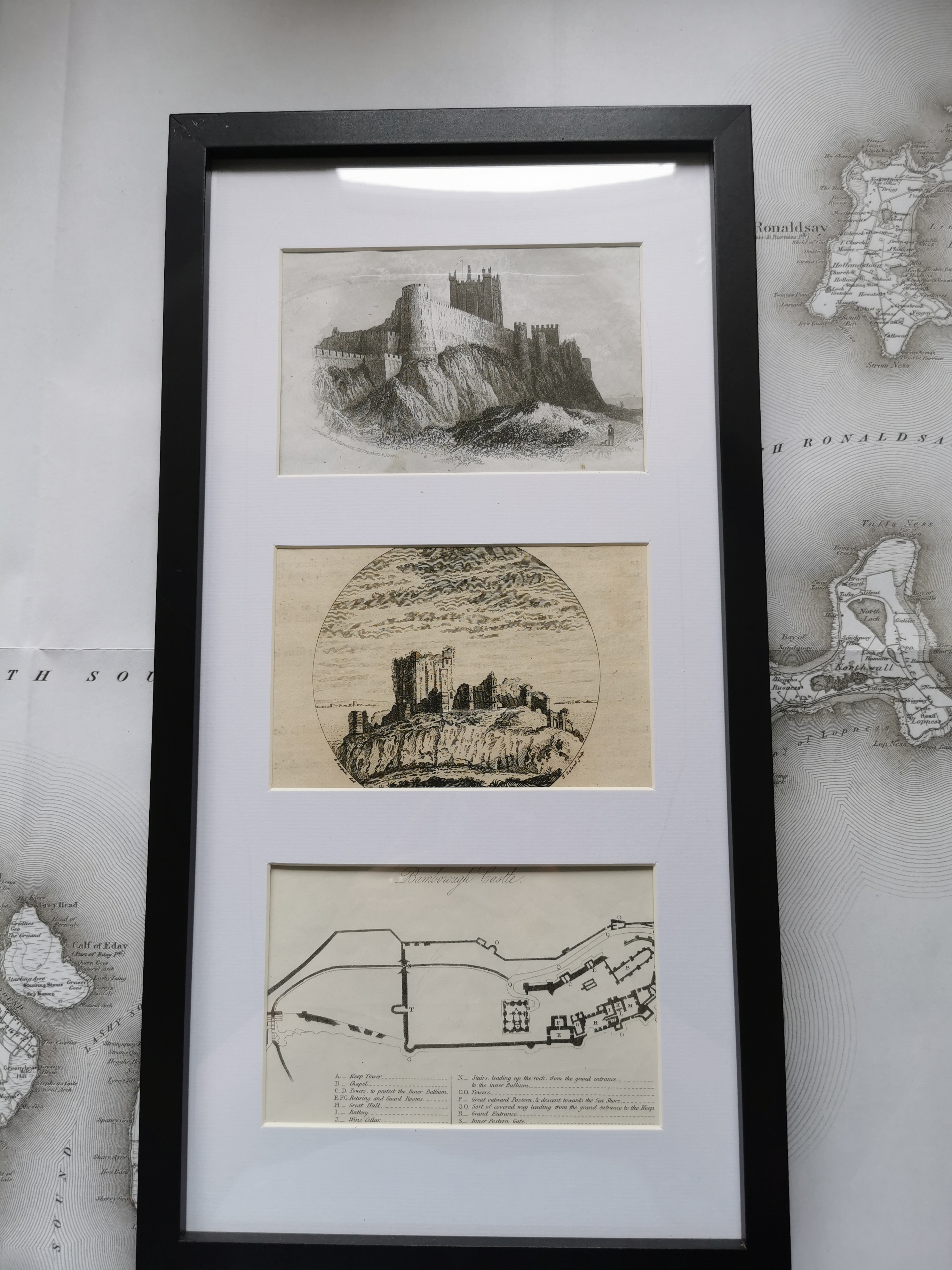
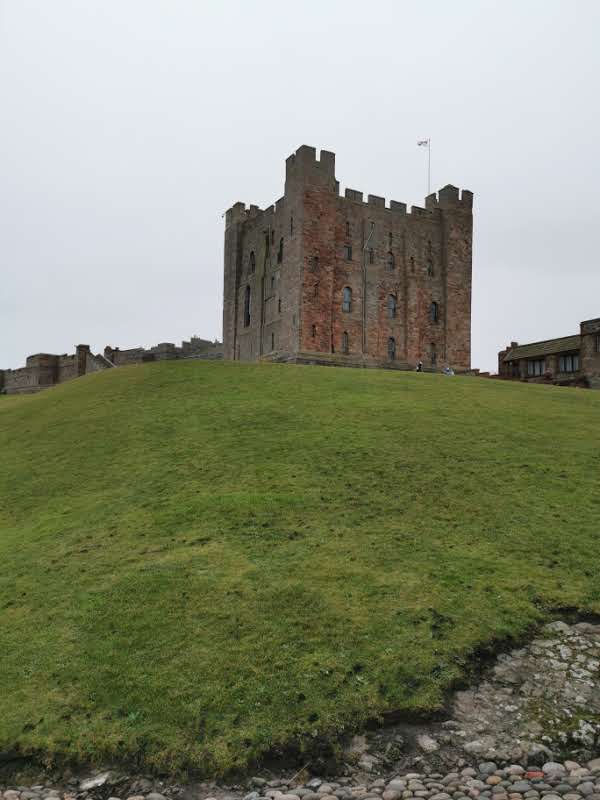
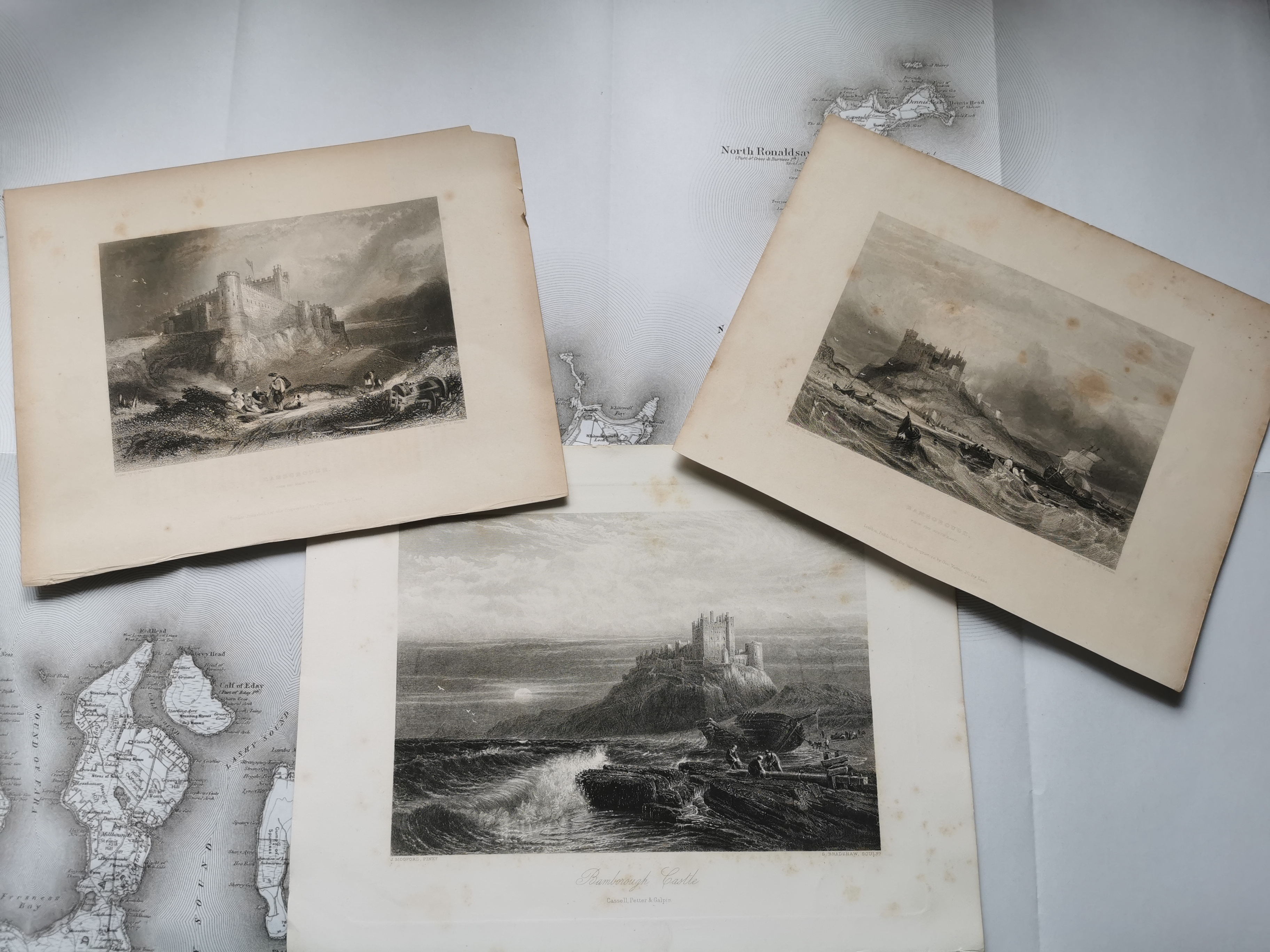
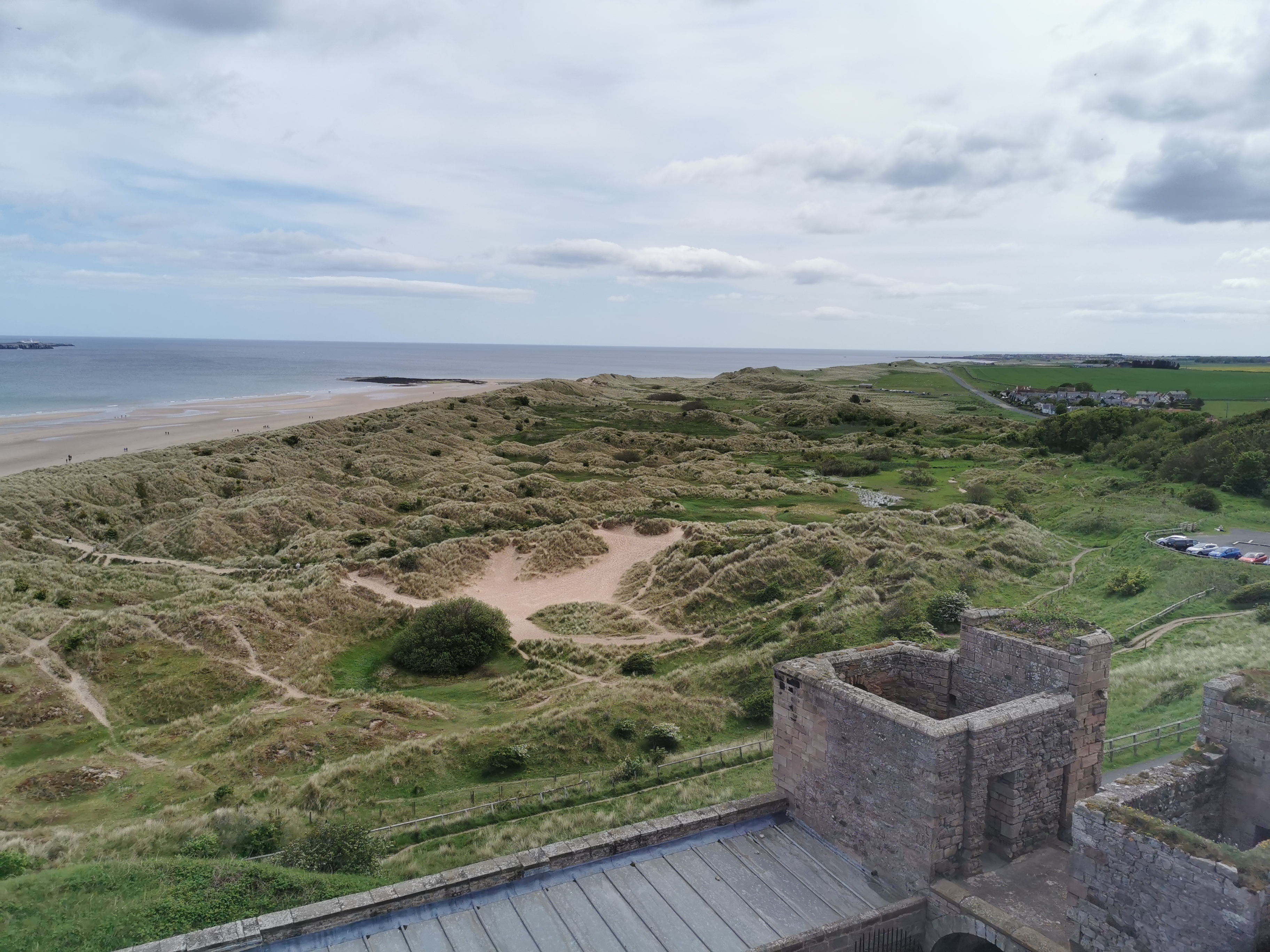
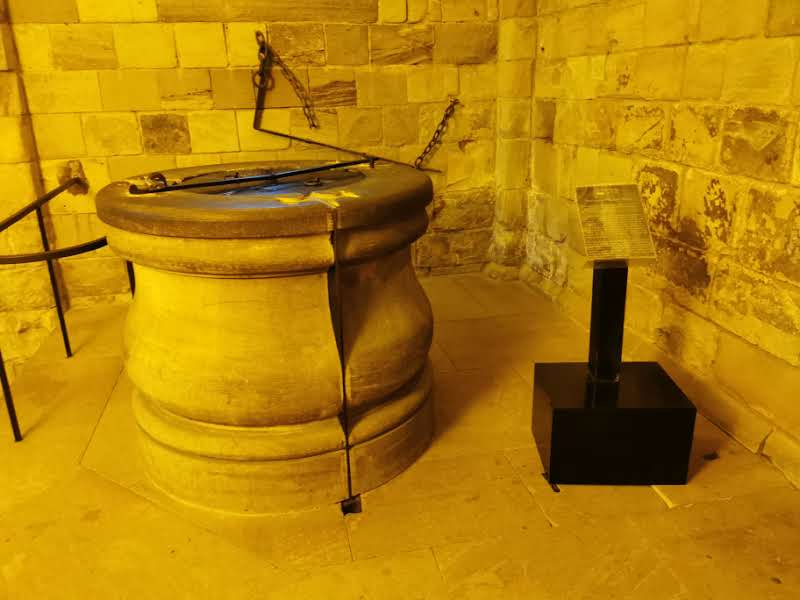
For March 21st check out a post about two of the royal residences of Bernicia at the time, Bamburgh and Ad Gefrin (Yeavering). (There are lots of photos, thank you to Helen Hollick for uploading them all).
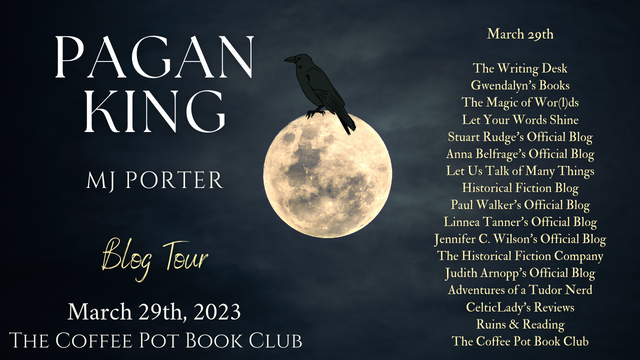
Not content with highlighting Pagan Warrior, Pagan King gets its own blog tour today. A huge thank you to Cathie at The Coffee Pot Book Club for organising, and to all the hosts for showcasing the second book in the Gods and Kings trilogy/ also known as The Seventh Century trilogy, on their blogs today.
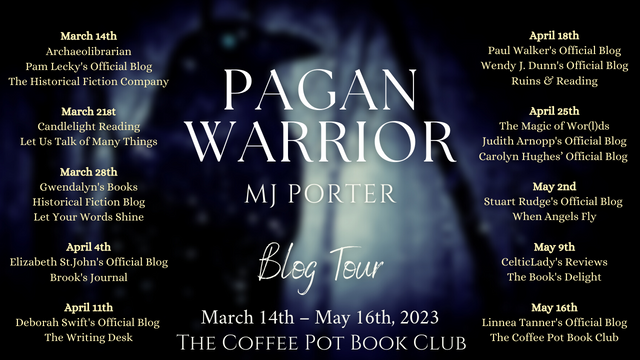
You can follow the tour below.
And, you can find Pagan King on your retailer of choice here. It’s also available in audio format from Audible, Amazon and iTunes. Check it out below. Narrated by the fabulous Matt Coles.
I’m really excited to share the details of the Pagan Warrior blog tour with The Coffee Pot Book Club.
Pagan Warrior is the story of the battle of Hædfeld, fought in the seventh century between the Northumbrians, and you got it, the Mercians – or rather, Cadwallon of Gwynedd but with Penda of Mercia as his firm ally. You can find more details here.
I might have written this book many years ago, but it’s had a refresh, and is now available in audio, narrated by the fabulous, Matt Coles, as is the second book, Pagan King. Warrior King will be coming later this year in audio. For this third week, 27th March-2nd April, the ebook of Warrior King (book 3) is reduced globally to 99p/99c and equivalent. Follow the link below.
And, if you read on Nook, I’ve created a special discount code just for Nook readers. Using code BNPPAGAN at checkout will get you 50% off all three titles, for a limited time.
You can follow the blog tour, and I’ll be sharing posts here as well. A quick shout out to thank all the blog hosts and Cathie at The Coffee Pot Book Club for organising.
For today, March 28th, check out a fabulous review on
And, the post that perhaps gave me the most fear to begin will but which was fun when I remembered all the little details, five fun facts about writing the trilogy.
For March 21st check out a post about two of the royal residences of Bernicia at the time, Bamburgh and Ad Gefrin (Yeavering). (There are lots of photos, thank you to Helen Hollick for uploading them all).
I’m really excited to share the details of the Pagan Warrior blog tour with The Coffee Pot Book Club.
Pagan Warrior is the story of the battle of Hædfeld, fought in the seventh century between the Northumbrians, and you got it, the Mercians – or rather, Cadwallon of Gwynedd but with Penda of Mercia as his firm ally. You can find more details here.
I might have written this book many years ago, but it’s had a refresh, and is now available in audio, narrated by the fabulous, Matt Coles, as is the second book, Pagan King. Warrior King will be coming later this year in audio. For this second week, 20th March-25th March, the ebook of Pagan King (book 2) is reduced globally to 99p/99c and equivalent. Follow the link below.
I’ve also, finally, managed to get book three, Warrior King, uploaded to all good ebook platforms, and they will be going live during this week. Kobo have so far won the competition. Use this link, which I will be updating, or try the one above, and hopefully, Warrior King will be linked to Pagan King as well. It means Warrior King is also available in hardcover from Amazon.
You can follow the blog tour, and I’ll be sharing posts here as well. A quick shout out to thank all the blog hosts and Cathie at The Coffee Pot Book Club for organising.
For today (March 21st) check out a post about two of the royal residences of Bernicia at the time, Bamburgh and Ad Gefrin (Yeavering). (There are lots of photos, thank you to Helen Hollick for uploading them all).
(I’m re-sharing an old post which I’ve amended slightly, and added some new graphics).
England, Wales, Scotland, the smaller kingdoms of Mercia, Wessex, Northumbria, East Anglia, Kent, Powys, Gwynedd, Dal Riada – for the uninitiated (including myself) the sheer number of kingdoms and kings that peopled the period in British history before 1066 can appear as a bewildering display of names, places, times and events, and perhaps never more so than when a historian is trying to sell a book and so makes a statement in their title that applies to that particular king.
Map designed by Flintlock Covers
Phrases such ‘the Golden Age of Northumbria’, ‘the Mercian hegemony’, ‘the rise of Wessex’, they all mask so many events that I find the phrases very unhelpful and perhaps worse, misleading.
I think that Athelstan and his younger half brother, Edmund, probably deserve their titles as Kings of the English. And it’s not just my opinion either. There was, according to Sarah Foot in her book on Athelstan, a concerted effort by the king and his bishops to have him stand apart from his predecessors – to be something ‘different’ to them. They named him king of the English, not king of Mercia (a post he held briefly before another of his younger brothers died) and not king of Wessex, for all that he was both of those things.
They changed his title, they crowned him with a crown, not a helmet. They wanted Athelstan to be something other than his grandfather, King Alfred, and his father, King Edward. It was a bold statement to make, and one they continued when Athelstan died too young and his half-brother, Edmund replaced him. He too was crowned using, it must be supposed, the same Coronation service. (For full details have a peek at Sarah Foot’s book on Athelstan – or read the first few chapters of King of Kings as the service appears in it as well).
So why the change? Essentially the old Saxon kingdoms, for all that they were preserved in the naming of the earls/ealdormens designations, had been swept aside by the Viking raiders. The old kingdoms had become a handy label to apply to certain geographic areas, and the kings of Wessex, whilst keen to hold onto their hereditary titles because of the permanence their own royal line had managed to acquire, were equally as keen to do away with regional boundaries. There was, it can’t be denied, a concerted and almost unrelenting urge to drive any Viking raider or Dane or Norwegian (the Norse) from British soil, and this is what Athelstan and then Edmund were tasked with doing.
Yet the idea of ‘English’ wasn’t a new concept. Why else would Bede have called his great piece of religious historical writing “The Ecclesiastical History of the English people’, if there hadn’t been a shared consciousness that the people in England, all be it in their separate kingdoms, didn’t have a shared heritage? Why the idea suddenly took flight under King Athelstan could be attributed to a new sense of confidence in Wessex and Mercia at the time. They were confident that they could beat the Viking raiders and they were convinced that England belonged to them.
Or perhaps it was more than that? The destruction wrought by the Viking raiders on the separate kingdoms must have been a stark reminder of just how insular the kingdoms had become, and the Viking raiders showed everyone just how easy it was to run roughshod over the individual kingdoms. Only in unity could the Saxon kingdoms of England survive another onslaught; only with unity could the Saxons hold onto their kingdoms they’d claimed about 500 years before.
It was a message that was learned quickly and taken to heart. Athelstan worked to reunite more of the Saxon kingdoms with the growing ‘England’, and he tried to do so by both diplomacy and through war. Yet, the Viking raiders hadn’t finished with England, and nor were they her only enemies. This also lies at the heart of Athelstan’s ‘masterplan’ his treaty of Eamont (if it truly happened – Benjamin Hudson in his Celtic Scotland is not convinced). Athelstan wanted to be a mighty king, but he also wanted England, and the wider Britain (also a concept already understood otherwise why else would that cantankerous monk – Gildas – have called his even earlier work than Bede’s “On the Ruin of Britain?”) to be united in their attempts to repel the Viking raiders. He was a man with a keen vision of the future and it was a vision that his brother continued, with slightly different direction and results.
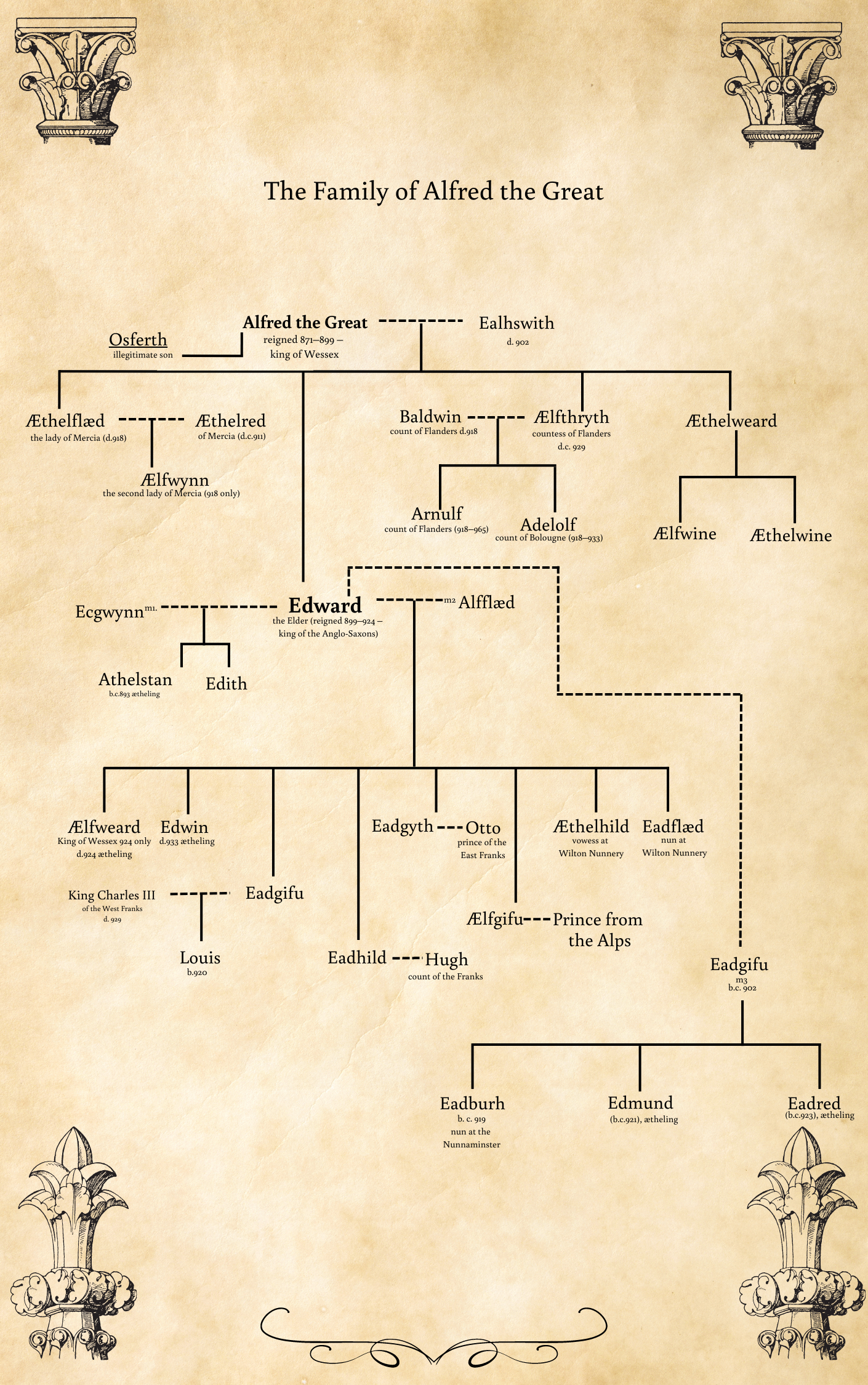
Family Tree designed by Boldwood Books
The ‘English Kings” saw safety in unity, and of course, an increase in the power they held went hand-in-hand with that.
Yet at no point during the Saxon period can it be said that the emergence of ‘England’ as we know it, was a given certainty. Throughout the period other great kings had tried to claim sovereignty over other kingdoms, but never with any permanence. The earlier, regional kings, were powerful within their own lifetimes and within their own regions. Few, if any, were able to pass on their patrimony complete upon their death. This was a time of personal kingship, and it was only under Athelstan and Edmund that the leap was taken away from this to a more permanent power base.
Not that it was a smooth transition and it did have the side-effect of allowing other men, those not related to the royal family, to evolve their own individual power bases in the old Saxon kingdoms. The ‘English’ kings had to do more than just rule their own kingdom, they had to rule their ealdormen and earls, their warriors, bishops and archbishops. The number of names of kings might start to deplete in the after math of Athelstan and Edmund’s kingship, but in their place spring up more and more powerful men, men that these English kings had to rely on.
Becoming King of the English was very much a mixed blessing, bringing with it new and greater responsibilities and more, it brought with it the need to expand personal government further, to have a greater persona to broadcast.
King Edgar the Peaceable of England (959-975) died a young man still, perhaps no older than thirty-two. He left two surviving sons, (one of his sons, Edmund, having died in 971 at a young age.) Neither of his surviving children was an adult and they both had different mothers. Edward, the child of a woman perhaps named as Æthelflæd, and Æthelred, the surviving child of Edgar and his queen, Elfrida, who had ruled at Edgar’s side for about a decade. Edward was probably no older than fifteen in 975, Æthelred perhaps as young as eight. While the kingdom of the English might well have endured years of peace, the same could not be said for the royal court.
The factionalism of the great Benedictine monastic reform movement has much to do with this. As part of the reform movement, a huge amount of land changed hands. As ever, religion was a mask for what was happening at a more basic level. It could just as easily be interpreted as a land grab. In the wake of the death of the king, ‘Attacks on church property were widespread. From York to Kent and Sussex, from the Severn valley to the Fens the death of Edgar was a signal to those who wished to recover property.’[1] Whether Edgar intended for his royal son, born to a consecrated mother and father to succeed after him or not might have been irrelevant when faced with two opposing parties – one supporting the older Edward and one Æthelred, both of whom had religious men as their supporters.
Essentially, both sons would have been too young to rule England. King Eadwig, their uncle, had hardly provided good and secure rule during his brief reign from 955-959, when he was no older than fifteen. But, there was no other choice unless note was made of the family of Ælfgifu, wife to Eadwig, and her collection of brothers, the most famous of whom was Æthelweard, an ealdorman who is thought to have written a Latin translation of the Anglo-Saxon Chronicle referred to as the Chronicon. The family claimed descent from Æthelred I (865-871), Alfred’s older brother.
Edward was chosen to rule with the support of one of these two powerful factions, and Edward’s coronation was conducted by Archbishop Dunstan. Yet some believed Æthelred should be king, no matter his young age, and Æthelred’s support was led by Ealdorman Ælfhere of Mercia. Ealdorman Ælfhere had gained his position under King Eadwig, and had remained powerful despite the seeming division of England back into its constituent parts of Mercia and Wessex in 958 and 959. Perhaps this then, might have been a solution – a division of England once more. Yet ‘questions of division or underkingship were replaced by a straightforward struggle for the throne of the entire kingdom.’[2]
Young Edward was murdered. What we don’t know, unlike with the murder of his grandfather (Edmund (939-946) was murdered by Liofa, possibly a thief), is who killed Edward, known as Edward the Martyr.
The A text of the Anglo Saxon Chronicle is the simplest version of the story for 978, ‘Here King Edward was killed.’[3]
The C text offers, ‘Here in this year King Edward was martyred, and his brother, the young ætheling Æthelred, succeeded to the kingdom; and he was consecrated as king the same year.’[4]
‘Here King Edward was killed in the evening-time in 18 March at Corfe passage; and they buried him at Wareham without any royal honours.’[5] The ASC E (979 for 978) text reads.
Elfrida was known to live close to Corfe, but the E version of the ASC is one of the youngest manuscripts to have survived, dated to about 1121, when it was written in one hand.[6] It is possible then, that the entry in the E version of the ASC had benefitted from some much later additions, thanks to the Saints lives which portrayed Elfrida as the murderer of her husband’s oldest son! It is the A version of the Anglo-Saxon Chronicle which is the more contemporary of our surviving sources.
It was openly acknowledged that Edward was killed, and in his place, Æthelred, at no more than perhaps twelve years of age, became king. This can only have been possible with support for Æthelred. Those backing Æthelred’s claim must have been strong enough to counter any other bid for the kingdom. It no doubt helps that there were few others who could legitimately claim the kingship for themselves. Had they turned to any latent claim presented by Ealdorman Æthelweard, who by now was possibly a man in his late thirties or forties (his death is believed to have taken place in about 998 when he stops attesting Æthelred’s charters), then his sons might not have been deemed acceptable to rule after him, having been born to a man not consecrated as king, and a woman who was certainly not regarded as a queen. This, then, would have merely delayed the inevitable question of the succession once more after Æthelweard’s death.
So, who killed Edward, or ordered his death? Did Elfrida, England’s first anointed queen, commit regicide in an attempt to win back the influence she unexpectedly lost on the death of her young husband, when her step-son was appointed as king?
There were certainly some who believed she had a hand in the murder of the young man.
The involvement of Elfrida directly in the murder of her step-son is ‘derived ultimately from the Passio Sancti Eadwardi Regis et Martyris, an account of Edward’s life, murder and miracles probably written in the 1070s by the Anglo-Norman hagiographer Goscelin and itself based partly on an earlier account of St Edward which may have been written at Shaftesbury in the early years of the eleventh century.’[7]
‘When a certain day was nearing evening, the illustrious and elected king came as we have said to the house where his much-loved brother dwelt with the queen, desiring the consolation of brotherly love; there came out to meet him, as was fitting, nobles and chief men, who stayed with the queen, his mother. They formed among them a wicked plan, for they possessed minds so accursed and such dark diabolical blindness that they did not fear to lay hands on the Lord’s anointed….The thegns then holding him, one drew him on the right towards him as if he wished to give him a kiss, but another seized roughly his left hand and also wounded him. And he shouted, so far as he could: ‘What are you doing – breaking my right arm?’ And suddenly leapt from the horse and died.’[8] So informs the Life of St Oswald written during the life of both Elfrida and Æthelred II, by Byrhtferth, although we will never know if they were aware of what was written. It does not specifically name Elfrida as responsible for the king’s murder.
Another near contemporary source. The Sermon of the Wolf to the English states that, Edward was betrayed and then killed, and afterwards burned and [Ethelred was driven out of his country].’[9] This dates from 1014, and therefore follows Æthelred’s loss of the kingdom to King Swein of Denmark. Again, it is not a contemporary source.
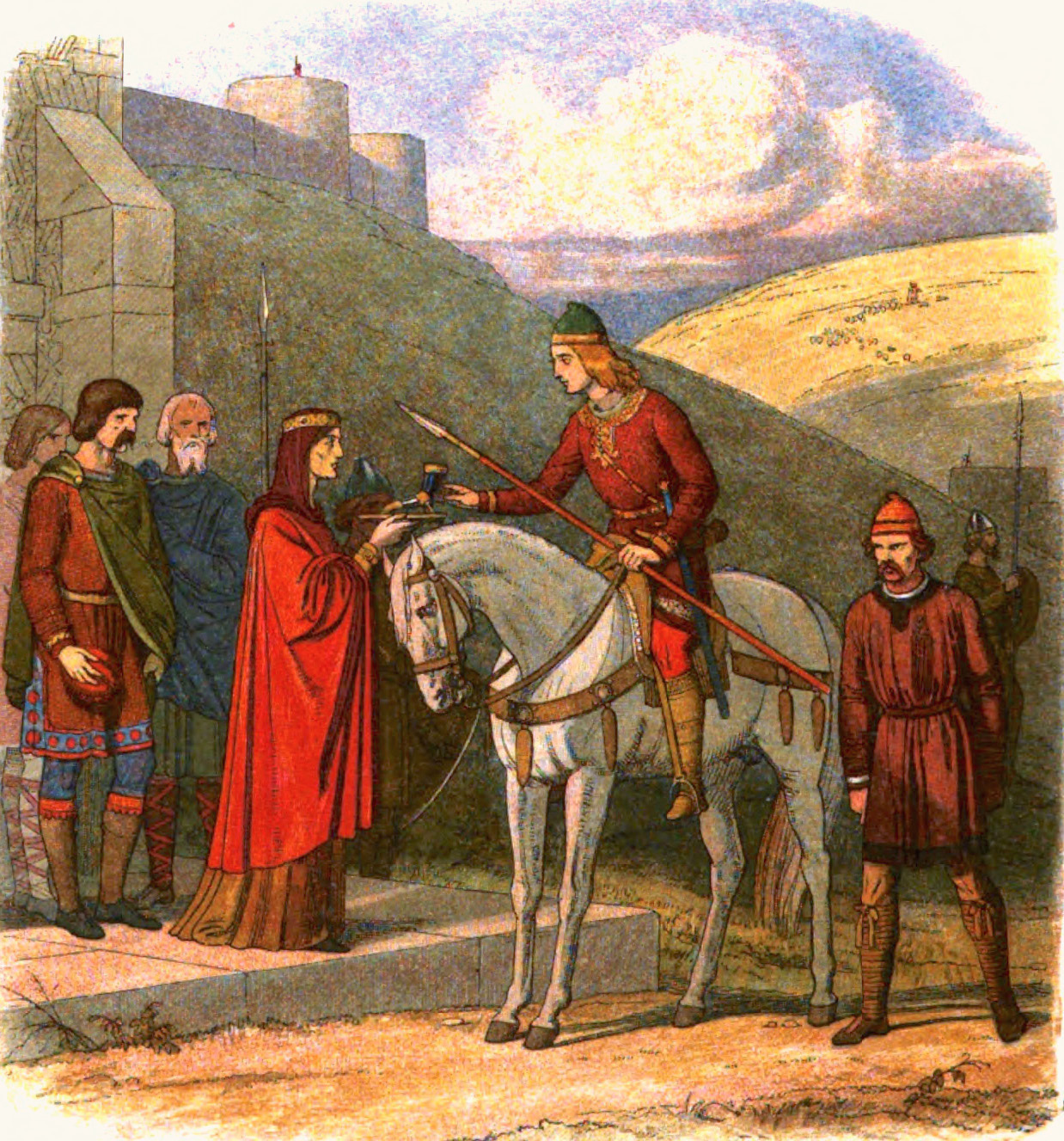
But later writers persisted with the story. Henry of Huntingdon, a Norman chronicler wrote. ‘It is said that his stepmother [Ælfthryth/Elfrida], that is the mother of King Æthelred, stabbed him [Edward] with a dagger while stretching out a cup to him.’[10] And so named Elfrida as the physical murderess.
Edward the Martyr is offered a cup of mead by Ælfthryth, wife of Edgar James William Edmund Doyle, Public domain, via Wikimedia Commons (1864)
William of Malmesbury, another Norman writer, also associates Edward the Martyr’s murder with Elfrida, despite that fact that Edward treated his ‘stepmother with proper warmth of feeling….The woman however, with a stepmother’s hatred and a viper’s guile, in her anxiety that her son should also enjoy the title of king, laid plots against her stepson’s life…On his arrival, his stepmother, with a woman’s wiles, distracted his attention, and with a kiss of welcome offered him a drink. As he greedily drank it, she had him pierced with a dagger by one of her servants….Ælfthryth [Elfrida] fell from her pride of royalty into a dire repentance, such that for many years at Wherwell she clad her delicately nurtured limbs in haircloth.’[11]
It is perplexing to consider the alleged involvement of Elfrida in the death of her stepson with the cult of Edward the Martyr that subsequently developed. Indeed, it has been noted that in the will of Athelstan, Æthlered’s son who died in 1014, and who was raised by Elfrida, he makes a bequest to Shaftesbury to St Edward (where Edward was later buried). ‘And I give to the Holy Cross and St Edward at Shaftesbury the six pounds about which I have given directions to my brother Edmund.’[12]
This then seems more than a strange thing to do if the family were keen to dismiss the concerns that Elfrida was involved in the king’s murder. Neither, and despite the reports that Edward the Martyr was not a pleasant individual, has it been considered that the murder was carried out because ALL believed they would benefit from a new king. Edward the Martyr, in the written details about him, does not have a good reputation, as the Vita Oswaldi itself states.
‘Certain of the chief men of this land wished to elect as king the king’s elder son, Edward by name; some of the nobles wanted the younger because he appeared to all gentler in speech and deeds. The elder, in fact, inspired in all not only fear but even terror, for [he scrouged them] not only with words but truly with dire blows, and especially his own men dwelling with him.’[13]
At such a distance in time, it’s impossible to determine what happened. Dismissing the later saints lives and aspersions cast on Elfrida, by Adam of Bremen, Osbern of Canterbury, Florence of Worcester and Henry of Huntingdon (all Norman writers),[14] one thing is clear. Whatever had happened to pave the way for Æthelred to become king, it was accepted by the vast majority of the witan and the holy men. Sometimes, mention is made that Æthelred’s coronation was delayed, taking place on 4th May 979, maybe while negotiations took place, but this delay was perhaps not that unusual – there was a delay in Edward the Elder’s coronation, and also Athelstan’s. Was it a delay because Æthelred was unacceptable, or merely one of politic? Or is it merely a confusion with the date, 979 for 978, or something else? Was Æthelred considered too young in 978 to undergo coronation? Was he ill? Sometimes, we forget the frailties of our forebears, too keen to see political intrigue everywhere.
What can be said is, no matter the alleged involvement of the royal family in the murder of one of their own, the words of later chroniclers and those who may have written at the time but with an agenda to tarnish the name of the Wessex royal family, no one faced murder charges for what happened. The murder was acknowledged, but those responsible faced no penalty for it (as far as we know – certainly, none of the prime suspects fell from favour). Whatever led to the murder of Edward, his absorption into the royal line of saints (and there were many, many royal saints in the Wessex family in the tenth century – Edgar’s mother was regarded as saintly, as was his only daughter, Edith, after her death, and indeed, that daughter’s mother, Wulfthryth) it was those looking back at the return of the Viking raiders throughout the last two decades of the tenth century and the eleventh, which resulted in not one, not two, but three Viking kings claiming England for themselves, who thought to tarnish Æthelred’s already tainted reputation as a failed military commander by adding the charge of ‘complicit in the murder of his step-brother’ to the already, very long list of charges levelled against him. But of course, none of these were contemporary accounts.
And so, it seems, we might never know the truth of what befell Edward the Martyr, and certainly, there are no truly contemporary accounts to say Queen Elfrida either physically committed the murder, or ordered that it be carried out.
[7] Simon Keynes, The Diplomas of King Æthelred the Unready, p168
[8] D Whitelock, English Historical Documents p841-3 It is believed that this work was written at Ramsey from 995-1005, and so in the lifetime of Æthelred, and indeed, his mother.
[9] D Whitelock, English Historical Documents p857 although Æthelred’s name is not included all of the manuscript versions.
I’m really excited to share the details of the Pagan Warrior blog tour with The Coffee Pot Book Club.
Pagan Warrior is the story of the battle of Hædfeld, fought in the seventh century between the Northumbrians, and you got it, the Mercians – or rather, Cadwallon of Gwynedd but with Penda of Mercia as his firm ally. You can find more details here.
I might have written this book many years ago, but it’s had a refresh, and is now available in audio, narrated by the fabulous, Matt Coles, as is the second book, Pagan King. Warrior King will be coming later this year in audio. For this first week, 13th March-19th March, the ebook of Pagan Warrior is reduced globally. Follow the link below.
You can follow the blog tour, and I’ll be sharing posts here as well. A quick shout out to thank all the blog hosts and Cathie at The Coffee Pot Book Club for organising.
For today, March 14th, check out my author interview over on Archaeolibrarian.
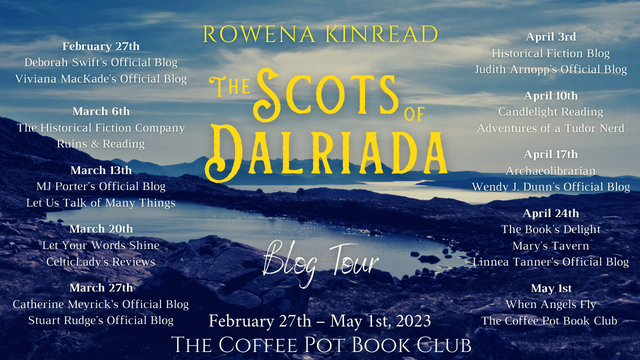
The Scots of Dalriada takes place in 5th century Ireland and Scotland and tells the fictional story of the legendary king Fergus Mór. Recorded Irish history begins with the introduction of Christianity and Latin literacy, beginning in the 5th century. Most of my research however, relied on sources written much later. First and foremost, Studies in the History of Dalriada by John Bannerman.
Published in 1974 this book is no longer in print but can be purchased second-hand.
My research of the Dalriada began fifteen years ago when I discovered that my ancestors descended from the Dalriada. History is compelling, especially when your own ancestors are involved, and the stories around the Dalriada didn’t let me go. I had to wait three years to obtain a copy of this book but it was definitely worth it, as it is much more comprehensive and detailed than anything to be found on the net.
It amazed me that St. Patrick was kidnapped as a teenager and sold to the Dalriada. He stayed with them, working as a shepherd on the exposed hills of Slemish until he miraculously escaped. When he returned to Ireland in his role as missionary, his first self-imposed duty was to convert the Dalriadians, despite bitter opposition from the druids.
See my first book from this period about the life of St.Patrick, Patron Saint of Ireland.
The Missionary
Although both books take place in 5th century Ireland, they are entirely independent of each other.
5th century Ireland and Scotland is at the end of the Iron Age and beginning of the early Medieval Age. This period includes an expansion of the Dalriada clan to Western Scotland. Ireland, at the time, was divided into many small baronies, each ruled by an underking. Life was dominated by a myriad of petty wars, neighbouring clans were constantly under attack from each other, stealing cattle and crop and encroaching upon each other’s land.
The Dalriada was situated in the utmost North East of Ireland, composed of much that is presently known as Antrim. To the North and East their territory was bordered by the North Channel and the Irish Sea. To the South and West, by the aggressive tribes of the Northern Uí Néill, the Dál Fiatach and the Dál nAraide, who continually attacked the Dalriada. So it was only natural that the Dalriada sought to expand their kingdom across the North Channel.
These background facts form the setting for my, mainly fictional, novel about Fergus. The book covers his life from roughly 440 to 501 AD, when his ship is sea wrecked, and he is succeeded by his son Domangart.
By that time the Dalriada have conquered Argyll (“Coast of the Gaels”) and built their chief stronghold and trading centre at Dunadd. The hillfort of Dunadd is believed to have been their capital. Other royal forts included Dunollie, Dunaverty and Dunseverick. Within Dalriada was the important monastery of Iona, which played a key role in the spread of Celtic Christianity throughout northern Britain, and in the development of insular art. Iona was a centre of learning and produced many important manuscripts. Dalriada had a strong seafaring culture and a large naval fleet.
Scotland is said to have been founded by the legendary king Fergus Mór (Fergus the Great) in the 5th century. Heavy onslaughts from the Picts checked the Dalriada on the Scottish mainland. In the 8th century the Dalriada gradually declined; and after the Viking invasions early in the 9th century, it lost all political identity. In the mid-9th century its king Kenneth I MacAlpin brought the Picts and Scoti (the Roman name for the Irish Gaels) permanently together, and thereafter the whole country was known as Scotland.
More books that I read to complement my research:
A Brief History of Ireland by Richard Killeen
Ireland’s Forgotten Past: A History of the Overlooked and Disremembered by Turtle Bunbury
A History of Scotland by Neil Oliver
Scotland: History of a Nation by David Ross
The Book of Celtic Myths: From the Mystic Might of the Celtic Warriors to the Magic of the Fey Folk, the Storied History and Folklore of Ireland, Scotland, Brittany, and Wales by Adams Media
Satellite image of Scotland and Northern Ireland showing the approximate greatest extent of Dál Riata (shaded). The mountainous spine which separates the east and west coasts of Scotland can be seen.
Ancient hill fort at Dunadd
Here’s the blurb
THREE BROTHERS Fergus, Loarn and Angus, Princes of the Dalriada, are forced into exile by their scheming half-brother and the druidess Birga One-tooth.
THREE FATES Fergus conceals himself as a stable lad on Aran and falls helplessly in love with a Scottish princess, already promised to someone else. Loarn crosses swords against the Picts. Angus designs longboats.
TOGETHER A MIGHTY POWER Always on the run the brothers must attempt to outride their adversaries by gaining power themselves. Together they achieve more than they could possibly dream of. Fergus Mór (The Great) is widely recognised as the first King of Scotland, giving Scotland its name and its language. Rulers of Scotland and England from Kenneth mac Alpín until the present time claim descent from Fergus Mór.
Full of unexpected twists and turns, this is a tale of heart-breaking love amidst treachery, deceit and murder.
Rowena Kinread grew up in Ripon, Yorkshire with her large family and a horde of pets. Keen on travelling, her first job was with Lufthansa in Germany.
She began writing in the nineties. Her special area of interest is history. After researching her ancestry and finding family roots in Ireland with the Dalriada clan, particularly this era.
Her debut fiction novel titled “The Missionary” is a historical novel about the dramatic life of St. Patrick. It was published by Pegasus Publishers on Apr.29th, 2021 and has been highly appraised by The Scotsman, The Yorkshire Post and the Irish Times.
Her second novel “The Scots of Dalriada” centres around Fergus Mór, the founder father of Scotland and takes place in 5th century Ireland and Scotland. It is due to be published by Pegasus Publishers on Jan.26th, 2023.
The author lives with her husband in Bodman-Ludwigshafen, Lake Constance, Germany. They have three children and six grandchildren.
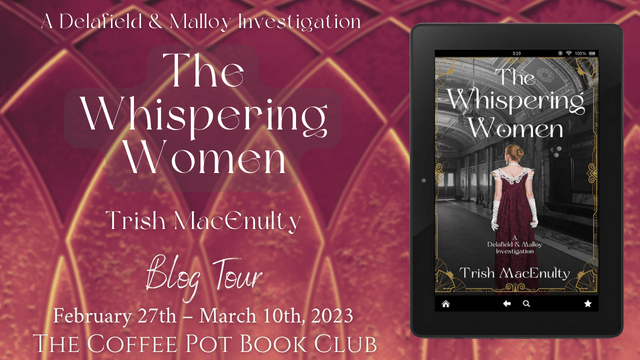
I’m delighted to welcome Trish MacEnulty to the blog with a guest post about her books.
Lesbians in the Early 20th Century — Branded as Deviants and Sometimes Jailed!
In my series, the Delafield & Malloy Investigations, one of my main characters — Ellen Malloy, an Irish immigrant — is a lesbian. As soon as she appeared on the page, she let me know in no uncertain terms that the expectation of marriage was the main reason she had left Ireland to become a servant for a wealthy family in Manhattan. Well, that didn’t work out either, but eventually she found her way and fell in love with a suffragist.
What would life be like for a lesbian in New York in 1913? I had no idea. The lives of gay men and the indignities they suffered in the late 19th and early 20th centuries has been widely documented — Oscar Wilde made sure of that! All the while, lesbians unobtrusively managed to find love and companionship in spite of the fact that their existence was rarely acknowledged.
In her fascinating academic tome, A Novel Approach to Lesbian History, Linda Garber writes “The historical records, if they exist at all, frustrate as often as they inform. Spotty, written by men, open to multiple interpretations—traces of a recognizably lesbian past run aground on the rocky shoals of the history of sexuality itself.” (3)
Fortunately, in the early 20th Century, the Bohemians of Greenwich Village had the freedom to live ‘unconventional’ lifestyles somewhat openly. In the Village, tea rooms provided space for women to meet each other away from the disapproving eye of society. On a recent tour of Greenwich Village with the Bowery Boys, I was shown one of the basement entrances for a former tea room. In those days, according to legend, it bore a sign that read, “Men are admitted but not welcome.”
Picture of basement, photo by me
Of course, the police knew about these places. In her autobiography, Mary Sullivan, one of the first police matrons to do actual police work, wrote, “A few tearooms run by women with a fondness for college girl patronage really were a menace…”
She added, “One of the most difficult types of degenerate with whom we have to deal is the woman with homosexual tendencies.” The police department received a complaint about “indecent literature” on sale in one of the tea rooms and a proprietess who “tried to entice girl students from a nearby college.” So Sullivan and one of her female colleagues set out to entrap the proprietess.
They visited the tea room, and the other police woman accepted a date from the proprietess, a woman named Billie. After trying to kiss the woman while on their date, Billie was arrested and then convicted of “disorderly conduct and distributing obscene literature.” She was sentenced to six months in the workhouse. Her tea room was closed. (Interestingly, this is the same scenario which happened later to activist Eve Adams; it may be the stories are conflated.)
Sullivan didn’t think jailing women with “homosexual tendencies” was the solution, however. “There is no doubt in my mind that they should be treated primarily as medical and psychiatric cases, though we still have to learn about the method of treatment.” Well, we all know where that eventually led: the horrors of conversion therapy!
picture of Sullivan’s book, photo by me
Not all lesbians kept quiet or hid their preferences. Polish-born Eve Adams arrived in New York in 1912 when she was twenty years old. In 1925, she wrote and published a book called Lesbian Love “for private circulation only.” Two years later she was arrested for obscenity and disorderly conduct and deported.
There’s an excellent book about Adams, titled The Daring Life and Dangerous Times of Eve Adams by Jonathan Ned Katz. In 1912, according to Katz, the term lesbian did not always signify a sexual relationship between women. It could simply refer to a community of women. For example, a women’s college newspaper in Maryland was called the Lesbian Herald. From everything I’ve read, the common term, at the time, for gays and lesbians was “invert.”
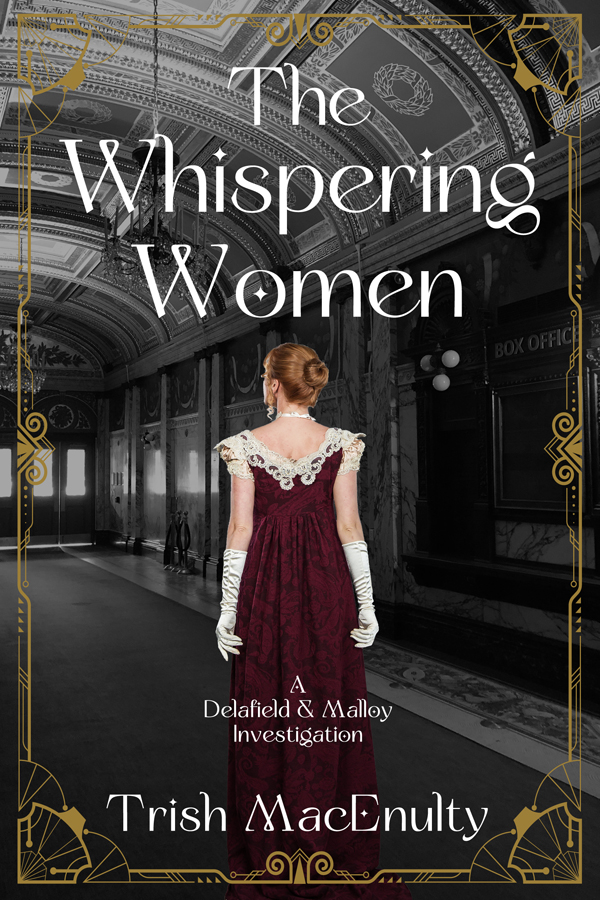
With this and other research in hand, I felt I could do justice to Ellen’s story in her quest for love and fulfillment. This scene is the moment Ellen first sees the women with whom she later falls in love in The Whispering Women as she is looking through the window of a teahouse in Greenwich Village:
“The tables were occupied by women of various ages and classes who seemed engrossed in conversations. One woman in particular caught her eye. She looked to be in her late twenties, big boned with a narrow face, an affable smile, and big brown eyes under thick eyebrows. Ellen could tell by her tailored gray jacket she had money, but she wasn’t showy. A strand of pearls hung carelessly around her neck. A feeling swept over Ellen like a dull ache — the kind of ache you don’t want to stop. The woman laughed at something her companion said. Ellen swiveled her head to look at the companion. Small, blond, and delicately holding her tea cup. When the woman with the pearls got up to get some more tea, Ellen saw the blond woman glance out the window and wave a handkerchief. Curiously, Ellen looked around. Two men stood across the street, smoking cigarettes with their eyes fixed on the window of the tea shop. Police, Ellen knew immediately.”
Thank you for sharing such a fascinating post. Good luck with your series.
Blurb:
“Richly drawn characters, the vibrant historical setting, and a suspenseful mystery create a strong current that pulls readers into this delightful novel. But it’s the women’s issues—as relevant today as they were in the early 1900s—that will linger long after the last page.”
— Donna S. Meredith, The Southern Literary Review
Can two women get the lowdown on high society?
“Two powerless young women must navigate a soul-crushing class system and find the levers of power they wield when they combine their strengths. These women may have been taught to whisper, but when their time comes, they will roar.”
– 5 Star Amazon Review
Louisa Delafield and Ellen Malloy didn’t ask to be thrown together to bring the truth to light. But after Ellen witnesses the death of a fellow servant during an illegal abortion, Louisa, a society columnist, vows to help her find the truth and turn her journalistic talent to a greater purpose.
Together, these unlikely allies battle to get the truth out, and to avenge the wrongful death of a friend.
What will our heroes do when their closest allies and those they trust turn out to be the very forces working to keep their story in the dark? They’ll face an abortionist, a sex trafficking ring, and a corrupt system determined to keep the truth at bay.
“If you like historical fiction and if you like mysteries, this one is for you!”
– 5 Star Amazon Review
Was change possible in 1913?
To find out, read THE WHISPERING WOMEN today!
Buy Links:
The books in this series are available to read on Kindle Unlimited.
Trish MacEnulty is a bestselling novelist. In addition to her historical fiction, she has published novels, a short story collection, and a memoir. A former Professor of English, she currently lives in Florida with her husband, two dogs, and one cat. She writes book reviews and feature articles for the Historical Novel Review. She loves reading, writing, walking with her dogs, streaming historical series, cooking, and dancing.































 MJ Porter