
My new book, King of Kings, has a number of main characters. Meet Athelstan, the King of the English.

Athelstan is one of the main characters in my new book, King of Kings, a multiple point of view story, recounting affairs in Britain from 925-934.

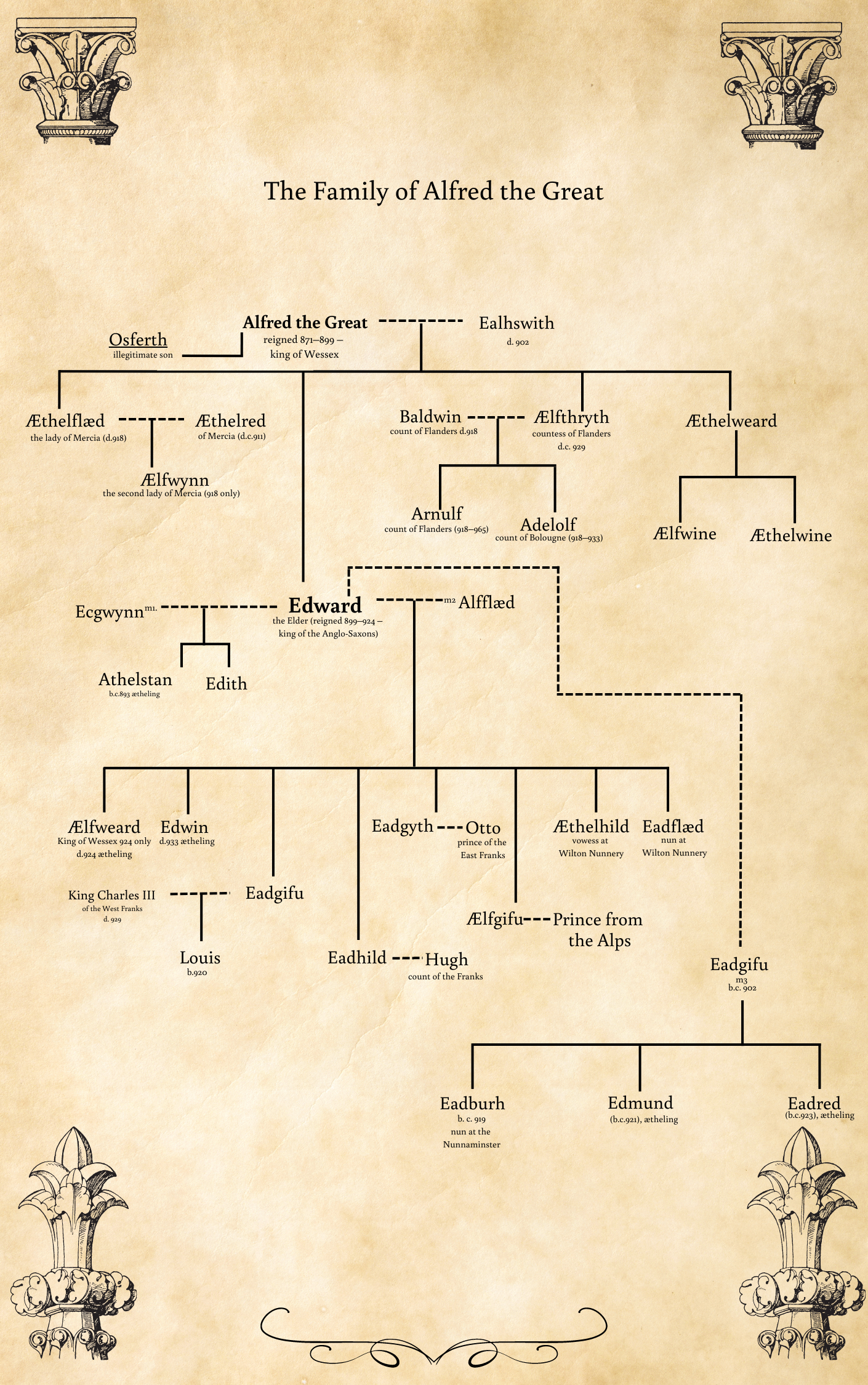
Based on a historical person, my portrayal of him, is of course, fictitious, but there are many details known about him. However, we don’t know for sure who his mother was, it’s believed she might have been called Ecgwynn, and we don’t know, for certain, the name of his sister, but it’s believed she might have been named Edith. What is known is that his father was Edward, the son of King Alfred, and known to us today as Edward the Elder. Athelstan is also rare in that he is one of only two Saxon kings for who a contemporary image is available. (The other is Edgar, who would have been his step-nephew)
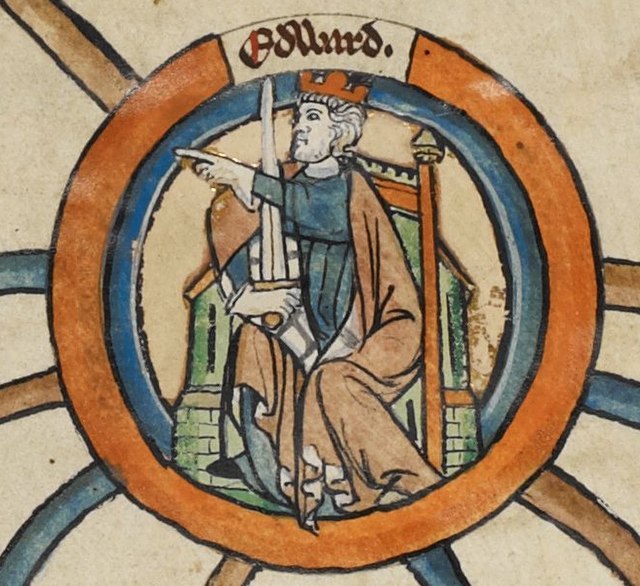
Edward the Elder
Edward the Elder – MS Royal 14 B VI.jpg
Miniature d’Édouard l’Ancien dans une généalogie royale du XIVe siècle. WikiCommons

It must be supposed that Athelstan was born sometime in the late 890s. And according to a later source, that written by William of Malmesbury in the 1100s (so over two hundred years later), Athelstan was raised at the court of his aunt, Æthelflæd of Mercia. David Dumville has questioned the truth of this, but to many, this has simply become accepted as fact.

‘he [Alfred] arranged for the boy’s education at the court of his daughter, Æthelflæd and Æthelred his son in law, where he was brought up with great care by his aunt and the eminent ealdorman for the throne that seemed to await him.’[i]


[i] Mynors, R.A.B. ed and trans, completed by Thomson, R.M. and Winterbottom, M. Gesta Regvm AnglorvmThe History of the English Kings, William of Malmesbury, (Clarendon Press, 1998), p.211 Book II.133
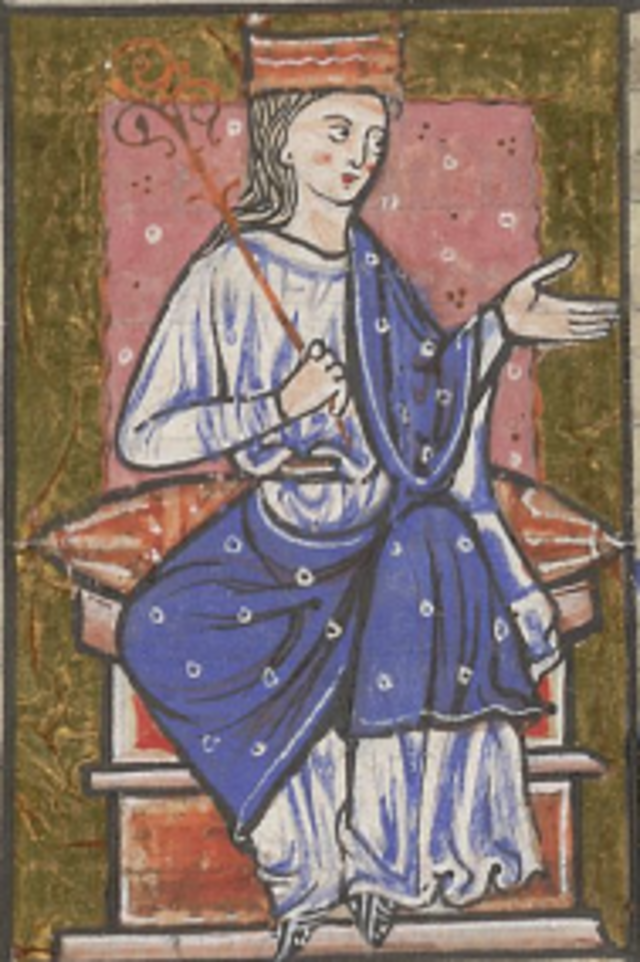
Æthelflæd image
Æthelflæd as depicted in the cartulary of Abingdon Abbey (British Library Cotton MS Claudius B VI, f.14).
https://commons.wikimedia.org/wiki/File:Æthelflæd_as_depicted_in_the_cartulary_of_Abingdon_Abbey.png
AnonymousUnknown author, Public domain, via Wikimedia Commons

Why then might this have happened? Edward became king on the death of his father, Alfred, and either remarried at that time, or just before. Edward’s second wife (if indeed, he was actually married to Athelstan’s mother, which again, some doubt), Lady Ælfflæd is believed to have been the daughter of an ealdorman and produced a hefty number of children for Edward. Perhaps then, Athelstan and his unnamed sister, were an unwelcome reminder of the king’s first wife, or perhaps, as has been suggested, Alfred intended for Athelstan to succeed in Mercia after the death of Æthelflæd, and her husband, Æthelred, for that union produced one child, a daughter named Ælfwynn.

There is an acknowledged dearth of information surrounding King Edward the Elder’s rule of Wessex. He’s acknowledged as the king of the Anglo-Saxons. His father had been the king of Wessex. Historians normally use the surviving charters to unpick the political machinations of the Saxon kings, but for Edward, there’s a twenty year gap between the beginning and end of his reign, where almost no known genuine charters have survived. What isn’t known for sure, is how much control, if any, he had in Mercia. Was Mercia subservient to Wessex or was it ruled independently? It’s impossible to tell. And this makes it difficult to determine what Athelstan might have been doing, and also what his father’s intentions were towards him.
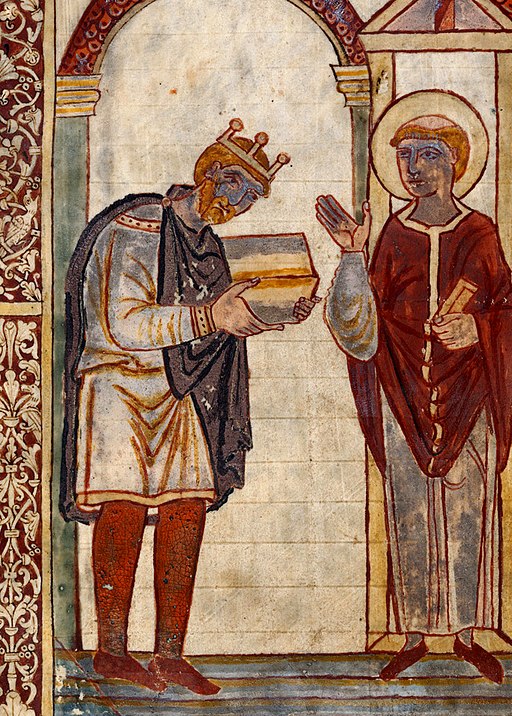
Frontispiece of Bede’s Life of St Cuthbert, showing King Æthelstan (924–39) presenting a copy of the book to the saint himself. 29.2 x 20cm (11 1/2 x 7 7/8″). Originally from MS 183, f.1v at Corpus Christi College, Cambridge. (Wikimedia Commons)

What is known is that following the death of King Edward in 924, Athelstan was acknowledged as the king of Mercia; his stepbrother, Ælfweard was proclaimed king in Wessex. As with all events at this time, it shouldn’t be assumed that just because this is what happened, this is what was always intended.

‘Here King Edward died at Farndon in Mercia; and very soon, 16 days after, his son Ælfweard died at Oxford; and their bodies lie at Winchester. And Athelstan was chosen as king by the Mercians and consecrated at Kingston.’[i]


[i] Swanton, M. trans and edit The Anglo-Saxon Chronicles, (Orion Publishing Group, 2000), D text p.105

But, if Athelstan was raised in Mercia, it’s highly likely he was a warrior from a young age, helping the Mercians defeat the Viking raiders who still had control of the Danish Five Boroughs of Lincoln, Nottingham, Derby, Nottingham and Leicester.

And the events of 924 are where King of Kings begins, and so I will leave him there. By now, he would have been perhaps thirty years old, give or take a few years. What sort of man was he? What sort of king might he be? Do please read King of Kings to find out. And, if this intrigues you, then do please have a look at Sarah Foot’s wonderful monograph on him, Athelstan, from Yale Publishing.

Design by Boldwood Books

Preorder King of Kings now

(released 20th February 2023)

books2read.com/King-of-Kings

Meet Hywel, king of the West Welsh

Meet Constantin, king of the Scots

Meet Lady Eadgifu, queen of the Anglo-Saxons
Meet Ealdred, king of Bamburgh

Meet Owain, king of Strathclyde

The first kings of the ‘English’ – Kings Athelstan and Edmund (924-946) #histfic #non-fiction #Brunanburh

(I’m re-sharing an old post, which I’ve amended slightly and added some new graphics).

England, Wales, Scotland, the smaller kingdoms of Mercia, Wessex, Northumbria, East Anglia, Kent, Powys, Gwynedd, Dal Riada – for the uninitiated (including myself) the sheer number of kingdoms and kings that peopled the period in British history before 1066 can appear as a bewildering display of names, places, times and events, and perhaps never more so than when a historian is trying to sell a book and so makes a statement in their title that applies to that particular king.

Map designed by Flintlock Covers

Phrases such ‘the Golden Age of Northumbria’, ‘the Mercian hegemony’, ‘the rise of Wessex’, they all mask so many events that I find the phrases very unhelpful and perhaps worse, misleading.

I think that Athelstan and his younger half brother, Edmund, probably deserve their titles as Kings of the English. And it’s not just my opinion either. There was, according to Sarah Foot in her book on Athelstan, a concerted effort by the king and his bishops to have him stand apart from his predecessors – to be something ‘different’ to them. They named him king of the English, not king of Mercia (a post he held briefly before another of his younger brothers died) and not king of Wessex, for all that he was both of those things.

They changed his title, they crowned him with a crown, not a helmet. They wanted Athelstan to be something other than his grandfather, King Alfred, and his father, King Edward. It was a bold statement to make, and one they continued when Athelstan died too young and his half-brother, Edmund replaced him. He too was crowned using, it must be supposed, the same Coronation service. (For full details have a peek at Sarah Foot’s book on Athelstan – or read the first few chapters of King of Kings as the service appears in it as well).

So why the change? Essentially the old Saxon kingdoms, for all that they were preserved in the naming of the earls/ealdormens designations, had been swept aside by the Viking raiders. The old kingdoms had become a handy label to apply to certain geographic areas, and the kings of Wessex, whilst keen to hold onto their hereditary titles because of the permanence their own royal line had managed to acquire, were equally as keen to do away with regional boundaries. There was, it can’t be denied, a concerted and almost unrelenting urge to drive any Viking raider or Dane or Norwegian (the Norse) from British soil, and this is what Athelstan and then Edmund were tasked with doing.

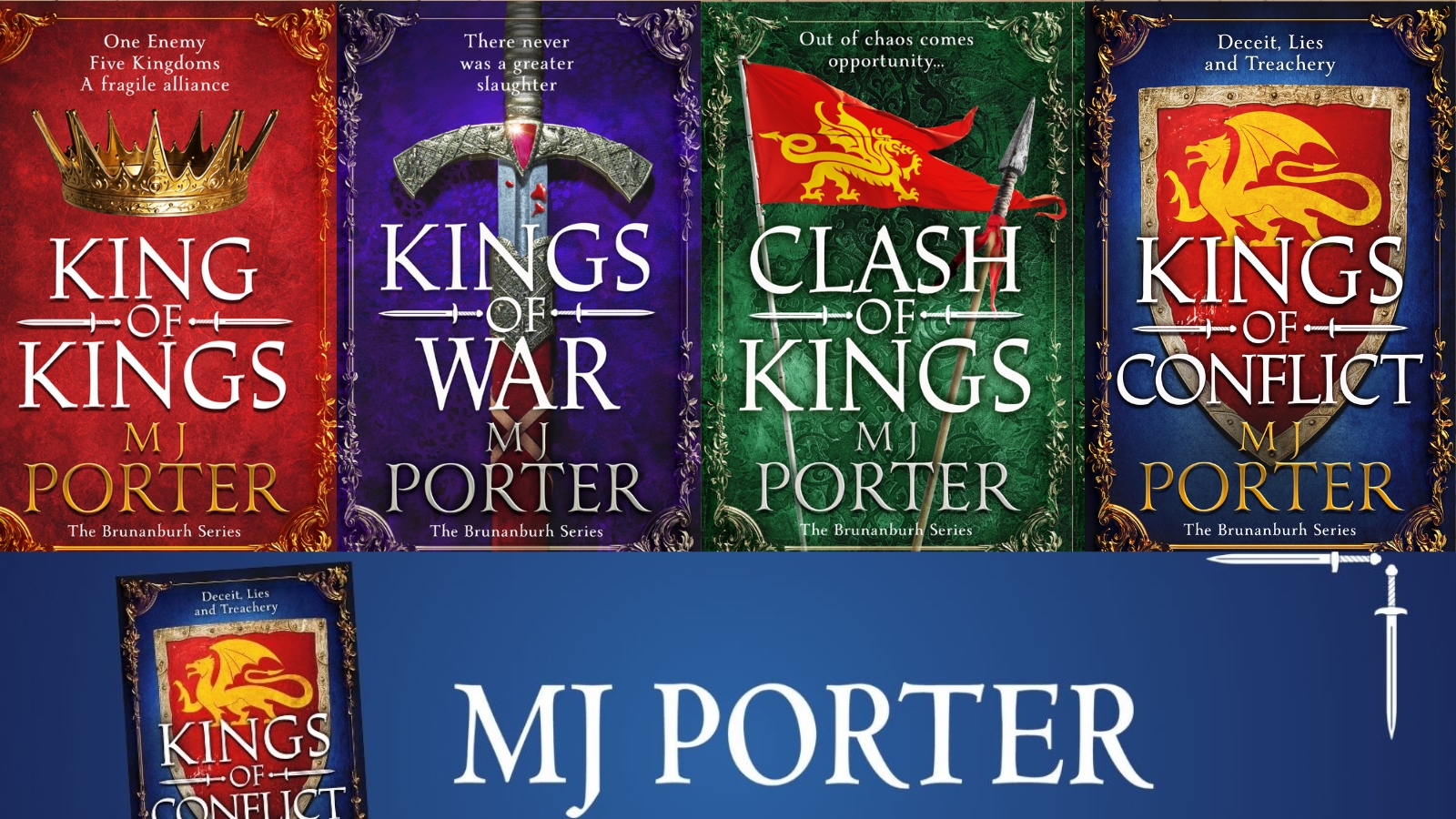
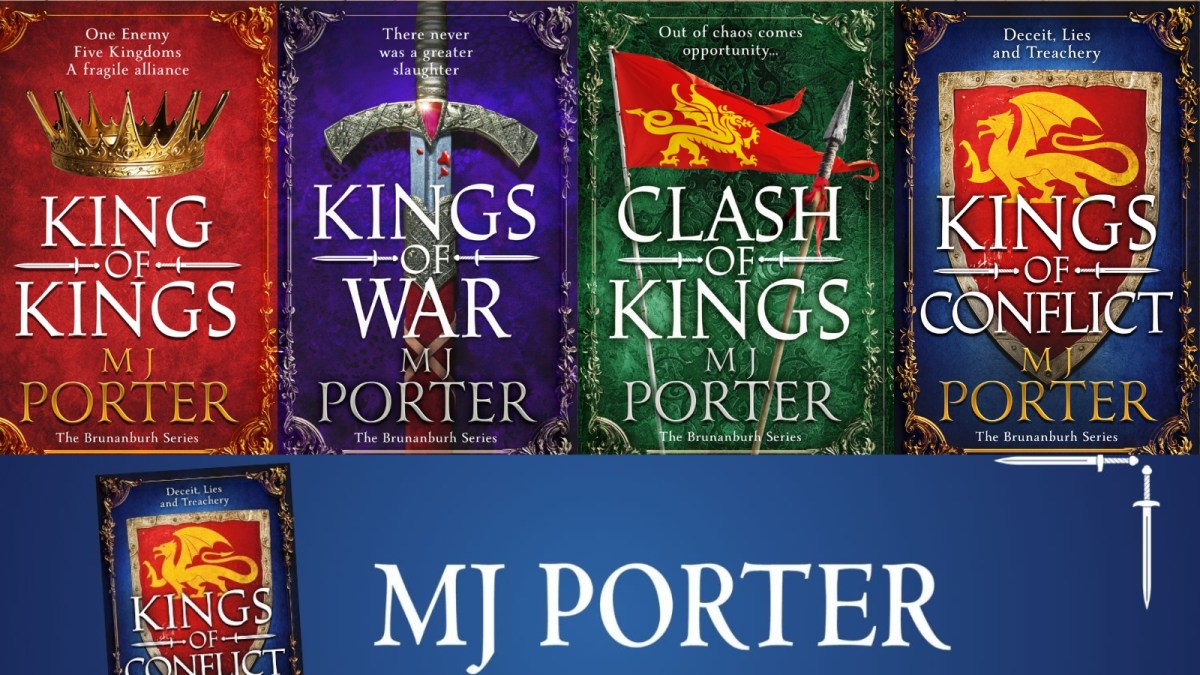
Image showing all 4 book covers in The Brunanburh Series

Yet the idea of ‘English’ wasn’t a new concept. Why else would Bede have called his great piece of religious historical writing “The Ecclesiastical History of the English people’, if there hadn’t been a shared consciousness that the people in England, all be it in their separate kingdoms, didn’t have a shared heritage? Why the idea suddenly took flight under King Athelstan could be attributed to a new sense of confidence in Wessex and Mercia at the time. They were confident that they could beat the Viking raiders and they were convinced that England belonged to them.

Or perhaps it was more than that? The destruction wrought by the Viking raiders on the separate kingdoms must have been a stark reminder of just how insular the kingdoms had become, and the Viking raiders showed everyone just how easy it was to run roughshod over the individual kingdoms. Only in unity could the Saxon kingdoms of England survive another onslaught; only with unity could the Saxons hold onto their kingdoms they’d claimed about 500 years before.

It was a message that was learned quickly and taken to heart. Athelstan worked to reunite more of the Saxon kingdoms with the growing ‘England’, and he tried to do so by both diplomacy and through war. Yet, the Viking raiders hadn’t finished with England, and nor were they her only enemies. This also lies at the heart of Athelstan’s ‘masterplan’ his treaty of Eamont (if it truly happened – Benjamin Hudson in his Celtic Scotland is not convinced). Athelstan wanted to be a mighty king, but he also wanted England, and the wider Britain (also a concept already understood otherwise why else would that cantankerous monk – Gildas – have called his even earlier work than Bede’s “On the Ruin of Britain?”) to be united in their attempts to repel the Viking raiders. He was a man with a keen vision of the future and it was a vision that his brother continued, with slightly different direction and results.

Family Tree designed by Boldwood Books

The ‘English Kings” saw safety in unity, and of course, an increase in the power they held went hand-in-hand with that.

Yet at no point during the Saxon period can it be said that the emergence of ‘England’ as we know it, was a given certainty. Throughout the period other great kings had tried to claim sovereignty over other kingdoms, but never with any permanence. The earlier, regional kings, were powerful within their own lifetimes and within their own regions. Few, if any, were able to pass on their patrimony complete upon their death. This was a time of personal kingship, and it was only under Athelstan and Edmund that the leap was taken away from this to a more permanent power base.

Not that it was a smooth transition and it did have the side-effect of allowing other men, those not related to the royal family, to evolve their own individual power bases in the old Saxon kingdoms. The ‘English’ kings had to do more than just rule their own kingdom, they had to rule their ealdormen and earls, their warriors, bishops and archbishops. The number of names of kings might start to deplete in the after math of Athelstan and Edmund’s kingship, but in their place spring up more and more powerful men, men that these English kings  had to rely on.

Becoming King of the English was very much a mixed blessing, bringing with it new and greater responsibilities and more, it brought with it the need to expand personal government further, to have a greater persona to broadcast.

Check out The Brunanburh Series page for more details.