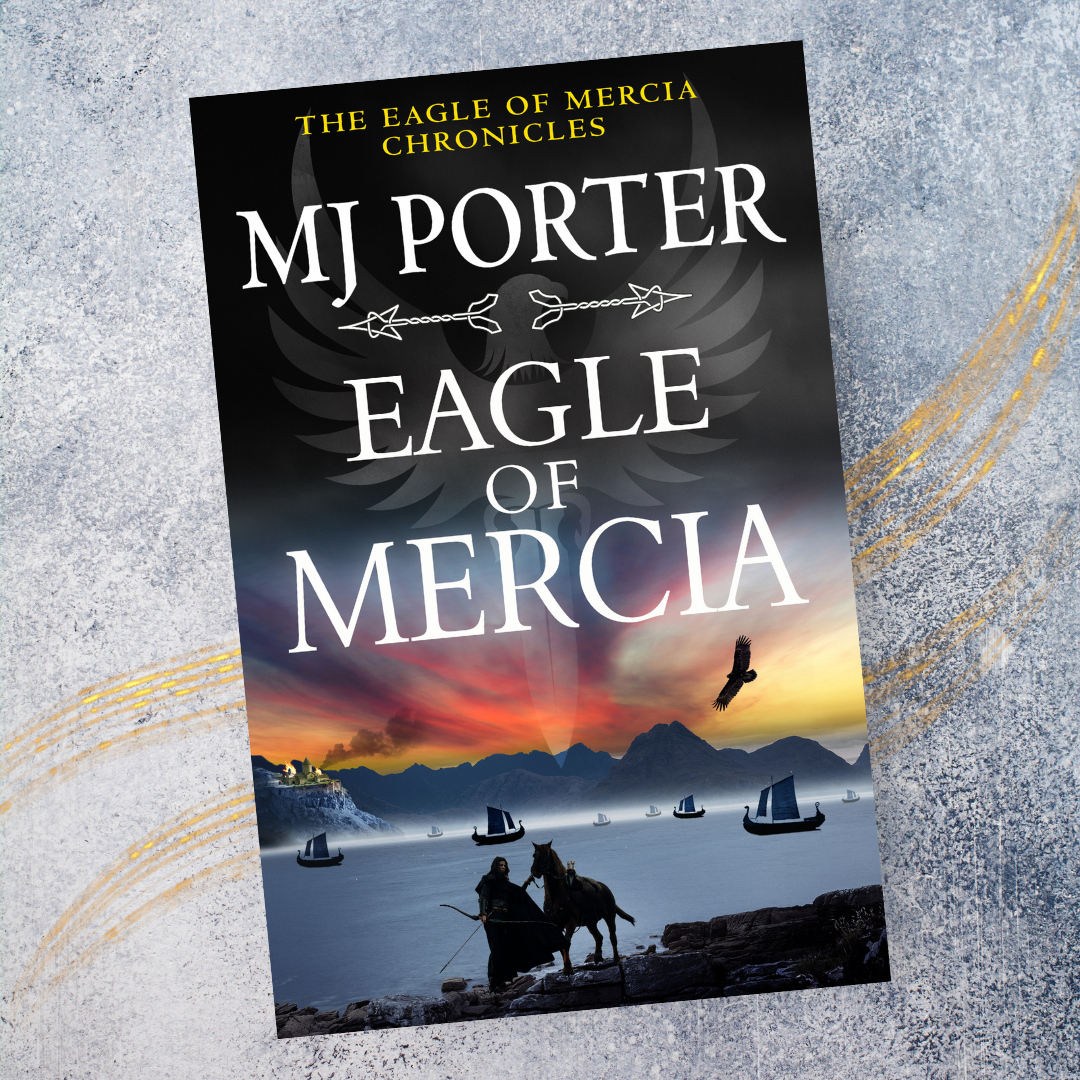
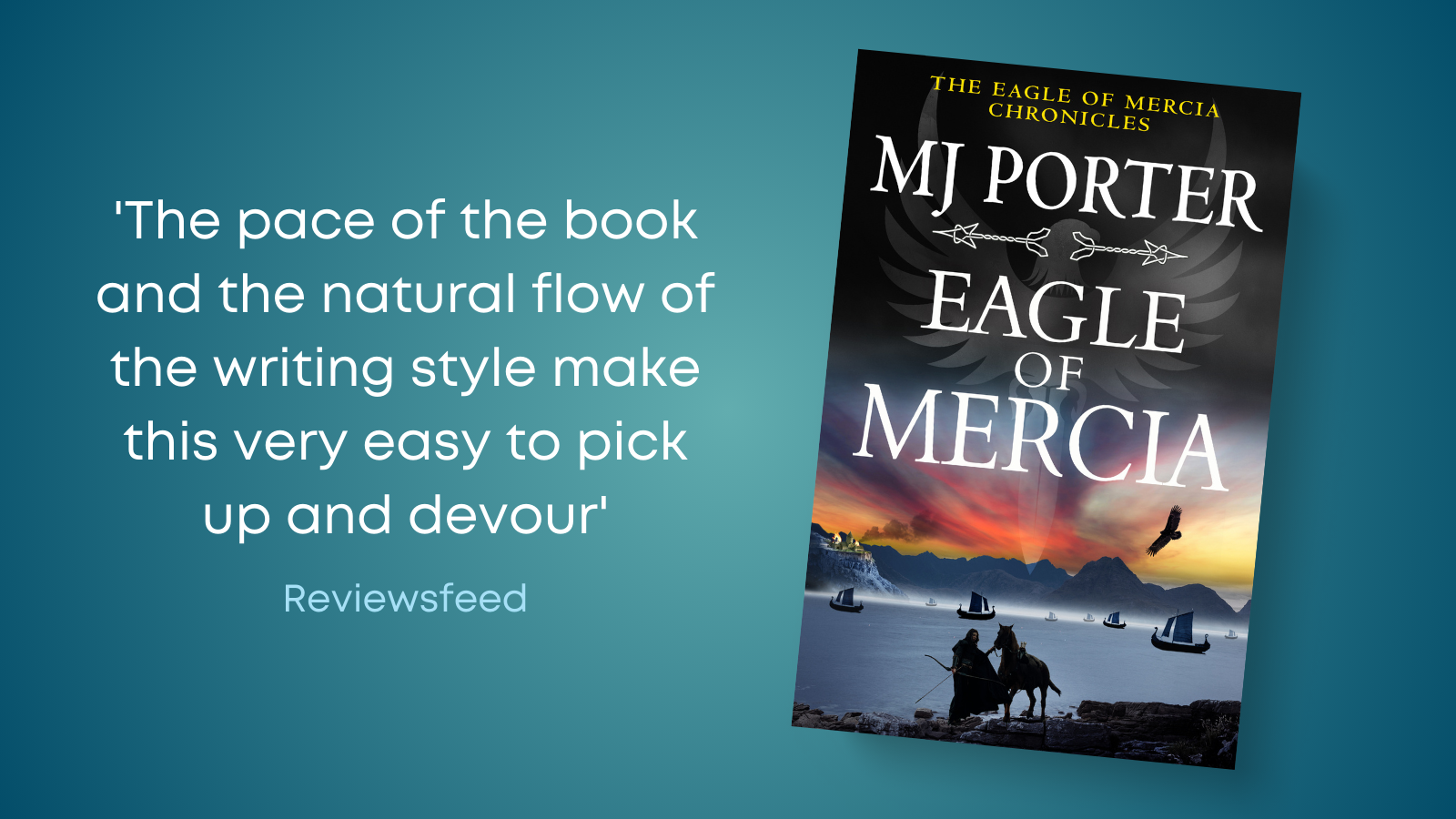
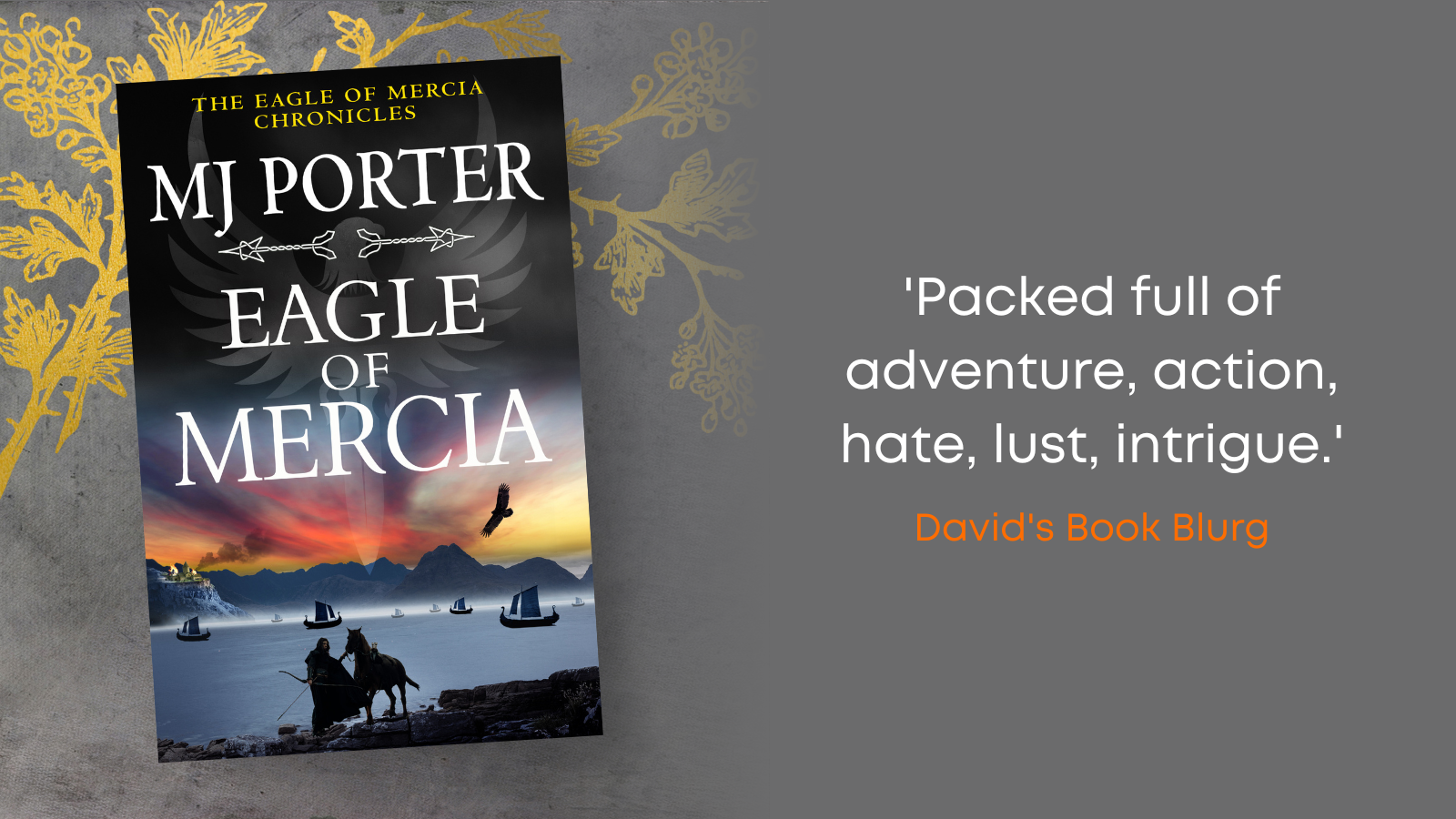
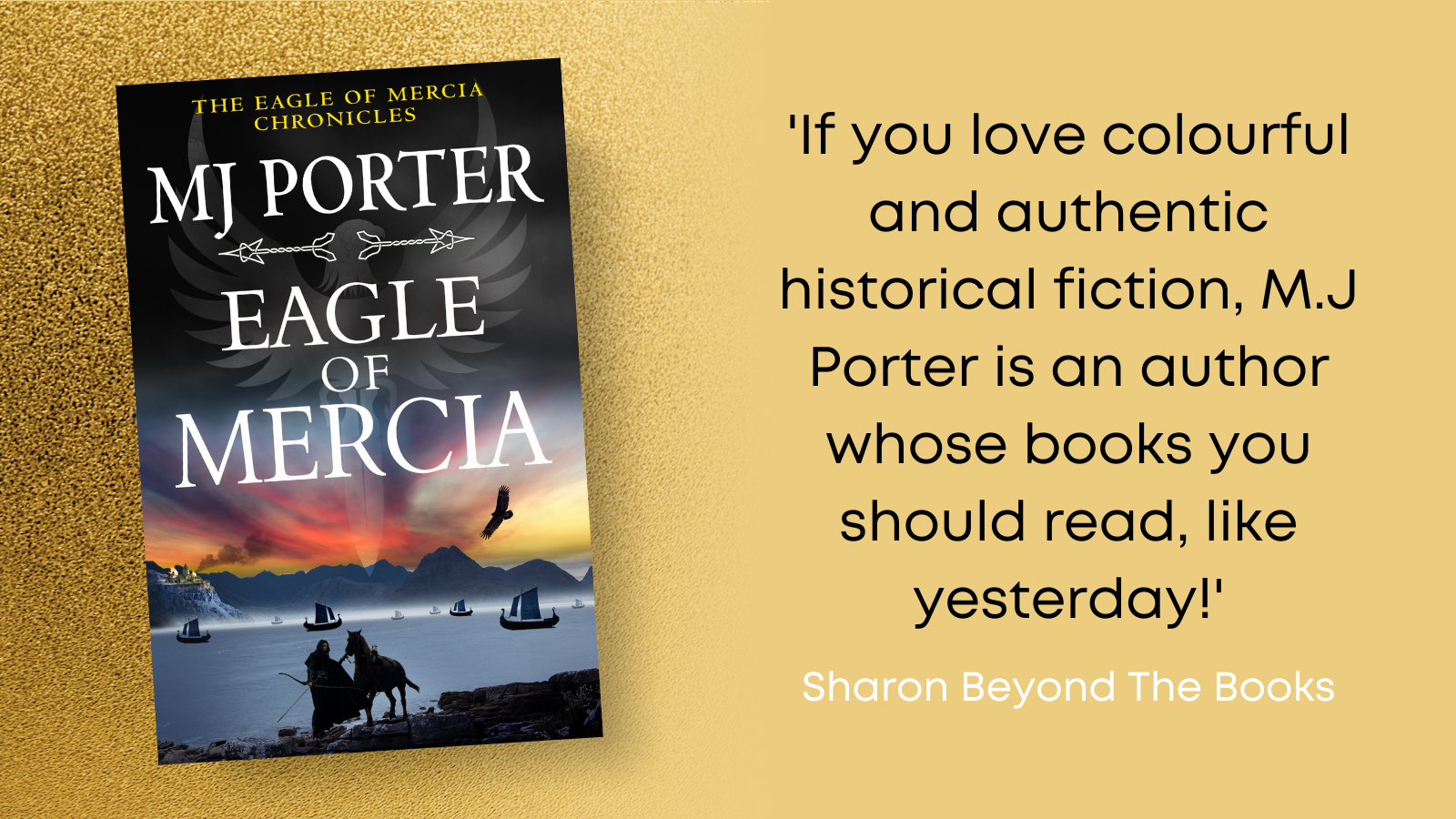
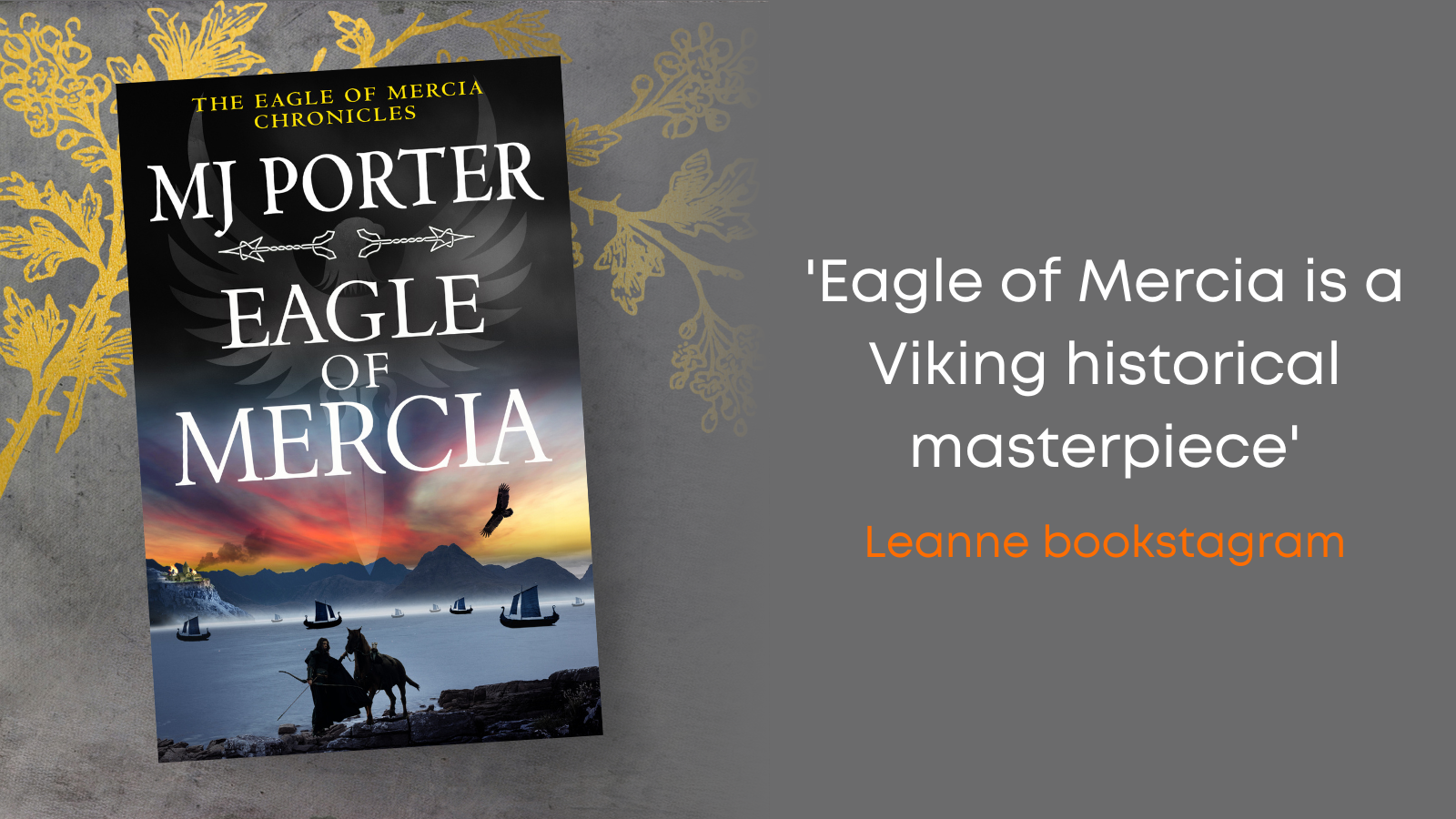
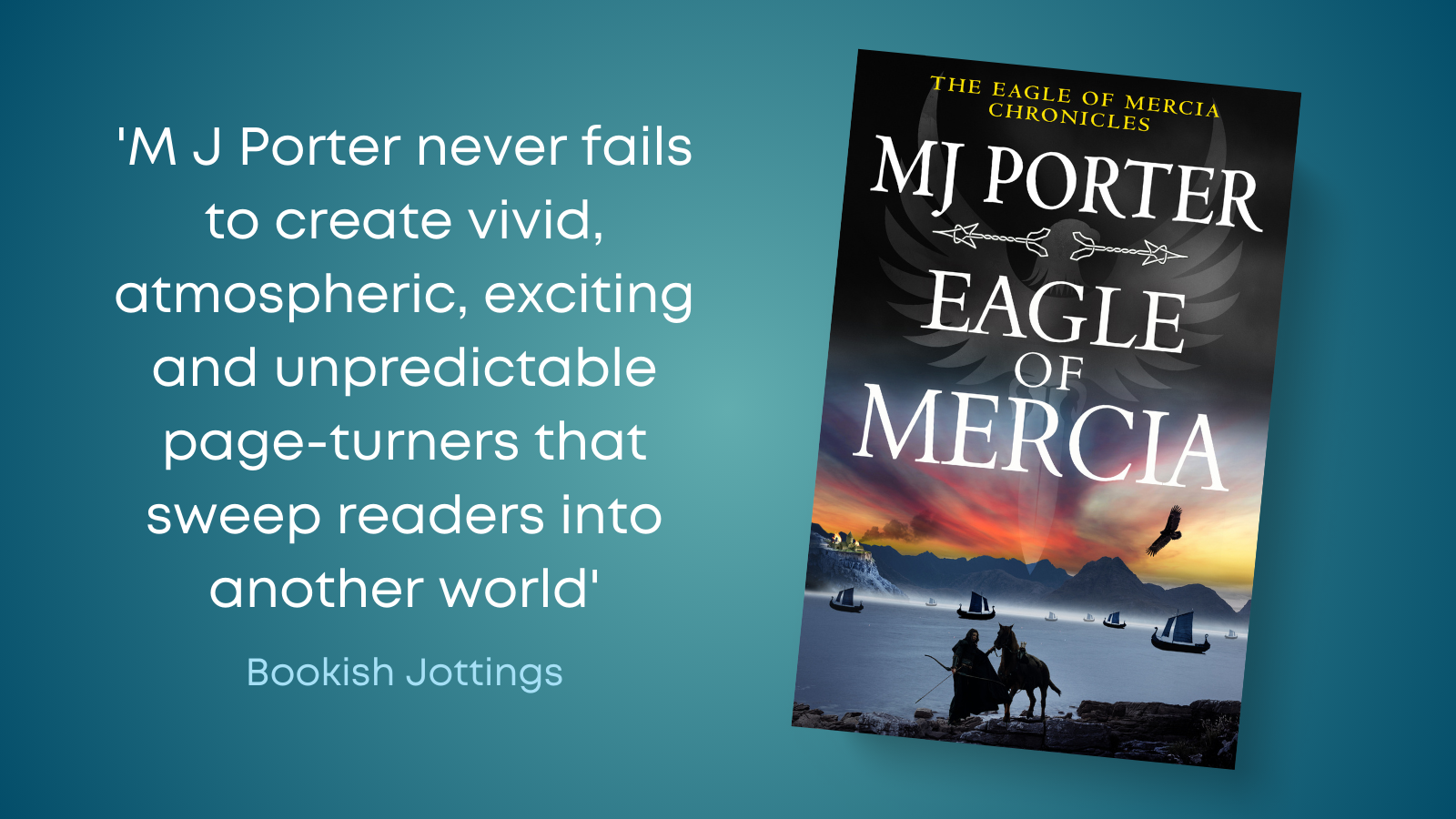
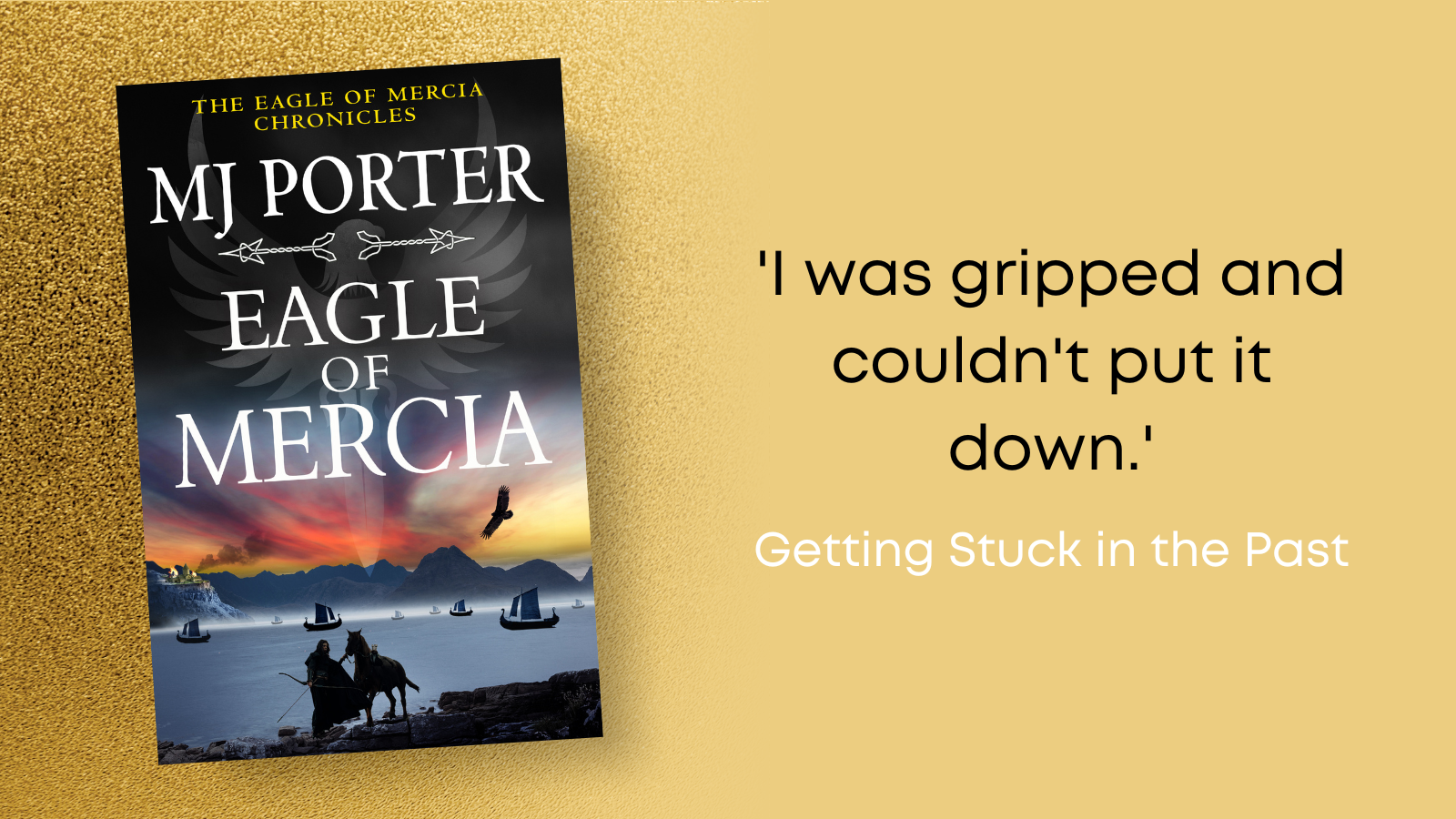
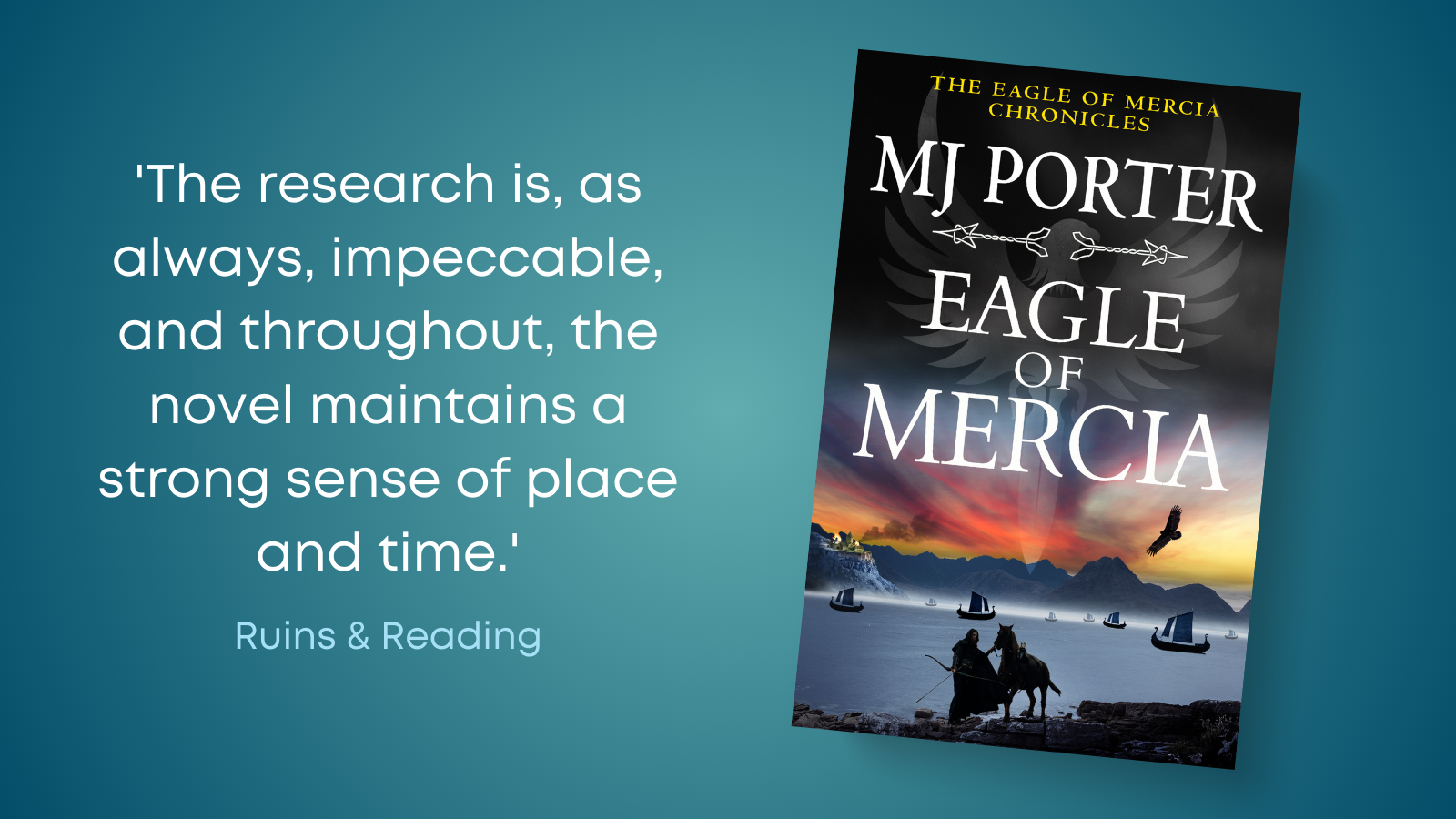
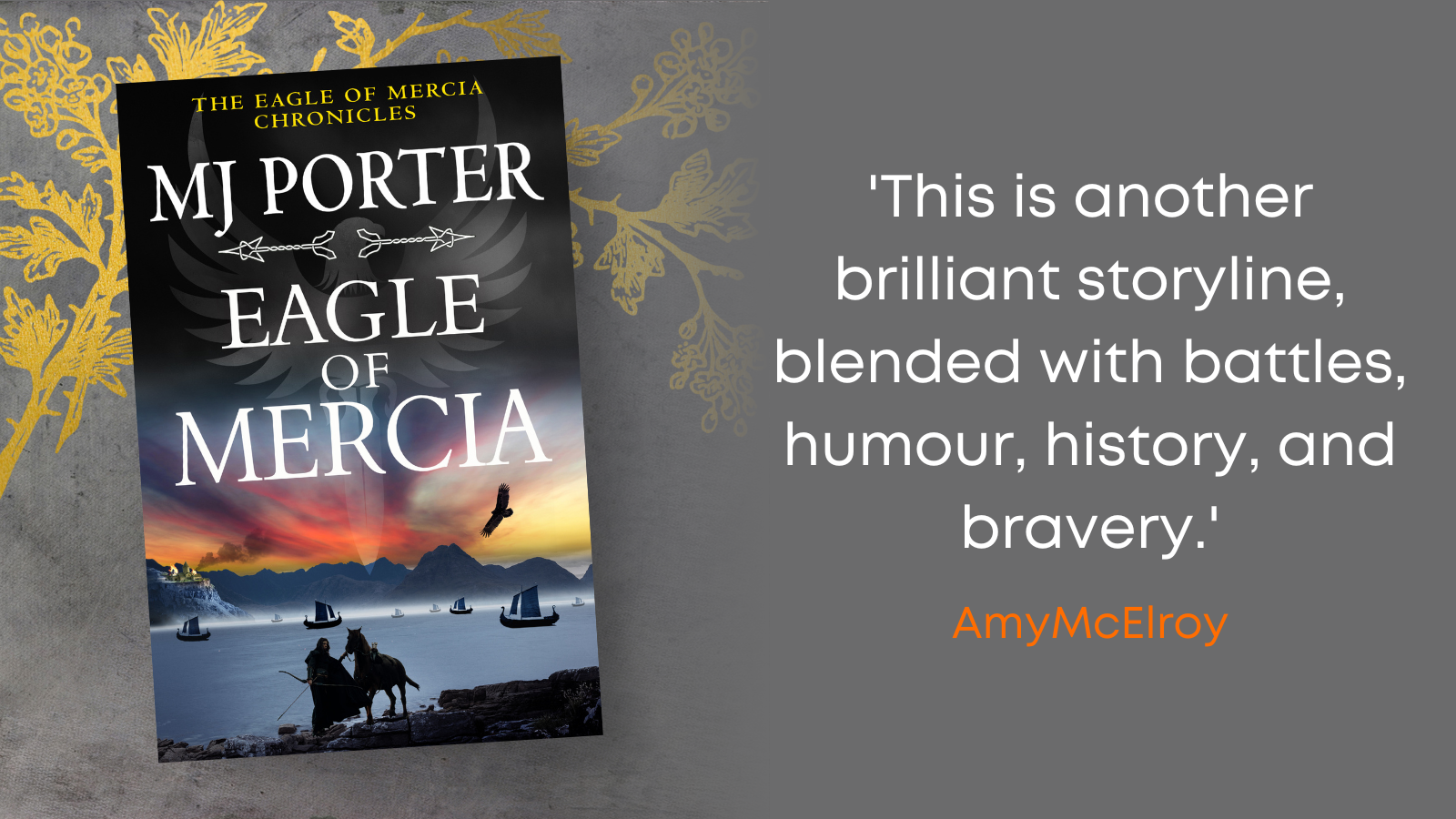
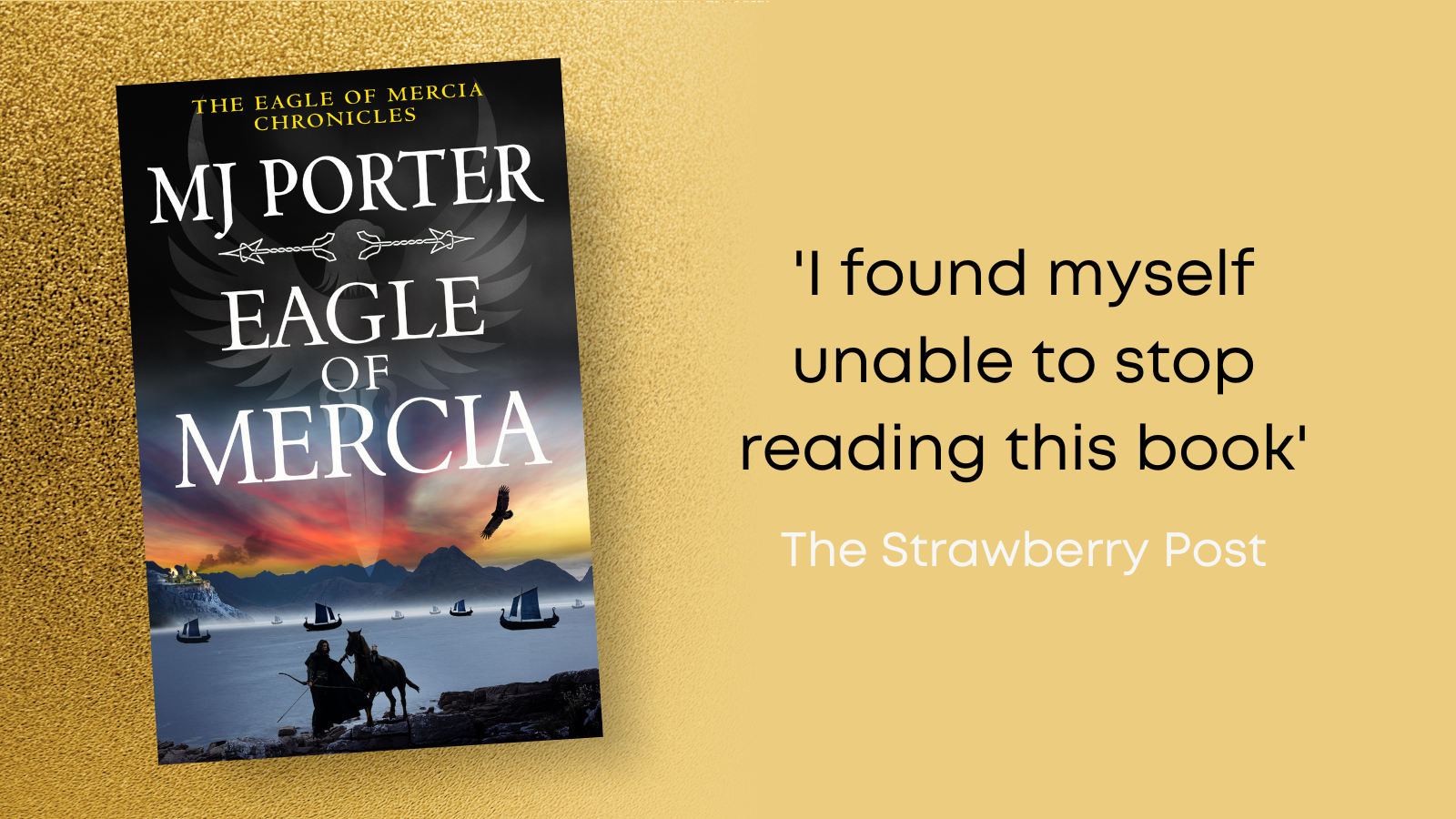
Today is the day, book 4 in The Eagle of Mercia Chronicles is released into the wild. I’m really excited about this one:) And I can’t believe we’re already onto book 4.
Here’s the blurb:
A mercy mission in the heart of Wessex is beset with deadly, bloody dangers.
Tamworth AD831
Icel’s profile continues to rise. Lord of Budworth and warrior of Mercia, he’s acknowledged by King Wiglaf and his comrades to keep Mercia safe from the ravages of Wessex, the king-slayer of the East Angles, and the Viking raiders. But, danger looms. Alongside Spring’s arrival comes the almost certain threat of the Viking raiders return.
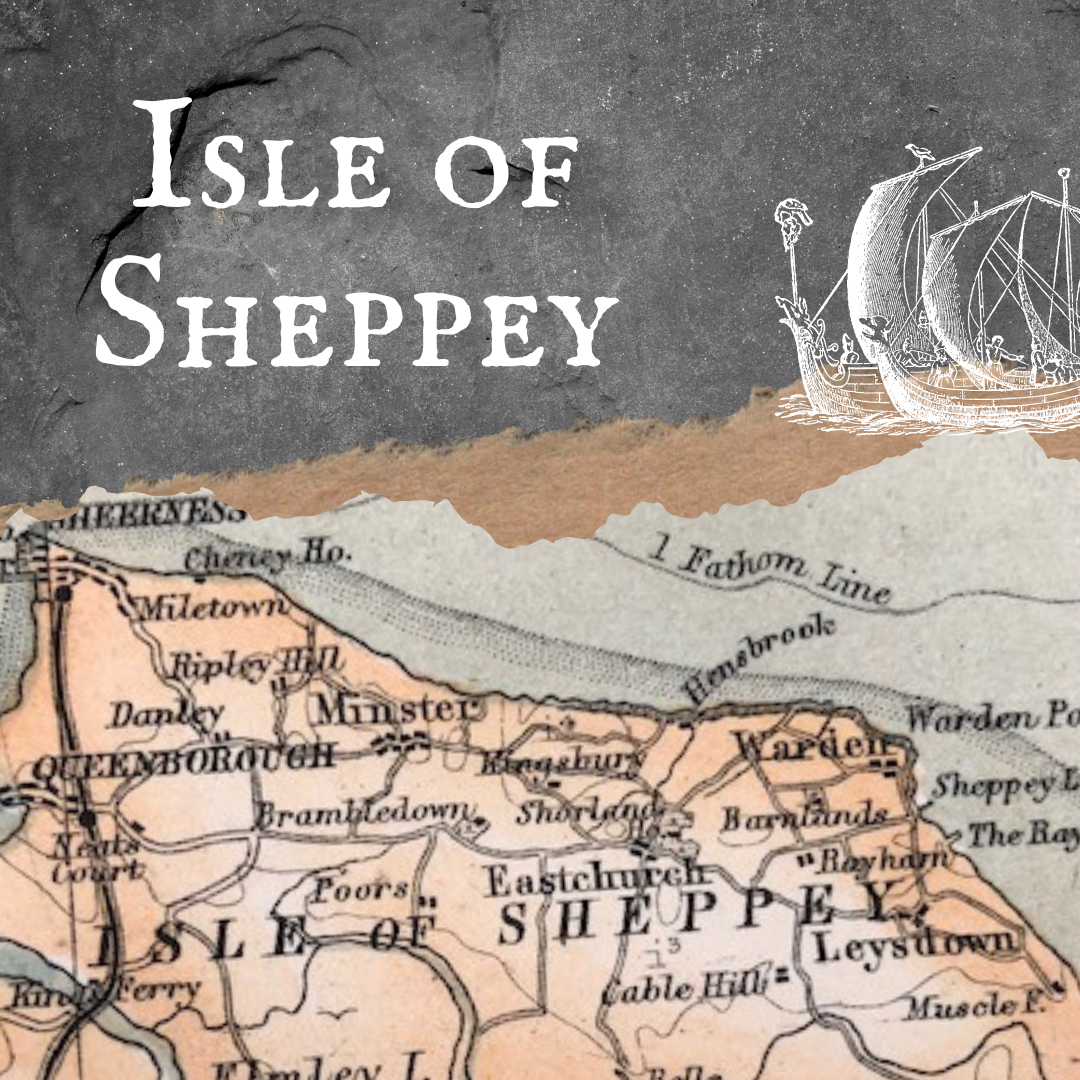
When Lord Coenwulf of Kingsholm is apprehended by a Viking and held captive on the Isle of Sheppey in Wessex held Kent, Icel is implored by Lady Cynehild to rescue her husband.
To rescue Lord Coenwulf, Icel and his fellow warriors must risk themselves twice over, for not only must they overpower the Viking raiders, they must also counter the threat of Mercia’s ancient enemy, the kingdom of Wessex as they travel through their lands.
Far from home and threatened on all sides, have Icel and his fellow warriors sworn to carry out an impossible duty?
I can let you know that book 5 is mostly written, and I know the title and I’ve seen the cover – I know, I’m such a tease. I will update when I can share more.
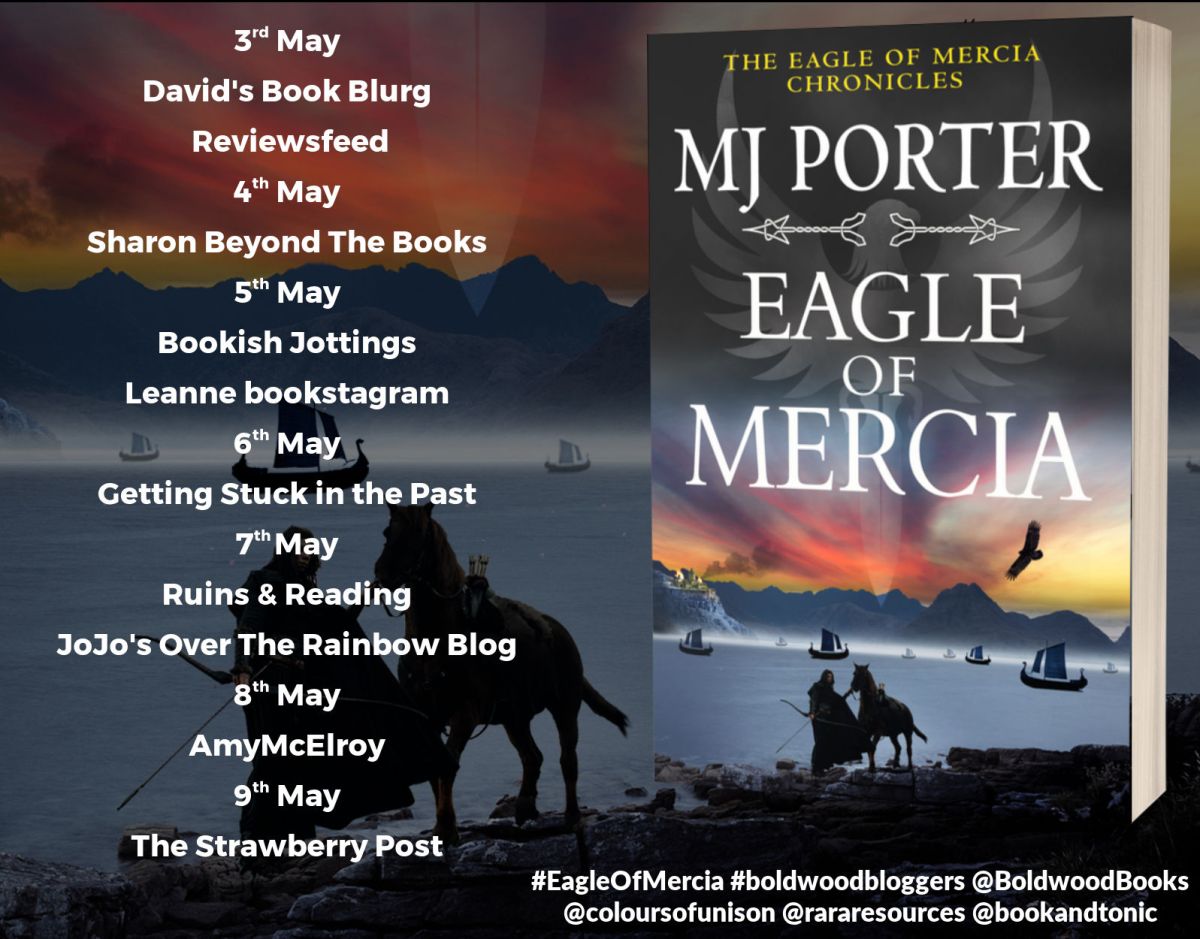
Check out the blog tour for Eagle of Mercia. My thanks to Rachel at Rachel’s Random Resources for organising and all the hosts for taking part. I will add the links each day. The initial reviews for Eagle are very positive, so I hope you’ll enjoy it too.
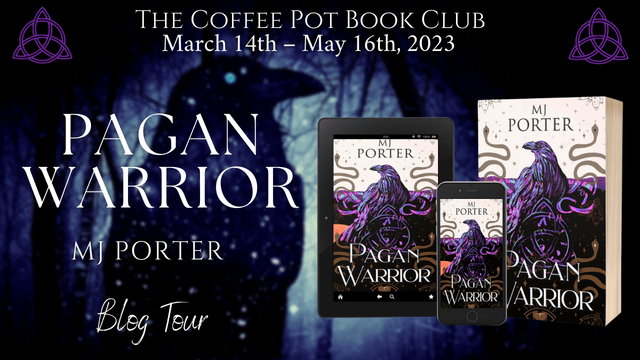
I’m really excited to share the details of the Pagan Warrior blog tour with The Coffee Pot Book Club.
Pagan Warrior is the story of the battle of Hædfeld, fought in the seventh century between the Northumbrians, and you got it, the Mercians – or rather, Cadwallon of Gwynedd but with Penda of Mercia as his firm ally. You can find more details here.
I might have written this book many years ago, but it’s had a refresh, and is now available in audio, narrated by the fabulous, Matt Coles, as is the second book, Pagan King. Warrior King will be coming later this year in audio.
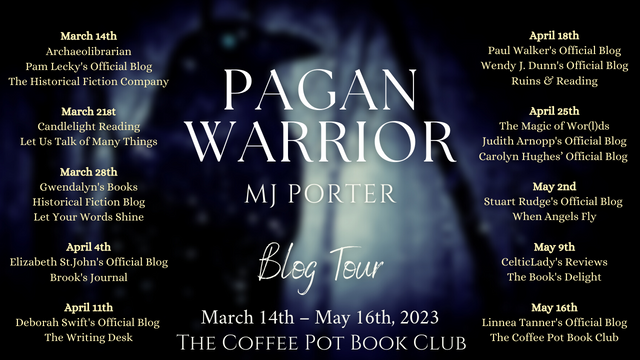
You can follow the blog tour, and I’ll be sharing posts here as well. A quick shout out to thank all the blog hosts and Cathie at The Coffee Pot Book Club for organising.
And, the post that perhaps gave me the most fear to begin will but which was fun when I remembered all the little details, five fun facts about writing the trilogy.
For March 21st check out a post about two of the royal residences of Bernicia at the time, Bamburgh and Ad Gefrin (Yeavering). (There are lots of photos, thank you to Helen Hollick for uploading them all).
I’m really excited to share the details of the Pagan Warrior blog tour with The Coffee Pot Book Club.
Pagan Warrior is the story of the battle of Hædfeld, fought in the seventh century between the Northumbrians, and you got it, the Mercians – or rather, Cadwallon of Gwynedd but with Penda of Mercia as his firm ally. You can find more details here.
I might have written this book many years ago, but it’s had a refresh, and is now available in audio, narrated by the fabulous, Matt Coles, as is the second book, Pagan King. Warrior King will be coming later this year in audio.
You can follow the blog tour, and I’ll be sharing posts here as well. A quick shout out to thank all the blog hosts and Cathie at The Coffee Pot Book Club for organising.
For April 25th, check out a post about Penda of Mercia.
And, the post that perhaps gave me the most fear to begin will but which was fun when I remembered all the little details, five fun facts about writing the trilogy.
For March 21st check out a post about two of the royal residences of Bernicia at the time, Bamburgh and Ad Gefrin (Yeavering). (There are lots of photos, thank you to Helen Hollick for uploading them all).
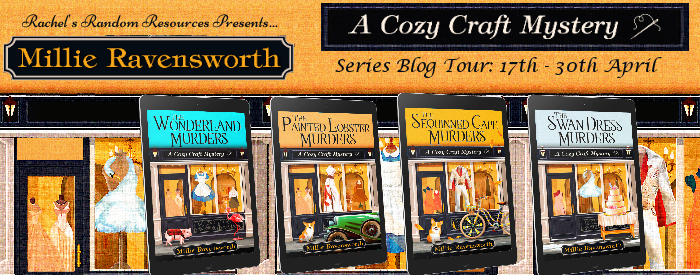
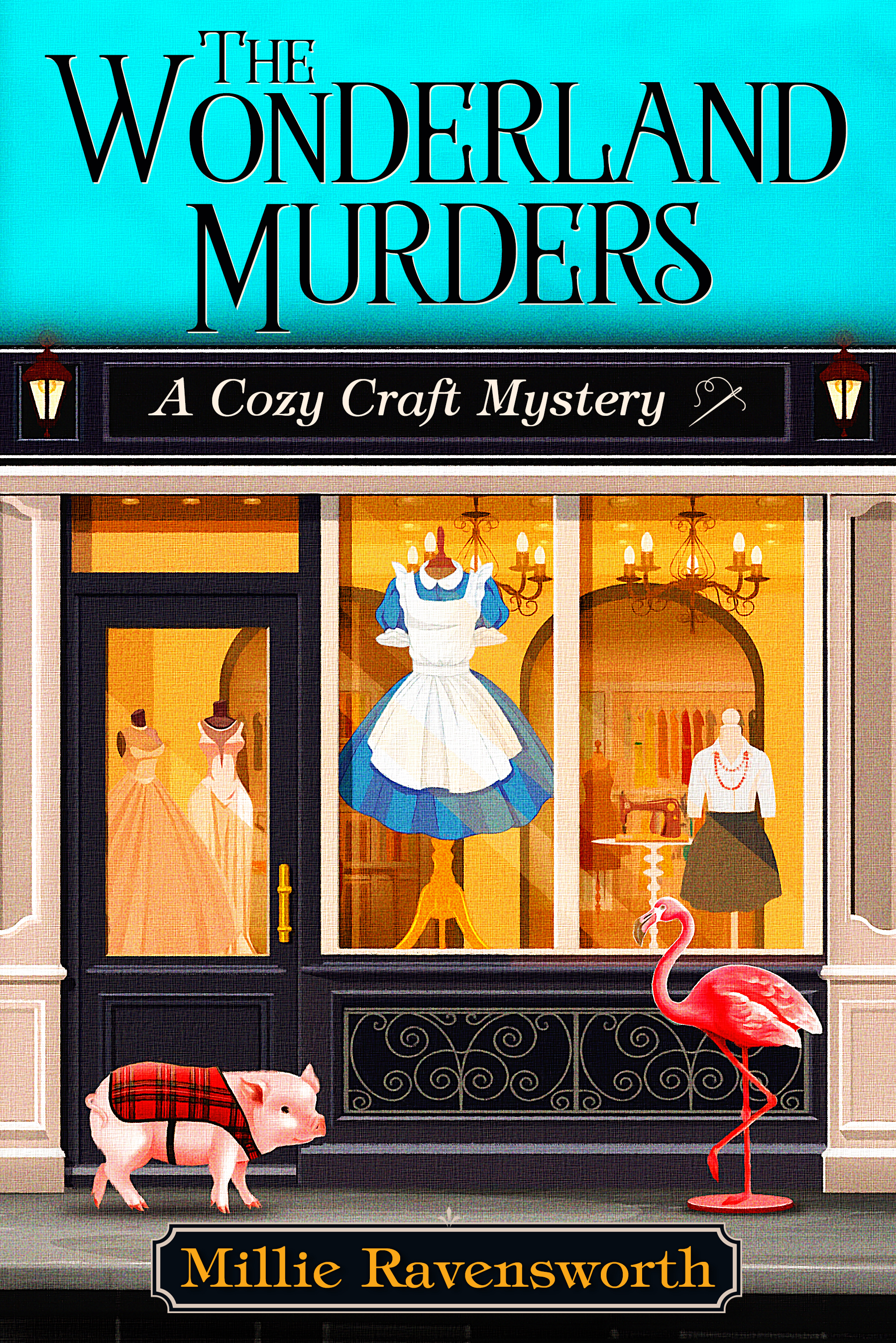
A quirky and funny series for fans of a good mystery and compelling characters. Can you solve the crime before our dressmaking duo?
After losing her job at an exclusive London hotel, Penny Slipper is only too happy to help when her grandma asks her to take charge at the Cozy Craft sewing shop in charming rural Suffolk.
With cousin Izzy on hand as the expert dressmaker and Penny’s head for business, what can possibly go wrong?
But Penny’s in town for less than a day when the local librarian is poisoned and Penny fears she might even be accidentally responsible. Penny and Izzy are forced to turn detectives to uncover the true cause of death, while finishing a costume commission for their first customer.
Matters take a further deadly turn when a second body is discovered.
Can Penny and Izzy unpick the mysteries of the past and sew the pieces of this puzzle together before it’s too late?
If you enjoy fast-paced mysteries, charming country towns and characters who you want to spend hours with then you’re going to love the Cozy Craft Mystery series.
The Wonderland Murders is a delightful and very well-plotted contemporary cozy mystery set in Framingham, the UK.
Penny and Izzy are cousins thrown together by the illness of their mutual grandmother, who normally runs a crafting shop. Izzy is somewhat scatty and filled with new ideas. Penny is more down to earth and determined to make a profit from the shop. But no sooner has Penny arrived than a murder takes place in the local library. While they’re not obsessive about who is responsible, they do begin to consider who might have been to blame as they work on an Alice in Wonderland costume for the upcoming World books day for one of the librarians.
What ensues is so well-plotted and delightful that I genuinely didn’t guess the ending. These stories have a lovely lightness of touch, genuine warmth and humour throughout, and Izzy and Penny really complement each other as main characters.
I loved this first book so much that I’m busy devouring the rest of the series, and the series is consistently as enjoyable and delightful. I’m so glad I took a chance on The Wonderland Murders, and if you love a cozy crime, you won’t be disappointed, either.
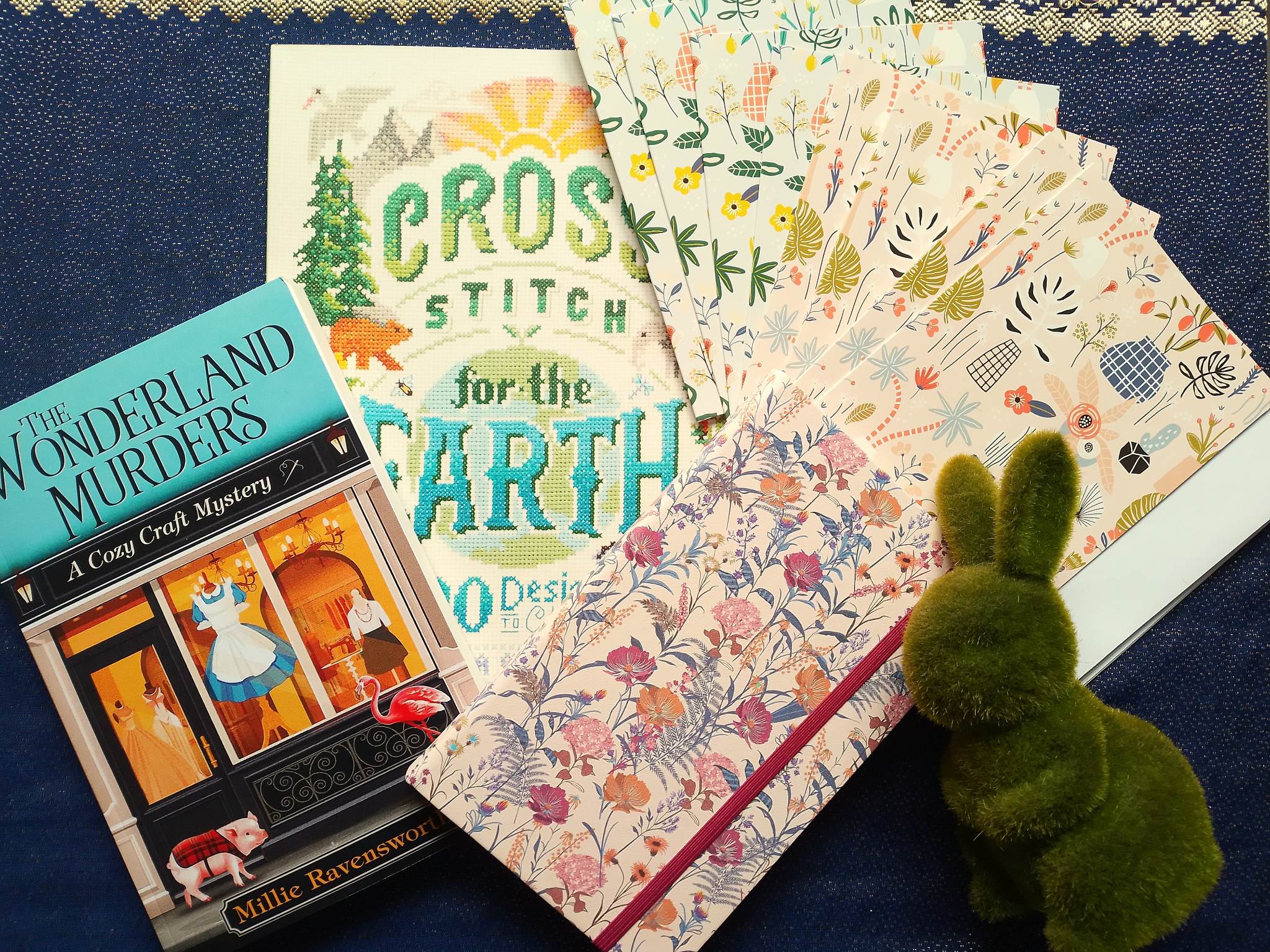
Giveaway Prize – The Wonderland Murders, a cross stitch book, a floral notepad, a note writing set and a grass bunny.
Millie Ravensworth writes the Cozy Craft Mystery series of books. Her love of murder mysteries and passion for dressmaking made her want to write books full of quirky characters and unbelievable murders. Millie lives in central England where children and pets are something of a distraction from the serious business of writing, although dog walking is always a good time to plot the next book.
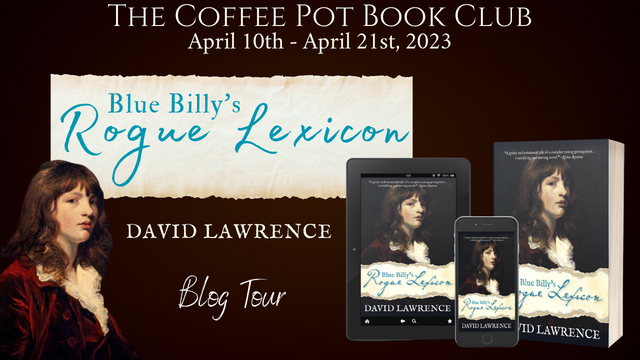
I’m delighted to welcome David Lawrence to the blog to share a guest post with us.
Criminal Records and the Cant Language
by David Lawrence
For me, historical research is like spinning a spider’s web – every fact I find interesting, be it a great political event or simply learning of a small household object no longer in use, is like a sticky thread spinning out into the ether. Eventually, a specific place, time, and event emerge, rather like a web, in which my story is caught.
For my first novel, Hugh, the story was caught in Westminster, 1768, centring around the antics of naughty MP John Wilkes.
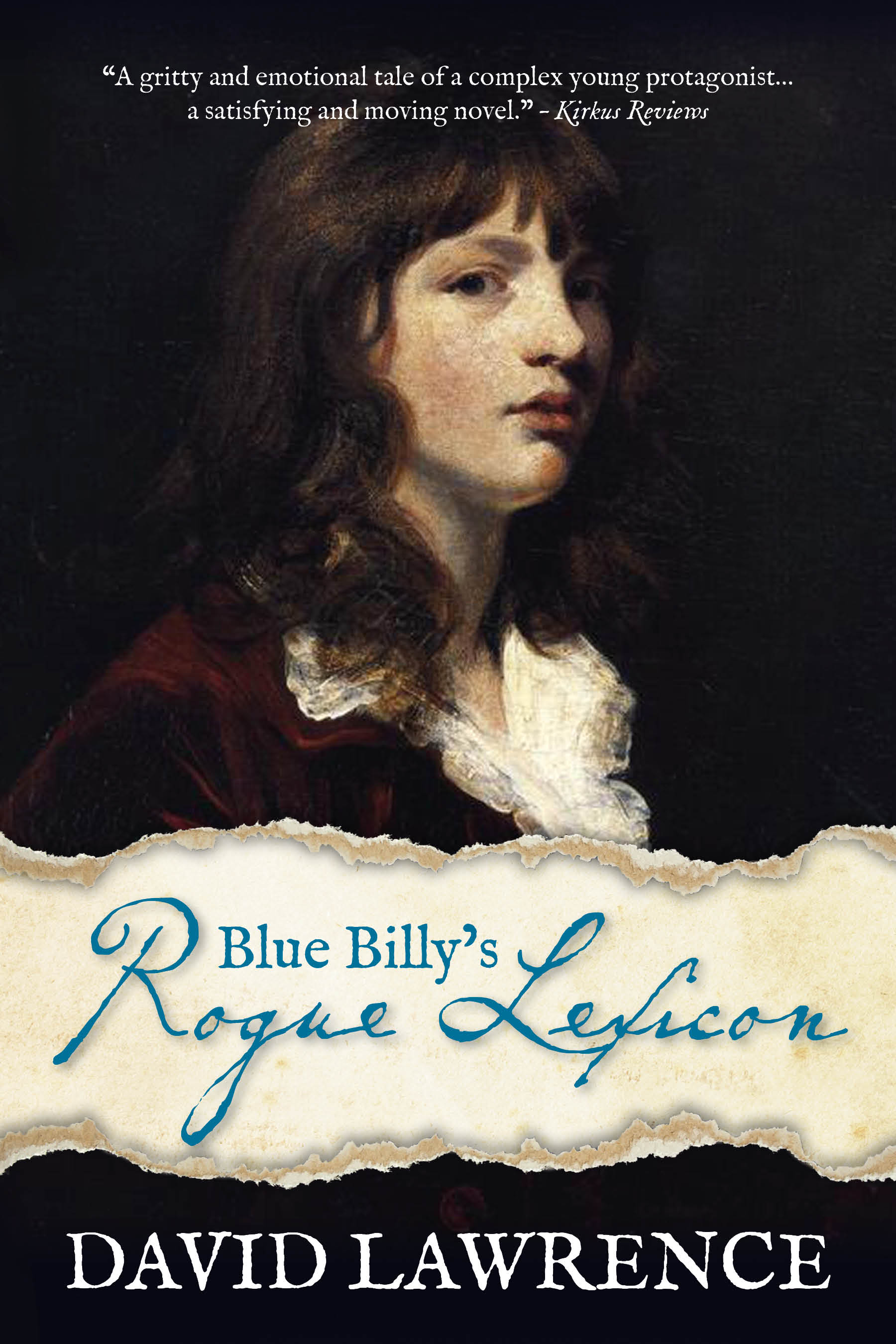
For this novel, Blue Billy’s Rogue Lexicon, the web caught a story in The Mint (in Southwark), 1771, the summer of Captain Cook’s return from his first voyage round the globe.
Just how I arrived at my completed story I couldn’t exactly tell you(!). However, I can say that the initial thread came from a book called Mother Clap’s Molly House: The Gay Subculture in England 1700 – 1830. I had heard this book referenced here and there during various research projects, and by 2021, when I began researching Blue Billy and needed to read it, I discovered a copy was quite difficult to locate. It was one of the first of its kind on the subject, published in 1992 by Rictor Norton. Ebay, however, saved the day, and I secured my lightly-worn, and beloved, copy.
Little is known about the gay subculture in London during the 18th century, but what we do know, and what Mother Clap’s Molly House outlines wonderfully, are the criminal cases in which homosexual activity ended in legal prosecution. From an historical perspective, these criminal records are priceless, preserving glimpses of lives which would otherwise have been lost to history.
I knew my protagonist William Dempsey had a history quite far down the social ladder – raised on the streets by a den of thieves before getting himself into keeping by a Marquess with a taste for deceptively doe-eyed youths. Mother Clap’s Molly House mentioned that the dialect of the molly (gay) subculture might well have had parallels with the rogue’s lexicon used by your run-of-the-mill London criminals, which included female prostitutes. I already knew that William had worked as a male prostitute, and pow! I suddenly understood that his tricking name was Blue Billy, and that a rogue’s lexicon would form the framework for the novel (the chapter names in the novel are terms taken from this street slang).
The early 1770s I had long known was to be my general time period, but Captain Cook’s return to England after his three-year voyage round the globe cemented it as the summer of 1771. Why? I was seeing parallels between his journey of discovery and Billy’s journey of self-discovery. In the summer of 1771, Billy is thrown out of his West End apartment and must not simply start over from nothing but re-examine his life choices. For details on the voyage, Captain Cook by Walter Besant was a 19th century biography I thoroughly enjoyed, as well as The Endeavour Journal of Sir Joseph Banks from 25 August 1768-12 July 1771 – Banks being the botanist who accompanied Cook on his journey.
Wonderful books like London in the 18th Century by Jerry White and The First Bohemians by Vic Gatrell filled in many more details about this glorious era. I also found James Boswell’s diary from the 1760s, relating his experiences as a young man in London, to be a priceless resource, not only in terms of the attitudes at that time, but for those small details of daily life which make a novel so much richer.
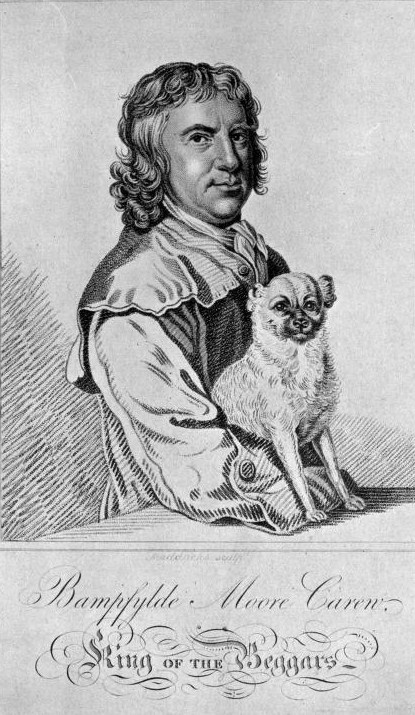
Completing my research were two books detailing the lives of rogues, beggars and thieves of the era. The titles alone tell you how colourful they are: The Surprising Adventures of Bampfylde Moore Carew, King of the Beggars – Containing his Life, a Dictionary of the Cant Language, and many Entertaining Particulars of that Extraordinary Man by Robert Goadby (published 1749) and The English Rogue: Described in the Life of Meriton Latroon, A Witty Extravagant by Richard Head (published 1665)
Research on this project was quite a journey for me, and some wonderful reading along the way. All books (including, er, my own) are highly recommended!
Thank you so much for sharing. I love the titles of these books from the 17th and 18th century.
Here’s the blurb
William Dempsey was a wonder among wonders.
By 18, he had risen from a gang of London street rogues to be the personal plaything of the Marquess of Argyll. Maintained in splendour, celebrated at masquerades – with everything he could wish for.
Now all has come crashing down. He is put out in the rain without patronage, his West End apartment, or a place among the ton.
So on a stormy night, he arrives at a house in Southwark. Marathon Moll’s in the Mint – the bawdyhouse he worked in during his ascent and where he earned the name Blue Billy.
But is Marathon Moll’s a place from which to rise again? For there is one in the crowd, who catches his eye. Who takes his hand and promises something better.
Or does Moll’s signify a return to his roots? For one day, a second and very different young man raps on the door. Takes his hand and asks him to return to his past.
To the cat language of vagabonds. The canting dialect of thieves.
David Lawrence is the author of two queer historical novels – ‘Hugh: A Hero without a Novel’ and ‘Blue Billy’s Rogue Lexicon’. As a writer, he loves taking a deep dive into the politics, social norms, and events of 18th century England while presenting humorous and unique coming-of-age tales.
A native of the American Southwest, David has spent much of his life in Great Britain, France, and Finland. He now lives in the American Northwest – Helena, Montana – with his Finnish partner.
By day he loves hiking under the Big Sky of his beautiful adopted state.
By night, however, he prefers wandering the byways of 18th century London…
I’m really excited to share the details of the Pagan Warrior blog tour with The Coffee Pot Book Club.
Pagan Warrior is the story of the battle of Hædfeld, fought in the seventh century between the Northumbrians, and you got it, the Mercians – or rather, Cadwallon of Gwynedd but with Penda of Mercia as his firm ally. You can find more details here.
I might have written this book many years ago, but it’s had a refresh, and is now available in audio, narrated by the fabulous, Matt Coles, as is the second book, Pagan King. Warrior King will be coming later this year in audio.
You can follow the blog tour, and I’ll be sharing posts here as well. A quick shout out to thank all the blog hosts and Cathie at The Coffee Pot Book Club for organising.
For April 18th, I answered Paul Walker’s questions on his blog
And, the post that perhaps gave me the most fear to begin will but which was fun when I remembered all the little details, five fun facts about writing the trilogy.
For March 21st check out a post about two of the royal residences of Bernicia at the time, Bamburgh and Ad Gefrin (Yeavering). (There are lots of photos, thank you to Helen Hollick for uploading them all).
I’m really excited to share the details of the Pagan Warrior blog tour with The Coffee Pot Book Club.
Pagan Warrior is the story of the battle of Hædfeld, fought in the seventh century between the Northumbrians, and you got it, the Mercians – or rather, Cadwallon of Gwynedd but with Penda of Mercia as his firm ally. You can find more details here.
I might have written this book many years ago, but it’s had a refresh, and is now available in audio, narrated by the fabulous, Matt Coles, as is the second book, Pagan King. Warrior King will be coming later this year in audio.
You can follow the blog tour, and I’ll be sharing posts here as well. A quick shout out to thank all the blog hosts and Cathie at The Coffee Pot Book Club for organising.
For April 11th, read a guest post about how we know, what we know, about the seventh century.
And, the post that perhaps gave me the most fear to begin will but which was fun when I remembered all the little details, five fun facts about writing the trilogy.
For March 21st check out a post about two of the royal residences of Bernicia at the time, Bamburgh and Ad Gefrin (Yeavering). (There are lots of photos, thank you to Helen Hollick for uploading them all).
I’m really excited to share the details of the Pagan Warrior blog tour with The Coffee Pot Book Club.
Pagan Warrior is the story of the battle of Hædfeld, fought in the seventh century between the Northumbrians, and you got it, the Mercians – or rather, Cadwallon of Gwynedd but with Penda of Mercia as his firm ally. You can find more details here.
I might have written this book many years ago, but it’s had a refresh, and is now available in audio, narrated by the fabulous, Matt Coles, as is the second book, Pagan King. Warrior King will be coming later this year in audio.
And, if you read on Nook, I’ve created a special discount code just for Nook readers. Using code BNPPAGAN at checkout will get you 50% off all three titles, for a limited time.
You can follow the blog tour, and I’ll be sharing posts here as well. A quick shout out to thank all the blog hosts and Cathie at The Coffee Pot Book Club for organising.
And, the post that perhaps gave me the most fear to begin will but which was fun when I remembered all the little details, five fun facts about writing the trilogy.
For March 21st check out a post about two of the royal residences of Bernicia at the time, Bamburgh and Ad Gefrin (Yeavering). (There are lots of photos, thank you to Helen Hollick for uploading them all).
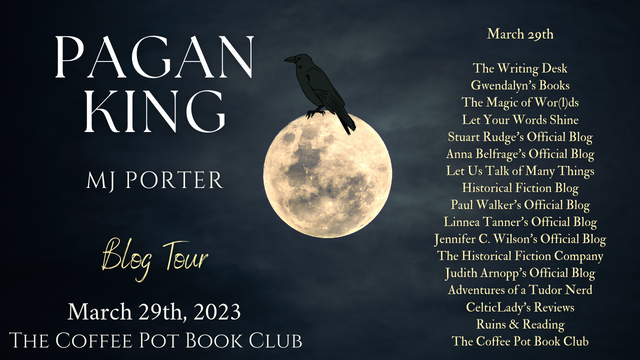
Not content with highlighting Pagan Warrior, Pagan King gets its own blog tour today. A huge thank you to Cathie at The Coffee Pot Book Club for organising, and to all the hosts for showcasing the second book in the Gods and Kings trilogy/ also known as The Seventh Century trilogy, on their blogs today.
You can follow the tour below.
And, you can find Pagan King on your retailer of choice here. It’s also available in audio format from Audible, Amazon and iTunes. Check it out below. Narrated by the fabulous Matt Coles.
I’m really excited to share the details of the Pagan Warrior blog tour with The Coffee Pot Book Club.
Pagan Warrior is the story of the battle of Hædfeld, fought in the seventh century between the Northumbrians, and you got it, the Mercians – or rather, Cadwallon of Gwynedd but with Penda of Mercia as his firm ally. You can find more details here.
I might have written this book many years ago, but it’s had a refresh, and is now available in audio, narrated by the fabulous, Matt Coles, as is the second book, Pagan King. Warrior King will be coming later this year in audio. For this third week, 27th March-2nd April, the ebook of Warrior King (book 3) is reduced globally to 99p/99c and equivalent. Follow the link below.
And, if you read on Nook, I’ve created a special discount code just for Nook readers. Using code BNPPAGAN at checkout will get you 50% off all three titles, for a limited time.
You can follow the blog tour, and I’ll be sharing posts here as well. A quick shout out to thank all the blog hosts and Cathie at The Coffee Pot Book Club for organising.
For today, March 28th, check out a fabulous review on
And, the post that perhaps gave me the most fear to begin will but which was fun when I remembered all the little details, five fun facts about writing the trilogy.
For March 21st check out a post about two of the royal residences of Bernicia at the time, Bamburgh and Ad Gefrin (Yeavering). (There are lots of photos, thank you to Helen Hollick for uploading them all).






 MJ Porter