
I’m delighted to welcome Rosemary Griggs and her book, Mistress of Dartington Hall, to the blog #HistoricalFiction #WomenInHistory #Elizabethan #SpanishArmada #BlogTour #TheCoffeePotBookClub

I’m delighted to welcome Rosemary Griggs and her book, Mistress of Dartington Hall, Book 3 in the Daughters of Devon series, to the blog with a guest post.

Guest Post – historical background

Mistress of Dartington Hall continues the story of a French Huguenot noblewoman, Lady Gabrielle Roberda Montgomery. Roberda’s father, Gabriel de Lorges, was a prominent Huguenot general. He gained notoriety as the man who accidentally killed King Henry II of France in a jousting accident.

Roberda married into one of Devon’s most prominent families. Her husband, Gawen Champernowne’s was the son of Sir Arthur Champernowne, a staunch Protestant. Sir Arthur was Queen Elizabeth’s Vice-Admiral of the Fleet of the West, and he had connections at court.

We followed Roberda’s traumatic childhood in war-torn France and her catastrophic marriage to Gawen in The Dartington Bride. In Mistress of Dartington Hall we join her in the autumn of 1587. Roberda has been managing Dartington Hall while her estranged husband, Gawen, has been away on the Queen’s business.
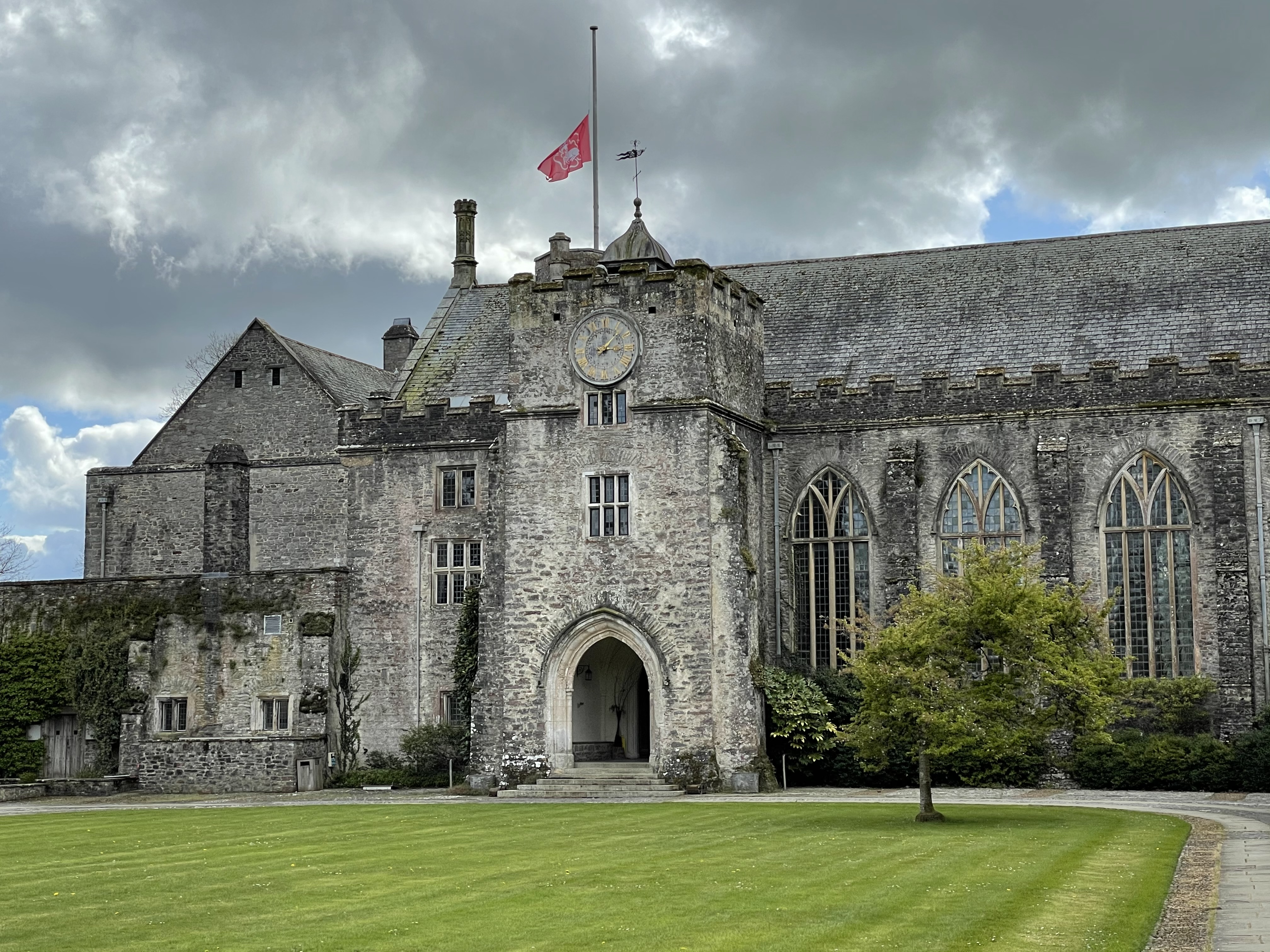
Dartington Hall, Devon, England

England has been at war with Spain for over two years. The Spanish king is preparing a formidable fleet of warships to launch an invasion. In 1587, everyone expected them to land at Falmouth, Plymouth or Dartmouth to establish a foothold on English soil. Thousands of Spanish soldiers would then disembark and rampage through the countryside. It must have been a terrifying time for the people of Dartington, only sixteen miles upriver from the port of Dartmouth. Many panic-inducing false alarms disturbed the people of Devon before the Spanish Armada’s arrival in July 1588.

Relations between England and Spain had been tense for a long time. After his wife, Queen Mary, died childless in 1558, Philip of Spain proposed to her sister, the new Queen Elizabeth. Elizabeth declined the offer, and Philip married elsewhere.

King Philip’s marriage to Elisabeth of Valois, the daughter of King Henry II of France, cemented the end of a long war between France and the Habsburgs. It was during the joust that accompanied the celebrations in Paris in the summer of 1559 that Roberda’s father’s lance shattered. His opponent, King Henry, had not put down his visor. A splinter of wood entered the king’s eye, and he died 11 days later. That accident changed the course of Gabriel’s life. It also set off the chain of events that brought Roberda to Dartington Hall.

After Queen Elizabeth I established a Protestant church in England, King Philip considered it his duty to return England to the Catholic faith. That, combined with political rivalry and economic competition, stoked his ambition to conquer England. He amassed a massive fleet of warships and gathered supplies.

In 1570, Pope Pius V excommunicated Elizabeth. The Pope supported Philip’s plan by promising forgiveness to those who took part in the invasion. Audacious English privateering raids on Spanish ships led by people like Sir Francis Drake made King Philip even more determined. The frequent attacks on Spanish ships and colonies disrupted Spanish trade and wealth. After the Treaty of Nonsuch, signed in 1585, confirmed England’s support for the Protestant Dutch rebels against Spanish rule, Philip put his plans in motion.

Sir Francis Drake’s audacious raid on Cadiz, known as ‘singeing the King of Spain’s beard’, destroyed around 30 Spanish ships and supplies, delaying the Armada’s launch by over a year. But everyone knew they would come.

England prepared, hoping the new English ships, faster and more manoeuvrable than the cumbersome Spanish galleons, would give them an advantage. However, Queen Elizabeth was notoriously parsimonious, leaving the English fleet short of powder and shot. Her reluctance to spend money frustrated her advisors, including the commander of the English fleet, Charles Howard.

Drake gathered ships at Plymouth, ready to meet the Spanish. However, many of his sailors fell ill and died from lack of food and cramped, unsanitary conditions on board. More men had to be conscripted from the surrounding area to replace them.

Sir Walter Raleigh’s network of warning beacons would signal the approach of the Spanish fleet. The Lord Lieutenant and his deputies mustered a militia — a sort of ‘Dad’s Army’ of poorly equipped, untrained militia-men. Roberda’s husband, Gawen Champernowne, was to lead cavalrymen drawn from the local nobility. These last-minute preparations would likely have proved inadequate had the invaders stuck to their initial plan.

Luckily, the Spanish commander decided to rendezvous with the Duke of Parma rather than first landing in the southwest. The Armada sailed on up the English Channel, pursued by Drake’s ships. At Gravelines, Drake sent in fire-ships to disrupt their formation. But it was bad weather that finally defeated King Philip’s attempt on England. The ‘Protestant Wind’ scattered them, driving them around the coast of Scotland. Some foundered on rocks; a few limped home to Spain. On land, Gawen Champernowne, who was to have led a cavalry troop against the expected attack, went home having seen no action.

The Armada failed in 1588, but the conflict continued for another sixteen years. In August 1595, the Spanish raided and burned villages in Cornwall. They attempted two more full-scale expeditions in 1596 and 1597. Roberda and the people of Devon continued to live with the threat of invasion. The war finally ended with the Treaty of London in 1604.

Meanwhile, in France, Roberda’s brothers sought to reclaim the estates they lost when their father died on the executioner’s block in Paris in 1574. The French Wars of Religion escalated into the War of the Three Henrys. Henry of Navarre became King Henry IV after both the Duke of Guise, leader of the Catholic League, and King Henry III, were assassinated.

During the 1590s Roberda’s brothers supported Henry IV in his campaigns to assert his authority. He faced opposition from the Catholic League, which Spain supported. Eventually, Henry IV publicly converted to Catholicism, and in 1594 he entered Paris, weakening the Catholic League. A year later. Henry IV formally declared war on Spain. The Edict of Nantes, issued in 1598, ended the religious wars in France. Catholicism became the state religion, but the Huguenots had substantial rights and religious freedoms. Roberda’s family reclaimed their lands. After her mother’s death, Roberda received her share, and her younger brother, Gabriel, eventually rebuilt the family home at Ducey.

Roberda’s life as Mistress of Dartington Hall, played out against an uncertain background. England was at war with Spain, and Devon was on the ‘front line’. Religion continued to divide her home country, France. Like many women of her time, she successfully managed a vast estate while Gawen was away. She overcame the hostility that met her in England as an incomer. Roberda gained the respect and trust of her estate workers, tenants and servants. Gawen’s return jeopardised her hard-won authority and put her in a difficult position. Should she trust him? Later, Roberda takes decisive action to secure her children’s inheritance. But can she eventually grasp the chance of happiness for herself?
Here’s the Blurb

1587. England is at war with Spain. The people of Devon wait in terror for King Philip of Spain’s mighty armada to unleash untold devastation on their land. 

Roberda, daughter of a French Huguenot leader, has been managing the Dartington estate in her estranged husband Gawen’s absence. She has gained the respect of the staff and tenants who now look to her to lead them through these dark times.

Gawen’s unexpected return from Ireland, where he has been serving Queen Elizabeth, throws her world into turmoil. He joins the men of the west country, including his cousin, Sir Walter Raleigh, and his friend Sir Francis Drake, as they prepare to repel a Spanish invasion. Amidst musters and alarms, determined and resourceful Roberda rallies the women of Dartington. But, after their earlier differences, can she trust Gawen? Or should she heed the advice of her faithful French maid, Clotilde?

Later Roberda will have to fight if she is to remain Mistress of Dartington Hall, and secure her children’s inheritance. Can she ever truly find fulfilment for herself?
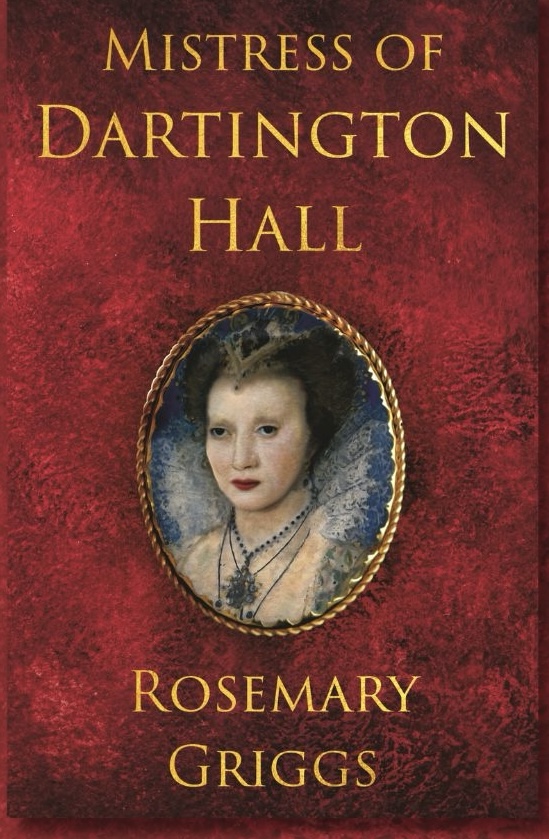
Buy Link

Universal Link

Meet the Author

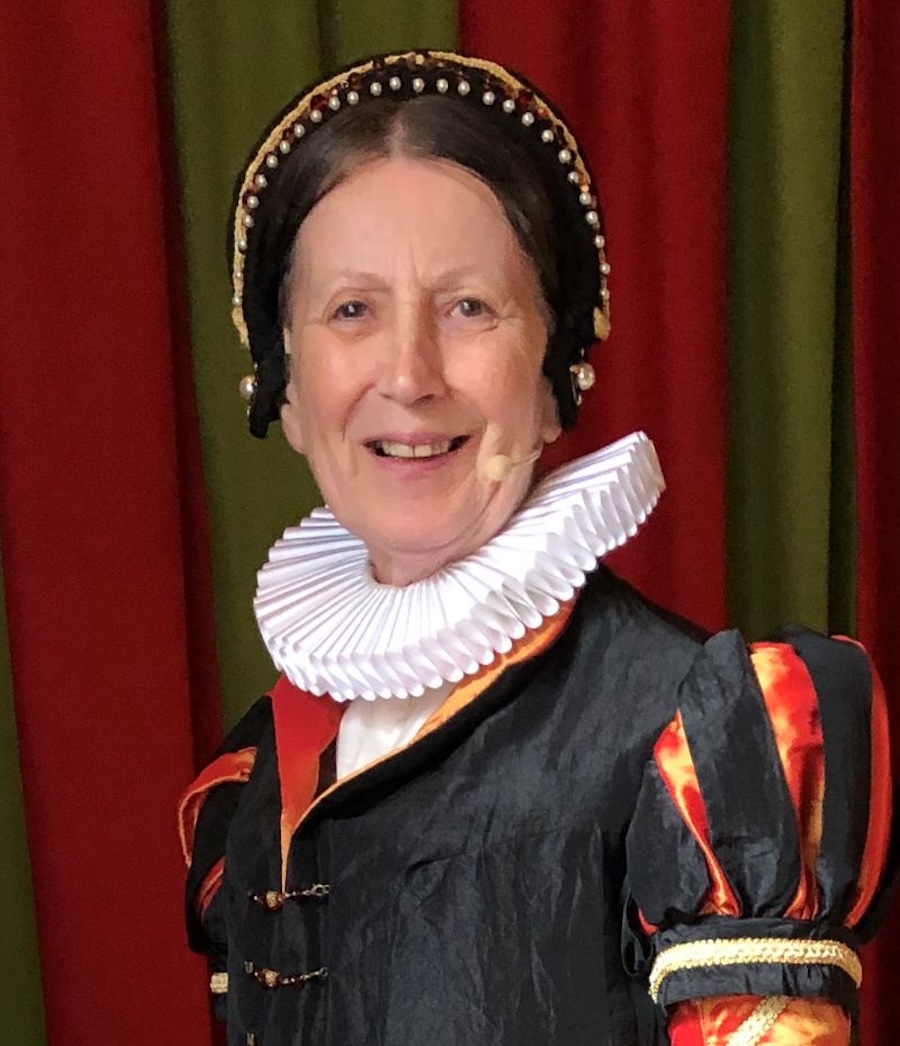
Author and speaker Rosemary Griggs has been researching Devon’s sixteenth-century history for years. She has discovered a cast of fascinating characters and an intriguing network of families whose influence stretched far beyond the West Country. She loves telling the stories of the forgotten women of history — the women beyond the royal court; wives, sisters, daughters and mothers who played their part during those tumultuous Tudor years: the Daughters of Devon.

Her novel, A Woman of Noble Wit, set in Tudor Devon, is the story of the life of Katherine Champernowne, Sir Walter Raleigh’s mother. The Dartington Bride, follows Lady Gabrielle Roberda Montgomery, a young Huguenot noblewoman, as she travels from war-torn France to Elizabethan England to marry into the prominent Champernowne family. Mistress of Dartington Hall, set in the time of the Spanish Armada, continues Roberda’s story. 

Rosemary is currently working on her first work of non-fiction — a biography of Kate Astley, childhood governess to Queen Elizabeth I, due for publication in 2026.

Rosemary creates and wears sixteenth-century clothing, and brings the past to life through a unique blend of theatre, history and re-enactment at events all over the West Country. Out of costume, Rosemary leads heritage tours at Dartington Hall, a fourteenth-century manor house that was home of the Champernowne family for 366 years.
Connect with the Author
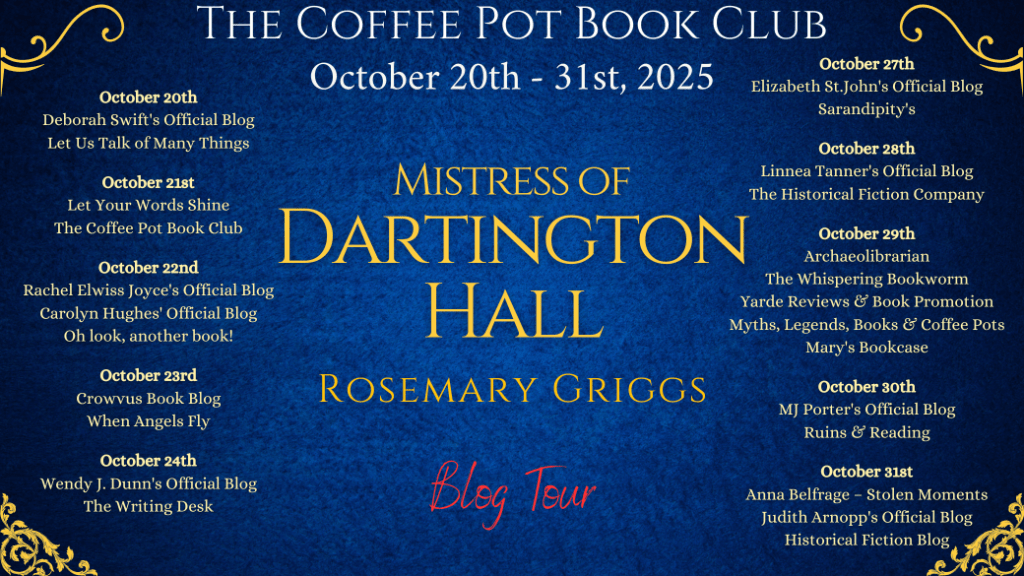

Follow the Mistress of Dartington Hall blog tour with The Coffee Pot Book Club

Posts

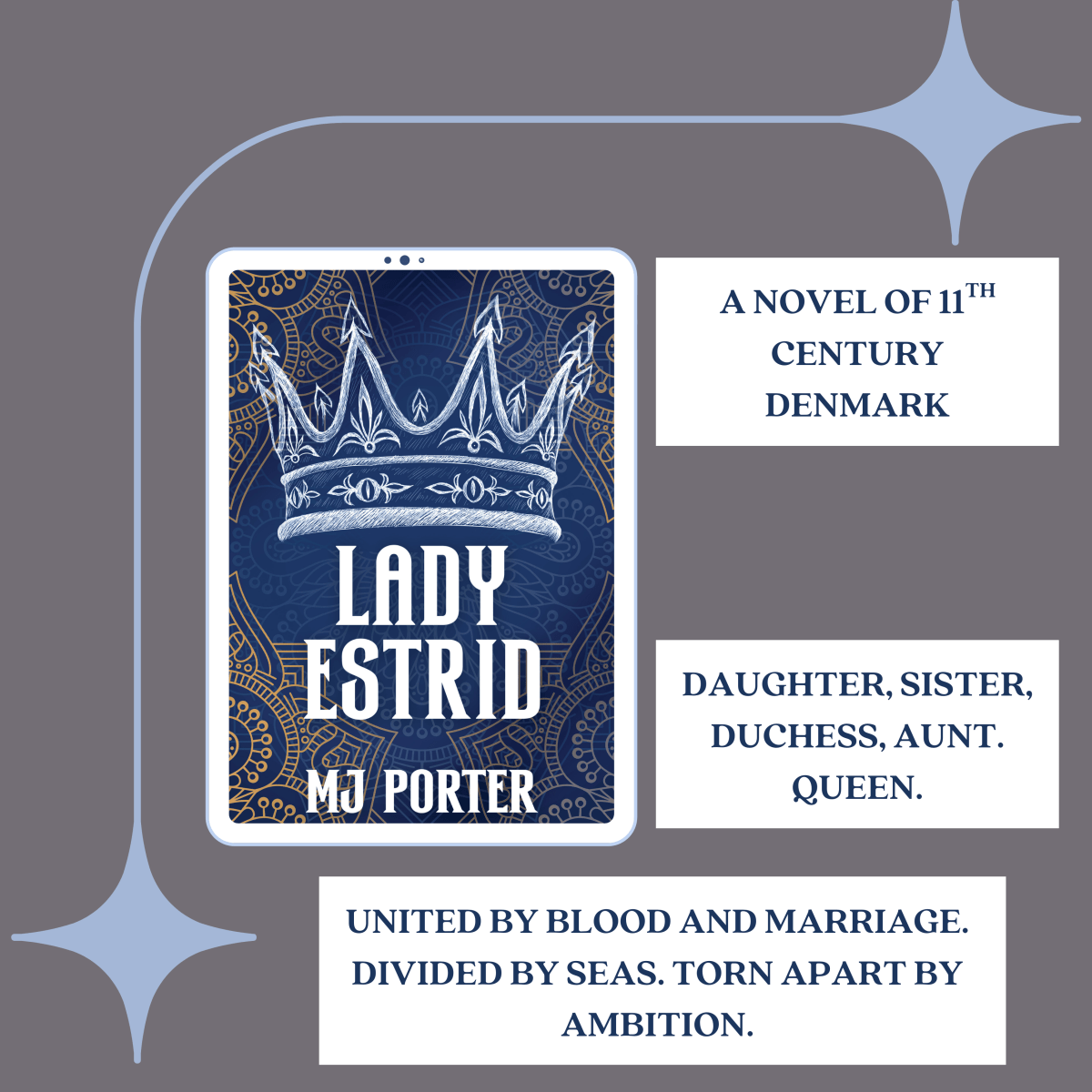
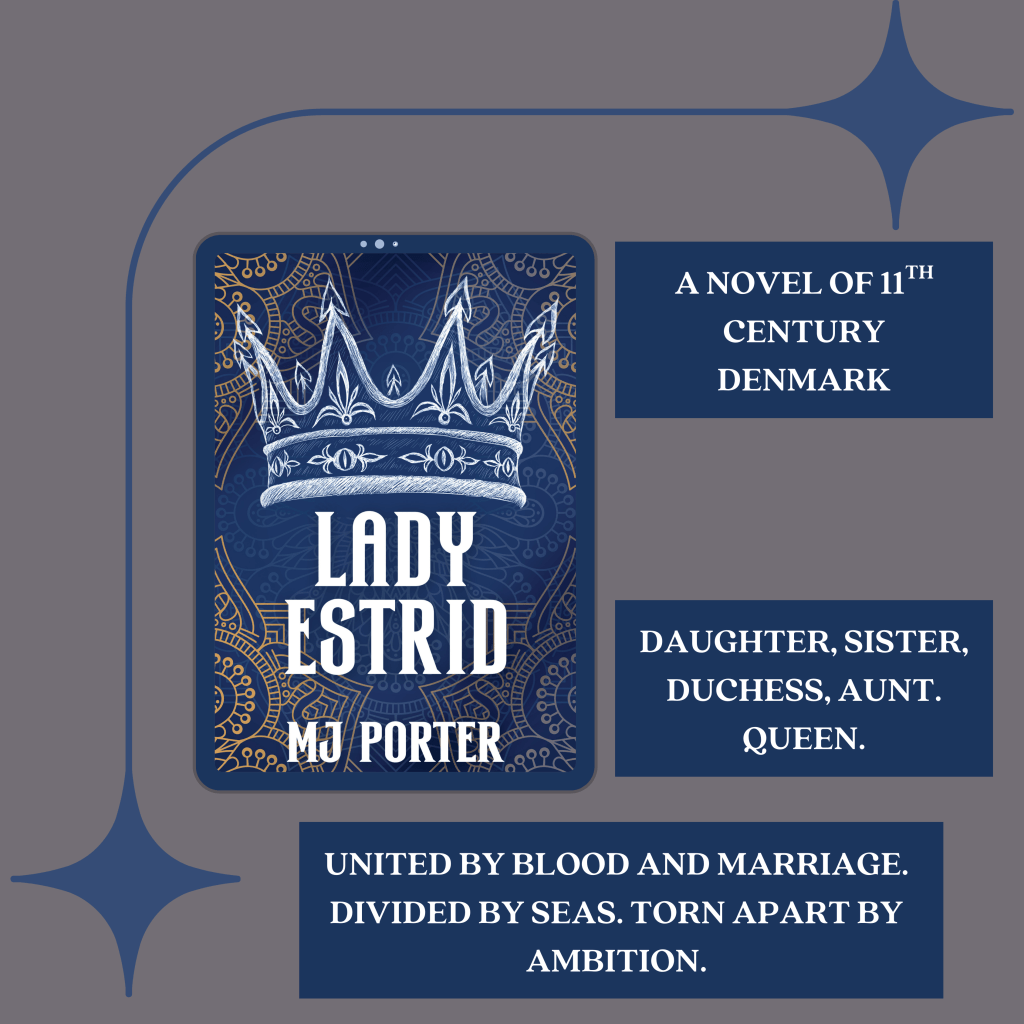
I’m resharing an interview I gave when I’d finished writing Lady Estrid, a novel of eleventh century Denmark #histfic #writingadvice #authorinterview

I’m resharing an interview I gave when I’d finished writing Lady Estrid, a novel of eleventh century Denmark #histfic #writingadvice #authorinterview

Why did you decide to write about Lady Estrid?

Lady Estrid has been a character that’s long fascinated me. She crops up as a ‘bit part’ character in another series I write, but as time has gone on, I’ve realised that she offers a lot more than I’ve been allowing her so far. And so, I hope at a suitable point in the other series, I decided to explore Lady Estrid for herself. It involves stepping away from my comfort zone of pre-Conquest England in the eleventh century, and allows me to write about Scandinavia at this time period, which has always been a huge area of interest for me.

I’ve written a few long story arcs before, but only two other books which cover such a huge amount of time (about four decades). Such a project allows me to focus on the bigger picture and to put historical characters into a much wider story-arc than writing just about them would allow.

By necessity, Lady Estrid must be a strong woman, able to manipulate the politics taking place around her. I think that there’s a huge and growing interest in such women, and of course, Denmark (and Scandinavia as a whole) at this time, isn’t something that I believe has been tackled before, potentially because of the lack of English Language books about the era. 

What drew you towards the Early Medieval era in which you set your book?

I’m fascinated by everything pre-1066 in England, but also wider afield. It’s impossible to tell the story of just one of these later countries, inhabited by Northmen or Norsemen, without looking to what’s happening elsewhere. These characters didn’t abide by our current national boundaries.

What were the challenges you faced in researching this period of history and were there any unexpected surprises?

The biggest problem with writing about this time period is the sources. I’m not as familiar with the Saga material and the works of Adam of Bremen and Saxon Gramaticus, as I’d like to be. As such, I rely much more on secondary sources than I might when writing about the Early English period. And of course, it’s a period where written sources are quite scarce anyway. Not only is it difficult to ‘find’ Lady Estrid, but, as you might have noticed, many of the character share the same names – there are no ends of Swein/Svein/Sven’s and equally, just as many Gytha’s and Gunnhild’s.

I was surprised by just how little the women of the Danish royal family are mentioned in any secondary sources. I’ve recently been on a book buying spree, and even in a new monograph on Cnut, Lady Estrith is only cited in the index seven times, and in a 798-page book, she has about 3 words! 

What do you think is the most challenging aspect of writing Historical Fiction?

I think this depends on how much history you want to put in your book. I’ve just written three books in The Ninth Century Series, and while they’re historical in nature, much of the day-to-day activity is actually fighting and swearing. Lady Estrid has a much weightier content. It has a cast of many more people; they all have to be placed in the right time period and at the right events, and there is not as much information about any of them as I’d like there to be. Obviously, The Ninth Century Series was easier to write once the time period was set. Lady Estrid was an altogether different project. It took much longer, and was more frustrating because I was trying to ensure it didn’t conflict with previous stories I’ve written, which have a very ‘Early English’ basis.

What advice do you have for aspiring Historical Fiction authors?

Know the time period you’re writing about, and not just what happens during it, but also what happens both before, and after, and in neighbouring countries as well. And, be aware of what ‘might have happened’ if certain events – normally births, deaths or wars – hadn’t happened. Remember, your characters don’t have the benefit of hindsight that you have as a writer. Everything to them would have been immediate, imminent and happening to them. Don’t fall into the trap of presenting everything as a fait accompli.

And, be prepared to be frustrated. There’s always some niggly little fact that is just not mentioned anywhere. The decision then has to be made as to whether to ‘make it up’ or write around it, and readers will somehow always know if you make it up.

And on a final note, be prepared to do something a little bit ‘different,’ be bold, be creative, do whatever has to be done to engage an audience with the time period. 

Posts

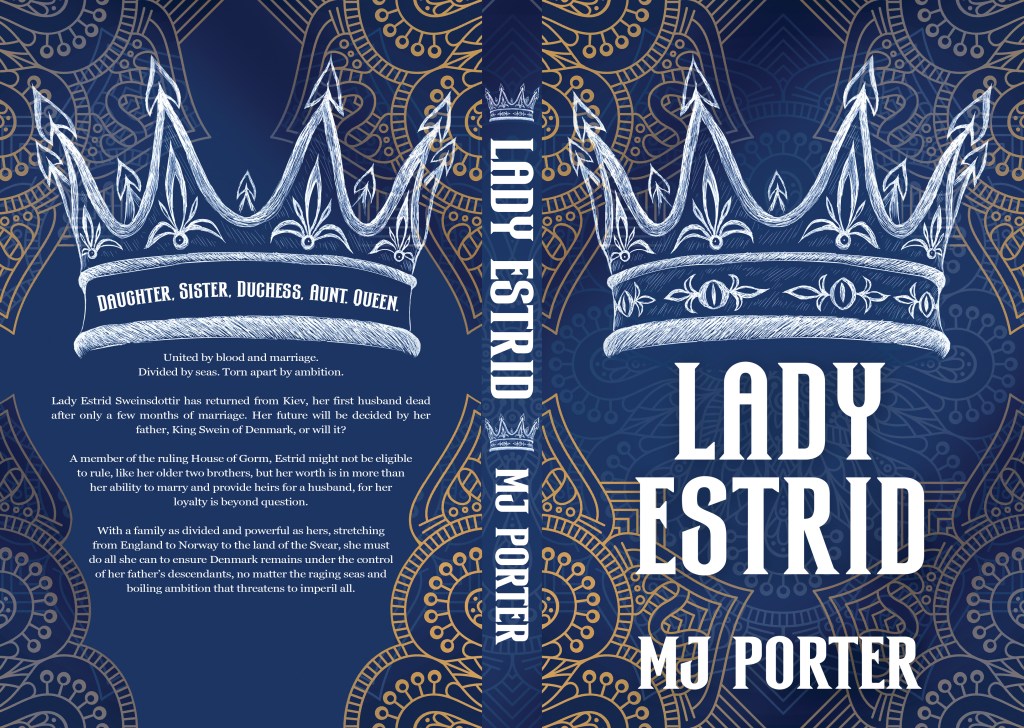
Who was Lady Estrid, and why did I write about her life? #histfic #TheEleventhCentury #England #Denmark #non-fiction

Who was Lady Estrid, and why did I write about her life? #histfic #TheEleventhCentury #England #Denmark #non-fiction

Lady Estrid, or Edith or even Margaret, daughter of King Swein Forkbeard of Denmark (and briefly England) is one of those beguiling characters who lived through momentous change. 

I’ve long been drawn to her, and used her as a ‘bit’ part character in my The Earls of Mercia series, but I wanted to dedicate both more time to Lady Estrid, and also to Denmark. Even when I’ve written about Cnut, who was king of England and Denmark, much of the action has taken place in England. There’s simply not enough ‘space’ to fit everything in.

Lady Estrid, like similar royal women (Queen Eadgifu of England and Lady Elfrida in the tenth century), had the advantage of living a much longer life than many of her male family members (check out the family trees here). She was the ‘glue’ that held together the narrative of what was happening in Denmark. And because of her vast family, it also allowed me to weave the story of not just Denmark, but also Norway, Sweden, England, and Normandy, into the narrative.

She was the daughter of a king, the sister of three kings, the aunt of four kings, the mother of one king, and in time, the grandmother of three further kings. 

Having written about Queen Eadgifu, Lady Elfrida, and King Edward the Elder’s daughters (in tenth century England), I wanted a new ‘woman’ to bring to life. I could have chosen Queen Emma, or even Queen Edith of England, but their stories are more well-known. I’ve long been fascinated by the Scandinavian countries during the Viking Age, and Lady Estrid was just too good a character to leave in her ‘bit’ part without adding anything further.

For all Lady Estrid’s claims as mother, aunt, sister and daughter, there’s very little that can be said about her, not even the order of her three marriages, if they occurred, can be confirmed. It’s only possible to say that her marriage to Jarl Úlfr took place because of the survival of her children. It’s the lack of ‘hard facts’ about her, and the potential to weave a story that includes so many of the other well-known women and men of the period, that made Lady Estrid so irresistible. When stories focus on Earl Godwine, or King Cnut, or even on King Harald Hardrada, it’s possible to lose sight of the bigger picture, and Lady Estrid certainly provides the potential to show the overarching events that occurred from AD1013-1050 within Denmark and England.

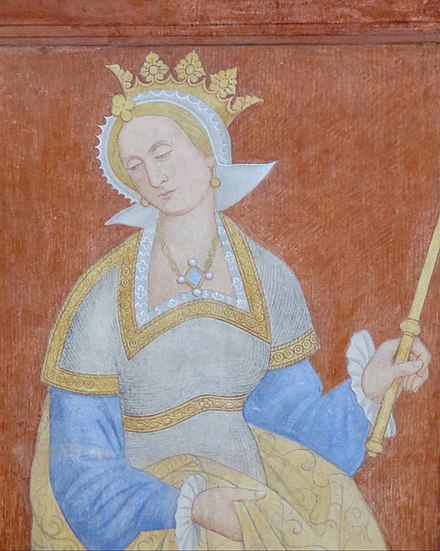
An image of Lady Estrid from Wikipedia

Check out the Lady Estrid page for more information about my novelisation of her life, and the historical details available for her.

Posts

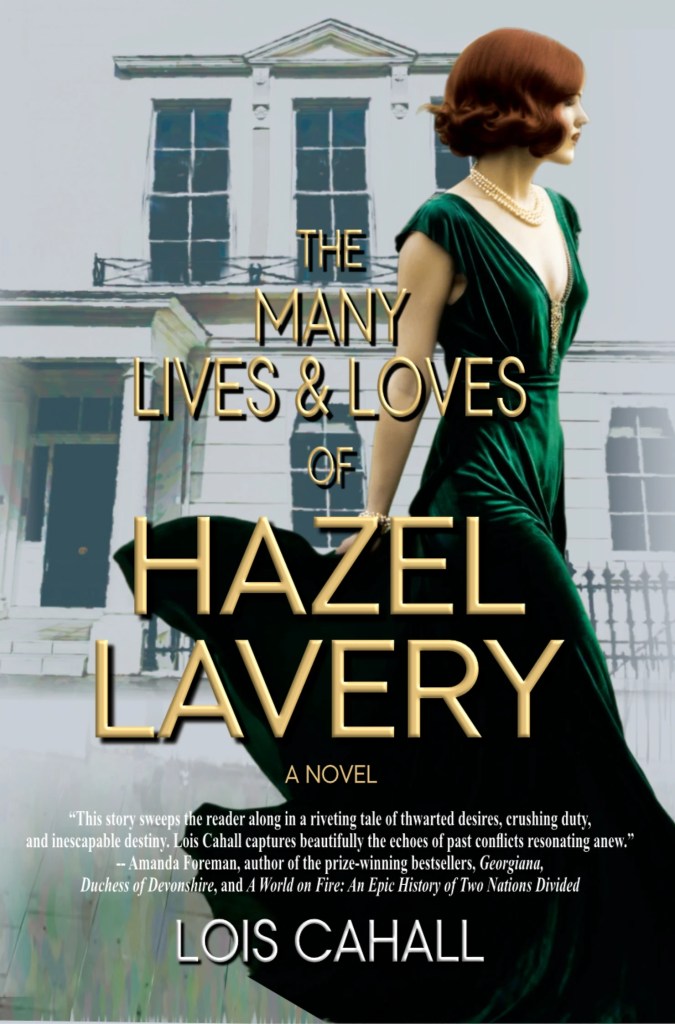
I’m delighted to welcome Lois Cahall and her new book, The Many Lives & Loves of Hazel Lavery to the blog #HistoricalFiction #BiographicalFiction #WomenInHistory #BlogTour #TheCoffeePotBookClub

I’m delighted to welcome Lois Cahall and her new book, The Many Lives & Loves of Hazel Lavery to the blog with an excerpt.

Excerpt

Alice was out on Regent Street for drinks at the Café Royal, a thriving Victorian restaurant known to cater to the upper crust and apparently British spies. And then she was off to the Savoy for dinner with her international crowd. Like mother like daughter, I suppose. Christmas eve she’d be traveling to Ireland, spending more and more time in Kilkenny. She even had dreams of living there. I suspect my Irish bug bit her, too. And she even expressed it to me in a letter:

Dearest Mommy,

The Irish are such delightfully kind and amusing people. It is nothing like English hunting, either field or country, everyone helps everyone else, and no one swears at anyone and you’re always welcome in the country if you’re a stranger…. I think Ireland is the freshest, simplest, nicest country and people I have ever met, and I love every inch of it, so you can say ‘I told you so’ and crow over me to your heart’s content now. You were right! And I love you!

My stepdaughter, Eileen, wrapped gifts in the parlor. Nearby were her daughters, Ann Moira and June Mary, which now made John and I official grandparents.

Winston and John were in the library deep into cigars, gin and political talk with our son-in-law, William, while Clementine and I sat sipping sherry in the drawing room, the doors closed. My newest friend, Jessie Louisa “Louie” Rickard, an Irish writer, whose romantic novels we all devoured, joined us, listening on as Clementine cackled about some latest fashion.

My eyes watered up for the tenth time that day. I didn’t intend for her to notice but she instantly figured it out as I turned the other way to avoid eye contact.

“Hazel,” said Clementine, leaning in, her voice full of pity, “Hazel, look at me.” I turned as she gained my full attention. “You must gather yourself, darling girl.”

“Oh Clemmie, I don’t know how to…”

“Of course, you don’t. You’re American,” she said, patting my hand. “But try you must.”

“He was the love of…”

“…your life, yes, I know. But he’s gone. It’s been years,” said Clementine. “Those chapters of life are best left unpublished.”

Then she eyed my wardrobe, black from head to toe, compared to her layers of lapis and pitch blue – a bias-cut dress with belted waist and large yoke collar. “And Hazel, dearest, you’re not in mourning, you’re married…”

“Well, I suppose marriage is a form of mourning.” The three of us women shared a look.

“Fer sure,” said Louie with her Irish brogue. She was sporty. Wearing high waisted sailor pants and striped blouse.

As I admired their zest for life in the present, I longed to tell them right then and there that I mourned not only for Michael, but for our unborn child, and the recent loss of yet another one of Michael’s friends.

“It’s been so difficult, ladies. You’re the only ones I can confide in except for Michael’s sister, Hannie. We’ve stayed close. My love for him is always with me. He once said we were like swans who mate for life.”

“Pain comes from always wanting…” said Louie, trailing off and turning the other way, like a true romantic writer, gazing out the window. Whenever she spoke, rain practically fell on cue.

Clementine began pinching the puffed sleeves on her dress and then gazed up at me, clearing her throat to speak. “I have five tips for any woman where the living men are concerned, not the dead ones.”

“Oh?” I sat up, eager.

“Firstly,” said Clementine, “it is important that a man hires you a skilled staff and has an admirable career. Second, that he makes you laugh. Third, it is important to find a man you can count on who doesn’t lie to you. And that this man loves you and spoils you. And, finally,” she added, “it is most important that these four men don’t know each other!” A pause, and then Clementine burst out laughing.

“Oh Clemmie, you’re wretched! Is this your way of saying I should have an affair?”

“It’s time dear. It’s time.”

“I concur!” said Louie.

“But I’m a Catholic now,” I declared, “I don’t believe in divorce.”

“Nobody is saying to divorce, just have a good ole roll in the hay with a man more your age,”

said Louie, tipping her head to suggest John was very old.

I regretted the way that I segued into the next words that fell from my mouth since rumors had already begun circulating about me. “And Kevin O’Higgins is dead, too. Michael’s friend.”

“Another one?” asked Clementine. “Dead?”

“Yes, back in July, didn’t I tell you then… though it feels like yesterday. The assassins poured lead into his body just like they did to Michael except they murdered him on his way to Mass.”

“Disgraceful!” said Clementine.

“Sometimes, I just feel frozen in misery,” I added.

“So, you were close, yeah?” asked Louie.

Trying to avoid the question instead reframing with a different answer. “I was watching polo at Ranelagh when I was told the news. The first thing I thought was the same thing I always think

when I hear of the death of a man close to me. It’s always the men close to my life who die.”

Leaning forward I poured more sherry, and topped Clementine’s off, too. “O’Higgins so much wanted to see Michael’s achievements and endeavors for the country. They’re saying he was perhaps the greatest diplomat of them all. You know, he wrote me the most charming note. Ended it by saying he wished I could be there as his Parliament meets again. And then he went on about how much the Irish appreciate my help and sympathy.”

Clementine studied her sherry glass, took a sip, and then spoke, “Hazel, I suspect that your views of Ireland are unsuited to the harsh reality of sectarian strife.”

“But I love Ireland so. It was purely by accident of birth that America claimed me. Although,” I said, easing back into the chair and pouting, “Perhaps John was right. He once said that ‘Hazel’s Ireland is as unreal as a mirage in the desert.’”

Here’s the Blurb

In the heart of tumultuous times, amidst the grandeur of Victorian opulence, there existed an American socialite whose influence altered the course of the Anglo-Irish treaty: Lady Hazel Lavery

Boston-born Hazel ascended from her Irish roots to become the quintessential Society Queen of Chicago, and later London, where she lived a delicate dance between two worlds: one with her esteemed husband, Sir John Lavery, a portrait artist to royalty, and the other with Michael Collins, the daring Irish rebel whose fiery spirit ignited her heart. Together, they formed a love triangle that echoed through the corridors of power at 10 Downing Street, London.

Hazel’s wit and charm touched on the lives of the who’s-who of England, including Winston Churchill, George Bernard Shaw and Evelyn Waugh. The image of her memorable face graced the Irish note for close to half-a-century.

Buy Link

Universal Link

Meet the Author

Lois Cahall began her writing career as a columnist for Cape Cod newspapers and local periodicals, including Cape Cod Life. She spent a decade writing for national magazines (Conde Nast/Hearst). Her articles have been published in Cosmo Girl, Seventeen, SELF, Marie Claire, Redbook, Ladies Home Journal, Reader’s Digest, Men’s Journal, and Bon Appetit. In the UK she wrote for RED, GQPsychologies, and for The Times. In addition, Lois wrote profiles for The Palm Beach Post.

Lois’s first novel, Plan C: Just in Case, was a #1 bestseller in the UK, where it remained in the top three fiction for the year before selling into foreign translation markets. In July of 2014, her novel hit #1 on the Nook “Daily Deal” in America. Her second novel, Court of the Myrtles, was hailed as “Tuesdays with Morrie on estrogen” by the Ladies Home Journal. Her newest book, The Many Lives of Hazel Lavery, is a work of historical fiction and will be published in 2025.

Lois is the former Creative Director of Development for James Patterson Entertainment. She credits her friend, Jim Patterson, the world’s most successful bestselling author, with teaching her about the importance of children’s reading and literacy. As a result, she founded the Palm Beach Book Festival in 2015, an annual event bringing in NYT bestselling and celebrity authors. The event is for book lovers, nurturing the written word for the children and adults of southern Florida.

In 2024 Lois also founded The Cape Cod Book Festival, an annual autumn event that promises to be a new cultural footprint in Massachusetts. It will be for locals and ‘washashores’ alike – a magical place where charitably minded readers can rub elbows with great writers and thinkers.  

Lois divides her life between New York and Cape Cod, although her spiritual home is London. But most importantly, Lois can do the Hula Hoop for an hour non-stop and clear a Thanksgiving table in just under ten minutes.

Connect with the Author

Follow The Many Lives & Loves of Hazel Lavery blog tour with The Coffee Pot Book Club

Posts