Letter writing in the Eleventh Century, how I recreated Lady Estrid’s connections with her vast family. #non-fiction #histfic

Letter writing in the Eleventh Century, how I recreated Lady Estrid’s connections with her vast family. #non-fiction #histfic

In trying to bring together the narrative for Lady Estrid, I faced a bit of a problem: the vast distances involved. Lady Estrid had family in England, Denmark, Sweden and Norway, many of them she may never have met in person.

Today, we might pick up the phone, or have a quick look on the internet, but in the eleventh century, how would people have communicated?

And so to letter writing. There are two surviving letters from the eleventh-century that were sent by King Cnut, Estrid’s brother, to the English, when he was absent from his newly conquered country, in AD1020 and AD1027. I give a small example below. 

;Be it known therefore to all of you, that I have humbly vowed to the Almighty God himself henceforward to amend my life in all respects, and to rule the kingdoms and the people subject to me with justice and clemency, giving equitable judgments in all matters; and if, through the intemperance of my youth or negligence, I have hitherto exceeded the bounds of justice in any of my acts, I intend by God’s aid to make an entire change for the better.’  From Cnut’s letter to the English from AD1027.

These might well have been an exercise for Cnut in asserting his authority over the English, and giving his regents a little bit of extra support, but they open up the possibility of just who else was busy writing and sending letters to one another. 

There’s always the assumption that unless you were a holy man, you perhaps couldn’t read or write, and in fact, in one of the books I referenced for Lady Estrid, I found a fascinating chart detailing people who are known to have been used by the ruling family of Normandy as messengers, another way that messages could be sent between people. But surely, sometimes, it was just better to write everything down, that way nothing could be lost in translation. 

Without the possibility of Lady Estrid ever meeting some members of her family, using letter writing allowed me to artificially create conversations between the characters, and while it might not have been the ‘norm’ it was certainly something that happened. Indeed, three centuries earlier, there’s a great wealth of information to be found in the letters of Alcuin of York (c735-804), so it wasn’t as though it was a new thing. With Denmark’s conversion to Christianity, there would have been a ready selection of scribes just waiting to note down Lady Estrid’s frustrations and complaints, even if she didn’t pen them herself.

Here’s an example of one of Estrid’s letters I create in the book.

Dearest Mother, Lady Sigrid. Queen of Denmark.’

‘This marriage doesn’t agree with me. How could you agree to it? I trusted you more than any other to understand how difficult it would be to be forced to live amongst strangers. I relied on you to argue with my father about the necessity of the union.’ 

And don’t tell me I will one day be the queen of the Rus, as my father planned. Prince Ilja is not a strong man. I don’t foresee him living long. Not at all. The poor man. He has barely been able to consummate our union. I hope I will not carry his child. It will be weak and feeble, and I will not tolerate such.’ 

My children will be strong and powerful. One day, it is they who will be kings and queens. But these children will not be shared with Prince Ilja. I am sure of it.’

And even if he were to survive, his brothers are a treasonous coven. None of them wishes the other to succeed at their expense. I foresee only bloodshed and paranoia when Ilja’s father is dead.’

Frida is my only friend and ally, reminding me of home. I hope to return to Denmark one day. I never imagined leaving her. I miss her. The kingdom of the Rus is not the same. Not at all.’

Send me news of my father and brothers. I wish to know if my father has finally triumphed in England over King Æthelred. I should like to know that he didn’t callously send me away without so much as seeing me in person for no good reason, because he was absent, in England, as so often the case. If he fails in England again, I will never forgive him for his actions towards me.’

Your despairing daughter, Lady Estrid Sweinsdottir, from Kiev.’

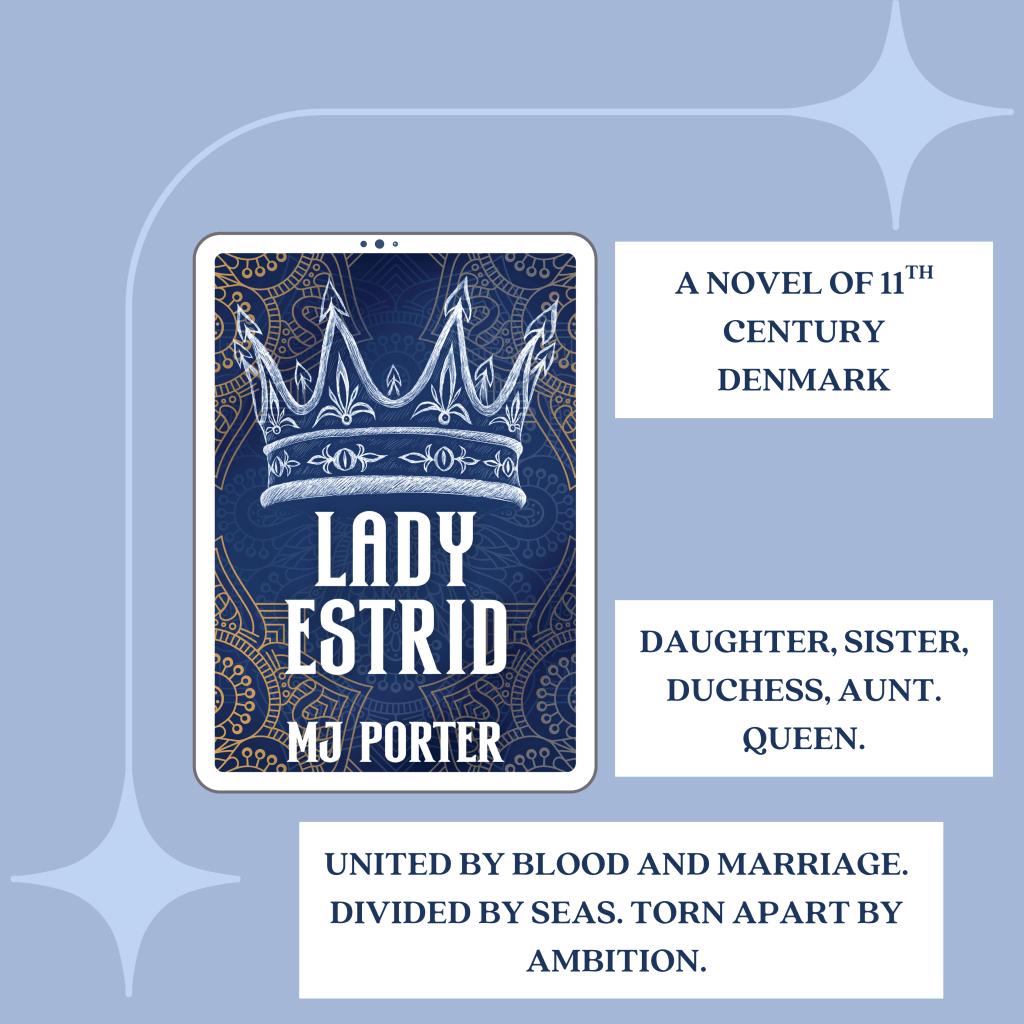
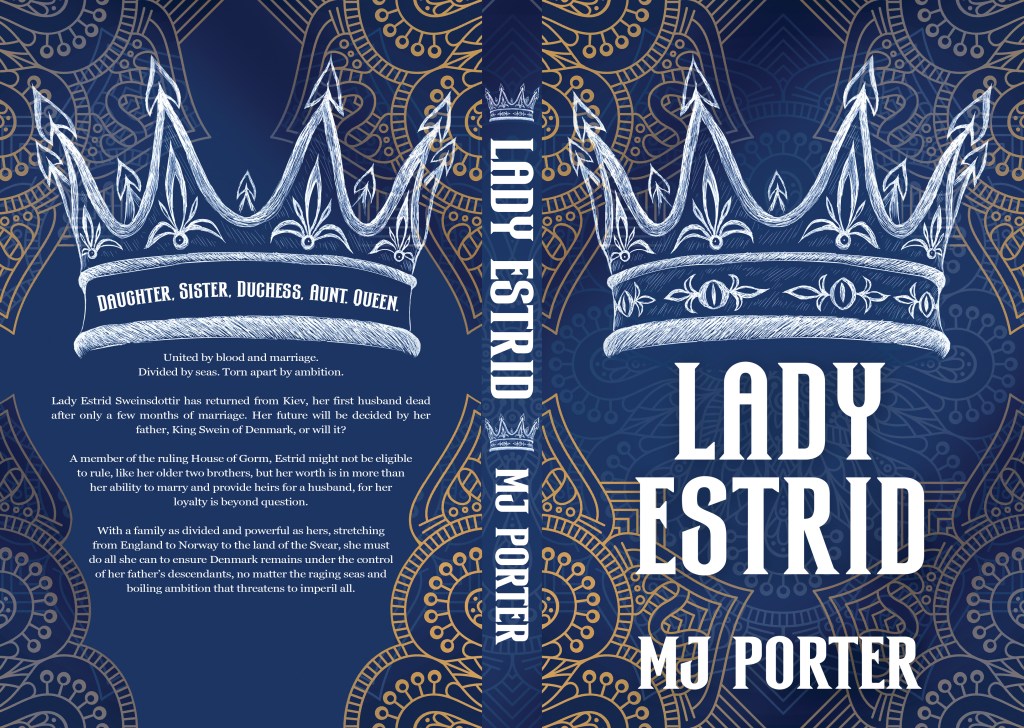
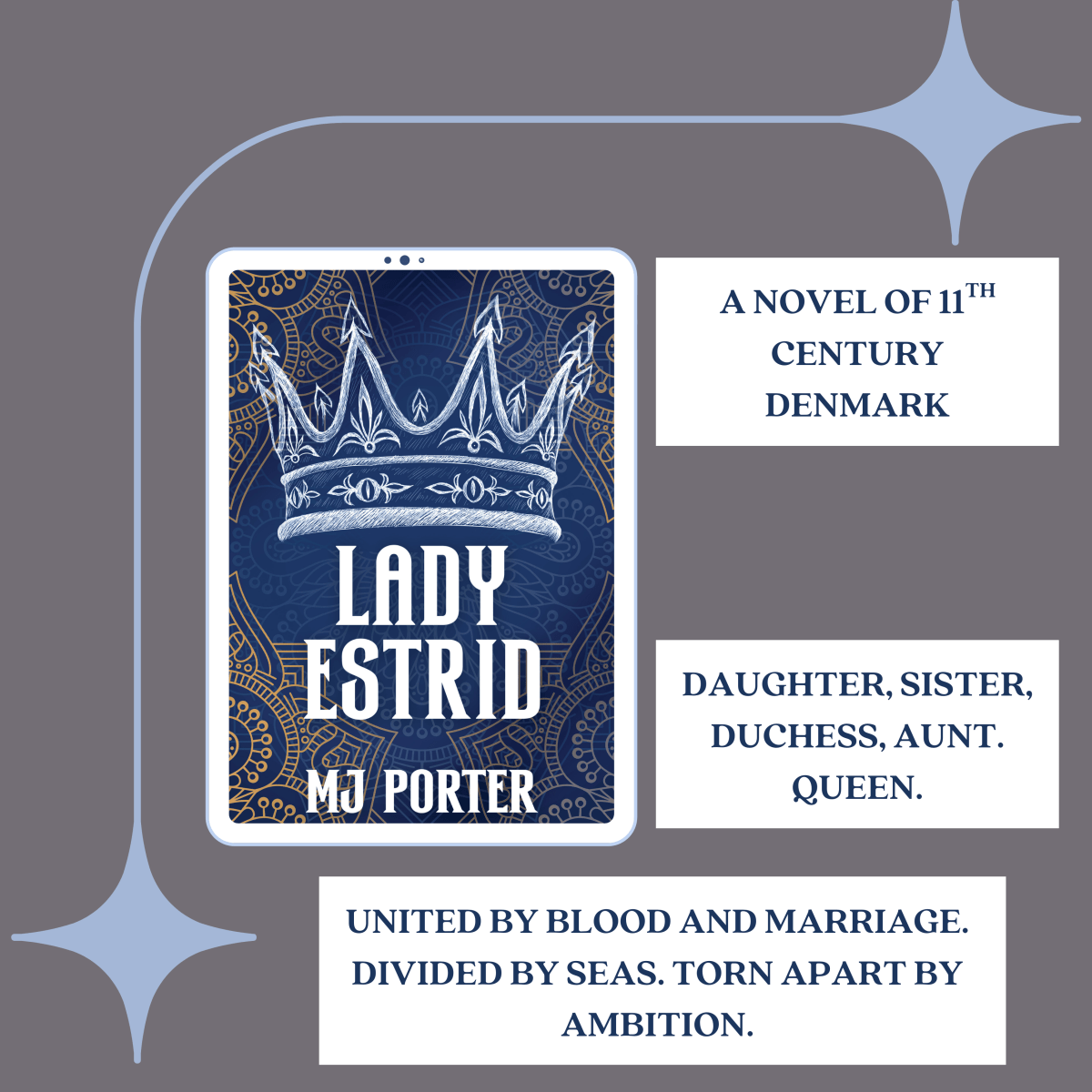
Grab Lady Estrid now to read on.

Check out the Lady Estrid page on the blog for more information.
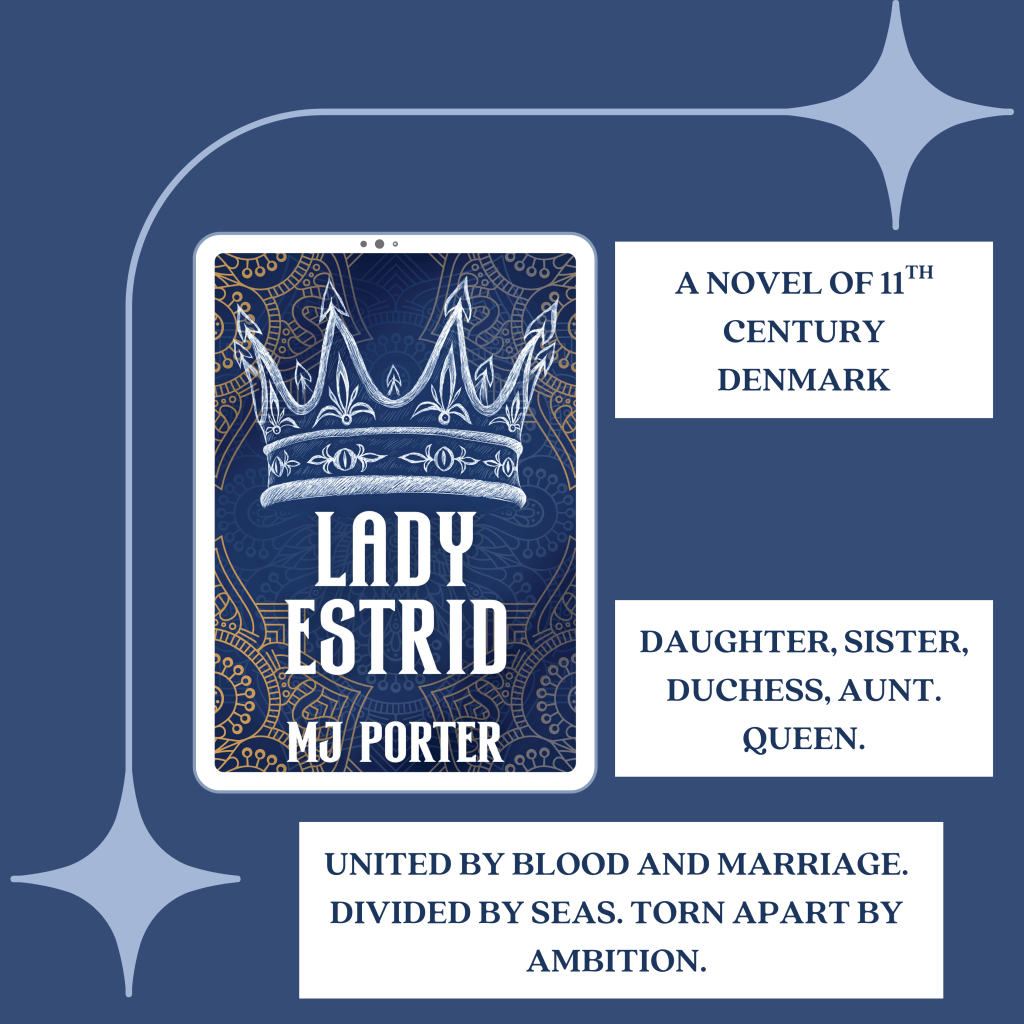
Click on the image to check out Lady Estrid.

Posts

The physical and political setting for Lady Estrid, a novel of eleventh century Denmark #histfic #lostwomenofhistory

The physical and political setting for Lady Estrid, a novel of eleventh century Denmark #histfic #lostwomenofhistory

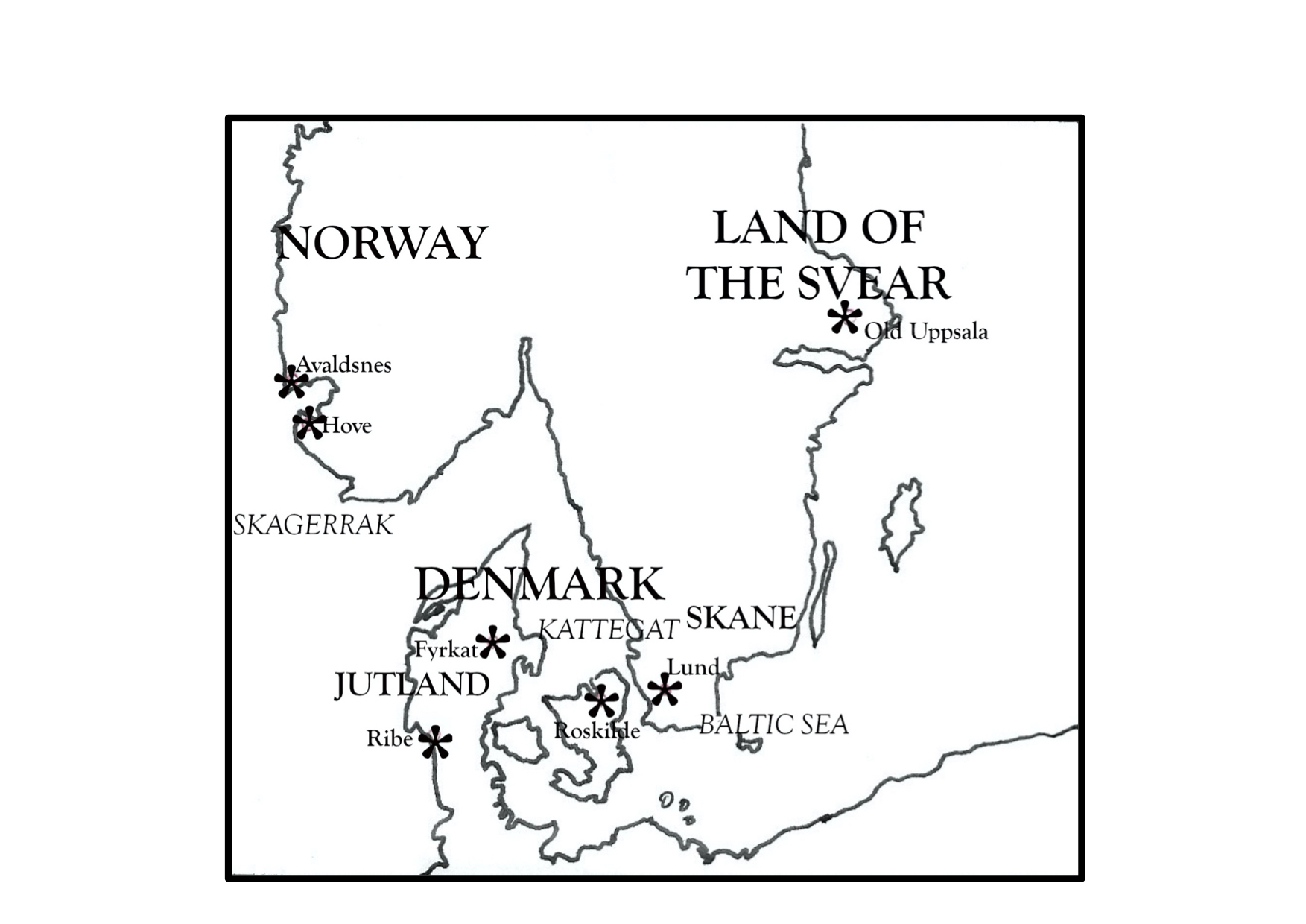
Lady Estrid is set in Denmark, as well as in wider Scandinavia and England, during the eleventh century. But it’s events in Denmark, Norway and Sweden that inspired me to write about Lady Estrid, although, of course, I couldn’t do it without including England.

Denmark, at this time, is really starting to cohere into what we might think of as a coherent kingdom. I’m not an expert on what comes before, but The House of Gorm, into which Lady Estrid is born, has ruled Denmark for a couple of decades (through her grandfather, Gorm, and father, Swein Forkbeard), but a lasting peace hasn’t necessarily been achieved. The family are portrayed as conquerors, coming into what would become Denmark, and imposing themselves over an unruly elite. The number of intermarriages between families in (what we call today) Norway, Sweden and Denmark offers a landscape that is riddled with double-crossing and the potential for mischief and war against a backdrop of uncertainty in Denmark.  You can find family trees for Lady Estrid here.

And what a cast of characters I had to play with – King Swein of Denmark, his two sons, his daughters, and the men they marry, and the sons and daughters they birth, and of course, his wife as well. It seems that not only was she married to Swein, she was also the wife of the king of Sweden before his death, and might even have been pursued by Olaf Tryggvason. (There are arguments about her actual identity, but not about her marital history.) 
And into all this steps Lady Estrid, who, like similar royal women, has the advantage of living a much longer life than many of her male family members. She is someone who would have lived through turbulent times, and I always find that overriding viewpoint, just too good to ignore, because it gives an author so much scope to play with. Yes, I might know what ultimately happens, but when you weave the story of Lady Estrid, and what is, and isn’t known about her, around bigger events, in Denmark, Norway, Sweden and England, it makes for both a complex and a simple story. The people she met along the way are perhaps better known than she is herself, but that’s just a means of adding context to a much longer narrative than can often be explored when writing about Swein, or Cnut, or Harald or Harthacnut or Svein (yes, another one) or Beorn.

Posts

I’m resharing an interview I gave when I’d finished writing Lady Estrid, a novel of eleventh century Denmark #histfic #writingadvice #authorinterview

I’m resharing an interview I gave when I’d finished writing Lady Estrid, a novel of eleventh century Denmark #histfic #writingadvice #authorinterview

Why did you decide to write about Lady Estrid?

Lady Estrid has been a character that’s long fascinated me. She crops up as a ‘bit part’ character in another series I write, but as time has gone on, I’ve realised that she offers a lot more than I’ve been allowing her so far. And so, I hope at a suitable point in the other series, I decided to explore Lady Estrid for herself. It involves stepping away from my comfort zone of pre-Conquest England in the eleventh century, and allows me to write about Scandinavia at this time period, which has always been a huge area of interest for me.
I’ve written a few long story arcs before, but only two other books which cover such a huge amount of time (about four decades). Such a project allows me to focus on the bigger picture and to put historical characters into a much wider story-arc than writing just about them would allow.

By necessity, Lady Estrid must be a strong woman, able to manipulate the politics taking place around her. I think that there’s a huge and growing interest in such women, and of course, Denmark (and Scandinavia as a whole) at this time, isn’t something that I believe has been tackled before, potentially because of the lack of English Language books about the era. 

What drew you towards the Early Medieval era in which you set your book?

I’m fascinated by everything pre-1066 in England, but also wider afield. It’s impossible to tell the story of just one of these later countries, inhabited by Northmen or Norsemen, without looking to what’s happening elsewhere. These characters didn’t abide by our current national boundaries.

What were the challenges you faced in researching this period of history and were there any unexpected surprises?

The biggest problem with writing about this time period is the sources. I’m not as familiar with the Saga material and the works of Adam of Bremen and Saxon Gramaticus, as I’d like to be. As such, I rely much more on secondary sources than I might when writing about the Early English period. And of course, it’s a period where written sources are quite scarce anyway. Not only is it difficult to ‘find’ Lady Estrid, but, as you might have noticed, many of the character share the same names – there are no ends of Swein/Svein/Sven’s and equally, just as many Gytha’s and Gunnhild’s.

I was surprised by just how little the women of the Danish royal family are mentioned in any secondary sources. I’ve recently been on a book buying spree, and even in a new monograph on Cnut, Lady Estrith is only cited in the index seven times, and in a 798-page book, she has about 3 words! 

What do you think is the most challenging aspect of writing Historical Fiction?

I think this depends on how much history you want to put in your book. I’ve just written three books in The Ninth Century Series, and while they’re historical in nature, much of the day-to-day activity is actually fighting and swearing. Lady Estrid has a much weightier content. It has a cast of many more people; they all have to be placed in the right time period and at the right events, and there is not as much information about any of them as I’d like there to be. Obviously, The Ninth Century Series was easier to write once the time period was set. Lady Estrid was an altogether different project. It took much longer, and was more frustrating because I was trying to ensure it didn’t conflict with previous stories I’ve written, which have a very ‘Early English’ basis.

What advice do you have for aspiring Historical Fiction authors?

Know the time period you’re writing about, and not just what happens during it, but also what happens both before, and after, and in neighbouring countries as well. And, be aware of what ‘might have happened’ if certain events – normally births, deaths or wars – hadn’t happened. Remember, your characters don’t have the benefit of hindsight that you have as a writer. Everything to them would have been immediate, imminent and happening to them. Don’t fall into the trap of presenting everything as a fait accompli.

And, be prepared to be frustrated. There’s always some niggly little fact that is just not mentioned anywhere. The decision then has to be made as to whether to ‘make it up’ or write around it, and readers will somehow always know if you make it up.

And on a final note, be prepared to do something a little bit ‘different,’ be bold, be creative, do whatever has to be done to engage an audience with the time period. 

Posts

Who was Lady Estrid, and why did I write about her life? #histfic #TheEleventhCentury #England #Denmark #non-fiction

Who was Lady Estrid, and why did I write about her life? #histfic #TheEleventhCentury #England #Denmark #non-fiction

Lady Estrid, or Edith or even Margaret, daughter of King Swein Forkbeard of Denmark (and briefly England) is one of those beguiling characters who lived through momentous change. 

I’ve long been drawn to her, and used her as a ‘bit’ part character in my The Earls of Mercia series, but I wanted to dedicate both more time to Lady Estrid, and also to Denmark. Even when I’ve written about Cnut, who was king of England and Denmark, much of the action has taken place in England. There’s simply not enough ‘space’ to fit everything in.

Lady Estrid, like similar royal women (Queen Eadgifu of England and Lady Elfrida in the tenth century), had the advantage of living a much longer life than many of her male family members (check out the family trees here). She was the ‘glue’ that held together the narrative of what was happening in Denmark. And because of her vast family, it also allowed me to weave the story of not just Denmark, but also Norway, Sweden, England, and Normandy, into the narrative.

She was the daughter of a king, the sister of three kings, the aunt of four kings, the mother of one king, and in time, the grandmother of three further kings. 

Having written about Queen Eadgifu, Lady Elfrida, and King Edward the Elder’s daughters (in tenth century England), I wanted a new ‘woman’ to bring to life. I could have chosen Queen Emma, or even Queen Edith of England, but their stories are more well-known. I’ve long been fascinated by the Scandinavian countries during the Viking Age, and Lady Estrid was just too good a character to leave in her ‘bit’ part without adding anything further.

For all Lady Estrid’s claims as mother, aunt, sister and daughter, there’s very little that can be said about her, not even the order of her three marriages, if they occurred, can be confirmed. It’s only possible to say that her marriage to Jarl Úlfr took place because of the survival of her children. It’s the lack of ‘hard facts’ about her, and the potential to weave a story that includes so many of the other well-known women and men of the period, that made Lady Estrid so irresistible. When stories focus on Earl Godwine, or King Cnut, or even on King Harald Hardrada, it’s possible to lose sight of the bigger picture, and Lady Estrid certainly provides the potential to show the overarching events that occurred from AD1013-1050 within Denmark and England.

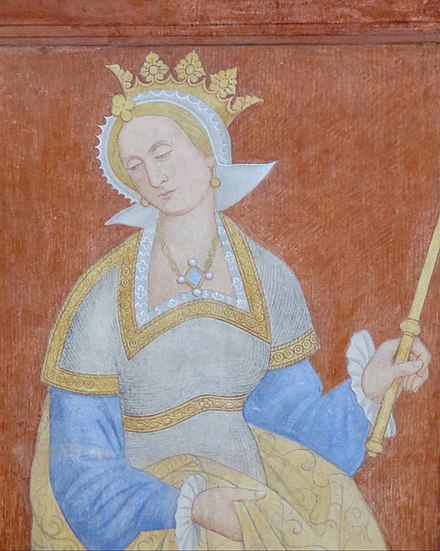
An image of Lady Estrid from Wikipedia

Check out the Lady Estrid page for more information about my novelisation of her life, and the historical details available for her.

Posts

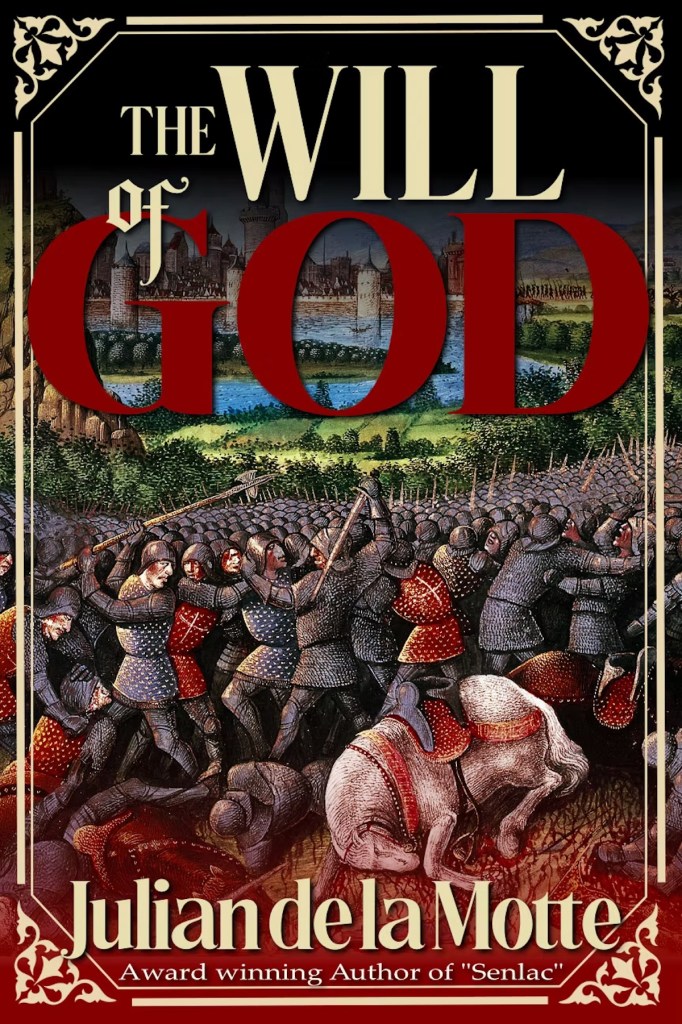
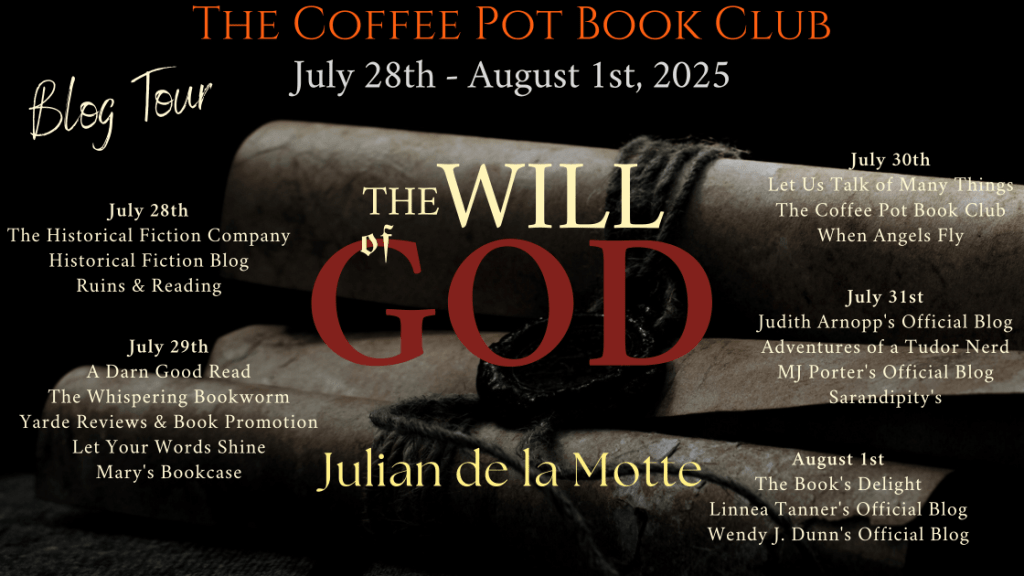
I’m delighted to welcome Julian de la Motte and his book, The Will of God, to the blog #TheWillOfGod #HistoricalFiction #Crusades #WilliamTheConqueror #BlogTour #TheCoffeePotBookClub

I’m delighted to welcome Julian de la Motte and his book, The Will of God, to the blog #TheWillOfGod #HistoricalFiction #Crusades #WilliamTheConqueror #BlogTour #TheCoffeePotBookClub

I’m delighted to welcome Julian de la Motte and his book, The Will of God, to the blog with an excerpt.

Excerpt

The courtyard of the Earl Warenne was the usual clutter and muddle of people and diverse objects scattered about. Men and women in the dun and green and grey of homespun cloth blended with the earth colours of the ground, the quagmire, the swamp of churned mud and excrement. They either strode purposefully through it all or else attempted to skirt delicately around the more obvious mounds of rubbish and ordure. The more colourfully attired, house servants and retainers for the most part, avoided the area when they could, preferring other entrances and exits to the Great Hall.

A cart with one wheel off for essential repairs was proving a major obstruction and people cursed as they edged around it and the blaspheming wheelwright and his apprentices with their heavy hammers working on a broken wheel. Across the way, over in the corner of the yard a large pig lay sprawled upon its back, slaughtered out of proper season. For some reason, it had survived the usual November cull. Scrubbed clean of bristles, a butcher was busily at work with his knife and axe, delving expertly for the liver and kidneys.

Despite the cold of the day and the earliness of the season there was a halo of flies circling the butcher and at his feet a coil of grey steaming intestines were attracting the interest of a trio of dogs. Wretched creatures, ribs showing like the staves of ruined boats, they sidled towards the pile of offal and retreated again from the slaughterer.

The butcher’s boy, no more than a child staggered away, burdened with a heavy bucket of blood that slopped over the sides as he moved. There would be blood pudding and sausages made of scraps of inferior meat stuffed within the intestines ready by the afternoon.

Here’s the Blurb

“Deus Lo Vult!”

Gilles is the natural son of the Earl Waltheof, executed by William the Conqueror for supposed treachery. Raised in Normandy by Queen Matilda of England, Gilles is a young servant of Robert, Duke of Normandy, when the first call for a Holy War against the infidel and for the liberation of Jerusalem is raised in Christendom. Along with thousands of others, inspired by a variety of motives, intense piety mixed with a sense of adventure and the prospects of richness, Gilles becomes a key and respected follower of the Duke of Normandy and travels through France and into Italy to the point of embarkation for Constantinople and the land of the Greeks.

In this epic first phase of a long and gruelling journey, Gilles begins to discover a sense of his own strengths and weaknesses, encounters for the first time the full might and strength of the Norman war machine and achieves his much coveted aim of knighthood, as well as a sense of responsibility to the men that he must now lead into battle.

The Will of God is the literal translation of the Latin phrase “Deus Lo Vult”; a ubiquitous war cry and a commonly offered explanation of all the horrors and iniquities unleashed by the First Crusade of 1096 to 1099, when thousands of Europeans made the dangerous and terrifying journey to the Holy Land and the liberation of Jerusalem. It is the first of two books on the subject.

Praise for The Will of God:

“De la Motte has superpowers as a writer of historical fiction; he’s a warhorse of a writer bred to stun and trample the literary senses. You won’t stop turning the pages of The Will of God.”

~ Charles McNair, Pulitzer Prize nominee and author of Land O’Goshen

Buy Link

Universal Link

Meet the Author

Julian de la Motte is a Londoner. He graduated from the University of Wales with a degree in Medieval History. He was further awarded a Master of Arts qualification in Medieval English Art from the University of York.

He studied and taught in Italy for nearly four years before returning to the U.K. and a career as a teacher, teacher trainer and materials designer before taking up a new role as a Director of Foreign Languages and of English as a Foreign Language.

Married and with two grown up children, He is now extensively involved in review writing and historical research, primarily on medieval history.

The Will of God” [the first of two books on the subject of the First Crusade] is his third novel.

Connect with the Author

Follow The Will of God blog tour with The Coffee Pot Book Club

Posts