
I’m delighted to welcome Dirk Stasser and his new book, Conquist, to the blog with where does history end and fiction begin?
Where does history end and fiction begin?
Dirk Strasser
The following timeline of the period in which my historical fantasy Conquist is set has three historical facts and one historical fiction:
1536—Manco Inca gathers an army of 200,000 Inca warriors and lays siege to Spanish-occupied Cusco.
1537—Diego de Almagro regains Cuzco, but Manco Inca escapes and founds the new Inca capital Vilcabamba which becomes the last stand of the Inca Empire.
1538—Cristóbal de Varga and a 600 strong army searches for Vilcabamba in a remote region of the Andes.
1539—Gonzalo Pizarro finds the location of Vilcabamba in the Amazon region of Peru and invades the city, but Manco Inca once again escapes.
My aim with Conquist was to create a fantastical story that could have happened according to the known historical facts. I chose 1538 because it was the only year in which the fictitious events of the novel could have occurred. From his hidden city in that year Manco Inca established the last stand of the Inca Empire against Spanish conquest, while the Pizarro brothers and others where desperately searching for Vilcabamba. A year later the location was found by Gonzalo Pizarro in the Amazon region of Peru. I squeezed all the action of Conquist into that time frame because history required it. The novel action can only exist in the gap between Manco founding the new Inca capital and Gonzalo Pizarro finding its hidden location. That’s how I see historical fiction working. It seeks the gaps that can be filled by the imagination of the author.
Manco Inca existed, Diego de Almagro existed, Gonzalo Pizarro existed, Vilcabamba existed, but I made up Cristóbal de Varga. His name, like all the names in his conquistador army, was constructed to sound authentic by my scouring of the historical records and taking the first name of one real-life conquistador and matching it with the surname of a different real-life conquistador.
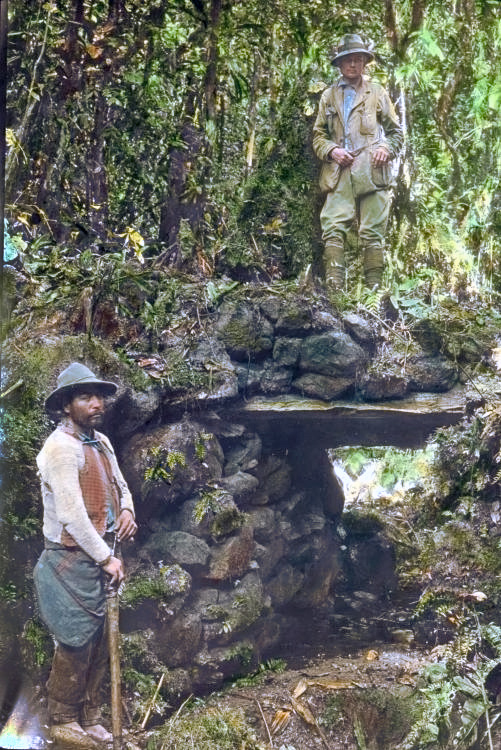
The search for Vilcabamba drives the action of Conquist. Historically, the location of the city was lost again after it was destroyed by Pizarro. In 1911 the American explorer Hiram Bingham mistakenly identified the abandoned ruin of Machu Picchu as Vilcabamba. He also visited a ruin called Espiritu Pampa near the Chontabamba River, which in 1964 was identified as the legendary Vilcabamba by another American explorer Gene Savoy (who interestingly claimed to have discovered over 40 lost cities in Peru). How do I know this? It was one of the research paths I went down which didn’t make in into the book. An earlier version of Conquist had a second timeline involving the discovery of Cristóbal de Varga’s diary last century.
So, how much do you stick to the facts in historical fiction? Should historic fiction be loyal to the actual events? How do you decide where history ends and fiction begins?
Obviously, authors should be free to write the story they want to write. I think the important question is how the work is labelled. The question about how closely you should stick to historic facts is analogous to the “Based on true events” tag that often accompanies books and movies. Saying a work is based on true events is a powerful marketing tool. Books with that label are enticing to readers. They sell more. The reality of the work gives it more consequence. The events are more important. The tag predisposes you to care more about what happens to the characters because you see them as real people.
It’s psychological manipulation.
You can justify the tag if it’s true. But is it? More often than not I’ve seen it used when the tag really should have been “Inspired by true events”, which gives you much greater licence to play with facts.
So is labelling a book “historical fiction” the equivalent to saying, “Based on true events” or “Inspired by true events”? I see historical fiction as a wide umbrella term that includes both types. Most historical fiction awards now include historical fantasy as well as other sub-genres in their definition of historical fiction, so I don’t feel the term “historical fiction” necessarily indicates a rigid stick-to-the-facts approach.
Conquist is clearly historical fantasy. The history of the conquest of the New World is littered with expeditions looking for a city of gold (or some other fabled place like the fountain of youth). Conquist is the tale of such an expedition, and Cristóbal’s story mirrors Francisco Pizarro’s conquest of the Incan Empire.
In writing Conquist, I spent considerable time researching everyday life of both the Spanish conquistadors and the Inca, the weapons and warfare of the time, and the beliefs of both peoples. The rafting techniques of the Inca, for example, was a rabbit hole I needed to go down for a crucial part of the novel. Lieutenant Héctor Valiente is loosely based on the black conquistador Juan Valiente, a slave who convinced his owner to allow him to become a conquistador for four years as long as he kept a record of his earnings and returned them to his master. Incidental details are also important. For example, I described the conquistadors staunching the wounds of injured soldiers and horses with the fat of fallen enemies because I had read it in an actual conquistador diary. While the research was time-consuming, I also spent at least as much time deciding what not to include in the interests of the storyline.
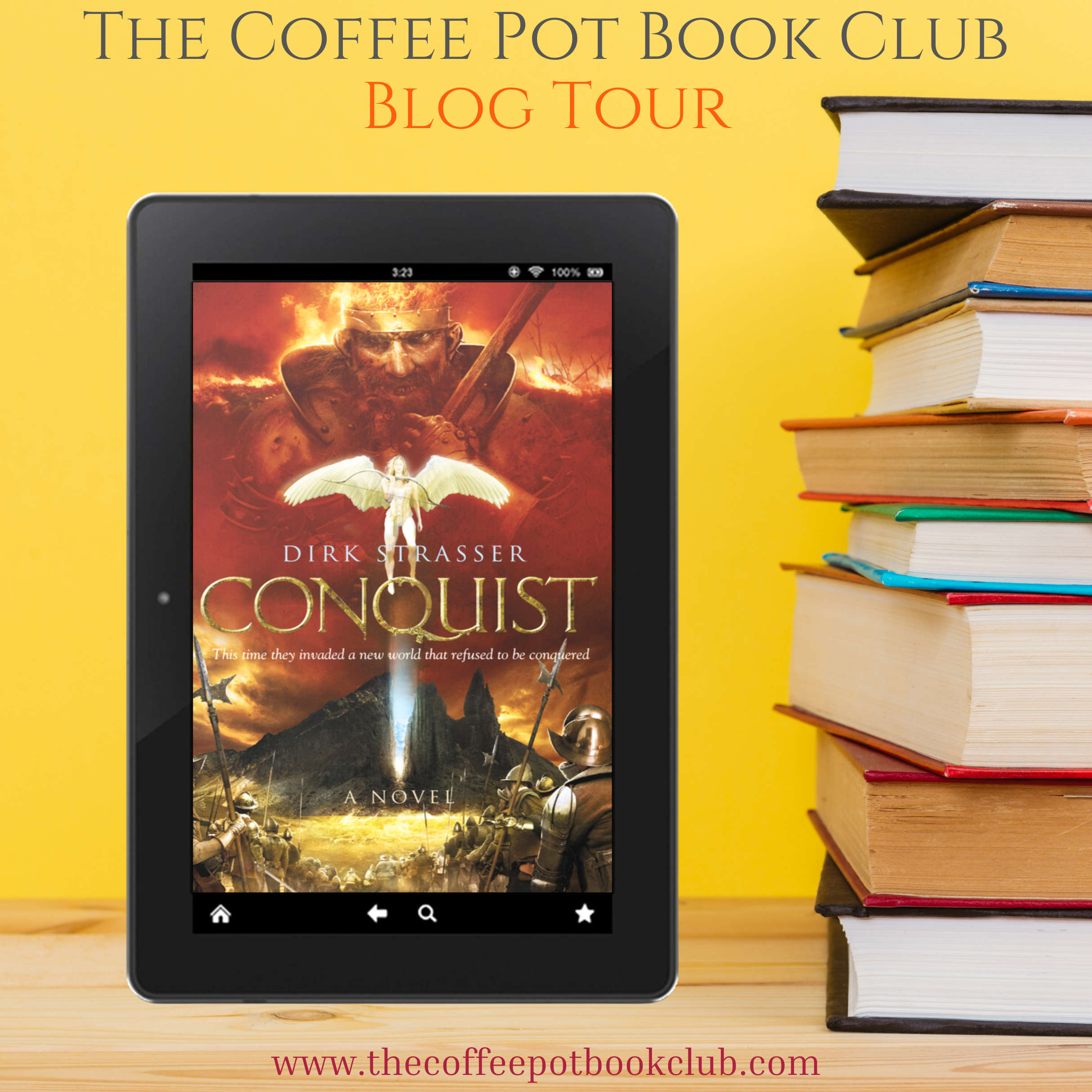
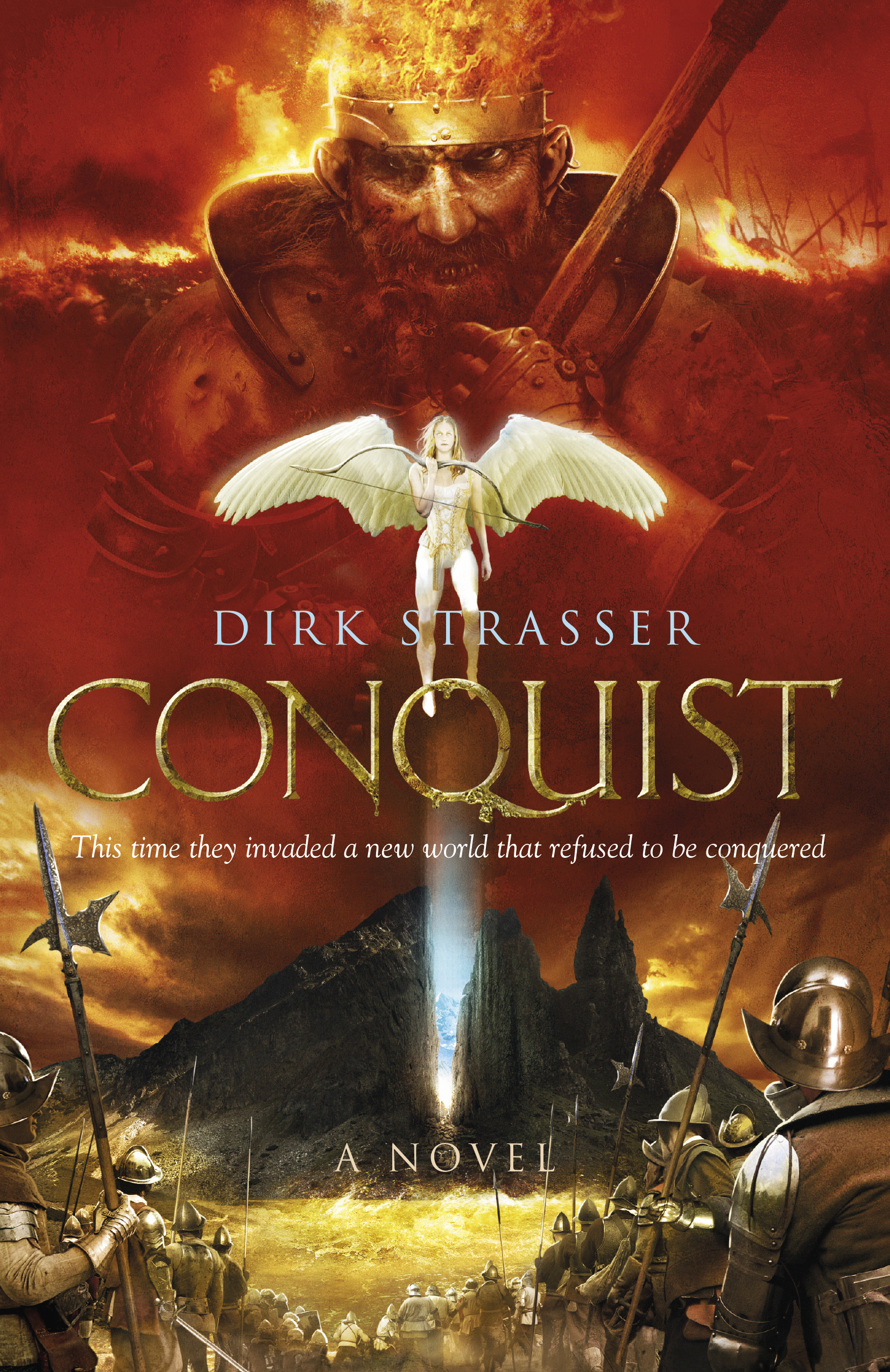
Despite all this research, the only label attached to Conquist are the words “A Novel” on the front cover. The publisher Roundfire Books decided to include this. It’s boldly saying that, despite the historical setting, the diary entries, and the conceit that the story was based on the discovery of that diary in the archives of a Peruvian museum, this book is fictitious. And as with any other work of fiction, the depth of the reading experience is tied to the willing suspension of disbelief.
Photo source: “Hiram_Bingham_at_Espiritu_Pampa_ruins_1911” Public Domain from Wikipedia https://en.wikipedia.org/wiki/Hiram_Bingham_III
Here’s the blurb
Capitán Cristóbal de Varga’s drive for glory and gold in 1538 Peru leads him and his army of conquistadors into a New World that refuses to be conquered. He is a man torn by life-long obsessions and knows this is his last campaign.
What he doesn’t know is that his Incan allies led by the princess Sarpay have their own furtive plans to make sure he never finds the golden city of Vilcabamba. He also doesn’t know that Héctor Valiente, the freed African slave he appointed as his lieutenant, has found a portal that will lead them all into a world that will challenge his deepest beliefs. And what he can’t possibly know is that this world will trap him in a war between two eternal enemies, leading him to question everything he has devoted his life to – his command, his Incan princess, his honor, his God.
In the end, he faces the ultimate dilemma: how is it possible to battle your own obsessions . . . to conquer yourself?
Buy Link
Meet the Author
Dirk Strasser’s epic fantasy trilogy The Books of Ascension—Zenith, Equinox and Eclipse—was published in German and English, and his short stories have been translated into several European languages. “The Doppelgänger Effect” appeared in the World Fantasy Award-winning anthology Dreaming Down Under. He is the co-editor of Australia’s premier science-fiction and fantasy magazine, Aurealis.
Dirk was born in Germany but has lived most of his life in Australia. He has written a series of best-selling school textbooks, trekked the Inca trail to Machu Picchu and studied Renaissance history. “Conquist” was first published as a short story in the anthology Dreaming Again (HarperCollins). The serialized version of Conquist was a finalist in the Aurealis Awards Best Fantasy Novel category. Dirk’s screenplay version of Conquist won the Wildsound Fantasy/Sci-Fi Festival Best Scene Reading Award and was a featured finalist in the Cinequest Film & Creativity Festival and the Creative World Awards.

Connect with the Author
 MJ Porter