A Writing Year in Review – 2020

It’s been a funny old year, I think we can all agree on that. While, at times, I’ve really struggled to focus to write, I’ve also been lucky to chance upon a good number of characters that I really enjoy writing about – Coelwulf and his comrades – not that it makes it easy, but it makes it enjoyable, sometimes in a sick and twisted way. So here goes, a review of just what I’ve been up to during the weirdest year in living memory.

For the first time with any great degree of consistency, I’ve tried to track what I’m doing on a day to day basis. It’s been intriguing, but only lasted for about a third of the year, you’ll see why as we go.

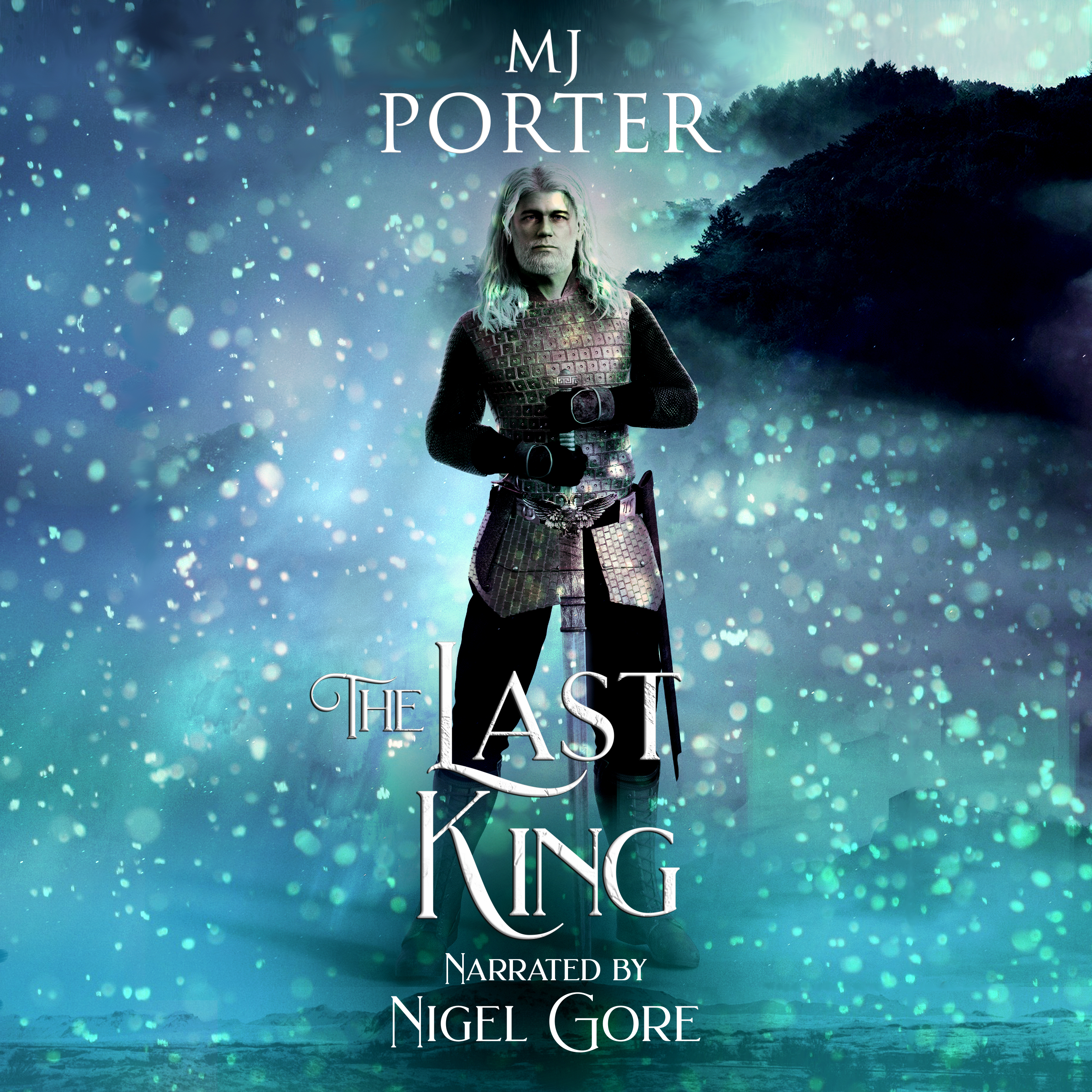
I finished A Conspiracy of Kings, the sequel to The Lady of Mercia’s Daughter in January, ready for release in February. I’m really pleased I returned to Lady Ælfwynn because it moved my mind onto the project I’d been considering writing for a few years – about King Coelwulf of Mercia. I think that if I’d not written A Conspiracy of Kings, Coelwulf might still be waiting for me to start his story. But luckily, I did start to write about him in January, with a scene that has still to make it into any of the books, and in February I started with how I hoped to begin the story. Looking at my notes for the year, once I’d started writing the first book, it was all a bit of a whirlwind and a first draft was completed by the end of the month. One day I wrote 10,000 words. It seems he was really in my head. Those two years of thinking about writing about him, had paid off with a great character just waiting to come out of my imagination.

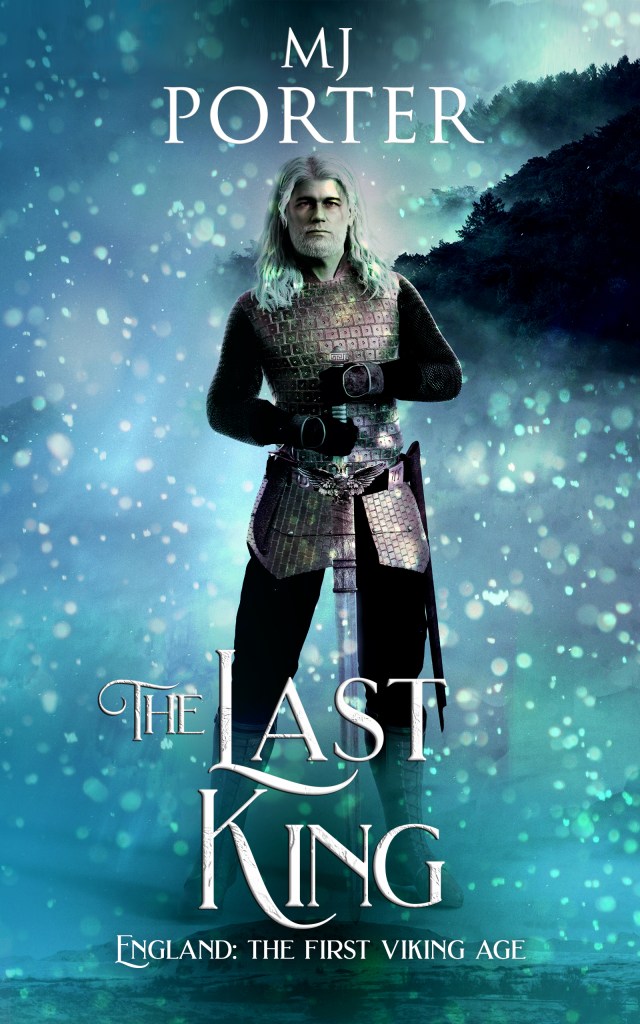
I’ve said elsewhere that there were quite a few influences on The Last King, the film, The Gentlemen directed by Guy Ritchie, the one that really made me think I should do anything I wanted with the storyline – make it bloody, make it brutal, make it sweary, and give it the ‘hook’ at the very beginning of the book. Another influence was the idea of a sportsperson at the height of their game – someone so good that they don’t really consider it anymore, and in fact, are a bit surprised that others aren’t there with them – that was the sort of warrior I wanted Coelwulf to be – already fully-formed with no backstory to wade through before getting on with the story of ‘right now.’

After finishing The Last King, I immediately pressed on with the follow-up, which became The Last Warrior. By now, it was March, and my part-time job as an exam invigilator was about to be suspended for the rest of the year – and of course, we were about to be plunged into Lockdown Part One. I had Coelwulf and pals to keep me going – and keep me going they did. By 8th April, my diary states that the first draft of The Last Warrior was complete, and I’d placed The Last King on Netgalley because I was really curious to see what people thought about it. I’d also reached out to a few people and given them advanced copies to read. The response was overwhelmingly positive as reviews started to trickle in throughout April. But now I turned my mind to Lady Estrid, and the eleventh century in Denmark.

Map by Flintlock Covers

Again, Estrid was a character I’d considered writing about for some time. She was a bit part character in my Earls of Mercia books, but she seemed to me the perfect vehicle for writing about comparable events in Denmark, as opposed to England, in the eleventh century.

I am fascinated by all of the Scandinavian countries in the ‘Viking’ Age, and beyond. But, I’m certainly no expert on what was happening.

My diary says I started writing the book on April 9th, but I know I’d written about 5000 words in February (to enter a competition that I didn’t win:)). I gave myself about two weeks of working on Lady Estrid, a breather as it were, and then went back to the edit for The Last Warrior. I know some people wait months between a finished draft and an edit, but I don’t like to wait quite that long, although I do think even a little bit of ‘distance’ can help the process. At this point, with very little else to do due to Lockdown, my notes become really detailed about editing and words added, but I won’t bore with those little details. Suffice to say, I’m normally someone that adds words rather than deletes them throughout the first edit – I tracked the words added, but not deleted, and how many pages I edited in a day.

At this point, I was also hoping to do a quick edit, and finish off my NaNoWriMo project from the previous November. Throne of Ash is a historical fantasy, and goodness me, it has bedevilled my year. So much so that I have it to thank for the number of books I’ve written about Coelwulf. At the moment, it just doesn’t ‘work’ and I know it just doesn’t ‘work’ and I still can’t quite work out how to make it ‘work’ but it will. Eventually. Or it won’t, and it will just continue to drive me a bit bonkers. But hey, I’ll share a mock-up cover all the same. (I like to have the cover designed before I start a book.)

The Last King was released on 23rd April. The next day, I began work on book 3 – which at the time I was calling The Last Lord, which quickly changed to The Last Sword, and then became The Last Horse. Throne of Ash was pushed aside, and so too was Lady Estrid. The women in my life, (Throne of Ash’s main character is a woman) were giving me grief. Coelwulf, Rudolf, Edward, Pybba and Haden were much easier going – the banter, the fighting, the ‘scenario’ – it all just fit what I was able to write at that time.

I know what you’re thinking – I was slightly over-achieving at this point – don’t worry, it’s all about to come to an abrupt stop because Lockdown was about to change. I’d had a month where not much had been any different, (I’m a writer, I write, I spend most of my time at home anyway) but now my other-half was furloughed and now began the great ‘walk,’ which I’ve also spent much of the year doing (a walk almost everyday building up to the point where I now go for my walk, rain or shine, sleet or snow.) Now my routine really suffered, and would continue to do so for months. It’s not a complaint, but I’m aware that I need my routine to accomplish all the tasks I set myself. I was still trying to write every day but my word count was down to 1000-2000. But, at least the story still wanted to be told.

By the middle of June I was doing a final edit on The Last Warrior, and the book was released on 25th June, just as The Last Sword had become known as The Last Horse, and I was happy that the first draft was complete. By 1st July, I’d noted in my diary that The Last Horse was ‘completed.’

People were really enjoying The Last King, and by the time The Last Warrior was released at the end of June I had three times as many preorders as I’d had for my ‘new’ series.

By now, some of the restrictions had been removed because Lockdown had ‘allegedly’ come to an end, but I remained local, although this was when my weekly, and now twice-weekly, walks at Cragside began. This was also when I attended (virtually) the International Medieval Congress hosted by Leeds University. I spent an enjoyable week attending so many talks and really reconnecting with my love of academic history. I purchased many, many books on my time period, and really hope they do the same next year, as it meant I could keep up with my almost daily walks.

I was also back to Lady Estrid, and editing The Last Horse, both must have been finished in August, but there’s a note on 11th August saying that Lady Estrid was ‘finished.’ (It wasn’t, but that’s a story for later on – I thought it was finished.) I turned my mind back to the next book about Coelwulf.

But, big things were happening for The Last King throughout the summer months. I’d managed to get an international BookBub deal for it and I’d taken the book on tour with The Coffee Pot Book Club (check here for details of the posts) and was also running a promotion on The History Quill in August.

The Last Horse was released on 27th August, and now I’d had more than double the preorders that I’d had for The Last Warrior, which had been triple the preorders I’d had for The Last King. I think my readers liked Coelwulf – and so did I.

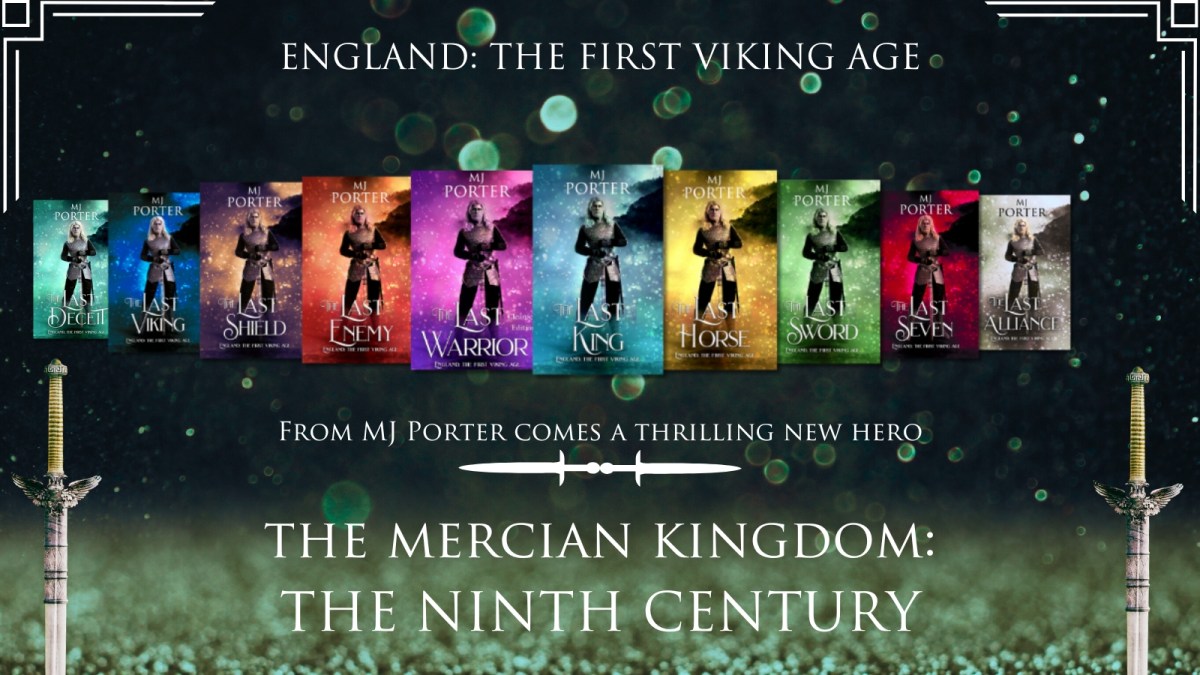
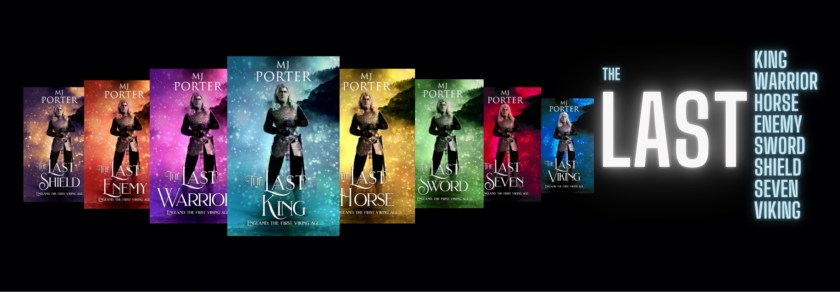
The Ninth Century Mercian series covers for all 9 books

By now I’m into September, and I had to have day-surgery to remove half of my thyroid, so again, things slowed down a bit – although I used the experience when writing The Last Enemy. And I was also into Tier 3 restrictions. By now, my notes have become really sporadic and I can’t track what I was doing to any degree of accuracy as earlier in the year. I think everything was coming off the rails a little bit – two difficult books, surgery, which knocked me more than I thought it would, and Lockdown. It wasn’t easy going with the writing and it was started to frustrate me – I needed my routine back but it was to be a few more months before it returned.

I’d spent my time pummelling Lady Estrid into submission. It had taken a great deal of time to edit, and I’d also written many more words from when I’d so confidently stated it was ‘finished’ in August. The ending was changed, the beginning was changed and I added to many more of my characters. I think in the edit I added about 15k words, and removed some of the elements that were giving me bother.

At some point, I finished The Last Enemy, and was back to editing it, and Lady Estrid, making use of Netgalley and The History Quill, was about to be released to a mixture of feedback – a bit of a Marmite book but one I was really pleased with. It had been a hard slog, over six months of thinking and writing about it, and with a bit of inspiration from Anne O’Brien’s The Queen’s Rival, I hoped I’d accomplished what I’d set out to do – a history of Denmark from the 1020s to 1050 – through the eyes of Lady Estrid, and her large, and extremely influential, far-flung family.

Civer image for Lady Estrid by MJ Porter

And then to November and NaNoWriMo once more. Did I think about finishing last year’s abandoned project? I didn’t, not at all, but instead took myself to the 1940s for a project I’m calling The Custard Corpses, and also a return to the Earls of Mercia books. Throughout November, I got my ‘routine’ back. I remembered all the restrictions I needed to place on myself to achieve what I wanted to achieve, the fact I prefer to write in the morning, and the knowledge that I can easily write at least 2000 words a day, even when I don’t really want. (I take part in NaNoWriMo every November and have done since 2013. I can’t stress how good it is for reinforcing all the things I know, but often forget, and because I always allow myself to step aside from my usual writing projects, how freeing it can be.)

At 50k, I put The Custard Corpses to one side, and powered through The English King – another story that took a while to find its way – but which did with enough ‘routine.’ The Last Enemy was released at the end of November, and the number of preorders continued to exceed my expectations, as did the number of people reading and reviewing and rating. Thank you to you all.

And to top the year off, I’ve also had the copyright restored to me for the second Earls of Mercia book. It’s a long and tedious story, but suffice to say, it was all reedited and rewritten during 2019 but I only had the paperback rights, and now I can release it in ebook as well. So, The Danish King’s Enemy is mine once more – a new name, a big section rewritten, a new cover, but still the same old Ealdorman Leofwine. If you’ve read one of the previous incarnations, please consider popping a review on the new one. It would be a huge help. And if not, it is in Kindle Unlimited, and it’ll be on special offer at the end of January 2021 too.

Cover image for The Danish King's Enemy by MJ Porter

I can’t say I’m unhappy with what I’ve written in 2020, but it has been a challenge – not just because of events in the wider-world but also because my characters didn’t always behave – I’m looking at you Lady Estrid, and Throne of Ash.

Cover image for The English King by MJ Porter

But, 2020 has been fantastic in terms of the readers and reviewers that I’ve met along the way. I couldn’t have done it without them encouraging me on – demanding to know ‘what next’ for Coelwulf. I’m grateful to have been able to interact with them, and it’s shown me how powerful Netgalley can be, if the book finds a willing audience. I’ve also discovered a huge array of non-fiction books that I’ve been using to help me with my works in progress – and for that I’m grateful to the VIMC in Leeds. Without that my passion wouldn’t have been reignited and without that, I wouldn’t have powered myself through Lady Estrid, and she might well be mouldering in a corner, like other, abandoned projects.

For those thinking that I’ve written too much this year, remember, it has been Lockdown for nearly nine months, in my head, if not in others. I’ve only had my characters to distract me from the wider world. As a comparison, I released seven books in 2019, two of which were largely written in 2018. In 2020 I released six books, one of which was written in 2019, and another book which is ready for January 2021. I’ve managed about the same workload – I have suffered with my routine, and my motivation, but have taken great joy in the response my books have received.

And so to 2021. I have three books to edit and finish, and then I’ll return to the world of Coelwulf. I hope you, as my readers, will stay with me, but if not, thank you for spending 2020 with me. I hope I’ve managed to distract you from events outside our own front doors, and I will continue to try and do so. If you want to follow me, I have a newsletter which can be joined here.

Stay safe, people. I hope 2021 will be ‘better’, although I think for many of us ‘better’ is not quite what we once thought it would be.

(This page contains some Amazon Affiliate links, and some Booklinker links)

A Fiction Reading Year in Review – 2020

I know I won’t have been the only one to have struggled to find books engaging throughout 2020but there are two trends that have mainly characterised my reading throughout the year. I’ve either found myself in Early England (before 1066), or in the loving embrace of cosy 1920s murder mysteries. I don’t think it’s possible to get further apart.

But there are some books that have fallen outside of those two trends, and two of these books, have been my standout books of the year.

Anne O’Brien’s The Queen’s Rival was a true treat.

I was lucky enough to get an advanced copy from Netgalley so didn’t have to wait until the summer to enjoy it.

Here’s the blurb:

One family united by blood. Torn apart by war…

England, 1459: Cecily, Duchess of York, is embroiled in a plot to topple the weak-minded King Henry VI from the throne. But when the Yorkists are defeated at the Battle of Ludford Bridge, Cecily’s family flee and abandon her to face a marauding Lancastrian army on her own.

Cecily can only watch as her lands are torn apart and divided up by the ruthless Queen Marguerite. From the towers of her prison in Tonbridge Castle, the Duchess begins to spin a web of deceit – one that will eventually lead to treason, to the fall of King Henry VI, and to her eldest son being crowned King of England.

This is a story of heartbreak, ambition and treachery, of one woman’s quest to claim the throne during the violence and tragedy of the Wars of the Roses.”

I loved this book, and more than that, O’Brien’s choice to tell her story almost exclusively through letters inspired me when I was struggling to write Lady Estrid, and gave me a means to tell a complex family story. But, even without that, I highly recommend this book. Anne O’Brien tells engaging and captivating stories of England’s forgotten women, and that is just the sort of book that appeals to me.

It’s available now in ebook, audiobook and hardback, and when I wrote this, the ebook was only 99p, an absolute steal.

Next up on my list of excellent reads is Camelot by Giles Kristian.

Here’s the blurb:

Britain is a land riven by anarchy, slaughter, famine, filth and darkness. Its armies are destroyed, its heroes dead, or missing. Arthur and Lancelot fell in the last great battle and Merlin has not been these past ten years. But in a small, isolated monastery in the west of England, a young boy is suddenly plucked from his simple existence by the ageing warrior, Gawain. It seems he must come to terms with his legacy and fate as the son of the most celebrated yet most infamous of Arthur’s warriors: Lancelot. For this is the story of Galahad, Lancelot’s son – the reluctant warrior who dared to keep the dream of Camelot alive 

Camelot had a wonderful feel to it, and while, I wasn’t quite as enamoured of it as I was Lancelot, the sort-of prequel, I still can’t recommend it enough. The way Kristian evoked the Arthurian legend was amazing. No matter how much I ‘knew’ what was going to happen, I still wanted the characters to triumph, and that, was a little piece of genius.

Camelot is available now in hardback, ebook and audio book.

One thing I’ve noticed is that I really didn’t read a lot of fantasy this year, which is strange for me. When I did read, I found solace in some tried and tested favourites, Mark Lawrence’s The Girl and the Stars, Katharine Kerr’s return to Deverry with the wonderful Sword of Fire and Terry Pratchett – I’ve been trying to listen to some audiobooks, and although I’m still not sure I like it, I have found the Terry Pratchett audiobooks to be great entertainment, especially as I’ve read all the books in the past. I have the last book in Peter Newman’s Deathless Trilogy to read as well, but I’ve been saving it up because it’s going to be a real treat.

(I’ve just noticed that Mark Lawrence wrote a review for Sword of Fire on the cover. How funny. But, I’ve been a fan of Katharine Kerr for well over twenty years – maybe that’s why I like Mark Lawrence as he clearly is as well.)

But to return to historical fiction, I have stepped, just once or twice, further back in time than the Early English period to the Romans and the Greeks.

Sons of Rome by Turney and Doherty was a fantastic read, each author taking the part of one of two characters, interchanging their lives in a format that worked so well. I have book 2 to read now and I’m excited about that. And also The Gates of Rome by Conn Iggulden was a stellar read, and I’m still quite cross about the ending! He better put that right if there’s a sequel. I’m also going to give an honourable mention to Derek Birk’s Britannia World’s End. I really, really loved the first book. The second book was not quite as stellar but was still a welcome return to the characters from Book 1.

I’ve also taken on some beta reading projects this year, and have been really impressed by the quality of fiction that people are writing. I’ve been taken to Australia and New Zealand at the time of the gold rush, to Ancient Egypt, to Tudor England, 17th century Paris, 19th century Italy and now I find myself in 19th Century America. I hope these books are released and then I can share my reviews. I read books listed on Netgalley and also on The History Quill. If you love getting your mitts on books before they’re released, I highly recommend both of them, and The History Quill especially if you’re after fresh new voices in historical fiction.

But finally, I will mention the books I’ve read from the Early English period. I’ve not read as widely as I might have liked, but it can be hard to read what you’re writing about at the same time. I’ve spent some time with Matthew Harffy’s creations with Fortress of Fury and A Time For Swords. I’ve also returned to the world of Christine Hancock’s Bright Helm and I can assure that she has a new book, hopefully next year, which readers are going to really, really enjoy – a slight diversion from Byrhtnoth but still very much mentioning him. I’ve been lucky to read a really early copy of it, and I love it already. Bring it on!

I have the last Uhtred book to read, War Lord, but I’ve been saving it up for the holidays.

But, the thing that has really got me through the year has been a vast selection of murder mystery books. The majority have been set in the 1920s in the UK, but I have just discovered E M Powell’s Stanton and Barling mysteries set in the 1100s. These are so entertaining, if quite gory, and what I enjoy most about them, is I’ve never yet guessed who actually committed the murders! The same could be said for the Posey Parker mystery books by L B Hathaway which elevate the 1920s murder mystery to a whole new level. The Verity Kent murder mysteries are also excellent, and have a theme that runs through them all.

So, what I can take away from this is that much of the year has been spent reading cosy murder mysteries, although not many of them have been that cosy. It seems that I need a good mystery to help me unwind and one that’s not too gritty, and one that’s certainly set in the past.

Thank you to the authors who’ve kept me entertained this year, and happy reading everyone. I’m looking forward to more in 2021.

(This post contains Amazon Affiliate links.)

Book Review – The Saltwater Murder (Posie Parker Mystery 7) by L B Hathaway – historical murder mystery

Here’s the blurb;

MURDERED WITH A BOX OF TEARS… 

London, 1924

Posie Parker has been called to her most baffling case yet.

Amyas Lyle, London’s top young lawyer, has been found with his head in a box of poisoned saltwater.

It’s the perfect murder. But who hated him enough to do such a thing?

Following a trail of strange notes, all of which speak of the sea, and saltwater, Posie travels from London to the seaside resort of Whitley Bay, looking for answers. But nothing can prepare her for what she finds there.

Can Posie find Amyas Lyle’s cold-blooded killer before further deaths take place? Can she protect those Amyas has left behind?

As Britain celebrates an Olympic summer, will Posie manage to enjoy a holiday romance of her own? And just what is wrong with Inspector Lovelace? Why is he behaving so oddly? Is it anything to do with his new, smart appearance and some very carefully starched shirt collars?

This is a classic murder mystery which will appeal to fans of Agatha Christie and Downton Abbey. The Saltwater Murder is full of intrigue and red herrings, and is the seventh book in the delightfully classic Posie Parker Mystery Series, although this novel can be enjoyed as a stand-alone story in its own right. A clean read, with no graphic violence, sex or strong language.

I have a little bit of a soft-spot for 1920s murder mysteries, and the series featuring Posie Parker is certainly one of the strongest available.

I’ve read all of the books to date, and I think what is so appealing and enjoyable, is that the mysteries are deliciously complex, and the ‘bit part’ characters really come alive. Just like a classic Agatha Christie, you do spend all the time thinking, ‘it was him,’ or ‘it was her.’ Every character always has a motive but the solution is never, ever, the predictable one.

The Saltwater Murder is set in 1924 and is a fantastic addition; twisty, complex, and yet still grounded in the characters that long-time readers love and want to read about. Equally, I am sure that a reader could begin the series from here, and not feel too out of their depths, although they will then want to go back to the beginning and find out how it all started.

The author does a fantastic job of grounding the books in the time period, right down to the mention of Fry’s Chocolate bars and Lyons tea shops, and that’s without even mentioning the accurate weather forecasts and the depiction of events in the wilder world, which in this case are the 1924 Olympics held in Paris.

If you, like me, enjoy a Poirot or a Marple, and fancy something similar, then I highly recommend all of the Posey Parker books.

Connect with the author here; Website Twitter

The Saltwater Murder is available now.

This post contains some Amazon affiliate links.

To celebrate the release of The Last Enemy in 2020, my interviewer unexpectedly caught up with Rudolf, a member of the king’s warband.

Ere, what you up to?

Oh, hello, I’m here to interview King Coelwulf about his latest book.

Really, I wouldn’t think he’d do that. He’s make some excuse about having no time, or some such. Oh wait, did Lady Cyneswith set this up?

Yes, she did, and I’ve already spoken to her. But tell me, do you know the king? You seem to know who everyone is.

Of course I do. I’m Rudolf. His old squire, and now member of his warband. Why?

Would you like to talk to us about his latest book?

Well, I suppose I have the time. If you’re quick, and I don’t get caught. I’m supposed to be showing young Hiltiberht the ropes, and Haden can be a real handful.

Tell me, what’s King Coelwulf like? As a warrior?

Bloody lethal. You don’t want to be facing off against him. I’ve never seen anyone kill so quickly. And the moves he can do? I wish I had even half of his skill. I mean, he says I’m a good warrior and all, but I make up for my lack of skill with speed. And he doesn’t have that because he’s so bloody …. Um, because he doesn’t need to do that. Sometimes, I swear the enemy make it look so easy it’s as though they’re falling onto his seax or sword.

He’s quite good then?

Better than good. I’ve never seen anyone fight the way he does. Well, apart from Icel, and Edmund, and maybe Hereman. But, certainly, the Raiders stand no chance against him.

I hear he even camps in the woodlands and forests? It’s not really the sort of thing a king should do, is it?

Now, you see here. He was a warrior long before he was king. King Coelwulf only has one aim, to kill all the Raiders. To drive them from Mercia and make sure they don’t come back. He’s not into all that fancy clothes, and court etiquette, or sleeping in a bed of silk sheets. They’d be too damn cold, anyway. He’s told me. No, the king of Mercia is a damn warrior, and the only man capable of defeating the Raiders, and the Welsh, if it comes to it. 

And, have you read the new book?

Got no time for reading. I’m sure King Coelwulf told you that, and he’s right. I’d like a good night’s sleep without interruption more than I’d like to read a book. Maybe a scop could tell the tale. But, that would be Edmund and I’d have to listen to him tell the tale. He’s good, of course he’s good, but he probably wouldn’t mention me as much as I might like.

To all the young lads who do read the book, what would your advice be? How could they get into King Coelwulf’s warband?

Well, they should probably have joined it a while ago, and at the moment, there’s a few squires that need training up, so there’s no room, not for a while. So, I’d tell them to wait, and while they’re waiting, learn a few things, like how to clean saddles and seaxs. It’s a mucky job, but someone’s got to do it. And with King Coelwulf, you’ve got to earn his respect first. And then, well, once you’ve got it, you’ve got to keep it. A hard man, but a great man. Mercians should be pleased with their king. He’ll keep them safe, or he’ll die trying. You didn’t find the old king doing that. Far from it in fact. He’s scuttled off to Rome, or somewhere like that. Gone to pray for his soul. He’s got a lot to need forgiveness for, abandoning his kingdom like that.

Oh, sorry, I’ve got to go. 

And there you have it. A few words from Rudolf, King Coelwulf’s old squire. I hear he fights incredibly well, and offers some important advice for any would be members of the king’s warband.

If you haven’t read my earlier interview with King Coelwulf, then you can find it here. And I also interviewed his Aunt, which can be found here.

The Ninth Century Mercian series covers for all 9 books

Check out my review for Matthew Harffy’s new release, A Time for Swords #bookreview #histfic #blogtour

Here’s the blurb;

“Lindisfarne, AD793. The life of a novice monk will be changed forever when the Vikings attack in a new historical adventure from Matthew Harffy.

There had been portents – famine, whirlwinds, lightning from clear skies, serpents seen flying through the air. But when the raiders came, no one was prepared.

They came from the North, their dragon-prowed longships gliding out of the dawn mist as they descended on the kingdom’s most sacred site.

It is 8th June AD793, and with the pillage of the monastery on Lindisfarne, the Viking Age has begun.

While his fellow monks flee before the Norse onslaught, one young novice stands his ground. He has been taught to turn the other cheek, but faced with the slaughter of his brothers and the pagan desecration of his church, forgiveness is impossible.

Hunlaf soon learns that there is a time for faith and prayer… and there is a time for swords.”

REVIEW

A Time for Swords is an attempt to retell the story of England’s first recorded Raider (Viking) attack on Lindisfarne which is confidently dated to AD793.

It is an event that demands to be written about, and the beginning of A Time For Swords, which recounts the attack, is thrilling. Our young hero, Hunlaf, is caught up in the attack, but lives to see another day. Others are not as fortunate.

The story progresses at a steady pace, as the shock waves of the attack begin to be felt throughout the kingdom of Northumbria, and people react to the news in different ways. The addition of a captured Norse Raider, Runolf, with his strict code of honour, adds an intriguing dimension to the story, allowing the author to confidently state that the attack on Lindisfarne will not be a singular occurrence, and that the people of Northumbria need to be prepared for such.

Much of the action takes place not at Lindisfarne, but rather at Werceworthe, (Warkworth) which happens to be about 5 miles down the road from where I live. This made the story feel immediate, perhaps helped by a long-ago Sunday afternoon row down the Cocueda (Coquet) River.

I thoroughly enjoyed A Time For Swords. The opening scenes are particularly well told, and the eventual battle, when it comes, makes clever use of the physical landscape of Warkworth.

Thank you to Netgalley and the publisher for my review copy.

A Time for Swords is now available in ebook format, and is available from here. (Isn’t the cover fantastic?)

About the author

Matthew Harffy grew up in Northumberland where the rugged terrain, ruined castles and rocky coastline had a huge impact on him. He now lives in Wiltshire, England, with his wife and their two daughters. 

Connect with Matthew here: Twitter, Website
And check out reviews of previous books by Matthew Harffy here.

The Wolf of Wessex

Fortress of Fury

Follow Aries

Twitter: @AriesFiction

Facebook: Aries Fiction

Website: http://www.headofzeus.com

Lady Estrid is on ‘tour’ with the Coffee Pot Book Club – check out the posts so far

Lady Estrid has taken herself on tour with the fabulous Coffee Pot Book Club. She what she’s been up to, and thank you to everyone for hosting her, and the Coffee Pot Book Club for arranging.

November 2nd Mary’s Tavern (Excerpt)

November 9th Gwendalyn’s Books (Review)

November 16th Judith Arnopp’s Official Blog (Excerpt)

November 23rd Brook Allen’s Official Blog (All about the historical Lady Estrid)

November 30th Sylv.Net (Excerpt)

December 7th Madwoman in the Attic (Review)

December 14th Elizabeth St John’s Official Blog (Interview)

December 21st Let the Words Shine (Five facts you didn’t know about me)

December 28th Candlelight Reading (Excerpt)

January 4th The Writing Desk (Letter writing in the eleventh century)

Lady Estrid is available now in ebook and paperback.

Thank you to all the hosts for allowing Lady Estrid onto their blogs, and to The Coffee Pot Book Club for being so, so, so good at organising everything. Thank you.

(This post contains Amazon affiliate links, which means that at no cost to you, Amazon rewards me.)

Book Review – The Canterbury Murders by E.M.Powell – historical murder mystery

Here’s the blurb;

Easter, 1177. Canterbury Cathedral, home to the tomb of martyr Saint Thomas Becket, bears the wounds of a terrible fire. Benedict, prior of the great church, leads its rebuilding. But horror interrupts the work. One of the stonemasons is found viciously murdered, the dead man’s face disfigured by a shocking wound.

When King’s clerk Aelred Barling and his assistant, Hugo Stanton, arrive on pilgrimage to the tomb, the prior orders them to investigate the unholy crime.

But the killer soon claims another victim–and another. As turmoil embroils the congregation, the pair of sleuths face urgent pressure to find a connection between the killings.

With panic on the rise, can Barling and Stanton catch the culprit before evil prevails again—and stop it before it comes for them?

THE CANTERBURY MURDERS is the third book in E.M. Powell’s Stanton and Barling medieval murder mystery series. Combining intricate plots, shocking twists and a winning–if unlikely–pair of investigators, this series is perfect for fans of Ellis Peters’ Brother Cadfael or C. J. Sansom’s Shardlake.

This is the first of the Stanton and Barling Mysteries that I’ve read, and I will certainly be going back to the first two books.

The Canterbury Murders is a well constructed and intriguing murder-mystery. The main characters of Stanton and Barling are as unlike as chalk and cheese, and I really enjoyed how they clashed with one another, even though they were working towards the same outcome, of solving the mystery.

The peripheral characters are well sketched, and there were times when I was convinced I knew who the murderer was only to discover I was wrong, and when the big reveal came, it was satisfying, and more importantly, made perfect sense.

This was a very well executed and thoroughly entertaining tale and I look forward to more of the same in the future. I’ve already ordered books 1 and 2.

Thank you to Netgalley and the Publisher for my review copy.

The Canterbury Murders is available now;

Connect with E M Powell here. Twitter Website

To celebrate the release of The Last Enemy, my interviewer caught up with Lady Cyneswith. #histfic #TheLastKing

The first eight covers for The Last King series by MJ Porter
The Last King/The Mercian Ninth Century

I’m very honoured to have caught a few moments with Lady Cyneswith, the aunt of King Coelwulf. Thank you for finding the time to speak to me.

“Well, I’m sure you’ve discovered that my nephew is a very busy man, a bit rough around the edges some times, and so I’m delighted to speak with you on his behalf, smooth away any ruffles he might have caused.

Yes, I confess, I had noticed that he was short on time when I tried to speak with him earlier.

Short on time, and economical with his words. He is the king, you know, but of course, his priorities are with defeating the Raiders. I think there are those who don’t quite appreciate the persistence of the enemy. It takes a strong and decisive leader to defeat them, and we should be pleased to have one. Much better than our previous king, who gave up Mercia in exchange for his life. Shocking.

I speak for the whole of Mercia when I say we are so pleased to have such a man leading us. Some new, vigourous, blood was needed to ensure Mercia stayed together.

Our previous king, Burgred, was not blessed with the military requirements for the post. But then, I won’t be alone in believing that Burgred should never have been king. He only achieved what he did because of the manipulation of the natural right of succession.

So, you believe that all the kings since King Coelwulf, first of his name, were usurpers?

I make no bones about that. Mercia wouldn’t be in such peril if my family line had retained their hold on power, as they should have done. But, now is not the time to dwell on that. It’s important to think of the future, and of what is yet to be achieved, but which will be, and soon.

I asked King Coelwulf if had a few words to explain why people should read the latest book.

I imagine he said something along the lines of, ‘I don’t have time for reading, so I wouldn’t.’ And, of course, he means that, but it is difficult for him to appreciate the fascination others have with what he’s trying to achieve. So, I would say, read it and discover just what risks your king, and his warriors and ealdormen are making to ensure Mercia’s freedom. Read it, and understand the peril and take steps to ensure your freedom as well. 

And, have you read the latest book?

I have yes, and I’m pleased to say there’s a slightly bigger part for me in, than usual. Of course, it’s difficult with all the fighting to find room for the women of Mercia, but I’m sure that one day, in the not too distant future, Mercia will have female warriors to keep her safe. After all, anyone can learn to chop off someone’s head, or slice them through the neck, the skill, of course, is in staying alive afterwards.

Um, yes, quite. Thank you for that. I wondered if I could get a few words from you about King Alfred of Wessex.

No, not really. I don’t speak about neighbouring kings, and I’ve never met the man. Now, if you asked me about the king of Gwent, then I might have something to say about him, but you haven’t, and so, I don’t.

Could I ask you about the language used in the book? It’s quite strong in places.

While I have no particular need to hear such words, I can well appreciate that, on occasion, they might be warranted. After all, our king and his warriors are risking their lives every time they enter a battle against our enemy. I put it down to the rush of adrenaline, and hope everyone else does the same.

I asked King Coelwulf about his warriors, do you have any particular favourite amongst them?

I take pride in teaching all of the men some simple techniques to treat wounds received in battle. It’s important to know how to heal as well as to maim. My favourites are obviously those who listen carefully and learn what I teach them. 

Thank you for taking the time to speak with me.

It is of course, my pleasure, and my duty, as the king’s sole surviving relative. Under his leadership, Mercia will once more be great again.

And there you have it. An interesting interview with Lady Cyneswith, a most formidable woman. I should think she’d be as lethal on the battlefield as her nephew is proving to be.  If you haven’t read my earlier interview with King Coelwulf, then you can find it here.

Visit the Mercian Ninth Century page on the blog.

Posts

Book Review – A Lady’s Guide to Mischief and Mayhem by Manda Collins – historical who-done-it

Here’s the blurb;

An intrepid female reporter matches wits with a serious, sexy detective in award-winning author Manda Collins’ fun and flirty historical romcom, perfect for readers of Evie Dunmore, Julia Quinn Tessa Dare and Netflix’s Enola Holmes!

Of all the crime scenes in all the world, she walks into his. Twice.

England, 1865: Notorious newspaper columnist Lady Katherine Bascomb is determined to educate the ladies of London on the nefarious criminals who are praying on the fairer sex. But when her reporting leads to the arrest of an infamous killer, Katherine flees to a country house party to escape her doubts about the case – only to become witness to a murder herself! When the lead detective accuses Katherine of inflaming – rather than informing – the public with her column, she vows to prove him wrong.

Detective Inspector Andrew Eversham’s refusal to compromise his investigations nearly cost him his career, and he blames Katherine. When he discovers she’s the key witness in a new crime, he’s determined to prevent the beautiful widow from once again wreaking havoc on his case. Yet as Katherine proves surprisingly insightful and Andrew impresses Katherine with his lethal competency, both are forced to admit the fire between them is more flirtatious than furious. But to explore the passion between them, they’ll need to catch a killer . . 

A Lady’s Guide to Mischief and Mayhem grabbed my attention due to the title and the cover. It sounded like a light-hearted, fun read, and in many respects, it was.

Lady Katherine is an engaging character, and with much of the story told from her perspective, we get to know her quite well, although some of her true nature is hidden behind the Victorian facade of never showing emotions. The addition of the story-line being told from the perspective of Inspector Eversham adds an entirely different dimension to the story – that of a more disciplined police officer, although it slips quite quickly.

The beginning of the book takes place in London, and I fully expected the action to remain there, but we are abruptly whisked away to the Lake District where the crimes take on an even more sinister nature, and become somewhat more personal.

The author excels here at producing quite a complex case for the main characters to unravel and it did hook me. There were points where I was convinced I had worked out what was happening, only to be wrong. The budding romance between Lady Katherine and Inspector Eversham does feel a little rushed and there were moments where I might have liked more plot development, but overall, it was a fun and reasonably light-hearted read, not because of the content, but because of the way Lady Katherine insists on solving the mystery of who the murderer is.

Thank you to the publisher and Netgalley for my review copy.

A Lady’s Guide to Mischief and Mayhem is available now.

Lady Estrid, her family and the geography of the eleventh-century #histfic #historicalresearch

One of the big plusses for choosing the character of Lady Estrid for my most recent novel, was her large and illustrious family and their far-reaching influence over Denmark, Sweden, Norway and England. It meant there was already an excellent story to tell.

While I quickly managed to slot all the different relatives into order (well, I have been writing about them for a while), I’m aware it’s not the easiest of tasks, and so, I have put together some genealogical tables of the main families to make it that bit easier.

Due to a lack of information, I have made little mention of the rest of Estrid’s half-sisters, of which she had three or four. I feel it perhaps also helped the story a little – it was complicated enough as it was without giving them the capacity to meddle in affairs in Denmark. I have also made the assumption, that because I don’t know who they married, that they didn’t make international alliances, as Estrid did.

To break it down into more palatable chunks, Lady Estrid’s mother was married twice, once to King Swein of Denmark (second) and also to King Erik of the Svear (first). King Swein was also married twice (in my story at least – as it is debated), to Lady Gytha (who I take to be his first wife) and then to Lady Sigrid (who I take to be his second wife.) Swein was king of Denmark, Erik, king of the Svear (which would become Sweden), and so Sigrid was twice a queen, and she would have expected her children to rule as well, and her grandchildren after her. Sigrid was truly the matriarch of a vast dynasty.

She would have grandchildren who lived their lives in the kingdom of the Rus, in Norway, in England, and Denmark.

And Sigrid wasn’t the only ‘double queen.’ Lady Emma, twice queen of England, was first married to King Æthelred and then to King Cnut, Estrid’s brother.

Not that it’s possible to speak of Lady Emma’s children from her two marriages, without considering the children of her first husband’s first marriage. King Æthelred had many children with his first wife, perhaps as many as nine (again, a matter for debate), the below only shows the children mentioned in Lady Estrid. Readers of The Earls of Mercia series, and the Lady Elfrida books, will have encountered the many daughters, as well as sons.

One of the other family’s that had the most impact on Lady Estrid, was that of her third husband, and father of her two sons, Jarl Ulfr.

Ulfr had a brother and a sister, and while little is known about the brother, it is his sister who birthed an extremely illustrious family, through her marriage to Earl Godwine of Wessex. (The family tree doesn’t include all of her children.)

Four such powerful families, all intermarried, make for a heady mix.

For the modern reader, not only are the family dynamics complicated to understand, but so too is the geography. Sweden was not Sweden as it is today, and the reason I’ve insisted on calling it the Land of the Svear. But equally, Denmark was larger than it’s current geographical extent, covering Skåne, (in modern day Sweden) as well. The map below attempts to make it a little clearer. Norway is perhaps the most recognisable to a modern reader, but even there, there are important difference. King Swein claimed rulership over parts of Norway during his rule, and so too did King Cnut. But, Denmark isn’t the only aggressor, there were rulers in all three kingdoms who wished to increase the land they could control, King Cnut of Denmark, England, Skåne and part of Norway, is merely the most well-known (to an English-speaking historian.)

Lady Estrid is available now