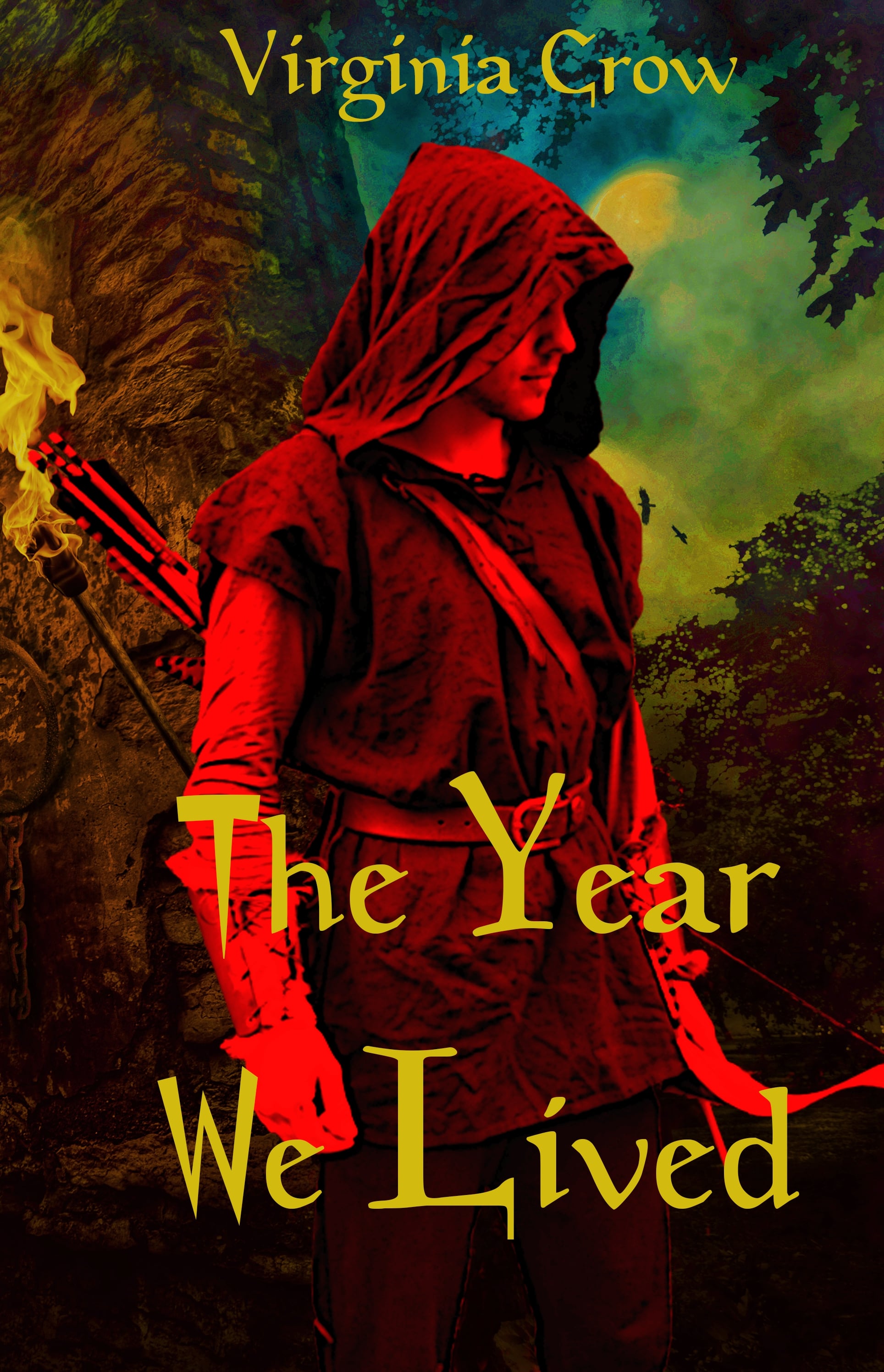
Today I’m delighted to welcome Virgina Crow to the blog with a post about the historical research she undertook to write The Year We Lived.
Hello and thank you for hosting me and my book on your blog, and for inviting me to share such a fantastic topic with your readers!
I know the research process is slightly different for different writers. The first thing I have to say is that I love research! I would say that, for every statement of historical significance in my book there is about ten-times more research which has gone into the writing of it. In fact, my editor does occasionally point out to me that my readers don’t always need quite so much historiographical details!
Researching so far back in time was quite new to me. Most of the historical fiction I’ve written before has a lot more primary sources to excavate and delve into, especially in those pre-Covid days when a trip to a museum was easily available!
The first thing I had to familiarise myself with was the landscape. I’ve always been surrounded by maps – my dad has a collection of hundreds of them – and some of my favourite books as a child were a massive geography book and the Weetabix atlas! Since my dad is an out-and-out Lincolnshire yellowbelly, I have always known the changing landscape of that particular county! To look at a map of the eleventh century fenlands my characters would have known, it is startlingly different to the lay of the land in the twenty-first century!
This landscape was full of islands, which were often indistinguishable from the rest of the boggy marshes, something which made the hidden Hall in The Year We Lived a very believable concept! When I delved deeper into the case of Hereward, I realised how paranoid William the Conqueror was about the Fens and the threat they posed. It made sense to have the brutal lordship of Henry De Bois situated here in an attempt to crush what William was led to believe were a group of Saxons ready for insurrection.
Next came the characters. For this, I knew I wanted people outside the conventional image of the Normans so, on flicking through various websites and pages about the number of non-Normans on William’s side in the Battle of Hastings, I settled on the possibility of making my French characters Burgundian instead. I loved the headstrong and stubborn trait which seemed to come hand in hand with being from Burgundy, and it’s something I tucked into each of those characters. But the French court at this time was a topic which was totally new to me. When I was studying for my MLitt, I remember my lecturer saying that it was totally acceptable to use Wikipedia as a first port of call providing you checked out everything which was on there, so this was what I did as I researched the major players.
One of the things I love the most about writing historical fiction is how, providing you read around the family and situation, you can convince your audience – and sometimes yourself – of the existence of your characters. Every single one of my Burgundians came from a real family, all of which are referenced in some sneaky way or another. I love weaving little clues into my writing, and I think doing it in a historical setting just makes it all the more fun (but then I could be biased!).
The final thing, which I found perhaps the most fascinating of all, was exploring the superstitions of the time. These were often localised but some things were pretty generally accepted. Having been raised on a diet of myths and legends, this was something I absolutely loved exploring. Something I discovered was that many of these superstitions made sense. A lot of them have their roots in logic, but they were without the understanding of science which we have now. There is no shortage of these words of wisdom, many of which are still in existence today in some shape or form. Perhaps because of the oral nature of these hand-me-downs and the weirdness they relate, these were easier to place in the map and chronology of my research. I tucked into books and theses to uncover some of the most bizarre anecdotes imaginable, and nestling them into The Year We Lived – I hope – helps the plot and characters come to life.
After all, it’s our idiosyncrasies which make us unique!
Thank you so much for sharing your research with me. It’s always fascinating to discover what prompts people to write the books they do.
Here’s the blurb;
It is 1074, 8 years after the fateful Battle of Hastings. Lord Henry De Bois is determined to find the secret community of Robert, an Anglo-Saxon thane. Despite his fervour, all his attempts are met with failure.
When he captures Robert’s young sister, Edith, events are set in motion, affecting everyone involved. Edith is forced into a terrible world of cruelty and deceit, but finds friendship there too.
Will Robert ever learn why Henry hates him so much? Will Edith’s new-found friendships be enough to save her from De Bois? And who is the mysterious stranger in the reedbed who can disappear at will?
A gripping historical fiction with an astonishing twist!
Virginia grew up in Orkney, using the breath-taking scenery to fuel her imagination and the writing fire within her. Her favourite genres to write are fantasy and historical fiction, sometimes mixing the two together such as her newly-published book “Caledon”. She enjoys swashbuckling stories such as the Three Musketeers by Alexandre Dumas and is still waiting for a screen adaption that lives up to the book!
When she’s not writing, Virginia is usually to be found teaching music, and obtained her MLitt in “History of the Highlands and Islands” last year. She believes wholeheartedly in the power of music, especially as a tool of inspiration. She also helps out with the John O’Groats Book Festival which is celebrating its 3rd year this April.
She now lives in the far flung corner of Scotland, soaking in inspiration from the rugged cliffs and miles of sandy beaches. She loves cheese, music and films, but hates mushrooms.
I know, but there you have it. 2020 was a strange year and out of it grew The Custard Corpses. I really, really hope you will take a chance on it, and enjoy something a little (okay, a lot) different from this historical fiction author.
Here’s the blurb;
A delicious 1940s mystery.
Birmingham, England, 1943.
While the whine of the air raid sirens might no longer be rousing him from bed every night, a two-decade-old unsolved murder case will ensure that Chief Inspector Mason of Erdington Police Station is about to suffer more sleepless nights.
Young Robert McFarlane’s body was found outside the local church hall on 30th September 1923. But, his cause of death was drowning, and he’d been missing for three days before his body was found. No one was ever arrested for the crime. No answers could ever be given to the grieving family. The unsolved case has haunted Mason ever since.
But, the chance discovery of another victim, with worrying parallels, sets Mason, and his constable, O’Rourke, on a journey that will take them back over twenty-five years, the chance to finally solve the case, while all around them the uncertainty of war continues, impossible to ignore.
Check out the Erdington Mysteries series page for information about the series and where to purchase direct from me.
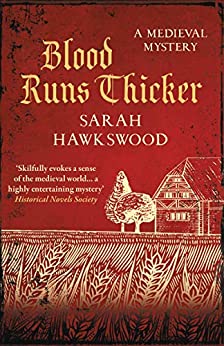
August 1144. Osbern de Lench is known far and wide as a hard master, whose temper is perpetually frayed. After riding to survey his land and the incoming harvest from the top of the nearby hill, his horse returns to the hall riderless and the lifeless body of the lord is found soon after.
Was it the work of thieves, or something closer to home? With an heir who is cast in the same hot-tempered mould, sworn enemies for neighbours, and something amiss in the relationship between Osbern and his wife, undersheriff Hugh Bradecote, the wily Serjeant Catchpoll and apprentice Walkelin have suspects aplenty.
Blood Runs Thicker is the first book I’ve read by Sarah Hawkswood, although this is a long established series that somehow, I’ve missed before.
I confess, I struggled a little with the ‘ye olde wordy’ language and speech but soon became accustomed to it, and could settle into the carefully crafted reconstruction of the period.
The story quickly gathers pace, and I was drawn into the mystery. The characters are well-sketched, and the interactions between Bradecote, Catchpoll and Walkelin lighten the narrative. I think Walkelin will be a character that develops moving forward in the series.
And the resolution of the mystery is deliciously complex and thoroughly enjoyable. I’ll certainly be reading more of this series, a firm 4/5 from me.
Thank you to Netgalley and the publisher for my review copy.
Blood Runs Thicker is released 18th March 2021, and can be purchased here.
And if you’re curious, please do check out the other review on the Blood Runs Thicker Book Blast.
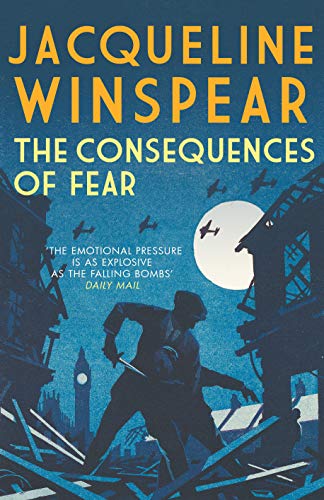
It is September 1941 and young Freddie Hackett is a message runner – he collects messages from a government office and delivers them to various destinations around London. He sets off one day with a message, along a route of bombed-out houses, and witnesses a murder. Freddie instinctively wants to summon the police, but he has an envelope to deliver first – all communications during wartime could be urgent. When the man who answers the door appears to be the very same person he has just seen kill another, Freddie rushes to the police, but is summarily dismissed. However, he remembers an address in Fitzroy Square, belonging to a private investigator, Maisie Dobbs. Will she believe him and help solve the mystery?
The Consequences of Fear is the first Maisie Dodds book I’ve read (I know, it’s number 16 – but I’ve just ‘got’ into books from this time period). It won’t be the last.
For a first time reader, there were a few stumbling blocks now and then throughout this book, only to be expected, of course. There are clearly well-loved, repeat characters in this book, and the author does a great job of involving as many of Maisie’s friends and allies as possible. This allows the case to be quite complex as she attempts to solve it, running between London and Chelstone.
I really enjoyed how deeply embedded the story is in the history of the period, and I think Maisie will be a fascinating character to uncover in earlier books.
Thoroughly enjoyable, even for a newbie.
Thank you to the publisher and Netgalley for my review copy.
The Consequences of Fear is released today, 18th March 2021, in hardback, and on 23rd March in ebook. Get it here.
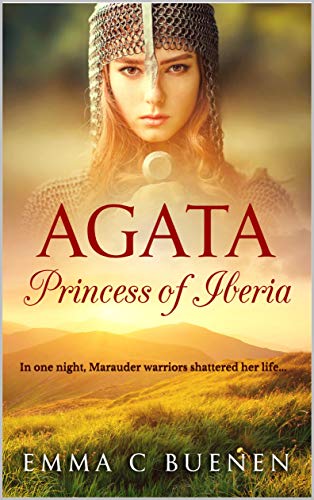
Thrust out into the Wild, young Princess Agata has no skills to survive.
In the early dawn of what is modern Georgia, a kingdom once known as Iberia teeters between hordes of enemies. Byzantines eye the soaring mountains and lush, fertile valleys tucked between Asia and Europe. Turks and Arabs rattle sabres along her eastern borders, coveting the lucrative Silk Road and the growing power of the mysterious Khazars – a Marauder people – loom large.
Motherless young Princess Agata has only known the solid stone walls of the palace. As the fourth daughter of Vax’tang II, she is instructed in the basic skills expected of her station and otherwise ignored and left to her own devices until the day she is old enough to be a marriage pawn in her father’s hands.
As her 16th birthday draws ever nearer, Princess Agata hopes to join the convent led by the powerful Byzantine, Abbess Shingli, and escape her cruel father.
But on the night of her sister’s wedding, Marauder warriors led by cruel warlord, General Kazan, attack the city and breach the walls of the palace. Agata must choose to stay and perish or escape into the lonely mountains of the Wild.
Alone and hungry, cold and terrified, Agata longs for the safety she once knew.
As political powers vie for Iberia, the young princess is hunted by a cunning traitor as well as the fierce warrior, Kazan.
Reeling at the treachery and anguished at the death of her warrior women, the seeds of vengeance and rebellion stir in Agata’s young heart.
Agata, Princess of Iberia is such a good book. The first 10% entirely draws the reader in, investing them with a need to know what’s going to happen as the city is overrun by marauders. Agata is a character who develops throughout the story so that by the end, she’s almost unrecognisable from the character we’re first introduced.
And she’s not the only strong female character, this book is stuffed with them, and all of them are engaging and clearly defined.
There are twists and turns, double-crossing galore, and just a really well-told story. Loved it:) And the cover is beautiful.
Agata is available now, and can be purchased from here.
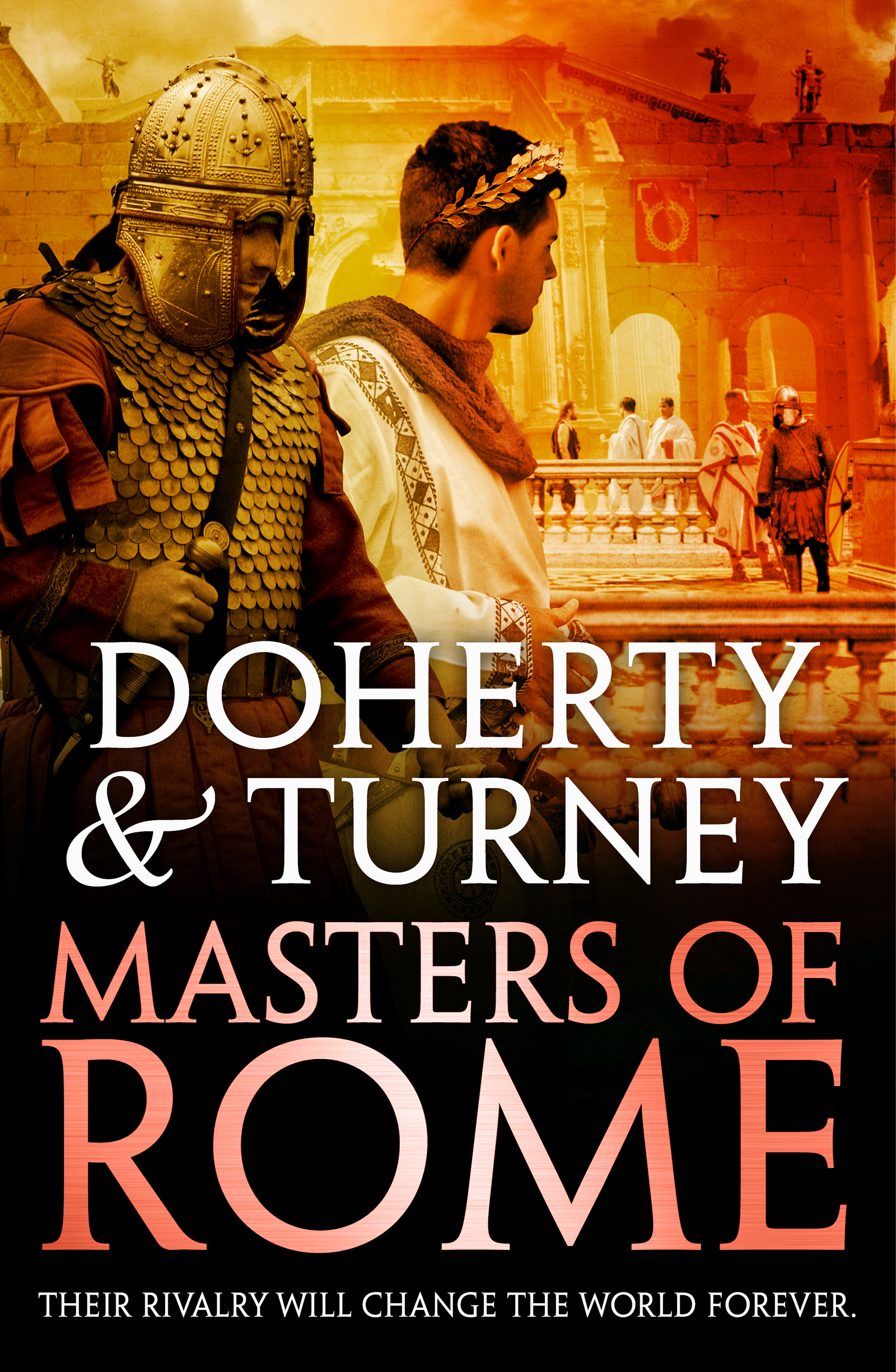
I’m sharing my review for Masters of Rome by the combined talents of Simon Turney and Gordon Doherty. This is the second book in the trilogy. Check out my review for book 1, Sons of Rome, here.
Here’s the blurb
Their rivalry will change the world forever.
As competition for the imperial throne intensifies, Constantine and Maxentius realise their childhood friendship cannot last. Each man struggles to control their respective quadrant of empire, battered by currents of politics, religion and personal tragedy, threatened by barbarian forces and enemies within.
With their positions becoming at once stronger and more troubled, the strained threads of their friendship begin to unravel. Unfortunate words and misunderstandings finally sever their ties, leaving them as bitter opponents in the greatest game of all, with the throne of Rome the prize.
It is a matter that can only be settled by outright war…
My Review
Masters of Rome is the stunning sequel to Sons of Rome, and the juicy jam? in this trilogy about Maxentius and Constantine, and the state of the Roman Empire in the early 300’s.
It is a book of vast scope, and yet perfectly held in check by the twin authors, Turney and Doherty, both taking the part of one of the main characters. Taking the reader from Rome to Africa, from Gaul to Rome, the scope of the novel is massive, and yet it never feels it. Never.
I am in awe of the skill of both authors to bring something as complex as this time period to life with such apparent ease (I know it won’t have been easy, but it feels it). Each chapter flows into the next, the desire to give both characters an equal voice, never falters, and quite frankly, I have no idea how the trilogy is ultimately going to end, but I am desperate to know:)
I highly recommend Masters of Rome, especially and particularly for those, who have no knowledge of the history of the period (like me) because it is absolutely fascinating and told with panache and skill, with an eye to detail. And those who do know the period, you’re still in for a treat as we follow the lives of Constantine and Maxentius and the inevitable march to war.
Simon Turney is the author of the Marius’ Mules and Praetorian series, as well as The Damned Emperor series for Orion and Tales of the Empire series for Canelo. He is based in Yorkshire.
Gordon Doherty is the author of the Legionary and Strategos series, and wrote the Assassin’s Creed tie-in novel Odyssey. He is based in Scotland.
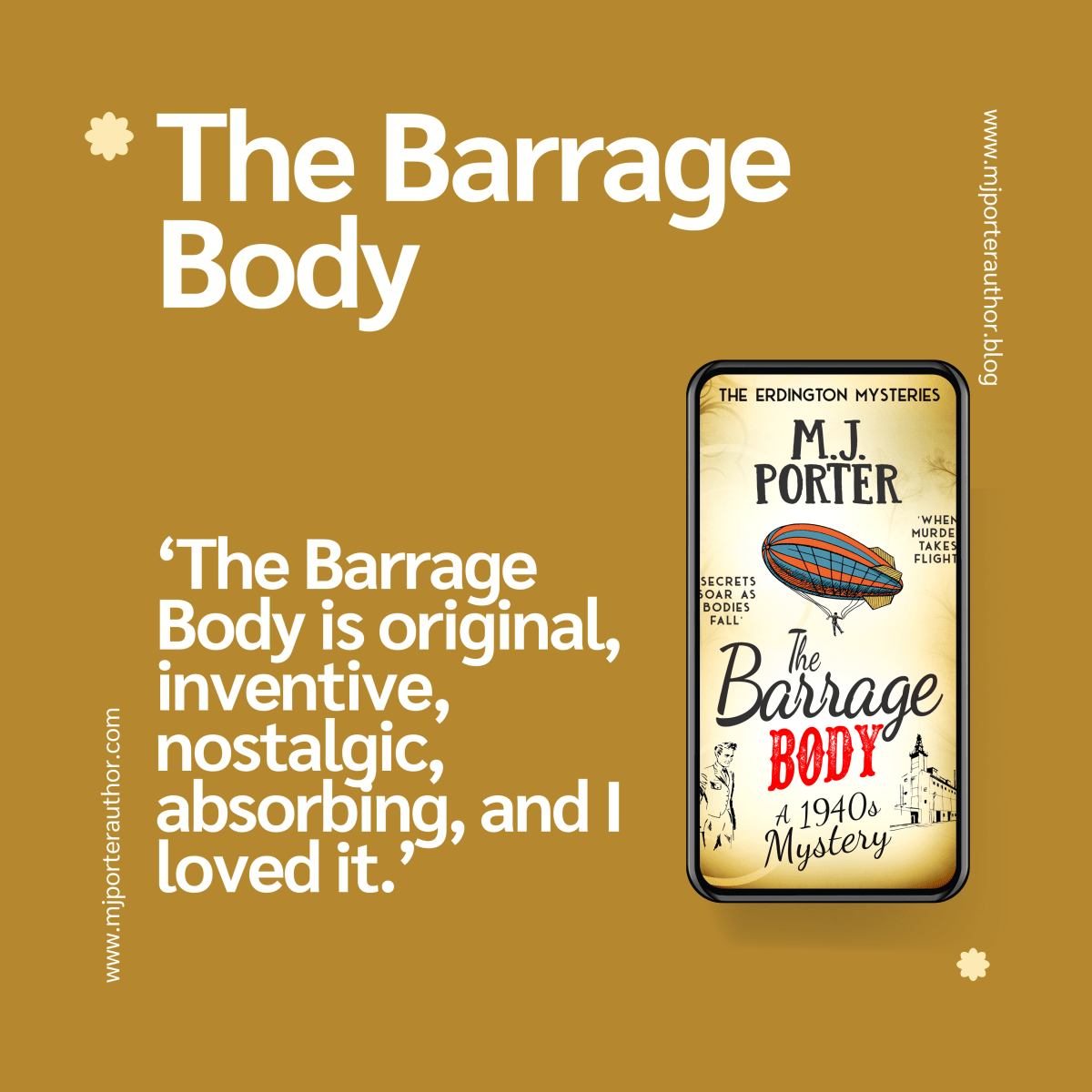
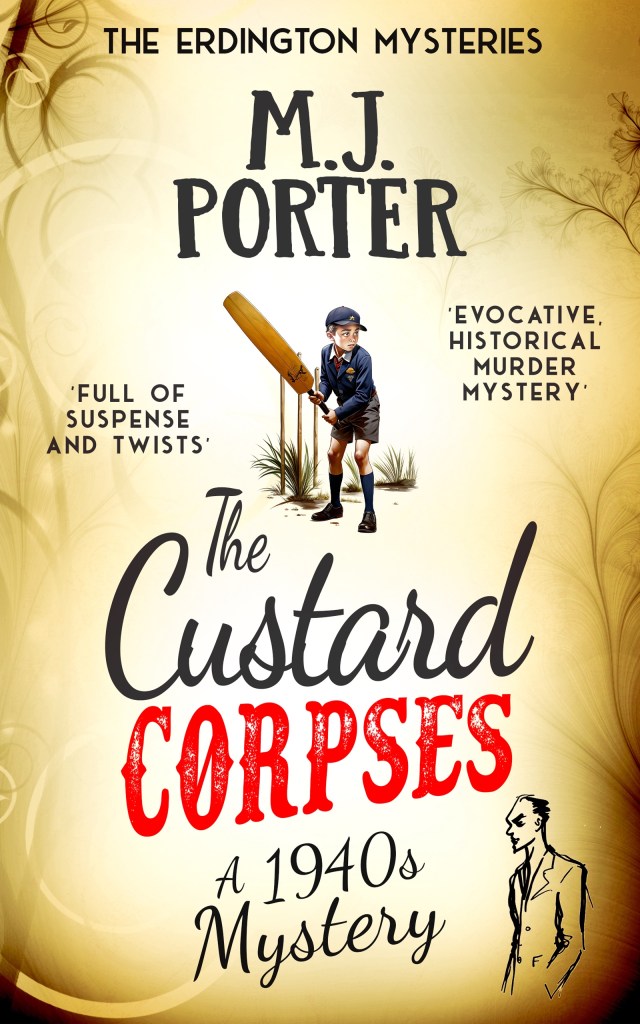
Here is it, a book I never thought I’d write – not only a mystery, but one set nearly a thousand years after most of the books I write, and one which began with a series of adverts.
Here’s the blurb;
A delicious 1940s mystery.
Birmingham, England, 1943.
While the whine of the air raid sirens might no longer be rousing him from bed every night, a two-decade-old unsolved murder case will ensure that Chief Inspector Mason of Erdington Police Station is about to suffer more sleepless nights.
Young Robert McFarlane’s body was found outside the local church hall on 30th September 1923. But, his cause of death was drowning, and he’d been missing for three days before his body was found. No one was ever arrested for the crime. No answers could ever be given to the grieving family. The unsolved case has haunted Mason ever since.
But, the chance discovery of another victim, with worrying parallels, sets Mason, and his constable, O’Rourke, on a journey that will take them back over twenty-five years, the chance to finally solve the case, while all around them the uncertainty of war continues, impossible to ignore.
As this is something completely new to me, I’m going to share a snippet.
Chapter 1
Erdington, October 1943
Sam bit back the cry of pain, coming to an abrupt stop. The pavement was shaded with the colour of the advancing night, but even so, he knew where the uneven step was. He really shouldn’t have kicked it. Not again. Would he never learn?
He blinked the tears from his eye and lifted his right hand to rub it over the ache of his lower back. All these years, and still it hurt. It would never stop. He knew it, and yet sometimes, he forgot, all the same, only to be rudely reminded when he overbalanced or attempted to take a step that was just too wide.
There was a reason he was here and not on one of the many front lines of this terrible war, the second in his lifetime. There was a reason he was here while his son, John, fought in his place.
His breath rasped through his suddenly tight chest, and yet the thin shard of light from behind the tightly closed curtains encouraged him on. Inside, there was companionship, and it drove him onwards, made him quest to be a better man. Despite the fact he knew it wasn’t true.
“Come on,” he urged himself, and although it was going to ache, he forced his legs to move, left, then right, then left, and his hand reached up to push the welcoming door open.
Appetising smells greeted him, and he dredged a smile to his face, turning to hang his hat on the waiting peg and to shrug the overcoat from his thin shoulders, revealing his policeman’s uniform beneath. The blue so dark; it was almost black. He hooked his gas mask above his overcoat. There in case he should require it. But no bombs had fallen for half a year now. He hoped none ever would again. No voice was raised in greeting to his noisy arrival. It never was.
With the door closed and locked behind him, he slipped his feet from his black shoes, using one foot to force down the ankle and then doing the same in his socked-feet. It was better than being forced to bend when his back was so painful, even if it was destroying the back of his shoes, as his wife complained whenever she witnessed it. He’d taken to hiding his work shoes behind the boots he wore to the allotment. Better that Annie did not see them.
Opening the door that led into the heart of his home, he paused, just watching her for a heartbeat.
“Evening, love.” He bent to place a kiss on his wife’s head, refusing to notice the thinning brown hair, the streaks of grey making up more and more of it as the years passed. A skeletal hand reached up to grip his, and he squeezed tightly, settling beside her at the table.
A single lamp afforded the only light in the small kitchen, a warm fire burning in the hearth in the sitting room as he settled beside her. His wife didn’t so much as look at him. Sam considered that she didn’t want to see the ruin of her husband.
Time hadn’t been kind to either of them and yet he couldn’t help but be grateful for the years they’d had together. It could have been so different. So many of his brothers-in-arms lost fighting over two decades ago. They would have loved to live long enough to see the ravages of time etched into their skin and characters, to grow weary with aches and pains, to learn the experiences that only time could afford.
A flurry of movement from Annie, and a plate was placed on the table before him, the lid swept aside. The steam took only a moment to clear, and he suppressed his rumbling stomach. It was a meal as any other day, not particularly appetising, and yet, food all the same. He was grateful for the potatoes, harvested from their garden, and the gleaming orange carrots, if not for the small sausages. Gravy pooled around the meat, and he closed his eyes, imagining a feast fit for a king, before meticulously cutting, eating and savouring every mouthful.
His wife didn’t speak, and neither did he. No doubt, she was as caught up in her thoughts as he was in his.
He considered reaching for his newspaper, but instead, his eyes were fixed by the bright image that lay open on the magazine discarded on the table before him. The Picture Post. Was there ever a magazine more filled with stories that titillated while offering little or no actual facts?
Not that he ever complained. Not anymore. If she enjoyed the stories and bright images of the adverts, then why should he? Anything that distracted her from the constant worry about their son. Anything.
Now, he found a smile tugging on his lips, and his mind cast him back to when his son had been a small boy. John had delighted in such simple antics as that on display. The custard advert enticed all parents to part with their hard-earned ration coupons. He couldn’t see that a liberal dollop of the sugary, creamy mixture would help any child become an athlete, professional cricket player or ballerina, but what did he know? He was just an old man, with a job that kept him busy and an ache in his heart where his youth had once been.
Sam reached for the folded newspaper, the smirk still playing on his lips.
“Don’t.” His wife’s voice shocked him, sounding more formidable than he’d heard for the last few years, ever since their son had left to fight Britain’s fresh battles against the might of Hitler and Germany.
He lifted his eyes to find hers boring into his.
“Don’t,” and now there was more softness, but it was too late. His eyes had alighted on what she’d been trying to keep from him.
Once more, he felt an unbidden tear form in the corner of his eye as he gazed at the hazy black and white photograph. Not that he didn’t know it intimately. He did. He’d stared at that image, and others besides, until they were emblazoned on his very soul, overriding even the final images of his lost comrades from the Great War, the war to end all wars. How wrong they’d been.
He swallowed, the burn making it feel as though it were cardboard and not the remnants of his dinner that he evacuated from his mouth.
“Again?” he felt the need to say something.
“Again,” she replied, and there was understanding and sorrow in that look, and he didn’t want any of it. He didn’t want to add to her fears and worries with his own.
“It was a long time ago,” he tried to reassure, reaching for her hand and encasing it within his. It was no longer soft but instead forged in iron, the wiry strength surprising him, even though it shouldn’t, not after all this time.
“It rolls around too quickly, these days,” a hint of a smile on her thin lips, blue eyes glistening with sorrow, and he realised that she was trying to reassure him. He hated it that she felt the necessity.
“And still, there’s no closure for the family.”
“No. But they’re not alone in that. Not anymore.” Her voice trailed off as she spoke, and he turned to gaze into the glow from the table lamp, allowing it to haze in front of him. She was right in that, as well. Many would never hold the knowledge of what exactly happened to their loved ones. Yet, there was a world of difference between adults and children. It was the fact he’d been a child that cut the deepest.
His mind returned to that terrible day. How could it not? He’d been a young man, wounded and broken after his time at The Front, but at least he’d still breathed. Not like the splayed body found in the undergrowth close to the church hall, eyes forever staring. Somehow, the rigour mortis of a smile on that cherubic face, so that anyone could be forgiven for thinking the boy was merely caught in the act of playing hide and seek.
But the face had been blue and white, the eyeballs rimmed with the grey haze of death that he’d come to know so well during his time in the trenches before his injury had ensured he need never revisit the place.
In the faded light of the lamp, he watched the scene, as though he’d been a bird, able to watch from above. His eyes alighted, not on the corpse, but rather on his chief inspector, the man who’d made him who he was today, and yet who’d been broken by the failure to solve the death of the boy.
Sam found a soft smile playing around his lips. Fullerton had been a meticulous man, with his long mackintosh and tightly wedged police hat covering the tendrils of greying hair showing beneath it and in the sideburns that snaked down to meet the dark moustache quivering over his lips. Many would have been forgiven for thinking he had no compassion for the corpse. But no, he’d had more than most, but he had desired to solve the case, to bring the perpetrator to justice. It was a source of unending disquiet that it had never been possible.
It had marked him from that day he’d found Robert’s body to the day of his death.
It hadn’t been Sam’s first case, far from it, but it had felt like it. He’d learned so much, and yet it had never been enough. Not for young Robert McFarlane and his family.
He swallowed once more, his keen memory fastening on the scene. Or rather, on the way that the body had been presented. The murderer hadn’t killed young Robert beside the church hall behind the High Street. In fact, they’d never found the place the murder had truly taken place, only where the body had been found.
Sam thought of Mrs McFarlane, her tear-streaked face, her shaking shoulders. Her oldest son, taken from her, just as her husband had been by the enemy’s bullets during the Great War. There’d been so much grief and loss in the years during and after the war, if not dead on some far-flung battlefield, then carried away by the terrible Spanish influenza. It had all seemed never-ending. And then, the spark of an untainted future when all had seemed calmer, taken between one breath and the next.
Sam had never seen grief festoon someone so entirely. As Chief Inspector Fullerton had told her the news, she’d aged before their eyes. It had taken his quick reflexes to ensure she didn’t collapse to the floor on the bright red doorstep, her young daughters, wide-eyed and sobbing as they watched their mother, hands clasped tightly together, as though they could hold their mother up with such an act.
There’d been a time when Sam had wished Chief Inspector Fullerton hadn’t told Mrs McFarlane in such a way, his words hard and unfeeling, and yet, he’d come to appreciate that there was no right and wrong way to impart such terrible news. It was almost a kindness to say the words, ‘your son is dead,’ as quickly as possible. There was no need to use superfluous words, to offer sympathy, to say anything but the facts.
Her accusing eyes had followed him through the years. Why they’d said that day and many days since, is my son dead, while yours yet lives?
It was not Mrs McFarlane who’d marked the anniversary of her son’s death, each and every year for the last twenty years, but rather, her daughter. The older one, Rebecca, had taken on the responsibility for ensuring that no one ever forgot her brother when her mother sadly passed away, worn down by grief and loss, by the need to survive in a world turned upside down, with nothing but a war pension to ease the burdens.
It was Rebecca who routinely sent letters asking for updates on the case. It was Rebecca that he tried to avoid at all costs when he saw her at church, on the tram or along the High Street. It was Rebecca who’d broken Chief Inspector Fullerton, in a rare show of emotion that shocked him to recall, even now. He’d never seen Fullerton like that. He’d never imagined Fullerton could be so very emotional that tears would run from his brown eyes, that he’d tear at what remained of his hair in frustration.
Chief Inspector Fullerton had retired a few years ago, but he’d not lived long enough to enjoy it. Sam shook his head. One murder and so many lives destroyed, and still, the murderer was out there, perhaps hiding, perhaps luxuriating in what he’d managed to get away with, or maybe, he was dead as well, getting away with his crime for all time. Twenty years was a long time.
Sam was snapped from his reveries by a bowl appearing before him. Somehow, he’d become so lost in the past; he’d not even heard his wife stand at the stove for the last many minutes.
A cheeky smile from her, driving away the wrinkles and the grey streaks in her hair, making her look twenty years younger, and he looked down at the bowl before him.
“Custard?” he asked, enjoying the unusual light-hearted look on her face.
“I know it’s your favourite. There’s even some apple in there, somewhere, and some blackberries, picked from the country lane on my walk yesterday afternoon to Pipe Hayes Park.”
“How did you get it?” he asked, eagerly spooning the sweet mixture into his mouth.
“I’ve been saving my packets. I didn’t tell you. I know you wouldn’t be able to wait.”
“Then you have my thanks,” he grinned, fully returning to the present. He couldn’t do anything about the past. No matter how much he wished he could.
“This is delicious,” he complimented his wife, leaning back, hand on his full belly.
“Well, now you just need to wait another year, and then you can have more.” But there was a lightness to her voice when she spoke, and the flash of joy in her eyes cheered him. There was so much wrong with the world at the moment, and yet here, beside his wife, in their cosy front room, everything was well. Even if only for now.
England, 1925. Louisa Drew lost her husband in the First World War and her six-year-old twin sons in the Spanish Flu epidemic of 1918. Newly re-married to a war-traumatised husband and seven months pregnant, Louisa is asked by her employer to travel to Clewer Hall in Sussex where she is to photograph the contents of the house for auction.
She learns Clewer Hall was host to an infamous séance in 1896, and that the lady of the house has asked those who gathered back then to come together once more to recreate the evening. When a mysterious child appears on the grounds, Louisa finds herself compelled to investigate and becomes embroiled in the strange happenings of the house. Gradually, she unravels the long-held secrets of the inhabitants and what really happened thirty years before… and discovers her own fate is entwined with that of Clewer Hall’s.
An exquisitely crafted and compelling mystery that invites the reader in to the crumbling Clewer Hall to help unlock its secrets alongside the unforgettable Louisa Drew.
I’ve been drawn to books like The Quickening for my last few reads, and it’s helped that there’s been a good selection in the Kindle 99p sale.
The Quickening sits comfortably within its genre – it’s not a terrifying ghost story, although it is eerie in places, and with a definite supernatural element.
The main character, Louisa Drew, immediately earns the sympathy of the reader. A life challenged by recent tragedies, a desire to move on from them finds her in an uncomfortable position, hungering for the life she once led before the war, with the promise of the future not quite what she’d thought it might be. Combined with the secrets that permeate Clewer Hall, the scene is set for a fascinating and intriguing story as we learn more about Louisa, and more about the inhabitants and history of Clewer Hall, and the famous seance of thirty years before.
An enjoyable read.
I snapped this up for 99p in the kindle sale, and you can buy it here.
In Edwardian Suffolk, a manor house stands alone in a lost corner of the Fens: a glinting wilderness of water whose whispering reeds guard ancient secrets. Maud is a lonely child growing up without a mother, ruled by her repressive father.
When he finds a painted medieval devil in a graveyard, unhallowed forces are awakened.
Maud’s battle has begun. She must survive a world haunted by witchcraft, the age-old legends of her beloved fen – and the even more nightmarish demons of her father’s past.
Spanning five centuries, Wakenhyrst is a darkly gothic thriller about murderous obsession and one girl’s longing to fly free by the bestselling author of Dark Matter and Thin Air.
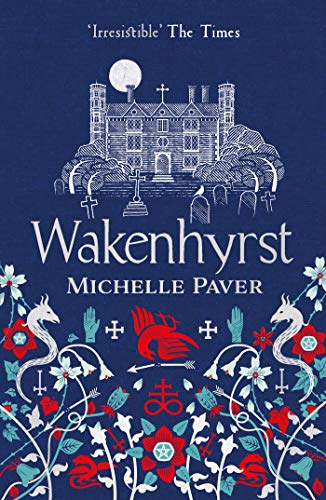
Wakenhyrst drew me in because of the blurb and the cover. It might have helped that I’ve just read a few books with a similar theme – supernatural mixed with historical fiction.
Wakenhyrst didn’t disappoint. The character of Maud was immediately engaging, that of her father, quite distant, until we get some way through the book, and the reader begins to realise the story is about the relationship between Maud, her father, the fen and the local church.
What delighted me about this book was just how deeply embedded it was in the distant past – both the Early English period, and the fifteenth century, moving forward to the early 1900s and also stopping off in the 1960s, making use of the pervading attitudes in all four time periods to drive the narrative.
It’s not an easy, pleasant read, but it is a worthwhile read, extremely atmospheric and with a little twist, right at the end, which makes sense of so much more. Recommended.
It was 99p on Kindle when I purchased it, and still was when I wrote this review. You can purchase here.
When Rósa is betrothed to Jón Eiríksson, she is sent to a remote village.
There she finds a man who refuses to speak of his recently deceased first wife, and villagers who view her with suspicion.
Isolated and disturbed by her husband’s strange behaviour, her fears deepen.
What is making the strange sounds in the attic?
Who does the mysterious glass figure she is given represent?
And why do the villagers talk of the coming winter darkness in hushed tones?
The Glass Woman is an intriguing tale of Iceland in the late 1600s.
I make no bones that I am fascinated by Iceland, perhaps not during this time period, but earlier, when the country was being settled. I tried this book on the off-chance – Jane Eyre in Iceland – yes, please.
And indeed, it is a dark tale, told from the viewpoint of Rosa. It is dark, frightening and claustrophobic, and reads very much like a much more modern Icelandic ghost story I read recently. It makes you shiver, it makes you feel for Rosa, but then everything changes and the book is not at all what you think it’s going to be.
I found the story intriguing and engaging, and if it’s not Jane Eyre in Iceland, it’s because the book is actually much harsher.















 MJ Porter