

I’m delighted to welcome Mercedes Rochelle and her The Plantagenet Legacy to the blog with an excerpt #HenryIV #Plantagenet #Lancaster #Medieval #BlogTour #TheCoffeePotBookClub 

I’m delighted to welcome Mercedes Rochelle to the blog with an excerpt from The Accursed King.

MURDER OF THE DUKE OF ORLÉANS

It was St. Clement’s day, 23 November. Isabeau of Bavaria, the Queen of France was ill and in mourning for her twelfth child, who died at birth ten days before. Louis hoped to cheer her up by arranging a supper at her Hôtel Barbette in the Rue du Temple. A merry party gathered, with all the most fashionable cavaliers and dames, who diverted the queen with pleasantries and songs of love. Despite herself, Isabeau smiled and engaged in a little wordplay, trying to forget her unhappiness for a few hours. 

Around nine o’clock, a messenger was admitted. Louis recognized him; his name was Courteheuse, one of the king’s valets. He bowed to the queen and then turned to the duke who was sitting beside her.

“Monsieur le Duc d’Orléans, I come from his Majesty. He requests your presence at once at St. Pol to discuss most urgent business.”

“Ah, Madame la Reine, I must go.” Kissing the queen’s hand, Louis rose immediately. 

Outside the room, two of his squires waited for him. “The king commands,” the duke said, reaching for his black furred cloak. “We must go quickly.” Not pausing for an answer, Louis made his way outside and waited while his squires brought up one horse for the both of them and his own palfrey. He looked up, noticing the sky was overcast. It was very dark and the streets were already deserted. 

“There you are. Good. Let us go.” He mounted and started off at a fast walk, his squires behind him. Three valets carrying torches followed, but they were on foot and had trouble keeping up. The buildings were shuttered for the night and only an occasional sliver of light from barred windows lit the street. Louis didn’t mind. As they rode down the Rue Vielle du Temple, he was fiddling with his gloves and humming to himself.  

They came to a place where the road widened around a well in the centre. Without warning eight muffled men sprung out from the shadows and ran at him. Thinking they were thieves, Louis shouted, “I am the Duke of Orléans!”

“That’s who we are looking for,” yelled one of them, and struck with an axe, severing Louis’s bridle hand. The duke shrieked, and another man slammed an axe into the back of his head. They pulled Louis from his horse and a third axe cleft his skull to the teeth, spilling his brains over the frozen paving stones. 

The squires’ horse sidestepped, shied and bolted. The valets carrying the torches stopped when they reached the opening and two of them turned away and ran. The third dashed forward, pushing aside one of the attackers and threw himself onto the duke, not realizing he was too late. He vainly tried to protect his master but found himself in dire trouble, for by now the murderers were stabbing again and again with their daggers.

“Murder! Murder!” shrieked a witness from a window overhead. 

“Shut up, you damned woman!” yelled one of the murderers. “Shut up!”

Frightened for a moment, the woman withdrew. The attackers heaved the valet aside and dragged the mangled duke over to the well, propping him up against the stones. His head lolled to one side. They picked up the still-burning torch and brought it closer to make sure he was truly dead. 

At that moment, a burly man in a red hood came out of the house across the street, known as the Hôtel de l’Image de Notre Dame. He raised an axe one more time and brought it down on the duke’s head. “Give me that torch,” he growled. “Let’s go! He’s dead.”

The murderers were interrupted by a clatter at the end of the street; the squires, having gained control of their horse returned with the duke’s palfrey. They assumed he had fallen off. 

The man in the red hood stepped forward. “Be gone! Or you shall share his fate.” He pointed to the dead man.

Terrified, they turned and fled, crying out, “Murder! Murder!”

Their task finished, the red-hooded man threw his torch into the Hôtel, setting it on fire. They all fled down the Rue des Blancs Manteaux, scattering caltrops on the ground to deter anyone from giving chase. At the same time, the woman started screaming “Murder” again, and the poor valet lay on the ground, crying, “My master! My Lord!” Soon his voice failed and he, too, was gone. 

Image showing the covers for The Usuper King and The Accursed King by Mercedes Rochelle.

Here’s the blurb for The Usurper King

From Outlaw to Usurper, Henry Bolingbroke fought one rebellion after another.


First, he led his own uprising. Then he captured a forsaken king. Henry had no intention of taking the crown for himself; it was given to him by popular acclaim. Alas, it didn’t take long to realize that that having the kingship was much less rewarding than striving for it. Only three months after his coronation, Henry IV had to face a rebellion led by Richard’s disgruntled favorites. Repressive measures led to more discontent. His own supporters turned against him, demanding more than he could give. The haughty Percies precipitated the Battle of Shrewsbury which nearly cost him the throne—and his life.


To make matters worse, even after Richard II’s funeral, the deposed monarch was rumored to be in Scotland, planning his return. The king just wouldn’t stay down and malcontents wanted him back.
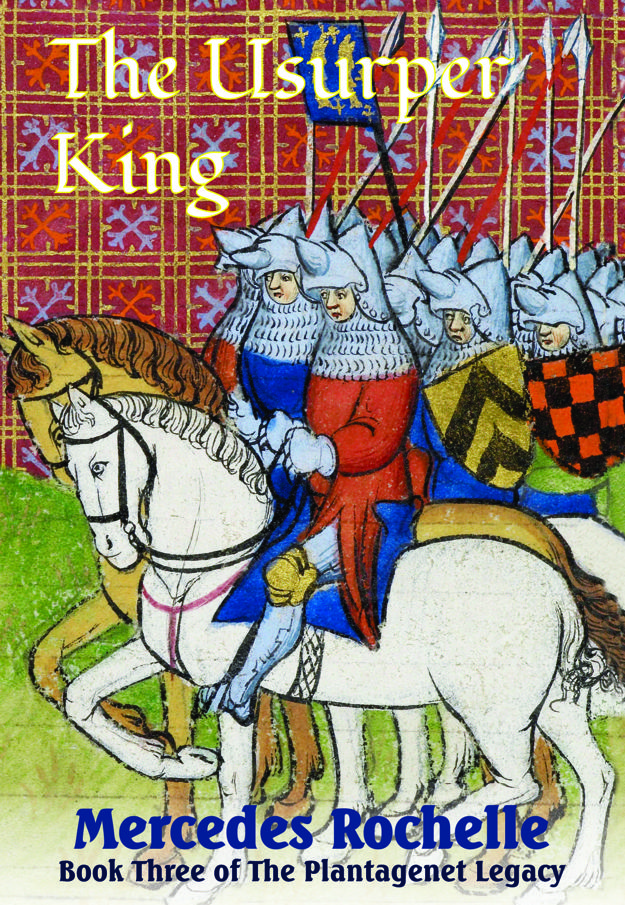
Book cover for The Usurper King by Mercedes Rochelle

Purchase Link

The Usurper King


Here’s the blurb for The Accursed King

What happens when a king loses his prowess?

The day Henry IV could finally declare he had vanquished his enemies, he threw it all away with an infamous deed. No English king had executed an archbishop before. And divine judgment was quick to follow. Many thought he was struck with leprosy—God’s greatest punishment for sinners. From that point on, Henry’s health was cursed and he fought doggedly on as his body continued to betray him—reducing this once great warrior to an invalid.

Fortunately for England, his heir was ready and eager to take over. But Henry wasn’t willing to relinquish what he had worked so hard to preserve. No one was going to take away his royal prerogative—not even Prince Hal. But Henry didn’t count on Hal’s dauntless nature, which threatened to tear the royal family apart.
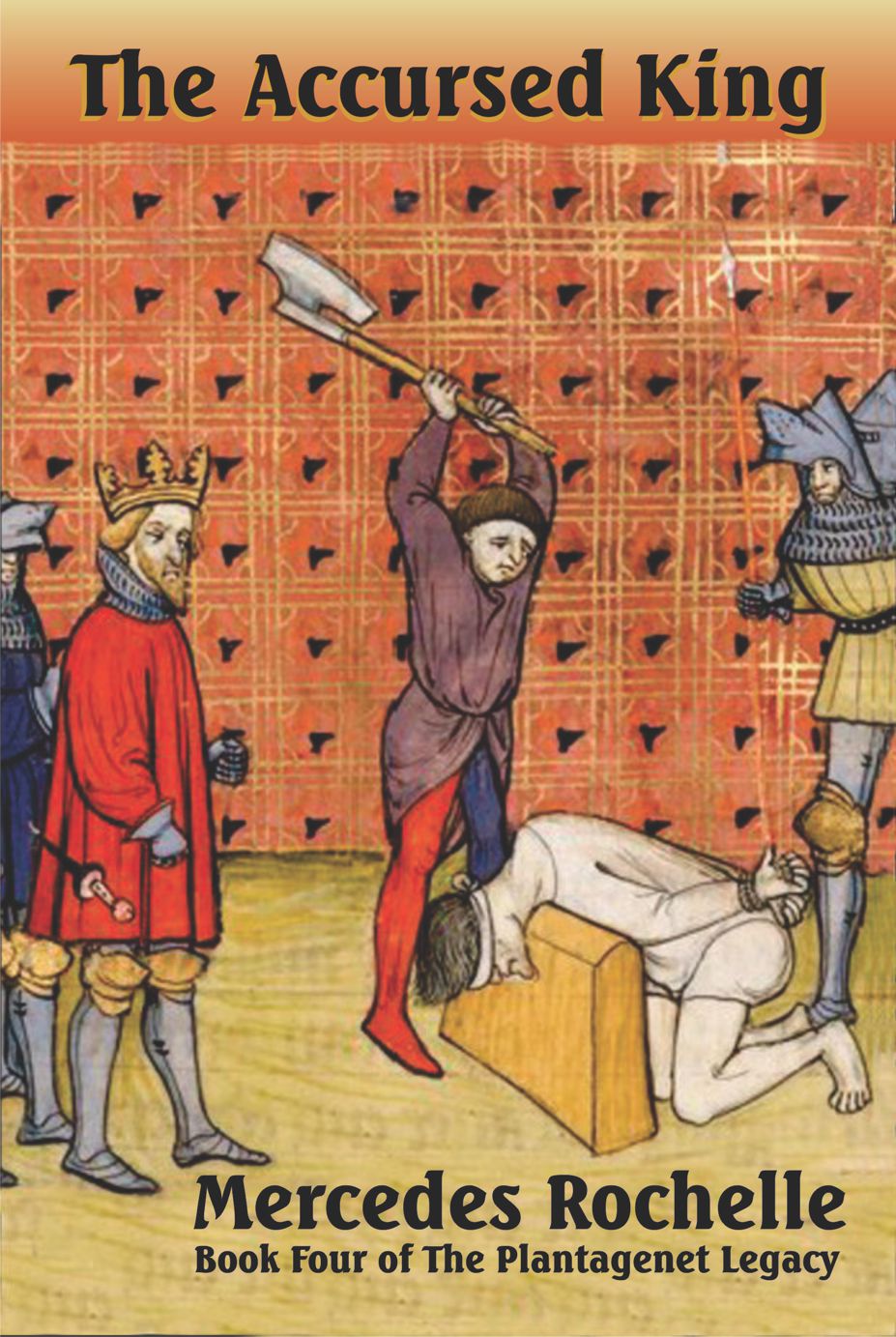
Book cover for The Accursed King by Mercedes Rochelle

Purchase Link

The Accursed King

These titles are available to read on #KindleUnlimited


Meet the Author

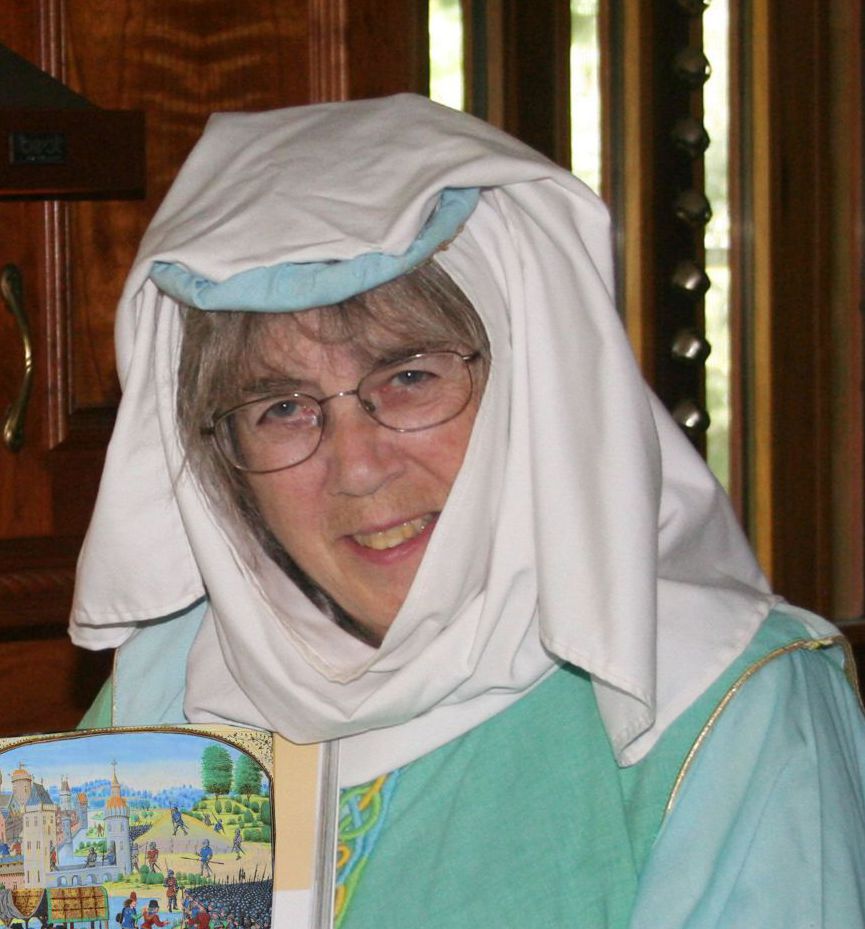
Mercedes Rochelle is an ardent lover of medieval history, and has channeled this interest into fiction writing. Her first four books cover eleventh-century Britain and events surrounding the Norman Conquest of England. The next series is called “The Plantagenet Legacy” and begins with the reign of Richard II.

She also writes a blog: www.HistoricalBritainBlog.com to explore the history behind the story. Born in St. Louis, MO, she received by BA in Literature at the Univ. of Missouri St.Louis in 1979 then moved to New York in 1982 while in her mid-20s to “see the world”. The search hasn’t ended!

Today she lives in Sergeantsville, NJ with her husband in a log home they had built themselves.
Connect with the Author

Website: Blog: BookBub:

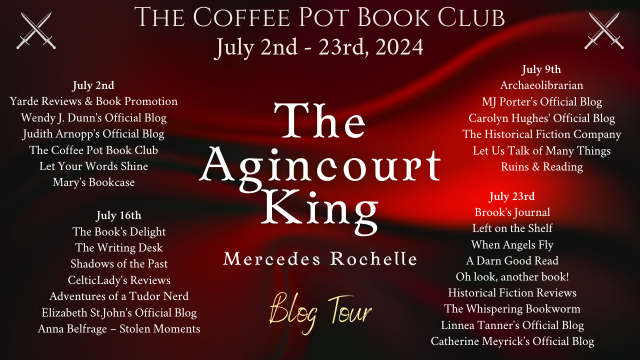
Banner showing the blog hosts for the Plentagenet Legacy Series: Henry Iv written by Mercedes Rochelle and arranged by The Coffee Pot Book Club
Follow Plantagenet Legacy Series blog tour with The Coffee Pot Book Club

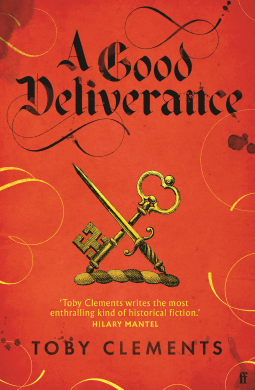
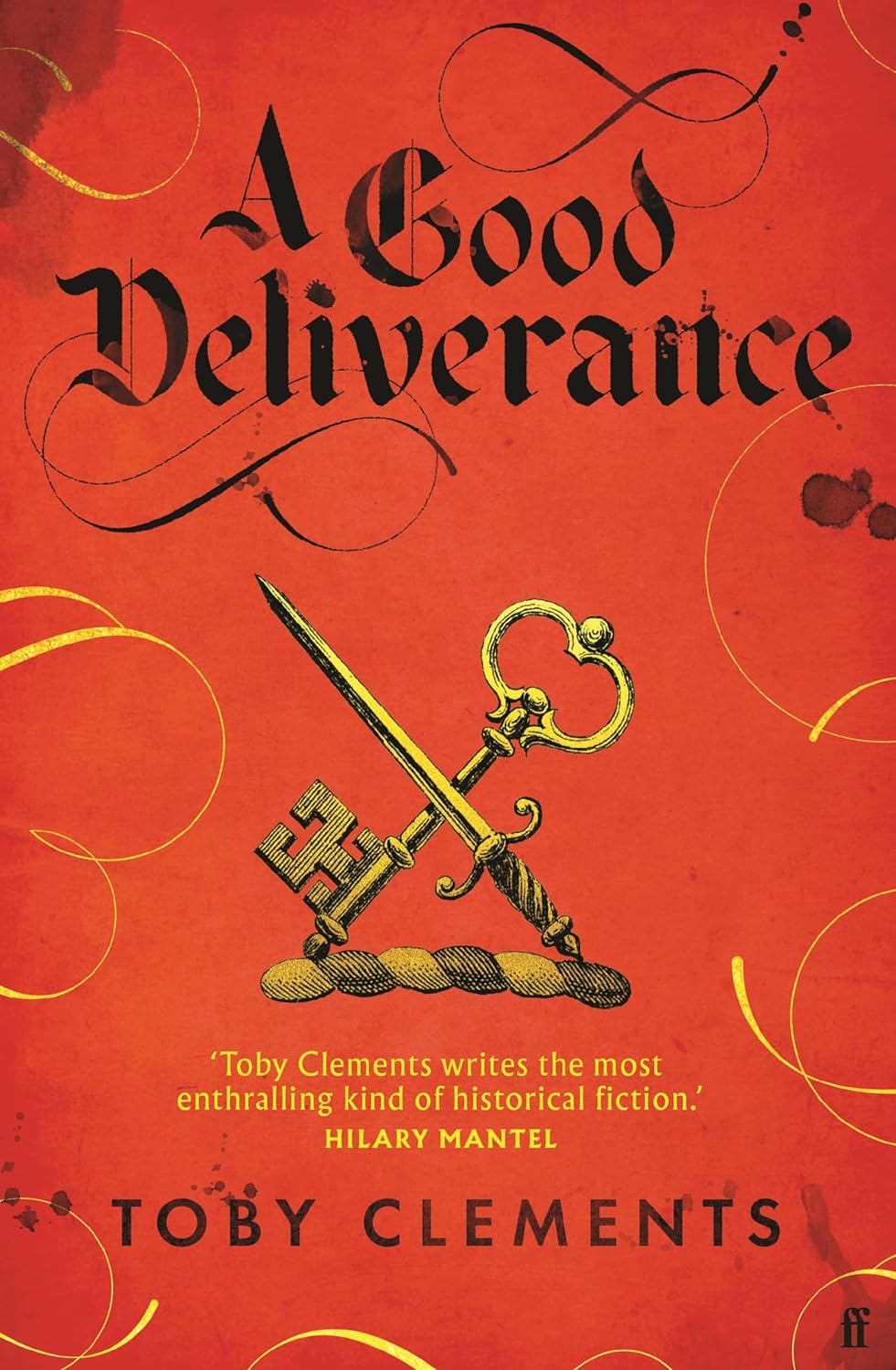
I’m sharing my review for Toby Clements new historical fiction tale, A Good Deliverance, the story of Thomas Malory, author of Le Morte D’Arthur #histfic

Here’s the blurb

From the author of the Kingmaker series, an epic and intimate tale of adventure, myth and the creation of one of literature’s greatest stories.

Warwick, 1468. One drowsy summer afternoon, Sir Thomas Malory – politician, courtier, renowned author of Le Morte D’Arthur – is seized from his garden and dragged to Newgate Prison for reasons unknown.

Shivering in his foul-smelling, filthy old cell, Malory mourns his misspent life as he awaits the execution bell. But when the locking bar lifts, he is greeted by a boy of about twelve winters: the gaoler’s son. Giddy with relief, Malory seizes the opportunity to recount his deeds to an audience.

So begins a prison confession of a perilously exciting life full of sieges, battles and court intrigue. A Good Deliverance is the captivating tale of a man at odds with his past and the events that inspired him to write the first great work of prose fiction in English.

Purchase Link

https://amzn.to/3S5WtB2

My Review

A Good Deliverance is a fictional account of Thomas Malory, the man who wrote the famous Le Morte D’Arthur and, in doing so, perpetuated the myths of Arthur and his knights, queen, and, of course, Lancelot.

Our Thomas Malory, as presented by Toby Clements, is a man of his time, living a life that even he questions for his feelings of inadequacy. He doesn’t fight at Agincourt, and indeed, his deeds of martial glory come from a battle few remember. Locked up for a crime we, the readers, never truly understand, he finds a willing listener to his life’s tales in the son of his prison guard.

This is an intriguing tale, told in an unconventional way. Wary of losing the interest of his audience, much of the tale is told as an aside, the parts that his young listener won’t be interested in hearing. It does make the story a little disjointed, but it also allows us to sweep through some of the more mundane details and focus on what Thomas Malory (and the author) thinks is important to the reader. Perhaps very much as the Arthurian Legend, it focuses on brave daring-do (or not) and not so much on matters of the heart or Malory’s less honourable actions.

It is somewhat of a rambling tale – indicative of a man fearing for his life and determined to ensure someone knows his story before his death. It is also thoroughly enjoyable – fans of the period will delight in seeing the glories of Agincourt and the hot mess of politics and bickering kingship played out in a very different way – through the eyes, not of a common man, but through the eyes of one for whom everything is still very much out of his control. Thomas Malory must do as he’s bid to make his way in the world.

The ending of this tale is very abrupt – too abrupt – no doubt because I as the reader was hoping for some redemption for our main character.

In a genre where the legends of Arthur have always been so alluring for authors and readers alike, I admire this fresh attempt to tackle where much of our knowledge of the legend comes from. The book might have its faults, but in revealing even our scribe’s biases, it sheds a whole new light on the tales.

A fabulous take on the fifteenth century and the man behind the Le Morte D’Arthur (even if so much of it is fictional as we know so little about him).

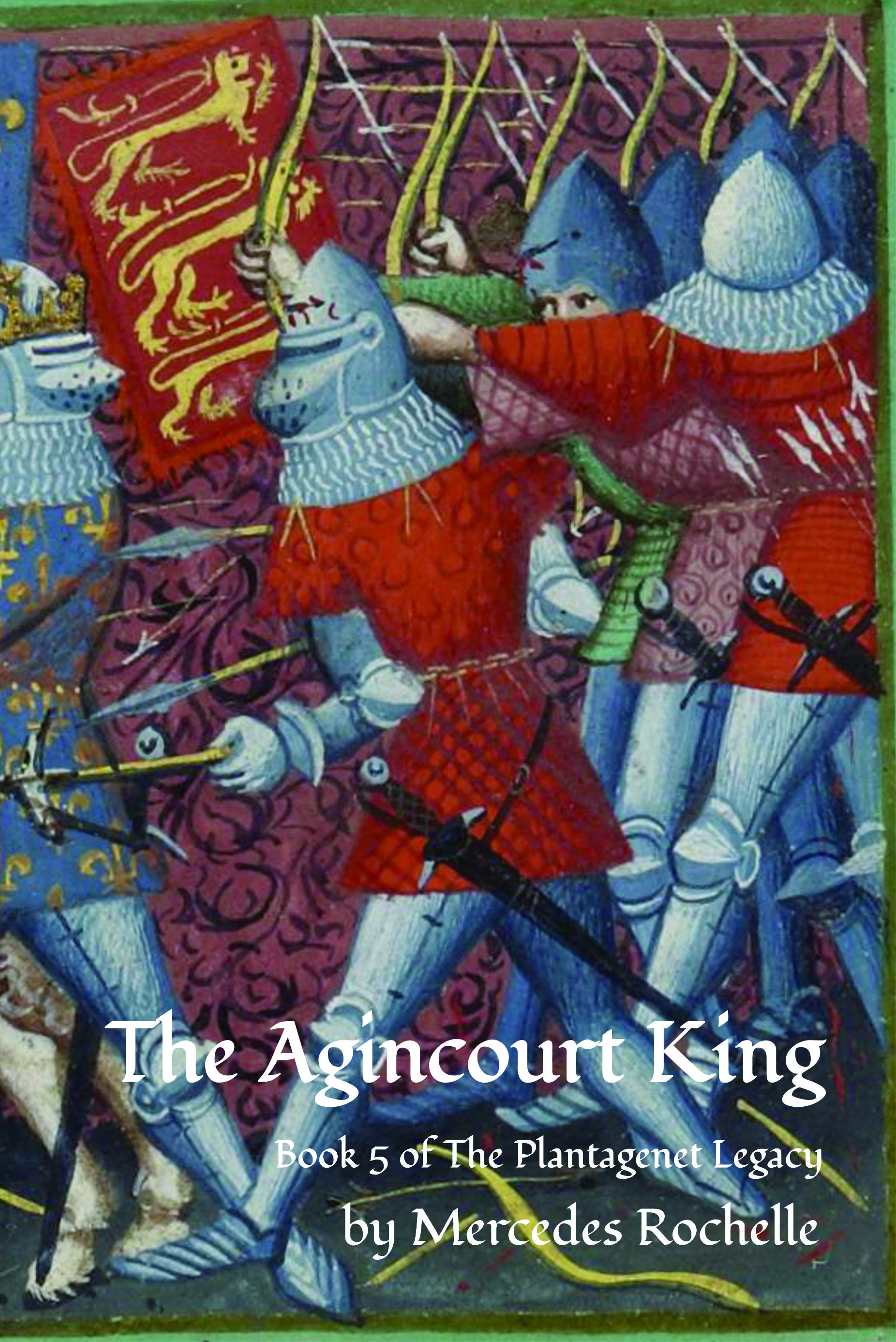
I’m delighted to welcome Mercedes Rochelle and her new book, The Agnicourt King, to the blog #TheAgincourtKing #HenryV #Agincourt, #HistoricalFiction #Plantagenet #BlogTour #TheCoffeePotBookClub

I’m delighted to welcome Mercedes Rochelle and her new book, The Agnicourt King, from The Plantagenet Legacy series, to the blog with, France In Chaos.

France In Chaos

When Henry V landed on the shore of Normandy in 1415, he was relatively sure the French were in no position to offer him much resistance. Already in his father’s reign, both factions of a budding civil war had already approached the English for assistance against the other. Henry IV had responded with an invasion force in support of the Armagnacs against the Burgundians. The Armagnacs—the party of Charles, Duke of Orléans—had made a better offer. However, Prince Henry was in favour of John the Fearless, Duke of Burgundy, and this antagonism against his father’s policy placed him on the wrong side of the political fence. Henry IV’s death a year later put an end to that!

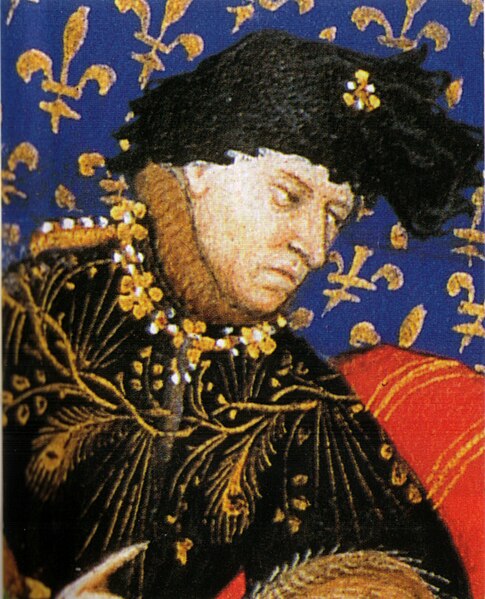
Charles VI, miniature from des Dialogues de Pierre Salmon – Wikipedia

So what was this all about? Since 1392, poor France was afflicted by a schizophrenic king, Charles VI, who slipped in and out of madness with unpredictable frequency. He was sane often enough to negate removing him from the throne permanently, though the older he got, the less he was able to rule rationally even when cognizant. His illness created a political firestorm, as his nobles fought to control his presence; whoever possessed the king ran the country. In the early years of the king’s “absences” (as his schizophrenic episodes were called), the government was ruled by his brother, Louis, Duke of Orléans along with the queen. Orléans was bitterly opposed by John the Fearless, the king’s cousin, who was the popular favorite. In 1407, John had Louis murdered one night in the streets of Paris, but he was such a manipulator that he got away with it. Of course, Louis’s son Charles did all he could to condemn the Duke of Burgundy, but he was too young and inexperienced to pull it off. He eventually formed an opposing faction led by his father in-law, the brutal and effective Count of Armagnac, who carried on after Charles was captured at the Battle of Agincourt.

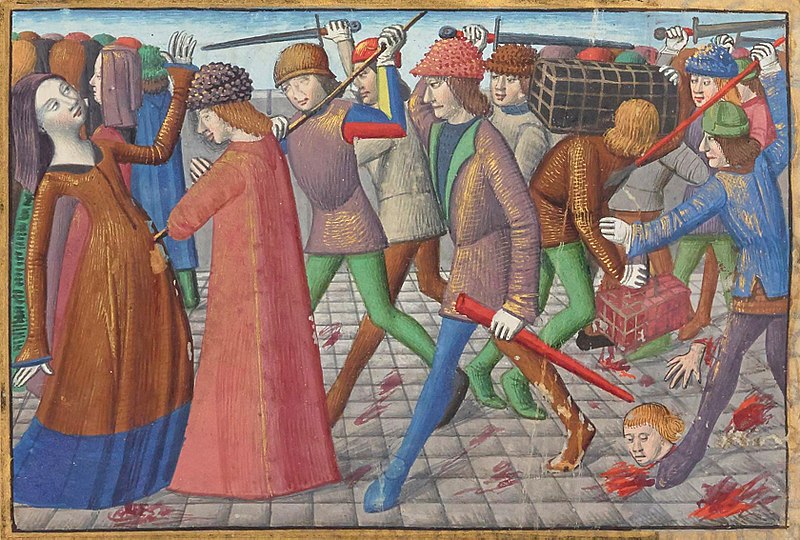
In 1412, when Henry IV sent an invasion force to France under his second son the Duke of Clarence, King Charles managed to patch up a peace between his warring factions. Clarence was bought off and returned home, but the temporary truce soon failed, and matters came to a head just after Henry IV died. Paris had become a proverbial powder keg, and simmering grievances broke into rioting, directed by agents of Burgundy but led by the powerful butcher’s guild. Under their ringleader, Simon Caboche, the Cabochiens sported white hoods, laid siege to the Bastille—sound familiar?—then turned their attentions to the Hôtel Saint-Pol where the Dauphin was staying. The insurgents seized and imprisoned many of the Dauphin’s supporters and detained the teenaged heir, confining him in the palace with his incapacitated father and helpless mother. Thus began a reign of terror where any suspected Armagnacs were arrested, imprisoned, and murdered. This went on for four months.

The Cabochien revolt, from Les Vigiles de Charles VII,BnF, Manuscrit Français 5054 – Wikipedia

But insurrections are bad for business, and eventually the Parisians had had enough. When the time was ripe, the Armagnacs gathered their forces and converged on the city, inspiring the anti-Cabochiens to rise up against their oppressors. It all happened very quickly. Caboche and hundreds of his followers slipped out of Paris, taking refuge with the Duke of Burgundy who was one of the first to leave. The Armagnacs moved in, arrested anyone suspected of misconduct, and launched their own reign of terror. They kept a strangle-hold on Paris for the next five years, though Burgundy periodically laid siege to neighboring towns and the city itself in an attempt to push them out.

Duke John was not one to take matters sitting down, so to speak. There was always King Henry of England, ready to discuss terms. Just like his father back in 1412, Henry negotiated with both sides while he prepared to invade. He hoped that John would offer to swear fealty to him, but Burgundy was not willing to go against his own king. So the best Henry could manage was something resembling a non-interference agreement; no one knew for sure what they came up with. But by all indications, Burgundy cooperated. He concentrated his efforts against the Armagnacs, throwing the government into such a panic that they dared not commit troops to the English invasion while Paris was threatened.

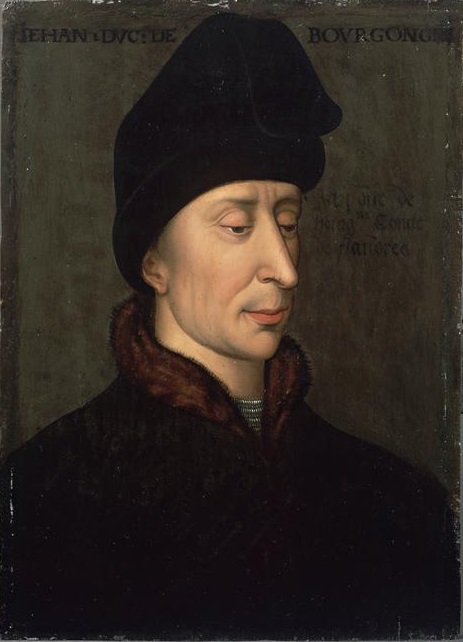
John the Fearless, Duke of Burgundy, Portrait after Rogier van der Weyden – Wikipedia

Harfleur was the first to experience the might of the English army. Henry laid siege to the city, blockading it both by land and sea. Repeated calls for help generated nothing but excuses: the king was working on it. They hadn’t gathered enough troops yet to confront the English. King Charles and the Dauphin both made their way toward Harfleur, but didn’t travel any further than Vernon, about eighty miles upriver, while the army slowly gathered at Rouen, thirty miles closer. Before he left Paris, the Dauphin sent messages in the king’s name to both the Duke of Burgundy and the Duke of Orléans, requesting them to send five hundred men each—but not to come themselves. This gave John the excuse he needed to pretend that he had been insulted, and he ordered all his lords in Picardy to stay put until he ordered otherwise. Neither he nor his men—with few exceptions—showed up at Agincourt. Too bad for the French; Burgundy’s leadership skills were sorely needed. Orléans belatedly decided to go. But he was an inexperienced twenty-one year old, and when he took command of the army—as was his right—he fatally ignored the advice of both the Constable and Marshal of France. He survived the battle, only to spend the next twenty-five years an English prisoner.

Because Burgundy stayed away, a disproportionate number of Armagnacs met their deaths on the battlefield of Agincourt. Once again, John the Fearless attempted to take advantage of the situation by laying siege to Paris. But once again, he was foiled. His day would come, but not for another three years, and when a new insurrection broke out in 1418, it made the Cabochien revolt look like a dress rehearsal. I’ll explore the Paris massacres in my next book, HENRY, SCOURGE OF NORMANDY.

Blurb

From the day he was crowned, Henry V was determined to prove the legitimacy of his house. His father’s usurpation weighed heavily on his mind. Only a grand gesture would capture the respect of his own countrymen and the rest of Europe. He would follow in his great-grandfather Edward III’s footsteps, and recover lost territory in France.

Better yet, why not go for the crown? Poor, deranged Charles VI couldn’t manage his own barons. The civil war between the Burgundians and Armagnacs was more of a threat to his country than the English, even after Henry laid siege to Harfleur. But once Harfleur had fallen, the French came to their senses and determined to block his path to Calais and destroy him.

By the time the English reached Agincourt, they were starving, exhausted, and easy pickings. Or so the French thought. Little did they reckon on Henry’s leadership and the stout-hearted English archers who proved, once again, that numbers didn’t matter when God was on their side.

Buy Link

Universal Link:

This title is available to read on #KindleUnlimited

Meet the Author

Mercedes Rochelle is an ardent lover of medieval history, and has channeled this interest into fiction writing. Her first four books cover eleventh-century Britain and events surrounding the Norman Conquest of England. The next series is called “The Plantagenet Legacy” and begins with the reign of Richard II.

She also writes a blog: www.HistoricalBritainBlog.com to explore the history behind the story. Born in St. Louis, MO, she received by BA in Literature at the Univ. of Missouri St.Louis in 1979 then moved to New York in 1982 while in her mid-20s to “see the world”. The search hasn’t ended!

Today she lives in Sergeantsville, NJ with her husband in a log home they had built themselves.

Connect with the Author
Website: Blog: BookBub:

Follow The Agnicourt King blog tour with The Coffee Pot Book Club