Author of Saxon historical fiction and non-fiction, 20th-century historical mysteries, and Norse-inspired historical romantasy. Book reviewer and blog host.
Author: MJ Porter, author
I'm an author of historical fiction (Early England/Viking and the British Isles as a whole before 1066, as well as five 20th-century mysteries), a non-fiction title about the royal women of tenth-century England, and historical fantasy.
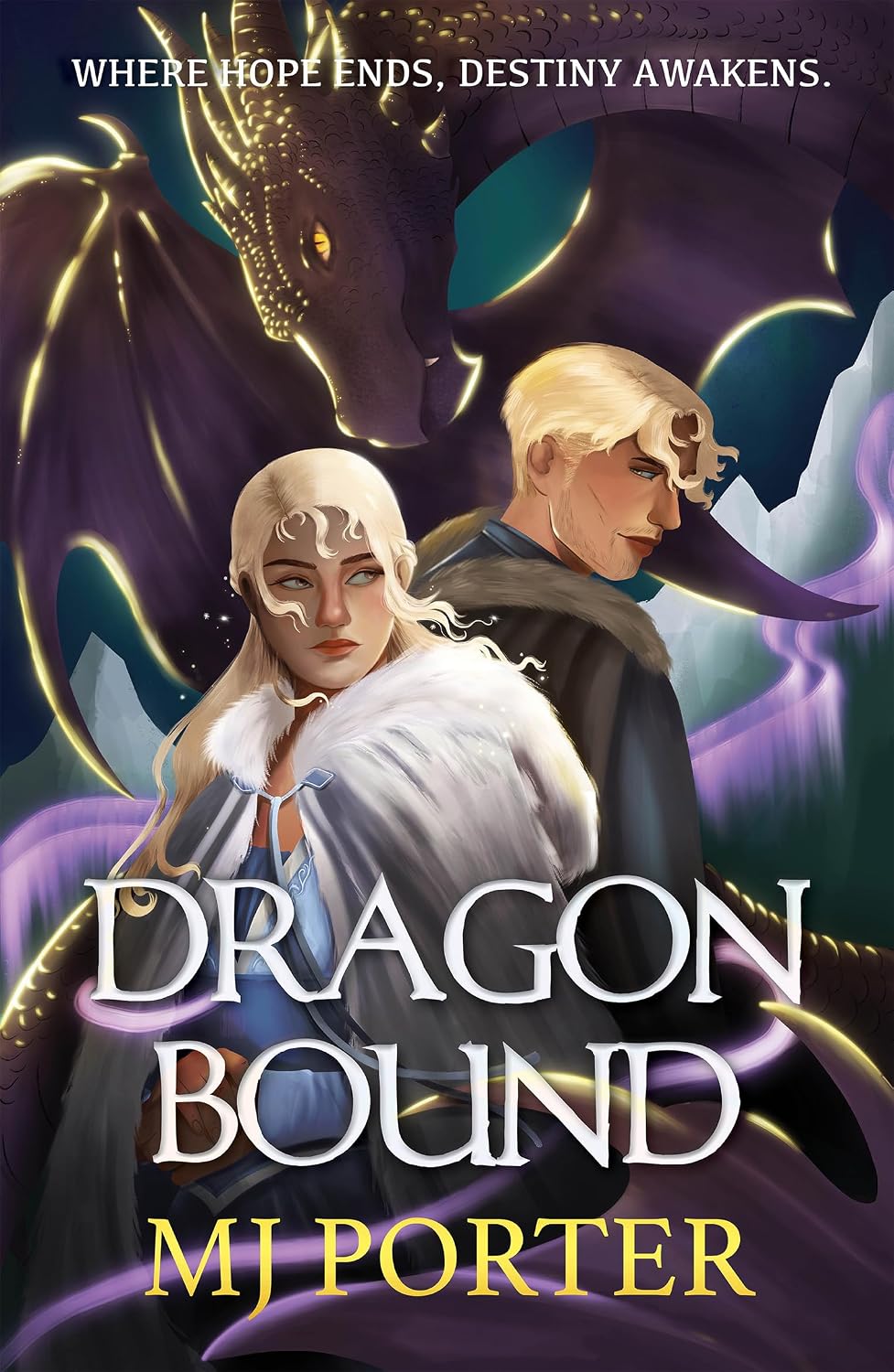
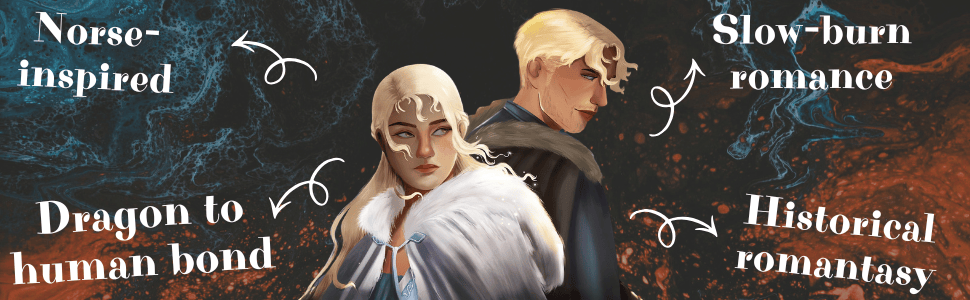
Happy release day to Dragonbound, the first book in the Ice and Fire series, #historicalromantasy #booklaunch
To be a writer, you first must write
Dragonbound has been a story so many years in the making that since I first set pen to paper (yes, you read that correctly) I’ve undergone a complete sea change in how I write, and probably, why I write as well.
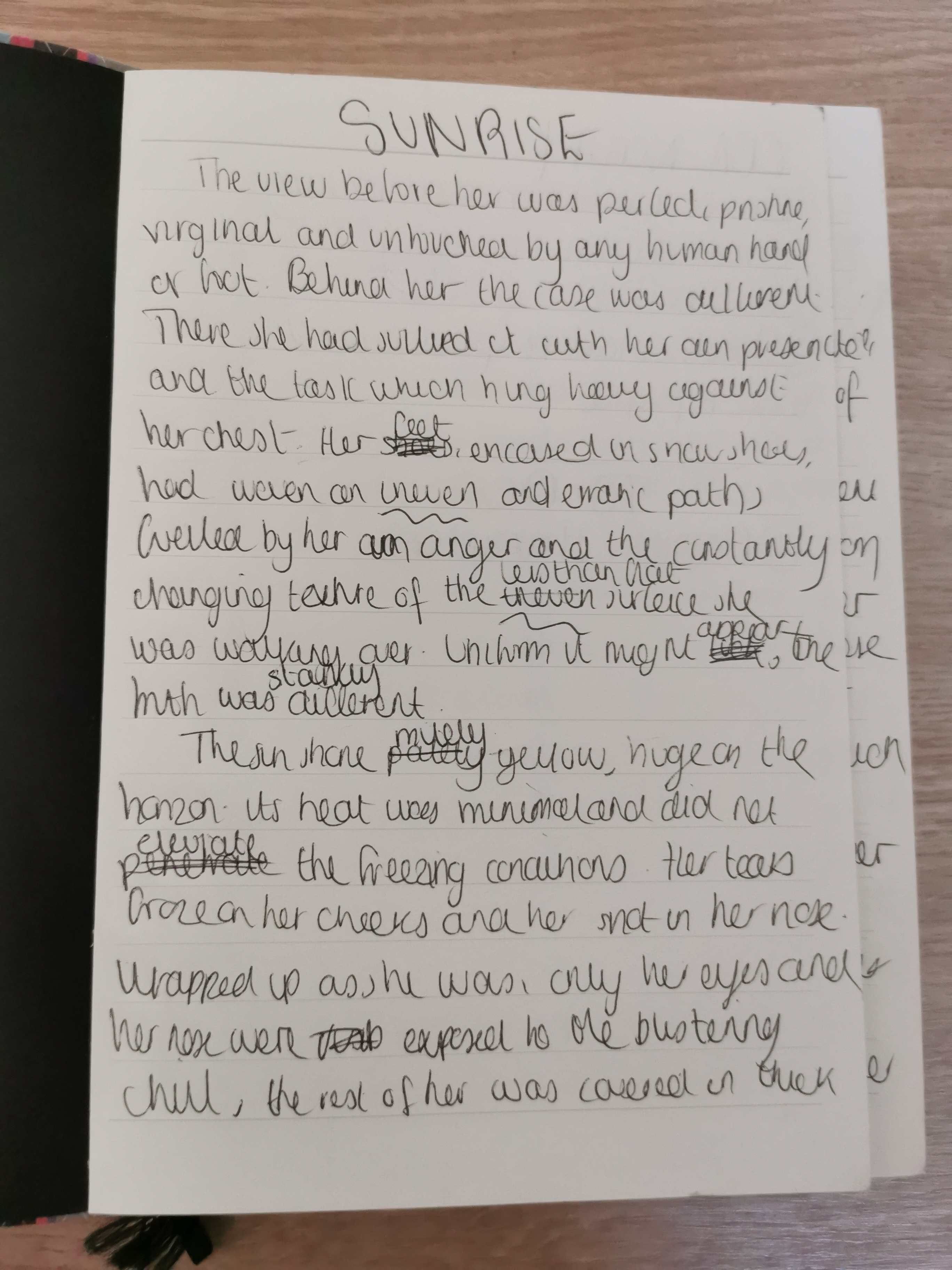
But with the release of Dragonbound, I thought I’d share a throwback image of what a first story looks like, from the very beginning. Although that’s not quite right either, because this image is from when I first ‘properly’ started to write this story, and I can assure you I’d already discarded some even earlier ideas. (I had yet to discover my favourite inky pen).
A handwritten notebook showing the first page of what would become Dragonbound by MJ Porter
And now you can read the ‘cleaned up’ version of this opening of the book in Dragonbound, released today. A story, I am very proud to say, has taken me about 30 years to get to this stage. It’s a good job that I went on to write other stories in the intervening period.
Here’s the blurb
The Long Night is ending. The dragon is waking.
Sereh is finally free — but the frozen wilds are just as deadly as the life she left behind. When she saves a mysterious stranger, she binds herself to a fate she doesn’t understand.
Erann has secrets. About the cold. About the land. About why the world is changing.
As the Long Night lingers and something ancient stirs beneath the frozen land, survival means staying together. And their fragile alliance turns into something neither of them can afford.
Because in a world of ice and fire, trust might be the spark that destroys them both.
This slow-burning Norse fantasy romance is perfect for fans of Robin Hobb, T. Kingfisher, S.L. Rowland and Anne McCaffrey.
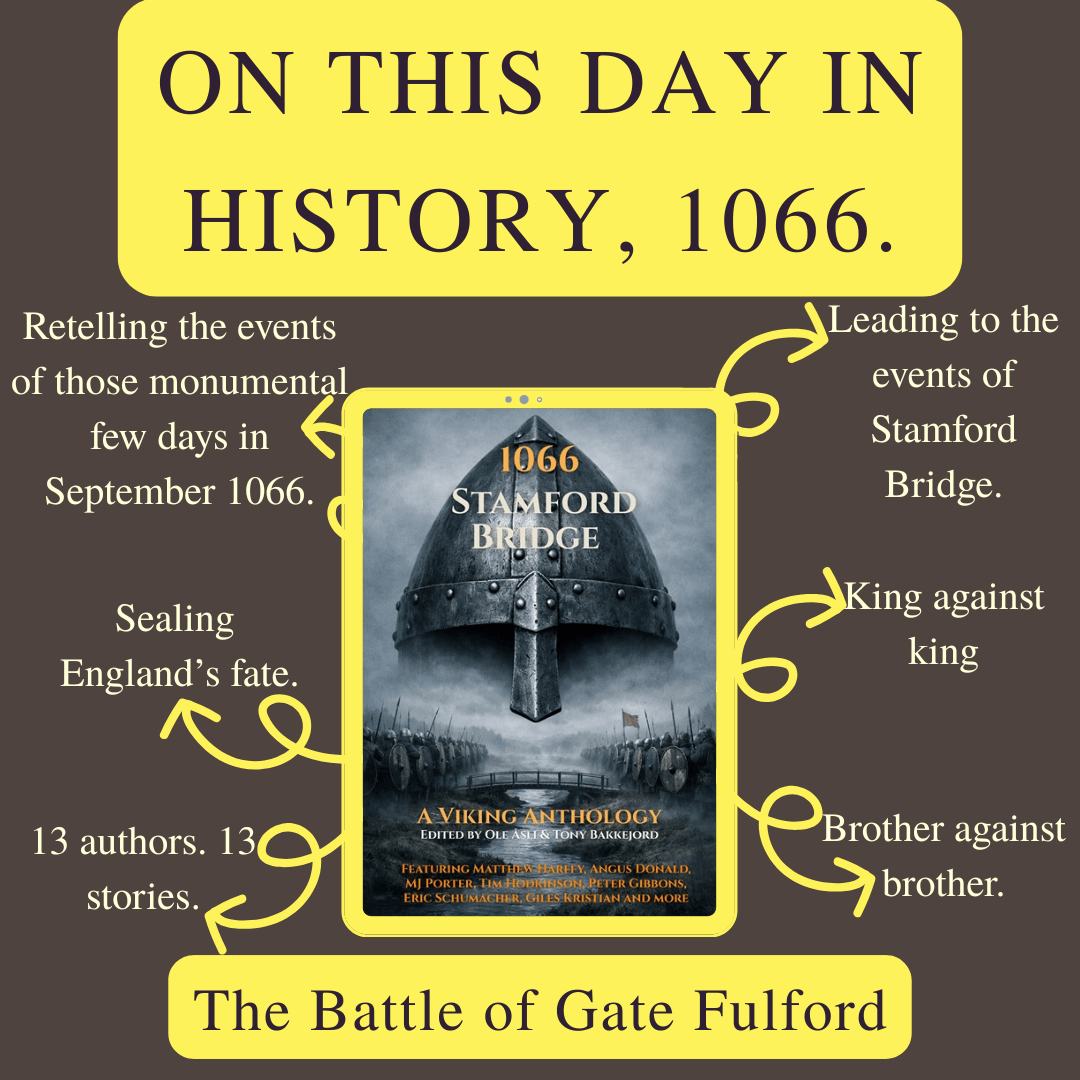
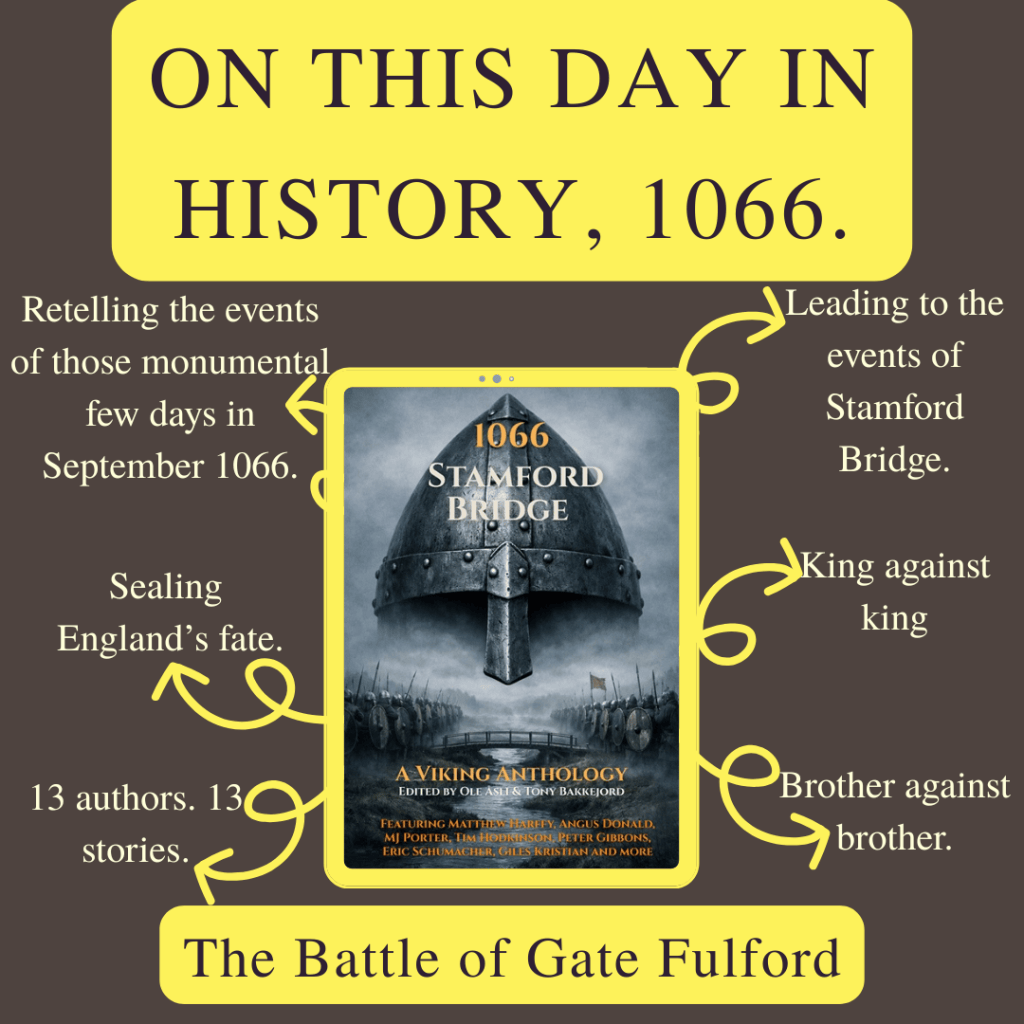
On This Day In History 1066 – The Battle of Gate Fulford (well, yesterday. I’m a day late)
What was the battle of Gate Fulford,or Fulford Gate?
The battle took place on 20th September 1066, between the Norwegian forces led by Harald Hardrada and the English forces commanded by the two brother earls, and was the first of three battles in 1066, which eventually ended Saxon England, and brought about the beginning of the Norman era (Boo).
Having arrived near York two days earlier, Harald Hardrada had his first encounter with the forces of the English, led by two young earls, Morcar and Edwin (Eadwine) of the House of Mercia, at Gate Fulford. Morcar was earl of Northumbria, replacing the disgraced Tostig Godwineson (who had enticed Hardrada to England), while Edwin was the earl of Mercia, succeeding to the position after the death of his father Ælfgar, who’d held Mercia after his father Leofric. (Fans of the Earls of Mercia series will so far have only encountered Morcar and Eadwine as children).
Their youth, their inexperience, and the perceived defeat in this terrible battle are all that people know about Edwin and Morcar. What’s so often overlooked is that they marched into battle determined to counter the might of what many believe was the last great Viking warrior, and they were also the king’s brothers by marriage; their sister now married to Harold Godwineson. They also survived the battle and probably fought at Stamford Bridge and Hastings.
So, who was Harald Hardrada?
Hardrada was king of Norway, half-brother to St Olaf, who was killed at the battle of Stiklestad in 1030 by forces loyal to King Cnut, who’d claimed Norway as part of his determination to rule much of Scandinavia. Harald was forced to flee and spent many years fighting in the Varangian guard until he decided to advance his claims to the kingship once more (in 1045), initially forging an alliance with Sweyn of Denmark (nephew of King Cnut) until allying with King Magnus of Norway, who was his nephew, and somewhat conveniently, died only the next year, making Harald the sole king of Norway. (You will find some of this story told in my Earls of Mercia series, and also in Lady Estrid, the story of Sweyn of Denmark’s mother).
Why did he invade England in 1066?
It is from the alliance with King Magnus that Harald Hardrada exerted his right to rule England, as Magnus stated he had a claim, having earlier agreed it with King Harthacnut of England (Cnut’s son), that he (Magnus) would rule England after Harthacnut’s death and equally that Harthacnut would rule Norway after Magnus’ death.
And so, the man lauded as the last great Viking made his way to England, and on this day, he first encountered the English resistance. And while most say the brother earls were defeated, I wonder if the narrative should be a little different. After all, their brother by marriage, their king, was already on his way north to counter the threat. Did they do what needed to be done? Did they temporarily halt the Norwegian invasion and buy Harald time to bring his warriors to the battle…
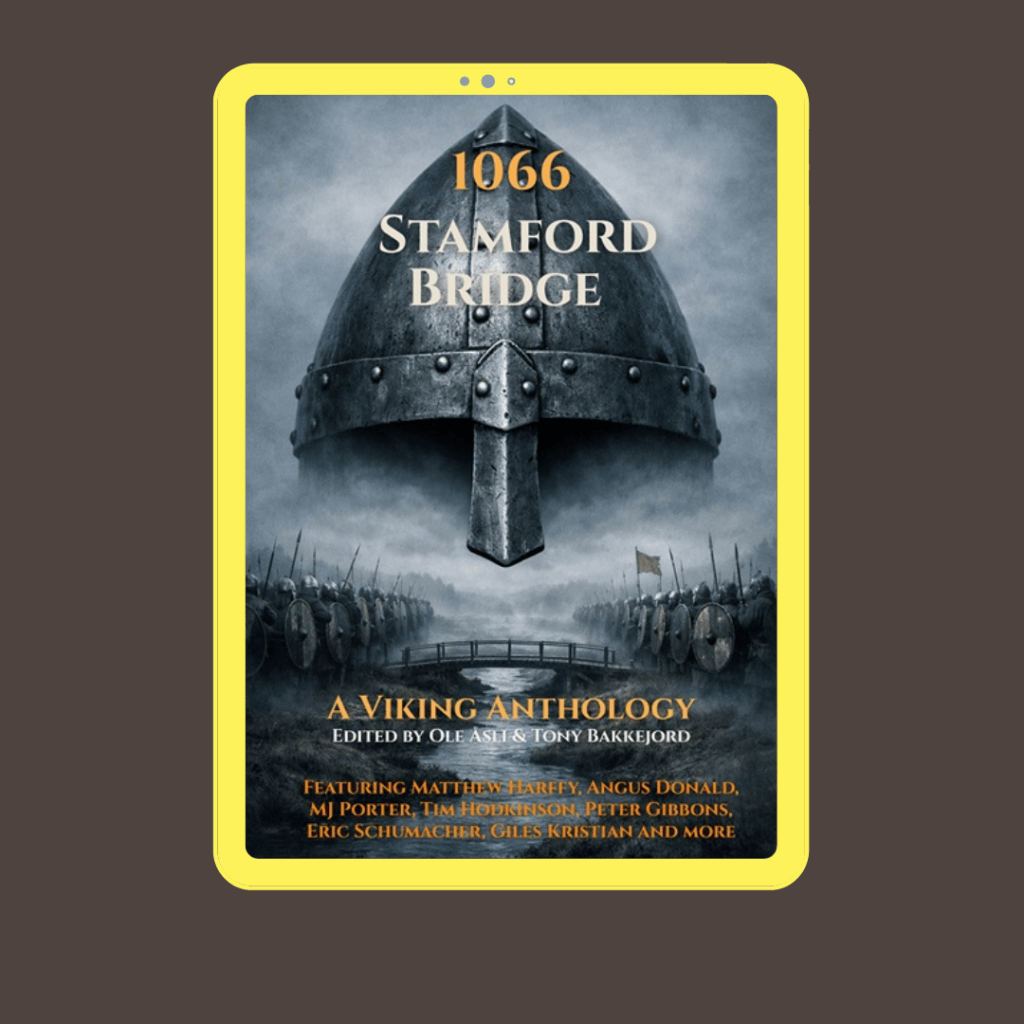
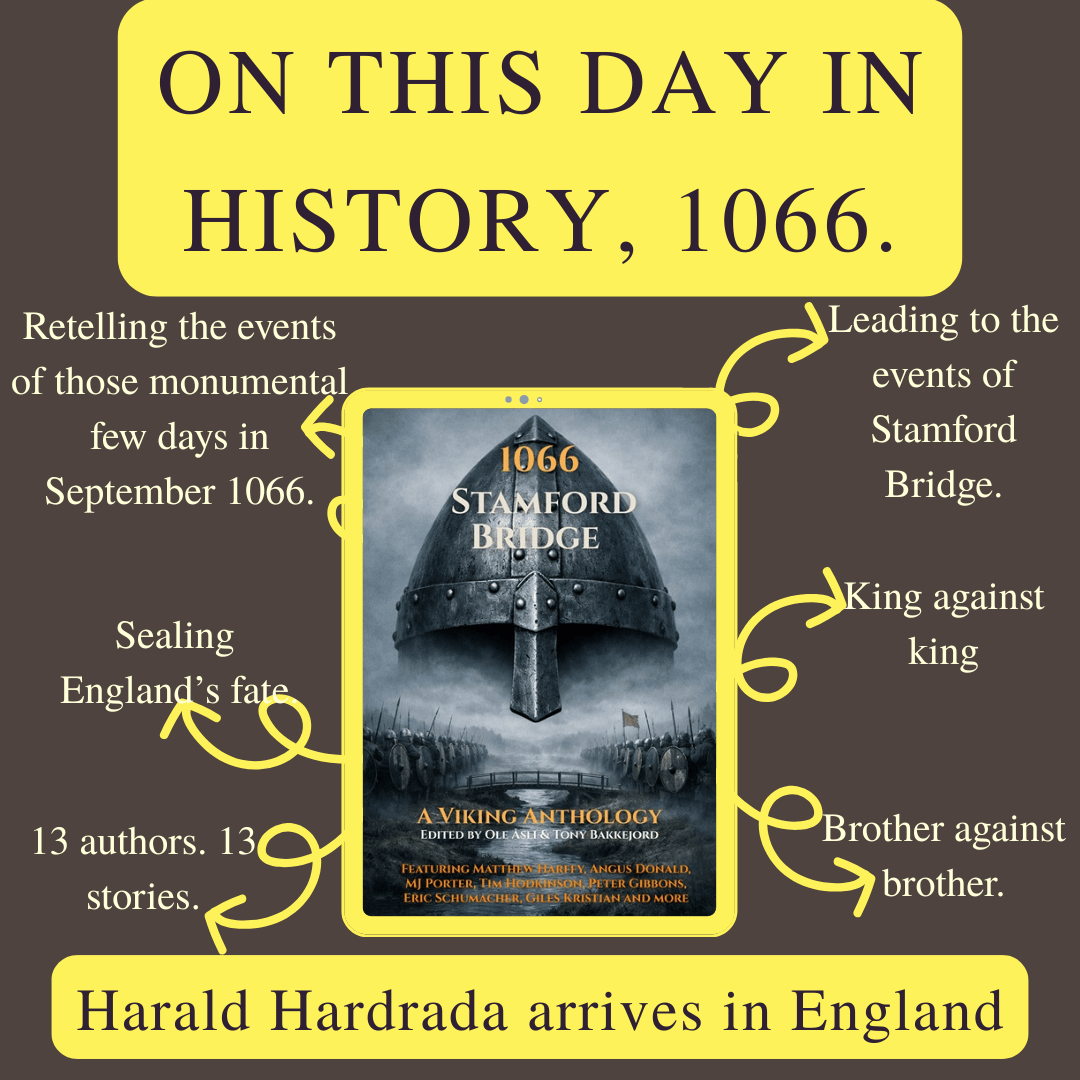
The Stamford Bridge Anthology
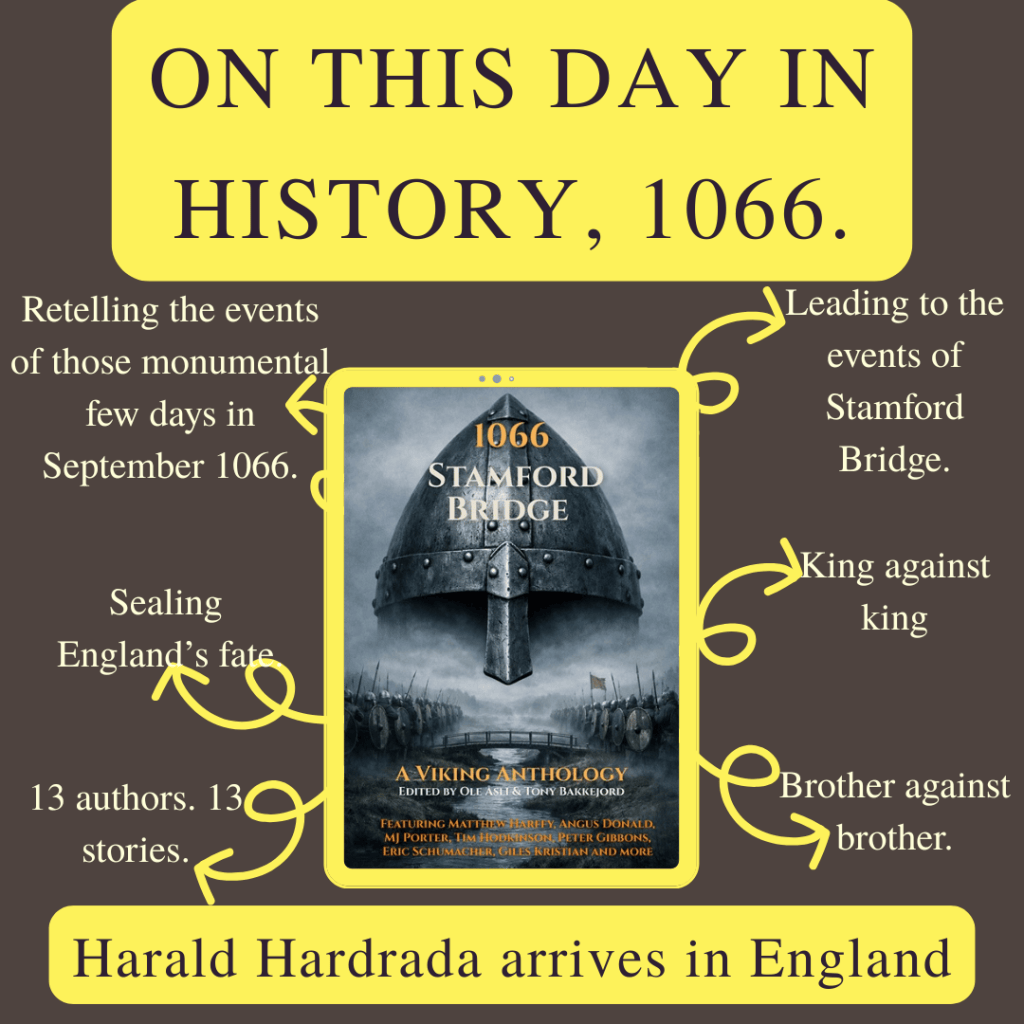
Thirteen writers. One battle. The same afternoon, told from both sides of the bridge.
Giles Kristian · Matthew Harffy · Angus Donald · Tim Hodkinson · Peter Gibbons · MJ Porter · Justin Hill · Theodore Brun · Eric Schumacher · Will Dowling · M. Thomas Kingsley · Mark Oxbrow · Åsli & Bakkejord
On 25 September 1066, a Norwegian army lay resting on both banks of the Derwent, seven miles from York. They had beaten one English army five days earlier and taken the city’s surrender, and the fighting was done. Most of them had left their mail at the ships.
They were not expecting Harold Godwinson.
The battle that followed ended the Viking age in England. Three weeks later it helped decide a second one, on a hill near Hastings, that everyone remembers instead.
A king who has spent his life outrunning the end of an age. A skald asked to praise a man he no longer believes in. A priest tends the wounded on the eve of a battle nobody knows is coming. A lone axeman on the bridge, and the Englishman in the water beneath him. Afterwards, a farmer walks the field looking for his son, and twenty years later an old earl sits in a Norman prison, still deciding what to tell his gaoler.
The man who holds the bridge in one story is watched from the water in another. Thirteen stories, one day.
Over 100,000 words of Viking historical fiction, published on the 960th anniversary of the battle.
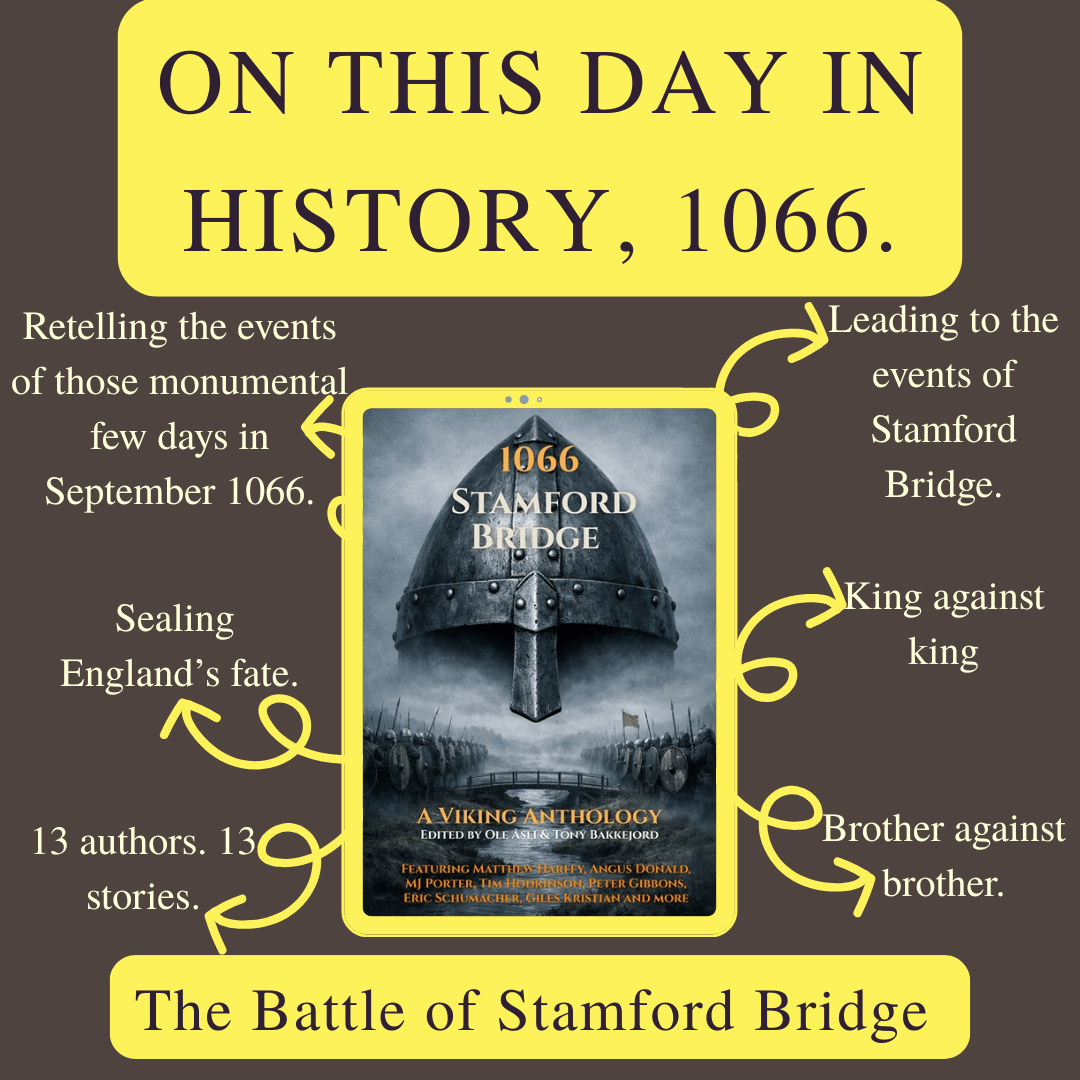
On This Day In History 1066 – Harald Hardrada, king of Norway, arrives near York, England to advance his claims to be England’s king
Who was Harald Hardrada?
Hardrada was king of Norway, half-brother to St Olaf, who was killed at the battle of Stiklestad in 1030 by forces loyal to King Cnut, who’d claimed Norway as part of his determination to rule much of Scandinavia. Harald was forced to flee and spent many years fighting in the Varangian guard until he decided to advance his claims to the kingship once more (in 1045), initially forging an alliance with Sweyn of Denmark (nephew of King Cnut) until allying with King Magnus of Norway, who was his nephew, and somewhat conveniently, died only the next year, making Harald the sole king of Norway. (You will find some of this story told in my Earls of Mercia series, and also in Lady Estrid, the story of Sweyn of Denmark’s mother).
Why did he invade England in 1066?
It is from the alliance with King Magnus that Harald Hardrada exerted his right to rule England, as Magnus stated he had a claim, having earlier agreed it with King Harthacnut of England (Cnut’s son), that he (Magnus) would rule England after Harthacnut’s death and equally that Harthacnut would rule Norway after Magnus’ death.
And so, the man lauded as the last great Viking made his way to England and arrived on this day, 1066. And the rest can be discovered in…
The Stamford Bridge Anthology
Thirteen writers. One battle. The same afternoon, told from both sides of the bridge.
Giles Kristian · Matthew Harffy · Angus Donald · Tim Hodkinson · Peter Gibbons · MJ Porter · Justin Hill · Theodore Brun · Eric Schumacher · Will Dowling · M. Thomas Kingsley · Mark Oxbrow · Åsli & Bakkejord
On 25 September 1066, a Norwegian army lay resting on both banks of the Derwent, seven miles from York. They had beaten one English army five days earlier and taken the city’s surrender, and the fighting was done. Most of them had left their mail at the ships.
They were not expecting Harold Godwinson.
The battle that followed ended the Viking age in England. Three weeks later it helped decide a second one, on a hill near Hastings, that everyone remembers instead.
A king who has spent his life outrunning the end of an age. A skald asked to praise a man he no longer believes in. A priest tends the wounded on the eve of a battle nobody knows is coming. A lone axeman on the bridge, and the Englishman in the water beneath him. Afterwards, a farmer walks the field looking for his son, and twenty years later an old earl sits in a Norman prison, still deciding what to tell his gaoler.
The man who holds the bridge in one story is watched from the water in another. Thirteen stories, one day.
Over 100,000 words of Viking historical fiction, published on the 960th anniversary of the battle.
I’m excited to share an excerpt from RJ Verity’s new historical fiction novel, Poole of Light #blogtour #historicalfiction
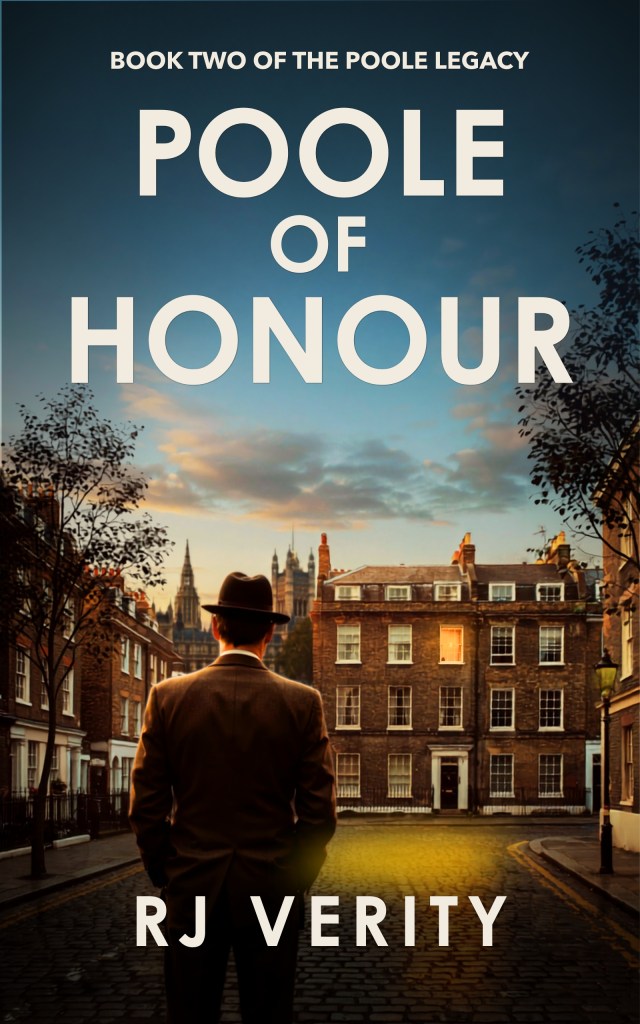
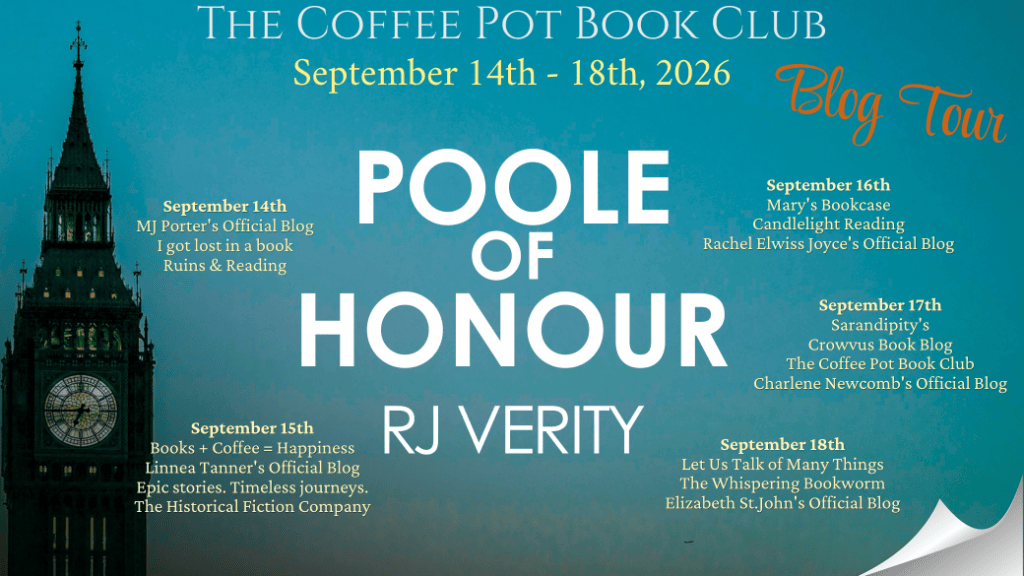
I’m excited to share an excerpt from RJ Verity’s new historical fiction novel, Poole of Honour #blogtour #historicalfiction
Here’s an excerpt
Excerpt 2 (Chapter 2, Barkston Chambers)
Two years into his career as a criminal barrister, Daniel is defending the clients nobody else wants – and his head of chambers isn’t happy.
Daniel drops a file onto the mountainous pile on his desk – the cases never seeming to diminish. The youth used by gangs to slip through windows. The teacher caught in the crossfire of a pub brawl. The single mother accused of stealing a tin of baked beans. He wishes he could have been there sooner – to stop the exploitation; to steer the couple elsewhere; to buy the woman a meal before she had to choose between hunger and shame. He has learned that small mercies rarely alter the machinery.
He slumps in his chair. Two years at Barkston Chambers, and still that sense of not quite belonging. Educated in England since the age of fourteen, yet his American background continues to mark him out as a foreigner. The irony is that he came here because he didn’t fit in there either. In the States, expectation pressed constantly at his back; here, the scrutiny is better concealed, but no less real.
Swivelling around, he stares out of the window. A starling lands on the ledge and walks jerkily back and forth, its metallic plumage catching the weak afternoon sun. It taps at the glass, bristling at the bird opposite – unaware that it is only confronting its own reflection. Sometimes you see something from afar and feel drawn towards it. You move closer, circling, trying to understand. But even up close – perhaps especially then – it is hard to know what’s real. Better, sometimes, to leave it be.
There’s a knock, and the door opens before Daniel can answer. Gareth Glover-Rees, head of chambers, stands in the doorway, his stance wide, his six-foot-three frame almost touching the ceiling and filling the tiny room.
‘Poole—’ Glover-Rees stops as he eyes the paperwork on Daniel’s desk and lets out a sigh. ‘We need to talk about this backlog.’
‘I’m sorry, it’s just that there’s so much coming in these days. Most of them are minor offences, but it still takes time to put all the arguments forward.’
‘Actually, that’s why I came to see you.’ He takes one step to the middle of the office. ‘I’ll be candid. When we agreed to take you on, you had a first from Oxford and excellent recommendations from the Bar School. Not to mention your Poole family connections in the business world.’
‘I never disclosed my family b—’
‘That’s not my point. We expected more from you than defending petty criminals.’ Glover-Rees brandishes a piece of paper in his right hand. ‘You’re behind on rent, and your fees are shockingly low.’
‘But so many cases need representing, and they can’t all afford our fees.’
‘This is not Hollywood, Poole. Sentiment is all very well, but it has no place in English law. We are not a charity, and neither are you. Don’t you have a wife with a child on the way?’
Daniel concedes a nod.
Glover-Rees gestures towards the files on his desk. ‘Some of the other barristers—’ he stops. ‘Some of their clients are unhappy with the endless stream of ruffians you’re bringing into chambers. Only the other day, an elderly widow was horrified to find herself sitting next to a violent criminal.’
‘I’m just following the cab-rank rule.’
Glover-Rees’ face reddens. ‘Is that so? Then how come you haven’t covered a single prosecution case in the last six months?’
‘I’ve been run off my feet. I just haven’t had the time t—’
‘Nonsense. Any criminal barrister must prosecute and defend if he is really to learn his art.’
‘But—’
‘No buts, Poole. Clear your cases and start taking on some more lucrative ones. That’s my advice if you want to remain here. Some early guilty pleas wouldn’t go amiss either – or is every one of your clients a victim of gross injustice with a reasonable prospect of success?’ He pauses for effect. ‘Thought not. Look, if your clerk hands you a prosecution brief, you take it. Besides, it’s good to win some points with the police. I trust I’ve made myself clear?’
Before Daniel can respond, Glover-Rees leaves, punctuating his departure with an exclamatory slam of the door.
Here’s the blurb
London, 1965. The city is swinging, the world is shifting, and Daniel Poole is a rising criminal barrister with everything to prove – to the courts, to his father, to his wife and to himself.
But Daniel is carrying a secret that could shatter the life he has so carefully built. As society begins to question the rules it once held sacred, he is forced to decide what he stands for — and what he is willing to risk in order to belong.
Set against a backdrop of cultural upheaval and political change, Poole of Honour is a tense, character-driven historical novel exploring ambition, identity, and the cost of silence, as the next generation of the Poole family confronts a world on the brink of transformation.
RJ Verity grew up in Yorkshire and studied at King’s College London before spending more than twenty years working in financial services across Asia. She now lives in Guernsey with her endlessly patient husband and their ageing but ever-spirited Labradinger. When she’s not writing or reading, she can often be found exploring the island’s rugged coastline.
RJ writes character-led historical fiction rooted in place, memory, and the social and personal forces that shape ordinary lives. Her debut novel, Poole of Light, opens The Poole Legacy – a trilogy following three generations of one family across a century of change.
The second novel, Poole of Honour, publishes on 15 September 2026. Set in London in 1965, it follows Daniel Poole, a rising criminal barrister drawn into the most divisive political debate of the decade – one that cuts closer than he dare admit.
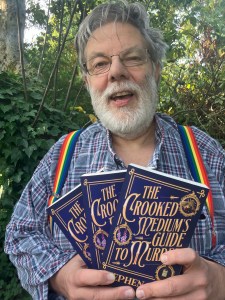
I’m reviewing The Crooked Medium’s Guide to Murder (The Crooked Medium 1) by Stephen Cox #blogtour #bookreview #historicalmystery
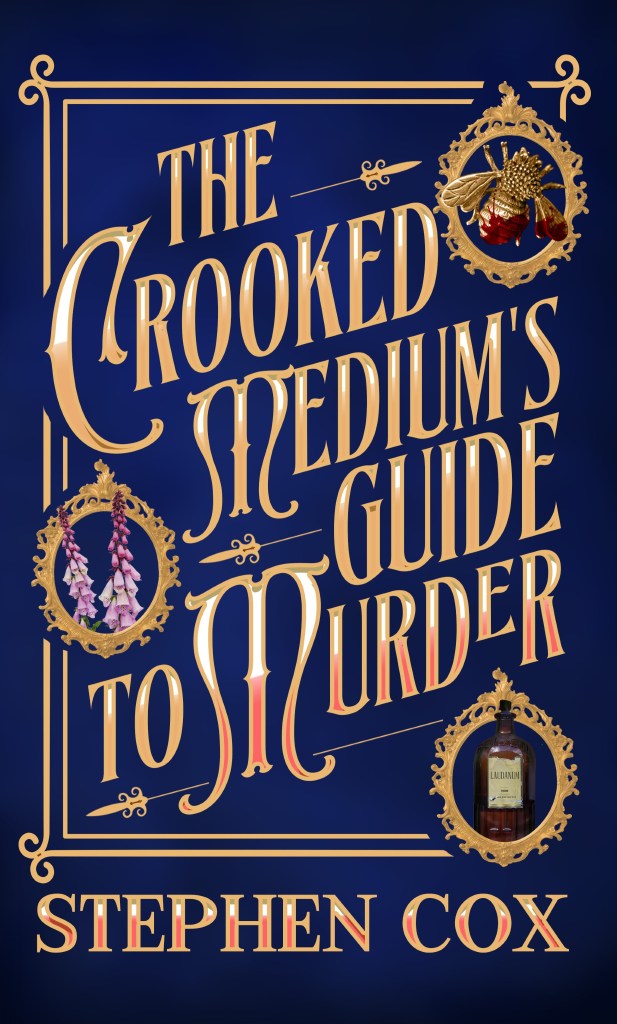
I’m reviewing The Crooked Medium’s Guide to Murder (The Crooked Medium 1) by Stephen Cox #blogtour #bookreview #historicalmystery
Here’s the blurb
London 1881. Can two crooked women stop a murder?
Extravagant medium Mrs Ashton and her lover, blunt working-class Mrs Bradshaw, run a spiritualist scam. Mrs Ashton secretly reads minds.
Believing that Mrs Ashton is genuine, grieving Lady Violet craves the truth behind her mother’s untimely death. But Lady Violet’s powerful husband Sir Charles hates spiritualists. Has he killed before?
Uncovering this MP’s wicked crimes will put all three women in terrible danger…
To solve a shocking murder, look both sides of the grave.
“I loved this book! Victorian murder mystery meets “ghost” story, with delicious sprinklings of compassion and mischief…”
Caroline Day, author of Sunday Times Bestseller Hope Nicely’s Lessons for Life
The Crooked Medium’s Guide to Murder is an enthralling late nineteenth-century set mystery, with all the trappings we would expect from a story set in this era, complete with a spiritualist (or is she?), an angry husband and a desperate wife, told with a flair for the language of the time, and some quite amusing insults to boot.
The setting is well depicted, and the (initial) mystery quickly reveals itself as Mrs Ashton resolves to aid poor Lady Violet while she uncovers the truth about her mother’s death. And yet, not all is as it seems, and Mrs Ashton, with her own secrets as well, finds herself caught in the middle of something she’s desperate to understand. Having placed herself in terrible danger when the very man she’s investigating turns up dead himself, she’s implicated in his murder; only there’s something even more unsettling for Mrs Ashton to contend with (I don’t want to spoil what happens). This adds a whole new dimension to everything the reader thought they knew!
A rousing mystery, with plenty of pace and a sure-fire hit for those who love stories set in the era. And with a fabulous ‘well, I didn’t see that coming’ element about halfway through the book. This story kept me reading, and I was absolutely hooked. This is late nineteenth-century London (and further afield) splendidly told, never stinting on the harder sides of life, and with quite a shocking resolution. I am looking forward to book 2.
Meet the author
My grandmother told me I read too much. I remember walking in the garden when I was small, telling myself stories. It was over thirty years of wanting to be a novelist before I tried… and succeeded.
The Crooked Medium’s Guide to Murder arose because I wanted to write about Britishness and specifically about Englishness; about our complex relationship with the past; I wanted leads who were morally grayer but still capable of kindness. It was time for a novel with queer leads. And in quite desperate times, I needed to write something with some uplift. It’s the first book intended to start a series.
My first books, Our Child of the Stars and Our Child of Two Worlds are set in the 1960s USA. It’s about Gene and Molly, a childless couple, and Cory, the little boy from the stars that they adopt, under such challenging circumstances. The books got lovely reviews and are available on both sides of the Atlantic.
I spent nearly all my childhood in Bristol, and I’m now an adoptive Londoner. I live with my partner, and it’s the best thing our two adult children come back from time to time. Our garden rages wild.
Prize includes – Our Child of the Stars, Our Child of Two Worlds, The Crooked Medium’s Guide to Murder and the Crooked Medium’s Guide to Terror.
*Terms and Conditions –UK entries welcome. Please enter using the Gleam box below. The winner will be selected at random via Gleam from all valid entries and will be notified by Twitter and/or email. If no response is received within 7 days then Rachel’s Random Resources reserves the right to select an alternative winner. Open to all entrants aged 18 or over. Any personal data given as part of the competition entry is used for this purpose only and will not be shared with third parties, with the exception of the winners’ information. This will passed to the giveaway organiser and used only for fulfilment of the prize, after which time Rachel’s Random Resources will delete the data. I am not responsible for despatch or delivery of the prize.