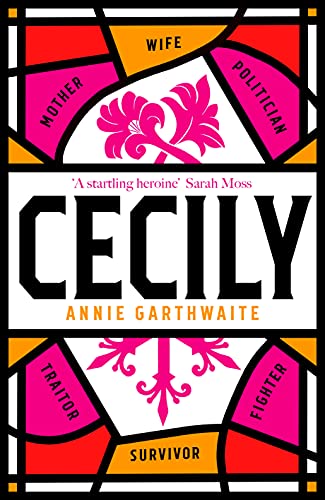
Rebellion?’ The word is a spark. They can start a fire with it, or smother it in their fingertips. She chooses to start a fire.
You are born high, but marry a traitor’s son. You bear him twelve children, carry his cause and bury his past.
You play the game, against enemies who wish you ashes. Slowly, you rise.
You are Cecily.
But when the king who governs you proves unfit, what then?
Loyalty or treason – death may follow both. The board is set. Time to make your first move.
My Review
Cecily, the story of Cecily Neville up to and including 1461, is a wonderful retelling of her story.
Having read Anne O’Brien’s The Queen’s Rival last year, which offers Cecily’s story from the late 1450s onwards, I feel that this unknown woman has now been brought to life in wonderful detail. (If you have only read one of these two books then do please try the other one – you won’t be disappointed.)
Cecily is told from Cecily’s point of view, as such, there are some things that she can’t know or witness, and the author manages this incredibly skillfully. We know what Cecily does, and we know other events when she knows them. It’s a perfect way to ensure the reader, even if they know the history of the time period, doesn’t get ahead of themselves.
Cecily is an engaging and headstrong woman. The author gives her a voice that we can understand, reflecting a quick intelligence and an ability to piece together events skillfully. Some scenes may feel rushed, and there is a refusal to dwell on the royal splendour of the court, but I think this added to the story. It is the interaction of the king, queen and the courtiers that’s important, not who was wearing what and eating what. This is absolutely my sort of historical fiction book.
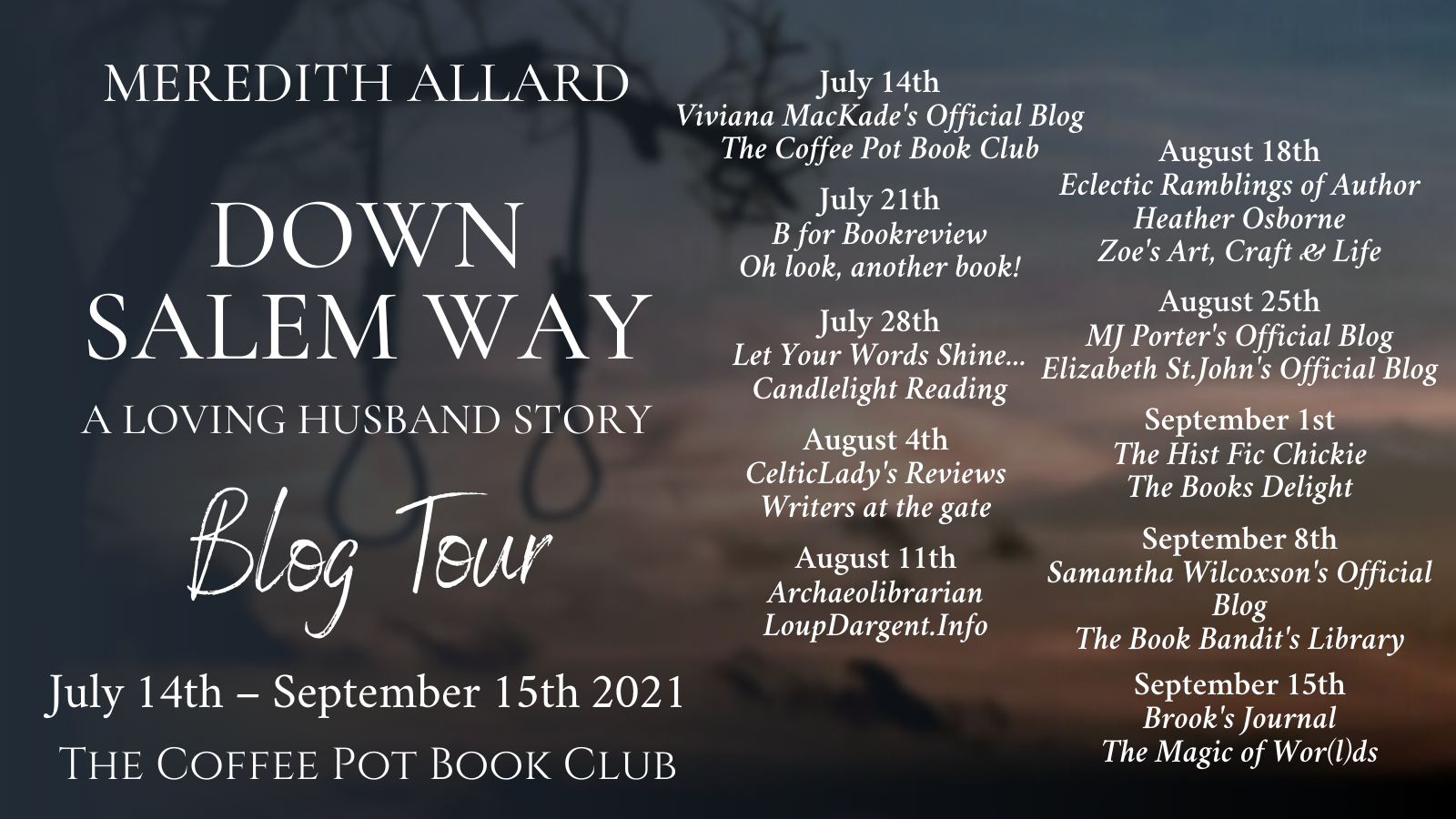
Today, I’m delighted to welcome Meredith Allard to the blog with a post about the historical research she undertook to write her book Down Salem Way.
I’ve been reading, editing, and writing historical fiction for many years. As a matter of fact, I’ve even written a book about how to write historical fiction called Painting the Past: A Guide for Writing Historical Fiction. Thank you to M.J. for allowing me space on the blog today to share my thoughts on one of my favorite subjects.
The way I research historical fiction has changed a lot over the years. When I first started writing historical fiction, I would check as many books as I could carry out of the library, take meticulous notes, color code my notes with highlighters (blue for food, pink for fashion, etc.), return those books and check out another pile, and so on until I felt I had enough knowledge to begin drafting my story. Sometimes it was months worth of research before I started writing anything. Once I started writing I knew exactly where to look in my notebook for what I needed. If I was writing a dinner scene, I could find my notes about food. Notes I referred to often, such as important dates or events that I kept mentioning, were written on index cards, also color-coded, for easier access.
I no longer complete my research before I start writing. As a fellow writer friend said to me, feeling like you have to do all of your research before you start writing slows down your process to the point where your story doesn’t get written. These days I do some preliminary research by reading generally around my topic, perhaps taking a few notes, just enough to keep things clear in my head, and then I begin the prewriting process. Usually, through the process of brainstorming, prewriting, and drafting my story, I recognize what specific bits of historical information I’ll need and then I’ll search for those bits. That’s when my note taking begins in earnest. I create digital folders to organize my notes, citations, and annotations, and I still keep categories of information together (food, clothing, political climate, and so on).
One trick I learned from a history class I took years ago is to think about the historical world I’m creating through the acronym GRAPES.
Geography—How does the climate and landscape affect the people who live there?
Religion—How does the society’s belief system and traditions affect the people who live there?
Achievements—What are the achievements of this society—good and bad?
Politics—What is the power structure in this society?
Economics—How are goods and resources used in this society?
Social Structure—How does this society organize people into classes? Who ends up in which class and why?
I love to travel to the place I’m writing about as well. I always get a lot of good ideas for my story from my travels. As I work to weave the information I learned into my story, one thing I keep in mind is that I want to carry my readers into my world by touching their senses. What do readers see, hear, taste, touch, and smell? Often it’s the smaller details, what people wore, what they ate, the houses they lived in, that brings historical fiction alive since these are details we can relate to, even if what we eat and drink and where we live is different today.
Some dependable online research sources I’ve used over the years are Project Gutenberg, the Library of Congress, the Victorian Web, V&A, and JSTOR. The History Quill has a list of 50+ research sites for writers of historical fiction. I also love to go to the library to see what books I can find, and I’ve found that librarians are more than happy to help if I can’t find what I’m looking for.
I love learning about history, so researching historical fiction is actually fun for me.
Thank you so much for sharing your post with us. Research can indeed be a rabbit hole from which you can’t return:)
Here’s the blurb;
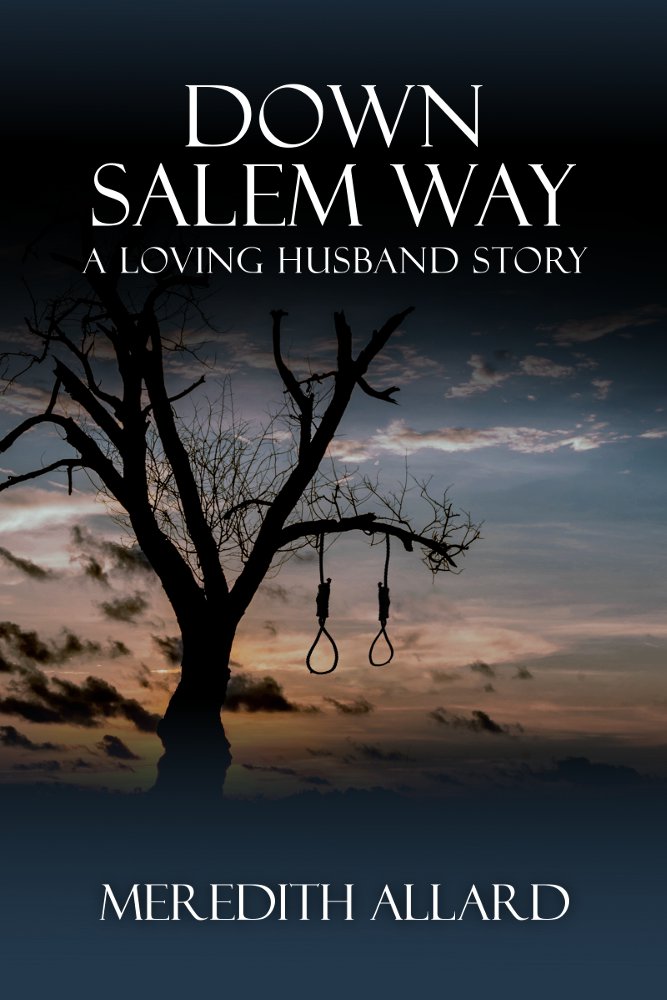
How would you deal with the madness of the Salem witch hunts?
In 1690, James Wentworth arrives in Salem in the Massachusetts Bay Colony with his father, John, hoping to continue the success of John’s mercantile business. While in Salem, James falls in love with Elizabeth Jones, a farmer’s daughter. Though they are virtually strangers when they marry, the love between James and Elizabeth grows quickly into a passion that will transcend time.
But something evil lurks down Salem way. Soon many in Salem, town and village, are accused of practicing witchcraft and sending their shapes to harm others. Despite the madness surrounding them, James and Elizabeth are determined to continue the peaceful, loving life they have created together. Will their love for one another carry them through the most difficult challenge of all?
Meredith Allard is the author of the bestselling paranormal historical Loving Husband Trilogy. Her sweet Victorian romance, When It Rained at Hembry Castle, was named a best historical novel by IndieReader. Her nonfiction book, Painting the Past: A Guide for Writing Historical Fiction, was named a #1 New Release in Authorship and Creativity Self-Help by Amazon. When she isn’t writing she’s teaching writing, and she has taught writing to students ages five to 75. She loves books, cats, and coffee, though not always in that order. She lives in Las Vegas, Nevada. Visit Meredith online at http://www.meredithallard.com.
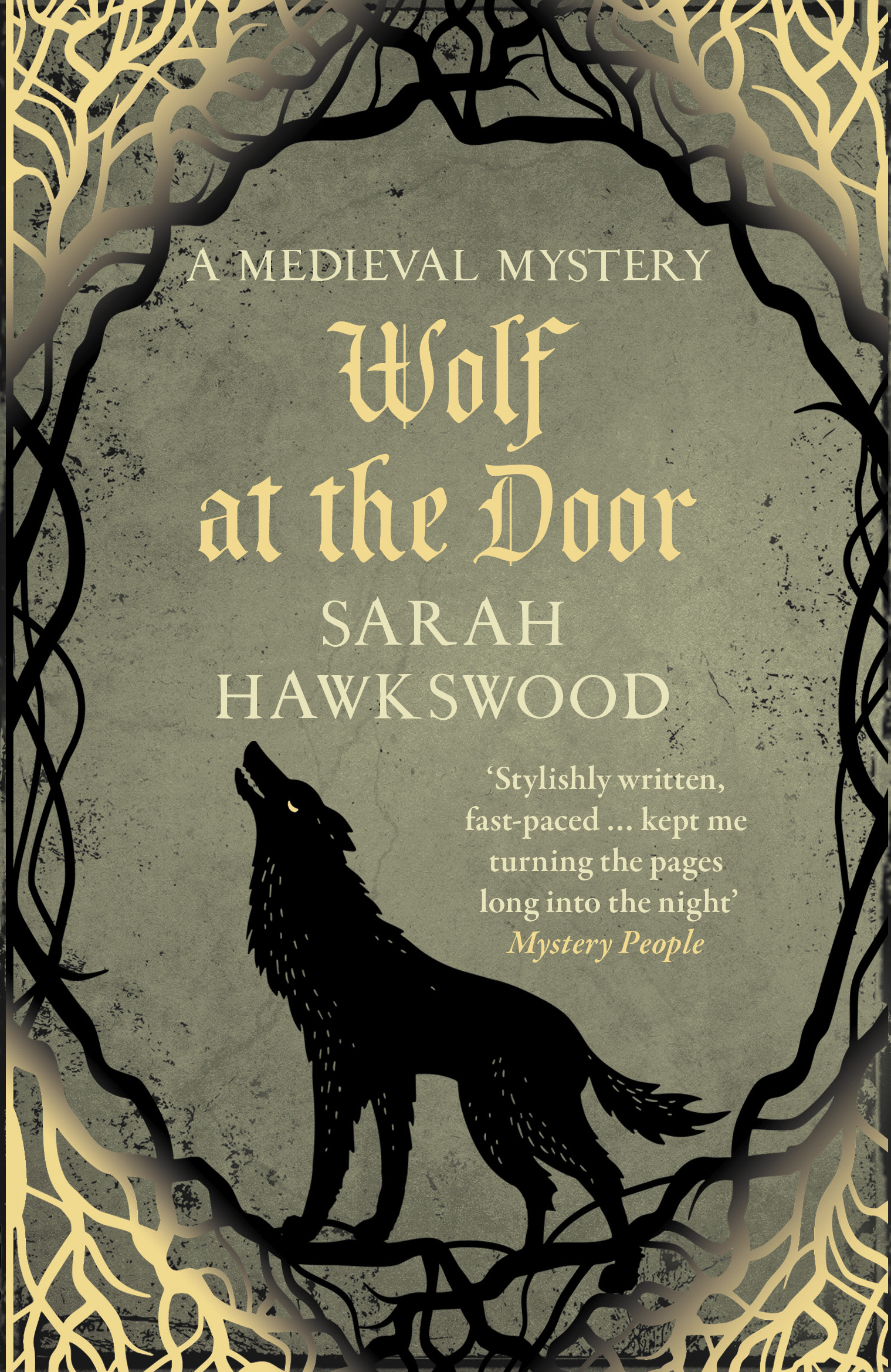
1144. The body of Durand Wuduweard, the unpopular keeper of the King’s Forest of Feckenham, is discovered beside his hearth, his corpse rendered barely identifiable by sharp teeth. Hushed whispers of a man-wolf spread swiftly and Sheriff William de Beauchamp’s men, Bradecote and Catchpoll, have to find out who killed Durand and why, amidst superstitious villagers, raids upon manors and further grim deaths. Who commands the wolf, and where will its fangs strike next?
My Review
Wolf at the Door is my second Bradecote and Catchpoll book, and I was excited to receive an advanced copy of it. (I’m starting to collect the ‘back’ catalogue’ as well.)
This time, the pair, well the three of them including Wakelin, are sent to discover the truth about a particularly gruesome murder, where a wolf is suspected (hence the title). What follows is a tightly constructed story where the three follow leads, some dead ends, and interact with a deliciously mixed group of people living in Worcester and the environs in the 1100s.
I love the historical elements of the story, deeply rooted in the time, with King Stephen a spectre who could appear at any time, although he hasn’t, not yet. There is more from the Sheriff of Worcester, rather than the undersheriff than in the previous book I read, and he too is an excellent character. Hats off for the mixture of Old English and Norman names, aptly highlighting the split in society, and for deciding that ‘Foreign’ cursing isn’t quite as colourful as a bit of English cursing – (well, Catchpoll makes that observation).
An intriguing story, the mystery kept me intrigued and the ending was excellent. I look forward to the next in the series.
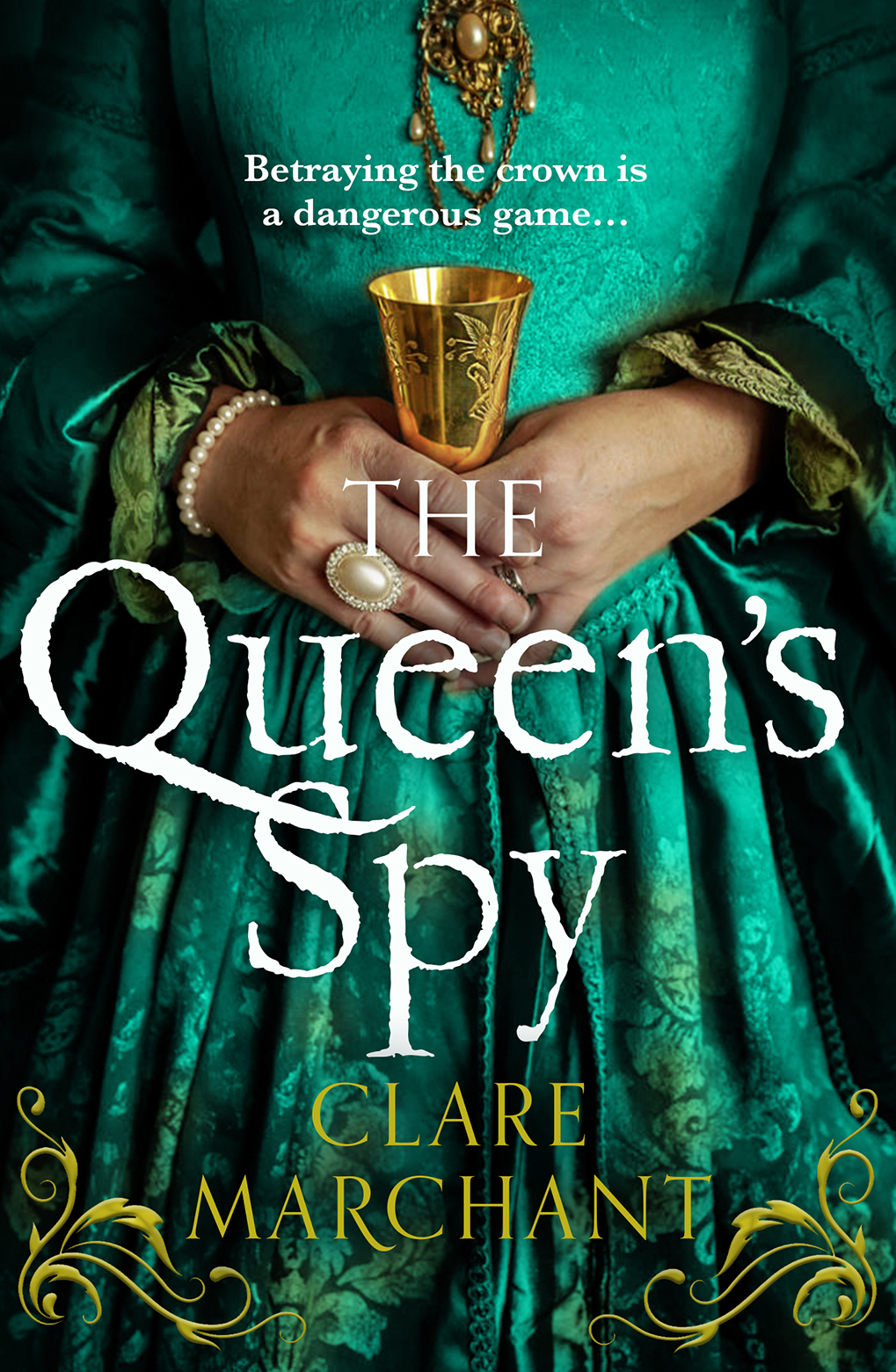
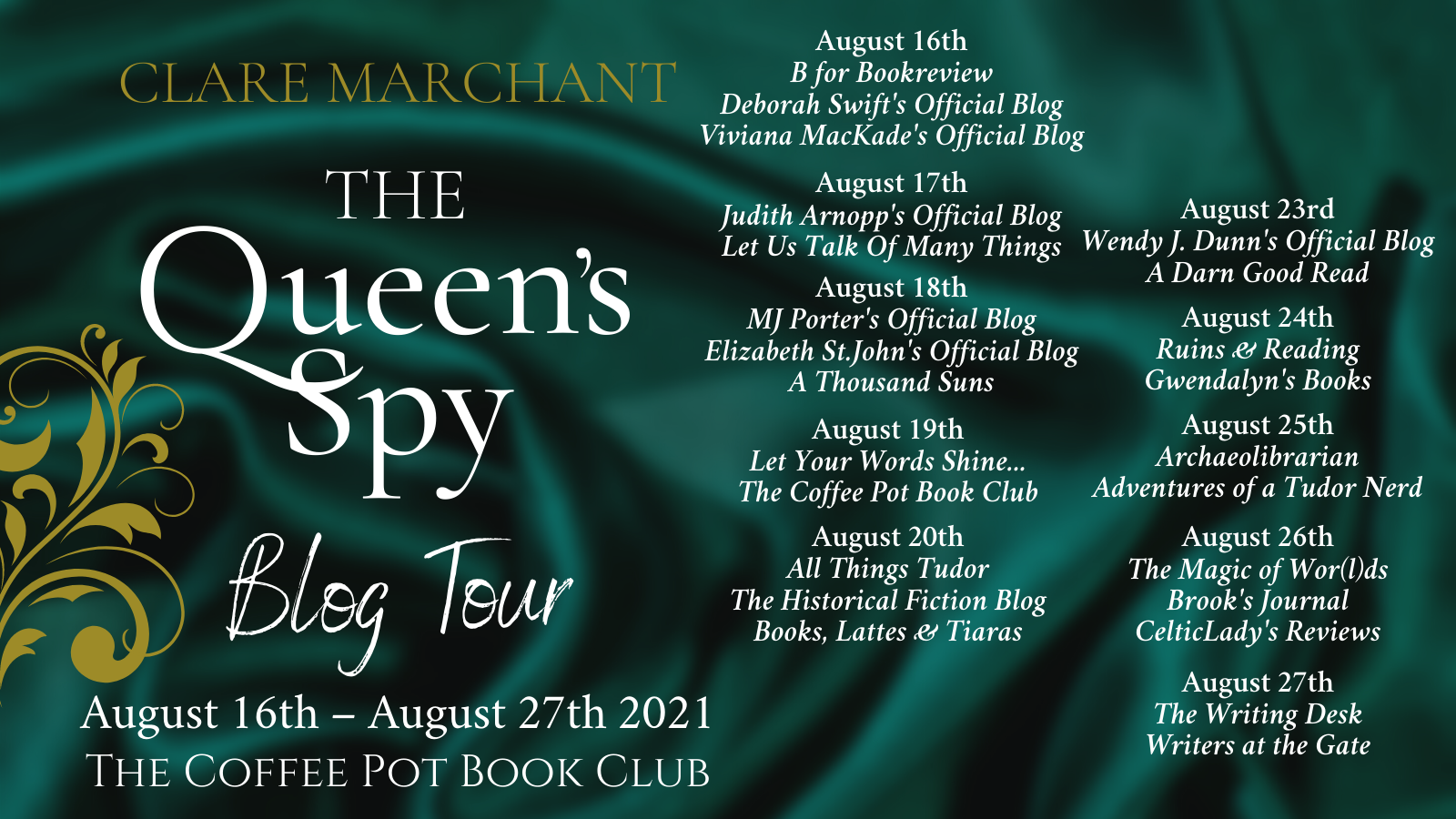
Today, I’m delighted to welcome Clare Marchant to the blog with a fascinating post about her new dual-timeline novel, The Queen’s Spy, partially set in Elizabethan England, a particular favourite of mine.
My Research Process
When I first have a concept for a book it always starts with the historical protagonist. I never have an idea that appears fully formed in my head (oh I wish I were that writer!) but instead I will have various small threads of suggestions and I need to start weaving them together until I have a strong enough outline to encompass a whole book. And at that point, the research – my favourite part of writing a book – really begins. I have always had a great love for history and I studied it for my degree, so reading historical textbooks as part of my job is perfect for me!
The problem with historical research as any writer will attest to, is that it is all too easy to fall down a rabbit hole – and I am as guilty as the next person of doing that! A name will be mentioned and I find myself looking that person up to see if they could be used in my book and then that leads to something else and before I know it, a whole day has passed and I haven’t got anything down on paper.
I definitely make a rod for my own back in that I like to include as much accuracy as possible and to use real people wherever I can, just threading my own protagonist in around actual events. Therefore it’s important that my information is spot on. For instance, in The Queen’s Spy I wrote about The Babington Plot and Sir Francis Walsingham’s spy network. I did extensive reading around this until I had accumulated quite a lot of information which we know to be true. Even if my readers don’t realise that I’m using real events and people, I think it’s important to get the facts right. For example Tom wears a blue coat because we know that Babington was brought a letter from a man wearing a blue coat who was believed to be one of Walsingham’s men. And when Babington is missed hiding upstairs in Pooley’s house – another true event.
In a similar way when I wrote The Secrets of Saffron Hall, I had to research a lot into the growing of saffron in Norfolk in the sixteenth century to make sure everything I wrote was accurate – I was delighted when I discovered that it’s still grown there today!
Over the years I have accumulated many research books, and every time I start to write another book I seem to buy more, whilst reassuring my husband that it is vital and part of my work as he sees another pile of packages arrive on the doormat! Usually they’re specialist ones that have information for a particular subject I need to know about in great detail, such as ‘The Queen’s Agent’ by John Cooper and ‘Elizabeth’s Spy Master’ by Robert Hutchinson for detailed accounts of the work that Walsingham did to stop Mary Queen of Scots toppling Queen Elizabeth and taking the throne.
I do of course use some more generic Tudor books for some of the details I may not know. I needed to research some of the herbal remedies during the writing of Saffron Hall, and sometimes I want to know specifics for items of clothing or tools they used. One of my favourite books is called ‘A History of the Tudors in 100 Objects’ by John Matusiak and as the title suggests it has photographs of Tudor artefacts, some of which are quite amazing.
Before I start writing a book I spend about eight weeks researching in depth around the timeline I am going to write about so that I am fully immersed in it when I begin to write. I don’t want to have to stop every thirty minutes to check a fact, although of course there are occasions when I have to put a marker in to go back and check something…although this can be dangerous as once again I am seen disappearing down that ubiquitous rabbit hole!
Thank you so much for sharing such a fascinating post with me. I do love to find out how writers get to their characters, and how they learn about their time period. Good luck with the new book.
Here’s the blurb:
1584: Elizabeth I rules England. But a dangerous plot is brewing in court, and Mary Queen of Scots will stop at nothing to take her cousin’s throne.
There’s only one thing standing in her way: Tom, the queen’s trusted apothecary, who makes the perfect silent spy…
2021: Travelling the globe in her campervan, Mathilde has never belonged anywhere. So when she receives news of an inheritance, she is shocked to discover she has a family in England.
Just like Mathilde, the medieval hall she inherits conceals secrets, and she quickly makes a haunting discovery. Can she unravel the truth about what happened there all those years ago? And will she finally find a place to call home?
Growing up in Surrey, Clare always dreamed of being a writer. Instead, she followed a career in IT, before moving to Norfolk for a quieter life and re-training as a jeweller.
Now writing full time, she lives with her husband and the youngest two of her six children. Weekends are spent exploring local castles and monastic ruins, or visiting the nearby coast.
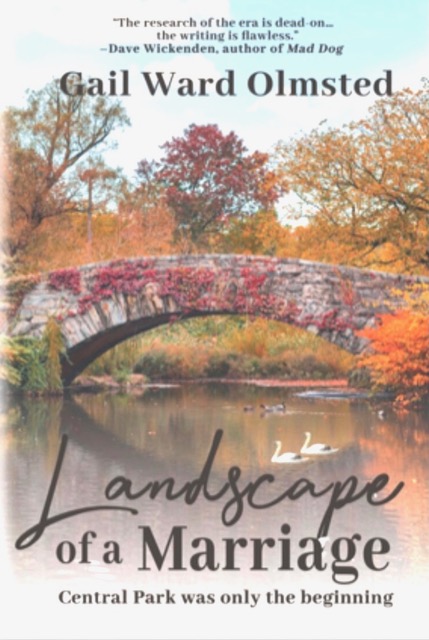
Today, I’m delighted to welcome Gail Ward Olmsted to the blog with a fascinating post about her new book, Landscape of a Marriage.
Separating Fact from Fiction
As a reader, I enjoy historical fiction that stimulates my interest to learn more about a person or a time from the past. Good historical fiction, in my humble opinion, needs to be balanced- a blend of historical facts and accuracy with a riveting storyline and well-developed characters who lived, or at least could have lived, during that time. I don’t believe there is any required ratio between the levels of fact and fiction (maybe 60/40 in favor of facts if I had to wager a guess?) but clearly a well-researched story is ultimately going to garner more attention and a larger number of satisfied readers than one that relies on interesting characters to make up for a historical backdrop that is too thin or inaccurate. But the real question is not how much ‘history’ do you need in your historical fiction, but rather how do you obtain that information?
When it comes to research, at some point you have to tell yourself that it’s time to stop, that enough is enough. Although it is tempting to continue down yet another rabbit hole of information (and there are so many different avenues to explore) a good writer knows when it’s time. Time to put down all those references and sources and actually start writing.
Researching a historical novel is a challenging and at least for me, an ultimately rewarding experience. I have previously written four contemporary novels and Landscape of a Marriage, my first historical novel, was an eye-opener. I blame my public school education or more appropriately, my earlier lack of interest in most things historical for my struggles. Other than the dates I learned of all the major battles in a variety of wars that the U.S. participated in, I don’t recall learning anything of interest to me in all of those history classes I sat through. I was a good student, but never developed a love of history until I started reading on my own. My early favorites are still classics in my mind- Gone with the Wind (Mitchell), The Thornbirds (McCullough) and Trinity (Uris). Great characters and interesting storylines set in different times in the past. What a joy!
I was drawn to the story of renowned landscape architect Frederick Law Olmsted and his late brother’s widow Mary for a number of reasons. The primary one is that Olmsted is a distant relative of my husband’s. Way back when, there were two brothers- Aaron and Benjamin- one is Fred’s grandfather and the other, my husband’s great, great, great grandfather.
Frederick Law Olmsted
But what really drew me into the story was the marriage of Fred and Mary, his former sister-in-law. Although ‘levirate’ marriages were fairly common in the 19th century in order to protect the children and the family name, I felt there was an interesting story lurking right below the surface and I set out to write it. My first step was to find out everything I could about the lives of Fred and Mary. I reviewed many different resources while researching Landscape of a Marriage. There are a number of beautifully written books on Frederick Law Olmsted and that was where I began, including A Clearing in the Distance (Rybczynski) and Genius of Place (Martin). I highly recommend them both.
Mary Cleveland Olmsted
These books helped me to understand quite a bit about the times and Olmsted’s professional accomplishments. I made careful notes and drafted an outline, filling in the most significant events happening during the tumultuous years of the second half of the 19th century in America- the Civil War, Lincoln’s assassination, the women’s suffrage movement, the Gold Rush and the Second Industrial Revolution.
Mrs Fred Olmsted
This provided the backdrop or the overall foundation for Landscape. Then I moved on to the Olmsteds themselves. I began with their marriage, the births of their children and significant personal and professional milestones along the way, including Fred’s work on such notable projects as Central Park in NYC, Mount Royal in Montreal, the Chicago World’s Fair and the reopening of Niagara Falls. The Olmsteds moved from New York, to Washington, DC, to California and back to New York before dividing their time between Brookline, a Boston suburb and Deer Isle, Maine. Each location would have an impact on their lives together and needed to be researched carefully to identify exactly how.
From there, I continued my research and Google provided me with access to numerous articles, posts and images that added to my base of knowledge. Who knew how interesting it could be to learn about the culture, the lifestyles, the clothing and the hobbies enjoyed during the second half of the 19th century? I remembered very little about the Civil War (except for those all important dates!) but never took the time to imagine what it was like for the soldiers, their mothers, their families. Before committing to landscape architecture as a career, Fred worked for the United States Sanitary Commission (the precursor to the American Red Cross) and his efforts revealed a caring, empathetic man who loved his country and fought to improve living conditions for the soldiers. This was a far cry from the critical and driven workaholic persona that frequently is assigned to Olmsted and it helped me to portray him as a loving and passionate man dedicated to both his profession and his wife and children. I hope readers who enjoy Landscape will be inspired to visit Olmsted’s parks and learn more about this creative visionary who transformed the American landscape forever.
Do you have a story to tell about a real or fictional person or an important time in history? The more research you do, the more likely it is that you will craft a story that you will enjoy writing and your readers will enjoy reading.
Here’s the blurb:
A marriage of convenience leads to a life of passion and purpose. A shared vision transforms the American landscape forever.
New York, 1858: Mary, a young widow with three children, agrees to marry her brother-in-law Frederick Law Olmsted, who is acting on his late brother’s deathbed plea to “not let Mary suffer”. But she craves more than a marriage of convenience and sets out to win her husband’s love. Beginning with Central Park in New York City, Mary joins Fred on his quest to create a ‘beating green heart’ in the center of every urban space.
Over the next 40 years, Fred is inspired to create dozens of city parks, private estates and public spaces with Mary at his side. Based upon real people and true events, this isthe story of Mary’s journey and personal growth and the challenges inherent in loving a brilliant and ambitious man.
Gail Ward Olmsted was a marketing executive and a college professor before she began writing fiction on a fulltime basis. A trip to Sedona, AZ inspired her first novel Jeep Tour. Three more novels followed before she began Landscape of a Marriage, a biographical work of fiction featuring landscape architect Frederick Law Olmsted, a distant cousin of her husband’s, and his wife Mary.
For more information, please visit her on Facebook and at GailOlmsted.com.
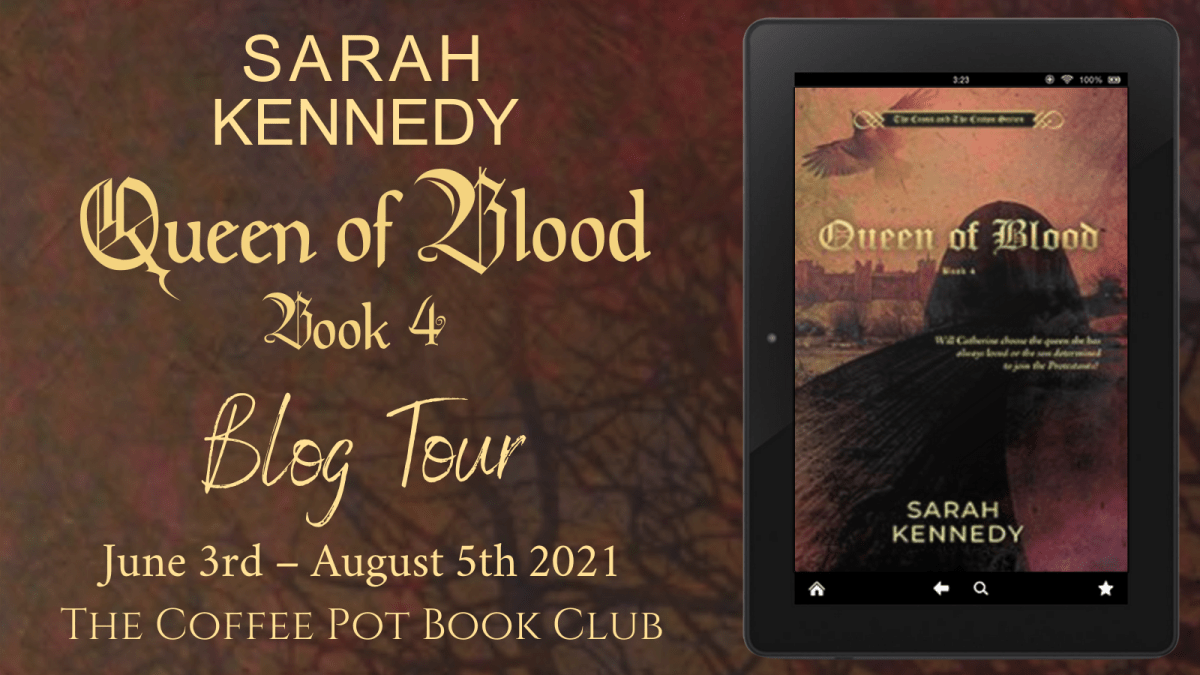
Today I’m delighted to welcome Sarah Kennedy to the blog to answer my questions about her fantastic new book, Queen of Blood.
Your book, Queen of Blood, is set during the tumultuous reign of Mary Tudor, a much maligned character. As a historian first and foremost, and then a writer, I’m always interested in how people research their historical stories.
I’m afraid that I’m rather a magpie in my research—toddling along picking up the shiny bits along the way, not knowing whether I’ll want them later. I spent a long time studying Renaissance literature as a student and then a professor, and when I started my career as a writer I focused on poems. Poems, of course, are much shorter and more focused in their scope than fiction, and, in my historical poems, I was able to use tiny details and idioms that I had picked up mostly unconsciously from reading. As I moved into fiction, I found that those Early Modern cadences of language came to me very easily. I travel (or used to travel!) quite a bit, and part of my research involves going to the kinds of places that I set my fiction in—small towns and villages, castles, stately homes, and museums. I talk to people a lot, and I soak in atmosphere. That’s not the most scholarly way to do research, I realize, but it’s how I work. This probably drives a historian crazy!
Can you explain your research process to me, and give an idea of the resources that you rely on the most (other than your imagination, of course) to bring your historical landscape to life?
My process is rather sloppy, I’m afraid! I do read history, as anyone who writes historical fiction must, but I find that reading the literature of the period—the poems, plays, stories, and letters—of the period do more to fill in gaps for me. Reading literature also provides me with first-hand knowledge of the words people used, the ways they expressed emotions and beliefs, and how they spelled things. Spelling wasn’t regularized in the English language during the Renaissance, so it’s very interesting for me to see how writers spelled words. I teach Renaissance literature and Shakespeare, so I’m constantly involved with Renaissance language and content.
As I said above, I also feel a strong need to be in physical spaces that I’m writing about. I love Yorkshire, Scotland, and Wales, and those landscapes still speak from their pasts directly into my imagination. London is my favorite city, and I’ve spent many weeks there, wandering the streets. It feels a bit like my second home, though I’ve never actually lived there.
Do you have a ‘go’ to book/resource that you couldn’t write without having to hand, and if so, what is it (if you don’t mind sharing)?
This may sound like a strange choice, but the Collected Works of Shakespeare is probably my go-to text. Shakespeare was brilliant at metaphor and image, but he also used many characters who are not noble or royal—and his ear for speech was unmatched in the period (in my opinion). I can always get my imagination fired up for characters talking by reading Shakespeare. I have to keep in mind as I read that Shakespeare was shameless with the historical record in his history plays. He moved characters around and put them in places that everyone knows they weren’t—and he keeps them alive or kills them off if his story requires it. I try not to take him too much as an example, though the temptation is strong.
If I had to list a second choice (and this might also be odd) it would probably be John Foxe’s Book of Martyrs, just because he has so many stories (many of them highly propagandistic) about the tumultuous period of Mary Tudor’s reign.
Thank you so much for sharing your research with me. It’s fascinating. Good luck with the new book.
Here’s the blurb:
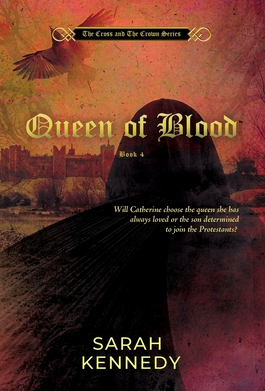
Queen of Blood, Book Four of the Cross and the Crown series, continues the story of Catherine Havens, a former nun in Tudor England. It is now 1553, and Mary Tudor has just been crowned queen of England. Still a Roman Catholic, Mary seeks to return England to its former religion, and Catherine hopes that the country will be at peace under the daughter of Henry VIII. But rebellion is brewing around Thomas Wyatt, the son of a Tudor courtier, and when Catherine’s estranged son suddenly returns from Wittenberg amid circulating rumours about overthrowing the new monarch, Catherine finds herself having to choose between the queen she has always loved and the son who seems determined to join the Protestants who seek to usurp her throne.
Sarah Kennedy is the author of the Tudor historical series, The Cross and the Crown, including The Altarpiece, City of Ladies, The King’s Sisters, and Queen of Blood. She has also published a stand-alone contemporary novel, Self-Portrait, with Ghost, as well as seven books of poems. A professor of English at Mary Baldwin University in Staunton, Virginia, Sarah Kennedy holds a PhD in Renaissance Literature and an MFA in Creative Writing. She has received grants from both the National Endowment for the Arts, the National Endowment for the Humanities, and the Virginia Commission for the Arts.








 MJ Porter