Author of Saxon historical fiction and non-fiction, 20th-century historical mysteries, and Norse-inspired historical romantasy. Book reviewer and blog host.
Here it is – a little treat for fans of Coelwulf and his warriors.
Having given many hints as to how the motley crew got together, I decided to write some short stories, from different points of view, to see just what Icel, Edmund, Coelwulf, Pybba and of course, Rudolf, think of one another and how they came to be battling the Raiders in AD874.
The collection consists of 5 short stories, and also another short story which laid the foundation for Coelwulf and his warriors. (This short story is freely available on the Aspects of History website, but I added it just so readers who haven’t discovered it yet could see it. Do please check out my author platform on Aspects of History and all the other excellent authors on there as well.)
I hope you’ll enjoy it, and if you do, I can press on with writing more short stories, because it’s been a great deal of fun! And you know me, I do like to tell a story backwards:)
Coelwulf’s Company is available as an ebook from Kindle and can be read with Kindle Unlimited.
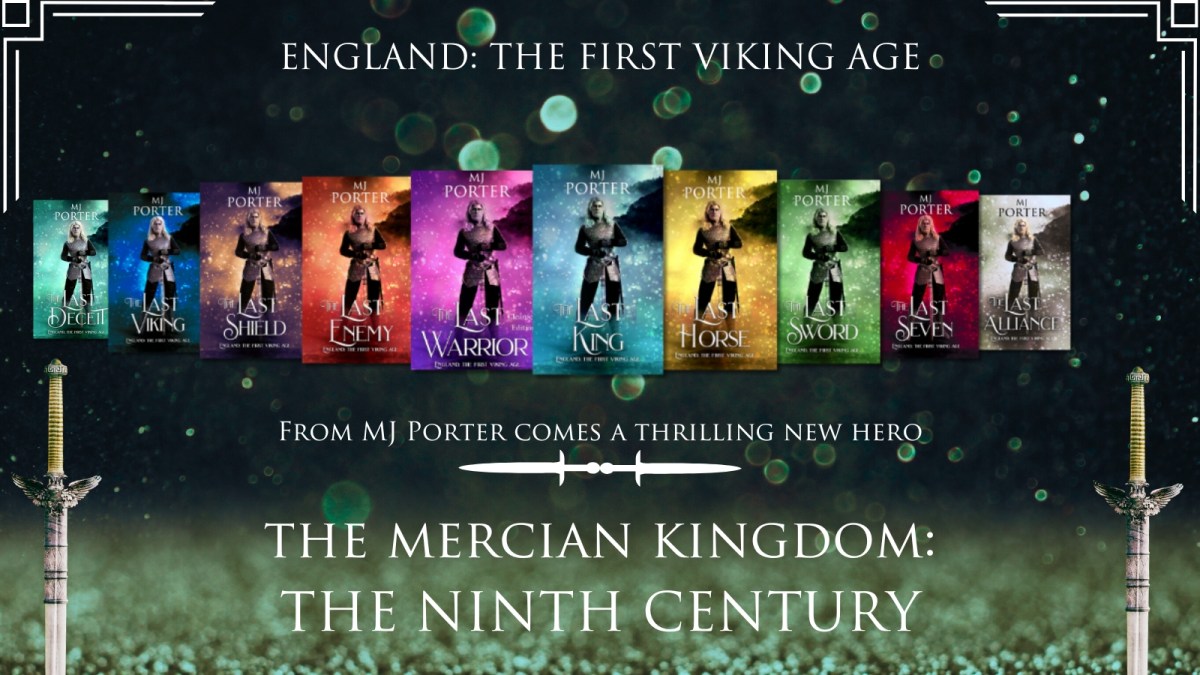
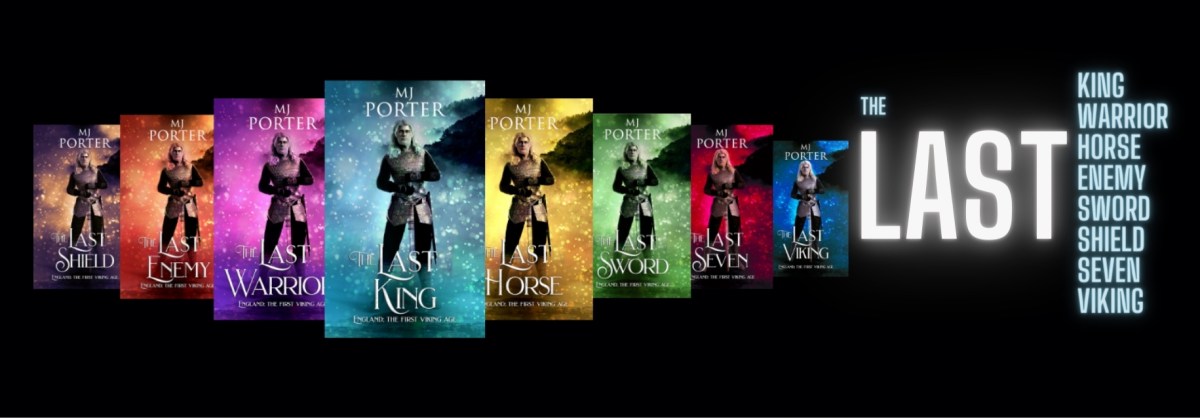
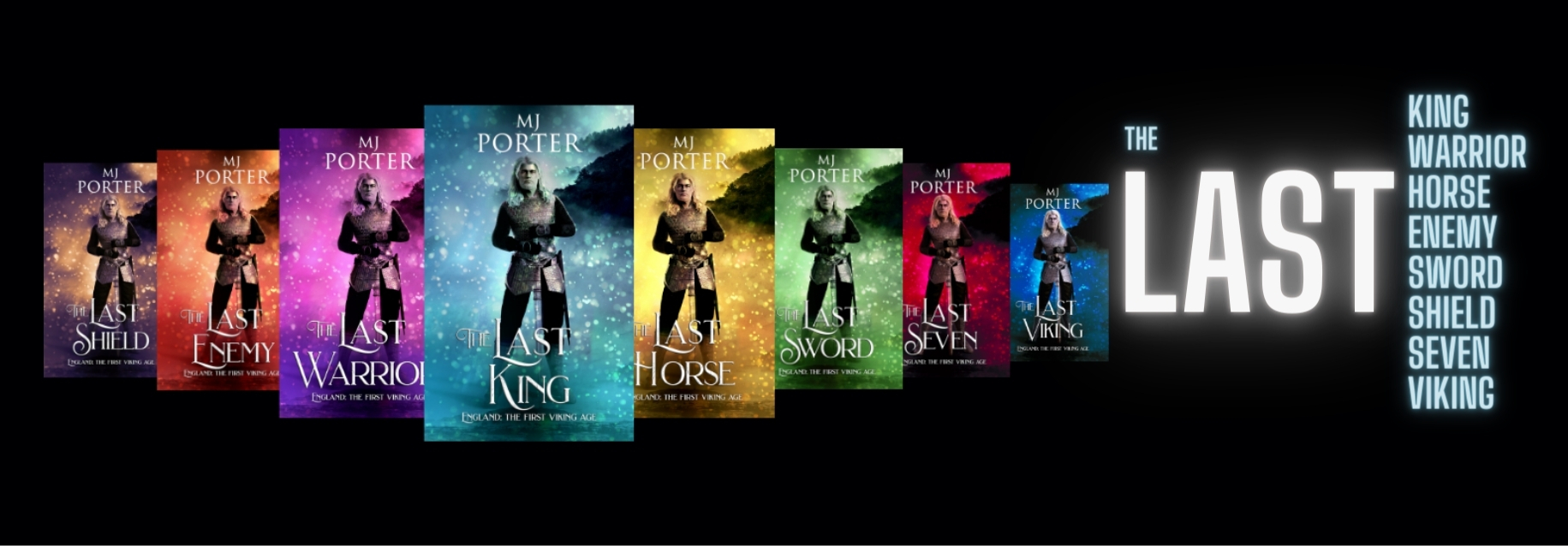
I’m really quite bad at remembering all the publication dates of my books, but The Last King has certainly stuck in my mind. What started quite inauspiciously, with a few die-hard fans preordering the book, has become my most popular series, and most popular book to date.
Perhaps I shouldn’t be so surprised, but I am. The book, a few years in development, burst from me in a flurry of excitement early in 2020, when I opted for a ‘harder’ character, a man who is simply so good at what he does, he doesn’t understand that others can’t do what he can. It’s not arrogance. It’s confidence.
So, why the hesitation? It takes a lot to stomp, and I mean, stomp all over a time period made so famous by another giant of the field – Bernard Cornwell with his Uhtred, or The Last Kingdom books. And yet, I couldn’t move away from the temptation of the little known Coelwulf, and the story of Mercia which has never been told.
Yet, I needed to do it in a different way to BC. I remember handing the first few chapters to my critique partner and editor and saying ‘is this edgier?’, ‘would a warrior speak like this?’ It came back with a ‘yes’ and also some pencil marks and a bit more swearing added in, and a comment that if I was going to cauterise a wound, then I needed to do it properly, gore and all.
I’d previously written what I thought would be an opening scene, while sitting in hospital for an appointment with lots of different bits to it – but while that gave me the characters, it didn’t give me quite what I was looking for. Still, you can read ‘A Meeting of Equals‘ over on my author platform on Aspects of History.
And that was almost it (apart from a dose of my own confidence drawn from watching The Gentlemen by Guy Ritchie – which truly made me think ‘anything goes,’ and gave me the idea for the opening scene – if you’ve read the book you’ll know what I mean.) Coelwulf reared his head, and so too did a cast of characters that are unique, complex, enjoyable to write about, and often a bit pushy.
There’s a sample below – remember, it’s Coelwulf, it’s going to be pretty full-on from the word go. (18 rated)
So thank you to all my readers and reviewers, to my beta readers (you know who you are), and to the people I’ve collaborated with on ensuring the word gets out about Coelwulf.
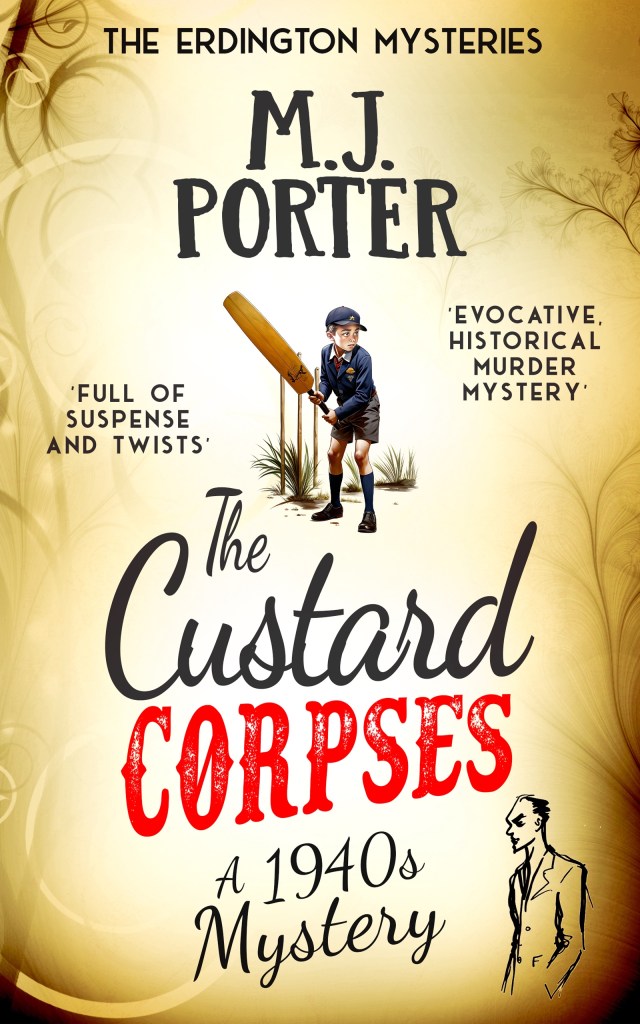
Here is it, a book I never thought I’d write – not only a mystery, but one set nearly a thousand years after most of the books I write, and one which began with a series of adverts.
Here’s the blurb;
A delicious 1940s mystery.
Birmingham, England, 1943.
While the whine of the air raid sirens might no longer be rousing him from bed every night, a two-decade-old unsolved murder case will ensure that Chief Inspector Mason of Erdington Police Station is about to suffer more sleepless nights.
Young Robert McFarlane’s body was found outside the local church hall on 30th September 1923. But, his cause of death was drowning, and he’d been missing for three days before his body was found. No one was ever arrested for the crime. No answers could ever be given to the grieving family. The unsolved case has haunted Mason ever since.
But, the chance discovery of another victim, with worrying parallels, sets Mason, and his constable, O’Rourke, on a journey that will take them back over twenty-five years, the chance to finally solve the case, while all around them the uncertainty of war continues, impossible to ignore.
As this is something completely new to me, I’m going to share a snippet.
Chapter 1
Erdington, October 1943
Sam bit back the cry of pain, coming to an abrupt stop. The pavement was shaded with the colour of the advancing night, but even so, he knew where the uneven step was. He really shouldn’t have kicked it. Not again. Would he never learn?
He blinked the tears from his eye and lifted his right hand to rub it over the ache of his lower back. All these years, and still it hurt. It would never stop. He knew it, and yet sometimes, he forgot, all the same, only to be rudely reminded when he overbalanced or attempted to take a step that was just too wide.
There was a reason he was here and not on one of the many front lines of this terrible war, the second in his lifetime. There was a reason he was here while his son, John, fought in his place.
His breath rasped through his suddenly tight chest, and yet the thin shard of light from behind the tightly closed curtains encouraged him on. Inside, there was companionship, and it drove him onwards, made him quest to be a better man. Despite the fact he knew it wasn’t true.
“Come on,” he urged himself, and although it was going to ache, he forced his legs to move, left, then right, then left, and his hand reached up to push the welcoming door open.
Appetising smells greeted him, and he dredged a smile to his face, turning to hang his hat on the waiting peg and to shrug the overcoat from his thin shoulders, revealing his policeman’s uniform beneath. The blue so dark; it was almost black. He hooked his gas mask above his overcoat. There in case he should require it. But no bombs had fallen for half a year now. He hoped none ever would again. No voice was raised in greeting to his noisy arrival. It never was.
With the door closed and locked behind him, he slipped his feet from his black shoes, using one foot to force down the ankle and then doing the same in his socked-feet. It was better than being forced to bend when his back was so painful, even if it was destroying the back of his shoes, as his wife complained whenever she witnessed it. He’d taken to hiding his work shoes behind the boots he wore to the allotment. Better that Annie did not see them.
Opening the door that led into the heart of his home, he paused, just watching her for a heartbeat.
“Evening, love.” He bent to place a kiss on his wife’s head, refusing to notice the thinning brown hair, the streaks of grey making up more and more of it as the years passed. A skeletal hand reached up to grip his, and he squeezed tightly, settling beside her at the table.
A single lamp afforded the only light in the small kitchen, a warm fire burning in the hearth in the sitting room as he settled beside her. His wife didn’t so much as look at him. Sam considered that she didn’t want to see the ruin of her husband.
Time hadn’t been kind to either of them and yet he couldn’t help but be grateful for the years they’d had together. It could have been so different. So many of his brothers-in-arms lost fighting over two decades ago. They would have loved to live long enough to see the ravages of time etched into their skin and characters, to grow weary with aches and pains, to learn the experiences that only time could afford.
A flurry of movement from Annie, and a plate was placed on the table before him, the lid swept aside. The steam took only a moment to clear, and he suppressed his rumbling stomach. It was a meal as any other day, not particularly appetising, and yet, food all the same. He was grateful for the potatoes, harvested from their garden, and the gleaming orange carrots, if not for the small sausages. Gravy pooled around the meat, and he closed his eyes, imagining a feast fit for a king, before meticulously cutting, eating and savouring every mouthful.
His wife didn’t speak, and neither did he. No doubt, she was as caught up in her thoughts as he was in his.
He considered reaching for his newspaper, but instead, his eyes were fixed by the bright image that lay open on the magazine discarded on the table before him. The Picture Post. Was there ever a magazine more filled with stories that titillated while offering little or no actual facts?
Not that he ever complained. Not anymore. If she enjoyed the stories and bright images of the adverts, then why should he? Anything that distracted her from the constant worry about their son. Anything.
Now, he found a smile tugging on his lips, and his mind cast him back to when his son had been a small boy. John had delighted in such simple antics as that on display. The custard advert enticed all parents to part with their hard-earned ration coupons. He couldn’t see that a liberal dollop of the sugary, creamy mixture would help any child become an athlete, professional cricket player or ballerina, but what did he know? He was just an old man, with a job that kept him busy and an ache in his heart where his youth had once been.
Sam reached for the folded newspaper, the smirk still playing on his lips.
“Don’t.” His wife’s voice shocked him, sounding more formidable than he’d heard for the last few years, ever since their son had left to fight Britain’s fresh battles against the might of Hitler and Germany.
He lifted his eyes to find hers boring into his.
“Don’t,” and now there was more softness, but it was too late. His eyes had alighted on what she’d been trying to keep from him.
Once more, he felt an unbidden tear form in the corner of his eye as he gazed at the hazy black and white photograph. Not that he didn’t know it intimately. He did. He’d stared at that image, and others besides, until they were emblazoned on his very soul, overriding even the final images of his lost comrades from the Great War, the war to end all wars. How wrong they’d been.
He swallowed, the burn making it feel as though it were cardboard and not the remnants of his dinner that he evacuated from his mouth.
“Again?” he felt the need to say something.
“Again,” she replied, and there was understanding and sorrow in that look, and he didn’t want any of it. He didn’t want to add to her fears and worries with his own.
“It was a long time ago,” he tried to reassure, reaching for her hand and encasing it within his. It was no longer soft but instead forged in iron, the wiry strength surprising him, even though it shouldn’t, not after all this time.
“It rolls around too quickly, these days,” a hint of a smile on her thin lips, blue eyes glistening with sorrow, and he realised that she was trying to reassure him. He hated it that she felt the necessity.
“And still, there’s no closure for the family.”
“No. But they’re not alone in that. Not anymore.” Her voice trailed off as she spoke, and he turned to gaze into the glow from the table lamp, allowing it to haze in front of him. She was right in that, as well. Many would never hold the knowledge of what exactly happened to their loved ones. Yet, there was a world of difference between adults and children. It was the fact he’d been a child that cut the deepest.
His mind returned to that terrible day. How could it not? He’d been a young man, wounded and broken after his time at The Front, but at least he’d still breathed. Not like the splayed body found in the undergrowth close to the church hall, eyes forever staring. Somehow, the rigour mortis of a smile on that cherubic face, so that anyone could be forgiven for thinking the boy was merely caught in the act of playing hide and seek.
But the face had been blue and white, the eyeballs rimmed with the grey haze of death that he’d come to know so well during his time in the trenches before his injury had ensured he need never revisit the place.
In the faded light of the lamp, he watched the scene, as though he’d been a bird, able to watch from above. His eyes alighted, not on the corpse, but rather on his chief inspector, the man who’d made him who he was today, and yet who’d been broken by the failure to solve the death of the boy.
Sam found a soft smile playing around his lips. Fullerton had been a meticulous man, with his long mackintosh and tightly wedged police hat covering the tendrils of greying hair showing beneath it and in the sideburns that snaked down to meet the dark moustache quivering over his lips. Many would have been forgiven for thinking he had no compassion for the corpse. But no, he’d had more than most, but he had desired to solve the case, to bring the perpetrator to justice. It was a source of unending disquiet that it had never been possible.
It had marked him from that day he’d found Robert’s body to the day of his death.
It hadn’t been Sam’s first case, far from it, but it had felt like it. He’d learned so much, and yet it had never been enough. Not for young Robert McFarlane and his family.
He swallowed once more, his keen memory fastening on the scene. Or rather, on the way that the body had been presented. The murderer hadn’t killed young Robert beside the church hall behind the High Street. In fact, they’d never found the place the murder had truly taken place, only where the body had been found.
Sam thought of Mrs McFarlane, her tear-streaked face, her shaking shoulders. Her oldest son, taken from her, just as her husband had been by the enemy’s bullets during the Great War. There’d been so much grief and loss in the years during and after the war, if not dead on some far-flung battlefield, then carried away by the terrible Spanish influenza. It had all seemed never-ending. And then, the spark of an untainted future when all had seemed calmer, taken between one breath and the next.
Sam had never seen grief festoon someone so entirely. As Chief Inspector Fullerton had told her the news, she’d aged before their eyes. It had taken his quick reflexes to ensure she didn’t collapse to the floor on the bright red doorstep, her young daughters, wide-eyed and sobbing as they watched their mother, hands clasped tightly together, as though they could hold their mother up with such an act.
There’d been a time when Sam had wished Chief Inspector Fullerton hadn’t told Mrs McFarlane in such a way, his words hard and unfeeling, and yet, he’d come to appreciate that there was no right and wrong way to impart such terrible news. It was almost a kindness to say the words, ‘your son is dead,’ as quickly as possible. There was no need to use superfluous words, to offer sympathy, to say anything but the facts.
Her accusing eyes had followed him through the years. Why they’d said that day and many days since, is my son dead, while yours yet lives?
It was not Mrs McFarlane who’d marked the anniversary of her son’s death, each and every year for the last twenty years, but rather, her daughter. The older one, Rebecca, had taken on the responsibility for ensuring that no one ever forgot her brother when her mother sadly passed away, worn down by grief and loss, by the need to survive in a world turned upside down, with nothing but a war pension to ease the burdens.
It was Rebecca who routinely sent letters asking for updates on the case. It was Rebecca that he tried to avoid at all costs when he saw her at church, on the tram or along the High Street. It was Rebecca who’d broken Chief Inspector Fullerton, in a rare show of emotion that shocked him to recall, even now. He’d never seen Fullerton like that. He’d never imagined Fullerton could be so very emotional that tears would run from his brown eyes, that he’d tear at what remained of his hair in frustration.
Chief Inspector Fullerton had retired a few years ago, but he’d not lived long enough to enjoy it. Sam shook his head. One murder and so many lives destroyed, and still, the murderer was out there, perhaps hiding, perhaps luxuriating in what he’d managed to get away with, or maybe, he was dead as well, getting away with his crime for all time. Twenty years was a long time.
Sam was snapped from his reveries by a bowl appearing before him. Somehow, he’d become so lost in the past; he’d not even heard his wife stand at the stove for the last many minutes.
A cheeky smile from her, driving away the wrinkles and the grey streaks in her hair, making her look twenty years younger, and he looked down at the bowl before him.
“Custard?” he asked, enjoying the unusual light-hearted look on her face.
“I know it’s your favourite. There’s even some apple in there, somewhere, and some blackberries, picked from the country lane on my walk yesterday afternoon to Pipe Hayes Park.”
“How did you get it?” he asked, eagerly spooning the sweet mixture into his mouth.
“I’ve been saving my packets. I didn’t tell you. I know you wouldn’t be able to wait.”
“Then you have my thanks,” he grinned, fully returning to the present. He couldn’t do anything about the past. No matter how much he wished he could.
“This is delicious,” he complimented his wife, leaning back, hand on his full belly.
“Well, now you just need to wait another year, and then you can have more.” But there was a lightness to her voice when she spoke, and the flash of joy in her eyes cheered him. There was so much wrong with the world at the moment, and yet here, beside his wife, in their cosy front room, everything was well. Even if only for now.
A few weeks ago, I was granted exclusive access to King Coelwulf, to talk about his new book, The Last Enemy. Here’s what the enigmatic king of Mercia had to say.
King Coelwulf, thanks for allowing me entry into your stronghold at Northampton. It’s quite interesting to be at the heart of the Mercian defence against the Raiders. Now, can you tell me why people should want to read the fourth book about you, The Last Enemy?
“Well, I’m not saying that they will. I mean, if they’re like me, then they probably don’t have time to be reading a story. I’ve got bodies to bury, Raiders to hunt down, and a kingdom to rule. I would tell anyone to spend their time more wisely than reading a book. That sort of thing is for the monks and the clerics, not warriors trying to defend a kingdom.”
Ah, well, in that case, thank you for finding the time to speak to me.
“I didn’t have much choice. Or rather, I was advised it would be a good use of my time, by my Aunt, Lady Cyneswith.”
Well, Lady Cyneswith is a wise woman, and I’m grateful that she’s encouraged you to speak to me.
“She is a highly intelligent woman. Braver than many men when it comes to the Raiders, and skilled when it comes to healing injuries of the body, as well as the mind.”
And her dogs have very interesting names, what was it again? Wiglaf and Berhtwulf, surely the names of old Mercian kings? Men who usurped the ruling line from your family?
“Oh really. I’d never realised. Funny, that.”
Ah, well, moving on, could you tell me about your new book? I’m sure my readers would love to hear about it.
“Nothing to say really. Same old, same old. Raiders to evade, Raiders to find, Raiders to kill, a kingdom to keep whole. It’s a grand old bloody mess. I swear, I’ve barely managed to scrub the grime and body fluids from my sword and seax. Or rather, Wulfhere has. He’s a good lad. Quick on his feet. He’s one of my squires. Couldn’t do it without him.
That’s interesting that you should mention your squire, did you say? I wouldn’t have expected you to even know the lad’s name. After all, you are the king of Mercia, surely your squire is beneath you. Are there any more of your warriors you’d like to mention by name?
“Of course there are. I’d name them all if I had the time, which I don’t, just to make you aware. I’ve got to go to a crown-wearing ceremony shortly. But, I’ll mention a few, just to keep you happy. And you should know that no man is ever above knowing the names of those who serve him. Remember that.
But, I’ll mention some of my warriors by name. If only because it’ll infuriate some of them. Edmund, he’s my right-hand man, a skilled warrior, missing an eye these days, but it’s not stopped him, not at all. His brother, Hereman. Well, where do I start? Hereman does things no one would consider, in the heat of battle, and he’s a lucky b……. man, sorry, he’s a lucky man. And then there’s Icel. He’s lived through more battles than any of the rest of my warriors. I almost pity the Raiders who come against him. None of them live for much longer.
And Pybba. You know, he fights one handed now, and the Raiders seem to think he’s easy picking, but he’s not. Not at all. And, I can’t not mention Rudolf. He’s the youngest of my warriors, but his skill is phenomenal, not that you can tell him that. Cheeky b……, sorry cheeky young man. But, all of my warriors are good men, and we mourn them when they fall in battle, but more importantly, we avenge them all. All of them. No Raider should take the life of a Mercian without realising they’ve just ensured their own death.
Yes, I’ve heard that you avenge your men, with quite bloody means. And Edmund, there’s a suggestion that he’s a scop, a man who commits the deeds of the fallen to words? That fascinates me, as someone who also makes a living from using words.
“Well, Edmund has some small skills with words, but he honours our fallen warriors by weaving them into the song of my warriors. In fifty years, when we’re all dead and gone, our legend will live on, thanks to Edmund, and his words.
Can I ask you about Alfred, in Wessex? Have you met him? Do you think he’s doing a good job in keeping the Raiders out of Wessex?
“I’ve never met him. Couldn’t say either way. It’s not for me to comment on a fellow king. We’re all after the same thing. Kill the f……, sorry, kill the b……., sorry, kill the enemy. All of them, until Mercia is safe once more. And Wessex, if you’re from there.”
Well, it looks like you’re needed. Is that your crown?
“Yes, and now I need to go and perform some ceremonial task. It’ll take a long time, no doubt. Make sure you have an escort when you leave here. I wouldn’t put it passed the f……, sorry, the Raiders, to be keeping a keen eye on the bridge over the Nene.
Thank you for your concern, and yes, I’ll make sure I do. Good luck with the new book.
“I don’t need luck. I just need to kill all the b……., sorry, Raiders.
As you can tell, King Coelwulf was a very busy man. But his new book, The Last Enemy, is well worth a read. Bloody, brutal, just like the man himself, but I found him to be honourable and worthy of leading the Mercians against our persistent enemy. Long live the king.
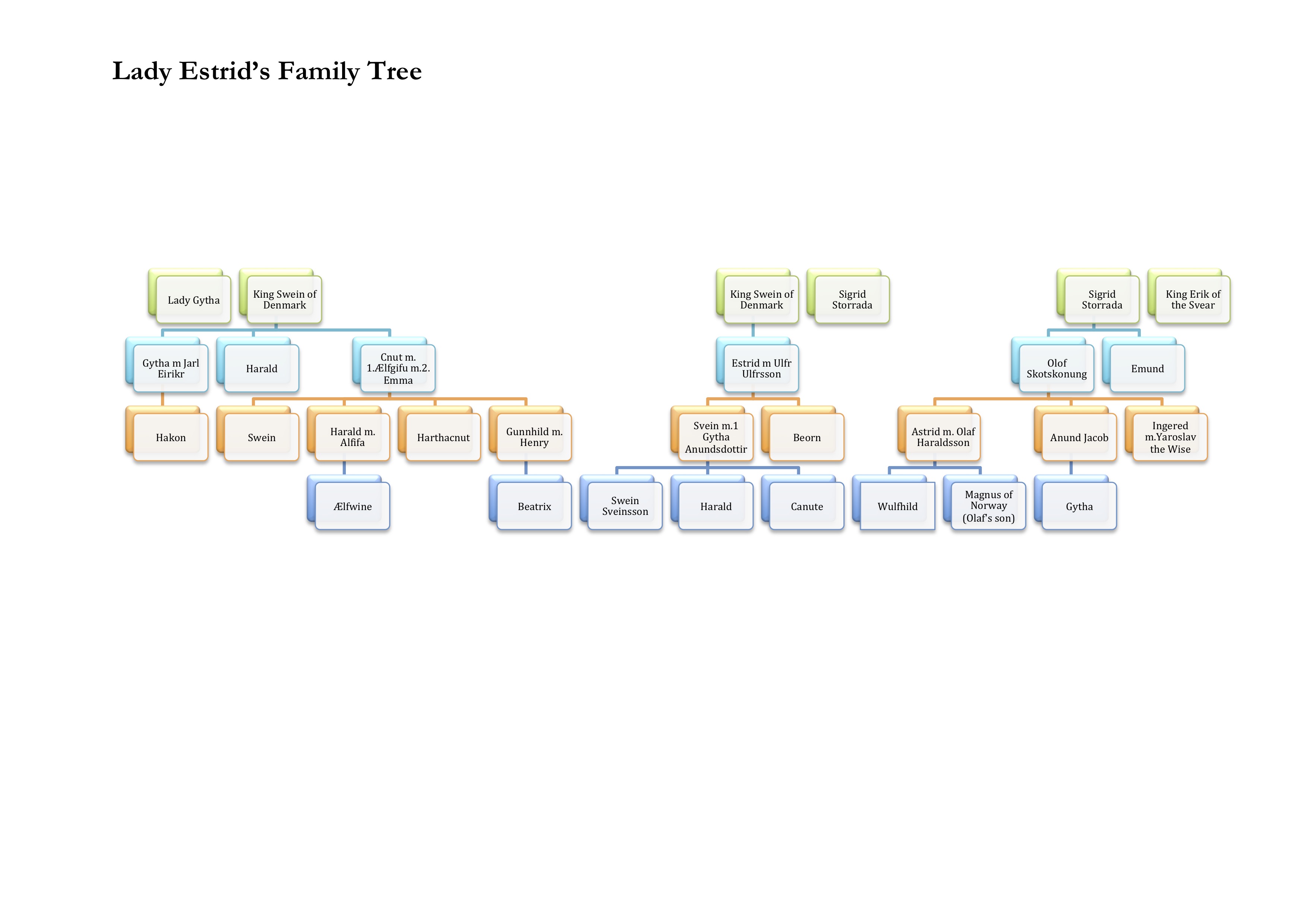
One of the big plusses for choosing the character of Lady Estrid for my most recent novel, was her large and illustrious family and their far-reaching influence over Denmark, Sweden, Norway and England. It meant there was already an excellent story to tell.
While I quickly managed to slot all the different relatives into order (well, I have been writing about them for a while), I’m aware it’s not the easiest of tasks, and so, I have put together some genealogical tables of the main families to make it that bit easier.
The family of Lady Estrid Sweinsdottir, as mentioned in Lady Estrid.
Due to a lack of information, I have made little mention of the rest of Estrid’s half-sisters, of which she had three or four. I feel it perhaps also helped the story a little – it was complicated enough as it was without giving them the capacity to meddle in affairs in Denmark. I have also made the assumption, that because I don’t know who they married, that they didn’t make international alliances, as Estrid did.
To break it down into more palatable chunks, Lady Estrid’s mother was married twice, once to King Swein of Denmark (second) and also to King Erik of the Svear (first). King Swein was also married twice (in my story at least – as it is debated), to Lady Gytha (who I take to be his first wife) and then to Lady Sigrid (who I take to be his second wife.) Swein was king of Denmark, Erik, king of the Svear (which would become Sweden), and so Sigrid was twice a queen, and she would have expected her children to rule as well, and her grandchildren after her. Sigrid was truly the matriarch of a vast dynasty.
She would have grandchildren who lived their lives in the kingdom of the Rus, in Norway, in England, and Denmark.
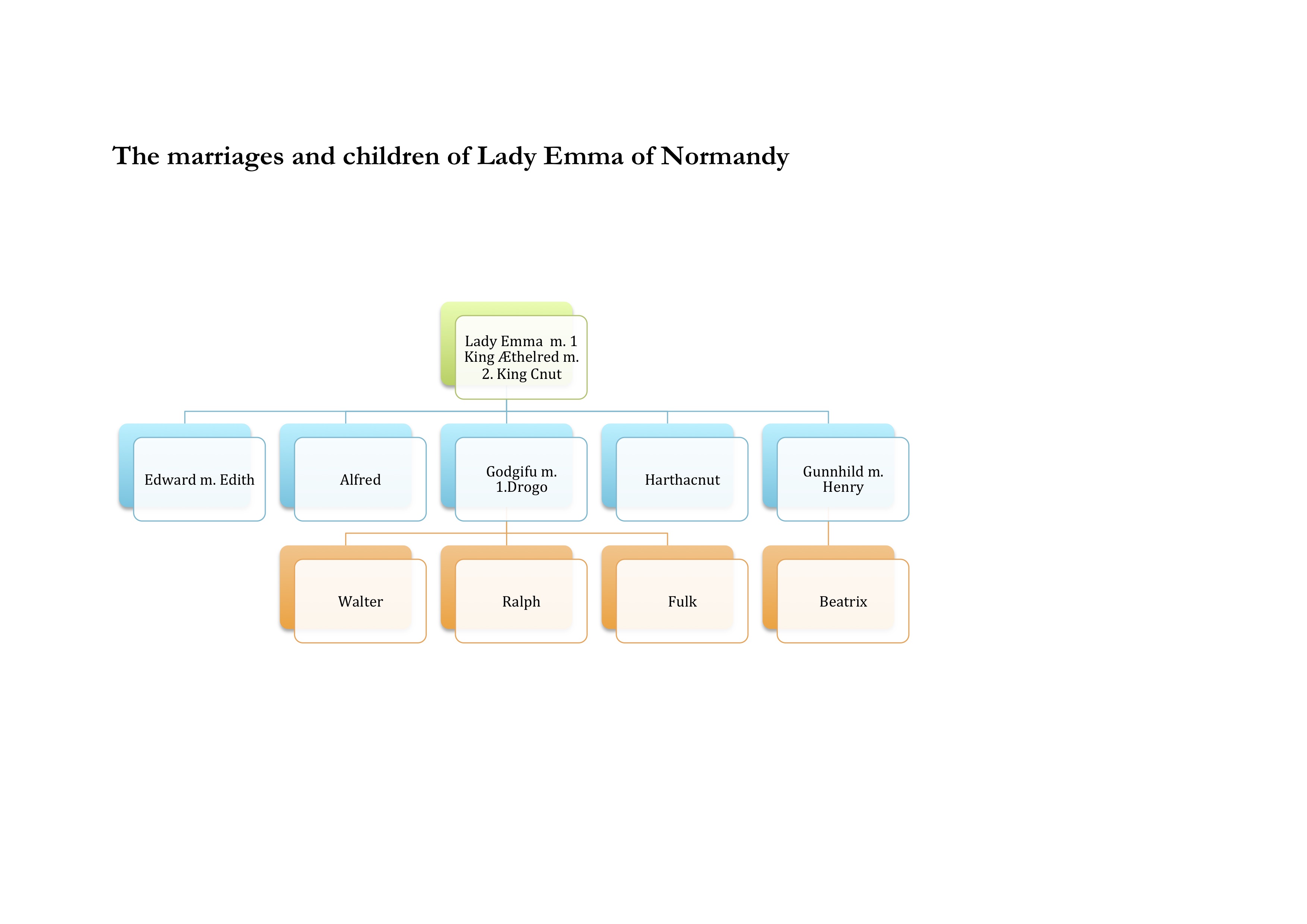
And Sigrid wasn’t the only ‘double queen.’ Lady Emma, twice queen of England, was first married to King Æthelred and then to King Cnut, Estrid’s brother.
Lady Emma, twice queen of England and her children
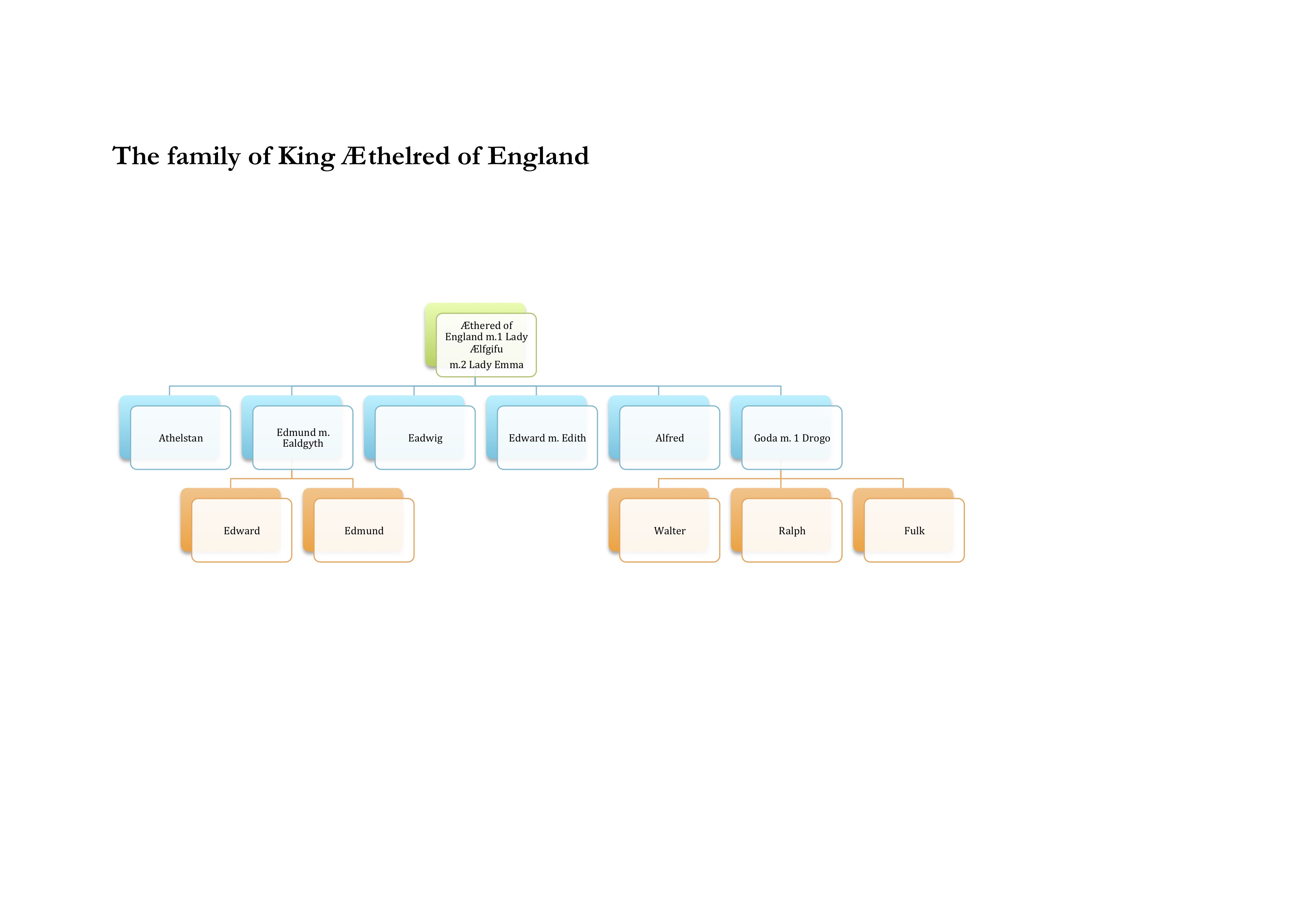
Not that it’s possible to speak of Lady Emma’s children from her two marriages, without considering the children of her first husband’s first marriage. King Æthelred had many children with his first wife, perhaps as many as nine (again, a matter for debate), the below only shows the children mentioned in Lady Estrid. Readers of The Earls of Mercia series, and the Lady Elfrida books, will have encountered the many daughters, as well as sons.
The family of King Æthelred of England
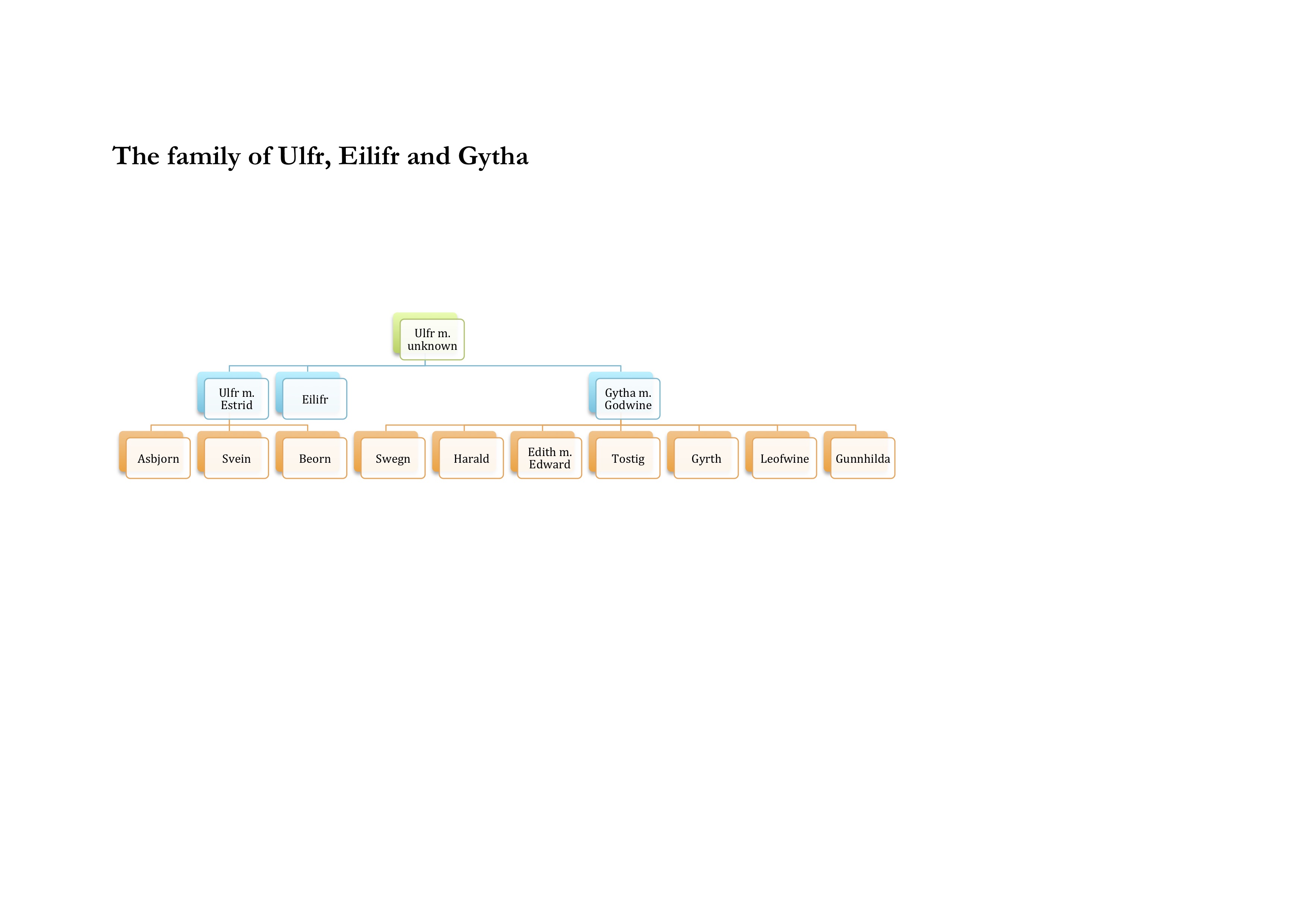
One of the other family’s that had the most impact on Lady Estrid, was that of her third husband, and father of her two sons, Jarl Ulfr.
The family of Ulfr
Ulfr had a brother and a sister, and while little is known about the brother, it is his sister who birthed an extremely illustrious family, through her marriage to Earl Godwine of Wessex. (The family tree doesn’t include all of her children.)
Four such powerful families, all intermarried, make for a heady mix.
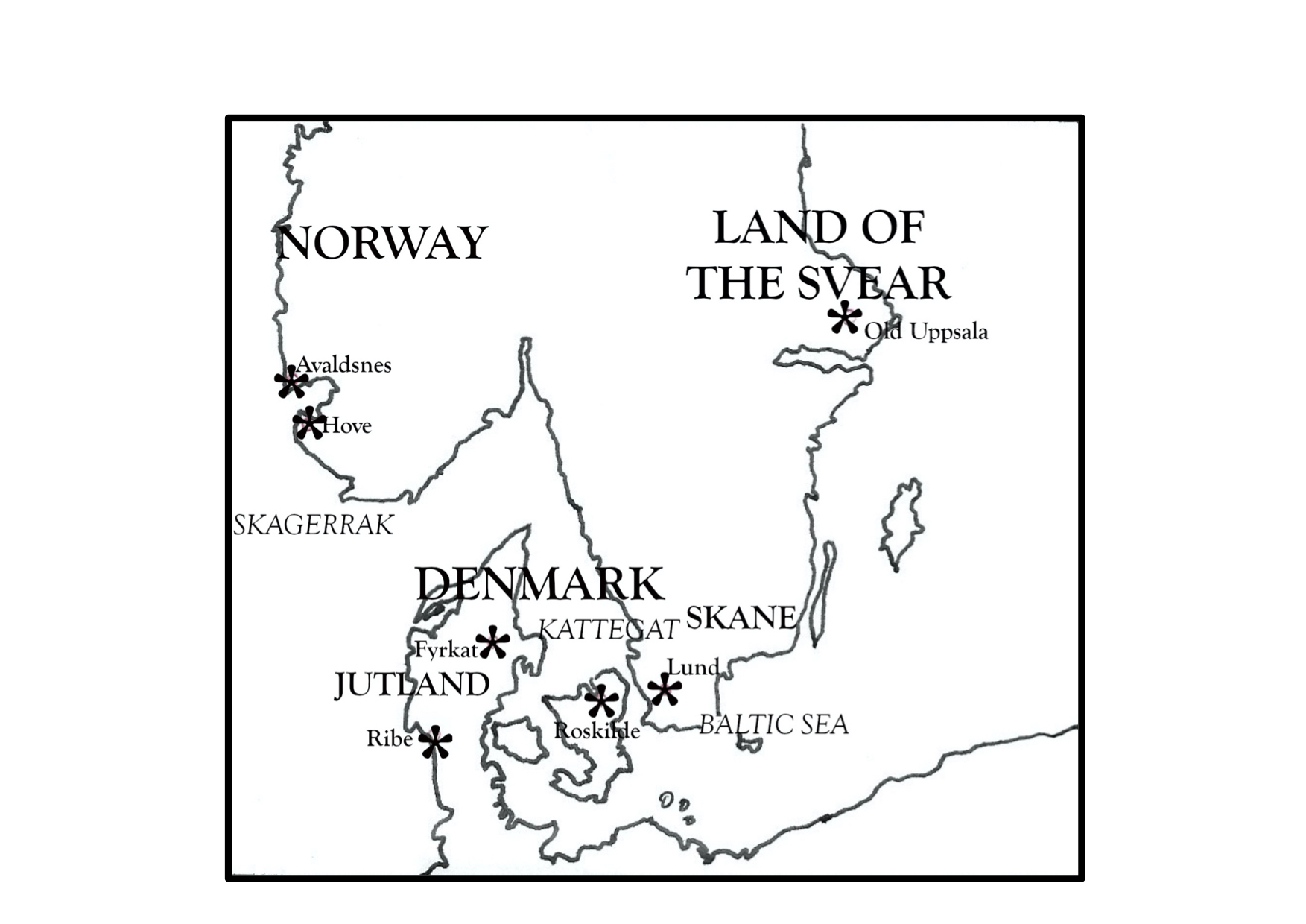
For the modern reader, not only are the family dynamics complicated to understand, but so too is the geography. Sweden was not Sweden as it is today, and the reason I’ve insisted on calling it the Land of the Svear. But equally, Denmark was larger than it’s current geographical extent, covering Skåne, (in modern day Sweden) as well. The map below attempts to make it a little clearer. Norway is perhaps the most recognisable to a modern reader, but even there, there are important difference. King Swein claimed rulership over parts of Norway during his rule, and so too did King Cnut. But, Denmark isn’t the only aggressor, there were rulers in all three kingdoms who wished to increase the land they could control, King Cnut of Denmark, England, Skåne and part of Norway, is merely the most well-known (to an English-speaking historian.)