I’m delighted to welcome Katharine Quarmby and her new book, The Low Road, to the blog #WomensFiction #FeministFiction #HistoricalFiction #TheCoffeePotBookClub #BlogTour

I’m delighted to welcome Katharine Quarmby and her new book, The Low Road, to the blog, with searching for The Low Road in Historical Sources.

Searching for The Low Road in Historical Sources

Katharine Quarmby

The search for the story that became The Low Road started around seven years ago now, when I came across a description of one local area in my Norfolk, England, hometown. It mentioned in passing an area at the end of the town called Lush Bush, where a local woman, Mary Tyrell, had been buried on the parish boundary in 1813. I started to dig further, through local newspaper articles and found that the Norfolk Chronicle had reported in that year that she had taken poison and died after being investigated for infanticide. She was then staked through the heart after death in an archaic punishment called felo de se. A daughter, then only described by her initials, A.T., had survived and had been sent to a refuge in London.

It wasn’t a lot to go on, but I really wanted to know more, so I started by guessing that her first name was Ann and was lucky enough to find an Ann Tyrell, (called Hannah in my novel) who had lived at the Refuge for the Destitute in Hackney, East London. I then looked her up in the Hackney Archives, in East London, just a bike or bus ride away from my home, in the great Minute Books that noted in copperplate handwriting the history of the Refuge and of the lives of the young people, known as Objects, who lived there. No traces of the physical building exist now – all that is left is writing. There is just one painting that shows the Refuge as well, looming above some local almshouses.

I walked up and down the Hackney Road in search for it, and found the rough location of the institution where she had been admitted, after being banished from the hometown we shared and being found to have understood, or be ‘sensible’ that her mother had committed an “Iniquity”. It was near a scruffy car park, there were dark alleys nearby and I did my best to imagine Ann living there, using the brilliant Layers of London historical maps to go back in time.

In real life, just as in my novel, Hannah met another destitute there, Annie Simpkins. The girls forged a friendship that I imagined deepened into love and in December 1821 they took a risky decision which then dictated the course of their lives from then on. The Minute Books revealed that on a winter evening in 1821 the girls ran away with stolen goods from the Refuge – perhaps to make a life for themselves, who knows – and were apprehended by the Superintendent of the Refuge.

I traced Hannah and Annie onwards, to the National Archives at Kew, West London, and also through the Old Bailey Online Proceedings, which have been digitised and provide a unique insight into the British criminal justice system. The Old Bailey records show that the girls – just fifteen and eighteen at the time – stood trial for ‘grand larceny’, or thieving, on January 10, 1822. They were sentenced to seven years’ transportation.

But as I found, when I visited the National Archives in Kew, West London, they didn’t go immediately. It was six years later when our Ann was transported. So what happened in between? I kept looking. First of all, they went to the Millbank Penitentiary, now buried underneath the Tate Britain gallery. A stone buttress by the Thames nearby states: “Near this site stood Millbank Prison which was opened in 1816 and closed in 1880. This buttress stood at the head of the river steps from which until 1867, prisoners sentenced to transportation embarked on their journey to Australia.” There are few other traces, except some prison walls, unmarked, and a trench which had been dug around the prison which is now used to dry washing for nearby houses.

Later, the archives also revealed that the girls had even been sent to a prison hulk on the Thames. At the National Archives I was handed a document, done up with red ribbon, about their life on the hulks. Had anyone else ever untied this, I wondered, as I pulled on the ribbon, then unfolded the document. There were the names of my girls and others, resident on the prison ship on the Thames – and there was a signature at the bottom from the then Home Secretary, Robert Peel, pardoning them, and so it was that in 1825 the girls were set free and ended up working at the Ship Inn in Millbank, near the Houses of Parliament.

The last traces of my Ann, in UK history, were back in the Hackney Archives. She had asked for money so she could return to Harleston, Norfolk, but found that all her friends were dead; she had then been granted a stay in the temporary part of the Refuge…and then she vanished. All I knew was that the Superintendent of the Refuge had written back to a lawyer in my hometown to let him know that Ann had been transported to ‘Botany Bay’ in 1828.

I could find no record of her in Australian archives and so at this point I had to pivot and tell the story as fiction, rather than non-fiction. I novelised what happened to them in Australia, taking as my guide the history of other girls and women who were exiled, and was lucky enough to receive a grant from the UK Society of Authors so I could visit both the Hunter Valley and Tasmania, landscape into which I imagined the story of my two girls, exiled, as part of the 26,000 women who were transported to mainland Australia and Tasmania – the largest forced migration of English, Scots, Welsh and Irish people, numbering some 162,000 convicts in all, between 1767-1868. Telling that part of the story – part of the story of these islands, also meant paying attention to, and honouring, the Indigenous communities whose lives were desecrated by the British arriving.

From a trace of a story, then, The Low Road became a novel that uncovered lost histories: the stories of poor women from rural areas, the stories of convicts sent to penal colonies because of poverty and political activism, the stories of people who often left no records behind as a result of illiteracy and hardship, and the largely overlooked history of same sex relationships between convict women. This was a story from the bottom up, of how three generations of girls and women from one family were caught up in political times, from the fall-out of the Napoleonic wars and the poverty after, to the rise of the agricultural workers, the Swing Rioters, and other political dissidents and beyond the seas to Australia.

When I go back to Harleston to visit my family we go on a walk that takes us through the town, past the inn where a jury of men held an inquest on Mary’s body, past the green where the pond used to be where the baby was found, and all the way down to Lush Bush, where Mary is buried in an unmarked grave. I think of Mary and Hannah every time, and I hope I’ve done them justice.

Heres’s the blurb

In 1828, two young women were torn apart as they were sentenced to transportation to Botany Bay. Will they ever meet again?

Norfolk, 1813. In the quiet Waveney Valley, the body of a woman – Mary Tyrell – is staked through the heart after her death by suicide. She had been under arrest for the suspected murder of her newborn child. Mary leaves behind a young daughter, Hannah, who is later sent away to the Refuge for the Destitute in London, where she will be trained for a life of domestic service.

It is at the Refuge that Hannah meets Annie Simpkins, a fellow resident, and together they forge a friendship that deepens into passionate love. But the strength of this bond is put to the test when the girls are caught stealing from the Refuge’s laundry, and they are sentenced to transportation to Botany Bay, setting them on separate paths that may never cross again.

Drawing on real events, The Low Road is a gripping, atmospheric tale that brings to life the forgotten voices of the past – convicts, servants, the rural poor – as well as a moving evocation of love that blossomed in the face of prejudice and ill fortune.

Buy Link:

Universal Link:

Bookshop:

Meet the author

Katharine Quarmby has written non-fiction, short stories and books for children and her debut novel, The Low Road, is published by Unbound in 2023. Her non-fiction works include Scapegoat: Why We Are Failing Disabled People (Portobello Books, 2011) and No Place to Call Home: Inside the Real Lives of Gypsies and Travellers (Oneworld, 2013). She has also written picture books and shorter e-books.

She is an investigative journalist and editor, with particular interests in disability, the environment, race and ethnicity, and the care system. Her reporting has appeared in outlets including the Guardian, The Economist, The Atlantic, The Times of London, the Telegraph, New Statesman and The Spectator. Katharine lives in London.

Katharine also works as an editor for investigative journalism outlets, including Investigative Reporting Denmark and the Bureau of Investigative Journalism.

Meet the author

Website:

Follow The Low Road blog tour with The Coffee Pot Book Club

I’m delighted to welcome Katherine Kayne and her new book, Bound in Roses, to the blog #BoundinRoses #HistoricalRomance #GildedAge #BlogTour #TheCoffeePotBookClub

I’m delighted to welcome Katherine Kayne and her new book, Bound in Roses, to the blog.

Here’s the blurb

A red-hot Hawaiian romance blooms for a buttoned-up botanist who must learn to let go and embrace the ancient voice within her.

After a failed engagement to a high-society suitor in San Francisco, Lokelani “Lucky” Letwin returns home to Hawaii, leaving her beloved rosebushes behind. She’s desperate to establish a life of her own-a daunting task for any unmarried female in the early twentieth century but particularly for one passionate about the science of plants. A stubborn, song-filled girl now grown into an accomplished woman Lokelani is haunted by a family tragedy. She is as reluctant to acknowledge her past as she is to accept the supernatural force building inside her, strong and inevitable. She is a mākāhā, a Gate, ever connected to the power of the islands . . . if only she will admit it.

In her quest to retrieve her roses, Lokelani is reunited with Artemus Chang, a childhood friend, who’s now a handsome and successful lawyer. As the spark between them grows, Artemus agrees to help her recover her roses, only to discover her kisses leave him literally breathless. When a mystical teacher enters her life, Lokelani’s embrace of the voice of ancient power bubbling up within her takes on new urgency and new apprehensions.

Will Lokelani continue to be bound by guilt and fear? Or will she learn to reconcile her gifts – as both a practical botanist and a mystical Gate – to sing once more and claim her love?

This title is also available to read on #KindleUnlimited

Universal Link:

Meet the Author

Award winning author Katherine Kayne writes deeply romantic historical fantasy set in old Hawaii. Her critically acclaimed debut novel BOUND IN FLAME delivers myth, magic and all the sparks promised by the title. The next installment in her Hawaiian Ladies’ Riding Society series, BOUND IN ROSES, is available for preorder now.

Katherine’s novels are filled with horses and history and happily ever after . . . and heroes strong enough to follow their heroine’s lead. She spends a part of each year on Hawaii Island immersing herself in Hawaii’s past. Aided of course by the occasional mai tai. Katherine created the world of the Hawaiian Ladies Riding Society to tell the stories of the fearless horsewomen of the islands’ ranches. Because who doesn’t love a suffragist on horseback? With a bullwhip? Wearing flowers?

If you come along for the ride, be prepared for almost anything to happen. Katherine can promise you fiery kisses, charming cowboys, women who ride like the rainbow to save the day, and that rarest of beasts-handsome men who like to dance.

Connect with the Author

Website: Book Bub:

Follow Bound in Roses blog tour with The Coffee Pot Book Club

I’m delighted to welcome Linda Lappin and her new book, Signatures in Stone, to the blog #SignaturesinStone #DaphneWinner #Bomarzo #HistoricalMystery #BlogTour #TheCoffePotBookClub

I’m delighted to welcome Linda Lappin and her new book, Signatures in Stone, to the blog, with a snippet.

Snippet

Finestone paused on the threshold, as if waiting to see my reaction, then stepped in behind me, seized my arm, and began my guided tour: “In the mid-sixteenth century,” he began, “when this place was created, parks and gardens were meant to offer more than just an aesthetic experience, a pleasant promenade in the shade or a showcase for flowerbeds. They were models of the cosmos and also tools for altering one’s consciousness, possibly for changing one’s destiny. Entering a place like this was like succumbing to a dream. Every detail was intended to produce a specific effect on the mind and body, to excite and soothe the senses like a drug. To awaken the unconscious self.”

The sculptures came at you helter skelter, truly like images in a dream. Wherever a crest of rock or boulder protruded from the ground, there had the sculptor’s chisel captured another frenzied spirit of the underworld.

Strewn around us were river gods, pouting putti, lustful Pans; ogres, nymphs and beasties; creatures shaken free from the bowels of the earth by some cataclysm, ready to sink back in at a moment’s notice if the earth should heave again.

“The park may conceivably contain an encoded message. Its statues and sculptures may spell out a formula for making gold, or for what gold symbolized to the alchemists: Immortality. Redemption. Eternal Love. Wisdom. Something of a sort dissimulated by private pictograms,” said Finestone.

“So the Monster Park is a sort of book,” I ventured, “a book of emblems hewn in stone, conveying a message, telling a story, revealing an enigma. “

“You mean,” he said, “concealing one.”

Here’s the blurb

Captivating critics and readers, SIGNATURES IN STONE, was the OVERALL WINNER in the DAPHNE DU MAURIER AWARDS for Excellence in Mystery and Suspense Writing – best mystery of 2013

Rome, Italy – November 2023 – Pleasure Boat Studio is thrilled to announce the release of the second edition of Linda Lappin’s celebrated novel, SIGNATURES IN STONE: A BOMARZO MYSTERY. This captivating suspense tale takes readers on a thrilling journey through the enigmatic Monster Park of Bomarzo, also known as the Sacred Wood, an extraordinary Baroque sculpture garden in Italy. With the 500th anniversary of the park’s creation, this edition is accompanied by a magnificent new cover and a series of Tarot card illustrations by Santa Fe artist Carolyn Florek.

In SIGNATURES IN STONE, readers are transported to the atmospheric setting of the Monster Park of Bomarzo, a sixteenth-century garden adorned with mythical creatures believed to represent a terrifying journey into the realm of nightmares. Against this backdrop, four travelers find themselves intertwined in a fate-driven Italian holiday. Daphne, a British writer of occult mysteries, her down-on-his-luck aristocratic publisher Nigel, the aspiring artist and American gigolo Clive, and the art historian Professor Finestone, all converge in a dilapidated villa near the park. They are attended by rustic servants who harbor secrets of their own.

Professor Finestone has made a groundbreaking discovery, revealing that the garden was designed by one of Italy’s greatest artists as a transformative experience that delves into the shadow side of life. Over the centuries, the park’s meanders continue to influence the minds and destinies of those who venture within. As the group explores their heart’s desires amidst the haunting sculptures, they become entangled in a web of intrigue and danger. When Daphne, renowned for writing cozy murder tales, becomes the prime suspect in a shocking homicide, she must confront her own darkness and rely on her sleuthing skills to uncover the terrifying truth.

Linda Lappin’s gripping tale presents an intriguing exploration of gardens in Renaissance Italy, where they were regarded as tools for altering consciousness and changing destiny. The Monster Park of Bomarzo becomes the backdrop for a “Gothic-in-Wonderland” phantasmagoria, immersing readers in a suspenseful and thrilling journey.

New Edition of Linda Lappin’s Award-Winning SIGNATURES IN STONE: A BOMARZO MYSTERY Commemorates the 500th Anniversary of the Monster Park.

Praise for Signatures in Stone:

“Layers of mystery are woven into Linda Lappin’s beautifully written and atmospheric historical novel set in Bomarzo, Italy’s enigmatic park of stone monsters.”

~ Gigi Pandian, author of The Accidental Alchemist.

“Deftly mixing fascinating art history and murder with an exotic atmospheric setting (the Bomarzo garden actually exists), dramatic historical period (1928 fascist Italy), and fully fleshed characters, Lappin (The Etruscan) has written a hallucinatory gothic mystery in which no one is as they appear. Daphne is a most memorable, if a bit unreliable narrator. Readers looking for an intelligent summer mystery will find much to savor here.”

~ Wilda Williams, Library Journal

Buy Link:

Universal Link:

Meet the author

Linda Lappin, poet, translator, novelist, and travel writer is the prize-winning author of four novels: The Etruscan (Wynkin deWorde, 2004); Katherine’s Wish (Wordcraft, 2008), dealing with the last five years of Katherine Mansfield’s life; Signatures in Stone: A Bomarzo Mystery (Pleasureboat Studio, 2013,2023), overall winner of the Daphne Du Maurier award for best mystery novel of 2013; and Loving Modigliani: The Afterlife of Jeanne Hébuterne (Serving House Books, 2020), 2021 Daphne Du Maurier award finalist and shortlisted for the 2021 Montaigne Medal for Books of Distinction.

She is also the author of The Soul of Place: Ideas and Exercises for Conjuring the Genius Loci, (Travelers Tales, 2015), winner of a Nautilus Award in the category of creativity in 2015.

A former Fulbright scholar to Italy, she has lived mainly in Rome for over thirty years. She is at work on a second Daphne Dublanc mystery novel, Melusine, set in Bolsena. The second edition of Signatures in Stone (2023) has been issued to commemorate the 500th anniversary of the Monster Park.

Connect with the author

Website: Bluesky: Book Bub:

Follow Signatures in Stone blog tour with The Coffee Pot Book Club

I’m delighted to welcome RW Meek and his new book, The Dream Collector, to the blog #HistoricalFiction #LiteraryFiction #BlogTour #TheCoffeePotBookClub

I’m delighted to welcome RW Meek and his new book, The Dream Collector, to the blog, with an excerpt.                             

                                               “Meeting Sabrine”

The warming, pleasant effects of the cognac had Sigmund sorting through the photographs with greater leisure; he started to savor them as if paintings—until one particular pose troubled him. She was photographed curled into a corner of the bed, her back pressed against the wall, and her head thrust forward with a swollen and distended neck, barring teeth like a vicious animal. It was frightening to behold someone less than human. He gulped what remained of the drink.  

“She threatens,” Dr. Charcot explained. “I call this attitude, Le Menace.”

Before Sigmund could respond with a reasonable question, whispering sounds outside the door of the library caused him to turn. He heard quick retreating footsteps, watched the door latch click open and instinctively recoiled at her sudden appearance. She wore a white smock identical to the photograph in his trembling hands and he braced himself for whatever menace she might express.  

The princess of the hysterics walked forward, wearing a most natural smile, presenting such uncommon composure and confidence that he could not believe that this woman had spent the past five years of her life confined in an institution for the diseased and insane.

When she offered her hand, specifically to him, he tried to assure himself that she must be in the state Charcot labeled, l’Ėtat Normal. 

Here’s the blurb

The Dream Collector immerses the reader into the exciting milieu of late 19th Century Paris when art and medicine were in the throes of revolution, art turning to Impressionism, medicine turning to psychology. In 1885, Julie Forette, a self-educated woman from Marseilles, finds employment at the infamous Salpêtrière, hospital and asylum to over five thousand disabled, demented and abandoned women, a walled city ruled by the famed neurologist and arrogant director, Dr. Jean-Martin Charcot.  

Julie Forette forms a friendship with the young, visiting intern Sigmund Freud who introduces her to the altering-conscious power of cocaine. Together they pursue the hidden potential of hypnotism and dream interpretation. After Freud receives the baffling case of the star hysteric, Sabrine Weiss, he is encouraged by Julie to experiment with different modes of treatment, including “talking sessions.” Their urgent quest is to find a cure for Sabrine, Princess of the Hysterics, before Dr. Charcot resorts to the radical removal of her ovaries.  

In Paris, Julie finds a passion for the new art emerging, Impressionism and Post-Impressionism, and forms friendships with the major artists of the period, including Pissarro, Monet, and Degas. Julie becomes intimately involved with the reclusive Cezanne only to be seduced by the “Peruvian Savage” Paul Gauguin.  Julie is the eponymous ‘Dream Collector’ collecting the one unforgettable, soul-defining dream of the major historical figures of the period. 

Praise for The Dream Collector: 

“Meek never fails to stun and impress with his evocation of scenes and events, of sights and dialogue, and of peoples’ reactions to them.”

~ HFC Reviews

“Tribute must be paid to the obvious and clear literary skills of the author R.w. Meek and to his ability to invoke historic personages and the Belle Époque he so evidently adores.”

~ Julian de la Motte, award winning author of Senlac

Buy Link:

Universal Link

Meet the author

R.w. Meek has a Master’s degree in Art History from the American University in Washington, D.C., his areas of expertise are Impressionism and Post-Impressionism, with a particular interest in Vincent van Gogh.  He has interned and conducted tours at the National Museum of American and the National Gallery of Art. In 2022 and 2023 five of his chapter excerpts from his soon to be published novel “The Dream Collector” were either finalists or published in various literary journals. The author has also won the Palm Beach Book Festival Competition for “Best Writer in Palm Beach’ his manuscript judged by a panel of NYT Best Selling authors. “The Dream Collector” also received gold and silver medals in the Historical Fiction Company literary contest and earned runner-up for the “Best Historical Fiction Novel’ of 2022. 

The author was born in Baltimore, adventured in Europe for many years, and recently moved from Delray Beach, Florida to Santa Clarita, California.  His wife is a psychologist, sculptress, playwright and stand-up story teller.  His daughter Nora is a story board artist in the animation world and resides in Hollywood, California. His favorite writers are Dostoevsky, John Fowles, and Antoine de Saint-Exupery. 

Meet the author

Website:  Facebook

Follow The Dream Collector blog tour with The Coffee Pot Book Club

I’m sharing a snippet from Milana Marsenich’s new novel, Beautiful Ghost. #historicalfiction #Butte #Montana #BlogTour #TheCoffeePotBookClub

I’m sharing a snippet from Milana Marsenich’s new novel, Beautiful Ghost.

“Come back to the bakery with me and you can see for yourself. Annie doesn’t even know I exist when you are around. You can stay with us. You’ll be safe there.” Kaly heard herself echoing a sentiment Beth had once professed to Kaly. “Come stay at Miss Lottie’s,” her friend had said. “You’ll be safe there.” 

This was different. Kaly looked at the ground. “Besides, we talked about it. You can’t work the line now.” Beth had agreed. The syphilis would infect others, eventually killing them. “Maybe Tara would put you to work.”

Kaly worked hard in the bakery. At first, she’d waited tables, but soon learned to cook good wholesome food. She cleaned tables and swamped the place at night, shopped, and stocked supplies. Still, she would not be able to make ends meet without Tara’s help and Tommy sending home his army money. 

Beth shook her head. “You know I can’t live on that kind of money. I’ve got a scheme brewing and as soon as it’s ready, you’ll be the first to know.” 

Kaly couldn’t help but feel that she had betrayed and abandoned her friend. So many didn’t have the means to retire that profession. Old prostitutes often died cold and sick on the streets, or at one of the hog ranches for old whores. Those with syphilis did even worse. 

She couldn’t stand to think of that fate for Beth. Beautiful, bold, vivacious Beth. Kaly missed their camaraderie. Beth had been her best friend since she was fourteen. If Kaly had her way, she’d never give her up. But Beth had distanced herself from Kaly since she’d moved in with Tara McClane, and there seemed to be nothing Kaly could do about it. 

Here’s the blurb

During the fall of 1918, the influenza pandemic crosses the nation and reaches the mining town of Butte, Montana. 

Marika Jovich, who wants to go to school to become a physician, works menial tasks for Dr. Fletcher. She feels useless as she tries to save friends and neighbors from the ravages of the flu. In the midst of the pandemic, she watches the town shut down, young and old perish, and her medical dreams all but evaporate.

Kaly Monroe used to be a half-good woman of the night. She left that life to raise her daughter, Annie, and live and work with her long-lost mother, Tara McClane. Kaly waits for her husband, Tommy, to return from the war. Word from the east is that soldiers are dying of influenza and she prays that Tommy is not one of them.

When an out-of-town woman named Amelia suddenly dies in Dr. Fletcher’s office, both women try to learn more about the mysterious woman and the circumstances regarding her death. Is she another casualty of the pandemic, or the victim of manmade foul play? Who is this stranger, and is her demise a portent of the fate that awaits the residents of Butte?

Praise for Beautiful Ghost:

“Marsenich doesn’t just describe the place and times, she conjures it up like time travel.” 
~ Amazon Review by Ellen Leahy Howell

Buy Link: 

https://books2read.com/u/m06BOJ

Meet the author

Award winning author, Milana Marsenich lives in Northwest Montana near Flathead Lake at the base of the beautiful Mission Mountains. She enjoys quick access to the mountains and has spent many hours hiking the wilderness trails with friends and dogs. For the past 20 years she has worked as a mental health therapist in a variety of settings. As a natural listener and a therapist, she has witnessed amazing generosity and courage in others. She first witnessed this in her hometown of Butte, Montana, a mining town with a rich history and the setting for Copper Sky, her first novel. 

Copper Sky was chosen as a Spur Award finalist for Best Western Historical Novel in 2018. Her second novel, The Swan Keeper, was a Willa Award finalist in 2019. Her short story, Wild Dogs, won the Laura Award for short fiction in 2020. 

She has an M.Ed. in Mental Health Counseling from Montana State University and an MFA in Creative Writing from the University of Montana. She has previously published in Montana Quarterly, Big Sky Journal, The Polishing Stone, The Moronic Ox, BookGlow, and Feminist Studies.

She has three published novels, Copper Sky, The Swan Keeper, and Beautiful Ghost, and one popular history book, Idaho Madams. Her upcoming novel, Shed Girl: A Juliet French Novel, will be released January 2024. Her popular history book, Mary MacLane: Butte’s Wild Woman and her Wooden Heart, will be out sometime in 2025. 

You can find her books and blog posts at https://milanamarsenich.com/

Connect with the author

WebsiteBook Bub

Follow the Beautiful Ghost blog tour with The Coffee Pot Book Club

I’m delighted to welcome Heidi Eljarbo and her Christmas romance, Twelfth Cake House, to the blog  #heartwarmingchristmas #historicalfiction #holidayromance #goldenyearromance #BlogTour #TheCoffeePotBookClub

I’m delighted to welcome Heidi Eljarbo and her Christmas romance, Twelfth Cake House, to the blog

Here’s the blurb

Even a clever matchmaker may need a push in the right direction if she’s to find true love. When she’s asked to find a match for herself, it proves to be the most difficult task she’s ever undertaken.

Mid-December 1796.

Sixty-year-old spinster Miss Jemima Thurgood has three weeks to finish the preparations for her annual Twelfth Night party. In her position as a matchmaker, for over forty years she has assumed a grave responsibility. Luckily, she’s a shrewd observer of people, and many happy reunions have come about due to her exceptional talent for nudging kindred hearts in the right direction.

Every year, Jemima invites twelve carefully selected men and women to her festivity, and each guest is assigned a dinner partner. The days before the merrymaking are constantly disrupted by one unforeseen event after another. Jemima must work hard to be ready in time, and more importantly, to provide the kind of celebration her chosen guests deserve.

But this year, what Jemima doesn’t know is that her life is about to take a sudden change of course—one she could not have predicted or planned for. As the days pass, several gentlemen indicate they are interested in becoming better acquainted with her, but only a very special man can charm a matchmaker.

A sweet romance novella set during a witty and enchanting Georgian-Era Christmas, Twelfth Cake House is a story about traditions, goodwill, and finding hope and the courage to change and take a chance on finding true love. 

Buy Links:

This title is available to read on #KindleUnlimited.

Universal Buy Link

Meet the author

Heidi Eljarbo is the award-winning author of dual-timeline historical fiction with heartwarming clean romance, wit, and adventurous mystery.

Heidi grew up in a home filled with books and artwork and never imagined she would do anything other than write and paint. She studied art, languages, and history, danced on the BYU Ballroom Dance Team, and still sings in choirs.

After living in Canada, six US states, Japan, Switzerland, and Austria, Heidi now calls Norway home. She and her husband have a total of nine children, and fifteen grandchildren—so far—in addition to a bouncy Wheaten Terrier.

Their favorite retreat is a mountain cabin, where they hike in the summertime and ski the vast, white terrain during winter.

Heidi’s favorites are family, God’s beautiful nature, and the word whimsical.

Sign up for Heidi’s newsletter at https://www.heidieljarbo.com/newsletter!

Connect with the author

WebsiteBook Bub

Follow the Twelfth Cake House blog tour with The Coffee Pot Book Club

I’m delighted to welcome Justin Newland to the blog with a guest post about his new book, The Mark of the Salamander. #HistoricalFiction #TudorFiction #GoldenHind #BlogTour #CoffeePotBookClub

I’m delighted to welcome Justin Newland to the blog with a guest post about his new book, The Mark of the Salamander.

The Mark of the Salamander is the first part of a two-book series entitled The Island of Angels, which tells the epic story and secret history of England’s coming of age during the Elizabethan era.

Queen Elizabeth of England and King Philip II of Spain opposed each other in a religious war in the late 16th century. Even as enemies, they shared plenty in common.

Elizabeth was known as the Virgin Queen because she never married.
King Philip II of Spain was known as ‘the Prudent’ because he was frugal with his money.

Process El Escorial Monastery

She too was a spendthrift, and was exceedingly careful with money, and so in the same way as Philip, she was prudent too. For many years, Philip lived in the castle- monastery of El Escorial near Madrid. There he was surrounded by Hieronymite monks, who lived an austere life in the image of the their founder, the biblical scholar, St Jerome. Living like a monk, study, austerity and discipline were Philip’s daily fare.

Elizabeth on the other hand, moved around using the River Thames to head from her favourite palace at Richmond to her other royal estates at Whitehall and Greenwich.

She also went on royal progresses to visit the estates of her senior courtiers, like Kenilworth, Osterley and Theobalds.

Elizabeth I

Astrologically, Elizabeth was a Virgo, actually a double Virgo, because her rising
sign was also Virgo. Curiously, Virgo means virgin. The coincidences don’t end there. Because the flag that the Spanish Armada flew had, on one side of it, an image of Madonna, Mary, the mother of Jesus who was herself a virgin.

Philip was himself a Taurus, the bull, and bullish he was in defiance. Stubborn as a mule, he sent several Armadas to invade England, but none of them succeeded. Taurus and Virgo are both Earth signs; Elizabeth and Philip shared that in common too.

King Philip II of Spain

The boundaries between the two nations would not have been as explicit had England and Spain been at war today. Today there would be sanctions on trade between the warring nations. In the 16th Century, things were not as cut and dried.

For example, it would have been quite normal for the Queen, Drake and the other English aristocrats to enjoy a glass of Spanish wine and sherry. The other irony to this is that one of the major exporters of said Spanish wine was from the estates of the Duke of Medina Sidonia. Said Duke was the commander of the Spanish Armada sent to invade England’s shores in the summer of 1588.

Elizabeth’s personal motto was ‘Semper Eadem’ which means ‘Always the Same.’ But what was ‘the same’ where she was concerned? She saw herself as married and in service to the people and land of England, and that never varied. She saw herself as protector of the realm, and that never varied either. She too was always fierce in her defiance against the Duke of Parma, who had invaded the Netherlands on behalf of King Philip. This resolution is enshrined in the words from her famous Tilbury speech:

“… I think foul scorn that Parma or Spain, or any prince of Europe, should dare to invade the borders of my realm.”

By comparison, King Philip’s motto was Orbis non Sufficit, which means the World is Not Enough. If the world is not enough, what is? The solar system? The universe? This motto reeks of hubris, or excessive pride. Perhaps this is what led King Philip to miss out certain orders to his naval commander, the Duke of Medina Sidonia.

Two opponents.
One a man, who rested in one place, static.
The other a woman, who moved from place to place, ever mobile.
One led the life of a scholarly monk.
The other danced her way into the hearts of the English people and gave her name to an era.

Here’s the blurb

1575.

Nelan Michaels is a young Flemish man fleeing religious persecution in the Spanish Netherlands. Settling in Mortlake outside London, he studies under Queen Elizabeth’s court astrologer, conjuring a bright future – until he’s wrongly accused of murder. 

Forced into the life of a fugitive, Nelan hides in London, before he is dramatically pressed into the crew of the Golden Hind.

Thrust into a strange new world on board Francis Drake’s vessel, Nelan sails the seas on a voyage to discover discovery itself. Encountering mutiny, ancient tribes and hordes of treasure, Nelan must explore and master his own mystical powers – including the Mark of the Salamander, the mysterious spirit of fire. 

THE MARK OF THE SALAMANDER is the first in The Island of Angels series: a two-book saga that tells the epic story and secret history of England’s coming of age during the Elizabethan era. 

Buy Links:

Universal Link

Barnes and NobleWaterstonesKobo

WH SmithSaxo DKUK Bookshop

WorderyBlackwellsFoyles

Meet the author

Justin Newland’s novels represent an innovative blend of genres from historical adventure to supernatural thriller and magical realism. His stories explore the themes of war and religion, and speculate on the human’s spiritual place in the universe.

Undeterred by the award of a Doctorate in Mathematics from Imperial College, London, he conceived his debut novel, The Genes of Isis (Matador, 2018), an epic fantasy set under Ancient Egyptian skies. 

The historical thriller, The Old Dragon’s Head (Matador, 2018), is set in Ming Dynasty China in the shadows of the Great Wall. 

The Coronation (Matador, 2019) was another historical adventure and speculates on the genesis of the most important event in the modern world – the Industrial Revolution. 

The Abdication (Matador, 2021) is a mystery thriller in which a young woman confronts her faith in a higher purpose and what it means to abdicate that faith.

The Mark of the Salamander (Book Guild, 2023) is the first in a two-book series, The Island of Angels. Set in the Elizabethan era, it’s an epic tale of England’s coming of age. 

His work in progress is the second in the series, The Midnight of Eights, the charting of the uncanny coincidences that led to the repulse of the Spanish Armada. 

Author, speaker and broadcaster, Justin appears on LitFest panels, gives talks to historical associations and libraries and enjoys giving radio interviews and making podcasts. 

Born three days before the end of 1953, he lives with his partner in plain sight of the Mendip Hills in Somerset, England.

Connect with the author

WebsiteBook Bub:

Follow The Mark of the Salamander blog tour with The Coffee Pot Book Club

I’m delighted to welcome Marcia Clayton and her new book, Millie’s Escape, to the blog. She’s sharing a snippet from the story.  #HistoricalFiction #FamilySaga #Victorian #BlogTour #CoffeePotBookClub 

I’m delighted to welcome Marcia Clayton and her new book, Millie’s Escape, to the blog. She’s sharing a snippet from the story.

“Granny, Granny, guess what. I’ve been serving customers all on my own, and I even took the money because I can count the pennies now.”

Betsey studied her grandson fondly. At four years old, he was the spitting image of his father, William, and a constant reminder of the son she had lost, but she loved him dearly, and though she would never admit it to anyone, even herself, he was something of a favourite. She pulled him towards her and sat him on her knee, pushing his mop of curly red hair out of his eyes.

“Aren’t you a clever young man, then? Whom did you serve?”

“Mum said I could serve all the children with a square of sugary pastry and charge them a ha’penny each.”

“That’s very smart of you. What did you do if a customer gave you a penny?”

“Oh, that’s easy; I gave them a ha’penny change. I know there are two ha’pennies in one penny.”

“That’s right. You’ll be running the place before we know it.”

“Do you know, though, Granny, there were three who didn’t have any money, and Mum told me to give them a pastry square each anyway.”

Bentley seemed puzzled by this.

“I see. Did you want to give them some food?”

“Yes; they were thin and dirty and looked cold and hungry, so I think they needed something to eat.”

“You did the right thing then, and I hope you’ll always be kind to folk less fortunate than yourself. Do you know, when I was a little girl, I was like those three children because I never had enough to eat, and I was always cold? But for the kindness of some folk, I probably wouldn’t be here at all.”

Bentley was astounded at the thought of his granny being cold and hungry.

“Oh, I’m so glad someone was nice to you, Granny. I’ll always remember that.”

Here’s the blurb

1885 North Devon, England

It is winter in the small Devon village of Brampford Speke, and a typhoid epidemic has claimed many victims. Millie, aged fifteen, is doing her best to nurse her mother and grandmother as well as look after Jonathan, her five-year-old brother. One morning, Millie is horrified to find that her mother, Rosemary, has passed away during the night and is terrified the same fate may befall her granny, Emily.

When Emily’s neighbours inform her that Sir Edgar Grantley has also perished from the deadly disease, the old woman is distraught, for the kindly gentleman has been their benefactor for many years, much to the disgust of his wife, Lilliana. Emily is well aware that Sir Edgar’s generosity has long been a bone of contention between him and his spouse, and she is certain Lady Grantley will evict them from their cottage at the first opportunity.

As she racks her brain for a solution, Emily remembers her father came from Hartford, a seaside village in North Devon and had relatives there. Desperate and too weak to travel, she insists Millie and Jonathan leave home and make their way to Hartford before the embittered woman can cause trouble for them. There, she tells them, they must throw themselves on the mercy of their family and hope they will offer them a home.

With Emily promising to follow as soon as possible, the two youngsters reluctantly set off on their fifty-mile journey on foot and in the harshest of weather conditions. Emily warns them to be cautious, for she suspects Lady Grantley may well pursue them to seek revenge for a situation that has existed between the two families for many years.

Buy Links:

This title is available to read with #KindleUnlimited.

Universal Buy Link   

Barnes and Noble       Millie’s Escape by Marcia Clayton

All the books in The Hartford Manor Series can be ordered from any bookshop.

Meet the author

Marcia Clayton is the author of five books in The Hartford Manor Series, a heart-warming family saga stretching from the Regency period to Victorian times. A sixth book is to be released in 2024.

Marcia was born in North Devon, a rural and picturesque area in the far South West of England. When she left school, Marcia worked in a bank for several years until she married her husband, Bryan, and then stayed at home for a few years to care for her three sons, Stuart, Paul and David. As the children grew older, Marcia worked as a Marie Curie nurse caring for the terminally ill and later for the local authority managing school transport.

Now a grandmother, Marcia enjoys spending time with her family and friends. She’s a keen researcher of family history, and this hobby inspired some of the characters in her books. A keen gardener, Marcia grows many of her own vegetables. She is also an avid reader and enjoys historical fiction, romance, and crime books.

Connect with the author

Website:  BlueskyBook BubAllauthor:                                

Follow the Millie’s Escape blog tour with The Coffee Pot Book Club

I’m delighted to welcome Judith Arnopp and her non-fiction title, How To Dress Like A Tudor to the blog #HistoricalCostume #TudorFashion #Tudors #BlogTour #CoffeePotBookClub

Here’s the blurb

Have you ever hankered to dress like a Tudor lord or lady, or perhaps you prefer the status of goodwife, or costermonger, or even a bawd? 

For beginner historical reenactors, the path to authenticity can be bewildering and sometimes intimidating. Judith Arnopp uses her own experience, both as a historian and a medieval/Tudor lady, to make your own journey a little easier.

The author traces the transition of fashion from the relatively subtle styles popular at the court of Henry VII, through the carefully constructed royal grandeur of Henry VIII, Edward VI, and Mary I to the pinnacle of majesty and splendid iconography of Elizabeth I. 

In contrast to the magnificence of court come the ordinary folk who, subject to sumptuary laws and regulations, wore garments of a simpler cut and cloth – a strata of society that formed the back bone of Tudor England.

This brief history of 16th century fashion examines clothing for both rich and poor, adult and child, and offers tips and tricks on how to begin to sew your first historically inspired garment, this book is aimed at helping the beginner learn How to Dress like a Tudor.

Buy Link:

 mybook.to/howtodress

Meet the author

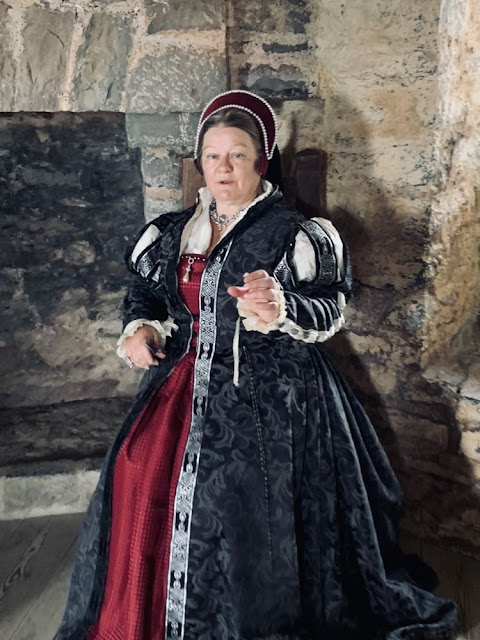
Judith writes historical fiction set during the late medieval and Tudor period. Her usual focus is on the women who lived close to the monarch, women like Margaret Beaufort, Elizabeth of York and Mary Tudor but more recently has been writing from the perspective of Henry VIII himself. Her books are on Kindle, Audible and Paperback.

You can find her fiction books here: http://author.to/juditharnoppbooks

She also writes non-fiction, her work featuring in many anthologies and online magazines. Her latest non-fiction, How to Dress like a Tudor published by Pen & Sword Books is available now. 

Judith is a founder member of a reenactment group The Fyne Company of Cambria, and began making Tudor costumes for herself, her husband, John, and other members of the group. It was this that inspired How to Dress like a Tudor and she hopes to write more non-fiction Tudor history in the future.

Connect with the author

WebsiteBlueskyBook Bub:

Follow the How To Dress Like A Tudor blog tour with The Coffee Pot Book Club

I’m delighted to welcome Kimberley Burns to the blog with a post about her new book, The Redemption of Mattie Silks #HistoricalFiction #HistoricalWomensFiction #WestwardExpansion #BlogTour #CoffeePotBookClub

I’m delighted to welcome Kimberley Burns to the blog with a post about her new book, The Redemption of Mattie Silks.

Women of the Old West

Women of the Old West were pioneers and trailblazers, but not just in the sense that they gave up their homes and trekked into the wilderness. They also blazed trails in business, were pioneers of medicine and groundbreakers in politics.

Remember the old US Army advertising campaign: “We do more before 9AM than most people do all day”? My great-grandmother could have given any soldier a run for their money. With a baby on her hip and five more little ones trailing behind, she packed her valuables into a wagon and walked from North Carolina to Colorado. She spent the rest of her life on a homestead in the Colorado foothills, keeping the house and raising three more babies while also completing a man’s day’s work out on the range. She may have accomplished more before any given sunrise than I do in a good year. Sadly, stories of her and other remarkable but unknown heroines are being lost in the fog of history. 

There were few acceptable careers for women in the 1800s, and certainly none that created wealth. Most working women struggled on subsistence earnings as laundresses, cooks, maids, or teachers. But in the West, where survival often depended on everyone pulling their weight, women could not afford to be shrinking violets. Their husbands and communities needed all hands to pitch in. The move west wrenched women from the customs, conventions, standards, and traditions with which they had been raised. They had to develop new codes of acceptable behavior, dress, and mores. In my novel The Mrs. Tabor, a local madam explains that a woman alone can act with the highest decorum and in the end, she will politely starve to death. The madam warns, “The law of survival always trumps the rules of etiquette.”

The need for labor gave Western women opportunities to create careers that their sisters in the East did not have. Women were often good with livestock, and ran cattle ranches, bred horses, or drove pack mules. It is estimated that 15% of homesteaders were single women. In an era when women could not sign a legal contract or open a bank account, female entrepreneurs owned restaurants, stores, and hotels in frontier towns. 

In the mining boomtowns, most men preferred prospecting to planning infrastructure. This opened the door for the few women there to participate in government and improve the living conditions for their families and communities. In fact, many Old West towns lacked a school and church until the females organized the funding and building of these cultural institutions. White men may have explored the West, but white women settled it.

Western women also participated in politics decades before the constitution was amended to allow voting for all, regardless of sex. Wyoming Territory passed a women’s voting act in 1869, and the gals got right to work. Within a year the territory had female jury members, a bailiff and a justice of the peace. Other states and territories west of the Mississippi soon followed suit and women were voting in Colorado by 1893 and in Utah by 1896. 

In a region where males greatly outnumbered females, some lonely men were of the opinion that woman’s suffrage might attract quality marriage candidates. Daring and hardy adventuresses would be drawn to a new life in the Wild West in they had a hand in shaping it. Delicate flowers accustomed to a steady life of comfort need not apply. 

When their Eastern sisters were marching for the right to vote in matching white dresses, Western women were campaigning to be elected to public office themselves. All-lady town councils were elected in Oskaloosa, Kansas (1888) and Kanab, Utah (1912). In 1920, the same year that the 19th Amendment was finally ratified, Jackson, Wyoming elected an all-female mayor and city council. One of their descendants wrote, “There was a practical approach to it. [They said] we need this and we’ll do it ourselves.” Dubbed the Petticoat Rulers, they extended electric service, installed street lights, grated streets, created a town cemetery, collected taxes, and appointed a (female) town treasurer, marshal, and health officer. 

Medical schools were graduating a handful of token female doctors in the late 1800s. Many of those found acceptance in the rough western territories. Perhaps citizens felt a lady doctor was better than no doctor at all. The television show Dr. Quinn, Medicine Woman was loosely based on the life of Doc Susie who served small mountain towns in the Colorado Rockies from 1893 until 1956. Imagine the patients she must have treated in a region filled with wild animals and wilder men. Her story and that of a few other early medical professionals are noted in state historical society collections, but most are unknown in the wider world.

Some women found work on the wrong side of the law. Pearl Hart robbed stagecoaches. Belle Star led a gang of cattle rustlers. Sing Choy, also known as China Mary, controlled the opium dens and Chinese prostitution in old Tombstone. The main character of my latest book, Mattie Silks, used her sharp business acumen to run one of Denver’s most successful brothels for over forty years.

Regardless of where they found employment, the women of the Old West displayed an incredible work ethic and courage enough to fill a library with adventure stories. But there is another, less glamorous trait they seemed to possess — pragmatism. If there was work to be done, they simply got to it. I don’t think many of the women who settled the wild frontier took any time to reflect on accomplishments or bask in any congratulatory accolades. There were few philosophical debates about equality of ability or opportunity. They were too busy, living by the motto, “Get ’er done!”

Here’s the blurb:  

SEEKING REDEMPTION, SHE FINDS RETRIBUTION

In 1892, running one of the West’s fanciest brothels is a rough game. In a town filled with brazen criminals, corrupt police, zealous politicians, and morality committees, Madam Mattie Silks makes her fortune catering to Colorado’s gold and silver millionaires.

Notorious crime boss “Soapy” Smith is at the top of the Denver underworld. There are no rules for Smith’s gang. They solve problems with bribes and bullets. When Mattie’s husband stumbles into Soapy’s dealings, she struggles to protect him.

Gold is discovered in the Yukon and Mattie seizes the opportunity for adventure and profit. But Skagway, Alaska, is even more lawless than Denver. Mattie must use all her business sense and street smarts to safeguard those she cares about. Will it be enough? Or will Lady Justice again turn a blind eye?

Based on a true story, The Redemption of Mattie Silks is an action-packed tale of a woman succeeding in a man’s world even when the cards are stacked against her.

“The research on the era shines through, as do the grit and spirit of the characters. …A colorful and enthralling journey.” 

~ K.T. Blakemore, award-winning author of The Good Time Girlsseries

“A nice, nuanced portrait of the complex underworld with fine and witty turns of phrase. A great Western romp!”

~ Randi Samuelson-Brown, award-winning author of The Bad Old Daysseries

Buy Links:

This title is available to read with #KindleUnlimited

https://books2read.com/u/mlpKRv

Meet the author

Kimberly Burns grew up in Colorado hearing stories about the colourful characters of the Old West. She has degrees from the University of Colorado and the University of Hartford. Kimberly is a member of the Historical Novel Society, Western Writers of America, and Women Writing the West. She lives with her husband and black Lab in Leesburg, Virginia.

Her debut novel The Mrs. Tabor won numerous awards including the Western Fictioneers Peacemaker Award for Best New Novel, a gold medal for Best Regional Fiction from the Independent Publisher Book Awards, a National Indie Excellence Award, and a silver medal from the Colorado Independent Publishers Association EVVY Awards.

Kimberly and her unruly heroines make for an entertaining book talk. She is available to discuss her novels with book groups in person or online. Email her at info@kimberlyburnsauthor.com.

Connect with the author

Website

Follow The Redemption of Mattie Silks blog tour with The Coffee Pot Book Club