
On this day in history, The Battle of Hædfeld #nonfiction #histfic #Saxon

On this day in history, The Battle of Hædfeld #nonfiction #histfic #Saxon

The Battle of Hædfeld, 12th October AD632 or 633

Not to give too many spoilers, but below is an account of the battle of Hædfeld on 12th October AD632 or 633 (there is a little bit of confusion surrounding the year and indeed the date due to a belief Bede may not have started the years as we would do).

The Words of Bede from ‘The Ecclesiastical History of the English People’

“EDWIN reigned most gloriously seventeen years over the nations of the English and the Britons, six whereof, as has been said, he also was a servant in the kingdom of Christ. Cadwalla; king of the Britons, rebelled against him, being supported by Penda, a most warlike man of the royal race of the Mercians, and who from that time governed that nation twenty-two years with various success. A great battle being fought in the plain that is called Heathfield, Edwin was killed on the 12th of October, in the year of our Lord 633, being then forty-seven years of age, and all his army was either slain or dispersed. In the same war also, before him, fell Osfrid, one of his sons, a warlike youth; Eanfrid, another of them, compelled by necessity, went over to King Penda, and was by him afterwards, in the reign of Oswald, slain, contrary to his oath.”

Bede, a Northumbrian monk writing a hundred years after the events, was no doubt dismayed that his holy (but only recently converted to Christianity) king, Edwin, was killed by a coalition raised against him, one of whom, Penda, was a pagan. Penda was to cause no end of problems for the Northumbrian kingdom, and its two constituent parts, Bernicia (roughly what we now think of as Northumberland) and Deira (centred around York). It is quite astounding to realise how many people Edwin upset, for it wasn’t just Penda and Cadwallon (believed to have been Edwin’s foster-brother and now king of one of the Welsh kingdoms) who joined the battle. There were many, many people with an axe to grind against Edwin, from the furthest reaches of Britain (check out this post about politics in the seventh century). Yet, victory never seems to have been assured. The two coalitions were almost perfectly poised against one another.
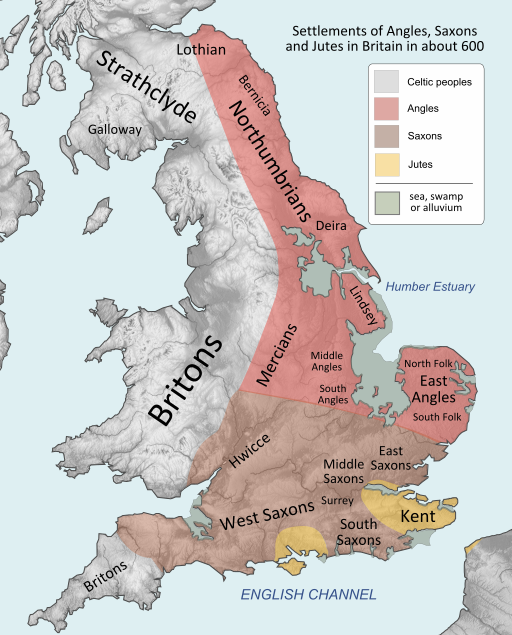
https://commons.wikimedia.org/wiki/File:Britain_peoples_circa_600.svg

I find the date of the battle quite fascinating. October. Somewhere near Doncaster, on the banks of the River Don (or so it’s been believed for a long time – this might be being reappraised even as I type this). It would, undoubtedly, have been far past what we consider the ‘prime’ time to be battling. Not yet winter, but summer would undoubtedly have been behind them. It was also a long way from home for the alliance arranged against Edwin, in territory belonging to Edwin. I can’t help thinking he should have had the advantage. But that was most certainly not the case at the end of the day.

I’ve said before, and I’ll repeat it again, as much as we look at this period and see bloody warfare, what we’re really looking at is family politics played out with sword, seax, shield and spear. Edwin was Cadwallon’s foster-brother. Edwin’s son turned on his father and allied with the ‘enemy.’ One of those who joined the alliance against him was his nephew (Edwin’s sister’s son). Edwin had killed his father to become king and he was living in exile. The coming decades saw constant unease between Mercia and Northumbria, which erupted into full-blown war on two subsequent occasions, at Maserfeld in 641/2 (close to the Welsh border) and Winwæd in 655 (again, believed to be somewhere vaguely in the ‘north’ of England, and this time in November!). The ebb and flow of battle undoubtedly categorised these men (and women). While Bede portrays events with religious connotations (for he is writing an eccelsiastical history) it is much more likely family dynamics were at play with their attendent treachery, betrayal and sometimes, more rarely, loyalty.

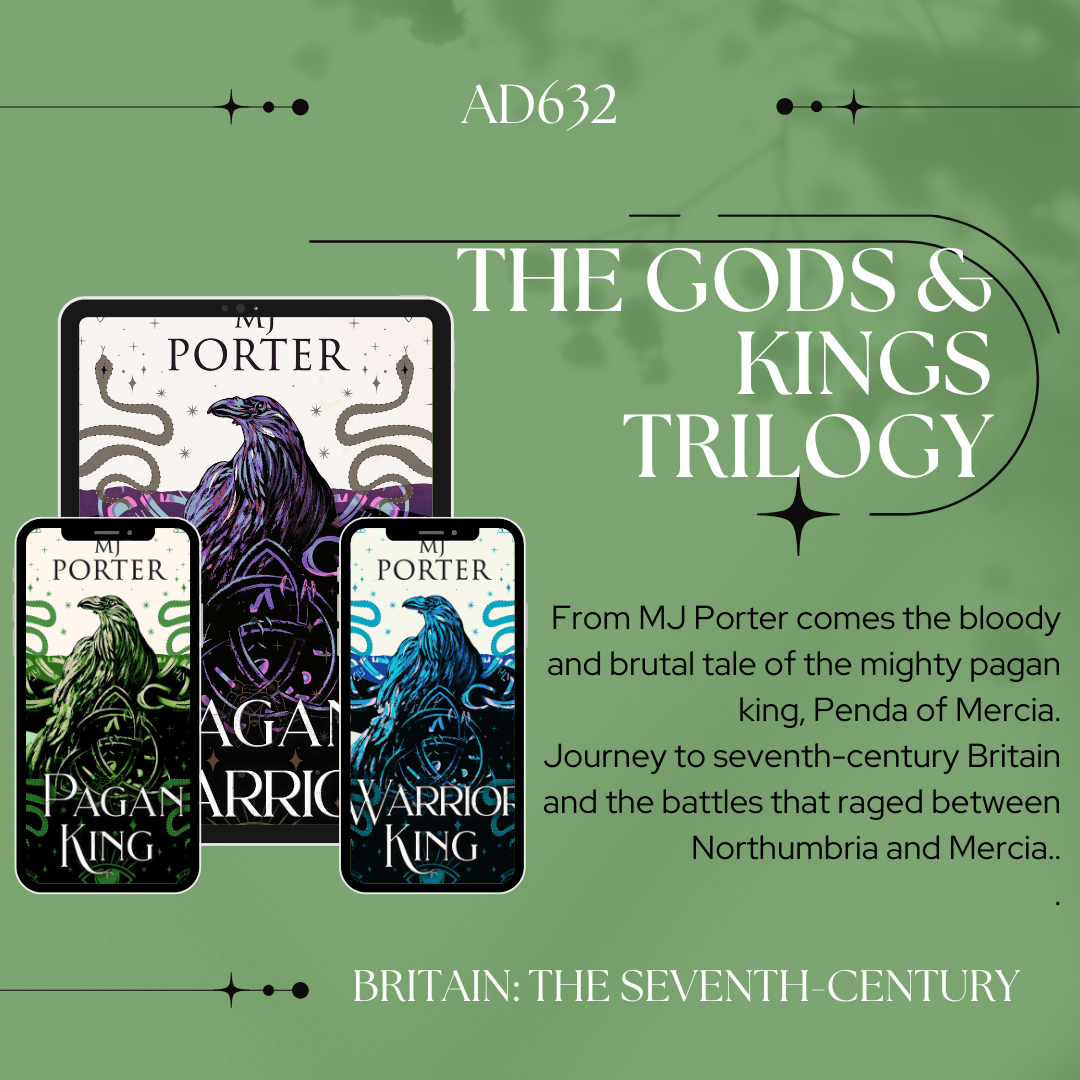
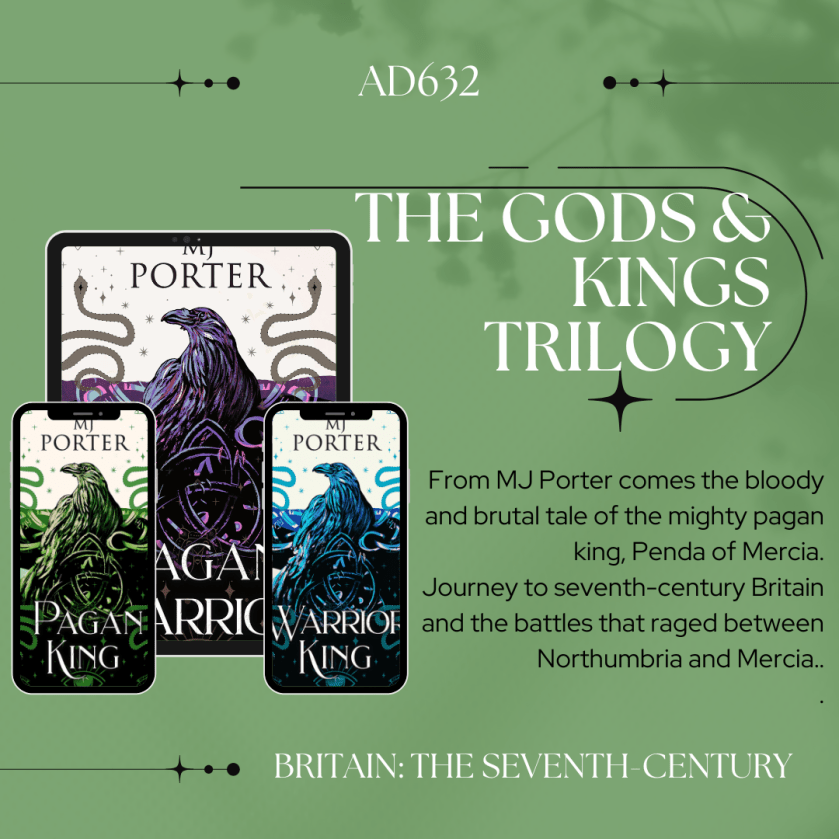
You can read about this period in my Gods and Kings trilogy.
Check out the Gods and Kings Trilogy page to find articles about the trilogy and Britain in the Seventh Century.
Posts

Pagan Warrior is 10 today #bookbirthday #histfic

The book birthday’s keep coming in 2025

On this day in history….. Pagan Warrior, then titled Hædfeld first hit the ‘shelves,’ as it were. Until the release of Men of Iron earlier this year, Pagan Warrior had been the furthest back in time I’d written about. So, what prompted me to write about Penda, the mighty pagan king of Mercia?

Well, I think you all know by now that I’m a Mercian by birth. But my plans for Penda actually started with the desire to tell the story of the battle of Maserfeld, which is the second major battle Penda fought against the Northumbrians, nine years after Hædfeld. For the sake of my readers, and because it was too good an opportunity to miss, I decided to start with the earlier battle of Hædfeld.

And what a revelation it was. I’ve said before there are certain periods in the history of Saxon England that feel as though we know more about them – Pagan Warrior and the whole Gods and Kings Trilogy is one of those periods. We have the names of Penda’s many allies and his enemies. The island of Britain so often segregated into neat little kingdoms that too often fall into the now established England, Scotland and Wales (and Northern Ireland) feels alive with the earlier, smaller kingdoms stretching from Dumnonia all the way to the Pictish kingdom, taking in Wessex, Mercia and the Welsh kingdoms along the way. And of course the family dynamics between the Mercian brothers and the Northumbrian children also offered a fascinating angle to explore. On top of all that there was the pagan/Christian element as well. What a delight.

At the heart of it, Hædfeld is a story of a single battle, and the events that led to it, so often the case, years in the making. So, if you’ve not tried Pagan Warrior now is the perfect opportunity. The ebook is currenly 99p/99c on all good platforms (not just Amazon), and to celebrate, I’ve created a special edition matte covered hardback with foiled writing, (exclusively available sirectly from my SumUp store) AND a boxset of the whole trilogy. (It’s also available in audio but I can’t do any special offers for that).

Check out the Gods and Kings Trilogy page to find articles about the trilogy and Britain in the Seventh Century.
Posts

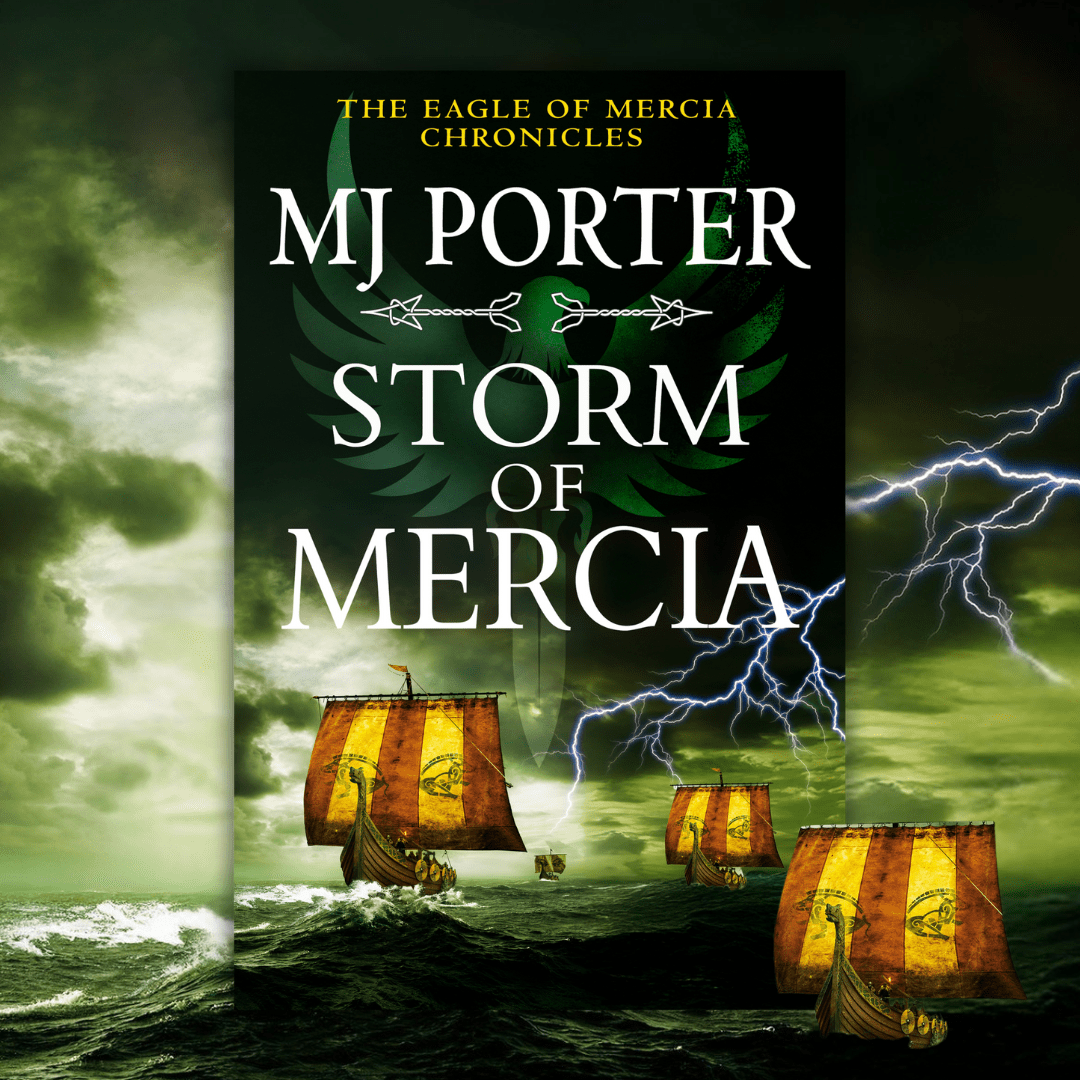
I’m sharing a post about Britain in the Seventh Century, the setting for #PaganWarrior, the first book in the #GodsAndKings trilogy #histfic #PendaThePagan

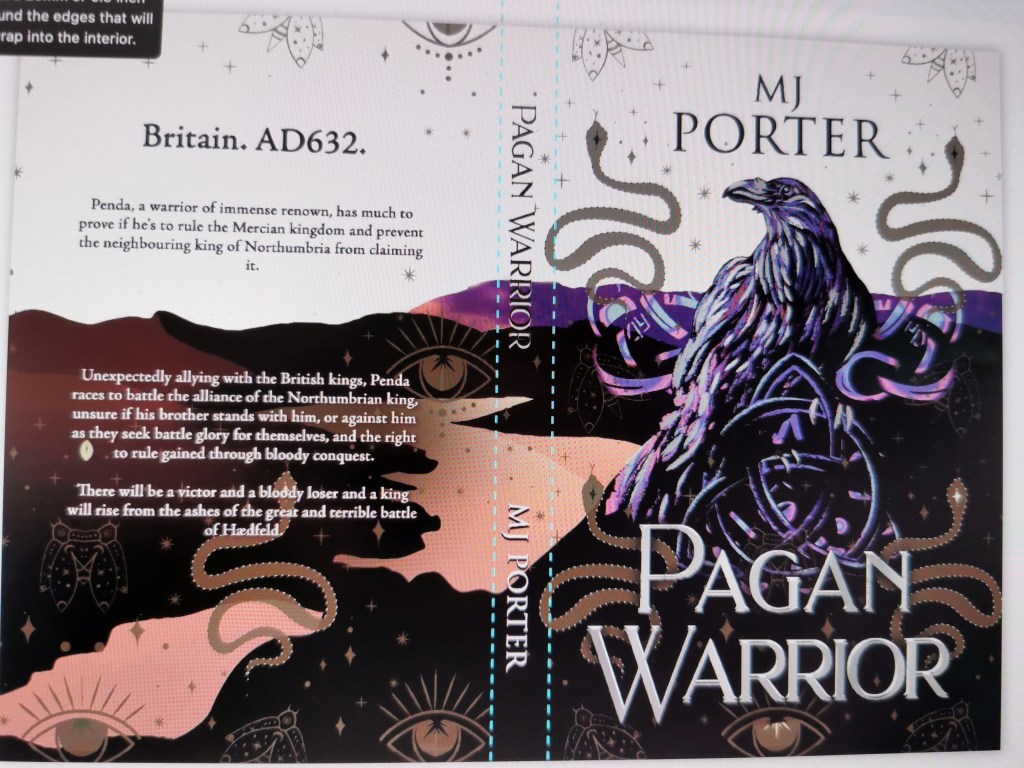
Here’s the blurb

Britain. AD632.

Penda, a warrior of immense renown, has much to prove if he is to rule the Mercian kingdom of his dead father and prevent the neighbouring king of Northumbria from claiming it.

Unexpectedly allying with the British kings, Penda races to battle the alliance of the Northumbrian king, unsure if his brother stands with him or against him as they seek battle glory for themselves, and the right to rule gained through bloody conquest.

There will be a victor and a bloody loser, and a king will rise from the ashes of the great and terrible battle of Hædfeld.

books2read.com/PaganWarrior

Britain in the Seventh Century – a patchwork of kingdoms

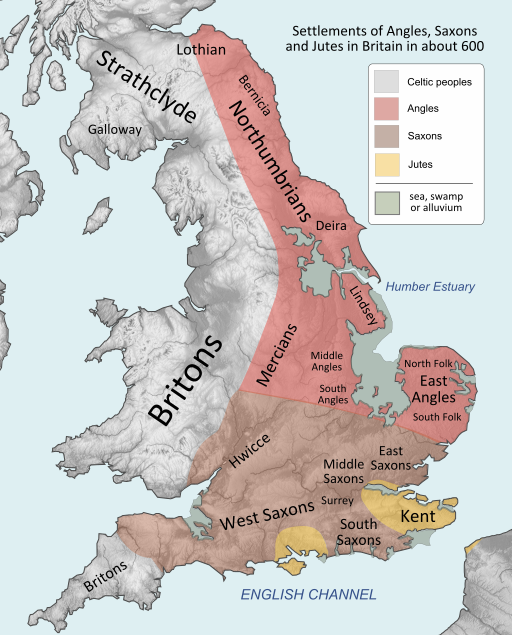
One of the hardest processes when writing about this very early period of Britain is to get an idea of what the kingdoms might have looked like and to explain this to the reader. The seventh century is often seen as the period when the Heptarchy, the seven very well-known kingdoms of the Saxon period, emerged and formed, ultimately derived from potentially very many much smaller kingdoms, the names of which are only rarely still known.

The Heptarchy consisted of the kingdoms of Northumbria (itself derived from the uniting of Deira and Bernicia), Mercia, the kingdom of the East Angles, Wessex, Sussex, Kent, and Essex. In later centuries, these kingdoms would merge until only four main kingdoms remained, and then, from the early middle of the tenth century, England emerged. But the battle of Hædfeld with which Pagan Warrior concludes was a British-wide battle set as this process was formalising in the seventh century, and there are yet more kingdoms that must be mentioned which didn’t form part of Saxon England.

Scotland didn’t yet exist, but Dal Riata, Pictland and Alt Clut (sometimes called Strathclyde) did. Wales didn’t exist, although the kingdoms of Gwynedd, Deheubarth, Ceredigion and Powys did, The kingdom of Dumnonia (modern-day Cornwall), was also in existence and very much not part of Saxon England. Indeed, these kingdoms are often termed British, as opposed to Saxon. As someone woeful at geography – I purposefully don’t adopt the names of places from this period because it confuses me – I’m only too well aware of how much I’m asking from my reader as it is without adding weird place names to already strange sounding personal names, and yet it was necessary to add a whole host of strange names, which often, have no relation to the current names of counties, let alone kingdoms.

All of these different kingdoms, we’re told, were involved in some way in the battle of Hædfeld. Some of the kingdoms joined the alliance, spear-headed by Cadwallon of Gwynedd, Edwin’s foster-brother. Others joined that of Edwin of Northumbria. Almost all of them took one side or another in the mighty battle of Hædfeld fought in 632 or 633 (there is some confusion about the exact date) between the two sides. To ensure my readers have some idea of who’s who, I’ve termed all of the character’s as being ‘of’ their kingdom, although I’m unsure if that’s actually how they might have been named.

I was surprised by how many individuals could be named from the seventh century, particularly for the build-up to the battle of Hædfeld. The cast is not Game of Thrones huge, but it was larger than I expected. Not just Penda of the Hwicce, only later could he be termed of Mercia, and Cadwallon of Gwynedd in the British ‘alliance’, but also Cloten of Deheubarth, Clydog of Ceredigion, Eiludd of Powys, Clemen of Dumnonia, Domnall Brecc of Dal Riata, Beli of Alt Clut and Eanfrith of Bernicia. While on the Northumbrian led alliance were Edwin of Northumbria, alongside his children, Osfrith and Eadfrith, as well as Eowa of the Hwicce, Osric of Deira – Edwin’s cousin, Cynegils of Wessex, Sigeberht of the East Angles and Oswald of Bernicia – Edwin’s nephew. At least, that’s how I stack the two sides as the battle is about to commence. In later periods, it is sometimes a struggle to find who was king of where and when that might have been, so to find so many characters, even if it can seem a little overwhelming, was fantastic and ensured that the British-wide battle of Hædfeld could be retold in Pagan Warrior with a nod to each of these kings, and the part they might, or might not, have played in the events that played out on that fateful day in October 632 or 633. 

Map of Britain in the 600s, User:Hel-hama, CC BY-SA 3.0 <http://creativecommons.org/licenses/by-sa/3.0/&gt;, via Wikimedia Commons


Posts

On this day in history, the Battle of Winwæd in 655 between the Mercians and the Northumbrians

The Battle of Winwæd, fought on 15th November 655, is the backdrop for the final book in the Gods and Kings trilogy, which follows three very famous battles, Hædfeld in 632/3, Maserfield in 642 and Winwæd in 655, only one of the battles being fought in the summer – which always surprises me. These three pitched battles saw Mercia and Northumbria vying for supremacy over the Saxon kingdoms of Britain, a narrative that has been interpreted as leading to Northumbria’s triumph, and indeed, its Golden Age.

But much of what happened from Hæ∂feld to Winwæd was a matter of family politics, muddled by the many marriages these kings may have made, and the horde of children they fathered who had opinions and aspirations of their own. Just as the War of the Roses many centuries later, this was a time when family loyalty meant little or nothing to some people, and everything to others.

The Mercian king, Penda, most famously known for being a pagan when the Saxon kingdoms were being converted to Christianity, achieved a great deal throughout his lifetime, regardless of the debate about how long he reigned for and when he can officially be known as King of Mercia, and he is the constant throughout these three battles. The bias of Bede, our main source for this period (even though he wrote in the following century) and his famous list of bretwaldas (wide-rulers) ignores Penda. In doing so people cast their eyes only on events in Northumbria, seeing Penda in the same light as Bede would have us do, as a pagan who continually thwarted the advances of the Christian doctrine either from the north (Celtic Christianity) or the south (Roman Christianity). In fact, Penda could reasonably be said to have achieved far more than the Northumbrian kings, Edwin, Oswald or Oswiu ever did – the men he battled against at Hædfeld, Maserfeld and Winwæd. It’s a great pity that he met his death in the way he did, allowing Bede to skewer his narrative even further, to make Oswiu, the Christian, the victor over Penda the pagan.

History can be cruel.

Yet recent historians cast Penda in a more complimentary light. D.P. Kirby calls him ‘without question the most powerful Mercian ruler so far to have emerged in the Midlands.’ Frank Stenton has gone further, ‘the most formidable king in England.’ Whilst N J Higham accords him ‘a pre-eminent reputation as a god-protected, warrior king.’ These aren’t hastily given words from men who’ve studied Saxon England to a much greater degree than I have.

The wording of Bede is vague when detailing this third and final battle of Penda’s against the Northumbrians. Bede could speak directly when he wanted to, or so it seems, but for some events, he applied a little haze of Northumbrian drizzle to obscure the facts, but on the fact that more men died in the flood waters than on the battlefield, he is clear.

Bede’s Ecclesiastical History of the English People

http://legacy.fordham.edu/halsall/basis/bede-book2.asp

CHAPTER XXIV
KING PENDA BEING SLAIN, THE MERCIANS RECEIVED THE FAITH OF CHRIST, AND OSWY GAVE POSSESSIONS AND TERRITORIES TO GOD, FOR BUILDING MONASTERIES, IN ACKNOWLEDGMENT FOR THE VICTORY OBTAINED. [A.D. 655.] 
AT this time, King Oswy was exposed to the fierce and intolerable irruptions of Penda, king of the Mercians, whom we have so often mentioned, and who had slain his brother; …….After this he gave battle with a very small army against superior forces: indeed, it is reported that the pagans had three times the number of men; for they had thirty legions, led on by most noted commanders. King Oswy and his son Aifrid met them with a very small army, as has been said, but confiding in the conduct of Christ; his other son, Egfrid, was then kept an hostage at the court of Queen Cynwise, in the province of the Mercians. King Oswald’s son Etheiwald, who ought to have assisted them, was on the enemy’s side, and led them on to fight against his country and uncle; though, during the battle, he withdrew, and awaited the event in a place of safety. The engagement beginning, the pagans were defeated, the thirty commanders, and those who had come to his assistance were put to flight, and almost all of them slain; among whom was Ethelbere, brother and successor to Anna, king of the East Angles, who had been the occasion of the war, and who was now killed, with all his soldiers. The battle was fought near the river Vinwed, which then, with the great rains, had not only filled its channel, hut overflowed its banks, so that many more were drowned in the flight than destroyed by the sword. 
This narrative is largely copied in the other surviving sources, all much later than the events they describe.

Historia Brittonum

 http://legacy.fordham.edu/halsall/basis/nennius-full.asp

Penda, son of Pybba, reigned ten years; he first separated the kingdom of Mercia from that of the North-men, and slew by treachery Anna, king of the East Anglians, and St. Oswald, king of the North-men. He fought the battle of Cocboy, in which fell Eawa, son of Pybba, his brother, king of the Mercians, and Oswald, king of the North-men, and he gained the victory by diabolical agency. He was not baptized, and never believed in God.

The Anglo-Saxon Chronicle (first written from the late 890s).

A.D. 655.  This year Penda was slain at Wingfield, and thirty royal personages with him, some of whom were kings.  One of them was Ethelhere, brother of Anna, king of the East-Angles.  The Mercians after this became Christians.  From the beginning of the world had now elapsed five thousand eight hundred and fifty winters, when Paeda, the son of Penda, assumed the government of the Mercians.  

You can read ‘my’ interpretation of the Battle of Winwæd in Warrior King, and you can also allow the fabulous Matt Coles to narrate it for you. Check out The Gods and Kings Trilogy page for more information.

Posts

I’m sharing a blog post about Penda, king of the Mercians.

Penda of Mercia

Penda of Mercia is famous for many things, including killing two Northumbrian kings throughout his life. He’s also famous for being a pagan at a time when Roman Christianity was asserting itself from the southern kingdom of Kent. But who was he?

Who was Penda of Mercia?

Penda’s origins are unclear. We don’t know when he was born or where he came from, although it must be assumed he was a member of a family from which the growing kingdom of Mercia might look for its kings. He’s often associated with the subkingdom of the Hwicce, centered around Gloucester. The later source, the Anglo-Saxon Chronicle, written at least two hundred and fifty years after his life records,

626 ‘And Penda had the kingdom for 30 years; and he was 50 years old when he succeeded to the kingdom.’ ASC A p24

626 ‘And here Penda succeeded to the kingdom, and ruled 30 years.’ ASC E p25

Knowing, as we do, that he died in 655, this would have made Penda over eighty years old at his death, a fact that is much debated. Was his age just part of the allure of the legend? A mighty pagan warrior, fighting well into his eighties? Sadly, we may never know the truth of that, but it is disputed, and there are intricate problems with the sources that boggle the brain.

Hædfeld, Maserfeld and Winwæd

Suffice it to say, we don’t know Penda’s age or origins clearly, but we do know that he was involved in three very famous battles throughout the middle years of the seventh century, that at Hædfeld in 632/33 fought somewhere close to the River Don, in which King Edwin of Northumbria was killed. That of Maserfeld, in 641/2 in which King Oswald of Northumbria was killed, close to Oswestry, not far from today’s Welsh border. And Penda’s final battle, that of Winwæd in 655 in which he was killed while fighting in the north, perhaps close to Leeds. While these are the battles we know a great deal about, thanks to the writings of Bede and his Ecclesiastical History of the English People, a Northumbrian monk, with an interest in Northumbria’s religious conversion, who completed his work in 731, Penda was a warrior through and through. He fought the kingdoms to the south, the West Saxons, or Wessex as we might know it. He fought in the kingdom of the East Angles. He allied with Welsh kings. He meddled in affairs in Northumbria, and had he not died in 655, it is possible that Northumbria’s Golden Age would have ended much sooner than it did. His son married a Northumbrian princess. His daughter married a Northumbrian prince. Penda was either brokering an alliance with Northumbria or perhaps using marriage as a means of assimilating a kingdom that he was clear to overrun. 

Bede

Our narrator of Penda’s reign, is sadly a Christian monk writing up to seventy years after his death. His commentary is biased, and his story is focused on the triumph of religion and Northumbria, probably in that order. And yet, as Bede’s work was coming to its conclusion, even he understood that the Golden Age of Northumbria was coming to an end. A later king, Æthelbald, related not to Penda, but to his brother, Eowa, killed at the battle of Maserfeld, although whether fighting beside his brother or for the enemy is unknown, was the force in Saxon England at the time. How those words must have burned to write when Bede couldn’t skewer the contemporary narrative as he might have liked.

But while Penda’s reign is so closely tied to the words of Bede, our only real source from the period in Saxon England, although there are sources that exist from Wales and Ireland, Penda’s achievements aren’t to be ignored.

Penda’s reputation

Recent historians cast Penda in a complimentary light. D.P. Kirby calls him ‘without question the most powerful Mercian ruler so far to have emerged in the Midlands.’ Frank Stenton has gone further, ‘the most formidable king in England.’ While N J Higham accords him ‘a pre-eminent reputation as a god-protected, warrior king.’ These aren’t hastily given words from men who’ve studied Saxon England to a much greater degree than I have. Penda and his reputation need a thorough reassessment.

After his death, his children ruled after him, but in time, it was to his brother’s side of the family that later kings claimed their descent, both King Æthelbald and King Offa of the eighth-century Mercian supremacy are said to have descended from Eowa.


Check out the Gods and Kings page for more information.

I’m sharing a blog post about what we do and don’t know about warfare in the Saxon era. #GodsAndKingsTrilogy #histfic #PaganKing

I’m sharing a blog post about what we do and don’t know about warfare in the Saxon era. #GodsAndKingsTrilogy #histfic #PaganKing

Here’s the blurb for Pagan King

Britain. AD641.

The year is AD641, and the great Oswald of Northumbria, bretwalda over England, must battle against an alliance of the old Britons and the Saxons led by Penda of the Hwicce, the victor of Hæ∂feld nine years before, the only Saxon leader seemingly immune to Oswald’s beguiling talk of the new Christianity spreading through England from both the north and the south.

Alliances will be made and broken, and the victory will go to the man most skilled in warcraft and statecraft.

The ebb and flow of battle will once more redraw the lines of the petty kingdoms stretching across the British Isles.

There will be another victor and another bloody loser.

books2read.com/PaganKing

Warfare during the Saxon period. What we know and what we don’t know about the battle of Hædfeld.

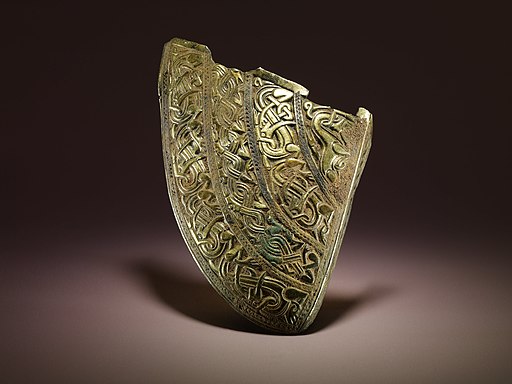
Thanks to some spectacular archaeological finds, we can visualise how a Saxon warrior might have looked. The reconstructions of the Sutton Hoo helm, and that found with the Staffordshire Horde (as well as a few others), present us with elaborate helmets crested with dyed-horse hair in a way very reminiscent of the Roman era. They glitter, and they seem to be festooned in gold and silver work, but whether these were actually worn in battle or not is debatable. Firstly, they would have made the kings or noblemen very noticeable to their enemy. Secondly, they were so valuable it’s impossible to consider the loss of one of them should they fall and their goods be taken by their enemy. Bad enough for their king and leader to die in battle, but to also lose such precious wealth as well seems unlikely. That said, of course, the Sutton Hoo helm was buried, and the fragments of the Staffordshire Hoard helmet were buried and lost. An image of the Staffordshire Helmet can be found here: https://www.stokemuseums.org.uk/pmag/collections/archaeology/the-staffordshire-hoard/

The monograph on the Staffordshire Hoard is also available for free download from https://library.oapen.org/handle/20.500.12657/39941

But there is another reason why these helmets might have existed, and that’s because they were for ceremonial purposes. Kings, before the reign of Athelstan (925-937) are not known to have undergone consecration with a crown but rather with a helmet. After all, they were warrior kings. Perhaps then, these survivals are more akin to that worn by a warrior-king when appearing before his people or for ceremonial reasons.

What then might have been the more usual garb for a warrior of the Saxon era, which at nearly six hundred years is bound to offer some variations? Shield, spear, seax, sword and byrnie. We get a feel for these items and how valuable they were from wills that survive from the later Saxon era, hundreds of years after the events of Pagan Warrior. Ealdormen had horses, both saddled and unsaddled, shields, spears, swords, helmets, byrnies, seax, scabbards and spears. The will of Æthelmær, an ealdorman in the later tenth century, records that he’s granting his king, ‘four swords and eight horses, four with trappings and four without, and four helmets and four coats of mail and eight spears and eight shields,’[1] as part of his heriot, a contentious term for something that some argue was an eleventh-century development, and others argue, is merely reflecting earlier practice on the death of a man.

There would also have been thegns and king thegns, who had their own weapons, as well as the men of the fyrd, the free-men who could be called upon to perform military service each year, as and when required. It’s often assumed they would have been less well-armed, although this begs the question of whether kings and their warrior nobility were prepared to sacrifice those they relied on to provide them with food to gain more wealth. They might have found themselves with the money to pay for food but without the opportunity to do so.

There are very few representations of warriors, but the surviving strands of the Gododdin, a sixth-century lament to the fallen of Catraeth gives an idea of how these warrior men thought of one another. There is much talk of killing many enemies, drinking mead, and being mourned by those they leave behind.

Flickr user “Portable Antiquities Scheme”, CC BY 2.0 <https://creativecommons.org/licenses/by/2.0&gt;, via Wikimedia Commons

Battle tactics from the period are impossible to determine fully. Before writing my books which are blood-filled and violent, I read a fascinating account, by a military historian, on how he thought the Battle of Hastings might have been won or lost. The overwhelming sense I came away from the book with was that local features, hillocks, streams, field boundaries even perhaps the path of a sheep track might well be the very thing that won or lost a battle for these opposing sides. The land that kings chose to go to war on was incredibly important,

When trying to reconstruct the battlefield for the battle of Hædfeld, which concludes Pagan Warrior, I encountered a problem that will be familiar to writers of the Saxon era. The place where the battle is believed to have taken place, on the south bank of the River Don (although this has been disputed and work continues to discover whether the other location could be the correct one), has been much changed by later developments. It was drained in the 1600s and therefore, it doesn’t look today as it would have done when the battle took place. 

I had very little information to work on. The River Don, the River Idle, the River Ouse, the belief that the ground would have been marshy, and that many men fell in the battle. And the words of Bede in his Ecclesiastical History, ‘A great battle being fought in the plain that is called Heathfield.’[2] Much of the rest is my imagination.


[1] Dorothy Whitelock, Anglo-Saxon Wills 1930, reprinted edition. Cambridge University Press. p27

[2] http://legacy.fordham.edu/halsall/basis/bede-book2.asp


Posts

It’s the anniversary of the battle of Hædfeld, and I’m sharing a post about Britain in the Seventh Century

Here’s the blurb

Britain. AD632.

Penda, a warrior of immense renown, has much to prove if he is to rule the Mercian kingdom of his dead father and prevent the neighbouring king of Northumbria from claiming it.

Unexpectedly allying with the British kings, Penda races to battle the alliance of the Northumbrian king, unsure if his brother stands with him or against him as they seek battle glory for themselves, and the right to rule gained through bloody conquest.

There will be a victor and a bloody loser, and a king will rise from the ashes of the great and terrible battle of Hædfeld.

books2read.com/PaganWarrior

(Nook readers, use code BNPWARRIOR75 to get 75% off the ebook cost)

Britain in the Seventh Century – a patchwork of kingdoms

One of the hardest processes when writing about this very early period of Britain is to get an idea of what the kingdoms might have looked like and to explain this to the reader. The seventh century is often seen as the period when the Heptarchy, the seven very well-known kingdoms of the Saxon period, emerged and formed, ultimately derived from potentially very many much smaller kingdoms, the names of which are only rarely still known.

The Heptarchy consisted of the kingdoms of Northumbria (itself derived from the uniting of Deira and Bernicia), Mercia, the kingdom of the East Angles, Wessex, Sussex, Kent, and Essex. In later centuries, these kingdoms would merge until only four main kingdoms remained, and then, from the early middle of the tenth century, England emerged. But the battle of Hædfeld with which Pagan Warrior concludes was a British-wide battle set as this process was formalising in the seventh century, and there are yet more kingdoms that must be mentioned which didn’t form part of Saxon England.

Scotland didn’t yet exist, but Dal Riata, Pictland and Alt Clut (sometimes called Strathclyde) did. Wales didn’t exist, although the kingdoms of Gwynedd, Deheubarth, Ceredigion and Powys did, The kingdom of Dumnonia (modern-day Cornwall), was also in existence and very much not part of Saxon England. Indeed, these kingdoms are often termed British, as opposed to Saxon. As someone woeful at geography – I purposefully don’t adopt the names of places from this period because it confuses me – I’m only too well aware of how much I’m asking from my reader as it is without adding weird place names to already strange sounding personal names, and yet it was necessary to add a whole host of strange names, which often, have no relation to the current names of counties, let alone kingdoms.

All of these different kingdoms, we’re told, were involved in some way in the battle of Hædfeld. Some of the kingdoms joined the alliance, spear-headed by Cadwallon of Gwynedd, Edwin’s foster-brother. Others joined that of Edwin of Northumbria. Almost all of them took one side or another in the mighty battle of Hædfeld fought in 632 or 633 (there is some confusion about the exact date) between the two sides. To ensure my readers have some idea of who’s who, I’ve termed all of the character’s as being ‘of’ their kingdom, although I’m unsure if that’s actually how they might have been named.

I was surprised by how many individuals could be named from the seventh century, particularly for the build-up to the battle of Hædfeld. The cast is not Game of Thrones huge, but it was larger than I expected. Not just Penda of the Hwicce, only later could he be termed of Mercia, and Cadwallon of Gwynedd in the British ‘alliance’, but also Cloten of Deheubarth, Clydog of Ceredigion, Eiludd of Powys, Clemen of Dumnonia, Domnall Brecc of Dal Riata, Beli of Alt Clut and Eanfrith of Bernicia. While on the Northumbrian led alliance were Edwin of Northumbria, alongside his children, Osfrith and Eadfrith, as well as Eowa of the Hwicce, Osric of Deira – Edwin’s cousin, Cynegils of Wessex, Sigeberht of the East Angles and Oswald of Bernicia – Edwin’s nephew. At least, that’s how I stack the two sides as the battle is about to commence. In later periods, it is sometimes a struggle to find who was king of where and when that might have been, so to find so many characters, even if it can seem a little overwhelming, was fantastic and ensured that the British-wide battle of Hædfeld could be retold in Pagan Warrior with a nod to each of these kings, and the part they might, or might not, have played in the events that played out on that fateful day in October 632 or 633. 

Map of Britain in the 600s, User:Hel-hama, CC BY-SA 3.0 <http://creativecommons.org/licenses/by-sa/3.0/&gt;, via Wikimedia Commons


Sign up to my monthly newsletter to learn more about my writing journey, new releases and special offers, and receive a free short story collection featuring many stories of Saxon England.

Warrior King is now available on audio

Warrior King is now live on many audio channels, and slowly making its way onto more and more. Right now, I know it’s available on Spotify, Kobo, Nook, Chirp, Scribd, Bingebooks. Other platforms will be coming live in the coming days and weeks.

Warrior King sample, narrated by the fabulous Matt Coles

With Warrior King, the trilogy, Gods and Kings, is now complete in audio and readers can enjoy listening and reading to the tale of Penda, Mercia and the events of the middle of the seventh century in Saxon England. I hope you’ll enjoy, and I want to say huge thanks to Matt Coles who had this trilogy thrust upon him when a previous narrator was unable to continue, and has done an amazing job of bringing the era to life. When he narrates, I hear my characters as I first visualised them. It’s an amazing experience.

If you’d like a code to download Warrior King from Spotify, please send me an email, and tell me why you want to listen, and I’ll send you a code and instructions about how to use them, or find me on one of my social channels – perhaps not Facebook as I get a bit lost with messages on there.

Book Review – Warrior: A Life of War in Anglo-Saxon England by Edoardo Albert and Paul Gething – historical non-fiction/fiction

Here’s the blurb;

“Warrior tells the story of forgotten man, a man whose bones were found in an Anglo-Saxon graveyard at Bamburgh castle in Northumberland. It is the story of a violent time when Britain was defining itself in waves of religious fervour, scattered tribal expansion and terrible bloodshed; it is the story of the fighting class, men apart, defined in life and death by their experiences on the killing field; it is an intricate and riveting narrative of survival and adaptation set in the stunning political and physical landscapes of medieval England. Warrior is a classic of British history, a landmark of popular archaeology, and a must-read for anyone interested in the story of where we’ve come from.”

Warrior is an extremely well-written book. But it is not at all what I thought it would be. It is not so much the story of the warrior whose skeleton was discovered in the Bowl Hole at Bamburgh, as the story of the archaeological digs that have taken place at Bamburgh Castle, and the personalities involved, the ‘history’ (bizarre as it sounds) of the development of archaeology as a science throughout the twentieth century and a snapshot of events that occurred in Northumberland from about AD599-635, mixed in with the history of the Conversion of the Anglo-Saxons, which were taking place at the same time. (On another note, I have been on the beach at Bamburgh when a random storm has blown in – on this occasion hail on a summer’s day. It does happen).

As such, this short book attempts to accomplish a great deal, in only very few words, and for those new to the time period, or with a passing interest in all things archaeological, or for those fans of Bernard Cornwell’s Uhtred and the TV series, The Last Kingdom with its ‘hero’s’ focus on Bebbanburg, this will be a real treat.

The story takes the reader from Kent to Iona and many, many places in between. The research and attention to details can’t be faulted, and neither can the fact that the author admits that much of his story will be ‘made up’ and probably inaccurate, and yet, the ‘fiction’ of the warrior’s story is maintained, along with the desire to make the archaeology ‘fit the ‘facts” of the ‘history’ and it is here that the book falters for anyone who has more than a passing interest in the period, and who will understand all the speech marks in that last sentence.

But, for those new to the study of Anglo-Saxon England, this book will provide an excellent starting point, placing the skeleton in a ‘possible’ historical setting.

(I am hoping that the site report for the dig at Bamburgh will be/is available and this might quench my thirst to know more details about the actual finds rather than the potential historical context in which it might have taken place.).

Thank you to the publisher and Netgalley for the review copy.

Warrior is available from 19th September 2019 from here. If you are interested in reading more about the time period then try Pagan Warrior, and the two follow-up books which tell the story of King Penda, King Edwin, and Oswald ending in AD955.