Why did I write about Lady Elfrida? Saxon England’s first crowned queen? #nonfiction #authorinspiration
Why did I write about Lady Elfrida?
Lady Elfrida could have been Anne Boleyn, marrying for love, only she outlived her husband. She could have been Eleanor of Aquitaine, only she only had one son who lived to adulthood. She could have been Isabella, the She-Wolf of France. No woman before her had ever held so must power in England, and lost it, at the hands of her son.
The delight in Lady Elfrida’s story is playing with the ‘what ifs’ and the ‘possibilities.’ This is why she is a perfect character to explore through fiction, because her life is long and varied, and there’s a great deal to untangle from the historical record.
Elfrida was, officially, the first crowned Queen of Saxon England. Of Saxon England. Before her, there had been queens of Wessex (not as many as you think), Mercia (more), Northumbria, Kent, East Anglia, and even of the Anglo-Saxons, but never of the English.
‘Twice a Queen’ Emma, who married Elfrida’s son, Æthelred II, and the Cnut, would have walked in only recently relinquished footsteps when she married. Equally, Elfrida replaced Lady Eadgifu, a woman not known to have been acknowledged queen, but who just might have known Elfrida before her death, and who had certainly played her own part as a kingmaker following the death of her husband, her stepsons, her sons, and then older grandson.
I confess, the idea of a married king falling passionately in love with Lady Elfrida was almost more than enough to want to write about her, and I did include this in the first novel, much more a romantic historical novel than the subsequent books, but it was what came after that struck me.
A woman of considerable power and influence
But Lady Elfrida was a woman of considerable power, not just a love interest for the king – take a look at the charters issued throughout her second husband’s and second son’s life, and she’s there, named. Not always at the top of the list of attestations, but clearly in evidence, apart from when she and her son seem to have fallen out in about 985 until 993, when she reappears until her death. Lady Elfrida was a ‘mover and shaker’ at the Saxon English Court.
She was the ‘queen’ alongside her husband as king, she was mother to his third and fourth children – two sons.
As queen, she was involved in the Benedictine Reformation, then sweeping England – alongside such political heavyweights as Archbishop Dunstan and Oswald and Bishop Æthelwold, and her husband gave her command over the nunneries of England (which meant their wealth and assets as well as their spiritual needs).
Under her step-son, Edmund the Martyr, Lady Elfrida, was absent from Court, no doubt plotting her son’s return, or, just acknowledging that she had no part to play as her son had been excluded from the succession.
Lady Elfrida returned to Court with her son’s accession. A regency council was formed, and of course Elfrida was included, and this seems to be where Elfrida reached her peak of influence.
It’s worthwhile pausing to consider this outcome. Æthelred was no more than ten, possibly eleven, when he came to the throne. He was a minor. He was a child. And yet he became king of England, his coronation taking place in April 978 or 979, either with unseemly haste after his half-brother’s murder, or with a year of ‘arm twisting’ in between.
He was a minor. He was not a warrior.
A hundred years before Æthelred’s reign, the Alfred-Guthrum treaty had been signed, dividing England between the Danes and the ‘English’ (as they weren’t yet really known). ‘England’ (still not a distinct entity) had nearly been overrun by the Vikings. Fast-forward a hundred years, and ‘England’ has formed and there’s a minor on the throne. This, in any eyes, must be hailed as the greatest victory for Lady Elfrida.
Examining Lady Elfrida’s life with a rational approach and half an eye to the charter evidence for the period, and half an eye on what would happen after her death to smear her image, it‘s difficult not to say that she was not the first truly influential and powerful queen to ever stand close to England’s throne – a queen as well as a wife, the king’s mother, and, in time, the grandmother to a future generation – she deserves much more than her attribution (which formed quite quickly after her death and only grew after the Norman Conquest) of ‘whore’ and ‘murderer’.
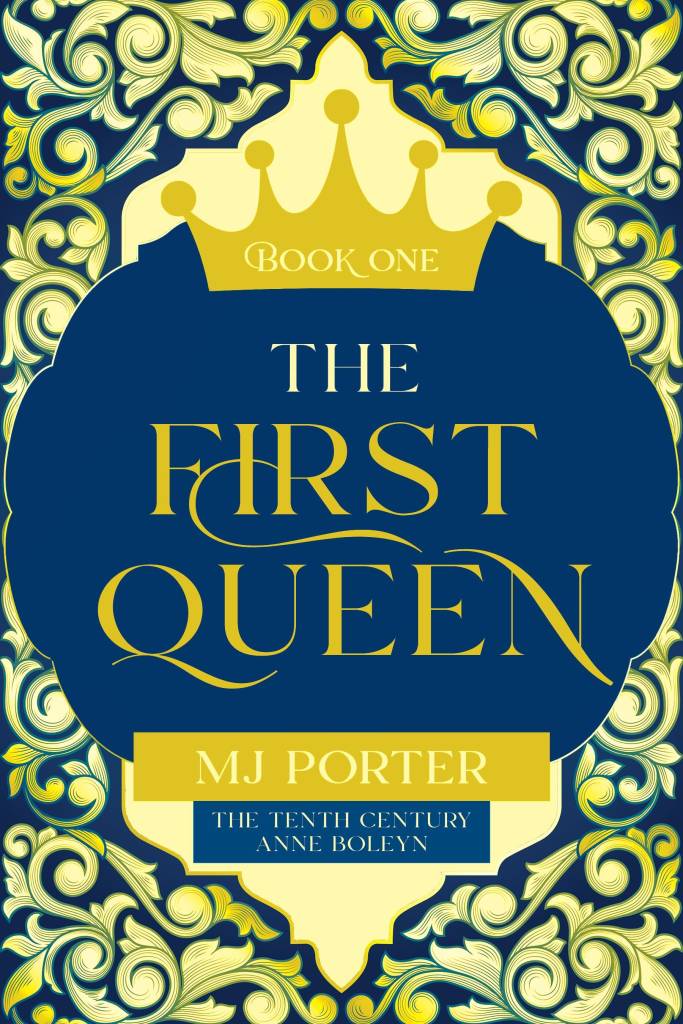
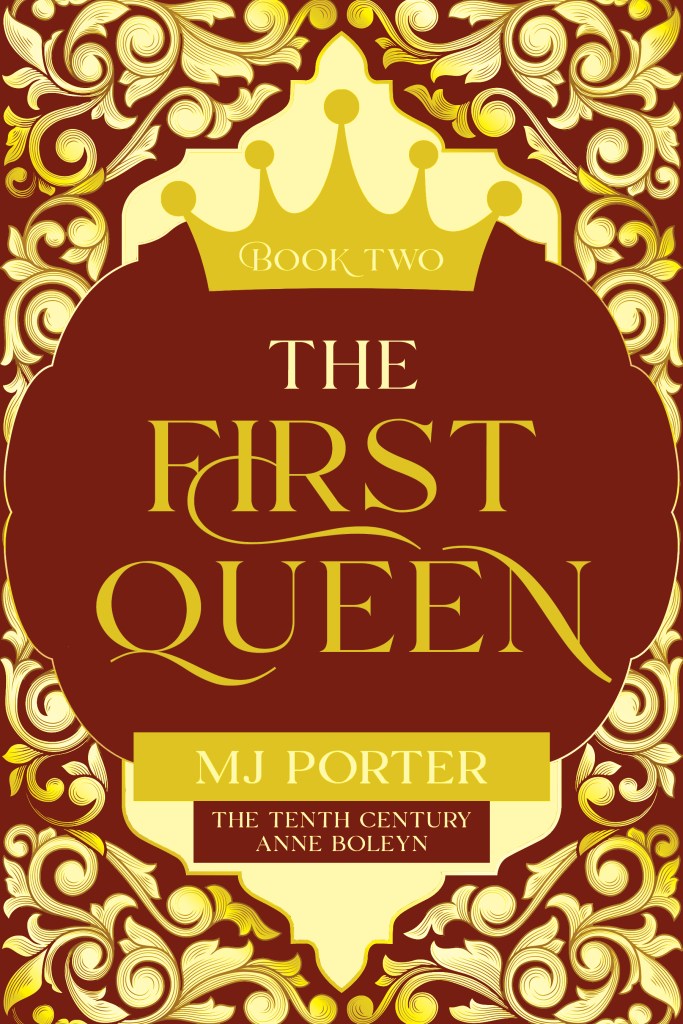
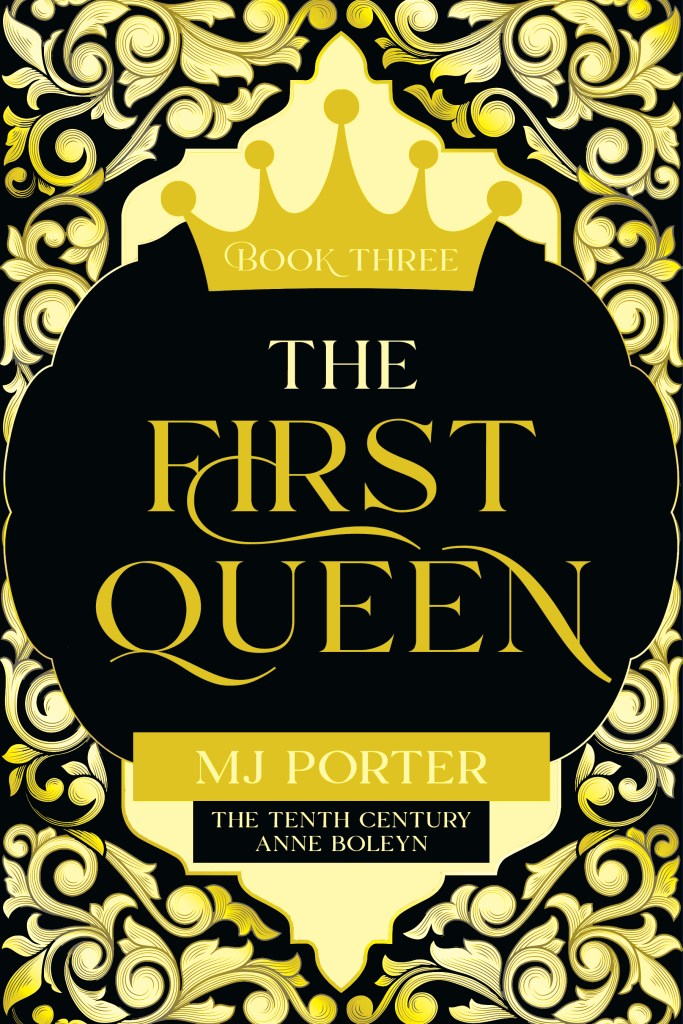
The First Queen Trilogy charts Lady Elfrida’s marriage.
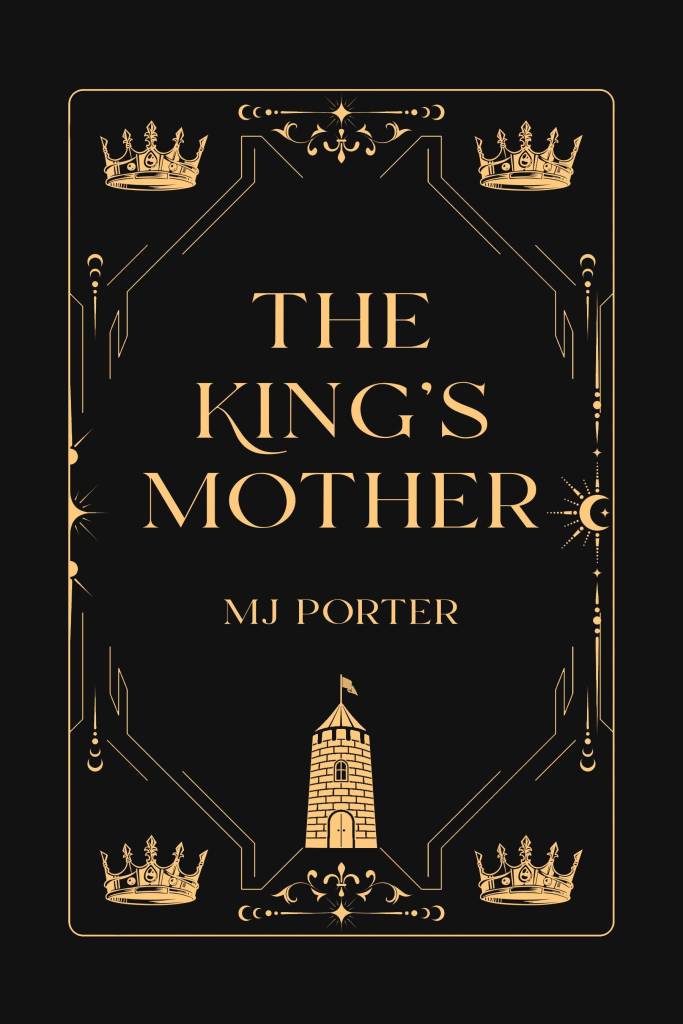
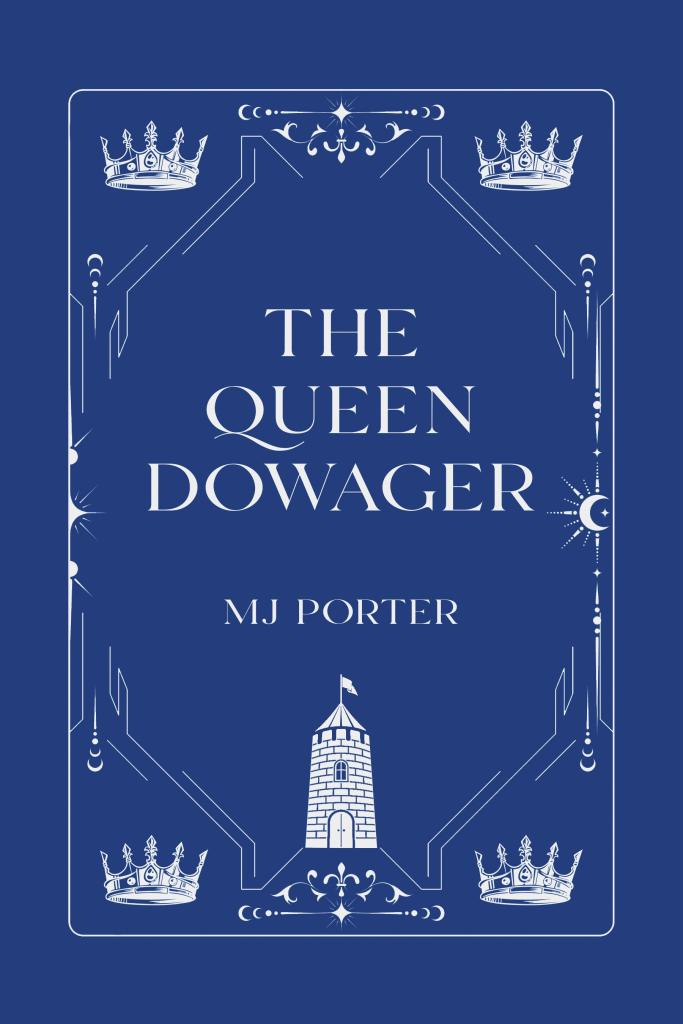
The King’s Mother, the first in a second trilogy, charts Lady Elfrida’s role, as well, the King’s Mother. Her story can be read from here.
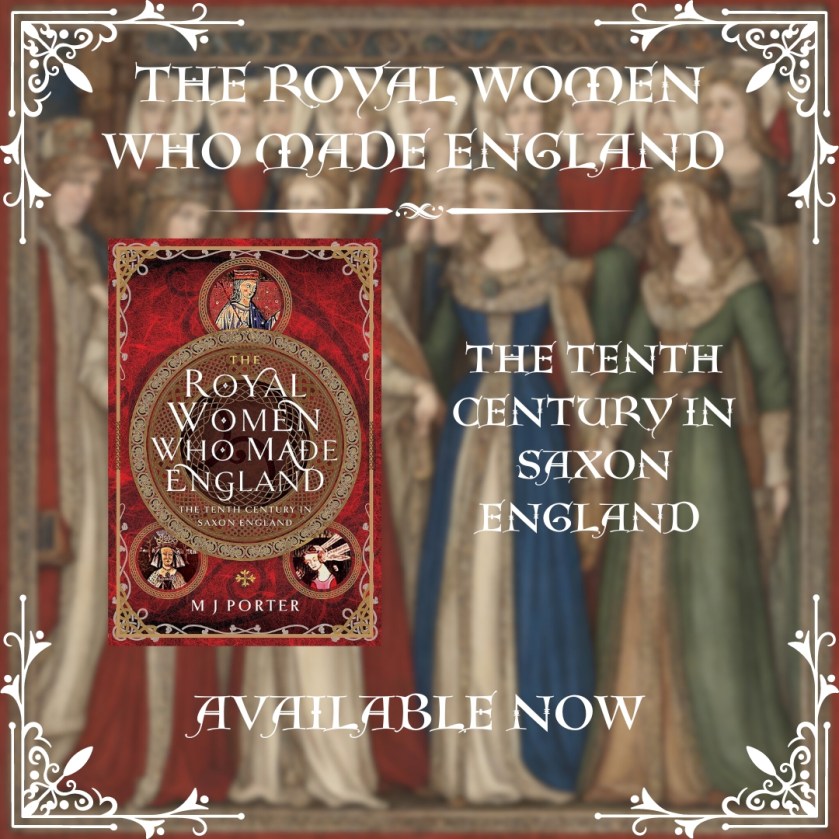
If you’d like to know more about the historical Elfrida, she features in my first non-fiction title, below (as does Lady Eadgifu).
King Edgar the Peaceable of England (959-975) died a young man still, perhaps no older than thirty-two. He left two surviving sons, (one of his sons, Edmund, having died in 971 at a young age.) Neither of his surviving children was an adult and they both had different mothers. Edward, the child of a woman perhaps named as Æthelflæd, and Æthelred, the surviving child of Edgar and his queen, Elfrida, who had ruled at Edgar’s side for about a decade. Edward was probably no older than fifteen in 975, Æthelred perhaps as young as eight. While the kingdom of the English might well have endured years of peace, the same could not be said for the royal court.
The factionalism of the great Benedictine monastic reform movement has much to do with this. As part of the reform movement, a huge amount of land changed hands. As ever, religion was a mask for what was happening at a more basic level. It could just as easily be interpreted as a land grab. In the wake of the death of the king, ‘Attacks on church property were widespread. From York to Kent and Sussex, from the Severn valley to the Fens the death of Edgar was a signal to those who wished to recover property.’[1] Whether Edgar intended for his royal son, born to a consecrated mother and father to succeed after him or not might have been irrelevant when faced with two opposing parties – one supporting the older Edward and one Æthelred, both of whom had religious men as their supporters.
Essentially, both sons would have been too young to rule England. King Eadwig, their uncle, had hardly provided good and secure rule during his brief reign from 955-959, when he was no older than fifteen. But, there was no other choice unless note was made of the family of Ælfgifu, wife to Eadwig, and her collection of brothers, the most famous of whom was Æthelweard, an ealdorman who is thought to have written a Latin translation of the Anglo-Saxon Chronicle referred to as the Chronicon. The family claimed descent from Æthelred I (865-871), Alfred’s older brother.
Edward was chosen to rule with the support of one of these two powerful factions, and Edward’s coronation was conducted by Archbishop Dunstan. Yet some believed Æthelred should be king, no matter his young age, and Æthelred’s support was led by Ealdorman Ælfhere of Mercia. Ealdorman Ælfhere had gained his position under King Eadwig, and had remained powerful despite the seeming division of England back into its constituent parts of Mercia and Wessex in 958 and 959. Perhaps this then, might have been a solution – a division of England once more. Yet ‘questions of division or underkingship were replaced by a straightforward struggle for the throne of the entire kingdom.’[2]
Young Edward was murdered. What we don’t know, unlike with the murder of his grandfather (Edmund (939-946) was murdered by Liofa, possibly a thief), is who killed Edward, known as Edward the Martyr.
The A text of the Anglo Saxon Chronicle is the simplest version of the story for 978, ‘Here King Edward was killed.’[3]
The C text offers, ‘Here in this year King Edward was martyred, and his brother, the young ætheling Æthelred, succeeded to the kingdom; and he was consecrated as king the same year.’[4]
‘Here King Edward was killed in the evening-time in 18 March at Corfe passage; and they buried him at Wareham without any royal honours.’[5] The ASC E (979 for 978) text reads.
Elfrida was known to live close to Corfe, but the E version of the ASC is one of the youngest manuscripts to have survived, dated to about 1121, when it was written in one hand.[6] It is possible then, that the entry in the E version of the ASC had benefitted from some much later additions, thanks to the Saints lives which portrayed Elfrida as the murderer of her husband’s oldest son! It is the A version of the Anglo-Saxon Chronicle which is the more contemporary of our surviving sources.
It was openly acknowledged that Edward was killed, and in his place, Æthelred, at no more than perhaps twelve years of age, became king. This can only have been possible with support for Æthelred. Those backing Æthelred’s claim must have been strong enough to counter any other bid for the kingdom. It no doubt helps that there were few others who could legitimately claim the kingship for themselves. Had they turned to any latent claim presented by Ealdorman Æthelweard, who by now was possibly a man in his late thirties or forties (his death is believed to have taken place in about 998 when he stops attesting Æthelred’s charters), then his sons might not have been deemed acceptable to rule after him, having been born to a man not consecrated as king, and a woman who was certainly not regarded as a queen. This, then, would have merely delayed the inevitable question of the succession once more after Æthelweard’s death.
So, who killed Edward, or ordered his death? Did Elfrida, England’s first anointed queen, commit regicide in an attempt to win back the influence she unexpectedly lost on the death of her young husband, when her step-son was appointed as king?
There were certainly some who believed she had a hand in the murder of the young man.
The involvement of Elfrida directly in the murder of her step-son is ‘derived ultimately from the Passio Sancti Eadwardi Regis et Martyris, an account of Edward’s life, murder and miracles probably written in the 1070s by the Anglo-Norman hagiographer Goscelin and itself based partly on an earlier account of St Edward which may have been written at Shaftesbury in the early years of the eleventh century.’[7]
‘When a certain day was nearing evening, the illustrious and elected king came as we have said to the house where his much-loved brother dwelt with the queen, desiring the consolation of brotherly love; there came out to meet him, as was fitting, nobles and chief men, who stayed with the queen, his mother. They formed among them a wicked plan, for they possessed minds so accursed and such dark diabolical blindness that they did not fear to lay hands on the Lord’s anointed….The thegns then holding him, one drew him on the right towards him as if he wished to give him a kiss, but another seized roughly his left hand and also wounded him. And he shouted, so far as he could: ‘What are you doing – breaking my right arm?’ And suddenly leapt from the horse and died.’[8] So informs the Life of St Oswald written during the life of both Elfrida and Æthelred II, by Byrhtferth, although we will never know if they were aware of what was written. It does not specifically name Elfrida as responsible for the king’s murder.
Another near contemporary source. The Sermon of the Wolf to the English states that, Edward was betrayed and then killed, and afterwards burned and [Ethelred was driven out of his country].’[9] This dates from 1014, and therefore follows Æthelred’s loss of the kingdom to King Swein of Denmark. Again, it is not a contemporary source.
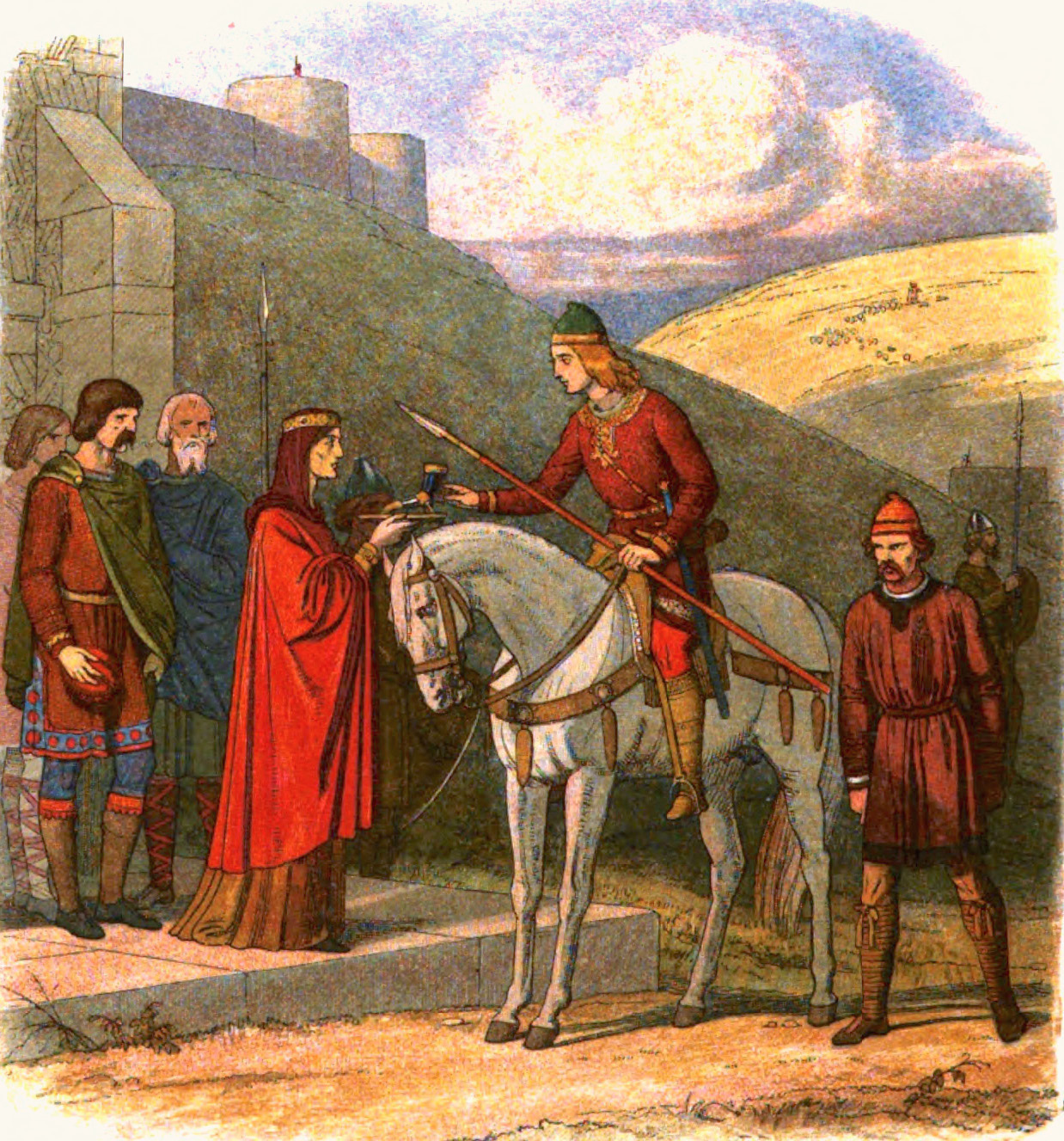
But later writers persisted with the story. Henry of Huntingdon, a Norman chronicler wrote. ‘It is said that his stepmother [Ælfthryth/Elfrida], that is the mother of King Æthelred, stabbed him [Edward] with a dagger while stretching out a cup to him.’[10] And so named Elfrida as the physical murderess.
Edward the Martyr is offered a cup of mead by Ælfthryth, wife of Edgar James William Edmund Doyle, Public domain, via Wikimedia Commons (1864)
William of Malmesbury, another Norman writer, also associates Edward the Martyr’s murder with Elfrida, despite that fact that Edward treated his ‘stepmother with proper warmth of feeling….The woman however, with a stepmother’s hatred and a viper’s guile, in her anxiety that her son should also enjoy the title of king, laid plots against her stepson’s life…On his arrival, his stepmother, with a woman’s wiles, distracted his attention, and with a kiss of welcome offered him a drink. As he greedily drank it, she had him pierced with a dagger by one of her servants….Ælfthryth [Elfrida] fell from her pride of royalty into a dire repentance, such that for many years at Wherwell she clad her delicately nurtured limbs in haircloth.’[11]
It is perplexing to consider the alleged involvement of Elfrida in the death of her stepson with the cult of Edward the Martyr that subsequently developed. Indeed, it has been noted that in the will of Athelstan, Æthlered’s son who died in 1014, and who was raised by Elfrida, he makes a bequest to Shaftesbury to St Edward (where Edward was later buried). ‘And I give to the Holy Cross and St Edward at Shaftesbury the six pounds about which I have given directions to my brother Edmund.’[12]
This then seems more than a strange thing to do if the family were keen to dismiss the concerns that Elfrida was involved in the king’s murder. Neither, and despite the reports that Edward the Martyr was not a pleasant individual, has it been considered that the murder was carried out because ALL believed they would benefit from a new king. Edward the Martyr, in the written details about him, does not have a good reputation, as the Vita Oswaldi itself states.
‘Certain of the chief men of this land wished to elect as king the king’s elder son, Edward by name; some of the nobles wanted the younger because he appeared to all gentler in speech and deeds. The elder, in fact, inspired in all not only fear but even terror, for [he scrouged them] not only with words but truly with dire blows, and especially his own men dwelling with him.’[13]
At such a distance in time, it’s impossible to determine what happened. Dismissing the later saints lives and aspersions cast on Elfrida, by Adam of Bremen, Osbern of Canterbury, Florence of Worcester and Henry of Huntingdon (all Norman writers),[14] one thing is clear. Whatever had happened to pave the way for Æthelred to become king, it was accepted by the vast majority of the witan and the holy men. Sometimes, mention is made that Æthelred’s coronation was delayed, taking place on 4th May 979, maybe while negotiations took place, but this delay was perhaps not that unusual – there was a delay in Edward the Elder’s coronation, and also Athelstan’s. Was it a delay because Æthelred was unacceptable, or merely one of politic? Or is it merely a confusion with the date, 979 for 978, or something else? Was Æthelred considered too young in 978 to undergo coronation? Was he ill? Sometimes, we forget the frailties of our forebears, too keen to see political intrigue everywhere.
What can be said is, no matter the alleged involvement of the royal family in the murder of one of their own, the words of later chroniclers and those who may have written at the time but with an agenda to tarnish the name of the Wessex royal family, no one faced murder charges for what happened. The murder was acknowledged, but those responsible faced no penalty for it (as far as we know – certainly, none of the prime suspects fell from favour). Whatever led to the murder of Edward, his absorption into the royal line of saints (and there were many, many royal saints in the Wessex family in the tenth century – Edgar’s mother was regarded as saintly, as was his only daughter, Edith, after her death, and indeed, that daughter’s mother, Wulfthryth) it was those looking back at the return of the Viking raiders throughout the last two decades of the tenth century and the eleventh, which resulted in not one, not two, but three Viking kings claiming England for themselves, who thought to tarnish Æthelred’s already tainted reputation as a failed military commander by adding the charge of ‘complicit in the murder of his step-brother’ to the already, very long list of charges levelled against him. But of course, none of these were contemporary accounts.
And so, it seems, we might never know the truth of what befell Edward the Martyr, and certainly, there are no truly contemporary accounts to say Queen Elfrida either physically committed the murder, or ordered that it be carried out.
[7] Simon Keynes, The Diplomas of King Æthelred the Unready, p168
[8] D Whitelock, English Historical Documents p841-3 It is believed that this work was written at Ramsey from 995-1005, and so in the lifetime of Æthelred, and indeed, his mother.
[9] D Whitelock, English Historical Documents p857 although Æthelred’s name is not included all of the manuscript versions.
“Many Anglo-Saxon kings are familiar. Æthelred the Unready is one, yet less is written of his wife, who was consort of two kings and championed one of her sons over the others, or his mother who was an anointed queen and powerful regent, but was also accused of witchcraft and regicide. A royal abbess educated five bishops and was instrumental in deciding the date of Easter; another took on the might of Canterbury and Rome and was accused by the monks of fratricide.
Anglo-Saxon women were prized for their bloodlines – one had such rich blood that it sparked a war – and one was appointed regent of a foreign country. Royal mothers wielded power; Eadgifu, wife of Edward the Elder, maintained a position of authority during the reigns of both her sons.
Æthelflaed, Lady of the Mercians, was a queen in all but name, while few have heard of Queen Seaxburh, who ruled Wessex, or Queen Cynethryth, who issued her own coinage. She, too, was accused of murder, but was also, like many of the royal women, literate and highly-educated.
From seventh-century Northumbria to eleventh-century Wessex and making extensive use of primary sources, Women of Power in Anglo-Saxon England examines the lives of individual women in a way that has often been done for the Anglo-Saxon men but not for their wives, sisters, mothers and daughters. It tells their stories: those who ruled and schemed, the peace-weavers and the warrior women, the saints and the sinners. It explores, and restores, their reputations.”
Women of Power in Anglo-Saxon England is an ambitious project, on a scale that few may truly appreciate as it covers over 600 years of Early English history. That’s even before factoring in just how fragmented the surviving sources are, and how complicated they can be and how many languages are involved. Or the fact that the majority of such sources were written by men, and not just men, but men in holy orders. As someone who has written about some of these fabulous women, I know just how difficult and complicated a task it is, and just how far you have to go in order to tease out the smallest details.
It is for this reason, that the book can feel a little unwieldy in places. I think that people new to the subject matter and to the time period might well struggle with the first section of the book on Pioneers in Northumbria. In an effort to include every woman, of whom so little is known that sometimes it is just a name, it can feel a little bit like a long list of women who you might not be able to fully grasp their importance in the events of the period. There might also be some frustration that the women could only be powerful because of who they married, gave birth to, or were born to. This, however, can’t be avoided. It is the nature of the sources.
And I must urge people to continue reading as the author soon lands on more solid ground (because there is more information available and the women feel more fully formed.) The chapters on Mercia and Wessex are a much easier read, and by the time we reach the chapters on Serial Monogamy and Dowager Queens, the women feel ‘real.’ Again, this is because of an increase in the source material, and potentially, because readers will know more about the tenth and eleventh centuries.
The author manages to cover an extraordinary number of women over the long centuries of the Early English period, and if there are moments where I might have included different information, or rejected some of the Saints Lives and Anglo-Norman historians from the narrative, this is a personal choice, based on my own research methodology which does seem to be the exception rather than the norm.
I confess, the book would have benefitted from a chronology for each chapter, and perhaps a slightly different format (I read an ebook so this might display differently in the paperback), but overall, I am in awe of the author’s ability to hold the narrative together and to produce something that I hope will encourage people to further research these wonderful characters who should be just as well known as their male counterparts.
Thank you to Netgalley and the publisher for my review copy.
Women of Power is released today, 30th May, and is available from the publisher as well as on other sites, although it is showing as a preorder.






 MJ Porter