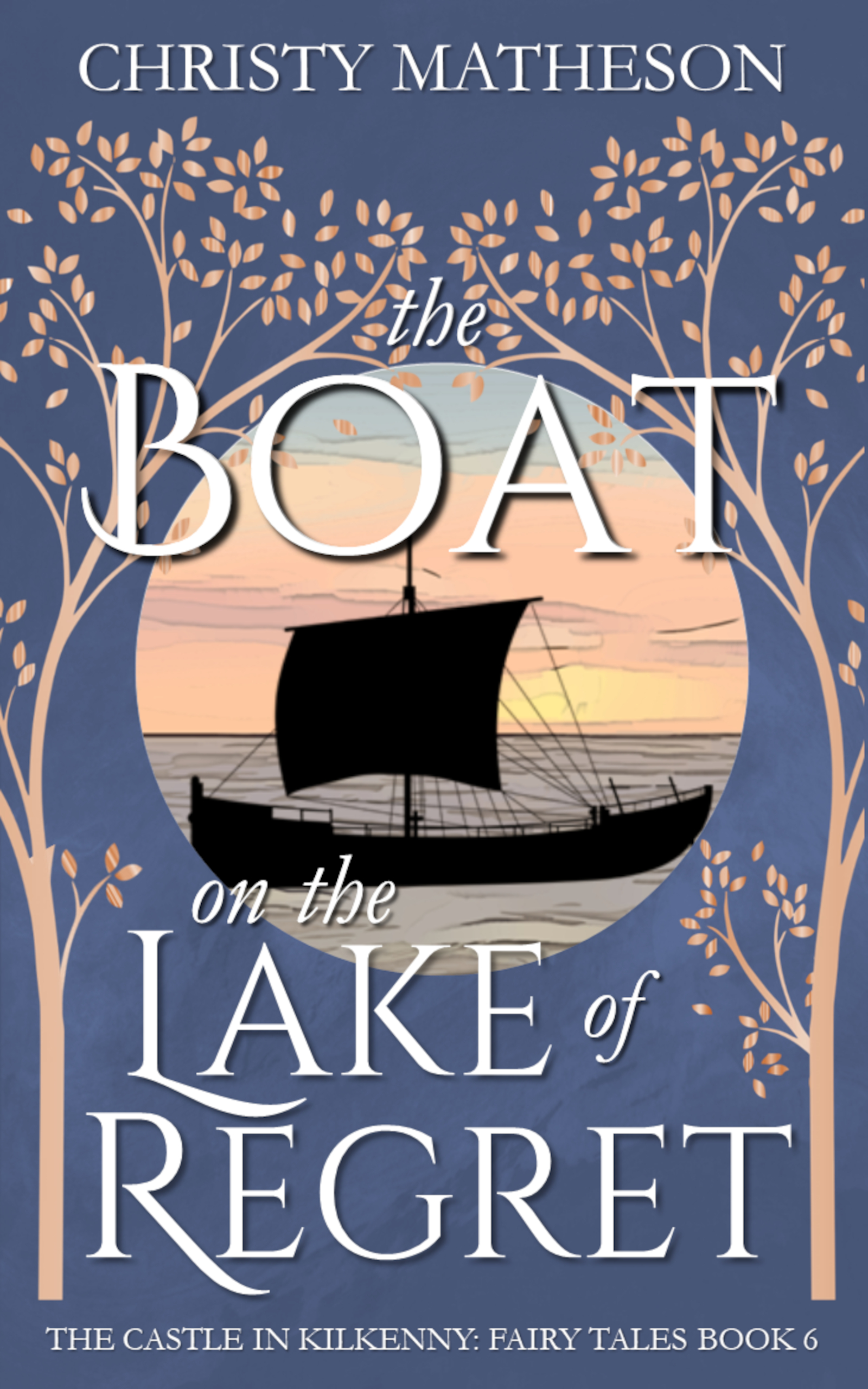
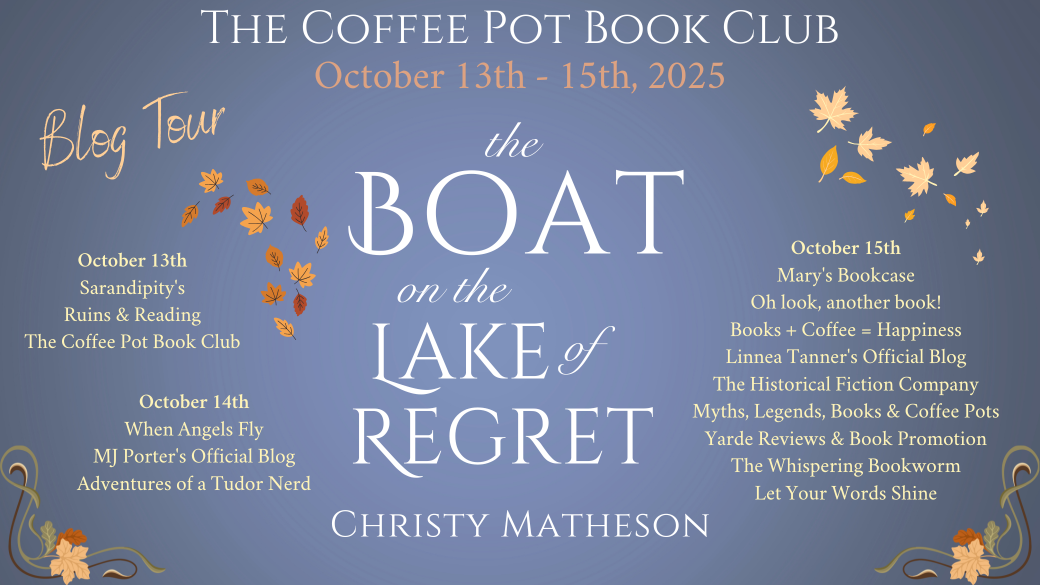
I’m delighted to welcome Chritsy Matheson and her book, The Boat on the Lake of Regret, The Castle in Kilkenny: Fairy Tales, to the blog with a snippet.
Snippet
Opening:
“Hannah!” Dylan calls. “Hannah?”
A shiver of worry runs up my spine. He never uses my real name.
“Here! I’m in the parlor!” Footsteps thunder down the hallway and Dylan bursts in. His hair is all mussed, his face is wild, and his jeans are in deplorable shape.
“What on earth happened? Come in and—”
“I’m fine. It’s yourself who needs to be careful.”
Fancy that, after barely making time for me for weeks, he bursts into my own home and orders me around!
He sees his mistake immediately. “I didn’t mean—look, I brought you this, Henny luv.”
Well, that’s a little better. He holds out his palm and I move close to look. He smells of campfire and sweat and rain, and I rest my hand on his arm just to feel the steady solid warmth of him.
“Oh, you didn’t have to buy me a ring! I’ve told you already that I’ll marry you, and we’re trying to save up.”
Despite my protests, the ring is lovely, and I reach for it, but Dylan closes his fist before I can touch it.
“It’s not that…I mean, of course we are. It’s just”—he takes my hand, his fingers cool and gentle—“there’s a whole story, but”—he slides the skin-warmed metal over my first knuckle—“first I want to —”
Here’s the Blurb
He has one last chance to be a fairy tale hero.
But she didn’t agree to be the damsel in distress.
When her longtime boyfriend unexpectedly slides a ring on her finger, Hannah is whisked from her everyday bedroom to a medieval ball. Hannah knew that Dylan would do anything to prove to her parents that he’s husband material, including going into the Fae world—but she never agreed to go through the Veil herself.
Now one of three princess sisters, Hannah is paired with now-Prince Dylan. But, homesick and blindsided, she pretends the Veil has wiped him from her memory.
As her prince scrambles in vain to be the right kind of hero, Hannah ignores her instincts and follows her new sisters onto a mysterious boat—which promptly sails them into a land of giants, magical traps, and enchanted pianos…and away from Dylan.
Read now to journey back to medieval Ireland, complete with the Fae and mythological monsters, in this fairy tale adventure and sweet “it was always you” romance.
Characters you connect with. Adventure. Love. Family… And endings that are more than a sugar rush.
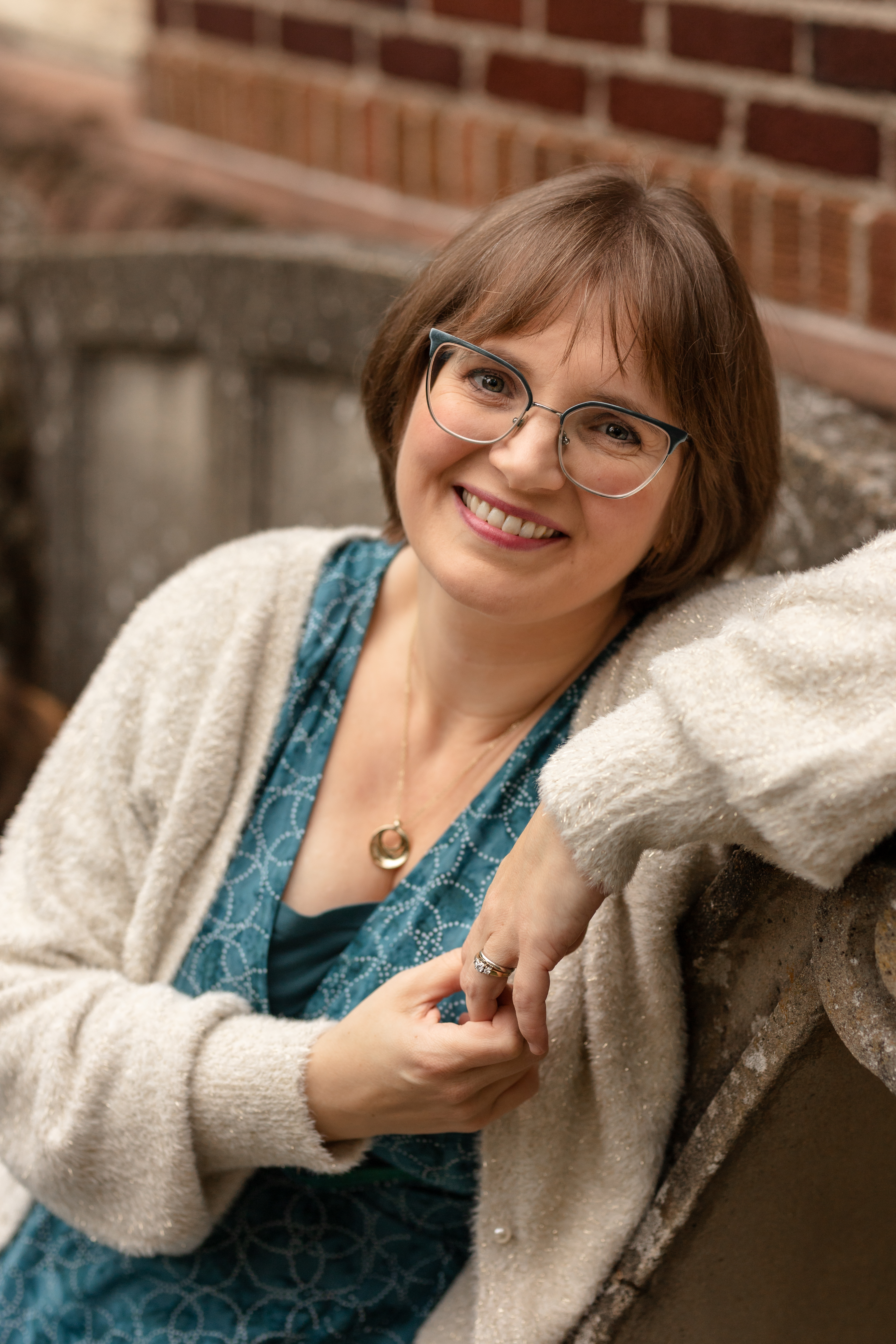
When Christy Matheson is not throwing ordinary characters into fairy tales, she is busy raising five children. (Very busy.) She writes character-driven historical fiction with and without fantasy elements, and her “fresh, smart, and totally charming” stories have won multiple awards.
Christy is also an embroidery artist, classically trained pianist, and sews all of her own clothes. She lives in Oregon, on a country property that fondly reminds her of a Regency estate (except with a swing set instead of faux Greek ruins), with her husband, five children, three Shelties, one bunny, and an improbable quantity of art supplies.
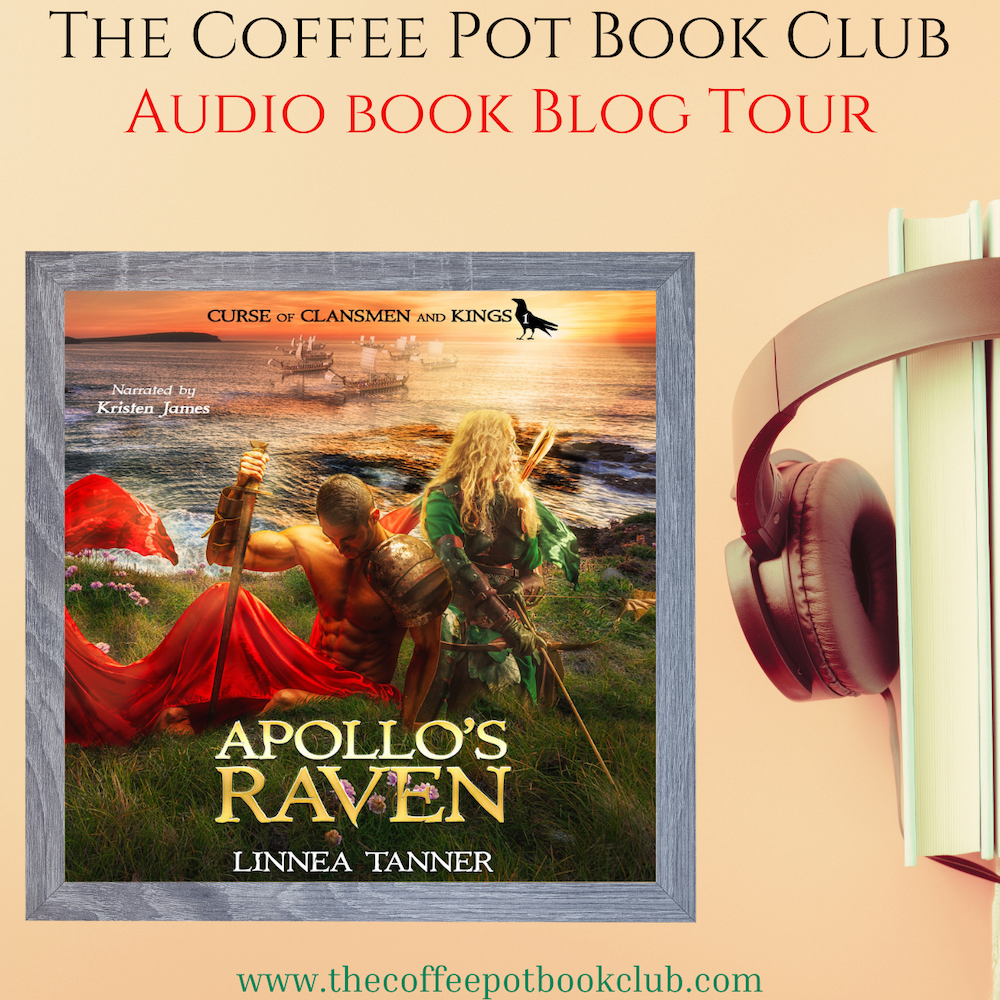
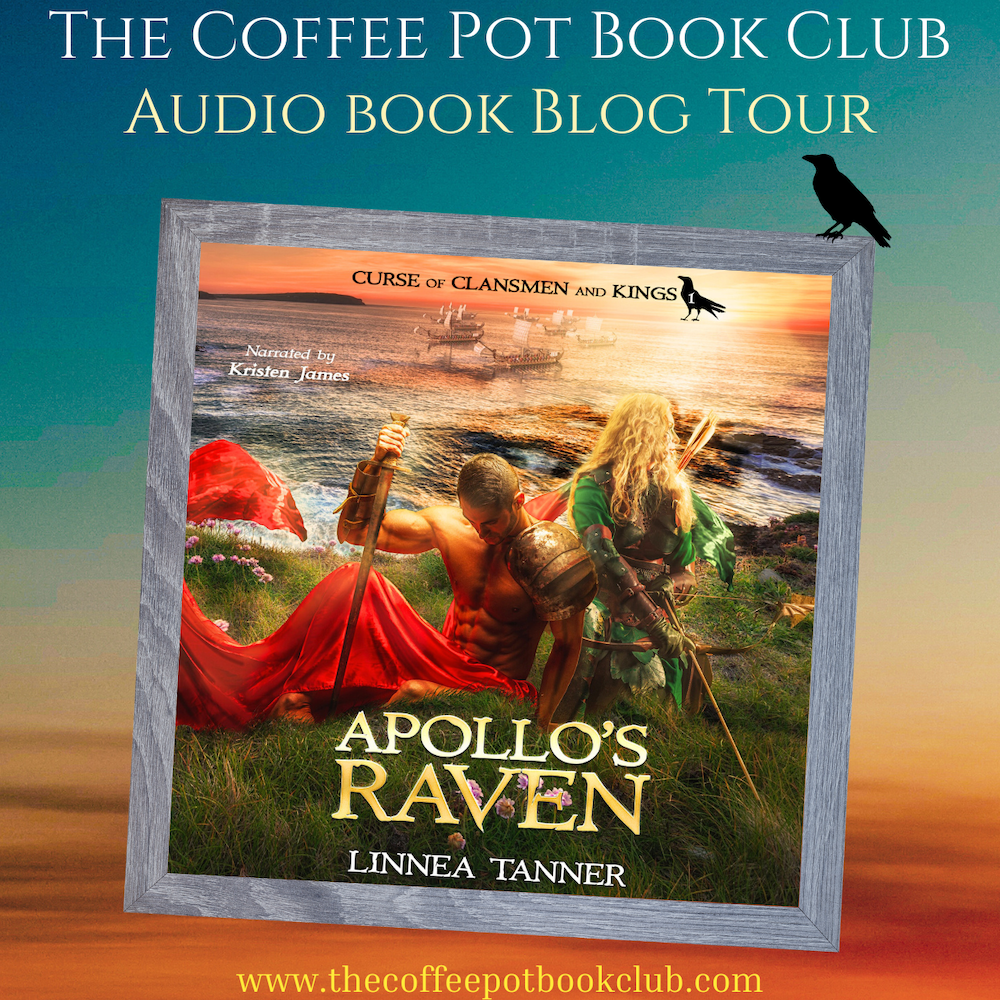
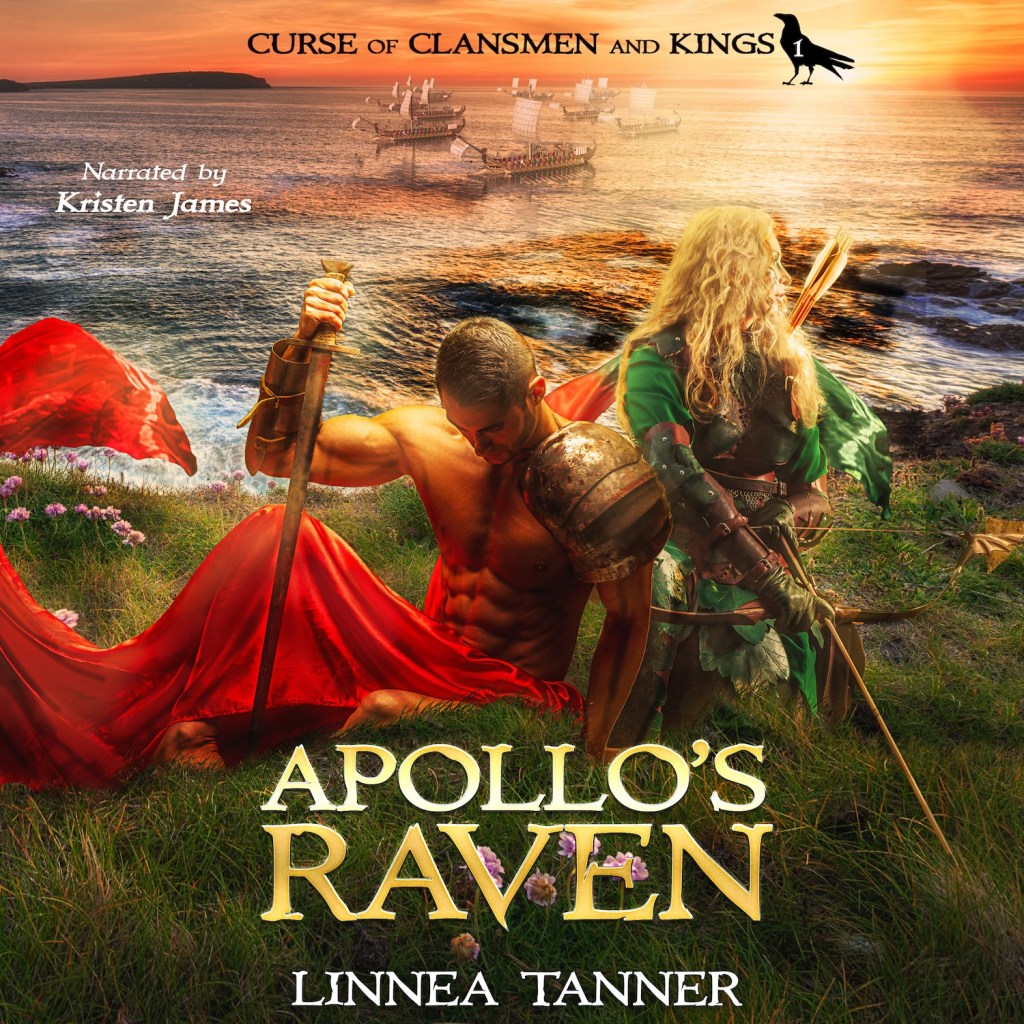
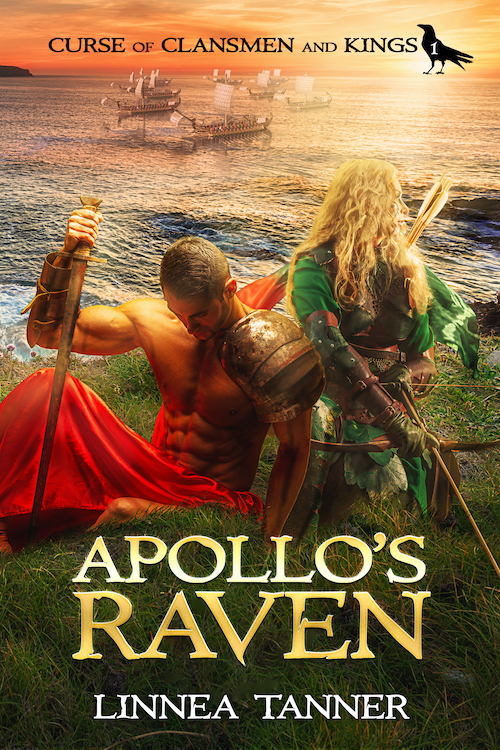
I’m delighted to welcome Linnea Tanner and her audiobook, Apollo’s Raven, to the blog #HistoricalFantasy #HistoricalFiction #Rome #Britannia #CelticMyths #BlogTour #TheCoffeePotBookClub
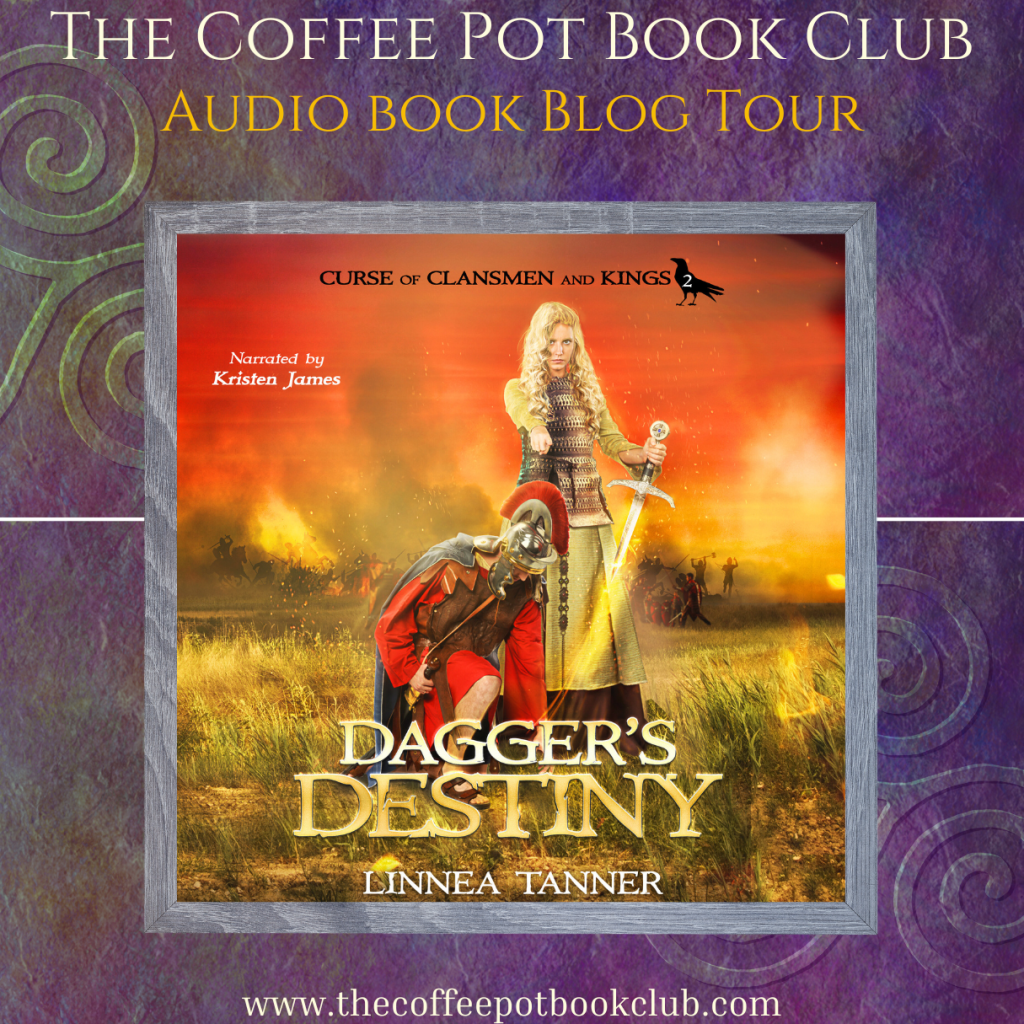
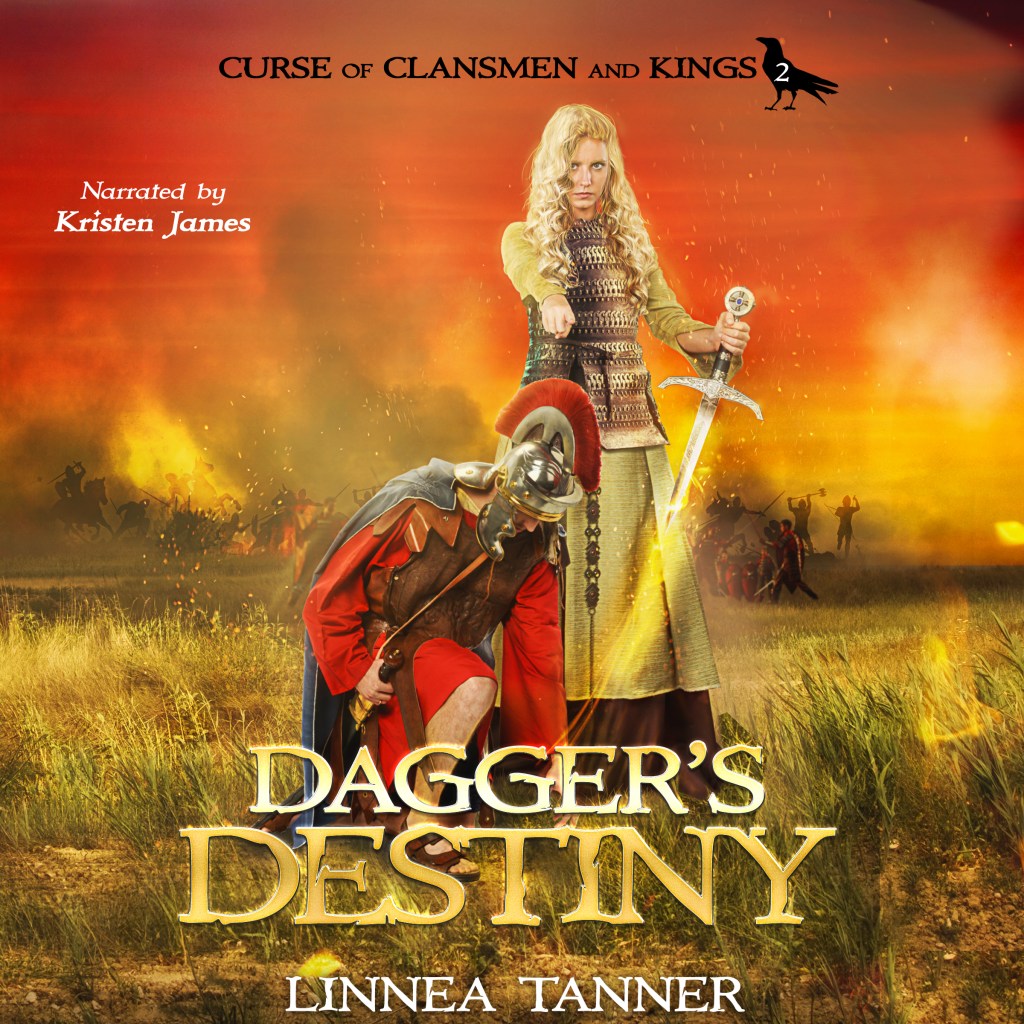
I’m delighted to welcome Linnea Tanner and her audiobook, Dagger’s Destiny, Curse of Clansmen and Kings Series, to the blog with an audio snippet.
Here’s the Blurb
A Celtic warrior princess accused of treason for aiding her enemy lover must win back her father’s love and trust
In the rich and vibrant tale, author Linnea Tanner continues the story of Catrin and Marcellus that began with the award-winning novel APOLLO’S RAVEN in the Curse of Clansmen and Kings Series. Book 2: DAGGER’S DESTINY sweeps you into an epic tale of forbidden love, mythological adventure, and political intrigue in Ancient Rome and Britannia.
War looms over 24 AD Britannia where rival tribal rulers fight each other for power and the Romans threaten to invade to settle their political differences. King Amren accuses his daughter, Catrin, of treason for aiding the Roman enemy and her lover, Marcellus. The ultimate punishment is death unless she can redeem herself. She must prove loyalty to her father by forsaking Marcellus and defending their kingdom—even to the death. Forged into a warrior, she must overcome tribulations and make the right decisions on her quest to break the curse that foretells her banished half-brother and the Roman Empire will destroy their kingdom.
Yet, when Catrin again reunites with Marcellus, she is torn between her love for him and duty to King Amren. She must ultimately face her greatest challenger who could destroy her life, freedom, and humanity.
Will Catrin finally break the ancient prophecy that looms over her kingdom? Will she abandon her forbidden love for Marcellus to win back her father’s trust and love? Can King Amren balance his brutality to maintain power with the love he feels for Catrin?
Triggers: Sex, Violence, Sacrificial Rituals
Praise
“Tanner is a masterful wordsmith and storyteller. There were no plot holes, everything was believable, and her characters grew as did the plot.” ~ The Audiobook Reviewer
” For those with an interest in epic fantasy, the characters and their interactions, each with their personal goals and motivations, and often in conflict with each other, Dagger’s Destiny is a book sure to keep your interest.” ~ Geoff Habiger for Readers’ Favorite (GOLD MEDAL Fiction: Magic/Wizardry)
A winner will be chosen at random and announced after the tour has finished.
Meet the Author
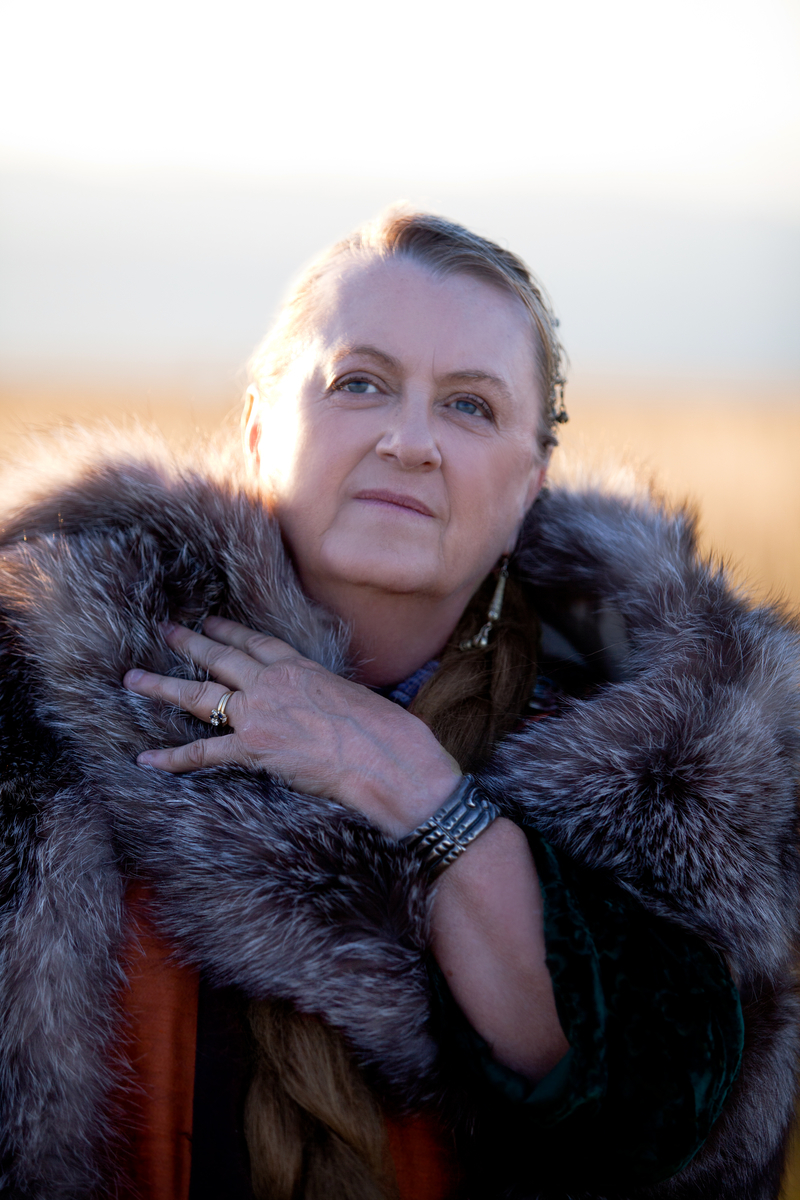
Award-winning author, Linnea Tanner, weaves Celtic tales of love, magical adventure, and political intrigue in Ancient Rome and Britannia. Since childhood, she has passionately read about ancient civilizations and mythology. She is particularly interested in the enigmatic Celts, who were reputed as fierce warriors and mystical Druids.
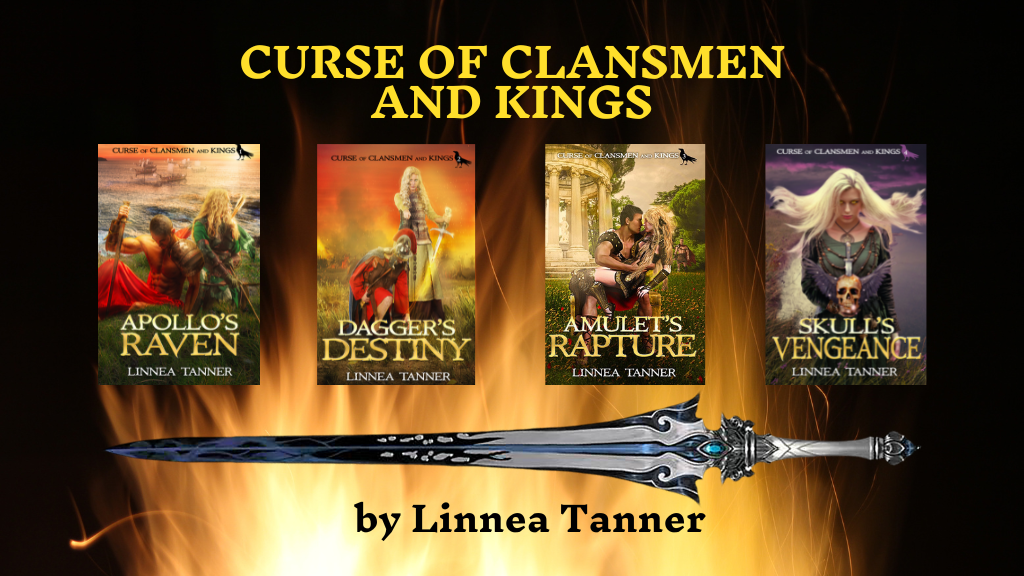
Linnea has extensively researched ancient and medieval history, mythology, and archaeology and has traveled to sites described within each of her books in the Curse of Clansmen and Kings series. Books released in her series include Apollo’s Raven (Book 1), Dagger’s Destiny (Book 2), Amulet’s Rapture (Book 3), and Skull’s Vengeance (Book 4). She has also released the historical fiction short story Two Faces of Janus.
A Colorado native, Linnea attended the University of Colorado and earned both her bachelor’s and master’s degrees in chemistry. She lives in Fort Collins with her husband and has two children and six grandchildren.
I’m delighted to welcome Linnea Tanner and her audiobook, Apollo’s Raven, to the blog #HistoricalFantasy #HistoricalFiction #Rome #Britannia #CelticMyths #BlogTour #TheCoffeePotBookClub
I’m delighted to welcome Linnea Tanner and her audiobook, Apollo’s Raven, Curse of Clansmen and Kings Series, to the blog with a book trailer.
Book Trailer
Here’s the Blurb
A Celtic warrior princess is torn between her forbidden love for the enemy and duty to her people.
AWARD-WINNING APOLLO’S RAVEN sweeps you into an epic Celtic tale of forbidden love, mythological adventure, and political intrigue in Ancient Rome and Britannia. In 24 AD British kings hand-picked by Rome to rule are fighting each other for power. King Amren’s former queen, a powerful Druid, has cast a curse that Blood Wolf and the Raven will rise and destroy him.
The king’s daughter, Catrin, learns to her dismay that she is the Raven and that her banished half-brother is Blood Wolf. Trained as a warrior, Catrin must find a way to break the curse, but she is torn between her forbidden love for her father’s enemy, Marcellus, and loyalty to her people. She must summon the magic of the Ancient Druids to alter the dark prophecy that threatens the fates of everyone in her kingdom.
Will Catrin overcome and eradicate the ancient curse? Will she be able to embrace her forbidden love for Marcellus? Will she cease the war between Blood Wolf and King Amren and save her kingdom?
Praise:
“Mystery and intrigue with each word, Tanner is a master wordsmith. Her vivid imagery and imagination are captured in her story and character development.” ~ The Audiobook Reviewer
” Many surprising twists enrich the historically drawn plot. Points of view shift between different characters effectively, heightening the tension from one moment to the next.” ~ Historical Novel Society Review
A winner will be chosen at random and announced after the tour has finished.
Meet the Author
Award-winning author, Linnea Tanner, weaves Celtic tales of love, magical adventure, and political intrigue in Ancient Rome and Britannia. Since childhood, she has passionately read about ancient civilizations and mythology. She is particularly interested in the enigmatic Celts, who were reputed as fierce warriors and mystical Druids.
Linnea has extensively researched ancient and medieval history, mythology, and archaeology and has traveled to sites described within each of her books in the Curse of Clansmen and Kings series. Books released in her series include Apollo’s Raven (Book 1), Dagger’s Destiny (Book 2), Amulet’s Rapture (Book 3), and Skull’s Vengeance (Book 4). She has also released the historical fiction short story Two Faces of Janus.
A Colorado native, Linnea attended the University of Colorado and earned both her bachelor’s and master’s degrees in chemistry. She lives in Fort Collins with her husband and has two children and six grandchildren.
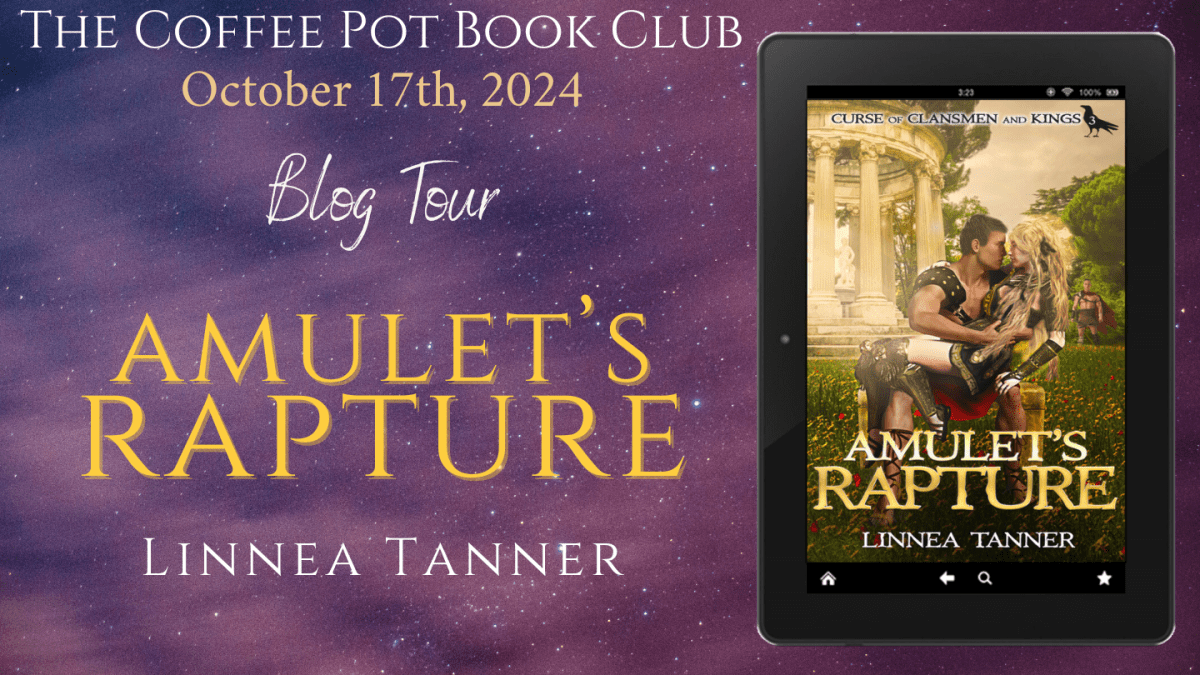
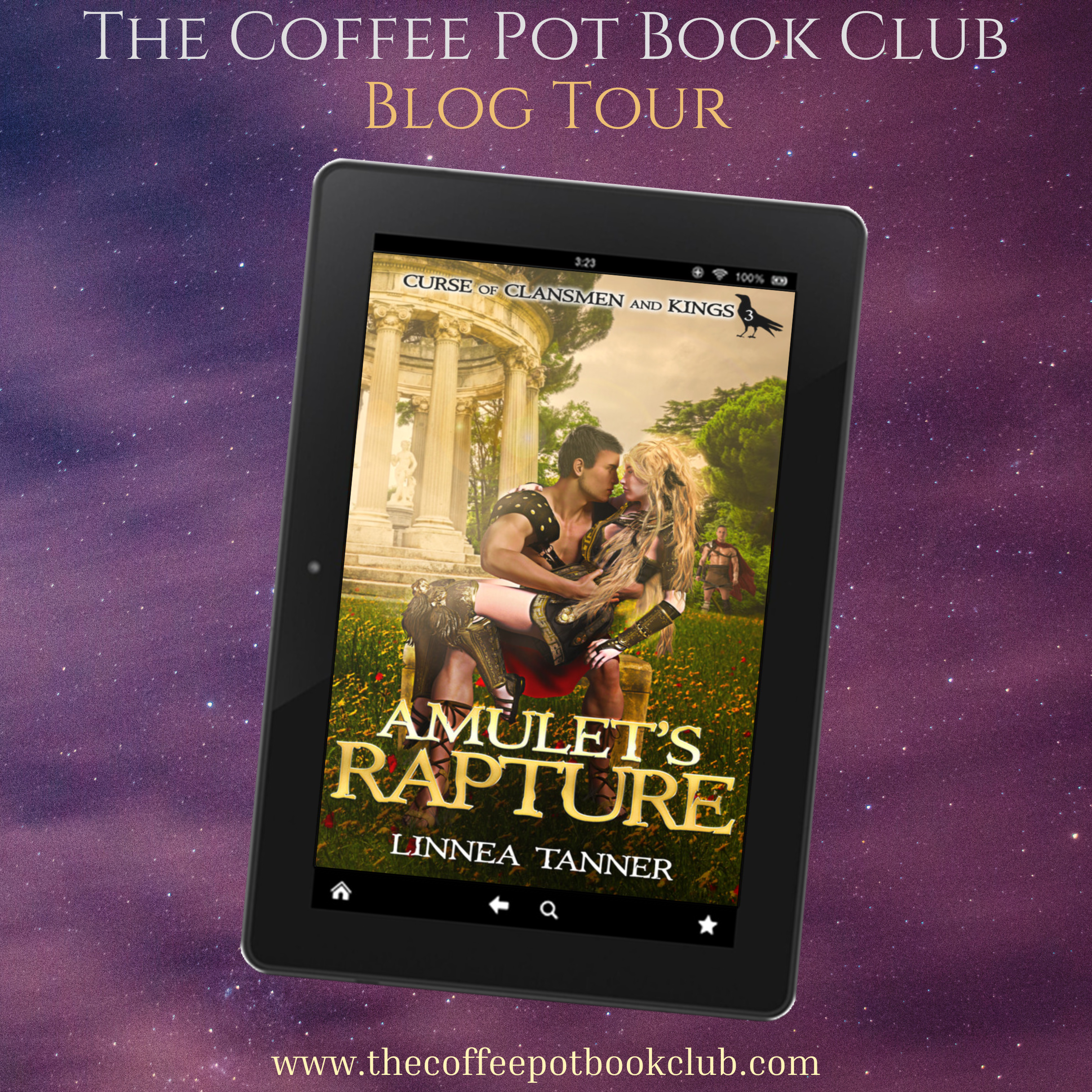
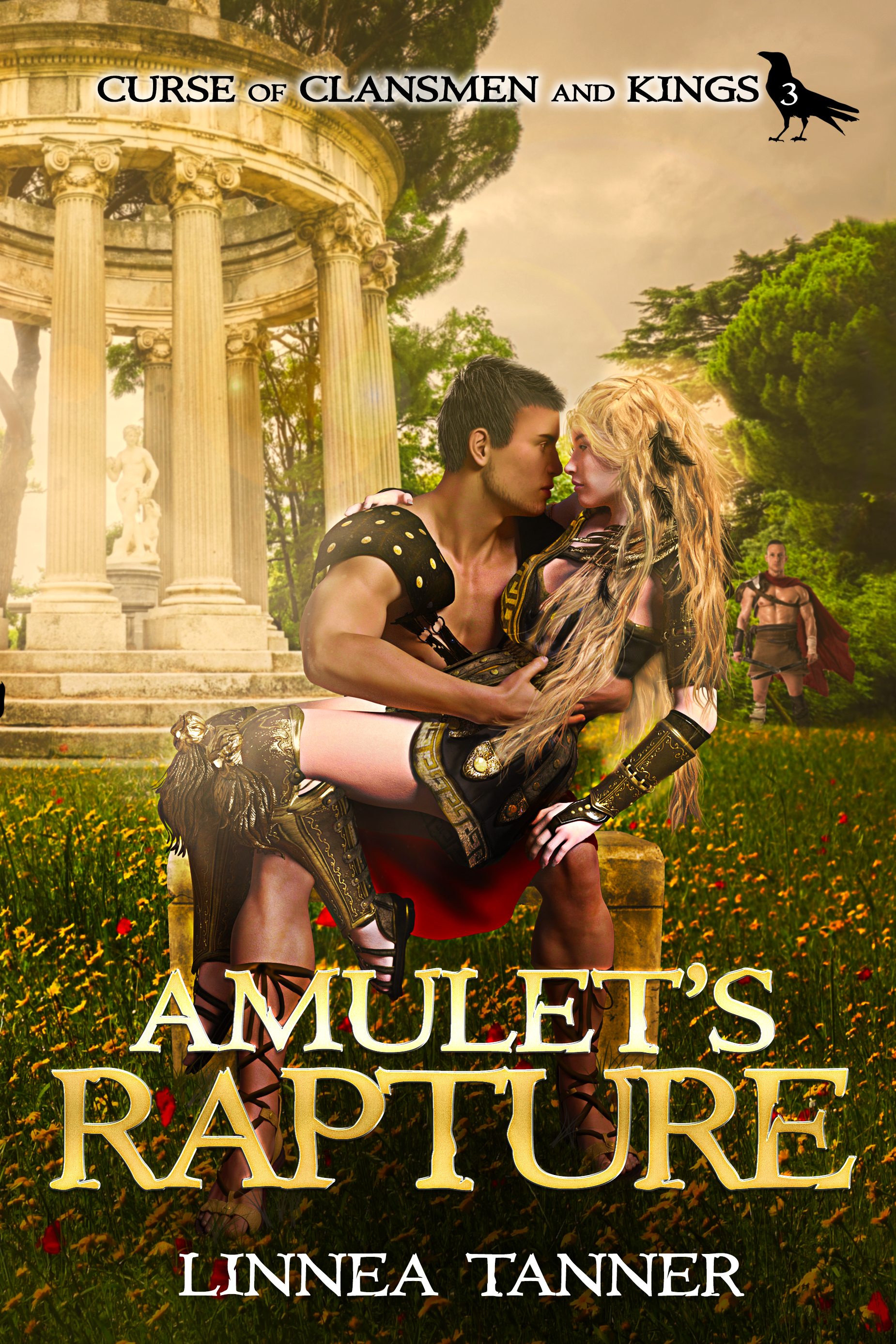
I’m delighted to welcome Linnea Tanner and her book, Amulet’s Rapture from the Curse Of Clansmen and Kings series, to the blog with a trailer.
Trailer
Blurb
“Amulet’s Rapture by Linnea Tanner is the story of the survival and transformation of Catrin. The plot is packed with action, politics, corruption, ambition, prophecies, and ancient magic. With a gripping plot, mindblowing storytelling, and unpredictable twists, Amulet’s Rapture by Linnea Tanner is going to be among my top three favorites of this year.” — Ankita Shukla for Readers’ Favorite
Blood stains her Celtic home and kingdom. The warrior Druid princess will do anything to retake her kingdom.
Although Catrin is the rightful heir to the Celtic throne in Britannia, she is lucky to be alive. After witnessing the slaughter of her family at the hands of her half-brother, who was aided by the Romans, she is enslaved by a Roman commander. He disguises her as a boy in the Roman Legion with the belief that she is an oracle of Apollo and can foretell his future. The sole bright spot in her miserable new life is her forbidden lover Marcellus, the great-grandson of the famed Roman General Mark Antony.
But Marcellus has been wounded and his memories of Catrin and their secret marriage were erased by a dark Druidess. Though Marcellus reunites with Catrin in Gaul and becomes her ally as she struggles to survive the brutality of her Roman master, he questions the legitimacy of their marriage and hesitates to help her escape and retake her kingdom. If their forbidden love and alliance are discovered, her dreams of returning to her Celtic home with Marcellus will be shattered.
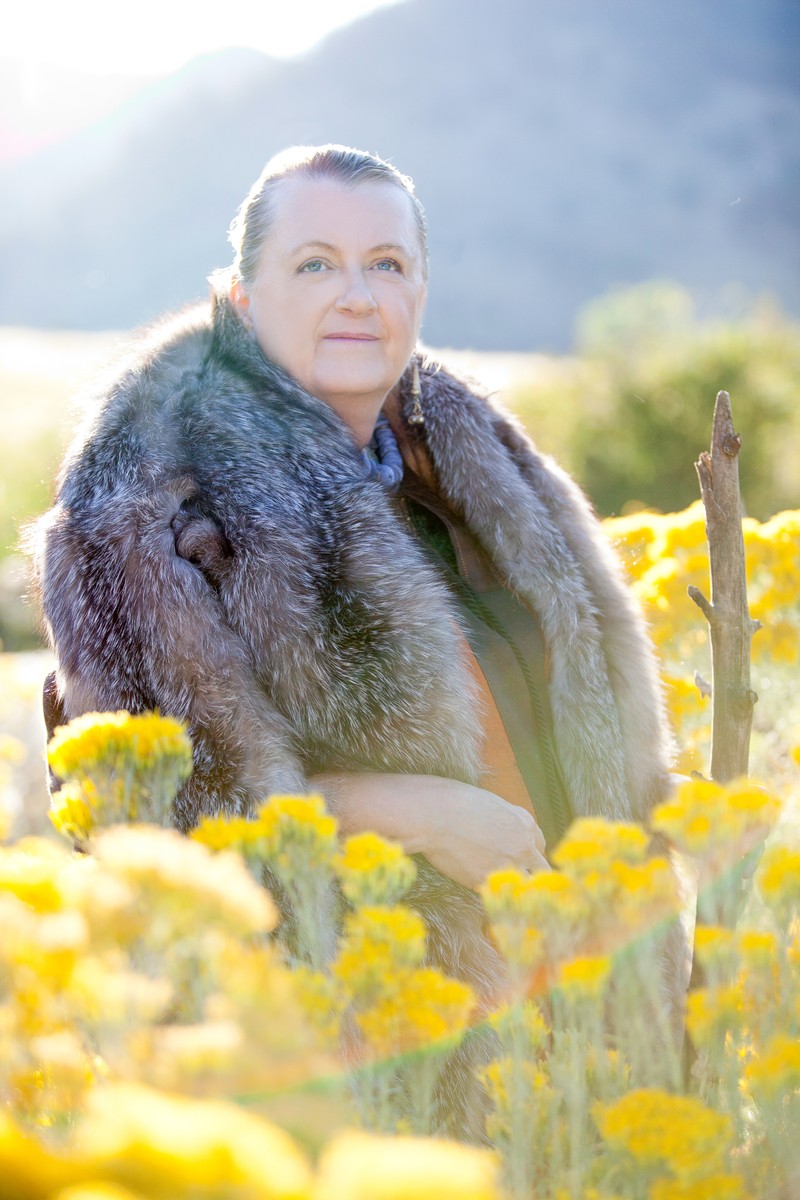
Award-winning author, Linnea Tanner, weaves Celtic tales of love, magical adventure, and political intrigue in Ancient Rome and Britannia. Since childhood, she has passionately read about ancient civilizations and mythology. She is particularly interested in the enigmatic Celts, who were reputed as fierce warriors and mystical Druids.
Linnea has extensively researched ancient and medieval history, mythology, and archaeology and has traveled to sites described within each of her books in the Curse of Clansmen and Kings series. Books released in her series include Apollo’s Raven (Book 1), Dagger’s Destiny (Book 2), Amulet’s Rapture (Book 3), and Skull’s Vengeance (Book 4). She has also released the historical fiction short story Two Faces of Janus.
A Colorado native, Linnea attended the University of Colorado and earned both her bachelor’s and master’s degrees in chemistry. She lives in Fort Collins with her husband and has two children and six grandchildren.
I’m delighted to welcome Dirk Stasser and his new book, Conquist, to the blog with where does history end and fiction begin?
Where does history end and fiction begin?
Dirk Strasser
The following timeline of the period in which my historical fantasy Conquist is set has three historical facts and one historical fiction:
1536—Manco Inca gathers an army of 200,000 Inca warriors and lays siege to Spanish-occupied Cusco.
1537—Diego de Almagro regains Cuzco, but Manco Inca escapes and founds the new Inca capital Vilcabamba which becomes the last stand of the Inca Empire.
1538—Cristóbal de Varga and a 600 strong army searches for Vilcabamba in a remote region of the Andes.
1539—Gonzalo Pizarro finds the location of Vilcabamba in the Amazon region of Peru and invades the city, but Manco Inca once again escapes.
My aim with Conquist was to create a fantastical story that could have happened according to the known historical facts. I chose 1538 because it was the only year in which the fictitious events of the novel could have occurred. From his hidden city in that year Manco Inca established the last stand of the Inca Empire against Spanish conquest, while the Pizarro brothers and others where desperately searching for Vilcabamba. A year later the location was found by Gonzalo Pizarro in the Amazon region of Peru. I squeezed all the action of Conquist into that time frame because history required it. The novel action can only exist in the gap between Manco founding the new Inca capital and Gonzalo Pizarro finding its hidden location. That’s how I see historical fiction working. It seeks the gaps that can be filled by the imagination of the author.
Manco Inca existed, Diego de Almagro existed, Gonzalo Pizarro existed, Vilcabamba existed, but I made up Cristóbal de Varga. His name, like all the names in his conquistador army, was constructed to sound authentic by my scouring of the historical records and taking the first name of one real-life conquistador and matching it with the surname of a different real-life conquistador.
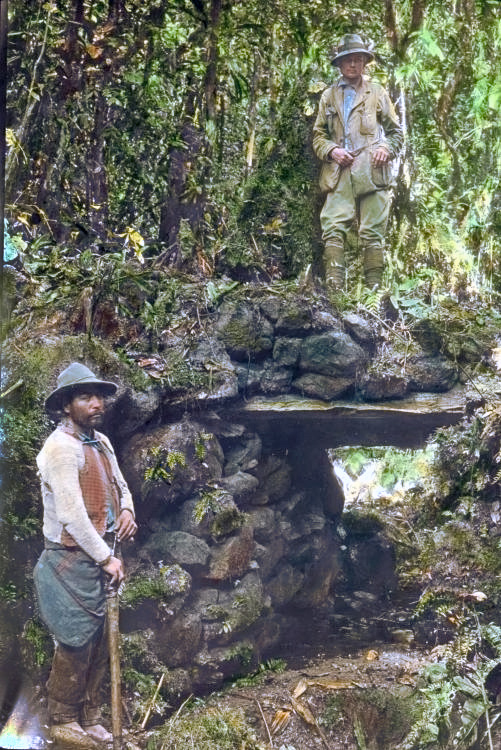
The search for Vilcabamba drives the action of Conquist. Historically, the location of the city was lost again after it was destroyed by Pizarro. In 1911 the American explorer Hiram Bingham mistakenly identified the abandoned ruin of Machu Picchu as Vilcabamba. He also visited a ruin called Espiritu Pampa near the Chontabamba River, which in 1964 was identified as the legendary Vilcabamba by another American explorer Gene Savoy (who interestingly claimed to have discovered over 40 lost cities in Peru). How do I know this? It was one of the research paths I went down which didn’t make in into the book. An earlier version of Conquist had a second timeline involving the discovery of Cristóbal de Varga’s diary last century.
American explorer Hiram Bingham and guide at the ruins of the last Incan capital Vilcabamba 1911
So, how much do you stick to the facts in historical fiction? Should historic fiction be loyal to the actual events? How do you decide where history ends and fiction begins?
Obviously, authors should be free to write the story they want to write. I think the important question is how the work is labelled. The question about how closely you should stick to historic facts is analogous to the “Based on true events” tag that often accompanies books and movies. Saying a work is based on true events is a powerful marketing tool. Books with that label are enticing to readers. They sell more. The reality of the work gives it more consequence. The events are more important. The tag predisposes you to care more about what happens to the characters because you see them as real people.
It’s psychological manipulation.
You can justify the tag if it’s true. But is it? More often than not I’ve seen it used when the tag really should have been “Inspired by true events”, which gives you much greater licence to play with facts.
So is labelling a book “historical fiction” the equivalent to saying, “Based on true events” or “Inspired by true events”? I see historical fiction as a wide umbrella term that includes both types. Most historical fiction awards now include historical fantasy as well as other sub-genres in their definition of historical fiction, so I don’t feel the term “historical fiction” necessarily indicates a rigid stick-to-the-facts approach.
Conquist is clearly historical fantasy. The history of the conquest of the New World is littered with expeditions looking for a city of gold (or some other fabled place like the fountain of youth). Conquist is the tale of such an expedition, and Cristóbal’s story mirrors Francisco Pizarro’s conquest of the Incan Empire.
In writing Conquist, I spent considerable time researching everyday life of both the Spanish conquistadors and the Inca, the weapons and warfare of the time, and the beliefs of both peoples. The rafting techniques of the Inca, for example, was a rabbit hole I needed to go down for a crucial part of the novel. Lieutenant Héctor Valiente is loosely based on the black conquistador Juan Valiente, a slave who convinced his owner to allow him to become a conquistador for four years as long as he kept a record of his earnings and returned them to his master. Incidental details are also important. For example, I described the conquistadors staunching the wounds of injured soldiers and horses with the fat of fallen enemies because I had read it in an actual conquistador diary. While the research was time-consuming, I also spent at least as much time deciding what not to include in the interests of the storyline.
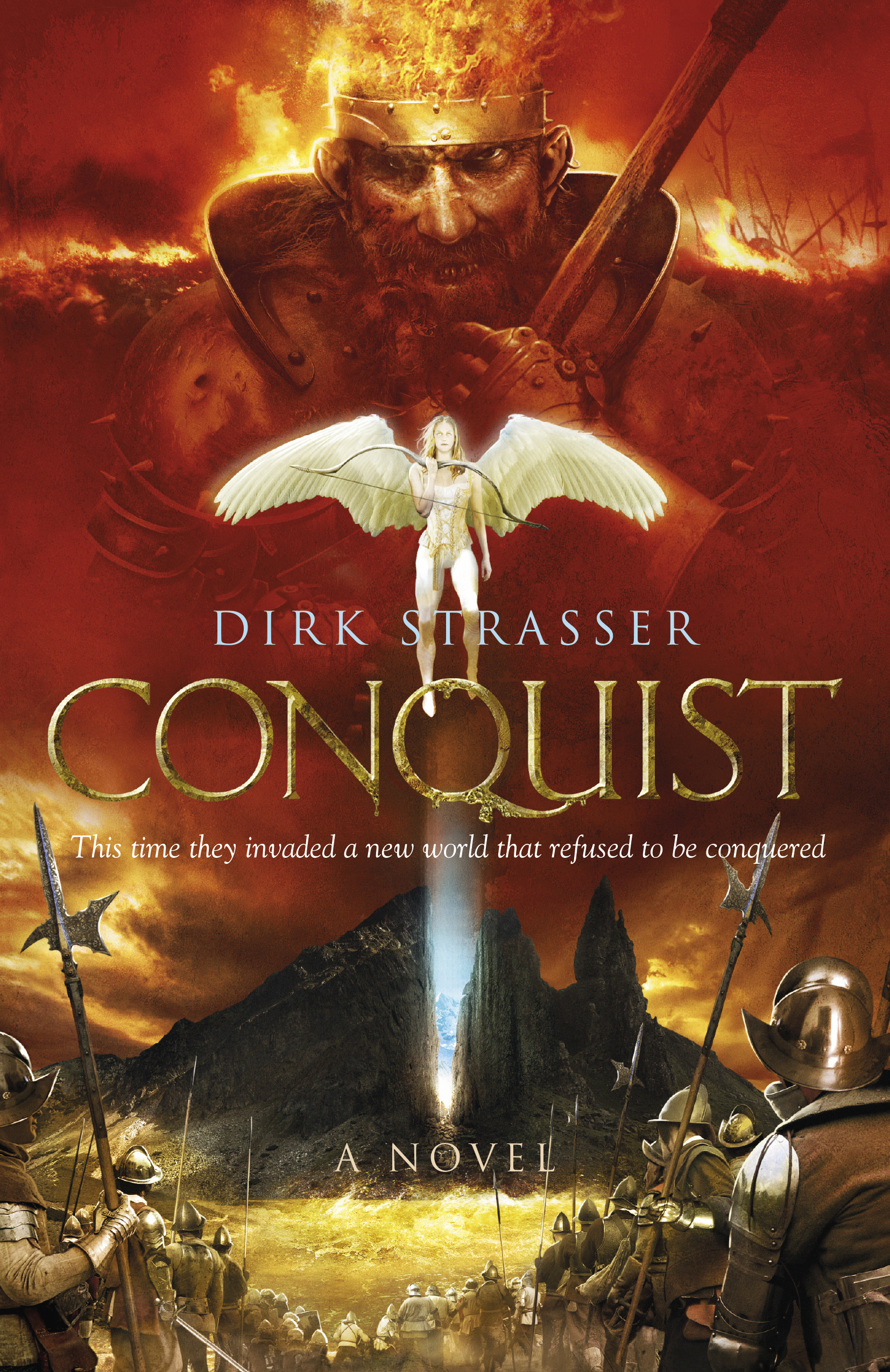
Despite all this research, the only label attached to Conquist are the words “A Novel” on the front cover. The publisher Roundfire Books decided to include this. It’s boldly saying that, despite the historical setting, the diary entries, and the conceit that the story was based on the discovery of that diary in the archives of a Peruvian museum, this book is fictitious. And as with any other work of fiction, the depth of the reading experience is tied to the willing suspension of disbelief.
Capitán Cristóbal de Varga’s drive for glory and gold in 1538 Peru leads him and his army of conquistadors into a New World that refuses to be conquered. He is a man torn by life-long obsessions and knows this is his last campaign.
What he doesn’t know is that his Incan allies led by the princess Sarpay have their own furtive plans to make sure he never finds the golden city of Vilcabamba. He also doesn’t know that Héctor Valiente, the freed African slave he appointed as his lieutenant, has found a portal that will lead them all into a world that will challenge his deepest beliefs. And what he can’t possibly know is that this world will trap him in a war between two eternal enemies, leading him to question everything he has devoted his life to – his command, his Incan princess, his honor, his God.
In the end, he faces the ultimate dilemma: how is it possible to battle your own obsessions . . . to conquer yourself?
Dirk Strasser’s epic fantasy trilogy The Books of Ascension—Zenith, Equinox and Eclipse—was published in German and English, and his short stories have been translated into several European languages. “The Doppelgänger Effect” appeared in the World Fantasy Award-winning anthology Dreaming Down Under. He is the co-editor of Australia’s premier science-fiction and fantasy magazine, Aurealis.
Dirk was born in Germany but has lived most of his life in Australia. He has written a series of best-selling school textbooks, trekked the Inca trail to Machu Picchu and studied Renaissance history. “Conquist” was first published as a short story in the anthology Dreaming Again (HarperCollins). The serialized version of Conquist was a finalist in the Aurealis Awards Best Fantasy Novel category. Dirk’s screenplay version of Conquist won the Wildsound Fantasy/Sci-Fi Festival Best Scene Reading Award and was a featured finalist in the Cinequest Film & Creativity Festival and the Creative World Awards.
A Celtic warrior princess is torn between her forbidden love for the enemy and duty to her people.
AWARD-WINNING APOLLO’S RAVEN sweeps you into an epic Celtic tale of forbidden love, mythological adventure, and political intrigue in Ancient Rome and Britannia. In 24 AD British kings hand-picked by Rome to rule are fighting each other for power. King Amren’s former queen, a powerful Druid, has cast a curse that Blood Wolf and the Raven will rise and destroy him. The king’s daughter, Catrin, learns to her dismay that she is the Raven and her banished half-brother is Blood Wolf. Trained as a warrior, Catrin must find a way to break the curse, but she is torn between her forbidden love for her father’s enemy, Marcellus, and loyalty to her people. She must summon the magic of the Ancient Druids to alter the dark prophecy that threatens the fates of everyone in her kingdom.
Will Catrin overcome and eradicate the ancient curse? Will she be able to embrace her forbidden love for Marcellus? Will she cease the war between Blood Wolf and King Amren and save her kingdom?
What Amazon reviewers say about Apollo’s Raven
“If you mingled the history and romance of Philippa Gregory with the magical fantasy of George R.R. Martin, the result just might be the fascinating Apollo’s Raven (Curse of Clansmen and Kings Book 1) by Linnea Tanner. Get ready for a journey filled with the desires of star-crossed lovers, the horror of a son polishing his own mother’s skull and the fantasy of humans becoming creatures as a tool to save their very humanity.”
“Sorcery? Mythology? Forbidden love? An ancient curse? Yes, please! I fully enjoyed this epic tale of intrigue, deception, and love. The characters are developed well, while the plot leaves the reader wanting more.”
“What a story! I am a huge fan of “Game of Thrones,” and this book grabbed me in much the same way. The author took me inside the world of ancient Romans and Celts. The imagery was compelling. I could see the characters, the weapons, the countryside, the lairs, and the castle. She stayed true to the times.”
“A love story full of intrigue, power struggles, choosing one’s fate and a doomed love, this story reminds me somewhat of an old book called “The Silver Land” by Nancy Harding or even “The Forest House” by Marion Zimmer Bradley. The undercurrents are the same as they are set in similar times, but the finer details are different enough that it only feels the same while still being uniquely its own.”
Award-winning author, Linnea Tanner, weaves Celtic tales of love, magical adventure, and political intrigue in Ancient Rome and Britannia. Since childhood, she has passionately read about ancient civilizations and mythology. She is particularly interested in the enigmatic Celts, who were reputed as fierce warriors and mystical Druids.
Linnea has extensively researched ancient and medieval history, mythology, and archaeology and has traveled to sites described within each of her books in the Curse of Clansmen and Kings series. Books released in her series include Apollo’s Raven (Book 1), Dagger’s Destiny (Book 2), Amulet’s Rapture (Book 3), and Skull’s Vengeance (Book 4). She has also released the historical fiction short story Two Faces of Janus.
A Colorado native, Linnea attended the University of Colorado and earned both her bachelor’s and master’s degrees in chemistry. She lives in Fort Collins with her husband and has two children and six grandchildren.
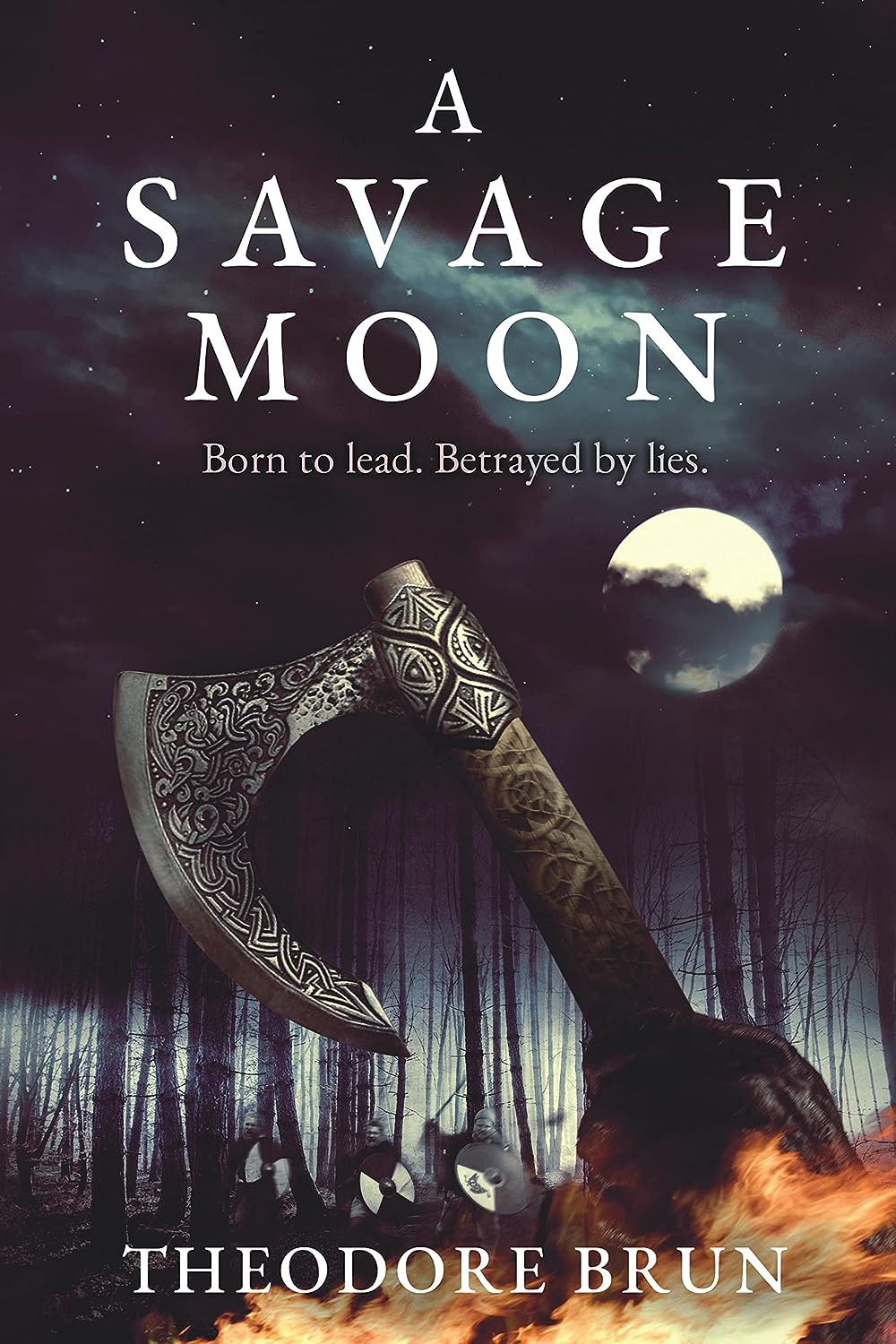
Byzantium, 718AD The great siege is over. Crippled warrior, Erlan Aurvandil, is weary of war. But he must rally his strength to lead a band of misfit adventurers back to the North, to reclaim the stolen kingdom of his lover, Lilla Sviggarsdottir. For this, they need an army. To raise an army, they need gold. Together they plot a daring heist to steal the Emperor’s tribute to his ally. Barely escaping with their lives, they voyage north, ready for the fight. But when fate strands them in a foreign land already riven by war, Erlan and Lilla are drawn inexorably into the web of a dark and gruesome foe. As blades fall and shadows close in, only one thing for them is certain; a savage moon is rising. And it demands an ocean of blood.
A Savage Moon is the fourth book in The Wanderer Chronicles. I’ve read book 1 (You can find the review here), but it was a while ago (2017), and so I can remember some elements of it, but not all of them. I do remember the character of Erlan, or Hakon as I knew him.
A Savage Moon feels very different from how I remember the first book – but this might be more to do with the complete culture shift – we’re no longer in Scandinavia, but Byzantium, and clearly Erlan has been put through the ringer since I last read about him. So I’m going to review this with no reference to the first book.
I love a story of the early eighth century, which takes the reader to complex times and places, all in great flux.
Byzantium always feels extremely exotic and also well documented. The stories I’ve read set in Byzantium have a familiar feel, and A Savage Moon is as well-researched. The events that befall our collection of characters – there are three main POVs, Erlan, Lilla and Kataros – are really well portrayed. The first part of the book is very exciting for Erlan and Lilla, while Kataros finds his way to another major location, that of Rome, on the cusp of being claimed by the Lombards and increasingly becoming a Christian centre. Again, Rome is well documented, and I loved the recreation of it for this story.
The author doesn’t stop there but takes us to Austrasia and Neustria, place names that might perplex but which are again enduring significant change as they become the kingdom known by the more familiar name of Frankia. Our characters’ journey is enormous, from Byzantium to Austrasia – a grand tour of Europe at this time.
Not just the locations are varied, but our three characters are all grappling with major life decisions. I really enjoyed the way the stories wound around one another and that there are many incidental characters encountered along the way who all add essential details to the narrative. The climactic reunion between the three, when it comes, because we all know IT IS coming, feels very natural. And I think the scene has been set for a fabulous book 5.
There are still some more fantastical elements to this story – it’s not all history, although we do encounter many ‘real’ historical figures – and the final encounter – A Savage Moon – builds towards a crescendo where the reader is never truly sure who will triumph in the dark woodlands. While the first action scene builds slowly, and as readers, we all wonder how they’ll triumph, the final action scene is the opposite, almost too sudden, too spur of the moment, and the reader can’t help but expect our stranded characters to fail.
A Savage Moon is vast in scope, but the ending is personal and climactic, a tale of friendship, love, trust and, for one of the characters, renewal, set against a backdrop of almost indescribable savagery. It’s sure to appeal to fans of historical fiction and historical fantasy.
Meet the author
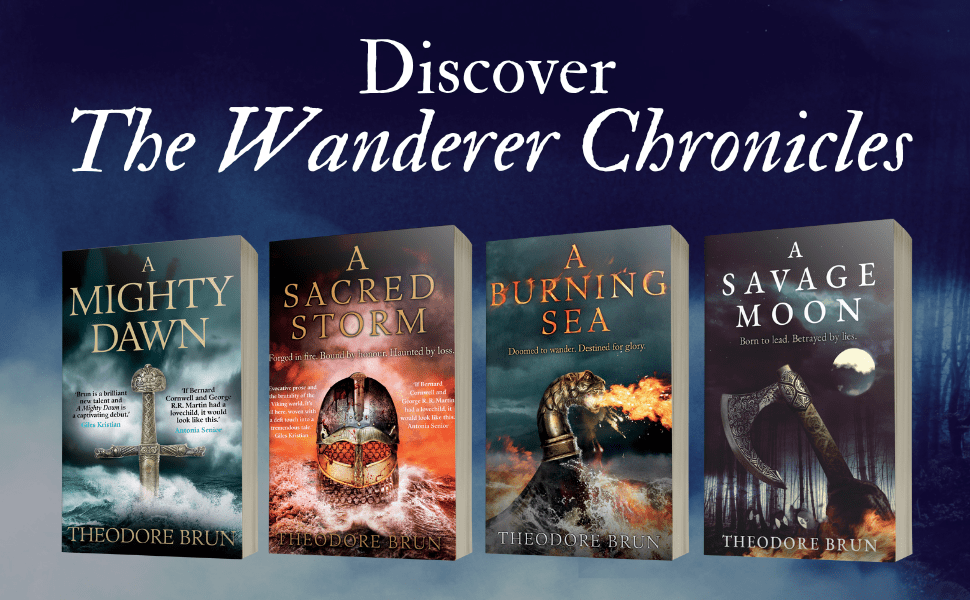
Theodore Brun is author of the critically-acclaimed historical fiction series, THE WANDERER CHRONICLES. He studied Dark Age archaeology at Cambridge and afterwards worked for several years in international arbitration law – first in London, then Moscow, Paris, and finally Hong Kong. In 2010, with the germ of an idea for a novel in his head, he quit his legal job in Hong Kong, jumped on a bicycle and pedalled 10,685 miles across Asia and Europe to his home in Norfolk. There, he sat down in a spider-infested cottage to write the first volume in his epic historical fiction series, THE WANDERER CHRONICLES. Four years later, Corvus Atlantic published his debut novel, A Mighty Dawn. The sequel, A Sacred Storm, was released in June 2018. The third book in the series, A Burning Sea, was out in September 2020.
Theo is a third generation Viking immigrant, his Danish grandfather having settled in England in 1932. You might say Viking stories are in his blood. Yet it was only through the unlikely portal of Wagner’s Ring Cycle that he discovered the hoard of ancient Scandinavian and Germanic stories which underlie the works of authors like Tolkein, CS Lewis, George RR Martin, Neil Gaiman, Giles Kristian and Bernard Cornwell to name a few. It was this material that provided the inspiration for THE WANDERER CHRONICLES. Theo is married to Natasha. They live in London, together with their girls, Ella, Talitha & Colette, and a wild dog named Wilmo.
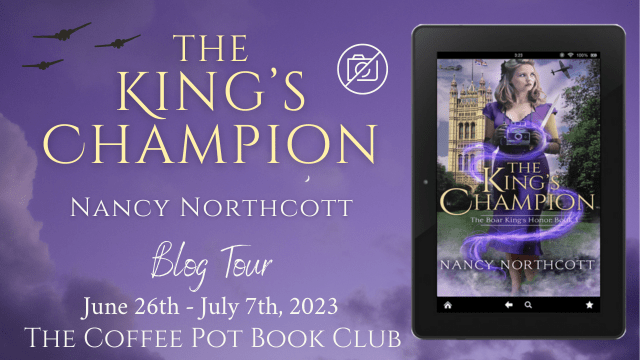
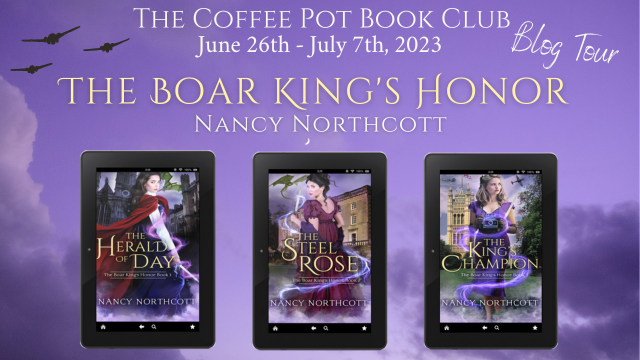
I’m delighted to welcome Nancy Northcott and her historical fantasy series to the blog. Nancy is sharing a fabulous post, about Challenges in the Past, with us.
Writing historical fantasy obviously requires dropping one’s characters into an historical world and making it seem real, vibrant and alive for readers. This holds true even when a writer decides to create an alternative timeline, or even an alternate universe for a particular era, as with steampunk, which is often set in a Victorian England that has steam-based and other tech. The more different the timeline and universe are from the way our history depicts a period, the more leeway an author has available in creating the world.
I like to stick close to the actual timeline, fitting my characters and their magic around the events of the era. That means I need to be fairly true to what people wore, how they lived, what they ate, and so on. In this post, I’ll share some of the challenges I faced in recreating the periods of the three books in my Boar King’s Honor historical fantasy trilogy.
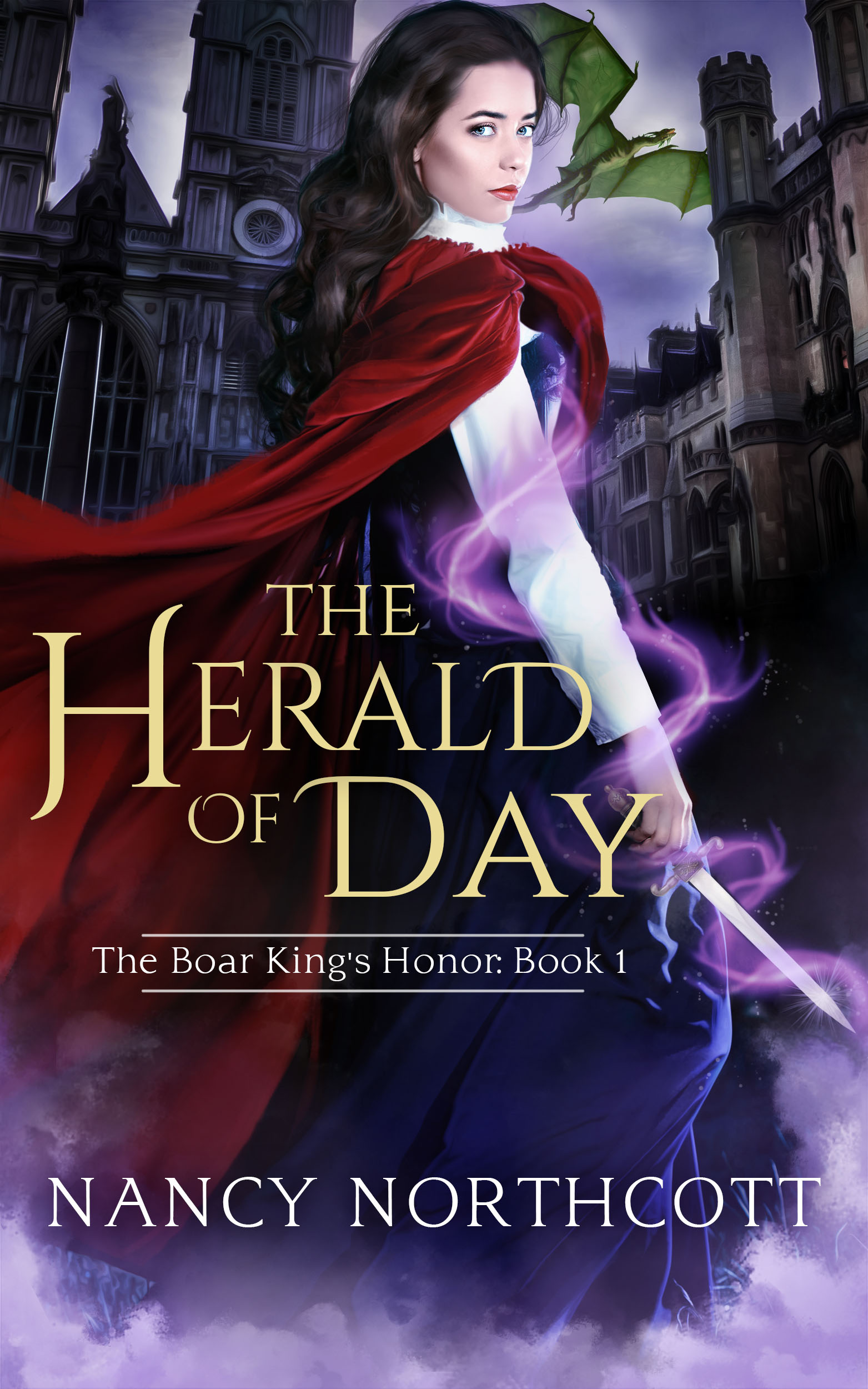
The action in the first book Boar King’s Honor trilogy, The Herald of Day, takes place in 1674, during the reign of Charles II. Although the book opens in Dover, most of the scenes take place in London. I happen to like that period, so I didn’t have to do much reading about the political situation in England at that time. I did, however, have to find out about travel, food, clothing, customs, and language. I started this project before the internet had virtually every kind of information on it, so I had to do a fair bit of hunting for answers.
Finding out about clothing was harder than I expected. I had a scene in which the villain undressed, and I realized I had no idea how men’s pants closed in 1674. I started asking writers, and someone knew someone who was not only a writer but a costumer. This friend of a friend generously provided sketches, references on clothing design and fabric, and other information that was helpful for all the characters.
Despite preferring to stay close to established history, I took a leap with that book and decided to have the villain, a wizard, figure out how to go back in time and change history to create a dictatorship of the magically Gifted—with himself at the head, of course. So I had to decide whether he made the change before, during, or after the Restoration of Charles II. I went back and read from the events leading up to it through the period immediately after and weighed the results of several options. I won’t say what I finally picked because the characters have to figure that out what the villain did, and I don’t want to spoil that for readers.
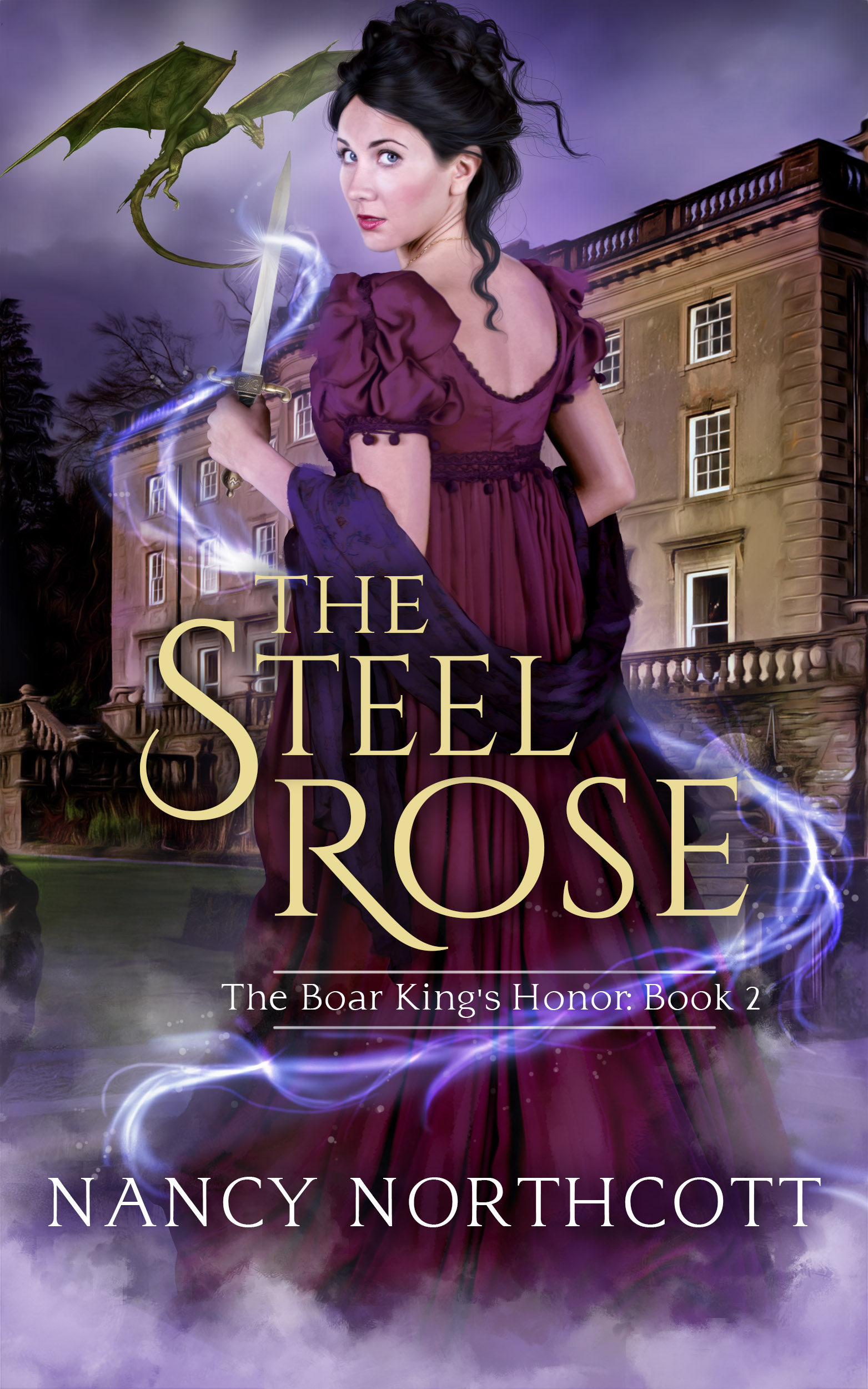
The second book, The Steel Rose, was the scariest to write from a research standpoint. By the time I started that one, the internet offered reams of material, and books on historical costume were easier to find around here than they’d been before. That simplified choices for the characters’ clothing, but the period brought a new headache.
The Steel Rose is set in 1815 during the hundred days between Napoleon’s escape from Elba and the Battle of Waterloo. This period is known as the Regency because King George III was incapable of ruling and England was governed by his son, the future George IV, as Prince Regent. This is Jane Austen’s era. It’s also one of the most popular for romance novels. During the Regency, social classes were rigidly stratified, and manners made the difference between social success and ostracism. There was a very great deal of etiquette to learn.
As though that weren’t tough enough from a writer standpoint, there are vast numbers of people who love the era’s social history. They create historically accurate costumes, learn the dances, and memorize the etiquette. They’ve been known to eviscerate writers who got something wrong, and the internet didn’t offer the specific information I needed. Fortunately, some Regency romance writers came to my rescue, answering questions and pointing me to resources. I did cut come of the bowing and curtseying customary during the era in the interests of moving the story along.
The social niceties weren’t my only concern, though. This story would include both Napoleon’s departure from Elba and the Battle of Waterloo. You may be aware that literal armies of people re-enact Waterloo every year. And they do it wearing uniforms accurate for both the period and their military units. That means many, many potential readers would know if I made a mistake.
Fortunately for me, Osprey Publishing puts out wonderful books full of detailed information on military uniforms and equipment. They also had a terrific book on the battle that led me to other books full of the meticulous details that gladden writers’ hearts.
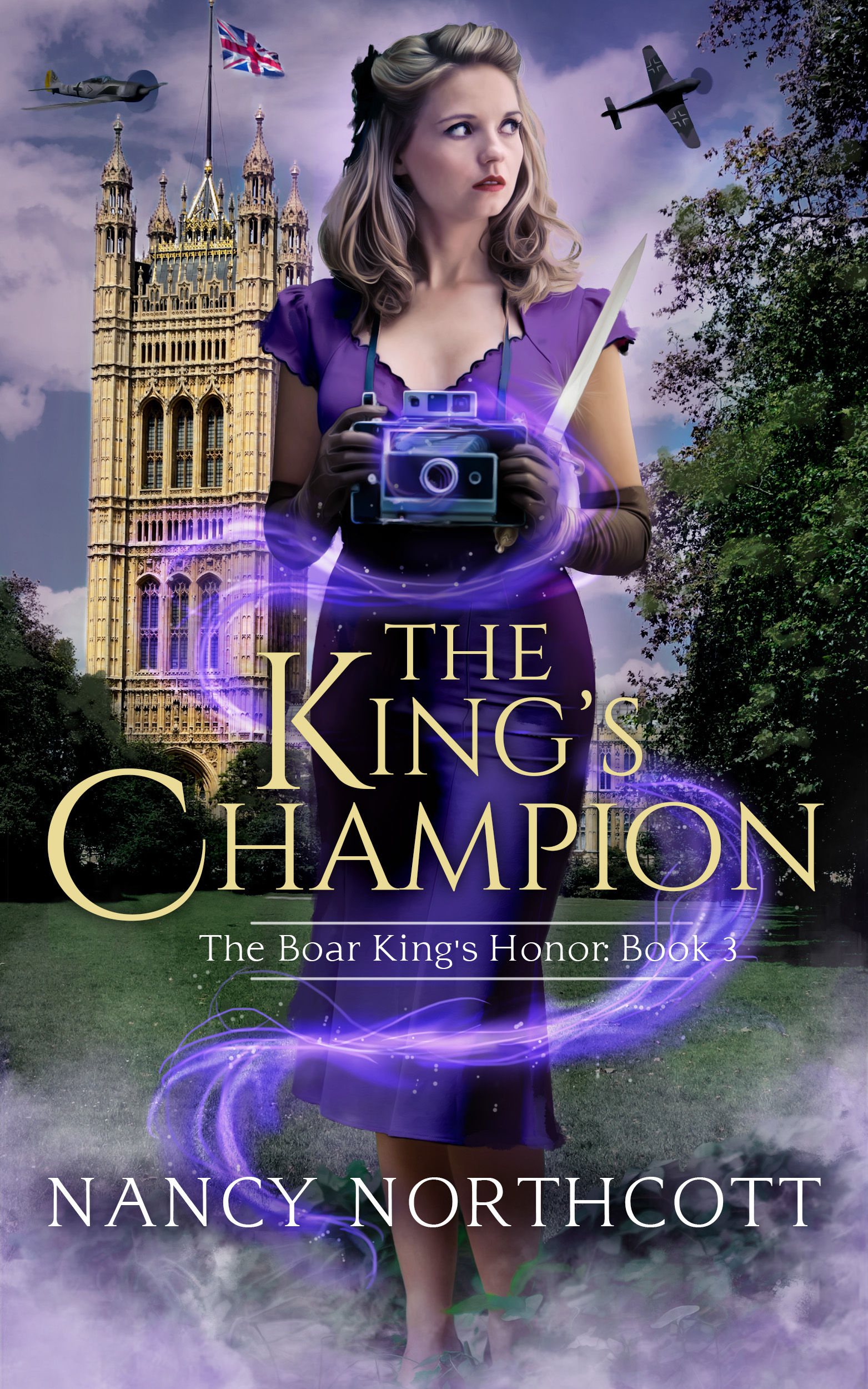
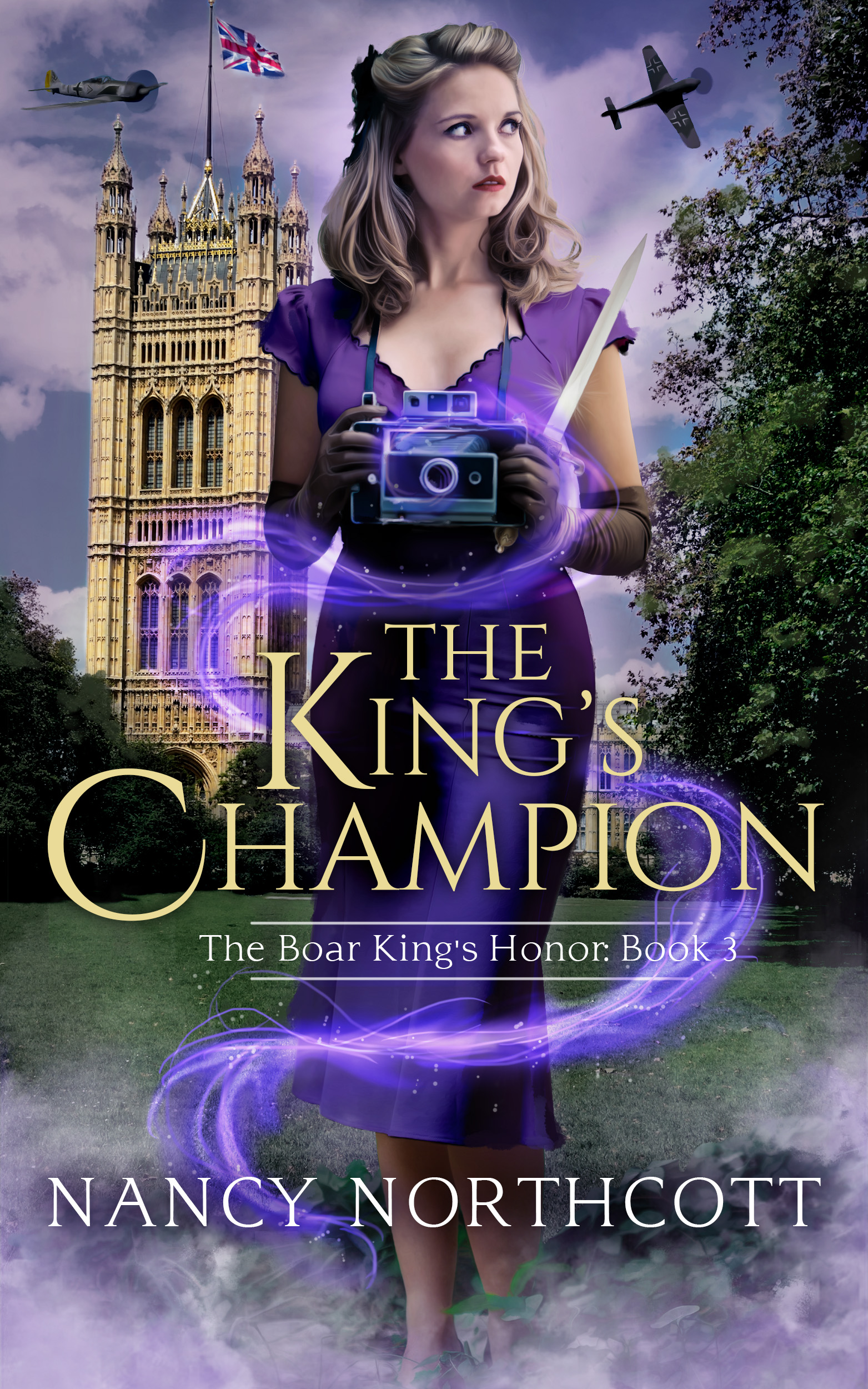
With those challenges behind me, I turned to the final book, The King’s Champion. It posed a different problem. There are many, many, many books about Britain during World War II, including libraries’ worth on social history. The trick, I quickly realized, would be in synthesizing all this information so that it offered an accurate picture of the era without including so much that it overshadowed the story. There are still people alive who remember the war years. There are many more who remember what those people said about life during the war. I had to depict British society in a way they would find acceptable.
Friends whose parents remember hearing about the war from relatives helped me out, especially about rationing and housing. Other friends knew the answers I needed or knew British veterans who would answer my questions. The Imperial War Museum website was very useful, as were, again, Osprey books. It was from that website that I learned about the 5” per person per week rationing of hot bath water, but I was never able to figure out exactly when that started.
At one point, my heroine is on a tugboat headed back to Dover from Dunkirk, and she asks the captain how long the trip will take. Unfortunately, I didn’t know. I could’ve deleted the question, but it would be logical for her to ask. I wanted to find the answer. This sent me down a research rabbit hole that grew ever deeper as I searched. Finally, after several attempts, I put the right combination of words into a search engine and hit upon a website devoted to the Little Ships of the evacuation.
These are some of the challenges I stumbled into while building the worlds for these three books. I didn’t want to hand-wave the problems away and just put down something convenient because “it’s fiction.” I’m grateful to everyone who helped me find the answers I needed.
I enjoyed the hunt for information, so finding it was a true delight each and every time. I’m happy with the worlds in this trilogy, and I hope readers be will as well.
#
Thank you for having me, MJ!
Thanks so much for sharing your fabulous post with my readers.
The Boar King’s Honor Trilogy
A wizard’s misplaced trust
A king wrongly blamed
A bloodline cursed until they clear the king’s name.
Here’s the blurb
Caught up in the desperate evacuation of the British Expeditionary Force from France in the summer of 1940, photojournalist Kate Shaw witnesses death and destruction that trigger disturbing visions. She doesn’t believe in magic and tries to pass them off as survivor guilt or an overactive imagination, but the increasingly intense visions force her to accept that she is not only magically Gifted but a seer.
In Dover, she meets her distant cousin Sebastian Mainwaring, Earl of Hawkstowe and an officer in the British Army. He’s also a seer and is desperate to recruit her rare Gift for the war effort. The fall of France leaves Britain standing alone as the full weight of Nazi military might threatens. Kate’s untrained Gift flares out of control, forcing her to accept Sebastian’s help in conquering it as her ethics compel her to use her ability for the cause that is right.
As this fledgling wizard comes into her own, her visions warn of an impending German invasion, Operation Sealion, which British intelligence confirms. At the same time, desire to help Sebastian, who’s doomed by a family curse arising from a centuries-old murder, leads Kate to a shadowy afterworld between life and death and the trapped, fading souls who are the roots of her family’s story. From the bloody battlefields of France to the salons of London, Kate and Sebastian race against time to free his family’s cursed souls and to stop an invasion that could doom the Allied cause.
Nancy Northcott’s childhood ambition was to grow up and become Wonder Woman. Around fourth grade, she realized it was too late to acquire Amazon genes, but she still loved comic books, science fiction, fantasy, history, and romance.
Nancy earned her undergraduate degree in history and particularly enjoyed a summer spent studying Tudor and Stuart England at the University of Oxford. She has given presentations on the Wars of the Roses and Richard III to university classes studying Shakespeare’s play about that king. In addition, she has taught college courses on science fiction, fantasy, and society.
The Boar King’s Honor historical fantasy trilogy combines Nancy’s love of history and magic with her interest in Richard III. She also writes traditional romantic suspense, romantic spy adventures, and two other speculative fiction series, the Light Mage Wars paranormal romances and, with Jeanne Adams, the Outcast Station space mystery series.
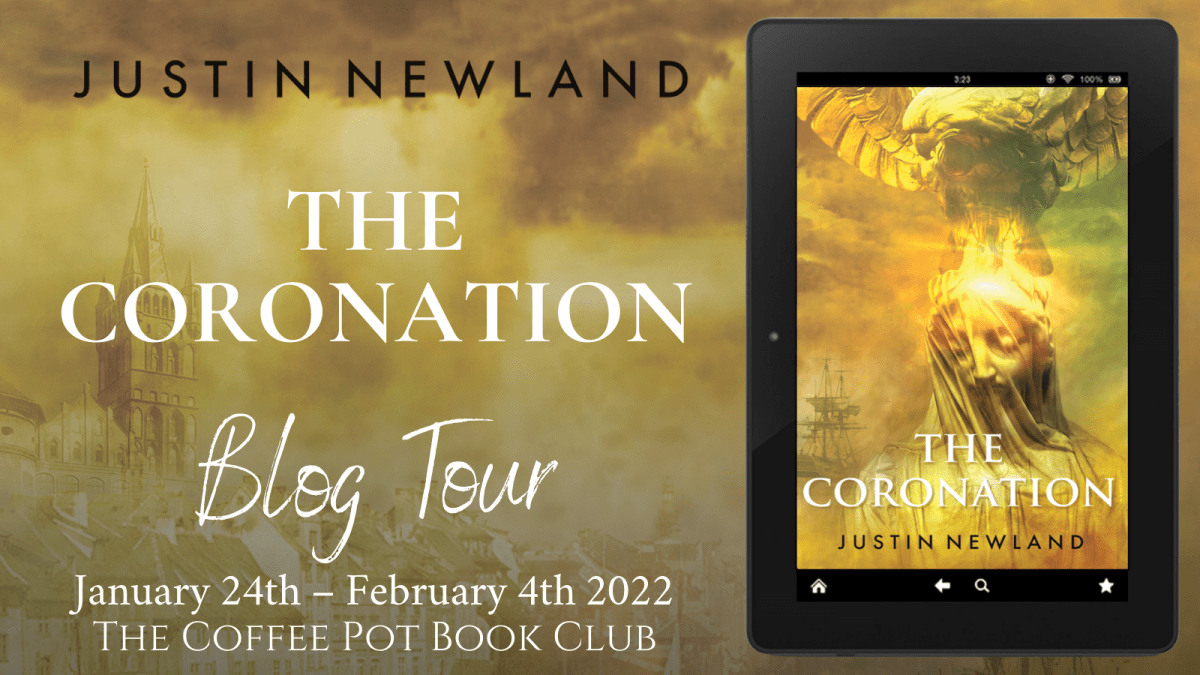
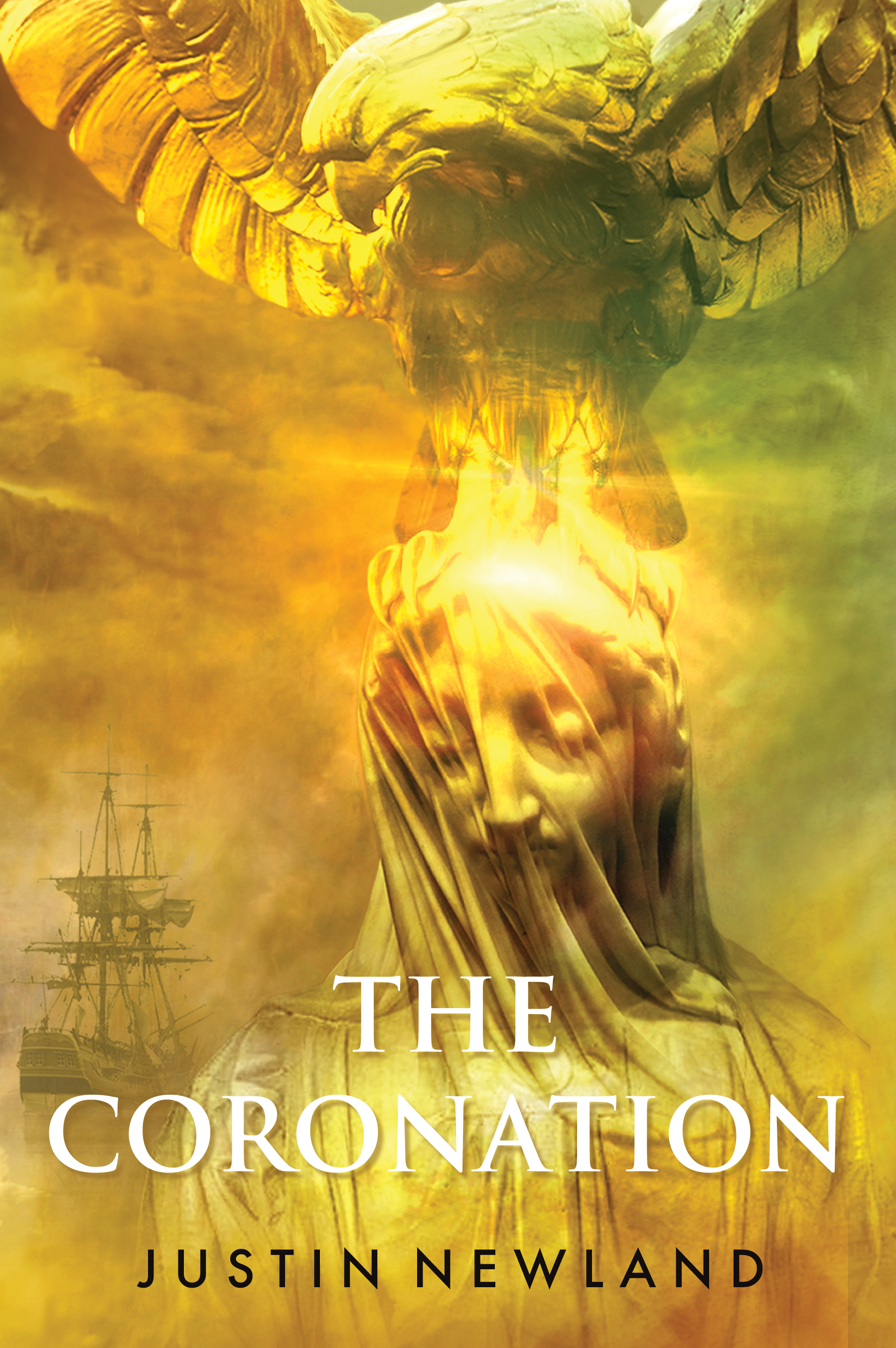
Your book, The Coronation, sounds fascinating. What was the first idea that made you decide to write this story?
To begin this, I’d like to describe how I work, how I come at or conceive my novels. I didn’t know this on my first novel, but have subsequently discovered this about how best I work, and how I best like to work.
So, to start, I tend to conceive the themes I want to explore in a story. Then I find the setting – the plot, the characters, the place, and the historical period – that best allows me to explore those themes and the message I want to put across.
Before I talk about The Coronation, my third novel, I’d like to give a bit of background as to my own writing journey up to the time I conceived it.
My first novel, The Genes of Isis, was an epic fantasy set in Ancient Egypt, and a re-telling of the Biblical story of the flood. Its plot was loosely based on the myth of Isis and Osiris.
Then I wrote a historical fantasy, The Old Dragon’s Head. It’s set in the 1400’s in Ming Dynasty China on the far eastern end of the Great Wall, and explored the supernatural beliefs of the Chinese mindset of those times.
Egypt and China – two of the largest historical contributors to the mores of civilisation.
Then, towards the end of 2017, I conceived the idea of a third novel, The Coronation.
Looking back at my notes, I wanted one of the themes of the story to be about famine, not only physical famine but also the spiritual famine. I wanted to use physical famine as a metaphor for spiritual famine, such as we encounter everywhere in today’s world.
So, I had to find a period of history, or a setting, when famine was prevalent.
I wanted also to explore the Ancient Greek idea of Arcadia, of an unspoiled, harmonious living together of a people and the land, played out through custom and ceremony, poem and dressage, song and dance. And I wanted to find a recent time and a place in history when the Arcadian ideal was still alive and well.
So, I also had to find a period of history when this Arcadian ideal was still alive and well and prospering.
This led me to the 18th Century in Europe.
It was a huge change-over, from feudal times to the beginning of the industrial era. It was time when there were few large cities, when people often only moved around within a 10- or 20-mile radius of their place of birth in all of their lives. It was a time when, in Europe, society was structured according to the Sachenspiegel, the Saxon Mirror, in the same way that God had ordered the Universe, from the stars down to the moon, from kings down to the peasants. This was a fixed, static view. In other words, people had to stay in and couldn’t move out of their strata of society, otherwise there would be upheaval and revolution.
It seemed to me that the Industrial Revolution had much to do with engendering that spiritual famine, so I looked for its genesis.
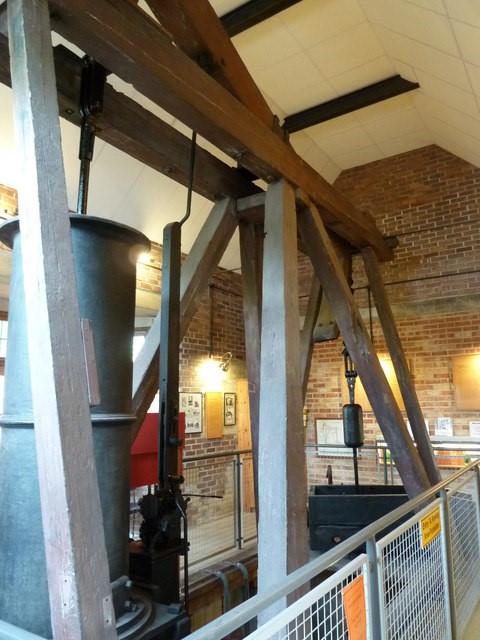
It began with the so-called Newcomen Engine.
Newcomen Steam Engine
This was a rather inefficient pump designed by a Devon pastor by the name of Thomas Newcomen. It was used to pump water out of Cornish tin mines.
There’s a photo here showing a reconstruction of that engine.
That led me to research James Watt and the origins of his steam engine. I found that he didn’t invent the steam engine, but he simply improved on the existing design, i.e., the Newcomen Engine.
So, in the 1760’s, James Watt made his discovery of the improvement to the efficiency of the steam engine, and we now live in the results of that, that is, we live in an industrialised society. That’s what we have inherited, whether we like it or not.
But was that how it was meant to be? Because at the time, a time they now call the Great Enlightenment, there were great advances in science, in biology, in chemistry, and medical science. These helped dispel the mists of superstition enshrouding the people of the time, and which prevented further growth and development.
But were we, as a people, as a genus, meant to take the industrial route? Was there an alternative? It must have been there, so what was it, and why didn’t we take it?
So, what was the ‘coronation’ alluded to in the book title? It wasn’t the coronation of a king or a queen or an emperor. So, what was it? Was it to do with the coronation of mankind, and if so, what form did that take? What did it, or would it look like, if mankind was crowned? And what did it have to do with the eagle?
These were the themes which set me off researching Europe on the 18th Century, and the period of the Great Enlightenment. And if it really was just that, a Great Enlightenment, how come we aren’t living in a greatly enlightened society today? Why didn’t it progress and develop? And should that day ever come, what would it look like? And would we recognise it?
These were some of the questions I wanted to explore in the novel.
Thank you so much for sharing. Your inspiration sounds fascinating. Good luck with the book.
Here’s the blurb
It is 1761. Prussia is at war with Russia and Austria. As the Russian army occupies East Prussia, King Frederick the Great and his men fight hard to win back their homeland.
In Ludwigshain, a Junker estate in East Prussia, Countess Marion von Adler celebrates an exceptional harvest. But it is requisitioned by Russian troops. When Marion tries to stop them, a Russian captain strikes her. His lieutenant, Ian Fermor, defends Marion’s honour and is stabbed for his insubordination. Abandoned by the Russians, Fermor becomes a divisive figure on the estate.
Close to death, Fermor dreams of the Adler, a numinous eagle entity, whose territory extends across the lands of Northern Europe and which is mysteriously connected to the Enlightenment. What happens next will change of the course of human history…
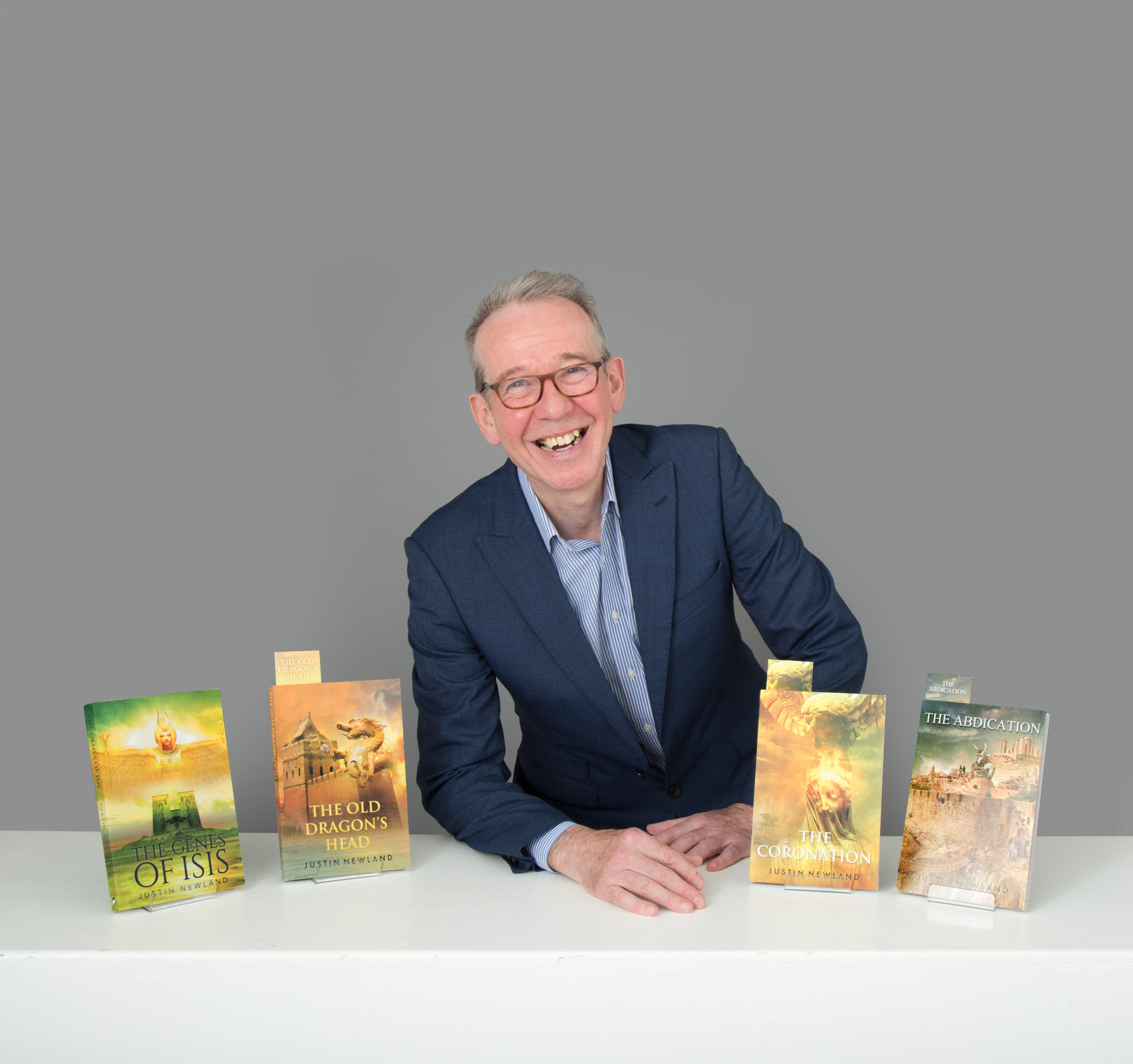
Justin Newland is an author of historical fantasy and secret history thrillers – that’s history with a supernatural twist. His stories feature known events and real people from history which are re-told and examined through the lens of the supernatural. He gives author talks and is a regular contributor to BBC Radio Bristol’s Thought for the Day. He lives with his partner in plain sight of the Mendip Hills in Somerset, England.
His Books
The Genes of Isis is a tale of love, destruction and ephemeral power set under the skies of Ancient Egypt. A re-telling of the Biblical story of the flood, it reveals the mystery of the genes of Isis – or genesis – of mankind. ISBN 9781789014860.
“The novel is creative, sophisticated, and downright brilliant! I couldn’t ask more of an Egyptian-esque book!” – Lauren, Books Beyond the Story.
The Old Dragon’s Head is a historical fantasy and supernatural thriller set during the Ming Dynasty and played out in the shadows the Great Wall of China. It explores the secret history of the influences that shaped the beginnings of modern times. ISBN 9781789015829.
‘The author is an excellent storyteller.” – British Fantasy Society.
Set during the Great Enlightenment, The Coronation reveals the secret history of the Industrial Revolution. ISBN 9781838591885.
“The novel explores the themes of belonging, outsiders… religion and war… filtered through the lens of the other-worldly.” – A. Deane, Page Farer Book Blog.
His latest, The Abdication (July, 2021), is a suspense thriller, a journey of destiny, wisdom and self-discovery. ISBN 9781800463950.
“In Topeth, Tula confronts the truth, her faith in herself, faith in a higher purpose, and ultimately, what it means to abdicate that faith.”
I don’t often offer my opinions on films – as they can be somewhat divisive. However, given the bad press surrounding this film – apparently it’s a flop, I feel compelled to write a little in support of the film as I went to see it and it was massively entertaining and so well done, I think people might need a little nudge in the right direction and a bit of positivity.
Firstly, I am not a huge fan of King Arthur legends – (apart from Sword in the Stone – obviously). I often struggle with the ‘historical placement’ of it all and the huge body of medieval literature and idealism that has affected the original ‘legend’. There is no need to fear on that part in this film. The massively imaginative reimagining of ‘England’ by Guy Ritchie is so vast and encompassing that you can’t help but love it. This is Camelot and Londinium as you’ve probably never seen it before. The landscapes are stunning, the details amazing – even the costumes don’t jar and the music, with its thundering drums, adds to a movie that starts a little slowly for all of 5 minutes, and then just builds and builds until the fantastic conclusion.
If you’re a fan of Guy Ritchie movies everything he’s accomplished since Lock, Stock is there (I am a huge fan of his Sherlock Holmes films because, again, they are so refreshing, and I think the Man from UNCLE is very underrated because it’s so damn stylish). This is Londinium with all the ‘street talk’ of Lock, Stock and the attitude of its characters and their ‘banter’ is up there with the best Sherlock lines. There are some fantastic and quirky camera angles used that really add to the enjoyment of the film – this is a film without dull moments, and I mean none – (unlike Guardians of the Galaxy 2 which was also awesome but has a bit in the middle that’s a bit ‘flat’). It starts, and it rolls and it keeps going.
If you’re a fan of Arthurian Legends then too, this has much to offer. Camelot is there, Uhtred, Vortigern, the Lady of the Lake, Druids and even Merlin gets more than a mention. This is an ‘epic’ England of ‘Arthurian’ times – and if sometimes Ritchie plays a little bit hard and fast with some of the expected storylines, this shouldn’t detract because you’ll be too busy laughing, or watching in amazement with your mouth hanging open!
This is clever, and witty craftsmanship. Having seen a few ‘good’ action films recently, this film suffers from none of their flaws – while it’s as stylistic as Assassin’s Creed and has superb music to accompany it (I felt the music in Assassin’s Creed throbbing through my veins), King Arthur benefits from a plot and story that drives it ever forward. The slightly forced camaraderie of The Great Wall, (which again is a stylistically fantastic film and very well made) has no place in this film – the main stars work so well together that everything feels natural and never forced.
Jude Law is stunningly evil, Charlie Hunnam doesn’t falter once, his delivery is fantastic, and the actress playing the druid is mystical and powerful and beautiful in a mystical way. The supporting cast, which is both vast and small, is filled with familiar faces – it’s good to see the guy from Game of Thrones, the little nod to the BBC Merlin series, and ‘Blue’ is a little gem. The David Beckham cameo didn’t even make me flinch and some might not even recognise him as he delivers his lines in a bluff ‘Londinium’ accent. Eric Bana is exceptionally heroic as Uhtred, and I’m not unconvinced that Jason Statham doesn’t have a cameo as well.
And all this before I even get to the fantastical elements of this historical fantasy (which I’m not spoiling – go and see them) because they are so well done.
For all those fans of Vikings, this is a film for you that doesn’t suffer from the need to drag out storylines for an entire season. For fans of The Last Kingdom – this film will show you how this sort of thing should be done – there’s no half-ass fighting scenes, weak dialogue, or moody ‘elf’ man. The kings and warriors in this don’t pansy around with wooden crosses around their necks, worrying about what ‘their’ God might or might not think about everything that’s going on.
This is a ‘reimagined’ world of epic proportions, and as you might have noticed, I really can’t praise it enough, so put down your latest historical fiction/fantasy novel, and get yourself to the cinema! This is how ‘Arthur’ should be done.
The Legend of Arthur was released in the UK on 21st May 2017.










 MJ Porter