

I’m delighted to welcome Judith Arnopp and her new book, A Matter of Time, to the blog #HistoricalFiction #Tudor #HenryVIII #NewRelease #BlogTour #CoffeePotBookClub

I’m delighted to welcome Judith Arnopp and her new book, A Matter of Time: Henry VIII, the Dying of the Light (Book Three), to the blog with a snippet.

Snippet: November 1541 Henry prepares for mass

It is good to be home, and my spirits remain high. I jest with my gentlemen as my beard, greyer now than gold, is trimmed, my nails clipped. I select a doublet of black with silver thread embellishing the cuffs, the slashes across the sleeves and chest revealing a fine silk shirt beneath.

My looking glass reflects a king, a man in his prime, a wise and honest man. As my dress sword is arranged at my hip, I take the gloves Denny is offering and tuck them into my girdle.

“Where is my psalter?” I ask, and it is instantly produced. I tuck it beneath my arm and make my way to the chapel, wondering as I go if Katherine will make it to Mass so early.

My mind is not on prayer this morning. I am feeling spry enough to go for a ride. Brandon has returned to court this week, perhaps we can ride out together as we used to, if he is feeling up to it. I often forget that he too grows old.

The sound of the choir greets me, their voices ascending to the dizzy heights of the blue and gold ceiling. Immediately, I feel contrition that my mind had strayed to sport rather than giving thanks to God for another day. Before I enter and take my seat, I rearrange my face into a pious expression. But as I sit down, I notice a folded slip of paper. I pick it up, look about the chapel to discover the author of the note, but when no man meets my eye, I unfold the message and … the world around me crumbles.
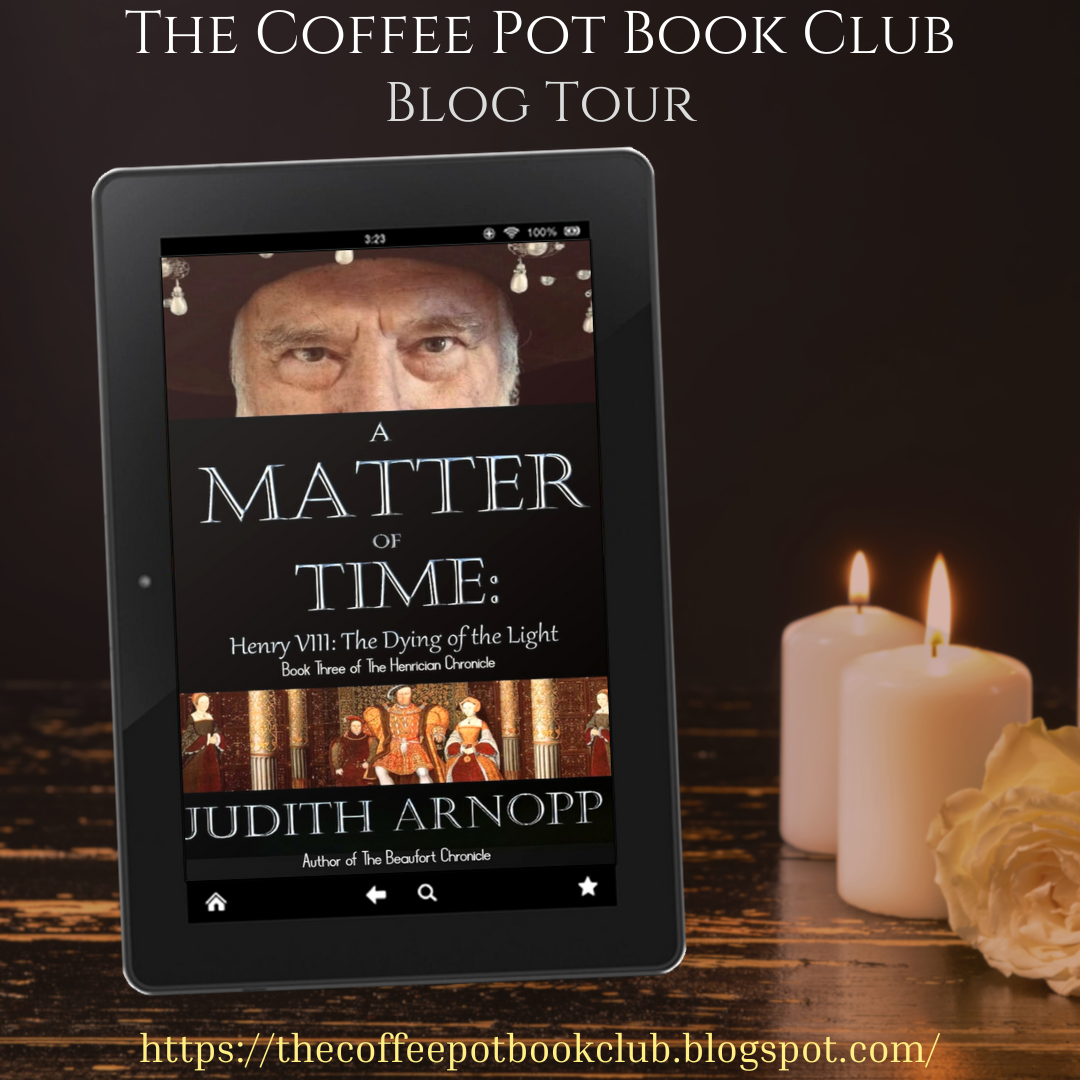
Here’s the blurb

With youth now far behind him, King Henry VIII has only produced one infant son and two bastard daughters. More sons are essential to secure the Tudor line and with his third wife, Jane Seymour dead, Henry hunts for a suitable replacement.

After the break from Rome, trouble is brewing with France and Scotland. Thomas Cromwell arranges a diplomatic marriage with the sister of the Duke of Cleves but when it comes to women, Henry is fastidious, and the new bride does not please him. The increasingly unpredictable king sets his sights instead upon Katherine Howard and instructs Cromwell to free him from the match with Cleves.

Failure to rid the king of his unloved wife could cost Cromwell his head.

Henry, now ailing and ageing, is invigorated by his flighty new bride but despite the favours he heaps upon her, he cannot win Katherine’s heart. A little over a year later, broken by her infidelity, she becomes the second of his wives to die on the scaffold, leaving Henry friendless and alone.

But his stout heart will not surrender and leaving his sixth wife, Katheryn Parr, installed as regent over England, Henry embarks on a final war to win back territories lost to the French more than a century before. Hungry for glory, the king is determined that the name Henry VIII will shine brighter and longer than that of his hero, Henry V.

Told from the king’s perspective, A Matter of Time: Henry VIII: the Dying of the Light shines a torch into the heart and mind of England’s most tyrannical king.
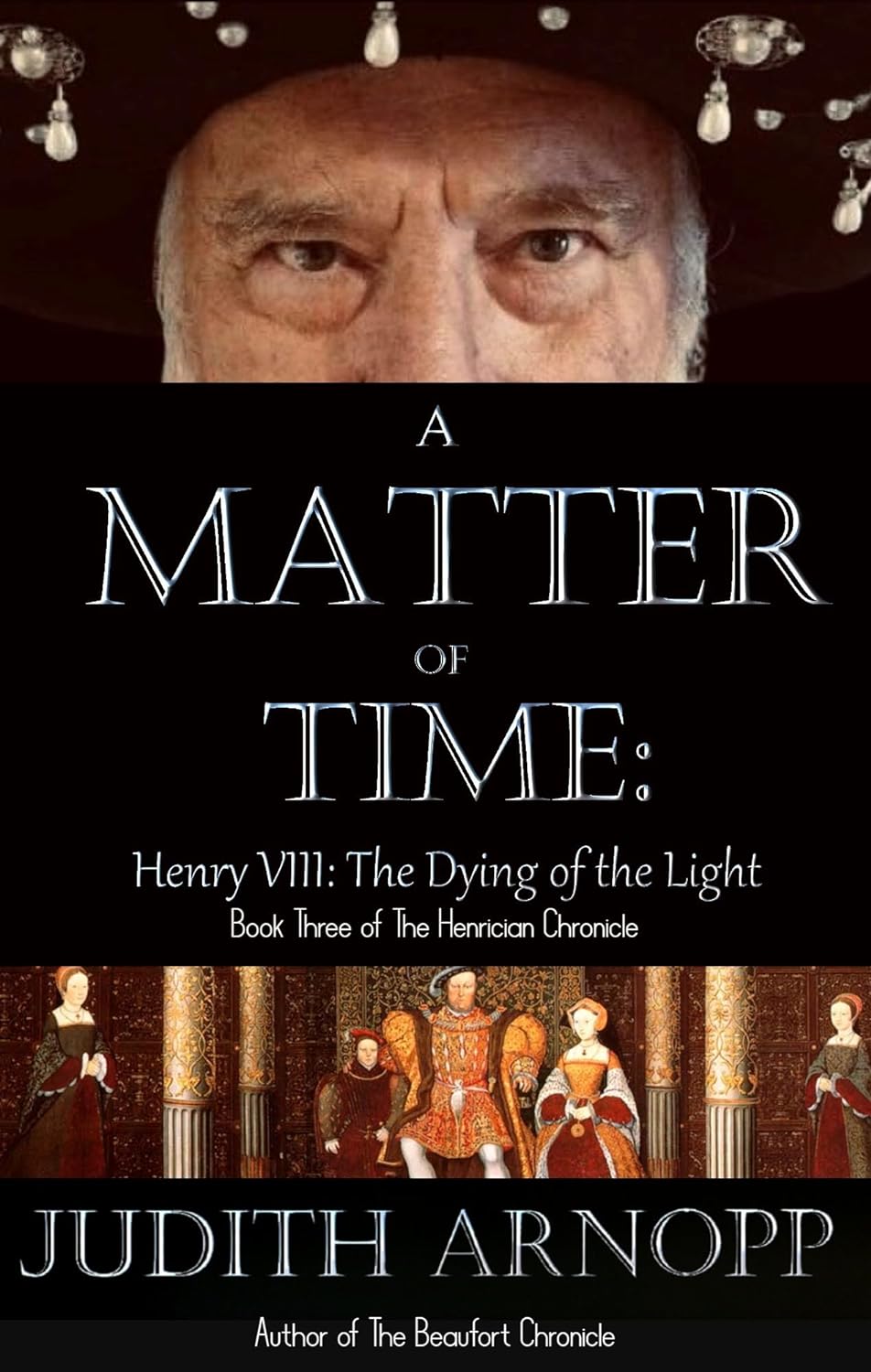
Buy Links

Meet the Author

A lifelong history enthusiast and avid reader, Judith holds a BA in English/Creative writing and an MA in Medieval Studies. She lives on the coast of West Wales where she writes both fiction and non-fiction. She is best known for her novels set in the Medieval and Tudor period, focusing on the perspective of historical women but recently she has been writing from the perspective of Henry VIII himself.

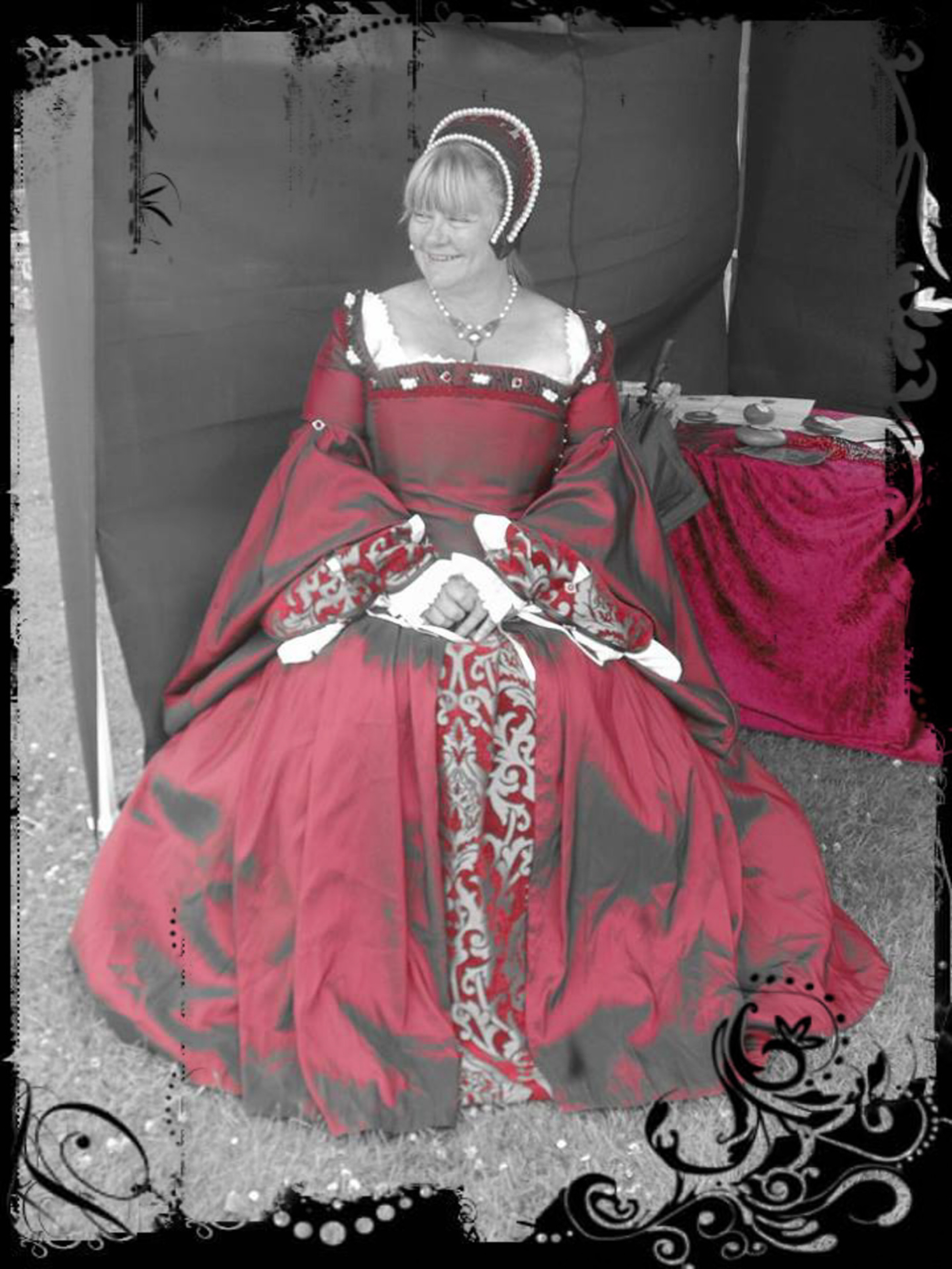
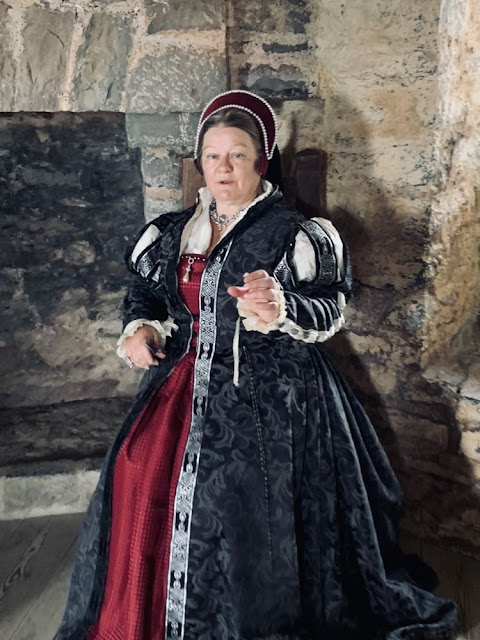
Judith is also a founder member of a re-enactment group called The Fyne Companye of Cambria which is when she began to experiment with sewing historical garments. She now makes clothes and accessories both for the group and others. She is not a professionally trained sewer but through trial, error and determination has learned how to make authentic looking, if not strictly historically accurate clothing. Her non-fiction book, How to Dress like a Tudor was published by Pen and Sword in 2023.

Her novels include:

  • A Song of Sixpence: the story of Elizabeth of York
  • The Beaufort Chronicle : the life of Lady Margaret Beaufort (three book series)
  • A Matter of Conscience: Henry VIII, the Aragon Years (Book One of The Henrician Chronicle)
  • A Matter of Faith: Henry VIII, the Days of the Phoenix (Book Two of The Henrician chronicle)
  • A Matter of Time: Henry VIII, the Dying of the Light (Book Three, Coming soon)
  • The Kiss of the Concubine: a story of Anne Boleyn
  • The Winchester Goose: at the court of Henry VIII
  • Intractable Heart: the story of Katheryn Parr
  • Sisters of Arden: on the Pilgrimage of Grace
  • The Heretic Wind: the life of Mary Tudor, Queen of England
  • Peaceweaver
  • The Forest Dwellers
  • The Song of Heledd

Previously published under the pen name – J M Ruddock.

  • The Book of Thornhold
  • A Daughter of Warwick: the story of Anne Neville, Queen of Richard III
Connect with the Author

Website: Blog: Bluesky: BookBub:
Follow the A Matter of Time blog tour with The Coffee Pot Book Club

Judith Arnopp is sharing a post about the historical research for A Matter of Conscience #blogtour #historicalresearch

Today, I’m delighted to welcome Judith Arnopp to the blog with a guest post about her historical research.

A Matter of Conscience is once more set during the reign of the Tudors, a period about which I know you’ve written extensively. Do you feel comfortable in the Tudor era and can you explain your research process to me, and give an idea of the resources that you rely on the most (other than your imagination, of course) to bring the historical landscape and people of Tudor England to life?

I feel very comfortable in the Tudor era, or at least in the Tudor world I have created, peopled with characters from history. Since we can never visit the past, no author can ever be 100% certain they have got it right so I don’t worry too much, if I can convince my reader, I am happy. 

I’ve enjoyed the Tudor period since I was a young girl, some forty-five years or more. As a teenager I read all I could get my hands on, both fiction and non-fiction, and later when I went to university as a mature student, I learned the importance of thorough research. At the time, I never dreamed I’d ever write a book, let alone be published. A Matter of Conscience: Henry VIII, the Aragon Years is my thirteenth novel set in the Tudor era, so I know the setting quite well by now. 

When I wrote my first Tudor books, The Winchester Goose and The Kiss of the Concubine: the story of Anne Boleyn, I needed to research from the ground up. I examined the living conditions, the law, clothes, historical figures, customs, buildings, and court etiquette. I probably did far more research than necessary, but I wanted to get it right. I spent ages researching and still rely quite heavily on the essays and notes I made then. There is an extensive university library in Lampeter, close to where I lived at the time, and I used that a lot but now I have moved farther away, I can no longer do so. Luckily, the basics are in my head, so I only need to double check the things I am unsure of. Who was where at what time? Birth dates, death dates, things like that, or palaces or castles I’ve not researched before. 

When I wrote The Beaufort Chronicle, I became so wrapped up investigating Margaret Beaufort’s many homes, I fell behind with the rest of my work schedule and had to scramble for the deadline.

As for contemporary sources, they are much easier to get hold of than they used to be. When I first began to write I had to order them via the university library and sometimes it took weeks to get into my hands. British History Online is invaluable for documents and I recently discovered another online resource called Academia that is also proving useful.

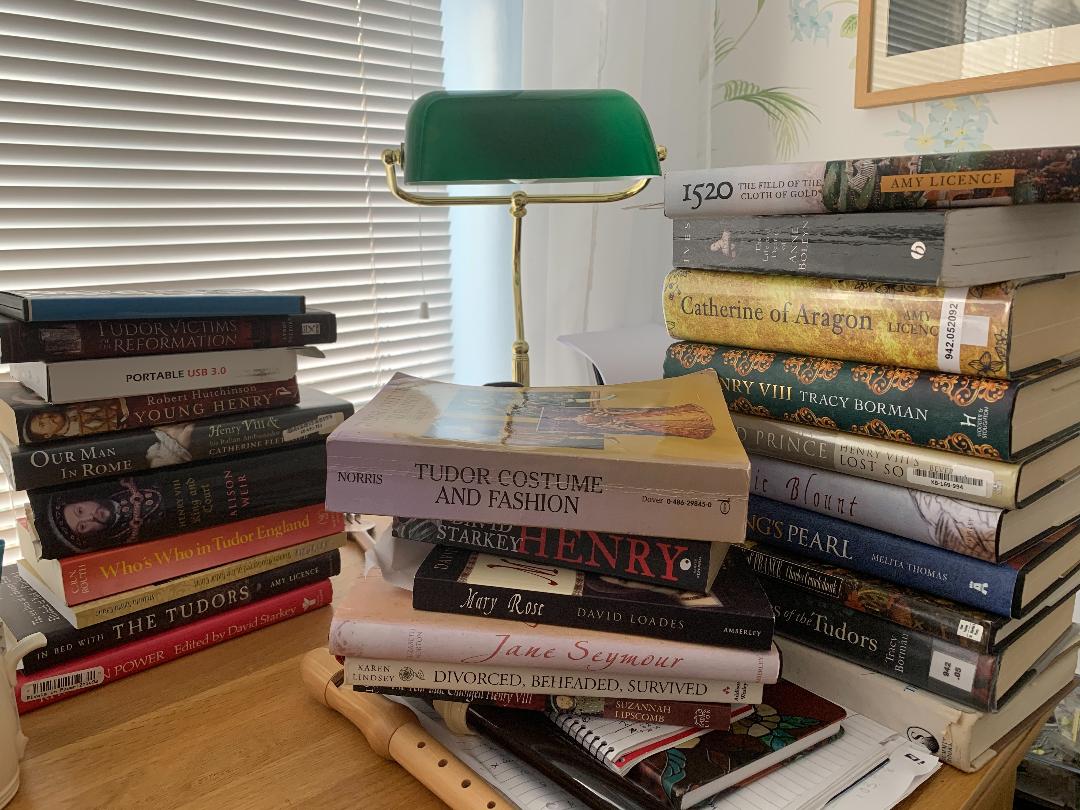
I have many key reference books in my own library, and I can’t resist historical biographies. There are a few good historians that I trust to have researched properly and as soon as they release a new book, it goes on my pile.

Each time I begin a new project, I tell myself I will be tidier and more organised but before I am half-way through, the usual chaos has resumed. I make heaps of notes that I often cannot interpret afterwards, which often means I need to look up some things again. I seem to get there in the end though. There is always a pile of books by my favourite historians on my desk for dipping in and out of for reference and another pile I read from cover to cover. For this novel I’ve relied on biographies by Tracy Borman, Alison Weir, Eric Ives, Suzannah Lipscomb, Elizabeth Norton. I think I have all Amy Licence’s books now and her new one, 1520: The Field of the Cloth of Gold was published in timely fashion just as I began work on A Matter of Conscience, and I greatly enjoyed it.  

I also listen to Claire Ridgeway on You Tube while I am sewing in my craft room. She knows all there is to know about Anne Boleyn. There are scenes in nearly all my books of women sewing or embroidering, I can empathise with their sore fingers.

I find it best to absorb a wide variety of opinions and perspectives and then mull it all over and make my own conclusion. But not all the information ends up in the finished book because too much fact in a novel can be dull. I write first person narrative so I don’t tend to over describe the everyday objects they use simply because my character would not have found them extraordinary. My books centre on the psyche, or what I imagine might have been.

When writing in Henry’s voice I must be sure to know only what Henry knew and forget what comes after and the events that occurred behind his back. I live in each moment with Henry, as he lived it. A Matter of Conscience takes place during his childhood, adolescence, and marriage to Catherine of Aragon, so I found Henry quite an easy companion. He might, however, prove harder to live with in Book Two, which will follow shortly.

Do you have a ‘go’ to book/resource that you couldn’t write without having to hand, and if so, what is it (if you don’t mind sharing)?

I use the Tudor timeline as a skeleton so always have a print out of that to hand. Also, my Who’s Who in Tudor England is invaluable for reference. Looking at the pile on my desk at his moment, I’d say I rely on Amy Licence’s books the most. I find her very accessible, concise, and most importantly, accurate. Elizabeth Norton is another name that appears often on my shelves.

But my research isn’t all books or written sources, there are also portraits and again, thanks to technology, there is no real need to visit museums and galleries to do this. I build Pinterest boards with interesting Tudor faces and costumes which helps immensely, not just with my fiction but with my non-fiction writing and actual historical sewing too. I visit castles and monastic buildings, palaces, and manor houses. I’m not a great fan of the sites that add waxworks and reconstructed ‘rooms’. I prefer to let my imagination do the work. I am lucky to live in Wales where we have so many castles. I am a founder member of a Tudor re-enactment group called The Fyne Companye of Cambria and we love to dress up in our lovely gowns and ‘swish’ about the castles. All our events were cancelled last year, for obvious reasons and we haven’t booked any this year but are waiting to see what unfolds. We will be so glad when Covid19 restrictions end and we are able to visit them again.

Thank you so much for inviting me on to your blog. It has been lovely.

Thank you so much for sharing your research with me. I can relate to much of it – I am very untidy as well, and never reference anything correctly so always have to find it again.

So, here’s the blurb for the new book. It sounds fantastic. I’ve always been drawn to this particular episode in the Tudor saga.

‘A king must have sons: strong, healthy sons to rule after him.’

On the unexpected death of Arthur Tudor, Prince of Wales, his brother, Henry, becomes heir to the throne of England. The intensive education that follows offers Henry a model for future excellence; a model that he is doomed to fail.

On his accession, he chooses his brother’s widow, Catalina of Aragon, to be his queen. Together they plan to reinstate the glory of days of old and fill the royal nursery with boys. 

But when their first-born son dies at just a few months old, and subsequent babies are born dead or perish in the womb, the king’s golden dreams are tarnished.

Christendom mocks the virile prince. Catalina’s fertile years are ending yet all he has is one useless living daughter, and a baseborn son.

He needs a solution but stubborn to the end, Catalina refuses to step aside.

As their relationship founders, his eye is caught by a woman newly arrived from the French court. Her name is Anne Boleyn.

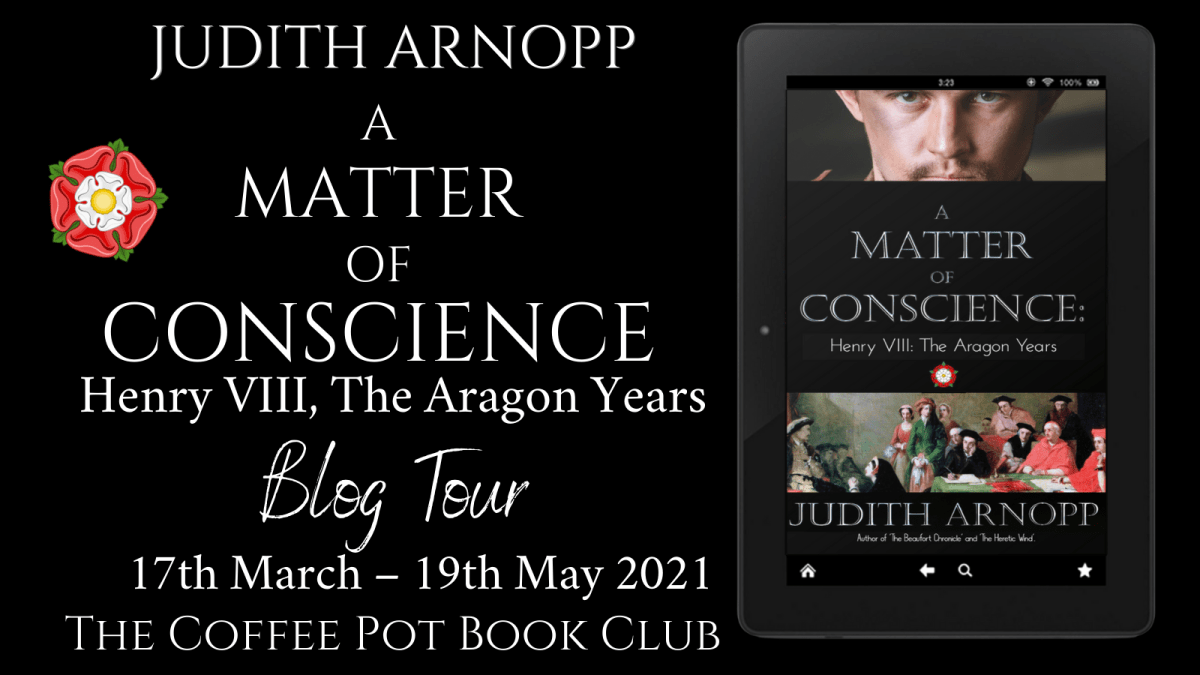
A Matter of Conscience: the Aragon Years offers a unique first-person account of the ‘monster’ we love to hate and reveals a man on the edge; an amiable man made dangerous by his own impossible expectation

Amazon UK Amazon US 

Meet the Author

A lifelong history enthusiast and avid reader, Judith holds a BA in English/Creative writing and an MA in Medieval Studies.

She lives on the coast of West Wales where she writes both fiction and non-fiction based in the Medieval and Tudor period. Her main focus is on the perspective of historical women but more recently is writing from the perspective of Henry VIII himself.

Her novels include:

A Matter of Conscience: Henry VIII, the Aragon Years 

The Heretic Wind: the life of Mary Tudor, Queen of England

Sisters of Arden: on the Pilgrimage of Grace

The Beaufort Bride: Book one of The Beaufort Chronicle

The Beaufort Woman: Book two of The Beaufort Chronicle

The King’s Mother: Book three of The Beaufort Chronicle

The Winchester Goose: at the Court of Henry VIII

A Song of Sixpence: the story of Elizabeth of York

Intractable Heart: the story of Katheryn Parr

The Kiss of the Concubine: a story of Anne Boleyn

The Song of Heledd

The Forest Dwellers

Peaceweaver

Judith is also a founder member of a re-enactment group called The Fyne Companye of Cambria and makes historical garments both for the group and others. She is not professionally trained but through trial, error and determination has learned how to make authentic looking, if not strictly HA, clothing. You can find her group Tudor Handmaid on Facebook. You can also find her on Twitter and Instagram.

Website • Blog • Twitter • Instagram • Amazon

Don’t forget to check out the other stops on the blog tour for A Matter of Conscience.

Book Review – Four Princes by John Julius Norwich (non-fiction)

Here’s the blurb;

‘Never before had the world seen four such giants co-existing. Sometimes friends, more often enemies, always rivals, these four men together held Europe in the hollow of their hands.’ 

Four great princes – Henry VIII of England, Francis I of France, Charles V of Spain and Suleiman the Magnificent – were born within a single decade. Each looms large in his country’s history and, in this book, John Julius Norwich broadens the scope and shows how, against the rich background of the Renaissance and destruction of the Reformation, their wary obsession with one another laid the foundations for modern Europe. Individually, each man could hardly have been more different ­- from the scandals of Henry’s six wives to Charles’s monasticism – but, together, they dominated the world stage.

From the Field of the Cloth of Gold, a pageant of jousting, feasting and general carousing so lavish that it nearly bankrupted both France and England, to Suleiman’s celebratory pyramid of 2,000 human heads (including those of seven Hungarian bishops) after the battle of Mohács; from Anne Boleyn’s six-fingered hand (a potential sign of witchcraft) that had the pious nervously crossing themselves to the real story of the Maltese falcon, Four Princes is history at its vivid, entertaining best.

With a cast list that extends from Leonardo da Vinci to Barbarossa, and from Joanna the Mad to le roi grand-nez, John Julius Norwich offers the perfect guide to the most colourful century the world has ever known and brings the past to unforgettable life.

I received a free E Arc from Netgalley of this book.

It’s been a long time since I read a non-fiction history book that wasn’t set in the Anglo-Saxon/Viking period, but the Tudor period – or rather Elizabeth I was my first great history crush and I was fascinated by the idea of this accounting of the first half of the sixteenth century. History books too often focus on one person, one event or one series of events, it’s high time that ‘history’ looked at the wider reach of events and this is exactly what the author tries to do.

There can be few who know nothing about the reign of Henry VIII and his two ‘frenemies’ Charles V and Francis I of France, but by offering an account of the interactions of these three men, and adding Suleiman the Magnificent into the mix, a far richer landscape of Europe at this time is revealed. It was a time of great change, and all four of these men strove for something different, but all of them wanted, perhaps, to earn the biggest reputation for themselves, and they all seemed determined to bankrupt themselves in order to do so.

The author treats each king in a similar way; he might not agree with their actions but he can at least offer an explanation for their actions, and, with not a little humour, he’s able to find their achiles heel – for Suleiman it seems to have been the weather, for Charles V his unambitious son, the later Philip II, for Francis I his hatred of Charles V and we all know about Henry VIII and his need for a son and heir. And yet these men all dealt with far greater issues as well and I couldn’t help feeling a little sorry for Charles V who seemed to face some sort of disaster from everywhere simultaneously.

I would have liked more information about Suleiman as I know so little about him, but the purpose of the book precludes that – indeed I think some understanding of the period is needed beforehand in order to appreciate all that the author has to offer.

Overall, this is a very readable account of the time period – the Papacy looms large, as to be expected, as do some of Suleiman’s piratical allies, but each king is given his own space and time and I thoroughly enjoyed the writing and would recommend it to anyone who enjoys reading history books.

Four Princes is already available in hardback and for the Kindle, and you can buy it here;