
I’m delighted to welcome Deborah Swift and her new book, The Cameo Keeper, to the blog #HistoricalFiction #Renaissance #GiuliaTofana #Poison #BlogTour #TheCoffeePotBookClub 

I’m delighted to welcome Deborah Swift and her new book, The Cameo Keeper, to the blog #HistoricalFiction #Renaissance #GiuliaTofana #Poison #BlogTour #TheCoffeePotBookClub 

I’m delighted to welcome Deborah Swift and her new book, The Cameo Keeper, to the blog with an excerpt from the novel.

Rome, September 1644

As soon as Mia opened the door Donna Olimpia came straight in, looking side to side as if to check no-one could see her.

Mia extended a hand in greeting. ‘This way, honoured Signora.’ 

‘What’s that smell?’

‘Lavender, Signora. For making the linen smell sweet.’ She indicated the stairs and the woman went ahead of her, heavy feet and thick ankles under her richly embroidered black skirts. At the top Mia pointed to the door off the piano nobile and followed her client into the cooler room at the back of the house. 

Donna Olimpia threw back her widow’s veil to survey the sala, which was probably much smaller and more humble than any she was used to. Mia examined her client in turn, for clues as to what might cause her headaches, even though she was no expert at all. 

A determined face. Thick eyebrows over shrewd eyes, and a manner that meant business. 

Seeming satisfied by the look of the place, Donna Olimpia took the chair opposite Mia’s. ‘My servants tell me you are the best in Rome for women’s ailments,’ she said. ‘But you look younger than I imagined. I’d got the impression you were older.’

‘How can I help you, Signora?’

‘I have these headaches – megrim, my physician calls them. But he is no use. All his bloodletting hasn’t changed them one iota. They start with my eyes blurring and the room starts to swim, and then the headache. Torture. Like iron bands around my head. When it comes, I can do nothing but lie down in a dark room. They make me weak, and I can’t afford weakness. Not now.’

‘And how long do they last?’

‘Days. Sometimes three days at a stretch. They are debilitating and nothing seems to help.’

‘You have no headache now?’

‘Only the cardinals and their demands.’ She gave a small smile.

‘We have several remedies for headaches, but I will go down to my store and bring you something that may soothe your excess humours. Would you like refreshment while you wait?’ Mia couldn’t help the tingle of excitement that the great lady was actually sitting in her sala.

‘Nothing, thank you. I mustn’t be away from the city long or my servants will wonder where I am.’

Mia gave a small curtsey, as was the custom, and hurried downstairs to where Giulia was waiting. Giulia raised her eyebrows in question. 

‘She’s here, and she says it’s a megrim. Have you anything for that?’

Giulia reached up to a high shelf. ‘I’ll give her a simple mix of vervain and lemongrass. It won’t do her any good, but it won’t do her any harm either.’ Giulia took a corked bottle down and passed it over. ‘Now hurry. The sooner we can be rid of her, the sooner I’ll be able to breathe easy.’

Mia scurried back up the stairs, but was disconcerted to see Donna Olimpia had gone through the open door to her small workroom and was now snooping through the books turned to the wall. With a jolt, Mia saw she was studying one on astrology. Even worse, she recognised it as one of the treatises favouring Galileo, a man considered heretical by the last Pope.

Donna Olimpia turned when Mia entered, still holding the book, her finger acting as bookmark in the heavy leather volume.

‘Here, Signora.’ Mia said, holding out the bottle of milky liquid. ‘This preparation has proved to be very good in cases such as yours.’

Donna Olimpia didn’t take it. ‘You have expensive tastes. Many books on the stars, and some on medicine, I see. And charts.’ She indicated the parchments of the heavens that were pinned to the walls.

This was a conversation Mia didn’t want to have. ‘I have an interest, that is all. In how it relates to healing. My main work is simple remedies from the kitchen.’ She was sweating now, fearing Donna Olimpia would denounce her to the Inquisition.

‘These are not simple tracts for the average reader. They are written in some depth. And that is a costly globe of the night sky. Very impressive. You have knowledge of the stars?’

Mia floundered. ‘No.’ The only safe answer. 

‘But I wager you can make an astrological chart and do a reading?’ Donna Olimpia pinned her with a steely gaze. 

‘Only for myself, in private, not—’

‘Then you could draw one up for me, could you not? And I have a very precise question. I would pay you well if you did me this favour.’

‘But I’m just an amateur, I don’t know that—’

Donna Olimpia waved the book at her. ‘Don’t dissemble with me. These are not books for the beginner.’

‘My apologies, madam, I—’

‘You will draw up my chart. Guess if you must, but I must know how long I have.’ 

‘You mean how long will you live?’ It was an astonishing question that no-one had ever asked, let alone a woman who was the Pope’s sister-in-law, because it was a question that could be heresy against God. 

‘No, no. Not how long will I live! I don’t care about that. How long will my brother-in-law live – what do the stars say about that? In other words, how much time do I have for my vision – my quest to turn this city around?’

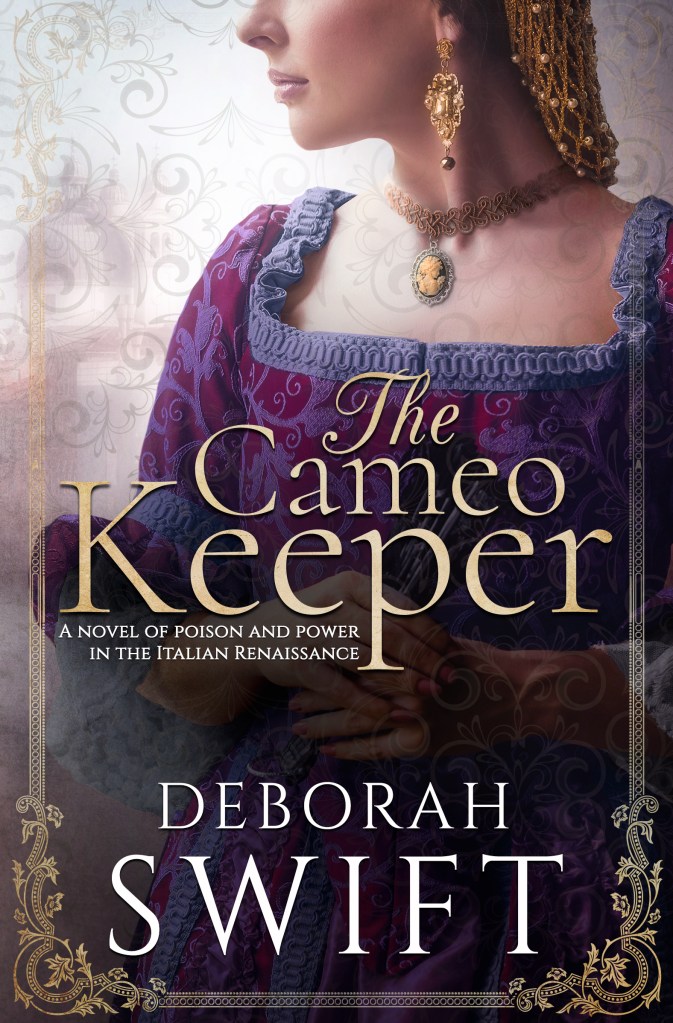
Here’s the Blurb

Rome 1644: A Novel of Love, Power, and Poison

Remember tonight… for it is the beginning of always ― Dante Alighieri

In the heart of Rome, the conclave is choosing a new Pope, and whoever wins will determine the fate of the Eternal City.

Astrologer Mia and her fiancé Jacopo, a physician at the Santo Spirito Hospital, plan to marry, but the election result is a shock and changes everything.

As Pope Innocent X takes the throne, he brings along his sister-in-law, the formidable Donna Olimpia Maidalchini, known as La Papessa – the female Pope. When Mia is offered a position as her personal astrologer, she and Jacopo find themselves on opposite sides of the most powerful family in Rome.

Mia is determined to protect her mother, Giulia Tofana, a renowned poisoner. But with La Papessa obsessed with bringing Giulia to justice, Mia and Jacopo’s love is put to the ultimate test.

As the new dawn of Renaissance medicine emerges, Mia must navigate the dangerous political landscape of Rome while trying to protect her family and her heart. Will she be able to save her mother, or will she lose everything she holds dear?

For fans of “The Borgias” and “The Crown,” this gripping tale of love, power, and poison will keep you on the edge of your seat until the very end.

Praise:

‘historical fiction that is brisk, fresh and bristling with intrigue’ 
~
 Bookmarked Reviews ★★★★★
Buy Link

Universal Link

Meet the Author

Deborah Swift is the author of twenty novels of historical fiction. 

Her Renaissance novel in this series, The Poison Keeper, was recently voted Best Book of the Decade by the Wishing Shelf Readers Award. Her WW2 novel Past Encounters was the winner of the BookViral Millennium Award, and is one of seven books set in the WW2 era.

Deborah lives in the North of England close to the mountains and the sea.
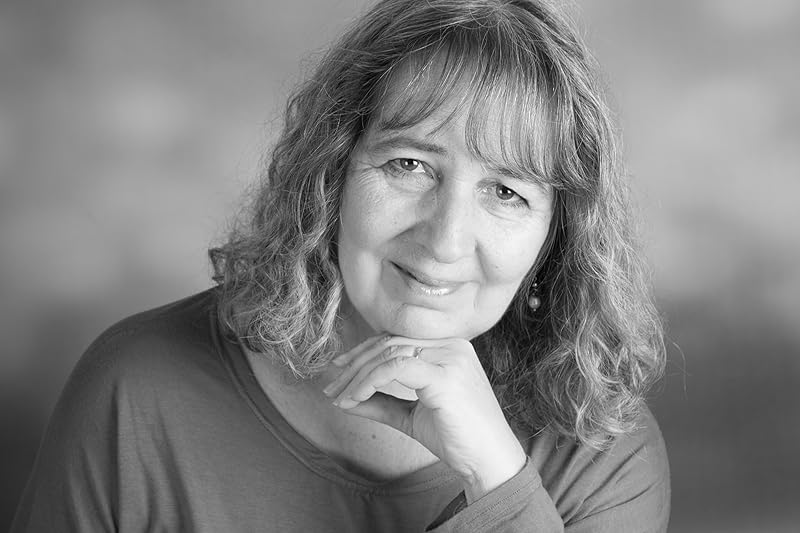
Author Deborah Swift

Connect with the Author

Follow The Cameo Keeper blog tour with The Coffee Pot Book Club

I’m delighted to welcome Malve von Hassell and her new book, The Price of Loyalty, to the blog #HistoricalFiction #medieval #France #crusades #AdelaofBlois #WilliamtheConqueror #StephenHenrydeBlois #BlogTour #TheCoffeePotBookClub

I’m delighted to welcome Malve von Hassell and her new book, The Price of Loyalty, to the blog #HistoricalFiction #medieval #France #crusades #AdelaofBlois #WilliamtheConqueror #StephenHenrydeBlois #BlogTour #TheCoffeePotBookClub

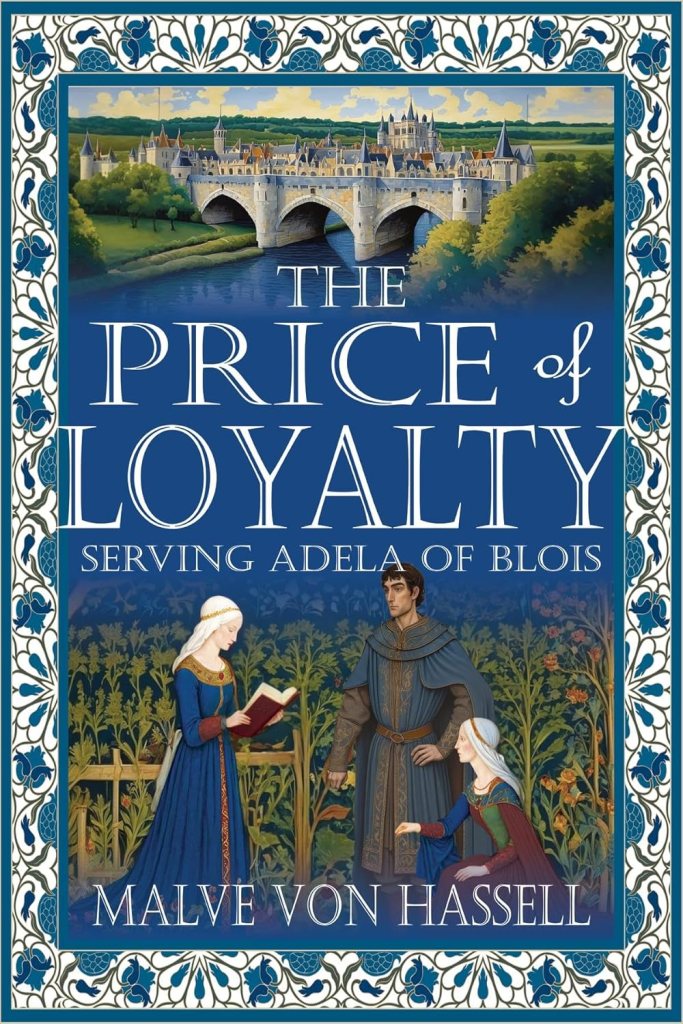
I’m delighted to welcome Malve Von Hassell and her new book, The Price of Loyalty: Serving Adela Bois, to the blog with an excerpt.

Excerpt

Caught In The Snare

1103 Caen

“But, my lady, any of your knights could do this.”

Cerdic had never yet been so frustrated and angry. Adela wanted him to take her son Theobald to her brother-in-law Hugh of Troyes. And she had mentioned another unspecified task. Certainly, she was a widow, and she needed friends around her whom she could trust. But she had other advisors, and for an errand like this, she surely could find someone else. Was he going to be at her back and call indefinitely?

“Theobald has known you all his life. It would be good for him to spend time with you. It has not been easy for him and his brothers.” Adela avoided his eyes. “My brother-in-law is a good man and the right person to take charge of a growing boy, especially now that he has lost his father. Moreover, Hugh and his wife Constance haven’t been blessed with children. Theobald is his heir designate. It is time that Theobald learns everything he needs to know for his future station and duties in life.”

Cerdic stared at her, at a loss for words.

“I can’t and don’t want to ask anybody else. I trust you.”

Cerdic bowed. In truth, he could hardly go on protesting.

Several weeks later, he was back on the road in the company of a surly twelve-year-old boy. For the first hour, they rode in silence. It was early December, and the first hoar frost had turned everything dull and brown. They had to ride north and west toward Troyes; Champagne was a large county, and it would take them about two days.

Theobald had bowed to his mother and ducked out of her embrace. He had mounted his horse without acknowledging Cerdic. He was slender and fine-boned; it didn’t look as if he would have his father’s sturdy build as an adult. His curly hair peeking out underneath his woolen cap was dark brown, not the reddish hue of his grandfather and his uncles. He rode with his head bent and his shoulders hunched.

Guisbert was ten, Cerdic thought with a pang, not much younger than this boy. Would he even recognize his father?

The first words they exchanged were when Cerdic’s horse started limping, and Cerdic had to stop to check the hooves. A stone had worked its way underneath one shoe. Fortunately, Cerdic could pick it out.

“Tell you what.” Cerdic straightened up. The boy’s expression was sullen and slightly hostile. “I don’t trust this shoe, and I don’t want the bay to go lame on me. Let’s walk for a bit. The next village isn’t too far from here, and we’ll find a blacksmith there.”

So they walked, leading the horses. “What are the roads like in the Holy Land?” Theobald asked after a while.

Cerdic didn’t think that the boy really cared about the roads, but it was an opening. “Would you believe it? Some are a lot better than the roads here. Others again are nothing but sand and rocks.”

Theobald was silent. They continued walking.

Then Theobald cleared his throat. “You were with my father, weren’t you?”

“Yes, I was,” Cerdic responded cautiously. “What did your mother tell you?”

“Nothing.” The boy jerked on his horse’s rein so that the surprised animal flung his head up and snorted. “Sorry,” Theobald whispered to the horse. “My mother told me nothing other than that he’s dead. I can’t talk to her about it.”

Cerdic frowned, inwardly cursing Adela. So, that’s why she sent him on this journey.

Here’s the Blurb

In a time of kingdoms and crusades, one man’s heart is the battlefield.

Cerdic, a Saxon knight, serves Count Stephen-Henry of Blois with unwavering loyalty-yet his soul remains divided. Haunted by memories of England, the land of his childhood, and bound by duty to King William, the conqueror who once showed him mercy, Cerdic walks a dangerous line between past and present, longing and loyalty.

At the center of his turmoil stands Adela-daughter of a king, wife of a count, and the first to offer him friendship in a foreign land. But when a political marriage binds him to the spirited and determined Giselle, Cerdic’s world turns again. Giselle, fiercely in love with her stoic husband, follows him across sea and sand to the holy land, hoping to win the heart that still lingers elsewhere.

As the clash of empires looms and a crusade threatens to tear everything apart, Cerdic must confront the deepest truth of all-where does his loyalty lie, and whom does his heart truly belong to?

Buy Link

Universal Link

Meet the Author

Malve von Hassell is a freelance writer, researcher, and translator. She holds a Ph.D. in anthropology from the New School for Social Research. Working as an independent scholar, she published The Struggle for Eden: Community Gardens in New York City (Bergin & Garvey 2002) and Homesteading in New York City 1978-1993: The Divided Heart of Loisaida (Bergin & Garvey 1996). She has also edited her grandfather Ulrich von Hassell’s memoirs written in prison in 1944, Der Kreis schließt sich – Aufzeichnungen aus der Haft 1944 (Propylaen Verlag 1994).

Malve has taught at Queens College, Baruch College, Pace University, and Suffolk County Community College, while continuing her work as a translator and writer. She has published two children’s picture books, Tooth Fairy (Amazon KDP 2012 / 2020), and Turtle Crossing (Amazon KDP 2023), and her translation and annotation of a German children’s classic by Tamara Ramsay, Rennefarre: Dott’s Wonderful Travels and Adventures (Two Harbors Press, 2012).

The Falconer’s Apprentice (namelos, 2015 / KDP 2024) was her first historical fiction novel for young adults. She has published Alina: A Song for the Telling (BHC Press, 2020), set in Jerusalem in the time of the crusades, and The Amber Crane (Odyssey Books, 2021), set in Germany in 1645 and 1945, as well as a biographical work about a woman coming of age in Nazi Germany, Tapestry of My Mother’s Life: Stories, Fragments, and Silences (Next Chapter Publishing, 2021), also available in German, Bildteppich Eines Lebens: Erzählungen Meiner Mutter, Fragmente Und Schweigen (Next Chapter Publishing, 2022).

Her latest publication is the historical fiction novel, The Price of Loyalty: Serving Adela of Blois (Historium Press, 2025).

Connect with the Author

Follow The Prince of Loyalty blog tour with The Coffee Pot Book Club

Posts

I’m delighted to welcome Deborah Swift and her new book, Last Train to Freedom, to the blog #WW2 #TransSiberian #Russia #Japan #WomensFiction #Spies #BlogTour #TheCoffeePotBookClub

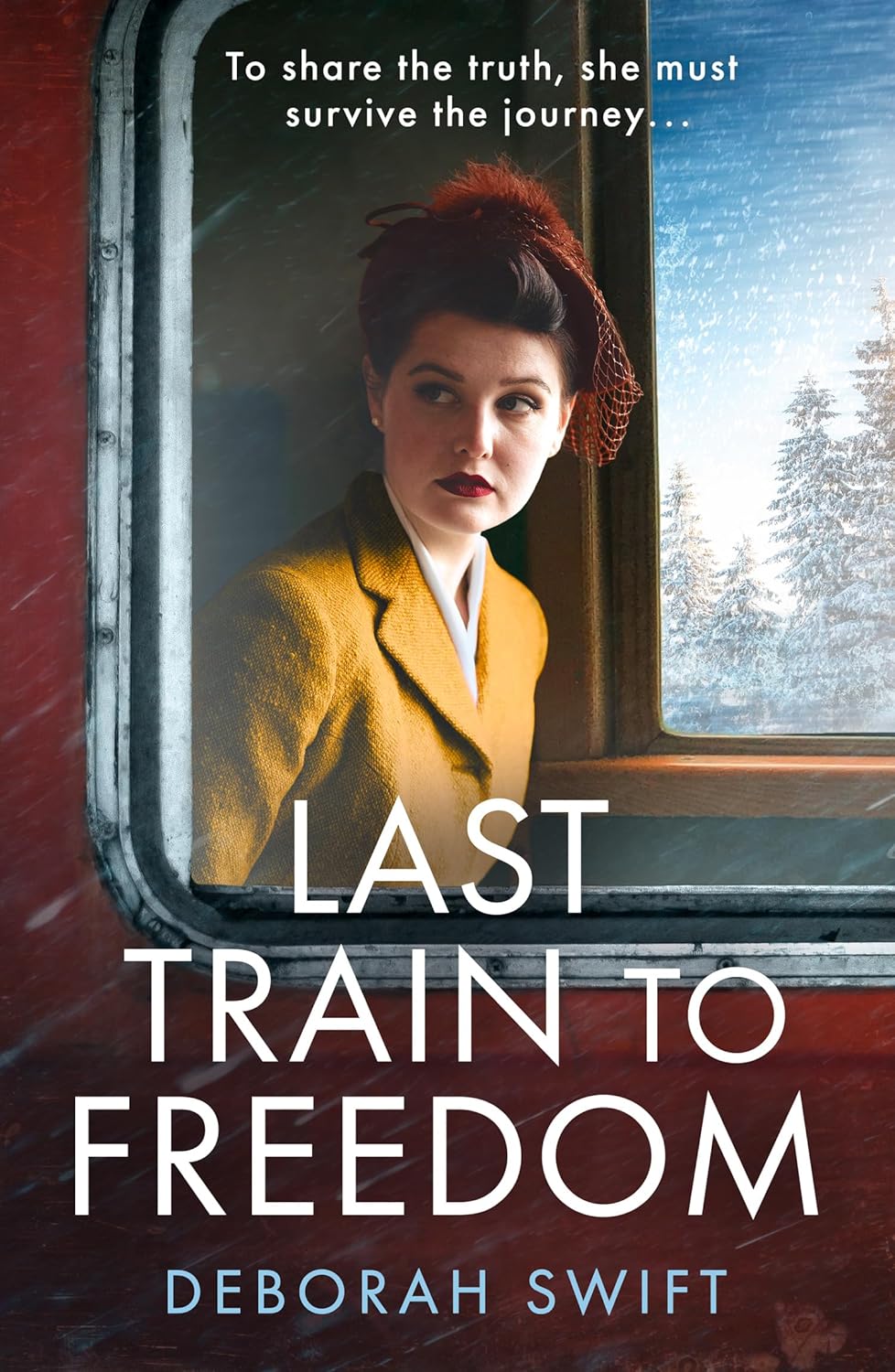
I’m delighted to welcome Deborah Swift and her new book, Last Train to Freedom, to the blog with Researching Last Train to Freedom and the Sugihara Story.

Researching Last Train to Freedom and the Sugihara Story

Last Train to Freedom is set in WW2 during the Soviet occupation of Lithuania, and with the threat of the Nazis over the border. The parallels to today’s political situation in Ukraine could not be clearer.

The book tells the story of Jewish refugees fleeing from Nazi and Soviet oppression. Because of the current situation, although I was fascinated by the Trans-Siberian Express, I was not about to go and take the journey myself. My initial research was largely based around websites such as the Holocaust Encyclopedia and then books and papers found via JStor and other trustworthy academic websites.

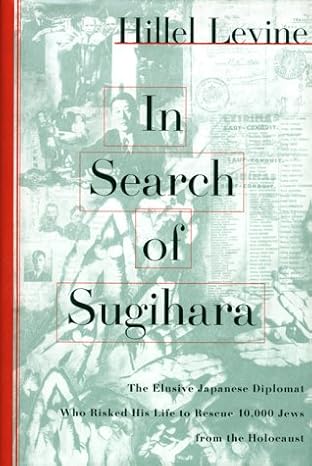
The main story is about how Japanese Consul Sugihara enabled the escape of thousands of Jews by giving them visas – against the wishes of his government. One man held the fate of so many lives in his hands. The best overview I found of events was In Search of Sugihara by Ellel Levine.

Pic of book In Search of Sugihara

Sughara’s wife Yukiko wrote a memoir about the events called No Visa (Rokusen-nin no Inochi) which is widely available, and tells the inside story of her husband’s frantic signing of visas before the consulate was shut down by the Soviets. Being aware that applicants were in life-threatening danger, Sugihara ignored his superiors’ orders and, from July 18 to August 28, 1940, he issued over 2100 life-saving transit visas.

‘My husband and I talked about the visas before he issued them. We understood that both the Japanese and German governments disagreed with our ideas, but we went ahead anyhow.’

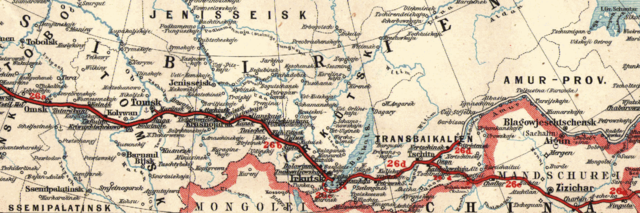
Sugihara spoke to Soviet officials who agreed to let the Jews travel through the country via the Trans-Siberian Railway. I used detailed maps of the journey and researched each of the stops along the way to get a sense of where events might take place along the journey. Finding out about Russian trains of the 1940’s was quite a journey in itself – how did the doors open? What were the carriages like?

Pic of map of Trans-Siberian Railway

I gleaned much of the information from trawling through memoirs looking for telling detail. The escape on the Trans-Siberian Express was recorded by many in their memoirs, most notably I Have My Mother’s Eyes (A Holocaust Memoir Across Generations by Barbara Ruth Bluman, Light One Candle: A Survivor’s Tale from Lithuania to Jerusalem by Solly Ganor and One More Border: The True Story of One Family’s Escape from War-Torn Europe by William Kaplan. There are also several recordings on YouTube which tell the story, for example this one about the Lermer family.

The story takes place in three geographical locations – Lithuania, Moscow, and Japan, and all needed research, not to mention the journey across 6000 miles of Siberian wilderness! About half way through I wondered, have I bitten off more than I can chew here? But by then I was hooked on the story and just ploughed on, my huge collection of books and papers growing all the time.

I used many other books to give me a sense of the culture and background, especially to grasp an idea of the Russian mindset, and also the culture of Japan for when my fictional refugees eventually arrive in Kobe.

Trains, trains, trains! I watched an awful lot of old steam train videos to get a sense of how steam was built up to power the engine, what sort of noise it might make and how it might behave in snow. I became a train buff for about six months, visiting the National Railway Museum to get a sense of the sheer weight and size of these old trains.

I hope that anyone reading the book will feel, as I did when researching, that they have really been through the middle of Siberia, and I hope they will enjoy the journey.

Last Train to Freedom is out in ebook, paperback and audio.

Here’s the Blurb

‘Taut, compelling and beautifully written – I loved it!’ ~ DAISY WOOD

‘Tense and thought-provoking’ ~ CATHERINE LAW

1940. As Soviet forces storm Lithuania, Zofia and her brother Jacek must flee to survive.

A lifeline appears when Japanese consul Sugihara offers them visas on one condition: they must deliver a parcel to Tokyo. Inside lies intelligence on Nazi atrocities, evidence so explosive that Nazi and Soviet agents will stop at nothing to possess it.

Pursued across Siberia on the Trans-Siberian Express, Zofia faces danger at every turn, racing to expose the truth as Japan edges closer to allying with the Nazis. With the fate of countless lives hanging in the balance, can she complete her mission before time runs out?

‘Such an interesting and original book…. Informative, full of suspense and thrills.’

~ Netgalley Review

Buy Link

Universal Link:

Meet the Author

Deborah Swift is the English author of twenty historical novels, including Millennium Award winner Past Encounters, and The Poison Keeper the novel based around the life of the legendary poisoner Giulia Tofana. The Poison Keeper won the Wishing Shelf Readers Award for Book of the Decade. Recently she has completed a secret agent series set in WW2, the first in the series being The Silk Code.

Deborah used to work as a set and costume designer for theatre and TV and enjoys the research aspect of creating historical fiction, something she loved doing as a scenographer. She likes to write about extraordinary characters set against a background of real historical events. Deborah lives in England on the edge of the Lake District, an area made famous by the Romantic Poets such as Wordsworth and Coleridge.

Connect with the Author

Follow the Last Train to Freedom blog tour with The Coffee Pot Book Club

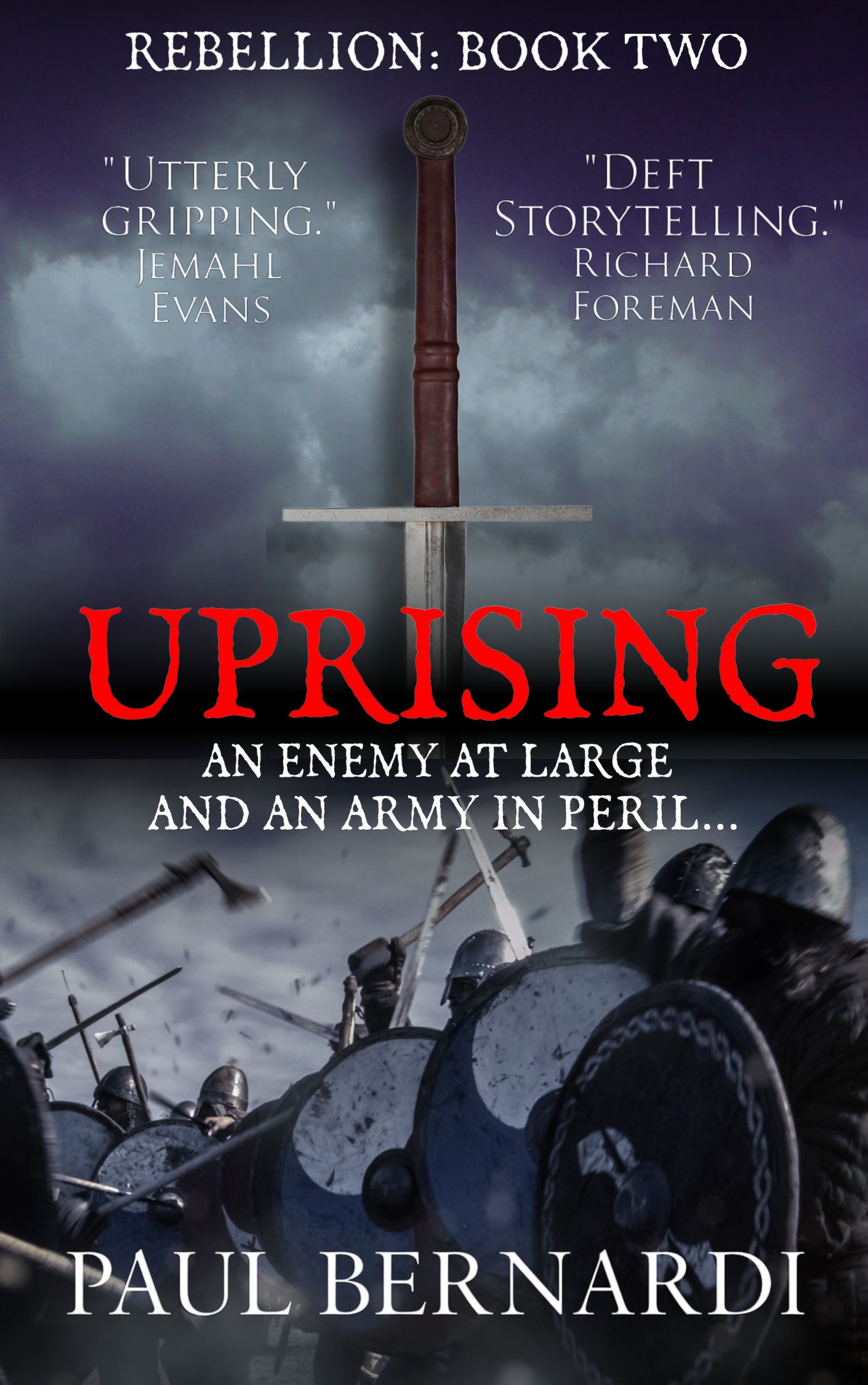
I’m delighted to welcome Paul Bernardi and his new book, Uprising, to the blog #Uprising #HistoricalFiction #AngloSaxon #BlogTour #TheCoffeePotBookClub

I’m delighted to welcome Paul Bernardi and his new book, Uprising, book 2 of the Rebellion series, to the blog.

Here’s the Blurb

Summer 1067.
Northumbria.

Oslac, thegn of the village of Acum, feels cheated – having been robbed of the chance to kill his enemy by his own kinsman.

Instead, Gundulf, the erstwhile Lord of Hexham and murderer of Acum’s villagers, is now awaiting justice for his crimes in Bebbanburh, Earl Oswulf’s fortress capital far to the north.

But when Oslac narrowly escapes death at the hands of Gundulf’s assassin, he realises he will never be safe while the Dane lives. Summoning his closest companions, Oslac heads north to demand Oswulf put an end to Gundulf’s life – only to find the prisoner has escaped.

Tracking the fugitive into the wild hills and dales of Northumbria – places far beyond the reach of Oswulf’s power – Oslac falls into Gundulf’s trap when the earl’s warband is ambushed with catastrophic consequences.

Elsewhere, unrest in the north of England is growing. Impotent in the face of Norman avaricious brutality, the Saxon nobility can do nothing to prevent their ancestral lands being passed to foreign invaders. It can only be endured for so long, and a reckoning is coming.

Once again, Oslac must put aside his personal vendetta to join with the few remaining great lords of Anglo-Saxon England in what may prove to be the final, climactic stand against their Norman overlords.

The song of swords will echo across the land once more.

Buy Link

Universal Link:

This title is available on #KindleUnlimited

Meet the Author

Paul Bernardi studied Anglo-Saxon and Medieval history at the University of Leeds more years ago than he cares to remember. He has been an author of historical fiction since his first novel (a second world war drama) was published in 2017. Since then, he has reverted to his favoured period, publishing six more novels (so far) set in 11th century England, mainly around the time of the Norman Conquest.

Paul Bernardi’s books are published by Sharp Books.

Connect with the Author

Follow the Uprising blog tour with The Coffee Pot Book Club

Anne O’Brien is sharing some historical research from The Queen’s Rival #blogtour #historicalresearch

Today, I’m delighted to welcome Anne O’Brien to the blog to talk about her fantastic book, The Queen’s Rival, a real favourite of mine. (Find my review here).

I have read Queen’s Rival and I found it riveting. Yet, it is deliciously complex, and there’s a huge amount of both primary and secondary material available for study. Can you explain your research process to me, and give an idea of the resources that you rely on the most (other than your imagination, of course) to bring the historical characters to life? 

The complexity of the Wars of the Roses within the story of Cecily Neville was daunting when I first took it on.  Where to start, where to end.  Should I consolidate into one book, or write a sequel?  While I thought about it, all became clear to me.  Because I write about medieval women and form their point of view, many of the political events and battles must dealt with lightly, made only relevant when they had a bearing on Cecily’s experience, and then rarely in grat detail.  To begin: the day that she became a force in her own right – the events at Ludlow after the debacle at Ludford Bridge when she was left to face the rampaging mob of the Lancastrian army, alone with her three younger children.  To end: with the crowning of Richard III when Cecily must come to terms with the political forces that had removed her grandson Edward V from the throne.  

Who to include in Cecily’s story?

Some major figures would have to be short-changed because they did not develop the plot that was Cecily’s life, but were merely people on the periphery of Cecily’s story.  These included such notable characters as Margaret Beaufort,  Anne Neville,  Henry Tudor.  Even Margaret of Anjou might have demanded a more dynamic role although she is not entirely absent.  This may disappoint some readers but these are characters for another book.  There is a finite length to a novel as my editor is keen to tell me; Cecily and her family must take pre-eminence.

Cecily was the youngest of a large family.  To include all her brothers and sisters would definitely be a bad plan.  I deliberately made a choice of those who would be most useful to me   Her brother Richard of Salisbury of course and his son the Earl Warwick.  Two of her sisters, the eldest and the one closest to her in age.  The rest would sadly have to remain anonymous.

Why write in letter format?  I chose to do this to develop the family aspect of the Wars of the Roses.  These were real people who suffered and rejoiced within their families.  I decided that letters would make this a very personal account for Cecily, and thus make the emotion of her losses and achievements even stronger when faced with scandal and treachery.

Mostly when researching I refer to secondary sources.  I do not always find the need to return to primary sources.  For me this would be like re-inventing the wheel since the history of the Wars of the Roses has been magnificently researched by a number of historians, although I admit to being picky over whom I might use. I find myself returning to the works of  Matthew Lewis, Ian Mortimer, Nigel Saul, Anthony Goodman and Michael Jones.  For Cecily herself , when I was was half way through writing, a new long-awaited biography of Cecily was published:  Cecily Duchess of York by J L Laynesmith which proved endlessly useful for tying up a number of loose ends for me.

For primary sources, the chroniclers of the day are fascinating and encouraged me to write my own version of a Chronicle to help the plot to progress in The Queen’s Rival.  Accounts of Cecily’s pious lifestyle in her later years and the vast detail of her will were both excellent.

Taking the facts, together with the reactions of those who knew Cecily, it is then a matter of historical imagination to create an interpretation of her life as accurately as possible.

Do you have a ‘go’ to book/resource that you couldn’t write without having to hand, and if so, what is it?

I don’t have a ‘go to’ book when writing because my medieval women span a number of reigns, but one I find myself referring to frequently is The Senses in Late Medieval England by C M Woolgar.  It opens up the medieval world and life in aristocratic households beautifully, from every possible angle.  I also have quite a collection of books on medieval armour and costume – an essential part of my research, as well as medieval poetry and chivalric tales.  And then there  are the general history reference books …  Altogether my bookshelves are groaning from the weight of medieval history books.

Thank you so much for sharing your process with me. It’s fascinating and I’m in awe of how you managed to fit so much into one novel!

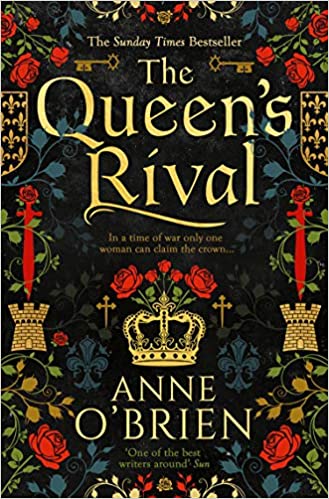
(Isn’t the cover beautiful).

Here’s the blurb;

England, 1459. 

One family united by blood. Torn apart by war…

The Wars of the Roses storm through the country, and Cecily Neville, Duchess of York, plots to topple the weak-minded King Henry VI from the throne.

But when the Yorkists are defeated at the battle of Ludford Bridge, Cecily’s family flee and abandon her to face a marauding Lancastrian army on her own.

Stripped of her lands and imprisoned in Tonbridge Castle, the Duchess begins to spin a web of deceit. One that will eventually lead to treason, to the fall of King Henry VI, and to her eldest son being crowned King Edward IV.

Amazon UKAmazon USAmazon CAAmazon AU

Barnes and NobleWaterstonesKobo

AudioBlackwellsWHSmith

Meet the author

Sunday Times Bestselling author Anne O’Brien was born in West Yorkshire. After gaining a BA Honours degree in History at Manchester University and a Master’s in Education at Hull, she lived in East Yorkshire for many years as a teacher of history.

Today she has sold over 700,000 copies of her books medieval history novels in the UK and internationally. She lives with her husband in an eighteenth-century timber-framed cottage in the depths of the Welsh Marches in Herefordshire. The area provides endless inspiration for her novels which breathe life into the forgotten women of medieval history.

Follow Anne

WebsiteTwitterFacebookLinkedInPinterest

Amazon Author Page: GoodreadsNews Letter sign up:

Don’t forget to check out the other stops on The Queen’s Rival blog tour with The Coffee Pot Book Club.

Judith Arnopp is sharing a post about the historical research for A Matter of Conscience #blogtour #historicalresearch

Today, I’m delighted to welcome Judith Arnopp to the blog with a guest post about her historical research.

A Matter of Conscience is once more set during the reign of the Tudors, a period about which I know you’ve written extensively. Do you feel comfortable in the Tudor era and can you explain your research process to me, and give an idea of the resources that you rely on the most (other than your imagination, of course) to bring the historical landscape and people of Tudor England to life?

I feel very comfortable in the Tudor era, or at least in the Tudor world I have created, peopled with characters from history. Since we can never visit the past, no author can ever be 100% certain they have got it right so I don’t worry too much, if I can convince my reader, I am happy. 

I’ve enjoyed the Tudor period since I was a young girl, some forty-five years or more. As a teenager I read all I could get my hands on, both fiction and non-fiction, and later when I went to university as a mature student, I learned the importance of thorough research. At the time, I never dreamed I’d ever write a book, let alone be published. A Matter of Conscience: Henry VIII, the Aragon Years is my thirteenth novel set in the Tudor era, so I know the setting quite well by now. 

When I wrote my first Tudor books, The Winchester Goose and The Kiss of the Concubine: the story of Anne Boleyn, I needed to research from the ground up. I examined the living conditions, the law, clothes, historical figures, customs, buildings, and court etiquette. I probably did far more research than necessary, but I wanted to get it right. I spent ages researching and still rely quite heavily on the essays and notes I made then. There is an extensive university library in Lampeter, close to where I lived at the time, and I used that a lot but now I have moved farther away, I can no longer do so. Luckily, the basics are in my head, so I only need to double check the things I am unsure of. Who was where at what time? Birth dates, death dates, things like that, or palaces or castles I’ve not researched before. 

When I wrote The Beaufort Chronicle, I became so wrapped up investigating Margaret Beaufort’s many homes, I fell behind with the rest of my work schedule and had to scramble for the deadline.

As for contemporary sources, they are much easier to get hold of than they used to be. When I first began to write I had to order them via the university library and sometimes it took weeks to get into my hands. British History Online is invaluable for documents and I recently discovered another online resource called Academia that is also proving useful.

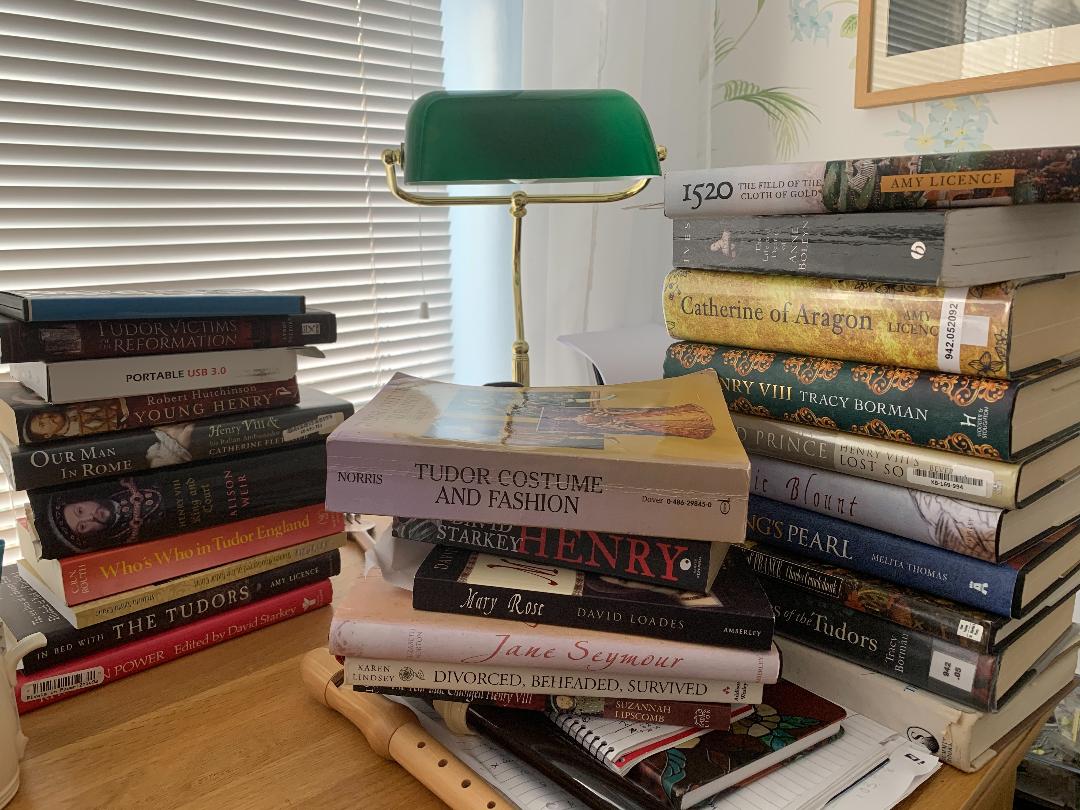
I have many key reference books in my own library, and I can’t resist historical biographies. There are a few good historians that I trust to have researched properly and as soon as they release a new book, it goes on my pile.

Each time I begin a new project, I tell myself I will be tidier and more organised but before I am half-way through, the usual chaos has resumed. I make heaps of notes that I often cannot interpret afterwards, which often means I need to look up some things again. I seem to get there in the end though. There is always a pile of books by my favourite historians on my desk for dipping in and out of for reference and another pile I read from cover to cover. For this novel I’ve relied on biographies by Tracy Borman, Alison Weir, Eric Ives, Suzannah Lipscomb, Elizabeth Norton. I think I have all Amy Licence’s books now and her new one, 1520: The Field of the Cloth of Gold was published in timely fashion just as I began work on A Matter of Conscience, and I greatly enjoyed it.  

I also listen to Claire Ridgeway on You Tube while I am sewing in my craft room. She knows all there is to know about Anne Boleyn. There are scenes in nearly all my books of women sewing or embroidering, I can empathise with their sore fingers.

I find it best to absorb a wide variety of opinions and perspectives and then mull it all over and make my own conclusion. But not all the information ends up in the finished book because too much fact in a novel can be dull. I write first person narrative so I don’t tend to over describe the everyday objects they use simply because my character would not have found them extraordinary. My books centre on the psyche, or what I imagine might have been.

When writing in Henry’s voice I must be sure to know only what Henry knew and forget what comes after and the events that occurred behind his back. I live in each moment with Henry, as he lived it. A Matter of Conscience takes place during his childhood, adolescence, and marriage to Catherine of Aragon, so I found Henry quite an easy companion. He might, however, prove harder to live with in Book Two, which will follow shortly.

Do you have a ‘go’ to book/resource that you couldn’t write without having to hand, and if so, what is it (if you don’t mind sharing)?

I use the Tudor timeline as a skeleton so always have a print out of that to hand. Also, my Who’s Who in Tudor England is invaluable for reference. Looking at the pile on my desk at his moment, I’d say I rely on Amy Licence’s books the most. I find her very accessible, concise, and most importantly, accurate. Elizabeth Norton is another name that appears often on my shelves.

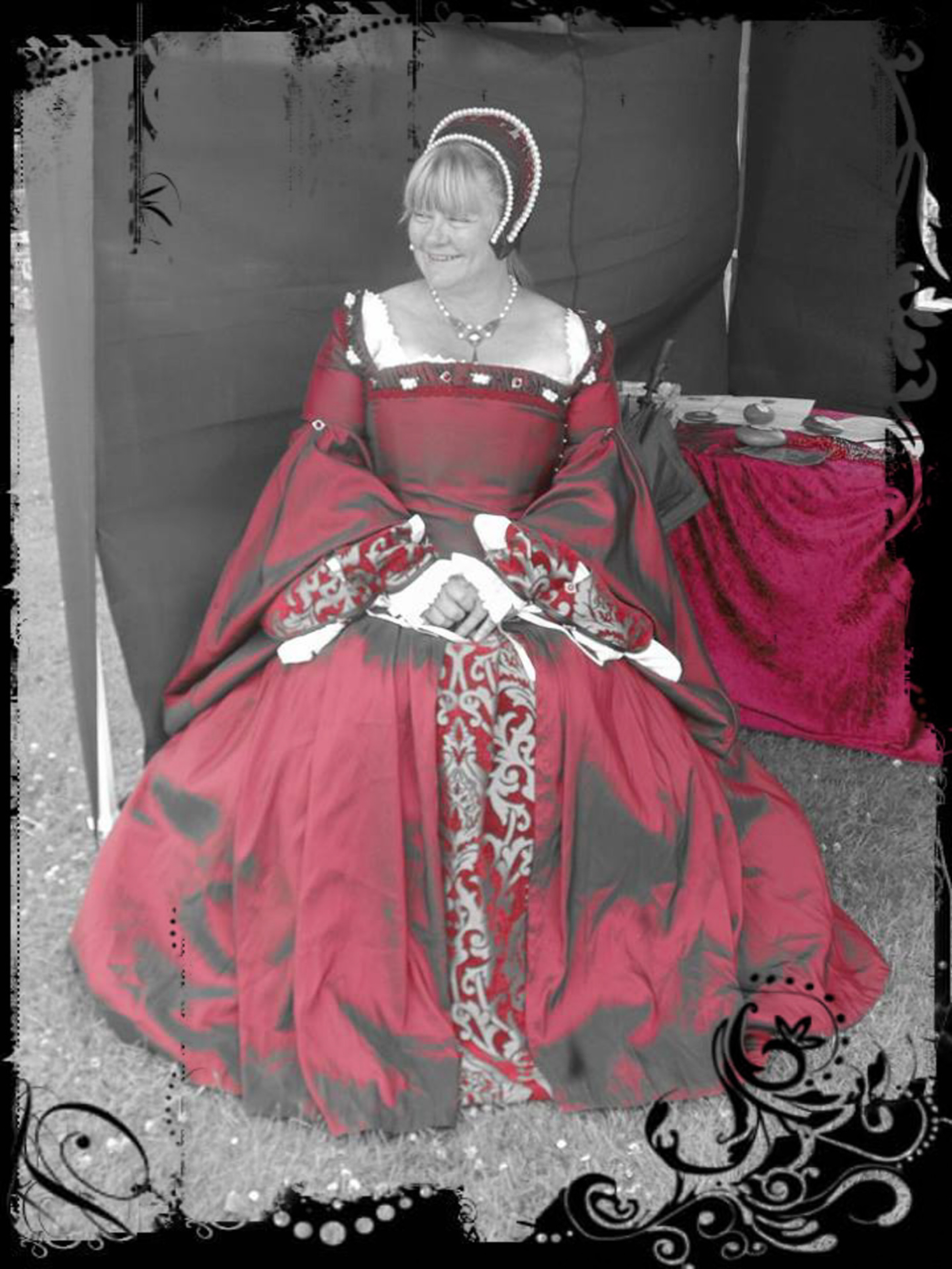
But my research isn’t all books or written sources, there are also portraits and again, thanks to technology, there is no real need to visit museums and galleries to do this. I build Pinterest boards with interesting Tudor faces and costumes which helps immensely, not just with my fiction but with my non-fiction writing and actual historical sewing too. I visit castles and monastic buildings, palaces, and manor houses. I’m not a great fan of the sites that add waxworks and reconstructed ‘rooms’. I prefer to let my imagination do the work. I am lucky to live in Wales where we have so many castles. I am a founder member of a Tudor re-enactment group called The Fyne Companye of Cambria and we love to dress up in our lovely gowns and ‘swish’ about the castles. All our events were cancelled last year, for obvious reasons and we haven’t booked any this year but are waiting to see what unfolds. We will be so glad when Covid19 restrictions end and we are able to visit them again.

Thank you so much for inviting me on to your blog. It has been lovely.
Thank you so much for sharing your research with me. I can relate to much of it – I am very untidy as well, and never reference anything correctly so always have to find it again.

So, here’s the blurb for the new book. It sounds fantastic. I’ve always been drawn to this particular episode in the Tudor saga.

‘A king must have sons: strong, healthy sons to rule after him.’

On the unexpected death of Arthur Tudor, Prince of Wales, his brother, Henry, becomes heir to the throne of England. The intensive education that follows offers Henry a model for future excellence; a model that he is doomed to fail.

On his accession, he chooses his brother’s widow, Catalina of Aragon, to be his queen. Together they plan to reinstate the glory of days of old and fill the royal nursery with boys. 

But when their first-born son dies at just a few months old, and subsequent babies are born dead or perish in the womb, the king’s golden dreams are tarnished.

Christendom mocks the virile prince. Catalina’s fertile years are ending yet all he has is one useless living daughter, and a baseborn son.

He needs a solution but stubborn to the end, Catalina refuses to step aside.

As their relationship founders, his eye is caught by a woman newly arrived from the French court. Her name is Anne Boleyn.

A Matter of Conscience: the Aragon Years offers a unique first-person account of the ‘monster’ we love to hate and reveals a man on the edge; an amiable man made dangerous by his own impossible expectation

Amazon UK Amazon US 

Meet the Author

A lifelong history enthusiast and avid reader, Judith holds a BA in English/Creative writing and an MA in Medieval Studies.

She lives on the coast of West Wales where she writes both fiction and non-fiction based in the Medieval and Tudor period. Her main focus is on the perspective of historical women but more recently is writing from the perspective of Henry VIII himself.

Her novels include:

A Matter of Conscience: Henry VIII, the Aragon Years 

The Heretic Wind: the life of Mary Tudor, Queen of England

Sisters of Arden: on the Pilgrimage of Grace

The Beaufort Bride: Book one of The Beaufort Chronicle

The Beaufort Woman: Book two of The Beaufort Chronicle

The King’s Mother: Book three of The Beaufort Chronicle

The Winchester Goose: at the Court of Henry VIII

A Song of Sixpence: the story of Elizabeth of York

Intractable Heart: the story of Katheryn Parr

The Kiss of the Concubine: a story of Anne Boleyn

The Song of Heledd

The Forest Dwellers

Peaceweaver

Judith is also a founder member of a re-enactment group called The Fyne Companye of Cambria and makes historical garments both for the group and others. She is not professionally trained but through trial, error and determination has learned how to make authentic looking, if not strictly HA, clothing. You can find her group Tudor Handmaid on Facebook. You can also find her on Twitter and Instagram.
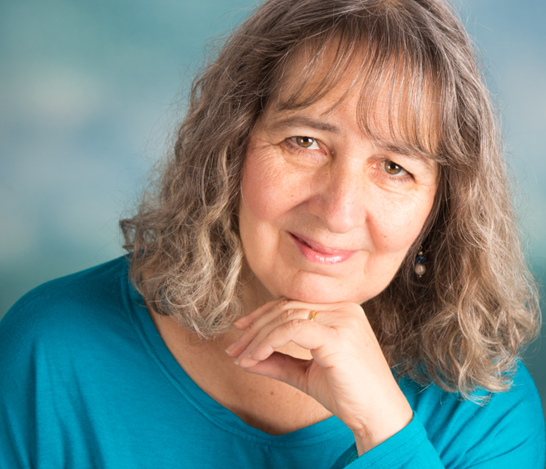
Website • Blog • Twitter • Instagram • Amazon

Don’t forget to check out the other stops on the blog tour for A Matter of Conscience.

Lady Estrid, her family and the geography of the eleventh-century #histfic #historicalresearch

One of the big plusses for choosing the character of Lady Estrid for my most recent novel, was her large and illustrious family and their far-reaching influence over Denmark, Sweden, Norway and England. It meant there was already an excellent story to tell.

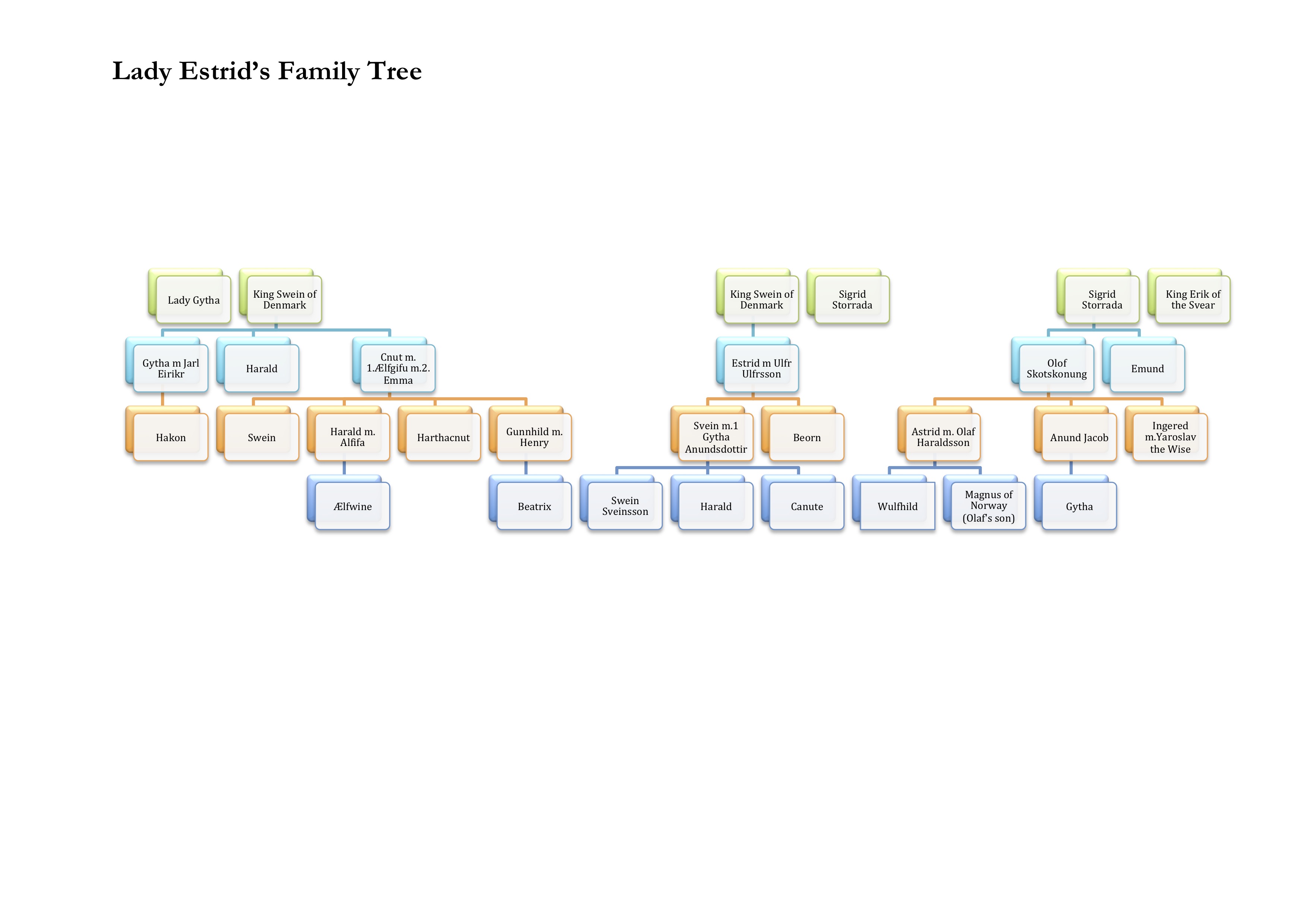
While I quickly managed to slot all the different relatives into order (well, I have been writing about them for a while), I’m aware it’s not the easiest of tasks, and so, I have put together some genealogical tables of the main families to make it that bit easier.

Due to a lack of information, I have made little mention of the rest of Estrid’s half-sisters, of which she had three or four. I feel it perhaps also helped the story a little – it was complicated enough as it was without giving them the capacity to meddle in affairs in Denmark. I have also made the assumption, that because I don’t know who they married, that they didn’t make international alliances, as Estrid did.

To break it down into more palatable chunks, Lady Estrid’s mother was married twice, once to King Swein of Denmark (second) and also to King Erik of the Svear (first). King Swein was also married twice (in my story at least – as it is debated), to Lady Gytha (who I take to be his first wife) and then to Lady Sigrid (who I take to be his second wife.) Swein was king of Denmark, Erik, king of the Svear (which would become Sweden), and so Sigrid was twice a queen, and she would have expected her children to rule as well, and her grandchildren after her. Sigrid was truly the matriarch of a vast dynasty.

She would have grandchildren who lived their lives in the kingdom of the Rus, in Norway, in England, and Denmark.

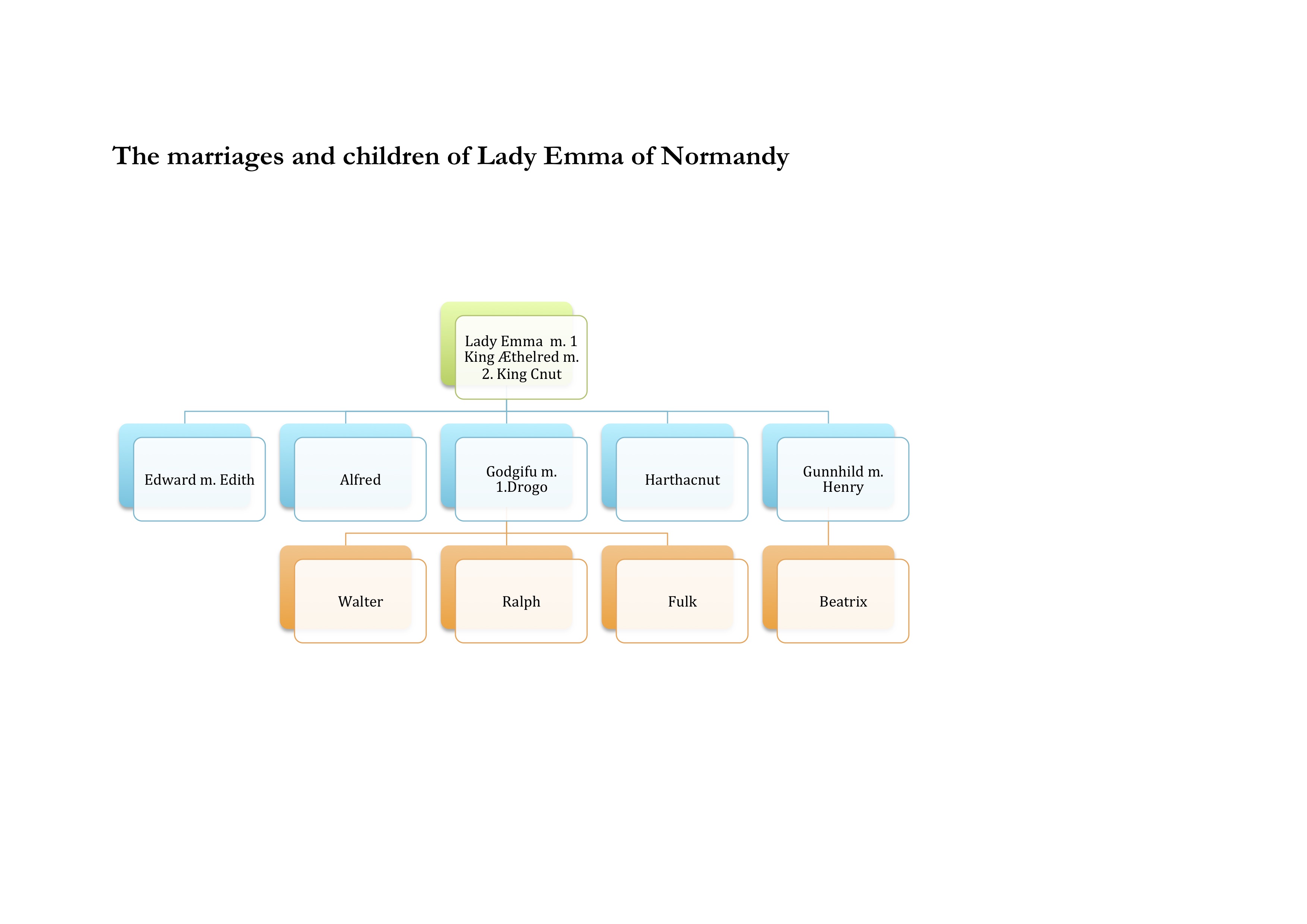
And Sigrid wasn’t the only ‘double queen.’ Lady Emma, twice queen of England, was first married to King Æthelred and then to King Cnut, Estrid’s brother.

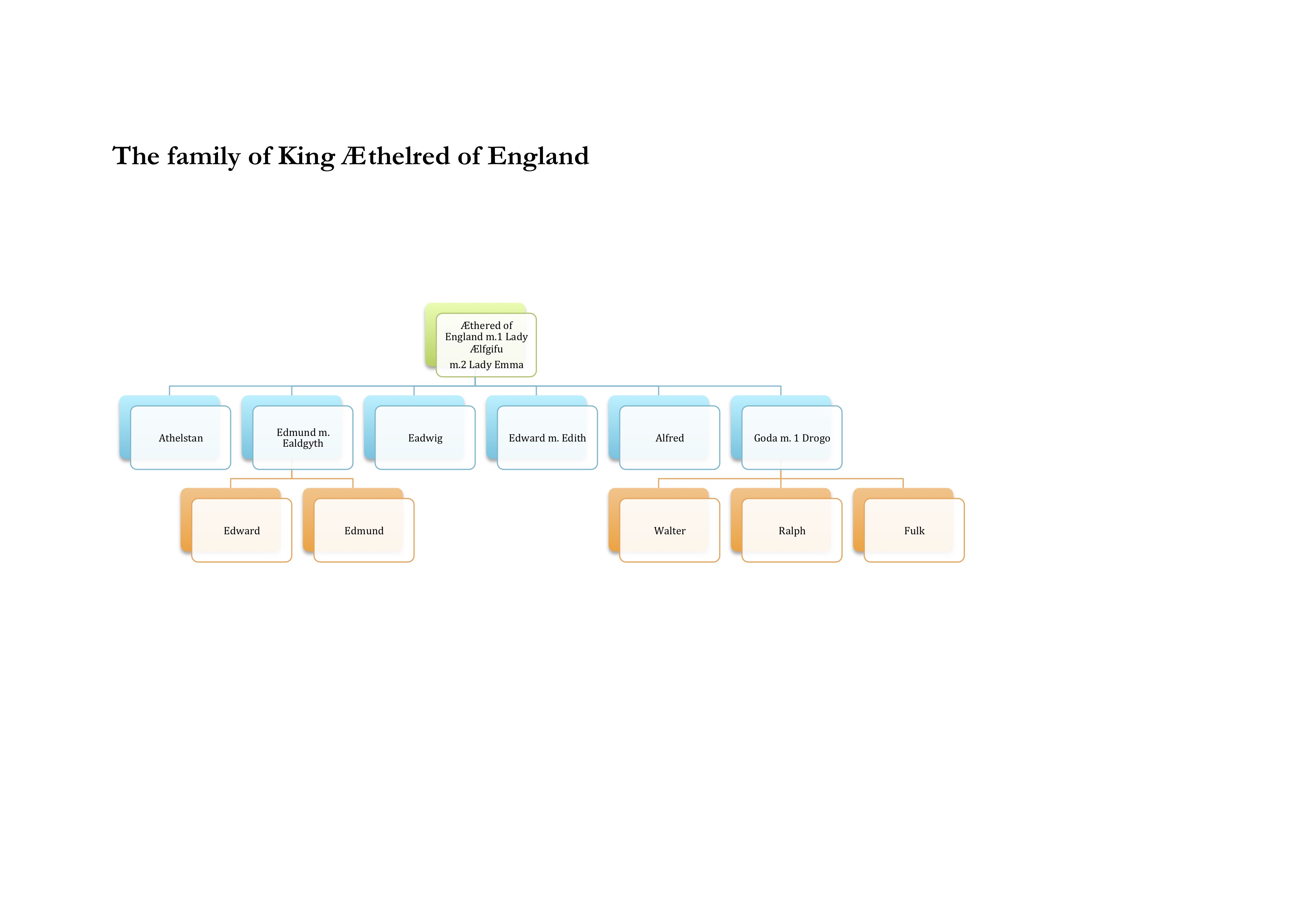
Not that it’s possible to speak of Lady Emma’s children from her two marriages, without considering the children of her first husband’s first marriage. King Æthelred had many children with his first wife, perhaps as many as nine (again, a matter for debate), the below only shows the children mentioned in Lady Estrid. Readers of The Earls of Mercia series, and the Lady Elfrida books, will have encountered the many daughters, as well as sons.

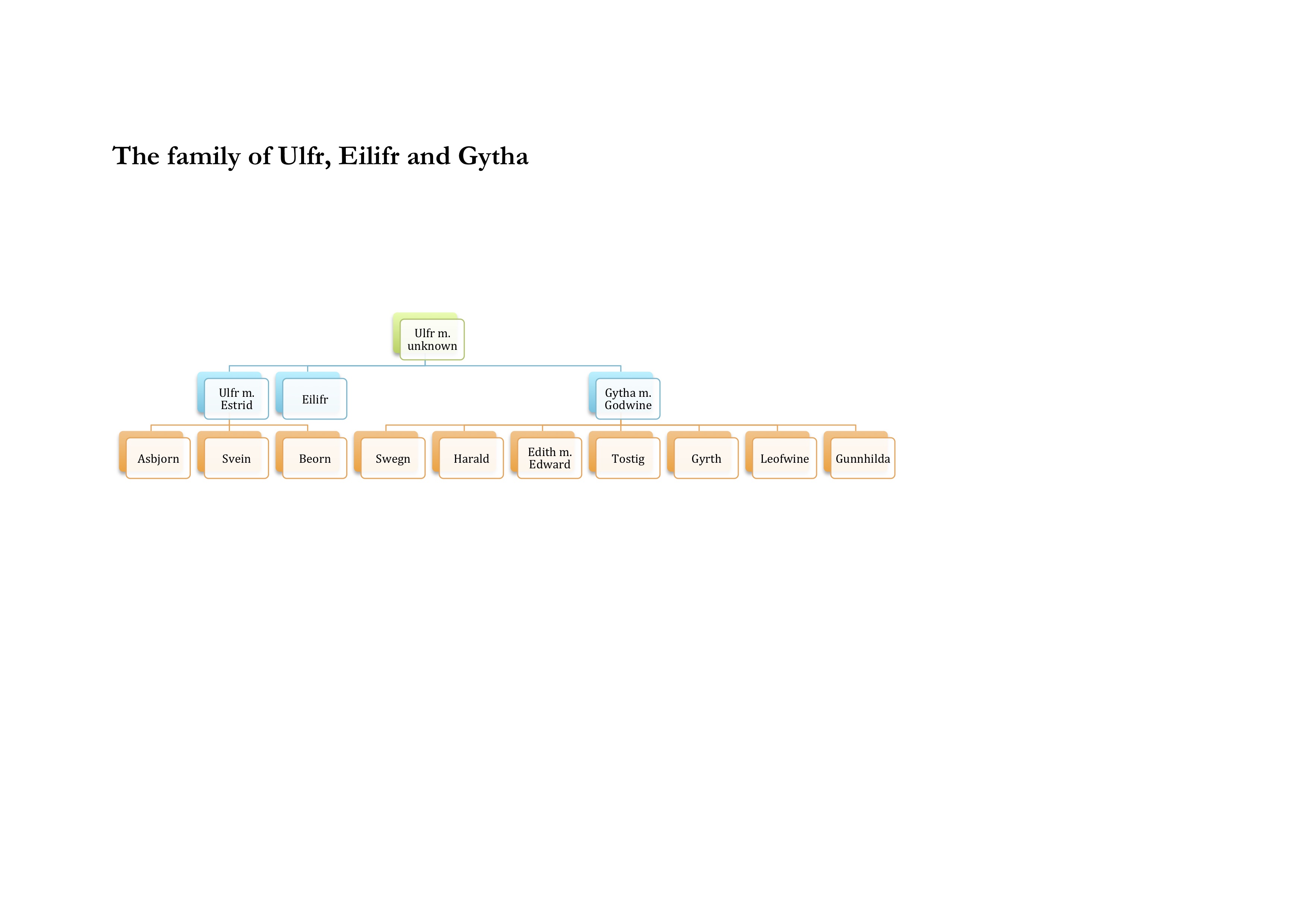
One of the other family’s that had the most impact on Lady Estrid, was that of her third husband, and father of her two sons, Jarl Ulfr.

Ulfr had a brother and a sister, and while little is known about the brother, it is his sister who birthed an extremely illustrious family, through her marriage to Earl Godwine of Wessex. (The family tree doesn’t include all of her children.)

Four such powerful families, all intermarried, make for a heady mix.

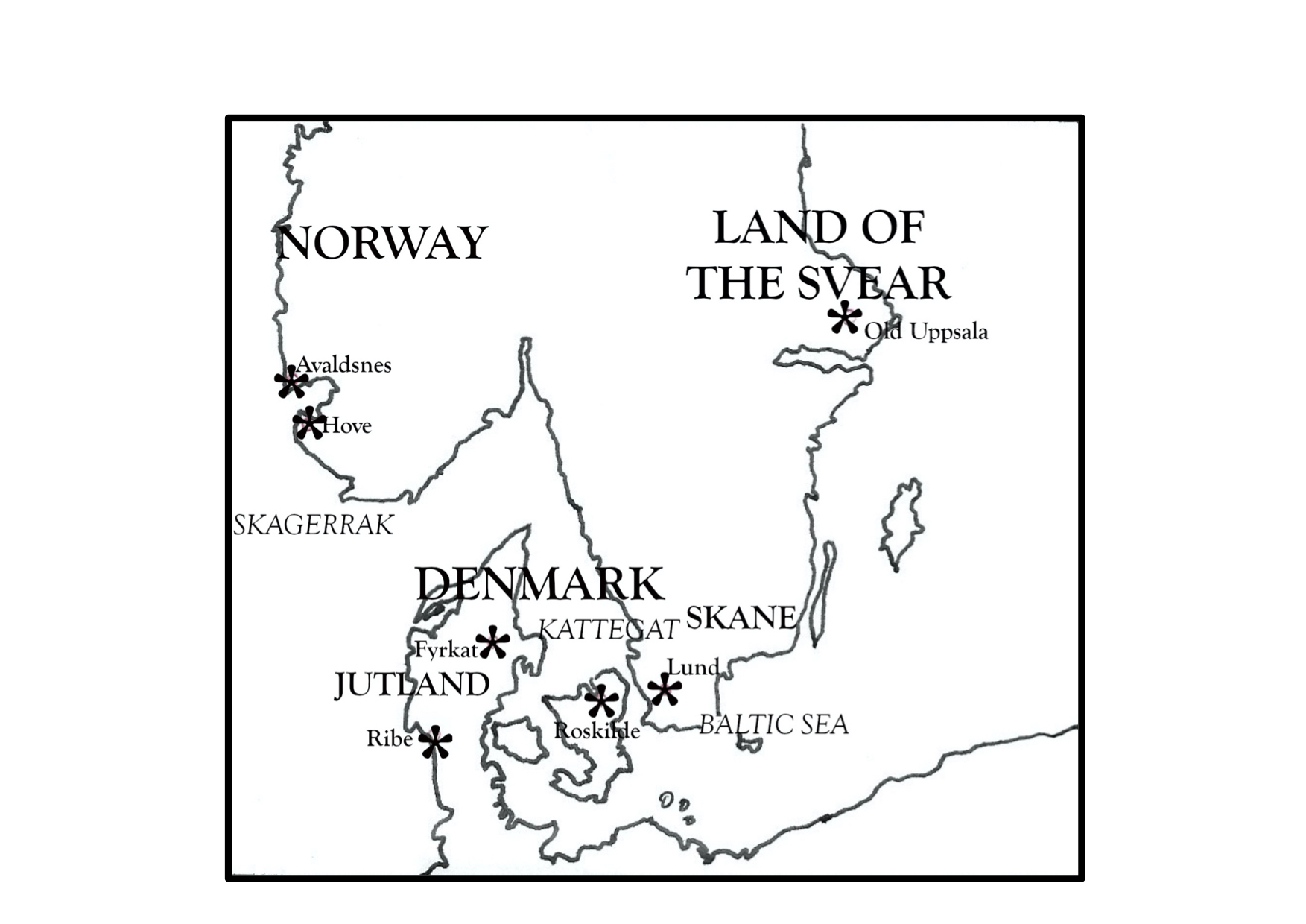
For the modern reader, not only are the family dynamics complicated to understand, but so too is the geography. Sweden was not Sweden as it is today, and the reason I’ve insisted on calling it the Land of the Svear. But equally, Denmark was larger than it’s current geographical extent, covering Skåne, (in modern day Sweden) as well. The map below attempts to make it a little clearer. Norway is perhaps the most recognisable to a modern reader, but even there, there are important difference. King Swein claimed rulership over parts of Norway during his rule, and so too did King Cnut. But, Denmark isn’t the only aggressor, there were rulers in all three kingdoms who wished to increase the land they could control, King Cnut of Denmark, England, Skåne and part of Norway, is merely the most well-known (to an English-speaking historian.)

Lady Estrid is available now