Lucretia Grindle shares a fascinating post about the historical women in her novel, The Devil’s Glove #blogtour

Guest Post by Lucretia Grindle on the Histroical Background to the Women in The Devil’s Glove

As I began to think about the Salem witchcraft trials, I was struck by what a distinctly female episode Salem was. Sure, you’ve got the Mathers, father and son, and the magistrates – all men. But this was a furor that was whipped up and powered by women, some of them very young women. And, while six men were executed (five hanged and one pressed to death) fourteen women were hanged. Because other women accused them. 

All of which led me to consider the roles women played in 17th century New England. As I began to contemplate The Devil’s Glove, I knew that my central character would be female, and so it seemed important to try to get past preconceptions and really understand the scope of possibility as well as the limitations on women’s lives in that time and place. What were they able to do, and not do? How did they fit, and not fit into the power structure of society? 

Salem certainly seemed a ‘fracture’; an incident when teen-aged girls, some of them orphaned, most of them servants and dependents – in other words those who would usually be the most un-empowered – wielded extraordinary power. A power they used to attack some of the most powerful female figures in the Massachusetts colony. Established and respected matrons like Rebecca Nurse. Women of wealth and social standing like Mary English. Women who would normally be politically untouchable, like the governor’s sister, Anne Phipps. What other ‘fractures’ might I find, if I went looking?

One of the greatest pleasures of writing history, and historical fiction in particular, is the way in which you begin thinking you know about something, only to discover facets of a world that are a complete surprise. So as I settled into archives and began to peel back layers, I was thrilled to find a complex and unexpected past peopled with an astonishing array of women. Resolve Hammond and her mother, Deliverance, are fictional characters. But the circumstances and possibilities of their lives are based on real women, some of whom appear in The Devil’s Glove, and many of whom will appear in the second and third books of the trilogy. These are a few of their stories.

Early in The Devil’s Glove we discover that Resolve and her mother spent the bloody years of King Philip’s war (1675-1678) sheltered among the tribe led by the female sachem, Ashawonks. This is based on a true episode. I placed the Hammonds with Ashawonks specifically, both because I wanted to bring her into the story and because she is Deliverance’s mentor, and her guide – the door through which Deliverance, and thus Resolve, enter the Native world. So, who was she? 

Female sachem, or saunkskwa of the Sakonnets, a tribe whose lands bordered the southern edge of the Plymouth settlement on Narragansett bay, Ashawonks was unique, not just because she was a women – there were several female sachems at the time – but because she became leader not via inheritance, but because of her formidable diplomatic skills. Her position would be challenged throughout her life, not only by the Anglo-Europeans who tried to push her off her lands, but also from within her own tribe. None of them succeeded. Instead, Ashawonks managed to walk a dangerous tightrope, keeping alliances – or at least relations – with Anglo-Europeans, while not openly alienating fellow sachems and tribes. She was especially close to the powerful militia commander, Benjamin Church, whom she often met and spoke with at length, using him as both a sounding board and conduit to The Powers that Were in Massachusetts. Thanks to skill, nerve, and an uncanny ability to read situations, Ashawonks  piloted her people, and those under her protection, through one of the most dangerous episodes in early American colonial history.

At about the same time Ashawonks was steering a course through a bloody war, another extraordinary woman gave birth to a daughter in Salem, Massachusetts. The daughter would become Mary English, who appears at the end of The Devil’s Glove and is a central to book II of the Salem trilogy. But it was her mother, Elinor Hollingworth, whose life suggested to me what the realistic possibilities might be for Deliverance Hammond. 

Elinor’s family arrived in Salem as part of The Great Migration, an influx of something in the area of 20,000 immigrants, primarily from the British Isles and mostly from England, who arrived in New England between approximately 1630 and 1640. At seventeen, Elinor married William Hollingworth, a sea captain and general all-round trader who wasn’t particularly good at either. His not very thrilling career came to an end when he went overboard and drowned, leaving Elinor with three small children and a mountain of debt. 

There were more eligible men than marriagable women drifting around New England at the time, and Elinor might well have re-married, as most widows did. But she wasn’t having any of it. Once was apparently enough. Instead, Elinor Hollingworth went to work. Petitioning the court to gain control of what was left of her husband’s business, she set about clearing his debts. 

In England at the time, women in naval cities like Bristol and Portsmouth were banding together to negotiate with the British Navy about pay and conditions while their husbands were at sea. Taking a leaf out of the same book, Elinor set herself up as a broker negotiating pay deals for working seamen in Salem, many of whom were illiterate, while taking a cut in return. She so successful that she rapidly became a sort of mini working seaman’s merchant bank.

 At the same time, Elinor saw an opportunity in the wives they left behind. Harnessing their domestic labor, inviting them to produce surplus butter, beer, biscuit, shirts, shoes and other supplies needed to outfit Salem’s growing merchant fleet, she became a ship’s chandler – the person captains went to for all the supplies they needed as soon as they knew they were going to sea. Within a few years, she not only paid off all of William’s accrued debt, but also acquired The Blue Parrot tavern, a seedy drinking den down on the waterfront that she made her headquarters.

Riding the tide of Salem’s exploding maritime trade, Elinor Hollingworth became so successful, and powerful, that when she was accused of witchcraft in 1672 by a neighbor she had annoyed, she merely shrugged it off, saying she was far too busy to be a witch. Twenty years later, her daughter tried essentially the same approach, with vastly different results. 

By then, Mary was married to Philip English, and they were the wealthiest tax payers in Salem, joint owners of a shipping empire that owned more than twenty vessels and included, among other things His and Hers warehouses. Mary received her warehouse from her mother as a wedding present. Elinor had not only made sure that her daughter was exceptionally well educated, she thought so much of her ability that she bypassed her son, and handed her entire business empire directly to her daughter. Philip English shared his mother in law’s esteem. Throughout their marriage, he and his wife owned their business jointly.

Along with the warehouses and the wharf and the ships, Mary and Philip English owned and inhabited a house in Salem so grand that it was known simply as The Great House. It had three stories, and housed not only their family, but also the shipping company’s counting house and a luxury goods shop which Mary oversaw and ran. And it was staffed by fifteen domestic servants, many of them indentured.

Indenture, the practice of contracting labor for a period of years in return for food and keep, and often passage to The New World was a relatively common practice, and part of the Englishes’ business. They arranged and brokered indenture contracts for a large number of, mostly young, people who came to New England from the island of Jersey. Many of them were single young women. One was called Judah White, and is Resolve’s best friend in The Devil’s Glove.

Indenture was not an easy life. You had little say over who you were indentured to, and there was no way out except to work out the years of the contract, or somehow find enough money to buy it out. But it was also a way for young men, and young women, from the lower classes to have a chance at starting a new life in The New World. For women in particular, this was otherwise close to impossible. Here was a way to take at least some of your destiny into your hands. Many made the leap, exhibiting an independence that defies common presumptions about women in the 17th century.

Ashawonks, Elinor, Mary and Judah are only some of the women I encountered while researching The Devil’s Glove. In each case, their circumstances and lives were unexpected. I hope you enjoy getting to know them as much as I did.
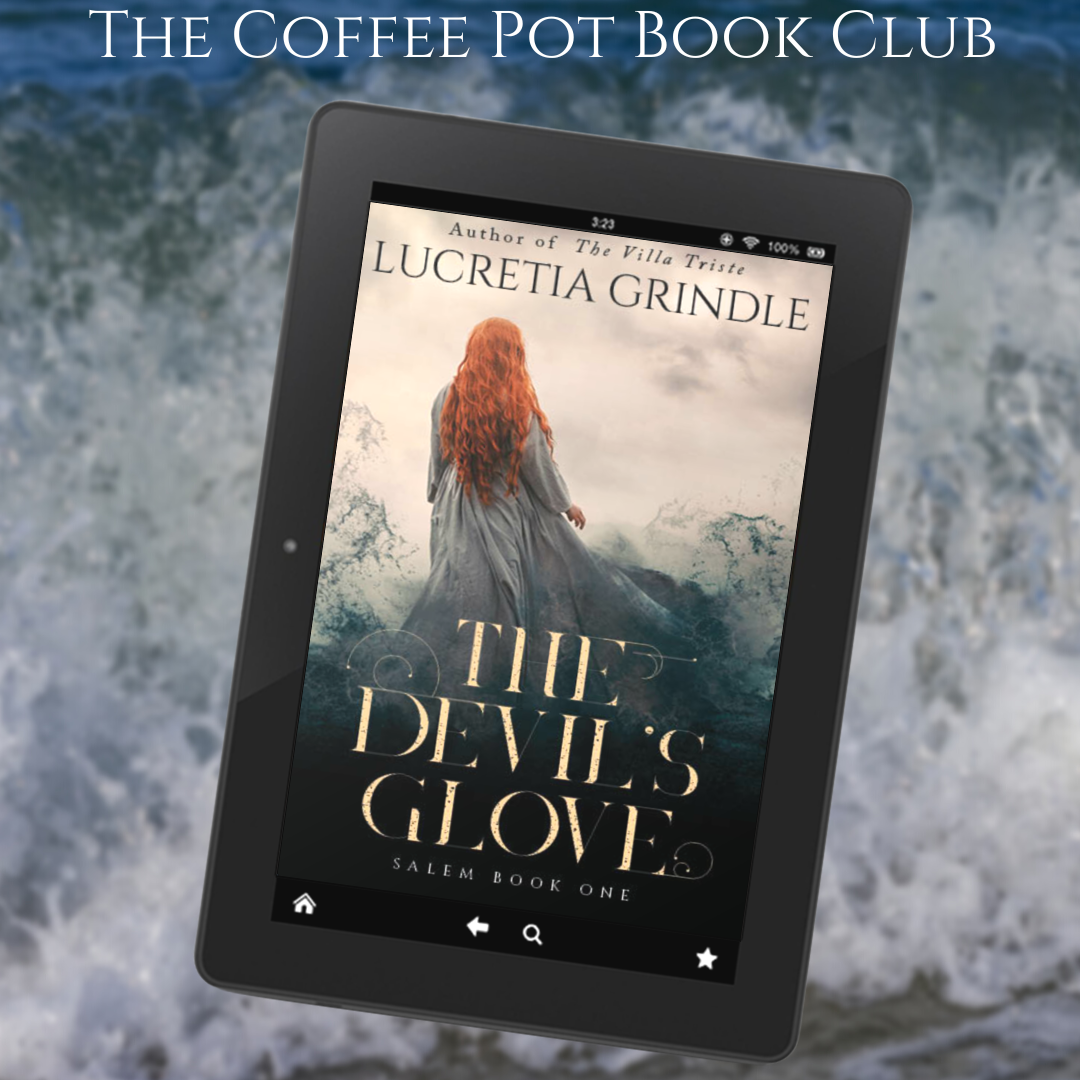
Here’s the blurb

Northern New England, summer, 1688.
Salem started here.

A suspicious death. A rumor of war. Whispers of witchcraft.

Perched on the brink of disaster, Resolve Hammond and her mother, Deliverance, struggle to survive in their isolated coastal village. They’re known as healers taught by the local tribes – and suspected of witchcraft by the local villagers.

Their precarious existence becomes even more chaotic when summoned to tend to a poisoned woman. As they uncover a web of dark secrets, rumors of war engulf the village, forcing the Hammonds to choose between loyalty to their native friends or the increasingly terrified settler community.

As Resolve is plagued by strange dreams, she questions everything she thought she knew – about her family, her closest friend, and even herself. If the truth comes to light, the repercussions will be felt far beyond the confines of this small settlement.

Based on meticulous research and inspired by the true story of the fear and suspicion that led to the Salem Witchcraft Trials, THE DEVIL’S GLOVE is a tale of betrayal, loyalty, and the power of secrets. Will Resolve be able to uncover the truth before the town tears itself apart, or will she become the next victim of the village’s dark and mysterious past?

Praise for The Devil’s Glove:

“From its opening lines this historical novel from Grindle (Villa Triste) grips with its rare blend of a powerfully evoked past, resonant characters, smart suspense, and prose touched with shivery poetry.” 

~ BookLife Reviews Editor’s Pick
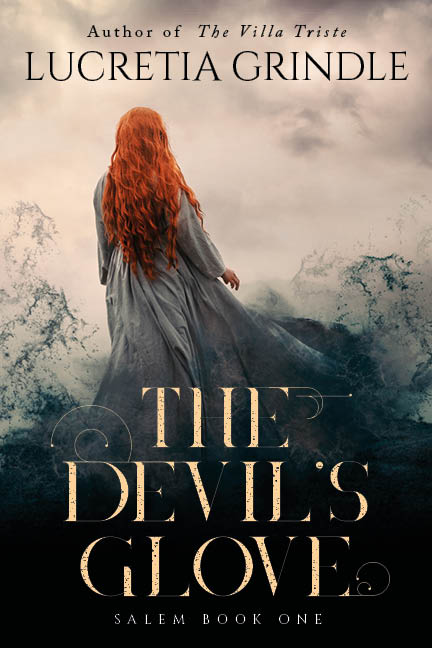
Buy Links

This title is available to read on #KindleUnlimited.

Universal Link:  https://books2read.com/u/4EN58l

Amazon UK:  Amazon US:  Amazon CA:  Amazon AU: 

Meet the author

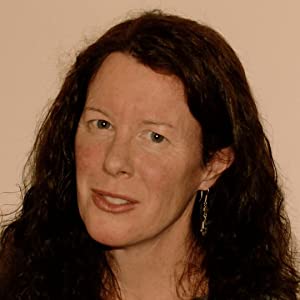
Lucretia Grindle grew up and went to school and university in England and the United States. After a brief career in journalism, she worked for The United States Equestrian Team organizing ‘kids and ponies,’ and for the Canadian Equestrian Team. For ten years, she produced and owned Three Day Event horses that competed at The World Games, The European Games and the Atlanta Olympics. In 1997, she packed a five mule train across 250 miles of what is now Grasslands National Park on the Saskatchewan/Montana border tracing the history of her mother’s family who descend from both the Sitting Bull Sioux and the first officers of the Canadian Mounties.

Returning to graduate school as a ‘mature student’, Lucretia completed an MA in Biography and Non-Fiction at The University of East Anglia where her work, FIREFLIES, won the Lorna Sage Prize. Specializing in the 19th century Canadian West, the Plains Tribes, and American Indigenous and Women’s History, she is currently finishing her PhD dissertation at The University of Maine. 

Lucretia is the author of the psychological thrillers, THE NIGHTSPINNERS, shortlisted for the Steel Dagger Award, and THE FACES of ANGELS, one of BBC FrontRow’s six best books of the year, shortlisted for the Edgar Award. Her historical fiction includes, THE VILLA TRISTE, a novel of the Italian Partisans in World War II, a finalist for the Gold Dagger Award, and THE LOST DAUGHTER, a fictionalized account of the Aldo Moro kidnapping. She has been fortunate enough to be awarded fellowships at The Hedgebrook Foundation, The Hawthornden Foundation, The Hambidge Foundation, The American Academy in Paris, and to be the Writer in Residence at The Wallace Stegner Foundation. A television drama based on her research and journey across Grasslands is currently in development. THE DEVIL’S GLOVE and the concluding books of THE SALEM TRILOGY are drawn from her research at The University of Maine where Lucretia is grateful to have been a fellow at the Canadian American Foundation. 

She and her husband, David Lutyens, live in Shropshire.
Connect with the author

Website:  Facebook:  LinkedIn: 

Instagram:  Amazon Author Page:  Goodreads: 
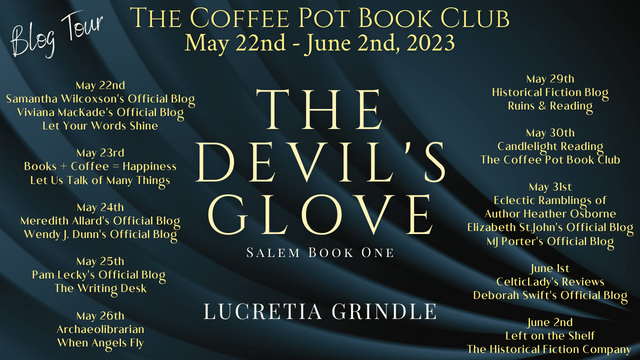
Follow the blog tour for The Devil’s Glove with The Coffee Pot Book Club

Book review for Jane Dunn’s, An Unsuitable Heiress. #bookreview #blogtour

Here’s the blurb

‘Do you realise, Corinna, just how hard it is for a young woman of irregular birth, without family, fortune or friends in the world? Marriage is the only way to get any chance of a life.’

Following the death of her mother, Corinna Ormesby has lived a quiet life in the countryside with her cantankerous Cousin Agnes. Her father’s identity has been a tantalising mystery, but now at nineteen Corinna knows that finding him may be her only way to avoid marriage to the odious Mr Beech.

Deciding to head to London, Corinna dons a male disguise. Travelling alone as a young woman risks scandal and danger, but when, masquerading as a youth, she is befriended by three dashing blades, handsome and capable Alick Wolfe, dandy Ferdinand Shilton and the incorrigible Lord Purfoy, Corinna now has access to the male-only world of Regency England. And when she meets Alick’s turbulent brother Darius, a betrayal of trust leads to deadly combat which only one of the brothers may survive.

From gambling in gentleman’s clubs to meeting the courtesans of Covent Garden, Corinna’s country naivety soon falls away. But when she finds her father at last, learns the truth about her parentage and discovers her fortunes transformed, she must quickly decide how to reveal her true identity, while hoping that one young man in particular can see her for the beauty and Lady she really is.

Purchase Link

https://mybook.to/Heiresssocial

My Review

A Suitable Heiress continues Jane Dunn’s exploration of Regency-era England. Once more, we have a very different main character, young Corinna, who knows she’s a bastard, but is determined to find her father, and continue in her quest to become an artist. And how might she manage this? By masquerading as a man and running away to London.

What ensues is a delightful tale of the era, not without its peril for our heroine/hero as her disguise is discovered and her father found. But this is only half the story for Corinna must manage her friendships carefully and guard her reputation as well as her companions while seeking to fulfill her ambitions.

An Unsuitable Heiress is a delightful Regency tale sure to appeal to fans of the era.

Find my review for The Marriage Season here.

Meet the author

Jane Dunn is an historian and biographer and the author of seven acclaimed biographies, including Daphne du Maurier and her Sisters and the Sunday Times and NYT bestseller, Elizabeth & Mary: Cousins, Rivals, Queens. She comes to Boldwood with her first fiction outing – a trilogy of novels set in the Regency period, the first of which is to be published in January 2023. She lives in Berkshire with her husband, the linguist Nicholas Ostler.

Connect with Jane

Twitter

Instagram

Bookbub profile

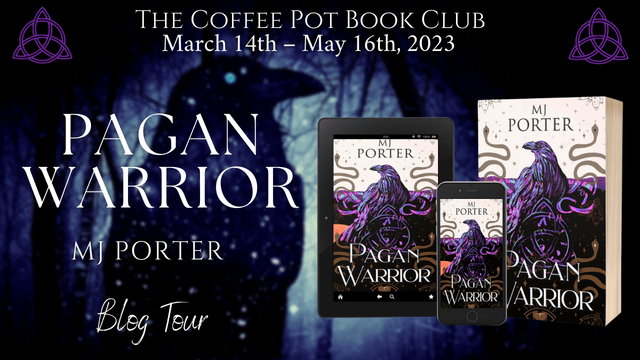
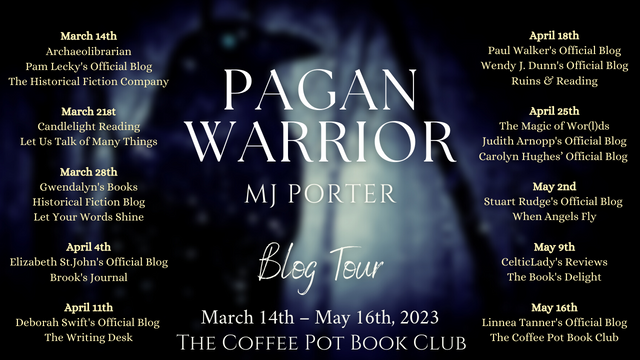
Pagan Warrior went on blog tour with The Coffee Pot Book Club in May 2023 #blogtour – check out the posts #GodsAndKings #TheSevethCentury

Pagan Warrior is the story of the battle of Hædfeld, fought in the seventh century between the Northumbrians, and you got it, the Mercians – or rather, Cadwallon of Gwynedd but with Penda of Mercia as his firm ally. You can find more details here.

A quick shout out to thank all the blog hosts and Cathie at The Coffee Pot Book Club for organising.

Check out a review for Pagan Warrior on

Linnea Tanner’s Official Blog

and a guest post about Mercia’s legacy over on

The Coffee Pot Book Club

Check out

The Book Delight

An excerpt on

The Celtic Lady Reviews

Check out the review on

Stuart Rudge’s Official Blog

And a guest post on who King Edwin of Northumbria was over on

When Angels Fly

Check out a post about Penda of Mercia.

The Magic of Word(l)ds

Read an excerpt featuring Eowa, Penda’s brother on

Judith Arnopp’s Official Blog

And, read an excerpt featuring Penda on

Carolyn Hughes Official Blog

I answered Paul Walker’s questions on his blog

Paul Walker’s Official Blog

There’s an except over on Wendy J Dunn’s Official Blog featuring King Edwin

Wendy J Dunn’s Official Blog

And a fabulous review on Ruins and Readings

Ruins and Readings

Read a guest post about how we know, what we know, about the seventh century.

Deborah Swift’s Official Blog

And a fabulous author interview over on

The Writing Desk

Read an excerpt on

Elizabeth St John’s Official Blog

And read about warfare in the Saxon period on

Brook Allan’s Official Blog

Check out a fabulous review on

https://gwendalynbooks.wordpress.com/2023/03/28/pagan-warrior/

A guest post about Mercia in the later eighth century on the Historical Fiction Blog.

https://historicalfictionblog.com/pagan-warrior-guest-post/

And, the post that perhaps gave me the most fear to begin will but which was fun when I remembered all the little details, five fun facts about writing the trilogy.

maryannbernal.blogspot.com

Check out a post about two of the royal residences of Bernicia at the time, Bamburgh and Ad Gefrin (Yeavering). (There are lots of photos; thank you to Helen Hollick for uploading them all.)

Let Us Talk of Many Things

And a review from

Candlelight Reading

Check out my author interview over on Archaeolibrarian.

Archaeolibrarian

I’m sharing an excerpt over on The Historical Fiction Company.

The Historical Fiction Company

I’ve written a piece about the historical background on Pam Lecky’s official blog.

Pam Lecky’s Official Blog

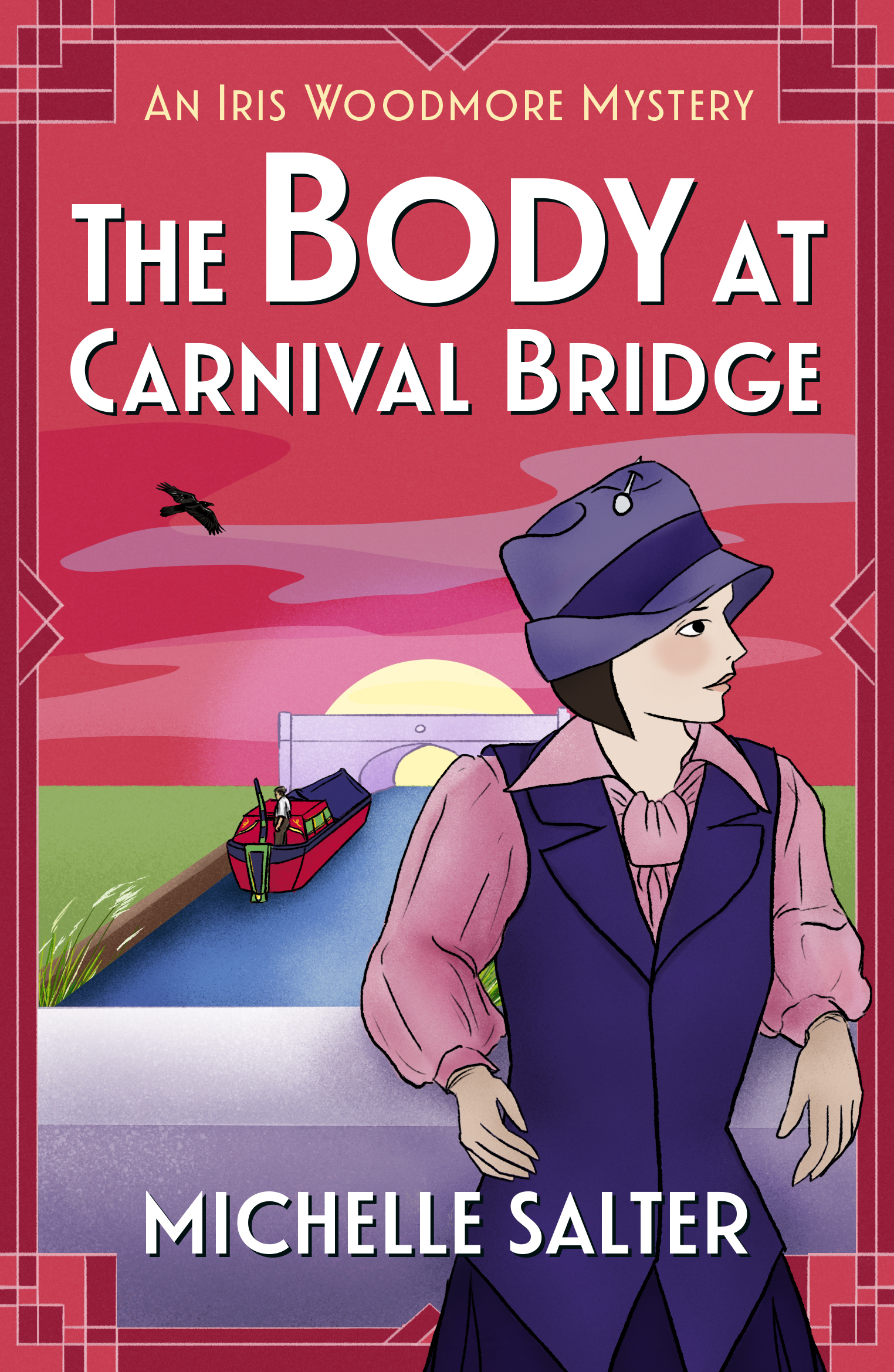
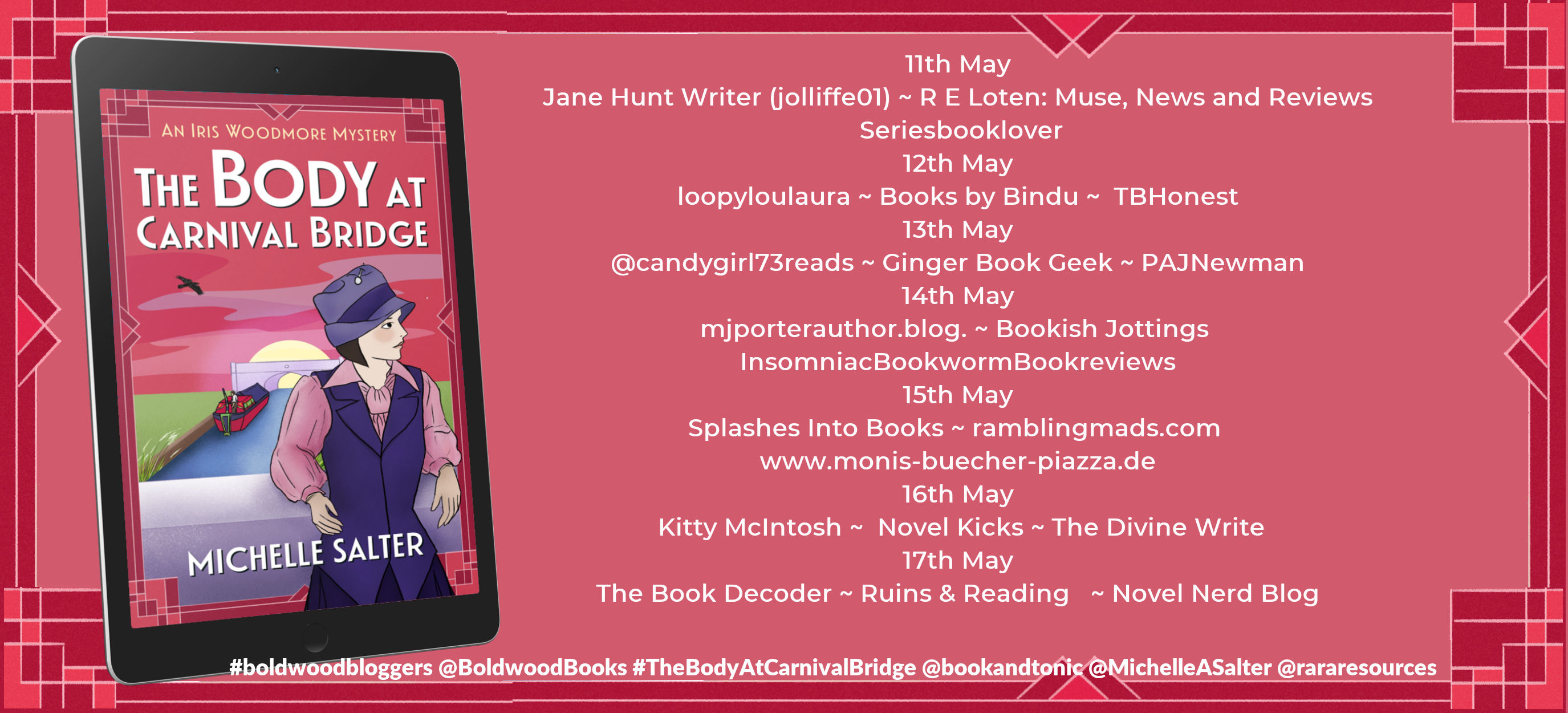
Book Review for The Body at Carnival Bridge by Michelle Salter #historicalmystery #cosycrime #highlyrecommended

Here’s the blurb

How deadly is the fight for equality?

It’s 1922, and after spending a year travelling through Europe, Iris Woodmore returns home to find a changed Walden. Wealthy businesswoman Constance Timpson has introduced equal pay in her factories and allows women to retain their jobs after they marry.

But these radical new working practices have made her deadly enemies.

A mysterious sniper fires a single shot at Constance – is it a warning, or did they shoot to kill? When one of her female employees is murdered, it’s clear the threat is all too real – and it’s not just Constance in danger.

As amateur sleuth Iris investigates, she realises the sniper isn’t the only hidden enemy preying on women.

 Purchase Link https://mybook.to/CarnivalBridgesocial

My Review

The Body at Carnival Bridge is the third book in the Iris Woodmore series, and it is going from strength to strength.

Some time has passed since the tragic events of book 2, and Iris is perhaps a little out of sorts with herself, but no sooner has she made contact with her old friends than tragedy strikes, and Iris is compelled to investigate the death of a young girl.

What ensues is a well-reasoned and intriguing mystery, highlighting the social inequalities of women in the aftermath of World War I and also referencing the harsh realities of the lives of women unable to access birth control. The author really excels in placing the reader in the period without overloading the narrative., and always with an eye to moving the mystery onwards.

The Iris Woodmore mysteries are fast becoming some of my favourites. The mystery is always reliable, the author has an eye for detail, and Iris herself is a likeable character, as are those surrounding her.

A fabulous mystery well-grounded in the period’s events without overloading the reader.

Check out my review for Death at Crookham Hall and Murder at Waldenmere Lake.

Meet the author

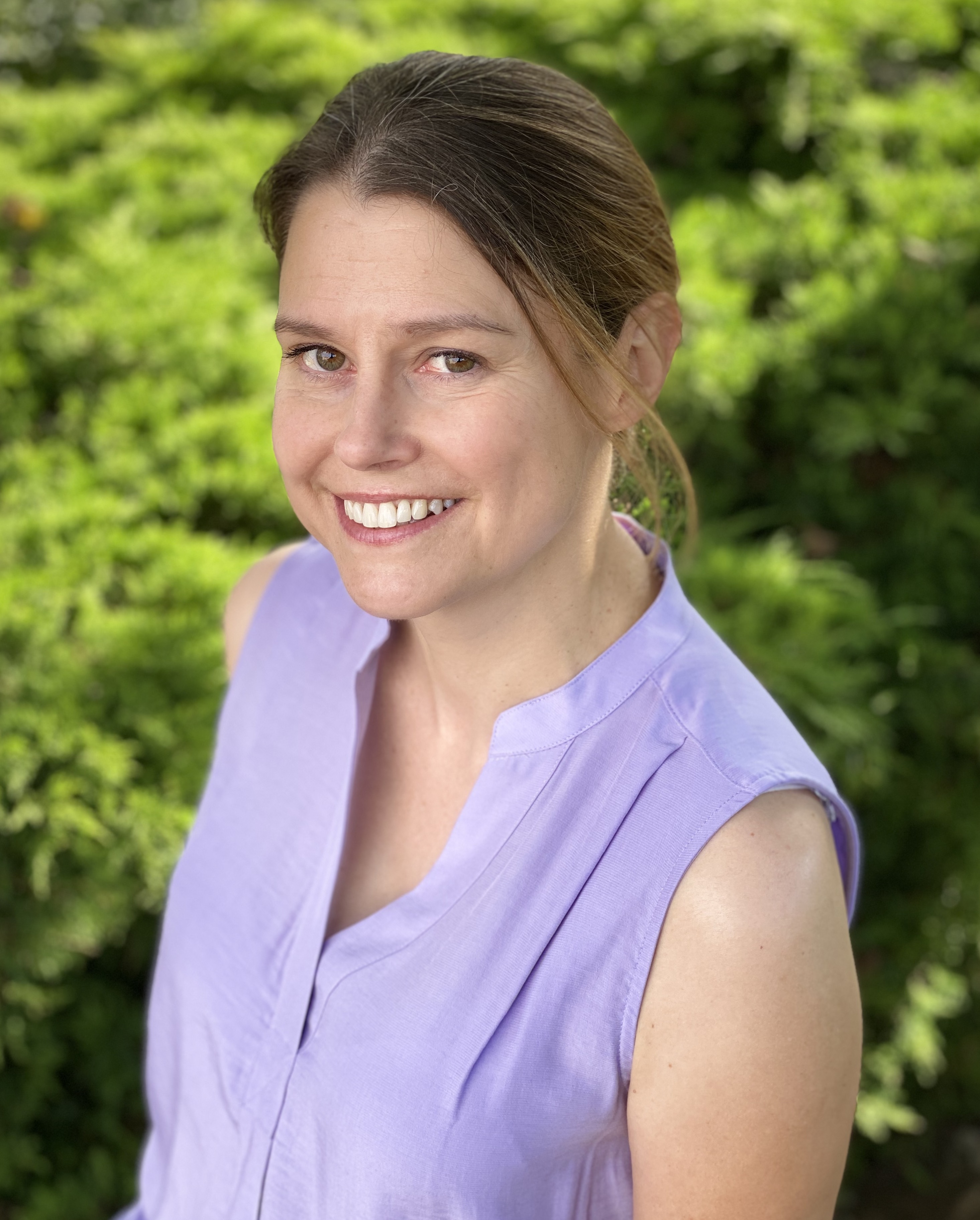
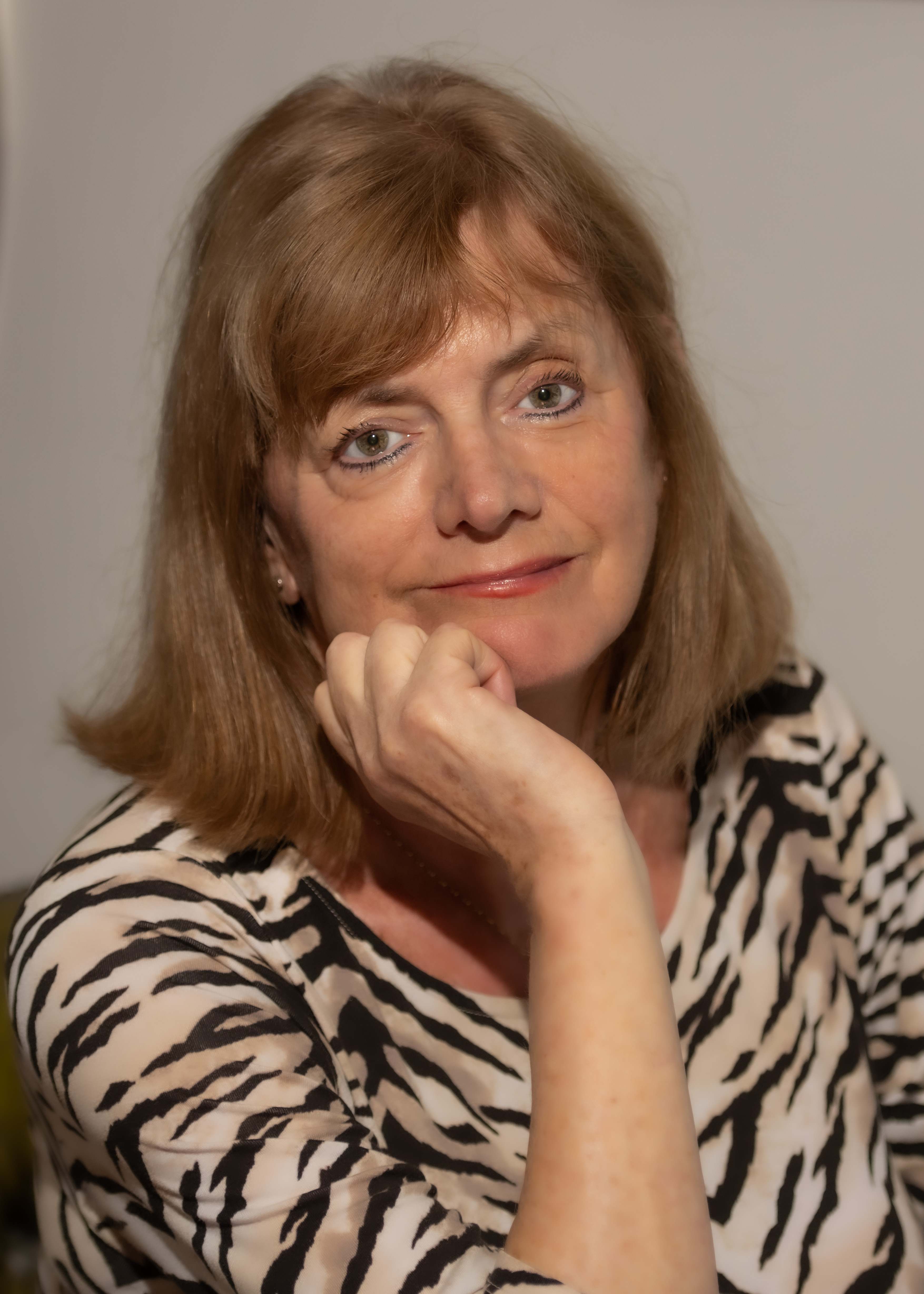
Michelle Salter is a historical crime fiction writer based in northeast Hampshire. Many local locations appear in her mystery novels. She’s also a copywriter and has written features for national magazines. When she’s not writing, Michelle can be found knee-deep in mud at her local nature reserve. She enjoys working with a team of volunteers undertaking conservation activities.

Connect with Michelle  

Facebook: 

Twitter: 

Instagram: 

Bookbub profile: 

Book review for A Contest to Kill For by E V Hunter #cosycrime #blogtour

Here’s the blurb

The competition is fierce…. Desperate to try and rebuild the reputation of Hopgood Hall, owners Alexi Ellis and Cheryl and Drew Hopgood agree to host a realty TV baking show, spearheaded by their arrogant but enigmatic head chef Marcel Gasquet. Hopefully the ratings will bring in bookings to the struggling hotel and Cosmo, Alexi’s antisocial feral cat, is hoping to get a starring role too!

The temperature is high… Fiery and hot-headed, Marcel’s antics makes for brilliant television, but off-screen trouble is brewing. One of the contestants, femme fatale Juliette Hammond, makes it clear that she will do anything to secure the winning prize – even if it means sweetening up the prima donna chef. The results are deadly!

So when Juliette is found dead, all eyes turn to Marcel. Has his fiery French temper got the better of him or has someone else fallen victim to Juliette’s devious ways? With the reputation of the hotel in tatters and Marcel’s liberty on the line, Alexi needs answers and fast.  And the only person she can turn to for help is her old friend and private eye Jack Maddox.  Jack’s working his own case, but he can’t refuse Alexi and he knows more than anyone that this murder could cost them everything!

Perfect for fans of Faith Martin, Frances Evesham and Emma Davies.

My review

A Contest to Kill For is Book 2 in the Hopgood Hotel mysteries. I have read book 1 and think it helps to have read it when heading into book 2, not for the main part of the mystery, but when the mystery becomes tighter and more twisty.

Alexi and Jack, our ‘will they, won’t they’ couple, find themselves flung back together when one of the stars of the cookery competition is found dead in her bedroom. With everyone being recorded almost 24/7, how could someone have been murdered and it not been witnessed by these cameras?

As events escalate, Marcel, the grumpy chef, becomes the prime suspect while the TV company distances itself from the allegations. Over to Alexi and Jack to clear his name, if they can.

As with Book 1, this is a twisty mystery, and nothing is quite as it seems as it nears its conclusion. This is an engaging read, and once again, I failed to guess the culprit, which is always a sign of a good story.

Check out my review for book 1 and book 5.

Cover image for A Comtest to Kill For by EV Hunter

Meet the author

Evie Hunter has written a great many successful regency romances as Wendy Soliman and is now redirecting her talents to produce dark gritty thrillers for Boldwood. For the past twenty years she has lived the life of a nomad, roaming the world on interesting forms of transport, but has now settled back in the UK. 

Connect with EV Hunter

Newsletter Sign Up

Bookbub profile

Eagle of Mercia release day post and links to other posts

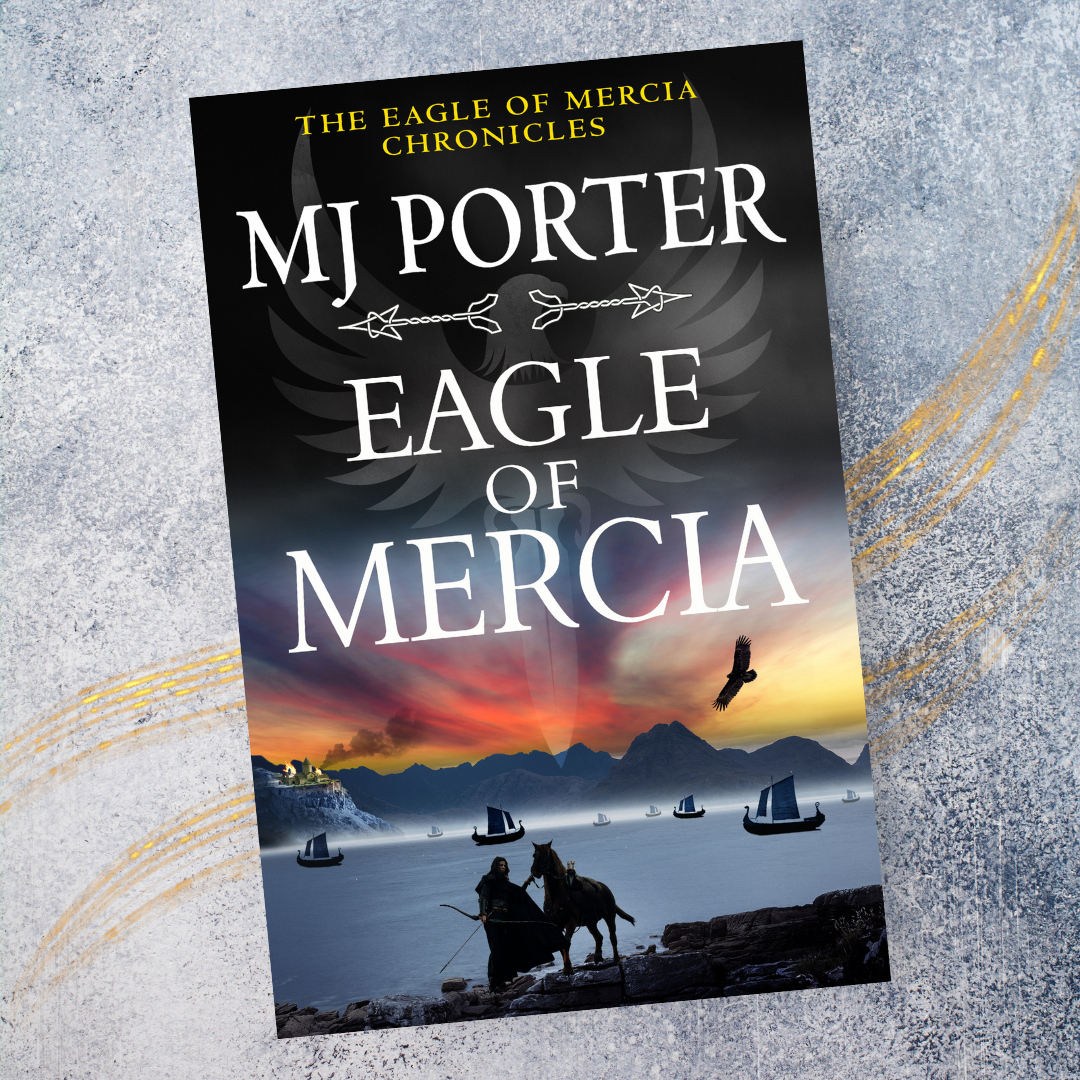
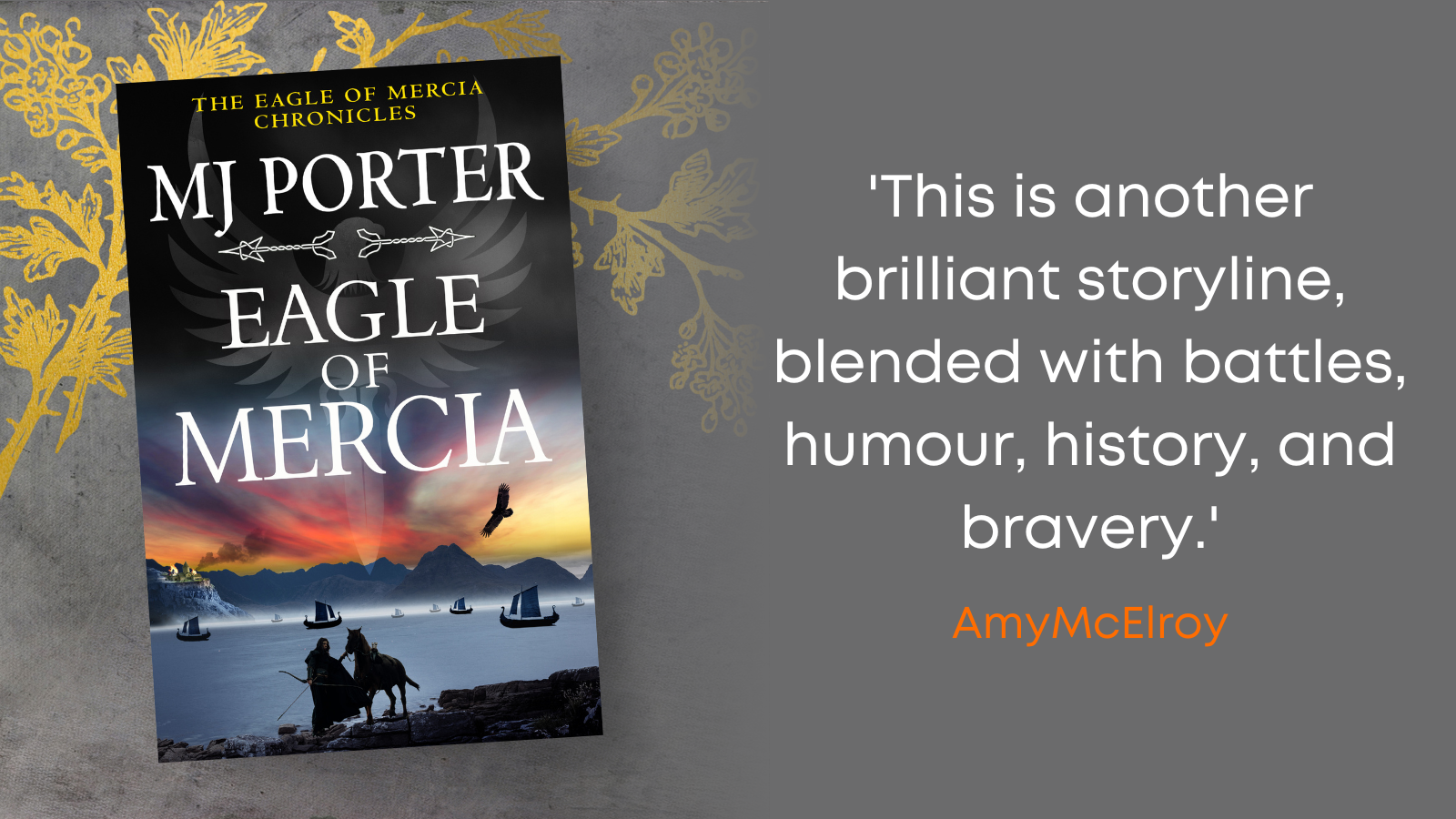
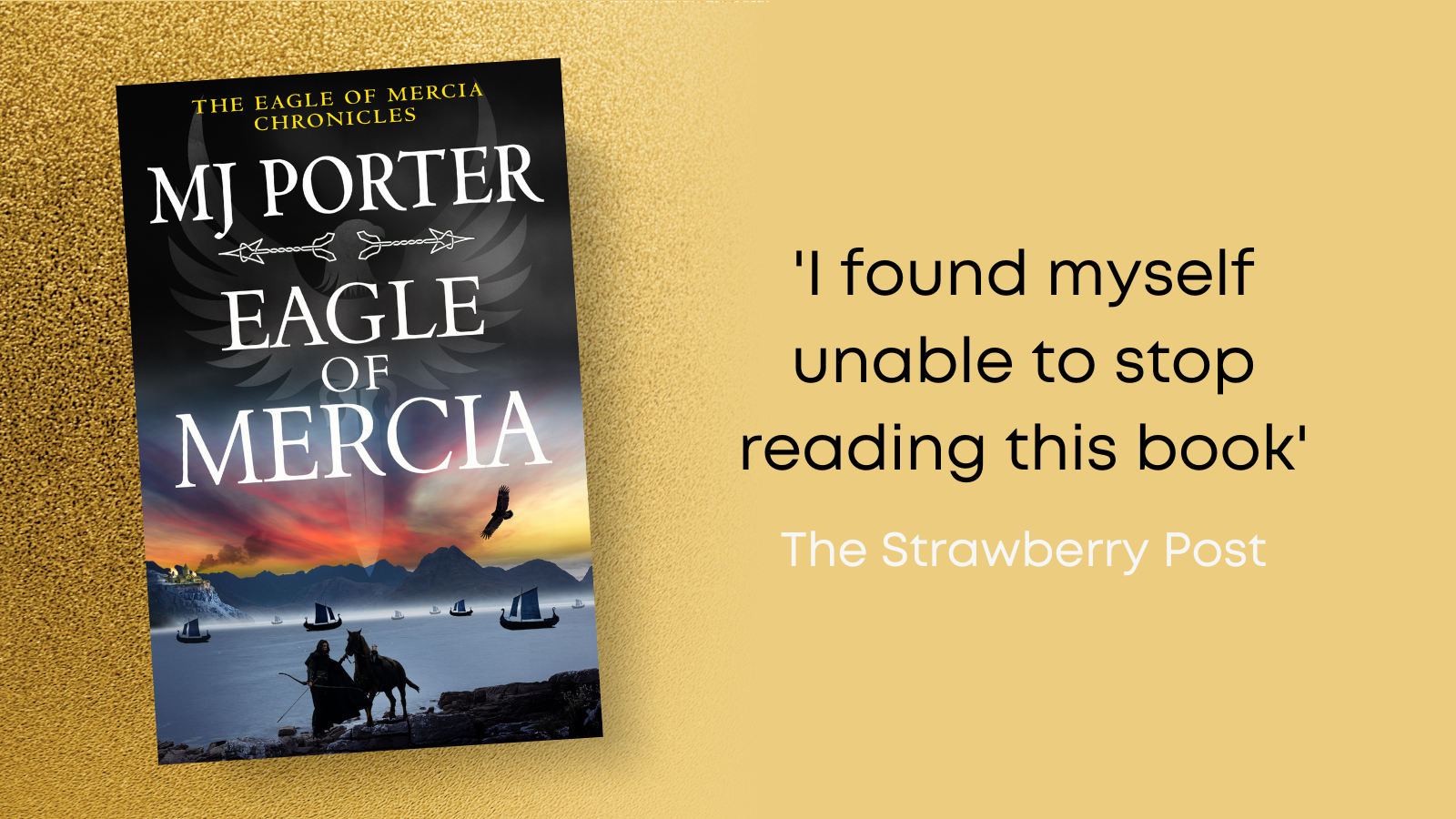
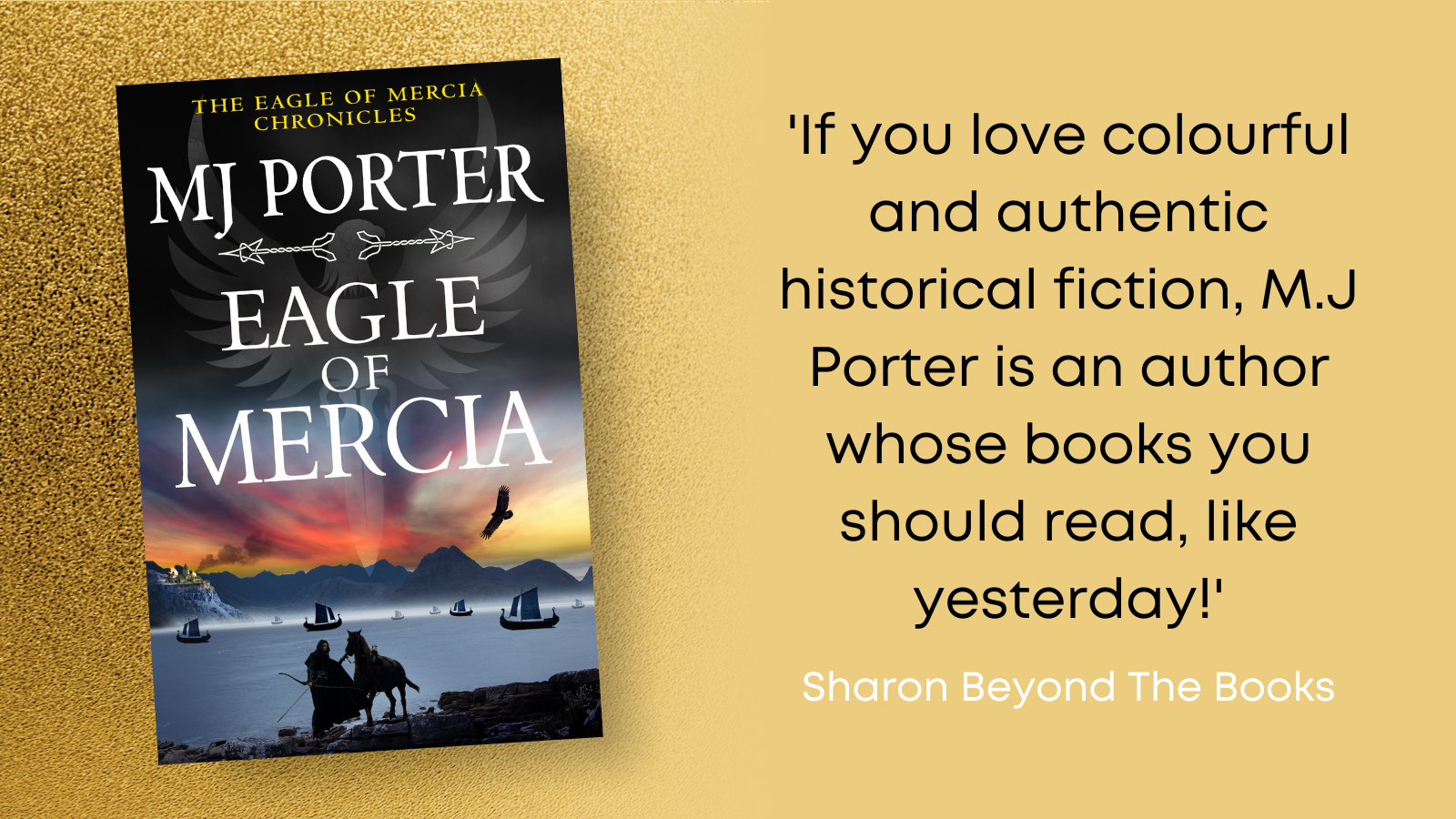
Today is the day, book 4 in The Eagle of Mercia Chronicles is released into the wild. I’m really excited about this one:) And I can’t believe we’re already onto book 4.

Here’s the blurb:

A mercy mission in the heart of Wessex is beset with deadly, bloody dangers.

Tamworth AD831

Icel’s profile continues to rise. Lord of Budworth and warrior of Mercia, he’s acknowledged by King Wiglaf and his comrades to keep Mercia safe from the ravages of Wessex, the king-slayer of the East Angles, and the Viking raiders.
But, danger looms.  Alongside Spring’s arrival comes the almost certain threat of the Viking raiders return. 

When Lord Coenwulf of Kingsholm is apprehended by a Viking and held captive on the Isle of Sheppey in Wessex held Kent, Icel is implored by Lady Cynehild to rescue her husband.

To rescue Lord Coenwulf, Icel and his fellow warriors must risk themselves twice over, for not only must they overpower the Viking raiders, they must also counter the threat of Mercia’s ancient enemy, the kingdom of Wessex as they travel through their lands.

Far from home and threatened on all sides, have Icel and his fellow warriors sworn to carry out an impossible duty?

books2read.com/EagleofMercia

Available now in ebook, paperback and audio, the hardback should be with us shortly.

Read my release day post about the River Thames.

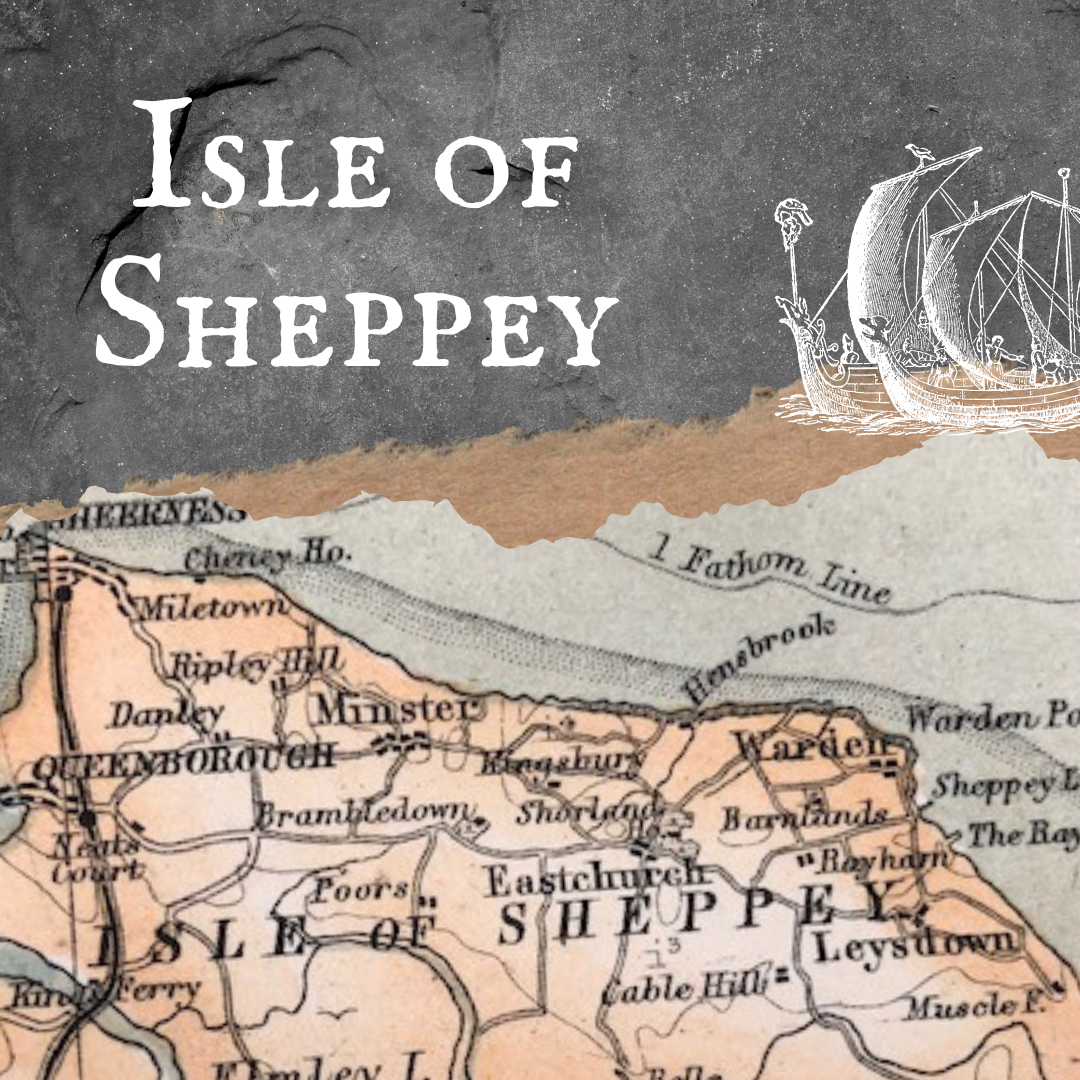
Read all about the Isle of Sheppey

Read my release day post on the Boldwood website about the Eagle of Mercia Chronicles.


I can let you know that book 5 is mostly written, and I know the title and I’ve seen the cover – I know, I’m such a tease. I will update when I can share more.


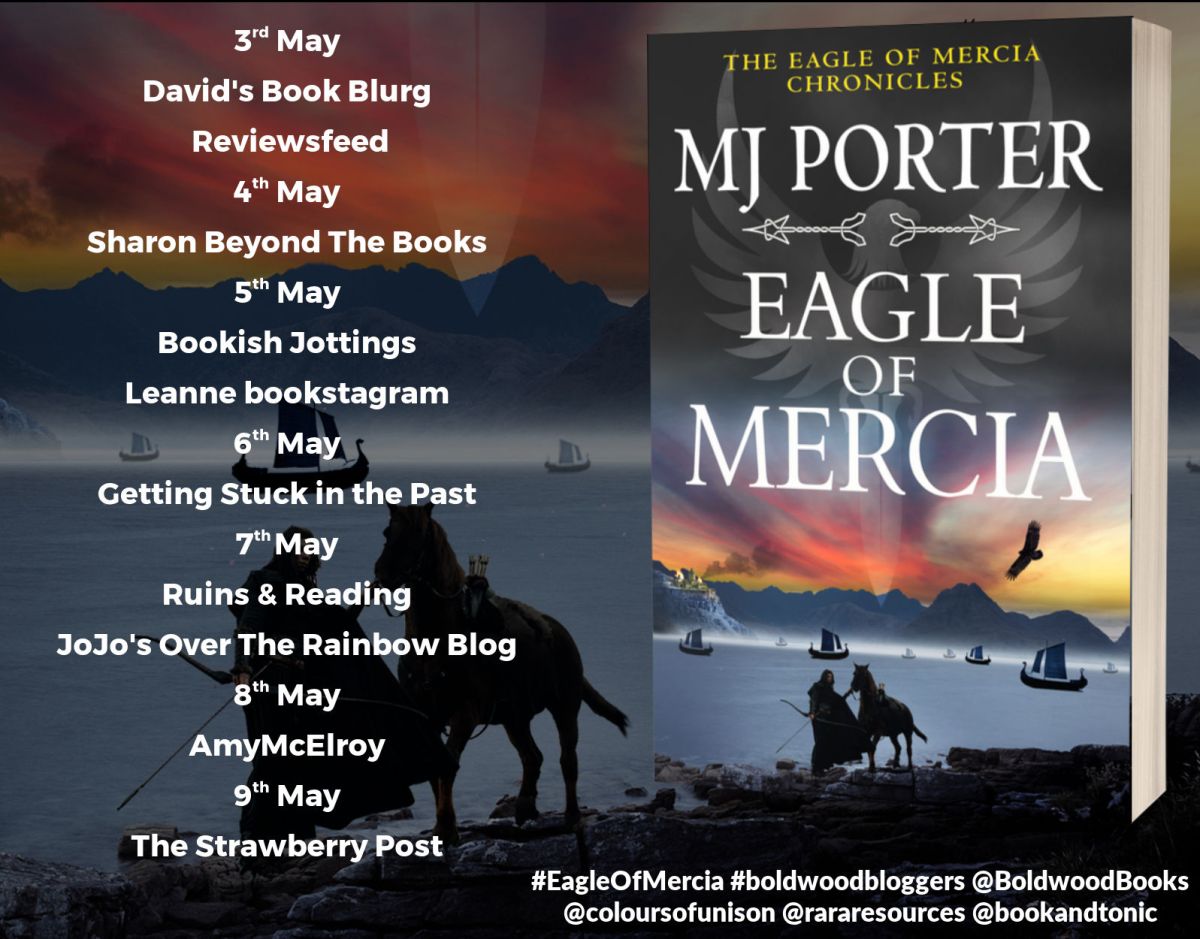
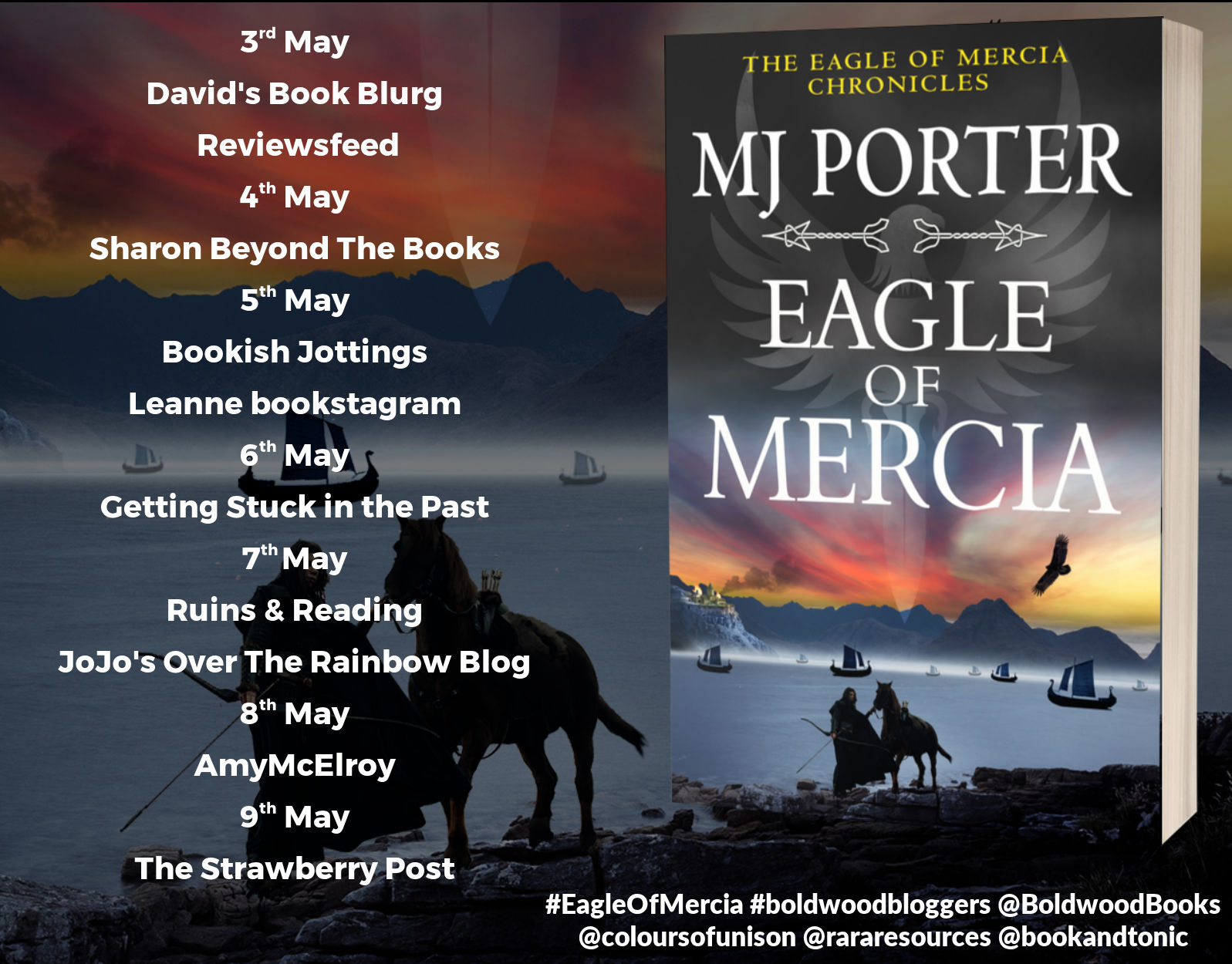
Check out the blog tour for Eagle of Mercia. My thanks to Rachel at Rachel’s Random Resources for organising and all the hosts for taking part. I will add the links each day. The initial reviews for Eagle are very positive, so I hope you’ll enjoy it too.

Reviewsfeed

David’s Book Blurg

Sharon Beyond the Books

Leanne Bookstagram

Bookish Jottings

Getting Stuck in the Past

Ruins and Reading

Amy McElroy

The Strawberry Post

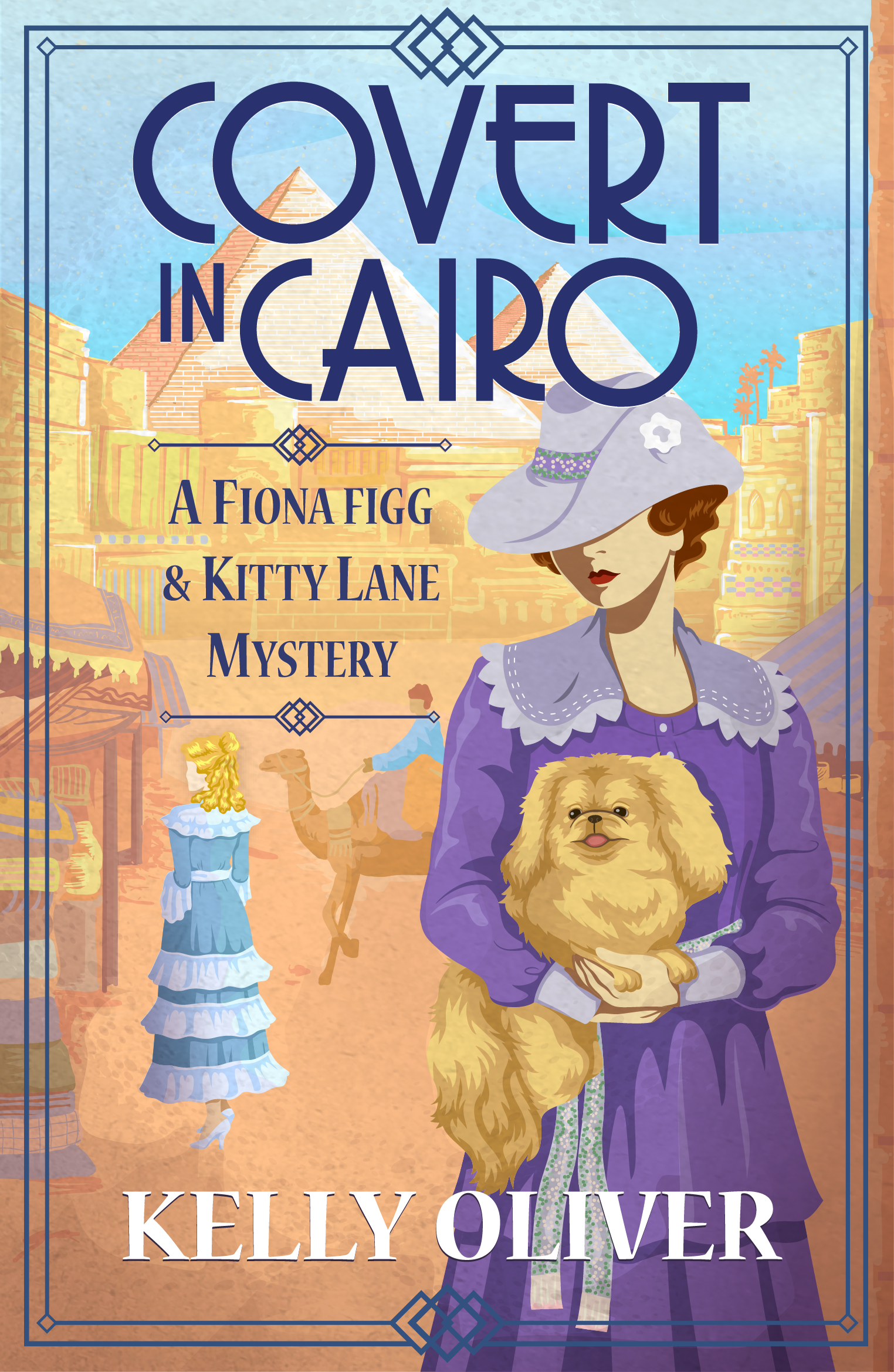
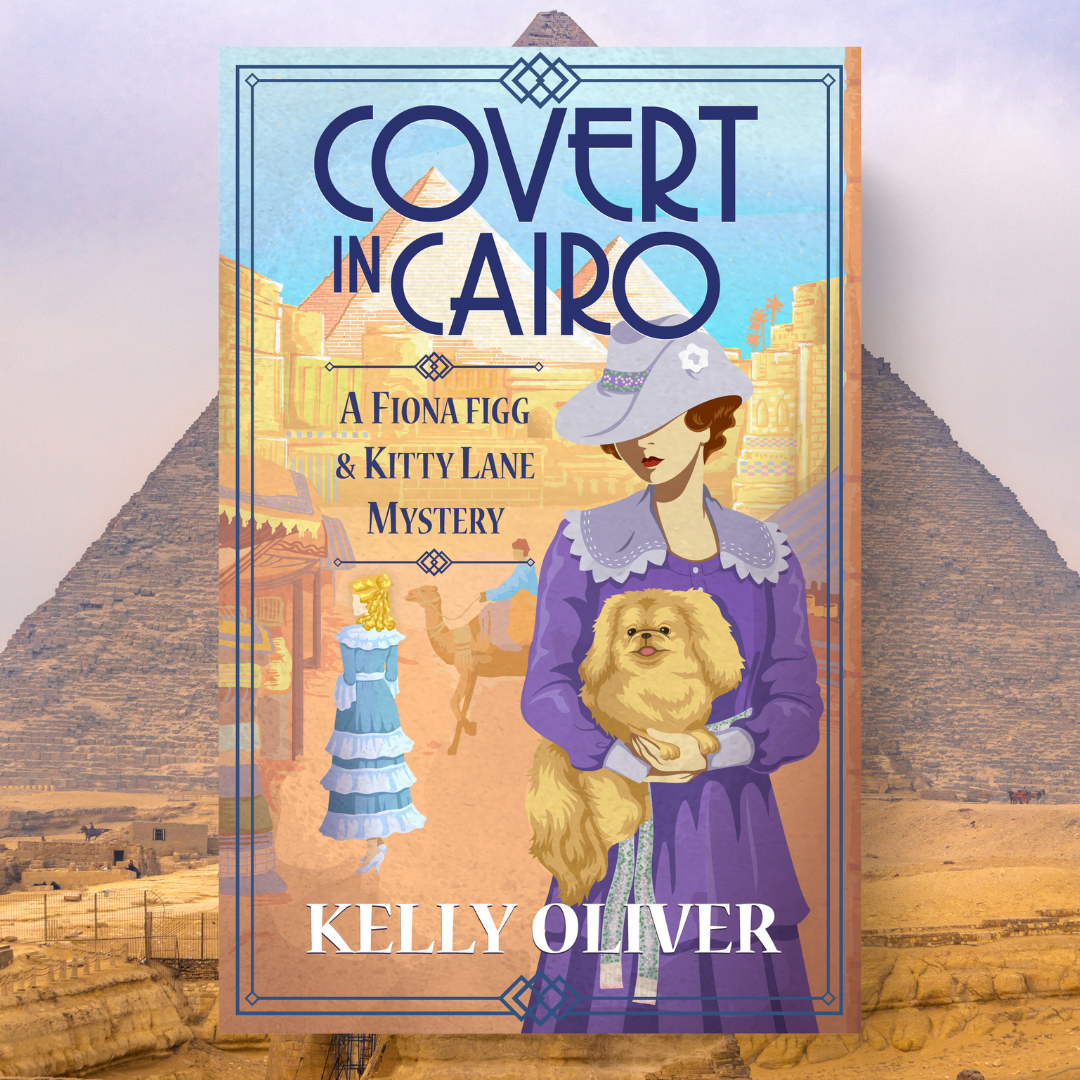
Today I’m delighted to be taking part in the blog tour for a new historical mystery, Covert in Cairo by Kelly Oliver #blogtour #BoldwoodBooks

Here’s the blurb:

Cairo. December 1917.

Following a tip-off from notorious spy Fredrick Fredricks, Fiona Figg and Kitty Lane of British Intelligence find themselves in the hustle and bustle of Egypt. But ancient mummies aren’t the only bodies buried in the tombs of Cairo.

When a young French archeologist is found dead in a tomb in the desert with his head bashed in, and an undercover British agent goes missing, the threat moves closer to home.

As they dig deeper, soon Fiona and Kitty uncover a treasure trove of suspects, including competing excavators, jealous husbands, secret lovers, and belligerent spies! Fiona wonders if the notorious Fredrick Fredricks could be behind the murders? Or is the plot even more sinister?

One thing is clear – If Fiona and Kitty can’t catch the killer, they might end up sharing a sarcophagus with Nefertiti.

With humor as dry as the Arabian desert, and pacing as fast as a spitting camel, Fiona and Kitty are back in another sparkling adventure, this time in WW1 Egypt.

Purchase Link – https://amzn.to/3iB6WGd

My Review

Covert in Cairo is an enjoyable trip to Cairo in December 1917. Fiona Figg is on a mission to prevent the Suez Canal from being attacked, as she finds a Cairo overrun with British troops, very much a Britain away from home, complete with good tea and marmalade.

As in the previous book, Fiona Figg longs to make a name for herself and finally win free from the confines of being a file clerk at the War Office, but not everything goes her way. Kitty Lane is on hand to add her skills to the investigation, and Clifford, their chaperone, but really, a man with an eye for the ladies and very much embodying all that was wrong in the thinking of an early twentieth-century man, including thinking women were fragile, can add his skills as well, most notably being able to talk to anyone.

What ensues is a tale of murder, antiquities, camels and donkeys, night-time shenanigans, and an all-round good mystery.

An enjoyable jaunt to the Cairo of the past, including several well-known historical personalities, and ensuring that Fiona must continue her pursuit of an errant spy and, as such, win-free from returning to dreary London for the time being.

Check out my review for book 1 in the Fiona Figg and Kitty Lane Mystery books Chaos at Carnegie Hall

Meet the Author

Kelly Oliver is the award-winning, bestselling author of three mysteries series: The Jessica James Mysteries, The Pet Detective Mysteries, and the historical cozies The Fiona Figg Mysteries, set in WW1. She is also the Distinguished Professor of Philosophy at Vanderbilt University and lives in Nashville, Tennessee. She is bringing new titles in the Fiona Figg series to Boldwood, the first of which, Chaos in Carnegie Hall, will be published in November 2022.

Connect with Kelly

Facebook: https://www.facebook.com/kellyoliverauthor  

Twitter: https://twitter.com/kellyoliverbook  

Bookbub profile: https://www.bookbub.com/authors/kelly-oliver

Follow the Covert in Cairo blog tour with Rachel’s Random Resources

Pagan Warrior is on blog tour with The Coffee Pot Book Club #blogtour – check out the posts for day 7

I’m really excited to share the details of the Pagan Warrior blog tour with The Coffee Pot Book Club.

Pagan Warrior is the story of the battle of Hædfeld, fought in the seventh century between the Northumbrians, and you got it, the Mercians – or rather, Cadwallon of Gwynedd but with Penda of Mercia as his firm ally. You can find more details here.

I might have written this book many years ago, but it’s had a refresh, and is now available in audio, narrated by the fabulous, Matt Coles, as is the second book, Pagan King. Warrior King will be coming later this year in audio.

Now that all three books have been ‘refreshed’ you can read in ebook or paperback, and the books are available from all good ebook/paperback sellers. Check out my latest tiktok video to see Warrior King in paperback:)

You can follow the blog tour, and I’ll be sharing posts here as well. A quick shout out to thank all the blog hosts and Cathie at The Coffee Pot Book Club for organising.

For April 25th, check out a post about Penda of Mercia.

The Magic of Word(l)ds

Read an excerpt featuring Eowa, Penda’s brother on

Judith Arnopp’s Official Blog

And, read an excerpt featuring Penda on

Carolyn Hughes Official Blog

For April 18th, I answered Paul Walker’s questions on his blog

Paul Walker’s Official Blog

There’s an except over on Wendy J Dunn’s Official Blog featuring King Edwin

Wendy J Dunn’s Official Blog

And a fabulous review on Ruins and Readings

Ruins and Readings

For April 11th, read a guest post about how we know, what we know, about the seventh century.

Deborah Swift’s Official Blog

And a fabulous author interview over on

The Writing Desk

For April 4th, read an excerpt on

Elizabeth St John’s Official Blog

And read about warfare in the Saxon period on

Brook Allan’s Official Blog

For March 28th, check out a fabulous review on

https://gwendalynbooks.wordpress.com/2023/03/28/pagan-warrior/

A guest post about Mercia in the later eighth century on the Historical Fiction Blog.

https://historicalfictionblog.com/pagan-warrior-guest-post/

And, the post that perhaps gave me the most fear to begin will but which was fun when I remembered all the little details, five fun facts about writing the trilogy.

maryannbernal.blogspot.com

For March 21st check out a post about two of the royal residences of Bernicia at the time, Bamburgh and Ad Gefrin (Yeavering). (There are lots of photos, thank you to Helen Hollick for uploading them all).

Let Us Talk of Many Things

And a review from

Candlelight Reading

From March 14th, check out my author interview over on Archaeolibrarian.

Archaeolibrarian

I’m sharing an excerpt over on The Historical Fiction Company.

The Historical Fiction Company

I’ve written a piece about the historical background on Pam Lecky’s official blog.

Pam Lecky’s Official Blog

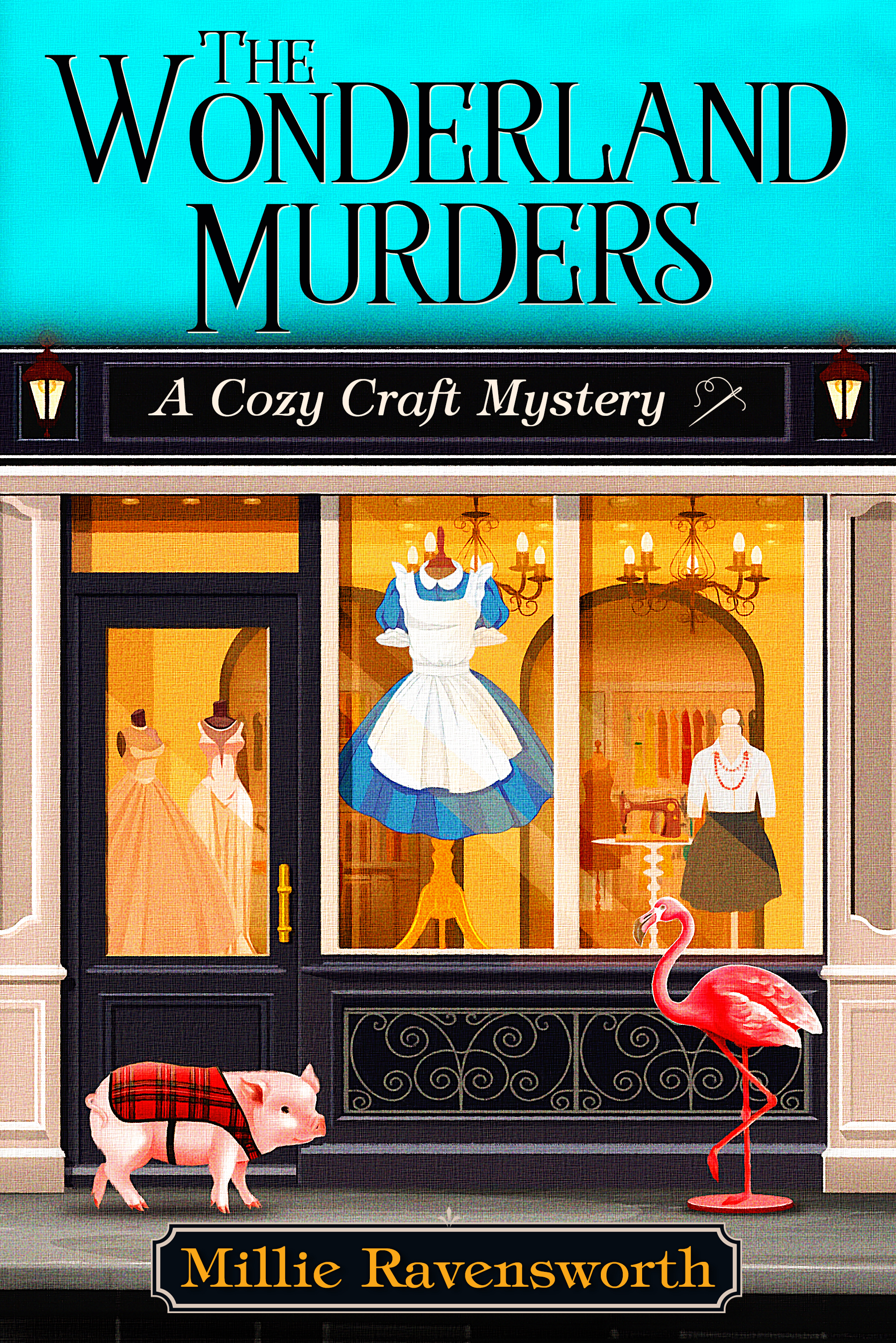
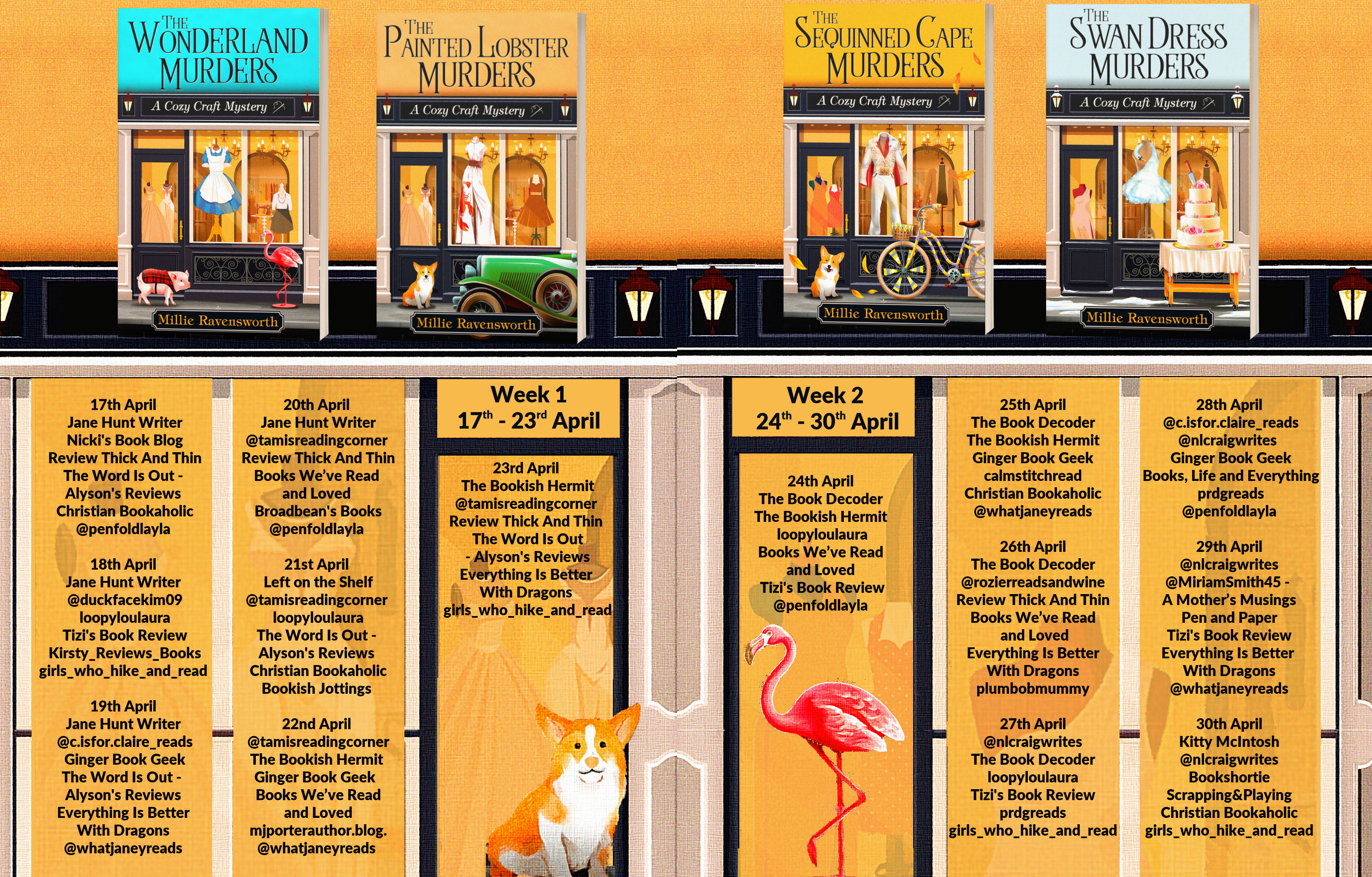
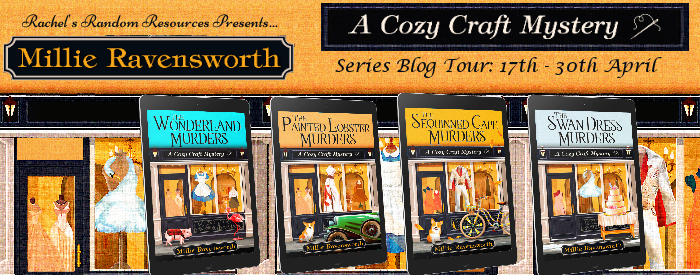
Today, I’m delighted to be reviewing The Wonderland Murders by Millie Ravensworth #BlogTour #CozyCrime

Here’s the blurb

 A quirky and funny series for fans of a good mystery and compelling characters. Can you solve the crime before our dressmaking duo? 

After losing her job at an exclusive London hotel, Penny Slipper is only too happy to help when her grandma asks her to take charge at the Cozy Craft sewing shop in charming rural Suffolk.

With cousin Izzy on hand as the expert dressmaker and Penny’s head for business, what can possibly go wrong?

But Penny’s in town for less than a day when the local librarian is poisoned and Penny fears she might even be accidentally responsible. Penny and Izzy are forced to turn detectives to uncover the true cause of death, while finishing a costume commission for their first customer.

Matters take a further deadly turn when a second body is discovered. 

Can Penny and Izzy unpick the mysteries of the past and sew the pieces of this puzzle together before it’s too late?

If you enjoy fast-paced mysteries, charming country towns and characters who you want to spend hours with then you’re going to love the Cozy Craft Mystery series.

Start your next murder mystery adventure today!

Purchase Links 

Amazon UK Amazon US

Review

The Wonderland Murders is a delightful and very well-plotted contemporary cozy mystery set in Framingham, the UK.

Penny and Izzy are cousins thrown together by the illness of their mutual grandmother, who normally runs a crafting shop. Izzy is somewhat scatty and filled with new ideas. Penny is more down to earth and determined to make a profit from the shop. But no sooner has Penny arrived than a murder takes place in the local library. While they’re not obsessive about who is responsible, they do begin to consider who might have been to blame as they work on an Alice in Wonderland costume for the upcoming World books day for one of the librarians.

What ensues is so well-plotted and delightful that I genuinely didn’t guess the ending. These stories have a lovely lightness of touch, genuine warmth and humour throughout, and Izzy and Penny really complement each other as main characters.

I loved this first book so much that I’m busy devouring the rest of the series, and the series is consistently as enjoyable and delightful. I’m so glad I took a chance on The Wonderland Murders, and if you love a cozy crime, you won’t be disappointed, either.

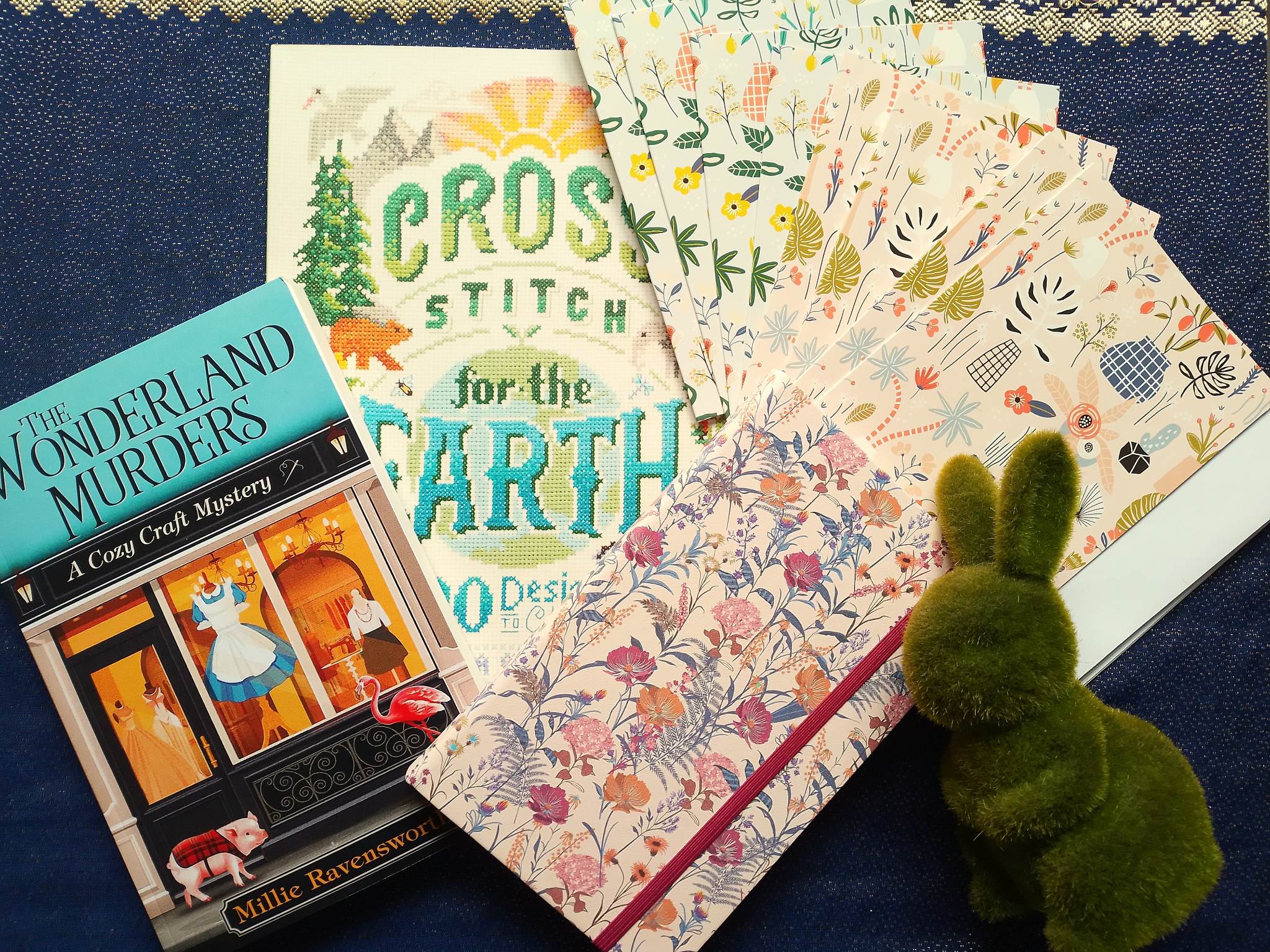
Giveaway Prize – The Wonderland Murders, a cross stitch book, a floral notepad, a note writing set and a grass bunny. 

https://kingsumo.com/g/h1kxu9/prize-for-cozy-mysteries-blog-tour

Meet the Author

Millie Ravensworth writes the Cozy Craft Mystery series of books. Her love of murder mysteries and passion for dressmaking made her want to write books full of quirky characters and unbelievable murders. Millie lives in central England where children and pets are something of a distraction from the serious business of writing, although dog walking is always a good time to plot the next book. 

Connect with Millie

Facebook Twitter Instagram

Today, I’m absolutely delighted to host Alison Morton and the 10th Anniversary Hardback of her novel, INCEPTIO #guestpost

Today, I’m delighted to welcome Alison Morton to the blog to celebrate the 10th Anniversary edition of INCEPTIO.

Why Roman alternative history?

An avid reader of spy, thriller and crime stories from childhood and a life-long devotee of all things Roman, I yearned to write a Roman thriller with a true-hearted heroine imbued with Roman virtue but a tendency to go off-piste. Lindsey Davis does this beautifully with Flavia Albia, Falco’s daughter and to a certain extent with Helena Justina, Falco’s wife. However, I wanted women to run this New Rome. Yes, I had also read a lot of science fiction including wonderful stories by Anne McCaffery where women were equal if not leading their society. But I didn’t want to write space opera.

There was only one solution:  I stayed on Planet Earth and brought my Roman stories up to the 21st century.

A fascination with the ‘what if’ idea

Perhaps it’s something all kids speculate about: suppose I have the wrong parents, suppose I’m really a lost princess, what if I could fly, what if we were all rich? Later, as a student of history, I was always fascinated by the possibilities of the tiniest thing turning the huge wheel of history – “For want of a nail,” and so on. Then I learnt about the ‘butterfly of doom’ where one butterfly flapping its wings cascaded events in a different direction. 

When I produced my first manuscript, I didn’t know I was writing in a genre called alternative history (“althist” for short). I was inspired by Robert Harris’s Fatherland, a tense, shocking and beautifully written thriller with a heart-wrenching ‘secret’. Twisting history was allowed and used by acclaimed writers such as Michael Chabon and Kingsley Amis as well as Harris! 

Of course, a thriller must be exciting, intriguing and full of emotional punch, but althist stories have their own ‘rules’. The most important are to identify the moment where history as we know it veers off onto a different path forever, and to weave into the story to show how the alternative timeline has developed since that point of divergence.

Why Roman alternative history?

‘Rome’ lasted 1229 years in the West, which time span would take us back to AD 794 from today. It changed from a tiny community of tribal farmers to a confident military and trading empire boasting high culture, diversity, power, engineering and rule of law, eventually dwindling to a miserable rump kneeling before barbarians.  

Rome had the dark side of all ancient and later cultures: slavery, rampant corruption, patriarchalism and scant regard for disabled and poor people. But Rome gave us systems, values, including civic-mindedness, cultural and engineering genius and literacy that are still firmly embedded in our psyches today. So it shrieked “explore me” very loudly!

It goes back to a mosaic in Spain 
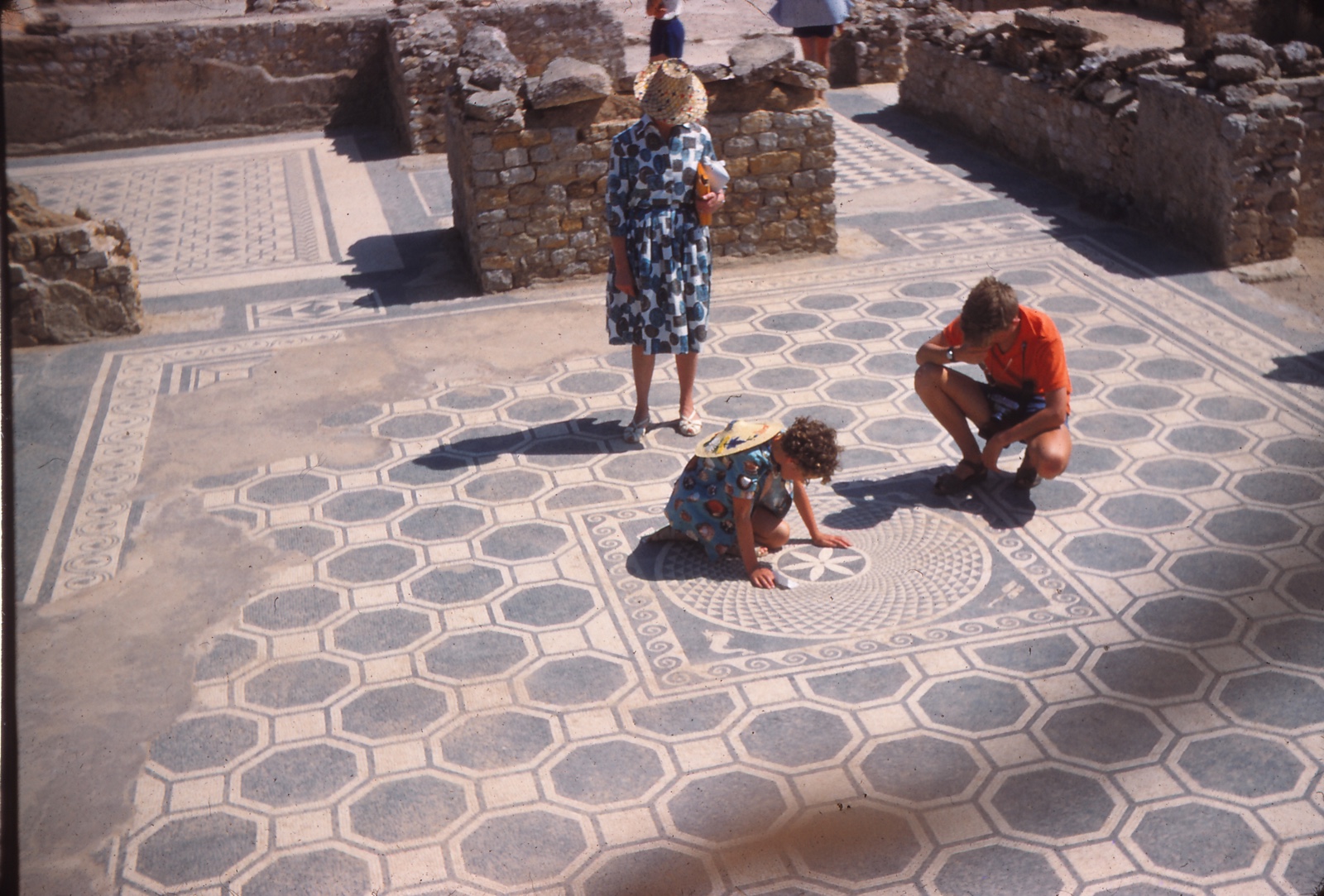
Standing on the beautiful floors in Ampurias, I asked my father, “What would it be like if Roman ladies were in charge, instead of the men?” Maybe it was the fierce sun boiling my brain, maybe early feminism peeping out or maybe just a precocious kid asking a smartarse question. But clever man and senior ‘Roman nut’, my father replied, “What do you think it would be like?”

Alison, age 11, and her mosaic

That childish vision grew and grew. When I was older, I realised I had to put in some proper research. The dissolution of the Roman Empire is fascinating and full of ‘what if’ and natural conflict:

  • The senatorial families at the end of the 4th century fiercely defended their tradition of worshipping the Roman gods despite ever encroaching Christianity. Led by former urban prefect of Rome and consul Quintus Aurelius Symmachus, they pleaded for religious tolerance, but by late 394 AD Emperor Theodosius made any pagan practice, even dropping a pinch of incense on a family altar in a private home, into a capital offence.
  • In its last fifty to seventy years the Western Roman Empire was dissolving into small enclaves, client states, cut off regions – the Domain of Soissons is one example. 
  • Many former Roman territories retained their Roman administrative systems into the seventh and eighth centuries. Could one remote colony last even longer, say centuries?

Switching from a male Roman ethos to a feminist-lite one

I wanted a strong female character who drove the story, but not a harsh, excluding one, hence my heroine has some very human faults and characteristics. There was and perhaps still is a distinct lack of stories where two women have conversations beyond social or fashion issues and are not dependent on the male characters as wife, girlfriend, colleague. I use a technique called gender mirroring where I reverse the behaviour of the characters of a typical spy or action thriller. Think Jane Reacher or Jamie Bond in modern terms. A fascinating writing exercise!

So, I had to exercise the brain and apply some historical logic for Roma Nova. As the men defended the tiny new state of Roma Nova women worked in the fields, traded, sat on the council and managed the families. Consider the dynamic of only a few hundred men at the front especially during the Great Migrations. They simply ran out of male fighters to defend Roma Nova, so sisters and daughters from these pioneer families had to put on armour and heft weapons to defend their homeland and their way of life. 

Fighting danger side-by-side with brothers and fathers reinforced women’s status and roles. And they never allowed the incursion of monotheistic paternalistic religions. In this way, women developed leadership roles in all parts of Roma Novan life over the next sixteen centuries. 

Pulling in my own history

I served six years in the UK forces with active assignments all over the NATO area and beyond. It never occurred to me that women couldn’t serve in the military. I loved it! In the forces, you are only as good as your last job and you are promoted only on merit; both appealing ideas. Thus, my heroines serve in the elite forces in Roma Nova which fits in neatly with the traditional Roman military mindset.

Building the world

For credible alternative history (not Inglourious Basterds!), there is no easy ride such as making everything up. You need to research as thoroughly as for standard historical fiction, especially around the point in time when the timeline splits and leaves the standard one. For Roma Nova this was AD 395. 


The twin guidelines of alternative history writing are plausibility and internal consistency. No country, real or imagined, can survive without a functioning government, an economic, social and political system, food, law and order and income. The basic skills of historical fiction writing apply in the same way: ability to research, respect for known facts (up to the point of divergence), a sense of historical setting, the avoidance of the information dump, and keeping speech, clothes and manners both consistent with and in the world you are describing.  For example, in AD395, solidinot aurei, sestertii or denarii were coins used in the late empire, so Roma Nova Internet banking and credit cards in the 21st century are denoted in solidi.

The sources problem

Much of the historical record is missing from the late fourth century, the springboard for my book world. This complicates research. The big problem of records from antiquity is that they tend to contain the actions and thoughts of the elite and usually only of men. Symmachus, whom I mentioned above, was not only the urban prefect of Rome at one time but also a noted writer in a wide circle of intellectuals. Just under a dozen books of his letters and official dispatches have survived. Such fragments combined with finds from archaeological digs and the physical remains on the landscape help researchers build up a picture of life at the time.  I’m always dropping into the British Museum, buying new books and searching online. It’s very much a case of putting the different pieces of a jigsaw together then filling in the gaps intelligently and with historical logic.

And then you leap into the void, gladius in hand…

If readers would like to try writing an alternative history story, they can download my FREE handout on tips and techniques: http://alisonmortonauthor.com/writing-books/writing-in-an-alternative-history-setting/

Here’s the blurb

“It’s about Roman blood, survival and money. Mostly yours.”

In an alternative New York, Karen Brown is running for her life. She makes a snap decision to flee to Roma Nova – her dead mother’s homeland, the last remnant of the Roman Empire in the 21st century. But can Karen tough it out in such an alien culture? And with a crazy killer determined to terminate her for a very personal reason? 

Stifled by the protective cocoon of her Roma Novan family, deceived by her new lover, she propels herself into a dangerous mission. But then the killer sets a trap – she must sacrifice herself for another – and she sees no escape.

A thriller laced with romance and coming of age, this first in series is Roman fiction brought into the 21st century through the lens of alternative history and driven by a female protagonist with heart and courage.

This 10th Anniversary hardback edition includes bonus content: Three character ‘conversations’, two short stories and the story behind INCEPTIO.

Buy links: 

INCEPTIO 10th Anniversary special edition hardback: 

International Buy Link: 

Amazon UK:  Amazon US:  Amazon AUS:  Amazon CA: 

Barnes & Noble:  Book Depository: 

Your local bookshop or library

All other formats (ebook, paperback, audio)

Meet the Author

Alison Morton writes award-winning thrillers featuring tough but compassionate heroines. Her ten-book Roma Nova series is set in an imaginary European country where a remnant of the ancient Roman Empire has survived into the 21stcentury and is ruled by women who face conspiracy, revolution and heartache but with a sharp line in dialogue. INCEPTIO starts the adventure…

She blends her fascination for Ancient Rome with six years’ military service and a life of reading historical, crime and thriller fiction. On the way, she collected a BA in modern languages and an MA in history.  

Six full-length Roma Nova novels, including INCEPTIO, have won the BRAG Medallion, the prestigious award for indie fiction. SUCCESSIO, AURELIA and INSURRECTIO were selected as Historical Novel Society’s Indie Editor’s Choices.  AURELIA was a finalist in the 2016 HNS Indie Award. The Bookseller selected SUCCESSIO as Editor’s Choice in its inaugural indie review. The Historical Novel Society recently selected JULIA PRIMA, the first Foundation story set in the 4thcentury, the accolade of Editors’ Choice.

Alison lives in Poitou in France, the home of Mélisende, the heroine of her two contemporary thrillers, Double Identityand Double Pursuit. Oh, and she’s writing the next Roma Nova story.

Connect with Alison:

Connect with Alison on her Roma Nova site:  Facebook author page: 

Twitter:  Alison’s writing blog:  Instagram: 

Goodreads:   Alison’s Amazon page:  Newsletter sign-up: 
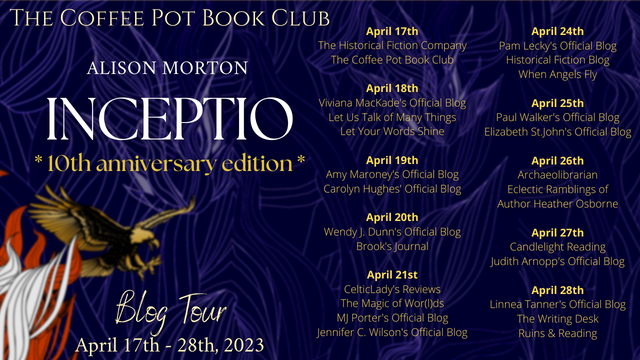
Follow the Inceptio Blog Tour with The Coffee Pot Book Club