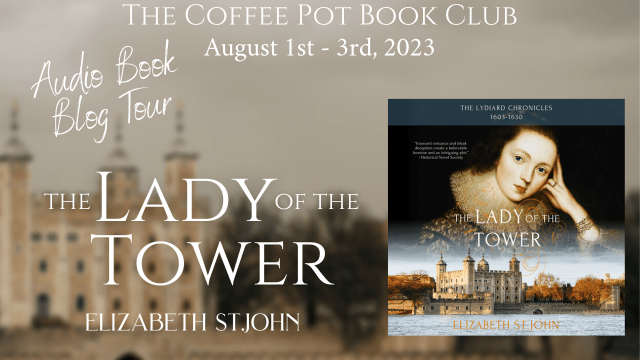
I’m delighted to welcome Elizabeth St. John and the audiobook for The Lady of the Tower to the blog #HistoricalFiction #Audiobook #BlogTour #TheCoffeePotBookClub #PrincesInTheTower

Elizabeth St John is sharing a snippet – written and audio – of her fab book, The Lady of the Tower. Enjoy.

Chapter Nine

Lydiard Park

I drew a deep, shuddering breath, my hand on my breast, feeling the posie ring concealed beneath.

“I can’t bear it, Anne. I can’t live this way any longer.” I slumped into a chair, such a paralyzing emptiness overwhelming me that my tears were frozen. Although the afternoon sun warmed my chamber, my hands were icy cold. I had hidden my emotions for so long that only hollowness remained, and the loss of Theo’s letters slammed the door shut on my soul. I hated the thought of Joan and Barbara reading his precious words, spitefully laughing over his declarations of love and his promises for our future. I did not care of their opinions of me, for I did not respect their morality, but to consider their envious suppositions tainted his writings disturbed me beyond words.

“Lucy, they are so terribly jealous of your happiness. It is horrible. I tried to stop them from forcing the lock on your box. I tried to prevent them from removing Theo’s letters. I am so sorry I could not intervene.” Anne’s white face was pinched, her cheeks streaked with tears.

“It’s not your fault, Anne. Don’t distress yourself more. I do not know what I have ever done to deserve this treatment from them, but it has been this way since I was a child, and it appears it will never cease.”

I looked around the familiar room, my sanctuary at Lydiard. The polished chestnut paneling glowed in the afternoon sun, and the vase of yellow roses on the chest emanated a heady fragrance that promised the long summer days ahead. Through the diamond-paned window shimmered the green parkland, where an ancient cypress tree marked the boundary of the bowling green and offered a shady resting place. All were loved by me with a passion that had sustained me during my exile at Battersey, and they became my refuge when I returned. Now they taunted me with an oppressive familiarity. I longed to be stripped of all the layers of family and emotions binding me to this place and to be free of the jealous web threatening now to strangle me.

“Anne, I need your help.”

She lifted her head eagerly, her sweet expression expectant.

“Of course, Lucy, of course. I will tell John of Joan’s cruel accusations. He will not believe her.”

“No, leave John from this for now. He will not understand the woman’s jealous heart that steers these resentful actions. No, it is something different that I ask of you.”

“Anything, for I cannot bear to see you be the object of your sister’s envy this way.”

“You leave for Guernsey to visit your father next week. I would come with you.”

Check out the audio snippet: https://youtu.be/s_Vn6LPoyFE

Here’s the blurb:

“Elizabeth St John has brought the Stuart Court vividly to life. She weaves together the known facts of Lucy’s life with colourful scenes of fictional imagination, drawing on innocent romance and bleak deception to create a believable heroine and an intriguing plot.” Historic Novel Society Book Review 

“The Lady of the Tower is a beautifully produced novel with a well-crafted story that will keep you both engaged and entertained. A joy to read. Thank you for sharing your world with us.” 

Writers Digest 24th Annual Book Awards

London, 1609. When Lucy St.John, a beautiful highborn orphan at the court of King James, is seduced by the Earl of Suffolk, she never imagines the powerful enemy she creates in his beloved sister, the Countess of Rochester. Or that her own sister Barbara would betray her and force Lucy to leave the court in disgrace. Spirited, educated, and skilled in medicine and precious remedies, Lucy fights her way back into society, and through an unexpected love match, becomes mistress of the Tower of London. 

Living inside the walls of the infamous prison, she defies plague, political intrigues and tragic executions to tend to aristocratic prisoners and criminals alike. Now married into the immensely powerful Villiers family, Barbara unites with the king’s favorite, the Duke of Buckingham, to raise the fortunes of Lucy and her family to dizzying heights. But with great wealth comes treachery, leaving Lucy to fight for her survival—and her honor—in a world of deceit and debauchery. 

Elizabeth St.John’s critically acclaimed debut novel tells the true story of her ancestress Lucy through her family’s surviving diaries, letters, and court papers. Lucy’s personal friendships with historical figures such as Sir Walter Raleigh and the Stuart kings brings a unique perspective to the history of seventeenth century England.  

Buy Links:

The ebook is available to read on Kindle Unlimited.

Universal Buy Link: https://geni.us/MyBookLOTT

Audiobook Buy Links:

Available on BookBub Chirp for only $3.99 during August:

https://www.chirpbooks.com/audiobooks/the-lady-of-the-tower-by-elizabeth-st-john

On all other platforms from $7.99 or FREE with an Audible subscription: 

https://geni.us/XZlpl45

Official Audiobook Sample:

https://geni.us/LOTTAudioSample

Meet Elizabeth St. John

Elizabeth St.John’s critically acclaimed historical fiction novels tell the stories of her ancestors: extraordinary women whose intriguing kinship with England’s kings and queens brings an intimately unique perspective to Medieval, Tudor, and Stuart times.

Inspired by family archives and residences from Lydiard Park to the Tower of London, Elizabeth spends much of her time exploring ancestral portraits, diaries, and lost gardens. And encountering the occasional ghost. But that’s another story.

Living between California, England, and the past, Elizabeth is the International Ambassador for The Friends of Lydiard Park, an English charity dedicated to conserving and enhancing this beautiful centuries-old country house and park. As a curator for The Lydiard Archives, she is constantly looking for an undiscovered treasure to inspire her next novel.

Elizabeth’s books include her trilogy, The Lydiard Chronicles, set in 17th Century England during the Civil War, and her newest release, The Godmother’s Secret, which explores the medieval mystery of the missing Princes in the Tower of London.

Connect with Elizabeth

WebsiteTwitter

FacebookLinkedInInstagram

Book BubAmazon Author PageGoodreads

Follow The Lady of the Tower blog tour with The Coffee Pot Book Club

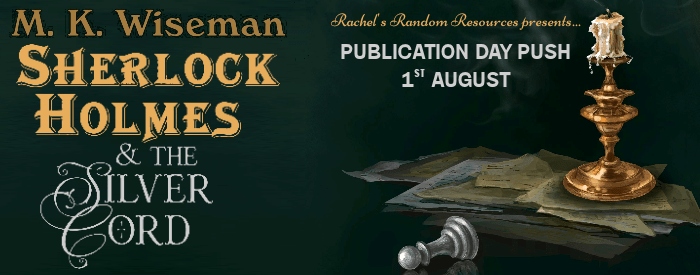
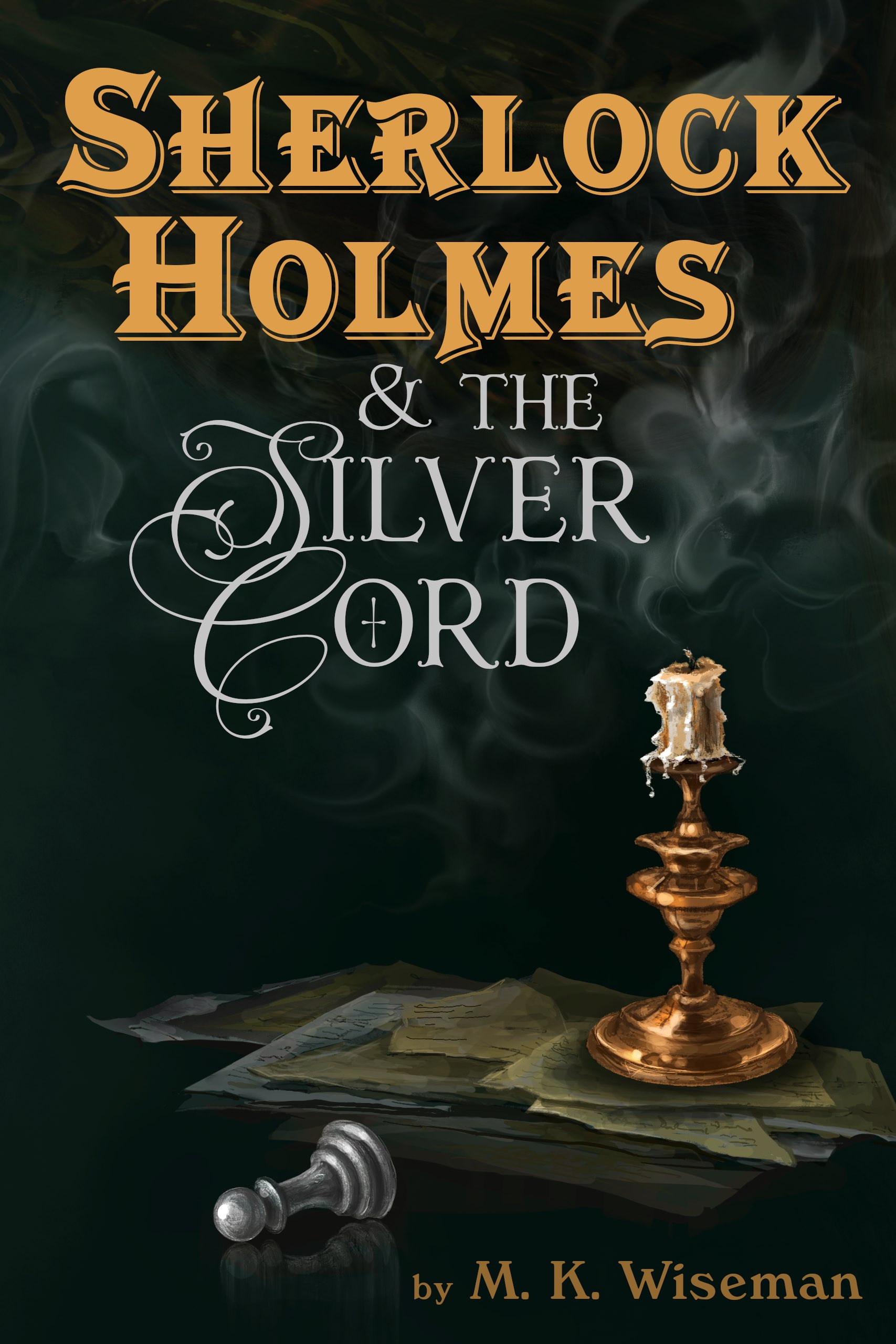
Sherlock Holmes & The Silver Cord by M.K.Wiseman is on the blog today #blogtour #bookreview #newrelease

Here’s the blurb:

“I speak of magic, Mr. Holmes.”

Mr. Percy Simmons, leader of London’s Theosophical Order of Odic Forces, is fully aware that his is not a case which Mr. Sherlock Holmes would ordinarily take up.

These are not ordinary times, however. 

For something, some unquiet demon within Holmes stirs into discomfiting wakefulness under the occultist’s words. The unassuming Mr. Simmons has spoken of good and evil with the sort of certainty of soul that Sherlock yearns for. A certainty which has eluded Holmes for the three years in which the world thought him dead. While, for all intents, constructions, and purposes, he was dead.

But six months ago, Sherlock Holmes returned to Baker Street, declared himself alive to friend and foe alike, took up his old rooms, his profession, and his partnership with Dr. J. Watson—only to find himself haunted still by questions which had followed him out of the dreadful chasm of Reichenbach Falls:

Why? Why had he survived when his enemy had not? To what end? And had there ever, truly, been such a thing as justice? Such a thing as good or evil?

Purchase Links 

https://www.amazon.com/dp/173446416X

https://www.amazon.co.uk/dp/173446416X

https://www.kobo.com/us/en/ebook/sherlock-holmes-the-silver-cord

https://www.barnesandnoble.com/w/sherlock-holmes-the-silver-cord-m-k-wiseman/1143402437

My Review

Sherlock Holmes and the Silver Cord takes place in the aftermath of the events that see Holmes thought dead, alongside Moriarty. Restless after his three years away from Baker Street, Holmes takes every case coming his way until two seem to collide – the one certainly involving magic, the other, perhaps doing the same.

As with all good Holmes stories, the impossible slowly attains some explanation, in these perplexing cases, with Watson on hand to provide some much needed perspective for the ‘ordinary’ reader, as opposed to the brilliance of Holmes. And yet Holmes is bedevilled by his own demons – he has his own questions to ask and perhaps seek answers for – about good and evil and how he fits in the grand scheme of things.

This is perhaps a more perceptive Holmes than we might expect, and yet still very much fitting our expectations of how he acts and thinks, and this novel is, as the author admits, their attempt to answer some of the unsolved questions about Holmes that have bedevilled her about what happened to Holmes after the events with Moriarty.

A really enjoyable read – sure to appeal to fans of Holmes – and while Holmes might be struggling with his inner demons, he’s still able to conclude the mysteries presented to him in Sherlock Holmes and the Silver Cord.

Check out my link for Sherlock Holmes and the Singular Affair.

Meet the author

M. K. Wiseman has degrees in Interarts & Technology and Library & Information Studies from the University of Wisconsin-Madison. Her office, therefore, is a curious mix of storyboards and reference materials. Both help immensely in the writing of historical novels. She currently resides in Cedarburg, Wisconsin.

Connect with M.K.Wiseman

https://www.tiktok.com/@faublesfables

https://twitter.com/FaublesFables

https://www.facebook.com/FaublesFables/

https://www.instagram.com/faublesfables/

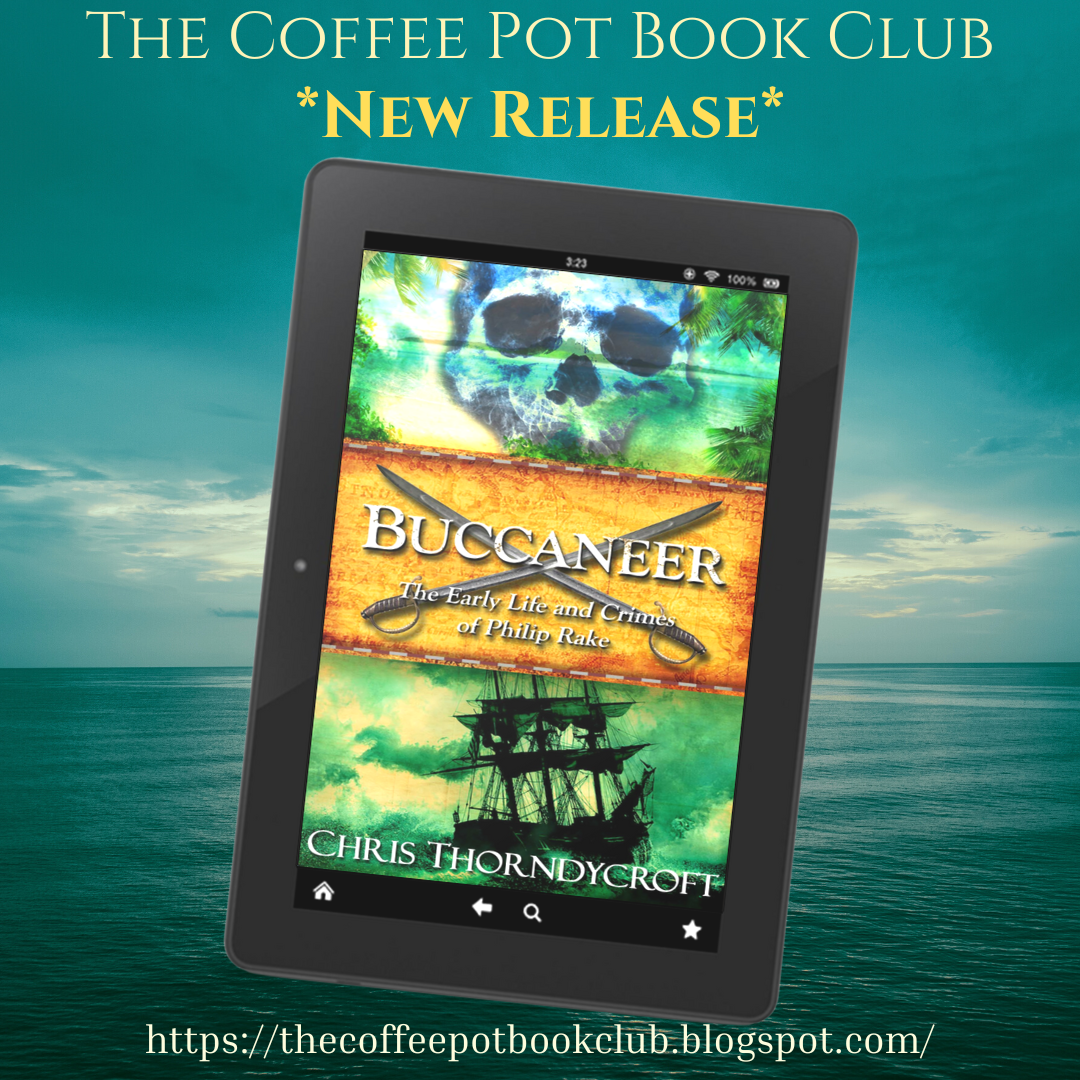
It’s release day for the Buccaneer, the new book from Chris Thorndycroft, Pirates #Caribbean #Swashbuckling #NavalFiction #BlogTour #NewRelease #TheCoffeePotBookClub

Here’s the blurb

Bristol, 1713. When Philip Rake, pickpocket, smuggler and scoundrel is arrested and thrown in jail, he assumes he has a short walk to the gallows. But his father, a wealthy merchant who has remained a figure of mystery throughout his life, throws him a lifeline; become an indentured man on an expedition to the East Indies led by his friend, Woodes Rogers.

Woodes Rogers is looking for Libertatia – the fabled pirate kingdom of the legendary buccaneer Henry Avery – and the hoard of treasure rumoured to be hidden there. But Philip wants his freedom and when he learns that there are men onboard who once sailed with Henry Avery and plan to take the treasure for themselves, he jumps ship and embarks upon a career of piracy.

Philip’s story takes him from the backstreets of Bristol to the sun-baked hills of Madagascar and on to the tropical islands of the Caribbean in a thrilling tale of adventure in which he rubs shoulders with some of the most notorious pirates of the age including Blackbeard, Charles Vane, Anne Bonny and Mary Read.

Buy Links:

This title will be available to read on #KindleUnlimited. 

Universal Link

Amazon UKAmazon US

Amazon CAAmazon AU

Meet the Author

Chris Thorndycroft’s writing career began with short horror stories which appeared in magazines and anthologies such as Dark Moon Digest and American Nightmare. 

His first novel under his own name was A Brother’s Oath, book one in the Hengest and Horsa trilogy, which deals with the beginning of Anglo-Saxon England. He has always had a passion for historical fiction, kindled at the age of six when he first saw Errol Flynn in The Adventures of Robin Hood (1938). His books are deeply grounded in real history but often reimagine legends such as King Arthur and Robin Hood, weaving them in with historical events. 

He currently lives in Norway with his wife and two kids. 

Connect with Chris

WebsiteTwitter: Facebook:     Instagram

TikTokAmazon Author PageGoodreads:

Follow the Buccaneer Blog Tour with The Coffee Pot Book Club

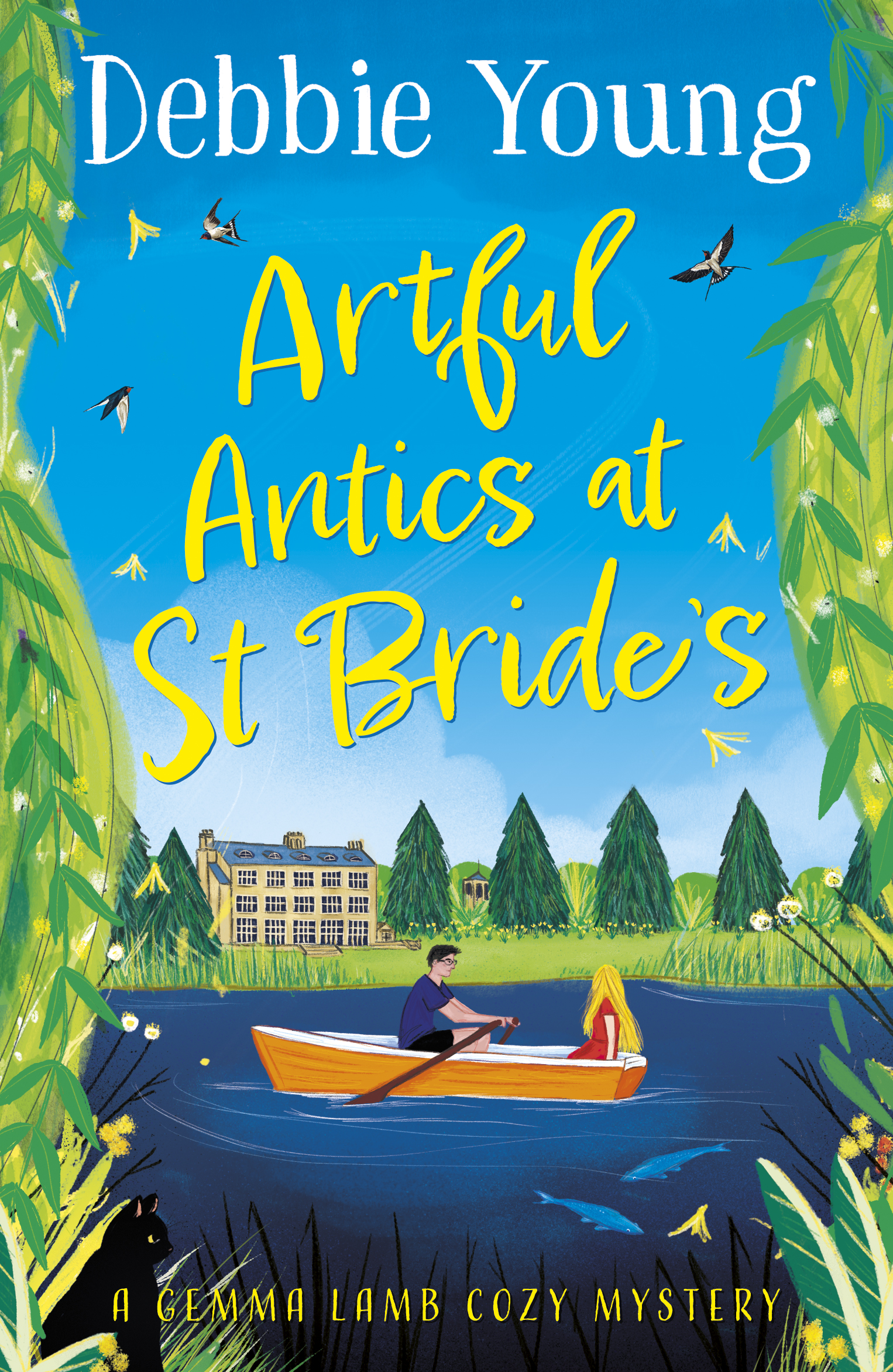
Book review for Artful Antics at St Bride’s by Debbie Young #blogtour #bookreview

Here’s the blurb:

When English teacher Gemma Lamb’s school flat is wrecked by storms, maverick headmistress Hairnet insists the girls must fund its repair by setting up their own businesses – the start of a series of hilarious unintended consequences.

Meanwhile Gemma’s worries are compounded by the arrival of bossy new girl Frieda Ehrlich, sponsored by a mysterious local tycoon whose wealth is of dubious origins. Fearful for the school’s reputation, Gemma recruits an old friend to help investigate the tycoon’s credentials, jeopardising her romance with sports teacher Joe Spryke.

What is Frieda hiding? Why is her sponsor living in a derelict manor house? Why is his chauffeur such a crazed driver? And what has become of McPhee, Hairnet’s precious black cat? With a little help from her friends, Gemma is determined to solve these mysteries, restore her flat and save the school.

For anyone who loved St Trinian’s – old or new – or read Malory Towers as a kid. St Brides is the perfect read for you!

Purchase Link

https://mybook.to/Artfulanticssocial

My Review

Artful Antics at St Bride’s is book four in the St Bride’s series of boarding school books for grown-ups.

Taking place immediately after the events of book 3, Gemma returns to work to find her staff flat in turmoil, and she’s not the only one. The old building is in much need of some repair work. And so sets in motion the decision to allow the students to begin their own businesses in the hope of making some money to fund the repairs. And, while that’s happening, a mysterious and rather grumpy new student arrives mid-term and causes a few problems.

What, I hear you say, does all this have to do with art? Well, the new student suggests the Sixth Form hold an art exhibition to sell their work, and of course, her father is invited, alongside the man who’s sponsoring her time at the school.

As we’ve come to expect with a St Bride’s story, not all is as it seems. Gemma is determined to get to the bottom of the story about the ruined house that the new girl’s sponsor and father are currently living in – uninhabitable is not the word – added to which, Max Security is also acting strangely, and then McPhee disappears as well.

I do love the St Bride’s series. The tales are gently told but engaging and keep the reader guessing until the end. Perfect for relaxing after a hard day at work or when you just want a bit of ‘chill time.’ They’re lovely, escapist fiction for all those who grew up on the Chalet School, Malory Towers, Trebizon and St Claires stories.

Read my reviews for the earlier books in the series

Book 1

Book 2

Book 3

Meet the Author

Debbie Young is the much-loved author of the Sophie Sayers and St Brides cosy crime mysteries. She lives in a Cotswold village where she runs the local literary festival, and has worked at Westonbirt School, both of which provide inspiration for her writing. She is bringing both her series to Boldwood in a 13-book contract. They will be publishing several new titles in each series and republishing the backlist, starting in September 2022.

Connect with Debbie  

Facebook https://www.facebook.com/AuthorDebbieYoung

Twitter https://twitter.com/DebbieYoungBN

Instagram https://www.instagram.com/debbieyoungauthor/  

Newsletter Sign Up: https://bit.ly/DebbieYoungNews

Bookbub profile: https://www.bookbub.com/authors/debbie-young

Follow the St Bride’s blog tour with Rachel’s Random Resources

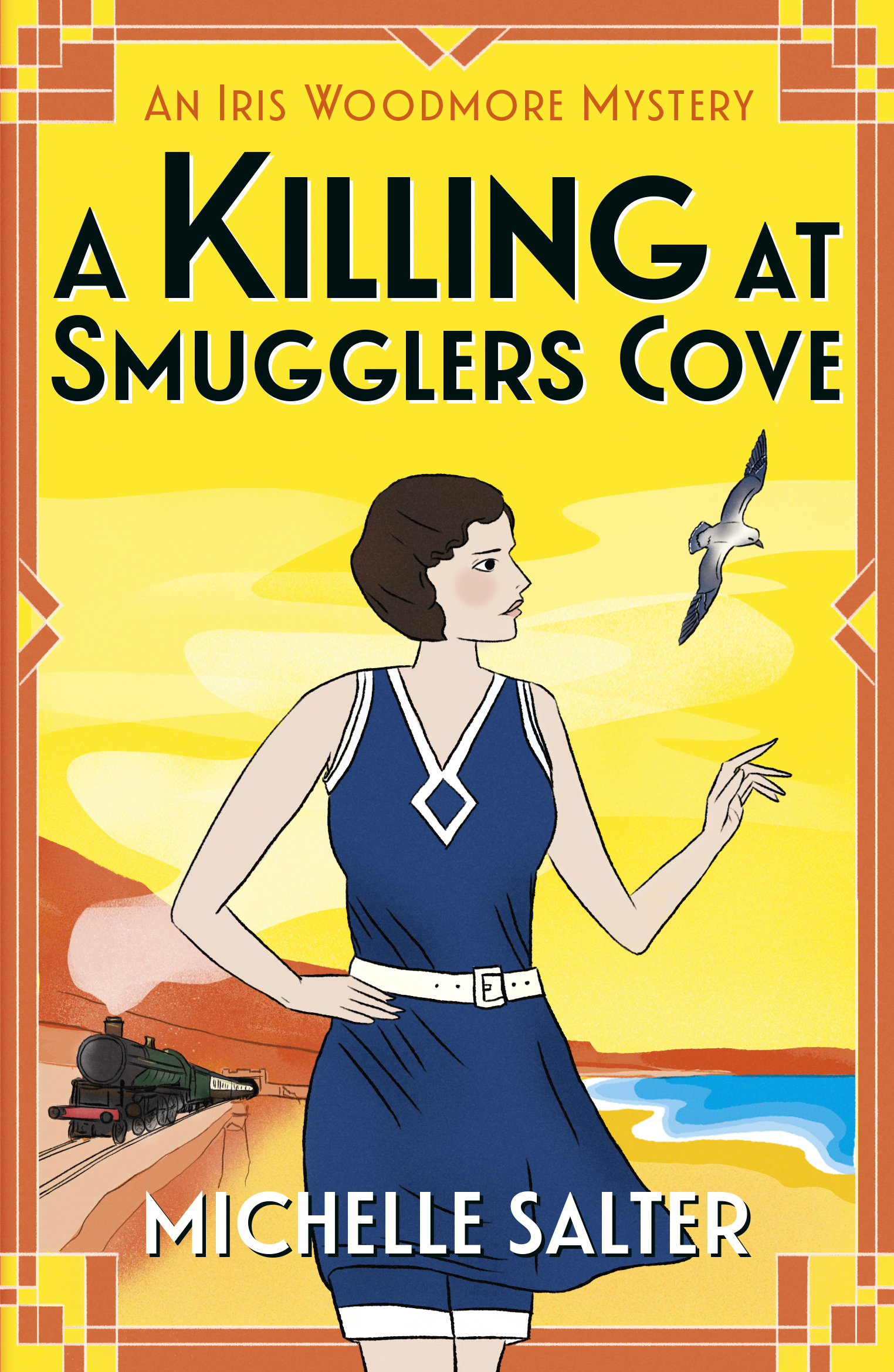
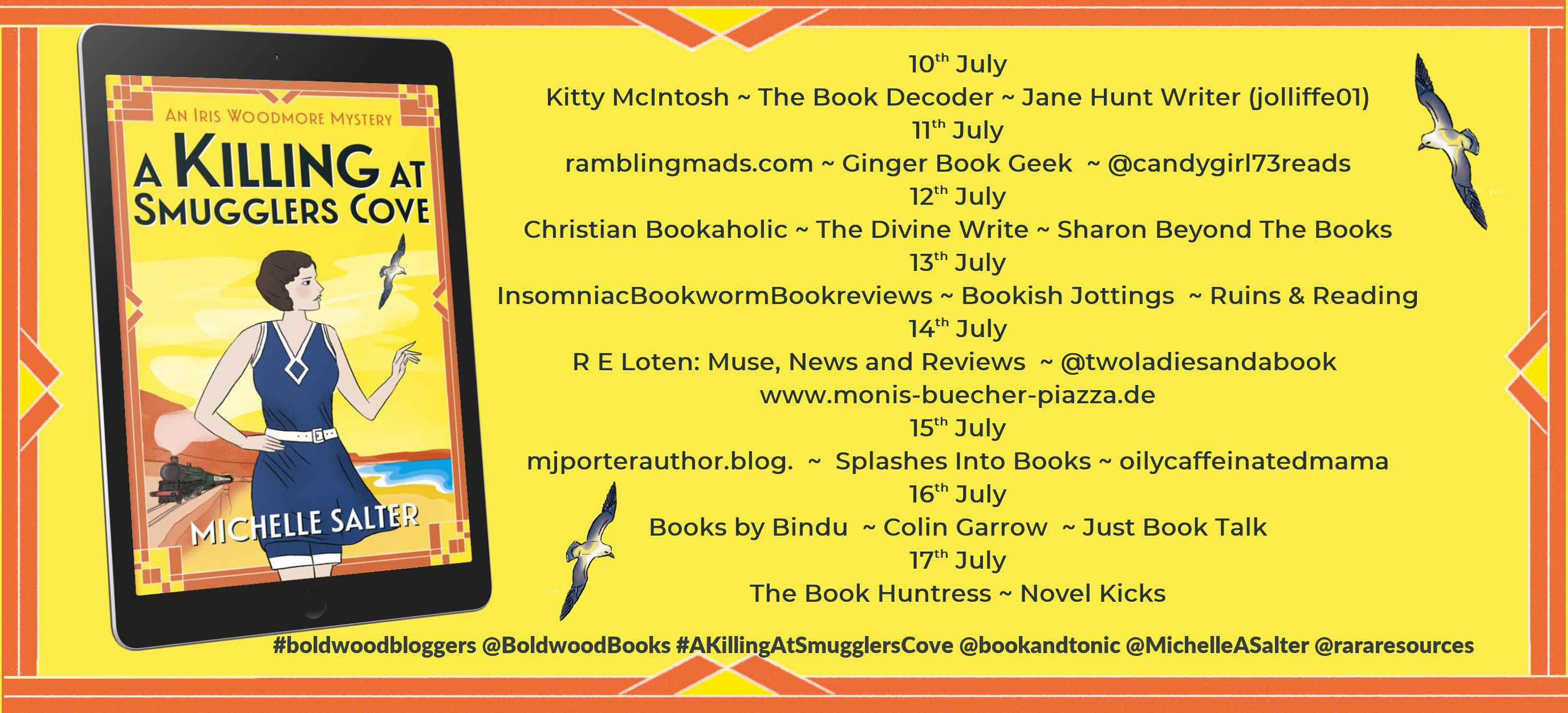
Book review for A Killing at Smugglers Cove by Michelle Salter #historicalmystery #cosycrime #highlyrecommended

Here’s the blurb

Wartime secrets, smugglers’ caves, skeletal remains. And the holiday’s only just begun…

July 1923 – Iris Woodmore travels to Devon with her friends Percy Baverstock and Millicent Nightingale for her father’s wedding to Katherine Keats.

But when Millicent uncovers skeletal remains hidden on the private beach of Katherine’s former home, Iris begins to suspect her future stepmother is not what she seems.

The police reveal the dead man is a smuggler who went missing in 1918, and when a new murder occurs, they realise a killer is in their midst. The link between both murders is Katherine. Could Iris’s own father be in danger?

 Purchase Link

 https://mybook.to/Killingsmugglerssocial

My Review

I adore the Iris Woodmore mystery series, and A Killing at Smugglers Cove does not disappoint.

Moving away from Walden, where many of the previous adventures have taken place, Iris is on holiday, if you can call it a holiday, when it’s for her father’s remarriage. But no sooner does she arrive than a body is discovered, or rather, the skeletal remains of a body.

Iris, of course, can’t help but involve herself, especially as it’s possible her soon-to-be stepmother might somehow be involved, and that might just prevent her father from marrying again – not that she ever quite says as much.

What ensues is a delightfully twisty tale, interwoven with what a holiday in the 1920s might have been like and featuring her trusty sidekicks alongside her.

A Killing At Smugglers Cove is filled with rich period drama, including a lesson in smuggling and avoiding the excise men, and the mystery, as in the first three books, is perfectly staged and well-developed, poignant and unexpected.

I’ve said it before, and I’ll say it again, the Iris Woodmore Mysteries are a firm favourite of mine – rich with period detail but with a damn fine mystery as well. Highly recommended.

Check out my review for Death at Crookham Hall, Murder at Waldenmere Lake, The Body at Carnival Bridge.

Meet the author

Michelle Salter is a historical crime fiction writer based in northeast Hampshire. Many local locations appear in her mystery novels. She’s also a copywriter and has written features for national magazines. When she’s not writing, Michelle can be found knee-deep in mud at her local nature reserve. She enjoys working with a team of volunteers undertaking conservation activities.

Connect with Michelle  

Facebook: 

Twitter

Instagram

Bookbub profile

Newsletter Sign Up

Posts

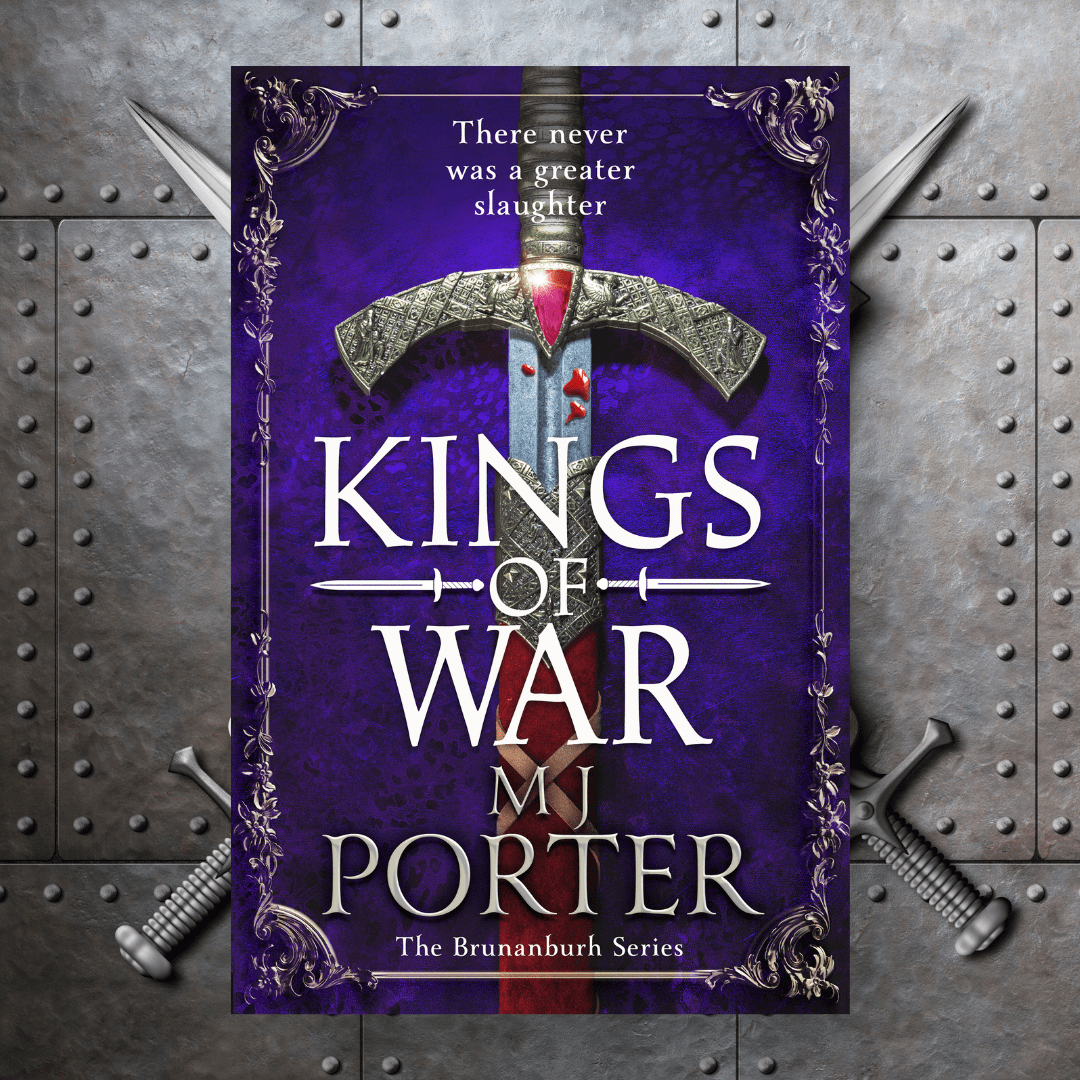
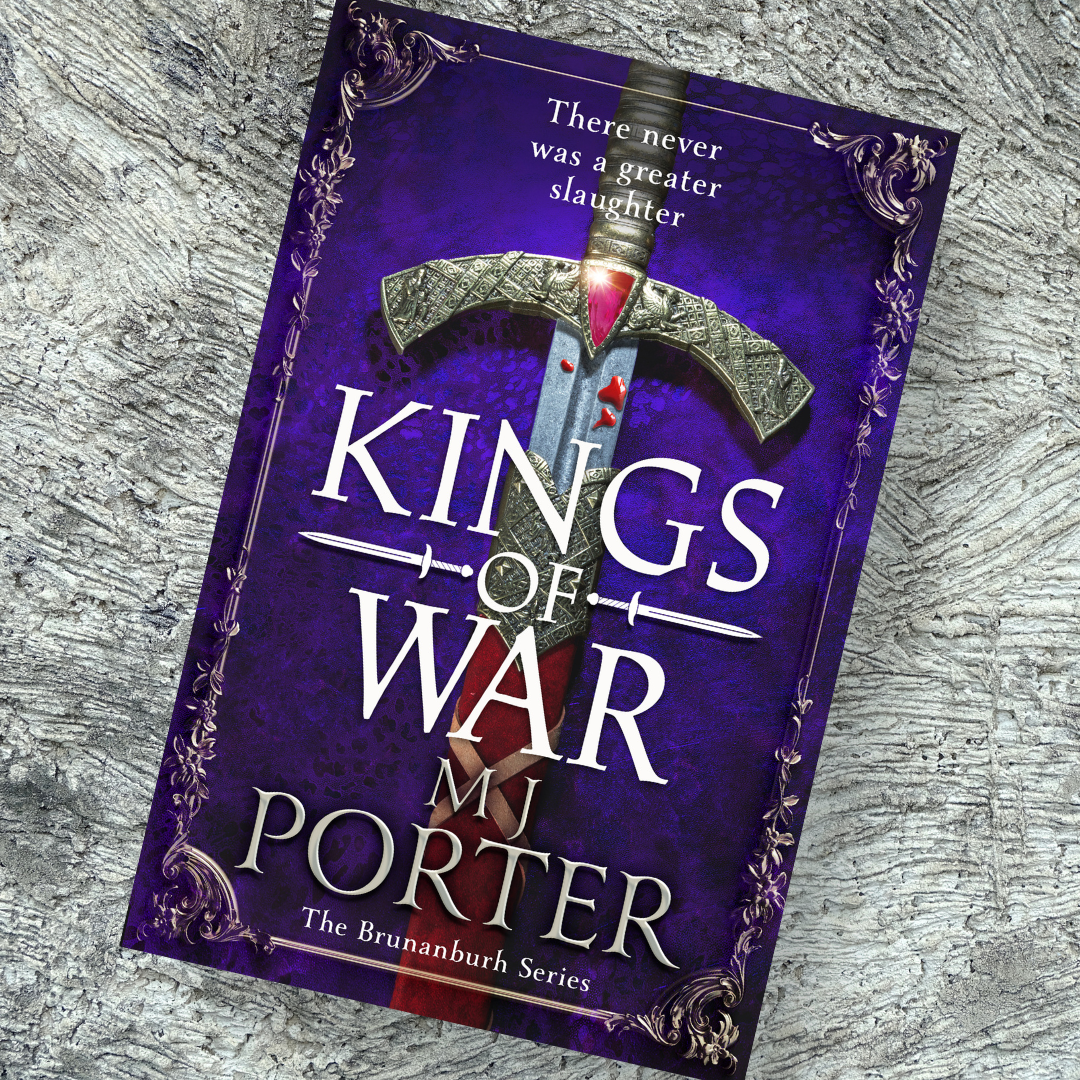
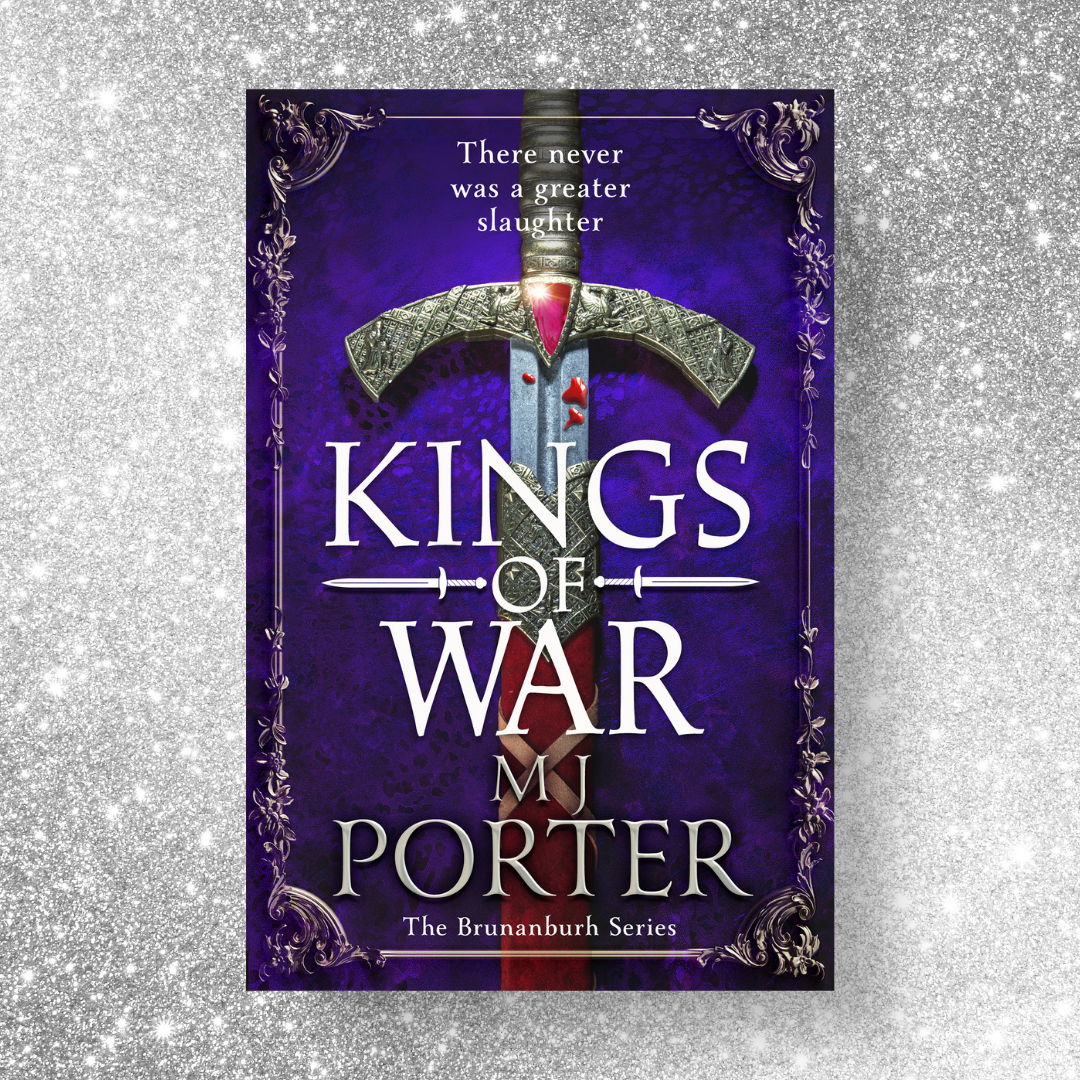
Where was the battle of Brunanburh fought in 937? #KingofKings #KingsofWar

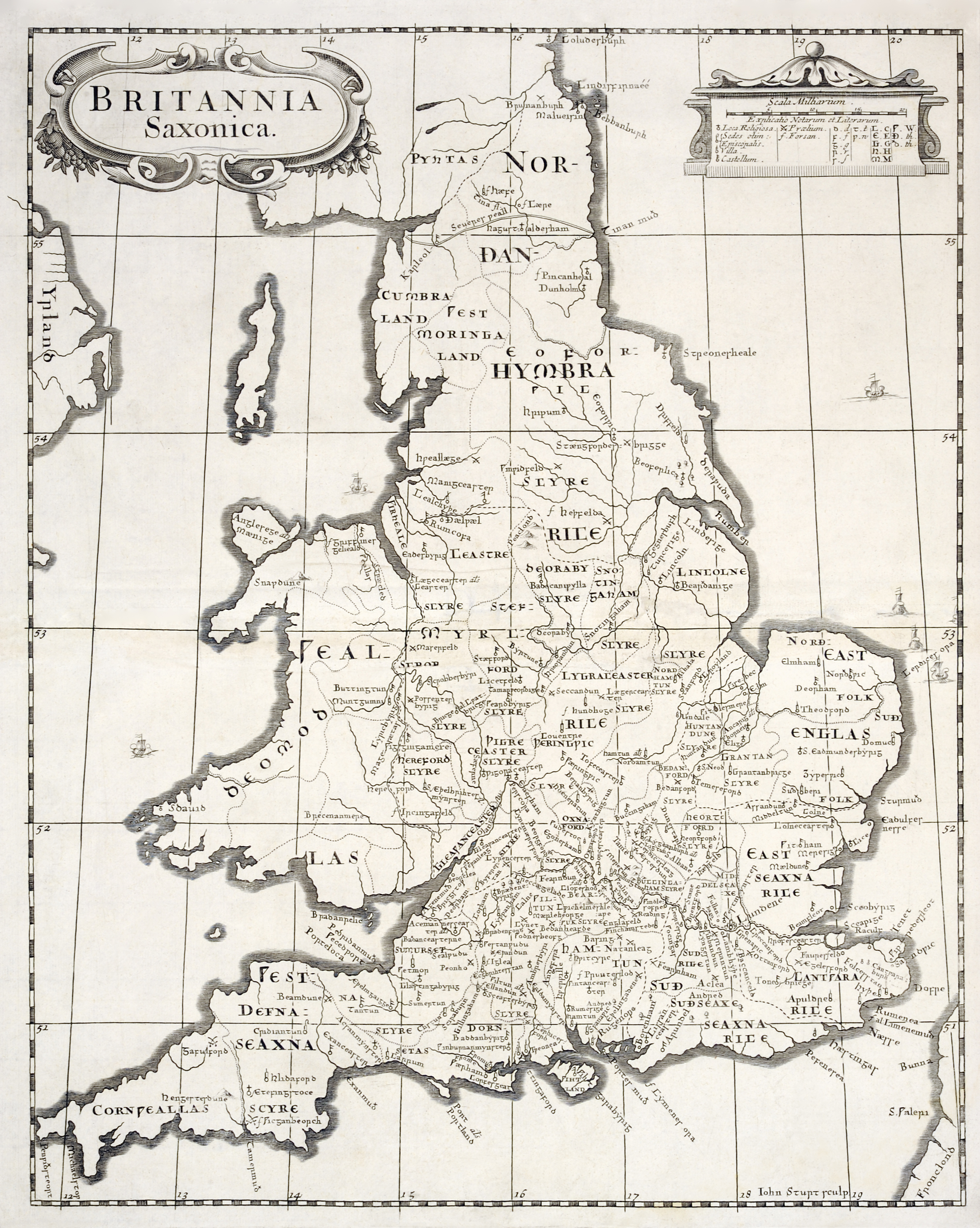
First things first, no one actually knows where the battle of Brunanburh took place. No one. There are a number of different sites that historians have suggested from the one I’ve chosen in Kings of War, indeed, upwards of forty of them, although Bromborough in Cheshire, Brinsworth in South Yorkshire and Burnswark in Dumfries and Galloway are the most well-known. It’s worth noting that these different locations range all over Britain, from Devon to Scotland from the east coast to the west.

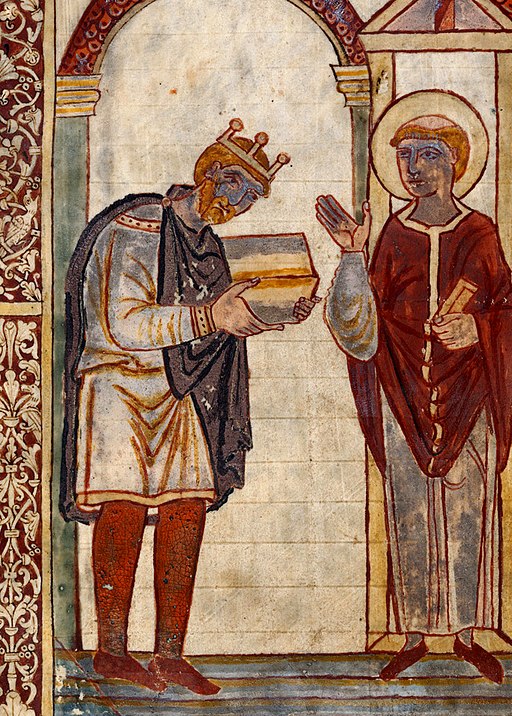
Frontispiece of Bede’s Life of St Cuthbert, showing King Æthelstan (924–39) presenting a copy of the book to the saint himself. 29.2 x 20cm (11 1/2 x 7 7/8″). Originally from MS 183, f.1v at Corpus Christi College, Cambridge. (Wikimedia Commons)

As one historian has commented, more discussion has taken place about where Brunanburh was located than about its actual historical significance, which is often seen as much less important in the grand scheme of later events. Much of these difficulties arise because of the variety of names given to the location of the battle. Brunandun, in Æthelweard’s Chronicon (a later tenth century Latin copy of the Anglo-Saxon Chronicle), Symeon of Durham suggested Weondune, although known by the name Brunnaneerc or Brunnanbyrig, while Geoffrey Gaimar (another post Conquest source) names it as Bruneswerce. To add to the confusion, are some of the descriptions given about the battle. John of Worcester ( a later source) asserts that Olaf and Constantin entered the mouth of the River Humber something that Symeon of Durham echoes. It’s been suggested that John of Worcester (an Anglo-Norman writing long after the events of 937 took place) took the knowledge that the River Humber was where Harald Hardrada landed in 1066 and Svein Forkbeard in 1069 and extrapolated from it.

As part of the discussion about where the battle took place, another problem needs to be addressed, that of the belief that the English rode down the Norse as they were fleeing from the battlefield to reach their ships. A word, eorodcistum, has been taken to be a reference to horses. Paul Cavill has shown that this word actually refers to gatherings of men and need not mean that horses were involved . This therefore does away with the argument that the Norse ships were far from where the battle took place.

(Please see https://ludos.leeds.ac.uk:443/R/-?func=dbin-jump- full&object_id=123858&silo_library=GEN01, for this discussion in full)

As well as the various sources mentioned above, the battle is also referenced in Welsh, Scottish and Irish sources. It was deemed to be significant. The Chronicles of the Kings of Alba gives a very brief account: ‘And the battle of Dun Brunde in his xxxiii year in which was slain the son of Constantin.’ While the Annals of Ulster tell us: ‘AU 937.6. A great, lamentable and horrible battle was cruelly fought between the Saxons and the Northmen, in which several thousands of Northmen, who are uncounted, fell, but their king, Amlaib, escaped with a few followers. A large number of Saxons fell on the other side, but Æ∂elstan, king of the Saxons, enjoyed a great victory.’ (Alex Woolf, From Pictland to Alba, 789-1070, p.169) (Amlaib was an Irish version of the name Olaf). A later source, that of the Historia Regum Anglorum by Symeon of Durham, tells that ‘Onlaf’ came with 615 ships. There are also many later sources that tell of the battle of Brunanburh, the distance in time to them being written, tending to add more and more details which can’t be confirmed with any accuracy.

Map design by Flintlock Covers

Pauline Stafford, who has written an extensive account of the actual writing of what we know as The Anglo-Saxon Chronicle, After Alfred:Anglo-Saxon Chronicles and Chroniclers 900-1150, (which survives in nine recensions/or versions, all with slightly different details and emphasis) states that perhaps the most famous account of the battle, the Brunanburh poem, was a retrospective addition, probably written in the twenty years after Athelstan’s death, and certainly before the death of the last son of King Edward the Elder, Eadred, in 955. Some have suggested that Edmund may not actually have been present at the battle but that it was deemed expedient to assign him a part in it, perhaps after his death, to show the sons of King Edward the Elder working together for England.

And there is one final source, which I’ve made no use of, but which many may be aware of, that of the accounting of the battle, named as Vinhei∂r in Egil’s Saga, a thirteenth-century Icelandic saga, which of course, is a tale of Egil’s involvement in the battle and tells us very little about the battle itself.

In recent years, and indeed, before I wrote the initial drafts of this book and its predecessor, there has been a move to accept the Wirral as the possible location. Bernard Cornwell has been instrumental, as has an archaeology group based in Wirral, in trying to find corroborating evidence for this. The results of the work can be found in Never Greater Slaughter by Michael Livingstone. Even now, I find it amusing that it wasn’t until Bernard Cornwell made Brunanburh one of the burhs built by the House of Wessex that I quite realized the significance of that element of the name.

In my role as writer of historical fiction, I chose the site that I thought offered the best opportunity to develop the storyline and the one that intrigued me the most. After all, it does sort of make sense that any battle for York would have taken place close to York, but equally, why would the Dublin Norse have sailed all the way around the tip of Scotland to get to York from the East Coast? If they used one of the portage routes overland then again, we must ask why. And so, I opted for the position which would be the closest way of them stepping foot on English soil. 

Britania Saxonica, 17th Century Map, showing Brunanburh north of Bamburgh

Kings of War is available now in ebook, paperback, audio and hardback.

books2read.com/kingsofwar

Meet the characters from King of Kings and Kings of War by visiting the Brunanburh page on my blog.

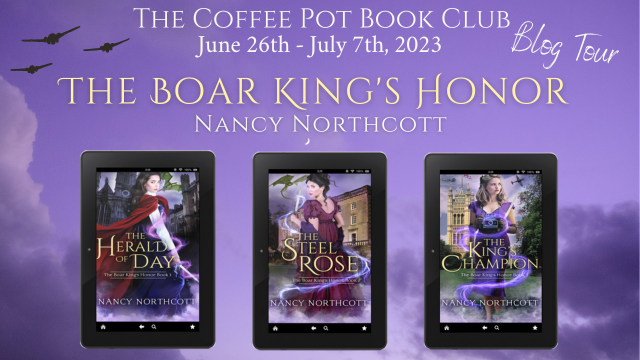
Nancy Northcott and her historical fantasy, The King’s Champion, joins me on the blog HistoricalFantasy #WWII #Dunkirk #RomanticFantasy #BlogTour #TheCoffeePotBookClub

I’m delighted to welcome Nancy Northcott and her historical fantasy series to the blog. Nancy is sharing a fabulous post, about Challenges in the Past, with us.

Writing historical fantasy obviously requires dropping one’s characters into an historical world and making it seem real, vibrant and alive for readers. This holds true even when a writer decides to create an alternative timeline, or even an alternate universe for a particular era, as with steampunk, which is often set in a Victorian England that has steam-based and other tech. The more different the timeline and universe are from the way our history depicts a period, the more leeway an author has available in creating the world.

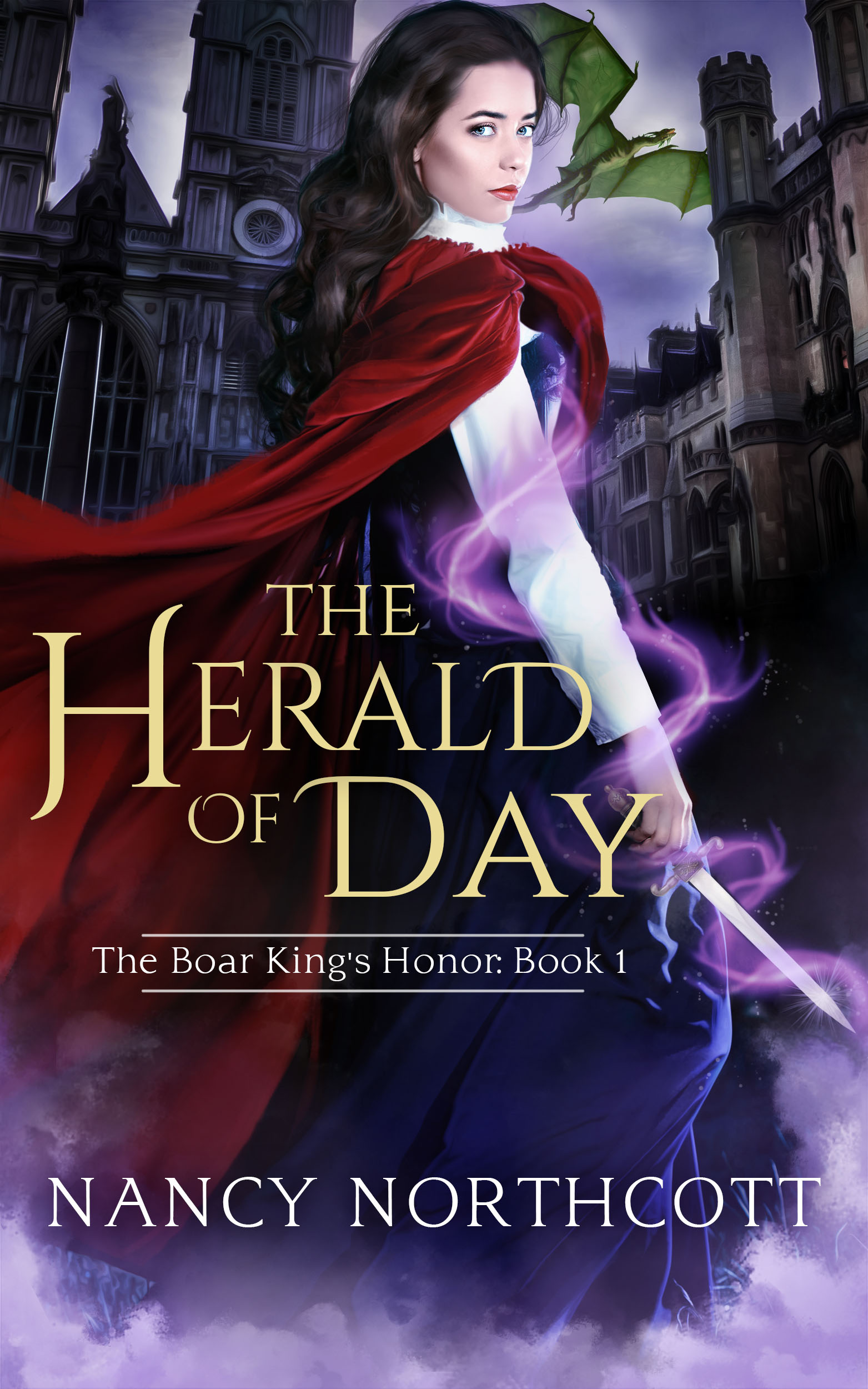
I like to stick close to the actual timeline, fitting my characters and their magic around the events of the era. That means I need to be fairly true to what people wore, how they lived, what they ate, and so on. In this post, I’ll share some of the challenges I faced in recreating the periods of the three books in my Boar King’s Honor historical fantasy trilogy.

The action in the first book Boar King’s Honor trilogy, The Herald of Day, takes place in 1674, during the reign of Charles II. Although the book opens in Dover, most of the scenes take place in London. I happen to like that period, so I didn’t have to do much reading about the political situation in England at that time. I did, however, have to find out about travel, food, clothing, customs, and language. I started this project before the internet had virtually every kind of information on it, so I had to do a fair bit of hunting for answers.

Finding out about clothing was harder than I expected. I had a scene in which the villain undressed, and I realized I had no idea how men’s pants closed in 1674. I started asking writers, and someone knew someone who was not only a writer but a costumer. This friend of a friend generously provided sketches, references on clothing design and fabric, and other information that was helpful for all the characters.

Despite preferring to stay close to established history, I took a leap with that book and decided to have the villain, a wizard, figure out how to go back in time and change history to create a dictatorship of the magically Gifted—with himself at the head, of course. So I had to decide whether he made the change before, during, or after the Restoration of Charles II. I went back and read from the events leading up to it through the period immediately after and weighed the results of several options. I won’t say what I finally picked because the characters have to figure that out what the villain did, and I don’t want to spoil that for readers.

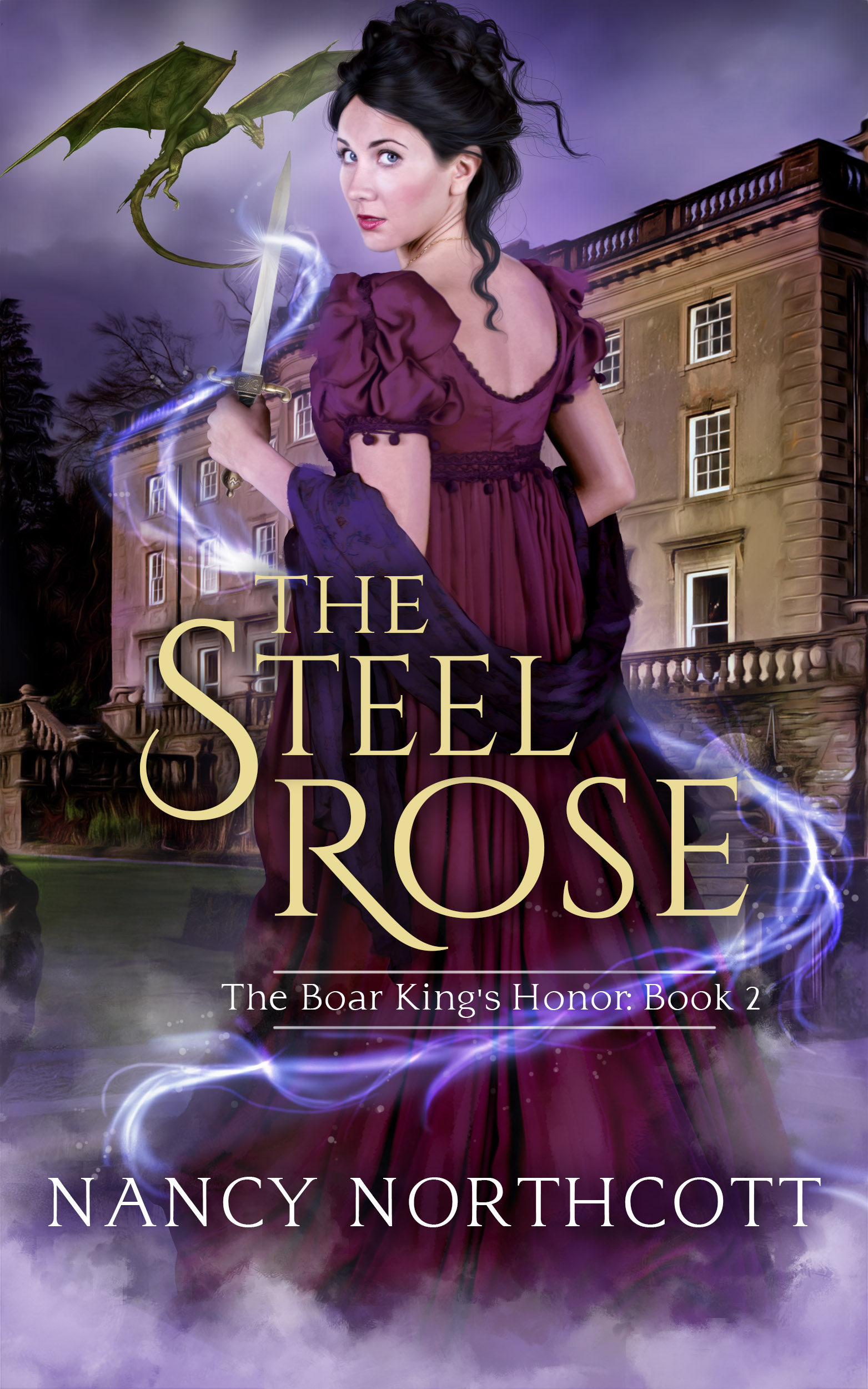
The second book, The Steel Rose, was the scariest to write from a research standpoint. By the time I started that one, the internet offered reams of material, and books on historical costume were easier to find around here than they’d been before. That simplified choices for the characters’ clothing, but the period brought a new headache.

The Steel Rose is set in 1815 during the hundred days between Napoleon’s escape from Elba and the Battle of Waterloo. This period is known as the Regency because King George III was incapable of ruling and England was governed by his son, the future George IV, as Prince Regent. This is Jane Austen’s era. It’s also one of the most popular for romance novels. During the Regency, social classes were rigidly stratified, and manners made the difference between social success and ostracism. There was a very great deal of etiquette to learn.

As though that weren’t tough enough from a writer standpoint, there are vast numbers of people who love the era’s social history. They create historically accurate costumes, learn the dances, and memorize the etiquette. They’ve been known to eviscerate writers who got something wrong, and the internet didn’t offer the specific information I needed. Fortunately, some Regency romance writers came to my rescue, answering questions and pointing me to resources. I did cut come of the bowing and curtseying customary during the era in the interests of moving the story along.

The social niceties weren’t my only concern, though. This story would include both Napoleon’s departure from Elba and the Battle of Waterloo. You may be aware that literal armies of people re-enact Waterloo every year. And they do it wearing uniforms accurate for both the period and their military units. That means many, many potential readers would know if I made a mistake. 

Fortunately for me, Osprey Publishing puts out wonderful books full of detailed information on military uniforms and equipment. They also had a terrific book on the battle that led me to other books full of the meticulous details that gladden writers’ hearts.

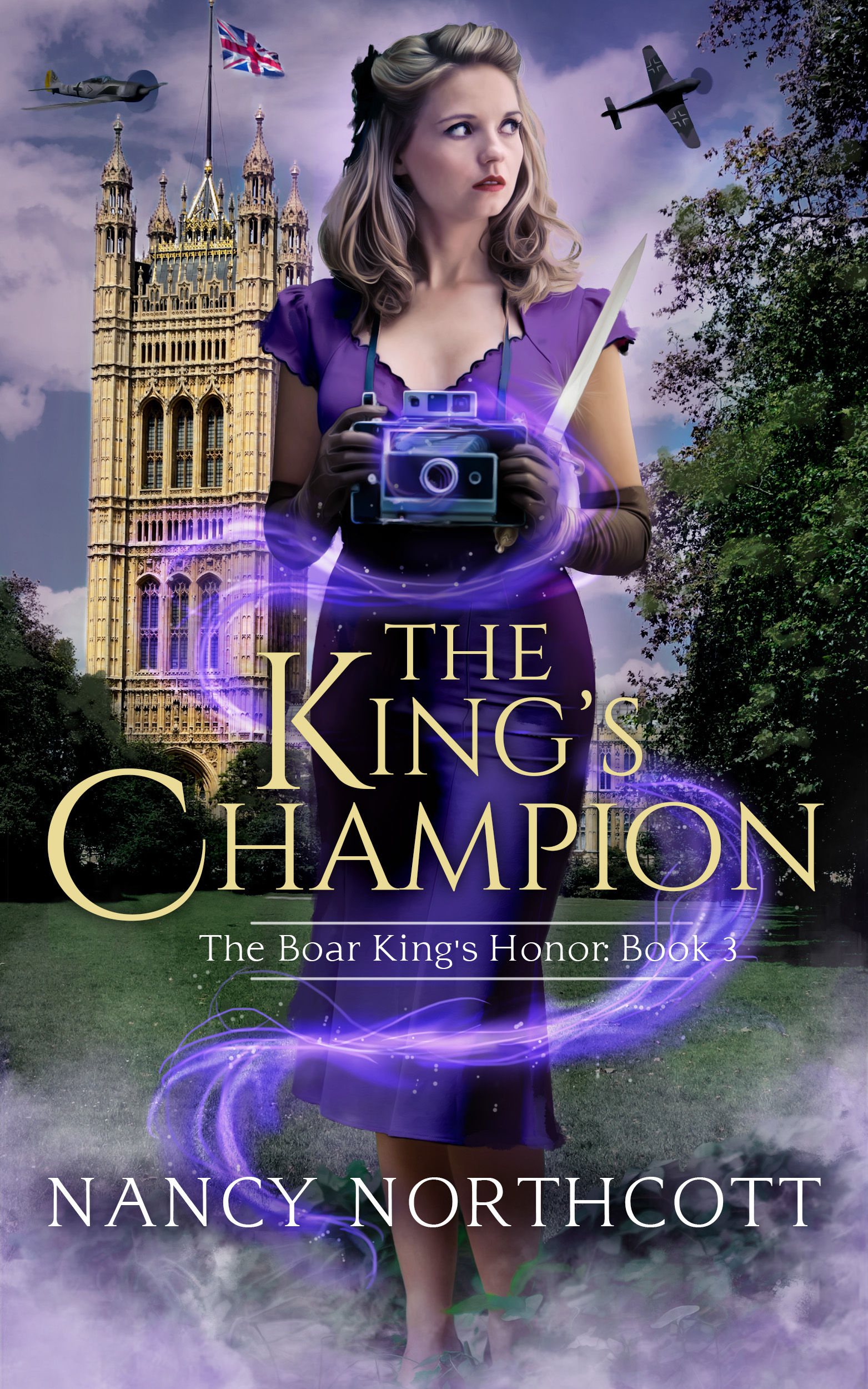
With those challenges behind me, I turned to the final book, The King’s Champion. It posed a different problem. There are many, many, many books about Britain during World War II, including libraries’ worth on social history. The trick, I quickly realized, would be in synthesizing all this information so that it offered an accurate picture of the era without including so much that it overshadowed the story. There are still people alive who remember the war years. There are many more who remember what those people said about life during the war. I had to depict British society in a way they would find acceptable. 

Friends whose parents remember hearing about the war from relatives helped me out, especially about rationing and housing. Other friends knew the answers I needed or knew British veterans who would answer my questions. The Imperial War Museum website was very useful, as were, again, Osprey books. It was from that website that I learned about the 5” per person per week rationing of hot bath water, but I was never able to figure out exactly when that started. 

At one point, my heroine is on a tugboat headed back to Dover from Dunkirk, and she asks the captain how long the trip will take. Unfortunately, I didn’t know. I could’ve deleted the question, but it would be logical for her to ask. I wanted to find the answer. This sent me down a research rabbit hole that grew ever deeper as I searched. Finally, after several attempts, I put the right combination of words into a search engine and hit upon a website devoted to the Little Ships of the evacuation.

These are some of the challenges I stumbled into while building the worlds for these three books. I didn’t want to hand-wave the problems away and just put down something convenient because “it’s fiction.” I’m grateful to everyone who helped me find the answers I needed.

I enjoyed the hunt for information, so finding it was a true delight each and every time. I’m happy with the worlds in this trilogy, and I hope readers be will as well.

#

Thank you for having me, MJ!

Thanks so much for sharing your fabulous post with my readers.

The Boar King’s Honor Trilogy

A wizard’s misplaced trust

A king wrongly blamed

A bloodline cursed until they clear the king’s name.

Here’s the blurb

Caught up in the desperate evacuation of the British Expeditionary Force from France in the summer of 1940, photojournalist Kate Shaw witnesses death and destruction that trigger disturbing visions. She doesn’t believe in magic and tries to pass them off as survivor guilt or an overactive imagination, but the increasingly intense visions force her to accept that she is not only magically Gifted but a seer.

In Dover, she meets her distant cousin Sebastian Mainwaring, Earl of Hawkstowe and an officer in the British Army. He’s also a seer and is desperate to recruit her rare Gift for the war effort. The fall of France leaves Britain standing alone as the full weight of Nazi military might threatens. Kate’s untrained Gift flares out of control, forcing her to accept Sebastian’s help in conquering it as her ethics compel her to use her ability for the cause that is right.

As this fledgling wizard comes into her own, her visions warn of an impending German invasion, Operation Sealion, which British intelligence confirms. At the same time, desire to help Sebastian, who’s doomed by a family curse arising from a centuries-old murder, leads Kate to a shadowy afterworld between life and death and the trapped, fading souls who are the roots of her family’s story. From the bloody battlefields of France to the salons of London, Kate and Sebastian race against time to free his family’s cursed souls and to stop an invasion that could doom the Allied cause. 

The King’s Champion concludes Nancy’s Northcott’s exciting Boar King’s Honor Trilogy.

Buy Links:

This series is available to read on #KindleUnlimited.

Universal Buy Links:   

The Herald of Day

Universal Buy Link

The Steel Rose

Universal Buy Link

The King’s Champion

Universal Buy Link

The Boar King’s Honor Trilogy Links:

Amazon US Amazon UK Amazon AU Amazon CA

Meet the author

Nancy Northcott’s childhood ambition was to grow up and become Wonder Woman.  Around fourth grade, she realized it was too late to acquire Amazon genes, but she still loved comic books, science fiction, fantasy, history, and romance.

Nancy earned her undergraduate degree in history and particularly enjoyed a summer spent studying Tudor and Stuart England at the University of Oxford. She has given presentations on the Wars of the Roses and Richard III to university classes studying Shakespeare’s play about that king. In addition, she has taught college courses on science fiction, fantasy, and society.   

The Boar King’s Honor historical fantasy trilogy combines Nancy’s love of history and magic with her interest in Richard III. She also writes traditional romantic suspense, romantic spy adventures, and two other speculative fiction series, the Light Mage Wars paranormal romances and, with Jeanne Adams, the Outcast Station space mystery series.

Connect with Nancy

WebsiteTwitter

FacebookInstagramPinterest

Book BubAmazon Author PageGoodreads

Follow The King’s Champion blog tour with The Coffee Pot Book Club

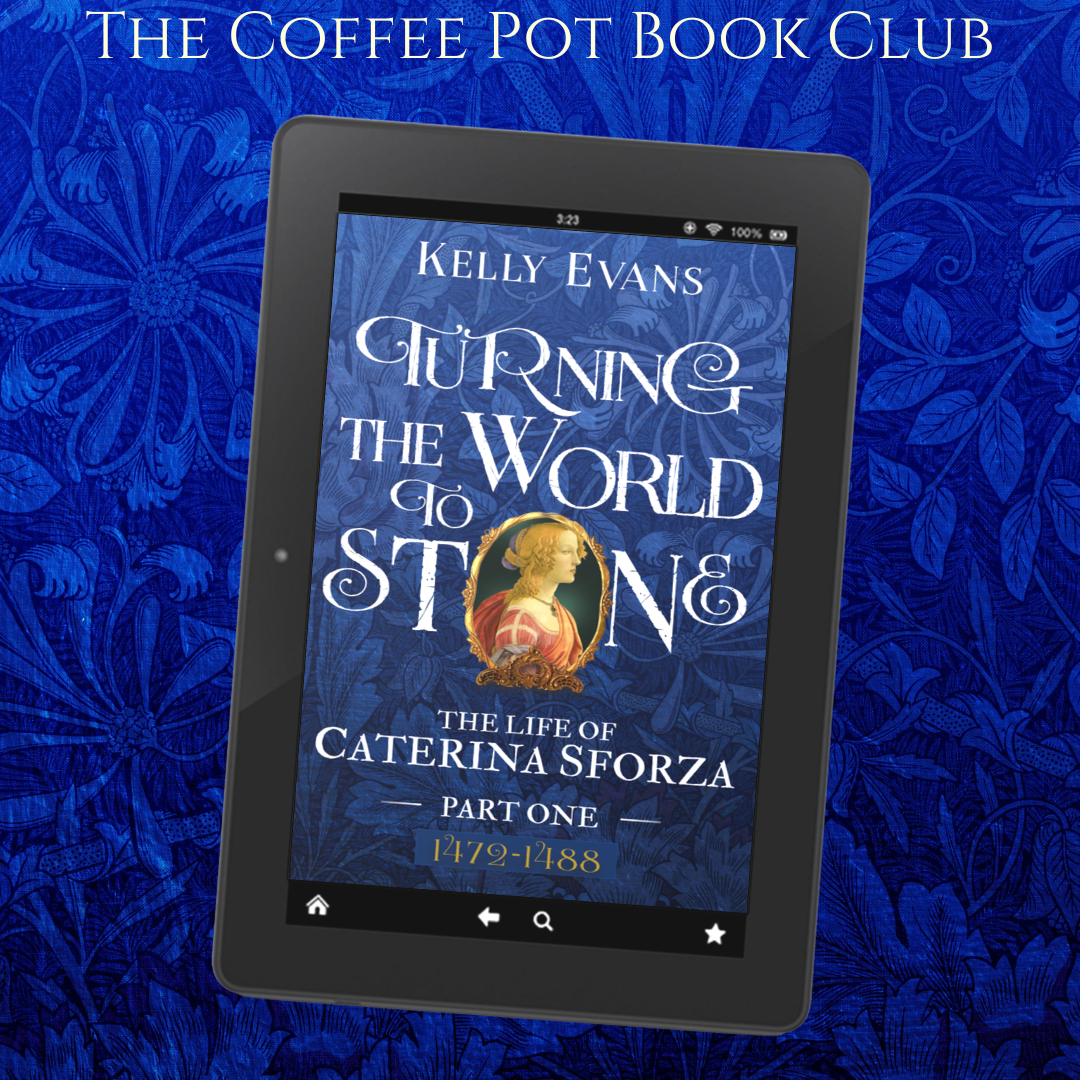
Kelly Evans’s Turning the World to Stone is on the blog. #HistoricalFiction #Renaissance #histfic #BlogTour #TheCoffeePotBookClub

I’m super excited to welcome my fellow Medieval Maverick, Kelly Evans and her new book, Turning the World to Stone, to the blog. Please enjoy this snipper from the story of Caterina Sforza.

When they were far enough from the people, her husband turned to her in his saddle. “Why? What was,” he motioned backwards at the citadel as it receded into the distance. “I don’t have the words to describe your actions. What did you think you’d accomplish by such a stupid act?” 

“I had to do it.” She turned to him. “You’re weak. I knew of the deal you’d accepted.” 

“You weren’t there,” he growled. 

“No, I was protecting YOUR inheritance, and that of our sons!” Caterina shifted in her saddle, the child in her stomach choosing that moment to kick. 

“Watch your tone, my lady.” 

“Or what? You’ll beat a pregnant woman? Knock me from my horse?” With a disgusted noise, she continued. “All of Rome knows of your cowardice so it would hardly be surprising to hear of such an act of petty violence from you.” 

Girolamo rode closer and began to raise his arm. Lifting her chin, Caterina stared coldly at him. Daringly. Defiantly. Glaring at her, he moved his mount to the side and rode a few steps away. 

“I thought not,” Caterina urged her own horse forward. “I’m going to pack what little we still have in Rome. Thank God I thought to send our belongings ahead to Forli.” She stopped her horse and turned it to face her husband. “I’m leaving tomorrow. I can’t stand to be in this Godforsaken city another day.”

Here’s the blurb

Vilified by history, Caterina Sforza learned early that her life was not her own. Married at age ten, she was a pawn in the ever-changing political environment of Renaissance Italy.

Resigned to her life as a fifteenth-century wife, Caterina adapted to the role she was expected to play: raising and educating her children, helping the poor in her new home, and turning a blind eye to her husband’s increasingly shameful behaviour. But Fate had other plans for her, and soon Caterina’s path would be plagued by murder, betrayal, and heartbreak. 

“Could I write all, the world would turn to stone.”

Buy Links: 

This title is available to read on #KindleUnlimited.

Universal Link

Amazon UKAmazon USAmazon CAAmazon AU

Meet the author

Born in Canada of Scottish extraction, Kelly Evans graduated in History and English then moved to England where she worked in the financial sector. While in London Kelly continued her studies in history, concentrating on Medieval History, and travelled extensively through Eastern and Western Europe. 

Kelly is now back in Canada with her husband Max and a rescue cat. She writes full-time, focussing on illuminating little-known women in history with fascinating stories. When not working on her novels, Kelly writes Described Video scripts for visually impaired individuals, plays oboe, and enjoys old sci-fi movies. 

Connect with Kelly

WebsiteTwitter

Facebook:  InstagramPinterest

Book BubAmazon Author PageGoodreads

Follow the Turning the World to Stone blog tour with The Coffee Pot Book Club

Book review A Courtesan’s Worth by Felicity George, a Regency steamy romance #blogtour #histfic #RegencyRomance

Here’s the blurb

A mistress cannot marry for love…

As one of the famous Preece sisters, Kitty is the most sought-after courtesan in London. But with the vicious Duke of Gillingham scaring away any man who looks her way, securing a new arrangement with a wealthy gentleman will be no easy feat. Kitty’s only hope to find someone suitable is through her loyal and cherished friend, the Reverend Sidney Wakefield.

Sidney has devoted his life to the church, but it was never by choice. He is a writer and Kitty his muse. As he is roped into Kitty’s plotting, he begins to realise that protecting her from the malevolent Duke comes at a price – and it might mean losing Kitty to someone else entirely.

As Kitty and Sidney try to find a way out, it becomes clear that years of friendship have developed into something deeper. Except that they are from different worlds and Kitty’s heart has never been hers to give away…

Purchase Link

https://bit.ly/3Js0bA7

My Review

A Courtesan’s Worth is a steamy Regency romance featuring Kitty, London’s most expensive courtesan, and Sydney, a vicar who’s struck up a friendship with Kitty, and believes Kitty is the muse that inspires his writing. What neither of them seem to realise is that they love one another. Sydney, somewhat blind to Kitty’s role in society, believes they should marry, if only he had the money. Kitty, with the responsibility for ensuring her sisters, and their many illegitimate offspring, are well provided for in life, feels the weight of pressure, for all she seems tired of the life of a courtesan where she has no choice other than to become attached to the man with the largest purse strings, many of whom are odious and aged.

What ensues is a tale of love and desire, passion and sometimes hatred, as the pair try to negotiate their way to be together even though there are obstacles in their way, Kitty’s sister, and the Duke who wishes to employ Kitty’s skills, being the main ones. There’s also a pugilist, Butcher, while Sydney’s brother, the heir to the fortune, is also somewhat dismissive of it all.

This has a lovely feel to it. There are all the elements you’d expect to find in a Regency romance set in London, but we also see some of the ‘other’ side as well. The life that Kitty leads is explained in some detail, and the way society views her adds a new flavour to the genre you know and love.

The story moves quite rapidly, building to the thing we all love about Regency Romances, the many obstacles and people in their way and the eventual satisfying resolution of the romance between Kitty and Sydney. There is also a rather fabulous twist in the last few pages.

A lively, and intriguing tale sure to delight fans of the genre and with an eye to the social history of Regency courtesans which is highly enjoyable.

Meet the author

 Felicity George is a writer and teacher from Toronto, where she lives with her husband, her two teenage children, a large cat, and a tiny dog. A lifelong devotee of Jane Austen and Georgette Heyer, Felicity adores a happily-ever-after. A Courtesan’s Worth is book two in the Gentlemen of London series.

Connect with the author

On Twitter: Felicity George 

On Facebook: Felicity George, Author 

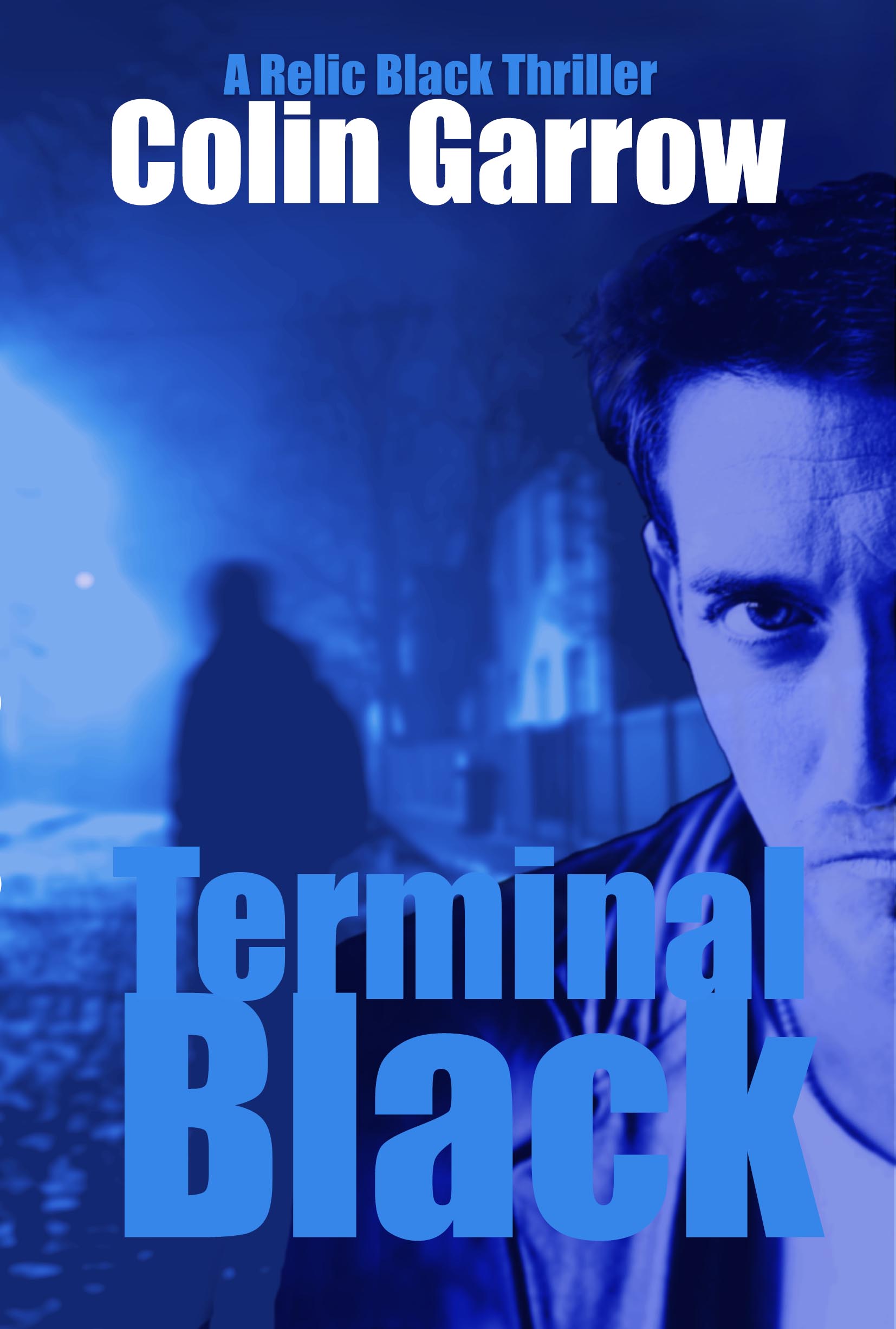
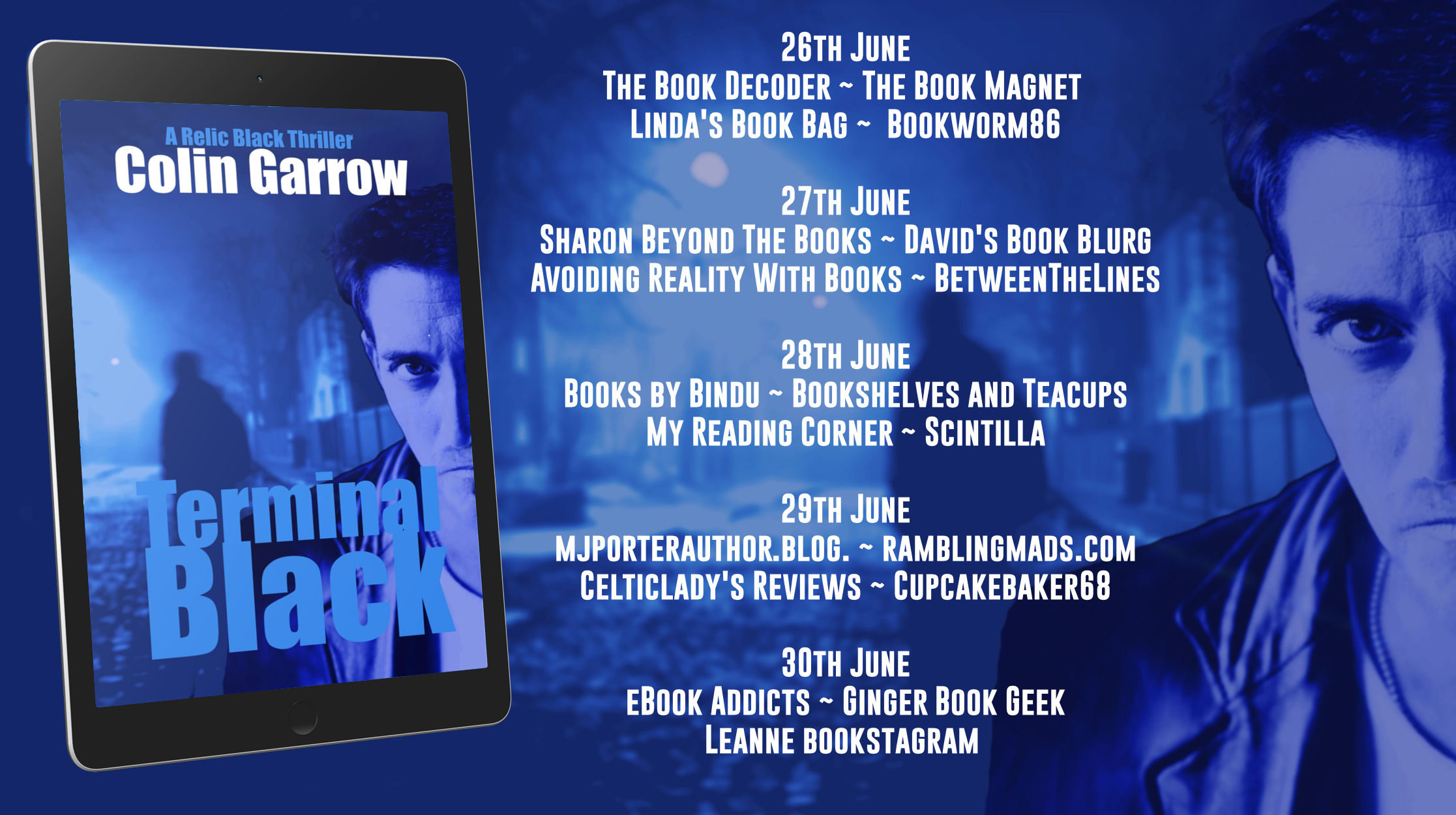
Book review for Terminal Black by Colin Garrow on the blog #blogtour #review #thriller

Here’s the blurb:

A stolen identity. A hitman. A bent cop.

Relic Black takes things that don’t belong to him—credit cards, golf clubs, toothbrushes. But when a hitman mistakes him for someone else, Relic lands himself in a difficult situation. With a dead man on his hands and a guilty conscience, he sets off to save the life of the man whose identity he has stolen. And that’s when the real trouble starts…

Purchase Link

https://geni.us/m2Ax

My Review

Terminal Black is a tight and twisty thriller set in Scotland, complete with accents (for some of the characters) and a cast of increasingly nasty individuals.

The story is really well constructed. There is much going on in this book, and a lot of people are up to no good and in it only for themselves. The bent copper, the angry wife, Relic himself, as well as a couple of bad ‘uns as well.

The plot moves quickly, taking the reader around much of Inverness and Nairn, with a little sidestep to Dundee. If you don’t know the area, don’t worry. If you do know the area, you’ll enjoy hearing the names of places you perhaps visit often. I certainly felt as though I knew the layout of the story, and that helped me, but I don’t think it’s necessary to enjoy this tale of a ‘hit’ gone wrong and the wrong man, in the wrong place, at very much the wrong time.

A thoroughly enjoyable thriller with a fast pace and a few characters you’re going to love to hate, and with a delightful twist in the closing pages. Another fabulous read from Colin Garrow – do be aware of the adult content and strong language.

Meet the Author

 Colin Garrow grew up in a former mining town in Northumberland. He has worked in a plethora of professions including: taxi driver, antiques dealer, drama facilitator, theatre director and fish processor, and has occasionally masqueraded as a pirate. All Colin’s books are available as eBooks and paperback.

His short stories have appeared in several literary mags, including: SN Review, Flash Fiction Magazine, Word Bohemia, Every Day Fiction, The Grind, A3 Review, 1,000 Words, Inkapture and Scribble Magazine. He currently lives in a humble cottage in North East Scotland where he writes novels, stories, poems and the occasional song.

He also makes rather nice cakes.

Connect with Colin

Website  Amazon Author Page 

Twitter  Smashwords  Facebook  Bookbub 

The Watson Letters

Check out my reviews for Colin Garrow’s books

Blood on the Tyne

The Watson Letters